
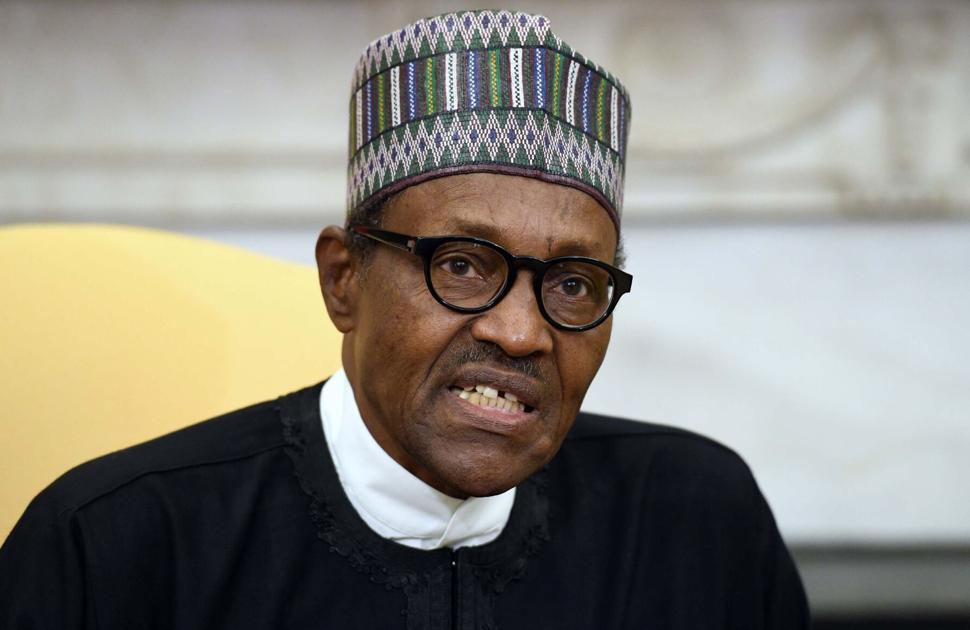

THE government of Muhammadu Buhari has refused to allow the private sector to take over Nigeria’s badly-managed refineries, mobilising nearly $3 billion instead for the companies it cannot run.
On Wednesday, the government approved $1.4 billion for the rehabilitation of Warri and Kaduna refineries, dedicating $897 million for the former and $586 million for the latter.
READ ALSO:
NNPC’s 20% stake in Dangote Refinery will guarantee energy security in Nigeria -Kyari
How NNPC mismanages Kaduna refinery
Against common sense, NNPC commences $1.5bn Port Harcourt refinery repairs
Earlier in the year, the government had mobilised $1.5 billion for the rehabilitation of the Port Harcourt refinery, putting the two investments at $2.9 billion.
Analysts believe that the government of Buhari and the Nigerian National Petroleum Corporation (NNPC) are wasting money on rehabilitation when it should easily have explored concession and other forms of privatisation.

They say a core investor should have been mobilising funds for the refineries, and not the government, stressing that the Federal Government is being clever by half by refusing to disclose who will run the refineries after the humongous rehabilitation expenditure.
Economist and Senior Lecturer at Lagos Business School (LBS) Bongo Adi told The ICIR that any government with competent people thinking for it would not embark on such a wasteful project at this point in Nigeria’s material existence.
“What Nigerians would have expected from the government was to unbundle the petroleum assets and sell them to the private sector who could take them up for a revamp,” Adi said, noting that the government had proved to be incapable of running the business of refineries.
According to The ICIR analysis, Port Harcourt refinery did not record any revenue in 2019, yet it reported N25.19 billion in expenses. Six directors collected N59.65 million in fees, including the Group Managing Director of NNPC Malam Mele Kyari.
Total salaries and pays received by 675 staff of Port Harcourt refinery between 2017 and 2019 were estimated at N80.57 billion, but revenues received by the company within the period were estimated at only N6.27 billion – implying that the NNPC sought N74.3 billion from outside the refinery to pay staff salaries.
Similarly, Warri refinery generated revenue of N4.429 billion between 2017 and 2019, but it incurred N178.315 billion cumulative loss within the period.
On its part, Kaduna refinery made revenue of N2.278 billion but incurred a loss of N241.527 billion in the same period, exposing the ineptitude of the Federal Government and the NNPC in managing public oil sector assets.
Chairman of Major Oil Marketers Association of Nigeria (MOMAN)
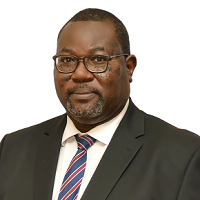
told The ICIR that whoever sat down to look at the humongous investments in the refineries in the last 10-15 years would marvel at the amount of money being pumped into them at the moment.
“The key worry is that we have pumped money in the past in similar exercise without much result. So, one can only hope that this time and with the commitment of the GMD, things will be different.”
However, the Founder of Stanbic IBTC Atedo Peterside does not believe that the investment makes sense. For him, the government should simply have made plans long ago to allow businessmen and women to run it as an enterprise

“Instead of ending this nightmare through a #BPE core investor sale, #NNPC wants to enmesh Nigeria into a deeper financial mess,” he said on his Twitter handle.
Nigeria’s revenue is dwindling as oil market volatility and insecurity threaten the economy. After limping out of recession in the fourth quarter of 2020 with 0.11 per cent growth, the Nigerian economy saw only 0.51 per cent upsurge in the first quarter of 2021.
Nigeria is not diversified and COVID-19 has worsened the country’s fiscal profile, forcing states and federal government to owe N33.107 trillion as of March 31, 2021.
“Well, it has to do with getting priorities right,” said social re-engineering advocate Glory Ezenwaka.
“In all of the three refineries, Nigeria will still source a huge chunk of money in dollars at the expense of infrastructures and the needs of the poor. Are these refineries our priorities now?” she asked.
She also wondered why the government was yet to disclose who would run the refineries.
“Will they (government) continue to operate it after rehabilitation? Will they concession or sell it? Or will it be in the NLNG model? Or are they planning the electricity model which seems to be failing? It is not government’s business to run a business, so it should not have happened.”
President of the Lagos Chamber of Commerce and Industry (LCCI) Toki Mabogunje said what was important is the gradual implementation of reforms in the oil sector.

“Genuine commitment in implementing key reforms would not only stimulate output growth but would also put the nation on the path of macroeconomic stability over the medium term,” she said.
WOW!!! Just found your blog. THIS IS AMAZING!!!!
I don’t surprised because where are the remaining insituctions or where is our representative?