
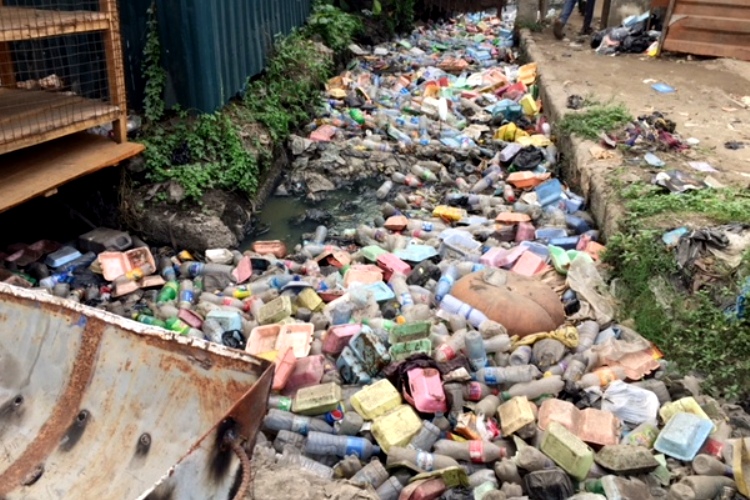

THE recent ban on single-use plastic products by the Lagos State Government has generated reactions from concerned Nigerians.
The state commissioner for environment and water resources, Tokunbo Wahab, had on Sunday, January 21, announced the ban on single-use plastics and styrofoam, claiming that the products had become a menace to the state.
In a statement made available to The ICIR on Thursday, January 25, the Corporate Accountability and Public Participation Africa (CAPPA), a Pan-African organisation, commended the state for banning the use and distribution of the products.
CAPPA, however, urged the government to ensure adequate stakeholder engagement and incentives for alternatives in light of the potential economic impact of the ban.
Single-use plastics contribute heavily to environmental degradation globally, and Nigeria faces severe challenges with the waste, as it generates tons of garbage, especially in densely populated cities like Lagos.
The waste, which takes years to decompose, is often dumped in drainages and water bodies or ends up in landfills and as unregulated waste in the environment, thereby leading to clogged ecosystems and pollution that cause irreparable damage to public health and marine life.
Lagos tops the list of about 60 million plastic sachet water bags consumed and disposed of daily in Nigeria and also generates about 870,000 tonnes of plastic products – drinks bottles, packs of sachet water and plastic bags annually from the combined total of 2.7 million tonnes generated throughout the country.
Speaking on the ban, the Executive Director of CAPPA, Akinbode Oluwafemi, said, “Enforcement is where the problem lies. But with this clear mandate, we are getting closer to our shared goal of mitigating the adverse effects of unsustainable plastic production on our oceans, climate, biodiversity, health, and human right to a liveable environment.
“While heavy fines, seal of business premises, and clean up obligations by defaulters could serve as instructive penalties, the government must be mindful and guide against conflict of interest and selective enforcement in the interest of fairness and equity as plastics are products of fossil fuel enterprise, a sector that is long dominated by big corporations and powerful individuals who have often acted as though they are above the law.”
In his X handle, the Labour Party flag-bearer in the 2023 governorship election in Lagos state, Gbadebo Rhodes-Vivour, said, “Hasty, impulsive decisions are no substitute for critical policy making.”
According to him, while addressing the impact of plastic waste pollution in the state was essential, “I find the sudden implementation of this ban without a well-thought-out alternative policy deeply troubling.
“This decision lacks consideration for the significant investments made by manufacturers, retailers, and wholesalers of these products, potentially causing severe economic implications.”
READ MORE:
- Police arrest Mr Ibu’s son over alleged fraud
- ICJ orders Israel to prevent genocide in Gaza
- Kano Hisbah arrests 52 tricycle riders for conveying opposite genders
- NCAA suspends mattini airline’s licence after Ibadan airport mishap
Rather than ban the products immediately, Rhodes-Vivour suggested that the state government launch comprehensive public awareness campaigns to educate citizens on the environmental impact of single-use plastics and encourage responsible consumption and disposal.
He further suggested that the government invest in robust recycling infrastructure to facilitate the collection and proper disposal of plastic waste.
He also said that the government could regulate the pricing of plastic bottles besides providing other solutions.
“Ensure that plastic bottles are priced (N5 – N10 per bottle) as that will provide the needed incentive for citizens to properly dispose of these plastics and earn a tangible amount.”