
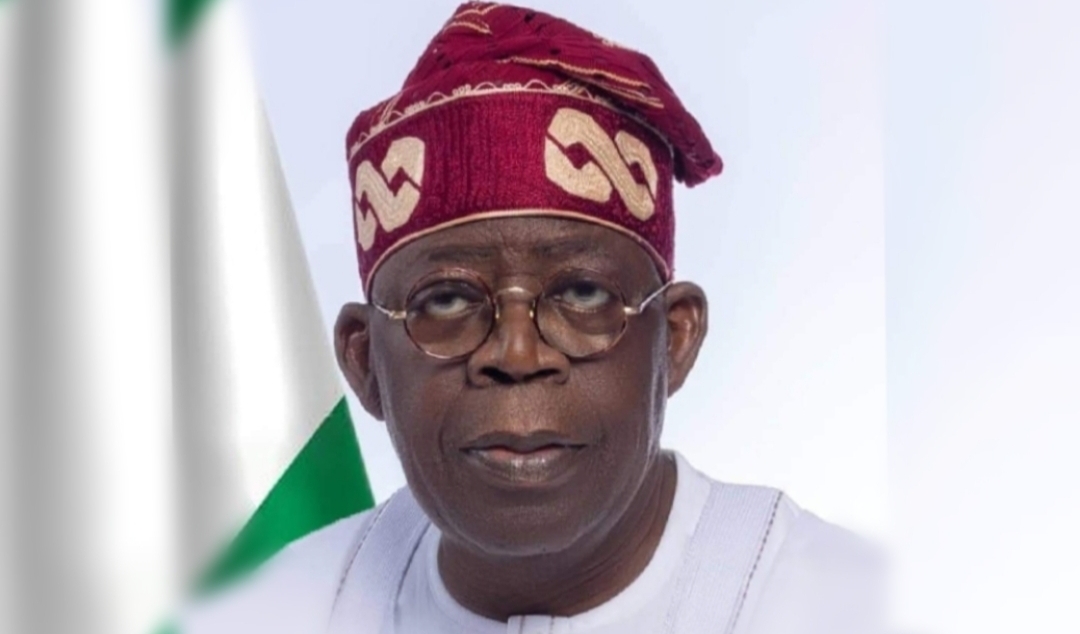
BARELY days after President Bola Tinubu approved the deployment of dozens of ambassadors to foreign missions, Nigeria’s diplomatic push is already running into turbulence.
India and several other countries are quietly signalling reluctance to accept some of the envoys, an emerging diplomatic hurdle tied to the shrinking timeline of the current administration, according to reports.
Punch reported that multiple senior officials in the Presidency and Nigeria’s foreign service revealed that New Delhi invoked a long-standing diplomatic practice: declining to receive ambassadors from governments with less than two years remaining in office.
At the centre of the standoff is career diplomat Muhammad Dahiru, whom Tinubu nominated as Nigeria’s envoy to India.
Sources familiar with the negotiations said the government of Narendra Modi had begun sending subtle signals that it might not grant the mandatory diplomatic clearance known as agrément for Dahiru’s posting.
“They don’t accept an ambassador from an administration that has less than two years in office. So, they are giving us that body language already. Some countries are reluctant to accept some people, not because of the individuals but because of time. They are already seeing the Tinubu government as an outgoing government.
“Their concern is that he has just one year left. What if he doesn’t win the election? Another government may come and remove them. We also understand that some countries have this policy. Any ambassador from an administration that has less than a year or two in office will not get accepted. And one of such countries is India,” Punch quoted a Presidency official as saying.
A second source who spoke with Punch, a senior official in the foreign service, corroborated India’s stance but suggested that Nigeria might still rely on its diplomatic ties with New Delhi to seek an exception.
According to the official, India’s position is guided by a longstanding practice that makes it difficult for ambassadors to be accepted when the sending government is approaching the end of its tenure.
The official added that political calculations within the host country could also influence the decision.
“Some of them may look at the political climate and try to read the direction things are going. They may conclude that the current administration could win the next election,” the source said. “They may even think the race may not be very competitive, especially with many political figures aligning with the ruling party. That could be one of the arguments the Nigerian government may advance.”
The official stressed that India remained the only country whose policy on short-tenure ambassadors had been clearly confirmed so far. Nevertheless, other countries might quietly adopt similar diplomatic conventions when deciding whether to grant agrément to Nigeria’s nominees, the official argued further.
The ICIR reported that under the rules of the Vienna Convention on Diplomatic Relations, no ambassador can assume duty in a foreign country without the receiving state formally approving the appointment.
Ironically, the diplomatic friction comes at a time when relations between Nigeria and India appear stronger than they have been in years.
Tinubu attended the 2023 G20 summit in New Delhi as a guest of the Indian government, where he held talks with Modi on defence cooperation, trade and investment.
In November 2024, Modi made his first visit to Nigeria, the first by an Indian prime minister since 2007. During the visit, both countries signed several agreements aimed at strengthening the India-Nigeria Strategic Partnership established in 2007.
Tinubu also conferred Nigeria’s second-highest national honour, the Grand Commander of the Order of the Niger, on Modi, an award previously given to only one foreign leader, Queen Elizabeth II.
Yet even strong diplomatic ties may not override established protocol.
Tinubu administration announced the deployment of 65 ambassadors last week.
For now, only two of Nigeria’s 65 nominees have received approval from host governments which are High Commissioner-designate Aminu Dalhatu for the United Kingdom and Ambassador Ayodele Oke for France. The fate of the remaining 63 envoys remains uncertain.
Among the high-profile nominees awaiting diplomatic clearance are former aviation minister Femi Fani‑Kayode, posted to Germany; commentator Reno Omokri, assigned to Mexico; former Katsina governor Abdulrahman Bello Dambazau, nominated for China; and Jimoh Ibrahim, a serving senator, tapped as Nigeria’s permanent representative to the United Nations.
Diplomatic sources said even if approvals eventually arrive, the timeline is tight, noting that some host countries could take months to complete background checks before granting agrément. In some cases, requests are simply ignored or quietly declined.
The ICIR reported that the delay traces back to a controversial decision taken early in Tinubu’s presidency. In September 2023, the government recalled all 83 ambassadors serving abroad, leaving Nigeria’s 109 diplomatic missions without substantive heads for more than two years. It took Tinubu more than two years to appoint replacements.
Diplomats said that the proximity to the 2027 presidential elections often triggers caution among receiving states.
Nigeria’s next presidential election, scheduled by the Independent National Electoral Commission for January 16, 2027, casts a shadow over the appointments. Tinubu’s first term ends just four months after the poll, in May 2027.
Some officials cautioned that delays in the approval process could mean that a number of the envoys might not assume their posts until August 2026, leaving them with less than a year, about nine months before the next general election.

Nanji is an investigative journalist with the ICIR. She has years of experience in reporting and broadcasting human angle stories, gender inequalities, minority stories, and human rights issues. She has documented sexual war crimes in armed conflict, sex for grades in Nigerian Universities, harmful traditional practices and human trafficking.