Home Blog Page 100

Infrastructure gaps cripple cassava farmers, increase post-harvest losses in Anambra

IN this report, The ICIR chronicles the impact of infrastructure gaps on cassava production in Anambra State and how it affects Nigeria’s agricultural potential.

By Arinze CHIJIOKE

Nkechi Obah, a smallholder farmer in Atani, one of the communities in Ogbaru Local Government Area of Anambra State, could not wait for her cassava to fully mature during the 2024 farming season.  The floods approached thick and fast and harvesting early was her only chance to salvage something from a season already threatened by unpredictable weather.

But saving the crop from the floods marked the beginning of another struggle.

Without a proper storage facility in her community, Obah had nowhere to keep the prematurely harvested cassava while waiting for the right time to process and sell it in the local market. She also tried to act quickly, hoping that immediate processing would help reduce losses.

“I was willing to process everything at once,” she recalled, “but I could not access a processing facility and before long, many of my cassava tubers got spoilt. I also sold them at giveaway price at the market.”

Obah’s experience is not isolated. Every harvest season, thousands of cassava farmers like her watch their hard work turn into waste. After months of tilling the soil and tending to their crops, many of them lose nearly half of what they produce due to weak infrastructure, and limited access to agro-processing centres.

In Anambra, one of the key cassava-producing states, women are the major players in the entire value chain, with a yearly production increasing from about 276,000 metric tons in 2014 to over 2.1 million metric tons by 2021, according to the state government. A study on agricultural productivity and post-harvest loss among cassava farmers found that nearly a third of the cassava produced in the state, about 32.0%,  is lost after harvest, largely due to a combination of factors like inadequate storage facilities, poor road networks, and unreliable electricity and transportation systems.

Women manually pill Cassava for processing in Aguleri

Consistently, the Anambra State Governor, Chukwuma Soludo, has said that his administration aims to leverage agricultural programs, including cassava production, to enhance food security and stimulate economic growth.  At the launch of the ‘Farm to Feed Campaign’ in August 2024, which is intended to encourage citizens to take up farming, Soludo claimed that his administration had, among other things, improved rural infrastructure to minimise post-harvest losses.

Sadly, farmers interviewed said they continue to suffer huge losses which significantly reduce their incomes and limit the potential contribution of cassava to the states and nation’s food security and economy. While this story focuses on cassava, smallholder farmers of tomatoes, plantains, and other vegetables in the state said that they also count losses due to poor infrastructure.

A national concern 

Post harvest loses is not just an Anambra State problem. Nigeria loses an estimated $9-$10 billion annually due to post-harvest losses, a crisis stemming from inadequate storage facilities, poor road networks, and unreliable electricity supply and  transportation.

Cassava alone, with many by-products including sweeteners, animal feed, industrial starch, high-quality cassava flour (HQCF), and bioethanol which are in growing demand both domestically and internationally, accounts for approximately 35% of the national post-harvest losses for roots and tubers.

According to a Nigeria Cassava Investment Accelerator (NCIA) report, the country is the world’s largest producer of cassava, accounting for 18% of global output with over 61 million metric tons annually. Between 2019 and 2023, Nigeria’s cassava production climbed from 56.96 million tons to 62.69 million tons, a 10 percent increase that keeps the country ahead of Brazil, Thailand, and Indonesia. Yet, the country only captures 2% of the massive $183 billion global cassava processing market, losing a significant amount of cassava due to post-harvest losses.

At this year’s World Cassava Day, Vice-President Kashim Shettima said that the Federal Government remains committed to turning cassava into a driver of industrialisation, describing it as “one of the most strategic assets in our agricultural portfolio,” with its wide applications in food, feed, fuel, pharmaceuticals, textiles, and even construction.

Bad roads increase transportation cost 

In April 2025, the Anambra State government began the rehabilitation of the road that connects to Oye Igbariam, the major market in Igbariam, a community in Anambra East. Igbariam is a significant community for cassava cultivation and research, hosting an outstation of the National Root Crops Research Institute (NRCRI). Farmers in the area hoped it would be completed in due course to ease the cost of transporting cassava and other farm produce from their farms. But it stalled along the line. And when it was time to campaign for a second term, the governor promised the people to complete the project.

“They brought heaps of sand and gravel, and we thought that they had finally come to fix it,” said Rosemary Uchechukwu, a farmer in the community,”.

The road leading to a major market in Igbariam. PC: Arinze Giseon/ICIR

“But when the election ended and he was re-elected, they have not shown seriousness with the project. They just come every day with machines and we don’t see changes,” she lamented.

As a result, vehicles and motorcycles frequently breakdown on the road and this not only increases transportation costs but also results in delays and spoilage of the perishable produce. For instance, farmers say they pay N5,000 for a tricycle cart to convey cassava from Anekwem, one of the villages in Igbariam to Oye Igbariam Market, a distance of about 15 minutes on a good road and 25-30 on a bad one.

Rosemary Uchechukwu is coordinator for SWOFON in Igbariam. PC:C Arinze Gideon/ICIR

Ugochukwu said that they often have to book the cart ahead of time. Sometimes, they do not end up coming because they would rather not travel on bad roads leading to the farms. And that leaves the cassava roots exposed to direct sunlight after harvest, resulting in moisture loss which makes the roots shrivel, harden, and become less suitable for processing.

Tricycle cart used to carry cassava from farmlands to the market

It is the same situation across different locations visited by this reporter – from bad roads to track roads that are only accessible by motorcycle. In Ubahu, for instance, farmers trek long distances, with bags of casava tubers strapped to their heads to get to the main road after harvesting and washing. This takes a toll on their health, with studies showing that carrying heavy loads on the head has measurable biomechanical effects on the cervical spine (neck), including loss of cervical lordosis, reduced disc height, vertebral translation/instability.

Motorcyclists charge N2,000 to carry a cement bag of cassava back home from that point. If they manage to get into the farm, farmers pay N4,000. Oftentimes, these farmers also pay people to help carry tubers to the main road.

A not so effective solution

In 2023, the Women’s Rights Advancement and Protection Alternative (WRAPA), supported by the Malala Fund, procured manual machines for cassava processing in Anambra West, Ogbaru and Awka North, with the help of the Smallholder Women Farmers of Nigeria (SWOFON). The machines include a peeler, grater, presser, a mechanical dehydration machine and fuelwood-powered garri fryer.

The machines for Anambra West were installed at Amma Goat Market, opposite Police Academy in Aguleri, Anambra East LGA and is being handled by Highly Favoured Multipurpose Cooperative Society Ltd. PC: Arinze Gideon/ICIR

To be able to use the machines, Onwuegbuka Rose, coordinator for SWOFON Anambra East, said that members of the corporative society rented an open space where they pay N122,000 rent yearly and also hired an operator who is paid N35,000 monthly. Farmers from different villages bring their cassava to this location for processing.

However, findings show that the machines installed at the centre are insufficient compared to the number of farmers who bring their cassava for processing. On many days, the operator works until 2 a.m. just to attend to many farmers as the entire Aguleri community relies on only one major processing facility.

Onwuegbuka Rose says the dryer was not properly installed and has not been used. PC; Arinze Gideon/ICIR

The machine installed by the government has not worked since installation nor has it been used because it was not well constructed.

“There is not a single machine provided by the government. They have made several promises to support us, but nothing has come,” one operator said. “We need bigger, more efficient machines to improve productivity because whenever one breaks down, it disrupts all our work.”

Also, some of the machines are not being used either because of technical fault or because the women cannot operate them. In both Aguleri and Umunankwo where the machines for Ogbaru were installed, women complained about the non-availability of a borehole to serve the peeling machine.

Processing centre equipped by WRAPA in Umunankwo. PC: Arinze Gideon

In Aguleri, the peeler machine is currently not being used because, according to Rose, they cannot afford to always buy water, hence they still resort to manual peeling. In Umunankwo, they depend on water from the palace of the traditional ruler, which is not always available. Alternatively, they fetch water from a dirty stream just behind the processing centre.

Okonyia Elizabeth, a farmer who oversees the processing centre, explained that the women were never consulted about what methods or equipment would work for them. Also, no proper structures were put in place to house the machines across the locations and so, farmers say they risk being stolen.

Elizabeth said that some of the machines were not properly installed, adding that she called the contractor to complain about the challenges faced with the machines, but he did not respond. This reporter also made attempts to reach him via calls and text message but he did not respond.

“The contractor only told us he was only following the design given to him by the funders.”

Okonyia Elizabeth’s Cassava farm in Ogbaru. PC: Arinze Gideon/ICIR

Built but not equipped 

In March 2024, the International Fund for Agricultural Development (IFAD) – funded Value Chain Development Programme (VCDP) put up a structure that was supposed to serve as a Cassava Processing Center in Umunankwo. The VCDP assists rice and cassava smallholder farmers through a value chain approach to enhance productivity, promote agro-processing and increased access to markets.

In Umunankwo, the structure consists of three rooms which were supposed to house different machines for processing. Amaka Obi, a farmer from the community said that they freely donated the land where the structure is sited because of how much they needed the facility to make processing easier.

Cassava processing center completed by IFAD but not equipped in Umunankwo. PC:Arinze Gideon/ICIR

“We were all happy because it was in our community and was going to help us address the stress of carrying cassava to far distances”, she said. “They told us that they will bring the machines as soon as possible”.

Sadly, more than a year after the structure was put up, not a single machine was brought. A physical inspection of the location shows that the paint of the structure is already wearing off, with some of the ceilings already falling. The structure is also overgrown with bushes. And the solar-powered borehole constructed just beside the building has since stopped working.

“Since they left, we have not heard anything, “Obi said, referring to IFAD and other partners. “Every day, we expect that they will come back and install the machines but we never see them,”.

When contacted for comments on the abandoned structure, the Anambra State Programme Coordinator of IFAD VCDP, Dr. Deborah Onyefulu, said that the Fund only intervenes in areas that are already involved in the activity and have machines but who either need a new structure or the renovation of an already existing one.

“You must have machines on ground before we can come in”, she said, adding that the project in Umunankwo must have been wrongly sited.

The structure in Umunankwo is now overgrown with bushes. PC: Arinze Gideon/ICIR

This runs contrary to findings from community members who said that IFAD had promised to equip the centre with machine. When pressed further however, Onyefulu said that even when IFAD builds a structure and there is a need to equip, that is not done immediately because the machines have to be captured in different budget cycles.

“If the community needs machines, they can come to us and we will see how to provide for them,” she said.

“They know us very well because they gave us the land upon which we built the structure. We have some equipment that we plan to give out.”

During a media tour of Aguata, Orumba North and South council areas, Onyefulu had claimed that the programme was investing N666m in communities to boost local agricultural production and processing in the state.

Onyefulu was quoted as saying that the programme had invested N316 million to provide market infrastructure and processing facilities in Aguata Local Government Area. She added that the programme was implementing rice and cassava processing projects worth over N350 million in Orumba North and South LGAs. She, however said that the processing centres will be equipped as soon as approval is secured to enable them commence full operation.

With efficient technology largely absent, many locals depend on locally fabricated equipment, including frying pans, knives used for peeling, sieves and manual press, all of which tend to be less effective and less energy-efficient. These outdated tools slow down production and contribute to lower overall productivity.

Women also pay with their health

There is also the challenge associated with using fuelwood/open fires for frying, which according to the Global Alliance for Clean Cookstoves, is one of the world’s most pressing health and environmental problems, directly impacting about half the world’s population and causing nearly four million premature deaths each year. Around 2.1 to 2.3 billion people, or about one-third of the global population, rely on polluting fuels such as wood, charcoal, and coal in open fires or inefficient stoves.

research on occupational exposure to particulate matter from biomass smoke and its risks among rural women involved in cassava processing in Nigeria found that the use of biomass fuel for cooking is associated with exposures to high levels of PM2.5, PM10, black carbon, sulphur dioxide.  “This has been associated with several adverse health effects such as upper and lower respiratory tract infections, chronic obstructive pulmonary disease (COPD), asthma, cancer, low birth weight, cataract and blindness”.

The traditional, manual garri frying can take a long time, depending on the quantity. In Aguleri, at least three women were seen frying, sweat dripping down their bodies, their eyes reddened and watering as they struggled to breathe. From interviews with the women, this reporter gathered that they are often exposed to biomass smoke for up to 11 hours daily. Peeling costs N500 while frying costs N800 per cement bag.

Ngozi Okagbue  and her daughter often fry garri in Aguleri.PC: Arinze Gideon/ICIR

Ngozi Okagbue works as a garri frier at the processing centre. She earns N9,600 for frying 12 cement bags of gariThe big aluminium pot she works with handles 25 cement bags while the smaller pots handles eight bags between 7am and 6pm. On weekdays, she works with another fryer but on weekends, she works with her children. And that often takes a significant toll on their respiratory health.

“I would always buy drugs, Malt and Milk for body pain when we return home because our body often hurts after work, I have to come back again the next day because that is the only way I survive with my children”.

Turning to traditional storage system

Cassava roots are highly perishable and begin to deteriorate rapidly (within 2-3 days) after harvestSadly, with the lack of storage facilities, farmers adopt different traditional methods, including a form of pit or trench storage for short-term preservation of fresh cassava roots. The method involves burying harvested roots in a trench or a pit. The method is designed to create a high-humidity environment that helps “cure” any wounds on the root surface and prevents them from drying out, which causes rapid spoilage.

Farmers share their experience amidst lack of storage and processing facilities in Aguleri.PC: Arinze Gideon/ICIR

Alternatively, farmers say they also store their cassava in jute sacks, woven polypropylene bags, or perforated sacks. However, this method can fail when not properly managed. If the bags are loosely tied for instance, pests such as insects and rodents can easily enter or chew through them, causing infestation.

Placing bags directly on bare floors exposes the roots to termites, dampness, and soil pests.

Veronica Okechukwu, another farmer in Aguleri said that this method is also unsafe because criminals often steal cassava when they are stored.

“If you harvest and keep in your farm, they can also go and carry them,” she said.

Findings show that a proper cassava storage facility slows spoilage by providing good ventilation, controlled temperature, and regulated humidity. Using cool or insulated environments and keeping roots dry and clean prevents heat buildup, mould, and rapid decay, allowing cassava to last much longer than the usual 48–72 hours after harvest. It also gives farmers more time to wait for better market prices or recover from climate-related disruptions like flooding in Anambra and also ensures the roots remain clean and of high quality, which improves the final products such as garri, fufu, and starch.

Farmers are compelled to sell cheap

Calista Ewuzie owns a large expanse of cassava farm in Ubahu Ihembosi, one of the communities in Ekwusigo LGA. Her farm is close to the Ulasi River (also known as the Orashi River), which often overflows its banks and covers the entire farmland whenever there is flooding.

Calista Ewuzie  inside her cassava farmland in Ekwusigo.PC: Arinze Gideon/ICIR

“We are often forced to remove our crops whether or not they are mature for harvest. But we don’t have anywhere to store them so we can make some profit after investment. At this time, you have plenty cassava in the market everybody wants to sell to avoid losing completely.”

Ewuzie said that there is no single processing facility in her community, hence farmers are forced to travel to Ozubulu or Ukpor, about 20-30 minutes away, spending over N4,000 to and fro on motorcycle. When they get there, they wait for their turn.

Elizabeth from Umunankwo, which also faces significant flooding challenge, said that a cement bag of cassava sells for N8,000 instead of N25,000. She gets six bags of cassava from her farm. That is N40,000, after spending close to N100,000 in preparing the farmland.

“There is more supply in the market than demand, instead of losing everything, I sell them off and I am not able to recover the money invested”, she said. “That is after I have removed the one for my family,”.

In Igbariam, farmers told this reporter that a full load of cassava (tricycle cart) which used to sell for N70,000-N80,000 currently goes for between N30,000-N40,000.  The markets are often saturated because everybody wants to sell to avoid losing out completely.

Edith Obi, another farmer in Ubahu Ihembosi said that she spent over N500,000 this cassava planting season on land acquisition, preparation of moulds, cultivation, purchase of stems, spraying of chemicals, at least two times before harvest and harvesting. Now, she can hardly boast of N400,000 because prices have fallen and there is no way she can store till next year when prices will rise.

Edith Obi inside her farmland.PC: Arinze Gideon/ICIR

“We have made attempts like reaching out to the ministry of Agriculture in the state and agencies like the Small and Medium Enterprises Development Agency of Nigeria for help. But nothing has happened”.

Pushing for a change

Small holder farmers interviewed say they have tried to draw the attention of government to their challenges. For instances, this month, leadership of SWOFON visited the director at the Federal Ministry of Agriculture in Anambra State where they complained about the lack of storage facilities, processing centers and good road networks and how that affects their work.

Anambra State coordinator of SWOFON, Georgina Akunyiba, said that they were asked to come up with a charter of demands, adding that this is not the first time they are making attempts to get the authorities, particularly the state government, to provide infrastructure for farmers in the state.

“We have written severally to the Ministry of Budget and Economic Planning with our demands, embarked on advocacy visits to the commissioner for agriculture, women affairs, the attorney general and auditor general, but nothing ever gets done.”

One of the charter of demands written by SWOFON

“The government appears not to value agriculture and we can see from the budget for the sector. Even when they manage to provide certain facilities, it is politicised and never gets to those that truly need, councillors get everything,” she stated.

She noted, however, that communities like Umunankwo cannot be completely absorbed of blame because they have not come to complain to SWOFON about the challenges that they are having with the usage of their processing machines.

What can be done? 

Sunday Akpan, Associate Professor of Agricultural Economics at the Akwa Ibom State University, said that to fully maximise its cassava potential, the state government, working with the local government, must construct access roads because most cassava farms are located in remote locations and farmers are often forced to carry roots on their heads.

“It is also important for the government to subsidise land preparation, which for cassava farmers is a major cost component,” he said.

“They can set up tractor hiring centres and subsidise the cost,” he added.

He further noted that government can set up processing centres with modern technologies to ramp up production, which according to him, will depend on the availability of raw materials in the locations where they will be established.

“Currently, there are garri fryers that address the challenge of direct contact with heat but local farmers cannot afford them,” said Akpan, a member of the technical committee that set up the factories in Akwa Ibom. “Government interventions must be strategic. Farmers can afford fertiliser, so government should stop using that to gain cheap popularity. When all of these are addressed, it can help increase revenue for farmers,”.

Unmotorable road leading to farms in Ekwusigo.PC: Arinze Gideon/ICIR

He further suggested that there can also be arrangements for off takers to form clusters through which farmers can sell their products directly from the point of harvest and take away the stress of processing.

We are working to boost cassava production 

The Permanent Secretary in the State Ministry of Agriculture, Ifeyinwa Uzoka, acknowledged that infrastructure gaps, leading to post harvest losses in cassava existed across communities in the state. She however, said that the state government was committed to addressing the challenges which is evident in its ongoing partnership with IFAD and VCDP to provide numerous processing centres and related infrastructure.

Uzoka noted that at least eight out of the 21 LGAs in the state were already benefitting from the programme, adding that the ministry was working to access more donor funded agricultural programmes to be able to capture more locations in the state.  These LGAs include Ayamelum, Anambra East and West, Orumba north and South, Awka north, Ihiala and Ogbaru.

“We cannot finish all the LGAs at the same time”, she said. “But I can assure that we are supporting farmers in those LGAs with facilities for production and processing. We cannot do it all alone.”

On Thursday, December 11, this reporter sent a Freedom of Information Act (FOIA) request addressed to the Commissioner for Agriculture in the state, Dr. Forster Ihejiofor via his whatsapp platform as he requested. Specifically, the FOIA request sought to find out if the ministry was aware of the infrastructure gaps leading to post harvest losses, if they have taken any steps to provide storage and processing facilities and good road networks in rural communities and the specific communities where they have intervened.

Also, it sought to find out if the ministry was aware of the processing centre in Ogbaru and plans to get the facility functional and if the ministry had any challenges in addressing the infrastructure gaps as well as the current data on the metric tonnes of cassava produced by the state.

This was followed with a call and a text on December 12 and another call on December 15.  Another follow up text was sent on Tuesday, December 16 and Monday, December 22, after seven days. He was also called, but he neither responded to the calls not the messages and the FOI request at the time of this publication.

This report was made possible with support from the International Centre for Investigative Reporting, (ICIR) under its Strengthening Public Accountability For Results and Knowledge (SPARK 2.2) project. 
ICPC rejects Dangote’s bid to stop ex-NMDPRA boss probe

0

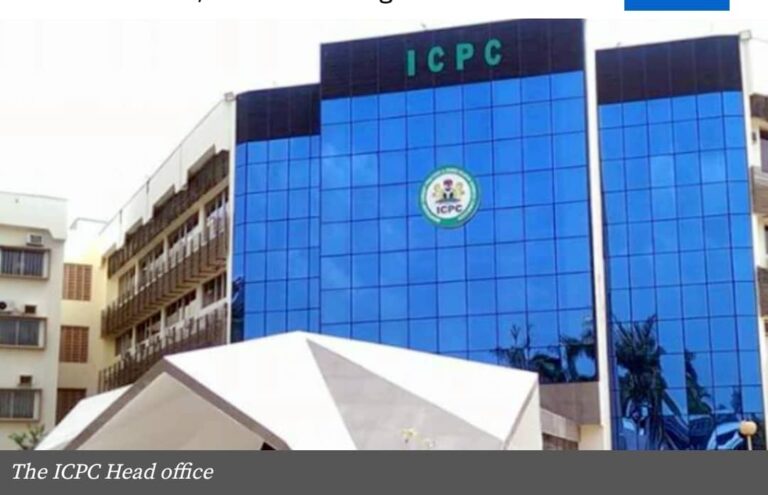
THE Independent Corrupt Practices and Other Related Offences Commission (ICPC) has said it would continue investigating allegations against the immediate past Chief Executive Officer of the Nigerian Midstream and Downstream Petroleum Regulatory Authority (NMDPRA), Farouk Ahmed, despite the withdrawal of a petition filed by billionaire industrialist Aliko Dangote.

In a statement signed by the commission’s spokesperson, J. Okor Odey, on Wednesday, January 7, the ICPC confirmed that it received a letter dated January 5, 2026, from O.J. Onoja, a senior advocate and counsel to Dangote, notifying the commission of the withdrawal of the petition dated December 16, 2025.

The letter also indicated that another law enforcement agency had taken over the matter.

Meanwhile, impeccable sources told The ICIR that Dangote requested that the ICPC discontinue its investigation on the grounds that the Economic and Financial Crimes Commission (EFCC) was already handling the case.

The ICPC was said to have declined the request, maintaining that it had already commenced investigations and could not be directed by a petitioner on how to exercise its statutory mandate.

The commission insisted it would proceed with the probe in the interest of the Nigerian state.

The ICIR gathered that the ICPC requested Dangote’s legal team to endorse the investigation but has yet to do so.

As part of its ongoing probe, the commission was also said to have contacted the Switzerland school where the children of the former NMDPRA chief are allegedly enrolled to verify claims relating to their tuition fees which Dangote claimed was above the lawful means of their father.

Speaking further in its Wednesday statement, the ICPC vowed that the withdrawal of Dangote’s petition would not affect its investigation, noting that the probe had already commenced in line with sections 3(14) and 27(3) of its enabling Act.

“The ICPC wishes to state categorically that in line with the provisions of sections 3(14) and 27(3) of its enabling Act, the investigations in the interest of the Nigerian people and the Nigerian state have already commenced and are presently ongoing,” the commission said.

Backstory

Dangote’s petition accused Ahmed of abuse of office, corruption, financial impropriety and violations of the Code of Conduct for Public Officers.

The ICPC had earlier confirmed receipt of the petition and assured the public that the allegations would be investigated.

In the petition, Dangote, through his lawyers, alleged that Ahmed spent over $7 million in public funds on the education of his four children in Switzerland, an expenditure he claimed was inconsistent with the earnings of a career public servant.

The petition also alleged diversion of public funds.

The allegations emerged amid tensions in Nigeria’s downstream petroleum sector, where Dangote has repeatedly accused regulatory authorities and entrenched interests of undermining domestic refining and protecting fuel import cartels.

Following the public allegation against him, Ahmed resigned as Chief Executive Officer of the NMDPRA, with the Presidency confirming his resignation on December 17, 2025, and nominating Saidu Aliyu Mohammed as his replacement.

Although the Presidency did not directly link Ahmed’s resignation to the allegations, the timing of his exit heightened suspicion on the matter.

Ahmed, who was appointed in September 2021 under the Petroleum Industry Act, dismissed the allegations against him as “wild and spurious” and said he would not engage publicly while the matter was before investigative agencies.

Court orders interim forfeiture of 57 properties worth N213.2bn, linked to Malami, sons

0

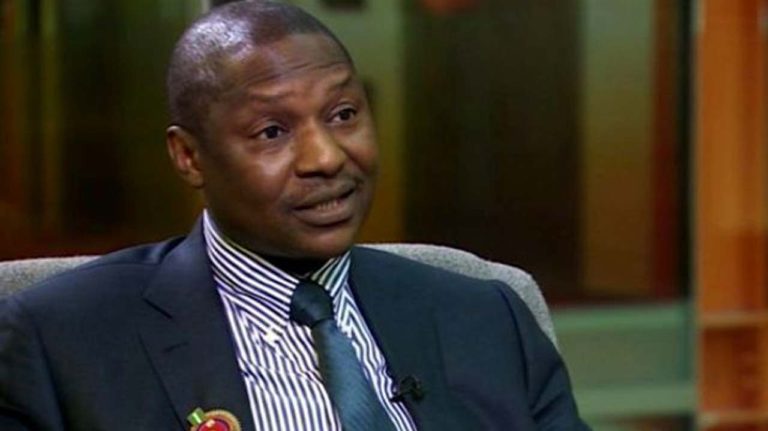
A Federal High Court sitting in Abuja has ordered the interim forfeiture of 57 properties valued at over N213.2 billion, allegedly linked to former Attorney-General of the Federation and Minister of Justice, Abubakar Malami, a senior advocate, and two of his sons, Abdulaziz Malami and Abiru, Rahman Malami.

This was revealed in a statement issued by the Economic and Financial Crimes Commission (EFCC) Wednesday evening.

The EFCC said the presiding judge, Emeka Nwite, granted the order on Tuesday, January 6, 2026, following an ex-parte motion filed by the commission and argued by its counsel, Ekele Iheanacho, a senior advocate.

“The multi-billion naira landed properties, valued at N213,234,120,000 are located in Abuja, Kebbi, Kano, and Kaduna States. In granting the order, justice Nwite ruled that, “It is hereby ordered that an interim order of this honourable court is hereby made forfeiting to the Federal Government of Nigeria the properties described in Schedule 1 below which are reasonably suspected to be proceeds of unlawful activities,” part of the statement read. 

The ICIR reported that Malami, his wife, Bashir Asabe, and son, Abubakar Abdulaziz, were remanded at the Kuje Correctional Centre, following their arraignment by the EFCC and are currently facing an alleged N8.7 billion money laundering charge.

While adjourning the case to January 27, for a report of compliance, Nwite also directed the EFCC to publish the forfeiture order in a national daily, inviting any individual or organisation with an interest in the properties to show cause within 14 days why a final forfeiture order should not be made.

Properties include hotels, schools, factories, luxury homes

According to the statement, the properties include: 

  1. Rayhaan University Buildings,  Agro allied factory buildings, machines, hotels, pharmacy, supermarket, primary and secondary schools, oil and gas filling stations, shops and other buildings. 
  2. Luxury Duplex at Amazon Street, Plot No. 3011 Within Cadastral Zone, A06 Maitama; File No: AN enhancement 11352, which was allegedly purchased in December 2022 at N500, 000, 000.00 (value after enhancement at N5,950,000,000).
  3. Two-winged large storey building Situate at No. 3, Onitsha Crescent, Area 11, Garki, Cadastral Zone, A03, Abuja (formerly Harmonia Hotels Limited), FCT, allegedly purchased Dec. 2018 at N7,000,000,000.
  4. Plot 683, Jabi District, Cadastral Zone B04, comprising a five storey building (now luxurious Meethaq Hotels Ltd, Jabi with 53 rooms/suites), said to have been purchased in Sept. 2020 at carcass level at N850,000,000 with additional N300,000,000 to take possession. It’s value after completion is allegedly N8,400,000,000.
  5. Property No. 3130 within Cadastral Zone A04, Asokoro District, FCT, Abuja, comprising terraces, which the commission said was purchased in January 2021 at N360,000,000.
  6. Property No. 3 Rhine Street, Maitama, Abuja (Meethaq Hotels Limited, Maitama With 15 rooms), purportedly purchased in February 2018 at N430,000,000. Current value after rehabilitation is said to be N12,950,000,000.
  7. Plot No. 1241B, Asokoro District Zone (No. 11A Yakubu Gowon Crescent) Asokoro District, which was purchased in July 2021 at N325,000,000.
  8. Shop No. C82 Citiscape — Shariff Plaza, Plot 739 Cadastral Zone A07, Aminu Kano Crescent, Wuse Il, FCT, Abuja, which was reportedly purchased in March 2024 at N120,000,000.
  9. No. 4 Ahmadu Bello Way, Nasarawa GRA, Kano, said to have been purchased in December 2022 at N300,000,000.
  10. Plot 157, Lamido Crescent, Nasarawa, GRA, Kano, allegedly purchased in July 2019 with no specific amount stated.
  11. A Plaza, Commercial Toilets, Laundering, Warehouse Tanks Adjacent           
  12. 100 Hectares Of Land Along Birnin Kebbi, Jega Road, which the commission said was purchased in 2020 at N100,000,000.
  13. Four Bedroom Bungalow Gesse Phase, Birnin Kebbi, said to have been bought in 2023 at N101,000, 000.
  14. Shops Nos. A36, B3 Vegas Mall, Wuse 2, Abuja, “which was purchased in July 2023 at N158,000,000.”
  15. No. 26, Babbi Drive, Bua Estate, Abuja, allegedly bought in 2022 at N136,000,000.
  16. No. 27, Efab Estates Avenue, 59™ Crescent, Gwarimpa, Abuja, “purchased in January 2016 at N120,000,000.”
  17. Four Bedroom/ 2 Rooms Boys Quarters At No. 10B, Doka Crescent Abakpa GRA, Kaduna, purportedly bought in January 2018 at N40, 000, 000.00.
  18. Plot No. 13, Ipent 7 Estate, Karsana District, Abuja, “purchased in June 2018 at N85,000,000.”
  19. A Bedroom Duplex & Boys Quarters At No. 12 Yalinga Street, Off Adetokunbo Ademola Crescent, Wuse Il, Abuja, said to have been bought in October 2018 at N150,000,000.
  20. Two warehouse shops B40 And B46, Wuse Market, Abuja, “purchased in July 2020 at N50,000,000.”
  21. Twin Houses At Zone E, Apo Legislative Quarters, Cadastral Zone B01, Plot 14014, Gudu District, Abuja, which the commission said was purchased between February and May 2017 at N250,000,000.
  22. Properties acquired by Khadimiyya for Justice & Development Initiative at the Academic Garden City, Birnin Kebbi, allegedly sold by the Federal Housing Authority.
  23. Others are nine units of three-bedroom, bungalow, three units of two-bedroom, bungalow, and 5.4 hectares of land, which were purportedly purchased between February 2023 and September 2023 at N187,000,000, among other assets listed in the schedule.

Many feared dead as gunmen attack Oyo National Park Office

0

AT least five people have been reported dead following an attack by suspected gunmen on the National Park Service (NPS) office in Oloka, Oriire Local Government Area of Oyo State, on Tuesday, January 6.

The attack occurred at about 9:00 p.m., according to the News Agency of Nigeria (NAN)

NAN quoted the Conservator of the Park, Tesleem Kareem, as confirming the incident in an interview on Wednesday.

Kareem said an unspecified number of NPS personnel were killed during the assault, adding that efforts were ongoing to evacuate the victims.

“Yes, it is true. We are in the process of evacuating the victims,” he said.

NAN reported that at least five personnel were killed, although the exact number of casualties has yet to be officially confirmed.

The agency added that the bodies of the victims were yet to be recovered, as they were believed to be located within the surrounding forest.

The Oyo State Police Command also confirmed the incident but has yet to provide specific casualty figures.

The Police Public Relations Officer, Ayanlade Olayinka, said the Commissioner of Police and other security chiefs were on their way to the scene.

He added that tactical teams, Mobile Police Force operatives, and other security personnel had been deployed to the area to prevent further attacks and restore order.

“Yes, there was an attack by yet to be identified men against the men of the National Park. The Commissioner of Police and other service chiefs are currently on their way to the location,” Punch quoted him to have said.

While the culprits are yet to be identified, the attack has heightened concerns over the likely spread of insecurity from neighbouring Kwara State into the South-West. Kwara has in recent months witnessed a surge in bandit attacks, kidnappings, and assaults on security formations, particularly around forested border communities linking it to Niger and Kogi states.

Stakeholders and residents have also warned that criminal groups operating within the vast forest corridors spanning Kwara, Oyo, and other adjoining states could increasingly target communities in the South-West if not decisively checked.

141m Nigerians to live in poverty in 2026 – PwC

0

NO fewer than 141 million Nigerians are expected to live in poverty this year, Price water house Coopers (PwC) revealed in its Nigeria Economic Outlook 2026 report.

The international accounting firm’s latest report titled: “Turning macroeconomic stability into sustainable growth,” projected deteriorating poverty levels of about 62 per cent of Nigerian population in the year preceding the election year 2027.

“Despite macroeconomic gains, poverty is projected to rise to 62 per cent, affecting 141 million Nigerians by 2026,” PwC said.

The report showed that Nigeria’s economy was expected grow by 4.49 per cent in 2026, inflation to moderate at 12.94 per cent, and the naira to remain stable in the N1,440-1,500-dollar range.

“Approximately 33.1 million Nigerians may face food insecurity due to economic hardship and violence in northern food-producing regions. Food accounts for up to 70 per cent of consumption among poorer households,” it added.

According to the report, recent economic reforms have yet to translate into improved household welfare, as weak real income growth and rising living costs are projected to push more families into poverty over the next two years.

The report stressed that in the short term, most Nigerians were unlikely to experience income increases substantial enough to counter the pressure of rising living costs.

PwC described the consumption patterns of low-income Nigerians as a major driver of worsening poverty.

The report warned that as hardship deepened, domestic consumption might weaken, productivity gains could slow, and pressure on public finances could mount.

Without aggressive job creation, productivity improvements, and effective social safety nets, PwC cautioned, the goal of reducing poverty might be elusive.

In 2025, The ICIR reported that PwC warned of rising inflation, high interest rates, and the depreciation of the naira could push an additional 13 million Nigerians below the national poverty line.

Similarly, the World Bank said in its Nigeria Development Update that Nigeria’s entrenched mass poverty could begin to ease slightly in 2027, signalling the first positive shift in nearly a decade.

The lender forecast that poverty in Nigeria would peak in 2026 at 62 per cent, around 141 million people, before a marginal decline to 61 per cent in 2027, equivalent to roughly 140 million Nigerians.

UN seeks improved protection of schools, civilians in Nigeria

0

Report by Esther Tomo

THE United Nations has called on Nigerian authorities to urgently strengthen the protection of civilians and schools, following a series of violent attacks in parts of the country, which left dozens dead and many abducted.

The call was made by the United Nations Resident and Humanitarian Coordinator in Nigeria, Mohamed Malick Fall, on Tuesday, January 6, after reports of coordinated assaults on communities and public spaces in parts of Niger State.

According to the UN, at least 30 people were killed on January 3 during an attack on a village market in Kasuwan Daji, located in Borgu Local Government Area (LGA) of Niger State. An unspecified number of people were abducted during the incident, while market stalls and nearby homes were set ablaze by the attackers.

The UN also reported additional violent incidents in Agwara LGA as well as in neighbouring Kwara and Ondo states, resulting in multiple casualties, including death and Kidnappings.

Agwara LGA was previously the scene of a mass abduction in November 2025, when more than 300 people were kidnapped during an attack on Saint Mary’s Catholic School. The abducted individuals were later released.

Fall described the attacks as grave violations of human rights, noting that they threatened the right to life, undermine the protection of civilians, particularly women and children and erode access to education.

He extended condolences to families who lost loved ones and called for the immediate release of all abducted persons, urging Nigerian authorities to ensure that those responsible for the attacks are held accountable in accordance with national and international human rights standards.

The UN further stressed that students, teachers, and educational institutions must be safeguarded from all forms of violence, emphasising that no child should be exposed to danger while pursuing education.

Fall also recalled the United Nations’ renewed call in November 2025 for Nigeria to fully implement the Safe Schools Declaration, a global commitment aimed at protecting schools and ensuring safe learning environments during conflict and insecurity.

The UN reaffirmed its commitment to working with the Nigerian government to enhance civilian protection and promote safer learning spaces across affected communities.


Court grants N500m bail each to ex-AGF Malami, wife, son

0

A FEDERAL High Court in Abuja has granted N500 million bail each to former Attorney-General of the Federation and Minister of Justice, Abubakar Malami (SAN) alongside his son, Abdulaziz, and one of his wives, Bashir Asabe, who are standing trial over alleged money laundering offences.

The presiding judge, Emeka Nwite, in his ruling on Wednesday, January 7, ordered that the defendants must produce two sureties with verifiable landed property located within Asokoro, Maitama, or Gwarimpa districts of Abuja.

The judge also directed that the title documents of the properties be submitted to the court and verified by the Deputy Chief Registrar, while the sureties are to depose to affidavits of means.

As part of the bail conditions, the court ordered Malami and the other defendants to deposit their international passports and other travel documents with the court. Each of the defendants was granted N500 million by the court.

They are also barred from travelling outside Nigeria without prior permission of the court.

Malami, his son, and Asabe had been remanded at the Kuje Correctional Centre following their arraignment by the Economic and Financial Crimes Commission (EFCC) on December 29, 2025, after pleading not guilty to a 16-count charge bordering on money laundering amounting to N8.7 billion.

The EFCC alleged that the defendants conspired to conceal and disguise proceeds of unlawful activities through the use of multiple corporate entities, bank accounts, and high-value real estate transactions across Abuja and other parts of the country.

According to court documents marked FHC/ABJ/CR/700/2025, the commission accused Malami and his son of using a company, Metropolitan Auto Tech Limited, to conceal over N1.01 billion between July 2022 and June 2025, while an additional N600 million allegedly passed through a Sterling Bank account linked to the same company between September 2020 and February 2021.

In another count, the EFCC alleged that Malami, his son, and Asabe, said to be an employee of Rahamaniyya Properties Limited, disguised the origin of N500 million used to purchase a luxury duplex on Amazon Street, Maitama, Abuja.

The prosecution further alleged that the defendants laundered N1.04 billion through the Union Bank account of Meethaq Hotels Limited between November 2022 and September 2024, while another N1.36 billion was allegedly controlled indirectly through the same account.

The EFCC also accused Malami of concealing N700 million allegedly used to acquire a property in Area 11, Garki, and N850 million for another property in the Jabi District of Abuja while he was serving as Attorney-General of the Federation.

Other properties listed in the charge include real estate on Amazon Street and Rhine Street in Maitama, houses in Asokoro and Gwarimpa, as well as properties in Abuja, Kano, and Birnin Kebbi.

The anti-graft agency told the court that it had traced 41 properties valued at about N212 billion to Malami and his associates, alleging that proxies and corporate fronts were used to obscure ownership.

The alleged offences, the EFCC said, contravene provisions of the Money Laundering (Prohibition) Act, 2011 (as amended) and the Money Laundering (Prevention and Prohibition) Act, 2022.

Despite fraud allegations, panel indictment, HOD seeks provost role at Plateau College of Health

AMID several indictments by at least four separate panels against him, Yusuf Dalyop, the Head of Department of Public Health, Plateau State College of Health and Technology, Pankshin, is aspiring to be the provost of the institution. This is raising serious questions in many quarters.


Alpha Dubagari Isaac, a widower, said he promised to provide quality education for the five children his wife left behind. That was why he met with the Head of Public Health Department, Plateau State College of Health and Technology, Pankshin, Yusuf Dalyop, to discuss the possibility of his first child getting admission.

“I am an alumnus of the school, and he (Dalyop) was my lecturer. I asked him if he would assist to admit my son into Public Health department, to which he said yes. After we bought the form and did everything, my son’s name didn’t appear on the first, second, and supplementary lists. He called me in November that year and was asked why he didn’t see my son in school. I told him his name wasn’t on the list. He said I should forget the admission list, asking if didn’t know there was a supplementary list,” Isaac said.

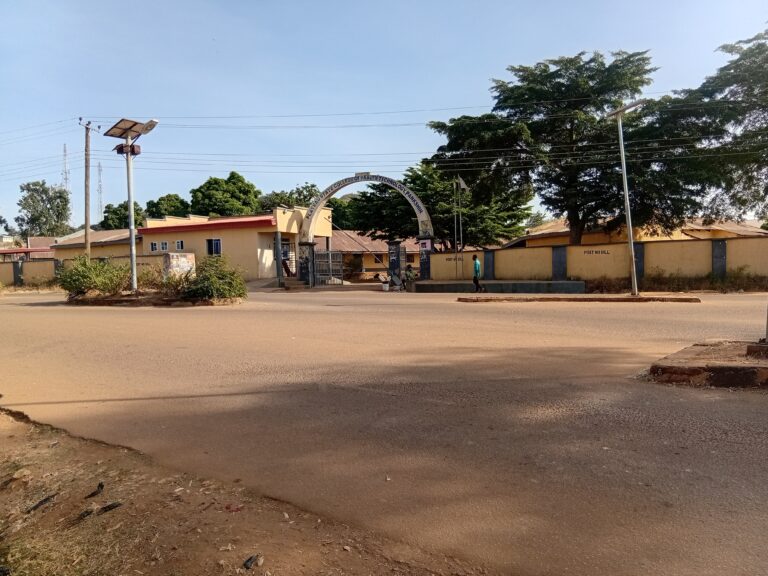
Plateau College of Health and Technology Pankshin campus. PC: Nanji Nandang/ICIR

Isaac said he went to the school thinking Dalyop would show him his son’s name on the supplementary list but instead he asked him to pay the sum of N35,000 to his secretary.  He paid in cash and was given a departmental receipt of N15,000 only. This done, he said he then went on to pay the tuition fee and other charges into the school’s account.

“He (Dalyop) told me that most of the school officials were not available at the time and that all necessary documents would be given to my son upon resumption. When my son resumed, the department still collected N15,000 from him to open his file. Throughout the first semester, my son’s class representative repeatedly informed him that his name was not on the class register, yet Dalyop continued to collect more money from him, claiming it was to settle lecturers,” he said.

Sharing the receipt of payments and all the relevant documents with The ICIR, Isaac said he spent a total of N354,400, and it was only when he applied for a deferment for his son after the first semester, and was asked to complete a deferment form and attach the candidate’s admission letter that he discovered his son was never issued an admission letter.

Plateau College of Health and Technology Pankshin campus. PC: Nanji Nandang/ICIR

“I wrote a petition to the provost; they invited me to give an oral testimony on how my son was admitted. During the process, Dalyop tried to persuade me to withdraw the case, even going as far as typing a letter and pressurising me to sign it, with the promise that once he became Provost, he would secure my son’s admission. I refused to submit the letter to the provost,” he added.

A copy of the letter of withdrawal Isaac said Dalyop drafted for him and forced him to sign. PC: Nanji Nandang/ ICIR

The college then set up a panel to investigate Isaac’s allegations against Dalyop.

The report of the investigation committee obtained by The ICIR indicates that the Chairman, Grace Hirkop and the Secretary, Istifanus Kopji Kumwar, signed and submitted its findings to the school management on October 18, 2025.  

“Our findings revealed that Midah Chogkon was given a matriculation number and paid tuition fees for the 2024/2025 complete to the sum of N212,700 but had no admission letter to his name. The committee discovered that there were students who have actively been in class without admission letter and a search into the students’ files revealed that 29 students were not having the basic requirements to be admitted into the college,” the report read.

When contacted,  Dalyop admitted giving Isaac the assurance that his son was offered admission. He, however, alleged that the Acting Provost of the institution instigated Isaac to write a petition against him because they were both contesting for the position of the provost.

“He was my student, a very nice student and wanted admission for his son. He bought form, and when they wanted giving him letter, the admission office said letter head paper got finished. The provost hid his file. All the files of those in 200-level students were with the provost for more than a year. Now this man came for deferment. He has paid all that needed for the deferment. When they went to the provost for the file, he told him that he should write… you know I am contesting for provost with him,” Dalyop claimed.

The College of Health and Technology is a key training institution responsible for producing frontline health workers for Plateau and neighbouring states, and it offers various accredited paramedical programmes at the certificate, National Diploma, Higher Diploma, and Professional levels. 

Admission scandals and impersonation 

Isaac’s experience is not in isolation. A report obtained by The ICIR revealed that six years ago at least three parents who had sought help from Dalyop to get admission for their children into the college, reported similar issues to the school management.

A committee comprised of Paul Walong Rabo,  Shinplang F. Taldang, Pam Gambo, James Lohnan, and Peter Kwapzem, who submitted its findings to the school management on May 9, 2019, investigated an illegal admission scandal involving Dalyop. 

The committee reported that Dalyop posed as the Head of Department of Community Health and demanded the sum of N213,000 from the parents of Ajala Elisha Karo and Dorcas Emmanuel, while making promises that were never fulfilled.

Talatu Elisha, Ajala’s mother, appeared before the committee and explained that her daughter was a student of the Department of Medical Laboratory Technician at the college but fell ill during the first semester and missed several continuous assessments, which affected her general performance and overall CGPA leading to her withdrawal.

“Al’amin confirmed to the panel that he and Ajala’s mother went to Pankshin in December 2018 to meet Dalyop who promised to assist. In January, Dalyop contacted Al’amin on phone to demand and collected N35,000.00 which, according to him, was to be given to the HOD, Medical Laboratory to facilitate Ajala’s admission processes. Not too long afterwards, another N40,000.00 was demanded and collected by Dalyop to be given to the Provost and Dean of the same school which amounted to N75,000.00 for processing Ajala’s promotion to the next class. When she finally settled down, he told her to pay for the semester fee which she did and a receipt issued to her to that effect,” the report read.

Talatu said that despite paying the amounts demanded, Ajala was not allowed to write the 200 level first semester exams except for the carry overs she had earlier written in the first two days of the commencement of the exam. 

In the same report, Emmanuel Rabo, the father of another student, said his daughter, Dorcas, was a former student of Community Health, School of Health Technology, Alushi, Akwanga, Nasarawa State who had earlier withdrawn due to academic deficiency coupled with the fact that she resumed school late.

“Back then at home after withdrawal, while waiting for the next admission, his brother Al’amin Maidawa, who is an acquaintance of Dalyop approached him for assistance, seeing that he had earlier assisted Ajala with a similar withdrawal case. Dalyop having agreed to it and fortunately too, being the HOD Community Health, consequently demanded and collected the sum of N68,000.00 from Al’amin Maidawa to be given to the Provost and Dean, Community Health. 

“He then invited Dorcas for an aptitude test with the sum of N12,500.00 being the cost of the exercise. She came for the aptitude test; wrote it in Dalyop’s office with him alone invigilating. Thereafter, she was told to resume lectures and along with N35,000.00 being the semester fee which she again complied with. When she had finally settled down and after a series of enquiries, she was informed that he was not HOD. It then dawned on her that she had no admission letter nor receipt for the payment made,” the report read.

The report explained that as the semester was almost rounding up and Dorcas realised that the transaction was just a hoax, she was prompted to request for the refund of her money and Dalyop told her that it was already used for the processing of her admission. 

“Dalyop asked her not to be bothered about the semester exams but rather on getting indexed at the Board in Abuja. At this point Dorcas contacted Al’amin and informed him of this development. Al’amin in turn contacted  Dalyop on this issue, only for him to inform Al’amin he was on his way to Abuja. At this point, they felt the need to get in touch with the College management which they eventually met with the provost to  narrate their ordeals,” it added.

Impersonation

According to the report, Dalyop had demanded and collected the total sum of N115,500 for Dorcas’s admission alone, and he committed the offence of impersonation as self-imposed HOD, adding that it is a case of gross misconduct in line with the code of conduct for public servants and acting under all laws and regulations of the college code named “General Terms and Condition of Service for staff”.

“Directed that Dalyop Yusuf be suspended forthwith from the college pending the outcome of an investigative committee constituted for that purpose,” the report read.

The ICIR found out that a warning letter was issued to Dalyop on July 5, 2019 by the former Acting Registrar, Elisha Turgak Shehu, regarding the case, and that the Appointment and Promotion Committee relieved Dalyop of all responsibilities except for teaching and cautioned him never to engage in any case of indiscipline.

A copy of the warning letter issued to Dalyop by the Governing Council in 2019

“It was not admission really. The lady was schooling at ERCC Aluchi College of Health, Akwanga and then she wanted a transfer to Baptist School of Health, Kafanchan. We were neighbours with one of their relatives, that was how they were led to my house and it wasn’t even in relation to my college at all. I worked in that Kafanchan before as a Provost of that institution. So when they paid the money and the transfer failed, we now said let’s refund the money. So that was what happened. You see, all these things were just frameworks,” Dalyop said in response to the case.

He admitted that the “Governing Council of the college sat on the case and warned that such things should not happen again.

The ICIR gathered that Dalyop became the HOD of Public Health Department in 2022.

Admission sabotage

In another document obtained by The ICIR, a three-member committee submitted its findings to the school management on April 29, 2025, following an investigation into the omission of the School of Environmental Health from the admission letters issued by the Department of Public Health for the 2024/2025 academic session.

The report signed by the committee’s chairman, Josiah M. Emmanuel, alongside members; Sunday Ezekiel Ngwallang and Sogotshep Benedicta Sebastien, revealed that it asked the Deputy Registrar Admission, Grace Hirkop why the “School of Environmental Health” was omitted from the admission letters of Public Health Department 2024/2025 Academic Session.

“She responded that she was not the person that typed the admission letter. Her role was to collect the admission letters, stamp and issue out to successful candidates. She added that when she collected the admission letters, she discovered that “School of Environmental Health” was omitted from admission letters of Public Health and she went and reported to Monday Dingse Computer Operator and Secretary to the Registrar. But Dingse told her that it was a directive given to him by the HOD, Public Health Department,  Dalyop, and she went to the HOD, and complained but he said that it was okay that way, adding that since the admission letters were signed by the Registrar, she then assumes that it means the HOD is right,” the report read.

School of enviromental health PSCHT Pankshin. PC:Nanji Nandang/ICIR
School of environmental health PSCHT Pankshin. PC: Nanji Nandang/ICIR

The Committee said Dingse told them that while the admission letters were being prepared, Dalyop instructed him not to include “School of Environmental Health” on the letters, and that he complied with the directive.

After querying other staff involved in the case, the committee asked Dalyop “Were you the registrar/admission Officer? If not, why did you say that “School of Environmental Health” should be omitted from the admission letters?” and he told them that the Public Health Department ought to be on its own as far as he is concerned, noting that, no official document was handed over to him prescribing that the Public Health Department is under the School of Environmental Health.

The committee reported that Dalyop refused to give a written submission after oral interview like each one of the interviewees despite being contacted days after to make his submission.

“However, he was later served with a “LETTER OF REMINDER” to make his written submission within 24 hours of receipt, but he refused to collect the letter and that he had not seen anyone in the college who would ask him to respond to the letter. And that even the provost of the college is too small before him to respond to his query and talk less of the mere ordinary investigative team,” the report read.

The panel recommended that the management should administer any one of the disciplinary actions according to Chapter 3, Section 3, rule no. 030301 and 030305 of Public Service Rules 2008 edition on Dalyop for the act of insubordination and giving unauthorised instruction capable of breaching peace and harmony based on its findings. 

“Also, Section XIV pages 9199 of the General Terms and Conditions Service for staff of Plateau State Colleges of Health Technology, Pankshin and Zawan states the punishment as: Suspension, Reduction in rank, Interdiction, Dismissal, which the Management may feel to administer to the said Officer (Dr. Yusuf Dalyop),” it added.

The Dean School of Environmental Health, Sunday Ezekiel Ngwallang, who was a member of the committee acknowledged the recommendations and suggested punishment in the report, highlighting that the school management have not taken action since they submitted the report.

“No decision has been taken based on our knowledge. Yes, the Provost received the report but no acknowledgement letter. We don’t know whether the Governing Council is in receipt of the reply,” he said.  

When The ICIR contacted Dalyop on this, he denied being involved in sabotaging the admission.

“Before they appointed me as head of department. they handed over the students to me. And that was what I saw in their file, in their admission letter. Nothing like School of Environmental Health there. I wasn’t the person. Am I the registrar of the college? No. Am I the provost of the college?,” he said.

Physical assault on colleague

The ICIR obtained another report submitted to the school management in February 2025 by a five-man investigation committee chaired by Paul Wallong Rabo to investigate the allegation of physical assault on the Dean of Student Affairs, Simon Gyang by Dalyop in October 2024.

Gyang told the investigative committee that he uncovered irregular departmental charges during a routine oversight visit on October 7, 2024, and ordered the N16,000 departments charging above the approved N10,000 association fee to revert to the official rate, noting that the directive was complied with by affected heads of department, and he found out from Dalyop’s secretary, Julcit Banchir that Public Health departmental fee was N30,000.

Gyang told The ICIR that while he was attending to students in his office, Dalyop allegedly threatened that he was “a very dangerous man, and claimed to have killed, Mancha Dalyop, a former staff and he would be “next.” 

“While explaining to him why I had to take those steps, he just swooped at me and punched my face using an unknown object thereby causing physical injuries on my face,” he added.

Gyang’s allegation was confirmed by this reporter in the investigation committee report, highlighting that in Dalyop’s testimony, he claimed that Gyang had always been an agent of mischief used to fight him in many fronts denting his good image, witch-hunting him, assassinating his character.

“That Simon Gyang connived with the late Mancha Dalyop and went to his former place of work to get negative information on him for their nefarious activities, but much to their chagrin, they couldn’t get the harmful weapon needed to use against him,” the document read.

The committee noted that it found out that it was in the course of enforcing the collection of N10,000.00 for the Departmental Association that the Dean Students Affairs discovered that Dalyops books were being sold at N5,000.00 each to new students in the Department of Public Health.

“After careful examination and evaluation of the facts, the defendant, Dalyop Yusuf is guilty of misconduct and has made himself liable to punishment under the relevant provisions of the law regulating the conduct of public servants,” the report added.

One of the committee members who spoke anonymously said that the Governing council have not taken any action on any of the reports submitted to them.

Dalyop in response claimed that Gyang was one of those agents recruited by the current acting Provost, Emmanuel Mahanan, to witch-hunt him as his perceived rivals in order to advance his ambition of becoming Provost of the College, and alleged that it was the reason an investigative committee was hastily constituted after management heard from one side of the matter without first giving him an opportunity to respond.

Dalyop denied physically assaulting Gyang, instead it was Gyang who shouted at him when he came to his office to address an issue the dean had with his secretary.

“Simon Gyang has even written a letter through his lawyer to the Commissioner for Education because the acting provost is still using him. I wouldn’t know that he is not qualified to be a provost. I am very much qualified,” Dalyop said.

Provost ambition

Dalyop insisted that all the allegations were made by the Acting Provost to him spoil his chances of becoming the provost of the institution.

“In fact, since I came to that college, you know, I’m the only PhD holder in that college. The people I met there, I came and even passed them at grade level qualifications and otherwise. Of course, you don’t expect them to be clapping hands for me. It’s all about jealousy, gossips, rumouring, up and down, here and there.

“One of the requirements stated, that you must be a chief lecturer for a minimum of three years. You must, they say must, be a chief lecturer for a minimum of three years. He is just one year, this December. But what of other qualifications? He has other qualifications, but in terms of publications, licensing and other things, he doesn’t have them. Then, he wants to use desperation. He wants to use witch-hunting by hook or crook,” Dalyop said.

However, the ICIR saw a letter of promotion issued to Emmanuel by the Senior Staff Appointment and Promotions Committee to the post to Principal Lecturer in October 2022.

A copy of the promotion letter issued to the current acting provost in 2022. PC: Nanji Nandang/ICIR

“I’m a community health officer. That is HND in Community Health from College of Health Zawang. Then a postgraduate diploma in Education Community Health from University College Hospital, Ibadan. Then because we don’t have a degree in community health. So there are areas by our registration board outlined for us to go and study to be relevant in the college and in the profession. Like guidance and counselling, educational psychology, public health, social works, health education and so on. I have first degree in Guidance and Counselling. Then I have master’s in educational psychology. Then PhD in Guidance and Counselling,” Dalyop said.

The ICIR reports that the institution released an advert in August last year, calling qualified candidates to apply for the position of Provost, Registrar, Bursar, and Librarian of the College.

It stipulated that qualified candidates are required to possess a master’s degree or Ph.D in a health-related discipline, must not be below the rank of a Chief Lecturer for a minimum of three years or equivalent 

Publication of the call for application by PSCHT on Standard Newspaper. PC: Nanji Nandang

The ICIR gathered that Dalyop and the Acting Provost were the only contestants in the college invited by the governing council of the school in November for an interview.

This reporter obtained the credentials of Dalyop and Emmanuel.  Dalyop has a first degree, Bachelor of Education, B.Ed. in Guidance and Counselling from the Federal College of Education Pankshin, an affiliated college of the university of Jos, in 2012; a master’s in educational psychology from the Nasarawa State University, in May 2019, and a Doctor of Philosophy, P.Hd., in Guidance and Counselling from Nasarawa State University in 2024.

Emmanuel has a diploma in Public health from the West Africa Health Examination Board in 1991, a first degree in Health Education from the University of Nigeria, Nsukka, in 2003, and a master’s degree in public health from the University of East London in 2014.

Management response

“All the investigative reports were submitted to the management. Management sat down when it was submitted, we deliberated on it. We have just forwarded to the council. Actually, the decision would have been taken long ago because there was no council on ground,” the Acting Provost told The ICIR when asked if the college management received the reports of the investigation submitted to the management.

The acting provost explained that the disciplinary recommendations against Dalyop were not implemented because the governing council was inactive for some time, noting that the reports have been submitted to the council some months ago.

“All these investigative reports were submitted to the management. So, when the reports were submitted to the management, actually the decision would have been taken long ago but because there was no council on ground. And looking at the magnitude of his offence, these four that you see, these are the just few ones that were selected out of the multiple petitions written against him,” he said.

Emmanuel, referencing a 2019 investigation that resulted in a warning from the governing council, clarified that he was not serving as provost at the time, as he dismissed Dalyop’s allegation that he was inciting others against him due to their contest for the provost position.

My position aspiring for the provost is not a do-or-die, I guess. If I get it, fine. If I don’t get it, there’s no problem. This is not the first time I’ve contested. There was a year I contested for this position. And I was the only person that was qualified from the college with two others from outside,” he added.

Meanwhile, the chairman of the Governing Council, Chris Piwuna, said “I will not confirm receiving that report” noting that “I cannot comment” on the issue involving physical assault against Gyang.

“The matter that you just raised now is either in court or about to go to the courts. So, I cannot comment on it.”

“The Governing Council is supposed to be a policy-making body. We don’t get involved in day-to-day administration of the institution. And this point you just raised, I think, is completely in the purview of the management of the institution. So, it’s not our place to meddle in such issues,” Piwuna said.

The chairman said that there are committees at the management level that handle disciplinary issues.

“If they cannot, they bring it to council. That’s how it is done. And there are cases, disciplinary issues that are supposed to terminate at the management level. The provost, the librarian, the registrar. Those are the management staff. And maybe the director of academic planning. They could invite the person to be in attendance. But the principal officers of the institution are the management staff of the institution,” he said.

Piwuna said that the government through the council will appoint a new provost based on the requirements highlighted in its advertisement, insisting he would not discuss the issue any further.

While the institution is yet to address its internal issues, parents like Isaac have not been compensated with either an admission or refund of the tuition paid, as students like his son are have been disengaged from the school for months now.

“The management promised to give my son admission since the fault was not from me but when the last admission list came out, my son’s name was not on the list. My son has been at home” Isaac said.

FG paid N459.75bn for electricity subsidy in Q3, says NERC

THE Federal Government froze the tariff payable by most Nigerian electricity consumers for the cost of power consumed in the third quarter(Q3) of 2025, with an electricity subsidy payment of N458.75 billion.

This was disclosed in the 2025 third-quarter report of the Nigerian Electricity Regulatory Commission (NERC)

The report, released on Tuesday, January 6, stated that the Federal Government cited electricity market stability as a key reason for the subsidy payment amid weak remittances from international electricity consumers under electricity bilateral agreements.

The report shows that the Nigerian Bulk Electricity Trading Plc (NBET) invoice payable by Distribution Companies (DisCos) stood at only N323.70 billion during the period, largely due to the Federal Government’s intervention.

According to the report, the subsidy arose from the continued freezing of end-use customer tariffs at the rates payable in July 2024, despite rising generation costs.

The ICIR reports that tariff payments are enforced by DisCos, which factor in exchange rate differentials to ensure cost recovery and attract investors in the electricity sector.

The Federal Government has also initiated an electricity Band classification for consumers, which seeks to encourage higher payment for those who have a higher number of hours per day of electricity, while those with fewer hours pay less. This model appears not to have worked efficiently, as it’s riddled with complaints of inefficiency and no delivery of the prescribed hours allotted to consumers.

The NERC report noted that without the government’s support, total generation costs for the quarter would have been about N782.45 billion.

It stated that DisCos showed marginal improvements in billing and collection efficiencies but recorded revenue shortfalls due to poor remittance from international bilateral customers.

According to the report, during the period under review, the naira value of total energy offtake by all DisCos was N854.53 billion.

It stated that the total energy billed amounted to N706.61 billion during the period, which translated to a billing efficiency of 82.69 per cent.

This represented an improvement of 1.08 percentage points over the 81.61 per cent recorded in the second quarter of 2025.

DisCos recorded cumulative billing losses of N147.92 billion within the period.

Total revenue collected by DisCos stood at N570.25 billion out of N706.61 billion billed during the period.

This feat resulted in a collection efficiency of 80.70 per cent, up by 4.63 percentage points from 76.07 per cent in the previous quarter.

Despite these gains, the weighted average Aggregate Technical, Commercial and Collection (ATC&C) loss across all DisCos remained high at 33.27 per cent.

This comprised technical and commercial losses of 17.31 per cent and collection losses of 19.30 per cent.

The figure exceeded the 2025 Multi-Year Tariff Order (MYTO) target of 20.54 per cent by 12.73 percentage points and translated to a cumulative revenue loss of N108.75 billion.

However, NERC observed a 4.65 percentage point improvement from the 37.92 per cent recorded in 2025 second quarter.

It added that only Eko and Ikeja DisCos met their ATC&C targets during the quarter, while Kaduna DisCo recorded the worst underperformance.

This posted an actual ATC&C loss of 71.10 per cent against a target of 21.32 per cent.

On market remittances, DisCos were billed a cumulative upstream invoice of N400.48 billion in the 2025 third quarter, comprising N323.70 billion for NBET and N76.77 billion for transmission and administrative services payable to the Market Operator (MO).

Out of this amount, DisCos remitted N381.29 billion, leaving an outstanding balance of N19.18 billion and a remittance performance of 95.21 per cent, slightly below the 95.65 per cent recorded in the previous quarter.

However, during the period, international bilateral customers paid only $7.125 million out of the $18.69 million invoiced by the MO for services rendered in the quarter, representing a remittance rate of 38.09 per cent.

In contrast, domestic bilateral customers paid N3.19 billion out of N3.64 billion invoiced, achieving a stronger remittance rate of 87.61 per cent.

Electricity analyst who heads the Electricity Consumer Protection Advocacy Centre, Princewill Okorie, expressed worry that the government still pays a huge amount of subsidy despite the privatisation of Nigeria’s power sector.

He noted that the subsidy payment had yet to reflect on the market efficiency.

“Subsidy payment is growing, and market efficiency is not top-notch despite privatisation. The regulator must continue to look into the activities of distribution companies to ensure transparency and accountability in their metering and billing processes,” Okorie said.


Nurse, one other found dead in suspected ‘one-chance’ operations in Abuja

1

TWO women have been found dead in separate locations in the Federal Capital Territory (FCT) in incidents suspected to be linked to the activities of notorious “one chance” criminal gangs operating within Nigeria’s capital.

One of the victims, Chinemerem Pascalina Chuwumeziem, was a nurse with the Federal Medical Centre (FMC), Jabi, whose killing subsequently drew condemnation from the National Association of Nigerian Nurses and Midwives (NANNM), FCT Council. 

The second victim, identified as Princess Ochigbo, was said to be found lying lifeless by the roadside, with indications suggesting she might also have fallen victim to “one chance” hoodlums.

Nurse murdered after boarding vehicle back home

In a statement by the chairman of NANNM, FCT Council Jama Medan, the association said Chuwumeziem closed from afternoon duty on January 3, and boarded a vehicle on her way home but never arrived alive.

The statement noted that her body was later discovered to have been dumped, in what the association described as a “most inhumane and heartbreaking manner.”

The NANNM described the killing as not only an attack on the nursing profession but “an assault on healthcare workers and humanity at large,” calling on security agencies in the FCT to immediately investigate the circumstances surrounding her death.

Second victim found by roadside

According to an X post, Princess Ochigbo was found dead by the roadside at a different location in Abuja on the same day, with documents recovered suggesting she might have been a staff member of the FCT High Court.

The handler, who provided the update with image of the deceased woman and her ID, noted that her bag was discovered, flung a short distance away from her body, a pattern consistent with previous one chance attacks, where victims are robbed, assaulted, and most times thrown out of moving vehicles.

Efforts to reach the FCT Police Command for updates on the two incidents proved abortive, as SMS and Whatsapp messages sent to its spokesperson, Josephine Adeh, were not responded to as of press time.

One chance killings persist despite past interventions

The incidents have renewed concerns about the persistence of one chance operations in Abuja, despite repeated assurances by authorities that the crime would be contained.

The ICIR has reported extensively on the menace, documenting cases where residents were robbed, stabbed, thrown out of moving vehicles, or left critically injured by criminals posing as commercial drivers.

In one documented case, a resident sustained over 30 stab wounds after boarding a vehicle at Area 8, Garki, while others have lost large sums of money and other valuables.

Although the FCT Police Command established an Anti-One Chance Squad in 2018, attacks have continued, raising questions about enforcement, surveillance, and accountability.

Transport system failures fuel insecurity

The ICIR reported that one-chance robberies remain a persistent menace in Abuja, with criminals posing as commercial drivers to lure, rob, and sometimes kill unsuspecting passengers.

They drive around with dangerous weapons, including guns, axe, cutlasses and knives, which they use to compel their victims to submission.

Security experts and transport analysts said the menace is worsened by the failure of organised public transportation in the FCT, which forces residents to rely on unregistered taxis and private vehicles.

In a 2022 investigation, The ICIR reported that an insufficient number of commercial vehicles, coupled with the near-collapse of the Abuja Urban Mass Transport Company Limited (AUMTCO), left commuters vulnerable to criminals.

Out of over 500 buses once commissioned under AUMTCO, only about 150 were functional, leaving thousands of residents stranded daily and exposed to risky transport options, especially during early mornings and late nights.

The report further showed how criminal gangs have exploited this vacuum, patrolling major routes in private vehicles and posing as transporters to lure unsuspecting passengers.

Nurses demand protection, organised transport

Reacting to Chuwumeziem’s killing, NANNM chairman said the incident highlighted the growing insecurity faced by healthcare workers while commuting.

“The continuous harassment and attacks on nurses have further exposed the alarming level of insecurity faced daily by healthcare workers, particularly while commuting to and from duty. Our lives are no longer safe. Nurses leave their homes daily to save lives, yet many are uncertain of returning alive to their families,” the association said.

The union called on the FCT Minister, Nyesom  Wike, to urgently strengthen security around hospitals and major junctions, and to provide safe and organised transportation for nurses, particularly those on early-morning and late-night shifts.

The NANNM also demanded a thorough and transparent investigation by the Nigeria Police Force, Department of State Services (DSS), and Nigeria Security and Civil Defence Corps (NSCDC), insisting that anything short of decisive action would further endanger lives and erode public confidence in the security system.