Home Blog Page 109

Africa Travel Week opens submissions for 2026 media awards

AFRICA Travel Week (ATW) has officially opened submissions for its 2026 ATW Media Awards, inviting journalists, photographers, videographers, and digital content creators across the continent to showcase stories that celebrate Africa’s diverse travel and tourism sector.

The annual awards aim to recognise outstanding work in journalism, photography, and videography that inspires wanderlust, champions responsible tourism, and highlights the authentic spirit of African destinations to a global audience.

A statement by the organisation noted that a distinguished panel of international experts including Ellie Rothnie, wildlife photographer and Canon ambassador; Kojo Bentum-Williams, founder of VoyagesAfriq; Barry Nield, Global Editor of CNN Travel; Divia Thani, Global Editorial Director of Condé Nast Traveller; and Tom Hall, Vice President at Lonely Planet, will evaluate entries.

The awards span five categories: Sustainability Feature, Visual Tourism, Tourism News, Destination Feature, and Young Talent, each recognising excellence in storytelling, visual presentation, or journalistic mastery.

Entries must have been published or broadcast between 1 January and 31 December 2025, with the submission deadline set for 16 January 2026. Participants can submit multiple entries per category free of charge and must comply with the awards’ format requirements.

Winners will be announced at the Africa Travel Week Travel Leaders Lunch, with dates and locations to be communicated in advance.

For submissions and more information, media practitioners can visit the Africa Travel Week website or contact wtmafrica.helpline@reedexpoafrica.co.za.

Senate confirms NUPRC, NMDPRA CEOs

0

THE Senate has confirmed the appointments of Oritsemeyiwa Eyesan and Saidu Mohammed as the Chief Executive Officers of the Nigerian Upstream Petroleum Regulatory Commission (NUPRC), and the Nigerian Midstream and Downstream Petroleum Regulatory Authority (NMDPRA), respectively.

The confirmations were announced at plenary following the consideration and adoption of a report by the joint committees on Petroleum (Upstream, Downstream and Gas), which screened the nominees.

President Bola Tinubu had forwarded Eyesan and Mohammed names to the Senate on Thursday, December 17, seeking its approval to fill vacancies created by the resignation of the former heads of the two regulators.

The appointments come amid heightened public scrutiny of Nigeria’s petroleum regulatory agencies, particularly following the recent resignation of Farouk Ahmed as NMDPRA CEO.

Ahmed stepped down on December 17, after days of controversy triggered by corruption allegations levelled against him by billionaire businessman Aliko Dangote. Dangote had petitioned the Independent Corrupt Practices and Other Related Offences Commission (ICPC), accusing Ahmed of abuse of office, financial impropriety and violations of the Code of Conduct for Public Officers.

Among the allegations was a claim that Ahmed spent more than $7 million in public funds on the education of his four children in Switzerland, an expenditure Dangote argued was inconsistent with the income of a career public servant.

The ICPC confirmed receipt of the petition and said it would investigate the claims.

Although the Presidency did not explicitly link Ahmed’s resignation to the allegations, the timing of his exit intensified public debate over the allegations in the petroleum sector.

Similarly, Tinubu announced the resignation of Gbenga Komolafe as CEO of the NUPRC and nominated Eyesan as his replacement.

Both the NUPRC and NMDPRA were created under the Petroleum Industry Act (PIA) to regulate Nigeria’s upstream, midstream and downstream petroleum operations.

Mohammed, who replaces Ahmed at the NMDPRA, is a former Group Executive Director and Chief Operating Officer of the Gas and Power Directorate at the Nigerian National Petroleum Company Limited (NNPCL). He has previously served as Managing Director of the Kaduna Refining and Petrochemical Company and the Nigerian Gas Company.

AI-generated video of U.S. military announcing takeover of Nigerian army circulates online

0

A video purportedly showing a United States military officer announcing that the U.S. military would “take over” the Nigerian Army to help end terrorism in the country has surfaced online.

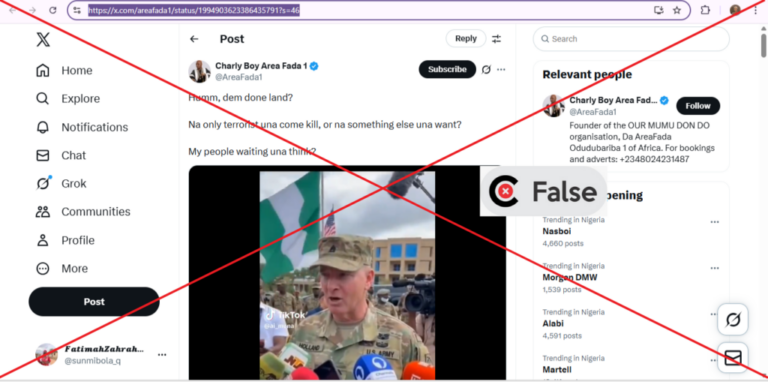
The video, posted by singer and activist, Charles Chukwuemeka Oputa, also known as Charly Boy, shows a man dressed in a U.S. military uniform who appears to be giving an interview. In the clip, the individual is heard saying:

“The U.S. military will take it from the Nigerian Army, and they will do their best to end Boko Haram terror.”

The speaker also encouraged viewers to like and follow the page to “support” the alleged mission.

The accompanying caption read:

Humm, dem done land? Na only terrorist una come kill, or na something else una want? My people waiting una think?

Translated, this suggests that foreign troops may have arrived and questions whether their mission is limited to fighting terrorists or driven by other motives.

As of Thursday, December 18, 2025, the video had garnered over 300,000 views, 1,500 likes, 768 comments, and 675 reposts.

The post triggered concern among users, with many questioning the motive behind the purported U.S. intervention. Some interpreted the video as evidence of possible foreign interference in Nigeria’s security affairs.

One user, @pardox121, commented, “America is literally funding those terror groups. They are not doing that for free; they are definitely going to demand something from Nigeria later. Nothing is ever free.”

However, other users dismissed the claim, describing the video as fabricated.

Given the sensitive nature of the claim and its potential to mislead the public, The FactCheckHub subjected the video to verification.

CLAIM

Video shows U.S. military officer announcing takeover of Nigerian army

THE FINDINGS

Findings by The FactCheckHub show the claim is FALSE!

Screenshot of the claim; Insert false verdict

A keyword search was conducted to identify any official announcement or verified report indicating the presence of U.S. soldiers in Nigeria. No credible news organisation or official source has published such information.

Further examination of the video revealed inconsistencies commonly associated with AI-generated content. One of the microphones visible in the clip bore the name “Arise Mevon,” alongside a logo resembling that of Nigeria’s Arise News. However, the text appeared distorted, a known characteristic of AI-generated visuals—and no legitimate media organisation operates under the name “Arise Mevon.”

Additionally, the movement of the microphones during the interview appeared unnaturally swift and fluid, another indicator consistent with artificial intelligence–generated footage.

Closer inspection showed that the video was originally posted on TikTok, as indicated by the visible watermark and username. A review of the TikTok account, @ai_muna, revealed a clear disclaimer in the profile bio stating that the videos are “powered by AI.” The account predominantly features AI-generated content, including the video in question.

To further verify the findings, the clip was analysed using the AI-detection tool Hive Moderation. The results indicated a high level of manipulation, flagging the content as 99.9 per cent AI-generated overall, with 70 per cent AI-generated visuals, confirming that both the imagery and audio were largely produced using artificial intelligence.

Screenshot showing results from Hive Moderation

THE VERDICT

The claim that the video shows a U.S. military officer announcing the takeover of the Nigerian army is false; it is an AI-generated video.

This report is republished from the FactCheckHub

FG reopens 47 Unity Colleges

0

THE Federal Government has reopened all 47 Federal Unity Colleges closed in November following a string of security incidents, including mass abductions of students in Kebbi and Niger States. 

The government, in a statement on Thursday, December 17, reaffirmed its commitment to safeguarding students and ensuring the continuity of education nationwide.

The closures, directed in a circular dated 21 November 2025, and signed by Binta Abdulkadir, Director of Senior Secondary Education, came after armed men abducted at least 25 schoolgirls from Government Girls Comprehensive Secondary School, Maga, Kebbi State, and killed the school’s vice principal, Hassan Makuku, while attempting to protect the students.

Three days later, St. Mary’s School in Agwara, Niger State, was attacked, with scores of pupils and staff whisked away.

Following these attacks, the Federal Government ordered principals of Unity Schools to suspend academic activities immediately and release students.

Meanwhile, a statement by the Ministry of Education confirmed that academic activities had fully resumed after strengthening the security architecture around the affected schools,

It noted that students had returned safely, with many concluding their December academic programmes and others completing examinations.

The ministry also assured parents, guardians, and the public that the safety, welfare, and well-being of students remained its top priority.

It said the government continued to work closely with security agencies to sustain stability and restore normalcy across school environments nationwide.

“The Federal Government remains resolute in its responsibility to protect every Nigerian child and to uphold their fundamental right to education in a safe and secure environment.

“This administration places strong emphasis on human capital development and recognises education as a critical pillar for national growth and development. Accordingly, it remains determined to prevent any disruption to the academic calendar. The safe return of students and the successful conduct of examinations in several Unity Colleges underscore the Government’s resolve to keep learning on track despite prevailing challenges,” the statement added.

The affected Unity Colleges are spread across the North-West, North-East, North-Central, and South-West regions, including schools in Minjibir, Zaria, Bakori, Potiskum, Buni Yadi, Bida, Suleja, Ilorin, Ikare Akoko, and Ijebu-Imusin.

Tinubu appoints Musiliu Oseni NERC chairman, reconstitutes board

0

PRESIDENT Bola Tinubu has approved the appointment of Mulisiu Olalekan Oseni as the Chairman and Chief Executive Officer of the Nigerian Electricity Regulatory Commission (NERC) following the Senate’s confirmation of its members on December 16, in Abuja.

A statement by Special Adviser to the President on Information & Strategy, Bayo Onanuga, on Thursday, December 18, said the appointment took effect immediately, as the president equally reconstituted the commission’s board.

Oseni, who was appointed commissioner in January 2017, has subsequently been appointed vice chairman and now the commission’s chairman.

The statement said his appointment took effect from December 1, 2025, and shall subsist until the completion of his 10-year tenure at the commission, in accordance with the provisions of the Electricity Act, 2023.

Other members of the reconstituted board are Yusuf Ali, an academic doctor (Vice Chairman), Nathan Rogers Shatti (Commissioner), Dafe Akpeneye  (Commissioner), Aisha Mahmud Kanti Bello (Commissioner) Chidi Ike (Commissioner) and Fouad Animashaun (Commissioner)

Ali was first appointed commissioner in February 2022. His designation as vice chairman took effect on 1 December 2025 and shall remain in effect until the completion of his first term. Also, Shatti is serving a second term as commissioner. He was first appointed in January 2017. Akpeneye is serving a second term, having been first appointed as a commissioner in January 2017.

Similarly, Aisha Bello is serving her second term, having been first appointed as a commissioner in December 2020. Ike is serving his first term, having been first appointed as a Commissioner in February 2022, and Animashaun is serving his first term, effective December 2025.

Tinubu charged the board members to deepen and consolidate the ongoing transformation of Nigeria’s power sector, in strict alignment with the letter and spirit of the Electricity Act, 2023.

Brief background about the NERC chairman

Musiliu Olalekan Oseni is a prominent figure in Nigeria’s energy sector.

Before his appointment, he served as NERC vice chairman. He was a research associate in economics and finance of the Built Environment at University College London, and previously worked at the Energy Policy Research Group, University of Cambridge, United Kingdom.

As NERC’s vice chairman, he’s played a key role in shaping Nigeria’s electricity market, championing reforms that promote transparency, accountability, and sustainable growth.

He has also played a vital role in tariff reform policies, metering initiatives, and safeguarding the rights of electricity consumers.


Despite widespread criticism, Senate okays Omokri, Mahmud, 62 others as ambassadors

0

THE Senate has confirmed the appointment of 64 ambassadorial nominees, despite sustained criticism from opposition parties and many Nigerians over their nomination.

Of the confirmed nominees, 34 are career ambassadors, while 30 are non-career. Others are prominent political figures and allies of the ruling All Progressives Congress (APC)

The confirmation followed the consideration and adoption of a report by the Senate Committee on Foreign Affairs, chaired a member of the 10th Senate, Sani Bello.

Among the career ambassadors confirmed by the Senate are Arewa Esther (Oyo), Adeola-Ibrahim Mopelola (Ogun), Ramat Omonbolale (Lagos), Monica Okechukwu Enebechi (Anambra), Adams Bassey (Cross River), Clark Efe (Delta), Mohammed Lele (Bauchi), Muhammad Dahiru (Kaduna) and Ahmed Monguno (Borno), among others.

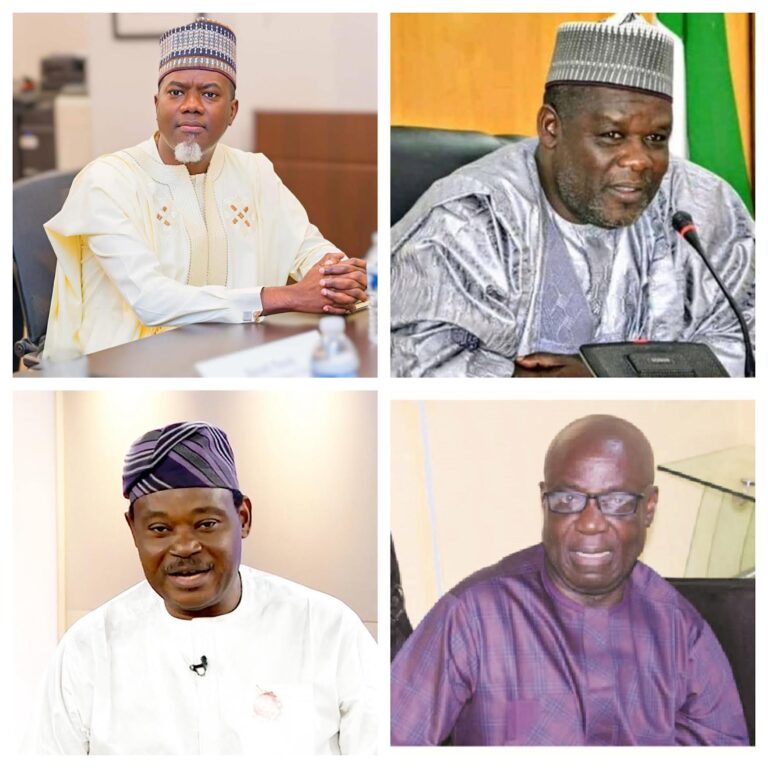
More controversial, however, was the confirmation of several non-career ambassadors, including Reno Omokri (Delta), former Minister of Aviation Femi Fani-Kayode (Osun), former Rivers State sole administrator, ex-Chief of Naval Staff Ibok-Ete Ekwe Ibas (Cross River) and former INEC chairman Mahmud Yakubu.

Others confirmed as non-career ambassadors include Ita Enang (Akwa Ibom), Chioma Ohakim (Imo), Jimoh Ibrahim (Ondo), Femi Pedro (Lagos), Isaac Adewole (Osun), Ajimobi Florence (Oyo), Sulola Akande (Oyo), Ugwanyi Ifeanyi (Enugu), Jerry Manwe (Taraba), Abas Braimah (Edo) and Onueze Okocha (Rivers).

The confirmations came amid strong objections raised by many Nigerians and opposition parties.

President Bola Tinubu had forwarded the ambassadorial list to the Senate earlier in December, urging lawmakers to expedite the screening to enable timely diplomatic postings.

Part of the nominations were read on the Senate floor on December 4 and referred to the Committee on Foreign Affairs.

Their nomination followed the recall of all Nigerian ambassadors by Tinubu in September 2023, shortly after he assumed office.

Opposition parties, particularly the Peoples’ Democratic Party (PDP), had criticised Tinubu’s ambassadorial lists, describing them as ‘scandalous’ and alleging that the administration prioritised political loyalty over merit.

Many Nigerians also expressed outrage on social media, especially over the inclusion of high-profile political loyalists such as Omokri, Fani-Kayode, and Mahmud Yakubu, arguing that the appointments reinforced perceptions of patronage rather than professionalism in Nigeria’s diplomatic service.

The Senate had earlier confirmed three additional non-career ambassadors, bringing the total number of confirmed ambassadors to 67.

They are expected to represent Nigeria in key countries including China, India, Canada, South Africa, the United Arab Emirates and Kenya, as well as multilateral institutions such as the United Nations, African Union and UNESCO.

Court grants Ngige bail after six days in prison

0

THE Federal Capital Territory (FCT) High Court sitting in Abuja, on Thursday, December 18, granted bail to former Minister of Labour and Employment, Chris Ngige.

Ngige is standing trial over alleged ₦2.2 billion contract fraud filed by the Economic and Financial Crimes Commission (EFCC).

The presiding judge, Maryam Hassan granted the bail after hearing arguments from both parties, six days after the former minister was remanded at the Kuje Correctional Centre pending the determination of his bail application.

Ngige, a former governor of Anambra State, was arraigned on December 12 and pleaded not guilty to an eight-count charge bordering on abuse of office and receipt of gratification while supervising the Nigeria Social Insurance Trust Fund (NSITF) between September 2015 and May 2023.

In her ruling, Hassan overruled the prosecution’s objection to bail, holding that bail conditions must be reasonable and not punitive.

She noted that imposing overly stringent conditions would amount to a denial of bail.

The court granted bail on the condition that Ngige produces one surety, who must be a director-level officer in a federal government establishment.

The surety is also required to own a landed property within Abuja Municipal Area Council (AMAC) and submit the property’s certificate of occupancy to the court.

Hassan further ordered that the former governor surrender his international passport after obtaining a replacement, following his claim that the original passport was stolen.

Pending the perfection of the bail terms, the judge directed that Ngige should continue on the administrative bail earlier granted to him by the EFCC.

Ngige had earlier been granted administrative bail by the EFCC in October 2025 on self-recognisance and one surety, which allowed him to travel abroad for medical treatment on the condition that he returned his passport upon arrival.

During his arraignment last week, EFCC counsel, Sylvanus Tahir, a senior advocate, urged the court to remand the former minister pending trial.

However, defence counsel, Patrick Ikwueto, also a senior advocate, opposed the request, citing Ngige’s health condition and the fact that he had already spent several days in EFCC custody before being brought to court.

Ikwueto argued that the offences were not capital in nature and did not warrant denial of bail, insisting that correctional facilities lacked adequate medical capacity to manage his client’s health challenges.

Following the ruling, EFCC counsel, Eunice Daylo, requested a trial date, and the court fixed January 28 and 29, 2026, for the commencement of hearing.

The ICIR reports that the EFCC alleged that Ngige abused his office by approving multiple consultancy, training, supply, and construction contracts in favour of companies linked to his associates.

According to the charge sheet, Cezimo Nigeria Limited allegedly received contracts worth ₦366.4 million, while Zitacom Nigeria Limited was said to have secured contracts valued at ₦583.6 million.

Other firms listed include Jeff & Xris Limited, Olde English Consolidated Limited, and Shale Atlantic Intercontinental Services Limited, with combined contract values running into hundreds of millions of naira.

The commission further alleged that Ngige received cash gifts totalling over ₦93 million through organisations linked to him from companies doing business with the NSITF.

Ngige pleaded not guilty to all charges and will now stand trial beginning later in January.

Court rejects Malami’s quest for bail from EFCC custody

0
A FEDERAL Capital Territory, FCT, High Court, Abuja, has thwarted efforts by the former Attorney-General and Minister of Justice, Abubakar Salami, to secure bail from the custody of the Economic and Financial Crimes Commission (EFCC)
The judge, Babangida Hassan, gave the ruling on Thursday, December 18.
A statement by the commission said Malami, through his counsel, Suliaman Hassan, a senior advocate and a doctorate holder, had approached the court seeking bail from the custody of the EFCC. He argued that his detention by the commission in its ongoing investigation was illegal.
The EFCC’s counsel, J.S. Okutepa, also a senior advocate, submitted that the commission was holding the former minister through a valid remand order obtained at an FCT High Court granted by a judge, S. C Oriji.
“He equally affirmed that the EFCC was a law-abiding commission that would not detain a suspect beyond the lawful period without an order of the court.
“In his ruling, Justice Hassan held, quoting Section 35 of the Constitution, that since there was a provision in the Administration of Criminal Justice Act, ACJA, for detention, Malami was lawfully detained by the remand order of the court. ‘Asking this court to grant this application is tantamount to inviting the court to sit as an appellate court over an application made by a court of coordinate jurisdiction which the court has no power to do'”, the EFCC quoted the judge to have said.
The ICIR reports that Malami has been held by the EFCC over the recovered loot of the former late Head of State, Sani Abacha, a general.
Malami was a minister under the late former President Muhammadu Buhari, under whose government the recovery process was carried out.
There have been altercations between the commission and Malami over the past days since he was held.
While Malami argued that the claims against him were untrue and said the EFCC Chairman, Ola Olukoyede, should recuse himself from investigating him, citing vendetta, the commission has insisted he must be probed.
The embattled former minister had alleged that the investigation and his continued detention were not driven by genuine law enforcement concerns but by “deep-seated historical animosity” involving the EFCC chairman.
He recalled that while he served as attorney-general, the Federal Government set up the Justice Ayo Salami Judicial Commission of Inquiry to probe allegations of corruption and abuse of office within the EFCC, during which the current EFCC chairman served as secretary.
According to him, the Salami report contained findings implicating the EFCC chairman, including recommendations that could have led to his prosecution.
The commission has dismissed Malami’s arguments and continued with its probe. Reports indicate that his houses in Abuja and Kebbi were raided by the EFCC as the investigation progresses.

EU promises stronger security ties with Nigeria

0

THE European Union (EU) has promised to strengthen its longstanding partnership with Nigeria through deeper defence cooperation, aimed at tackling the country’s emerging and complex security challenges.

The EU Ambassador to Nigeria and ECOWAS, Gautier Mignot announced this on Wednesday, December 17, during a courtesy visit to the Chief of Defence Staff, Olufemi Oluyede, at the Defence Headquarters in Abuja.

“Nigeria’s strategic importance to the European Union, 19 out of the EU’s 27 member states currently maintain diplomatic missions in the country,” he said.

Mignot congratulated Oluyede on his recent appointment and reiterated the EU’s commitment to assisting Nigeria in addressing its security challenges.

EU promises stronger security ties with Nigeria,” he added.

The ambassador drew attention to a range of EU-funded non-kinetic initiatives being implemented across Nigeria to promote peacebuilding, stability, and conflict prevention.

Oluyede, in his response, appreciated the EU for its sustained support to Nigeria, noting his familiarity with the union’s various interventions and programmes in the country.

He commended the EU’s resolve to engage Nigeria directly on security issues, beyond its predominant focus on the Multinational Joint Task Force.

The CDS urged that the proposed engagements be expedited, emphasising that Nigeria is confronting complex and overlapping security threats across multiple regions.

According to him, timely EU’s assistance would be vital in enabling the armed forces and other security agencies to respond effectively to these challenges.

The ICIR reported that Germany also promised to strengthen its cooperation with Nigeria in key areas including the fight against terrorism, malnutrition, energy reform, and migration management, as both countries mark 65 years of diplomatic relations.

The country’s Ambassador to Nigeria, Annett Günther described the relationship between the two counties as one that had evolved from post-independence friendship to “an increasingly intense partnership of equals,” focused on shared prosperity and stability.

[BREAKING] Farouk Ahmed resigns as NMDPRA boss amid Dangote corruption allegations

0

FAROUK Ahmed has resigned as the Chief Executive Officer of the Nigerian Midstream and Downstream Petroleum Regulatory Authority (NMDPRA) following days of controversy triggered by corruption allegations levelled against him by billionaire Aliko Dangote.

President Bola Tinubu, in a statement on Wednesday, December 17, confirmed Ahmed’s resignation and announced that he had forwarded the name of Saidu Aliyu Mohammed to the Senate for confirmation as the new head of the NMDPRA.

Ahmed was appointed in September 2021 by former President Muhammadu Buhari to lead the NMDPRA, one of the two regulators created under the Petroleum Industry Act (PIA).

His exit came shortly after Dangote petitioned the Independent Corrupt Practices and Other Related Offences Commission (ICPC), accusing him of gross abuse of office, violation of the Code of Conduct for Public Officers, corruption, and financial impropriety.

Dangote, through his lawyers, alleged that Ahmed spent over $7 million in public funds on the education of his four children in Switzerland, an expenditure he claimed was inconsistent with the earnings of a career public servant.

The petition also accused the former regulator of using his position to divert public funds for personal gain.

The ICPC had confirmed receipt of the petition and said it would investigate the allegations.

In a brief reaction earlier, Ahmed dismissed issuing any public response to the claims and described the allegations against him and his family as “wild and spurious.”

He said he chose not to engage in public exchanges while the matter was before an investigative body.

While the Presidency did not link Ahmed’s resignation directly to the corruption allegations, the timing of his departure has intensified public reactions on the matter.

To replace him, Tinubu nominated Mohammed, a former Group Executive Director and Chief Operating Officer, Gas and Power Directorate of the Nigerian National Petroleum Company Limited (NNPCL).

Mohammed, according to the Presidency, has held several senior positions in the oil and gas sector, including Managing Director of the Kaduna Refining and Petrochemical Company and the Nigerian Gas Company.

The President also announced the resignation of Gbenga Komolafe as Chief Executive Officer of the Nigerian Upstream Petroleum Regulatory Commission (NUPRC) and nominated Oritsemeyiwa Amanorisewo Eyesan as his replacement.