A member of the House of Representatives, Abdulsammad Dasuki (PDP, Sokoto), on Wednesday, December 17, raised concerns over alleged inconsistencies between the tax laws passed by the National Assembly and the versions later gazetted and released to the public.
This revelation came after the Federal Government had prepared the grounds for implementing the new tax law from January 1, 2026, with the approval of the establishment of the National Tax Policy Implementation Committee (NTPIC).
The committee has been tasked with overseeing the coordinated rollout of the Federal Government’s new tax reforms.
Citing Order Six, Rule Two of the House Rules, Dasuki informed lawmakers that his legislative privilege had been breached, contending that the gazetted versions of the laws did not faithfully represent what was debated, approved, and passed on the floor of the House.
He said after the passage of the tax bills, he spent the last three days reviewing the gazetted copies alongside the House Votes and Proceedings, as well as the harmonised version agreed upon by both chambers of the National Assembly and discovered notable discrepancies.
“I was here, I gave my vote, and it was counted, and I am seeing something completely different,” Dasuki said, adding that he obtained copies of the gazetted laws from the Ministry of Information and found them to be inconsistent with what was approved by both the House and the Senate.
The lawmaker clarified that his address was not meant to serve as a motion, but rather to draw the House’s attention to what he termed a “serious violation” of legislative procedure and the Constitution.
He urged the Speaker to ensure that all important documents, such as the harmonised versions, the Votes and Proceedings from both chambers, and the currently circulating gazetted copies, are submitted to the Committee of the Whole for comprehensive review by the members.
Dasuki warned that allowing laws that deviate from those duly passed by the National Assembly to be released to the public would undermine the legislature’s credibility and constitute a breach of constitutional provisions.
“Mr. Speaker, I will be pleading that all the documents should be brought before the Committee of the Whole. Thank you. The whole members should see what is in the gazetted copy and see what they passed on the floor so that we can make the relevant amendment. Mr. Speaker, this is a breach of the Constitution.
“This is a breach of our laws, and this should not be taken by this honourable House,” he said.
Editor’s Note: Reader discretion is advised as some of the images used in this report are disturbing.
ON Tuesday, December 9, Headquarters 23 Brigade of the Nigerian Army issued a statement absolving its officers of killing unarmed protesting women in Lamurde Local Government Area of Adamawa State. The women were protesting alleged bias of the military in the crisis between Bachama and Chobo tribes in the LGA. In this report, The ICIR’s Marcus Fatunmole visited the area and unearthed what transpired.
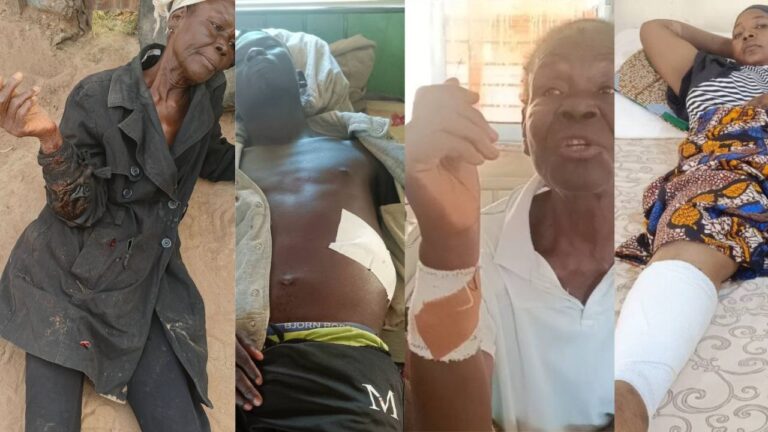
Seventy-three-year-old grandma, Anogrom Abiathar, is currently writhing in pains at the Numan General Hospital, Numan town, Adamawa State.
The widow and mother of five is among the women allegedly shot by soldiers in Lamurde town, Lamurde LGA on Monday, December 8.
While she is lucky to be alive with bullet wounds on her right arm, 11 others, including a girl, died in the shooting.
Madam Abiathar joined dozens of other women in Lamurde to protest alleged bias in the soldiers handling of long-standing conflict between the Bachama and Chobo tribes in the LGA.
The mother of five wondered how unarmed women and children would be gunned down by soldiers who should protect them.
73-year-old Anogron Abiathar. PC: Lamurde community
She also expressed shock that the military could deny the shooting and claimed that it was carried out by local militias. She said the soldiers shot sporadically and with fury before zooming off from the scene with their convoy.
Asked what form of justice she demanded, she said no government or anyone could bring back her fellow women and children who were killed during the protest.
Other survivors at the Numan General Hospital shared their story of the shooting with The ICIR. Among them is 12-year-old Takuso Victoria who lost two of her toes to gunshot. She had finished primary education at the Central Primary School, Lamurde, in September this year but could not secure admission into the Government Day Secondary School in the town. She had since been staying at home. Victoria joined her mother at the protest where she became a victim of the attack.
While the girl is hoping to be fine and return home, another 11-year-old died at the hospital from the gunshot.
Takuso Victoria. PC: Marcus Fatunmole/The ICIR
Deceased families are mourning in Lamurde and across the state. Destiny Charles lost her mother, Florence Frank, to the gunfire. The 25-year-old has one sibling – an 11-year-old boy – whom she would take responsibility to fend for.
Destiny said her father no longer fended for her mum and children since he married another wife over a decade ago. Her mum’s sudden death adds to the agony she has borne for years. She didn’t finish secondary school secondary school because of lack of funds, despite being among the best in her class. Destiny, who speak the English Language fluently, has been living with her grandmother in Numan without a job.
“I was at the protest and returned home without knowing that my mum was still there. As I was lying down, I heard gunshots. Someone came and asked for my mum. I told her she was outside. The person asked if my mum had a phone. I said no. The person told me that women had been shot outside. We rushed to the hospital and saw people lying down. People were crying. I began to look for my mum, only for me to enter one room, and I saw her corpse.
“At first, I didn’t know that she was dead. I thought she was suffering from pains. I was shouting, crying…When I got there, they had already covered my mum. I asked the people if she had died; they said yes. I kept crying. I was very shocked. I couldn’t believe that she had died.”
The ICIR met Destiny’s grandmother in her home in Numan. The grieving mother demanded justice for her daughter.
Destiny Charles who lost her mum. PC: Marcus Fatunmole/The ICIR
Another bereaved, Remedy Yakubu, a resident of Lamurde, said his brother, Lucky Yakubu, was just passing by and was not protesting when he received bullets. “He was on his way home and they shot him with two bullets. He died instantly before I rushed him down to hospital in Lamurde. It’s Army that shot him,” he stated.
The ICIR reports that three men – Thomas Moses, 25, Shalom Orland, 28, and Phineas Dennis, 42 – are battling to survive gunshot wounds at the Numan General Hospital. They claimed to be passers-by shot by soldiers.
As of Saturday, December 12, eleven people, including one male, had died from the attack. 17 were at the Numan hospital, 16 were at the State Specialist Hospital in Yola, and two others at the German Hospital in the state capital, according to Caleb Zadab, a journalist and community representative looking after the victims.
Mass burial
The deceased were buried in mass grave adorned in the Nigerian flag at the Lamurde LGA Secretariat. Youth in the Lamurde community insisted the casualties must be buried at the secretariat since it’s the most important government institution in the town. “The mass grave will serve as memorial for the victims and be a reminder of the dastardly act of the Nigerian military,” one of the youths told the reporter.
Mass grave where the protesting women were buried
How Bachama, Chobo crisis evolved
Bachama and Chobo ethnic nationalities in Lamurde LGA have co-existed for centuries. They have intermarried and share some socio-cultural identities, including religion. However, these were not enough to keep them as one. The Chobos feel they should be independent of the Bachama traditional council, which has been ruling over both tribes.
Both tribes fall under the Bachama Chiefdom, comprising Numan and Lamurde LGAs. The LGAs have 10 wards each. By population, the Chobo people dominate only two out of the 20 wards. The wards are in the Lamurde LGA.
The Chobo are seeking their own chiefdom from the Adamawa State Government. Led by its youth, the people say the only condition for peace in the LGA was for them to get the chiefdom. They also say that granting the chiefdom comes with land demarcation, which will enable to overcome the challenges arising from land ownership.
Poles hit by bullets during the attack on the women protesters. PC: Marcus Fatunmole/The ICIR
Land ownership is the architect of the current feud. The Bachama nationality claims it has inhabited the area for over four centuries and brought down the Chobos from ‘mountains’ where they lived to enable them to farm. Conversely, the Chobos argue that their forebears accommodated the Bachamas when they migrated from Sokoto. Litigation over land ownership between the parties is currently in court.
The crisis escalated in July this year when both tribes burnt down each other’s communities in Waduku, populated by Bachama, and Lakan and Bashaka, owned by Chobos. The state government promptly declared 24-hour curfew, which residents said disrupted socio-economic activities. The government has severally mediated in the crisis, which has defied solutions.
There are also allegations that the military officers deployed to the area were favouring the Chobos and often failed to respond promptly whenever the Bachamas called on them. On Monday, December 7, Lamurde women trooped to the street, carrying tree branches and leaves to protest the alleged bias by the soldiers. They said the military failed to respond to distress calls the previous night when Waduku,Tingno and Tito communities were attacked by the Chobo people.
In the process, they blocked some soldiers deployed to the area to contain the crisis from passing, alleging that the officers had come too late. The drama unfolded for hours. More platoons of soldiers passing through the route were also blocked by the irate women as the stalemate lingered.
What followed was the shooting and killing of the protesters and passers-by. The Headquarters 23 Brigade of the Nigerian Army denied its troop fired the shots. It blamed the killing on “armed men suspected to be fighting for Bachama.”
One of the women killed during the attack. PC: Marcus Fatunmole/The ICIR
While the survivors say no other persons shot them but the soldiers, the military says otherwise.
Several eyewitnesses in Lamurde confirmed to The ICIR that troop fired the shots. They also said an Army colonel led a military team to the community on Friday, December 12, to obtain information on the attack. Representatives of the Army’s leadership also visited the hospital where survivors are receiving treatment.
Meanwhile, the Governor Ahmadu Fintiri-led administration imposed another 24-hour curfew on the LGA. As of the time of gathering information for this report, the curfew was only effective in some parts of the LGA. People were moving freely along the Gyawana-Lamurde route. However, the curfew did not stop residents from moving within their communities. Only movement across communities was restricted.
Our position – Bachama, Chobo leaders
The head of the Bachama Traditional Council, Hama Bachama, Daniel Ismaila Shagah, a doctorate holder, blamed the Chobos for the conflict.
Speaking through his aide, Agoso Bamaiyi, a doctorate holder and District Head of Gyawana town, the Hama Bachama said the Chobo people had been aggressive in the manner they were demanding a chiefdom.
Hama Bachama, who controls 21 districts under his council, said, “For a long time, they’ve been mountainous people. The Bachamas brought them down from the mountains to the kingdom lands. Right now, they’re claiming lands that are not theirs; they’ve been fighting over family lands.”
Agoso Bamaiya, a doctorate holder and and District Head of Gyawana town. PC: Marcus Fatunmole/The ICIR
He alleged that the Cbobo people had been arming themselves for a long time. “We learnt that some of their members who work in the security agencies were supplying them arms and connecting them with the people who sell arms to them. We never thought that the Bachama people and Chobo would ever fight. The Bachama people were not ready for any fight,” he added.
He went further, “The accusation that the Bachama people are throwing at the security officers is that they favoured the Chobo above the Bachama people. If you look at the circumstance, you will agree with them because the security operatives, including the military, were providing armed escorts for the Chobo people to go to their farms. They were providing armed escorts for them to travel in-between communities, but they were not doing that to the Bachama people.
“There was already disaffection in the Bachama communities against the security agencies. On Sunday, December 7, the Chobo youth came out again and attacked Waduku and burnt it down for the second time. They attacked Tingno and burnt down part of it. They also attacked Tito and burnt it down completely. They now approached Rigangun and Lamurde, which is the local government headquarters, but at Rigangun and Lamurde, they met resistance. This led to the fight that stretched through the night till the following morning.
Names of protesting women who were allegedly shot dead by Nigerian soldiers in Lamurde
“Throughout the night, calls were made to the security agencies, they didn’t come in. They didn’t do anything. In the morning, when the soldiers wanted to pass through Lamurde, the women came out and blocked the path. They held tree branches and leaves. They were singing and shouting. This was a spontaneous process; it was not organised. Nobody planned it. They just decided that they’d had enough of the security agencies for delaying. The fight went on throughout the night. The security agencies didn’t intervene… They were completely unarmed; they were just venting their anger and frustration over the security officers. That stalemate went on for a very long time. Toward evening, another convoy of soldiers came to Lamurde, attempting to pass but the women were already there.
“They blocked the path. You would hear that the Brigade Commander was in that convoy. You would also hear that the Theatre Commander was in that convoy. It’s just that the people could not tell who is Brigade or Theatre Commander. They were those responsible for the soldiers sent to Lamurde. But most likely, it was the Theatre Commander, not the Brigade Commander who was in that convoy. He didn’t come down. The women also refused to allow them to pass. Another detachment of soldiers came from the opposite direction. After a while, they fired shots into the air. Remember, these are women and children, and those children were girls, not boys.”
He emphasised that the soldiers shot the women, children and others hit by bullets. He also called for a thorough investigation into the attack and that those responsible should be held to account.
“Were they acting on command or they acted on their own? We need to find that out because the shells they left on the ground, our people picked them up. One ran and left his helmet; that was also picked up. There are video evidence and all that. It was the Army that did the shooting,” he stated.
Names of survivors of the attack on women protesters in Lamurde
The monarch condemned the ‘hasty’ denial of soldiers involvement in the shooting by the military. He wondered why the military would take such a position without investigation.
Deceased victims of Lamurde shooting in Adamawa State
“We feel that this falls in line with the normal behavior of the military. When things go wrong, they tend to deny it. We are not taking it. We are not accepting it. As a result of that shooting, we have 10 dead now. We have buried them in a mass burial. Several others, 37 of them, are in hospitals here in Numan. Some are in Yola, the state capital.
“From all the information we have, it was the military that did the firing. But the military is blaming the Bachama militia. The question is: why will the Bachama militia fire on its own people? I assure you that there is no Bachama militia. That is the first thing we have to clear. There is no group of people that have set themselves aside and identify as Bachama militia. Whatever happened that people needed to put up resistance, it was just the young people who stepped out through raw courage and faced whatever situation. Secondly, that particular point where the firing was done, there were all kinds of security agencies, including SSS and other partner security agencies.
Nany Peter who was shot in the buttock. PC: Marcus Fatunmole/The ICIR
“No militia man in his right senses would go to such a place. They won’t even get close to that place let alone firing. Thirdly, the injuries we saw are consistent with the weapons that the military use. These are not simple, light injuries, plain wounds from normal guns that you carry. These are deep wounds, cutting through flesh, breaking legs and arms, and shattering heads. We repeat, it’s the military that did the shooting. We’ve been asking for investigation. Instead of denying it, they should set up a panel, or the Federal Government should set up an independent investigative panel or investigative journalists should come and do the investigation, look at the evidence and present the case to the world; because you see, these are women,” the monarch stated.
According to him, It’s against international convention for soldiers or fighters of any sort to fire on women, children and the aged. He added that the military is constitutionally bound to defend citizens, not to kill them.
He also noted that the gap between civilians and the military had widened in the past decade, worsening violence from soldiers against civilians. He opined that the situation had been worse than when the military ruled Nigeria.
“The thinking of the Traditional Council is that they should strengthen the police and bring back the mobile police fully. They are trained to interact with civilians. For instance, if it was police convoy that was blocked by these women, if the need be, the worst they would have done is to teargas; everybody would run back to their houses. Nobody would be killed.”
Anagron Abiatha at the hospital. PC: Marcus Fatunmole/The ICIR
Reacting to the new chiefdoms created by the state government, he said the process was done transparently. He said the Chobo people presented their case to have a new chiefdom, “but unfortunately, they did not have proper lobbying etiquette.” He added that “the letter they wrote was aggressive and combative, and they ended up angering the governor.” He also said the Chobo’s population did not meet the requirement for having a chiefdom.
Speaking on why the women were immediately buried after they were shot, he said, the Bachama custom required that whenever people die during war, they must be buried immediately.
Addressing The ICIR on behalf of the Cbobo people, the Acting District Head of Bulkutu community, Elkanah Ishmael, said the crisis started after his people demanded a chiefdom from the state government.
“Since we wrote a memo requesting for chiefdom, we’ve been having problem with Bachama people. They are saying that where did Chobo man has land that he can look for chiefdom? They have forgotten that our grandfathers lived there, and they too came from Sokoto to meet our grandfathers here. Because things are not doing well, they have been ruling us; that’s okay. Now that the executive governor has asked whoever wants a chiefdom to write, we have written. Since then, we’ve had no peace with these people. A lot of things happen. They are not happy that we want our own chiefdom.”
Pwafurino Ishaku. PC: Marcus Fatunmole/The ICIR
He said the hatred that arose from his people’s demand for a chiefdom led the Bachama people to burn down Chobo villages, including Warmi and Bashaka. He said it was from that point his people began to defend themselves.
“What happened in Bashaka, the same thing happened here. The Bachama of Waduku came to attack people of Lakan, where Chobo are. They burnt our place in Lakan. Our people pursued them and our people burnt down Waduku. This happened on Monday, July 7, this year. The Bachama people came with another attack on Bashaka on Friday of the same week.
“Another recent attack on us was last Sunday, December 7. Tingno community comprises Chobo and Bachama people. Around 12 midnight, Bachama people started burning the homes of Chobo people. When our people in other communities heard of it, they mobilised to rescue their kinsmen in Tingno. It was from there the crisis escalated, which extended till the following Monday morning, when they started burning the houses of each other. A lot of lives have been lost. They killed Chobo people, the Chobo people also killed them. About 20 Chobo people died, but I don’t know the number of casualties in Bachama.”
The scene where the protesting women were shot in Lamurde. PC: Marcus Fatunmole/The ICIR
When asked if his people carried weapons, including guns to fight their neighbours, he said he could not confirm. He also confirmed that none of the people allegedly killed by the military in Lamurde was from Chobo tribe. He said they were from Lamurde, a mainly Bachama town.
Asked if there could be temporary peace in the area pending when his people’s demand would be addressed, he said, “The only solution there is, you know when somebody is aspiring for something, if that is done, it will solve many problems.” He added that getting the chiefdom was the only condition for peace.
He also responded to claims that its tribe’s small size would not make the government approve a chiefdom for it. “Chobo people have two wards in Lamurde Local Government but it has about 44 villages. You know the population of Bachama and Chobo people, they are almost the same, but due to a kind of game, we only have two wards. Our population can even be more than Bachama in Lamurde because our villages are more than theirs.”
A man in a pool of blood during the attack. PC: Marcus Fatunmole/The ICIR
More victims share their agonies at Numan General Hospital
Pwavi Ayuba, 45, and businesswoman was shot in the hand. She lost two of her friends who participated in the protest. The mother of five said she and other victims had been feeding themselves at the hospital, with the support of well-meaning Nigerians. She, however, said the government was footing all medical bills.
Thomas Moses, 25, and farmer, was riding on his motorbike when bullets hit him. Shalom Orland, 28, a father of two, said he was watching the drama between the protesting women and soldiers when he was shot.
Another man, Phineas Dennis, 42, said soldiers saw him on the road, ran after him and shot him. A mother, Nancy Peter, 67, is battling for her life as bullets ripped through her buttock during the rampage. The widow, with 10 children, has since abandoned her business and farms after landing at the hospital. Homori Micah said she was hit by a butt of a soldier’s gun. The 40-year-old, with five children, demanded justice from the government.
Sharlom Orland. PC: Marcus Fatunmole/ICIR
Mumkai Emmanuel, 35, claimed she was running away when soldiers ran after him and marched on him, causing him internal injury. The father of three is a farmer.
Another victim at the Numan General Hospital, Pwavi , lost two of her sisters. Her sisters namely Suzzy Tanko, Mercy Kennedy died in the attack, while three others, namely Pwanonau Dennis, Happy Danbaki, and Gopwa Smallie, are battling for their lives at the Federal Medical Centre, Yola.
Mary Musa,18, Favour Mamuda, 20, Pivanide Fukoshi, 29, Tanin Bagudu, 57, are all at the Numan hospittal with different degrees of bullet wounds.
Danladi Walma, 45, is also in serious pain at the facility. The mother of five decried the spate of the attack, stressing that she didn’t expect it. A lady, Only Bekal, 20, was hit with butt of gun in the womb. Pwafurino Ishaku, 34, was also not spared of the gunshots.
Godiya Pwaadakai, 29, and an orphan was writhing in pains when the reporter met her on the hospital bed, while Keziah Nemuel, 37, and hairdresser could not also hold back tears as she narrated her ordeal. Many of the survivors had different parts of their bodies hit by bullets bandaged at the hospital.
Homori Micah. PC: Marcus Fatunmole/ICIR
Victims list
Names of the deceased, as exclusively obtained by The ICIR, include Florence Frank, Suzy Tanko, Mary Talmon, Mercy Kennedy, Lucy Yakubu, Pwamwasari Tami, Mary Shikanno, Destiny Gibson, and Hunbokwama Nickson.
Others are Happy Dan Baki, Arnoron Abiyata, Precious, Evenlyn, Keziya Nemuel, Serah Alpha, Elizabeth Pwavi, Saipwa Moses, Pwakandi David, Pwavi Ayuba, Favour Mamuda, Pwanidi Fukushi, Mary Musa, Only Pekers, Peace Zuifanus, Godiya Pwavadakai, and Joy Iliya.
We are investigating the killings-Adamawa government
Speaking with The ICIR on the conflict, the Senior Special Adviser to the state Governor on Community Peace and Security, Ahmed Lawan, said the state government was investigating the killing. He vowed that anyone responsible for the shooting would face the wrath of the law.
While urging Bachama and Chobo communities to embrace peace, he said the two tribes were the only people threatening the peace of the state since it came into power.
Recall that Adamawa is among the three states in the North-East that had seen a decade-long insurgency, with attendant crippling of their economies, deaths and displacement of residents in thousands and millions respectively. While Borno still witnesses sporadic attacks, Yobe and Adamawa have since been free from the clutches of terror.
The mother of Madam Florence killed during the protest (Destiny Charles grandma) PC: Marcus Fatunmole/The ICIR
“From the beginning of this crisis, the government has been involved. We have been calling both parties to sit with the government and make sure that we have amicable resolution. A week before that happened, the governor sat down with both parties at the Government House.
“It was unfortunate that on Sunday, December 7, there was another attack again. That’s why the government decided to impose 24-hour curfew to make sure that the peace return. But very unfortunately, we had a situation where women were being killed, and the government set up an investigation committee. We’re investigating to make sure that we find out the truth of what transpired…
“We are on top of the situation to make sure that peace returns in that area, and also we are investigating to find out what really transpired on the killing of the women. So, any party involved, the government is going to make sure that there is justice in both communities by God’s grace,” Lawan stated.
He also conveyed the government position on Chobo people’s condition for ending the conflict, which is achieving the chiefdom they seek. He said, “I think getting chiefdom is not by taking law into your hand. If you look around, this crisis has been happening, and I think the only thing you can do is request. You write to the government that this is what you want, and the government is going to see and to make sure that they do it. But the way they are always bringing a crisis in that area, I think that will not resolve the problem.”
Remedy Yakubu who lost his brother to the shooting. PC: Marcus Fatunmole/The ICIR
He assured that the government would not take sides on the feud. He also said the government and police were doing everything possible to mop up arm in the area.
Lawan posited that a committee set up by the government would take decision on what could be done to support the families of people killed, and those who survived the attack.
Adamawa Police
When contacted, the spokesperson of the Adamawa State Command of the Nigeria Police Force, Suleiman Nguroje, a superintendent of police, said the Force was in sustained collaboration with sister security agencies and were doing everything humanly and legally possible to restore peace in the Lamurde LGA.
Reacting to alleged proliferation of arms in the LGA, he said the command would apprehend and prosecute anyone caught with weapons. He also assured of adequate policing in the area.
“The command is now in the touch with critical stakeholders that include government representatives, community, religious, youth, women leaders amongst others to adopt alternatives dispute resolution as means to solving the lingering crisis,” he stated.
THE Central Bank of Nigeria (CBN) has revoked the operating licences of Aso Savings and Loans Plc and Union Homes Savings and Loans Plc, citing violations of banking regulations and insufficient capitalisation.
The decision, disclosed in a statement on Tuesday, December 16, by the spokesperson of CBN, Hakama Sidi-Ali, was part of the apex bank’s ongoing efforts to strengthen the mortgage sub-sector and enforce compliance with relevant laws.
According to the CBN, the affected institutions failed to meet the minimum paid-up capital requirements for their banking licence categories, had assets insufficient to cover liabilities, and were critically undercapitalised with capital adequacy ratios below the prudential minimum.
They also failed to comply with several directives issued by the regulator.
“The affected institutions had violated various Sections of BOFIA 2020 and the Revised Guidelines for Mortgage Banks in Nigeria, including: failure to meet the minimum paid-up share capital requirement for the category of the bank licence granted to them by the CBN.
“Having insufficient assets to meet their liabilities; being critically undercapitalised with a capital adequacy ratio below the prudential minimum ratio as prescribed by the CBN; and failure to comply with several directives and obligations imposed upon them by the CBN,” the statement read.
The move comes amid a broader push by the CBN to ensure stability and resilience in Nigeria’s mortgage and housing finance sector.
In recent years, the apex bank has mandated recapitalisation exercises for mortgage banks to improve liquidity and lending capacity, as well as to protect depositors.
The revocations show the need for other institutions in the sector to maintain proper governance, adequate capital, and compliance with regulatory requirements.
The CBN reiterated its commitment to promoting a sound financial system and safeguarding the interests of depositors, stressing that compliance with capital and operational standards was non-negotiable for all financial institutions.
In 2019, the CBN raised the capital requirements of the Primary Mortgage Banks (PMBs) by 73.3 per cent to a total of N13 billion as a whole, from N7.5 billion in 2013.
A breakdown of the financial requirements of the sub-sector shows that operators of the national category of the PMBs are required to shore up their capital base to N8 billion, which is an increase of 60 per cent compared to N5 billion it was in 2013.
Most working-class Nigerians still struggle to own a house, despite several housing policies initiated by the state and the Federal Government.
The ICIR has, in previous reports, highlighted how policy failures have led to the unaffordability of homes by many Nigerians in need of decent accommodation, despite housing policies of the current administration and the existence of Primary Mortgage Banks.
THE Independent Corrupt Practices and Other Related Offences Commission (ICPC) has said it would investigate a petition filed by billionaire Aliko Dangote against the Chief Executive Officer of the Nigerian Midstream and Downstream Petroleum Regulatory Authority (NMDPRA), Farouk Ahmed.
The anti-graft agency confirmed on Tuesday, December 16, that it had received the petition through Dangote’s lawyer.
“The Independent Corrupt Practices and Other Related Offences Commission (ICPC) writes to confirm that it received a formal petition today Tuesday 16th December, 2025, from Alhaji Aliko Dangote through his lawyer.
“The petition is against the CEO of the NMDPRA, Alhaji Farouk Ahmed. The ICPC wishes to state that the petition will be duly investigated,” the commission said.
The confirmation followed Dangote’s petition accusing the NMDPRA boss of abuse of office, corruption, and financial impropriety.
In the petition, Dangote alleged that Ahmed spent millions of dollars on the education of his children abroad, an expenditure he argued was inconsistent with earnings from public service.
The petition also urged the ICPC to probe alleged diversion of public funds and violations of the Code of Conduct for public officers, citing provisions of the ICPC Act and relevant court judgments.
The allegations came against the backdrop of rising tensions in Nigeria’s downstream petroleum sector, where Dangote has repeatedly accused regulatory authorities and entrenched interests of undermining domestic refining and protecting fuel import cartels.
Earlier, Dangote had publicly called on the Federal Government and anti-corruption agencies to investigate the NMDPRA boss, arguing that transparency and accountability were critical to restoring confidence in the sector.
PRESIDENT Bola Tinubu met with the leadership of the Nigeria Labour Congress (NLC) late Tuesday over plans by the organised labour to stage a nationwide protest against unresolved demands.
The Special Adviser on Information and Strategy to the President, Bayo Onanuga, revealed this in a statement, noting that the meeting which took place at the State House, Abuja, followed growing tensions between the Federal Government and labour unions over issues bordering on workers’ welfare, rising cost of living and the implementation of previously agreed concessions.
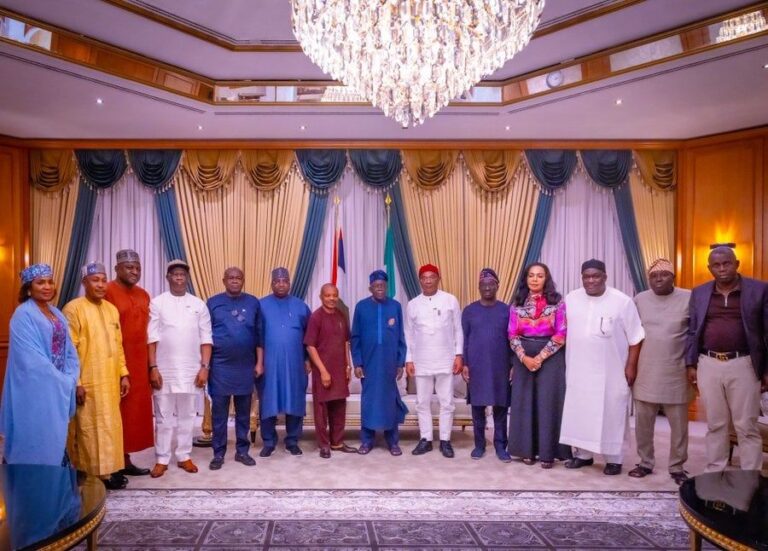
“President Bola Ahmed Tinubu met with the leadership of the NLC, along with the chairman of Progressive Governors Forum, Hope Uzodimma, Governor of Edo State, Monday Okpebholo and Governor of Kebbi State, Dr Nasir Idris, and the Minister of State Labour, Honourable Nkeiruka Onyejeocha,” the statement partly read.
Onanuga said that the Nigeria Labour Congress was led to the meeting by its national leadership, without highlighting the outcome of the meeting.
“The chairman of the NLC, Comrade Joe Ajaero, led the labour leaders to the meeting,” it added.
The meeting followed the NLC’s recent threat to embark on mass protests nationwide over what it described as the Federal Government’s failure to fully address workers’ demands, including relief measures to cushion the impact of economic reforms, wage-related concerns and broader socio-economic hardships faced by Nigerian workers.
The workers had accused the government of delaying the implementation of agreements reached in previous engagements, warning that failure to act decisively could trigger industrial unrest and street protests across major cities.
THE Chief Executive Officer of the Nigerian Midstream and Downstream Petroleum Regulatory Authority (NMDPRA), Farouk Ahmed, has dismissed making any public statement in response to corruption allegations levelled against him.
He described a circulating response attributed to him as false.
In a statement reacting to the controversy on Wednesday, December 17, Ahmed said his attention was drawn to a “purported response” credited to him on the allegations, stressing that the statement did not originate from him.
“My attention has been drawn to a purported response I was said to have made on the recent allegations against my person. I hereby state categorically that the so-called statement did not emanate from me,” he said.
Ahmed acknowledged awareness of what he described as “wild and spurious allegations” against him and his family but said he deliberately refrained from engaging in public exchanges due to the sensitive nature of the sector he regulates.
“While I am aware of the wild and spurious allegations made against me and my family and the frenzy it has generated, as a regulator of a sensitive industry, I have opted not to engage in public brickbat,” he noted.
The NMDPRA boss said he welcomed the decision to submit the matter to a formal investigative body, expressing confidence that the process would afford him the opportunity to clear his name.
“Thankfully, the person behind the allegations has taken it to a formal investigative institution. I believe that would provide an opportunity to dispassionately distill the issues and to clear my name,” Ahmed added.
The ICIR reports that the reaction followed a petition submitted to the Independent Corrupt Practices and Other Related Offences Commission (ICPC) by Africa’s richest man, Aliko Dangote, through his lawyers.
Dangote had accused Ahmed of corruption, abuse of office, and financial impropriety, including allegations that millions of dollars were spent on the education of Ahmed’s children abroad.
The ICPC has since confirmed receipt of the petition and said it would investigate the allegations.
Dangote’s petition came days after he publicly accused the NMDPRA chief of living above his means during a press briefing, where he called on the Federal Government and anti-graft agencies to probe the regulator.
He also linked his accusations to broader concerns about alleged sabotage and entrenched cartels in Nigeria’s downstream petroleum sector, which he claimed were frustrating local refining efforts, including operations at his Lekki refinery.
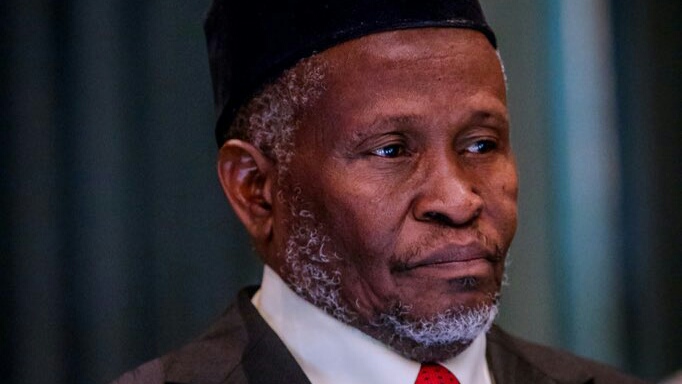
THE Chief Justice of Nigeria and Chairman of the National Judicial Council, Justice Kudirat Kekere-Ekun, joined other prominent Nigerians mourning the passing of former Chief Justice of Nigeria, Justice Ibrahim Tanko Muhammad.
Kekere-Ekun described his death as a profound loss to the nation’s judiciary in a statement signed and released by the NJC Secretary, Ahmed Gambo, on Tuesday, December 16.
“His keen intellect and compassionate demeanour earned him the respect of judges, lawyers and citizens alike, as his contributions have indelibly shaped Nigeria’s legal landscape,” the CJN said.
Recall,Justice Muhammad, who died in the early hours of Tuesday at a hospital in Saudi Arabia, was about two weeks before his 72nd birthday on December 31.
While acknowledging the pain of his passing, the CJN said the judiciary takes solace in the enduring legacy of hard work, honesty, and dedication left behind by the former head of the Nigerian judiciary.
Also reacting to his death, the Supreme Court of Nigeria, in a statement issued by its Director of Information and Public Relations, Festus Akande, extended its condolences to the family of Muhammad.
“Justice Muhammad was a jurist whose tenure was marked by a strong commitment to the rule of law, judicial independence and the fair administration of justice,” Akande.
The court added that he played a key role in strengthening the appellate system, improving procedural efficiency, promoting the professional development of judges and judicial staff, and fostering a culture of transparency and accountability within the judiciary.
“Justice Muhammad is survived by members of his family and a grateful legal community, as the court and the CJN pray for the peaceful repose of his soul,” the statement added.
Also reacting, the Bauchi State Governor, Bala Mohammed, commiserated with the jurist’s family in a statement by his spokesman, Mukhtar Gidado.
Mohammed described Muhammad as a venerable jurist whose life and career exemplified dedication to duty, integrity in service, and steadfast commitment to the rule of law.
“It is with profound sadness and a deep sense of loss that His Excellency, Sen. Bala Abdulkadir Mohammed CON, FNIPR ( Kauran Daular Usmaniyya ), the Executive Governor of Bauchi State, on behalf of his family, the Government and the good people of Bauchi State, joins all Nigerians in mourning the sudden passing of Honourable Justice Ibrahim Tanko Muhammad, GCON, a distinguished son of our great State, who died today in a Saudi Arabian hospital after a prolonged illness,” the statement read.
The governor explained that the judge rose through the legal profession with diligence and distinction, bringing to the highest office in the nation’s judiciary his wealth of experience and commitment to justice.
The ICIR reports that Justice Muhammad, a devout Muslim, was praised for exemplifying the highest ideals of the Bench, as well as for his courage and integrity in the discharge of his duties.
He served as a Justice of the Supreme Court of Nigeria from 2006 to 2022 and as Chief Justice of Nigeria from 2019 until his resignation in June 2022 on grounds of ill health.
Born in Bauchi State, the late former CJN was called to the Bar in 1981 and began his judicial career in 1982. He was appointed Chief Magistrate of the High Court of the Federal Capital Territory in 1989, a position he held until 1991, before becoming a judge of the Bauchi State Sharia Court of Appeal. In 1993, he was elevated to the Court of Appeal and later rose to the Supreme Court.
AFRICA’S richest businessman, Aliko Dangote, has petitioned the Independent Corrupt Practices and Other Related Offences Commission (ICPC) over allegations of corruption, abuse of office, and financial impropriety against the Chief Executive Officer of the Nigerian Midstream and Downstream Petroleum Regulatory Authority (NMDPRA), Farouk Ahmed.
The petition, dated December 16, 2025, was signed by Dangote’s lawyer, Ogwu J. Onoja, a Senior Advocate of Nigeria (SAN) who leads his legal team and was addressed to the Chairman of the ICPC in Abuja.
In the letter, the legal firm alleged that Ahmed, who was appointed NMDPRA chief executive in September 2021 by late former President Muhammadu Buhari, had “grossly abused his office contrary to the extant provisions of the Code of Conduct for public officers.”
It also noted that the petroleum regulatory boss had become “enmeshed in monumental corruption and unlawful spending of public funds running into Millions of Dollars.”
According to the petition, Ahmed allegedly spent “a humongous amount of money of over $7 Million of public funds for the education of his four children in different schools in Switzerland for a period of six years upfront,” without evidence of lawful income to support such expenditure.
The children listed in the petition are Faisal Farouk, Farouk Jr., Ashraf Farouk, and Farhana Farouk, with the schools named as Montreux School, Aiglon College, Institut Le Rosey, and La Garenne International School.
The lawyers further alleged that Ahmed had used “the instrumentality of his office as the Chief Executive Officer of the NMDPRA to embezzle and divert public funds for self-gains and pursuit of private interest to the detriment of the Nigerian people,” adding that the alleged actions had triggered protests by different groups and attracted media attention.
The petition argued that Ahmed’s career-long service in the public sector could not justify the alleged spending, stating that “the totality of his earnings over the years is nothing close to the sum of 7 Million USD diverted from the public coffers to pay for the education of his teenage children abroad.”
Dangote’s lawyers said the allegations amounted to abuse of office, corrupt enrichment, and embezzlement, offences for which the ICPC is empowered to investigate and prosecute under Section 19 of the Independent Corrupt Practices and Other Related Offences Act.
Quoting the law, the petition stated:
“Any public officer who uses his office or position to gratify or confer any corrupt or unfair advantage upon himself or any relation or associate of the public officer or any other public officer shall be guilty of an offence and shall on conviction be liable to imprisonment for five (s) years without option of fine.”
The petitioners added that their client was ready to provide evidence to substantiate the allegations and urged the ICPC to act decisively, noting that the matter was already in the public domain.
Public allegations
The ICIR reports that Dangote’s petition to the ICPC followed public allegations he made days earlier against the leadership of the NMDPRA.
On Sunday, December 14, Dangote accused the NMDPRA’s boss, Ahmed, of corruption and living beyond his legitimate income.
During a press briefing, the billionaire industrialist alleged that the regulator’s boss paid over $5 million in tuition fees to Swiss secondary schools for four of his children over six years.
He argued that such expenditure raised serious concerns about conflicts of interest and the integrity of regulatory oversight in Nigeria’s downstream petroleum sector, particularly at a time when the sector is undergoing major reforms and increased private-sector participation.
Backstory
Dangote’s allegations emerged amid his broader criticism of what he described as entrenched cartels within the downstream oil and gas industry, which he said were deliberately frustrating his multi-billion-dollar refinery project in Lekki, Lagos State.
According to him, these groups pose “a bigger threat than drug mafias” and have historically benefited from import dependence and regulatory loopholes.
He cited repeated acts of sabotage at his refinery and at publicly owned refineries, including the removal of spare parts from a 400-ton boiler at the Lekki facility, which he described as the largest ever built.
Dangote also pointed to widespread destruction of pipeline infrastructure nationwide, insisting that the damage was not due to natural wear but deliberate acts meant to undermine domestic refining.
The ICIR reports that Dangote’s dominance in the petroleum market has often exposed longstanding inefficiencies in Nigeria’s refining sector, triggering resistance from major oil marketers and labour unions.
His frequent fuel price reductions and calls for an end to fuel importation have repeatedly drawn pushback from industry players, especially as his refinery continues to reshape pricing and supply dynamics.
THE Rural Electrification Agency (REA) and the National Bureau of Statistics (NBS) have signed a memorandum of understanding (MoU) to jointly conduct a comprehensive national energy survey in Nigeria.
The initiative is designed to generate high-quality analytical data to support evidence-based planning and policy formulation in Nigeria’s power and energy sector.
The survey is to be carried out using the multi-tier tracking (MTF) framework being implemented under the energy sector management assistance programme (ESMAP) of the World Bank.
In a statement on Tuesday, December 16, REA said the MoU formalised a strategic partnership between the two federal government agencies to provide technical support and collaboration for the exercise.
The agreement was signed by the Managing Director/Chief Executive Officer of REA, Abba Aliyu, and the Statistician-General of the Federation/Chief Executive Officer of NBS, Adeyemi Adeniran, in Abuja.
On his part, Aliyu said the collaboration reflected REA’s commitment to data-driven rural electrification planning.
“This collaboration will provide granular, credible data on electricity access, affordability, and off-grid energy solutions across Nigeria,” he said.
“The findings will directly inform national electrification initiatives such as the National Electrification Strategy and Implementation Plan (NESIP), while also strengthening investor confidence in the sector.”
Also speaking, the Statistician-General of the Federation said the NBS would ensure that the survey meets global statistical standards.
“NBS is pleased to provide technical oversight, sampling expertise, and quality assurance to ensure that the survey adheres to global best practices. Reliable data is fundamental to effective policy and sustainable development,” Adeniran said.
Under the MoU, the statement said, both agencies will collaborate to assess energy access at the household, community, enterprise, and public institution levels.
The survey will also examine household energy affordability, spending patterns, and willingness to pay for grid and off-grid solutions, as well as analyse access to and usage of off-grid technologies such as solar home systems, mini-grids, and clean cooking solutions.
“REA will serve as a key implementation and policy partner, providing sectoral expertise, stakeholder engagement, public awareness, and alignment with Nigeria’s rural electrification priorities.
“NBS will provide regulatory approval, sampling frames, methodological validation, technical supervision, and capacity building for enumerators, ensuring data quality and credibility.
“The World Bank, through ESMAP, will fund and technically oversee the survey and engage a qualified survey firm responsible for field data collection, analysis, and reporting,” the statement added.
The REA said the MoU would be in effect for 18 months from the date of signing, while data from the survey is expected to support national energy planning, improve programme targeting, guide private sector investment, and strengthen Nigeria’s push towards universal access to electricity and clean cooking solutions.
According to the statement, the partnership reaffirms the federal government’s commitment to inter-agency collaboration, improved energy data availability, and sustainable electrification for rural and underserved communities.
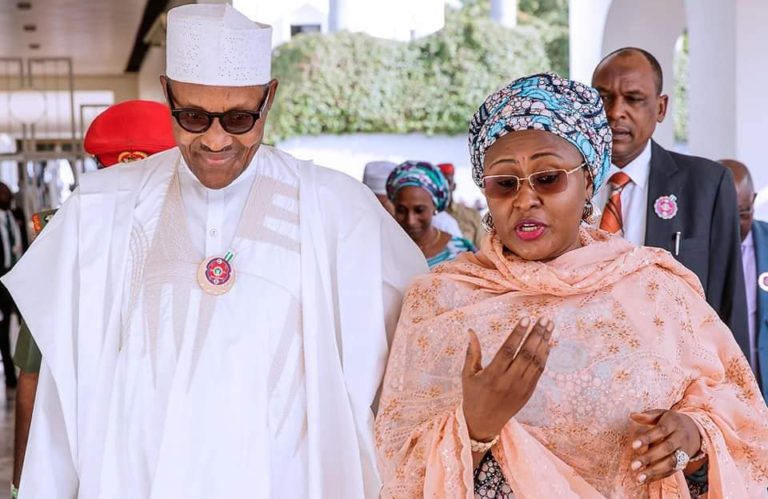
FORMER First Lady Aisha Buhari has disclosed that her late husband, former President Muhammadu Buhari, once believed rumours within the Aso Rock that she was plotting to kill him.
She said the development disrupted his feeding routine and worsened his health.
Aisha Buhari’s account is contained in a newly released biography titled ‘From Soldier to Statesman: The Legacy of Muhammadu Buhari, authored by Charles Omole, a doctorate holder, and launched at the State House on Monday, December 15.
The 600-page book chronicles Buhari’s life from his childhood in Daura, Katsina State, to his final days in a London hospital in July 2025, according to a Punch report.
The book quotes the former First Lady as saying Buhari began locking his room and changing his habits after being fed with what she described as malicious gossip within the Presidential Villa.
“Then came the gossip and the fearmongering. They said I wanted to kill him,” the book says.
“My husband believed them for a week or so,” it adds.
Aisha Buhari also linked the health crisis that kept Buhari away from office for several months in 2017 to what she described as a breakdown in his nutrition routine rather than poisoning or a mysterious illness.
The ICIR reports that in February 2016, Buhari embarked on a six-day vacation to the United Kingdom. A few months later, in June, he returned to England for a 10-day medical trip to treat an ear infection. He later extended his stay by three days to recuperate.
In January 2017, Buhari returned to London for another medical vacation. The following month, he wrote to the National Assembly requesting an extension of his medical leave.
He returned to Abuja on March 10, 2017, after spending 50 days outside Nigeria. In May 2017, the late leader again left for London on what became one of his longest medical vacations, spending 104 days before returning to Nigeria.
What followed was a wave of speculation and misinformation about his health, with some even claiming he had died and was replaced by a body double named “Jubril of Sudan” – a tale many still believe even after his death.
The late leader did not visit London later that year for another medical check-up until May 2018, when he spent four days for a “medical review.”
Explaining further on the former president’s health, Aisha said before moving into Aso Rock, she had personally overseen Buhari’s meals and supplements, a system she said helped manage his long-standing malnutrition symptoms.
“Elderly bodies require gentle, consistent support,” she recalled, adding, “He doesn’t have a chronic illness. Keep him on schedule.”
The book says after Buhari moved into the Villa, the routine collapsed, with meals delayed, supplements stopped, and nutrition mismanaged.
“My husband believed them for a week or so,” she said, revealing that Buhari began locking his room, while “meals were delayed or missed; the supplements were stopped.”
“For a year, he did not have lunch. They mismanaged his meals,” she added.
Aisha explained that she convened a meeting with senior aides, including the presidential physician, the Chief Security Officer, the housekeeper, and the Director-General of the Department of State Services, to explain the nutrition plan her husband required.
She described the regimen as “daily, at specific hours, cups and bowls with tailored vitamin powders and oils, a touch of protein here, a change to cereals there.”
In London, doctors reportedly prescribed a more intensive nutrition plan. Initially, Buhari was said to be reluctant to comply, prompting his wife to take charge of his care.
“She took charge of his welfare, slipping hospital-issued supplements into his juice and oats,” Omole wrote.
Aisha Buhari described the recovery as rapid. “After just three days, he threw away the stick he was walking with. After a week, he was receiving relatives.”
She said, “that was the genesis, and also the reversal of his sickness.”
She also dismissed long-standing claims that Buhari was poisoned, insisting that the health crisis stemmed from “loss of a routine, ‘my nutrition.’”
The biography further revealed what it described as a climate of mistrust within the Presidency.
Aisha further dismissed rumours that Buhari was replaced by a body double known as “Jibril of Sudan,” describing the claim as absurd and blaming poor government communication for allowing conspiracy theories to thrive.