Home Blog Page 112

Dangote petitions ICPC over alleged corruption by NMDPRA boss

0

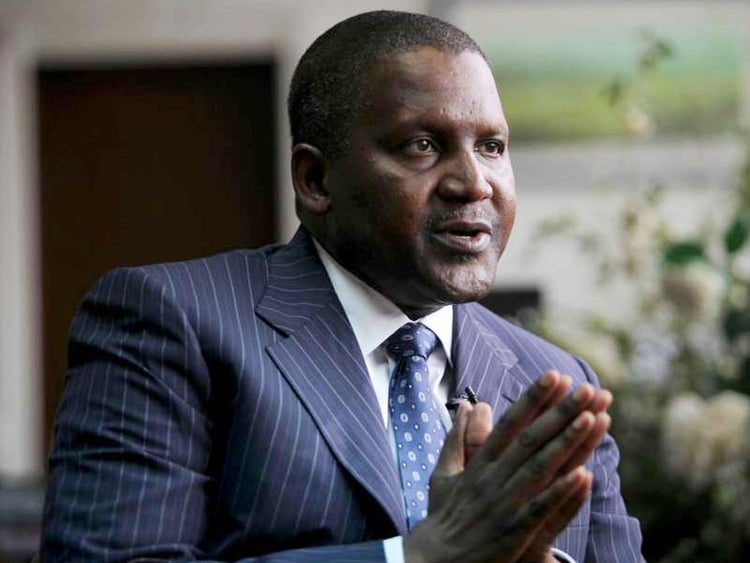
AFRICA’S richest businessman, Aliko Dangote, has petitioned the Independent Corrupt Practices and Other Related Offences Commission (ICPC) over allegations of corruption, abuse of office, and financial impropriety against the Chief Executive Officer of the Nigerian Midstream and Downstream Petroleum Regulatory Authority (NMDPRA), Farouk Ahmed.

The petition, dated December 16, 2025, was signed by Dangote’s lawyer, Ogwu J. Onoja, a  Senior Advocate of Nigeria (SAN) who leads his legal team and was addressed to the Chairman of the ICPC in Abuja.

In the letter, the legal firm alleged that Ahmed, who was appointed NMDPRA chief executive in September 2021 by late former President Muhammadu Buhari, had “grossly abused his office contrary to the extant provisions of the Code of Conduct for public officers.”

It also noted that the petroleum regulatory boss had become “enmeshed in monumental corruption and unlawful spending of public funds running into Millions of Dollars.”

According to the petition, Ahmed allegedly spent “a humongous amount of money of over $7 Million of public funds for the education of his four children in different schools in Switzerland for a period of six years upfront,” without evidence of lawful income to support such expenditure.

The children listed in the petition are Faisal Farouk, Farouk Jr., Ashraf Farouk, and Farhana Farouk, with the schools named as Montreux School, Aiglon College, Institut Le Rosey, and La Garenne International School.

The lawyers further alleged that Ahmed had used “the instrumentality of his office as the Chief Executive Officer of the NMDPRA to embezzle and divert public funds for self-gains and pursuit of private interest to the detriment of the Nigerian people,” adding that the alleged actions had triggered protests by different groups and attracted media attention.

The petition argued that Ahmed’s career-long service in the public sector could not justify the alleged spending, stating that “the totality of his earnings over the years is nothing close to the sum of 7 Million USD diverted from the public coffers to pay for the education of his teenage children abroad.”

Dangote’s lawyers said the allegations amounted to abuse of office, corrupt enrichment, and embezzlement, offences for which the ICPC is empowered to investigate and prosecute under Section 19 of the Independent Corrupt Practices and Other Related Offences Act.

Quoting the law, the petition stated:
“Any public officer who uses his office or position to gratify or confer any corrupt or unfair advantage upon himself or any relation or associate of the public officer or any other public officer shall be guilty of an offence and shall on conviction be liable to imprisonment for five (s) years without option of fine.”

The petitioners added that their client was ready to provide evidence to substantiate the allegations and urged the ICPC to act decisively, noting that the matter was already in the public domain.

Public allegations

The ICIR reports that Dangote’s petition to the ICPC followed public allegations he made days earlier against the leadership of the NMDPRA.

On Sunday, December 14, Dangote accused the NMDPRA’s boss, Ahmed, of corruption and living beyond his legitimate income.

During a press briefing, the billionaire industrialist alleged that the regulator’s boss paid over $5 million in tuition fees to Swiss secondary schools for four of his children over six years.

He argued that such expenditure raised serious concerns about conflicts of interest and the integrity of regulatory oversight in Nigeria’s downstream petroleum sector, particularly at a time when the sector is undergoing major reforms and increased private-sector participation.

Backstory

Dangote’s allegations emerged amid his broader criticism of what he described as entrenched cartels within the downstream oil and gas industry, which he said were deliberately frustrating his multi-billion-dollar refinery project in Lekki, Lagos State.

According to him, these groups pose “a bigger threat than drug mafias” and have historically benefited from import dependence and regulatory loopholes.

He cited repeated acts of sabotage at his refinery and at publicly owned refineries, including the removal of spare parts from a 400-ton boiler at the Lekki facility, which he described as the largest ever built.

Dangote also pointed to widespread destruction of pipeline infrastructure nationwide, insisting that the damage was not due to natural wear but deliberate acts meant to undermine domestic refining.

The ICIR reports that Dangote’s dominance in the petroleum market has often exposed longstanding inefficiencies in Nigeria’s refining sector, triggering resistance from major oil marketers and labour unions.

His frequent fuel price reductions and calls for an end to fuel importation have repeatedly drawn pushback from industry players, especially as his refinery continues to reshape pricing and supply dynamics.
REA, NBS sign agreement on energy survey to support power sector plans

0

THE Rural Electrification Agency (REA) and the National Bureau of Statistics (NBS) have signed a memorandum of understanding (MoU) to jointly conduct a comprehensive national energy survey in Nigeria.

The initiative is designed to generate high-quality analytical data to support evidence-based planning and policy formulation in Nigeria’s power and energy sector.

The survey is to be carried out using the multi-tier tracking (MTF) framework being implemented under the energy sector management assistance programme (ESMAP) of the World Bank.

In a statement on Tuesday, December 16, REA said the MoU formalised a strategic partnership between the two federal government agencies to provide technical support and collaboration for the exercise.

The agreement was signed by the Managing Director/Chief Executive Officer of REA, Abba Aliyu, and the Statistician-General of the Federation/Chief Executive Officer of NBS, Adeyemi Adeniran, in Abuja.

On his part, Aliyu said the collaboration reflected REA’s commitment to data-driven rural electrification planning.

“This collaboration will provide granular, credible data on electricity access, affordability, and off-grid energy solutions across Nigeria,” he said.

“The findings will directly inform national electrification initiatives such as the National Electrification Strategy and Implementation Plan (NESIP), while also strengthening investor confidence in the sector.”

Also speaking, the Statistician-General of the Federation said the NBS would ensure that the survey meets global statistical standards.

“NBS is pleased to provide technical oversight, sampling expertise, and quality assurance to ensure that the survey adheres to global best practices. Reliable data is fundamental to effective policy and sustainable development,” Adeniran said.

Under the MoU, the statement said, both agencies will collaborate to assess energy access at the household, community, enterprise, and public institution levels.

The survey will also examine household energy affordability, spending patterns, and willingness to pay for grid and off-grid solutions, as well as analyse access to and usage of off-grid technologies such as solar home systems, mini-grids, and clean cooking solutions.

“REA will serve as a key implementation and policy partner, providing sectoral expertise, stakeholder engagement, public awareness, and alignment with Nigeria’s rural electrification priorities.

“NBS will provide regulatory approval, sampling frames, methodological validation, technical supervision, and capacity building for enumerators, ensuring data quality and credibility.

“The World Bank, through ESMAP, will fund and technically oversee the survey and engage a qualified survey firm responsible for field data collection, analysis, and reporting,” the statement added.

The REA said the MoU would be in effect for 18 months from the date of signing, while data from the survey is expected to support national energy planning, improve programme targeting, guide private sector investment, and strengthen Nigeria’s push towards universal access to electricity and clean cooking solutions.

According to the statement, the partnership reaffirms the federal government’s commitment to inter-agency collaboration, improved energy data availability, and sustainable electrification for rural and underserved communities.

Buhari once believed I plotted to kill him in Aso Rock – Aisha, late President’s wife

0

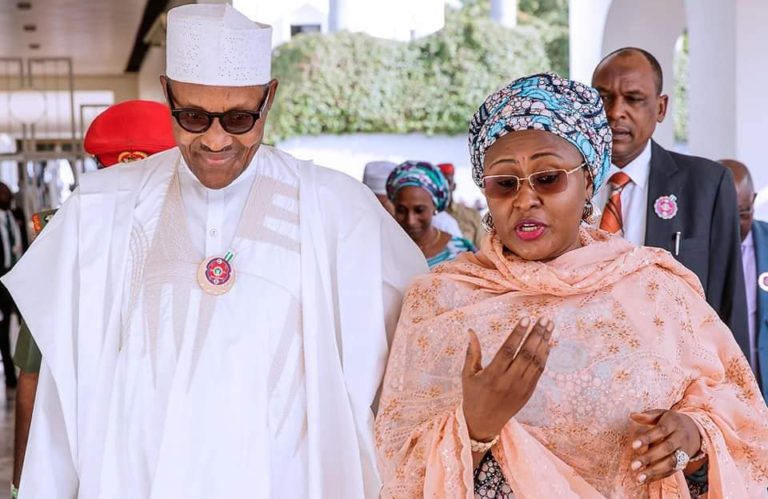
FORMER First Lady Aisha Buhari has disclosed that her late husband, former President Muhammadu Buhari, once believed rumours within the Aso Rock that she was plotting to kill him.

She said the development disrupted his feeding routine and worsened his health.

Aisha Buhari’s account is contained in a newly released biography titled ‘From Soldier to Statesman: The Legacy of Muhammadu Buhari, authored by Charles Omole, a doctorate holder, and launched at the State House on Monday, December 15.

The 600-page book chronicles Buhari’s life from his childhood in Daura, Katsina State, to his final days in a London hospital in July 2025, according to a Punch report.

The book quotes the former First Lady as saying Buhari began locking his room and changing his habits after being fed with what she described as malicious gossip within the Presidential Villa.

“Then came the gossip and the fearmongering. They said I wanted to kill him,” the book says.

“My husband believed them for a week or so,” it adds.

Aisha Buhari also linked the health crisis that kept Buhari away from office for several months in 2017 to what she described as a breakdown in his nutrition routine rather than poisoning or a mysterious illness.

The ICIR reports that in February 2016, Buhari embarked on a six-day vacation to the United Kingdom. A few months later, in June, he returned to England for a 10-day medical trip to treat an ear infection. He later extended his stay by three days to recuperate.

In January 2017, Buhari returned to London for another medical vacation. The following month, he wrote to the National Assembly requesting an extension of his medical leave.

He returned to Abuja on March 10, 2017, after spending 50 days outside Nigeria. In May 2017, the late leader again left for London on what became one of his longest medical vacations, spending 104 days before returning to Nigeria.

What followed was a wave of speculation and misinformation about his health, with some even claiming he had died and was replaced by a body double named “Jubril of Sudan” – a tale many still believe even after his death.

The late leader did not visit London later that year for another medical check-up until May 2018, when he spent four days for a “medical review.”

Explaining further on the former president’s health, Aisha said before moving into Aso Rock, she had personally overseen Buhari’s meals and supplements, a system she said helped manage his long-standing malnutrition symptoms.

“Elderly bodies require gentle, consistent support,” she recalled, adding, “He doesn’t have a chronic illness. Keep him on schedule.”

The book says after Buhari moved into the Villa, the routine collapsed, with meals delayed, supplements stopped, and nutrition mismanaged.

“My husband believed them for a week or so,” she said, revealing that Buhari began locking his room, while “meals were delayed or missed; the supplements were stopped.”

“For a year, he did not have lunch. They mismanaged his meals,” she added.

Aisha explained that she convened a meeting with senior aides, including the presidential physician, the Chief Security Officer, the housekeeper, and the Director-General of the Department of State Services, to explain the nutrition plan her husband required.

She described the regimen as “daily, at specific hours, cups and bowls with tailored vitamin powders and oils, a touch of protein here, a change to cereals there.”

In London, doctors reportedly prescribed a more intensive nutrition plan. Initially, Buhari was said to be reluctant to comply, prompting his wife to take charge of his care.

“She took charge of his welfare, slipping hospital-issued supplements into his juice and oats,” Omole wrote.

Aisha Buhari described the recovery as rapid. “After just three days, he threw away the stick he was walking with. After a week, he was receiving relatives.”

She said, “that was the genesis, and also the reversal of his sickness.”

She also dismissed long-standing claims that Buhari was poisoned, insisting that the health crisis stemmed from “loss of a routine, ‘my nutrition.’”

The biography further revealed what it described as a climate of mistrust within the Presidency.

Aisha further dismissed rumours that Buhari was replaced by a body double known as “Jibril of Sudan,” describing the claim as absurd and blaming poor government communication for allowing conspiracy theories to thrive.

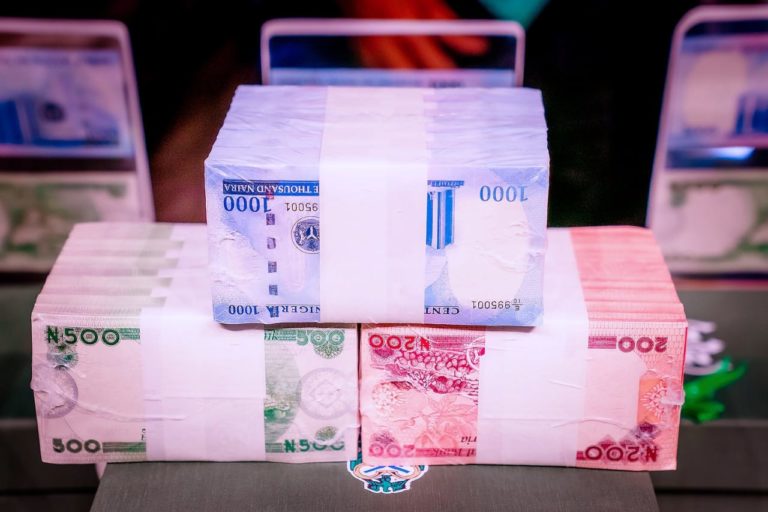
FG, States, LGs share ₦1.928 trillion FAAC allocation in November

THE Federation Account Allocation Committee (FAAC) shared ₦1.928 trillion as November 2025 federation account revenue for federal, states, and local governments.

The FAAC said the revenue was shared at the December 2025 Federation Account Allocation Committee (FAAC) meeting in Abuja.

The ₦1.928 trillion total distributable revenue comprised distributable statutory revenue of ₦1.403 trillion, distributable Value Added Tax (VAT) revenue of ₦485.838 billion, and Electronic Money Transfer Levy (EMTL) revenue of ₦39.646 billion.

A communiqué issued on Monday, December 15, by FAAC indicated that the total gross revenue of ₦2.343 trillion was available in November 2025. The total deduction for the cost of collection was ₦84.251 billion, while the total transfers, interventions, refunds, and savings were ₦330.625 billion.

According to the communiqué, gross statutory revenue of ₦1.736 trillion was received for November 2025. This was lower than the sum of ₦2.164 trillion received in the month of October 2025 by ₦427.969 billion.

The communique noted that the gross revenue of N563. 042 billion was available from the VAT in November 2025. Conversely, this was lower than the N719.827 billion available in the month of October 2025 by N156.785 billion.

The FAAC said that from the N1.928 trillion total distributable revenue, the Federal Government received a total sum of N747.159 billion, and the State Governments received N601.731 billion.

Local Government Areas got N445.266 billion, while N134.355 billion (13 per cent of mineral revenue) was shared with the benefiting states as derivation revenue.

On the N1.403 trillion distributable statutory revenue, the communiqué stated that the Federal Government received N668.336 billion and the State Governments were allocated N338.989 billion.

Also, the local government councils received N261.346 billion, and N134.355 billion (13 per cent of mineral revenue) was shared among the benefiting states as derivation revenue.

From the N485.838 billion distributable VAT revenue, the Federal Government got N72.876 billion, the State Governments received N242.919 billion, and the Local Government Areas were given N170.043 billion.

A total sum of N5.947 billion was received by the Federal Government from the N39.646 billion Electronic Money Transfer Levy (EMTL), the State Governments took N19.823 billion, and the Local Government Councils got N13.876 billion.

The communique added that in November 2025, Excise Duty increased moderately while Petroleum Profit Tax (PPT), Hydrocarbon Tax (HT), CIT on Upstream Activities, Companies Income Tax (CIT), CGT and SDT, Oil & Gas Royalties, Import Duty, CET Levies, Value Added Tax (VAT), Electronic Money Transfer Levy (EMTL) and Fees recorded substantial decreases.

2025 budget carryover: FG admits deep revenue gaps as Senate demands answers

THERE are doubts over 2026 budget projections after the Federal Government admitted that it realised just ₦10 trillion out of the ₦40 trillion revenue targeted for the 2025 fiscal year.

This development led to the Senate asking questions about persistent borrowing, overlapping budgets and weak capital project execution.

These concerns dominated an interactive session between the Senate Committee on Finance and the Federal Government’s economic management team on Monday, December 15, in Abuja, as lawmakers began scrutiny of the 2026–2028 Medium-Term Expenditure Framework and Fiscal Strategy Paper (MTEF/FSP).

The Minister of Finance and Coordinating Minister of the Economy, Wale Edun, at the event acknowledged that revenue performance in both 2024 and 2025 fell significantly short of projections, creating structural pressure on budget implementation and spilling capital spending into subsequent years.

“We projected about ₦40 trillion in revenue for 2025, but actual federal government cash revenue is roughly ₦10 trillion,” Edun told the lawmakers.

“That gives us funding capacity for only about 30 per cent of the budget, meaning nearly 70 per cent of capital projects will roll over into 2026.”

The admission also confirmed that Nigeria is operating multiple budgets within a single fiscal year, an outcome the lawmakers described as unsustainable and unacceptable.

Some economic watchers also questioned the gains of the subsidy removal if the government could not fund the budget despite its numerous borrowed funds through supplementary budgets.

Former Gombe State governor, Danjuma Goje, called the situation ‘ugly’, warning that it undermined fiscal discipline and public confidence.

“Are projects in the 2024 budget fully paid for? The 2025 budget has not really been implemented. How do we return to normal budgeting instead of running three budgets at the same time?” Goje queried.

Other lawmakers, including Ireti Kingibe, Victor Umeh and Aminu Iya Abbas, pressed the finance team to explain how over ₦17 trillion borrowed within the first 10 months of 2025 was deployed, given the massive revenue shortfall and stalled capital projects.

Available data presented at the session showed that Nigeria borrowed about ₦17.36 trillion during the period, ₦15.8 trillion domestically and ₦1.56 trillion externally, raising fresh concerns about debt sustainability amid weak revenue inflows.

Edun also clarified that President Bola Tinubu’s earlier claim that revenue targets had been met by August 2025 referred strictly to non-oil revenue, not total government income.

“In 2024, we estimated revenue at ₦25.9 trillion, but actual receipts were about ₦8.27 trillion. In 2025, the pattern repeated,” Edun claimed.

“This historical trend shows clearly that we must adopt a far more realistic revenue framework going into 2026.”

Senator Adams Oshiomhole added a labour-market dimension to the debate, warning that poor capital budget performance was choking job creation.

“How do we create jobs when capital projects are not implemented? Once the capital budget fails, the system fails to generate employment,” he reasoned.

While defending the government’s approach, the Chairman of the Federal Inland Revenue Service, Zacch Adedeji, argued that budget revenues remain projections until cash is realised, adding that loans embedded in budgets would not automatically translate into available funds.

However, senators pushed back strongly, with the Senate Committee on Finance formally tasking the FIRS to raise its 2026 revenue target from ₦31 trillion to ₦35 trillion, signalling lawmakers’ insistence on more aggressive domestic revenue mobilisation.

The committee chairman, Sani Musa, said the Senate would not consider the 2026–2028 MTEF/FSP until a comprehensive public hearing is conducted to probe revenue performance for the 2024 and 2025 budgets.

“We must understand why revenues consistently underperform before projecting new figures for 2026,” he posited, stressing that a three-man ad hoc committee would engage the Finance Ministry and the Accountant-General to ensure contractors are paid for verified 2024 projects before the budget expires on December 31.

Under the proposed budget framework, the Federal Government plans a ₦54.5 trillion budget for 2026, with projected revenue of ₦34.33 trillion, implying a deficit of about ₦20 trillion and debt service obligations estimated at ₦15.9 trillion.

The MTEF assumes crude oil production of 1.84 million barrels per day at a benchmark price of $64.85 per barrel, an exchange rate of ₦1,512/$, and GDP growth of 4.68 per cent, assumptions defended by Edun, Budget Minister Atiku Bagudu and Petroleum Minister Heineken Lokpobiri.

But lawmakers remain unconvinced, especially given that the MTEF arrived late at the National Assembly, contrary to the Fiscal Responsibility Act timeline.


Recuse yourself from my trial, Malami tackles EFCC chairman, alleges vendetta

0

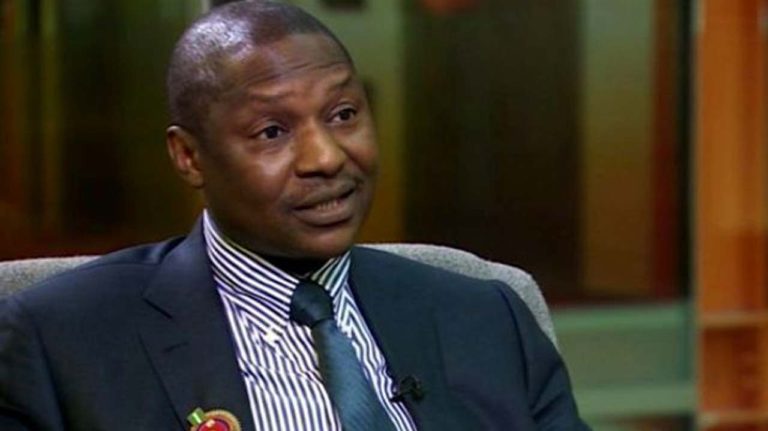
FORMER Attorney-General of the Federation and Minister of Justice, Abubakar Malami, a senior advocate, has protested his detention by the Economic and Financial Crimes Commission (EFCC), describing it as illegal, politically motivated, and driven by personal vendetta, while demanding that the EFCC chairman, Ola Olukoyede, recuse himself from investigating him.

In a statement on Monday, December 15, by his media aide, Mohammed Bello Doka, Malami described the EFCC’s actions against him as a “politically motivated witch-hunt,” which he said was triggered by his recent defection to the African Democratic Congress (ADC).

Malami alleged that the investigation and his continued detention were not driven by genuine law enforcement concerns but by “deep-seated historical animosity” involving the EFCC chairman.

He recalled that while he served as attorney-general, the Federal Government set up the Justice Ayo Salami Judicial Commission of Inquiry to probe allegations of corruption and abuse of office within the EFCC, during which the current EFCC chairman served as secretary.

According to Malami, the Salami report contained findings implicating the EFCC chairman, including recommendations that could have led to his prosecution.

He argued that the ongoing investigation against him “bears all the hallmarks of retaliatory persecution” motivated by personal revenge.

Malami said he had been pre-judged and could not receive a fair and impartial investigation under the current leadership of the anti-graft agency.

He therefore demanded that the EFCC chairman immediately withdraw from the case and that the matter be transferred to another appropriate law enforcement body to safeguard credibility and public confidence.

“Malami reiterates his insistence on immediate prosecution or release, demanding that a charge be filed and that he be arraigned before a court of competent jurisdiction within 24 hours, in strict compliance with Sections 35(3), (4), and (5) of the Constitution of the Federal Republic of Nigeria (1999, as amended).

“He has consistently maintained that only a court of competent jurisdiction, and not politically compromised agencies, can lawfully and credibly adjudicate this matter,” the statement added.

Malami also accused the EFCC of attempting to rely on individuals allegedly convicted by foreign courts and serving criminal sentences abroad as witnesses against him.

He described the move as an abuse of process and warned that it undermined the integrity of Nigeria’s criminal justice system.

The ICIR reports that Malami’s latest demands came amid his continued detention by the EFCC following his alleged failure to meet bail conditions imposed by the anti-graft agency.

The commission had earlier said the former attorney-general was granted administrative bail after a brief interrogation on November 28, 2025, pending the conclusion of investigations and possible arraignment in court.

According to the EFCC, the bail was provisional and subject to five conditions, none of which Malami allegedly fulfilled.

EFCC reacts

Earlier, the EFCC had dismissed claims that it is being weaponised against opposition politicians, insisting that its mandate is strictly to investigate and prosecute economic and financial crimes, regardless of political affiliation.

In a statement on Monday, the commission said allegations of persecution, politicisation, or erosion of its independence by political actors were deliberate misrepresentations of its constitutional responsibilities.

The commission argued that its operations were guided solely by its Establishment Act, which mandates it to investigate and prosecute all economic and financial crimes, except where suspects enjoy constitutional immunity.

The anti-graft agency said its record over the past two years showed that suspects from both the ruling party and opposition parties, including former governors and ministers, have been investigated and prosecuted, stressing that corruption “has no gender, religion, tribe, or political party.

“What the so-called opposition politicians are seeking to achieve in this assault against the EFCC is far from altruistic, but a veiled attempt to confer immunity from prosecution for alleged corruption on politicians who suddenly find themselves in the opposition. This gambit is alien to the Nigerian constitution and the enabling law of the Commission both of which compel mandatory action against any evidence of graft irrespective of the position and political inclinations of the accused.
“The Commission won’t succumb to blackmail or be railroaded into inconclusive investigations just to be seen to be non- selective in its operations,” it added.

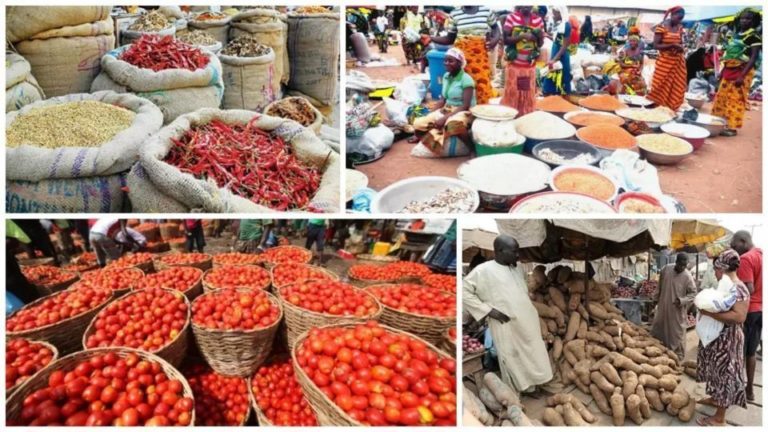
Again, Nigeria’s inflation eases to 14.45% in November as food prices drop

NIGERIA’S headline inflation rate has again declined further to 14.45 per cent in November 2025, according to the latest Consumer Price Index (CPI) report released by the National Bureau of Statistics (NBS).

The figure represents a drop from the 16.05 per cent recorded in October, continuing the downward trend under the recently rebased CPI, which now uses 2024 as its base year instead of 2009.

NBS data, released on Monday, December 15, showed that the CPI increased to 130.5 points in November from 128.9 points in October, reflecting a 1.6-point rise month on month. 

In its report, the statistics agency said headline inflation in November was 20.15 percentage points lower than the 34.60 per cent recorded in the same month of 2024, largely due to the impact of the rebasing exercise.

The average CPI for the 12 months ending November 2025 rose by 20.41 per cent, a significant slowdown from the 32.77 per cent recorded in November 2024.

“The Consumer Price Index rose to 130.5 in November 2025, reflecting a 1.6-point increase from the preceding month (128.9).

“In November 2025, the Headline inflation rate eased to 14.45 per cent relative to the October 2025 headline inflation rate of 16.05 per cent.

“Looking at the movement, the November 2025 Headline inflation rate showed a decrease of 1.6 per cent compared to the October 2025 Headline inflation rate,” the NBS report read.

The drop was hugely impacted by the drop in food inflation in November 2025 to 11.08 per cent year on year in November 2025, down from 39.93 per cent recorded in November 2024, following the easing of prices for maize, garri and beans.

The ICIR reported that in its October 2025 inflation report, the NBS said the inflation rate showed a decrease of 1.96 per cent compared to the September 2025 headline inflation rate, and on a year-on-year basis, the headline inflation rate was 17.82 per cent lower than the rate recorded in October 2024 (33.88%).

The significant decline in the annual food inflation figure is technically due to the change in the base year methodology. Accordingly, on a month-on-month basis, the food inflation rate in October 2025 was -0.37 per cent, up by 1.21 per cent compared to September 2025 (-1.57 per cent).

It added that the average annual rate of food inflation for the twelve months ending October 2025 over the previous Twelve-month average was 21.96 per cent, which was 16.16 percentage points lower compared with the average annual rate of change recorded in October 2024 (38.12 per cent).

President can declare emergency rule, suspend elected officials, Supreme Court rules

0

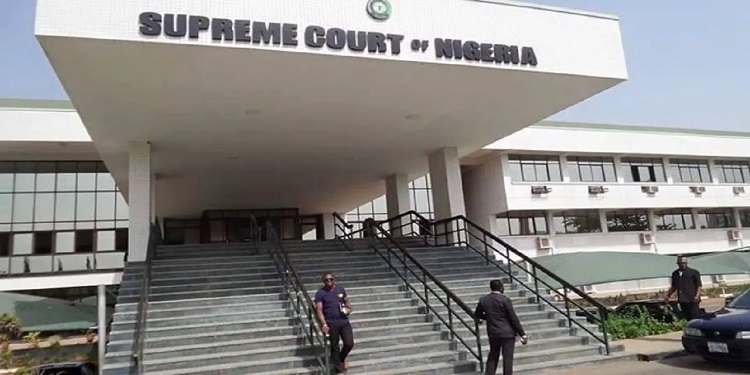
THE Supreme Court on Monday, December 15, affirmed the constitutional power of the president to declare a state of emergency in any part of Nigeria to prevent a breakdown of law and order.

In a majority judgment of six justices against one, the apex court further upheld that the president might temporarily suspend elected state officials during an emergency period.

The ruling followed a litigation filed by Adamawa State and 10 other states governed by the Peoples’ Democratic Party (PDP) over the emergency rule imposed on Rivers State in March 2025 by President Bola Tinubu.

Following the declaration, the president suspended the state Governor Siminalayi Fubara, his deputy, Ngozi Odu, a professor, and members of the State House of Assembly for six months. 

The emergency rule was subsequently lifted in September 2025.

The plaintiff – Adamawa, Enugu, Osun, Oyo, Bauchi, Akwa Ibom, Plateau, Delta, Taraba, Zamfara, and Bayelsa states – represented by their attorneys-general, argued that the president acted outside his constitutional bounds by suspending democratically elected officials and dissolving legislative structures.

They also questioned the legality of the process leading to the emergency declaration, insisting it undermined federalism and democratic governance.

The plaintiffs urged the court to determine “whether, upon a proper construction and interpretation of Sections 1(2), 5(2), 176, 180, 188, and 305 of the Constitution of the Federal Republic of Nigeria 1999, the president of the Federal Republic of Nigeria can lawfully suspend, or in any manner whatsoever interfere with, the offices of a governor and the deputy governor of any of the 36 component states of the federation and replace them with his unelected nominee as a sole administrator, under the guise of, or pursuant to, a proclamation of a state of emergency in any of the plaintiffs’ states.

They also asked “Whether, upon a proper construction and interpretation of Sections 1(2), 4(6), 11(4) & (5), 90, 105, and 305 of the Constitution, the president can lawfully suspend the House of Assembly of any of the 36 States under the guise of, or pursuant to, a proclamation of a state of emergency in such states.”

Delivering the lead judgment, one of the judges, Mohammed Idris, stated that Section 305 of the 1999 Constitution (as amended) granted the president discretionary powers to determine the measures required during a state of emergency.

He explained that the Constitution did not expressly define the scope of “extraordinary measures” that might be adopted in such circumstances, thereby leaving room for presidential discretion where normal governance structures were deemed incapable of maintaining order.

The court further upheld objections raised by the Attorney-General of the Federation and the National Assembly, holding that the plaintiffs failed to establish a dispute that would activate the court’s original jurisdiction.

Consequently, the court struck out the suit for want of jurisdiction and proceeded to dismiss it on the merits.

Obande Ogbuinya, the dissenting justice, agreed that the president had the power to declare a state of emergency but maintained that such authority did not extend to suspending elected state officials or legislative assemblies.

Dangote accuses NMDPRA boss Farouk of corruption, demands his probe

0

THE chairman of Dangote Industries Limited (DIL), Aliko Dangote, has accused the Managing Director of the Midstream Downstream Petroleum Regulatory Authority (NMDPRA), Farouk Ahmed, of corruption.

The billionaire businessman has also called for the NMDPRA boss’ probe by anti-graft agencies.

Dangote, during a press briefing on Sunday, December 14, alleged that Ahmed paid $5 million to Swiss secondary schools for his children.

Dangote said Ahmed paid the said amount for four of his children, covering a period of six years.

Although the Africa richest man did not mention the name of the Swiss schools, he said the NMDPRA’s CEO was living above his means. He challenged the Federal Government to investigate his claim.

He argued that such expenditure raised serious questions about potential conflicts of interest and the integrity of regulatory oversight in the downstream petroleum sector.

Cartels in downstream sector frustrating my refinery business 

Similarly, Dangote raised concerns over alleged sabotage in Nigeria’s downstream oil sector.

He recounted multiple ‘sabotage’ incidents at both his facility and public refineries.

He also lamented that organised cartels pose a “bigger threat than drug mafias.”

He cited examples at his refinery in Lekki, including the removal of spare parts from a 400-ton boiler, which he described as the largest ever built.

“If I tell you the sabotages that we went through, including some of the machine manufacturers that were on the verge of going to court, you will know what I’m saying.

“Drug mafias are actually smaller than the people who are in oil and gas. They have robbed so many people in this sector,” he added.

The Kano-born sexagenarian also highlighted the destruction of pipeline infrastructure across the country.

He alleged that depots from Kano to other states had been deliberately sabotaged, not damaged by natural causes.

“You are talking about sabotage, and I’m happy that you are also here in Nigeria. I don’t know if Mele Kyari [former NNPCL GCEO] is still in town, but I think you should go to his house in Maitama and ask him how many sabotages the Port Harcourt refinery repairs went through.

“He told me many times that they have had more than 100 sabotages at the refinery. You can ask him, and he will tell you. Why is it that, for example, all the pipelines built from the military base to date are no longer functioning?

“The one that we have, which is from where I am from, Kano, that depot, we were not using trucks. The depots were only loading the trucks. Everything was piped up to that. 22 depots were built. They are all piped, all 22 depots.

“Actually, even the sediments don’t have it anymore. They have destroyed the pipes, all of them. So, if it is not sabotage, is that an earthquake? It’s not an earthquake, it’s sabotage. Sabotage is sabotage. So, that is what it is,” Dangote stated.

The ICIR reports that Dangote’s dominance as a market leader had exposed poor management and redundancy of Nigerian refineries.

The pioneer chairman of ECOWAS Business Council had on several occasions faced attacks by the petroleum major oil marketers over price war, which has also raised eyebrows whenever he slashes prices or raises questions over his staff’s membership allegiance to the Petroleum and Natural Gas Senior Staff Association of Nigeria (PENGASSAN)

Dangote on Sunday also announced that petrol would be sold for N739 per litre in many filling stations across the nation.


Viral video of wedding shooting in Chad falsely linked to Nigerian bandits

0

A video circulating on social media claims to show a bandit leader in Nigeria being accidentally shot by his colleague during his wedding celebration.

The 53-second clip shows a group of men gathered in a circle, wearing different outfits and turbans covering most of their faces. One man holding a gun walks toward another and fires into the air. One of the bullets appears to hit a man identified by the Facebook user as the leader, after which the crowd rushes toward him as he appears to be bleeding.

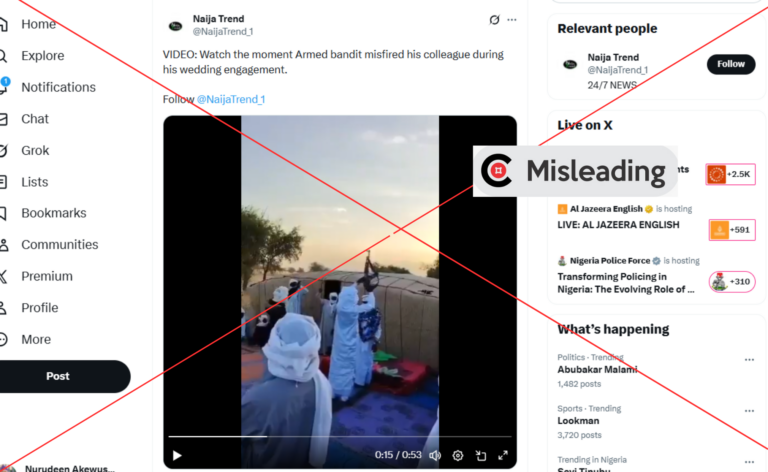
An X account, @Naija Trend_1, posted the video with the caption:

“VIDEO: Watch the moment Armed bandit misfired his colleague during his wedding engagement.”

As of December 10, 2025, the post had generated 800 reposts and over 2,000 likes with many suggesting they are terrorists in Nigeria.

A Facebook user, Abumeze Chukwumaeze Ibe, posted frames in the video with a caption:
“Bandits Leader Mistakenly Kills Another Leader During Celebration (Photos)
A viral video shows a group of bandits gathered for what appears to be a special occasion. One of the leaders arrived on a bike with some members, while another leader was already seated and surrounded by his men. The seated leader raised his hand in greeting as soon as he saw the other leader coming down from the bike.
However, the leader who arrived on the bike, along with two others, began shooting into the air like a gun salutation to the one seated. Somehow, he fired some bullets straight into the head of the one sitting down, and immediately others realised what had happened, they gathered around him…..”

CLAIM

Video shows a bandits leader in Nigeria accidentally shot during a gathering.

screenshot of the viral post

THE FINDINGS

Findings by The FactCheckHub show that the claim is MISLEADING.

The claim is circulating amid a rise in terrorist attacks, kidnappings, and violent incidents across Nigeria, which has heightened public sensitivity to videos showing shootings or injuries. For instance, in November 2025, over 300 schoolchildren and 12 teachers were abducted from St. Mary’s Catholic School in Papiri, Niger State, in one of the largest mass kidnappings in recent times.

Around the same period, gunmen stormed a girls’ boarding school in Kebbi State, abducting 25 students. Such attacks, along with repeated raids on communities and clashes between armed groups, have prompted widespread outrage, fear, and rapid sharing of related content on social media.

The FactCheckHub subjected the keyframes in the video to Google Reverse Image search, and it was traced back to November 28, 2025, in Amdirib, Batha Province, Chad.

Reports by platforms like The Zambia Observer and Daily Star indicate the video shows a man who was accidentally shot on his wedding day after his brother fired celebratory gunshots into the air. The groom later died at the provincial hospital, and local authorities launched an investigation.

The shooting was part of a cultural practice in Chad, where communities, including the Hadjerai people, fire guns into the air during weddings and other celebrations to express joy.

Analysis of the video indicates that the language spoken by the people is Hadjerai, largely spoken in the Batha province of Chad, further establishing that the incident occurred in Chad and not Nigeria.

Extensive searches using keywords from the social media post found no verifiable reports of a similar incident in Nigeria.

THE VERDICT

The claim that the video shows a Fulani herdsmen leader being shot in Nigeria is FALSE. The incident actually took place in Chad during a wedding celebration, where ceremonial gunfire accidentally struck the groom.