THE Supreme Court has thrown out a case instituted by the Osun State Government seeking to compel the Federal Government to release statutory allocations owed to local government areas in the state.
In a 6–1 majority decision, the court held that the Osun State Attorney-General lacked the legal standing to initiate the suit on behalf of the local governments, which it affirmed are constitutionally recognised bodies capable of pursuing their own legal claims.
The lead judgment, delivered on Friday, December 5, by Mohammed Idris, held that the matter revolved around allegations that the federal government did not remit funds meant for Osun’s local governments from the federation account, adding that since the controversy was strictly between the local government and the federal government, the state Attorney-General had no authority to represent them.
The court also drew a distinction between this case and the AG Abia & others v. AG Federation, in which the Supreme Court ordered that LG allocations be paid directly to councils nationwide.
Idris explained that if local governments in Osun believed their funds were being withheld, they should have approached the court.
However, the judge expressed displeasure at the federal government’s reluctance to fully implement earlier judgment mandating direct disbursement of federal allocations to local governments.
He reminded that the ruling was binding on the federal government , and the government must ensure that allocations due to local governments are sent directly to them without being withheld under any guise.
The ICIR reports that the federal government withheld Osun’s local government allocations earlier in 2025, citing a dispute over council elections.
The federal government, through the Attorney General of the Federation (AGF) and Minister of Justice, Lateef Fagbemi, declared that the local government chairmen elected on the platform of the Peoples’ Democratic Party PDP) were illegal.
According to him, the All Progressives Congress (APC) chairmen elected under former governor Gboyega Oyetola are the legal occupants of the LGAs because their tenure had not expired.
In August 2025, the state government headed to the Supreme Court, where it asked the apex court to compel the federal government to release several months of allocations.
The state government sought an order restraining the AGF, Central Bank of Nigeria, and Accountant General of the Federation from withholding the funds.
The AGF also pressed the Supreme Court for relief against the state.
BARRING any last-minute decision from the government, on January 1, Nigerians will enter a new tax regime that seeks to use digital tools to bring more people into the tax net through a centralised system.
The new regime, however, offers a fresh breath of life into the harmonised tax system structure in Nigeria, which removes multiple taxation and digitises payment, leaving some tricky, unsolved questions for corporate businesses and private entities.
The new tax law in Nigeria, signed on June 26, 2025, aims to simplify tax compliance, reduce multiple taxation, and increase revenue generation.
Background
The ICIR reported in June that the new bills had been signed into law by President Bola Tinubu. The bills that were signed into law were the Nigeria Tax Bill, the Nigeria Tax Administration Bill, the Nigeria Revenue Service (Establishment) Bill, and the Joint Revenue Board (Establishment) Bill.
Now an Act, the Nigerian Tax Act aims to merge the country’s tax laws into a single, unified system, while the Nigerian Tax Administration Act creates uniform procedures for tax collection across federal, state, and local governments, replacing the current patchwork of different systems.
Under the new law, the Nigeria Revenue Service (Establishment) Act gives the tax collection agency greater independence and expanded powers, including collecting non-tax revenue.
The Joint Revenue Board (Establishment) Act will set up formal cooperation structures between different levels of government and create oversight bodies, including a Tax Appeal Tribunal and the Office of the Tax Ombudsman.
These reforms aim to boost revenue, simplify tax administration, and promote economic growth.
Chairman of the presidential committee on tax and fiscal policy reforms, Taiwo Oyedele
How companies would be taxed under the new regime
The Company Income Tax (CIT) has been reduced from 30 per cent to 25 per cent for medium and large firms starting in 2026, with a transitional rate of 27.5 per cent in 2025.
On Value-Added-Tax (VAT) exemption, essential items like food, medical services, and education are zero-rated.
The new regime has a development levy of 4 per cent on assessable profits, consolidating previous taxes.
Infographic for tax ands what is payable from January 1
On the minimum effective tax rate, the new regime taxes 15 per cent for multinational groups with annual turnover above ₦50 billion.
Accordingly, the Capital Gains Tax was also increased from 10 per cent to 30 per cent for companies.
What do businesses stand to benefit?
The harmonised tax system simplified the tax structure and reduced the compliance burden to businesses through digital compliance and tax agents working at the Nigerian Revenue Service.
It also increased input VAT recovery for service-oriented industries. There are also exemptions for small businesses with an annual turnover below ₦100 million.
The new regime also targets improved transparency and accountability because of digital emphasis, which is enhanced through financial statements of companies and information they share with the Corporate Affairs Commission (CAC)
“Yes, there is seamless information management between the Federal Inland Revenue Service and the Corporate Affairs Commission for proper tracking of tax compliance and companies’ annual returns,” a notary public and a CAC consultant lawyer, Inemesit Eyibo, told The ICIR.
Some knotty areas and solutions from stakeholders
As Nigerian companies gear up to enter the New Tax regime, tax stakeholders have advised firms and corporate entities to get the services of a tax consultant to avoid possible pitfalls.
The stakeholders submitted Abuja Business Tax Roundtable 2025, organised by the Abuja
Chamber of Commerce and Industry (ACCI) with the theme: “Demystifying the New Tax Laws,” on Tuesday, November 25.
Speaking at the event, the Vice President of ACCI, Adesoji Adesugba, said, businesses are still asking critical questions about the new tax law.
“What are the opportunities, efficiencies and competitive edge it offers. How does it affect businesses?
An official of Federal Inland Revenue Service FIRS-Kenhinde Kajesomo, in allaying fears of business representatives at the event, said, “The government will tax fruits, not seed.”
He added that there are tax agents who assist with solutions to problems at tax offices nationwide.
“With these reforms, there is a harmonisation of different tax laws. Registration, filing of returns, all of them simplified to aid compliance,” he said.
He further said that the reforms are majorly data-driven, noting that there’s economic alignment in the new tax law.
What to know about the new tax law
The ICIR reports that the effective implementation date will be January 1, 2026, meaning that it will affect tax return filings of 2026 financial statements, so it’s not going to be immediate.
For Small and Medium Enterprises (SMEs), the zero tax threshold has been increased from 25 million to 50 million. Small companies with 0 to 50 million turnovers are now 0 per cent tax.
Companies with a turnover above 50 million will be taxed at the rate of 30 per cent.
“Small company” means a company that earns gross turnover of N50,000,000 or less per annum with the total fixed assets not exceeding N250,000,000.
However, businesses providing professional services shall not be classified as small companies.
The ICIR noted that in the new tax law, there’s no withholding tax deduction on business income of small businesses, and no VAT filing requirements to deduct and account for tax payments to vendors.
Areas of possible confusion for taxpayers
For a tax consultant and member of the Institute of Chartered Accountants of Nigeria (CITN), Emeka Okoroeze, primary areas of concern are whether the new regime will be able to truly improve revenue generation by bringing more people and businesses into the tax net and strengthen the economy, as some believe that given incentives might not be enough to help the real sector.
“For instance, a situation where individuals who earn up to 2million face tax payment at 15 per cent and business turnover below 50 million pays zero tax remains a huge worry,” Okoroeze said.
For the management of Palm Bridge Concepts Limited, Ebuka Onyeneke, a loan facility of N500 million borrowed from a deposit money bank could create a huge economic problem for the firm if they hadn’t sought advice from a tax professional who guided them on how to properly designate their loan facility away from their sales and other transactions in their company’s financial statement.
“We have been asking relevant questions about the new tax law and our transactions. Our lawyer guided us on what to do to avoid pitfalls, and that saved us when we eventually submitted our financial statements to the relevant authorities,” Victor Inemesit, a lawyer who offers commercial advisory to Palmbridge Concepts Limited, told The ICIR.
A tax consultant and an Associate Professor of Taxation, Kennedy Iwundu, told The ICIR on the sidelines of a recent tax event that companies must properly delineate borrowed facilities from sales in their financial statements to avoid possible sanctions from tax authorities.
He said: “When you borrow a facility from the bank, ensure you get your company board to officially approve that loan, ensure it reflects in your financial statement as a loan facility and properly delineate that it’s not sales, adding that ‘Through proper delineation in the financial statements, you can avoid the trap of tax offence.”
Iwundu urged Nigerian companies to seek a tax consultant’s interpretation of the new law, since there could be areas of ambiguity.
“Seek the advice of a tax agent and consultant as provided in the law. For instance, Section 11 of the new tax law says all companies must file tax returns. Section 13 says all individuals must file in tax return. This could be confusing, and a tax expert could guide individuals who think they’re exempt in ways of going about this,” he said.
He also suggested that companies write the FIRS in some difficult transactions.
A representative of the Manufacturers Association of Nigeria (MAN), Chigozie Igwe, urged government officials to manage the narrative, adding that there is still serious fear about the whole tax issue.
“No economy has been built on the back of taxes alone. We must control the narrative out there- that of fear. Tax is a social contract. The government should as much as it can highlight the benefits for businesses and corporate entities to understand that it is a win-win,” Igwe said.
Other issues with the New tax law
The ICIR reports that under the new tax law, there is the Economic Development Tax Incentive (EDTI), which applies to specified priority sectors such as the manufacture of electrical equipment, chemical, pharmaceutical products, motor vehicles, metal, iron, steel, electricity and gas supply, renewable energy, music, and video production.
The ICIR findings have shown that the qualifying Capital Expenditure threshold for EDTI ranges from ₦250 million to ₦500 million, depending on the sector.
Companies granted the EDTI can enjoy annual tax credits of 5 per cent of the acquired QCE, for five years.
EDTI can be extended for an additional five years, where profits generated during the
incentive period are wholly reinvested in
the business for expansion.
Offences for taxes, file returns failures
Key offences in the new Act include failure to grant access for the deployment of technology; Failure to deduct tax; Failure to remit tax deducted at source or self-account; Failure to attend to demands, requests or notices.
The ICIR reports that taxpayers may file a written notice of objection within 30 days of receiving an assessment, and the tax authority must respond within 90 days; otherwise, the taxpayer’s objection is deemed upheld.
In the new tax act, there is a seamless collaboration between different tax authorities, including joint tax audit exercises, to ensure compliance.
Taxpayers may claim a refund of overpaid taxes following an audit by the relevant tax
Authority and the approved refunds must be made within 90 days of decision of the tax
authority or set-off against any tax liability.
Taxation of dividend Profits of a Nigerian company assessment shall also include the gross amount of the received dividend
Where a dividend is paid to a Nigerian company in the form of shares, such a Payment will not be subject to withholding tax.
SIXTEEN members of the Rivers State House of Assembly have dumped their party – the Peoples’ Democratic Party (PDP) for the All Progressives Congress (APC)
The defection was announced during plenary by Speaker Martin Amaewhule, who convened the sitting at the Conference Hall of the Legislative Quarters on Aba Road, on Friday December 5, where lawmakers have been meeting since the demolition of their official chamber.
Amaewhule, who has been at the centre of the Assembly’s prolonged standoff with Governor Siminalayi Fubara, told colleagues he was also leaving the PDP.
“Distinguished colleagues, very happily, let me announce that your Speaker has decided and has indeed written to my (sic) ward chairman about my (sic) decision to leave the PDP. APC is my new party.
“The major reason for leaving the PDP is because of the division in the party,” he said.
“APC is my new party. I will do all that is needed to be done towards ensuring that the party card of the All Progressives Congress is issued to me in no time. I am happy to be a member of the APC so that we can join forces with Mr President. He is doing so much for this country.
“President Bola Ahmed Tinubu means well for Nigeria. He is tackling issues of security headlong. The President has shown love to Rivers State; he is helping Rivers people to be part of the governance of this country. I am so delighted to be part of the APC so we can support the president right inside the All Progressives Congress,” he added.
Meanwhile, the 10 remaining members of the PDP in the House appointed Sylvanus Nwankwo of Omuma constituency as Minority Leader. He was sworn in alongside three others as minority officer holders. They are Dominic Iderima, Justina Emeji, and Barile Wako.
The lawmakers’ defection came barely three months after the Assembly resumed full legislative duties on September 18, following President Tinubu’s decision to lift the six-month state of emergency imposed on the state in March 2025.
The measure, according to the president, was triggered to halt the breakdown of governance during the rift between Governor Siminalayi Fubara and the Nyesom Wike-backed faction of the Assembly.
The lawmakers who defected include: Dumle Maol, Major Jack, Linda Stewart, Franklin Nwabochi, Azeru Opara, Smart Adoki, Enemi George, Solomon Wami, Igwe Aforji, Tekena Wellington, Looloo Opuende, Peter Abbey, Arnold Dennis, Chimezie Nwankwo, and Ofiks Kabang.
This mass exit further alters the political complexion of the legislature, which only recently returned to normal operations after emergency rule dissolved the state’s political structures and installed retired Vice Admiral Ibok-Ete Ibas as sole administrator.
Their move also followed Wednesday, December 3, vote of confidence in Tinubu, passed by 32 members of the House.
The lawmakers had urged him to contest for a second term.
“In a remarkable display of appreciation to President Bola Tinubu, and confidence in his administration, the Rivers State House of Assembly at its 37th legislative sitting on Wednesday resolved on a motion calling on the President to run for a second term in office,” a statement by the Speaker’s media aide, Martins Wachukwu, read.
THE International Press Institute (IPI) Nigeria has justified its decision to enter Niger State Governor Mohammed Umaru Bago, Akwa Ibom State Governor Umo Eno and the Inspector-General of Police, Kayode Egbetokun, into its newly launched Nigeria Book of Infamy, a registry for blacklisting public officials accused of violating press freedom.
The development came shortly after the names were announced at the 2025 IPI Nigeria Conference and Annual General Meeting in Abuja, where Vice President Kashim Shettima and the Minister of Information, Mohammed Idris, unveiled the book on December 2.
The initiative according to the organiser was designed to publicly identify state actors who suppress journalists or interfere with constitutionally guaranteed media rights.
The IPI Nigeria President, Musikilu Mojeed, had disclosed during the conference that the first set of entries would include the two governors and the police chief, citing “repeated excesses against the media” despite several engagements.
Following the public announcement, IPI Nigeria released a detailed statement on Thursday outlining the grounds for the blacklisting.
Bago’s closure of Badegi FM, harassment of journalists
The institute accused Governor Mohammed Bago of presiding over a pattern of intimidation against journalists and media houses in Niger State, with the most glaring being the closure of Badegi 90.1 FM in Minna on August 1, 2025.
According to the statement, the governor, while addressing an APC meeting, directed the Commissioner for Homeland Security and the Commissioner of Police to seal the independent station and profile its owner over alleged criticism of his administration.
The organisation said its August 3 condemnation and subsequent engagements with the state government were ignored.
Although the station was later reopened after widespread public outrage, the institute said the harassment continued.
This prompted another letter to the governor on November 3, which was also ignored.
The group cited earlier incidents as part of what it described as a “troubling pattern” including the three-day detention of journalist Yakubu Mustapha in January 2025 and the assault on VOA correspondent Mustapha Nasiru Batsari in 2023.
“Governor Bago’s conduct is undemocratic, unconstitutional, and unacceptable. For these reasons, he is hereby listed in the IPI Nigeria Book of Infamy,” the statement added.
Egbetokun enabling police harassment of journalists
The IGP’s inclusion followed what IPI Nigeria called a sustained pattern of police abuse against journalists under his watch.
It cited the arrest and repeated summons of Media Room Hub publisher, Azuka Ogujiuba, over her reporting on a land dispute currently before the courts. Ogujiuba was detained twice and compelled to travel repeatedly from Lagos to Abuja for interrogation, despite no legal basis for the harassment.
The IPI said that instead of intervening to stop the abuses, several other cases of unlawful arrests and assaults occurred across state commands, including those involving Abdulaziz Aliyu in Kano, Nasir Yelwa in Abuja, and FIJ reporter Sodeeq Atanda in Ekiti.
The institute added that a formal letter sent to the IGP on September 30 was ignored.
Under his leadership, IPI said, “a culture of impunity has flourished in police interactions with journalists,” adding that failure to halt the pattern amounted to dereliction of constitutional duty.
“For failing to uphold his constitutional duties and allowing systematic media repression, Inspector-General Kayode Egbetokun is hereby listed in the IPI Nigeria Book of Infamy,” it added.
Umo Eno kept Channels TV journalists barred for months
Also, Governor Umo Eno’s sanction stemmed from his administration’s expulsion of Channels Television reporters, Christopher Moffat and Kufre Ikpe, from the Government House Press Centre on May 24, 2025.
The journalists were barred after reporting an “undemocratic remark” by the governor.
The IPI said its immediate condemnation was followed by months of engagement with the Commissioner for Information, Aniekan Umanah, and the governor’s Chief Press Secretary, Ekerete Udoh, but the ban has continued for seven months.
The governor failed to reply to a letter written to him by the institute on October 2.
“The continued exclusion of Channels Television reporters constitutes a direct assault on press freedom and violates constitutional guarantees under Sections 22 and 39.
“For refusing to reverse his administration’s repressive actions and for perpetuating a climate hostile to journalists, Governor Umo Eno is hereby listed in the IPI Nigeria Book of Infamy,” the statement added.
THE Securities and Exchange Commission (SEC) has warned Nigerians against the financial risk of transacting with an online investment platform known as Glorious Wealth Fund (GWF).
In a statement on Thursday, December 4, the SEC said the platform was not registered or licensed to carry out any capital market activity in Nigeria, contrary to claims that it offers investment in Nigerian stocks and other financial instruments under the commission’s supervision.
“The attention of the Securities and Exchange Commission (SEC) Nigeria has been drawn to the activities of an online investment platform known as and operating under the name Glorious Wealth Fund (GWF) through its website gloriouswealthfund.com,” part of the statement reads.
“The operators of this platform claim to offer investment services in Nigerian stocks and other financial instruments, purportedly under the supervision of the SEC. The commission hereby informs the public that the Glorious Wealth Fund (GWF) is not registered or licensed by the Securities and Exchange Commission (SEC) Nigeria to carry out any form of capital market activity in the Nigerian capital market.
It urged the public to note that any claim by GWF it did not supervise, license, or approve is false, misleading, and fraudulent.
The commission said it had received complaints from investors who were unable to withdraw funds deposited on the platform, noting that the activities bore traits of an “illegal investment scheme designed to defraud unsuspecting Nigerians.”
“Accordingly, the public is advised to refrain from dealing with GWF, as any person who engages with the entity or its representatives does so at his/her own risk.
“The commission uses this medium to reiterate that transacting in the Nigerian Capital Market with unregistered and unregulated entities exposes investors to financial risk, including fraud and potential loss of investment.”
The agency urged the public to verify the registration status of companies and entities offering investment opportunities on its portal before transacting with them.
This is not the first time the SEC has issued such an advisory against unverified investments in securities.
In 2023, the commission blacklisted six e-commerce companies for operating without registration and for engaging in dubious financial services not authorised by the commission.
The unregulated online trading platforms the SEC has blacklisted are Prime Invest, FXBoxed and New Finance LLC & New FX Limited.
Others are Axi24, Evolve Consulting LCC, and Trust Fund Mining Global Pty Ltd.
The commission advised members of the public to adopt “the greatest” diligence in making investment choices.
THE Court of Appeal in Abuja on Thursday, December 4, upheld a judgment barring the Directorate of Road Traffic Services (DTRS), known as the Vehicle Inspection Office (VIO), from stopping vehicles, confiscating them, or imposing fines on motorists.
The judge, Oyejoju Oyewumi, while delivering the unanimous ruling on behalf of a three-member panel, affirmed the October 16, 2024, decision of the Federal High Court, which had restrained the VIO from harassing drivers on public roads. The appellate court dismissed the VIO’s appeal, ruling it lacked merit.
The dispute arose from a fundamental rights suit filed by human rights activist and lawyer Abubakar Marshal, who challenged the legality of the VIO’s actions on public highways.
The Federal High Court had in 2024, held that no law empowered the agency, its Vehicle Inspection Officers, or related authorities, to impound vehicles or impose fines.
The original ruling described such practices as illegal, oppressive, and a violation of citizens’ rights to freedom of movement, presumption of innocence, and property ownership.
Delivering the judgement in case number FHC/ABJ/CS/1695/2023 on Wednesday, October 2, 2024, the presiding judge, Nkeonye Evelyn Maha, held that no law empowered the respondents to carry out such activities.
“The actions of the first to fourth respondents, under the control of the fifth respondent, are not empowered by any law or statute to stop, impound, or confiscate the vehicles of motorists or impose fines on them,” she said.
The Federal High Court subsequently issued a restraining order against the respondents, to stop them and their agents from impounding or confiscating vehicles or imposing fines, declaring such actions as improper, illegal, and oppressive.
The court issued a perpetual injunction to uphold Nigerians’ rights to their freedom of movement, presumption of innocence, and right to own property.
THE Pan-African Payment and Settlement Systems (PAPSS) is expected to offer solutions to complications associated with intra-African trade transactions through a seamless backend transaction supported by African Central Banks.
Launched in June 2022, PAPPS is a centralised payment infrastructure designed to facilitate faster and more cost-effective cross-border trade transactions in local African currencies.
The payment platform, which is an initiative of Afreximbank and complements trading under the African Continental Free Trade Agreement Area (AfCTA), also minimises risk and contributes to financial integration across the regions. It has also been projected to save $5 billion in clearance and transaction costs, as reported by The ICIR.
“So, within 54 African countries and over 42 currencies, with each country having its own licensing requirements for trade routes, that is a recipe for trade transaction complications, but PAPPS is already bringing businesses together,” said a financial technology expert, Gabriel Ologunwa, who spoke in a monitored interview after the official launch of the PAPPS COWRY Conference held in Lagos.
He emphasised that breaking down trade barriers was the primary objective of PAPPS, which facilitates the instant settlement of intra-African transactions.
Commenting on how the payment initiative could dissuade centralised business transactions with dollars at the expense of intra-African trade, he said, “PAPPS works as an integrated unified marketplace, connecting every player with the ecosystem. Businesses have access to the platform.
“If a customer walks into a bank in Nigeria, with the intention to transfer N10,000 to a relative in Ghana, for 5,000 cedis. The transaction is done on the PAPPS platform, and what happens is that the customer in the Nigerian bank is debited, while the Ghanaian bank is credited on the platform in real time alongside the quoted exchange rate by the respective Central Banks,” he explained further.
According to Ologunwa,16 African Central Banks are currently on the platform, with over 160 commercial banks already boarded to offer the services to business and industrial clusters across Africa.
He explained that the platform had quotations of various African countries’ exchange rates, where countries “are allowed to quote their own rates for easier transactions.”
Apart from growing intra-African trade, the platform focuses on bringing African countries together, more closely in business dealings.
“It is estimated that as of today, $54 billion in transactions happen on the continent, and we expect that the platform will scale up such transactions. We are also moving to the era where marketers should naturally dictate the price and remove artificial scarcity of currencies,” he added.
Findings show that the new pan-African payment system removes legacy complexities, including the cost of cross-border payments, bolsters operational efficiencies and sets a new path to more stable and stronger African currencies. It is believed to spur intra-African trade.
Analysts believe that the platform would ease the financial burden of traders to enable them to scale beyond their countries’ borders and tap into the AfCFTA, with a market value of $3 trillion.
The Chief Executive Officer of the Centre for the Promotion of Private Enterprise (CPPE), Muda Yusuf, who spoke further about the platform, told The ICIR that PAPSS was a major positive development for trade facilitation on the African continent, especially in the context of AFCFTA.
Yusuf said the payment settlements would take place within the continent.
“It is estimated that the continent would be saving about $5 billion in payment transactions costs with the adoption of the PAPSS platform,” Yusuf said.
THE Economic and Financial Crimes Commission (EFCC) said it had filed a notice of appeal challenging a recent judgment of the Federal High Court, Abuja that ordered the release of 27 houses it confiscated to businessman James Ikechukwu Okwete and his company Jamec West Africa Limited.
The appeal, filed on December 1, 2025, at the Court of Appeal, Abuja Division under Suit No. FHC/ABJ/CS/348/2025, seeks an order staying execution of the trial court’s October 31 judgment pending the appeal’s determination, according to the statement by the commission.
The commission sought “an order of this honourable court staying execution of the judgment of this honourable court delivered on the 31st day of October 2025 pending the hearing and determination of the appeal filed on the 1st day of December 2025 against the judgment.”
“And for such other further orders as the honourable court may deem fit to make in the circumstances”
Reports indicate that the controversy dates back to March 2025, when the EFCC obtained an ex-parte interim forfeiture order over 27 properties, claiming they were acquired with proceeds of unlawful acts.
The commission publicised the interim order in a national daily on April 4, 2025.
James Okwete and his company contested the forfeiture, arguing to reclaim the houses. A third individual, Adebukunola Iyabode Oladapo, asserted interest in one of the properties located at House No 12, Fandriana Close, Wuse 2, Abuja.
They filed objections to the EFCC’s bid for final forfeiture.
Meanwhile, on October 31, 2025, Justice Joyce Abdulmalik of the Federal High Court ruled in favour of Okwete and company.
The judge vacated the interim forfeiture order, dismissed the application for final forfeiture and directed that the properties be immediately released.
In her ruling, she held that their affidavit of cause had merit, effectively concluding that the commission had not sufficiently demonstrated that the properties were proceeds of crime.
The court directed the EFCC to return the houses, but the agency, dissatisfied with the decision, promptly filed an appeal.
“Without more, I forthwith set aside and vacate in its entirety the interim order of forfeiture granted on 13th March, 2025, to the applicant in respect of the properties listed in the schedule attached to the applicant’s ex-parte originating motion.
“Accordingly, I order the immediate release of the aforementioned properties/its documents to the property owner/respondent and the House No: 12 Fandriana Close, Wuse 2, Abuja, FCT to Adebukunola lyabode Oladapo respectively.
“In that vein, the applicant’s motion for final forfeiture along with the corresponding responses filed are now otiose. I so hold,” the judge ruled.
Subsequently, the court, through a Form 48 issued by its registry and addressed to the chairman of the EFCC, warned of the consequences of the commission’s alleged continued failure to comply with its October 31 judgment directing the immediate release of the 27 houses.
TINUBU’s political appointments mirror who he is and his abiding political philosophy. As someone poignantly asked, if he didn’t appoint the likes of Mahmoud Yakubu, Reno Omokri and Femi Fani-Kayode, people who reflect him in character, attitude, political conduct, and the elasticity of principles, who else? In all Tinubu does, politics trumps governance. What matters is how to strengthen his hold on power, and not the promotion of common good. Even if that translates to insulting Nigerians, so be it.
How else can it be explained that a congenital liar like Reno Omokri is being rewarded with an ambassadorial post for ethnic-baiting Ndigbo? This is where the Southeast senators must prove their mettle if they have any. Since it is unlikely that Tinubu will expunge Omokri’s name from the list and the Senate will most likely confirm his nomination, Igbo senators, notwithstanding their political affiliation, in one accord must call for a division on the floor of the Senate so that it will be seen that they voted against his despicable antics and unpardonable ethnic slurs. It won’t stop his clearance but enlightened political self-interest demands that.
It is extremely difficult to understand why President Bola Tinubu takes delight in insulting Nigerians at every turn. Or how else can one explain most of his actions other than those of a leader who does not care a hoot about what the people think or feel?
A few weeks ago, it was the issue of presidential pardon. It beggared belief that a president would demean a constitutional instrument, designed not only to temper justice with mercy but also give the Nigerian state a human face with the axiomatic milk of kindness flowing underneath its near infinite powers.
Rather than hoisting justice on the totem pole of earned mercy, the initial list of 175 beneficiaries was populated by individuals convicted of grave crimes such as drug trafficking, kidnapping, murder, and corruption. In fact, almost 30 per cent of those pardoned were convicted for drug-related crimes. Granted, after days of sustained public outrage, the list was pruned to 120. Tinubu’s acolytes insist that the review of the original list was proof that he is a listening president. Maybe! But it says a lot about his value orientation.
But even as Nigerians were smarting from that embarrassing lapse of judgement, the president has scored another own goal, this time with the release of a list of 32 ambassador-designates that will be posted to some of the country’s 109 global missions.
In rectifying the errors in the prerogative of mercy list, the president, ever Teflon, blamed everybody else but himself. Bayo Onanuga, his special adviser on information and strategy, said in a statement on Wednesday, October 30, that the move became necessary in view of the seriousness and security implications of some of the earlier forgiven offences and the need to be sensitive to the feelings of the victims of the crimes and society.
Noting that Tinubu had directed the immediate relocation of the secretariat of the Presidential Advisory Committee on Prerogative of Mercy (PACPM) from the Ministry of Special Duties to the Ministry of Justice, Onanuga said his principal had directed Lateef Fagbemi, the Attorney-General of the Federation (AGF) and Minister of Justice, to issue appropriate guidelines for the exercise, henceforth.
The impression was that, hitherto, there were no appropriate guidelines for the exercise. Nothing could be farther from the truth. To be sure, the power, rooted in Section 175 of the 1999 Constitution, established an unambiguous process that requires a convicted person or their representative submitting a written application to the Attorney-General’s office. The application is then reviewed by the PACPM, which considers various factors, including the nature of the offence, age, health condition, period of incarceration, good behaviour, and evidence of remorse and rehabilitation potential.
It is only after this process has been concluded that the president exercises the power after consultation with the Council of State. Even after that, there is yet a final administrative and legal review which is conducted by the Attorney-General’s office to ensure that all legal and procedural requirements are met before the formal instrument of release is issued.
So, that Tinubu deemed it necessary to pardon the category of convicts that were undeserving was not because of the absence of appropriate guidelines but a reflection of the values that inform his policy choices.
That is exactly what he has done again with his vexatious ambassadorial appointments. Recall that on September 2, 2023, three months after assuming office, Tinubu recalled all ambassadors, both career and non-career.
The only explanation offered by the Minister of Foreign Affairs, Ambassador Yusuf Tuggar, for the action was that “ambassadors as representatives of the country serve at the behest of the president and it is his prerogative to send or recall them from any country.” Which is true! But to what end?
The recall came just three years after his predecessor, late Muhammadu Buhari, in July 2020 appointed 41 non-career and 42 career ambassadors to man the nation’s diplomatic missions. They were subsequently deployed after confirmation by the Senate in accordance with section 171(2)(1c) and Subsection 4 of the 1999 Constitution.
Having waited for two years, Nigerians expected that when Tinubu eventually rolls out the list, it will be a bang. It was a whimper, instead. Like everything under Tinubu’s watch, the list is an anti-climax.
What is worse, agreed, it is the prerogative of the president to nominate ambassadors, but in doing that, he must show Nigerians some respect. By nominating men who cannot withstand integrity scrutiny, certified domestic violence offenders, and congenital liars, just as he did with the prerogative of mercy list, Tinubu is insulting the citizens.
Being an ambassador is a big deal. Why? Because these are people who automatically become the face of the nation in the global community. They are the mirror through which other countries view Nigeria, which explains why countries always put their best foot forward. Besides strong communication skills, countries look out for the pristine qualities of integrity, resilience, sedateness, and right temperament in their ambassadors. It is neither a job for flippant nor short-fused fellows.
To compensate politicians who not only failed woefully as state governors but also bankrupted their states with ambassadorial appointments is a great disservice to the country. It is even worse when it becomes a reward for corruption, which seems to be the case here.
It is instructive that on Friday, June 9, 2023 less than two weeks after Tinubu became president, the Economic and Financial Crimes Commission (EFCC) applied for the termination of the money laundering case against Oke and Justice Chukwujekwu Aneke of the Federal High Court, Ikoyi, obliged.
What was the reason for the termination? Administration apologists claim that subjecting Oke to open trial might compromise the nation’s security operations. Yet, here is a country where a former National Security Adviser (NSA), Col. Mohammed Sambo Dasuki, has been on trial for over a decade on an amended 32-count charge bordering on criminal breach of trust, dishonest release of various sums of money to the tune of N33.2 billion. Dasuki was accused of misappropriating security funds in the accounts of the Office of the National Security Adviser (ONSA). But N33.2 billion is peanuts compared to the allegations against Oke.
Today, he has been nominated as an ambassador and going by Onanuga’s claim that the initial three ambassadorial nominees that included Oke, Ambassador Amin Mohammed Dalhatu and Retired Colonel Lateef Kayode Are “are in the pot for posting to the UK, USA, or France after their confirmation,” Ambassador Oke is presumably headed for either Washington, London or Paris, arguably three of the most important and strategic diplomatic posts.
But isn’t the Tinubu presidency aware that intelligence officers are never sent to Washington and London as number one; only London and Paris accept persons with intelligence background as Deputy High Commissioners? A retired career ambassador friend of mine quipped last week: “I suspect that the man (Tinubu) nominated three people – Oke, Dalhatu, Are – that will never get Agrément from any of these countries. Besides, I want to see which country will give Agrément for these nominees. That will let us know who rules Tinubu and Nigeria.”
I doubt if Tinubu will nominate these men with the hope that the host countries will help him in doing the dirty job of rejection. It is not always that the ‘Nasir el-Rufai game’ is played.
But the most impudent of all the nominations is that of Mahmoud Yakubu, a professor and the immediate past chairman of the Independent National Electoral Commission (INEC), barely one month after he left office.
Could his nomination be redemption of a 2023 debt of gratitude by Tinubu? Whatever, it speaks volumes – contempt and lack of respect for Nigerians who are still scandalised by Yakubu’s shenanigans as INEC boss.
But nobody should be surprised. Tinubu’s political appointments mirror who he is and his abiding political philosophy. As someone poignantly asked, if he didn’t appoint the likes of Yakubu, Reno Omokri and Femi Fani-Kayode, people who reflect him in character, attitude, political conduct, and the elasticity of principles, who else?
In all Tinubu does, politics trumps governance. What matters is how to strengthen his hold on power, and not the promotion of common good. And even if that translates to insulting Nigerians, so be it. Or how else can it be explained that a congenital liar like Reno Omokri is being rewarded with an ambassadorial post for ethnic-baiting Ndigbo?
And this is where the Southeast senators must prove their mettle if they have any. Since it is unlikely that Tinubu will expunge Reno Omokri’s name from the list and the Senate will most likely confirm his nomination, Igbo senators, notwithstanding their political affiliation, in one accord must call for a division on the floor of the Senate so that it will be seen that they voted against his despicable antics and unpardonable ethnic slurs. It won’t stop his clearance but enlightened political self-interest demands that.
Amaechi can be reached on ikechukwuamaechi@yahoo.com
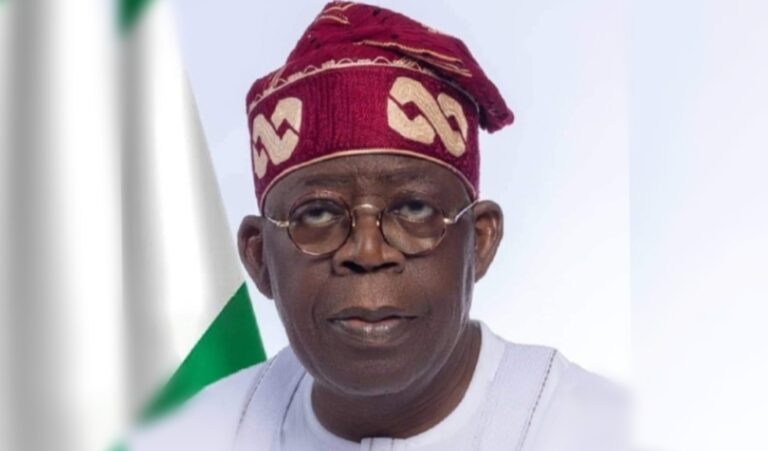
PRESIDENT Bola Tinubu has nominated the former Chief of Naval Staff and immediate past sole administrator of Rivers State, Ibok-Ete Ekwe Ibas, as a non-career ambassador.
The list includes former Senator Ita Enang; former Imo State First Lady, Chioma Ohakim; and former Minister of Interior and ex-Chief of Army Staff Abdulrahman Dambazau.
The nominations, conveyed in a letter read on the Senate floor, on Thursday, December 4, by Senate President Godswill Akpabio, were referred to the Senate Committee on Foreign Affairs.
The committee was also directed to complete their screening and report within one week.
In his letter, Tinubu urged the lawmakers to give the nominees prompt consideration to enable him to make critical diplomatic postings.
This latest batch followed earlier nominations that were widely criticised by the opposition parties, including the Peoples Democratic Party (PDP) and Nigerians, who accused the president of rewarding political allies rather than appointing qualified diplomats.
On November 29, the PDP described a previous ambassadorial list as ‘scandalous’ and full of individuals with “integrity deficits,” alleging further that the selections were politically motivated rather than merit based.
The party said the list confirmed fears that the Tinubu administration was more inclined to rewarding political loyalists than appointing credible representatives capable of enhancing Nigeria’s global standing.
According to the statement, signed by the PDP National Publicity Secretary, Ini Ememobong, the ambassadorial selections offered a troubling picture of the president’s judgment and priorities. The party said it was no surprise that Nigerians reacted with outrage when the names were made public.
Similarly, many citizens on social media expressed outrage, particularly over nominations of former Chairman of the Independent National Electoral Commission (INEC) and politicians whose past roles were marked by controversy. They argued that these appointments reinforced perceptions of patronage and a reward system for loyalty rather than competence.
If confirmed, the newly nominated ambassadors will be posted to key nations including China, India, South Korea, Canada, Mexico, the UAE, South Africa, and Kenya, as well as multilateral missions such as the United Nations, African Union, and UNESCO.
Tinubu had recalled all ambassadors appointed by former President Muhammadu Buhari in September 2023.




![[BREAKING] Rivers lawmakers dump PDP, defect to APC](https://www.icirnigeria.org/wp-content/uploads/2024/01/Speaker-Rivers-State-House-of-Assembly-1.jpg "[BREAKING] Rivers lawmakers dump PDP, defect to APC")