Home Blog Page 120

Nigerian States, LGAs have failed transparency tests – CeFTPI boss

0

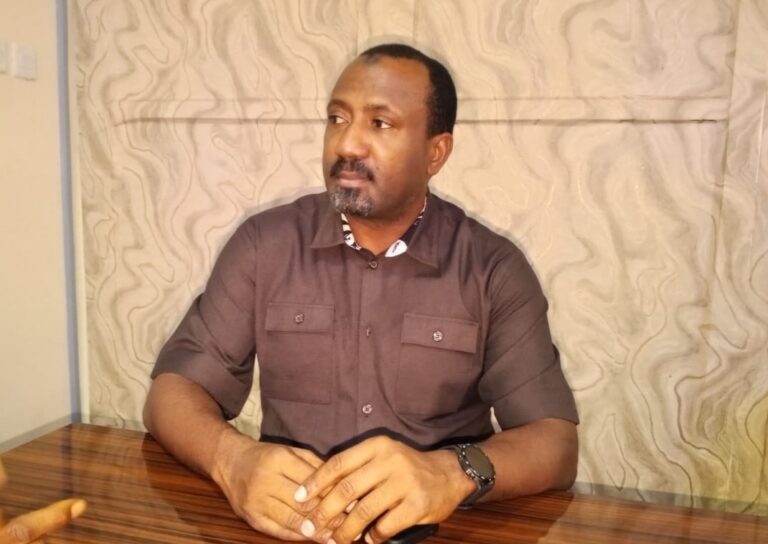
THE Executive Director of the Centre for Fiscal Transparency and Public Integrity (CeFTPI), Umar Yakubu, has said that Nigeria’s fiscal accountability crisis is far worse than citizens realise.                              According to him, the problem is not just corruption, but a system deliberately stripped of the tools needed for transparency. 

He made this known on Wedneday December 3 when he appeared on the ICIR’s accountability interview series.   

“Nigeria’s fiscal accountability crisis is far worse than citizens realise and the problem is not just corruption, but a system deliberately stripped of the tools needed for transparency,” he said.

Yakubu outlined the loopholes enabling corruption across federal, state, and local government systems, warning that Nigeria’s accountability framework has buckled under years of political interference, weak demand from citizens, and deliberate sabotage of watchdog institutions.

“If we do not look at the factors that cause those problems, we will not resolve it. For example, if we look at public sector corruption, instead of the normal people to advocate against EFCC, ICPC, we don’t look at that. We look at the primary source of all this public sector corruption, which is usually the political class.

“How did the political class get to where they are? We have a regulator called INEC, (Independent National Electoral Commission). So our work will focus more, not that we’re ignoring these other ones. We will now focus more on INEC because, for example, if you get your electoral system right, you will not have these pressures you have on the system.

“Once there’s transparency, the level of accountability will increase. We look at public sector reform because a lot of problems we have in Nigeria, aside from corruption, are a lot of waste. It’s usually about waste and low level of efficiency. So we look at that as well. Thirdly, we look at the integrity of systems, not of individuals,” he said.

Yakubu said federal commissions and regulatory agencies such as NCC and JAMB have shown minor improvements in transparency, noting that core ministries have not moved an inch since 2021.

“State-level transparency is almost non-existent. There is no state assembly in the last 10–15 years that has impeached or even seriously questioned a governor on public spending,” he said.

Yakubu explained why repeated revelations in annual audit reports rarely lead to prosecution.

“The Auditor-General is one of the most powerful offices in the constitution, but the political system has found a way to weaken it.” 

Their reports are meant to trigger legislative action, but instead, “the National Assembly is often in bed with the executive. Without their support, even constitutional watchdogs become toothless.”

The CeFTPI boss urged Nigerians to demand for transparency across all sector and hold power to account.

“Citizens are not demanding enough. The only people doing this work are usually civil society like us, you and I, and a couple of media. So there needs to be more demand for transparency and accountability, because what evidence has shown is that when citizens are not demanding and they leave it wholly to the media, though the media is very important and critical, I understand how many ways citizens can voice their concerns,” he added.

According to Yakubu, CeFTPI was registered in 2016 but started operation in 2020 after COVID.

“But before, between 2016 and 2020, we’re doing a low-level advocacy around things like rape, fraud, corruption, organised crime, human trafficking.

“We try to advocate in areas where we feel that the cost of the problems in whatever ill we see in society, if it’s corruption, we look at what are the primary enablers,” he explained.

Senate confirms ex-CDS Musa as Defence Minister

THE Senate has confirmed the former Chief of Defence Staff, General Christopher Musa, as the new Minister of Defence.

The Senate President, Godswill Akpabio, made the confirmation on Wednesday, December 3, after a unanimous agreement by the senators during Musa’s screening.

Akpabio also noted that the lawmakers commenced a process Wednesday morning for designating kidnapping as terrorism and approving death sentence for kidnappers without an option of fine.

The ICIR reported that President Bola Tinubu announced Musa’s nomination as the new Minister of Defence.

In the letter sent to the Senate on Tuesday, Tinubu expressed confidence in Musa’s ability to “strengthen Nigeria’s security architecture” and revitalise the ministry at a time when the country is grappling with escalating insecurity.

The screening commenced shortly after Akpabio read Tinubu’s request during plenary, asking lawmakers to consider and confirm the former CDS as a replacement for ex-Defence Minister Mohammed Badaru, who resigned on Monday due to health concerns.

Akpabio then ordered a suspension of Senate rules to permit the retired military chief to enter the chamber for his screening.

Akpabio requested the new minister to investigate answer questions over the abduction of 24 students abducted from Government Girls Comprehensive Secondary School, Maga, Kebbi State.

Musa assured the Senate that he would investigate the incident and others Akpabio highlighted and work with all the security agencies to tackle the security challenges facing the country.

“I can assure you that we are going to investigate and all those found culpable will face the law accordingly. I will make sure that we monitor all the activities of the Armed Forces and the security agencies to make sure that they remain very, very professional. Any information that comes will be treated adequately and I’ll make sure that the troops also take action as quickly as possible,” Musa said.

While urging governors and citizens to support him, he assured Nigerians that he would do his best to ensure stability is fully restored in the country.

“I want to assure Nigerians that are coming on board, having served 39 years all through my career in the armed forces, we have seen what is going on, we have understood what is going on, and we know what we need. Our appearance is that we are poor. But as we come on stream, we are going to come out to you and show you exactly what we need for us to do better and for us to achieve success.

“We can win this war, but we must work together. We must get the support. Because I can tell you, not counting on us, there are still a lot of gaps within the Armed Forces that are also mitigating against them being able to achieve success fully in what we are doing,” he said.

He added, “Like I said, we need the state governors, we need everyone to be on board for us to be able to achieve that. So my assurance is, from day one, we are going to monitor and review all our activities, all the operations that we are doing, and what we have done. We are going to take measures to address them, where things need to be done, we are going to handle, we are going to come back against them because there are areas that we need their support. I want to make sure the issue of funding, the gap in funding is going to be extremely difficult.”

The minister said he was commissioned into the Nigerian Army as a Second Lieutenant in 1991 and progressed through a series of command and staff roles.

In 2021, he was appointed Theatre Commander of Operation Hadin Kai and later led the Nigerian Army Infantry Corps before being appointed Chief of Defence Staff in 2023.

His predecessor, Mohammed Badaru, who took office as Defence Minister on August 21, 2023, resigned on Monday, December 1, citing ill health as the reason he could no longer perform his duties effectively. Tinubu accepted his resignation and thanked him for his service.

Badaru recently faced public criticism following a BBC Hausa interview, in which he said some terrorists were difficult to target because their forest hideouts were “too dense for bombs to reach.”

CBN scraps deposit limits, increases weekly withdrawal threshold

THE Central Bank of Nigeria (CBN) has announced key adjustments to its cash-handling regulations, abolishing the ceiling on cash deposits and expanding the weekly withdrawal limit across all platforms to N500,000, a significant rise from the previous N100,000.

The Director of the Financial Policy & Regulation Department, Rita Sike, communicated the policy shift through a circular titled: “Revised Cash-Related Policies.”

In the document, the apex bank explained that the overhaul aligned with efforts to curb the surging cost of managing physical cash, tackle security risks, and stem money-laundering vulnerabilities linked to Nigeria’s cash-driven economy.

The CBN noted that although earlier cash directives were created to push Nigerians toward electronic payment options, a review became necessary to align with current economic conditions.

The circular listed several major amendments taking effect from January 1, 2026, The cap on cumulative deposits has been abolished, and additional charges for surpassing former deposit limits have been eliminated.

The bank also announced a fresh cumulative withdrawal ceiling of N500,000 weekly for individuals and N5 million for corporate entities across all access points. Any amount above the stated limits will incur excess-withdrawal fees as outlined in the new guidelines.

The earlier monthly special approval, which permitted individuals to draw N5 million and corporates N10 million once every month, has now been scrapped.

For Automated Teller Machine (ATM) usage, customers will still be restricted to N100,000 daily, with a total weekly limit of N500,000, which contributes to the overall weekly withdrawal total applicable to ATMs, Point-of-Sales (POS) machines, and other channels.

The CBN added that withdrawals exceeding the approved thresholds would attract charges of three per cent for individuals and five per cent for organisations, to be split 40 per cent to the CBN and 60 per cent to the servicing bank or financial institution.

Banks have also been instructed to ensure ATMs are stocked with all available currency denominations. Meanwhile, the ceiling on over-the-counter withdrawals using third-party cheques remains at N100,000, which will also count toward a customer’s weekly limit.

In addition, deposit money banks are mandated to submit monthly compliance reports to departments responsible for supervision, including banking supervision, other financial institutions supervision, and payments system supervision.

The circular clarified that the new rules would not apply to revenue-collecting accounts operated by federal, state, or local governments.

Accounts belonging to microfinance banks and primary mortgage banks domiciled with commercial or non-interest banks also remain exempted.

However, the previous privileges granted to embassies, diplomatic offices, and donor agencies have been withdrawn.

Recall, on December 17, 2024, the CBN set a daily cash-out limit of N100,000 per customer transacting on point-of-sale (PoS) terminals.

The CBN clarified then that the directives were to streamline agency banking operations, encourage electronic payment adoption, and enhance the country’s cashless economy drive.

It further said that the directives helped with uniform operational standards, fraud prevention, and improved monitoring within the agent banking sector.

38 abducted Kwara worshippers return home

0

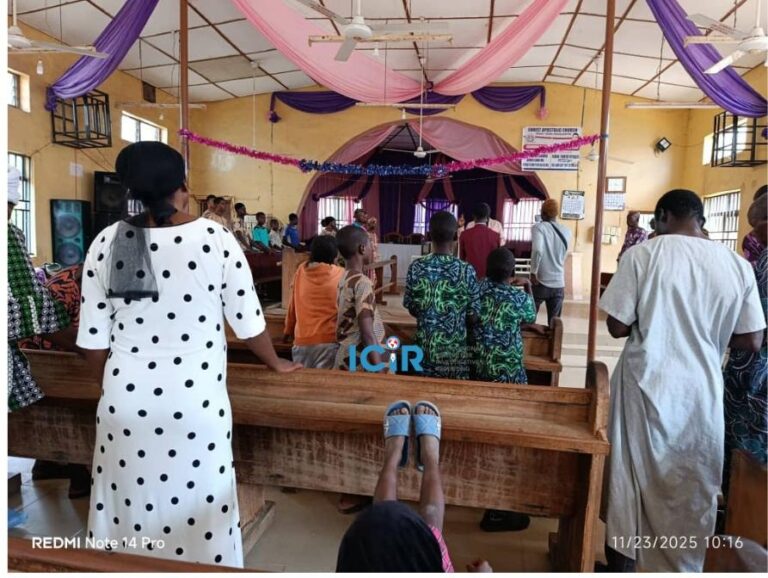
IN a heartwarming homecoming, 38 worshippers abducted on November 18, 2025, during a special thanksgiving service by gunmen at the Christ Apostolic Church Oke Isegun, Eruku, Kwara State, have safely returned to their community.

The Chief Press Secretary to the Ekiti Local Government Council Chairman, Dada Sunday, revealed this in a statement.

“Their reunion has brought relief to the community. Since the day of the attack, we have not had a rest of mind,” he said.

Sunday noted that the worshippers returned to Eruku at about 6:30 p.m. on Tuesday, where they were welcomed with cheers from their families and other jubilant community members.

The ICIR reported that gunmen attacked the Eruku church fortnight Tuesday, killed three people and abducting 38 worshippers.

The statement by the Ekiti LGA said the rescued worshippers were handed over to the Executive Chairman of the LGA, Awelewa Gabriel, in Ilorin by Governor AbdulRahman AbdulRasaq.

“We will leave no stone unturned in ensuring the lives and property of our people are protected through a robust security network”, the LGA said.

Thei LGA chairman appreciated President Bola Tinubu, Governor AbdulRasaq, the National Security Adviser, and all security agencies involved in the rescue effort for their prompt response to the attack, which led to the swift rescue of the abductees.

“We appreciate the comprehensive medical care and provisions given to the abductees after their rescue,” Awelewa said, assuring residents of his LGA that his administration would continue to prioritise their safety and security.

The ICIR reported that 11 residents of Isapa, a community neighbouring Eruku were abducted following a violent attack by armed bandits on November 24.

Reports indicated that the gunmen, reportedly numbering between 20 and 30, invaded the community around 6:00 p.m., shooting indiscriminately as they moved through several parts of the town with a large herd of cattle.

According to a list circulated online by the community residents, 11 victims were whisked away with seven coming from the same family.

Much Ado about Mahmood Yakubu’s ambassadorial nomination 

0

 By Suleiman A. Suleiman (PhD)

OF the 35 or so Nigerians nominated by President Bola Ahmed Tinubu over the past week to represent Nigeria at various foreign missions and embassies across the world, that of Mahmood Yakubu, a professor, the immediate past Chairman of the Independent National Electoral Commission, INEC has attracted misplaced public uproar.

Yakubu served under four Nigerian presidents in a row and left his INEC position only last month.

These two facts—that he was Chairman of INEC, and that he left that post only in early October—have become the basis of criticisms by some politicians and pundits. Overall, critics of his nomination have centred on two main arguments. First, they argue that as the immediate past head of INEC, Yakubu’s nomination for an ambassadorial post has come too soon and too close to the end of his term at INEC, and therefore violates an unnamed ethical guideline that critics believe would compromise the independence or impartiality of INEC, Nigeria’s foremost electoral management body. Secondly, Yakubu’s nomination has been presented as a form of “reward” for conducting the 2023 presidential election, which Tinubu won. This, critics say, will incentivise subsequent INEC chairs in future elections.

As a journalist and political scientist, I will not read any malicious motivations into these arguments. Rather, I accept them as well-intentioned issues by concerned citizens and legitimate political actors who only want to help deepen our democracy. In the same sense, however, I argue that these concerns are misplaced, even misguided, because they stem from a narrow and superficial understanding of what both true democracy and public service entail.

First of all, let’s clarify the position of the law. One of the points raised by some observers on this issue is that an INEC Chairman or National Commissioner—Mahmood Yakubu or whoever—should spend a “cooling off” period of at least five years before they should hold any elective office. This idea is in fact the subject of a long-running debate and legal changes. Section 7 of the Independent National Electoral Commission (INEC Establishment) Act 2004), the law that established INEC in 1998, states among other things that “a person who holds or has held office as a member of the Commission under this Act shall not, until after a period of five years immediately thereafter, be qualified for any elective office”.

During the electoral overhaul of 2010, however, that section was strenuously debated in both chambers of the National Assembly, who, in their own wisdom repealed it in the Electoral Act 2010. The main argument in favour of repeal was that such a provision goes against the Constitution, which guarantees the rights of all Nigerians to stand for any elected office they are qualified for. Equally important to note, the provision was specific to “elected office”, not all public offices like ambassadorships or other appointive positions. Therefore, that provision is no longer a part of Nigerian laws and is certainly not in the extant Electoral Act 2022.

In other words, this whole argument has already been raised, debated and settled by the representatives of all Nigerians since 2010, a time when no one—least of all Yakubu himself—would ever have known that he would one day serve as the chair of INEC. Moreover, the argument that a cooling-off period of five years or five days post-INEC service violates the fundamental rights of a citizen was valid fifteen years ago in 2010, and remains valid today.

Secondly, we must raise the question: is an ambassadorship even a reward in the Nigerian context? Hardly. In Nigerian political culture, ambassadorships are among the most lowly ranked public offices. For career diplomats, an ambassadorship is the pinnacle of their profession, the zenith which every official who enlists into the foreign service aspires to reach someday. For non-career appointees, however, an ambassadorship is a form of banishment, if not exile, from mainstream politics. Even among the Nigerian public, ambassadorial roles are generally viewed as a consolation prize, a containment, or the first step to quiet retirement or obscurity.

For Mahmood Yakubu who served two full terms as INEC Chairman, his nomination to this role would, in effect, be deemed as a step-down rather than a promotion or reward. This is why we must detach politics from his nomination and view it in one sense and one sense only: as a renewed call to public service. After all, genuine public service to nation is simply public service to nation, regardless of post. I am aware that the idea of “public service” is not yet ingrained in Nigerian political psyche, but for reasons I shall outline presently, it must be.

Third, the idea that the independence and impartiality of INEC will be compromised by Yakubu’s nomination or appointment, or indeed for any future chairs, is not only misplaced and misguided, it is also reckless. The independence and impartiality of INEC does not and should not depend on the post-service career any of its previous chairs or commissioners. INEC’s independence is codified in law. INEC is also easily the most scrutinized public institution in Nigeria, which is rightly so. Therefore, INEC’s impartiality does not depend on the saintliness—or lack of it—of any one man. Rather, it depends on the structural safeguards around its operations: the enabling laws and the active monitoring and scrutiny of all actors.

Moreover, since the electoral reform of 2010, INEC has had a robust system in place that is only growing stronger, as far as the facts on the ground are concerned. It is up to all actors, particularly the political parties, civil society, media and Nigerians to uphold and strengthen that system further, not the post-service career of one man. Democracy, after all, is a system of checks and balances whereby all competing actors monitor one another constantly at every step. Democracy is a system of strong institutions, not strong men.

Most importantly, what the critics are saying about Professor Yakubu’s nomination reflect a deep misunderstanding of democracy as it is and of public service as it should be. We Nigerians tend to have a puritanical and unrealistic assumptions about democracy, and consequently, we impose high-handed expectations on individuals and institutions that even the most advanced democracies in the world do not have. In most developed and developing democracies, Yakubu’s nomination would be entirely normal practice.

In Europe and the United States, it is common practice for officials to move from leadership or membership of central or local election management commissions to other elective or appointive roles in government, with or without much time-lag in between. In France since the 1990s, almost all heads of the Constitutional Council, which oversees French presidential and parliamentary elections, were, and still are, card-carrying members of one or other political parties in the country. In the UK, each political party with a certain threshold of Members of Parliament nominate one person to the UK Electoral Commission.

In the U.S particularly, the “Secretary of State” (not the foreign minister) is the official in charge of all state-wide elections in 47 states, including elections for president, governor, congress and senate. All of them are card-carrying members of either Democratic or Republican party. The Republican Brian Kemp of Georgia, and the Democrat Katie Hobbs of Arizona, for example, both ran for and won the governorships of their states while still in office as Secretary of State, meaning, directly in charge of their own elections. As a Nigerian equivalent, that is like the Chairman of a State Independent Electoral Commission (SIEC) standing for the chairmanship of a local government at the same time.

In India, the country with the largest and most complex electoral system in the world, T. N. Seshan retired as Chief Election Commissioner—their INEC Chairman—in December 1996. By July 1997, he contested for president himself. The example of the Eastern European country of Georgia is even more dramatic. Zurab Kharatishvili was appointed Chief Electoral Commissioner in 2010 for a five-year term. Midway in 2013, he resigned, created a new political party and contested the presidential election himself directly. He lost.

There are even closer examples nearer home. Christiana Thorpe, who ended her two terms as Sierra Leone Chief Electoral Commissioner in 2015, was appointed Deputy Minister of Education, Science and Technology just about a year later in 2016. And in Guinea-Bissau, José Pedro Sambú became head of that country’s National Electoral Commission in 2016, and immediately after his one term of five years became President of the Supreme Court in 2021, that is, much like Nigeria’s Chief Justice of the Federation.

These examples illustrate a few things. First, they reinforce my earlier point that elections are institutional practices and their impartiality do not depend on the career choices of one electoral officer. Rather than impose impossible expectations that infringe on the fundamental rights of Nigerians to serve their country, we should be working towards how our elections can work regardless of any individual.

Second, they show that our unrealistic expectations are merely a consequence of our status as a new democracy. Because we have only had about 25 years of uninterrupted democratic development, many practices that are otherwise normal democratic practices appear unusual, strange or even unacceptable to us. But we cannot allow present fears stand in the way of current and future possibilities.

Finally, and most importantly, the issues some have raised about this nomination merely reflect our rather shallow understanding of public service. Yakubu has had a sterling career as a public servant, working under four Nigerian presidents with very different personal attributes—Yar’adua, Jonathan, Buhari, and Tinubu—and belonging to different political parties. That means each of these presidents saw something in his abilities which he has deployed in the service of this country, without any reservations.

As head of the Tertiary Education Fund (TETFUND) from 2007 to 2012, he worked with both Presidents Yar’adua and Jonathan to reposition Nigeria’s tertiary education system by putting in place structures and services that remain the backbone of that sector to date. As Chairman of INEC for an unprecedented two terms, he oversaw innovations that in the 2023 general elections helped opposition parties win their highest tally of elective offices in Nigerian electoral history.

His time at INEC has now closed, and a new chapter in his public service career for God and country has opened. Let it be.

Suleiman is a journalist, an academic and public affairs analyst in Abuja

 

Why house rent will keep increasing in Nigeria – Expert

0

A real estate market analyst and the Chief Executive Officer of NorthCourt, a real estate advisory firm, Ayo Ibaru, has said the value of houses and rent would continue to rise, as growing population is expanding demand for housing in Nigeria.

Ibaru disclosed this on Tuesday, December 2, while commenting on the gross domestic product growth of 3.98 per cent released by the National Bureau of Statistics (NBS).

Analysing market trends in the housing sector, Ibaru highlighted a supply-demand imbalance, noting that it had become a norm in the sector despite housing policy initiatives of the government.

Nigeria’s housing sector is experiencing significant growth, driven rapidly by increasing population and urbanisation. The real estate market is projected to reach $1.5 trillion by 2025, with a housing deficit of 17-20 million units.

The expert explained that with the annual population growth of 2.5 per cent, the demand for houses would grow, which would also lead to an increase in rent since affordable housing remained elusive.

“Quarter three has seen lots of infrastructure projects, comprising Lagos-Calabar expressway and other major constructions across the country, which have elevated construction activities in the country,” Ibaru said.

He also noted that there were more opportunities in real estate, adding that 2026, being a pre-election year, would become the toast of local investors who understand the market.

“Construction work will continue as the pre-election year always favours the local investors who understand the risk appetite of the market, he said.

He stressed further that the demand side of the housing deficit must be supported by the government with incentives for investors to improve availability and affordability.

“On the demand side, we expect financing, and people cannot afford high rent. Also, the government should focus on creating more transparent products in housing that could attract long-term investment.

“On the supply side, it’s a bit tricky. What goes to the housing sector is imported. There’s the importation, inflation and currency problem which also affects the market.

“There’s also the Land Use Act concerns and the need to update our land surveys across the country, in addition to bureaucratic inefficiencies in many ministries of land. You come with all your paperwork, and the process takes time,” he added.

The ICIR reports that registering a property in Nigeria typically takes one to three months, although bureaucratic delays can extend this time frame. In contrast, Rwanda boasts one of Africa’s fastest business registration systems, with property registration possible within six to 48 hours.

“If I cannot predict when the state will grant me access to develop, then there’s a problem. If I go ahead to develop, there are more problems of illegality. This complicates investors’ appetite for Nigeria’s housing sector.

“I expect construction to go up by 5.6 per cent in the second quarter of next year, with many state governments also keying into infrastructural projects,” Ibaru disclosed further.

Many middle-income earners are still struggling to access affordable homes because of lack of funds, rising inflation, and the weakening of the naira.

Although the Nigerian government has rolled out some policies, checks by The ICIR show that inflation, inefficient data, lack of local manufacturing hubs, and high interest rates are some of the issues affecting affordable housing for intending homeowners.

Guinea-Bissau: Electoral Commission announces inability to declare poll results

GUINEA-Bissau’s electoral commission has announced that it could not conclude the November 23 presidential election after armed men stormed its offices and took away ballots and tally sheets.

A senior official of the commission, Idrissa Djalo revealed this in a statement on Tuesday, December 2.

“We are not in material and logistic conditions to follow (through with) the electoral process,” Djalo said.

The ICIR reported that Army officers in the West African country seized power on November 26, a day before the electoral commission was due to announce the results of the contested election.

The head of the military in the office of the president, Denis N’Canha, a Brigadier General, flanked by armed soldiers, told journalists that a command “composed of all branches of the armed forces, was taking over the leadership of the country until further notice”.

The officers halted the country’s electoral process and shut the nation’s borders, three days after Guinea-Bissau held its legislative and presidential elections.

The coup took place a few hours after eyewitnesses said gunfire erupted near the headquarters of the election commission, as well as close to the Presidential Palace and the Interior Ministry.

The gunfire lasted for about an hour but stopped at about 1400 GMT. It was not immediately clear who was responsible for the shootings. There was a heavy military presence outside the presidential palace. 

The ICIR reported that Guinea Bissau held presidential and legislative elections on Sunday, November 23, in which the incumbent President Umaro Embalo sought to become the first president in three decades to win a re-election.

Guinea-Bissau, a small coastal nation between Senegal and Guinea, with about two million people, saw at least nine coups between 1974, when it gained independence from Portugal, and 2020, when Embalo took over power.

In separate statements, the Election observers from the African Union, the Economic Community of West African States (ECOWAS), and the Nigerian government expressed deep concern over the situation in the country and condemned the coup as unacceptable.

They also called on the military to ensure the nation returns swiftly to democratic governance.

Nigeria former President Goodluck Jonathan was among leading observers for the country. He said Embaló orchestrated the coup to thwart the country’s democracy.

Tinubu nominates former CDS Christopher Musa as Defence Minister

0

PRESIDENT Bola Tinubu has nominated immediate past Chief of Defence Staff (CDS), Christopher Musa, as the Minister of Defence.

He replaces Mohammed Badaru Abubakar who resigned yesterday over alleged ill-health.

His nomination was contained in a letter addressed to Senate President Godswill Akpabio on Tuesday. Tinubu expressed confidence in Musa’s capacity to lead Nigeria’s Defence Ministry and coordinate the country’s security.

The president’s Special Adviser on Information and Strategy, Bayo Onanuga, also confirmed the nomination.

Part of the president’s letter to the Senate reads, “General Musa, 58, on December 25, is a distinguished soldier who served as Chief of Defence Staff from 2023 until October 2025. He won the Colin Powell Award for Soldiering in 2012.

“Born in Sokoto in 1967, General Musa received his primary and secondary education there before attending the College of Advanced Studies in Zaria. He graduated in 1986 and enrolled at the Nigerian Defence Academy the same year, earning a Bachelor of Science degree upon graduation in 1991.

“General Musa was commissioned into the Nigerian Army as a Second Lieutenant in 1991 and has since had a distinguished career. His appointments include General Staff Officer 1, Training/Operations at HQ 81 Division; Commanding Officer, 73 Battalion; Assistant Director, Operational Requirements, Department of Army Policy and Plans; and Infantry Representative/Member, Training Team, HQ Nigerian Army Armour Corps.”

Musa, who turns 58 on December 25, previously served as Chief of Defence Staff from 2023 until October 24, 2025, when Tinubu relieved him and others of their positions.

His removal came at the peak of heightened military vigilance following coup attempts in parts of West and Central Africa, prompting rumours that Abuja was tightening control over top security commanders who allegedly attempted to truncate democracy in Africa’s largest nation.

Although the Presidency neither publicly admitted there was a planned putsch nor linked Musa’s sack to the reported coup attempt, the flurry of arrests within the period raised dusts and provoked suspicion.

The timing of Musa and other security chiefs sack stirred widespread speculation within security establishments and among netizens, with some commentators stating that removing the nation’s top military officers at such a time was a source of concern.

Before that controversy, Musa had reportedly earned a reputation as one of the military’s most experienced operational commanders.

He won the Colin Powell Award for Soldiering in 2012 and built a career that spanned key training, operational, and command appointments.

Born in Sokoto in 1967, he attended basic schools in the state before moving to the College of Advanced Studies in Zaria. He joined the Nigerian Defence Academy in 1986 and was commissioned in 1991.

Musa held several prestigious roles, including General Staff Officer 1, Training and Operations, at Headquarters 81 Division; Commanding Officer of 73 Battalion; Assistant Director, Operational Requirements at Army Policy and Plans; and Infantry Representative at the Nigerian Army Armour Corps.

His counterinsurgency experience deepened from 2019, when he became Deputy Chief of Staff Training/Operations at the Infantry Centre and Corps, and later Commander of Sector 3 under Operation Lafiya Dole.

He went on to lead Sector 3 of the Multinational Joint Task Force in the Lake Chad Basin before assuming command of Operation Hadin Kai in 2021. He later led the Nigerian Army Infantry Corps ahead of his appointment as Chief of Defence Staff in 2023.

Media clampdown: IPI blacklists Governors Bago, Eno, IGP Egbetokun

0

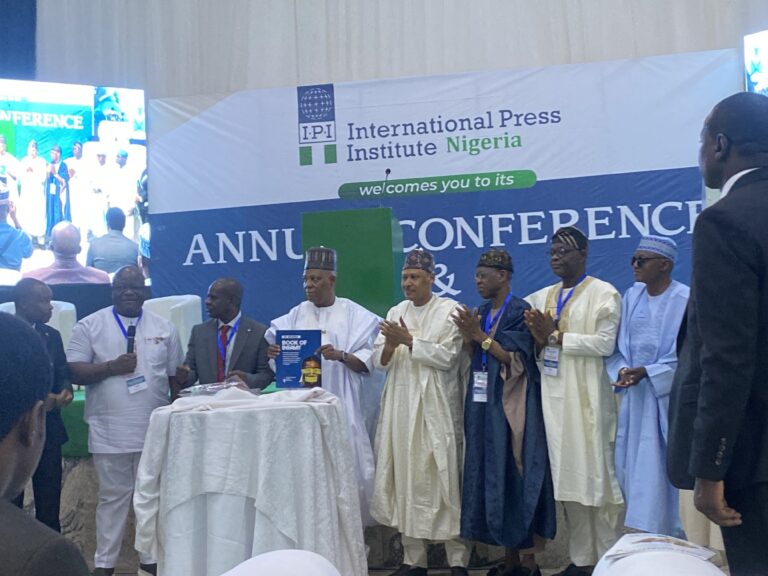
THE International Press Institute (IPI) Nigeria has formally unveiled the Nigeria Book of Infamy, a new platform designed to publicly name state actors who perpetrate abuses against journalists and violate press freedom in the Africa largest nation.

Vice President Kashim Shettima launched the book at the 2025 IPI Nigeria Conference and Annual General Meeting in Abuja on Tuesday, December 2.

He was joined by the Minister of Information, Mohammed Idris and representatives of heads of the nation’s security institutions.

Following the launch, IPI Nigeria President, Musikilu Mojeed announced that the first entries in the book would include the governors of Niger and Akwa Ibom states, as well as the Inspector-General of Police Kayode Egbetokun.

He said the decision was driven by their excesses against the media, despite repeated interventions by IPI Nigeria.

He cited the continued closure of a radio station in Niger State ordered by Bago, saying the governor had refused to reverse the action even after IPI’s engagement.

Mojeed also accused Eno of ordering Channels Television correspondents out of the Government House, noting that further efforts to resolve the matter was met with resistance.

Responding to the declaration, Shettima appealed to IPI Nigeria to allow him a two-week window to personally engage the three officials before their names become permanent entries in the book.

Meanwhile, IPI Nigeria has warned state actors, including security agencies and political office holders in the country that further harassment or violence against journalists would be fiercely resisted going forward.

Mojeed, who issued the warning while giving his welcome address at IPI conference, said journalism in Nigeria was under severe pressure. He pointed at the country’s ten-place drop in the 2025 global Press Freedom Index, from 112 to 122.

The IPI leader said the decline reflected a pattern of aggressive and sustained attacks on journalists across states.

He recalled how journalists investigating corruption or filming police misconduct were arrested, physically attacked, and broadcast stations in Zamfara were once shut down simply for airing opposition activities.

He also noted the case of an investigative reporter Segun Olatunji who was abducted, blindfolded and chained over a controversial story by the Nigeria government.

He further criticised authorities for continuing to misuse the Cybercrime Act against journalists despite amendments meant to protect press freedom.

According to him, the assault on media workers during the August 2024 nationwide protests remains one of the most glaring signs of the shrinking civic space in Nigeria.

“This has been said before, and I will say it again: Journalism is not a crime. And journalists are not criminals. The Constitution protects freedom of expression. The courts have affirmed it. But in practice, we continue to see arbitrary arrests, intimidation, censorship, and violence, he added.

Speaking further on the persistent threats to press freedom, the IPI Nigeria president reaffirmed that the media community would no longer tolerate such attacks.

“Any further attack on journalists will be fiercely resisted going forward, he said, as he called on the Federal Government to curb the growing excesses of state governors, security operatives and public officials who attack the press without consequence.

He urged authorities to end harassment of journalists, strengthen safety mechanisms for reporters and dismantle legal tools frequently used to intimidate newsrooms.

Calls for solidarity across newsrooms

Mojeed urged journalists to resist any attempt to silence their work, insisting that newsrooms must not isolate themselves or pretend that attacks on one reporter would not affect the entire profession.

He said impunity would thrive when journalists failed to demonstrate solidarity, stressing that the decline of press freedom directly weakened Nigeria’s democracy, fueled corruption and stripped citizens of their voice.

Online ‘mischief-makers’ pose biggest threat to Nigeria’s democracy, says Shettima

0

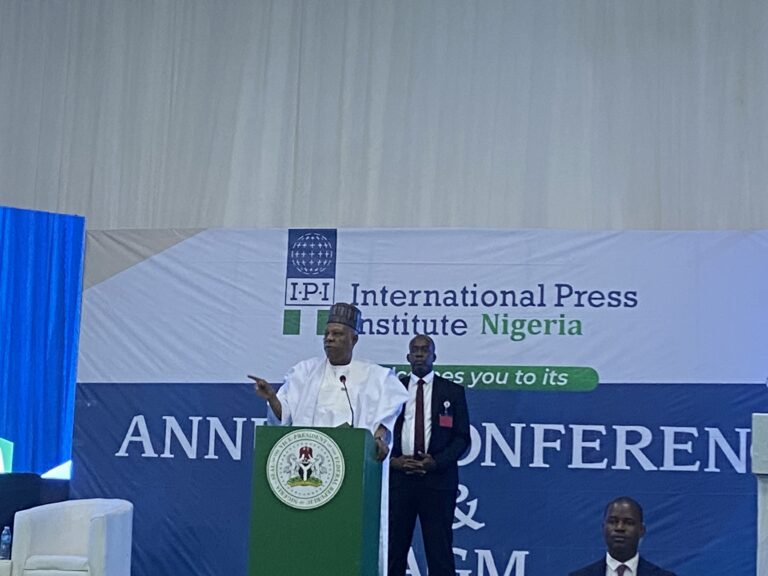
VICE President Kashim Shettima on Tuesday, December 2, said Nigeria’s democracy depended on a media ecosystem anchored on ethics, integrity and fact-based reporting.

Addressing senior editors, publishers and journalists, at the 2025 Annual International Press Institute (IPI) conference in Abuja, Shettima said every nation is ultimately defined by the character of its media.

He lauded the Nigerian press for its resilience over the years, noting its capacity to “rise in defence of the public’s right to know” even in difficult times.

“There is no doubt that Nigeria has one of the most vibrant media communities anywhere in the world, a fact proven across generations. We have lived through days that showcased your brilliance and patriotism, just as we have lived through days that revealed your imperfections.

“Yet one thing you have never failed to do is rise in defence of the public’s right to know. You have confronted those who sought to suffocate this oxygen of our democracy, and in moments of national confusion, you stepped forward to correct misinformation. This is a responsibility we cannot afford to take for granted, however complex our relationship may sometimes be.”

He explained that the media had the power “to summon the collective courage of the people” and equally the ability “to dismantle dreams or dismantle illusions.”

According to him, journalism fulfils its duty only when “truth, not convenience, becomes the supreme editorial policy.”

Shettima further lauded what he called the ‘sincerity’ of the Nigerian media in exposing foreign interference and disinformation, stressing that the majority of journalists refused to compromise their platforms.

“One of the proudest moments for journalism in contemporary Nigeria has been the sincerity with which the overwhelming majority of you continue to confront the rising tide of Foreign Information Manipulation and Interference.

“You have stood firmly against disinformation and refused to surrender your pens to falsehoods or foreign puppeteers.”

He criticised a ‘minority’ whom he said manipulated unverified data, warning that no one could practise responsible journalism without ethical commitment.

“The pen is only mightier than the sword when it is deployed in the pursuit of justice and objectivity,” he said, adding that without ethics, media work becomes “a dictatorship of text and airwaves.”

Urges media to save democracy

The vice president also described the protection of democracy as the media’s most sacred duty.

This, he argued, includes saving democracy from the political class and “saving the political class from themselves.”

“Democracy is safe only when power is under constant observation,” he argued, insisting that such monitoring must be rooted in integrity.

Shettima said the mainstream media was not the real danger to Nigerian democracy, warning that digital platforms had empowered online mischief-makers.

He described social media actors as a mix of “serious commentators” and ‘mischief-makers’, lamenting that their influence fueled disinformation and deepened national divisions.

Impossible to suppress Nigerian media’

Speaking further, Shettima said previous attempts by leaders to intimidate the press failed because the Nigerian media space was too diverse and resilient.

“It is impossible, utterly impossible, to have a successful dictator in Nigeria,” he said, adding that “Never in our history has any person or government succeeded in suppressing the media community.”

Shettima urged journalists to maintain accuracy and fairness while holding the government accountable.