Home Blog Page 131

Judge sends IPOB leader, Nnamdi Kanu out of court

A JUDGE of the Federal High Court of Abuja, James Omotosho, has ordered the leader of the proscribed Indigenous People of Biafra (IPOB) of out of his courtroom following an outrage by the accused.

The judge, had scheduled today, Thursday, November 20, for ruling on the case against Kanu.

Kanu is facing a seven-count charge bordering on terrorism, treasonable felony, and incitement.

Omotosho said he could rule on the case in Kanu’s absence. The judge has continued with the ruling, in which he is likely to sentence the IPOB leader today.

Kanu was protesting that the judge could not rule on his case when he (the accused) had yet to file his final written address.

“‘Which law states that you can charge me on an unwritten law? Show me. Omotosho, where is the law? Any judgment declared in this Court is a complete rubbish,” the accused queried the judge.

Kanu had confronted the judge in a similar manner at the last hearing of the case, when the court admitted that he had forfeited his opportunity to file his final written address.

Kanu had sacked his lawyers and agreed to stand for himself in the court.

Before he was sent out of the court today, amid heavy security, he had argued that the judge knew nothing about law and lacked the power to determine his case.

Read update HERE

‘Why Nigeria’s integration in West African Power pool won’t solve electricity problems’

0

NIGERIANS may have to wait a little longer to reap the benefits of the integration of the West African Power Pool (WAPP), with a shaky national grid and other structural deficiencies still unsolved in the Nigerian electricity supply industry (NESI).

West African Power Pool integration serves as a centralised command centre for the mainland member countries of the Economic Community of West African States (ECOWAS).

The integration marks a significant step towards establishing a unified power market across the region, paving the way for more reliable, sustainable and affordable energy infrastructure for West Africa.

However, there are concerns that Nigeria may not harness the full benefits of the regional electricity market power pool, due to structural challenges in the power sector, resulting in grid collapse.

Former Chairman of the Nigerian Electricity Regulatory Commission(NERC), Sam Amadi, weighed in on this, noting that “Nigeria’s successful integration into the West African Power Pool (WAPP) strengthens investor confidence, expands regional electricity trading opportunities, but won’t offer electricity relief to Nigerian homes.”

“Structurally and managerially, we have to focus on solving our problems through structural thinking. Invest in making the grid reliable. It’s about managerially solving basic problems,” Amadi told The ICIR.

He warned that the problem would not be solved by outsourcing responsibilities, but by addressing project management with the right structure.

“Again, we know that many of our grid suppliers, some of our new Integrated Power Plants (IPPS), are finding it difficult to send loads. They have capacity more than the Nigerian market can receive for now, because of constraints of the transmission network, congestion, distribution failures, among others.

“It’s a public managerial problem which can only be solved by efficiency,” he said.

The ICIR reports that WAPP oversees the interconnected power grids of 14 nations, namely Benin, Burkina-Faso, Cote d’Ivoire, The Gambia, Ghana, Guinea, Guinea-Bissau, Liberia, Mali, Niger, Nigeria, Senegal, Sierra Leone and Togo.

Amadi also disclosed that with the inefficiencies and structural problems, small bilateral deals with the small Independent Power Plants (IPPs) in Nigeria and the Benin Republic were ongoing, with targeted industrial clusters already exploring the opportunities.

“With the integration, you can, in the short term, keep those companies financially buoyant because they’re selling power to the West African Power market,” he said.

Notably, Nigeria is still the region’s biggest generator—but the two neighbours-Benin and Niger, often record a steadier supply due largely to a prioritised power supply distribution to industrial clusters and homes.

Nigeria has been exporting a portioin of its grid output (roughly six  per cent of total generation) under bilateral deals with Benin, Niger and Togo.

Those contracts guarantee a baseline flow, and the receiving countries often supplement it with their own generation (e.g., Benin’s growing renewable projects) and with power traded through the West African Power Pool, which improves overall reliability.

The ICIR reports electricity sector remains fragile. About 85 million Nigerians (43 per cent of the population) lack access to grid electricity. This is one of the biggest energy access gaps in the world.

Research by a Power Sector Analyst, Taiwo Hassan Odugbemi, argued that Nigeria’s under-delivery in the power sector is largely due to systemic challenges in the grid, as he stressed that technical inefficiencies, vandalism and ageing infrastructure remain a major problem for the sector.

“Generation capacity is roughly 12,000 megawatts (MW)–13,500MW, but far less power is actually delivered. In 2023, Nigeria generated 4,500MW for a population of over 200 million. For comparison, Ethiopia, with a population of 132 million, recently added 6,000MW to its generation capacity. Before that, it generated 5,200MW,” Odugbemi noted in the research.


Full list : Morroco win big at 2025 CAF Awards

0

MOROCCAN football made a strong showing at the 2025 CAF Awards in Rabat, where defender Achraf Hakimi was named African Player of the Year, becoming the first defender to win the prize in 52 years.

His victory marked the highlight of Morocco’s overall dominance at the event. After finishing as runner-up in 2023 and 2024 behind Victor Osimhen and Ademola Lookman, the 27-year-old finally secured the continent’s top individual award.

Hakimi’s win ends Morocco’s long wait for the accolade. He is the country’s first recipient since Mustapha Hadji in 1998 and one of the few defenders to claim the honour in the modern era.

Morocco dominated the ceremony in Rabat, with Ghizlane Chebbak named Women’s Player of the Year and Yassine Bounou voted Men’s Goalkeeper of the Year.

Morocco’s football success in recent years is backed by solid performance on the global stage. The senior men’s national team became the first African and Arab country to reach the semi-finals of the FIFA World Cup, doing so in Qatar 2022. Their consistent qualifying record continued as they secured a spot in the 2026 World Cup well ahead of schedule.

At the youth level, Morocco has also broken new ground. The U-20 national team won the 2025 FIFA U-20 World Cup, defeating Argentina in the final — the first time an Arab nation has achieved this. Meanwhile, its domestic clubs have made major strides such as Wydad AC won the CAF Champions League in 2022, beating Egypt’s Al Ahly in Casablanca.

Moroccan club RS Berkane has also secured the CAF Confederation Cup recently. It is set to host the 2025 Africa Cup of Nations, marking its second time as host after a 36-year gap.

Nigeria also made its mark as Super Falcons and Brighton goalkeeper Chiamaka Nnadozie clinched the Women’s Goalkeeper of the Year award for the third consecutive time.

The event, held on Wednesday at the Mohammed VI Polytechnic University, also celebrated emerging stars. Othmane Maamma won Men’s Young Player of the Year, while Doha El Madani was named Women’s Young Player of the Year.

Cape Verde’s Bubista took home the Men’s Coach of the Year award, and Pyramids FC claimed Club of the Year.

CAF Awards 2025 – Full Winners List

Player of the Year (Men): Achraf Hakimi
Player of the Year (Women): Ghizlane Chebbak
Goalkeeper of the Year (Men): Yassine Bounou
Goalkeeper of the Year (Women): Chiamaka Nnadozie
Youth Player of the Year (Men): Othmane Maamma
Women’s Youth Player of the Year: Doha El Madani
Interclub Player of the Year: Ibrahim Mayele
Women’s Interclub Player of the Year: Shamirah Nabbadda
Coach of the Year (Men): Bubista
Club of the Year (Men): Pyramids FC
Team of the Year (Men): Morocco U-20
Team of the Year (Women): Nigeria Women’s National Team
Goal of the Year: Clement Mizize
Referee of the Year (Men): Omar Abdulkadir Artan
Referee of the Year (Women): Liban Abdulrazack
CAF Women’s Assistant Referee of the Year: Tabara Moodji
CAF Assistant Referee of the Year (Men): Liban Abdulrazack

CPJ demands release of Nigerian journalist jailed on terror charges in Benin

0

THE Committee to Protect Journalists (CPJ) has called on authorities in the Benin Republic to release Nigerian  travel journalist, Mathew Ojoduma, who has been detained on terrorism charges since January 29.

Ojoduma is the founder of the Africa Views channel, which focuses on covering African cities.

He has been in prison in Benin since he was detained on the Benin-Burkina Faso border after he was caught with a drone, camera, and laptop.

His family is also seeking the intervention of the Nigerian government for his release.

The ICIR reports that Beninese police arrested Ojoduma when he was crossing Benin’s northern border into Burkina Faso at the town of Porga, with a camera, drone, and laptop, according to Ojoduma’s wife, Priscilla Mathew, who spoke with CPJ, and court documents, reviewed by CPJ.

“Authorities in Benin must immediately release journalist Mathew Ojoduma, who has already wasted nine months of his life in jail on spurious terrorism charges,” said CPJ Africa Director, Angela Quintal.

“The Nigerian government must also step up and act to ensure fair treatment of its citizens, rather than keeping silent in the face of this heinous abuse of press freedom,” Quintal added.

On February 13, Ojoduma was charged with membership of a terrorist organisation, and his case was heard on May 19, according to a judgment issued that day by the Special Court for the Repression of Economic Offences and Terrorism (CRIET), reviewed by CPJ, and Ojoduma’s lawyer, who declined to be named, citing fear of reprisal.

The judgment said Ojoduma was “suspected of being in intelligence with terrorist groups” — a charge he denied — because of his “’insistence’ on travelling via Porga, “despite the prevailing climate of insecurity” there.

The court referred the case to the Public Prosecutor’s Office as its criminal nature was beyond its competence.

Notably, Northern Benin has been grappling with an increase in violent extremist attacks since 2021, as Islamic State-linked insurgents have taken control of swathes of neighbouring Burkina Faso and Niger and, beyond them, Mali. Mathew said her husband intended to travel through Burkina Faso to Mali and Senegal on a reporting trip.

On July 2, CRIET ordered Ojoduma to be held in pre-trial detention, according to a court order, reviewed by CPJ. Mathew told CPJ that her husband was being held at a prison in the southern city of Cotonou.

The lawyer told CPJ he appealed to CRIET, but the verdict confirmed its May 19 ruling that the court did not have jurisdiction over the case.

He said CRIET told him that authorities’ search of Ojoduma’s “phones and the hard drive revealed no information in this case relating to acts of terrorism,” but he was unable to share a copy of the court document for procedural reasons.

The lawyer informed that the court said its analysis of Ojoduma’s computer showed he was a media specialist focusing on travel and the environment, with an interest in regional politics.

The Secretary, of the Lagos State chapter of the Nigerian Bar Association (NBA), Ayodeji Olabiwonnu, said Ojoduma’s family asked for support on Ojoduma’s behalf, adding that “the association wrote to Nigeria’s Attorney General, Minister of Foreign Affairs, and Nigerians in Diaspora Commission requesting action, but received no replies.”

The CPJ’s requests for comment, via phone, messaging app, and email, to Nigeria’s Minister of Foreign Affairs and the office of Nigerians in the Diaspora Commission, and email to the Attorney General’s office, did not receive any replies.

Its emails and calls requesting comments from Benin’s Ministry of Justice, CRIET, Police spokesperson Éric Orou Yérima, and government spokesperson, Wilfried Léandre Houngbédji also went unanswered.

On several instances, Nigerian journalists have been under intense attacks while calling powers and leadership to account.

In April 2025, the International Press Institute (IPI) Executive Board, including Nobel Peace Prize laureate Maria Ressa, declared support for journalists around the world over what it described as an unprecedented global assault on press freedom.

Comprising leading editors, journalists, and publishers from 21 countries, the board said the role of the media in safeguarding democracy and holding the powerful accountable was more critical than ever, especially amid rising authoritarianism and global instability.

Tinubu sacks Ogbonnaya Orji as NEITI Executive Secretary

0

PRESIDENT Bola Tinubu has sacked Ogbonnaya Orji, who served as Executive Secretary of the Nigeria Extractive Industries Transparency Initiative (NEITI) since February 2021.

The president appointed Musa Sarkin Adar as his successor. 

The Office of the Secretary of the Federation (OSGF) confirmed this development in statement by Segun Imohiosen, Director of Information and Public Relations. on Tuesday, November 18.

The ICIR gathered that Orji was outside Nigeria on an official trip when he was replaced by Adar.

Adar, formerly the Chairman of the National Inland Waterways Authority (NIWA), was officially informed of his appointment in a letter dated November 14, 2025, from the Secretary to the Government of the Federation, George Akume. 

The letter stated that Adar’s tenure as NEITI Executive Secretary would run for a single term of five years, in accordance with the NEITI Act of 2007, and would take effect from November 12, 2025. 

The ICIR reported how Orji said his tenure at NEITI was marked by significant reforms and capacity building in Nigeria’s extractive sector. 

In an exclusive interview with The ICIR in September 2025, he highlighted achievements such as securing a permanent office for NEITI, increasing staff strength from 43 to 118, digitalising procedures, and advancing transparency in oil, gas, and mining contracts. 

“When I look back — and you can cross-check from my staff — I’ve done all except one: the review of the NEITI Act. NEITI now has a permanent office building. I recruited 70 more staff, raising the strength from 43 to 118 as we speak. I expanded training opportunities. I reviewed upwards the salaries and emoluments of staff to boost productivity and morale.

“I also expanded international partnerships. Currently, in the process of digitalisation, we are building a data centre. My simple policy is that every staff must have tools to work — laptops, phones, everything,” he said.

He also mentioned that he played a key role in supporting the implementation of the Petroleum Industry Act (PIA) and advancing contract transparency, revenue disclosure, and domestic resource mobilisation.

According to him, NEITI expanded international partnerships and advocacy initiatives, bringing previously opaque oil, gas, and solid minerals sector data into the public domain under his stewardship. 

Before, nobody had information on oil and gas — production data, export data, domestic consumption data, subsidy data. All that information is now in the public domain.

“For instance, I can tell you at the touch of a button how much Nigeria has earned from oil and gas since 1999 to date. We’re in the region of $831.15 billion between 1999 and today. In solid minerals, you have almost ₦1.5 trillion between 2007, when we began to collect data, and now,” he added.

The reshuffle also saw Mukhtar Shehu Shagari appointed as the new Chairman of National Inland Waterways Authority (NIWA)

Tinubu urged the new officials to leverage their experience to strengthen transparency, accountability, and effective service delivery in their respective agencies.

Tinubu bows to pressure, cancels G20 trip, orders mass security deployment to Kwara

0
PRESIDENT Bola Ahmed Tinubu has announced postponement of his scheduled trips to South Africa and Angola on Wednesday to receive further security briefings following the abduction of 24 schoolgirls in Kebbi State and a deadly bandit attack on worshippers at the Christ Apostolic Church in Eruku, Kwara State.
This was revealed in a statement by the Special Adviser to the President on Information and Strategy Bayo Onanuga on Wednesday, November 18.
Onanuga said Tinubu had ordered the deployment of more security men to Eruku and the entire Ekiti Local Government Area of the state.
The president also directed the police to go after the bandits who attacked worshippers in response to the request by the state Governor AbdulRahman AbdulRazaq.
“President Tinubu was scheduled to leave Abuja today to attend the 20th G20 Summit of leaders in South Africa and thereafter proceed to Luanda to attend the 7th AU-EU Summit.
Disturbed by the security breaches in Kebbi State and Tuesday’s attack by bandits against worshippers at Christ Apostolic Church, Eruku, President Tinubu decided to suspend his departure,” Onanuga wrote.
He said Tinubu was waiting for reports from the Vice President Kashim Shettima, who paid a sympathy visit to Kebbi State on his behalf, as well as reports from the police and the Department of State Services regarding the attack in Kwara.
“President Tinubu reiterates his directive to the security agencies to do everything possible to rescue the 24 schoolgirls, abducted by the bandits and bring the girls back home, safe,” he added.
The ICIR reported on November 17 that the Chairman of Danko Wasagu Local Government Area of Kebbi State, Hussaini Bena, confirmed to The ICIR that armed men attacked the Government Girls’ Comprehensive Secondary School, Maga, in the early hours of Monday, November 17.
Bena said the gunmen invaded the school at about 4 a.m., shooting repeatedly before escaping with a yet-to-be-confirmed number of students.
Similarly, on November 18, two people were confirmed dead and an unspecified number of residents abducted after terrorists attacked Eruku town, Ekiti Local Government Area, Kwara State.
The Kwara State Police Command in a statement on Tuesday, November 18, said the attack left two men fatally shot and several others missing.
According to the Police Public Relations Officer, Adetoun Ejire-Adeyemi, a superintendent of police, the Divisional Police Officer (DPO) of Eruku and his team, working alongside local vigilantes, swiftly mobilised after hearing gunshots from the outskirts of the town.

Senator Okey Ezea, representing Enugu North, is dead

0

THE Senate on Wednesday, November 19, mourned the passing of a colleague  Okey Ezea, a senator who represented Enugu North under the Labour Party.

Ezea died at the age of 62.

Ezea served as the first time Labour Party senator from Enugu State in the current National Assembly, with his death making him the second senator from the South-East to pass away abroad in two years, following Ifeanyi Ubah of Anambra State, who died in London in July 2024.

Confirming his death, Senator Orji Uzor Kalu (APC–Abia North), in a condolence message, described Ezea as a devoted Catholic whose faith shaped his work and character.

“His death is a painful blow that has left me personally devastated. Senator Ezea was more than a fellow legislator; he was a friend with whom I shared a close and sincere bond. Our friendship was built on mutual respect, brotherhood, and genuine affection.

“Our relationship extended far beyond the chambers of the Senate. With shared Catholic faith, we often celebrated Mass in the same Catholic chapel, lifting our voices to God in fellowship and reflection,” he wrote.

Kalu extended condolences to Senate President Godswill Akpabio, Enugu State Governor Peter Mbah and the deceased’s constituents in Enugu North.

Also, the senator representing Kogi Central, Natasha Akpoti-Uduaghan, in a Facebook post, paid tribute, calling Ezea “gentle, wise and quietly supportive.” 

She recalled his prayers and encouragement during her difficult moments in the Senate. 

Background on the late lawmaker’s life

Born on 11 August 1963 in Enugu, the late senator built a long career in public service, rising from grassroots politics to becoming one of the influential voices in his state and at the national level. 

According to public records, Ezea completed his primary education at Community Primary School, Umachi in Enugu-Ezike, and later attended Nsukka High School for his secondary education. 

He went on to study Political Science at the University of Nigeria, Nsukka, where he obtained a BSc in 1986. Ezea later earned both his LL.B and LL.M degrees in Law from the University of Lagos, Akoka.

Ezea emerged as a key political figure in Enugu with the co-founding of the All Progressives Congress (APC) in the state in 2013, later becoming the party’s governorship candidate in 2015.

In 2018, former President Muhammadu Buhari appointed him Chairman of the Governing Board of the Federal Medical Centre, Jalingo, Taraba State, a role he held until 2022, when he resigned to join the Labour Party. 

Outside politics, he was a lawyer, and businessman.

Another Nigerian found dead in UK residence

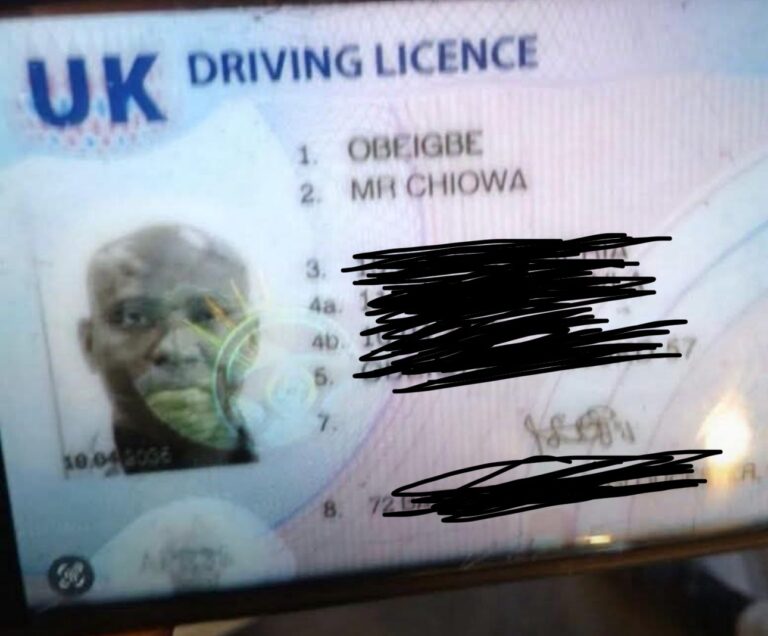
A NIGERIAN man, Chiowa Obeigbe, living in the United Kingdom (UK), has reportedly been found dead in his Gloucester apartment.    

This was revealed on Monday by a fellow UK-based Nigerian, Benjamin Kuti, known as Oluomo of Derby. He explained that Obeigbe was not discovered for five days.

“This young man, Chiowa Obeigbe, sadly passed away in his home in Gloucester, UK, and was not discovered for five days.

“At the moment, no one knows his relatives or has been able to reach his family. He is said to be from Imo State, Nigeria,” Kuti wrote.

Kuti, whose X bio describes him as the “founder of the Nigerian community in the United Kingdom on Twitter,” posted a photo of Obeigbe’s driving licence and called on well-meaning Nigerians to help contact the deceased family.

“If anyone recognises him or has any information about his family, please help us get in touch with them, or please send me a DM so arrangements can be made to return his body home.”

This incident comes less than 48 hours after a similar case involving a Nigerian truck driver in the United States, Bode Ologan, who was reportedly found dead inside his truck in Arlington, Texas.

Ologan’s case was reported on Sunday via a post on the Lagos Reporters Facebook page. The report also included the deceased driver’s licence and appealed to the public for help to locate his family.

“Kindly help find out if anybody knows this guy’s family or his family. They found him dead inside the truck in Texas,” the post read.

The latest incident adds to the list of Nigerians that have died in diaspora this year.

The ICIR reported in May that a nurse residing in Leeds, United Kingdom, Nnena Miriam, was found dead in her apartment.

The news was confirmed in a statement released by Fellow Nurses Africa, an organisation committed to promoting the nursing profession in Africa.

It revealed that police discovered Miriam’s body following a missing person report.

A week later, Nigeria recorded another tragic death of one of its citizens abroad, as 23-year-old  student nurse, Elizabeth Tamilore Odunsi, was stabbed to death in Texas, United States, just two days before her graduation.

The ICIR reported in August that the Metropolitan Police arrested and charged two suspects to court in connection with the fatal stabbing of a 26-year-old Nigerian, Ayowale Aladejana, in New Cross, southeast London.

A 23-year-old man was arrested on suspicion of murder shortly after the incident, with a 23-year-old woman taken into custody.

Nigeria protests exclusion from Nicki Minaj’s UN dialogue over religious killings

0
NIGERIA has expressed concern over the United States’ decision to exclude it from participating in US rapper Nicki Minaj’s United Nations event over alleged Christians’ killings in the African largest nation. 
The News Agency of Nigeria (NAN) quoted Chargé d’Affaires of Nigeria’s Permanent Mission to the UN, Syndoph Endoni, as saying holding the discussion at the UN headquarters in New York without Nigeria’s involvement amounted to “shaving our head in our absence.”

“It is important to ensure the country concerned in the ongoing allegations of genocide against Christians is present, aware and has a voice in the matter.
“This is because you should not make important decisions or take action on something that involves a country without their presence or consent,” Endoni said.
The Minaj event, held at the UN headquarters in New York, in collaboration with the US Permanent Mission to the UN, took place against the backdrop of ongoing US allegations of Christian persecution in Nigeria.
The Nigerian envoy voiced disappointment that only a few countries were permitted to take part in the event, questioning the reason behind Nigeria’s exclusion.
The ICIR reported that US President Donald Trump had recently designated Nigeria as “a Country of Particular Concern” over alleged Christian genocide in the country.
Trump said the American military could deploy ground troops or launch air strikes in Nigeria to halt what he described as the widespread killing of Christians in the country.
The threat came days after he warned he would consider military action against Nigeria if the country failed to curb alleged killings of Christians.
The Nigerian authorities have repeatedly rejected.
Endoni said that by refusing Nigeria’s participation, the US authorities deprived the country of its right and opportunity to present its own side of the story.
“We asked the US authorities if it was okay to continue to shave someone’s hair in his absence.
“We further highlighted that the Nigerian government is not standing idly by to watch the atrocities perpetrated by the criminals,” he added.
The Nigerian envoy further emphasised that the two countries could address Nigeria’s security challenges effectively through cooperation.
Endoni called on the US to promote inclusive dialogue to prevent unnecessary tensions arising from allegations of Christian persecution in Nigeria.
The NAN reports that the US Senior Advisor for African Affairs, Patricia Mahoney, visited the Nigerian House in New York on Monday to brief Syndoph about the Minaj event.
During the meeting, Mahoney informed the Nigerian delegation that three UN member countries, as well as other participants, including a Nigerian pastor, were invited.
However, she noted that no officials from the Nigerian government, including those from Nigeria’s Permanent Mission to the UN, was invited.
Endoni stated that the US envoy told him the event was private and voiced concerns that the US’ practice of naming and shaming could create apprehension in Nigeria.
The NAN said Nigeria was denied participation primarily to respect the participant’s specific request to exclude Nigerian officials, citing concerns about potential retribution against them and their families.
The envoy stated that Nigerian authorities would continue engaging their US counterparts on extremist killings and work together to safeguard lives and property in Nigeria.
The ICIR reported that the US House of Representatives Subcommittee on Africa scheduled Thursday, November 20, 2025, to open its inquiry into President Donald Trump’s recent decision to redesignate Nigeria as a Country of Particular Concern over alleged surge in Christian killings.
The invitation sent to members of the Committee on Foreign Affairs shows that the hearing will be chaired by Representative Chris Smith at 11:00 a.m. in Room 2172 of the Rayburn House Office Building, with a live webcast available. 
The hearing will include two panels of witnesses, featuring senior US State Department officials as well as Nigerian religious leaders.

Two confirmed dead, many abducted as terrorists caught on livestream attacking Kwara church

0

AT least two people were confirmed dead and unspecified number of residents abducted after terrorists attacked Eruku town in the Ekiti Local Government Area of Kwara State on Tuesday, November 18.

The Kwara State Police Command in a statement on Tuesday, November 18, said the attack, which occurred around 6 p.m., left two men fatally shot and several others missing.

According to the Police Public Relations Officer, Adetoun Ejire-Adeyemi, a superintendent of police, the Divisional Police Officer (DPO) of Eruku and his team, working alongside local vigilantes, swiftly mobilised after hearing gunshots from the outskirts of the town.

‎”Upon thorough search of the area, one male victim; Mr Aderemi was discovered fatally shot inside the Christ Apostolic Church, Oke Isegun; while one Mr Tunde Asaba Ajayi another victim of fatal gunshot was found in the bush, a vigilante, Segun Alaja sustained gunshot injuries and was immediately rushed to ECWA Hospital, Eruku, for medical treatment,” she wrote.

Sahara Reporters had earlier reported how the gunmen killed several worshippers instantly before abducting an unknown number of people, including the pastor.

“The gunmen came in suddenly and started shooting. Three people were killed instantly,” a source was quoted to have said.

The attackers reportedly escaped through bush paths linking Eruku to neighbouring communities, leaving residents in fear and uncertainty as security operatives continue combing the area.

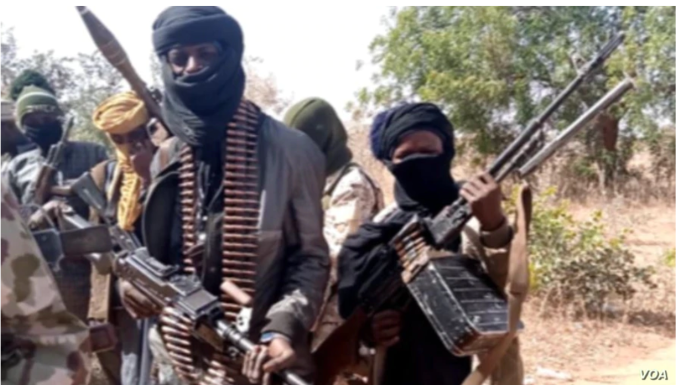
A viral video of the attack, captured during a live stream of the Christian gathering and seen by The ICIR, shows worshippers conducting a service when sporadic gunshots erupted around the church premises.

The congregation, led by a young man, scrambled for safety as the shots intensified. Moments later, more than five armed bandits stormed the church, ransacked the sanctuary and whisked away several women and children.

They also carted away belongings of worshippers before vanishing into the bush..

Although the state Police Command said its rapid response  forced the assailants to flee into the bush, several videos have shown that many residents and travelers are stranded in the area.

In two viral videos seen by The ICIR (here and here), passengers raised alarm over the attack in the Eruku community, calling on the police, state and federal government to come to their aid.

This incident, The ICIR reports, adds to a troubling rise in violent incidents across Kwara State in recent months. In September, gunmen killed no fewer than 10 people, including a pregnant woman, in Matogu village, Patigi Local Fovernment Area of Kwara State.

In another LG in the same month, the terrorists killed over 15 vigilantes and hunters after invading Oke-Ode community in Ifelodun Local Government Area of the state.

The armed men abducted an unspecified number of residents during the attack.

These attacks have led to several communities in Ekiti, Asa, Moro, and Kaiama LGAs raising repeated concerns over increasing bandit movement through forest corridors linking Kwara to Kogi, Ekiti, and Niger states.