back to top
Home Blog Page 133

Veteran journalist, Newswatch co-founder Dan Agbese dies at 81

0

Veteran Nigerian journalist and Newswatch magazine co-founder, Dan Agbese, has passed on.

He was 81.

His family confirmed in a statement that the celebrated columnist and editor passed away on Monday morning, November 17, in Lagos.

“We hereby announce the passing away of our husband, father, grandfather, brother, uncle and mentor: Chief Dan Agbese, the Awan’Otun of Agila. Chief Agbese transited to eternal glory this morning, Monday, November 17, 2025. He was aged 81,” the statement read. 

The family explained that it would announce burial arrangements in due course.

“Born May 12, 1944, in Agila, Chief Agbese was a renowned journalist and author, famous for his seminal contributions to journalism practice in Nigeria and renowned for his satirical columns,” it added.

Agbese, renowned for his incisive writing and decades of service in journalism, played a pivotal role in shaping modern investigative reporting and commentary in Nigeria.

“Chief Agbese was one of the founders of the trail-blazing Newswatch magazine and was, until April 2010, its Editor-in-Chief,” his family stated.

He served as editor of The Nigeria Standard and New Nigerian newspapers and was the General Manager of Radio Benue in Makurdi.

Before his passing, he wrote several books and maintained weekly columns in notable newspapers, including the Daily Trust and The Guardian, while running a media consultancy with his friends and colleagues, Ray Ekpu, Yakubu Muhammed and Soji Akinrinade.

He is survived by his wife, Chief Rose Agbese, their six children, and seven grandchildren.

Agbese earned degrees in Mass Communication and Journalism from the University of Lagos and Columbia University, New York, respectively.

He began his career at New Nigerian and The Nigeria Standard newspapers, but his most defining professional achievement came in 1984, when he joined Dele Giwa, Ray Ekpu, and Yakubu Mohammed to launch Newswatch, the pioneering weekly newsmagazine that set the standard for investigative journalism in Nigeria.

Over the years, he held multiple key roles at the magazine, including Managing Editor, Deputy Editor-in-Chief, and Editor-in-Chief.

He was also the author of several acclaimed books, including Nigeria, Their Nigeria, Fellow Nigerians, The Reporter’s Companion, Style: A Guide to Good Writing, and The Columnist’s Companion: The Art and Craft of Column Writing. 

Nigeria’s inflation eases to 16.05% in October as garri, rice prices drop

NIGERIA’s inflation rate has eased to 16.05 per cent relative to the September 2025 inflation rate of 18.02 per cent, the National Bureau of Statistics (NBS) has said.

The drop was hugely impacted by the drop in food inflation in October 2025 to 13.12 per cent, down from 16.87 per cent in September, following the easing of prices for maize, garri and beans.

In its October 2025 inflation report, the NBS said the inflation rate showed a decrease of 1.96 per cent compared to the September 2025 headline inflation rate, and on a year-on-year basis, the headline inflation rate was 17.82 per cent lower than the rate recorded in October 2024 (33.88%).

“This shows that the headline inflation rate (year-on-year basis) decreased in October 2025 compared to the same month in the preceding year (i.e., October 2024), though with a different base year, November 2009 = 100,” the statistics office said.

It added that on a month-on-month basis, the headline inflation rate in October 2025 was 0.93 per cent, which was 0.21 per cent higher than the rate recorded in September 2025 (0.72 per cent).

“This means that in October 2025, the rate of increase in the average price level was higher than the rate of increase in the average price level in September 2025. For food inflation, the rate was 13.12 per cent on a year-on-year basis.

“This was 26.04 per cent points lower compared to the rate recorded in October 2024 (39.16%),” the NBS stated further.

The ICIR reports that a significant decline in the annual food inflation figure is technically due to the change in the base year methodology. Accordingly, on a month-on-month basis, the food inflation rate in October 2025 was -0.37 per cent, up by 1.21 per cent compared to September 2025 (-1.57 per cent).

It added that the average annual rate of food inflation for the twelve months ending October 2025 over the previous Twelve-month average was 21.96 per cent, which was 16.16 per cent points lower compared with the average annual rate of change recorded in October 2024 (38.12 per cent).

Analysts at Meristem and several investment firms projected food inflation to ease further in the near term, supported by the ongoing harvest season and government food security interventions, The ICIR reports.

On a state level, food inflation was highest in Ogun State at 20.58 per cent, Nasarawa at 19.96 per cent, and Ekiti at 19.70 per cent. Akwa Ibom, Katsina and Yobe recorded the lowest food inflation in the period with 3.98 per cent, 4.15 per cent and 4.29 per cent, respectively.


Alleged Christian genocide: US Congress to probe Trump’s position on Nigeria

0

THE United States House of Representatives Subcommittee on Africa has scheduled Thursday, November 20, 2025, to open its inquiry into President Donald Trump’s recent decision to redesignate Nigeria as a Country of Particular Concern over alleged surge in Christian killings.

According to Channels Television, the invitation sent to members of the Committee on Foreign Affairs shows that the hearing will be chaired by Representative Chris Smith at 11:00 a.m. in Room 2172 of the Rayburn House Office Building, with a live webcast available. 

The hearing will include two panels of witnesses, featuring senior US State Department officials as well as Nigerian religious leaders.

“You are respectfully requested to attend an open hearing of the Committee on Foreign Affairs to be held by the Subcommittee on Africa at 11:00 a.m. in Room 2172 of the Rayburn House Office Building,” the invite read.

The ICIR reported that Trump added Nigeria to countries on watchlist for Christian genocide on October 31.

He referenced alleged grave violations of religious freedom, including the persecution of Christians.

He alleged that Christianity faced an existential threat in Nigeria, with thousands of Christians reportedly killed by radical Islamist groups.

Trump warned that the United States could take action including the possibility of military intervention if Nigeria failed to address the issue.

Nigeria was first designated a CPC by President Donald Trump in 2020, but his successor, President Joe Biden, removed the country from the list after taking office.

The US President also threatened to halt all aid and assistance to Nigeria should President Bola Tinubu’s administration fail to end the alleged persecution and killing of Christians.

Thursday’s hearing will feature two panels. The first includes Jonathan Pratt, Senior Bureau Official of the Bureau of African Affairs, and Jacob McGee, Deputy Assistant Secretary of the Bureau of Democracy, Human Rights, and Labor. 

The second panel will comprise Nina Shea, Director of the Centre for Religious Freedom; Bishop Wilfred Anagbe of Nigeria’s Makurdi Catholic Diocese; and Oge Onubogu from the Centre for Strategic and International Studies.

According to the report, the congressional hearing is set to examine the extent of religious persecution in Nigeria, and to weigh potential policy responses, including targeted sanctions, humanitarian assistance, and collaboration with Nigerian authorities to prevent further violence.

The bill is also under consideration on in the United States Senate, where it is sponsored by one of the senators, Ted Cruz.

However, Tinubu said Nigeria stood firmly as a democracy governed by constitutional guarantees of religious liberty and continued to maintain open engagement with both Christian and Muslim leaders across the country.

He argued that the portrayal of Nigeria as religiously intolerant did not reflect the reality in the country, adding that the government’s efforts to safeguard freedom of belief for all Nigerians remained consistent and sincere.

United Airline deboards VeryDarkMan, Mr Jollof after exchanging blows on aircraft

0

THE United Nigeria Airline has revealed that it deboarded famous social media personalities, Martins Vincent Otse, popularly known as VeryDarkMan, and Freedom Okpetoritse Atsepoyi, widely called Mr. Jollof, from its scheduled flight on Monday, November 17, after they exchanged punches at the Asaba International Airport.

The airline said in a statement signed by its Public Relations Officer, Chibuike Uloka, shortly after the altercation that the incident occurred aboard its Flight UN0523, noting that crew members immediately intervened to de-escalate the confrontation in line with global aviation safety standards.

“United Nigeria Airlines confirms that an altercation occurred between two passengers, identified as Martins Vincent Otse “VeryDarkman” and Freedom Okpetoritse Atsepoyi “Mr. Jollof, ” during the boarding of Flight UN0523 at Asaba International Airport on the morning of 17 November 2025,” part of the statement read. 

Uloka added that the flight proceeded safely to its destination after standard safety procedures were completed, with the two passengers remaining in the custody of airport authorities.

“In full compliance with global aviation safety protocols, our crew responded immediately and professionally to de-escalate the situation. Both passengers were deboarded without delay to ensure the safety, comfort, and security of all other passengers and crew members. They were subsequently handed over to airport security for further investigation.

“United Nigeria Airlines places the highest priority on safety and maintains a zero-tolerance policy for any conduct that threatens the security or well-being of passengers or crew. After all standard procedures were completed, the flight departed safely while the passengers involved in the altercation were still with the authorities,” Uloka added. 

The ICIR reports that the cause of the altercation remains unclear, but the statement noted that airport security officials were expected to release findings after their investigation.

“We remain firmly committed to providing a safe, respectful, and secure travel experience across our network,” he added.

The ICIR reports that this development adds to the list of the recent airport altercations in Nigeria.

In August, the Nigeria Civil Aviation Authority (NCAA) blacklisted popular Fuji musician Wasiu Ayinde, widely known as K1 De Ultimate, from flying within Nigeria for six months after breaching security protocols at the Nnamdi Azikiwe International Airport, Abuja.

The musician reportedly tried to board a ValueJet flight to Lagos, allegedly with a flask of alcohol, violating aviation security regulations that prohibit liquids over 100 ml in hand luggage.

The ICIR also reported an altercation involving an Ibom Air passenger, Comfort Emmanson, the airline’s crew member and security officials at the Murtala Mohammed International Airport, Lagos State. ‎

Emmanson was recorded attacking flight attendants and airport security officials at the airport.

Hours after videos of her attacking the crew members filtered into the public space and eventually went viral, another video emerged showing how a flight attendant blocked her from disembarking while other passengers had exited the aircraft.


Police confirm abduction of 25 schoolchildren in Kebbi

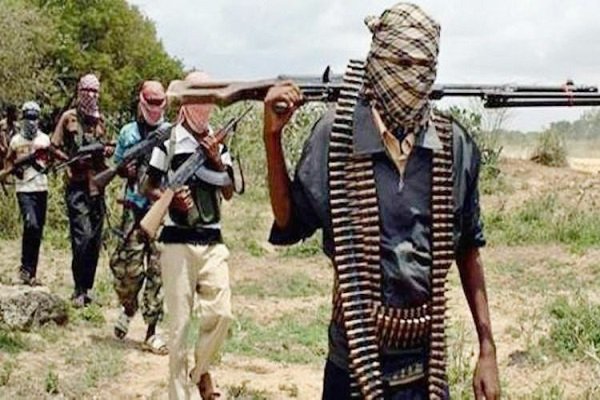
THE Kebbi State Police Command has confirmed the early-morning attack on Government Girls’ Comprehensive Secondary School, Maga, in Danko/Wasagu Local Government Area, where armed men abducted several students and reportedly killed the school vice principal.

Police spokesperson in the state, Nafi’u Abubakar, said the attackers scaled the school fence and opened fire before whisking away 25 students from their hostel, according to Daily Trust.

“The police tactical units deployed in the school engaged them into a gun duel but the suspected bandits had already abducted them in their hostel,” he said.

The development followed earlier confirmation by the Chairman of Danko Wasagu LGA, Hussaini Bena, who told The ICIR that the attack occurred around 4 a.m. 

He said gunmen stormed the school while shooting sporadically and abducted an as-yet-unconfirmed number of students. 

Bena noted that he was on his way to the school and could not immediately verify the casualties. The attack adds to Kebbi State’s troubling history of school abductions.

In June 2021, gunmen invaded the Federal Government College, Birnin Yauri, abducting dozens of students and teachers in one of the state’s high-profile school kidnappings. While some were released over time, others remained in captivity for years.

The persistent attacks across northern Nigeria have forced several states to shut down schools temporarily, with humanitarian organisations warning that the trend continues to threaten children’s access to safe learning environments.

[BREAKING] LG Chairman confirms abduction of schoolchildren in Kebbi

0

THE Chairman of Danko Wasagu Local Government Area of Kebbi State, Hussaini Bena, has confirmed to The ICIR that armed men attacked the Government Girls’ Comprehensive Secondary School, Maga, in the early hours of Monday, abducting yet to be confirmed number of students.

Bena said the gunmen invaded the school at about 4 a.m., shooting repeatedly before escaping with a yet-to-be-confirmed number of students. 

When asked if there were casualties from the attacks, he told The ICIR that he could not confirm the total casualties as he was on his way to the school.

Efforts to get comments from the Kebbi State Police Command were unsuccessful, as the police spokesperson in the state, Nafi’u Abubakar, did not pick the calls to his mobile line when filing this report.

Earlier reporting by HumAngle indicated that residents in Maga said the attackers struck shortly before dawn prayers and fled with several girls. 

According to the report, the assailants had not gone far and that community members were calling for urgent government intervention to stop the abductors from escaping.

Kebbi State has witnessed repeated school abductions in recent years, including the June 2021 invasion of the Federal Government College, Birnin Yauri, where many students and five teachers were taken after gunmen overran the school.

On June 17, 2021, terrorists attacked the FGC in Birnin Yauri and kidnapped about 80 students and teachers.

Some students were severely injured in the gun battle between the abductors and the police. A policeman was also killed in the incident.

A letter had been addressed to the school, presumably by the terrorists, warning of the attack, but the authorities dismissed it as a prank.

While some students were earlier released, 11 remained in captivity.

In April 2023, The ICIR reported that four of the kidnapped students regained freedom after two years in captivity.

The mass abduction of students had become more frequent in Nigeria since 2014, when at least 276 girls were kidnapped from the Government Girls Secondary School in Chibok, Borno State.

In 2021, following the mass abduction of students of the Bethel Baptist High School in Kaduna, the state government ordered the closure of schools in the state.

According to the state Ministry of Education’s Annual School Census Report 2018/2019/February 2020, the closure affected over 5,000 pre-primary to senior secondary schools, both private and public.

Also, a report by Save the Children, in 2023 a charity organisation, over 1,680 students and teachers have been kidnapped from schools majorly in the North since 2014.

In addition to Kaduna, there had been closure of schools in Zamfara, Niger and other states battling insecurity in Nigeria.


Christian genocide:Miyetti Allah hits back at US Congress over proposed sanctions

0

THE Miyetti Allah Cattle Breeders Association of Nigeria (MACBAN) has criticised the newly proposed United States (U.S) House Resolution 860, accusing American lawmakers of misrepresenting pastoralists and ignoring their long history of suffering.

MACBAN President, Baba Ngelzarma, at a press briefing held on Sunday, 16 November, called on the U.S. government to amend the resolution, which proposes sanctions, including visa restrictions and asset freezes against individuals and groups allegedly involved in religious persecution.

The association argued that the measure fails to recognise that pastoralists are among the groups most affected by violent conflicts in Nigeria’s rural areas.

MACBAN’s statement was in response to the filing of H.Res. 860 in the 119th U.S. Congress by Representative Christopher Smith, with Bill Huizenga as co-sponsor.

The resolution proposes sanctions such as visa restrictions and asset freezes targeted at MACBAN and other Fulani-led groups, as stated on the US Congress website.

It also advises that Fulani-Ethnic Militias operating in states like Benue and Plateau be added to the Entities of Particular Concern list under the International Religious Freedom Act.

MACBAN, however, rejected any association with terrorist groups and reiterated its condemnation of all forms of terrorism in Nigeria.

“MACBAN respectfully calls for revising H.R. 860 to remove all mention of MACBAN. We wish to state clearly and without ambiguity: MACBAN does not support, condone, harbour, finance, or protect any form of criminality, extremism, or violence.

MACBAN is not and has never been an armed group or violent organisation. We condemn in the strongest possible terms banditry, cattle rustling, kidnapping, terrorism, or any crime whatsoever,” MACBAN president said.

Ngelzarma maintained that rural insecurity in Nigeria had also taken a heavy toll on pastoralists, saying thousands were killed between 2015 and 2025 by cattle rustlers, bandits, armed vigilantes, militias and extremist groups.

He cited verified figures showing that more than 18,640 pastoralists were killed within the period, about 1,298,802 displaced, 87,543 houses destroyed, and over 1,114,519 cattle rustled or slaughtered, with an additional 656,555 small ruminants lost across 17 states.

MACBAN  described these figures as both a profound human tragedy and a significant setback for Nigeria’s livestock sector and food systems. The association urged the U.S and other international actors to take these “human and economic losses” into account when evaluating the pastoralist community.

The group also drew attention to what it called targeted assassinations, noting that several of its officials who assisted security agencies in uncovering criminal networks had been killed, including its state chairmen in Nasarawa, Katsina, Kogi and Plateau, while others had been threatened for refusing to protect offenders.

While calling for caution on profiling the group, Ngelzema added that the National Vice President (I), Munnir Atiku Lamid, has been missing since June 2023 after disappearing while travelling from Katsina to Kaduna.

He stressed that portraying the entire pastoralist population as criminals reflects a misunderstanding that risks deepening their stigmatisation.

MACBAN appealed to the U.S. Congress to consult credible local actors, including pastoralists, farmers, civil society groups, and security agencies, when carrying out assessments.

The group also called for evidence-driven evaluations that factor in the humanitarian impact on pastoralists and advocated sustained investment in pastoralist infrastructure such as grazing reserves, veterinary care, water supply, healthcare, and education.

“We do not seek protection because we are violent; we ask for support because we are under threat,” MACBAN said.

The group further reiterated its dedication to peace-building and unity, and urged that the pastoral majority should not be profiled because of the actions of a few criminals.

Christian genocide: Tinubu dispatches peace envoy to Plateau

0

IN renewed efforts to resolve lingering communal tensions in Plateau State, the Federal Government has expanded its grassroots peace consultations with a visit to prominent Christian cleric, Ezekiel Dachomo, a Reverend and the Chairman of the Regional Church Council (RCC) in Barkin Ladi.

This was made known in a statement by the state house on Sunday, November 16, 2025, signed by a senior media aide, Bayo Onanuga.

The delegation was led by a Senior Special Assistant to President Bola Tinubu on Community Engagement (North Central), Abiodun Essiet, on Thursday, November 13, as part of a two-day mission to reinforce intercommunal dialogue and rebuild trust among conflict-affected communities.

The visit comes days after Folusho Oyinlola, a Major General and General Officer Commanding 3 Division of the Nigerian Army and Commander of Operation Enduring Peace (OPEP), assured Dachomo of maximum protection following the cleric’s reports of receiving death threats over his comments on alleged attacks on Christians in Plateau State.

Dachomo had earlier stated in several Facebook videos that he has been threatened through calls, text messages, and social media because of his advocacy. He also claimed attempts were previously made on his life during mass burials, referencing the killing of Senator Gyang Dantong in a similar circumstance.

During the visit,  Essiet addressed widows and community members alongside Rev. Dachomo, emphasising the president’s commitment to healing divides and strengthening coexistence among the Plateau’s diverse groups.

Essiet, a senior special assistant on community engagement in the North Central Zone, spent two days in the state. She met Christian clerics and Fulani Miyetti Allah community leaders.

The ICIR reports that the efforts culminated in a town hall meeting in Jos.

Also, delegates from various local government areas, traditional rulers, women, and youth leaders gathered to discuss ways to strengthen community-based peace structures and promote coexistence among diverse communities.

Essiet visited  Dachomo in Barkin Ladi, where discussions centred on faith-based leadership and its role in promoting peace, unity, and social development.

Along with Dachomo, she addressed some widows and conveyed President Tinubu’s message of fostering ethnic reconciliation in the state.

Recall, Dachomo has been the loudest voice of Christian communities in the state, which has drawn both local and international attention to the ethno-religious crisis in the region.

The statement highlighted that, as part of early wins from the engagements, a long-running dispute in Jos South between Agha Farm owner, David Toma, and herders over the seizure of two cows was resolved.

The Chairman of Miyetti Allah Cattle Breeders Association of Nigeria (MACBAN) in Bassa local government area,  Isah Yau, paid N500,000 compensation to Toma, who released the livestock, with all parties signing an undertaking to maintain peace.

Essiet reaffirmed that President Tinubu remains committed to stabilising Plateau State through inclusive governance and locally driven conflict-resolution mechanisms, describing the Community-Based Peace Structure as a cornerstone of long-term stability in the North Central region.

Forty-Five Days that Changed Elections in Africa?

0

Chidi Anselm Odinkalu

An unlikely coincidence of ballots in a forty-five day period from the middle of September to the end of October 2025 has cast a new light on the state of democratic governance in Africa. And this now threatens to unscramble the ritual hollowness that has become the fate of elections on the continent under the indifferent watch of the African Union and other regional institutions in Africa. How the continent’s leaders and institutions handle the aftermath could have serious implications for the stability of the continent.

On 16 September, Malawi went to the polls to elect their president. The last time the country did that in 2019, it produced results that were so transparently rigged that five judges of the Constitutional Court of Malawi, wearing bullet-proof vests, were needed to set aside the result declared by the electoral commission. That was only the second time in Africa’s history that a court would nullify the declared outcome in a presidential election.

The annulled result had favoured then incumbent and fifth president of the republic, Peter Mutharika (a long-serving Law Professor and brother of Malawi’s third president, Bingu wa Mutharika), in a contest against Lazarus Chakwera, a theologian and pastor with the Assemblies of God Church in Malawi. In the re-run that followed the judicial nullification in 2020, Chakwera prevailed and the people ousted Peter Mutharika from the presidency.

The contest in September 2025 pitted 85 year-old Peter Mutharika against his nemesis, Lazarus Chakwera. In the preceding five years, President Chakwera had managed to squander the considerable civic goodwill that powered him into office. Despite being 15 years younger than Mutharika, President Chakwera lost resoundingly to his older opponent who secured 56.8% of the vote.

Malawi may have vindicated the trust of both the voters and of the candidates in a test of the will of the people, but it is an outlier in a continent that has grown used to seeing elections as charades. This reluctance for credible ballots was evident when the Central African country of Cameroon went to the polls nearly one month later on 12 October 2025, to elect their president. The incumbent, Paul Biya, was a 92 year-old, whose sojourn in Cameroon’s government dates back to his appointment as Chief of Staff in the cabinet of the Minister of Education in 1964. In 1975, President Ahmadou Ahidjo made him Prime Minister. On 6 November 1982, two days after the resignation of President Ahidjo on grounds of ill-health, Biya ascended to the presidency and has ruled the country for 43 years since.

At 92, Paul Biya is the oldest serving president in the world, only outlasted in office by Teodoro Obiang, president of the neighbouring Equatorial Guinea, who has been in office since he toppled his uncle, Macias Nguema, in August 1979 before executing him. In the election this year, his main opponent was Issa Tchiroma, a 35-year veteran in the cabinet of President Biya, who stepped down from the ruling Cameroon Peoples’ Democratic Movement (CPDM) and from the cabinet in order to run against his former boss.

It took the Constitutional Council 15 days to tabulate the figures in an election which had 8.1 million registered voters with an average turnout of about 68.5%. When it eventually declared that outcome on 27 October, the Constitutional Council announced Biya as winner with 53.66% of the votes in disputed results. That in an election in which he was unable to campaign because of infirmity. Independent analysts who have examined the official numbers insist he “couldn’t have won.”

With the result, Biya – who was born one month after Adolf Hitler assumed office as German Chancellor and in the month preceding the inauguration of Franklin Delano Roosevelt as the president of the United States of America – entered upon his seventh presidential term in a country in which the median age belongs to children who were born in 2006. By the time of the next election, he will be nearly one century old. In the wake of the announcement, United Nations Secretary-General, António Guterres, pointedly declined to extend congratulations to President Biya. Instead, he focused his attention on the need for a “thorough and impartial investigation” of the “post-electoral violence and…. reports of excessive use of force.”

Paul Biya can at least claim that he had a genuine contest against a genuine opponent. In Côte d’Ivoire, West Africa, the contest two weeks later, on 25 October 2025, pitted incumbent President Alassane Ouattara – whose ambitions drove the country to the brink of fragmentation at the beginning of the millennium – against no one.

When the result was announced, President Ouattara, a child of the Second World War, having been born on New Year’s Day in 1942, contrived at 83 years to award himself nearly 90% of the vote and a fourth term in office in an election from which he barred every credible competition. That was indeed a generous four percentage points lower than the 94% of the votes that he awarded himself in 2020. In power since 2010, Ouattara was supposed to be term-limited after two terms of ten years in office. At 83, he expects to rule until at least he is 88, which would still be five years younger than President Biya’s current age.

The election in Tanzania four days after Côte d’Ivoire’s took place in a graveyard. The incumbent and candidate of the ruling Chama Cha Mapinduzi (Party of the Revolution) was Samia Suluhu Hassan, who inherited the office when her principal, John Pombe Magufuli, died in March 2021.

Ahead of the contest, however, it became evident that Samia would not tolerate a fair contest. Under her leadership, the government unleashed what Amnesty International described as a “wave of terror” designed to make her candidacy unopposed and the ruling party unchecked in its march to a pre-determined seventh decade in power. On the day of the contest on 29 October, protests unexpectedly erupted in key cities, such as Dar-Es-Salaam, Arusha, Mbeya, and Mwanza. Under cover of a media blackout complemented by an internet shutdown imposed on the day of the ballot, Samia’s government orchestrated a campaign of targeted mass murder in population centres suspected to be opposition strongholds.

President Samia’s electoral commission declared her winner with 87% voter turnout and nearly 98% of the vote. As Tanzanians in different parts of the country woke up to find bodies on their courtyards with fatal injuries from unknown persons and morgues overflowing with fresh cadavers reportedly being disappeared under instructions of the government, President Samia turned up at a military base in new capital city, Dodoma, where on the fourth night following the vote, she was stealthily inaugurated for a new term.

Initial estimates putting the casualty count in the hundreds were quickly eclipsed by more updated tallies of over 3,000 killed in under 72 hours. Fresh reporting by the New Humanitarian put the number over 5,000 and suggests that the casualty count may indeed be over 10,000. Around the country, initial trepidation gave way to alarm at the scale of the massacre. That alarm has now been ousted by outrage.

Meanwhile, for the first time in their histories, official election observer missions deployed by the African Union (AU) and the Southern African Development Community (SADC) both concluded separately that the election in Tanzania “did not comply with AU principles.” This caught many people unprepared. Now both institutions are scrambling to figure out what to do. There is an emerging consensus that President Samia is illegitimate. The leaders of both institutions must articulate consequences and citizens have a right to expect them to do so clearly.

Consensus is also growing around the urgent need for an independent, international investigation and accountability. Meanwhile, Tanzania’s young people prepare for nation-wide protests on 9 December 2025. The symbolism is significant: it is World Anti-Corruption Day; it is the anniversary of the adoption of the Genocide Convention; and it is Tanzania’s Independence Day.

A lawyer and a teacher, Odinkalu can be reached at chidi.odinkalu@tufts.edu


Worldcup Playoff: Super Eagles optimistic of victory against Leopards, says Ekong

0

SUPER Eagles’ captain, William Troost-Ekong, has acknowledged that facing the Democratic Republic of Congo in today’s final of the FIFA World Cup Africa Playoff Tournament will be a tough challenge.

However, he expressed confidence that the Super Eagles have what it takes to triumph at the Complexe Sportif Prince Moulay El Hassan.

The ICIR reports that both nations, with five African titles between them, will battle in a decisive encounter that will determine Africa’s representative at the Intercontinental Playoffs, where two additional spots for the 2026 FIFA World Cup in Mexico are up for grabs.

“There is no doubt that the Congolese will be a big challenge. They got here because they are tough and ambitious, and also want to go to the World Cup,” Ekong said.

“However, we have a large group of players here, 24 of them, out of which only about four of us have been to the World Cup (in 2018). There is that adrenaline flowing in their system to go to the World Cup, and I see it as a big motivation for us to conquer,” he added.

The national team advanced to the final playoff round to face the winner of the Cameroon–Democratic Republic of Congo clash after defeating Gabon 4-1 on Thursday, November 12.

Only four members of Nigeria’s current squad, William Troost-Ekong, Alex Iwobi, Wilfred Ndidi, and Chidozie Awaziem, were part of the team that competed at the 2018 World Cup.

Coach Éric Chelle’s side, however, boasts several outstanding players, including Spain-based Cédric Bakambu, France-based Nathaniel Mbuku, former Russia U21 star Theo Bongonda, and Egypt’s Pyramid-based Fiston Mayele. Midfield responsibilities are expected to be handled by English Premier League’s Noah Sadiki and Spain-based Charles Pickel. At the same time, attack-minded Aaron Wan-Bissaka leads a tight defensive line anchored by captain Chancel Mbemba, who is set to earn his 101st cap.

Chelle has all 24 players available for selection, including Iwobi, who will secure his 91st cap, and Moses Simon, on course for his 87th. Ekong confirmed that the squad is fully focused on securing victory on Sunday evening.

“We would have preferred to have taken the automatic ticket, but it didn’t work out. Now, we are here and we have a second chance and we do not intend to bungle it.” Ekong stated.