Home Blog Page 160

Senior Advocates of No-Consequence (SANs)

0


By Chidi Anselm Odinkalu

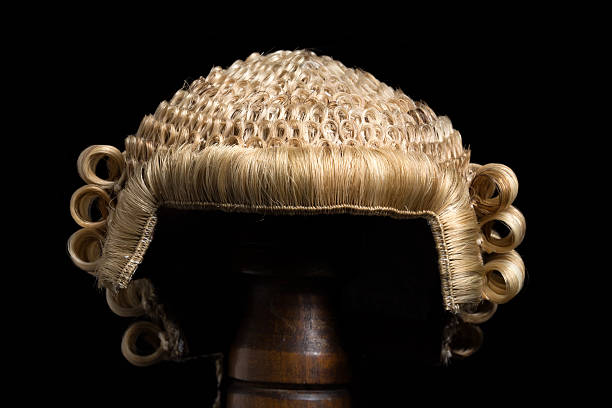
The ritual of the “Call to Bar” is the formal ceremony for the admission of new entrants into Nigeria’s legal profession. The responsibility for administering it resides in the Body of Benchers (BoB), a statutory entity described by law as “a body of legal practitioners of the highest distinction in the legal profession in Nigeria.”

The solemnity of the Call to Bar is guaranteed by the presence of members of the BoB who administer the ceremony resplendent in ceremonial gowns supposed to testify to their high distinction in matters legal. The criteria for the determination of this threshold requirement of “highest distinction” antecedent to membership of the BoB are, however, opaque.

The ceremony itself is usually an occasion for members of the Body of Benchers to remind the new entrants of the obligations that come with their new status. It should go without saying that the members of the BoB should themselves embody those values through their own records and example. It should be no surprise that, in Nigeria, this is not usually be the case.

There are three categories of membership of the BoB. Membership can exceptionally be honorific, a mostly vacuous conferment reserved for political or diplomatic occasions. Separately, there is ordinary membership attained through high office in public service as judges or Attorneys-General or as leaders or nominees of the Nigerian Bar Association (NBA). Such membership these days also extends to the chairpersons of the judiciary committees of the two chambers of the National Assembly as well as to principal officers of the National Assembly who are lawyers. Members who are conscientious in attending meetings and official dinners of the BoB over a period of four years may be conferred with the status of Life Benchers. That is the stuff of high distinction.

The most recent Call to Bar ceremony occurred in Abuja, the Federal Capital Territory, over three days from 23 to 25 September 2025. Away from the cameras, on 24 September, something happened which speaks to the existential – even terminal – crisis of values, leadership and responsibility that currently afflicts the governance of Nigeria’s legal profession. At the insistence of certain members of the BoB, one of the members elevated to the status of Life Bencher only in January 2025, Chief Mike Ozekhome, was prevailed upon to quietly withdraw from participating in the process of admitting the new entrants into the profession.

The reason given by the objecting members of the BoB was a judgment delivered a mere six weeks earlier on 11 September 2025 in his ultimately unsuccessful application for registration of title in real estate before a property registration tribunal in England, in which the presiding judge shredded Ozekhome’s testimony as “an invention and contrivance.” According to Gideon Christian, a law professor the University of Calgary in Alberta, Canada, “this case illustrates how corruption operates [in Nigeria]: politicians hide wealth abroad under false identities, while lawyers – sworn to uphold the law – serve as enablers of fraud.”

The most significant thing about the enforced withdrawal of Chief Ozekhome from the Call to Bar ceremonies last month is not that it occurred. It is that the BoB went out of its way to ensure that it was a well-guarded secret. It is relevant here that in addition to its role in admitting new entrants into the vocation of the law in Nigeria, the BoB also hosts the Legal Practitioners Disciplinary Committee (LPDC), the statutory body charged with enforcing consequences for ethical lapses in Nigeria’s legal profession. When it encounters cases affecting senior lawyers, however, the BoB seems to lapse into a habit of no consequence.

On 10 December 2021, the Supreme Court of Nigeria determined that Michael Aondoakaa, a Senior Advocate of Nigeria, (SAN), and former Attorney-General of the Federation (HAGF), “had, by his conduct, undermined and subverted the administration of justice and the independence, authority and integrity of the judiciary” and “ought not to be entrusted with any other public office at all.” In effect, the Supreme Court barred Mr. Aondoakaa from public office again in Nigeria. The antecedents of this decision were staggering.

Ahead of Nigeria’s 2007 general elections, political parties organized processes in 2006 to select their candidates for various offices to be contested across the country. In Uyo Federal Constituency of Akwa Ibom State, the then ruling party, the Peoples’ Democratic Party, PDP, in primaries conducted in December 2006, selected Bassey Obot as their candidate to fly their flag in the contest for a seat in the House of Representatives. In a country where the most consequential things are accomplished by the unknown, some unknown persons contrived to remove Mr. Obot’s name from the records of the Independent National Electoral Commission, INEC, substituting him with one Mr. Bassey Etim as the PDP candidate.

In December 2007, the Court of Appeal ordered the President of the Court of Appeal to constitute a new tribunal in Uyo to hear Mr. Obot’s case. Mr. Aondoakaa, then newly installed as the HAGF, wrote to the President of the Court of Appeal (PCA) claiming powers to instruct him not to comply with the order of the Court of Appeal. He cited as his reason the fact that he was considering a petition from Mr. Etim. Unable to contrive a sensible reason to disobey the order of a court over which he presided, however, the PCA disregarded Mr. Aondoakaa’s importuning and obeyed the Court of Appeal.

In April 2008, the Tribunal decided in favour of Mr. Obot, ordering INEC to certify him as the winner, so he could be sworn in as such. The Court of Appeal, the final arbiter then in disputes over elections to parliament, affirmed the judgment of the tribunal. In separate letters thereafter to the INEC Chairman and to the Speaker of the House of Representatives, Mr. Aondoakaa again required them to disobey and disregard the final orders of the Court of Appeal. They complied. Allegations that Mr. Aondoakaa issued those letters in exchange for value were unverified but not implausible.

On 15 May 2009, Mr. Obot, whose judicial victory had been frustrated by the HAGF, returned to the Federal High Court asking it to declare that Mr. Aondoakaa had abused his office and desecrated the independence and authority of the judiciary. On 1 June 2010, the Federal High Court obliged him, lamenting that “the hallowed office of the HAGF has been gradually desecrated and put into disrepute with the likes of [Mr. Aondoakaa] being appointed and occupying it. It is meant for learned eminent members of the Bar and not for political charlatans, jobbers or latter-day praise singers/converts….”

On 3 September 2015, the Court of Appeal affirmed that judgment of the High Court with the hope that “that office [of HAGF] should never again be occupied by individuals of such poor quality as [Mr. Aondoakaa].” The Court of Appeal went further and invited the Nigerian Bar Association, NBA, “to subject [Mr. Aondoakaa] to its appropriate disciplinary processes.”

In his appeal to the Supreme Court, Mr. Aondoakaa did not deny what he did but claimed that he only acted as an adviser in the letters he wrote and that the recipients were at liberty to disregard his opinion. The Supreme Court made short shrift of Aondoakaa’s chicanery. Describing his conduct as “reprehensible”, “reckless” and “unbecoming of the occupant of such an exalted office,” the Court accused him of violating Rule 30 of the Rules of Professional Conduct (RPC) in the Legal Profession which require every lawyer to refrain from doing “any act or conduct….in any manner that may obstruct, delay or adversely affect the administration of justice.”

There were no consequences

Before Mr. Aondoakaa, there was the case of Kunle Kalejaiye, SAN, involved in corrupting a judge, Thomas Naron, in an election petition. In 2013, Thomas Naron lost his job but the Supreme Court decided in 2019 on a disreputable technicality that Mr. Kalejaiye could keep his. Two years later, the same court similarly decided that there should be no consequences in the case of Dr. Joseph Nwobike, another SAN whose specialty was “inducing court registrars to ensure that his cases were assigned to his preferred judges so he could obtain favourable judgments.”

Chief Mike Ozekhome is rightly described as “one of Nigeria’s most high-profile lawyers.” Few will quibble with his claim to be serenaded in those terms. In addition to being a Life Bencher, Chief Ozekhome is also a SAN. The combination of these two attainments makes him one of the most senior lawyers in Nigeria. His is only the latest in a long line of senior lawyers whose relationship with the rules professional conduct appears to be governed by a Teflon rule of no consequence.

A lawyer and a teacher, Odinkalu can be reached at chidi.odinkalu@tufts.edu

FCT police arrest four one-chance suspects, rescue two victims

0

THE Federal Capital Territory (FCT) Police Command has arrested four suspects linked to a one-chance robbery and attempted kidnapping in Abuja, rescuing two victims during the operation.

This is contained in a statement issued by the FCT Police Public Relations Officer, Josephine Adeh.

“On October 2025, at about 10:09 p.m., one Hajara Ali reported at Life Camp Police Station that her sister, Comfort Habila, had called in distress, alleging that she had been abducted by suspected criminals who demanded a ransom of N1,000,000 for her release,” Adeh said. 

The ICIR reports that the capital city has recorded several high-profile one-chance killings, including those of Freda Arnong in July 2025 and Greatness Olorunfemi in 2023, both victims of gangs posing as taxi drivers.

Barely three months ago, the murder of caregiver Chinyere Anaene and a toddler in Dawaki shocked Abuja residents and underscored the growing safety concerns in its suburbs.

The police spokesperson in her latest remark said that the suspects identified as Solomon Tanko, Samuel Audu, Chigozie Joseph, and Emmanuel Chidiebere were apprehended in the early hours of October 9, 2025, at Dape Village following a distress report lodged at the Life Camp Police Station.

She said that Police operatives from the Life Camp Division immediately launched a rescue operation, deploying digital and tactical intelligence to track down the suspects, noting that a confrontation ensued during the arrest, but officers succeeded in rescuing Comfort Habila and another victim, Aliyu Adams.

“The victims, Comfort Habila (f) and Aliyu Adams (m), were rescued. However, Aliyu Adams, who sustained multiple stab wounds inflicted by the suspects, was promptly rushed to Gwarinpa General Hospital, where he is currently receiving medical treatment,” the police added.

Adeh said further investigation revealed that the suspects have been involved in a series of one-chance robberies around the Bannex and Kado areas, using a vehicle with tinted windows to deceive unsuspecting passengers. 

“They revealed that they had picked and robbed six (6) victims, both men and women, before their arrest,” 

She added that the exhibits recovered from the suspects included 15 international passports, two sharp daggers, two cutlasses, bloodstained documents, four mobile phones, two hammers, and three biros, adding that the suspects will be charged to court upon the conclusion of investigations.

While commending the swift response of the Life Camp Divisional Police Officers, the Commissioner of Police, FCT Command, Ajao Adewale, urged residents to always trust the police and report incidents promptly for quick intervention. 

He also advised members of the public to remain vigilant and report suspicious activities through the following emergency lines, 08032003913, 08028940883, and CRU FCT: 08107314192.

The ICIR reported in July how Freda Arnong, a young lady was killed by a ‘one chance’ criminal group in Abuja.

The deceased sister, Arnong Titus Ememobong, narrated the tragic death of her sister on Facebook, and demanded justice for the deceased from the Nigerian government.

She called for the implementation of a driver and vehicle authentication transport system in the Federal Capital Territory (FCT) to curb the menace of one chance in the city. 

Tinubu pardons Maryam Sanda, Farouk Lawan, 173 others

0

PRESIDENT Bola Tinubu has granted presidential pardon and clemency to 175 persons, including former lawmaker Farouk Lawan, late environmental activist Ken Saro-Wiwa, nationalist Herbert Macaulay, Mamman Vatsa, and Maryam Sanda, who was sentenced to death for killing her husband.

According to a statement by the Special Adviser to the President on Information and Strategy, Bayo Onanuga, on Saturday, the decision followed recommendations by the Presidential Advisory Committee on the Prerogative of Mercy, chaired by the Attorney-General of the Federation and Minister of Justice, Lateef Fagbemi (SAN).

The list, released on Saturday, is divided into six parts: pardoned, posthumous pardon (including the Ogoni Nine), victims of the Ogoni Nine honoured, presidential clemency (clemency beneficiaries), list of inmates recommended for reduced term of imprisonment, and list of inmates on death row reduced to life imprisonment.

List of beneficiaries of presidetial pardon 

  1. Nweke Francis Chibueze, aged 44, serving a life sentence at Kirikiri for cocaine.
  2. Nwogu Peters, aged 67; Serving a 17-year jail term for fraud. Sentenced in 2013.
  3. Anastasia Daniel Nwaoba, aged 63. Already served a sentence for fraud.
  4. Hussaini Alhaji Umar, aged 58. Sentenced in 2023 to pay a fine of N150M in the ICPC case.
  5. Ayinla Saadu Alanamu, age 63, was sentenced to seven years for bribery in 2019 and has served the sentence.
  6. Farouk M. Lawan, aged 62. Sentenced to five years in 2021 for Corrupt Practices and had served the sentence.

Posthuous paron 
7. Herbert Macaulay was banned from public office for misappropriation of funds and sentenced in 1913 by the British colonialists.
8. Mamman Jiya Vatsa, age 46, sentenced in 1986 for treason related to an alleged coup plot.

The Ogoni nine 
9. Ken Saro Wiwa. Sentenced for murder.
10. Saturday Dobee. Sentenced for murder.
11. Nordu Eawa. Sentenced for murder.
12. Daniel Gbooko. Sentenced for murder.
13. Paul Levera. Sentenced for murder.
14. Felix Nuate. Sentenced for murder.
15. Baribor Bera. Sentenced for murder.
16. Barinem Kiobel. Sentenced for murder.
17. John Kpuine. Sentenced for murder.

Victims of Ogoni nine honoured

Albert Badey
Edward Kobaru
Samuel Orage
Theophilus Orage

Presidential cleency Most of the beneficiaries showed either remorse or learned vocational skills in jail.

  1. Aluagwu Lawrence, aged 47, sentenced for Indian hemp (selling), 2015.
  2. Ben Friday, aged 60, sentenced to 3 years or N1.3 million fine for marijuana in 2023.
  3. Oroke Micheal Chibueze, aged 21, sentenced to 5 years (cannabis sativa) in 2023.
  4. Kelvin Christopher Smith, aged 42, sentenced to 4 years for importing cocaine in 2023.
  5. Azubuike Jeremiah Emeka, aged 31, sentenced in 2021 to 5 years or N3 million fine for importing cocaine.
  6. Akinrinnade Akinwande Adebiyi, aged 47, sentenced in 2023 to 3 years for dealing in Tramadol.
  7. Ahmed Adeyemo, aged 38, sentenced to 15 years for cannabis. Already served nine years, 5 months at Kirikiri.
  8. Adeniyi Jimoh, aged 31, sentenced to 15 years for Drugs in 2015 and served nine years at Kirikiri.
  9. Seun Omirinde, aged 39, sentenced to 15 years for Drugs in 2015. Served nine years at Kirikiri.
  10. Adesanya Olufemi Paul, aged 61, sentenced to 14 years for theft. Had served eight years.
  11. Ife Yusuf, aged 37, sentenced for human trafficking in 2019. Had served six years at Kirikiri.
  12. Daniel Bodunwa, aged 43, sentenced in 2018 to 10 years for fraudulent intent to forge a land receipt. Had served six years in jail.
  13. Fidelis Michael, aged 40, sentenced to 5 years for cannabis sativa.
  14. Suru Akande, aged 52, sentenced to 5 years for cannabis sativa.
  15. Safiyanu Umar, aged 56, sentenced to 5 years without the option of a fine for possessing 5kg of Cannabis sativa, 2023.
  16. Dahiru Abdullahi, aged 46, sentenced in 2016 to 21 years for possession of 3 pistols and had spent 10 years in jail.
  17. Hamza Abubakar, aged 37, sentenced to 5 years for Indian hemp (selling), 2022.
  18. Rabiu Alhassan Dawaki, aged 52, sentenced in 2020 to 7 years for criminal breach of trust.
  19. Mujibu Muhammad, aged 30, sentenced in 2022 to 5 years, no option for a fine for cannabis.
  20. Emmanuel Eze, aged 49, sentenced in 2022 to 5 years for Heroin.
  21. Bala Azika Yahaya, aged 70, sentenced in 2017 to 15 years for cannabis.
  22. Lina Kusum Wilson, aged 34, sentenced to death in 2017 for culpable homicide, had spent eight years in jail.
  23. Buhari Sani, aged 33, sentenced in 2022 to 5 years for possession of 558 grams of cannabis.
  24. Mohammed Musa, aged 27, sentenced in 2022 to 5 years for possession of 16 grams of cannabis.
  25. Muharazu Abubakar, aged 37, sentenced in 2022 to 5 years for selling Indian hemp. Already spent 3 years in Katsina Prison.
  26. Ibrahim Yusuf, aged 34; jailed 5 years in 2022 for possession of 5.7 grams of Indian hemp.
  27. Saad Ahmed Madaki, aged 72; sentenced in 2020 for a 419 offence. Had served 4 years in Kaduna prison.
  28. Michael Bawa, aged 72: sentenced to life imprisonment for murder in 2005. Had spent 20 years in Kaduna prison.
  29. Richard Ayuba, aged 38, sentenced to 5 years in 2022 for Indian hemp.
  30. Adam Abubakar, aged 30, sentenced in 2022 to five years for possession of 2kg of tramadol.


Retailers blame rising cost, scarcity of cooking gas on supply

0

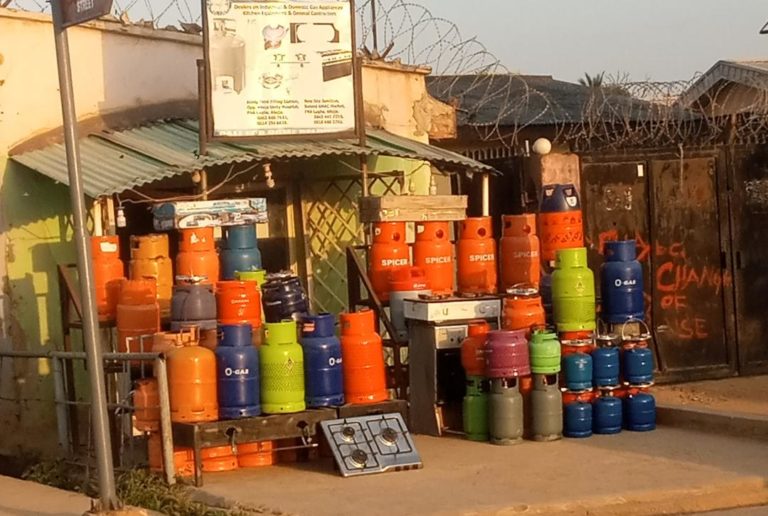
THE Liquefied Petroleum Gas Retailers Association of Nigeria has said retailers should not be blamed for the current hike and scarcity of Liquefied Petroleum Gas, also known as cooking gas.

Chairman of the Liquefied Petroleum Gas Retailers (LPGAR) under the Nigeria Union of Petroleum and Natural Gas Workers (NUPENG), Ayobami Olarinoye, made this known in a statement issued on Saturday.

The ICIR reported that in some parts of the country, a kilogram of cooking gas now sells for between N2,000 and ₦2,300, compared to about N1,200 earlier in the year. 

Olarinoye blamed the rising cost and scarcity of LPG to supply challenges, dismissing claims that retailers are manipulating prices.

“The recent scarcity and spike in LPG prices have brought untold hardship to millions of Nigerian households and businesses. We understand this pain and feel compelled to clarify the role of retailers in this crisis,” Olarinoye said.

The chairman made the remark in response to comments by the President of the Nigerian Association of Liquefied Petroleum Gas Marketers, who allegedly accused retailers of causing the price hike.

The ICIR reported that the Group Chief Executive Officer (GCEO) of the Nigerian National Petroleum Company (NNPC) Limited, Bayo Ojulari, linked the recent surge in the price of cooking gas, to the nationwide strike action by the Petroleum and Natural Gas Senior Staff Association of Nigeria (PENGASSAN).

Describing the allegation as “unfair and misleading,” Olarinoye clarified that retailers do not operate at the depot level and are neither importers nor primary off-takers.

“Our operations are limited to buying gas from plant owners and selling to end-users. Many of us travel to neighbouring states to purchase LPG at high costs due to supply shortages, which naturally affects retail prices,” he said.

The chairman said that while Dangote Refinery has maintained its gas prices, irregular supply has caused a demand-supply imbalance, leading to a continuous rise in prices which is driven by market forces.

“Some retailers have had to shut their outlets for days or weeks because they couldn’t access supply, resulting in huge business losses and operational strain.

“If plant owners increase prices, we have no choice but to adjust ours. We cannot be expected to sell at a loss,” he said.

He pointed out that although Dangote Refinery is a key player in the market, it currently does not have the capacity to meet Nigeria’s total LPG demand, which has grown from under one million metric tonnes to over 2.3 million metric tonnes per year.

“Dangote sells a 20-metric-tonne truckload of LPG at about N15.8 to N16 million, while off-takers offer the same quantity at N18.5 to N18.6 million.

He explained that off-takers, who are expected to complement Dangote’s supply through imports or by sourcing from the Nigeria Liquefied Natural Gas (NLNG), have reduced their operations because of uncompetitive pricing.

He added that the recent PENGASSAN strike further worsened an already fragile supply chain.

“Even after the strike was called off, supply has not stabilised. Some plant owners have paid for gas from Dangote but are yet to load due to long queues and limited availability,” he explained.

Olarinoye called on the government to close the price gap between Dangote and the off-takers to guarantee steady supply and market stability.

“We don’t know the exact landing costs from NLNG, but if off-takers were making enough profit, they would price competitively. As it stands, they’re reluctant to restock,” he said.

He emphasised that the ongoing crisis stems from systemic supply challenges rather than retailer manipulation and urged greater collaboration among stakeholders.

“Blaming retailers will not solve anything. We urge the government and industry players to work together to boost domestic production, encourage competitive pricing, and stabilise supply nationwide,” he said.

The situation has deepened economic hardship for many households, forcing some Nigerians to revert to alternative cooking methods such as charcoal and firewood.

Man arrested for selling five-day-old baby for N1.5m in Ebonyi

0

THE Ebonyi State Police command has arrested a middle-aged man, Chukwuma Onwe, for allegedly selling his five-day-old baby boy for N1.5 million.

The state Police Public Relations Officer, Joshua Ukandu, confirmed to journalists on Saturday that Onwe, a native of Nwezenyi-Igbeagu community in Izzi Local Government Area of the state, was arrested after his fiancée, Philomena Iroko, raised an alarm and informed a neighbour, who subsequently reported to the police.

Ukandu said Onwe allegedly sold his son to a woman identified as Chinyere Ugochukwu, adding that both suspects were arrested on Friday and the baby was successfully rescued at the Azugwu area of Abakaliki Local Government Area of the state.

“Yes, he, Onwe, has been arrested and is currently in our custody. We are going to commence an investigation into the matter,” the PRO said.

Iroko, the baby’s mother, said the man, who is yet to be her husband, lied to her that he gave the baby to his sister for further care without knowing that he had sold their son to Ugochukwu.

She commended the police for rescuing her son in good health.

Recall that in January, operatives of the Akwa Ibom State Police Command arrested a woman, Christiana Ibanga, and her boyfriend, Inyene Akpan, for allegedly trafficking their own baby and selling the child for N450,000.

Nigeria’s public debt hits ₦152.4trn in Q2 2025 — DMO

0

NIGERIA’S total public debt stock has climbed to ₦152.40 trillion as of June 30, 2025.

This is according to new data released by the Debt Management Office (DMO) on Friday.

The figure represents an increase of ₦3.01 trillion or 2.01 per cent from ₦149.39 trillion recorded at the end of March 2025. In dollar terms, the total debt rose from $97.24 billion to $99.66 billion, reflecting a 2.49 per cent increase within three months.

The latest figures underscore the Federal Government’s growing dependence on both domestic and external borrowing to finance fiscal shortfalls, even as ongoing revenue reforms and foreign exchange liberalisation continue to reshape Nigeria’s economic outlook.

DMO data show that Nigeria’s external debt rose to $46.98 billion (₦71.85 trillion) in June, up from $45.98 billion (₦70.63 trillion) in March.

The World Bank remained Nigeria’s single largest external creditor, with an outstanding $18.04 billion, mostly through the International Development Association (IDA) — representing about 38 per cent of the country’s total external obligations.

In total, multilateral lenders accounted for $23.19 billion, or 49.4 per cent of Nigeria’s external debt portfolio. Other key lenders include the African Development Bank, International Monetary Fund (IMF), and the Islamic Development Bank.

Bilateral loans made up $6.20 billion, led by the Export-Import Bank of China with $4.91 billion, while smaller exposures were owed to France, Japan, India, and Germany.
Commercial borrowings, mostly Eurobonds, stood at $17.32 billion, representing 36.9 per cent of external debt. Nigeria also owed $268.9 million under syndicated facilities and commercial bank loans.

Analysts warn that the country’s heavy exposure to Eurobonds increases its vulnerability to global market shocks, while its reliance on concessional multilateral loans reflects ongoing fiscal fragility and limited access to cheaper credit.

On the domestic front, total debt rose from ₦78.76 trillion in March to ₦80.55 trillion in June — a ₦1.79 trillion (2.27 per cent) increase.

The portfolio was dominated by Federal Government Bonds, which stood at ₦60.65 trillion, accounting for 79.2 per cent of total domestic debt. This figure includes ₦36.52 trillion in naira-denominated bonds, ₦22.72 trillion in securitised Ways and Means advances from the Central Bank of Nigeria (CBN), and ₦1.40 trillion in dollar bonds.

Other components included Treasury Bills valued at ₦12.76 trillion, Sukuk Bonds worth ₦1.29 trillion, Savings Bondstotalling ₦91.53 billion, Green Bonds amounting to ₦62.36 billion, and Promissory Notes of ₦1.73 trillion.

The securitisation of CBN’s Ways and Means lending — which converts short-term overdrafts into long-term debt — highlights the fiscal strain confronting the Tinubu administration as it works to restore monetary discipline and investor confidence.

According to the DMO, the Federal Government accounted for ₦141.08 trillion or 92.6 per cent of the total debt stock, comprising ₦64.49 trillion in external debt and ₦76.59 trillion in domestic obligations.

The 36 states and the Federal Capital Territory (FCT) owed a combined ₦11.32 trillion, representing 7.4 per cent of the total. Of this, $4.81 billion (₦7.36 trillion) was external, while ₦3.96 trillion was domestic.

Nigeria’s mounting debt profile comes amid ongoing efforts to boost non-oil revenues, rein in inflation, and stabilise the naira under its economic reform agenda. While the DMO maintains that the debt remains within sustainable limits, experts continue to raise concerns over rising borrowing costs and the impact of exchange rate volatility.

ARISE TV anchor, Maduagwu to be buried October 18

0

ARISE News has announced that its late anchor, correspondent, and producer, Somtochukwu Christelle Maduagwu, who was killed during a robbery attack in Abuja, will be buried on Saturday, October 18, 2025.

In a statement on Saturday, the station announced that an evening of tributes will be held on Sunday, October 12, at the THISDAY Dome, Central Business District, Abuja.

This will be followed by a service of songs on Wednesday, October 15, at the Corpus Christi Cathedral, Kaduna Street, Port Harcourt, before her funeral mass at St. Theresa Catholic Church, Agulu, Anambra State, preceding her interment on October 18.

Maduagwu, aged 29, was a lawyer, model, and journalist. She was killed during an armed robbery attack at her Katampe residence in Abuja. A security guard, Barnabas Danlami, also lost his life in the incident.

Meanwhile, The ICIR reported that the Federal Capital Territory Police Command had arrested 12 suspects in connection with the crime.

The Command’s spokesperson, SP Josephine Adeh, said on Friday that the suspects sourced their weapons from a supplier in the Niger Republic.

“Preliminary investigations revealed that the syndicate procured its firearms — including a locally fabricated AK-47 rifle, a pump-action gun, and a pistol — from an arms dealer operating across the Nigeria–Niger border,” Adeh stated.

She added that all the suspects, who are from Kaduna and Katsina States, confessed to obtaining their weapons from a yet-to-be-identified supplier in the Niger Republic.

Adeh said the Commissioner of Police, Ajao Adewale, deployed a special investigation team led by DCP Aliyu Abubakar and assisted by ACP Victor Godfrey to track and dismantle the criminal network.

Day Against Death Penalty: 3,500 Nigerians on death row – German Ambassador

0

AT least 3,500 Nigerians are currently on death row, according to the German Ambassador to Nigeria, Annett Günther, who reiterated her country’s firm opposition to capital punishment.

Günther stated this during an event marking the 2025 International Day Against the Death Penalty in Abuja, co-organised by the German Embassy, Avocats Sans Frontières France, and the Australian High Commission in Abuja on Friday, October 10.

According to Günther, the death penalty remains one of the world’s most pressing human rights concerns. She noted that despite a global shift toward abolition, Nigeria still retains the punishment in its legal system.

“It is estimated that globally over 20,000 individuals are currently on death row and awaiting execution through very gruesome methods. Among them are 3,500 Nigerians,” she stated.

The envoy emphasised that capital punishment goes beyond legal issues, touching the fundamental values of human dignity and the right to life.

“The irreversible nature of the death penalty means that mistakes and wrongful convictions are beyond any correction,” she stated.

Günther commended President Bola Tinubu for commuting the sentences of seven death row inmates to life imprisonment, describing it as a positive step. She also welcomed Nigeria’s continued moratorium on executions since 2016, urging the country to take further steps toward full abolition.

The ambassador noted that the global trend shows increasing rejection of the death penalty, with 144 countries abolishing it either in law or practice. She referenced a recent United Nations Human Rights Council resolution calling for a worldwide moratorium on executions, which was adopted with a strong majority vote.

Also speaking at the event, the Charge d’Affaires of the Australian High Commission to Nigeria, Neil Sanderson, called on Nigeria to take decisive steps toward abolishing the death penalty, describing it as “a cruel, inhumane and ineffective punishment that undermines human dignity and justice.”

Sanderson reaffirmed Australia’s unwavering opposition to capital punishment in all cases, stressing that the global tide has shifted firmly against it.

“Australia’s position is clear — we oppose the death penalty in all circumstances and continue to call for its global abolition,” he said.

He noted that more than 144 countries have abolished the death penalty either in law or practice, with recent progress recorded in parts of Africa and the Asia-Pacific region.

“In our region, Malaysia and Papua New Guinea have abolished the death penalty. Across Africa, Zimbabwe joined Ghana, Zambia, the Central African Republic and Sierra Leone in taking this historic step,” Sanderson stated.

He welcomed Nigeria’s ongoing constitutional review, which considers the possibility of abolition, adding that public opinion within the country is beginning to shift.

Speaking on behalf of the Executive Secretary, National Human Rights Commission (NHRC), Tony Ojukwu, a representative of the Commission, said this year’s theme — “The Death Penalty Protects No One: Abolish It Now” — is both timely and aligned with the NHRC’s core mandate to promote and protect the right to life.

The NHRC renewed its call for the abolition of the death penalty in Nigeria, saying it remains one of the most pressing human rights issues confronting the nation.

“The death penalty remains one of the most contentious human rights issues of our time, raising critical questions about justice, equity, dignity, and the sanctity of life.

“Every human being has the inherent right to life as guaranteed under our constitution and international human rights instruments to which Nigeria is a party.”

He described the irreversible nature of the death penalty as deeply troubling, particularly in cases where judicial errors may occur.

The NHRC urged Nigerians to use the occasion not only to reflect but also “to advocate, to educate, and to build momentum toward a Nigeria where justice does not come at the cost of life.”

In her opening remarks at the event, the Country Director of Avocats Sans Frontières France (ASF France) in Nigeria, Angela Uwandu, said the group has been working in Nigeria since 2011 to review the laws and the application of the death penalty.

According to her, one of the things they have learned representing persons facing the death penalty, providing free legal services and other support, is that the death penalty protects no one and has shown that it is used disproportionately against the most vulnerable in society.

“The stories are the same. Our clients are subjected to the worst form of torture, cruel, inhuman and degrading treatment. And this is always because we have the mandatory death penalty in Nigeria. That simply means that Nigeria is one of the countries where there are certain crimes that the law says must be punished by death,” she stated.

She also claims judges in Nigeria are not allowed to exercise their discretion to look at the facts of the case before them.

“Once execution is carried out, it’s irreversible. We do not have the opportunity to bring back anyone when evidence of this and it does happens several times to show that a person is innocent,” she said.

Nwandu said Nigeria is just one of the few 16 countries that continue to retain the death penalty and said she looks forward to a time when the country will be bold enough to have a conversation around the issue.

The International Day Against the Death Penalty, observed annually on October 10, promotes global efforts to end capital punishment and raise awareness about its irreversible and discriminatory nature.

The ASF (Lawyers Without Borders) marked the occasion in Nigeria with the screening of a movie titled ‘Just Mercy‘.

The movie is a true-life story that follows Bryan Stevenson, a young Black lawyer and Harvard graduate who moves to Alabama in the United States of America to defend people wrongly convicted or too poor to afford proper legal help.

One of his earliest and most significant cases is that of Walter “Johnny D.” McMillian, a Black man sentenced to death in 1987 for the murder of a white woman, Ronda Morrison, despite clear evidence of his innocence.

As Stevenson digs deeper, he uncovers a web of lies, racial prejudice, and corruption within the justice system that led to McMillian’s wrongful conviction.

Despite intimidation and legal hurdles, Stevenson persists and eventually succeeds in overturning the conviction, exposing deep-seated flaws in America’s criminal justice system—especially its bias against poor and Black defendants.

The film explores themes such as racial injustice, wrongful convictions, and the moral and legal failures surrounding the death penalty. It also celebrates courage, compassion, and the relentless pursuit of justice.

No Death Penalty Day promotes awareness about the injustices of capital punishment.

The movie Just Mercy aligns with this cause by illustrating how the death penalty often targets the vulnerable and amplifies systemic racism. Stevenson’s work highlights the risk of executing innocent people and calls for mercy, fairness, and the abolition of capital punishment. The story serves as a reminder that justice should be guided by humanity, not vengeance.

Macron reappoints Lecornu as PM as France political crisis deepens 

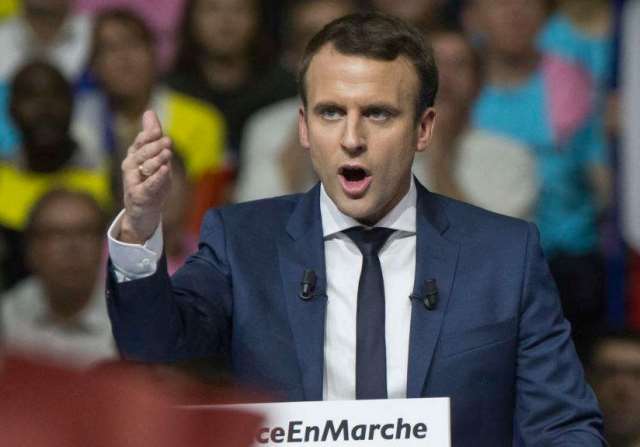
FRANCE President Emmanuel Macron has reappointed Sebastien Lecornu as  Prime Minister,  days after his resignation, a decision that sparked outrage among the president’s strongest political rivals, who vowed to vote down the new government.

The ICIR reported that Lecornu, and his cabinet resigned on Monday, October 6, after he unveiled his ministerial lineup, a dramatic escalation of the country’s political crisis that sent stocks and the euro tumbling.

Lecornu, Macron’s fifth prime minister in just two years, held the position for only 27 days, and his government lasted 14 hours, making it the shortest-lived in modern French history.

President Macron instructed Lecornu the next day to hold a two day final talks with members of different political parties to establish a plan for the country’s stability and direction which he agreed to.

The latest report by Reuters indicates that Macron, 47, will hope loyalist Lecornu can draw enough support from a deeply divided parliament to pass a 2026 budget while many of Macron’s rivals have demanded he either call fresh parliamentary elections or resign.

The immediate reaction to Lecornu’s appointment from the far right and hard left was harsh, indicating that his second term as prime minister may prove just as difficult as his first, which ended on Monday.

According to reports, Lecornu’s top priority will be to present a budget to parliament before the end of Monday and Macron’s team said Lecornu had been given “carte blanche,” signaling that the president is granting his prime minister significant freedom to negotiate both the cabinet and the budget.

“I accept – out of duty – the mission entrusted to me by the President of the Republic to do everything possible to provide France with a budget by the end of the year and to address the daily life issues of our fellow citizens.

“We must put an end to this political crisis that exasperates the French people and to this instability that is harmful to France’s image and its interests,” Lecornu wrote on X.

Lecornu stated that anyone joining his government must set aside personal ambitions to succeed Macron in 2027, a race that has fueled instability within France’s fragile minority governments and divided legislature, vowing that his cabinet would “reflect renewal and diversity.”

Earlier, Macron met with leaders of mainstream parties to rally support for his choice, but sparked outrage among leftist groups after learning that none of their members would be appointed prime minister.

France’s efforts to fix its finances which will require either spending cuts or tax increases that no party can agree on have only worsened the sense of discontent.

The ICIR reported that protesters took to the streets across France two weeks ago, blocking roads, setting fire to rubbish bins, and clashing with police in a campaign to “Block Everything” in anger against Macron and proposed budget cuts.

Reports indicate that if the National Assembly fails to reach an agreement on the budget within the deadline, emergency measures may be required to maintain government operations next year under a roll-over budget.

Central to the latest budget talks are the left’s demands to reverse Macron’s 2023 pension reforms, which raised the retirement age, and to increase taxes on the wealthy. 

These proposals have clashed with the conservatives, whose backing Macron also requires to approve the budget. 

During Friday’s meeting, Macron proposed postponing the retirement age increase to 64 by one year, until 2028, a move some said is inadequate.

Day of the Girl Child: Nigerian girls overcoming societal barriers to stand out

0

WHEN 17-year-old Nafisa Abdullah Aminu from Yobe State was named the World Best in English Language Skills at the 2025 TeenEagle Global Finals held in London, United Kingdom in August, her success showed the possibility and what still blocks millions of girls from the same chance.


Nafisa represented Nigeria through the Nigerian Tulip International College (NTIC), and outperformed over 20,000 participants from 69 countries, a historic feat that has thrust her into the global academic spotlight and brought honour to Nigeria.

The young girl outshone participants from native English-speaking countries, a remarkable achievement that reflects her intelligence and the possibility for millions of girls in the country to attain such feat if provided with relevant amenities.

Barriers against Nigerian girl child

Despite enacting the Nigerian Child’s Right Act in 2003, a federal law that domesticates international treaties and guarantees the rights and well-being of children under 18, the girl child in the country has continued to face challenges. 

The law, which provides for rights to health, education, protection, and sets the minimum age for marriage at 18, only takes effect in a Nigerian state after its  assembly enacts it. Some states have yet to adopt the Act, creating regional disparities in child protection, particularly in the northern parts of the country. 

On December 28 2023, the Bauchi State governor, Bala Mohammed signed the state’s 2024 budget into law and announced his assent to the child rights bill passed by  lawmakers making it the last of the 36 states in Nigeria to domesticate the child rights.

Despite celebrating the important milestone towards the protection of children and girls’ rights in the 36 states of the country, some states, in their domestication have redefined “child” in a way that applies only up to a lower age than 18, or used other criteria like puberty instead of 18 years. 

States like Kaduna, Katsina, Kebbi, Sokoto claim that the marriageable age for girls is 18 years, but with the exception that muslim children can marry from 14 years and above under Islamic law.This decision implies that the Child Rights Protection Bill defines a child as someone below eighteen. Muslim children below eighteen can still marry due to the supremacy accorded to Sharia law over the Child Rights Bill. 

Jigawa State signed the  bill into law on December 22, but did not adopt 18  as the age of maturity for marriage. Instead, it determined the childhood age of puberty because it is believed to be controversial to the predominant culture.

Zamfara State passed the Child Protection Bill into law on August 16, 2022, without mentioning the age of marriage. 

Meanwhile, Akwa Ibom defines a child as a person under 16 years old in its State Child Right Act. 

Despite these milestones, challenges persist. According to the United Nations Children’s Fund (UNICEF) in 2024, four out of every ten girls in Nigeria are married before the age of 18, totaling over 24 million child brides and ranking third globally.

The organisation explained that although recent data suggests a decline in national prevalence from 44 per cent to 30 per cent, progress has been slow and uneven, particularly affecting the poorest households, rural areas, and girls with little or no education.

This indicated that, stopping the girl-child marriage practice in Northern Nigeria will be difficult, especially in the Northwest, where the practice becomes naturally promulgated.

Similarly, a 2022 UNICEF report, shows that 7.6 million girls are out of school in Nigeria, with 3.9 million at the primary level and 3.7 million at the junior secondary level. 

In January 2025, the World Bank said its 2024 data shows that over two-third of girls drop out before junior secondary school.

The ICIR reported that an estimated 37 million women and girls in Nigeria experience period poverty, meaning they lack access to or cannot afford menstrual products, pain medication, and proper facilities. 

This crisis is exacerbated by the high cost of sanitary pads and limited awareness, forcing many to resort to unhygienic materials and causing them to miss school or work.  

Evidence-backed steps that help girls thrive

Experts have emphasised that investing in girls is an accelerator for national development because educated girls are more likely to delay marriage, enter the workforce, have fewer and healthier children, and build resilient communities. 

Countries that prioritise the girl child through initiatives in education, economic participation, and safety, have demonstrated evidence of stronger economic growth, reduced poverty rates, and more inclusive and equitable societies.

Sweden ranked first  in a United States news report, with women holding nearly half of parliamentary seats. While Denmark ranked second in the same report, Norway came third for having high female representation in parliament and secondary education rates for women. 

Finland ranked forth, Netherlands ranked fifth, Canada ranked sixth and Switzerland ranked seventh for high female parliamentary representation. Other countries are Iceland, Belgium, France, and New Zealand.

According to the report,  these countries have consistently rank at the top of the World Economic Forum’s Global Gender Gap Index because of strong social policies, high female educational attainment, generous parental leave, and labour-market supports that raise women economic participation.

Bangladesh major progress in girl enrolment and retention at primary and secondary levels stipend programmes, and targeted policies, which global studies link to improvements in women’s labour force entry and reductions in child marriage and child mortality.

Rwanda national policies and reforms have dramatically increased women political representation and economic inclusion with high share of women in parliament and targeted empowerment programmes, associated with inclusive governance and rapid post-conflict growth.

Namibia and Lithuania that are examples in top Global Gender Gap list have closed large portions of measured gender gaps in education, health, political empowerment, showing that diverse regions can achieve measurable gender parity gains. 

Nigeria did not make it to the top ten African countries that prioritises the economic empowerment of women through legislation, financial inclusion strategies, and access to education and skills development by Business Insider Africa.

Liberia, Botswana , Eswatini, Togo, Kenya, Zimbabwe, Burundi, Namibia, Madagascar, Ghana are the ten countries that made the list.

Young Nigerian girls making the world sit up

In 2018, a team of Nigerian teenage girls code named Team Save-A-Soul emerged as the overall winners of the Technovation World Pitch Summit in the United States, the world’s largest technology and entrepreneurship competition for girls.

The team, made up of secondary school students, Promise Nnalue, Jessica Osita, Nwabuaku Ossai, Adaeze Onuigbo, and Vivian Okoye, created a mobile application called ‘FD-Detector’ to combat the menace of counterfeit drugs in Nigeria.

Faith Odunsi At 15, who represented Nigeria at the global mathematics competition, beat China, United States of America, United Kingdom and others with an impresive 30 points margin to became the world best Mathematics student in 2021. The judges called her Calculator.

Faith made the Queen of Mathematics from JSS-3 to SS-2 when she was a part of the national Olympiad. She set a record in Cowbellpedia in 2019 by answering 19 questions in 60 seconds.

She was also in Kangourou Sans Frontieres, South African mathematics Olympiad, American mathematics competition and Pan-African mathematics Olympiad where she won medals and a silver medal in the Pan-African mathematics Olympiad in 2019. She was later made an ambassador of her school.

In 2022, Mmesoma Okonkwo received the British Council Outstanding Cambridge Learner’s Award “Cambridge International General Certificate of Secondary Education Top in the World 2022 after recording the highest score in English as a second language in the Cambridge IGCSE examination.

Cambridge International, a division of the University of Cambridge, explained that Mmesoma demonstrated exceptional command of written and spoken English, exhibiting the highest degree of comprehension, creativity, grammar, and interpretation among all 2023 candidates worldwide.

According to a representative of Cambridge Assessment International Education at the 2023 series, “Her excellence is a testament to her diligence, the quality of education she received, and the power of global academic competitiveness.”

The 17-year-old shared her dream of running her multinational enterprise that will focus on youth empowerment and education reform when receiving the award.

Oluwabukolami Adeyemi, an 18-year-old pupil also received the British Council Outstanding Cambridge Learner’s Award “Top in the World” in 2022 for her performance in Cambridge International AS Level Law.

Leyla Caybasi, a student of Nigerian Tulip International Colleges (NTIC), achieved the top spot for Nigeria at the Cambridge AS Level Mathematics competition in 2024.

The Managing Director of NTIC, Feyzullah Bilgin, said Leyla Caybasi “outstanding Cambridge Learner Award is a testament to her future success.”

Leyla wrote two papers in AS level mathematics one and three, scoring 112 out of 125.

Nigerian student Kenechukwu Oluwanifemi Uba was named the “Top in the World” candidate in the Cambridge IGCSE English as a Second Language examination held in November 2024.

Most recently is 17-year-old Nafisa Abdullah Aminu won the World Best in English Language Skills at the 2025 TeenEagle Global Finals held in London, United Kingdom in August 2025.

Nafisa represented Nigeria through the Nigerian Tulip International College (NTIC), and outperformed over 20,000 participants from 69 countries.

In 2025, Amara emerged as the Africa regional winner of The Earth Prize, a global environmental sustainability competition for teenagers for her innovative design of a playground made from recycled materials and her leadership in promoting climate resilience within Lagos communities.

17-year-old’ project turned a waste dump in Ikota, Lagos into a community playground built from recycled tyres, metal scraps, and reclaimed wood.

The International Day of the Girl Child is both a reminder and an opportunity to celebrate the trailblazers from Nigeria making global waves and to redouble efforts to remove the barriers standing between millions of girls and their future.