Home Blog Page 162

UI, UNILAG top Nigeria’s list in 2026 world university rankings

1

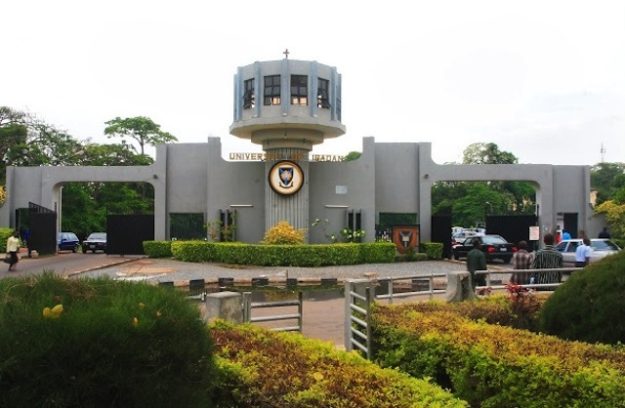
THE University of Ibadan (UI) and the University of Lagos (UNILAG) have emerged as Nigeria’s highest-ranked institutions in the 2026 Times Higher Education (THE) World University Rankings.

The latest ranking, released on October 9, 2025, assessed 2,191 universities across 115 countries and territories, evaluating their performance across teaching, research, international outlook, and industry engagement.

The ranking placed both UI and UNILAG in the 801–1000 band, maintaining their standing among the top 1,000 research-intensive universities globally. 

UI was named as the first top Nigerian university, having recorded an overall score range of 35.5–38.9. The university performed strongly in research quality with a pass mark of 63.5 per cent and international outlook (43.8 per cent). 

UNILAG achieved the same overall band but performed better in research quality (66.7) and industry income (32.6).

The two universities were followed by Bayero University Kano, Covenant University, and Landmark University, which all appeared in the 1001–1200 category, with each scoring the same overall score of 32.1–35.4. 

This means that both Covenant University and Landmark University maintained their reputation as the top-performing private universities in Nigeria.

Ahmadu Bello University, University of Ilorin, University of Jos and the University of Nigeria, Nsukka were placed in the 1201–1500 band, while several others, including Obafemi Awolowo University, University of Benin, Federal University of Technology Akure, Federal University of Agriculture Abeokuta and Lagos State University, appeared in the 1501+ category.

How Nigeria universities were ranked by the Times Higher Education

Universities such as Babcock, Nnamdi Azikiwe and Ladoke Akintola University of Technology also appeared in the 1501+ band, while others, including Al-Hikmah University, Bells University of Technology, Federal University of Lafia and Igbinedion University, were listed as “reporters,” meaning they submitted data but did not meet the eligibility criteria for ranking.

Top Universities in Nigeria

Globally, the University of Oxford in the United Kingdom retained the number one spot for a record tenth consecutive year, followed by the Massachusetts Institute of Technology (MIT) and a tie between Princeton University and the University of Cambridge.  

Sharing the fifth spot are Harvard University and Stanford University, both in the United States. The California Institute of Technology (Caltech) ranked seventh, maintaining its place from the previous year, while Imperial College London in the United Kingdom climbed to eighth position.

The University of California, Berkeley, and Yale University, both in the United States, completed the top ten, ranking ninth and tenth, respectively.

The Times Higher Education World University Rankings are based on 18 performance indicators across five key areas: teaching (29.5 per cent), research environment (29 per cent), research quality (30 per cent), international outlook (7.5 per cent) and industry (4 per cent).

Data for the ranking were compiled using Elsevier’s Scopus database, analysing 174.9 million citations from 18.7 million academic outputs published between 2020 and 2024, the organisation said.

Togo, Benin owe Nigeria $8.5 million for electricity supply – NERC

0

THE Nigerian Electricity Regulatory Commission (NERC) has revealed that neighbouring West African countries of Benin and Togo owe the Nigerian Electricity Supply Industry (NESI) about $8.5 million for electricity supply.

NERC disclosed this in its second-quarter(Q2) report of 2025.

The electricity regulator explained that six international bilateral customers who purchase power from Nigerian generation companies remitted only $9.01 million out of a total $17.54 million invoice issued by the Market Operator for services rendered during the period.

This left an outstanding balance of $8.53 million, representing a remittance performance of 51.33 per cent.

The report identified the international customers as Société Béninoise d’Énergie Électrique (SBEE) of the Republic of Benin, Compagnie Énergie Électrique du Togo (CEET) of Togo, and Société Nigérienne d’Électricité (NIGELEC) of the Republic of Niger, among others. These countries receive electricity from Nigeria through cross-border supply arrangements managed by the Transmission Company of Nigeria (TCN).

A breakdown of the report showed that Mainstream Energy Solutions received $2.59 million out of the $3.71 million invoice issued to NIGELEC, representing a 69.8 per cent remittance rate. CEET made no payment for its $4.31 million invoice, while SBEE, which buys power from Transcorp and Paras Energy, settled only a portion of its bill.

“The six international bilateral customers being supplied by GenCos in the NESI made a payment of $9.01 million against the cumulative invoice of $17.54 million issued by the Market Operator for services rendered in 2025/Q2, translating to a remittance performance of 51.33 per cent,” NERC said in the report.

The commission also disclosed that domestic bilateral customers made a combined payment of ₦1.4 billion out of ₦2.8 billion billed for services in the same period, representing a 50.10 per cent remittance rate. Only the Transcorp (Ughelli)–SBEE contract achieved full remittance of $5.47 million, while others, such as Paras–SBEE, Paras–CEET, and Odukpani–CEET, recorded no payments.

On the performance of electricity distribution companies (DisCos), NERC reported that they remitted ₦399.20 billion to the Nigerian Bulk Electricity Trading Plc (NBET) and ₦65.30 billion to the Market Operator, against a total invoice of ₦417.35 billion for generation and transmission services. This resulted in a shortfall of about ₦18.15 billion and a remittance performance of 95.65 per cent, slightly lower than the 95.86 per cent recorded in the previous quarter.

Despite the improved billing efficiency recorded in Q2 2025, the sector continued to suffer from high Aggregate Technical, Commercial, and Collection (ATC&C) losses, which stood at 37.92 per cent, far above the Multi-Year Tariff Order (MYTO) target of 20.54 per cent. Kaduna DisCo posted the poorest performance, with a loss rate of 70.98 per cent against a target of 21.32 per cent.

NERC warned that the persistent shortfall in remittances from both international and domestic customers continues to threaten the financial stability of the Nigerian Electricity Supply Industry, where operators depend on timely payments to sustain generation and grid operations.

Things that can get you arrested during Anambra elections 

0

By Nigerian Fact-checker’s Coalition 

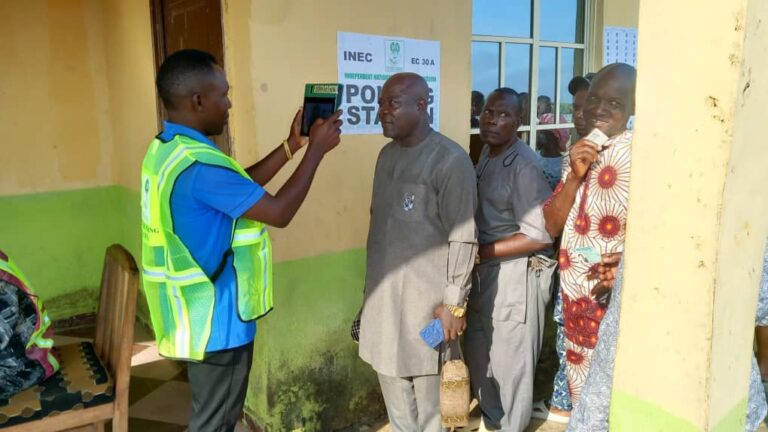
THE Independent National Electoral Commission (INEC) has continually warned against vote-buying, ballot box snatching, underage voting and other electoral malpractices as Anambra election holds November 8.

.INEC organises elections into various political offices in the country.

The Electoral Act 2022 clearly outlines the rules and regulations guiding electoral process.

But many Nigerians are unaware of the provisions in the Act that could lead to their arrest.

This article highlights the key activities that could lead to arrest during the forthcoming election in Anambra. 

Legal framework

Electoral offences in Nigeria are comprehensively stipulated in the Electoral Act 2022.

It was assented to by the late former president, Muhammadu Buhari, in February 2022 and later gazetted and published in the following month for adoption ahead of the 2023 general elections.

Under the Act, offences such as vote buying, impersonation, and voting by unqualified voters, among others, carry a fine, imprisonment, or both, depending on the severity of the offence.

This effort aims to ensure credible, free, and fair elections among participating parties, thereby ensuring that citizens’ votes count.

The Anambra election is approaching, and the Electoral Act 2022 will remain in effect until it is amended or repealed. If you are a voter in Anambra, below are some of the offences that could lead to your arrest in the governorship election period.

Voter registration offences

Everyone in Anambra who is eligible to vote is required to register for the election. However, it is important to note that anyone who, without authority, destroys, mutilates, deface, removes, or alters a registration notice or document may face imprisonment. 

In addition, impersonating or registering in a constituency you are not entitled to, or registering at multiple centres; publishing false statements to deter eligible voters from registering; making false entries in registration documents; obstructing registration or revision officers; impersonating registration officers; forging a registration card; or conducting registration or revision outside designated centres are all prohibited by the law. 

These offences carry a fine of up to N1 million, imprisonment for up to 12 months, or both.

Offences in respect of nomination

If you forge, deface, destroy, unlawfully handle or deliver forged nomination papers, result forms, certificates of return, ballot papers, ballot boxes, or you consent to be a candidate when ineligible, you commit an offence and are liable on conviction to imprisonment for up to two years.

Manufacturing or importing election materials without authority

The Nigerian law criminalises manufacturing, importing, possessing, or supplying ballot boxes, compartments, voting devices, or mechanisms without proper authority. 

The unlawful possession, illegal printing of a ballot paper, illegal production, importation of ballot boxes or the illegal printing of ballot papers are prohibited.

These offences attract a maximum fine of N50 million, imprisonment for a term of not less than 10 years, or both.

Disorderly behaviour at political meetings

Political meetings are essential for the promotion of democracy, especially in a multi-party system like Nigeria’s. However, opposition groups sometimes attempt to disrupt one another’s gatherings. Acting in a disorderly manner or being in possession of an offensive weapon at a political meeting can result in a  fine of up to N500,000, imprisonment for up to 12 months, or both.

Improper use of voter’s card

Your voter’s card is meant for you only and can’t be shared with others. Therefore, giving your voter’s card to someone else to use during an election, other than an officer appointed to do so, is unlawful. It’s also the same for possessing more than one voter’s card or buying, selling and dealing with voters’ cards. Anyone found wanting of these offences is liable to a fine of up to N1 million,  imprisonment for 12 months, or both.

Improper use of government vehicles

It is prohibited to convey any person to a registration office or to a polling unit using a government vehicle or boat except such a person is entitled to use such a vehicle or boat, for instance, an electoral officer. 

Anyone who does this risks a fine of up to N500,000 or imprisonment for up to six months, or both.

Impersonation and voting when not qualified

If you attempt to vote in the Anambra election without being qualified to vote, or you induce a person to vote knowing such a person is not qualified, you can be liable of a fine of up to N500,000 or 12 months imprisonment or both. This also applies to voting more than once or aiding the commission of these offences.

Dereliction of duty and announcing false result

If you are a polling officer who fails to report to the polling unit on time or fails to discharge your duties on election day without a lawful excuse, you can be convicted and fined up to N500,000 or imprisoned for up to 12 months, or both. 

Additionally, announcing or publishing a false election result is punishable by up to 36 months imprisonment. 

If a returning officer, collation officer, or person delivers a false certificate of return, they will be liable to  a sentence of up to three years imprisonment without the option of a fine. 

Bribery and conspiracy: vote buying

Paying money to any other person for bribery at any election or receiving any money or gift for voting, or to refrain from voting at any election, carries a fine of up to N500,000 or imprisonment for 12 months, or both. If a person aids and abets such offences, the same punishment applies. 

Voting interference 

Voting must be done in secret in the polling booth, so that no one else knows the party you voted for. Flouting this rule means you are not maintaining the secrecy of voting at a polling unit. At the polling booth, you cannot interfere with or speak to a voter casting their vote.  If found guilty, you will face a fine of up to N100,000 or imprisonment for up to three months, or both. 

Wrongful voting and false statements

Illegal voting at an election and publishing any statement of the withdrawal of a candidate or about his personal character, knowing it to be false, will attract a fine of  up to N100,000 or imprisonment for a term of six months, or both. 

Voting by unregistered persons

If you bring a voter’s card issued to another person into a polling unit during an election, you are liable to be fined N100,000 or imprisoned for six months, or both. You get the same punishment if you attempt to knowingly vote in a constituency that doesn’t have your name in its register.

Disorderly conduct at elections

If you incite people to act in a disorderly manner at polling units, you will be liable to a  fine of N500,000 or imprisonment for a term of 12 months, or both. 

Offences on election day

According to the Act, within a distance of 300 metres of a polling unit, you must not canvass for votes, persuade any voter not to vote for a particular candidate, or be in possession of any offensive weapon. 

You must also not wear or display any notice, symbol, photograph, or party card. Using any vehicle bearing the colour or symbol of a political party, loitering around a polling unit, or blaring a siren is also prohibited. 

Flouting these prohibitions can result in a fine of N100,000 or a term of imprisonment of six months. 

In addition, the snatching or destruction of any election material can result in a 24-month imprisonment.

Undue Influence  –  vote buying & selling 

If you accept money or any other inducement after the announcement of an election date, or if you give money or an inducement to corruptly influence someone to vote or not vote, you will face penalties. You are liable to be fined N100,000 or imprisoned for 12 months, or both.

Violence, threats, or campaign obstruction

If you threaten a person with violence or injury to compel that person to vote or refrain from voting, or you prevent any political aspirant from free use of the media vehicles, mobilisation of political support and campaign at an election, you will be liable to be fined N1 million or imprisoned for three years. 

Written & edited by Nigeria Fact-Checkers Coalition (NFC) ahead of the Anambra 2025 election.

Private sector provides 70% of Nigeria’s healthcare needs —Report

0

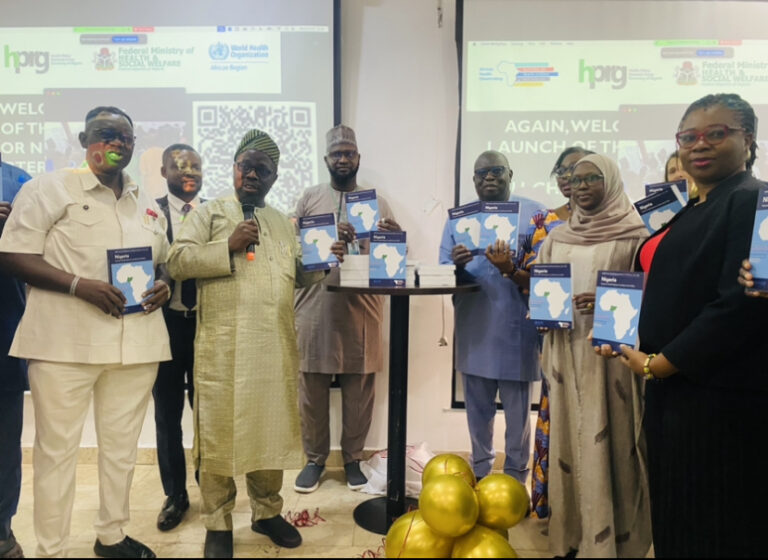
NIGERIA’S health system remains heavily reliant on private providers who deliver about 70 per cent of healthcare services in the country, according to the newly launched Country Health System and Services Profile (CHSSP).

The CHSSP, unveiled on Wednesday, October 8, in Abuja, exposes deep-seated challenges within the system, including low public spending on health, poor infrastructure, inadequate workforce retention, and heavy reliance on out-of-pocket payments by citizens. 

The report was produced by the Health Policy Research Group (HPRG) of the University of Nigeria, Nsukka (UNN), in collaboration with the Federal Ministry of Health and Social Welfare (FMOH&SW) and the World Health Organisation (WHO), among others.

While presenting findings of the profile, the lead researcher, Obinna Onwujekwe, a professor, noted that private healthcare providers deliver 70 per cent of services in Nigeria in the health sector.

He also stressed that the private sector operates under weak regulatory oversight and fragmented coordination.

“Private health providers deliver 70% of health care services. Regulation and accountability mechanisms for the private sector remain weak,” he stated. 

“Reforms in the past have not delivered up to expectations, with hopes high for the recent Nigeria Health Sector Renewal Investment Initiative (NHSRII).”

The CHSSP also identified gaps in financing, showing that out-of-pocket spending accounts for 75 per cent of total health expenditure, leaving millions of Nigerians vulnerable to financial shocks when seeking medical care.

The ICIR had, on September 30, reported other details of the report published days earlier by the WHO African Region, under the African Health Observatory Platform on Health Systems and Policies (AHOP) initiative.

The report, published in September, warned that the system was not on track to achieve UHC, with a service coverage index of just 38.4 per cent. 

Meanwhile, speaking on behalf of the Coordinating Minister of Health and Social Services, Kamil Shoretire, commended the efforts of the group, adding that the government takes responsibility for the challenges highlighted in the report.

He further outlined the federal government’s ongoing efforts to strengthen Nigeria’s health system through targeted investments in primary healthcare, infrastructure, workforce development, and digital innovation.

Pate further stated that the government is implementing strategies to train, recruit, and retain health workers through competitive remuneration, professional development, and improved working conditions.

He further noted that the government is leveraging digital health and innovation to enhance service delivery, health information systems, and supply chain management.

Persistent gaps and slow progress toward universal health coverage

Despite reforms, the CHSSP indicated that Nigeria remains off-track to achieve Universal Health Coverage (UHC) by 2030. 

The researchers noted that the country’s UHC Social Coverage Index score stands at 38.4 per cent, among the lowest globally, due to weak infrastructure, human resource shortages, and inequitable access to essential services.

They also noted that overall, Nigeria’s health system delivered only 45 per cent of its potential, below the African regional average of 56 per cent.

This, the researchers said, left millions of Nigerians without reliable care.

According to the report, the healthcare costs fall heavily on individuals and out-of-pocket spending accounts for 75 per cent of all health expenditure, leaving many households vulnerable. 

Despite being Africa’s largest economy, Nigeria spends just five per cent of its annual budget on health, well below the 15 per cent target agreed under the Abuja Declaration in 2001. 

The report also revealed that about 80 per cent of public health infrastructure is dysfunctional, contributing to the $1 billion annual loss to outbound medical tourism.

Workforce challenge 

The lead researcher, while presenting the findings of the research group, stressed that while Nigeria’s health workforce is one of the largest in Africa and is expanding, it’s still short of meeting demands.

According to him, health workforce challenges negatively affect clinical outcomes in the health system

He said that many health workers are leaving the country due to the country’s poor working conditions, while many of those who are trained in Nigeria are not being employed.

“National policies and guidelines on medical product regulation and distribution are poorly implemented and audited. National production capacity meets just 30% of demand. Foreign direct investment and tax incentives would reduce reliance on imports.

“The lack of a systematic, well-regulated drug distribution system leads to drug deterioration, stock shortages, patronage of informal providers and the circulation of substandard medicines. PVAC is expected to change things,” he said.

He, however, said “improvements rely on enhanced political will to increase funding and drive stronger governance, accountability and efficiency in health financing.

‘A one-stop reference for reform’

On his part, BSC Uzochukwu, a professor and researcher with the HPRG, who presented Chapters 9–11 of the report, described the CHSSP as a “one-stop reference document” for policymakers, researchers, and development partners, designed to promote evidence-based decision-making.

He noted that health sector comparisons in the region is targeted at stimulating healthy competition, adding that it’s an opportunity for cross-learning to design multi-country studies on specific issues in the region.

Pope Leo tells US bishops to address Trump’s immigration crackdown

0

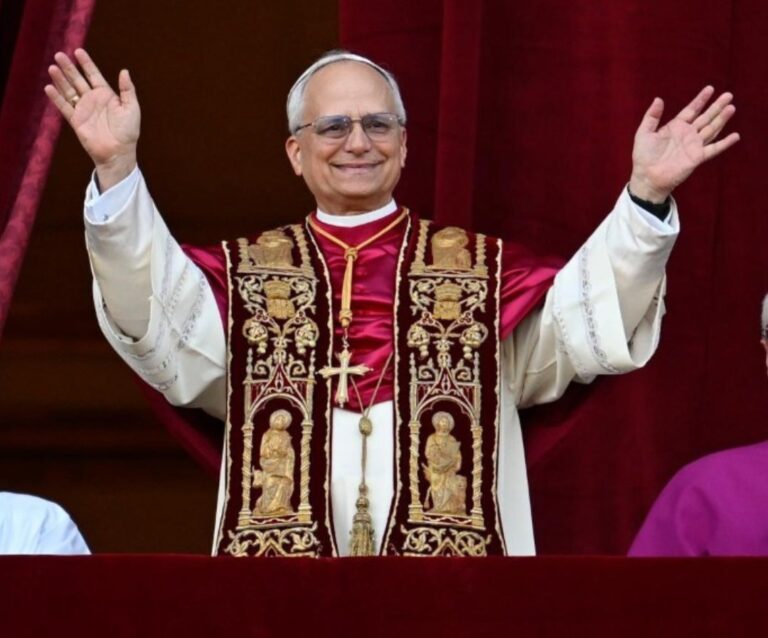
POPE Leo has urged United States bishops to take a strong stand against the treatment of immigrants under President Donald Trump’s strict policies.

The bishops who visited the Vatican on Wednesday revealed this to Reuters, stating that the Pope is “very personally concerned about these matters.”

According to the report, Leo, being the first US pope, received dozens of letters from immigrants expressing their fears of deportation under the Trump administration’s policies during a meeting with bishops and social workers from the US-Mexico border.

One of the letters presented to the pope on Wednesday revealed the story of a family with two members lacking legal status in the US, who were too afraid to leave their home for fear of deportation.

The writer of the letter, written in Spanish, urged the Pope to speak out openly against the raids and the unfair treatment the community is experiencing.

El Paso Bishop Mark Seitz, who took part in the meeting, said that the Pope expressed his “desire that the US Bishops’ Conference would speak strongly on this issue.”

The ICIR reported in January that the Trump administration started a visa policy and illegal immigrants in the US.

Since he took power on January 20, Trump has made good his vow to carry out mass deportations of immigrants, among other sweeping reforms by his government.

On January 28, the Enforcement and Removal Operations division of the United States Immigration and Customs Enforcement reported that about 3,690 Nigerians in the US could be deported.

Elected in May to succeed the late Pope Francis, Leo has adopted a more reserved approach than his predecessor, who was known for his outspoken criticism of the Trump administration and his often spontaneous remarks, but Leo has increased his criticism in recent weeks.

On September 30, the pope questioned whether the Trump administration’s anti-immigration policies aligned with the Catholic Church’s pro-life teachings, remarks that sparked strong backlash from several prominent conservative Catholics.

The ICIR reported the United States Department of Homeland Security (USDHS) is set to launch a new programme offering unaccompanied migrant teenagers a one-time payment of $2,500 each if they agree to return to their home country voluntarily.

The USDHS said that the pilot initiative will initially focus on 17-year-old migrants and will require authorisation from an immigration judge before any departure takes place.

The payment, intended to support the minors’ reintegration, would be issued only after they return to their home countries, the memo disclosed.

Aftermath of UNGA 80: Time for African leaders to ponder on Vladimir Putin’s words

0

By Mukhtar Imam

AS the 80th session of the United Nations General Assembly (UNGA) rounded off, the world finds itself at an inflexion point. Great power competition is no longer an abstract concept — it is shaping trade flows, military alliances, financial systems, and the very language of global governance.

Yet, amid the cacophony of speeches and resolutions that filled the UN halls in New York, there is a message African leaders must not only hear but internalise.

It is a message that was not delivered at the UN but in Beijing: Vladimir Putin’s recent words — a sober warning to the West and a clarion call to the Global South — should serve as a mirror for Africa’s ruling class.

Putin’s statement, sharp and deliberate, was not merely a defence of Russian interests. It was a civilisational rebuke of a Western system that still seeks to dictate rather than engage, to dominate rather than respect.

His words resonate far beyond Moscow, Delhi, or Beijing — they should echo in Addis Ababa, Abuja, Nairobi, and Pretoria. Africa, home to 1.4 billion people and abundant resources, remains the last frontier of neocolonial manipulation. Unless African leaders draw the right lessons, they risk being mere spectators as the world moves toward a new multipolar order.

Ultimatums Don’t Work on Civilisations — Africa Included
The age of ultimatums — political, economic, or military — is over.

That is the heart of Putin’s argument, and it applies just as powerfully to Africa as it does to India and China. For centuries, Africa was treated as an open quarry, carved up at conferences like Berlin in 1884–85, stripped of its resources, and denied agency.

Today, the tools are more sophisticated — conditional loans, currency manipulation, sanctions, and “human rights” lectures that come with strings attached — but the effect is the same.

African nations are pressured to pick sides in conflicts that do not serve their interests, to open markets on terms they do not set, and to embrace governance models designed elsewhere.

The question that Putin implicitly poses to the Global South is simple: for how long will civilisations continue to be managed like colonies? Putin’s words are a clear message that the colonial mindset never died; it merely changed costume.

Gunboats and red coats have been replaced with sanctions, tariffs, conditional loans, and moral ultimatums. African nations are told which wars to condemn, which currencies to trade in, which allies to shun, and which economic models to adopt — often under the threat of losing aid, credit ratings, or access to global markets.

It is high time African leaders woke up to the realisation that Africa is not a charity case. It is a continent of 1.4 billion people, vast resources, and untapped potential. If India and China can stand firm against economic blackmail, why can’t Africa? If Russia can turn sanctions into self-reliance, why must African economies continue to beg for debt forgiveness instead of building their own resilience?

Ukraine is a mirror — Not a distraction

Some in Africa see the Ukraine war as a distant European quarrel, irrelevant to African realities. But this is a mistake. What is happening in Ukraine is not merely about borders in Eastern Europe — it is about the right of nations to resist being folded into someone else’s strategic design.

The West’s approach to Russia — isolate, sanction, contain — is the same playbook it uses on African states that resist its prescriptions. Whether it is the Central African Republic, Mali, Niger or Sudan working with non-Western partners for security, or Zimbabwe rejecting IMF dictates, the response is always punishment, never partnership. Africa must choose dignity over dependency.

As Putin noted, countries like India and China have refused to be bullied. They have built resilience: energy security, technological independence, and financial autonomy. Africa must do the same — not merely in rhetoric but in action.

This requires several steps. Economic Sovereignty: Establishing regional value chains, boosting intra-African trade under the AfCFTA, and moving away from commodity dependence that leaves economies vulnerable to external shocks.

Currency and financial independence: Strengthening African currencies, exploring continental settlement systems that bypass the dollar, and reducing exposure to debt denominated in foreign currencies.

Strategic non-alignment: Refusing to be conscripted into great-power conflicts. Africa must be free to engage with Moscow, Beijing, Washington, or Brussels based on interest, not intimidation.

Civilisational confidence: Reclaiming the narrative that Africa is not a problem to be solved but a partner to be respected. This means rejecting foreign prescriptions that undermine traditional systems of governance, culture, and identity.

Multipolarity is Africa’s opportunity

The West is not the only game in town anymore. Russia, China, India, Turkey, Brazil, and even Gulf states (BRICS) are willing to engage Africa on new terms — infrastructure-for-resources deals, technology transfers, security partnerships, and education exchanges. Multipolarity gives Africa leverage. But leverage only works if it is used. African leaders must negotiate like stewards of a great civilisation, not like supplicants in a donor conference.

A spiritual and historical reckoning

This moment is more than geopolitics — it is spiritual. For 500 years, Africa has lived under systems designed by others. Colonialism was not merely political domination; it was psychological warfare, teaching Africans to doubt their own capacity to govern and to see external validation as the highest form of legitimacy. Putin’s message — that civilisations do not take ultimatums — is an invitation for Africa to complete its own decolonisation, both materially and mentally.

African leaders must stop outsourcing the continent’s future to foreign capitals and start thinking like stewards of a civilisation with its own destiny. The memory of colonial exploitation is not just history — it is a warning. Those who forget it are doomed to repeat it.

The future will not wait

As the leaders of Africa gathered in New York for UNGA 80 and listened to their Western counterparts deliver lofty speeches about democracy, rules-based order, and global responsibility, Africa must listen politely — and then act in its own interest. These leaders must ask themselves whether they will keep playing the game of dependency or embrace the new world taking shape. The Global South is no longer whispering — it is speaking with confidence.

The West may threaten collapse, but Africa must learn to say, as Gerry Nolan puts it, “then collapse.” Africa must not be a pawn in someone else’s endgame. It must be an architect of the future — a future where no one issues ultimatums to civilisations, where no one dictates under threat, and where dignity, not coercion, is the currency of global relations. The message is clear: the age of empire is over. The question is whether Africa will act like it.

Imam, a Professor of International Relations and Diplomacy at Al Muhibbah University, Abuja can be reached on: mukhtarimam01@gmail.com

Court adjourns Kanu’s trial over delay in NMA report

0

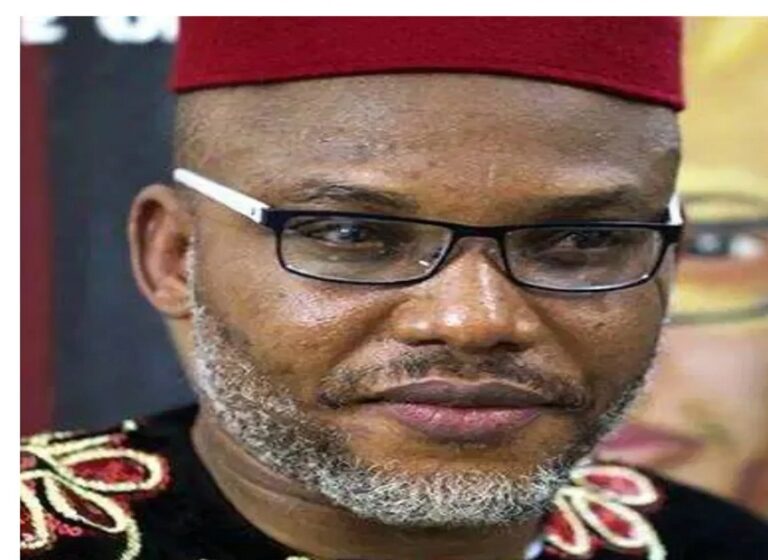
The Federal High Court in Abuja has adjourned the trial of the leader of the Indigenous People of Biafra (IPOB), Nnamdi Kanu, to October 16 following the inability of the Nigerian Medical Association (NMA) to submit its report on his health condition.

The judge, James Omotosho, announced the adjournment on Wednesday after counsel to the State Security Services (SSS), Suraj S’aad, informed the court that the NMA medical board had yet to complete its assessment. The report is expected to determine whether the SSS medical facility can adequately cater for Kanu’s health needs or if he should be moved to the National Hospital for treatment.

At the last sitting, the court directed the NMA president to constitute a medical panel comprising experts from different specialities to conduct an independent evaluation of Kanu’s health. The order followed conflicting claims between the prosecution and the defence over the state of his health and the quality of medical care provided by the SSS.

While the prosecution maintained that Kanu was receiving proper care under SSS supervision, his counsel, Onyechi Ikpeazu, argued that his client’s condition was deteriorating and requested that he be transferred to a public hospital.

The judge ordered the NMA to verify his medical status, assess the SSS medical facility, and determine whether he is fit to continue standing trial.

During Wednesday’s proceedings, the prosecution requested a one-week adjournment to allow the medical board to complete its findings. With no objection from the defence, the judge, Omotosho, adjourned the case to October 16 for the submission of the NMA report and to determine the next steps in the proceedings.

“The court is adjourned to 16 October for the report of the Nigerian Medical Association,” the judge ruled.

Kanu is facing a seven-count charge bordering on terrorism, treason, incitement, and defamation of Nigerian authorities. In a recent ruling, Justice Omotosho dismissed his no-case submission, holding that the prosecution had established a prima facie case warranting that he open his defence.

Reports by The ICIR show that the order for medical evaluation was issued on September 26 after the court reviewed separate medical claims from Kanu’s private doctors and the SSS.

The judge had directed the NMA to form a panel of eight to ten professionals, including a cardiologist, a neurologist, and the Chief Medical Director of the National Hospital, to assess his condition within eight days.

The ICIR earlier reported that Kanu’s legal battles date back to 2015, when he was first arrested by the SSS in Lagos. Although he was later granted bail, he fled the country after a military raid on his residence in Abia State in 2017. He was re-arrested in Kenya in 2021 and brought back to Nigeria, leading to renewed tensions and protests in parts of the South East.

His trial, which began in October 2021, has been marked by repeated adjournments, judicial recusals, and controversies surrounding his detention conditions and access to medical care.

The court is expected to decide on the next phase of proceedings after the submission of the NMA’s medical findings on October 16.

Tinubu reforms fail to lift 139 million Nigerians out of poverty, says World Bank

0

THE World Bank has raised concerns about the inability of the Bola Tinubu-led administration’s economic reforms to stabilise the economy and lift about 139 million Nigerians out of poverty. 

The World Bank Country Director for Nigeria, Mathew Verghis, made this known on Wednesday during the launch of the October 2025 edition of the Nigeria Development Update, titled “From Policy to People: Bringing the Reform Gains Home.”

“Despite these stabilisation gains, many households are still struggling with eroded purchasing power. Poverty, which began to rise in 2019 due to policy missteps and external shocks such as COVID-19, has continued to increase even after the reforms. In 2025, we estimate that 139 million Nigerians live in poverty,” he stressed.

The new figure marks a sharp rise from 129 million in April 2025 and 87 million in 2023, highlighting the worsening hardship faced by households despite the ongoing economic reforms.

The ICIR reported that the Central Bank of Nigeria pitched high interest rates as the most severe constraint affecting business operations in June 2025, overtaking long-standing challenges such as insecurity and poor electricity supply.

The apex bank disclosed this in its June 2025 Business Expectations Survey, which polled 1,900 firms across the agriculture, services, and industrial sectors. According to the report, high interest rates scored 75.6 on the constraint index, followed by insecurity at 75.2 and insufficient power supply at 74.3.

Accordingly, Verghis, in his latest remark, warned that the country could lose the progress made through these reforms if they do not lead to real improvements in citizens’ living conditions.

“Over the last two years, Nigeria has commendably implemented bold reforms, notably around the exchange rate and the petrol subsidy. These are the foundations on which the country has the opportunity to build a programme that can transform its economic trajectory,” he said.

Verghis explained that the report outlined three key priorities for turning Nigeria’s policy achievements into better living standards for its citizens: curbing inflation, ensuring more efficient use of public resources, and expanding social protection for the poor and vulnerable.

He stressed that tackling food inflation should be central to Nigeria’s policy response, warning that continued high food prices could undermine public support for reforms and slow down economic recovery.

“Food inflation affects everybody, particularly the poor. Persistent differences between Nigeria’s inflation rate and those of its trading partners will put pressure on the exchange rate and create a vicious cycle. Lower inflation will also allow interest rates to come down and support growth,” he stated.

The World Bank chief, however, praised Nigeria’s bold reforms in the exchange rate and fuel subsidy sectors, describing them as “foundational” measures capable of transforming the country’s long-term economic outlook.

Comparing Nigeria’s current reform moment to the historic policy changes implemented in India in the early 1990s, he stressed that such rare opportunities must be seized with determination or risk being squandered.

The Director, who also spoke on the positives in Tinubu’s reforms, said there are indications that economic growth is improving alongside the government’s revenues, adding that “debt indicators are strengthening, the foreign exchange market is stabilising, reserves are rising, and inflation is slowly easing.”

“These results are exactly what you need to see in a stabilisation phase. These are big achievements, and many countries would envy them,” he added.

He further warned that these macroeconomic gains have not yet resulted in better living conditions for ordinary Nigerians and called for complementary structural reforms to address deep-seated inefficiencies in food production, distribution, and market systems.

“Monetary and fiscal policies must be complemented by structural reforms aimed specifically at reducing food inflation, which is driven by deep-seated supply and market inefficiencies,” he added.

The World Bank further called on Nigeria to strengthen its public financial management systems to ensure that every naira spent yields measurable development results. It also urged the government to expand the national social safety net to shield the poorest citizens from the effects of ongoing economic reforms.

“The challenge is clear: to translate the gains from the stabilisation reforms into better living standards for all. These are not abstract ideas but practical steps that can turn macro stability into better livelihoods,” he said.

The ICIR reported in August that small-scale businesses and industries are expressing displeasure about the impact of President Bola Ahmed Tinubu’s economic reforms, which are raising further concerns about the negative effects on their operations.

Boko Haram on the rise again in Nigeria: how it’s survived and how to weaken it

0

By Saheed Babajide Owonikoko, Modibbo Adama University of Technology

ABUBAKAR Shekau, the erstwhile leader of the terrorist group Jama’at Ahl al-Sunna li al-Da’wa wa al-Jihad (JAS), died in 2021. The west African group, also known as Boko Haram, then fell into obscurity while its breakaway faction, Islamic State West Africa Province (ISWAP), steadily rose.

Early 2025 saw Boko Haram resurging in the Lake Chad region, however, with attacks in Nigeria and Cameroon. Lake Chad is in west-central Africa, in the Sahelian zone. It is located at the conjunction of Chad, Cameroon, Nigeria and Niger.

As a security studies scholar tracking Boko Haram, I discuss reasons for this resurgence, and its impacts, and recommend possible responses from Lake Chad region countries.

Evidence of Boko Haram resurgence

On 15 May 2025, Boko Haram massacred close to 100 residents of Mallam Karamti and Kwatandashi villages in Nigeria’s Borno State. A report has it that Boko Haram attacked the residents because they were loyal to, and served as informants for, Islamic State West Africa Province.

On 5 September, it attacked Darul Jamal village in Borno State, killing about 60 people. A researcher specialising in Boko Haram at the Institute for Security Studies, Taiwo Adebayo, was said to have spoken with residents of the community who attributed the attack to Boko Haram, possibly because of information about the group being shared with the Nigerian military.

There are also reports that the group has extended its reach beyond Lake Chad to North Central region of Nigeria, where it is operating with bandits and possibly Lakurawa, the new terrorist group in that region.

In Far North region of Cameroon, the group has also been active. Reports shared on LinkedIn showed that in July and August 2025, it was responsible for 101 attacks out of 144.

What explains the resurgence

Four factors explain why Boko Haram has become more active again in the Lake Chad region.

First, the rise of one of its leaders, Bakura Doro, and his efforts to sustain Boko Haram gains over Islamic State West Africa Province.

Doro was the Lake Chad Amir al-Fiya (zone commander) before Shekau’s death. He was announced as the leader in May 2022 after a violent takeover from Sahalaba, a cleric whom Shekau had reportedly designated as his successor in his will. Doro reinforced Boko Haram by fighting Islamic State West Africa Province, killing members and capturing its territories in Lake Chad.

He also shunned media propaganda, thus taking the public gaze away from Boko Haram while it grew unnoticed. Although reports said Bakura was killed in Niger in August 2025, the group denied it.

The second factor is that it received less attention from the Lake Chad militaries. Instead, attention was on Islamic State for its targeted attacks on military outposts since early 2025.

By July 2025, 15 outposts had been attacked. The Lake Chad region countries’ counterterrorism efforts focused on countering ISWAP, dangerously neglecting Boko Haram.

The third factor is the failure of reintegration programmes across the region. In Nigeria, for one, community rejection, unmet government promises, limited political will and a weak framework have caused many ex-combatants to return to the trenches.

The fourth factor is combat stress or fatigue among soldiers of the Lake Chad region countries. For instance, more than 1,000 soldiers resigned from the army between 2020 and 2024 in Nigeria. Nigeria’s total armed forces personnel was estimated at 230,000 in 2020.

The weakened commitment of the countries to the Multinational Joint Task Force adds to the problem. Nigeria established the force in 1994 to checkmate trans-border armed banditry around the Lake Chad Basin. In 1998, Chadian and Nigerien soldiers joined the task force.

Niger’s withdrawal in protest against Ecowas sanctions; Chad’s declining support; and strained Nigeria-Cameroon relations have limited the effectiveness of the task force.

All this gives insurgent groups impetus to intensify their attacks.

Implications of resurgent Boko Haram

To understand the implications, it is essential to distinguish Boko Haram’s ideology from that of Islamic State. While the latter primarily targets military forces and non-Muslim communities, Boko Haram’s violence is aimed at all, except its members.

The attempt by Shekau’s successor, Sahalaba, to align with Islamic State West Africa Province’s more selective attacks led to his death, leaving Boko Haram rigidly committed to ruthless attacks.

The result might be a worsening of humanitarian conditions and disruption of community resettlement programmes in the region.

According to a June 2025 report of the UN Office for the Coordination of Humanitarian Affairs, the region hosts 2.9 million internally displaced people and 272,000 refugees. I believe this figure may rise as violence escalates. But donor funding is shrinking.

Boko Haram’s blend of jihad with criminal activities such as robbery and kidnapping not only sustains its operations but may also attract disaffected youth, given the region’s fragile socio-economic conditions, especially the high rate of poverty and unemployment.

The competition between both insurgent groups, and between them and the military, places civilians in danger. Each actor seeks local support and intelligence, and communities risk severe punishment if perceived as loyal to the opposing side.

A constraint currently confronting Boko Haram is the shortage of weaponry. To bridge this gap, I believe it may focus its attacks on military outposts across the region. They may be encouraged by the successes of Islamic State’s attacks on the military outposts and the transfer of combat experience and technical expertise from former Islamic State fighters who have defected to Boko Haram. If it joins the attacks against military outposts in the area, the consequences will be fatal.

What can be done?

The governments and militaries of Lake Chad region countries should pay attention to Boko Haram as much as Islamic State in their counter-terrorism efforts.

There is a need to improve security cooperation among the countries by luring Niger back into the Multinational Joint Task Force and ensuring members’ commitment to the force.

Enhanced welfare services from the countries to their citizens can reduce incentives to join Boko Haram and other insurgent groups.

Strengthening defection programmes is crucial to prevent former terrorists from going back to groups like Boko Haram. I recommend harmonising regional deradicalisation efforts to enhance their effectiveness.The Conversation

Saheed Babajide Owonikoko, Researcher, Centre for Peace and Security Studies, Modibbo Adama University of Technology

This article is republished from The Conversation under a Creative Commons license. Read the original article.

Uche Nnaji: SSS, other screening agencies failed in due diligence, says Atiku

0

FORMER Vice President Atiku Abubakar has berated the professionalism of the State Security Services (SSS) and other screening agencies of the Federal Government over what he described as ‘failed due diligence’ following the resignation of the Minister of Innovation, Science, and Technology, Uche Nnaji, over allegations of certificate forgery.

The former Vice President argued that the situation raises questions about the integrity of government appointees and the effectiveness of Nigeria’s vetting institutions, including the State Security Services (SSS). He added that the agency, which screened the minister, failed in its duty of due diligence.

He has also called for a comprehensive investigation into the credentials of all members of the Federal Executive Council (FEC)

In a statement personally signed by him and released on Wednesday, October 8, Atiku said the development reflects what he described as a moral crisis within the current administration. He said the minister’s exit should not have been treated as a voluntary resignation but as a serious breach that warranted dismissal and prosecution.

“The resignation of the Minister of Science and Technology has once again brought to light the deep moral crisis at the heart of the administration. What should ordinarily be a matter of national shame is now being disguised as a voluntary resignation,” Atiku said.

Atiku said the incident is part of a wider pattern of falsehood in governance, calling for a transparent review of the credentials of all cabinet members. “When a man of questionable identity leads a country, deception becomes the standard of governance,” he said.

He urged anti-corruption and security agencies to conduct a thorough verification of the academic and professional records of public officials to restore integrity in the government.

“Nigerians deserve to know the truth about those who preside over their lives and resources,” he added.

Atiku said the country must now use this moment to strengthen institutional accountability and ensure that public office is reserved for individuals of proven integrity

Recent reports by the Premium Times revealed that the former minister allegedly forged both his university and National Youth Service Corps certificates.

The University of Nigeria, Nsukka, had earlier disowned the certificate, stating that there were no records showing he graduated in 1985 as claimed. The Federal High Court in Abuja has since adjourned a related case between the university and the minister to November 10 for hearing.

Earlier reports by The ICIR have shown that the Senate and the State Security Service often fail to uncover discrepancies during ministerial screening, largely due to political compromises and the long-standing “bow and go” practice.

The ICIR reports that the case adds to Nigeria’s shameful list of forged credential cases among public officials, as individuals with questionable qualifications or integrity slip through vetting processes put in place to uphold transparency and competence in public office.

Recall that then-Minister of Finance Kemi Adeosun brought the Muhammadu Buhari administration into national disrepute in 2018 after a Premium Times report revealed that she presented a forged NYSC exemption certificate as part of her credentials.

The purported NYSC certificate was said to have been signed by a former director-general of the NYSC, Yusuf Bomoi, in 2009.

However, Maharazu Tsiga, former NYSC DG, who took over from Bomoi, said Adeosun’s certificate could not have been issued by the NYSC.

Although former President Buhari had referred Kemi Adeosun and other ministerial nominees to the SSS for security screening in September 2015, it was unclear how her forged NYSC exemption certificate slipped through the agency’s scrutiny.

The minister consequently resigned from office after public backlash.

The ICIR reports that Forgery is a criminal offence under Section 465 of the Nigerian Criminal Code Act, which defines it as the making of a false document or alteration of a genuine one with the intent to deceive.

The offence is punishable under Section 467 of the Criminal Code Act.