Home Blog Page 163

EMILOKANSOMIASIS: The Plague And The Magic

0

BY ONOME OSIFO-WHISKEY

IN the late 1980s, The Guardian of London amidst rave reviews, drew a charmed embrace from the rest of the British press and the general public. That was when the paper’s Longman’s GUARDIAN New Words, a dictionary of new words that made entry into the English language by 1986, hit the streets and newsstands. The book’s over 1000 new words, according to its blurb, range “from scientific and technical terms to trend usage and the terminology of politics, business, social issues and leisure”. Similar innovative publications in Nigeria — were they to hit the local newsstands and bookshops in these giddy days and times — would have been mind-blowingly interesting to the reading or learned public. They could be heartbreaking as well. For instance, the Yoruba word japa, which Google translates as “to run away” or “to flee”, has in the last few years assumed a dimension at once negatively profound and acerbic with social, political and economic implications. While it captures the high tide of young, highly educated but frustrated Nigerians fleeing the country — for greener pastures — to

Today, he is the Lord of the Manor at Aso Rock Villa, Abuja, wielding power in humongous excess of his lilliputian ballot box victory.

He can annul governorship offices and yet return the fallen occupants to power at his presidential pleasure or based on his executive whims and caprices

America, Canada, Britain, Western Europe, Australia, New Zealand, etc, its serious indictment of our national politics [with its deep-seated corruption], economic woes and low leadership indices cannot be overemphasised.

Soro soke, another terminology or phrase [with a Yoruba origin],which means speak out, captures the courageous but peaceful civil protests in Lagos over economic hardships and bad governance during the era of late President Muhammadu Buhari. Of course, not every new word coming into the Nigerian public domain is a damning lambast of the government of the day. Words like berekete [plenty, abundance, surplus], wahala [trouble, challenge] and shakara [bragging, boasting] are a sumptuous parade of catchwords or phrases of a socially brilliant and creative public. Yet no inventor of new words or phrases of great aristocracy, intellect and class comes near Nigeria’s current President, Bola Ahmed Tinubu, whose jagabanised title of Asiwaju possibly makes him the nation’s political “front runner” of his era. In this regard, words of gorgeous, soapbox meaninglessness like boulabou need not come up for mention. Rather, Emilokan [It is my turn (to rule)], assuredly is it. When Tinubu came up with this phrase three years ago to jump start his presidential campaign, it did carry a weight higher than the cagey preposterousness of the oracular pronouncements of the godly Greek Lady of Delphi.

His self-assuredness was great, resting on the almighty truism that leadership and power in a politically debauched Nigeria were for those who have the gravitas to pocket same at will, the so called electoral supremacy of the ballot box notwithstanding.

Power Tinubu did get, whether or not it was just a win of 25 to 30 per cent of the vote. This is sweet magic but it is the reality. Yes, it is power at the speed of thought, power at the beck of oracular science! But it is power. Today, he is the Lord of the Manor at Aso Rock Villa, Abuja, wielding power in humongous excess of his lilliputian ballot box victory. He can annul governorship offices and yet return the fallen occupants to power at his presidential pleasure or based on his executive whims and caprices. He can executively will it that ministers and governors, like in the days of yore under the military, come to the airport to bid him goodbye or welcome him from many of his foreign trips — trips whose number only university professors of mathematics can possibly accurately calculate.

No matter? No, not quite so. While rights and powers like this may well be the legitimate Emilokan booty of his office, it sadly stamps on the office and person of the President the disease and sickness of Emilokansomiasis, itself some ravaging cancer of political selfishness. Emilokancracy, the government of “It is My Turn” may be too narrow, too insular, to be politically feasible. The President, a great K.O. Mbadiwe man of “timber and calibre”, would obviously not like to be so judged. It then becomes imperative to widen the strategic reach and accommodation of the Emilokansomiasis that brought him to power in the first place. Great and smart. So, without noise, without a boulabou hoopla, he had to deodorise both Emilokansomiasis and Emilokancracy into a wider Awalokan [It is OUR Turn] political construct, one that invests it with a tidy, strategic popularity in his native, geopolitically important Southwest. Logistically, and of course with perfumed Machiavellian and Buharian tactics, the Yorubas of the Southwest have to be made to greatly profit from a “system capture” of the nation’s commonwealth and its politics.

Straightaway, the Southwest suddenly becomes the new epicentre of political and economic power. Positions such as Governor of the Central Bank

In the circumstance, when tomorrow comes, the tomorrow of 2027, Emilokansomiasis, with all its seasoned braggadocio, all its sweeteningly revamped Awalokan political mathematics, may find it very pretty challenging guaranteeing the Jagaban of politics a Rock of Gibraltar standing in the Presidential election

of Nigeria, Minister of Finance, Chief of Army Staff, Inspector-General of Police, Minister of Petroleum Resources [held by Tinubu himself], Group Managing Director of Nigeria National Petroleum Company [NNPC], Comptroller-General of Customs, Comptroller-General of Immigration, Chairman, Federal Inland Revenue Service, and countless chairmanships and directorships of parastatals and companies are the special reserves for Tinubu’s Southwest. This is the great magic for both the Tinubu Emilokan and Awalokan structures in the land! Brilliant!!

Unfortunately, the magic of Tinubu’s Emilokansomiasis upsets the nation’s intricate ethnic balance, setting fire to its highly inflammable political structure. Thus, since the Nigerian Civil War, never have the trenches of ethnicity been so sharply deepened and widened. Between the Yorubas and Igbos, an underground war of tribal bitterness and attrition has been raging, itself largely the outcome of the defeat of Tinubu by Peter Obi of Labour Party in the 2023 Presidential election in Lagos State, the supposedly impregnable political fortress and headquarters of the President.

In the North, besides Boko Haram’s long existing war of attrition, the ravages of the internecine skirmishes thrown up by ragtag formations of Fulani cattlemen and Bandits [both groups, in the main, the encouragement, if not creation, of President Buhari for the promotion and sustenance of Fulani irredentism] have rendered the country socially and economically restive amidst grave political worries. Thus, Tinubu’s politics has not been able to endear him to the North.

In the circumstance, when tomorrow comes, the tomorrow of 2027, Emilokansomiasis, with all its seasoned braggadocio, all its sweeteningly revamped Awalokan political mathematics, may find it very pretty challenging guaranteeing the Jagaban of politics a Rock of Gibraltar standing in the Presidential election. That, in itself, is the way these things go by. Like with the Communists’ Marxist postulation by which the thesis gives rise to its antithesis, even Nigeria’s very gifted Machiavelli and power mathematician may find in his deft magic wand some real plague as well.

Oh, what a charmed political scenery ours is!

  • This article was originally published in Tell magazine. It is republished here with permission

Tinubu’s minister accused of certificate forgery resigns

0

THE Minister of Innovation, Science, and Technology, Geoffrey Uche Nnaji, has resigned from President Bola Tinubu’s cabinet following a report exposing how he allegedly forged his university and National Youth Service Corps (NYSC) certificates.

Nnaji’s resignation, confirmed in a statement issued by Bayo Onanuga, the Special Adviser to the President on Information and Strategy, came just days after a Premium Times investigation exposed discrepancies in the minister’s academic records and NYSC credentials.

The statement, which was released on Tuesday, October 7, noted that Tinubu has accepted his resignation, thanking him for his contributions to national development and wishing him success in his future endeavours.

On October 4, The ICIR reported how a two-year-long investigation by Premium Times found that both Nnaji’s university certificate and his National Youth Service Corps (NYSC) discharge certificate were forged.

According to the report, the University of Nigeria, Nsukka (UNN) disowned the Bachelor of Science certificate Nnaji claimed to have obtained from the institution, stating that there were no records showing he graduated in July 1985 as alleged.

The report quoted a response to a freedom of information request sent by the newspaper, which stated that while Nnaji was admitted in 1981, there is no record that he completed his studies or graduated in July 1985, as his certificate claims.

In a letter dated October 2, 2025, and signed by the Vice-Chancellor, Simon Ortuanya, a Professor, UNN disowned the certificate currently being paraded by the minister.

Further checks by the paper showed that although Nnaji was admitted to study biological sciences, he failed several courses before he was advised to withdraw.

In 1986, he reportedly wrote to the university seeking another opportunity to retake an examination, one year after claiming to have already graduated.

Premium Times reported that forensic analysis of the minister’s NYSC certificate also revealed glaring inconsistencies. 

The certificate bore the signature of a corps official who had only assumed office 18 months after the date it was supposedly issued. 

The report also noted that the certificate carried an invalid numbering system and suggested that Nnaji served for 13 months, contrary to the statutory 12-month programme.

The newspaper said that despite repeated requests for clarification, the minister failed to respond to the findings of its investigation.

Tinubu seeks $2.3 billion external loan to bridge 2025 budget gap

PRESIDENT Bola Ahmed Tinubu has asked the House of Representatives to approve an external borrowing plan of $2.3 billion to finance the 2025 budget deficit and refinance Nigeria’s maturing Eurobonds.

The request was contained in a letter read on the floor of the House by the Speaker of the House, Tajudeen Abbas, on Tuesday, October 7.

The President explained that the loan would be sourced from a combination of Eurobond issuance, loan syndication, bridge financing, and credit from international financial institutions.

A breakdown of the President’s letter disclosed that $1.2 billion of the amount would support the implementation of the 2025 Appropriation Act, while $1.1 billion would be used to offset Eurobonds, which are due for repayment.

Tinubu noted that Nigeria had made progress in raising funds domestically through the Sukuk bond programme, which generated over ₦1.39 trillion between 2017 and May 2025 for key road projects, adding that, “domestic borrowing alone could not close the existing infrastructure and financing gaps, hence the need to turn to external sources.”

The President also requested the legislature’s approval to issue a sovereign Sukuk bond worth up to $500 million, with or without a credit guarantee from the Islamic Corporation for the Insurance of Investment and Export Credit (ICIEC), an arm of the Islamic Development Bank. He explained that proceeds from the Sukuk would partly refinance more expensive debts, while the balance would be channelled into pre-selected infrastructure projects.

Notably, this proposal adds to a series of foreign loan requests made since Tinubu assumed office in 2023. Earlier in July 2025, the Senate had approved a $21 billion borrowing plan to finance key sectors, including health, education, agriculture, and housing. The same framework also covered a €4 billion facility, ¥15 billion from Japan, a $65 million grant, and $2 billion in local dollar-denominated loans.

Senate Appropriations Committee Chairman Solomon Adeola had said the plan was designed to ensure full implementation of the 2025 budget by combining revenue inflows with strategic borrowing.

Also in July, The ICIR reported that Tinubu formally requested approval from the National Assembly to borrow $347 million under the Federal Government’s 2025–2026 external borrowing plan.

The president cited urgent infrastructure and telecommunications needs for the decision.

The request was read on Wednesday, July 23, by the Speaker of the House of Representatives, Tajudeen Abbas, during plenary.

The request came a day after the Senate approved $21 billion borrowing framework for the same fiscal period.

The country’s public debt has, however, continued to rise. Data from the Debt Management Office (DMO) show that Nigeria’s total debt stock exceeded $108 billion by mid-2025, reflecting a growing dependence on loans to sustain fiscal operations amid revenue shortfalls.

Earlier in May, former Vice President Atiku Abubakar said Tinubu’s addiction to loans would mortgage Nigeria’s future.

He expressed his concern in a statement shared on his X handle on Thursday, May 29.

According to the former vice president, the announcement by the Tinubu-led All Progressives Congress (APC) government to pursue fresh external and domestic loans is a reckless and dangerous move that threatens the future of Nigeria and generations yet unborn.

“Despite national outrage, this administration is pushing ahead with plans to borrow $21.54 billion, €2.19 billion, and ¥15 billion — an equivalent of over $24 billion, which is more than 60 per cent of Nigeria’s total foreign exchange reserves.

“This borrowing spree will raise our total public debt from ₦144.7 trillion to a crushing ₦183 trillion,” he stated.

AFRICMIL petitions IGP over victimisation of police whistleblower in Katsina

0

THE African Centre for Media and Information Literacy (AFRICMIL) has petitioned the Inspector General of Police(IGP), Kayode Egbetokun, over the alleged victimisation and threats to the life of a Katsina-based whistleblower, Mubarak Bello, who exposed a ghost workers’ racket within the Katsina State Police Command.

The petition, dated October 6, 2025, followed an investigation by The ICIR, which detailed Bello’s arrest and ongoing persecution after he blew the whistle on payroll fraud involving senior police officers.

The letter, signed by AFRICMIL’s Coordinator, Chido Onumah, was also copied to the Attorney General of the Federation and Minister of Justice, Lateef Fagbemi; the Independent Corrupt Practices and other Related Commission (ICPC) Chairman, Musa Adamu Aliyu; Executive Secretary of the National Human Rights Commission (NHRC), Anthony Okechukwu Ojukwu; and the Executive Director of the Whistleblowing International Network (WIN), Glasgow, Anna Myers.

Bello, an entrepreneur who ran a business centre within the Katsina State Police headquarters, was arrested on September 13 after a night patrol intercepted his car.

Police alleged they recovered a locally made rifle, live cartridges and a fake police identity card. They accused him of impersonation, unlawful possession of firearms and use of a false ID.

However, investigations by The ICIR revealed that Bello had for years pursued allegations of a ghost-worker scheme within the Katsina command, petitioning the Economic and Financial Crimes Commission (EFCC), the ICPC, the Attorney General of the Federation and the Police Service Commission.

In his petition to the Attorney General of the Federation, Bello claimed the ID card was originally issued to him by the police when an attempt was made to enlist him and another individual into the force as part of the alleged fraud.

Although investigators confirmed that the ICPC invited key suspects, including finance officers Chief Superintendent of Police (CSP) Bashir Abubakar and the Assistant Superintendent of Police (ASP) Yakubu Ibrahim, the officers refused to appear, citing the need for approval from the former Inspector-General of Police, Mohammed Adamu.

That approval, ICPC officials said, never came, despite a couple of letters written to the Inspector General of Police.

The ICIR gathered that this consequently stalled the probe and has put the life of Bello, who has since been facing repeated attacks from the accused police officers, in danger.

In its petition, AFRICMIL said independent findings show Bello’s ordeal is a direct retaliation for exposing the payroll fraud.

Onumah said the organisation feared for Bello’s safety and that of his family, citing multiple attacks before and after his arrest.

The group urged the police authorities to ensure a thorough and transparent investigation into the alleged payroll fraud and to protect Bello from further harm.

“As a Nigerian who has undertaken a patriotic duty, he deserves the protection of the State. We hope you will use your good offices to intervene in this matter and bring it to a speedy conclusion, including a diligent investigation into the alleged payroll fraud and justice for Mr Bello for the retaliation he has suffered over the years,” the statement added.

In September 18, a coalition of media and civil society organisations under the Coalition for Whistleblower Protection and Press Freedom (CWPPF) also petitioned the Inspector General, demanding immediate protection for Bello and a thorough investigation into the alleged fraud.

Mahmood Yakubu steps down as INEC chair

0

THE Chairman of the Independent National Electoral Commission (INEC), Mahmood Yakubu, has embarked on a one-month pre-exit leave after completing his second term as head of the nation’s electoral body.

Yakubu, who served for ten years, handed over to National Commissioner May Agbamuche-Mbu, who will serve as Acting INEC Chairman pending the appointment of a substantive chairman by President Bola Tinubu.

The handover ceremony took place on Tuesday, October 7, during a meeting with Resident Electoral Commissioners (RECs) at the commission’s headquarters in Abuja.

Yakubu, who was first appointed by former President Muhammadu Buhari in November 2015 after succeeding Attahiru Jega, who supervised the 2015 general election.

He was reappointed for a second term in 2020 by the administration of former president Muhammadu Buhari.

Under his leadership, INEC oversaw the conduct of two general elections (2019 and 2023), as well as several off-cycle governorship elections across the country.

Although the commission recorded significant technological reforms, including the introduction of the Bimodal Voter Accreditation System (BVAS) and the INEC Result Viewing (IReV) portal, its 2023 election management drew mixed reactions, with many Nigerians and observers questioning the credibility of result transmission.

Beyond that many of the elections he supervised have been criticised by local and international observers for inadequacies.

Meanwhile, Agbamuche-Mbu is expected to oversee the affairs of INEC until a new chairman is appointed.

Natasha returns as senate resumes plenary after 10-week recess

0

AS the Senate resumed plenary on Tuesday, October 7, after a ten-week recess, Senator representing Kogi Central, Natasha Akpoti-Uduaghan, marked her return to the chamber after a six-month suspension, with Senate President Godswill Akpabio presiding over the session. 

The ICIR reported that Senator’s earlier attempts to return to the Senate were blocked by the upper chamber, even after her suspension imposed for allegedly violating the Senate’s standing rules expired last month.

In July, the PDP senator took the matter to court and made an unsuccessful attempt to resume her duties.

Although the case is still pending in court, she completed her six-month suspension in September and announced her intention to return to work.

She wrote to the Senate notifying it of her intention to resume duties, but while the lawmakers acknowledged receipt of her letter, they stated that no action would be taken until the conclusion of the court proceedings.

After being sealed for six months, Senator Akpoti-Uduaghan’s office was finally reopened on September 23 by the deputy director, Sergeant-at-Arms, Alabi Adedeji, which coincided with the day lawmakers were expected to reconvene after a two-month recess, enabling her to resume work.

It will be recalled that on July 24, both the Nigerian Senate and the House of Representatives adjourned for their annual legislative recess.

However, ad hoc and standing committees were directed to continue their activities during the break, and the Senate President also urged senators to use the recess to complete pending reports and conduct oversight functions.

The recess was originally scheduled to last two months, with lawmakers expected to reconvene on Tuesday, September 23, but the National Assembly extended the break by two weeks, announcing that plenary sessions would now resume on October 7.

The ICIR reported that Akpoti-Uduaghan’s suspension stripped her of salaries, aides’ pay and other benefits. 

In July, a Federal High Court declared the action unconstitutional, saying it denied Kogi Central’s constituents the representation they deserved, but the Senate insisted she serve the full term.

Outgoing French PM set for ‘last-ditch’ talks to end political crisis

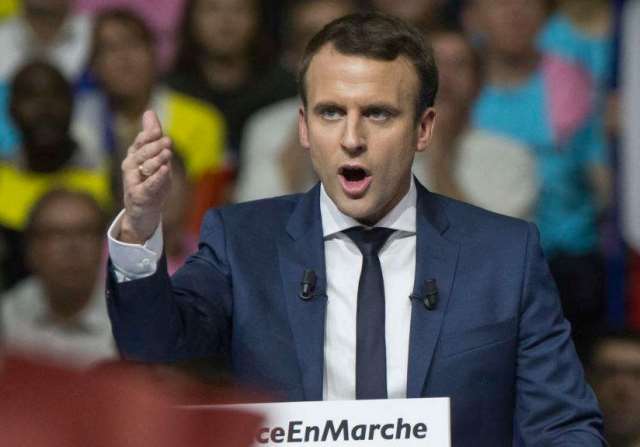
FRANCE outgoing Prime Minister, Sebastien Lecornu, is set to begin two days of urgent talks on Tuesday with members of different political parties, a day after his unexpected resignation, as he tries to resolve the country’s ongoing political crisis.

Lecornu, in a surprising turn after tendering his resignation on Monday morning, later agreed to President Macron’s request to spend two days attempting to rescue his administration.

President Macron instructed Lecornu to “hold final talks by Wednesday evening to establish a plan for the country’s stability and direction,” a presidential official, who spoke on condition of anonymity, said.

Recall that in early September, President Emmanuel Macron appointed 39-year-old Lecornu to form a new government after parliament ousted his predecessor over a widely opposed austerity budget.

Lecornu announced his new cabinet on Sunday evening, but it quickly faced backlash for including many figures from the previous government. By Monday morning, he had resigned

Lecornu submitted his government’s resignation on Monday morning after the cabinet he announced on Sunday evening was rejected by both allies and opponents, making his administration the shortest in modern French history.

Reuters reported that politicians across different parties voiced confusion over the president’s actions, with some suggesting that Lecornu’s new assignment was simply a tactic to buy more time, nearly a month after he was nominated prime minister.

It remains unclear what Lecornu’s exact role or responsibilities will be during these talks.

Lecornu was scheduled to meet early Tuesday with several members of the conservative Les Républicains (LR) and the centrist Renaissance parties, including Senate President Gérard Larcher and National Assembly Speaker Yaël Braun-Pivet.

France’s current political crisis, the most serious since the establishment of the Fifth Republic in the country’s modern political system in 1958, began in June last year.

The ICIR reported that Macron called snap elections in mid-2024 for the lower house of parliament after the far-right made major gains in the European Parliament elections, which produced a deeply divided parliament with no clear majority, an unusual situation in a country whose system is built around a strong presidency supported by a solid parliamentary majority, and where coalition-building is uncommon.

Lecornu became Macron’s third prime minister since those elections, and the president now faces limited options moving forward, analysts say.

The constitution does not prevent Macron from reappointing Lecornu; meanwhile, opposition parties have urged the president to either dissolve parliament or resign. 

Recall that The ICIR reported that the former Prime Minister François Bayrou’s government collapsed in September following a failed confidence vote, raising uncertainty over President Emmanuel Macron’s future and the stability of the eurozone’s second-largest economy.

The 74-year-old political veteran, who had been in office for just nine months, triggered the vote himself in an attempt to pressure lawmakers into supporting his proposal.

Protesters have taken to the streets across France for weeks, blocking roads, setting fire to rubbish bins, and clashing with police in a campaign to “Block Everything” in anger against President Emmanuel Macron and proposed budget cuts.

Many protesters directed their frustration at President Macron, who is already grappling with political upheaval.

Teachers, train drivers, pharmacists, hospital staff and other workers embarked on strike in France on September 18, while teenagers blocked access to their high schools, joining nationwide demonstrations against planned budget cuts.

Workers and other protesters have continued demanding the suspension of the former government’s fiscal policies, increased investment in public services, higher taxes on the wealthy, and the reversal of a widely opposed reform that raised the retirement age.

Insecurity: Police tighten measures, reiterate ban on scavenging activities in FCT

0

THE Federal Capital Territory (FCT) Police Command has intensified security operations across Abuja, ordering immediate raids on uncompleted buildings and suspected criminal hideouts in response to growing security concerns within the city.

The command has also reiterated its earlier ban on scavenging activities known as ‘Baban bola’ in the nation’s capital.

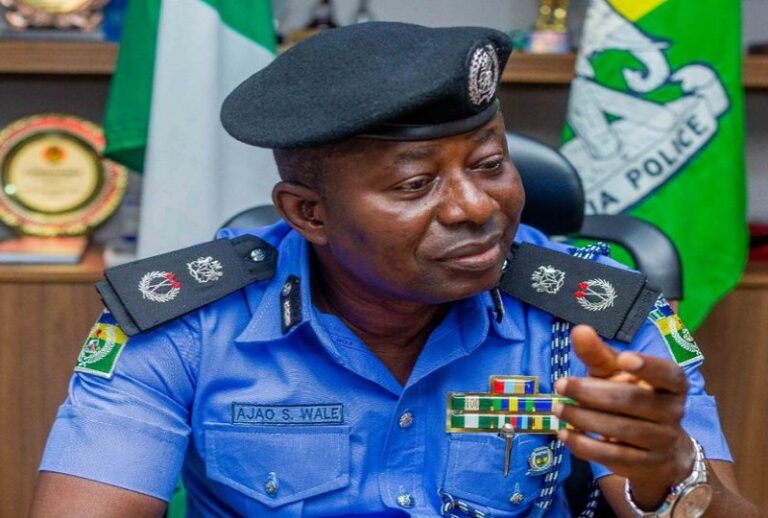
The Commissioner of Police, Ajao Saka Adewale, issued the directive to all Divisional Police Officers (DPOs) in a statement released on Tuesday, October 7, by the Command’s spokesperson, Josephine Adeh.

According to the statement, the measure forms part of ongoing efforts to ensure the safety of lives and property in the territory.

“The Commissioner of Police has directed all DPOs to immediately intensify patrols and carry out thorough raids on all uncompleted buildings and suspected criminal hideouts within their jurisdictions,” the statement read.

Adewale said the directive takes immediate effect and is aimed at preventing criminals from using abandoned or ongoing construction sites as hideouts. Property developers were also advised to ensure that artisans and labourers sleeping at construction sites are “properly documented and profiled before the end of October 2025.”

He further ordered that DPOs should conduct regular patrols of such areas and arrest any unidentified persons found on-site after 6:00 p.m. The police commissioner also restated that scavenging activities, commonly known as ‘Baban Bola’, remain banned across the FCT.

“Residents are advised to report any scavengers or suspicious persons sighted around their neighbourhoods immediately to the police,” the statement added.

Adewale reminded residents that security is a collective responsibility and urged estate associations and community leaders to cooperate with law enforcement agencies by reporting suspicious movements and ensuring that all security guards and domestic staff are profiled by the police.

The latest directive comes amid sustained efforts by authorities to address rising insecurity in the nation’s capital. Reports by The ICIR have documented frequent attacks by “one-chance” syndicates, kidnappers, and scavenger-linked criminal gangs across several districts of Abuja.

In July 2025, the FCT Minister, Nyesom Wike, launched Operation Sweep Abuja, a citywide initiative targeting beggars, scavengers, and illegal street traders. The minister said the operation was necessary to rid the city of elements “posing security and environmental risks” and restore order to the capital.

Despite a long-standing ban on scavenging activities, The ICIR reported in multiple investigations between 2021 and 2024 that scavengers continued to operate freely in several neighbourhoods, including Kubwa, Lugbe, Kado-Kuchi, and Jahi.

In May 2024, police confirmed the arrest of several scavengers following violent attacks in Byazhin, Kubwa, which led to the death of three persons, including two women and a boy. Residents told The ICIR that some scavengers often return at night to attack those who resist them.

Earlier investigations also revealed that scavengers had been linked to the theft of manhole covers, vandalisation of public utilities, and home burglaries in the city’s suburbs. Officials of the Abuja Environmental Protection Board (AEPB) said the ban on scavenging remains in force but admitted that enforcement has been weak due to limited manpower and funding.

FG reconstitutes negotiation committee to avert  ASUU strike

0

THE Federal Government has reconstituted and inaugurated an expanded negotiation committee chaired by former Head of Service, Mahmud Yayale Ahmed, to accelerate discussions with academic and non-academic unions across Nigeria’s tertiary institutions.

A statement issued on Tuesday, October 7, by the Director of Press and Public Relations in the Ministry of Education, Boriowo Folasade, noted that the new committee, named the Mahmud Yayale Ahmed Federal Government Tertiary Institutions Expanded Negotiation Committee, is aimed at harmonising all ongoing talks with unions in universities, polytechnics, and colleges of education under a unified and inclusive framework.

The statement stated that the Minister of Education, Maruf Tunji Alausa, while speaking during the inauguration on Monday, October 6, said the committee’s establishment was part of efforts to end years of fragmented and inconclusive negotiations that have repeatedly disrupted academic activities.

He added that President Bola Ahmed Tinubu had given full political backing to the committee’s work, with a directive that “all negotiations be concluded swiftly, fairly, and in the spirit of mutual respect.”

The ICIR reports that the announcement of the inauguration of the negotiation committee came barely a day after the Academic Staff Union of Universities (ASUU) began mobilising members for a possible strike, following the expiration of the first week of its 14-day ultimatum to the Federal Government.

In a letter dated October 5, 2025, and sent to all ASUU branches, the union’s president, Chris Piwuna, said the government’s continued silence had left the union with no choice but to prepare for strike action.

The circular noted that the National Executive Council (NEC), at an emergency meeting held on September 29, 2025, reviewed the results of a nationwide referendum and resolved to give the government two weeks to act on the renegotiated agreement transmitted since February 2025.

He stated in the letter that despite earlier communication with the Minister of Labour, the Minister of Education, and the Nigeria Labour Congress (NLC), there has been no meaningful development.

“It was further resolved that the union will proceed on a two-week warning strike at the expiration of the ultimatum if the government fails to take acceptable and satisfactory steps to address the lingering issues.

“The resolutions were immediately communicated to the Honourable Minister of Labour, the Honourable Minister of Education and the Nigeria Labour Congress,” the letter stated.

However, Alausa, on Monday, reportedly disclosed that the new committee had been provided with a fully equipped secretariat to aid its function, with its inaugural meeting scheduled for Tuesday, October 7. 

He also appealed to all academic and non-academic unions to cooperate with the team in the interest of students and national stability.

On his part, the Minister of Labour and Employment, Mohammed Maigari Dingyadi, urged members of the committee to act as impartial mediators and uphold justice, fairness, and stability in their engagements, while emphasising President Bola Tinubu’s commitment to dialogue as a means to prevent future industrial actions.

CBN caps PoS agents’ daily transactions at ₦1.2m, insists on geo-tagging of operators

THE Central Bank of Nigeria (CBN) has capped daily cash-out transactions for Point of Sale (POS) agents at N1.2 million and N100,000 for individual customers under a new set of guidelines released to regulate agent banking operations across the country.

The apex bank said the new framework will take immediate effect, while provisions relating to agent location and exclusivity will become effective from April 1, 2026.

The circular, signed by the Director of the Payments System Policy Department, Musa Jimoh, was addressed to all deposit money banks, other financial institutions, and payment service providers.

“POS agents are restricted to a maximum of N1.2 million per day. Individual customers are limited to N100,000 in daily transactions.

“These limits are intended to curb misuse, enhance financial integrity, and protect consumers within the agent banking framework,” it stated.

The guidelines also noted that the “CBN may vary or amend the transaction limits specified from time to time for each service in line with the extant CBN Guide to Charges for Banks and Other Financial Institutions in Nigeria.”

The new framework mandated that all agent banking transactions must be conducted through a dedicated account or wallet maintained by the principal financial institution, adding that use of non-designated accounts for agent operations is now prohibited, and violations will attract sanctions. 

It noted that agents found guilty of fraud, misconduct, or other offences will be personally liable and may face termination or placement on an industry watchlist.

Under the new framework, the financial institutions, referred to as “principals,” are expected to publish and regularly update the list of their agents on their official websites and display the same in their branches.

The guidelines require that super agents, who are only authorised to manage other agents, operate with at least 50 agents spread across Nigeria’s six geopolitical zones, to ensure wider access to financial services in rural and underserved areas.

The guideline also prohibited agents from relocating, transferring, or closing their business premises without written approval from their principals or super agents, adding that any relocation notice must be posted visibly at the business premises for at least 30 days to notify customers.

The CBN directed that all agent banking devices must be geo-fenced, restricting their operations strictly to registered locations.

This comes after the bank issued a directive on August 25 requiring all PoS terminals to be geo-tagged within 60 days, effective August 26, 2025, with a compliance deadline of October 20, 2025.

The move, according to the CBN, was prompted by rising cases of fraudulent PoS transactions across the country.

Geo-tagging is the process of adding geographic identification metadata, such as latitude and longitude, to digital content like photos, videos, websites, and SMS messages. This embedded location data allows content to be displayed on a map and correlated with other location-based information, enabling users to find items by location, track assets, or simply share their whereabouts.

However, as earlier reported by The ICIR, the directive triggered concerns among PoS operators, who warned that rigid location tagging could disrupt business operations, particularly in rural and semi-urban communities where power supply and internet connectivity are unreliable.

Some operators also warned that rigid location tagging would restrict mobile transactions, a critical service for traders and commuters in underserved areas.

Part of the new guideline was the real-time transactions and transparency, which the apex bank ordered that all agent transactions be conducted on a real-time basis using secure and interoperable payment systems.

It stressed that financial institutions must submit monthly returns to the CBN by the 10th of every month, detailing transaction volumes, fraud incidents, active agent counts, customer complaints, and agent training activities.

It added that defaulting banks or agents risk sanctions, including suspension from onboarding new agents, blacklisting, removal of management officials, or licence revocation.