THE Economic Community of West African States (ECOWAS) Court of Justice in Abuja has restrained the Nigerian government from arresting and prosecuting citizens for making use of the recently suspended microblogging platform, Twitter.
Following Twitter suspension in Nigeria, Attorney General of the Federation Abubakar Malami had issued threats of arrests and prosecution of Nigerians who continued to gain access to the platform through the use of Virtual Private Network (VPN).
However, civil society organisations, along with several other concerned Nigerians, filed a lawsuit against the government at the ECOWAS court, describing the unlawful suspension of the platform and threats of persecution as violations of human rights.
The ruling was given by the court after hearing arguments from solicitor to Socio-Economic Rights and Accountability Project (SERAP) Femi Falana and the lawyer to the Federal Government Maimuna Shiru.
“Any interference with Twitter is viewed as interference with human rights, and that will violate human rights. Therefore, this court has jurisdiction to hear the case. The court also hereby ordered that the application be heard expeditiously. The Nigerian government must take immediate steps to implement the order,” the court held.
Falana described the intervention of the court as a timely relief for Nigerians still on Twitter, who had been threatened with prosecution.
“It is extremely embarrassing that the Federal Government could threaten to jail Nigerians for sedition, which was annulled by the Court of Appeal in 1983, in the case of Arthur Nwankwo vs The State,” Falana said.
THE African Development Bank (AfDB) has said that the $430 million highway project linking Enugu in South-East Nigeria to Bamenda in Cameroon will be completed soon.
This, when completed, is expected to bolster integration of Nigerian businesses with African peers and support the African Continental Free Trade Area (AfCFTA).
The AfDB confirmed this development in a statement on Tuesday, saying that it was part of its investments in West Africa which currently stood at $16 billion.
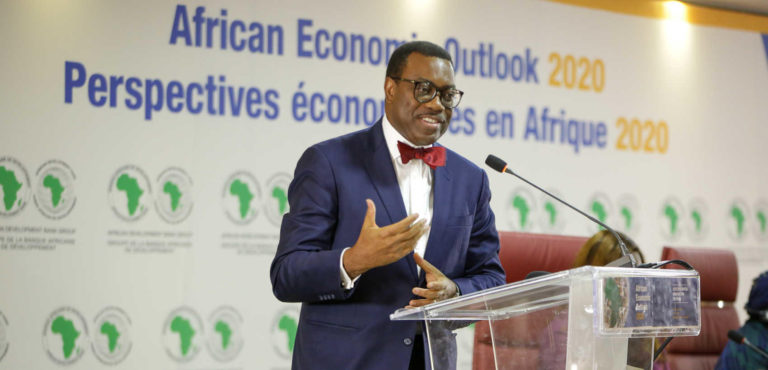
President of the African Development Bank Akinwunmi Adesina said this in a speech at the 59th Ordinary Session of the Economic Community of West African Authority of Heads of States and Government in Ghana, according to the statement.
“We expect the construction for the corridor to commence within 24 months,” Adesina said.
He explained that the highway would link 85 per cent of the trade volume in ECOWAS through the corridor, a step industry experts said would deepen trade integration, especially now that the AFCTA), targeted at boosting a combined gross domestic product of $3.4 trillion, had commenced.
Nigeria’s trade volume to Cameroon was $888.58 million in 2019, according to the United Nation’s COMTRADE database on international trade.
Industry experts have expressed optimism that the trade volume between Nigeria, Cameroon and other African countries at the trade corridor will improve upon the completion of the road.
“These are the kinds of initiative that offers more opportunities for our people, especially with the coming in of the African Continental Free Trade Area Agreement. There should be more of these initiatives to help our people move their goods around Africa since our trade pattern is still largely informal,” Associate Consultant to the British Department of International Development Celestine Okeke told The ICIR.
Notably, the Enugu-Bamenda Highway is part of the Trans-African Highway conceived over 30 years ago as a transcontinental link from Lagos to Mombasa. Today, the highway stretches 6,300 km, traversing Nigeria, Cameroon, Central African Republic, Democratic Republic of Congo, Uganda and Kenya.
Industry experts emphasise the importance of infrastructural development in intra-African trade, noting that with road improvement, transport costs and poverty levels along this economic corridor would be reduced dramatically.
“Infrastructural advancement is key in advancing Africa’s trade integration, and with the level of progress recorded so far by the government, it is only proper that the organised private sector gradually begin to take the lead in advancing the progress of the trade pact to grow investments in the country,”Former Attorney General and Minister of Justice in Nigeria and a former President of Abuja Chamber of Commerce and Industry Adetokumbo Kayode said.
A 41-year-old Nigerian man Ejimadu Uchechukwu Benjamin has been arrested in Thailand for allegedly being in possession of cocaine, the Office of the Narcotics Control Board said on Tuesday, June 22.
Benjamin was arrested on Monday at a department store in Bang Na district of Bangkok, with 79 grammes of cocaine recovered from him.
A 27-year-old local woman Nuchanart Leela, believed to be his accomplice, was also arrested at a house in Khlong Luang district of Pathum Thani. She was suspected to have been hired by the Nigerian national to receive the narcotic on his behalf.
Secretary-General of the board Wichai Chaimongkol disclosed that after officers raided a postal service company on Monday, 390 grammes of cocaine hidden in mascara tubes sent from Costa Rica to Pathum Thani and 470 grammes of heroin were discovered in a parceled photo frame.
Thai officials broke mascara tubes to seize cocaine hidden inside the containers.
The consignment was to be shipped to Australia, and Chaimongkol said his office had already shared the address with Australian police for further action.
Ejimadu becomes the third Nigerian to be arrested for drug related offences in Thailand since this year. In March, Michael ‘Marc’ Ikenna, 36, was arrested alongside his girlfriend in Northern Pattaya by the Region 2 Narcotics Suppression Division Team for alleged drug dealings.
Similarly, Davidsmith Chinazaekpere Ejiogo, 26, was arrested in January while he was making a delivery of crystal methamphetamine, cocaine and ecstasy drugs to customers in Patong.
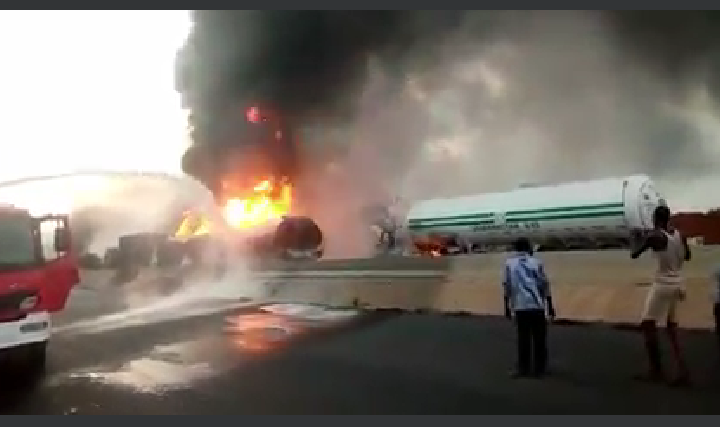
THE Federal Road Safety Corps (FRSC) has disclosed that two persons died in the tanker explosion that occurred along the Lagos-Ibadan expressway in the early hours of Tuesday.
The FRSC also revealed that 13 vehicles were destroyed in the incident.
The Ogun State FRSC Sector Commander Ahmed Umar confirmed the development to the News Agency of Nigeria (NAN).
Umar further disclosed that, so far, one person had been rescued from the scene of the explosion and taken to a private hospital for treatment.
He added that the remains of the deceased were taken away by their relatives.
“The fire is serious. Six tankers, five trucks and two cars were burnt in the explosion,” he said.
Efforts by The ICIR to reach the spokesperson for the Ogun State Police Command Abimbola Oyeyemi did not yield results as calls to his mobile telephone were not answered. Messages sent to him were also not replied as at the time of filing this report.
Bad roads and poor safety standards, among other factors, have led to recurring tanker explosions along Nigerian roads over the years.
Five people were killed in an earlier tanker explosion in Ogun State last week. Two other persons were severely injured.
The ICIRreported at least three deaths on Thursday from another tanker explosion that occurred at the Ikeja area of Lagos.
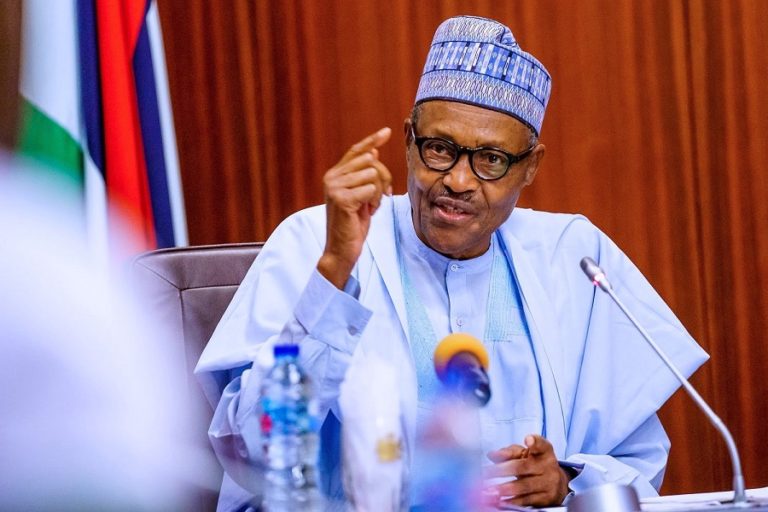
PRESIDENT Muhammadu Buhari has pledged to bequeath ‘a citizens-led policing system” to Nigeria, saying that his administration has demonstrated firm commitment towards changing the principle and strategy of policing in the country.
The president stated this on Tuesday while addressing the passing-out parade of 418 officers of the 3rd Regular Cadet Course at the Nigeria Police Academy, Wudil-Kano.
Buhari also restated his directive to the National Salaries, Incomes and Wages Commission on the upward review of police emoluments.
According to Buhari’s Special Adviser on Media and Publicity Femi Adesina, the president’s speech was delivered by the Minister of Police Affairs Maigari Dingyadi.
Buhari said a citizens-led policing system informed the approval for the adoption of community policing as the internal security strategy of the country, as well as the approval of funds to support the implementation process.
On the revised salary and allowances for the Nigeria Police, the president said it would be commensurate with the vital functions they were performing as the lead agency in internal security assets.
Buhari noted that the police reform initiative, embarked upon by his administration, had focused on improving the welfare of the force, recruitment of 10,000 junior police officers annually, investing in the upgrade of facilities at the Nigeria Police Academy and other police training institutions in the country.
”In addition, a Nigeria Police Academy (Establishment) Bill is currently receiving legislative attention at the National Assembly. On passage, the Bill will give full legal backing to the existence and academic programmes of the Nigeria Police Academy and fully legitimize its status as a Police University,” he said.
”Furthermore, as part of our Police reform initiatives, the Police Public Complaint Committee, which is domiciled in the Ministry of Police Affairs has been resuscitated with the mandate to receive complaints from the general public on cases of abuse and maltreatment by Police Officers. The PPCC has a membership made up of officials from relevant MDAs and Security agencies.
”A Public Private Partnership arrangement undertaken by the Ministry of Police Affairs to rejuvenate the National Public Security Communication System Network has been approved by the Federal Executive Council.
”This is with a view to ensuring that when fully reactivated the Police and other Security Agencies will be able to fully utilize this vital facility.”
Insecurity has been on the rise in Nigeria, with kidnapping, banditry and terrorism posing big challenges for Africa’s most populous country.
But Buhari said his administration would modernise and reposition the Nigeria police to meet the aspirations of the citizens as well as manage current and evolving threats in the most efficient and professional manner.
”We re-established the Ministry of Police Affairs out of the former Ministry of Interior in 2019. This is with the intention to drive the Police Reform process by initiating, formulating, and implementing policies and programmes relating to Policing and Internal Security.
”This initiative was also intended to provide supervision and Administrative support to the Force, particularly, in the area of training and capacity development as well as the enhancement of the budgetary profile of the Nigeria Police.
”In order to address the funding challenges of the Force, I also assented to the Nigeria Police Trust Fund Bill on 24th June, 2019 and followed up with the inauguration of the Board of Trustees to ensure immediate take off of the Fund.
”I am being constantly briefed by the Honourable Minister of Police Affairs on the activities of the Trust Fund and I am delighted to note that already, critical operational items including purpose-built operational vehicles and other policing assets are currently being delivered through the intervention of the Trust Fund.
”I am confident that with the sustained intervention of the Trust Fund, the operational efficiency and human capacity development goals of the Nigeria Police will be attained on a sustainable basis and by extension, our internal security order will be enhanced in due course,” he said.
Furthermore, the President recounted that on 15th September, 2020, he assented to the Nigeria Police Bill which had been under legislative actions since 2014.
‘The Act replaces the repealed Nigeria Police Act that had been in existence for over 77 years, and which had become an archaic legal instrument and a fundamental clog in the wheels of modern policing.
“The new Nigeria Police Act contains fundamental provisions which are positively altering the policing narrative in Nigeria as it has given legal backing to the principle of community policing and addressed vital issues that have historically been inhibiting seamless police administration.”
He told the young officers that the task of advancing major police responsibilities would, in due course, fall on their shoulders, saying:
”You should remain good ambassadors of the Nigeria Police and demonstrate respect to civil society in discharging your duties, while also maintaining zero tolerance for corruption.
”I assure you of the continuous support of this administration for the Academy towards attaining the object of its establishment.
”In this regard, the Minister of Police Affairs is directed to liaise with the Inspector General of Police and the Commandant of the Academy in identifying critical challenges of the Police Academy and submit a comprehensive proposal that will aid the Federal Government in addressing them,” he said.
HUMAN rights activist and lawyer Ebun-Olu Adegboruwa has said that President Muhammadu Buhari and his party, the All Progressives Congress (APC), deceived Nigerians with their promise to restructure the country.
Adegoruwa, a Senior Advocate of Nigeria (SAN), in a Facebook post on Thursday said the president toldthe world that he would restructure the country while presenting his manifesto at the Chatham House preparatory to his election in 2015.
Buhari’s restructuring agenda included devolution of powers, he said, stressing that the president also pledged to operate as a repented democrat upon assumption of office.
But Adegoruwa observed that Buhari had failed to live up to his words.
“Instead of apologising for this abysmal failure, the president has turned around to attack the people, in describing those agitating for restructuring and true federalism as being ignorant and lacking in knowledge,” he stated in a statement on his Facebook page.
Buhari had taken a swipe at advocates of restructuring at the weekend, describing them as ignorant and naïve.
“You are telling us to dissolve a system and call for an obscure conference to come and discuss how we can move forward as a nation. That can never be done, and no country will agree to that,” the president had said in an address at the launch of the Kudirat Abiola Sabon Gari Peace Foundation in Zaria, Kaduna State.
The president’s comments attracted condemnations from prominent Nigerians.
Adegboruwa argued that the APC promised to amend the nation’s constitution to achieve devolution of powers and provide for state police, resource control and true federalism but failed to fulfil the promise after six years in office.
He mocked the APC for being ‘comatose’ since the ‘inglorious exit’ of its chairman Adams Oshiomhole “through a coup d’etat that was stage-managed by the president right in his office.”
The party has been unable to organise any convention to elect its national officers since it sacked Oshiomhole.
“It has no enduring party structure, and it is being administered by interim officers who have spent well over one year in office, without accountability or control,” Adegboruwa added.
He said the APC was ignorant and deficient in knowledge when it set up its committee on restructuring headed by the Governor of Kaduna State Nasir El-Rufai.
The committee travelled across Nigeria and claimed to have collated the views of the people on restructuring. It later submitted its report to the president, said the lawyer.
Adegboruwa posited that Buhari and the APC must fulfil their vows to deliver true federalism and restructuring through devolution of powers.
He also said Buhari could not shift his responsibility of securing the nation to state governors when they were not in charge of the security apparatus.
Buhari had told the governors to tackle insecurity in their respective states, following worsening insecurity across the country.
The lawyer also accused the National Assembly of making itself a stooge of the president and the APC.
However, he said restructuring must be delivered to Nigerians. “How they (APC) will mobilise their legislators to amend the constitution is not the headache of the people of Nigeria. All we ask for is true federalism,” he stated.
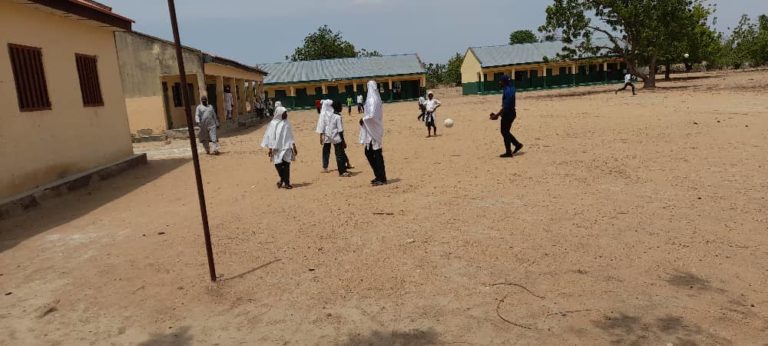
WITH a defiant look in his eyes, Usman Salihu,17, said he would not take the COVID-19 vaccine. He was a student of Government Day Secondary, Daneel, in Girei Local Government Area of Adamawa State, North-East Nigeria.
Two weeks ago, Usman Salihu and his teammates had ditched their football game and took to their heels when they sighted a group of people.
Salihu, like the others, had assumed that they were immunisation officials coming to give students the COVID-19 jab.
An estimated 200–250 students were enrolled in the mixed subsidised public school.
“I know that the vaccine kills people, and my parents told me not to take it too. Others even said it at the mosque. So I don’t want to die,” the secondary school student, who was in his fourth year, explained in Hausa.
Maze of lies
Salihu understood pidgin English minimally, but this posed no hindrance to the teenager who created a profile on Facebook — though he used an older version of an Android phone.
Navigating the trails of Facebook posts seemed like a walk in the park since all he had to do was follow posts shared by friends and groups on his timeline on any trending topic.
He stumbled on Facebook posts by several Islamic clerics who claimed that the COVID-19 vaccine was a hoax. However, Salihu held tightly to the claims of the Islamic teachers without any substantive proof.
Jero Bonyo to Daneel is a 3.4miles trek while from Wuro Sani to Daneel is a 5miles walking distance. (The distance between the citadel of learning and the communities where the students live creates the widening of misinformation).
The impressionable teenager joins millions of young Muslims projected to dominate the World’s largest religion by 2060. Northern Nigeria is predominantly Muslim with Hausa and Fulani being the dominant ethnic groups.
“To hell with coronavirus! It is useless,” said an agitated Suleiman Ba Kona, a radical Muslim cleric in a YouTube video.
The influential Islamic preacher, whose messages reach over 40,000 Muslims across the country whenever he posts any of his sermons on Youtube, is an antagonist of the vaccine and preaches the non-existence of the coronavirus to his followers.
In a four-minute clip that garnered over 41,000 views, Ba Kona affirmed that the coronavirus was a trick deployed by enemies of the people. He threatened to place generational curses on officials behind the lockdown restrictions in the country. A few seconds later, he carried out his threats.
An earlier video uploaded on 24 March 2020 with over 69,000 views showed the cleric encouraging his followers not to obey the COVID-19 precautions.
For 16-year old Kulchini Iliya, her resolve to avoid immunisation was a product of the opinions of healthcare givers, unlike Salihu, whose convictions about the vaccine were influenced by religious conspiracy theorists.
She heard in a radio programme what the preventive measures to curb the spread of the virus were but at the primary healthcare centre in her village, the nurses said COVID–19 was non-existent.
This contradicted the information from the radio programme.
Iliya was left with a binary decision: Either to believe what she heard on the radio or accept the nurse’s verdict. She chose the latter.
“They said it (vaccine) kills people. So that is why I also ran away the day we saw those people that looked like immunisation officials,” she said.
Edison Enoch (in the middle)
Since then, discussions about the virus and vaccine have been among the hot topics for Iliya and her friends during their regular walks back home to Wuro Sani— a village more than three miles awayfrom school.
The student, who was preparing to sit for the West African Examination Council Ordinary Level Examination in August, said none of her friends was willing to take the vaccine.
And just like Iliya, Edison Enoch, 43, a civil servant who just moved to the community with his family, after he received his first vaccine dose in Yola —the state capital— was discouraged from taking his second dose of the shot.
“I went to collect my second dose, and a doctor at the primary healthcare centre told me that he was yet to take it and didn’t trust the vaccine.
” Coming from a medical practitioner, it is discouraging for me,” Enoch said.
Also, the fear that the jab is a ‘killer drug’ increases the uncertainties surrounding the vaccine’s side effects on children. Public health analyst and researcher Bridget Nwagbara, a doctor, said “the known potential benefits of the vaccine outweigh the known and potential risks.” This position is also held by the Center for Disease Control and Prevention (CDC).
Compared to far-to reach communities like Girei, the outlook is different for children and parents living within the state capital. Based on COVID-19 immunisation data provided by state public health expert, over 12,000 people have received their first shot of the vaccine.
“We record about 20- 30 persons get their COVID–19 shots daily. The majority are taking their second shot, while some are just receiving the first,” said nurse Lucas Domgelma at the Federal Medical Centre, Yola, in an interview with this journalist.
Domgelma, whose duties is with the public health department of the hospital, said the ‘injurious’ positions of some healthcare practitioners towards the vaccination process was ‘no surprise.’
“Due to their religious sentiments, some medical personnel do not believe in immunising children. So I am not surprised at all,” he said.
For effective statewide innoculation exercise to be achieved, Domgelma said that vaccine awareness programmes should also target medical personnel.
Meanwhile, in countries like the United States and Canada, big pharmaceuticals likePfizer and Moderna have commenced vaccination tests for children under 12.
Although children and teenagers are not significant casualties in this pandemic, misinformation and misleading opinions of authority figures might ultimately affect this group’s reception of the COVID-19 vaccine in Nigeria.
This publication was produced as part of IWPR’s Africa Resilience Network (ARN) programme, administered in partnership with the Centre for Information Resilience (CIR), the International Centre for Investigative Reporting (ICIR), and Africa Uncensored. For more information on ARN, please visit the ARN site.
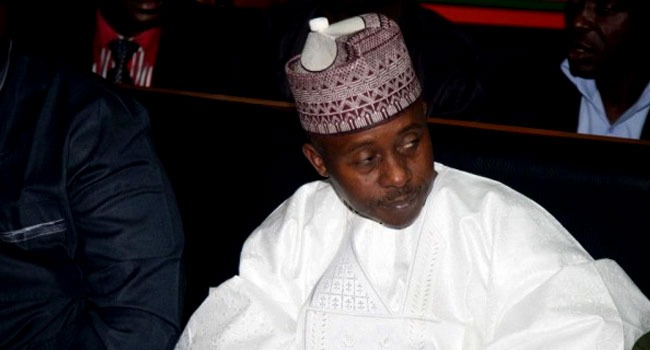
A Federal Capital Territory (FCT) High Court has sentenced the former Chairman of the House of Representatives Ad-hoc Committee on Petroleum Subsidy Farouk Lawan to seven years in prison.
Lawan was, in 2012, arraigned before the court by the Independent Corrupt Practices and other Related Offences Commission (ICPC) on three counts for soliciting bribe to remove Femi Otedola and his then company Zenon Petroleum and Gas Limited from the list of companies that were alleged to be involved in fuel subsidy fraud.
Although Lawan had denied being involved, the court found him guilty of the three-count charge on Tuesday.
The presiding judge Angela Otaluka, in her judgment, noted that the evidence listed and submitted before the court by the prosecution counsel remained unshaken during cross-examination.
The judge also noted that the conduct, responses and submissions of the defendant and witnesses in the case established the charge in count one, which stated that Lawan demanded the $3m bribe.
Count two stated that Lawan collected the sum of $500,000 as bribe to remove Otedola and his company from the list of persons and organisations indicted for the fuel subsidy scam.
Otaluka held that evidence presented before the court showed that Lawan demanded the balance after receiving the first and second tranches of the payment.
The judge added that as at the early hours of April 24, 2012 when the accused received the second tranche, no complaint was made to any security agency or anti-corruption agencies, despite his claims that he accepted the money to show as evidence before the House.
According to the judge, Lawan failed to convince the court that he accepted the cash as evidence that Otedola wanted to bribe the committee involved in the probe.
Lawan was sentenced to seven years on counts one and two, and five years on count three.
The sentences are to run concurrently.
The court also ordered that the defendant return the sum of $500,000 to the Nigerian government.
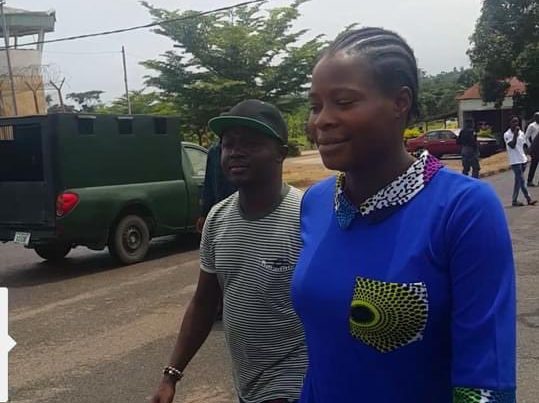
An Ondo State High Court has granted bail in the sum of N10 million and a surety in like sum to an 18-year-old #EndSARS protester Kemisola Ogunniyi.
Before she was granted bail on Tuesday, Kemisola had been remanded in the custody of Surulere Prison, in Ondo West Local Government Area of Ondo State, for over eight months.
She gave birth in prison on June 16.
Alongside three others, Kemisola was accused of razing the All Progressives Congress (APC) secretariat in Akure during the #EnsSARS protest in October 2020.
Kemisola and the other protesters were charged with arson, riotous assembly, stealing and malicious damage.
Justice Omolara Adejumo granted Kemisola bail while ruling on the bail application on Tuesday.
Adejumo ordered that Kemisola be released from prison to attend the naming ceremony of her child. She is to return to prison after the naming ceremony to fulfil her bail conditions.
Briefing journalists after the ruling, counsel to the defendants Tope Temokun said Kemisola would be released following the court order.
Temokun explained that bail applications filed by the other accused protesters was also before the court but had not been heard.
He noted that another protester Ayodele Bukunmi, who was arrested alongside Ogunniyi, lost her two-month pregnancy while in prison custody.
In October 2020, Nigerians across many states protested against extrajudicial killings by notorious operatives of the defunct Special Anti-Robbery Squad (SARS) of the Nigeria Police Force.
The protests, which lasted for many days, were eventually hijacked by hoodlums who vandalised government and private facilities.
Kemisola’s mother says daughter innocent.
Felicia Ogunniyi, Kemisola’s mother, had insisted that her daughter did not commit any of the charges levelled against her by the security operatives.
During an interview with BBC Yoruba, Felicia said she and her daughter were at home as youths engaged in the #EndSARS protests.
“My daughter is not guilty of the allegation levelled against her, she only went out to help me seek for money to buy drugs,” Felicia said.
Kemisola Ogunniyi gives birth in prison
She explained that her sickness made her daughter leave home to seek money from a friend to purchase drugs for her.
“We have been unhappy since her incarceration, I do not sleep. I was not aware she was pregnant, it was after she got there that I was informed that she was pregnant,” she stated.
Felicia further stated that after her daughter’s arrest in 2020, the family sold all their properties to secure her release but the efforts did not yield results.
When The ICIR contacted the spokesperson for the Ondo State Police Command Tee-Leo Ikoro to explain the circumstances surrounding Kemisola’s arrest, he did not respond to calls and text messages sent to him.
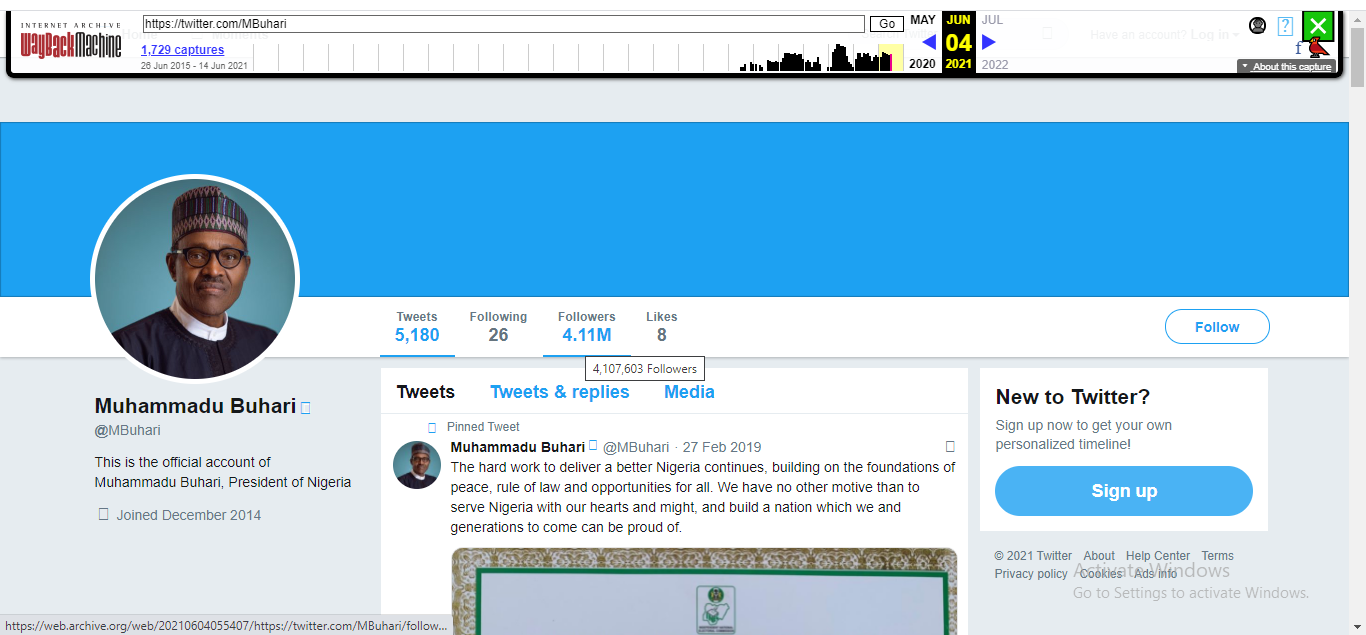
Since the announcement of the ban, President Buhari’s Twitter account has lost 8,030 followers.
This reporter made use of the Wayback Machine, an internet archive website, to track the growth or otherwise of the president’s Twitter followership. It was discovered that Nigeria’s president had 4.107 million followers from his last archived tweet on June 4.
Buhari’s Snapshot on June 4/ Wayback Machine
The number dropped to 4.099 million as followers disembarked from the account.
Buhari’s Twitter account interface on June 21
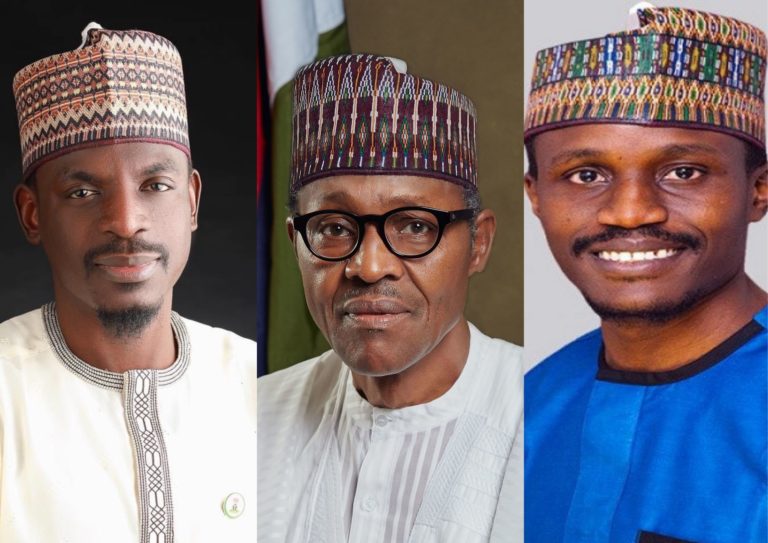
However, Buhari’s media aides Bashir Ahmad and Tolu Ogunlesi have experienced some level of growth in terms of followership on their Twitter accounts.
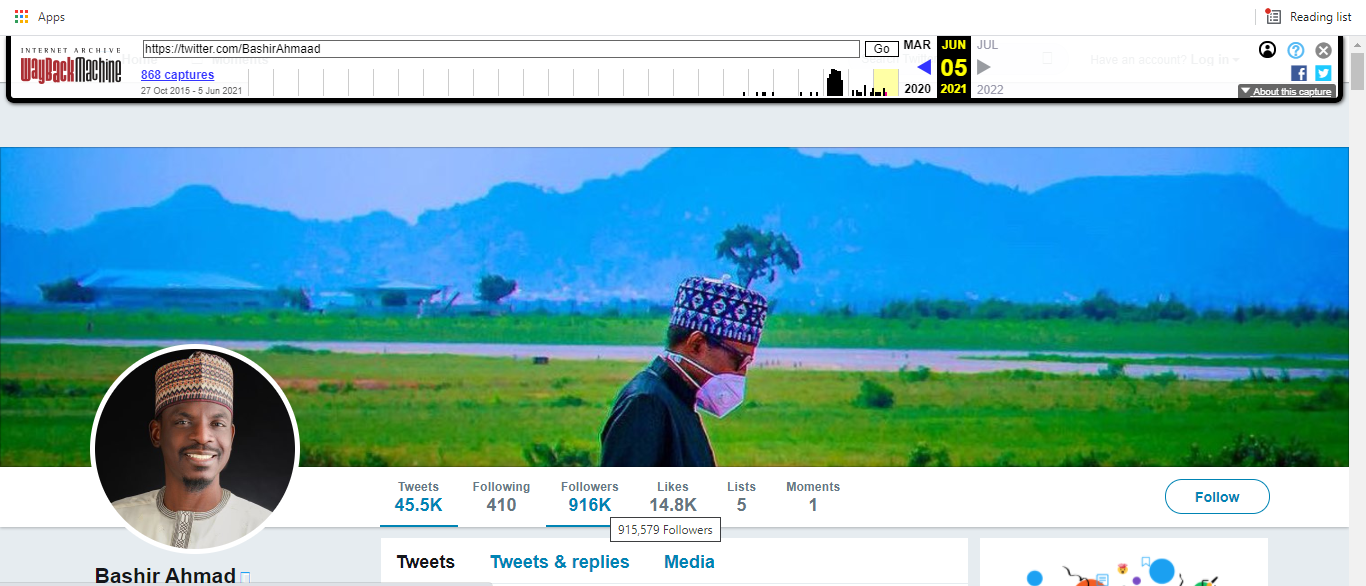
Using the internet archive website, it was found that Buhari’s Personal Assistant on New Media Ahmad Bashir had 915,579 Twitter followers on June 5 – a day after the announcement of the ban.
Bashir’s Snapshot on June 5/ Wayback Machine
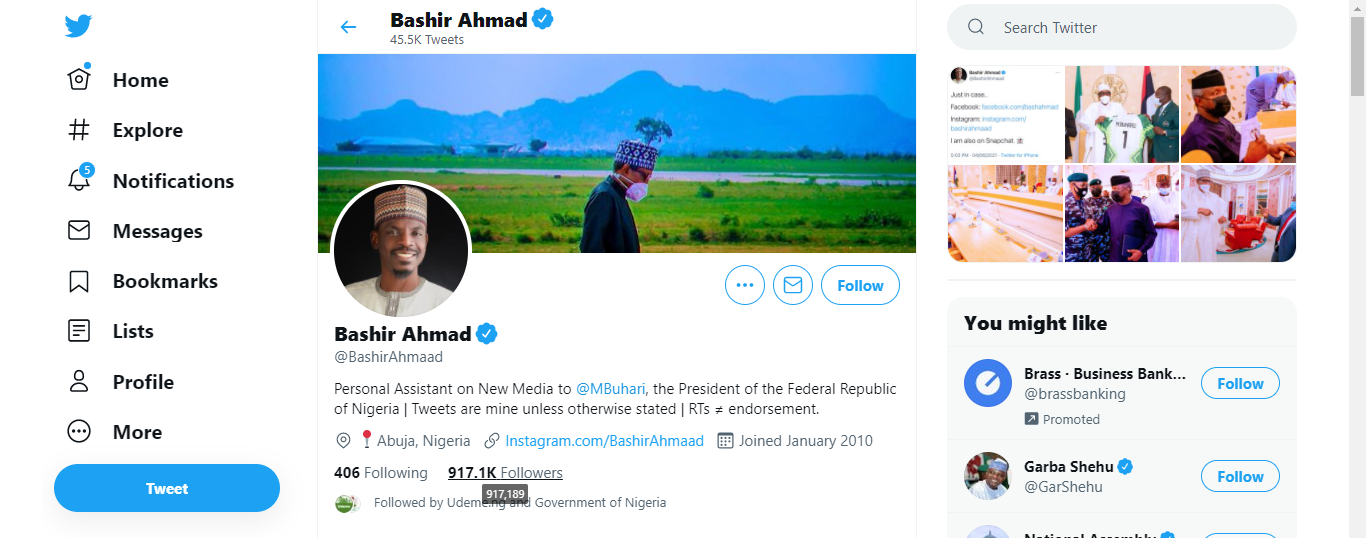
His followership has grown to 917,189 on June 21. This means that his account has received 1,610 new followers.
Bashir’s Twitter account interface on June 21
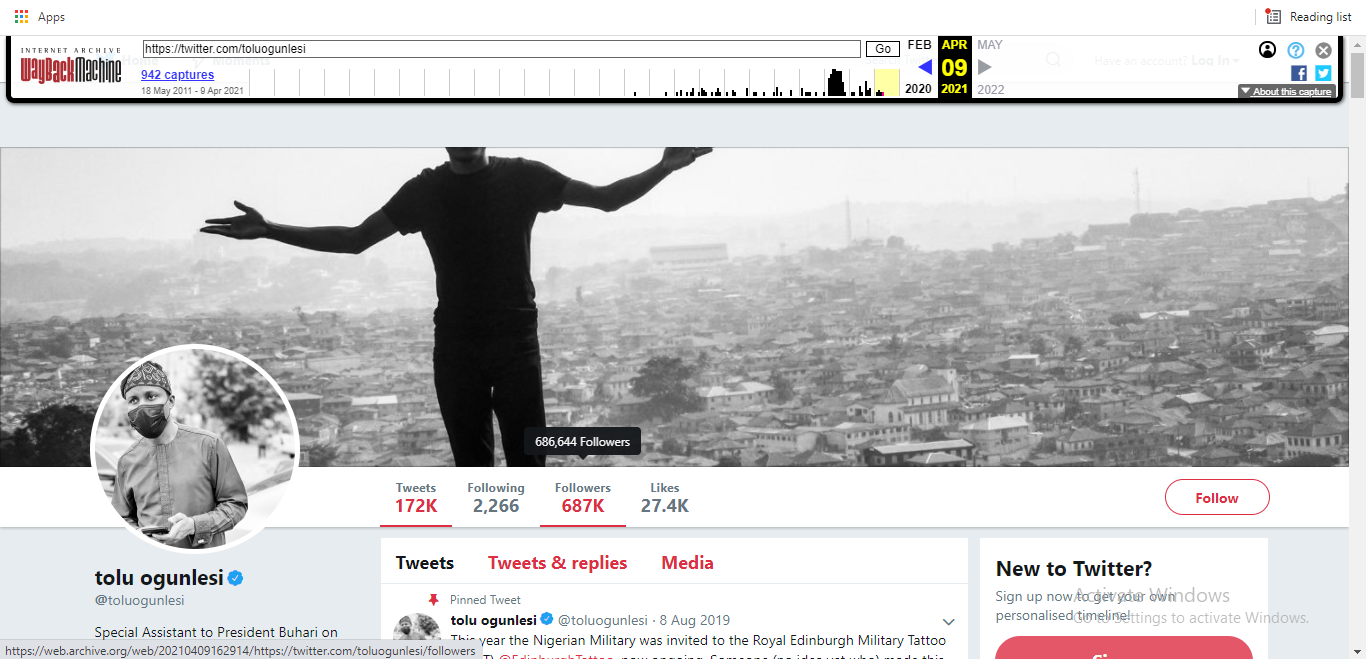
Special Assistant (SA) to the President on Digital and New Media Tolu Ogunlesi had a total of 686,644 followers on April 9, the last day archived by the Wayback Machine.
Ogunlesi’s Snapshot on April 9/ Wayback Machine
Ogunlesi’s Twitter account has since risen to 697,844 as at June 21. This implies that he has added 11,200 new followers.
Ogunlesi’s Twitter account interface on June 21
The Twitter accounts of both presidential aides have been silent, without any new tweet, yet there have been movements in terms of followership.
A campaign was launched on Twitter despite the ban
The ICIR had earlier reported the Nigerian Attorney-General Abubakar Malami’s call for the prosecution of Nigerians violating the Twitter ban.
This was the same period when it was reported that Nigerians made use of virtual private networks (VPN) to access Twitter.
After the ban on June 4, the hashtag #unfollowbuhari began to trend cross the Twitter space.
Former Chairman of the National Human Rights Commission Chidi Odinkalu, through his handle @ChidiOdinkalu, put up a post that read, “#UnfollowBuhari. It’s easy…”
Another user @jessie_oyawiri wrote in Pidgin English, “Who still dey follow Buhari… Operation unfollow Buhari,” followed by the hashtags #Buharimustgo, #unfollowbuhari, #Twitterban and #EndSARS.
Social media analysts said the hashtag forced many of Buhari’s followers to unfollow him. On the other hand, they said his aides gained more followers because Twitter users wanted to monitor when they would tweet.