Home Blog Page 1870

Why petrol queues re-surfaced in Abuja, Lagos

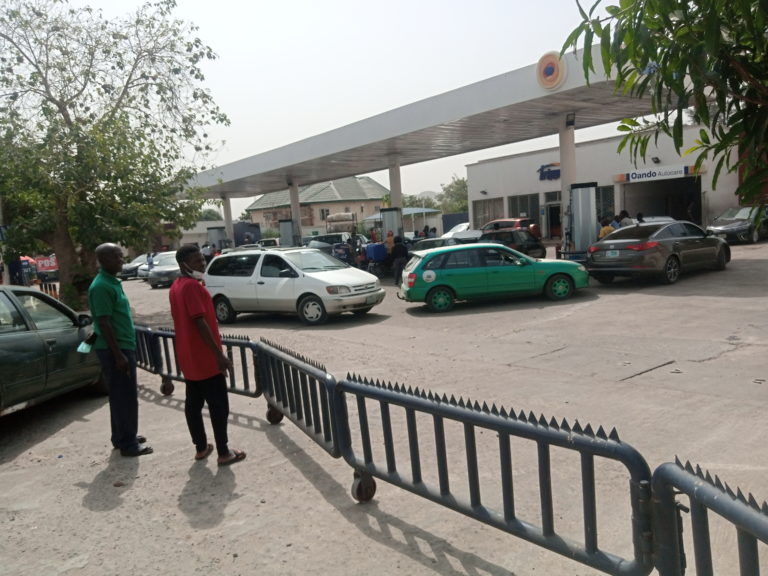
AT A. A Rano filling station in Nyanya, Abuja, on Tuesday, motorists jostled for petrol, also known as Premium Motor Spirit (PMS). Attendants at the petrol station cut off sales to customers with containers so they could attend to vehicles and ease traffic.

An attendant at the petrol station, who identified herself as Sarah, told The ICIR that the station had been out of petroleum products until  Monday when they received supplies. She noted that a litre of petrol was being sold at 162.5 naira.

“We have not been selling petrol for a couple of days because we ran out of petrol, but we got supplies on Monday and we are selling at the normal price,” she said.

Findings by The ICIR on Tuesday revealed that queues by motorists for petrol grew worse in Abuja and its outskirts, including the neighbouring Nasarawa State, as few filling stations dispensed PMS during the weekend.

Some of the filling stations visited by The ICIR included: Total petrol station at Wuse Zone 6; Oando petrol station at Wuse Zone 4; Total Petrol Station at AYA, and Sani Brothers petrol station at Nyanya.

They were all open to customers except Sani Brothers, Nyanya, which did not have petroleum products at the time of filing this report.

However, there were huge price increases at the black market in Wuse as seen by The ICIR, with operators selling petrol in small 10-litre containers at between 3,000 to 3,500 naira.

In Lagos, a number of petrol stations were selling at 170 naira in Apapa and Surulere axis as of Tuesday evening.

Speaking to The ICIR, Dipo Oladeinde, an energy  reporter, attributed  petrol scarcity to hoarding of petroleum products by oil marketers in a bid to do brisk business.

“It is not likely that there is lack of supply of petrol at the depot,” he said.

“The petrol stations are hoarding the petroleum products because if the anticipated pump price increase is implemented, then they would make more profit after hoarding their current reserves of petrol- bought at lower prices,” he said.

Though petrol queues resurfaced within Nigeria’s major cities last week, the Nigerian National Petroleum Corporation (NNPC) still insisted that it had enough to keep the country afloat for 40 days.

In March 2020, Nigeria announced it had ended the costly fuel subsidies, and said in September that it was no longer responsible for fixing pump prices. This  saw petrol pump price increase from 145 to 165 naira per litre.

Why Is Petrol Scarce?

The immediate cause of petrol scarcity is not clear, but the NNPC in a press statement, through its spokesperson Kennie Obateru, on Monday, attributed the scarcity to product hoarding or arbitrary increase of pump price by marketers, induced by panic buying.

In February 2020, the NNPC had extended its one-year contract with 15 oil firms until June to exchange more than 300,000 barrels per day in a crude oil for petrol swap deal. This was set to expire in October 2020.

The swap deal supply, also known as Direct Sale, Direct Purchase (DSDP), supplies nearly all of Nigeria’s petrol and some of its diesel and jet fuel in exchange for barrels of crude oil.

In February. petrol marketers had planned to disrupt the loading of petroleum products at private depots in Lagos and other parts of the country in protest against a new payment method.

The new payment method adopted by the Petroleum Products Marketing Company (PPMC), a subsidiary of NNPC, would allow oil marketers that could pay for 200 trucks to load their supplies before those payinf for one or two trucks, but players said it would give an edge to major oil marketers in the sector.

The new payment method, called PPMC Customer Express, was suddenly imposed on marketers and the NNPC expected immediate compliance from oil marketers.

Shina Amoo, chairman of the Independent Petroleum Marketers Association of Nigeria (IPMAN), Ore Depot, in an interview, had said the process became cumbersome for oil marketers.

“The new payment requires various prerequisite documents like the renewal of bulk purchase, renewal of licence and several other documents that are not readily available.

“Within a few days of this new payment method, some northern big marketers have used the situation to shortchange independent marketers in the South-West. With this, fuel scarcity is imminent,” he had said.

Timeline of Petrol Hike From 2016

The pump price of petrol has registered inconsistent figures since 2016,  putting Nigerians on the edge.

In May 2016, the pump price of petrol was increased to 145 naira per litre, up from 86.50 naira where the previous government of Goodluck Jonathan had left it.

In March 2020, the pump price of petrol was reduced to 125 naira from 145 naira per litre.

In May 2020, the Petroleum Products Pricing Regulatory Agency (PPPRA) announced a new pump price band of between 121.50 to 123.50 naira per litre. There was a price increase in July 2020, to  140.80 – 143.80 naira per litre.

In August 2020, it was again increased to between 145.86 and 148.86 naira, and was further raised on September 2, 2020, to 151.56 naira.

The ex-depot price of petrol equally rose from 147.67 naira per litre to 155.17 naira per litre in December 2020. At the moment, petrol  is sold between 160 naira to 165 naira at fuel stations.

The current landing cost of the importation of petrol is estimated at 180 naira per litre, which is 15 naira higher than the pump price at 165 naira. Experts say no business can afford to import fuel when its landing cost is below the selling price in the economy. This explains why the NNPC remains the only entity that imports fuel–with large sums as subsidies.

With the petrol pump price currently hovering between 162 to 165 naira per litre across the country, there will likely be further price increases, especially as Nigeria becomes serious with deregulation of the sector.
Ganduje continues clampdown on dissenting aides

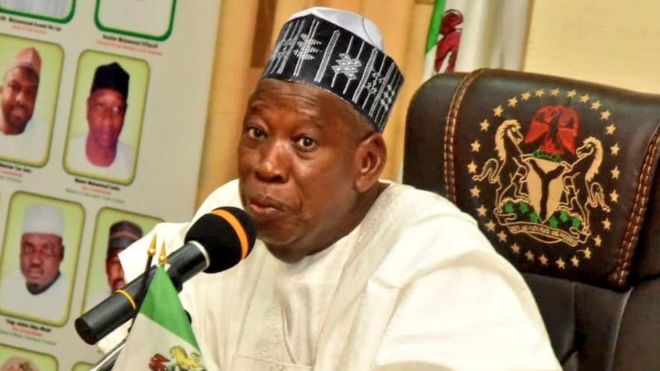
When Abdullahi Ganduje dismissed his media adviser, Salihu Tanko-Yakassai, popularly known as Dawisu, for publicly criticising President Muhammadu Buhari and the All Progressives Party (APC), it was the second time the Kano State governor would clampdown on dissenting appointees.

Yakassai was sacked shortly after authoring a viral post on Twitter in which he asked Buhari to resign for failing to address insecurity in the country.

But earlier, in April 2019, Ganduje had also dismissed Mu’azu Magaji, his commissioner of works and infrastructure, for celebrating the death of late Abba Kyari, former chief of staff to President Muhammadu Buhari.

Kyari, a very powerful official in the Buhari administration, died from complications related to coronavirus on April 17, 2020.

Before his unexpected demise, Kyari was believed to wield enormous powers – in fact he was seen as even more influential than the president.

But the commissioner, Magaji, appeared to be among many Nigerians who rejoiced over the former chief of staff’s demise, going by posts he reportedly made on Facebook and Twitter.

One of Magaji’s posts read, “Win win … Nigeria is free and Abba Kyari dies in epidemic… The martyrdom of man is perfect!”

In another post, Magaji observed that the Office of Chief of Staff to the President was too powerful and suggested that it should be broken into two.

He wrote, “For the good of Nigeria and Mr President… the CoS (Chief of Staff) office should be split… A PPS (principal private secretary) and a humble manager of his office as CoS… It is currently too powerful for a non-elected official.”

Magaji added that Kyari was only a support staff member in the Presidential Villa and as a result, his death should not be such a big deal.

“Nigeria is bigger than any individual… While praying for the president’s late support staff… Ours is to prevent a repeat of his non-accountable domineering era!

“In institutional democracy, no individual is bigger than the state… Our interest is to get equity and capacity in the highest position of power. It’s not personal!

“I am not a hypocrite and I won’t pretend! While at personal level I pray Allah grant Abba Kyari Jannah…I sincerely believe Nigeria needed a better CoS period!,” Magaji said.

Ganduje sacked Magaji immediately the posts went viral on the social media.

A statement by Muhammadu Garba, commissioner of information, explained that Magaji was sacked for making ‘unguarded utterances.’

“Governor Umar Ganduje has relieved the appointment of the commissioner of Works and Infrastructure, Mu’azu Magaji with immediate effect following his unguarded utterances against the person of the late Chief of Staff to the President, Malam Abba Kyari,” the statement said.

The statement added, “As a public servant, the commissioner ought to have respected the profanity of the office by refraining from any act capable of rendering the office to disrepute.

“The action of a public servant, personal or otherwise reflects back on the government and therefore, the Ganduje administration would not tolerate people in official capacities engaging in personal vendetta or otherwise.

“Late Abba Kyari had led a life worthy of emulation by serving his country to the best of his ability.”

Ganduje reportedly reappointed Magaji as chairman, project committee on industrialisation and pipelines, about six months after dismissing him as commissioner.

I have no regrets dethroning Sanusi as emir of Kano -Ganduje

The governor also pointed to ‘unguarded utterances and comments’ as reasons for sacking Salihu Tanko-Yakasai just a day after he criticised Buhari and the APC over the high level of insecurity in the country.


Reacting to a series of abductions of students in the northern part of the country, the media aide had tweeted: “Clearly, we as APC government, at all levels, have failed Nigerians in the number one duty we were elected to do which is to secure lives and properties. Not a single day goes by without some sort of insecurity in this land. This is a shame! Deal with terrorists decisively or resign.

“Just last week it was #freeKagaraboys, today we have anew hashtag #RescueJangebeGirls, who knows tomorrow what hashtag we will come up with? Perhaps one for ourselves when we get caught up in one of these daring attacks.

“This is sad and heartbreaking, I feel helpless and hopeless. I completely agree. Hypocrisy is in our DNA. Imagine what’s happening in the North now under GEJ or OBJ, what you will hear is he’s the enemy of the North and Muslims, but here we are, being ravaged by all sorts of insecurity but no collective rage…”

Ganduje had also suspended Dawisu for criticising Buhari in the wake of #EndSARS protests that rocked the country in October 2020.

Dawisu had attacked the president for keeping mute in the wake of attacks on protesters by soldiers during the protests.

In a tweet on his Twitter handle, Peacok @dawisu, he had said, “I have never seen a government with zero empathy like that of President Muhammadu Buhari. So many times when his people are going through a difficult time and expect some sort of tap on shoulder to reassure them that he is in charge, but he fails to do so. The ‘I don’t care attitude’ is on another level.

“To speak to your own people over issues that are bedevilling them has become something like a favour you are doing to them.

“Over and over again, you cannot spare five minutes to address the nation to calm them down, the same people you went to the 36 states to beg for their votes, it is heart-breaking.”

Read AlsoBlasphemy: Nigerians knock Ganduje, say he does not have a single shred of religious legitimacy

The media aide was reinstated after a two-week suspension, before he was eventually sacked after his latest episode of ‘unguarded utterances and comments’ against Buhari and the APC.

He was relieved of his job while in the custody of the State Security Service (SSS), which had arrested him for criticising Buhari and the APC over rising level of insecurity in the country.

  • Dawisu regains freedom

Meanwhile, in a post on his Twitter handle on March 2, 2021, Dawisu announced that he had regained his freedom from DSS detention.

In the tweet, he expressed appreciation to all those that added their voice to calls for his release.

  • Ganduje, a controversial governor

The Kano State governor, who was elected on the platform of the APC in 2015, gained notoriety when, in October 2018, a newspaper, Daily Nigerian, published a video which showed him pocketing wads of American dollars in what was said to be bribe payments from public works contractors.

In the video recorded in 2017, in what Daily Nigerian said was a sting operation aimed at beaming a spotlight on the governor’s alleged penchant for contract racketeering, Ganduje could be seen collecting the dollars before rolling them into the pockets of his white ‘babanriga‘ dress.

Ganduje claimed the video was fake, and dragged the newspaper to court.

Despite the video and widespread perception that he was corrupt, Ganduje in August 2020 drew angry reactions from Nigerians on the social media when he claimed that his administration had zero-tolerance for corruption.

The governor told Kano State’s Public Complaint and Anti Corruption Commission that any corrupt individual should not go unpunished in the state.

Eyebrows were raised when, in spite of the allegations of corruption hanging on his neck, the APC Caretaker and Extra-Ordinary National Convention Planning Committee named Ganduje head of its National Campaign Council for the Edo State governorship election.

The People’s Democratic Party (PDP), Nigeria’s opposition party, capitalised on the situation by playing the ‘Ganduje dollar’ video at the popular Ring Road in Benin, capital of Edo State. The PDP candidate, incumbent Godwin Obaseki, eventually defeated Osagie Ize-Iyamu in the governorship election.

In December 2020, the East Carolina University in the United States denied appointing Ganduje as a visiting professor, saying that a letter received by the Kano State governor from a member of its faculty was unauthorised by the appropriate officials.

It would also be recalled that, earlier in August 2020, Ganduje had expressed his readiness to sign the execution warrant of a 30-year-old man, Yahaya Sharif-Aminu, who was sentenced to death by hanging by a Kano Upper Shari’a Court, after he was convicted of making blasphemous remarks against Prophet Muhammad, under Section 382 (b) of the Kano State Penal Code Law 2000.

Ganduje said that he would not hesitate to sign the execution order at the expiration of the 30-day grace if the convict failed to appeal the judgment.

He said at a stakeholders forum, “If the 30 days elapses and the convict has not appealed, and there is no evidence that he had appealed, I will not waste time in signing the warrant for the execution of the man who blasphemed our Holy Prophet of Islam. Lawyers just told us that the case could go up to the Supreme Court. So if that happens, I will not waste time to abide by the verdict right away.”

But a Kano State High Court saved the musician, Sharif-Aminu, from Ganduje’s wrath when, on January 21, 2021, it quashed the death sentence passed by the Upper Sharia Court and ordered a retrial of the matter.

* Ganduje’s spokesman refuses to respond to questions

Meanwhile, Ganduje’s spokesman refused to respond to questions when The ICIR sought official comments over the governor’s penchant for clamping down on dissent.

The ICIR’s correspondent also wanted to know if it was the governor that notified the State SSS to arrest Dawusi.

Abbar Anwar, chief press secretary to the Kano State governor, said he would get back to The ICIR, but he did not fulfill his promise as of the time of filing this report.

Nigeria’s cocoa farmers to receive 5m seedlings in 2021

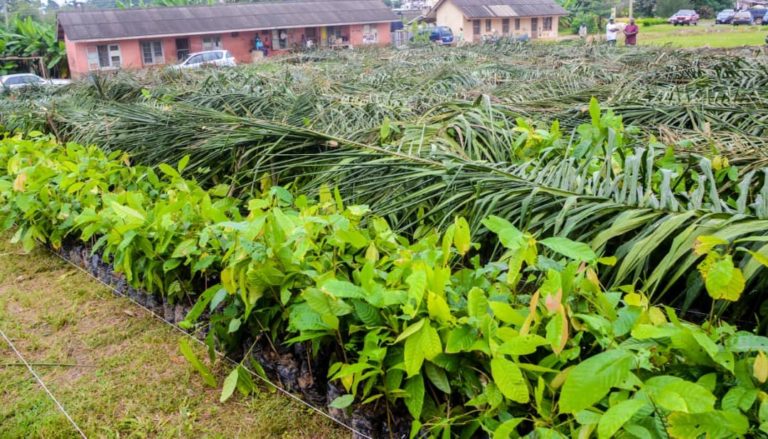
AFTER distributing 10 million cocoa seedlings in 2020, the Cocoa Research Institute (CRIN)  says it will disburse additional five million seedlings to farmers in 2021.  

ABDULLAHI Ja’o, board chairman, disclosed this during a meeting of board chairmen of all agricultural research institutes on Tuesday in Abuja.

Ja’o said since he joined the research institute around 2019, at least seven million cocoa farmers had benefitted from across the country, including cocoa farmers in Adamawa State.

“I can say that we have very early yielding varieties, capable of yielding fruits in three years, instead of the 10 years and five years maturing years before now.”

Read Also: Study faults FG’s agricultural insurance scheme for farmers

He explained that the seeds were given freely to genuine cocoa farmers.

The research institute was able to identify the actual farmers and ensure they benefitted from the support of the Federal Ministry of Agriculture and Rural Development (FMARD), he noted, expressing concerns about farmers’ poor access to market and preservation.

“It is annoying to see someone carry his cocoa bags everywhere from one buyer to two another, trying to get a better price,” he said. “Sometimes, they (buyers) will keep you at a place and ask farmers to continue to check-back.”

Earlier, Prof. Garba Sharubutu, executive secretary of the Agricultural Research Council of Nigeria (ARCN), had acknowledged that the CRIN was not getting the right attention until lately when the federal government gave a grant to the institute to develop the cocoa value chain.

He said there were currently early maturing varieties of the commodity, wheat and palm oil seedlings which had been produced but yet to be taken over by off-takers.

According to him, people would rather invest in early profiting ventures such as taxi business, point of sales (POS) machine business, rather than agriculture.

Sokoto receives largest chunk of FG’s N123.3bn grant to states

However, he said the federal government should consider supporting graduates of colleges of agriculture in the country through the Anchor Borrowers Programme (ABP), rather than distributing funds to individuals claiming to be farmers and needed loan support.

Shurabutu argued further on the need for internships for graduates of agricultural science. This, he emphasised, would prepare the students ahead of real investment in the agric sector upon graduation.

“We have done a proposal and sent to the minister for us to build vocational training centers in the 52 colleges of education. This will further help us drive the vision of attaining food sufficiency in Nigeria.”

Recall that in the 1960s, agriculture was the mainstay of Nigerian economy until the transition to oil. For years, experts have advised the federal government to diversify its economy rather than completely rely on oil.

$2,000 Resident Permit: AGF drags feet over petition on controversial contract between Nigerian govt, CONTEC

SIX months after receiving a  petition over a controversial contract that involves a $2,000 resident permit issued to expatriates visiting Nigeria for work-related activities, the office of the Attorney General of the Federation (AGF) is yet to act.

The AGF’s feet dragging over the ill-considered agreement the federal government had signed with the Continental Transfer Technique Limited (CONTEC) has led to loss of revenue to Nigeria.

In August last year, Muhammed Babandede, the immediate past NIS Comptroller-General petitioned the AGF and Ministry of Justice, requesting the office of the chief legal officer to wade into the alleged fraudulent agreement the Federal Ministry of Interior signed with CONTECC on a strategic partnership where the private company was to function as a technical partner for the production of the Combined Expatriate Residence Permit and Alien Card (CERPAC).

CONTEC is owned by Irish-Indian businessman, Benoy Berry, an ally of the former president, Olusegun Obasanjo. The firm was registered in Nigeria on July 26, 1984, as a warehouse of data of foreigners living in Nigeria. Its mandate was “to provide new and highly secure documents for the identification of foreign residents,” and maintain “the central database of all foreign national movements into and out of the country, flagging undesirable aliens and maintaining security in the country.”

But the officials of the NIS and other security-minded bureaucrats found the agreement injudicious, saying it infringes on the Immigration Act.

The Service has raised concerns over a possible data breach of the foreigners, and expressed frustration over outsourcing the production of resident permits at huge revenue loss to the nation. The former immigration boss insisted that the NIS has capacity to solely produce CERPAC.

For that reason, it submitted a petition to the office of the attorney general for the review of the contract, but nothing appeared to have been done.

On February 18, The ICIR contacted Umar Gwandu, Special Assistant to the President in the Office of the AGF, seeking an update about  NIS’s petition. Gwandu asked this reporter to send him questions. When the questions were sent, he replied with a terse response: ‘received’. And no additional information was given.

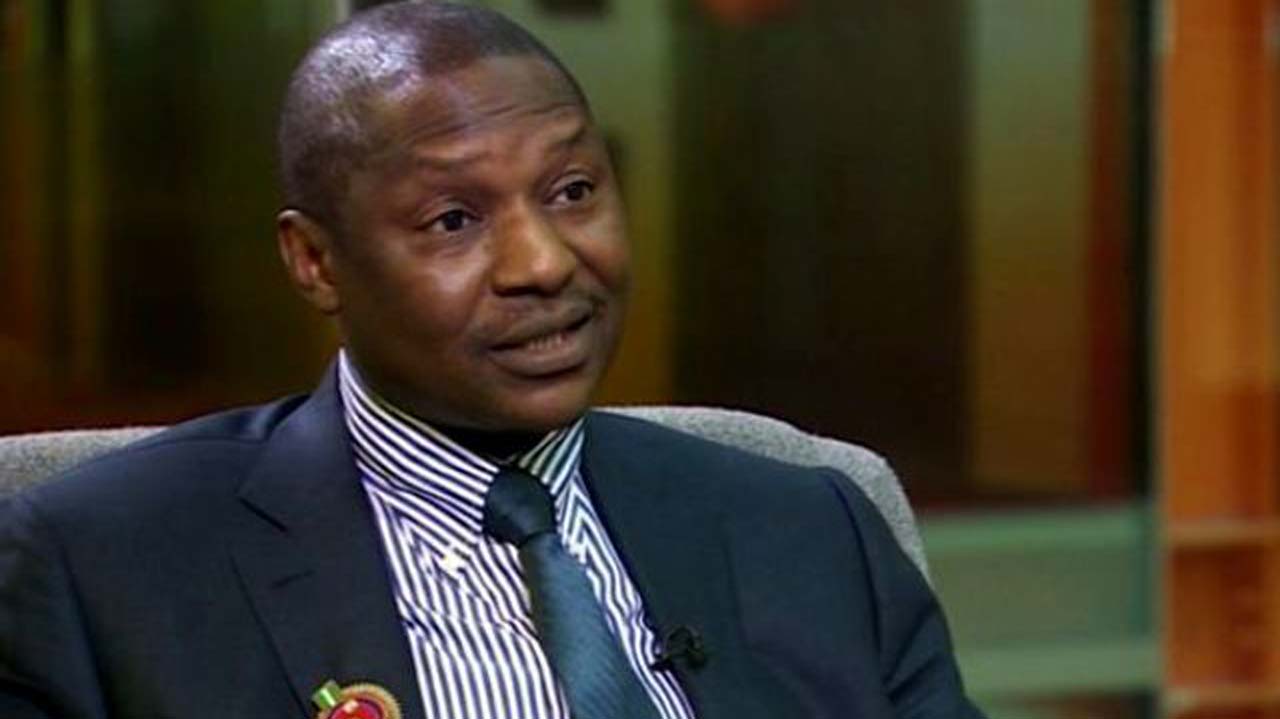
ABUBAKAR Malami
ABUBAKAR Malami, Attorney General and Minister of Justice

On February 24, a reminder was sent to him but he did not reply. On March 1, another reminder was sent for the third time in two months. Then, he said the matter was still under review.

“The action of the attorney-general of the federation and minister of justice, and by extension, the federal government of Nigeria is always guided by holistic appreciation of the law and public interest in analysing the situation at hand. The office of the attorney-general of the federation and minister of justice will consider the essence of time, as per taking decision is concerned,” he said.

Last year, Babandede raised an alarm about how the firm sought to seize the Nigerian National Petroleum Corporation (NNPC) building over the controversial contract. He stressed the need for the government to reconsider its decision.

“We can do without them. This job (issuing resident permit), we can do it. It is not rocket science,” he stressed.

While speaking before the joint committee on finance and national planning, he said: “Nobody should defend CONTEC as a company to do business in Nigeria. This is a company that took us to court, this is a company that wanted to seize our property, including our mission and NNPC building. Two thousand dollars for a resident permit, we can make that resident permit with $500, $1,500 can go to the federal government, we ‘throw away’ the company, and the government will make more money,”

In 2019, the Economic and Financial Crimes Commission (EFCC) probed N72.07 billion realised by the firm over Nigeria’s resident permits issued to foreigners, and accused the company of underpayment of taxes – Withholding Tax, and Value Added Tax (VAT).

Read AlsoHow Nigeria Immigration clearly violates the constitution by seizing EndSARs promoter’s passport

What is CERPAC?

CERPAC is a compulsory document required by foreigners to live and work in Nigeria. Though students and missionaries have been excluded from the levy increase, it is believed that the increase would discourage the influx of expatriates from coming to Nigeria to work.

It is renewable annually, or biennial depending on the validity given period. Stakeholders have decried the fee increase which most people considered as too sudden.

But with the $2, 000 levy, industries which require services of foreign nationals might be forced to consider local experts.

More so, if experts must be engaged by interested firms, it also implies such experts might have a short stay in the country due to the cost, hence, firms are made to do technological transfer to the locals.

Indirectly, the process would boost local capacity and knowledge base while over-reliance on expatriates would reduce.

Background on CONTEC

According to a legal document submitted to England and Wales High Court (Commercial Court) in November 2009, the agreement between CONTEC and the Federal Ministry of Internal Affairs was signed on May 25, 1999.

It was renewed under the leadership of Abdurahman Dambazau, a former minister in charge of the internal affairs ministry, now known as interior ministry.

Based on the pact, CONTEC is to produce and supply electronic residence cards for the ministry. And this card is to be used by the NIS. As such, NIS is the implementing partner for the project.

In December 2018, the residence permit fee was increased by 100 per cent after CONTEC wrote to the interior ministry, asking for an upward review of the fee from $1,000 to $2,000. The firm argued it was expanding its offices across the country to facilitate easy registration for the permit.

But in its reply, in a letter dated December 13, 2018, with a reference number FMI/PSO/012/1/15, the ministry approved the request.

The $2,000 levy is to remain till 2021, while the NIS would continue to be the implementing partner.

“I am directed to acknowledge the receipt of your letter of 11th December 2018 on the above subject and inform you that the Honourable Minister has approved the review of CERPAC fees from $1000 to $2000 with immediate effect. This review does not, however, affect missionaries/students CERPAC fees,” the letter read in part.

“With this approval, there will be no further review of CERPAC fees until after three years from the period the implementation of the new CERPAC fee comes into effect.”

The letter addressed to the firm’s Chairman, was reportedly signed by Dr. M.B Umar, a former Permanent Secretary of the interior ministry on behalf of Dambazzau.

Since the upward review of the fee,  the NIS, lawmakers and Nigerians have kicked against the contract.

“Some companies bring in labourers in their hundreds and register them as experts/professionals but pay them as labourers while they remit most of the money to their countries,” the former minister asserted while justifying the increase. “Many of them do not employ Nigerians to mix so that our people take up management positions after some time.”

Babandede though supported the increased levy, queried the rationality of the agreement, insisting that the Immigration Service has the capacity to produce the permit at a lower cost.

Falana files lawsuit, says contract contravenes Immigration Act, Order 5  

In March 2019 Femi Falana, Human Rights Lawyer took the Interior ministry and CONTEC to court, describing the agreement as illegal and fraudulent.

Besides, Falana questioned the constitutionality of the CERPAC contract and the sudden increase of resident permit fee from $1,000 to $2,000. He argued it is the statutory responsibility of NIS to determine and collect CERPAC fee payable by all expatriates, rather than outsourcing the contract to CONTEC.

He sought a restraining order and court injunction suspending the company from further carrying out the duty but the NIS.

In November 2019, Judge Rilwanu Aikawa, Lagos Division of the Federal High Court nullified the $2,000 upward increase. He also described the contract as unconstitutional.

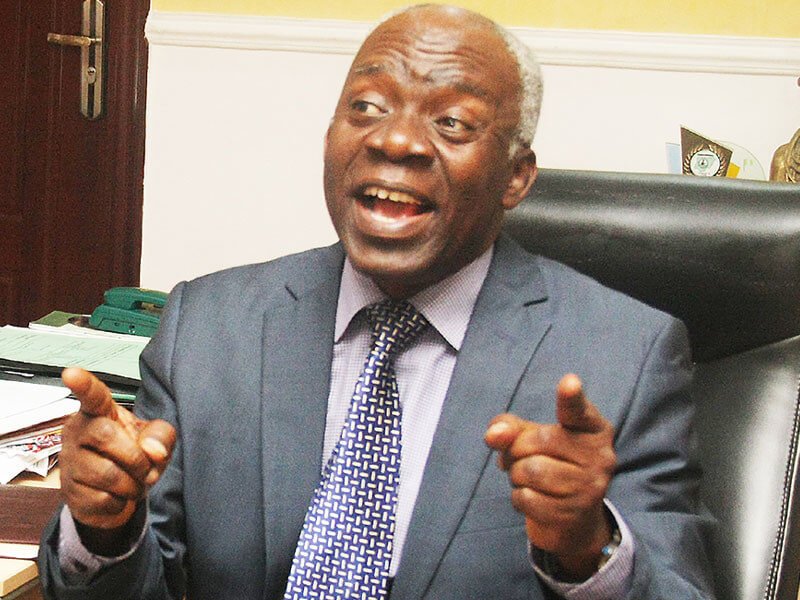
Femi Falana Alex Ogbu
Femi Falana (SAN)
File Photo for Illustration Purpose

“While Section 102 of the Immigration Act provides for private sector participation in the development and provision of infrastructure, there is no provision as far as I can discern which allows for the participation of the private sector in the collection of residence permit or visa fees,” Aikawa said in his verdict.

“Any law, a statute or provision thereof that runs riot and violent to the provision of the Constitution or is in conflict with the Constitutional is null and void to the extent of the inconsistency,” Aikawa insisted.

January last year, the federal government approached the appeal court and sought to set aside the judgement secured by Falana. Besides, they argued that Falana was not an expatriate and was not engaged by any expatriate to challenge the resident permit levy.

Ahead of the outcome from the appeal court, the minister of interior and NIS, in a different application sought a stay of execution. Nevertheless, the CONTEC agreement also negates Executive Order 5 which discourages foreigners from executing services that could be provided locally by Nigerians. Executive order five is to promote local contents.

Food ban will worsen Nigeria’s socio-economic problems, Arewa tells northern farmers

THE Arewa Consultative Forum (ACF) has condemned the decision of the Amalgamated Union of Foodstuff and Cattle Dealers (AUFCDN) to ban all foods supplies to the southern region of the country.

The ACF said such a decision would further polarise and complicate socio-economic and political problems facing the country today.

In a statement on Tuesday in Kaduna, Audu Ogbe, ACF national chairman, called on the union’s leadership to put a halt to the embargo, stressing that Nigeria was not at war with itself.


Read Also:


“The Arewa Consultative Forum (ACF), shares the concerns of Nigerians over the decision of the Amalgamated Union of Foodstuff and Cattle Dealers to stop movements of needed food from the north to the south,” he said.

“We call on the leadership of the union to put a halt to their so-called embargo and blockade.

Audu Ogbe

“Nigeria is not at war with itself and such drastic action is not necessary.

“It will only further complicate the socio-economic and political problems facing our country today.

“The members of the union are said to have suffered severe losses during the #EndSARS riots and the recent violence in Sasha in Oyo State targeted against northerners.

“We believe that whatever may be the difficulties of their members in operating in other parts of the country, ACF leadership led by me is willing to help them solve these by talking to security agencies and the government.

“There is no need to mount a blockade by one section of the country against the other.

“Whatever may be our differences, the ACF as an ardent believer in free trade believes that goods should be allowed to move freely.

“This extreme measure is not progressive and even counterproductive. This is not the way to go.”

Grievances

The body commenced an indefinite strike following the government’s failure to address the alleged killings of its members in various parts of the country.

The union is also demanding payment of compensation of 4.75 billion naira to its members, being losses incurred during the #ENDSARS’ protest, including the razing of their properties at Shasha market in Oyo State.

According to The Punch, the union was also stopping its members from moving cattle and foodstuffs to the country’s southern region.

Many trailers transporting cows, tomatoes, onions, pepper, grains and other commodities have been prevented from leaving a border town in Niger State to the southern part of the country.

A recent video of a long line of trailers stopped by the union had circulated on social media recently.

The trucks, conveying agricultural goods owned by Fulani cattle merchants, were reportedly stopped from entering Jebba town, Kwara State border town with Niger State on their way to the South-West last Thursday.

It was gathered that the stoppage might have to do with the threat by the national body of Miyetti Allah Cattle Breeders Association of Nigeria to stop its members from supplying and selling cattle to the South if some governors effected the alleged eviction of Fulani herdsmen.

Kabiru Salisu, financial secretary of the AUFCDN, said a task force set up by the union was enforcing the strike in Niger State and other areas.

He said the government had not reached out to the union on its demands, hence the strike, which he said was indefinite.

“There is a task force that we set up to enforce the directive by the union that there would be no transportation of cattle and foodstuffs to the South with effect from Thursday. So, the union set up the task force to prevent sabotage,” he said.

“In the communiqué we issued, we said the strike would start yesterday (Thursday), and so, we have started the strike. Now, there is no loading of commodities to the South, but those who attempted to violate the directive were stopped in Niger State.”

Also, confirming the stoppage of cattle and foodstuffs to the South last Friday, coordinator of Miyetti Allah in Kwara State, Aliyu Mohammed, said the development was factual.

Mohammed also claimed that his members were being killed.

‌”We are not doing anything wrong and yet our people in the forests are being killed for no just cause,” he said.

The Middle Belt Forum has kicked against the action, describing it as a criminal act.

In a statement signed by Pogu Bitrus, its national president last Friday, the group said the issue was capable of throwing Nigeria into choas.

It called on the Nigerian government to address the issue.

Why FG banned mining activities in Zamfara

THE Federal government of Nigeria has declared Zamfara a ‘no-fly zone,’  placing a ban on mining activities in the state.

Babagana Monguno, national security adviser, disclosed this on Tuesday during a briefing with State House correspondents at the Presidential Villa in Abuja.

According to Monguno, President Muhammadu Buhari had approved the declaration of Zamfara State a ‘no-fly zone’ and had also sanctioned the recommendation that mining activities be banned in the state with immediate effect.

“The president has approved, based on our recommendations, the imposition and enforcement of a ban on all mining activities in Zamfara with immediate effect until further notice.

Read AlsoZamfara: Treat abductions of students as a breach of UN charter, SERAP urges UN Security Council

“He has also approved that Zamfara State should be declared ‘a no-fly zone’ with immediate effect,” Monguno said.

The NSA further said that Buhari had also given an order to deploy ‘massive military and intelligence assets’ to restore peace in the region.

Mungonu noted that Buhari had directed security officials to clamp down on all those behind the security challenges being witnessed in the state and across the country.

How Zamfara gold mining resurrected clamour for resource control by oil producing states

The crisis facing Zamfara State

Zamfara State is one of the major northern states ravaged by banditry, terrorism and other illegalities.

According to Abutu Yaro, state commissioner of police, some communities in the state including Munya, Shiroro, Mariga and the Lapai-Agaie axis had been taken over by bandits.

A few days ago, some bandits operating in the state abducted over 300 schoolchildren in Janzebe Local Government. Although some schoolchildren have been released, there is still an atmosphere of insecurity in the state.

Read AlsoInvestigation: How illegal gold miners milk FCT of billions in revenues

There are also reports of an established nexus between banditry and the illegal miners operating in the state. The illegal miners have been long accused of informing bandits of the whereabouts of military personnel in the state.


UN coordinator condemns Boko Haram attack on civilians, aid workers in Borno town

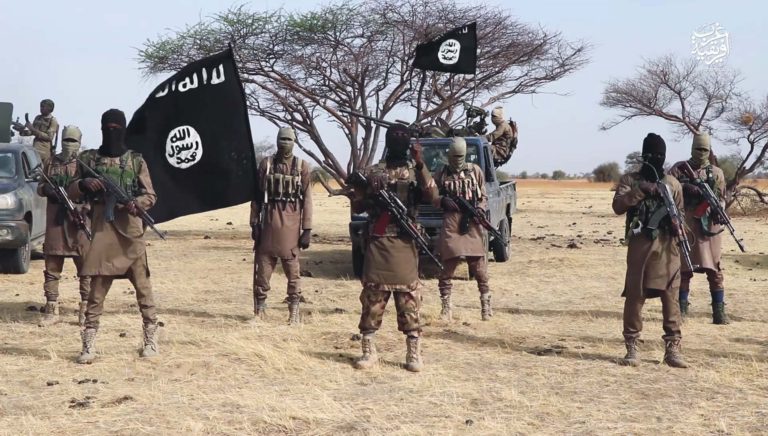
EDWARD Kallon, the United Nations humanitarian coordinator in Nigeria, has condemned Boko Haram’s renewed attacks on civilians and aid workers in Dikwa, a town in Borno State.

In a statement seen by The ICIR, Kallon said he was enraged by the attack and was concerned with the safety of civilians and aid workers in the town.

He called for adequate and maximum security of civilians and aid workers in the region.

“I am gravely preoccupied by reports on an ongoing violent attack by non-state armed groups in Dikwa, Borno State, during which several aid facilities were directly targeted. The attack started last night and, as information is still coming through, I am outraged to hear the premises of several aid agencies and a hospital were reportedly set ablaze and sustained damage,” he said.

“I strongly condemn the attack and deeply concerned about the safety and security of civilians in Dikwa, including internally displaced people inside and outside camps and thousands of people who had returned to the community to rebuild their lives after years in displacement.

“The violent attack will affect the support provided to nearly 100,000 people who are desperately in need of humanitarian assistance and protection, particularly as the COVID-19 pandemic risks spreading in Borno State.

283 civilians, 132 security personnel killed in violent attacks across Nigeria in July – Report

“Civilians and aid workers, their facilities and assets should never be a target. They must be protected and respected at all times. I call on all armed parties to immediately stop the violence and respect international humanitarian law and human rights law and ensure the protection 0f civilians, humanitarian and personnel.”

The insurgents had engaged security operatives in a gun battle before taking control of the ancient town in an attack that started on Monday evening and lasted till the early hours of Tuesday.

They were also said to have breached the security of a United Nations Hub in North-East Nigeria and then laid siege to the facility, causing humanitarian workers and guests to retreat to a fortified bunker within the facility.

Dikwa town is about 90km from Maiduguri, Borno State capital, and has experienced several attacks from the insurgents since the liberation of the town in 2016.

The town hosts the military Super Camp 9 where the chief of army staff visited last week.

The attack on Dikwa came barely days after the military engaged the insurgents in a battle to retake Marte Local Government Area from the militants.

It also came days after Babagana Zulum, Borno State governor, visited the town, distributing relief items that included cash to the victims of the previous attacks.

Army reacts

Mohammed Yerima, director of army public relations, said the terrorists “attempted to invade the town to loot food items and other logistics, having got wind of the recent food distribution to residents of the town by the state governor, Professor Babagana Zulum.”

He said the terrorists stormed the town in an unconfirmed number of gun trucks and motorcycles.

The army spokesman said the military was able to repel the attack with “heavy bombardment and overwhelming firepower by troops of 81 Task Force Battalion with reinforcement from other formations of the Nigerian Army and aided by air support of Air Task Force Operation LAFIYA DOLE.”

He noted that they could not gain access to the town due to the combat-readiness of troops who were positioned there.

Read AlsoOver 881 students kidnapped under Buhari’s administration

“The terrorists subsequently lost initiative as they were cut off completely following the recent successful recapture of Marte town by the gallant troops.

“In desperation and to scare off residents from returning to their homes, they planted series of landmines on the roads which were also detected and successfully detonated by troops,” he said.

The army spokesman decried some media reports suggesting that the terrorists attacked a United Nations base in the north-eastern state.

While noting that such reports were aimed at stirring up tension in the country, he said 25 aid workers were not trapped.

He also explained that the chief of army staff, Ibrahim Attahiru, had commended the efforts of the gallant troops and the prompt response of the Air Task Force in providing air interdictions throughout the operation.

President Muhammadu Buhari reshuffled the military command this year, raising hopes of a shift in strategy to end a 12-year-old conflict that has killed 36,000 people and forced around two million to flee their homes.

MRA asks IGP to arrest, prosecute policemen who assaulted Guardian newspapers’ reporter in Lagos

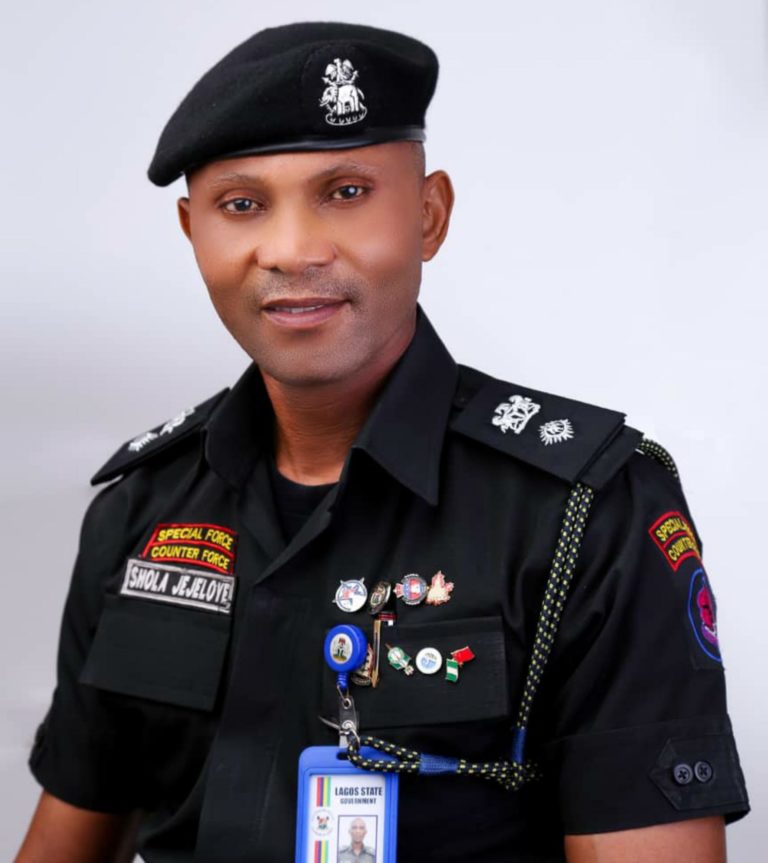
THE Media Rights Agenda (MRA) has called on Mohammed Adamu,  inspector-general of police, to order the arrest and prosecution of policemen, led by Shola Jejeloye, who assaulted, tortured and dehumanised the Guardian newspaper reporter, Eniola Daniel, on Sunday while he was covering the demolition of the shops along the Oshodi-Apapa Expressway in Lagos.

The organisation stressed that no democratic government should condone such lawlessness by its law enforcement officials.

In a statement issued on behalf of the organization on Tuesday by John Gbadamosi, its Programme Officer, MRA condemned the recent wave of attacks on journalists in the country perpetrated by police officers, saying the consistent failure of Police authorities and the Federal Government to hold such police personnel accountable was evidently responsible for the noticeable spike in such cases.


Read Also:


“If Police authorities are unable to discipline their men and hold them accountable when they abuse the rights of citizens and violate the law, it means that they really have no interest in enforcing the Law and cannot pretend to be doing so. If they have no regard for the Law, then they are no better than a band of criminals backed by the State and paid from public resources. They can have no legitimacy whatever with the citizens that they are supposed to serve,” Gbadamosi said.

The operatives from the Lagos State Police Command were reported to have gathered at the Ladipo Auto Spare Parts Market along the Apapa-Oshodi expressway in the early hours of Sunday morning to destroy shops along the road when Daniel arrived at the scene a few minutes past 10 am to find the policemen burning tyres as they destroyed shops along the road.

Read Also: Nigerians react to bill seeking to make degree minimum qualification for journalists

The journalist started filming the raging fire set on the highway when less than three minutes later, according to him, a man in plain clothes suddenly approached him and slapped him from behind continuously with other security men carrying guns running to support his assailant. The policemen reportedly punched the reporter, smashed his mobile phone and dragged him into the “Black Maria” vehicle stationed at the scene.

The journalist said although he brought out his Identity Card and showed it to the policemen to identify himself as a reporter with The Guardian newspaper, they ignored it and continued beating him with one of them calling him “a bastard.”

Jejeloye later ordered the policemen to release him upon which his smashed phone was returned to him with instructions that all the pictures he took at the scene should be deleted.

Gbadamosi said the silence of the police authorities and the Federal Government on the more than 48 hours after the incident is clear evidence of their tolerance for this sort of barbaric behaviour by officials who are supposed to uphold and enforce the law, which is apparently what has resulted in law enforcement officials frequently acting in such unlawful manner with impunity.

Assault on Journalist: A worrisome trend

A TOTAL number of 50 journalists were killed globally in 2020, a report published by Reporters Without Borders (RSF) has shown.

The report which was published on Tuesday is the second part of its (RSF) annual round-up report of the abusive treatment and violence against journalists across the globe also shows that two journalists fell victim to the climate of violence accompanying protests, especially protests against the brutality of police operatives in Nigeria.

It noted that while the number of journalists killed in countries at war continues to fall, more are being murdered in countries, not at war.

Shola Jejeloye
Lagos State Governor, Babajide Sanwo-Olu with Lagos Taskforce Chairman, Shola Jejeloye

RSF noted with concern that 32% of the fatalities are in war-torn countries such as Syria or Yemen or in countries with low or medium-intensity conflicts such as Afghanistan and Iraq. while 68 percent (more than two thirds) of the fatalities are in countries “at peace,” above all Mexico leading with eight journalists killed, India with four, the Philippines with three and Honduras, three.

It further stated that 84 percent of those that were killed in connection to their work were knowingly targeted and deliberately murdered, as compared to 63% in 2019. While some were murdered in a particularly barbaric manner.

3.9m doses of AstraZeneca vaccine arrives in Nigeria, but who gets what?

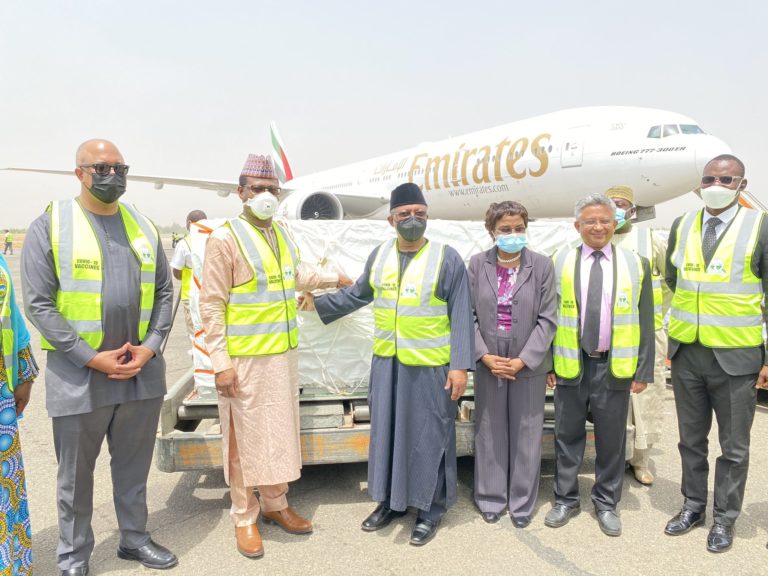
NIGERIA has received 3.9 million doses of AstraZeneca vaccine through the COVAX Facility in partnership with the World Health Organisation (WHO) and the United Nations Children Fund (UNICEF).

With the delivery, Nigeria becomes the third West African nation to receive the COVID-19 vaccine through the COVAX Facility after Ghana and Ivory Coast.

Taking delivery of the vaccine at the Nnamdi Azikiwe International Airport, Boss Mustapha, chairman of the Presidential Task Force on Covid-19 and secretary to the government of the federation, expressed the federal government’s appreciation to the facilitators of the delivery.

Mustapha handed over the vaccine to Osagie Ehanire, minister of health, whom he said had the responsibility to ensure that due process was followed in administering the vaccine.

“It is with a sense of relief and elation that we receive this consignment of vaccine, nearly 4 million in number, to begin the process of inoculating Nigerians against the deadly coronavirus.

“It is our belief that this is the beginning of the journey towards eliminating COVID-19 in our country. We assure you that due process would be done, there would be equitable use and free distribution, application to all parts of the country,” Ehanire said.

Who gets the vaccine first?

As Nigeria takes delivery of 3.92 million doses of the COVID-19 vaccine, there are debates on who should get it first, considering the population of Nigeria estimated at over 200 million.

According to Tolu Ogunlesi, a presidential aide, the vaccine rollout phase would first be targeted at frontline health workers and strategic leaders before administering it on persons 50 years and above- with priority for people with co-morbidities.

Others included persons within the age of 18-49 years with co-morbidities and then the rest of the eligible population (i.e. 18-49 years without co-morbidities), Ogunlesi said.

The ICIR had reported that the National Primary Health Care Development Agency (NPHCDA) launched a registration portal for COVID-19.

NPHCDA said the processes of getting the vaccine included an electronic self-registration by eligible Nigerians, assisted electronic registration of eligible Nigerians, concomitant vaccination alongside electronic registration, and house-to-house electronic registration.

Do women need the approval of male relatives before adopting children in Nigeria?

A tweet circulated online claims that in Nigeria a woman cannot adopt a child without getting a male relative to approve the adoption.

The post allegedly shows discrimination against women in Nigeria based on gender.

A screenshot of the tweet which was made by Pamela Adie @PamelaAdie on Twitter was also shared in a WhatsApp group.

The post, which has garnered over 2300 retweets and 3800 likes, reads;

“I was today old when I discovered that in Nigeria, women cannot adopt a child without the “guarantee”/approval of a male person with the same surname as the woman. This is 2021 Nigeria. Later they will say feminism is anti-women.”

The claim

A woman cannot adopt a child in Nigeria without the approval of a male relative.

The findings

Adoption is the process whereby a person legally and permanently assumes the parenting responsibility of a child not biologically theirs. It is different from fostering which is a temporary commitment with limited parental rights.

The Nigerian government domesticated the United Nations Convention on the Right of the Child and the African Charter on the Rights and Welfares of Child; as such, the Child Rights Act (CRA) was passed in 2003.

This Child Right Acts makes provision and states requirements for the adoption of a child which is done via a High Court accompanied with the following documents;

(a) Where the applicant is a married couple, their marriage certificate or a sworn declaration of marriage;

(b) The birth certificate or sworn declaration of age of each applicant;

(c) 2 passport photographs of each applicant;

(d) A medical certificate of the fitness of the applicant from a Government hospital; and

(e) Such other documents, requirements and information as the Court may require for the purposes of the adoption.

Beware! ‘2021 Dangote empowerment’ post in circulation is FALSE

Fred-Young & Evans LP in an article wrote that: “In practice, the Court prefers that an applicant must have fulfilled the condition precedent at the Child Welfare Department and obtain a report stating that the applicant is a proper person to adopt the child. The report would accompany the application for adoption.”

Even though the court may request other information as deemed necessary for the purposes of the adoption, requesting for a woman to get approval from her male relative would be contrary to Section 42 of the Nigeria constitution, Saidu Muhammad Lawal, the Managing Partner of Spectrum Legal told the FactCheckHub.

Section 42 reads:

“Every individual shall be entitled to the enjoyment of the rights and freedoms recognised and guaranteed in the present Charter without distinction of kinds such as race, ethnic group, color, sex, language, religion, political or any other opinion, national and social origin, fortune, birth or other status”.

Lawal noted that there is no uniform adoption law in Nigeria. The Child Rights Acts applies only to the 25 Nigerian states and the FCT who have domesticated and adopted it as law in their respective localities.

He observed that the requirement in the claim made by Pamela may be a requirement in a state, “But even if it exists in whatever state, it is unconstitutional; therefore, it is something that can be challenged on the grounds of its inconsistency with the constitution,” he reiterated.

Section 125 of the child protection law mandates every state government, for the purpose of adoption to “establish and maintain within the state, and in the case of the Federal Government, within the FCT, Abuja, a service designed to meet the need of a child who has been or may be adopted.

Section 129 states that married or single persons are eligible to adopt, however consent from spouse is required only for married people. This consent will be in line with section 132 which speaks on consent.

Section 132: Where a married person is the sole applicant for an adoption order, the Court may, if it
thinks fit, refuse to make the order if the consent of the spouse of the applicant to the making of the
order is not first obtained.

In Nigeria, 25 states have adopted and domesticated the child right act and only 11 states are yet to.

The 11 states include Kebbi, Kano, Katsina, Sokoto, Jigawa, Zamfara, Bauchi, Yobe, Gombe, Borno and Adamawa.

As at February 2021, most of these states which are yet to adopt and domesticate the Child Rights Acts do not allow for adoption or are silent on adoption. This invariably means the requirement that a woman needs to get the consent of a relative does not arise in the aforementioned states.

A survey shows that North-East sub-region of the country is yet to make provision for the adoption of children in their statute, the Vanguard Newspaper reported.

The survey by the News Agency of Nigeria (NAN) conducted in Bauchi, Borno, Yobe, Adamawa and Gombe states shows that authorities in those states prefer allowing applicants to serve as ‘Foster’ parents.

Audu Haruna, the Director, Social Welfare Department, Adamawa State’s Ministry for Women Affairs, Youths and Social Development, said “we do not have a child adoption policy in Adamawa; in place of that, we encourage foster child policy.”

Bauchi state also allows for only fostering while Borno has no specific policy.

Similarly in Gombe, the state Commissioner for Women Affairs and Social Welfare, Naomi Joel, says the state government only gives out children for fostering and not adoption. This also applies to Yobe state.

In Kano, Hajiya Binta Nuraini, the Director, Child Development in the state’s Ministry of Women Affairs and Social Development, said “we don’t adopt in Kano State because it is a Muslim state; as Shari’a law is practised and the majority of the people in the state are Muslims, we only foster.

In reaction to Pamela’s post, a Twitter user Temitayo O. Esq with the Twitter handle @Tbabz__ said even though it is not a statutory requirement, consent from the male relative of a woman who wants to adopt is required. He wrote;

As an adoption lawyer, I can confirm that this is technically true because I prepared dozens of that ‘approval’. It’s not a statutory requirement but procedural. If you’re solely adopting as a female, the MYSD [Lagos State Ministry of Youth and Social Development] will not accept your application if that male ‘approval’ is missing.

Temitayo went on to reiterate that “As long as you’re female, the evidence of your relationship with a male figure who can play a paternal role in the child’s life must be reflected in your application. [It] has no basis in law”.

He however stated that he doesn’t know if this practice is applicable to men as he is yet to meet “a Nigerian man who wants to adopt on his own”.

A reaction to the claim.

Olaore Feyisayo, an Assistant Director and Head of Adoption in the Lagos State Ministry of Youth and Social Development debunked the claim that women cannot adopt a child until a male relative’s approval is secured during the adoption application.

READ ALSO: FACT CHECK: Claim that Anambra’s debt profile is over N200bn is FALSE

“That’s not true sir,” she told the FactCheckHub in a phone interview. “Whatever we do in Lagos state, we are guided by the law. And in the law, a single unmarried man and a single unmarried woman can adopt but the only condition is that they must be at least 35 years old in age.”

For administrative purposes, she said the office engages in counselling of those interested in adoption, “but it’s not in the law that they cannot adopt without validation from someone.”

As for married women, adoption can also be done alone but this would have to be with the husband’s written consent. However, she was quick to add that the procedure is peculiar to Lagos state as the legal framework for child adoption in other states could vary.

Conclusion

In summary, the Child Rights Acts makes provision for the adoption of a child. This means it’s not mandatory to get approval from a male relative as a requirement before a woman can adopt. Unless she is married, then she will need her spouse consent; the same applies to married men. The Child Rights Acts have been adopted and domesticated by 25 states and the FCT. Most of the 11 states which have not, do not allow adoption or have no specific policy.  Even if such a requirement exists, it is procedural and not statutory; as such, it can be challenged on the ground of its inconsistency with Section 42 of the Nigerian constitution.

The verdict

The claim that a woman cannot adopt a child in Nigeria without the approval of a male relative is MOSTLY FALSE. This is because such a requirement does not exist in the Child Right Acts. Even if such is introduced by a state while domesticating the CRA, it is contrary to the Nigerian constitution. Consent/Approval is only sought from spouse for married persons, irrespective of gender.