Home Blog Page 1883

Mad cows and even madder narratives

0

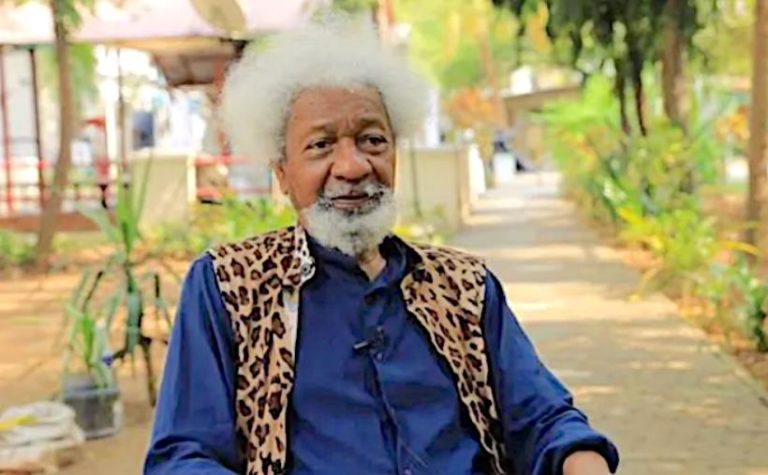
By Wole SOYINKA


THE most distressful aspect of my recent interaction with cows and herders is that it has created a most unwanted distraction from the ongoing life and death Nigerian narrative. One has to take time off to deal with distortions and Fake versions, while students are being reportedly waylaid and killed and/or kidnapped in Ondo and farmers are being slaughtered in my own state. In short, the killings continue even as panels are being launched to enquire into immediate past human violations. For those who truly seek details of the Ijegba incident, I hereby affirm that I was never physically attacked, neither did I attack any cows. The cows and herders did however attack my property – and not for the first time.

The police need to be very, very careful, learn to be straightforward with public information. Failure to adhere to that obvious, basic form of conduct means that the public will lose total confidence in security agencies and constantly bypass them in times of civic unrest, no matter how trivial or deadly. How on earth could the police claim that my property was not invaded by cattle? It was. My groundsmen knew the drill and commenced the process of expelling them. Fortunately, I was then driving out and was able to lend a hand by vehicle maneuvering. Both cattle and herdsmen were flushed out of my property.

Read also: Police attribute death of 22 cows in Ondo to poisonous water

Once they were outside the gates, I came down from the vehicle and beckoned the herdsmen to come over. At first, they pretended not to understand, then, as I approached, fled into the bush. We thereupon “arrested” the cows, confining them to the roadside, while I sent my groundsman, Taiye, to the police to come and take over. Since they took rather long in responding, I summoned a replacement and proceeded to the police station. On the way, we met a detachment, turned round, and together we returned to the scene of crime. The police wanted to commence combing the bush for the fugitives but I stopped them – what was the point? Keep the cows, I advised, and the owner will show up. Of course, that owner eventually did.

I thoroughly resent the police version which suggests that the cows never invaded my home: home is not just a building; it includes its grounds. And it was not a stray cow, or two or three. It was a herd – we have photos, so why the lie? It is so unnecessary, unprofessional and suspiciously compromised. The police suggest that I have nothing better to do than to go accosting cows on the public road – to what end? If the police demand proof, the next time such an invasion takes place, I warn that there will be no lack for cadaver affirmation and the police will be officially invited to join in the ensuing suya feast. So please, let us get serious!

Getting serious means seeking with a sense of urgency, ways of terminating mayhem, impunity, and the homicidal culture being imposed on us through some near cultic business minority who just happen to trade in cattle. It means not giving up on peaceful solutions, but also being prepared for the worst. Those of my line of thought have been working on various ways of sensitizing the nation to the very real and imminent danger issuing from this cattle aberration. The menace, I repeat, challenges us as a cohesive entity and as communities of free individuals, committed to the dignity of existence. Cattle imperialism under any guise is an obscenity to humanity. So let me serve notice that we are about to commence a process of public sensitization; we hope even the police will join hands with the agenda as it progresses.

A special practical plea: now that the railways are being resurrected, let us make cattle wagons a priority. I grew up with the regular sight of those practical conveyances. It is time to bring them back.

Tracking bank fraud perpetrators in Nigeria could cost victims more than they lost

VICTIMS of bank fraud in Nigeria can pay more than they actually lost to fraudsters in an attempt to track the criminals and recover their money, findings by The ICIR have shown.

The payment includes other costs such as time spent and other inconveniences in investigating the perpetrators.

Tale of Lagos fraud victim who lost N370,000

The story of Grace Aderinola (not real name) who lost N370,000 in her accounts with Zenith and Access banks to fraudsters on January 14, this year captures the agonies that people whose bank accounts are compromised face in the country.

Aderinola was attacked by some armed men on January 13, around Ifako-Ijaye, Ogba in Lagos state when she went to buy household needs around 8 pm.

After overpowering her, her assailants snatched her phone and took other valuables on her. She immediately contacted her banks through their customer care lines and other persons she thought could be reached through her phone.

But she couldn’t get through to the two banks that night and later proceeded to hospital where she received treatment for trauma caused by the attack.

She then reported the matter at the Area G police station, Ogba, the following Monday and then headed to her banks to check her accounts. At the banks, she discovered that all the N370,000 in the accounts had vanished.

In her banks’ statements seen by The ICIR, N170,000 was transferred from her Zenith account to Kuda bank account 2002928595, operated by one Bankole Johnson Abayomi. The fraudsters then wired N101,000 from her Access account to the same Kuda account.

Another N99,000 was transferred from the Access account to another Access account number 1415028881. The account belongs to one Felix Kunle Oke.

All the transfers were made on the 14th of January, as revealed by her account statements.

The fraudsters also borrowed N13,500 from the victim’s Zenith bank account and went further to call her with a phone number 09029915687,   promising to return the phone to her. That was after she had discovered, through her account statement, that a phone number 08167008800 had been recharged with her zenith bank account.

They told her to come for her phone at Haruna Bust Stop, Ifako Ijaye. She went there, but the men did not show up. They also did not answer her calls. She left the bus stop after waiting for hours.

She told The ICIR that the incident had brought her life to a halt. “I have nothing on me again; to feed myself has been a problem for me since the incident happened. My siblings are in school; I couldn’t pay their school fees or provide food for them,” she said.

Police demand N70,000 for court order 

She said officers at the Ogba Area G police station advised her to approach the beneficiaries’ banks with a police report. She did, but Access and Kuda refused to suspend the beneficiaries’ accounts as she requested. They instead asked her to obtain banker’s order, a court document that authorizes banks to stop or freeze any account suspected of having benefitted from an illicit transaction or against which a judgment has been awarded over-indebtedness among others. The order is procured through a police report.

With the order, investigators can obtain data of beneficiaries of illicit funds from their banks to ease their tracking and arrest.

According to Aderinola, Zenith bank notified Kuda and Access banks of the fraud, but the banks could not suspend the beneficiaries’ accounts until she provides a banker’s order.

She agreed to get the order, but the police officers who would assist her in getting it demanded 70,000 as the cost of obtaining it in Oyo state.

The ICIR independently found out that the order could not be procured in Lagos, but Oyo state.

N70,000 not too much to get order outside Lagos  – Police command

While the victim argued that 70,000 naira was “too big for someone whose account had been emptied” to pay for a banker’s order,” CSP Muyiwa Adejobi, Lagos state police public relations officer thought otherwise.

He said he had received calls from people in the state over police requests for payment for the order.

He said courts in Lagos state no longer issue the order, stressing he didn’t understand why it had been so.

He said if any police officer chooses to help members of the public get the order, his demand for transport cost and other logistics should not be mistaken for exploitation, adding that public members who feel they could not afford the cost should get the order by themselves. He said anybody who needs the order could apply for it through a police report and it’s not only police officers that could obtain it.

He said the public should instead appreciate the police officers who volunteer to risk their lives on the dangerous Nigerian highways such as Lagos-Ibadan expressway to obtain an order that persons who need it could get by themselves.

According to him, if police officers choose to charter commercial vehicle from Lagos to Ibadan, pay for modest accommodation and feed, and return to the nation’s commercial hub, N70, 000  would not be too big to foot those costs. He said drivers of most chartered vehicles going on such a journey could charge as much as N50, 000, depending on the part of Lagos state where they are taking off from.

Adejobi said there is a need for public enlightenment on the order’s procurement, noting that members of the public who feel the police cheat them could go to court to obtain it.

He also frowned at the difficulty faced by the public in procuring the order.

The ICIR findings showed that the order could be procured with N20,000 by police officers on Oyo state.

A police source who pleaded anonymity told The ICIR that coming from Lagos to get a banker’s order in Oyo state “should not be considered legally appropriate” because Oyo state is another jurisdiction.

“So, to my knowledge, anybody coming from Lagos to Oyo usually works with the police in Oyo to get the order. In most cases, it’s not something one can apply for in one day and get.

“You have to go through the police here, make some settlements and even bribe some of the high court officials, so they can quickly process it for you. Only the high court judges give the order here in Oyo,” the source stated.

The ICIR further learnt that abuse of the order in Lagos state compelled the state government to suspend its issuance. Lower courts, like magistrates, were issuing it before in Lagos before it was stopped.

Kuda, Access, Zenith bank speak.

In a terse message mailed to The ICIR by Kuda, the bank expressed its willingness to assist any bank that communicates any illicit transaction in its customers’ accounts at any time. But, that might not be until the banker’s order is provided, as these victims claimed the bank rejected police report and emails from her bank notifying it of the fraud.

Access bank, which spoke with The ICIR through one Mr Emmanuel at its customer care desk said the victim had to obtain the banker’s order before it could suspend the beneficiary’s account of the fraudulent transfer.

“We don’t want to carry out the wrong action because sometimes, some people carry out erroneous transfers and we’ll not be able to perfectly capture the case until police or court can give us the detailed breakdown of what happened. If she confirms to the police or the court that she lost her phone, she is talking under oath. She will provide that information to us. We will use the court order to act.

“But, if she is unwilling to provide that information, the banker’s policy in which blocking an account has heavy implication on banks, will not allow us to carry out that action without legal backing.”

He explained further that there are instances where people do business together, and in the course of payment, they disagree. One party would want the bank to close the order’s account in a bid to retrieve the money already paid into the account.

He said in a circumstance whereby a bank wrongly suspends its customer’s account; it will pay a heavy price.  “If we destroy that person’s business, we are the ones to pay 100 percent full cost,” he stated.

Similarly, through Ayoola Kusimo, Head of its Corporate Communications, zenith bank said the bank could only act whenever it gets the banker’s order.

“Anything fraud, we don’t have the power to close the customer’s account when another bank is involved. We can’t compel Access, Kuda or any other bank to do anything. Let the police be involved. They know what to do.

“That is why banks are crying out every day to their customers to protect their accounts. We do this all the time on social media, newspapers, and other media because we know that the moment you allow fraudsters to get your details, getting your money back is a very long process.

“We can’t just block anybody’s account because the person was alleged to have defrauded another person. The police must be involved. It is the job of the police to do an investigation, not the job of the media,” as he condemned the involvement of the media by this victim on the matter.

He said bringing issue such as this to media’s attention “is not even newsworthy,” but the police, who should carry out investigations, should be allowed to do their work.

Experts react

Meanwhile, Uche Uwaleke, a renowned finance and capital market professor, told The ICIR that there is little the bank could do in the matter without an order from a court of competent jurisdiction.

While sympathising with the victim, the president of the association of capital market academics of Nigeria and a former commissioner of finance in Imo state, said the practice had to do with the age-long bank’s duty of secrecy or confidentiality which he said could only be waived in four circumstances where it is in the interest of the bank; it is by the consent of the bank customer; it is under compulsion of law, and it is the interest of the public.

Read AlsoINVESTIGATION; How online fraudsters feed on greed, naivety of victims in Nigeria

“The 4th condition (where it is in the public interest) is usually a tedious process most times involving the courts. You can see why it has been very difficult for the Nigerian government to recover stolen funds stashed in local and foreign bank accounts.

“As a matter of fact, Section 13 of the Money Laundering Act 2011 permits the EFCC to place any bank account under surveillance, but this is again subject to a court order.

“So, in my view, the bank position is in order as it is only trying to follow the law and avoid liability. Sadly, the court order has to be obtained in faraway Oyo State,” the associate professor of accounting & finance and head of banking & finance department at Nasarawa State University Keffi said

Tola Akinmutimi, a seasoned journalist and former business editor of Daily Trust Newspaper concurred with Uwaleke.

He said banks need the court order before the beneficiaries’ accounts could be suspended.

He urged all bank account holders to protect their accounts and ensure their phones and other devices are protected with a password.

He advised that in no circumstance should anyone save their account pin, bank verification number and other sensitive codes on their phones, laptops and related devices.

While sympathising with the lady, he urged authorities vested to investigate such cases to do all within their powers to apprehend the criminals behind the act, after the bank order had been procured.

#OccupyLekkiTollGate: Nigerian govt fumes, says no protest will hold

0

AHEAD of Saturday’s planned #OccupyLekkiTollGate protest, the Nigerian government has issued a stern warning to those behind it to desist from doing so, stating that security agencies are ready for any eventuality.

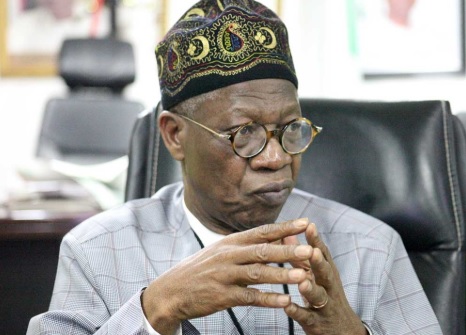
Lai Mohammed, Nigeria’s minister of information and culture,  who gave the warning at a press conference in Abuja on Thursday, said chances that any peaceful protest would be hijacked at this time were very high.

On Monday, The ICIR had reported how the plan to #OccupyLekkiTollGate came on the backdrop of the controversial ruling of the Lagos Judicial Panel of Inquiry to reopen the Lekki toll gate.

The Doris Okwubi-led panel ruled in favour of the Lekki Concession Company (LCC) to repossess the toll plaza for repairs and insurance claims at its last sitting on Saturday.

The ruling was supported by five members out of the nine-man panel, with four other members, including Ebun-Olu Adegboruwa, a senior advocate of Nigeria (SAN), and the youth representatives, opposing it.

Some youths have also planned the #DefendLagos rally to counter the protest which is scheduled for Saturday 13th, February, 2021.

The Lekki toll gate has been shut by the panel since last October 20, 2020, when armed soldiers opened fire on unarmed protesters, allegedly killing some and injuring several others.

But Muhammed at the press conference claimed that there was intelligence that some activists within and outside the country in connivance with some ‘subversive elements’ were planning to destabilise the country with the protest.

“Any further resort to violence in the name of #EndSARS will not be tolerated this time.

“The security agents are ready for any eventuality. A situation in which six soldiers and 37 policemen were murdered in cold blood by hoodlums will not repeat itself.

“The attack, looting and razing of 269 private and public property will not happen again. The killing of 57 civilians will not be re-enacted.

“We therefore strongly warn those who are planning to re-occupy Lekki Toll Gate on Saturday to desist. We know that many of those who have been loudest on social media in advertising the plan to reconvene in Lagos on Saturday are not even in Nigeria. They are elsewhere around the world fanning the embers of violence and inciting gullible people back home. No one should fall for their antics.”

He added that “no government anywhere will allow a repeat of the kind of destruction, killing and maiming wrought by the hijackers of #EndSars protests last year. After all, only one policeman – (plus four others) – was killed in the invasion of the US Capitol in January, yet the FBI has continued to hunt down and prosecute the perpetrators. No life is more important than the other.”

We are almost back to military dictatorship in Nigeria, says Falana

0

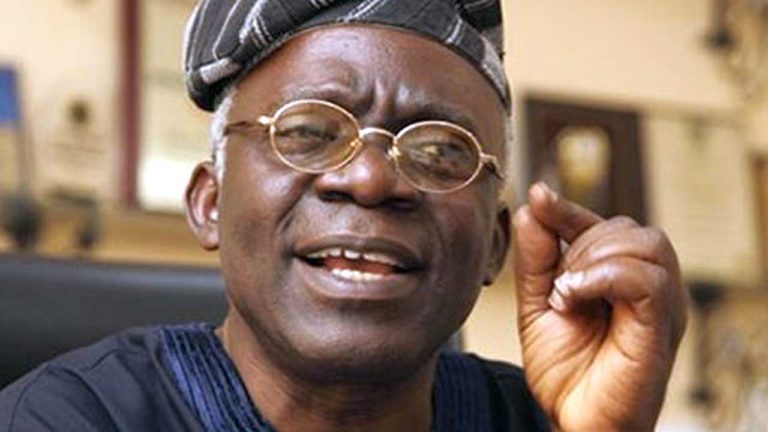
FEMI Falana, a human rights lawyer and senior advocate of Nigeria (SAN), has said that the country is almost back to its early days of full military dictatorship.

Falana said this on Thursday when he featured on Sunrise Daily, a breakfast show on Channels Television.

While responding to a question about change in landscape with respect to human rights in Nigeria, Falana said no progress had been made.

“I will tell you that, very unfortunately, we are almost back to those days of full military dictatorship in Nigeria,” Falana noted.

He said there was an occasion last year where he had to remind Muhammadu Buhari,  Nigerian President, that even when he served as a military dictator, he still complied with court orders.

“Where the court made orders for the release of Nigerians under the State Security Detention of Persons Decree Number 2 of 1984, including myself, I was detained and the court said “release him”  and I was released. Under Ibrahim Babangida military regime, we were released,” the human rights lawyer stated.

He added that he could not fathom how a democratic government would say it would avoid a court order on the basis of national security, adding that even under the military regime, it was unheard of not to talk of a democratic government.

However, he noted that on paper and officially, Nigeria had one of the best human rights law administrations in the world but not so in reality.

Falana noted that Chapter 4 of the Nigerian Constitution, African Charter on Human and Peoples’ Rights and others were there but observed in breach by the government.

He noted that the assertion that court orders would not be obeyed was wrong because it was  the court that should determine what national security would be based on facts made available to it. Falana stated that the country should not be debating whether the government would obey court orders or not.

In 2019, The ICIR reported how the State Security Service (SSS)refused to obey a Federal High Court order for the release of Sowore following several days of detention.

Kogi state’s claim about recording highest foreign investment in 2020 is FALSE

KINGSLEY Fanwo, the Kogi State Commissioner for Information on February 2, 2021, claimed the state attracted the highest Foreign Direct Investment (FDI) into Nigeria during the fourth quarter (Q4) of 2020.

The assertion was made on  Channels television breakfast show, ‘Sunrise Daily’.

Fanwo was on the national television programme to dispute the declaration of Kogi state as a high-risk area by Nigeria’s Presidential Task Force (PTF) on COVID-19.

The programme is also hosted on the television’s YouTube platform which has over 1.4 million subscribers.

Fanwo said:

PTF and NCDC are saying that people should not go to Kogi because it is a high-risk state.

Where is the statistics to support their claims? They don’t have any statistics to support their claims. The death rate in 2020 is less than what we had in 2019.

So, it is not like some people are hiding the ailments or people are dying secretly. There was nothing like that. And you could see that in the last quarter of 2020, Kogi was declared the state with the highest influx of foreign investments in the entire country.

That shows that the people of the state are healthy, the state is safe. The statement by the PTF is targeted at the economy of the state.

The claim

Kogi state attracted the highest foreign investment in the fourth quarter (Q4) of 2020.

Kingsley Fanwo Kogi State Commissioner for Information
A screenshot from the programme.
The finding

Foreign Direct Investment (FDI) are business ventures established in a country by foreigners.

It largely contributes to the growth and overall development of the host nation’s economy. It is also one of the parameters used to benchmark the economic growth of a nation and its respective states.

The Corporate Finance Institute also described FDI as an investment from a party in one country into a business or corporation in another with the intention of establishing a lasting interest.

FDI is a subset of capital importation alongside portfolio investment and other investment.

In Nigeria, the National Bureau of Statistics (NBS),  in its report detailing the activities for the last quarter of 2020 says the country witnessed a significant drop in capital importation with a total of 9.68 billion dollars.

In 2019, it was 23.99 billion dollars while in 2018  it was 16.81 billion dollars.

The report reads “The total value of capital importation into Nigeria stood at 1,069.68 million dollars in the fourth quarter of 2020. This represents a decrease of -26.81 percent compared to Q3 2020 and -71.87 percent decrease compared to the fourth quarter of 2019.

Similarly, the total value of capital importation in 2020 stood at 9,680.49 million dollars, compared to 23,990.05 million dollars in 2019, representing a decline of -59.65 percent between the two periods.”

According to the report, the United Kingdom (UK) remains the top source of capital investment in Nigeria in the last quarter of 2020 with $236.88 million. This sum accounts for 22.14 per cent of the total capital flow.

Moreover, “by the destination of investment, Lagos state emerged the top destination of capital investment in Nigeria in Q4 2020 with 829.64 million dollars. This accounted for 77.56 per cent of the total capital inflow in Q4 2020.”

In Q3 2020, Lagos also ranked top among states in the country with the highest destination of investment. Lagos pulled 1.20 million dollars of capital importation, followed by Abuja with 195,570 dollars then Abia State with an investment value of 56,070 dollars.

CAPITAL IMPORTATION BY DESTINATION Q3-Q4 2020
Did Kogi State attract the highest investment in Q4 2020?

In Q3, 2020 Kogi had no record of foreign investment and could not make the NBS list of states that recorded ‘capital importation by destination’.

It was the same in Q4. The state did not attract capital importation at all based on the NBS data.

Aside from Lagos state which attracted 829.64 million dollars of capital importation in the last quarter of 2020, the Federal Capital Territory, Abuja followed with 222.64 million dollars.

Kogi recorded zero.

Nigeria’s total capital importation for the year was 9,680.49 million dollars.

The NBS report further stated that the “Data is supplied administratively by the Central Bank of Nigeria (CBN) and verified and validated by the NBS”.

The FactCheckHub further reached out to Sunday Ichedi, the NBS Head of Public Affairs and International Relations, as to why some states like  Kogi recorded zero.

Ichedi explained that the information on their report was sourced from the Nigeria Investment Promotion Centre (NIPC).

“On investments, the NIPC is the government body working in that area. So, those states without figures don’t have investments as of the time it was reported,” Ichedi said.

The verdict

Based on the above data sourced from the National Bureau of Statistics (NBS), the claim that Kogi State has the highest Foreign Direct Investment for the last quarter of 2020 is FALSE.

Christian, Islamic leaders warn Nigerians against religious politics

0

By Doyin OJOSIPE


RELIGIOUS politics remains a notable cause of disaffection, social disintegration and countless bloodletting in the country, religious leaders have said.

They urged Nigerians to be wary of politicians pitching them against each other for political gains.

The clerics said this on Tuesday in separate addresses at a town hall meeting on Interreligious and Intercultural Dialogue and the launch of a MIL training manual for religious leaders on promoting peace in the age of social media.

The meeting, which held in Keffi, Nasarawa State, was organised by the African Centre for Media and Information Literacy (AFRICMIL), with the support of the Canada Fund for Local Initiatives (CFLI).

Speaking at the event, Mohammad Ali, Chief Imam of Jumaat Mosque in Nasarawa state, said the desire to get more and take over other people’s wealth was responsible for the kind of politicians in the country.

He said the politicians would either go to church or mosque and/or meet with adherents of a religion to seek loyalty, canvass for votes, after which they forget about the people.

Read Also: 57 communities in FCT kill twins, triplets, albinos – ActionAid

“They just want to win the election. After winning, they don’t even bother about the church or the mosque nor their followers. They come under the guise of being  Muslims or Christians but never had genuine intentions,” he said.

In the same vein,  Ogbonna Akuma, chairman of Christian Association of Nigeria (CAN), Nasarawa North Senatorial Zone, said although politicians had hijacked religion for selfish reasons, there had been more clashes because of ignorance and lack of understanding of other religions.

He said, “ As religious leaders, if we can go back and educate our people, it will go a long way to solve the problem.”

Addressing participants at the meeting,  David Akoji, who represented the director general of National Orientation Agency (NOA), Garba Shehu, said religious leaders held a sacred responsibility to promote peace in the society.

Akoji advised religious leaders to lend their voices against religious intolerance especially as they wielded the power to influence their followers.
He commended AFRICMIL for the initiative, stating that his organisation was always ready to give its support.

AFRICMIL coordinator, Chido Onumah, said the townhall meeting was third in the series of townhall meetings on the CFLI Interreligious and Intercultural Dialogue. The first two were held in Plateau and Kaduna States.

He said Nigeria was in need of such an initiative in the midst of heightened social disintegration and chaos in the age of social media.

Onumah noted that although the Nigerian society was greatly polarised along a variety of fault lines, none threatened the peace and stability of the country more than religion.

“The adherents of Christianity and Islam are endlessly battling for supremacy in all aspects of national life. Divisive and hate speeches are consistently delivered by preachers, and the faithful feel no restraint in physically carrying out the demands of these messages which are mostly extreme and, in some cases, violent” he said.

He stated that the age of the social media had complicated the issue of religious clashes and promoted hate speech and fake news as ignorant adherents would often make use of the media to provoke one another and stoke up needless tension among themselves.

In his words, “The potential for intense religious crises is even more obvious in this age of internet technology where websites, blogs and social media platforms are routinely deployed to disseminate all kinds of fake news and hate messages targeting other religions and cultures.”

The coordinator said it was important for youths and religious leaders to be media and information literate in order to tackle the trend by being able to recognise and respond to groups or individuals using the internet to promote stereotypes, preach religious extremism and promote violence.

According to him, “AFRICMIL has been working for many years with its partners in Nigeria and outside, to create awareness about the importance of Media and Information Literacy (MIL), and to promote the relevance of MIL as a catalyst for peaceful communication and a culture of dialogue, particularly on social networks.”

Soyombo emerges second prize winner at Fetisov Awards with ICIR/Cable-funded story

0

FISAYO Soyombo, an investigative journalist and former editor of the International Centre for Investigative Reporting (The ICIR), on Wednesday, emerged the second prize winner in the Outstanding Investigative Reporting category of the 2020 Fetisov Journalism Awards (FJA).

Soyombo’s undercover investigation on Nigeria’s criminal justice system was funded by The ICIR and TheCable. He spent two weeks in detention in an attempt to track corruption in the nation’s criminal justice system.

To experience the corruption of the justice system first-hand, he adopted the pseudonym, Ojo Olajumoke, pretending to be involved in a crime which prompted his arrest and subsequent detention in a police custody. He was subsequently arraigned in court and eventually remanded in prison.

Read here: UNDERCOVER: Bribery, Bail For Sale… Lagos Police Station Where Innocent Civilians Are Jailed And Criminals Are Recycled (1)

After publication  of the story, interior minister, Rauf Aregbesola, described the investigation as a ‘fantastic job’ and condemned the dehumanisation of prison inmates. The minister later announced an official investigation by the Nigerian authorities.

Read also: UNDERCOVER: Drug Abuse, Sodomy, Bribery, Pimping… The Cash- And-Carry Operations Of Ikoyi Prisons 2

Another ICIR-funded investigation by Kelechi Iruoma and Ruth Olurounbi, which focused on on oil spillage/ environmental pollution in the Niger Delta, was shortlisted under the ‘Excellence in Environmental Journalism’ category, but it did not make the winners’ list.

Nigeria’s Philip Obaji  was  named the third prize winner in the Outstanding Contribution to Peace category for his story which exposed a human trafficking ring on Facebook that specialises on selling Cameroonian child refugees.

According to the organisers, 35 entries from 21 countries were shortlisted and eleven winners were selected for the four categories. However, only two winners that met the judges’  criteria were announced in the Outstanding Investigative Reporting category this year.

The grand prize winner will cart home 104,005 dollars, while the second and third prize winners in each category will receive 20,801 dollars and 10,400 dollars respectively.

The Fetisov Journalism Awards aims to promote universal human values such as honesty, justice, courage and nobility through the example of outstanding journalists from all over the world as their dedicated service and commitment contribute to changing the world for the better.

Soyombo and Obaji join the list of Nigerian winners of the Fetisov Journalism Awards which include Isaac Anyaogu of Businessday who won the first prize in the 2019 Excellence in Environmental Journalism and Amos Abba of The ICIR who finished third in the same category for his report on Nestle Nigeria’s contamination of the water supply of its host community in Manderegi, Abuja.

57 communities in FCT kill twins, triplets, albinos – ActionAid

0

A civil society organisation, ActionAid Nigeria (AAN), has said that about 57 communities in the Federal Capital Territory(FCT)  kill twins, triplets and albinos as part of culture.

Ene Obi, country director of AAN, made this known during an interview with the News Agency of Nigeria (NAN) in Abuja on Wednesday.

“In some communities, there are twin altars where they bury these children and this happens in a couple of communities, about 57 around the FCT,” said Obi.

Lamenting the practice, Obi said that before now, the agency was not aware that such were in practice in the FCT environs.

“We know that the killing of twins was a practice in some parts of Nigeria. But little did we know that sitting in the FCT here and around us, twins, triplets, quadruplets, albinos, down syndrome children and those who lose their mothers at childbirth are considered evil and are killed.”

He explained that a centre had been created with support from the European Union to help cater for some of the children rescued from such communities.

Another not-for-profit organisation in Abuja, Vine Heritage Home Foundation, Kuje, said the practice was prevalent in the FCT and neighbouring communities.

Stephen Olushola, founder of the foundation, said last week that these communities killed twin babies, albino children, children with cerebral palsies, babies with growing teeth from the top of their gum, and babies whose mothers died during childbirth.

He stated that the tribes responsible for such act cut across Abaji, Gwagwalada, Kuje, Kwali and some parts of AMAC.

Olushola added that there were 67 communities carrying out the act but through several interventions, 10 of them had agreed to put an end to the act.

Historically, the killing of twins is prevalent in the southern part of Nigeria. Mary Slessor, a Scottish missionary, is said to have abolished the practice in Cross River State in the 19th century. However, the state is not the only place where such acts are perpetrated in Nigeria.

Read AlsoPWDS, poor Nigerians most affected by corruption in Nigeria – Albino foundation

Aside from killing of twins, in some part of Africa, albinos are killed either for rituals or for respite, according to several reports. Sometimes the albinos are amputated by ritualists, a report by the Human Rights Watch states.

In 2019, about 10 ‘witchdoctors’ were said to have been arrested by the Tanzanian authority in connection with killing and amputation of albinos, most of which were children.

The United Nations notes that the Office of the UN High Commissioner for Human Rights (OHCHR), the UN agency that deals with human rights issues, reported in 2016 that albino hunters sold an entire human corpse for up to 75,000 dollars, while an arm or a leg could fetch about 2,000 dollars.

False claim circulates online that NIMC has approved NIN self-registration

A POST circulating on WhatsApp claims that the National Identity Management Commission (NIMC) has approved a website for online National Identification Number (NIN) self-registration.

The NIMC is a Nigerian government agency that operates and regulates matters of national identity in the country.

The post, retrieved from a WhatsApp group on February 8, 2021, asks people to avoid unnecessary crowd at the NIMC centres and enrol online via a web link.

The post reads:

Federal Government has approved individual NIN registration online to avoid unnecessary crowd in the NIMC centers. Enroll Now.

THE CLAIM

The National Identity Management Commission (NIMC) has approved online self-registration of National Identification Number (NIN).

THE FINDINGS

Checks by the FactCheckHub show that the claim is FALSE.

The FactCheckHub observes that the website attached to the claim has similar characteristics of phishing websites attached to claims previously debunked here and here.

The website attached to the claim is different from the official website of the NIMC.

The official website of the NIMC is nimc.gov.ng and it does not have provision for NIN registration.

It, however, has provision for pre-enrolment. This process involves filling details online using the pre-enrolment portal (penrol.nimc.gov.ng), and the summary page which has a 2D barcode is printed and taken to an enrolment centre.

To remove ambiguity as to what pre-enrolment means, the NIMC website includes a caveat:

It is important to note that the Online Pre-Enrolment is an initial step in the enrolment process. The enrolment is only completed after the applicant gets his or her biometric data (fingerprints, headshot photograph and signature) captured and processed by an Enrolment Officer at any NIMC Enrolment Centre.

The website in the claim either seeks to fraudulently acquire people’s information or garner traffic as it prompts them to share links on WhatsApp groups.

For instance, the first page of the website asks people to input their full name and mobile number, while another page enjoins people to share the information with 15 friends or to 5 groups on WhatsApp.

To avoid falling victim to phishing websites,  here are some guides on how to fact-check broadcast posts shared on WhatsApp.

Kayode Adegoke, head of corporate communications, NIMC, has also confirmed to FactCheckHub that the claim is false.

Replying to the FactCheckHub’s enquiry via a telephone conversation, Adegoke says, “The website is fake.”

The FactCheckHub also observes that the NIMC has debunked the claim on its official verified Twitter Page.

THE VERDICT

The claim that the NIMC has approved online registration of NIN is FALSE. In addition, the website link shared in the claim looks fraudulent.

Viral video claiming students ran from forced COVID-19 vaccination was shot in 2019

A video has been shared multiple times on the social media with a claim that students were running away to avoid forced COVID-19 vaccination.

The video was posted on Twitter by ANT1 (@ANT159694954) on February 2, 2021 with the caption, “Africa in Danager (sic), kids running away from force (sic) vaccination. What is happening in the world.”

The 30-second clip has over 13,000 views.

THE CLAIM

Video shows students running away to avoid forced COVID-19 vaccination.

False claim circulates on line-about evasion of vaccination
A screenshot of the tweet.

THE FINDINGS

Findings by the FactCheckHub show that the claim is FALSE.

Through the WeVerify technology and the Google Reverse Image Search, the video was traced online to May 25, 2019.

In 2019, The Guardian Nigeria reported how a 17-year-old student of Community Secondary School, Oroworukwo, Port Harcourt, Rivers State in Nigeria, sent his school into pandemonium after he brought a teargas canister to school.

The canister had exploded while the students were fiddling with it.

“The explosion caused panic, prompting several students who were scared to start jumping down from the first floor of the two-storey of the secondary school,” the report stated.

Read AlsoFACT CHECK: Claim that Anambra’s debt profile is over N200bn is FALSE

The Vanguard newspaper, in 2019, reported  and did a follow-up story on the incident.

The footage was recorded by a teacher and it went viral after it was posted on the social media.

Ruth Major, school’s principal, had reported the incident at Olu-Obasanjo Police Station, Port Harcourt.

She said, “On Thursday, we experienced a security challenge and it happened because a student in senior secondary school 2 brought a teargas canister to class and invited his mates.

“As they were contemplating on how to open it, one of them, Darlington, detonated it. When he opened it and smoke started coming out, he ran out of the class. As a result, there was panic and stampede.”

As such, the video, which was online in 2019, could not have been of students running to evade forced COVID-19 vaccination. This is because it predates COVID-19  pandemic and also its vaccination.

The COVID-19 vaccines have been a subject of debate and misinformation.

Since the COVID-19 outbreak and its transition to a pandemic, the disease has spread across nations globally, infecting millions of people and killing many as well.

The World Health Organisation (WHO) COVID-19 dashboard says, as of February 7, 2021, the confirmed cases globally were over 105 million (105,394,301) while death was over 2.3 million (2,302,302).

After several efforts, including support from multiple experts in finding a cure to the pandemic, the WHO eventually announced the approval of Pfizer/BioNTech vaccine for emergency use.

In the second week of December 2019, the United States Food and Drug Administration Agency (FDA) also issued its support for the emergency use of the Pfizer/BioNTech.

Other vaccines such as Moderna, AstraZenecaSuptnik VJohnson and Johnson single-dose Covid-19 serum have been developed.

The Chinese, through its state-owned China National Pharmaceutical Group (Sinopharm), has also developed and approved Sinovac.

THE VERDICT

The claim that the video shows students running away to avoid forced COVID-19 vaccination is FALSE. The video was traced online to 2019, as such, it predates the COVID-19 pandemic and its vaccination.