FISHERMEN operating in the shallow waters of the Atlantic Ocean near Bayelsa coastline on Sunday reported an oil leak suspected to be from the Funiwa oilfield operated by Chevron Nigeria (CNL).
News Agency of Nigeria (NAN) reports that fishermen from Koluama in Southern Ijaw Local Government Area noticed crude on the waters near
the oil facility as helicopters were seen overflying the area.
Tombra Ebitimi, a fisherman from the coastal settlement told NAN that he noticed the incident on Saturday night and subsequently reported
same to the community leadership.
He said that several helicopters have been deployed to the area for assessment as response efforts were yet to commence.
“Some of us who went on fishing sailed into the oil-contaminated area near the Funiwa oilfield and got our nets and fishing gear soaked
with crude on Saturday, by today we noticed some helicopters over-fly the facility by today.
“It could be that community leaders have informed the company but our concern is that they should not apply toxic chemicals from the sky
to dissolve the oil. Those chemicals used to disperse and breakdown crude is unfriendly to fishes and marine life generally,” Ebitimi said.
He said that fishermen in the area had temporarily suspended fishing to avoid catching contaminated fishes that could jeopardise public
health.
First Exploration and Production an indegenous oil firm operates Oil Mining Leases 83 and 85 acquired from Chevron following its divestment
from some of its assets in the area where it still retains interests in some fields.
Officials of Chevron and First Exploration and Production have yet to respond to requests for comments on the incident. (NAN)
NATHANIEL Adiakpan, permanent secretary, Akwa Ibom State Government House, has explained why the government house posted N1.3 billion as expenditure for fuel and lubricants for the 2019 fiscal year.
According to the permanent secretary, the reason for the expenditure was because the government house relied exclusively on electricity generated by heavy generating sets, saying that the Hiltop Mansion was not connected to national grid.
“Government House does not enjoy the benefit of the national grid. Government House is not structured to work on power source that is not stable. So, we use the fuel to generate 24 hours electricity through heavy generating sets”, he said.
The permanent secretary made this known on Monday during the investigative hearing held on controversies surrounding the 2019 Annual Report of the Accountant General with audited financial statements for the year ended 31st December, 2019.
The State House of Assembly on December 8, 2020, had constituted a four-man committee to investigate issues in the report and report back to the House within a month.
At the hearing, Adiakpan noted that besides the expenses made on fuel for electricity generation, several other vehicles including security vehicles used fuel from the government house fuel dump.
In our earlier Investigative report, we had said that, “Our findings revealed that the Akwa Ibom State Government House fuel dump managed by Mr Udo Ekwere receives and uses five trucks of 45,000 litres of fuel (premium motor spirit) every two months and 10 trucks of 45,000 litres of diesel (automative gas oil) for the same period.”
In the report, we had also noted that “Five trucks of PMS amount to 225,000 litres, meaning that 1,350,000 litres would be bought for the year. PMS was sold at N145 per litres in 2019. Thus, 1,350,000 litres would be bought at the cost of N195,750,000.
“For diesel (automative gas oil), 10 trucks of 45,000 litres amounting to N450,000 (2,700,000 litres) would be bought for the year. The average pump price for diesel in 2019 was N220 per litres. Thus, in a year, the projected cost of 2,700,000 litres of AGS will be N594 million.
“Hence the total cost of PMS and diesel utilised for one year should amount to N689,750,000.”
Further checks by this reporter into the 2015 financial statement of the state indicated that out of N1 billion budgeted for the item, N791.648 million was posted as expenditure.
In 2016, N1 billion was posted as expenditure which was the same amount budgeted for the fiscal year.
In 2017 and 2018, the amount budgeted rose to N1.3 billion in the two fiscal years, remaining the same in 2019.
When asked by the ad-hoc committee of the Akwa Ibom State House of Assembly to give explanation on the N12 billion posted as expenses for ‘State Security Service Expense,’ the permanent secretary said he could not speak on the issue.
Udo Kierian, chairman of the committee, reminded the permanent secretary that the issue was already in public, stressing the need for an explanation from the Executive. But this did not yield any result.
Adiakpan replied, “Security everywhere is a coded venture. It is not what you talk freely.”
Kierian, while adjourning the hearing, noted that the public hearing would continue on a date to be announced on the media in order to give opportunity for affected government officials to address questions and memos submitted to the committee.
THE performance of Nigerian stocks in the second week of January was better than that of the first week, The ICIR checks have shown.
This is understandable given that many investors were returning from Christmas and New Year festivities in the first week, said Matthew Ibeabuchi, a stock market analyst.
The number of deals traded in the Nigerian Stock Exchange (NSE) in the second week of January grew 13.12 percent from the week before, according to a report by the NSE released on Monday.
A total turnover of 3.447 billion shares valued at 32.73 billion naira in 30,327 deals were traded last week by investors on the floor of the Exchange, as against 3.39 billion shares estimated at 19.87 billion naira traded the previous week in 26,808 deals.
The financial services industry (measured by volume) led the activity chart with 1.714 billion shares worth 13.352 billion naira traded in 15,102 deals. The industry contributed 49.74 percent and 40.80 percent to the total equity turnover volume and value respectively, said the NSE.
It was followed by the construction/real estate industry with 768.131 million shares valued at 4.203 billion naira in 430 deals.
Next was the conglomerates industry, which had a turnover of 279.799 million shares worth 578.694 million naira in 1,199 deals.
“Trading in the top three equities namely, UPDC Real Estate Investment Trust, Mutual Benefits Assurance Plc and Transnational Corporation of Nigeria Plc (measured by volume) accounted for 1.224 billion shares worth 4.459 billion naira in 929 deals, contributing 35.52 percent and 13.63 percent to the total equity turnover volume and value respectively,” the NSE noted.
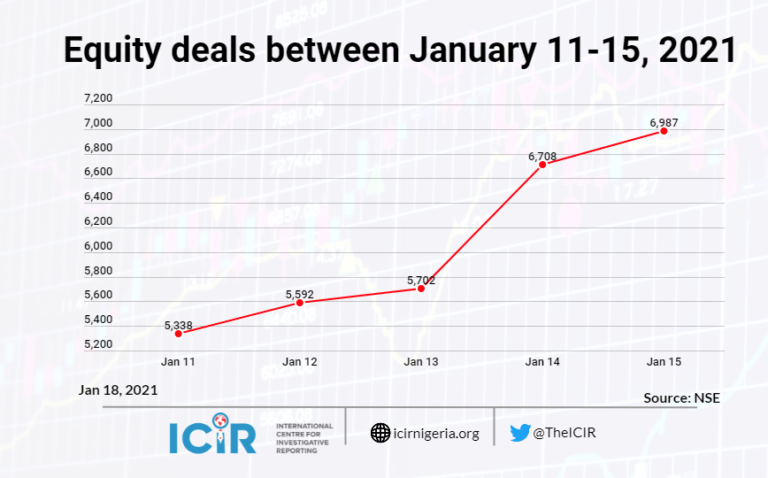
About 5,338 deals were recorded on January 11 as against 5,592 deals on January 12. Also, 5,702 deals were traded on January 13, which increased to 6,708 deals the next day. Last Friday, January 15, the number of deals traded on the floor of Exchange rose to 6,987 deals.
In terms of bonds, 11,420 units estimated at 12.325 million naira were traded last week in 17 deals compared with a total of 10,051 units worth 12.591 million naira transacted last week in 27 deals.
A bond is a debt or “fixed income instrument that represents a loan made by an investor to a borrower (typically corporate or governmental),” according to Investopedia.
“The NSE All-Share Index and Market Capitalisation appreciated by 2.63 percent to close the week at 41,176.14 and N21.530 trillion respectively.
Top gainers included Japaul Gold& Ventures plc, Mutual Benefits Assurance and Royal Exchange, among others, On the other hand, top losers included Cutix plc, Daar Communications and Chellarams, among others.
ATTORNEY-General of the Federation and Minister of Justice, Abubakar Malami, (SAN), has challenged persons behind reports that he received a bribe from Minister of Niger Delta Affairs, Senator Godswill Akpabio, to present the evidence to the security and law enforcement agencies for investigation and possible prosecution if the allegation is found to be true.
Akpabio has been alleged of giving $5million bribe to Malami and some other unnamed influential persons to facilitate the appointment of a sole administrator for the Niger Delta Development Commission (NDDC).
The sole administrator in question, Effiong Akwa, hails from Akwa Ibom State, where Akpabio served as governor for two terms, from 2007 to 2015.
The AGF denied the allegation that he received gratification from the minister in a statement issued by his Special Assistant on Media and Public Relations, Dr Umar Gwandu.
However, the statement said the AGF challenged those behind the allegation to present evidence of the alleged bribery to security and law enforcement agencies.
“He (Malami), accordingly, encouraged the purveyors of the fictitious publication to approach relevant security and law enforcement agencies and proffer information that could lead to the criminal investigation against him if they feel strongly about their purported claim,” the statement said.
But checks by The ICIR show that should the security and law enforcement agencies investigate the matter and decide to prosecute Malami, he (Malami) will be the one to determine whether the case should be prosecuted, by virtue of his position as the Attorney-General of the Federation.
Also, in the event that it was decided that the matter should be prosecuted, Malami, as the AGF, would also supervise the prosecution.
Provisions of the 1999 Constitution, and the Administration of Criminal Justice Act, gave the Attorney-General of the Federation, or any legal practioner authorised by him, the powers to undertake prosecution of all offences in court.
Also, the Nigeria Police Force (Establishment) Act, 2020, which came into force on September 17, 2020, also gave the Attorney-General of the Federation powers to determine the fate of criminal prosecutions in the country.
Not only does the AGF have the power to institute, take over and continue criminal proceedings, he could also discontinue prosecutions.
Section 66 (1) of the Police Act, 2020, stated, “Subject to the provisions of section 174 and 211 of the Constitution and section 106 of the Administration of Criminal Justice Act which relates to the powers of the Attorney-General of the Federation and of a state to institute, take over and continue or discontinue criminal proceedings against any person before any court of law in Nigeria, a police officer who is a legal practitioner, may prosecute in person before any court whether or not the information or complaint is laid in his name.”
The law also required the police and other security and law enforcement agencies to make quarterly reports of all arrests made in relation to federal offences to the Attorney-General of the Federation.
Specifically, section 47(1) of the Police Act, 2020, stated that “The Inspector-General of Police and head of every agency authorised by law to make arrests shall remit quarterly to the Attorney-General of the Federation a record of all arrests made with or without warrant in relation to federal offences within Nigeria.”
Section 47(5) of the Police Act, 2020, empowered the AGF to establish an electronic and manual database of all arrests at the federal and state levels.
Also, some other sections of the Police Act, 2020, stipulated that the police should present reports of arrests made without warrant to magistrates, who will then forward same to the Criminal Justice Monitoring Committee, which would subsequently advise the Attorney-General of the Federation.
The implication of the legal provisions is that, supposing those behind the allegation actually have evidence against Malami and decide to present them to the security and law enforcement agencies, they will only be reporting the AGF to institutions that are under his supervision and influence.
Going by constitutional provisions, if the security and law enforcement agencies eventually decide to prosecute the matter, they will have to get the authorisation of the Attorney-General of the Federation, which is Malami himself.
Meanwhile, the other minister mentioned in the bribery allegation, Akpabio, has also denied giving the $5million bribe to Malami for Akwa’s appointment as NDDC sole administrator.
Akpabio denied the allegation in a statement issued by his media aide, Anietie Ekong.
The statement said the allegation was an attempt by “some unscrupulous bloggers” to “impugn the integrity of the Honourable Minister of Niger Delta Affairs and the Honourable Minister of Justice and Attorney-General of the Federation, Abubakar Malami”.
Claiming that unnamed people who are uncomfortable with the forensic audit of the NDDC were behind the allegation, Akpabio threatened to go to court over reports of the alleged bribery.
Akwa was named sole administrator of the NDDC on December 12, 2020, after President Muhammadu Buhari dissolved the Daniel Pondei-led Interim Management Committee, in response to a Federal High Court ruling which declared the IMC illegal.
The Sole Administrator had served as a Special Assistant, Finance, and Executive Director, Finance, in the NDDC but there are arguments that his appointment was contrary to provisions of the NDDC Establishment Act, 2000, which does not provide for a sole administrator.
The law provided for a board but the commission is being run without a board.
There are also claims that Akwa is Akpabio’s ‘man’, having served as Special Assistant on Finance to Mr Bassey Dan-Abia, Managing Director of the NDDC between 2013 and 2015. Dan-Abia was a commissioner in Akpabio’s administration in Akwa Ibom State.
Also, stakeholders have expressed concern that as sole administrator, Akwa could be in a position to influence the forensic audit of the NDDC, which would cover the commission’s activities from inception till 2019 – including the period (2013 to 2015) when he (Akwa) was a key member of the Dan-Abia-led management.
Akwa’s emergence as sole administrator of the agency which was set up to address long-standing developmental challenges in the oil producing states has heightened tensions in the volatile region, with other ethnic nationalities in the Niger Delta kicking against his appointment and demanding its reversal by the President.
Some of the youths in the region have threatened violence if Akwa is not removed from the position.
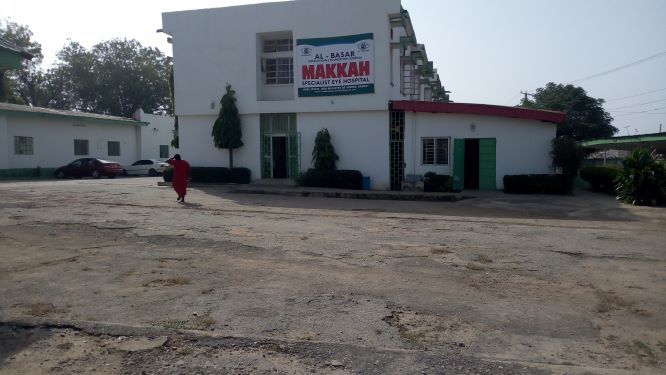
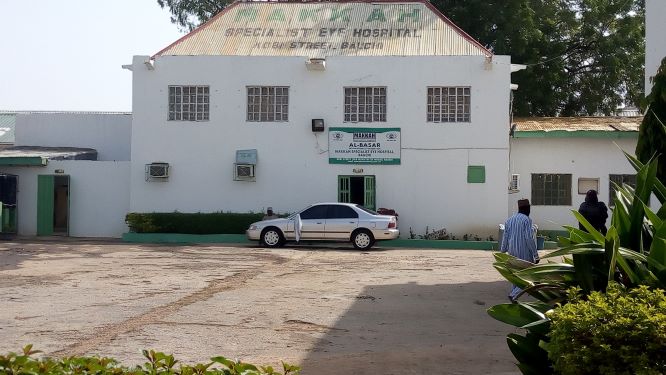
MAKKAH Eye Specialist Hospital Bauchi, owned by Saudi Arabia-based Albasar International Foundation, was established in 2009 as a non-profit social service outfit providing treatment to patients with visual impairment and other eye problems, supposedly at affordable prices based on the vision of the hospital.
The Vision of the organization as captured on its website among other things is “to provide therapeutic preventative and educational programs to manage blindness and visual impairment in developing countries on a regional and international scale through non-profit social services to help the less privileged”.
However, a two-month investigation by WikkiTimes reveals that the hospital has deviated from its creed of affordable healthcare, and is now charging clients three times the amount in similar private institutions. There are also allegations of maltreatment of patients seeking medical help and systematic disengagement of indigenous staff on frivolous allegations, even as the investigation uncovered how the hospital shortchanged the Bauchi State Government in tax revenues for six years.
The exhaustive investigation has documented several harrowing experiences of patients who consult the facility and the high cost of services and medications offered by the hospital when compared to other health facilities in the state. For instance, Musa Haruna, a glaucoma patient, recounted how one Dr. Zulfikar Ahmed Abbasi, a Pakistani expatriate Consultant Ophthalmologist rained insults on him for his inability to keep his scheduled appointment with the hospital.
“I added about three days to the time that I (was) supposed to return for other rounds of medical check-up and drugs; I explained to him that my inability to come back was because I don’t have money,” Haruna lamented; adding that “He (Dr. Abbasi) lacks human relations such that he cannot draw you as patient closer to him to give you advice on what you need to do. He only shouts on us”.
Three different staff of the hospital in separate interviews with WikkiTimes have all testified of how doctors of the hospital consistently insult, bash and on many occasions beat patients even at the point of surgery. Dembo Musa (real name concealed to protect the staff from possible backlash from the hospital’s management) told WikkiTimes that Dr. Abbasi has earned notoriety for beating, touching female patients inappropriately during examinations and making derogatory remarks.
Another staff of the hospital who spoke on anonymity confirmed that the doctors are usually intolerant with their patients and use harsh words on them when they make the slightest unintentional mistakes, such as wrong sitting arrangements.
Makkah Eye Specialist Hospital
“Whenever a patient mistakenly fails to act the way they instructed them, you will see them insulting or beating the patient sometimes. We are not pleased at all; anytime patients complain to us about the habit of the doctors, particularly older patients that are supposed to be handled with care and patience,” the unnamed staff said.
High Cost of medication and other services
Although the hospital is supposedly a non-profit making entity, it has steadily over the years raised its prices for consultancy and treatments by far higher than other healthcare centres rendering the same services, in spite of the fact that it enjoys several privileges that other privately-owned hospitals in the state can only wish for.
In 2009, when Makkah Eye Specialist Hospital first commenced operations, the fee for registration and consultancy was pegged at N300 but today it is N1500, witnessing about 400 percent increase. Other price surveys conducted showed that while the Progressive Lens +2 addition 250 is sold for N8,000 at the Bauchi State Specialist Hospital, N9, 000 at Madina Optical and N15,000 at the Abubakar Tafawa Balewa University Teaching Hospital Bauchi (ATBUTH), the same lens sells for a whooping N35, 000 at the Makkah hospital.
Inter-Branch Invoice
In addition, surgeries are way more expensive at the Makkah Eye Specialist Hospital than elsewhere in the state and medications cheaply imported from the Kingdom of Saudi Arabia are sold at very exorbitant rates. An inter-branch invoice of the hospital dated 7th July 2013 which was obtained by WikkiTimes shows that Optidex-T was imported at the rate of N230 but is sold to patients at the hospital for N1,600. Other examples are: Fluca imported at the rate of N300 is sold at N2000, Tobrex imported at N200, is sold at N1,800, Xolamol imported at N1,450 is sold for N3,800, and Optiflox imported at N165 is sold for a staggering N1,700.
Disengagement of Indigenous Staff
Our investigation further reveals that the hospital has over the years embarked on systematic disengagement of at least 24 indigenous staff who either protested against some of the inhumane bizarre conduct of some of the doctors or have demanded improved salaries and entitlements, allegedly citing trumped-up charges.
For instance, in a suspension letter obtained by this medium, Ikirama Abdullahi, a Bauchi indigene who was employed as a cashier of the hospital in July 2017, was abruptly suspended indefinitely on the basis of loss of cash receipt booklet which was in his possession without recourse to due process or fair hearing. When Abdullahi’s lawyer reached out to the hospital pointing out that his client had been suspended for misplacing a single cash receipt leaflet and not an entire cash receipt booklet as alleged in the suspension letter to him dated 9th day of December 2019; demanding them to rescind their position within seven days or face legal action, Abdullahi was reinstated.
He was, however, redeployed to serve as a security guard manning the hospital gate, a decision that forced him to resign. He alleges that his request to get his outstanding 10-month salary amounting to about N300,000 fell on deaf ears as the hospital outrightly refuses to oblige him and life has not been the same for him as he struggles to cater for 10 dependents, including his wife and child.
In a similar style, Umar Faruk, a clinical staff of the hospital, was illegally disengaged. He told our reporter that “when it was evident that I became critical of the hospital’s management in fighting for the rights of the indigenous staff who are consistently maltreated in the hospital, I became the target of the management. Faruk was eventually slammed with an indefinite suspension for allegedly trying to interpret a patient’s test result to her in the ward after he was spotted by the hospital manager.
How the hospital shortchanges government in Tax
Makkah Eye Specialist hospital is not only notorious for exorbitant medical services, dehumanizing treatment of patients and disengaging its indigenous staff; the hospital has also shortchanged the Bauchi State Government in tax for up to six years. Expatriate doctors of the hospital have their monthly salaries paid in two unequal separate installments, with the higher amount being tax-free, thereby shortchanging the Bauchi state government. For example, Dr. Zulfikar Ahmed Abbasi in September 2019, was paid the sum of $1,125.51 and $ 3,376.53 in two separate payment vouchers but only a paltry sum of $156.93 was remitted as tax to the Bauchi State Government. Similarly, another expatriate doctor, Kamran Siddiqui, received $ 1,313.60 and $1970.40 as salary for the month of August 2016, but only the smaller amount was taxed.
Our checks further revealed that this practice is exclusive to the expatriates working at the hospital who are paid in hard currency; the indigenous staff has their entire salaries taxed. Through this unprofessional accounting practice, the hospital has succeeded in denying the state government hundreds of millions of naira. A source at the Bauchi Inland Revenue Services who is not authorized to speak to the press confirmed to our reporter that the Makkah Specialist Hospital has earned a bad reputation for shortchanging the state government in taxes, and estimates that “withholding tax alone when tabulated could exceed N200 million”.
Two unequal separate payment sheets that facilitate tax evasion
Bauchi Inland Revenue Service, Health Ministry, ignore FOI and interview requests
A freedom of information request sent to Bauchi State Inland Revenue Service by this medium dated 16th November 2020 was ignored as at press time.
WikkiTimes in the FOI request interrogated the board on issues bordering on tax remittances of the hospital and asked the board to disclose tax remittances of Makkah Eye Specialist Hospital to the state government from 2009 to date; the yearly breakdown of the hospitals’ tax remittances; the amount Bauchi State Government is charging the hospital in tax based on drugs sold, services rendered and declared profit; the sum expatriate doctors pay per month to the state government in form of tax. WikkiTimes also sought clarification on whether or not the board has conducted any forensic audit into tax payment of the hospital and outcomes of such audit if one was done at all, but the FOI request fell on deaf ears.
However, a source at the BIRS who does not want to be named because he was not authorized to speak to the press on this matter, disclosed that relevant taxation laws operational in the state did not exclude profit or nonprofit making organisation from paying tax to the government. He said outfits that make a profit are also charged taxes on their declared profit made from the services rendered or commodities sold out to customers.
“Businesses that make a profit to the tune of N300,000 naira are taxed at 7 percent while any profit that is below N300,000 is taxed at just 1 percent. However, any profit that is above N3,250,000 is taxed at 24 percent,” the source said.
Speaking further, he said relevant taxation laws did not spare any income paid to all workers—indigenous or expatriate from remitting tax to the government. “All income paid to expatriate staff of an organisation are taxed. If payment is made to them in USD, the tax will be deduced in USD and if they are being paid in naira, the tax will be collected in naira as the case apply,” he explained.
According to our source, in the event that the employer failed to deduce tax as it applied from the remunerations of staff, the tax authority will confront the employer for such payment at a later date with penalties for not remitting the taxes as at when due. He added that a department known as Tax Audit and Investigation has been established to detect and identify defaulters and met appropriate sanctions on erring organisations.
When contacted for a response to the allegations of maltreatment of patients by doctors at the Makkah Eye Specialist hospital, the Bauchi State Commissioner for Health, Dr. Aliyu Maigoro, could not keep his promise to grant an interview and clear the air on the petition sent to his ministry by a staff of the hospital Umar Faruk who raised several allegations against the foundation.
Responding via a text message sent to him after several unanswered calls, Dr. Maigoro said: “My doors are open for clarification on any allegation in my ministry, I have nothing to hide, please. I’m only working to serve the good people of Bauchi. You may book an appointment in my office through the secretary on workings days.”
Two separate visits to the ministry on working days to get the ministry’s response to the allegations did not yield positive result, as the Commissioner was not on the seat and when our reporter eventually met Dr. Maigoro at the Bauchi government house and reminded him of the need to clear the air on the allegations, he promised to respond, but later reneged.
However, a human rights activist, Mr. Mbami Sabka Iliya, when contacted on why government officials appear reluctant to quickly address petitions or public complaints tabled before them, said: “they ignore most of the complaints due to their corrupt tendencies. Sometimes, some of them aid and abet such crimes, and that is why no matter the complaint, they tend to ignore them.”
Makkah Eye Specialist Hospital reacts
Manager of Makkah Eye Specialists Hospital Bauchi, Mr. Abdullahi Badamasi, while reacting to the allegations raised against the hospital disclosed that an audit carried out by the Bauchi State Inland Revenue Service found the hospital culpable of the allegation bordering on tax evasion and has reached an agreement with management to pay the unremitted taxes, as well as fines imposed in installments.
Abdullahi Badamasi, Hospital Manager
Badamasi added that findings from an investigation into the allegations levelled against Dr. Zulfikar Abbasi, found him guilty of some of the charges and that management has been advised to redeploy him outside of the state.
In his words: “I have recommended that Dr. Zulfikir be transferred to Kano because he is too old and as I speak to you now, he is not in town. He used to be a little bit aggressive to patients. We are trying to see that he resigned voluntarily; it is not as if the management is aware and has done nothing.”
The Hospital Manager, however, defended its exorbitant cost of treatment and drugs, arguing that the foundation was operating as a “self-sustaining charity” and has to generate revenues for its survival. On allegations bordering on the alleged unlawful disengagement of indigenous staff, Badamasi said all disengaged staff were found wanting for various offences. He also denied that the hospital has entered into an agreement with the State Government to hire and train indigenous staff, insisting that “an NGO will never go into an agreement with anybody committing itself to employ people of the state. If you look at it with common sense you realise that it is not possible”.
ON December 21, 2020, the Presidential Task Force(PTF) on COVID-19 suggested to state governments and the Federal Capital Territory Administration (FCTA) to shut down recreation centres, pubs, parks and clubs but allow malls to remain open to the public as part of measures to contain the rising wave of coronavirus in the country.
This singular advisory may have done significant harm to the nation’s efforts to contain the deadly pandemic, findings by The ICIR have shown. Because malls were allowed to open as advised by the PTF, residents of Abuja trooped out, violating COVID-19 protocol during the last Christmas and New Year festivities, according to findings by The ICIR‘s reporter who monitored parks and recreation facilities in the city during the period.
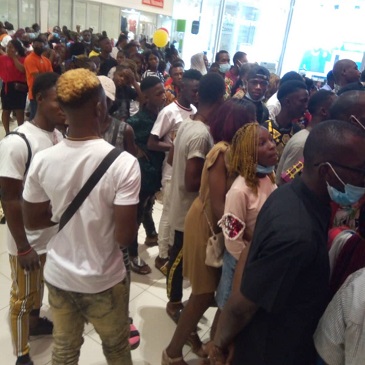
Amidst a sharp daily increase in cases of COVID-19 in Nigeria, especially in the country’s capital and Lagos State, the nation’s commercial hub, thousands of residents of Abuja trooped to Novare Mall located around Lugbe to celebrate Christmas and New Year, flagrantly flouting the protocol set by the government to contain the spread of the virus.
The facility was crowded, and private security guards and officers of the Nigerian Police were overwhelmed by customers, comprising shoppers, fun-seekers and others who swarmed the premises to relish the fun of the season.
In line with the PTF advisory, the Federal Capital Territory Administration (FCTA) had on December 23, 2020, ordered the closure of all recreation parks, pubs, club venues and restaurants in the city, while it allowed malls to provide services for the public. The FCTA also banned social gathering during the festive period. Many residents of Abuja spurned the directive on social gathering; they trooped out en masse to celebrate the festivities.
Fun seekers at the Novare Mall, near Lugbe Abuja on the New Year Day
Christmas is among the biggest feasts celebrated by Nigerians. It is a period for Christians to commemorate the birth of Jesus, who is believed to have been born over 2,000 years ago in Bethlehem of Judea, Israel. He is the head of the Christian faith.
It is a time for homes to cook varieties of food and entertain guests, including neighbours, friends, family members, among others. Two most significant incidents during Christmas celebration are carols/services in churches and visit to recreation parks and shopping malls by people who participate in the feast. It is usually a period of holiday. After helping themselves with delicious meals and drinks at home, faithful (especially women and children) dress in beautiful attires and shoes that make them look unique, and they gracefully visit choice locations within their neighbourhoods for fun. Outings for the feast are arguably merrier at the parks, malls and related places.
The feast is soon followed by the New Year Day which everyone, irrespective of religious leaning, celebrates with similar pomp as Christmas.
“What makes this year 2020 Christmas unique is because in the early days of the year, people were panicking. A lot of us did not believe they could see the end of the year because of the high fatalities being recorded by the developed countries from coronavirus. A lot of us lost our means of livelihood and the likes, but we didn’t lose our lives. That is why we are here,” said one of the visitors to the Novare Mall, Blessing Joseph, on Boxing Day (December 26, 2020) while speaking with The ICIR.
Shoprite, located within the Novare Mall, along the Airport Road has a wide area of land in-between it and the Airport Expressway, part of which is beautifully landscaped into parking lot and turfs for fun. There are many businesses in the mall, including a new generation bank, but Shoprite is unarguably the most visited and popular.
The mall, opened on November 30, 2017, has since served people within the Airport axis of the FCT, namely Lugbe, Giri, Gwagwalada, Airport and Kuje, among others.
During the Yuletide and the New Year season, residents swooped on the mall, the majority of whom were children and teenagers. They clearly violated the guidelines on the coronavirus pandemic in the manner in which they conducted themselves. From The large space in front of the mall provided enough ground and served as an alternative to recreation facilities that were shut by the government. Many families came to the premises with mats, foods, drinks and spent hours as they would at the parks.
Hundreds of Abuja residents besieged the mall hosting Shoprite in Abuja during the festive season.
A significant number of visitors came with face masks, but they hanged these masks on their jaws. At the Novare Mall, the huge population was recorded on 25th, 26th and 27th December as many of the Christian faithful and their well-wishers left churches to continue their feast with family and friends outside their homes.
In Abuja, Shoprite malls are located in Apo, Silverbird (at Central Area); Lugbe, Zone 5 (around Peoples’ Democratic Party headquarters); and Jabi Lake, but the Lugbe mall had the largest crowd during the period, as witnessed by our reporter.
In Abuja, there are other mall locations at Sahad, H-Medic, Grand Square, but they did not have as much crowd as Shoprite malls during the festive season.
“We came here because everywhere we had gone to was closed by the government. So, we were told that this place is open, and we are here,” said James Adelaja, who came to the Lugbe Shoprite with his family of six. None of the Adelaja’s wore a face mask.
Speaking on behalf of the PTF, director of information, Office of the Secretary to the Government of the Federation, Willie Bassey, told The ICIR that the advisories issued by the PTF on behalf of President Muhammadu Buhari were not binding on states and the FCT. He said states were at liberty to decide what measures were best for them, but that the overall decision of every state should be to help the nation prevent and subsequently defeat the pandemic.
He, therefore, dissociated the PTF from any alleged discrimination that might have existed by way of closing recreational parks in the FCT while allowing shopping malls to operate.
Emphasising the flexibility of the advisories, Bassey cited a particular state which chose to allow its schools to resume earlier than the January 18 suggested by the federal government.
He said the PTF had been doing its best to sensitise Nigerians and all entities in the country to the dangers of COVID-19, stressing that it would nobody any good to put others at risk. He appealed to everyone in the country to always abide by the regulations set by the government as, according to him, the states were expected to take more responsibilities in combating the pandemic as specified in the last federal government’s advisories.
The PTF had, on December 23, 2020, suggested that states in the country and the FCT close all bars, night clubs, pubs, event centres, and recreation venues. Only restaurants providing services to hotel residents were allowed. The PTF also said that restaurants providing takeaways, home deliveries and drive-ins were to be closed.
The government had restricted all informal and formal festivity events, including weddings, conferences, congresses, office parties, concerts, seminars, sporting activities, end-of-year events to not more than 50 persons.
It suggested that all gatherings linked to religious events should be attended by fewer than 50 percent capacity of the facility of use during which physical distancing and mandatory use of face masks should be strictly enforced. It had also said that, where more than 50 persons were attending any such event, the gathering should be held outdoors only.
The PTF further suggested that public transportation systems were to carry passengers of not more than 50 percent of their capacities in compliance with social distancing rules.
It also advised that all government staff on GL.12 and below were to stay at home for the next five weeks, while schools should be closed till at least the 18th of January, 2021 to enable the measures introduced to take effect.
Our reporter sought to get the reaction of Magic Land, one of the biggest fun centres in the city, which was among the parks locked by the government. A senior official of the park who refused to give his name because the park had not been allowed to operate told The ICIR, “What I will let you know is this, we don’t have any comment to make. We are not angry with anybody. The decision is from the highest authority and we don’t have any comment to make. Even though we want to make any comment, it will be after they have opened us. We don’t know what is in their mind. For now, we don’t have any comment to make. We are so sorry.”
Magic Land was shut by the FCTA during the last festivities
Some of the residents who spoke with our reporter at the park expressed sadness over the decision to shut the place and other recreation centres in the city, faulting government’s decision to allow malls to operate when similar businesses were shut down.
“We are saddened by the development. You can see my family of 12 here. We are from Kubwa. We got to the Maitama Park, it was shut. We came here, we were not allowed to enter. This is really disappointing; I didn’t expect this on a Christmas Day,” Daniel Oketola, one of the fun seekers, told The ICIR.
“This is not an ideal thing to do by the government. I’m yet to come to terms with the criteria used by the government to shut one place and leave the other open.”
Our reporter monitored cars coming into the Magic Land, Maitama Park, and noticed that they were turned back by security agents during the festive season.
But, Shoprite said it did its best to manage its patronage. Responding to enquiry by The ICIR on crowding of its Lugbe, Abuja mall during the last festivities by customers, Kunle Abiola, marketing/CSR coordinator, Shoprite Nigeria, said the company contracted security guards and they were stationed at its entrances, monitoring the number of customers that entered its stores. Abiola said that, where necessary, entrances were closed to limit the number of people inside the stores.
He said strict hygiene and safety measures were usually in place in its facilities to help protect customers as much as possible.
He explained that Shoprite remained committed to following COVID-19 guidelines as set out by the various government departments.
He also appealed to the public to do their part and observe the appropriate precautions whilst in public spaces.
“We are working closely with the various authorities and have various measures in place for the different countries in which we trade,” part of his statement read.
According to him, the company had been proactively acting to safeguard its employees and customers since the emergence of the pandemic.
People outside the Lugbe Shoprite mall during the last festivities
Meanwhile, picture evidence taken by The ICIR during the festive period sharply contrasts with Shoprite’s claims suggesting that there were social distancing and strict adherence to regulations against the pandemic at its Lugbe mall during the festivities.
In his reaction, head of media and enlightenment of the FCT Task Force, Ikharo Attah, said the FCTA followed the federal government’s advisory and should be commended for its pro-activeness in preventing the virus from spreading.
“We are following PTF guidelines. You know, clearly, I think I got so many calls on that and I told them that we thought people would go home. When we cleared them from Millennium Park to go home, they moved into Transcorp Hilton. We cleared them from Jabi Lake Park, they went into Jabi Lake Mall. We cleared them from Magic Land, they went to Shoprite Mall. We were there on Christmas Day and New Year Day.
“I told the team that based on discretion, some of the children there are less than a year old, some of them are between one and three years with their mother. If you try anything there, the children would run into moving vehicles on the highway.
“On New Year day, we were there, some of the people advised me that we clear them. I said we could not clear the place because there would be a stampede. Because of the children and the mothers, we had to find a way to start talking to them. Throughout the December period, we did not make any arrest because we knew that the crowd we saw and addressed were largely women and children,” Attah told The ICIR.
He said his team was also overwhelmed by the crowd at the Jabi Lake Mall, where there were also Shoprite and other business entities. According to him, it would be difficult to differentiate people who came to shop from those who came for other activities.
He, however, absolved the management of the shopping mall from any blame as, according to him, the public wanted to enjoy Christmas and New Year at those locations against the counsel of the PTF, FCTA and the Task Force.
Asked why both recreation parks and malls were not shut down, he said the PTF guidelines stated that malls were to be open. “If you read the PTF guideline, malls are to be opened. Check the guidelines on the internet. So, what do we do?”
The ICIR also obtained a video posted by Attah on his Facebook page on Christmas Day, where he was appealing to residents who wanted to gain access to the Millennium Park, opposite the Transcorp Hilton. Attah, who doled out cash to some children in the video as their ‘Christmas Gift,’ eventually succeeded in pacifying the angry families who had come to enjoy their feast at the park.
The park is managed by the FCTA, which allows members of the public to have free access to the venue, daily. Many visitors see the venue as the most serene location for families and individuals to enjoy themselves without being charged, though they must pay for anything bought at the park. But it has been under lock and key by the FCTA because of the pandemic.
Daily confirmed positive cases of COVID-19 in Nigeria have been on increase since December 8, 2020. Apart from December 13, 14 and 28, there was no day the nation did not record over 500 laboratory-confirmed cases from December 10 to December 31, 2020. Positive cases in the month peaked with 1,145 on December 17.
Similarly, since January 1, 2021, confirmed cases have been on the high, and they were only fewer than 1,000 on the second and third day of the month. The highest figure for the month was recorded on January 6, with 1,664 cases, according to data obtained from the Nigerian Centre for Disease Control (NCDC).
The nation is expecting delivery of its first COVID-19 vaccine before end of January 2021. One hundred thousand doses are expected to be delivered to the country through the National Primary Health Care Development Agency (NPHCDA). The World Health Organization (WHO) has strongly been advocating the equitable distribution of the vaccines to enable developing countries, to which Nigeria belong, benefit from the protection provided by the vaccines.
By the midnight of Saturday 17th January 2021, the country had recorded 110,387 positive cases; 89,317 of the cases had been discharged; while 1,435 affected persons had died. Lagos and Abuja led the chart of confirmed cases with 40,624 and 14,598 respectively. Among the prominent people in Abuja that have died of COVID was the former chief of staff to President Buhari, Abba Kyari, who died on 17th April 2020. Similarly, the acting secretary of the FCTA Health and Human Services Secretariat, Mohammed Kawu, tested positive for the disease in July 2020, but he recovered.
Data from the Africa Centre for Disease Control showed on January 15, 2021, said there were 3.176 million cases of COVID-19 in Africa. Of the figure, 2.594 had recovered while 76,752 had died.
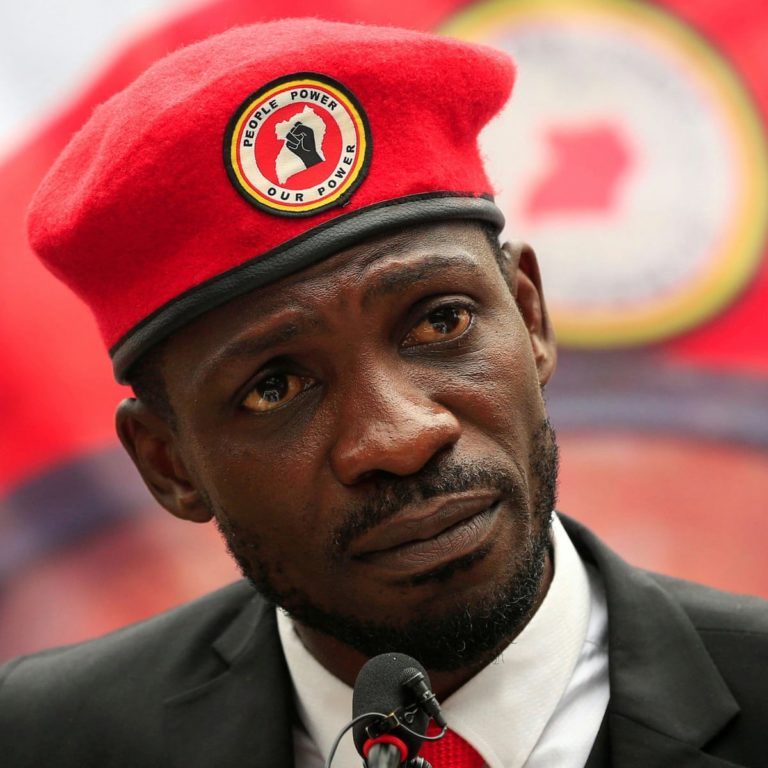
UGANDAN opposition leader and presidential candidate of National Unity Platform, Robert Kyagulanyi, popularly known as Bobi Wine, says his house has been under military siege for four days.
“It is now four days since the military surrounded our home and placed my wife and I under house arrest. We have run out of food supplies and when my wife tried to pick food from the garden yesterday, she was blocked and assaulted by the soldiers staged in our compound,” he posted on Twitter on Sunday.
He said everyone, including media and party officials, were restricted from accessing him, revealing that a member of parliament representing Mityana Municipality, Zaake Francis Butebi, was arrested outside his gate.
“He was badly beaten by soldiers. He is now in Rubaga hospital,” Wine further said.
Uganda’s electoral commission on Saturday afternoon declared that Yoweri Museveni, incumbent president, won the presidential election held two days earlier with 58.64 percent of the total votes cast while Wine came second with 34.83 percent of the total votes cast.
The election was marred by intimidation of opposition as the 76-year-old sit-tight president deployed sly tactics to win his sixth term.
Before the election on Thursday, the government had ordered a shut-down of the internet, an action that raised suspicions of rigging and manipulation.
Bobi Wine, whose house was taken over by the Ugandan security operatives, had alleged on Friday that he had video proofs of voting fraud, and would share the videos as soon as internet connections were restored. He added that he would take ‘every legal option is on the table’ to challenge the official election results, including peaceful protests and in the court.
More than 50 people were killed when security forces tried to stop riots in November over Wine’s arrest. Wine has petitioned the International Criminal Court over alleged torture and other abuses by security forces.
Although Museveni has been declared the winner, at least 15 of his cabinet ministers, including the vice president, lost the polls, with many losing to candidates from Wine’s party.
Uganda’s electoral commission said Wine should prove his allegations of rigging and deflected questions about how countrywide voting results were transmitted during the internet blackout by saying “we designed our own system.”
There were reports of the arrest of independent election observers and the denial of accreditation to so many international election observers, including members of the United States and the European Union election observers.
“Uganda’s electoral process has been fundamentally flawed,” the top US diplomat for Africa, Tibor Nagy, tweeted Saturday, calling for the immediate and full restoration of internet access and warning that “the U.S. response hinges on what the Ugandan government does now.”
However, African Union (AU), as usual, has kept mum over the situation, with many questioning the relevance of the organisation.
WHATSAPP has delayed its privacy policy till May 15 as users shift to alternative apps that will not share their data with any other platform.
In December 2020, WhatsApp asked users to agree to updated terms of service which would allow it to share personal data to Facebook, threatening to block access to the app should anyone fail to comply by February 8.
Both companies are owned by Mark Zuckerberg, one of world’s richest men.
But that has led to a backlash, with users shifting to rival platforms such as Telegram and Signal. Telegram got 25 million new users in 72 hours last week. Signal has had almost 1 million people installing the app each day since early-to-mid January. Signal’s downloads two weeks ago hit 7.5 million, a 4,200 percent growth from the previous week.
But WhatsApp has intervened to halt loss of users.
“We’ve heard from so many people how much confusion there is around our recent update,” WhatsApp said in a post on Friday.
“There’s been a lot of misinformation causing concern and we want to help everyone understand our principles and the facts,” it noted.
WhatsApp posted on Twitter on Friday that no one’s account would be suspended on February 8.
“Thank you to everyone who’s reached out. We’re still working to counter any confusion by communicating directly with WhatsApp
users. No one will have their account suspended or deleted on Feb 8 and we’ll be moving back our business plans until after May.”
WhatsApp noted that neither it nor Facebook would see users’ private messages, people’s shared locations and would not share users’ contacts with Facebook.
WhatsApp chief executive officer Will Cathcart had said on Twitter on January 8 that the update would not affect how people communicated.
”It’s important for us to be clear this update describes business communication and does not change WhatsApp’s data-sharing practices with Facebook. It does not impact how people communicate privately with friends or family wherever they are in the world,” he said.
Some Twitter users, however, said that WhatsApp’s intervention was too little, too late.
“Too late for that now. The damage has been done,” Sadia Sheikh, with a handle @iSadiaSheikh, said in response to WhatsApp post on Friday.
“Sorry, we have already migrated, all the family and all the friends, to another platform. You should have thought things through before selling our privacy and doing business with it. Bye-bye WhatsApp,” one Twitter user with the handle @tebanrhcp said.
Another user with the handle @Alieidjr1 said, “We already went to Signal and Bip. No more abuse.”
However, a Twitter user with the handle @iTechUOutGuy said, “I’m not deleting the app. Nothing is happening to my account. I’m not feeling vulnerable or scared or threat. People don’t get it. Keep bringing us the latest and greatest features to a messaging system. All of my calls and messages are encrypted. Thanks team WhatsApp.”
THE Principal Counsel at Fortress Legal Consult, Peter Kefas, has called on the Federal Ministry of Interior to probe corrupt practices by workers at marriage registries in Abuja and other cities.
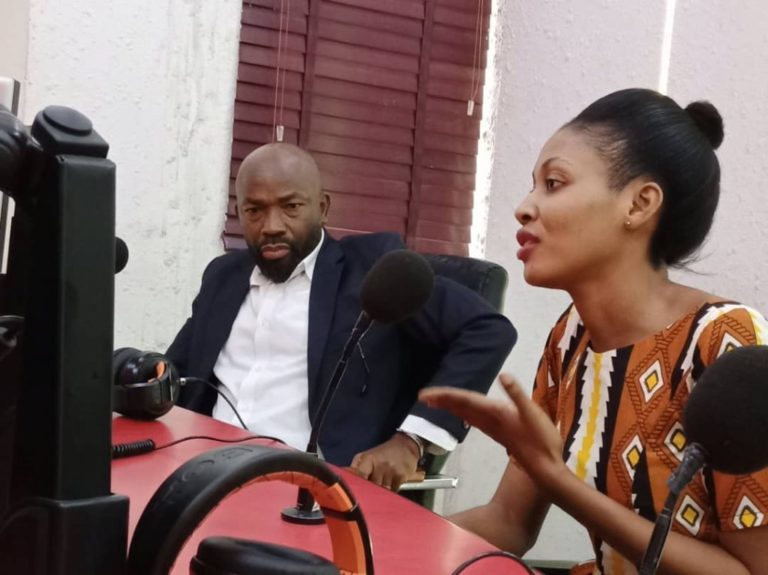
Kefas, who was reacting to an investigation exposing Abuja marriage registries where officials conduct ghost weddings for a fee and engage in other forms of extortion of Nigerians seeking statutory marriage certificate, made the call during a radio program, Public Conscience produced by the Progressive Impact Organization for Community Development, PRIMORG.
The legal practitioner pointed out that systemic corruption was a mountainous challenge in Nigeria’s public service, accusing the Federal Ministry of Interior headed by Rauf Aregbesola for failing to play effective oversight function on the registries, and calling for a total reform of the operations at the ministry.
Kefas maintained that the collaboration amongst officials at the registries was responsible for the ongoing corruption in marriage licensing.
He described ghost marriages conducted at the different registries as an infraction of the law, noting that such corrupt acts are thriving because of poor publicity and citizens’ participation.
“The law does not recognize anything like ghost marriage or marriage by proxy, and that’s why the law is very clear, the Marriage Act is very clear. It’s like an affidavit and you cannot swear to an affidavit in absentia, your presence is important.”
Kefas urged Nigerians to go the extra mile in knowing the requirements of the law before parting with their hard-earned money, adding that orientation of citizens and de-emphasizing receipt of cash by the officials will go a long way in curbing the ongoing fraud at marriage registries.
Similarly, investigative journalist, Jennifer Ugwa, who produced the report for the International Center for Investigative Reporting, ICIR, called for a total overhaul of the current operations at the marriage registries in and outside Abuja, the Nigeria’s capital.
Narrating her ordeal during the investigation, Ugwa revealed that officials at the registries introduced and developed different schemes to extort citizens who are most times excited ahead of solemnization of their marriage. She also said that some Nigerians actually approach the registries for a sham marriage for personal reasons.
She stressed that although the findings from the investigation dented Nigeria’s image globally, it is a wakeup call for the Ministry of Interior to change their mode of operation.
Ugwa noted that data on the number of licensed marriages nationwide remains a major challenge in measuring fraud in the sector. However, based on data obtained from Abuja Municipal Marriage Registry, almost 13,000 marriages from 2015- 2019 have been awarded statutory licenses in the Federal Capital Territory alone.
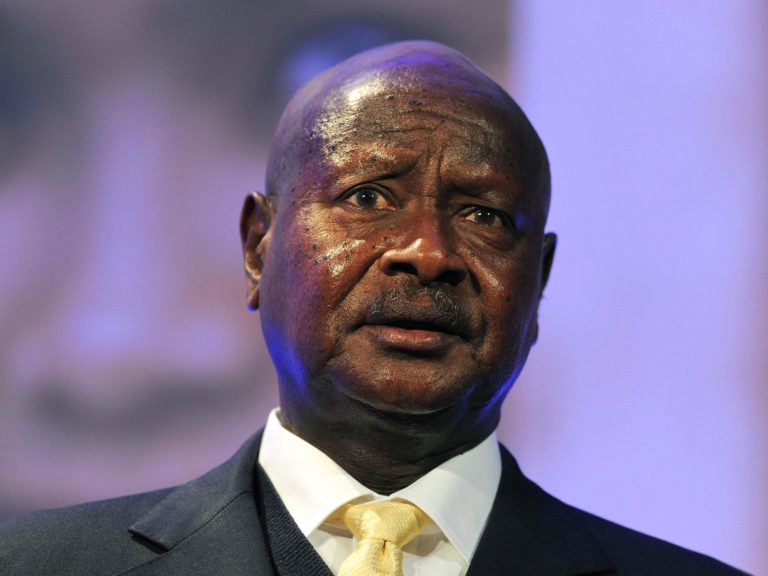
YOWERI Museveni, Uganda’s incumbent president has been declared the winner of Thursday’s presidential election in an election marred by security intimidation and rigging.
According to Uganda’s electoral electoral commission on Saturday afternoon, Museveni won the election with 58.64 percent of the total votes cast while his main challenger, Robert Kyagulanyi, who is also known as Bobi Wine garnered 34.83 percent of the total votes cast.
Museveni, who has ruled the country for 35 years since he helped to overthrow the brutal regime of …. has influenced the Ugandan’s parliament to change the country electoral laws to accommodate his lust for power.
Before the election on Thursday, the government ordered the shut down of the internet, an action that raises suspicions of rigging and manipulation.
Bobi Wine, whose house was taken over by the Ugandan security operatives had alleged on Friday that he had video proof of voting fraud, and would share the videos as soon as internet connections are restored. He added that he would take “every legal option is on the table” to challenge the official election results, including peaceful protests and in the court.
The build-up to the election was also characterised by harassment of opposition and killings. More than 50 people were killed when security forces put down riots in November over Wine’s arrest. Wine has petitioned the International Criminal Court this month over alleged torture and other abuses by security forces.
Although the Museveni has been declared the winner, at least 15 of his cabinet ministers, including the vice president, lost the polls, with many losing to candidates from Wine’s party.
Uganda’s electoral commission has said Wine should prove his allegations of rigging, and it has deflected questions about how countrywide voting results were transmitted during the internet blackout by saying “we designed our own system.”
There were reports of the arrest of independent election observers and the denial of accreditation to so many international election observers including members of the United States and the European Union election observers.
“Uganda’s electoral process has been fundamentally flawed,” the top US diplomat for Africa, Tibor Nagy, tweeted Saturday, calling for the immediate and full restoration of internet access and warning that “the U.S. response hinges on what the Ugandan government does now.”
The head of the African Union observer team, Samuel Azuu Fonkam, told reporters he could not say whether the election had been free and fair, noting the “limited” AU mission which largely focused on the capital, Kampala. Asked about Wine’s allegations of rigging, he said he could not “speak about things we did not see or observe.”
The East African Community observer team in its preliminary statement noted issues including “disproportionate use of force in some instances” by security forces, the internet shutdown, some late-opening polling stations and isolated cases of failure in biometric kits to verify voters. But it called the vote largely peaceful and said it “demonstrated the level of maturity expected of a democracy.”
Uganda’s elections are often marred by allegations of fraud and abuses by security forces. The previous election saw sporadic post-election riots.