Home Blog Page 1900

NAFDAC warns Nigerians against use of fake COVID-19 vaccines

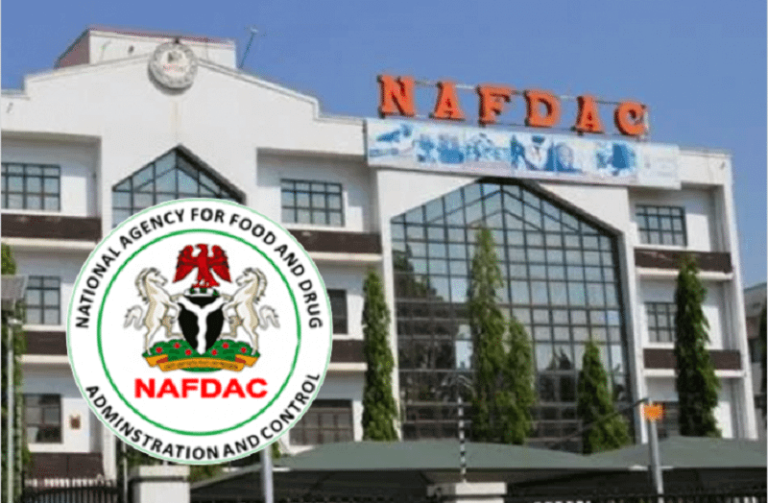
THE National Agency for Food and Drug Administration Control (NAFDAC) has warned Nigerians against fake COVID-19 vaccines in the country, stressing that no vaccine has been approved by the agency.

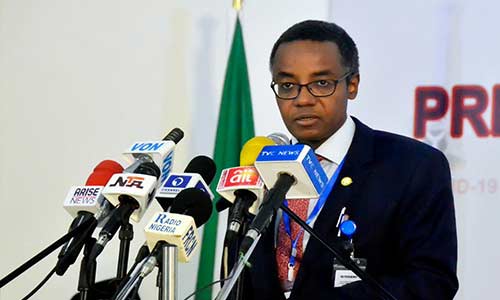
Mojisola Adeyeye, NAFDAC director-general, made this known in a statement on Friday.

She said that the agency was yet to receive applications from COVID-19 vaccine manufacturers and had not approved any for the populace.

She stressed that “COVID-19 vaccines are new, and the side effects or adverse events must be well monitored. Therefore, if NAFDAC does not approve, the public should not use.”

“There are reports of fake vaccines in Nigeria. NAFDAC is pleading with the public to beware. No COVID-19 vaccines have been approved by NAFDAC. Fake vaccines can cause COVID-like illnesses or other serious diseases that could kill.”

Read Also: COVID-19: Why Nigeria cases are low – Expert

While stressing that COVID-19 vaccines should not be ordered by any company or corporation, NAFDAC noted that genuine vaccine manufacturing companies knew that they had to submit their applications to NAFDAC for approval before making them available to the public.

“However, NAFDAC is discussing with manufacturers of candidate COVID-19 vaccines concerning potential Emergency Use Authorization (EUA), registration or licensing of their product as the case may be,” she said.

“The Agency assures applicants that if Phase 3 clinical data are very convincing and robust with regards to safety and efficacy, and the vaccine has been submitted for WHO for Emergency Use Listing, NAFDAC will welcome the application for Emergency Use Authorisation in Nigeria.”

VISIT ICIR COVID-19 DASHBOARD

Osagie Ehanire, Nigeria’s health minister, has said the country will be receiving 10 million doses of coronavirus vaccine in March. These will be in addition to about 100,000 free COVID-19 vaccines the country will be getting this month based on a COVAX arrangement put in place by the World Health Organisation and its partners.

Since its outbreak in March, Nigeria has recorded 107,345 COVID-19 cases with 1,413 fatalities and over 84,535 recoveries. The country is currently experiencing the second wave of the virus with more infections being recorded in the past month than at any other time.

WTO must regulate E-commerce, digital economy to ensure fairness – Okonjo-Iweala

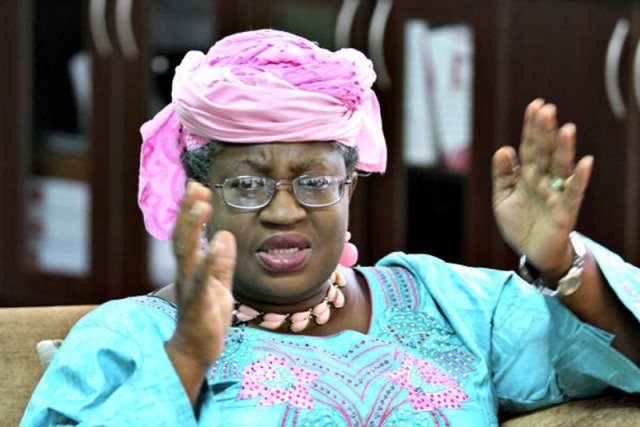
NGOZI Okonjo-Iweala, the World Trade Organisation (WTO) preferred candidate for the office of director-general on Friday, identified the need for a set of regulations to guide countries and businesses while engaging in internet-based trading activities.

She said the ‘rules’ became important to ensure fairness and considering the current and potential growth of Electronic Commerce (E-Commerce) and digital economy globally.

The former Managing Director of World Bank spoke during news and current affairs programme on Arise Television.

She also shared some of her plans if she eventually emerges next director-general of the WTO.

“We have now seen how powerful the digital economy is and will be for the future and how important e-commerce is. And I know that for us in Nigeria and everywhere, it’s going to be more and more important.

“So it’s a form of trade. People are trading on the internet and the WTO needs to develop rules that undergird this trade, to make sure it’s fair on all the countries and the businesses people participating,” Okonjo-Iweala said.

The Nigerian former minister of finance had contested for the top WTO position and appeared to be coasting home to victory until the United States of America opposed her candidacy.

The US threw its weight behind South Korea’s Yoo Myung-hee, a close rival to Okonjo-Iweala.

“[They said] she would be able to hit the ground running,” Keith Rockwell, WTO Spokesperson said while explaining rationality behind US support for Myung-hee.

“They said they could not endorse Dr Ngozi. I don’t know the reasons for that.”

WTO is a global organisation with 164 members and observer governments. It is essentially a forum for negotiating trade agreements. It could also be described as “a place where member governments go, to try to sort out trade problems they face with each other.”

As of date, the US government is yet to rescind its decision.

The African Union has howver maintained its support for the Nigerian candidate.

Willie Obiano, the Anambra State Government has also tasked President Muhammadu Buhari to seek the European Union’s support for Okonjo-Iweala’s candidacy.

Read Also: WTO: Despite opposition from US, AU reiterates its full support for Ngozi Okonjo-Iweala

Speaking further on her plans, Okonjo-Iweala wanted the WTO to work with member nations to discuss important negotiations on key issues such as assisting Small and Medium Enterprises (SMEs), sustainable fisheries for the attainment of the Sustainable Development Goals (SDGs) and assisting African nations to get better in their trading system.

“I’m also excited about how we can try to help small and medium enterprises. Women in trade to break into regional and global value-chains so that they can also improve their businesses and standard of living.”

“We have the area of fisheries. There are ongoing global multilateral negotiations now on fisheries subsidies, and how we can make the world fisheries more sustainable for all and clear our oceans of all those plastics and other things that are impeding. That is very important for the SDGs and we need to complete those negotiations now,” she added.

Reactions as pigeons released by Buhari to mark Armed Forces Remembrance Day refuse to fly

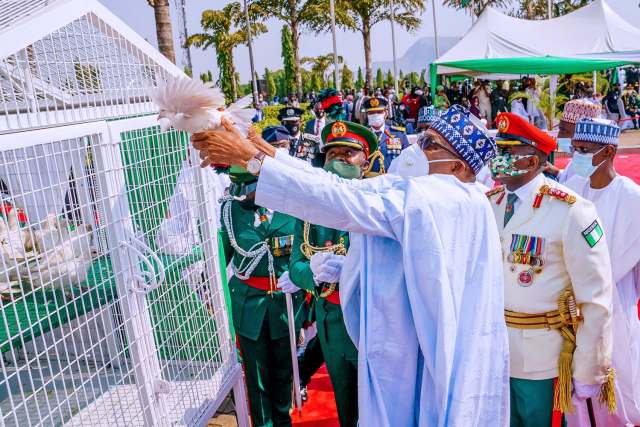
NIGERIANS on social media have expressed mixed reactions as pigeons released by President Muhammadu Buhari to mark this year Armed Forces Remembrance Day in Abuja, on Friday, refused to fly.

President Buhari was seen in footage by Channels Television on Twitter opening the birdcage, picked up one of the birds and threw it into the air but the bird landed on the cage and refused to fly. He subsequently took off the cover of the cage to free the entire birds but they refused to fly.

Something similar happened in 2014 when the pigeons refused to fly when former President Goodluck Jonathan freed them. The Spiritual Director of the Adoration Ministry Enugu, Rev Fr. Ejike Mbaka, described the incident at the time as a sign that God had abandoned Jonathan.

The ritual of releasing pigeons is to commemorate the life of a departed loved one and is common at significant events like funerals or memorials. It also signifies peace.

Some Nigerians, have however described the refusal to fly as a ‘sign that there is no peace in the country.
Below are some comments gathered by The ICIR.

Read Also: Nigeria’s inflation rate jumps to 15.75%, highest in 33 months


Nigeria’s inflation rate jumps to 15.75%, highest in 33 months

0

COST of living is rising rapidly in Nigeria as headline inflation rate rose to 15.75 percent in December 2020 as against 14.89 percent in the previous month, data released by the National Bureau of Statistics (NBS) on Friday said.

The December rate represents the highest inflation figure recorded in the last 33 months.

Food is also not getting cheaper for poor Nigerians as composite food inflation rose to 19.56 percent in December, compared to 18.30 percent in November.

“This rise in the food index was caused by increases in prices of bread and cereals, potatoes, yam and other tubers, meat, fruits, vegetable, fish and oils and fats,” the NBS explained.

Similarly, core inflation, which excludes changes in food and energy prices, stood at 11.37 percent in December 2020, up by 0.32 percent when compared with 11.05 percent recorded in November.

Inflation or consumer price index (CPI) measures the average over-time changes in prices of goods and services consumed by people on day-to-day basis. It estimates monthly changes in prices of food, transport, and health, among others.

The NBS said the highest increases over the month were recorded in prices of passenger transport by air, medical services, hospital services, shoes and other footwear, passenger transport by road, miscellaneous services relating to hairdressing salons and personal grooming establishments/\

Other items where prices were reported high were furniture repair, vehicle spare parts, pharmaceutical products, motor cars, personal transport equipment repair, paramedical services, motorcycle, dental services and bicycles.

The NBS’ report disclosed that food inflation on a year-on-year basis was highest in Edo (24.14 percent), Kogi (23.14 percent) and Sokoto (22.24 percent). On the other hand, it was lowest in Bauchi (16.53 percent), Abia (16.04 percent) and Nasarawa (15.71 percent).

The urban inflation rate rose to 16.33 percent (year-on-year) in December 2020, from 15.47 percent recorded in November 2020, while the rural inflation rate increased by 15.20 percent in December  from 14.33 percent in November.

Why Inflation is on the rise

Experts say inflation is on the rise for several reasons. According to Nonso Ihuoma, an economist and finance expert, COVID-19 had dislocated businesses and supply chains, while driving up cost of production.

“It was easier to get input supplies before COVID-19 struck, but it is becoming a bit difficult now due to COVID-19 measures put in place by many countries. If you were getting your raw materials from the UK or the USA, imagine what happens to you now that they are on lockdowns. That situation will either make you seek expensive alternatives or stop production,” he explained.

But this is not the only reason. As of December 2020 which the inflation report reflects, Nigeria’s borders with neighbouring countries were shut, preventing inputs and food from coming into Nigeria. This led to increases in prices of raw materials and food products, thereby driving up inflation rates. The Lagos Chamber of Commerce and Industry (LCCI) and the Manufacturers Association of Nigeria (MAN) noted in 2020 that the border closure shot up prices of inputs and finished products in Nigeria.

Farmers were also hit by floods, leading to lower food production and higher prices.

In its 2021 economic outlook released recently, the LCCI predicted increases in inflation rate this year.

“Looking forward into year 2021, we expect headline inflation to remain elevated as the combination of food supply shocks, foreign exchange (FX) policies, higher energy costs, FX illiquidity, heightened insecurity in major food-producing states, will continue to mount pressure on domestic consumer prices,” Muda Yusuf, director-general of the LCCI, noted.

“We believe a broad-based harmonisation of fiscal and monetary policies towards addressing the identified structural constraints will significantly help to moderate inflationary pressure in the medium term,” Yusuf further said.

Related StoryNigeria’s inflation hits 13.22 per cent, highest since 2018

Perspective

Nigeria has the highest number of poor people in the world, with 87 million living in extreme poverty, according to a report by the World Poverty Clock released in 2018. Six Nigerians jump into extreme poverty every minute, according to the report. The country’s 27 percent population are unemployed, according to the NBS, without hope and support from the government. Increase in inflation rate means that most Nigeria’s poor are struggling to feed themselves and their families.

Ede Dafinone, chairman of the Manufacturers Association of Nigeria Export Group (MANEG), told The ICIR that it would be important for Nigeria to trade more with other nations to reduce poverty and inflation. But doing that, according to him, would mean that the country must support manufacturers, especially exporters.

This, according to him, would bring in foreign exchange badly needed at the moment and enable firms to create more jobs.

His argument was predicated on the fact that inflation in Nigeria was partly imported while high unemployment rate was down to the fact that firms were not operating optimally due to structural challenges in the economy.

CAN warns group threatening Kukah, says no harm must befall him

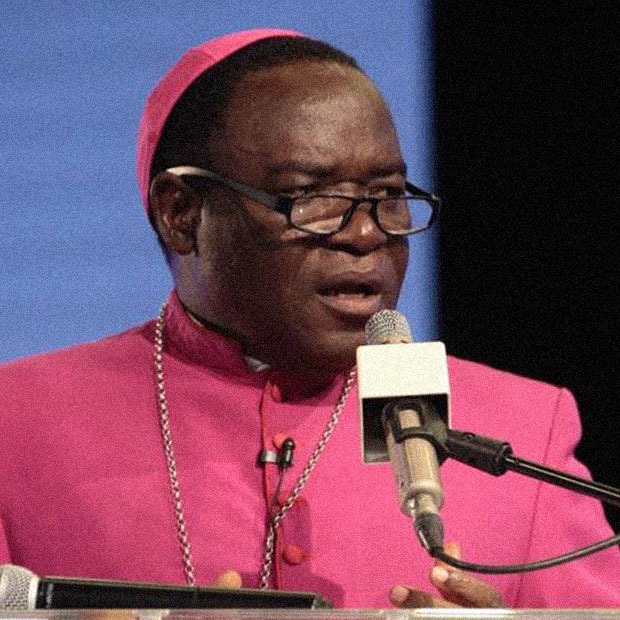
THE Christian Association of Nigeria (CAN) has warned those threatening Matthew Hassan Kukah, Catholic Bishop of Sokoto, to desist from doing so.

In a statement by Joseph Daramola, CAN general secretary, on Thursday, the Christian group urged President Muhammadu Buhari to protect the clergyman.

Kukah recently came under sharp criticism and threats following his state-of-the-nation Christmas message where he condemned how Buhari was handling the affairs of the country.

He had accused the president of turning nepotism into a state policy, noting that there could have been a coup if a non-northern Muslim president had done a fraction of what the president was doing.

He had also said that the president was promoting and institutionalising a northern hegemony that had reduced others in public life to second-class status.

The handlers of the president, sympathisers of the Buhari administration, socio-political bodies such as the Arewa Youth Consultative Forum (AYCF) and religious bodies like Muslim Rights Concern (MURIC), have all accused Kukah of instigating a forceful change of democratically elected government and hate against Islam.

More recently is the threat issued by Muslim Solidarity Forum (MSF), a Muslim group based in Sokoto State, giving the bishop an ultimatum to apologise for his message or vacate the state.

Although the presidency has vehemently condemned the group for their threat, it is yet to order the arrest of the groups threatening the clergyman.

To that end, CAN called on Buhari and the nation’s security agencies to protect Kukah from any harm because what he said in his message was still within the ambit of the law.

The Christian umbrella warned that those trying to use Kukah’s words to instigate religious violence in the country should desist from doing so, stating that the country had witnessed enough of bloodshed.

“We call on President Muhammadu Buhari and all the security agencies to ensure that no harm befalls the Catholic Bishop of the Sokoto Diocese, Matthew Hassan Kukah. As far as CAN is concerned, what he said in his Christmas message was still within the ambience of the law,” part of the statement said.

“It is high time those hiding under religious sentiments to promote violence and crises stopped doing so if we want this country to progress. We have had enough of bloodshed in the country and we call on the security agencies to rise up to their constitutional responsibilities. Nothing must happen to Bishop Matthew Hassan Kukah. Enough is enough!

“We wonder if those threatening the Catholic Bishop of Sokoto are above the law or if they are sacred cows in the country. We have studied the whole Christmas message of Dr Kukah and we are yet to see any incitement against Islam or non-Christians.

“We see nothing wrong in his message to the nation that has been under the siege of terrorists, killer herdsmen, bandits and kidnappers as if there is no government in place.

“We see nothing wrong in telling a government, whose lopsided appointments are against Christians, the whole truth. If criticism against a Muslim President today is an incitement to violence against Islam, it then means those who were criticising the duo of former presidents Olusegun Obasanjo and Goodluck Jonathan when they were in power were actually attacking Christianity.”

CAN added, “When has it become an offence to speak the truth to power? When has it become a crime to criticise a government in the country? When did the lawful fundamental human rights suspended in the country? When were some sections of the Constitution suspended without the awareness of the public?

“When did the police and the Department of State Services lose their power to miscreants and lawless people, who are making a boast of their lawlessness without a challenge? We wonder if those Muslim groups, which are threatening to deal with Kukah, got an equal response from their Christian counterparts, are we not setting the country on fire?

“Bishop Kukah was posted to serve in Sokoto by the Papacy and threatening him to leave is a global threat to Christianity. In this same country, we have a Catholic priest, whose name is synonymous with President Muhammadu Buhari, yet the Catholic Church has not deemed it fit to sanction him because freedom of speech and association are not only a constitutional matter but godly.”

Threat to Kukah, invitation to anarchy – Ortom

Benue State Governor, Samuel Ortom, had described the threat by the Muslim Solidarity Forum as an invitation to anarchy. He added that such anarchy would not do the nation any good.

He called on Nigerians, irrespective of religious and political affiliations, to uphold unity, peace and dialogue as a panacea for the myriad of problems confronting the country.

The governor said he found the forum’s statement as a contradiction of provisions of the Constitution, which accorded Nigerians the right to live freely in any part of the country.

He said the statement of the group directing Bishop Kukah to apologise or leave Sokoto State “is a clear affirmation that Nigeria is being controlled by forces which are bent on setting the country ablaze if their interests are not guaranteed.”

State concern

On Monday, the State Security Service (SSS) alerted the public to plans by undesirable elements working with external forces to incite religious violence across Nigeria.

Peter Afunanya, SSS spokesman, who stated this in a statement, had said that Sokoto, Kano, Kaduna, Plateau, Rivers, Oyo, Lagos and states in the South-East would be majorly affected by the violence.

“The DSS wishes to alert the public about plans by some elements working with external forces to incite religious violence across the country,” he said.

“Targeted States include Sokoto, Kano, Kaduna, Plateau, Rivers, Oyo, Lagos and those in the South East.

“Part of the plans is to cause inter-religious conflicts as well as use their foot soldiers to attack some worship centres, religious leaders, personalities, key and vulnerable points.”

He urged Nigerians to shun divisive tendencies aimed at creating violence, stating that his agency would work with sister institutions to maintain law and order across the country.

 

January 18 resumption date stands, says FG

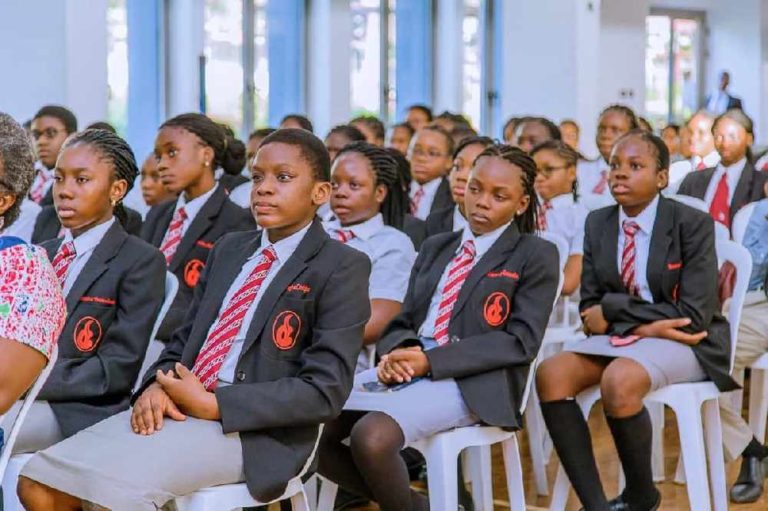
THE federal government  says the proposed resumption date of January 18, 2020, stands.

The government, however, warns all teachers, students and workers in schools to compulsorily wear face masks to avoid the spread of the deadly COVID-19.

In a statement signed by Ben Goong, director of press and publicity at the Federal Ministry of Education on Thursday, the government said temperature checks and hand washing facilities must be located at strategic places in schools.

“After extensive consultations with relevant stakeholders, including State Governors, Commissioners of Education, Proprietors and heads of institutions, staff unions and students, the consensus opinion is that the resumption date of 18th January should remain, while parents and respective institutions must ensure full compliance with COVID-19 protocols,” the statement read in part.

Read also: VIDEO: Survivors narrate harrowing experience of Domestic Abuse during COVID-19 lockdown

Covid third wave: FG rules out lockdown

It added that the federal government had directed that there must be full enforcement of maintenance of social distancing and total suspension of large gatherings such as assembly and visiting days.

Other protocol issued by the government included: limitations in class sizes and hostel occupancy, availability of functional health clinics with facilities for isolation as well as transportation of suspected cases to medical facilities.

However, the government did not state the measures it had taken to assist schools in making provisions for the facilities to ensure compliance.

Earlier in June, Abiodun Ogunyemi, Academic Staff Union of Universities (ASUU) national president,  had expressed worries over the failure of the government to assign responsibilities concerning the COVID-19.

Ogunyemi said this during an interview with The ICIR on the resumption of Nigerian universities across the country.

“They failed to assign responsibilities to these guidelines. Who is going to provide for hand washing facilities, is it the federal government or the institution that has low- running cost already. If they want schools to resume, they should provide face masks for all universities across the nation,” Ogunyemi said.

The ICIR had also reported the failure of the government to provide hand sanitisers, hand washing facilities, among others, to schools in the Federal Capital Territory, Abuja,  after directing them to resume.

Nigerian schools are resuming amidst the fears of a second wave of the deadly coronavirus whose cases have recently surged and surpassed 100,000. A total of 1,382 deaths related to coronavirus have been recorded in Nigeria as of January 14, 2020.

Check COVID-19 update on The ICIR Dashboard

FG dismisses lockdown rumours, says 10m doses of vaccine to arrive soon

0

THE federal government, through the Presidential Task Force (PTF) on COVID-19, has dismissed the rumour of an imminent lockdown in the country, classifying it as fake news.

The PTF national coordinator, in a video statement on Thursday, said it was ‘absolutely not true’ that the federal government had declared a lockdown in the country as peddled on WhatsApp groups.

Aliyu asked Nigerians to ignore the messages on the social media regarding another lockdown, stressing that the country was expecting 10 million doses of vaccine, in addition to 100,000 arriving at the end of January.

He urged Nigerians to go about their normal businesses, encouraging citizens to wear their face masks, wash their hands regularly and observe social distancing.

On his part, minister of health, Osagie Ehanire, reiterated that Nigeria was expecting 10 million doses of COVID-19 viral vector vaccine. He said the Ministry of Health in affiliation with other stakeholders had put mechanisms in place for the vaccines management, stressing that the government was expecting more research done on the prophylactic use of Invermectin for COVID-19 treatment.

Vice President Yemi Osinbajo, while also speaking virtually, noted that this was the time to improve health infrastructure in the country, pointing out that Nigeria was at the point where it would benefit from the pandemic.

Related Story: COVID-19 second wave: Does Nigeria need another lockdown?

“A lot of what has been said will really help in putting this in perspective for us as a government so that we can resolve any of these problems and improve the environment for ourselves and for the coming generations in particular,” Osinbajo noted.

“It is evident that our experts, whether directly engaged or not, are also paying attention not just to an unfolding health problem but also the very many opportunities that this problem provides for us—opportunities to ramp up our public health capacities in various ways,” Osinbajo further said.

He acknowledged that Nigeria should be talking about local vaccine production now, improving the training of laboratory scientists and the the capacity to respond to emergencies such as the pandemic.

VISIT ICIR COVID-19 DASHBOARD

“We must focus on the opportunities that this period really gives us. I have noticed that unless something like this happens, we are often relaxed and hope for the best. I think we are in a position now where we can do a lot,” the vice president said.

He said the pandemic had provided another opportunity to prepare young people for the challenges ahead, while improving the quality of personnel.

Nigeria recorded 1,479 COVID-19 cases on January 14 with 23 deaths, which is a record mortality number.

Sokoto receives largest chunk of FG’s N123.3bn grant to states

0

SOKOTO State has received the largest chunk of performance-based grant disbursed by the federal government under the States Fiscal Transparency Accountability and Sustainability (SFTAS) programme, according to finance minister, Zainab Ahmed.

In a statement signed by Hassan Dodo, director of press and public relations in Finance Ministry, Ahmed said Sokoto received highest amount totalling N6.612 billion whilst Kano got the lowest, N1.710 billion.

He said the disbursement was in line with accountability and transparency results achieved by states in the just concluded 2019 Annual Performance Assessment (APA).

She noted that the disbursement came after the recent one done in November 2020, where N66.5 billion was granted to 35 states which achieved results under the COVID-19 response programme.

The minister said that since the first disbursement in April 2020, the federal government had so far disbursed a total of N233 billion to the states under the N63 billion ($750 million) World Bank-Assisted SFTAS programme, stressing that the assessment was carried out by the Office of the Auditor General of the Federation as the independent verification agent (IVA) and approved by the Programme Coordination Unit (PCU) of the Ministry of Finance, Budget and National Planning.

She noted that some states got zero allocations due to their low performance in the assessment indices.

“Bayelsa, Imo, Rivers and Zamfara states got zero allocation due to their inability to meet the 2019 eligibility criteria which required states to publish online the approved annual budgets and audited financial statements within a specific timeframe,” she said.

She pointed out that the 2019 APA results were a significant improvement on the 2018 APA results, where performance-based grant of N43.416 billion was received by 24 eligible states, which was a substantial progress on fiscal reforms by states.

ALSO READ: Viral post on FG giving out grants to support Nigerians is a hoax

She said the World Bank-assisted programme was targeted at strengthening fiscal management at the state level in order to ensure effective mobilisation and utilisation of financial resources to the benefit of citizens in a transparent and sustainable manner, thereby encouraging fiscally responsible behaviour whilst reducing financial risks.

“We have thus far successfully adapted and implemented the SFTAS Programme to provide timely support to states with a view to strengthening their fiscal capacity for responding to numerous fiscal challenges in their respective domains,” she further said.

Presidency warns group over threat to Kukah

THE presidency has warned that no group or faction must issue quit notices to any Nigerian living in any part of the country.

Garba Shehu, the senior special assistant to the president on media and publicity, stated this in a statement on Wednesday in reaction to threats by Muslim Solidarity Forum (MSF), a Sokoto-based Muslim group, giving Matthew Kukah, the Bishop of Sokoto Diocese, an ultimatum to apologise for his Christmas message or vacate the State.

Kukah had spoken against how President Muhammadu Buhari is handling the affairs of the nation during his Christmas message to his teeming congregation in Sokoto.

He accused the president of turning nepotism into a state policy, noting that there could have been a coup if a non-northern Muslim president had done a fraction of what the president is doing.

He also said that the president is promoting and institutionalising a northern hegemony that has reduced others in public life to second-class status.

Kukah’s comments have earned him criticisms from the handlers of the president, sympathizers of the Buhari administration, sociopolitical bodies like the Arewa Youth Consultative Forum (AYCF) and religious body like Muslim Rights Concern (MURIC).

The latest threat by MSF was contained in a statement on Wednesday signed by its acting chairman, Isa Maishanu.

Isa said Kukah’s Christmas message was trying to break the age-long peaceful coexistence between the predominantly Muslim population and their Christian guests.

He called upon the cleric to “quickly and quietly leave the seat of Caliphate” or immediately stop his “malicious vituperations against Islam and Muslims” and tender unreserved apology to the Muslim Ummah.

According to the statement, “In February 2020, he (Kukah) staged a demonstration in the heart of Sokoto over the killing of a single Christian priest, presumably, by the Boko Haram insurgents, but did not consider hundreds of Muslims, Fulani herders that were mercilessly killed by the Christian militia in Taraba state in 2018.”

The statement went further to ask the clergyman what he thought could happen if the peace-loving Muslims of the seat of Caliphate, responded to his incessant provocative attacks on them and their religion like what happened in Kafanchan 1987, Zango Kataf 1992, Tafawa Balewa in 1991, 1993, 1995 and 2001, Yelwa Shandam 2004, Zonkwa and Jarkasa in 2011?”

Related StoryCAN warns group threatening Kukah, says no harm must befall him

However, Garba said the ultimatum by the group “is wrong because it is not in line with the Constitution of the Federal Republic of Nigeria.”

“Under our Constitution, every citizen has the right to, among others, freedom of speech and expression, the right to own property and reside in any part of the country, and the right to move freely without any inhibitions.

Nigeria’s strength lies in its diversity. The right for all religions to co-exist is enshrined in this country’s Constitution. The duty of the government, more so, this democratic government, is to ensure that the Constitution is respected. But all must respect the rights and sensitivities of their fellow Nigerians.”

He noted that Kukah has greatly offended many with his controversial remarks against the government and the person of the President, with some even accusing him of voicing anti-Islamic rhetoric noting that “on matters such as these, responsible leadership in any society must exercise restraint.”

“Knee-jerk reactions will not only cause the fraying of enduring relationships, but also the evisceration of peaceful communities such as Sokoto, the headquarters of the Muslim community as beacon of pluralism and tolerance.

Garba added that under Nigeria laws, groups or factions must not give quit notices, neither should they unilaterally sanction any perceived breaches. Where they occur, it is the courts of law that should adjudicate. Unilateral action is not the way to go.

“Groups such as the Muslim Solidarity Forum must be seen to share and uphold the country’s multi-religious principles. And individuals like Father Kukah must respect the feelings of his fellow Nigerians in his private and public utterances,” he said.

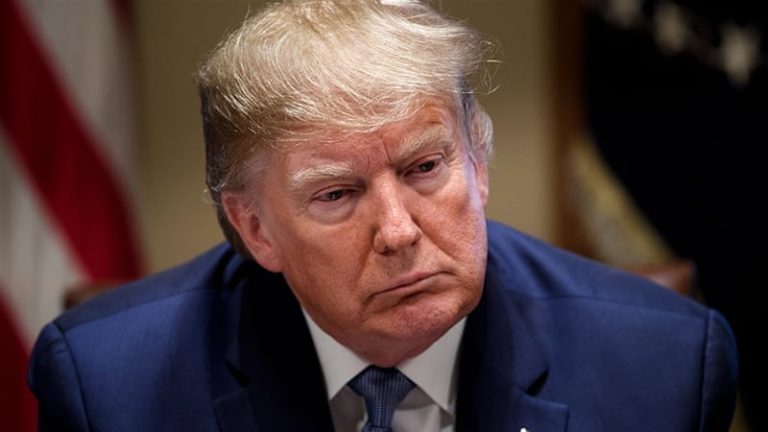
Trump becomes only US president to be impeached twice

THE House of Representatives has concluded the second impeachment of US President Donald Trump after it exceeded 217 votes needed to unseat him.

This makes Trump the only US president to be impeached twice. Two hundred and twenty-two Democrats and 10 Republicans voted to impeach Trump on Wednesday, signalling a disgraceful end for the president of world’s biggest democracy who incited violence at Capitol Hill on January 6. While 232 House members voted for Trump’s impeachment, 197 members did not want him impeached. Four members did not vote.

Trump was impeached for his role in Capitol Hill violence which led to the death of five people and stoked fears in the hearts of many Americans.

Until the incident, he had refused to concede defeat to Joe Biden who won the November 2020 election, making uncomplimentary and inciting remarks about the election even after the Electoral College called Biden as winner.

Trump had told his supporters to ‘fight like hell’ in clear attempt to overturn election defeat to Joe Biden, the US president-elect.

Many see Trump’s behaviour before and after the election as disgraceful for a country touted as world’s best democracy.

Related StoryImpeachment hearing: House compels Pence to declare Trump unfit as US president

What happens to Trump?

With the impeachment, Trump has become the first US president to be impeached twice in the history of the US.

He could be banned from engaging in politics in the US. This would make him unable to contest for presidency in 2024.He could also be prosecuted. However, his impeachment needs to be validated by the Republican-dominated Senate.

He is to leave office on January 20, but his impeachment process by the Senate could continue after he leaves office.