Home Blog Page 1901

Impeachment hearing: House compels Pence to declare Trump unfit as US president

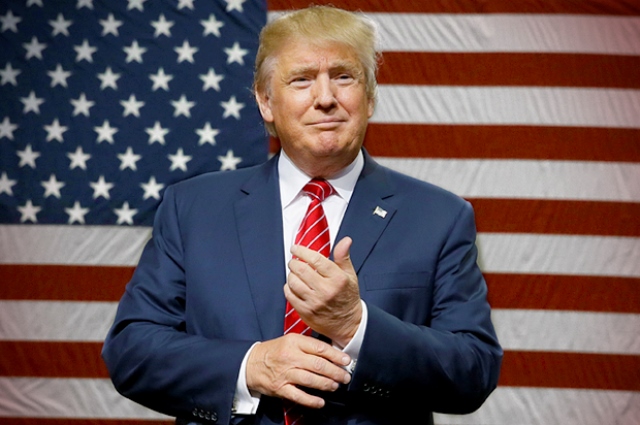
DONALD Trump, United States president, is facing a second impeachment in 13 months as the House of Representatives voted 223-205 Wednesday to compel Vice President Mike Pence to invoke the 24th amendment and take over power from the president following the Capitol Hill attack.

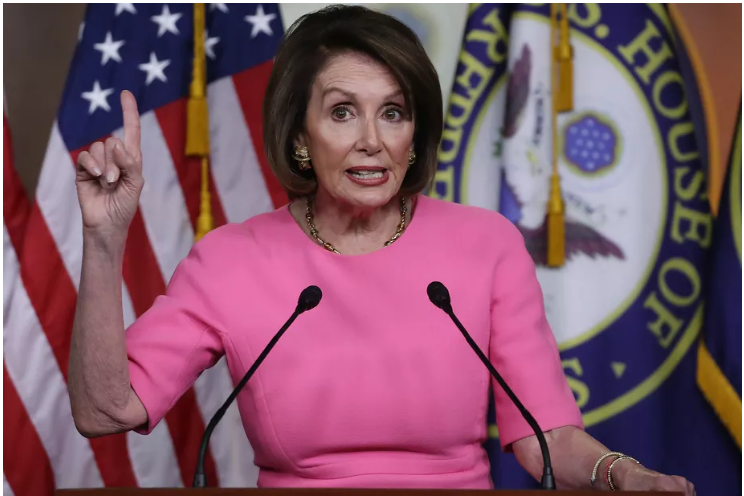
The development followed Pence’s rejection of a letter from the Speaker of the House Nancy Pelosi urging him to invoke the 24th amendment.

Pelosi had written to the vice president to declare Trump unfit to serve as president of the United States just seven days to the end of his tenure.

In response to Pelosi, Pence had said that invoking the 25th amendment at this time was not in the best interest of the country, stressing that he would not join in ‘political games.’

“I do not believe that such a course of action is in the best interest of our nation or consistent with our Constitution,” Pence wrote.

The motion for the resolution was moved by Jamie Raskin, a democrat and representative of Maryland, who insisted that “the time of a 25th amendment emergency has arrived.”

During deliberation on the motion, all House Republicans but one voted against the move of a second impeachment.

“The vice president has given you your answer before you asked the question. Your ultimatum does violence to a core feature of the architecture of the Constitution,” Representative Dan Bishop, Republican of North Carolina said.

While other House Republicans voted against the move, Representative Adam Kinzinger of Illinois voted in favour of the impeachment motion.

The House resolved to reconvene Wednesday to vote on the impeachment.

Related Story: Fear of uprising in US as House prepares Trump’s second impeachment

Can Trump be impeached again?

There are indications that the president could be impeached by the Democrat-controlled House for a second time.
However, if the president is impeached by the House, the Senate would sit to determine if he should be convicted of the allegations or not.

It is unlikely that he would be impeached by the Senate as seen in the previous impeachment by the House. Apart from all Democrats voting, about 17 Republicans would have to vote in favour of the move to achieve a two-thirds number in the Senate as stipulated by the US Constitution.

What happens if Trump is impeached?

If Trump is impeached, he would become the first US president to be impeached twice in the history of the nation.

Apart from that, Trump would be banned from engaging in politics in the US. This would make him unable to contest for presidency in 2024.He could also be prosecuted.

What led to talks of a second impeachment?

The move to impeach Trump for a second time followed charges of ‘incitement of insurrection’ at the US Capitol Hill on January 6, 2021.  Five people died in the Capitol Hill attack, including two police officers. Trump made inciting comments before the incident, asking his supporters to fight to regain their country. For many weeks, he refused to conceded defeat after losing November 2020 election to Joe Biden,a Democrat.

Trump had told his supporters to ‘fight like hell’ in clear attempt to overturn election defeat to Joe Biden, the US president-elect.

Several world leaders, including Zimbabwean president, Emmerson Mnangagwa, trolled Trump and the US over the attack on the Capitol Hill.

“Last year, President Trump extended painful economic sanctions placed on Zimbabwe, citing concerns about Zimbabwe’s democracy.

“Yesterday’s events showed that the U.S. has no moral right to punish another nation under the guise of upholding democracy. These sanctions must end,” Mnangagwa had said.

Ugandan election: Museveni deploys violent tactics to retain power after 35 years in office

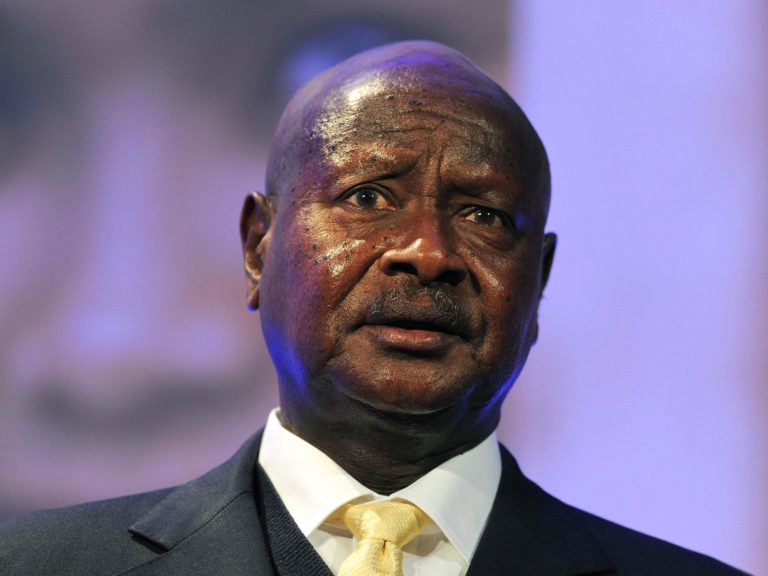
YOWERI Museveni, a former rebel and incumbent Ugandan President, has ruled the country for 35 years, but he is not ready to give up power as he faces 10 other contestants on Thursday presidential elections. The Ugandan parliament controlled by Museveni’s political party, National Resistance Movement, has changed the age limit for presidential contestants to pave the way for one of Africa’s longest-serving leaders to seek re-election on Thursday.

The age limit was formerly 35-75, but the rubber-stamp parliament has changed the constitution to accommodate the 76-year-old Museveni, who has ruled the country known as a ‘sleeping nation.’

Museveni has been heavily criticised by the country’s younger generation for his dictatorial approach and severe infringement on human rights.

Violence and repression; How Museveni is contesting his sixth term

Robert Kyagulanyi, better known as Bobi Wine, a 38-year-old singer and actor who was only three years of age when Museveni took over the reins of power, is the closest rival to the incumbent president.

Wine,  a former musician and running candidate of the National Unity Platform (NUP),  is looking to oust the old leader,  pointing at improved health care and education as his major agenda.

However, Wine and his allies have not had it easy following reports of state-sponsored violence against protesters and opposition members.

Earlier in November, Wine was detained at the police custody for two days before he was charged to court over flouting of coronavirus regulations.

After his arrest, there was mass protest by Wine’s supporters that led to the death of many civilians in the country who were demanding for his unconditional release from police detention.

Presidential Candidate of the National Unity Platform (NUP) Bobi Wine.
Photo Credit: The Guardian

Wine, through his official Twitter account, has on several occasions accused Museveni of using the Ugandan army to suppress him and his campaign team.

Just two days to the election, Wine said that men of the Ugandan army raided his home and took away his security guards after they had also raided the home of his personal assistant, Davie Bwanika, whisking him away to an unknown destination.

A video on social media with more than 90,000 views also shows how men in military uniform violently dealt with a man holding Bobi Wine’s campaign placard.

https://twitter.com/TracyZille/status/1348971784289320960?s=20

Less than 24 hours to the election, the government of Uganda has banned the use of social media in the country following a trending hashtag #WeAreRemovingADictator.

“The President warns that if the social media channels like @Facebook and @Twitter are not being friendly and equitable to some of the Ugandans, then there is no reason as to why we should have them operate here,” the government said on its official twitter handle.

Tibor Nagy, assistant secretary for U.S. Department of State’s Bureau of African Affairs, said Tuesday that such restrictions undermined human rights and fundamental freedoms.

“We are concerned by reports that the Government of Uganda has ordered Internet service providers to block social media platforms, messaging apps, and select content in the run-up to general elections on Jan 14. Such restrictions undermine human rights and fundamental freedoms,” Nagy noted.

The Ugandan election has raised concerns in the international community as previously held polls have been marred by several electoral irregularities as well as suppression of opposition voters by Museveni, according to the European Union.

The European Union said it would not deploy observer mission to the presidential election because complaints from previous observers to make the polls free and fair had gone unheeded.

“An EOM (election observer mission) will not be present in Uganda in 2021,” Attilio Pacifici, EU ambassador and head of delegation to Uganda, said in a report.

35 years of governing a nation; present state of Uganda

Museveni was a rebel leader against former dictators of Uganda. He was successful in ousting former Ugandan military dictators Idi Amin and Milton Obote and was praised for ‘restoring peace’ and bringing stability in governance as opposed to the several military coups that preceded his emergence.

Apart from bringing peace to the country, Museveni has been praised by the international community for his tremendous effort in the fight against HIV/AIDS in Uganda. But the praises have turned to curses.

The country’s economy is not progressing. As of 2019, Uganda is among the 20 countries with lowest GDP in the world- its economy stands at $34.683 billion. Appointed officials have been criticised for sleeping during the all-important presidential address.

The three major sources of income for the country are agriculture, industry and service sectors, two of which have witnessed decreases, according to the Uganda Bureau of Statistics.

The agriculture sector declined by 0.2 percent in Q1 of 2020/2021. The food crops and fishing activities registered 0.1 and 3.8 percent declines in Q1 2020/2021 respectively.

The services sector overall value-added declined by 6.2 percent in Q1 of 2020/2021 compared with a growth of 7.7 percent (revised) in Q1 of the previous year. This decline was mainly driven by a decrease in accommodation & food service as well as education activities which registered declines of 24.2 and 20.4 percent in Q1 2020/2021 respectively.

However, year-on-year value added in the industry sector grew by 4.3 percent in Q1 of 2020/2021 compared with a growth of 7.9 percent (revised) in Q1 of the previous year. The manufacturing sector registered a growth of 3.0 percent in Q1 2020/2021 compared with 7.4 percent (revised) in Q1 2019/2020.

In 2015, the Office of the Ugandan Auditor General expressed ‘deep concerns’ over the increase in borrowing to finance the country’s budget.

According to Office of the Auditor General, as of 2015, the country’s debt to the United States stood at $7 billion.

Data obtained from the World Bank show that only 42 percent of over 42 million population of the Ugandan population had access to electricity as at 2018.

FACT CHECK: Claim that Anambra’s debt profile is over N200bn is FALSE

A VIRAL post on Twitter claimed that Anambra State owes a combined debt of over N200 billion.

The claim was made by a Twitter user with the handle @NnamdiChife on January 10, 2021.

The handle currently has over 15,100 followers.

The tweet also stated that the former Anambra State governor, Peter Obi, handed over N72 billion in cash and $150 million in Anambra Generational Fund to his successor, Willie Obiano.

The tweet reads: “I am incredibly heartbroken.  Anambra State is owing a combined debt of over N200 billion!!! Peter Obi handed over this state to Obiano with N72 billion in cash and $150M in Anambra Generational Fund.  All frittered away, broken infrastructure, debt, and profligacy.”

The tweet, which also appeared on a blog here, has been retweeted more than 1,900 times and liked more than 2,700 times as of 8 p.m. on January 10.

A screenshot of the tweet.

THE CLAIMS

From the tweet, these two claims were established:

  1. Anambra State has a combined debt profile of over N200 billion.
  2. Former Governor Peter Obi handed over N72 billion in cash and $150 million to Governor Willie Obiano.

THE FINDINGS

CLAIM 1: Did Anambra State have a combined debt profile of over N200 billion?

Data show that this claim is FALSE.

The FactCheckHub checked Nigeria’s Debt Management Office (DMO)’s website, the government agency in charge of collating the total debts owed by the federal government of Nigeria as well as each state of the federation.

According to the latest data released by the DMO on 31st of December, 2020, for the domestic debt, Anambra State owed N59.013 billion as of September 30, 2020.

Screenshot of domestic debt. Source: DMO

Also, according to the latest data released by the DMO on September 9, 2020, for external debt, Anambra State owed $115.886 million as of 30th June 2020.

  Screenshot of external debt. Source: DMO

The FactCheckHub converted the total external debt owed by the state from dollar to naira.

As of June 30, 2020, the official exchange rate of dollar to naira rate was N360 to a dollar. When $115.886 million is multiplied by N360, it equals to N41.719 billion.

The FactCheckHub then added the total domestic debt owed together with the total external debt. (N59,013,845,976.50+N41,719,101,286 = N100,732,947,262).

From the findings, the total debt owed by the Anambra State currently stands at N100.732 billion

CLAIM 2: Did Peter Obi hand over N72 billion in cash and $150 million in Generational Fund to Willie Obiano?

It would be recalled that Peter Obi handed over the leadership mantle of Anambra State to Willie Obiano on March 17, 2014.

There is no publicly available data or document that shows that former Anambra State governor, Peter Obi,  handed over N72 billion in cash and $150 million in Anambra Generational Fund to his successor. There have also been several controversies surrounding the actual amount Peter Obi handed over to Willie Obiano.

For instance, in a report published here, Solo Chukwulobelu, professor and secretary to Anambra State Government, stated that the rumour that Peter Obi handed over N75 billion to Willie Obiano was far from the truth.

He said, “The N75 billion was not there; it was not handed over to anybody. At best, it can be half-truth.”

Chukwulobelu stated that what Obiano’s administration inherited from Obi was N9 billion cash and N26 billion near cash.

In addition, in 2015, Willie Nwokoye, principal secretary to Governor Obiano, said the amount in question included quoted stocks, state counterpart fund, long-term investments that were non-earning, including a refund from the federal government for road construction which was still an IOU, among others.

In the article titled, Dissecting The N75 Billion Handover Brouhaha In Anambra where he gave a breakdown of the items in the handover note, Nwokoye  said, “The nearest to cash in the foregoing is item 20, which is a USD 155 million investment in Eurobond and other foreign currency-denominated securities made by the previous administration (Peter Obi) at its twilight. In naira terms, this was worth N26.5 billion at handover.”

In response, Valentine Obienyem, media aide to Peter Obi, said that the former governor handed over N75 billion in cash and investment to his successor.

He stated that the breakdown was as follows: N27 billion in local currency investment; N26.5 billion in foreign currency investment and N28.1 billion in certified state/ MDS balances.

Also, data from DMO website revealed that as of December 2013, Anambra State under the leadership of Peter Obi owed N3.026 billion in domestic debt and a total sum of $30.324 million in external debt.

While it is difficult to ascertain which of the two parties is right, it is easy to conclude that the claim is MOSTLY FALSE, as the amount in contention has always been N75 billion and not N72 billion as stated in the claim.

In addition, from the reactions of the two parties it can be surmised that the amount in question is made up of cash and long term investments, which the Obiano camp said were mostly non-earning yet.

THE VERDICT

The claim that Anambra State has a combined debt profile of over N200 billion is FALSE.

The claim that Peter Obi handed over N72 billion in cash and $150 million in Generational Fund to Obiano is MOSTLY FALSE.

This report was originally published by FactCheckHub

Backlash against WhatsApp as Telegram gains 25m new users in 72 hours

0

TELEGRAM messaging app has gained 25 million new users in the last 72 hours, profiting from an ongoing backlash against WhatsApp’s new privacy policy.  

Telegram has reached 500 million users already and market sentiments show that the number will grow in the coming days due to WhatsApp’s ill-advised proposal to share users’ data with Facebook.

“In the past 72 hours alone, more than 25 million new users from around the world joined Telegram. These milestones were made possible by users like you who invite friends to Telegram,” Telegram said in a statement sent to users on Wednesday, including this writer.

“If you have contacts that joined on the last few days, you can welcome them using one of Telegram’s unique features, such as an animated sticker or avoided message,” Telegram further said.

WhatsApp, a Telegram competitor, recently unveiled a new privacy policy that asks users to allow Facebook to have their phone numbers and locations before February 8 or lose access to the app.

“It’s important for us to be clear this update describes business communication and does not change WhatsApp’s data sharing practices with Facebook. It does not impact how people communicate privately with friends or family wherever they are in the world,” WhatsApp chief executive officer Will Cathcart said on Twitter on January 8.

He said about 175 million people messaged a business account each day on WhatsApp, noting that the app was proud of its service and would continue to develop technology and practices to provide private, secure communications for as many people as possible.

“We’re in a competition on privacy with others and that is very good for the world. People should have choices in how they communicate and feel confident that no one else can see their chats. There are people who disagree with this, including some governments,” he further said.

But this does not augur well with many users who feel their personal data may be shared with the public and used against them. Many WhatsApp users on Twitter have said they would opt out of WhatsApp should the company insist on the privacy policy of sharing data with Facebook.

Daniel Bhatt, a WhatsApp user on Twitter, said: “As long as it is connected with Facebook, we will not use it, especially for privacy. So, first, separate WhatsApp from Facebook. We are in fear as our credit card, debit card, bank details and personal details will be on sale in nearby markets.”

Another WhatsApp user on Twitter named DoRadiology said, “There is no reason why users should trust anything coming from FB on privacy – that includes WhatsApp = Facebook.”

One Twitter user, Juan, with a handle @JFHoyer said, “I just do not want the business to share my personal information with Facebook. I cannot trust them from now on.”

Media reports say that WhatsApp users are moving to Telegram and Signal.

Financial Times reported on Wednesday that WhatsApp’s privacy policy had “sparked privacy concerns and prompted users to turn to rivals such as Signal and Telegram in droves.”

WhatsApp is already taking a hit as it recorded a 14 percent decrease in downloads a week after the announcement of the policy. Its downloads fell from 11.3 million to 9.7 million in one week.

Read alsoNigerians to see poverty, inflation, debt worsened in 2021— LCCI

Murder in Dublin: How Irish police shot and killed George Nkencho

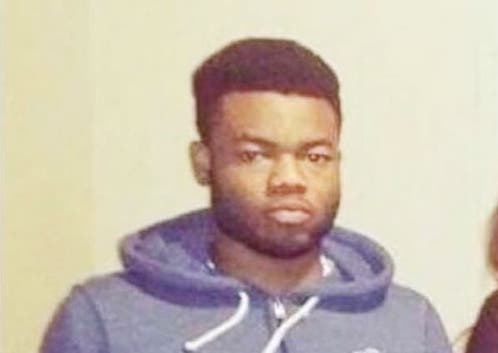
GEORGE Nkencho, 27, was battling bouts of depression among other mental health issues when policemen of Irish Blanchadstone Gardaí Armed Support Unit, ASU shot him dead in front of his house.

December 30, 2020, Nkencho got involved in a physical altercation with the store manager of a Spar shop in Hartford, Ireland before drawing a knife to fend off his attacker, according to media reports.

When the police arrived at the scene, Nkencho was not restrained immediately,  they rather followed him closely through the streets of Hartstown housing estates until he reached his home at Manorfield, Clonee, on the Dublin-Meath border.

The video clips taken on a mobile phone show parts of Nkencho’s route across a green lawn, as he was closely followed by two Gardaí cars which include, a local Gardaí patrol car with two unarmed members and the other a crime task force car, also with two unarmed Gardaí.

He later knocked on his front door which was answered by his sister Gloria who revealed in an interview that she was ordered to get inside after she told them from the hallway that her brother had “mental problems”.

In a statement by the Gardaí, they stated that Nkencho was about to enter the house and was likely to take hostages. In a bid to stop Nkencho, he was pepper-sprayed which was unsuccessful while another ASU member fired a taser at him twice to make him drop the knife while he was raising his voice.

The police authorities also said  Nkencho threatened the officers with a knife before they implemented a graduated response, using less-than-lethal weapons which were unsuccessful before the shots were fired.

Nkencho’s three siblings said they were on the other side of the hall door in the house paralysed with fear when they heard the shots that killed their brother.

“My siblings and I have witnessed the most traumatic experience of our lives as our brother was shot in front of us,” Gloria said in an interview.

Nkencho’s killing has attracted condemnations and protests across Ireland and Nigeria with a petition launched online to seek justice for him which has garnered over 7,000 signatures.

Post mortem reveals new details

The Irish-African community was devastated by the news of Nkencho’s death as a peaceful protest followed immediately after the shooting, the protesters gathered at a police barricade close to Nkencho’s house to air their grievances.

The next day, protesters also gathered outside Blanchardstown Gardaí station with placards before marching through the city’s shopping centre and to the Eurospar where Nkencho had assaulted the manager.

An investigation into the death of Nkencho has been commenced by Gardaí Síochána Ombudsman Commission (GSOC), an independent statutory body set up in 2007 to provide efficient, fair and independent oversight of policing in Ireland.

According to a post mortem documents, obtained by The ICIR from sources close to the family reveals that the interim cause of death was from two gunshot wounds to vital organs. However, it also revealed that a total of six shots were fired with five shots penetrating his torso (body) with another passing through his arm.

A peaceful protest held in Dublin, Ireland to decry the unjustified killing of George. Credit: Sunday World Newspaper

“Injuries noted at the postmortem examination were that it appears that six shots were aimed at the central mass [torso] and of those shots, one went through George’s arm and did not go into his chest,” a section of the postmortem result reads.

Also being examined by GSOC in its investigation is the taser deployed during the incident as advised the details of the taser will provide further information on that taser at the time of deployment.

Phelim O’Neill, the lawyer representing Nkencho’s family has expressed satisfaction with the pace of the investigation saying it has been given the status of a criminal investigation by GSOC.

“It is now a real and distinct possibility that on the conclusion of the GSOC investigation that members of An Gardaí Siochana will be criminally prosecuted for their actions in shooting George Nkencho to death,” he said.

However, O’Neill raised some questions which the GSOC were yet to provide answers with regards the investigation into Nkencho’s death.

He requested GSOC to confirm the number of gardai in attendance at the scene and the total shots while confirming how the postmortem examination could possibly account for the aim taken by the officers.

Racial tensions worsen

On April 2nd, 2010, Nigerian born Irish citizen Toyosi Shittabey was stabbed to death in Tyrrellstown after an argument with some teenagers who had called Shittabey and his group by racial slurs by their alleged attackers.

The incident has been described as one of Ireland’s major racist murders involving the African – Irish community.

Toyosi and Nkencho were both friends and teammates at Insaka Football Club in the North Dublin Schoolboy League in 2010. The team was assembled together to give black youths in west Dublin, a safe place to gather, work on their football skills and possibly get picked up by top-tier clubs.

They were both very young to play for the senior team so they got involved in the coaching sessions and also featured in the training sessions. However, Nkencho’s slide in his mental health also started after the death of his Toyosi in 2010, as he became socially withdrawn.

At George Nkencho’s tribute organised by family and friends. Credit: Irish times

In a 13-second video of the shooting, captured by a dog walker which has been widely circulated on social media. Reactions trailing the video online reveals two sides of the divide as some support the gardaí saying they had to defend themselves while others say the gardaí used excessive force.

A Twitter user with the name Brandon Chung in his tweet stated that White Irish tweeps got quiet about racism and Nkencho’s incident.

“(White) Irish twitter got quiet about racism and George Nkencho real quick.” he tweeted.

Des Topia with the username @LeftistDad described the calls for justice for Nkencho as whipping up sentiments for political gains.

“How effective the far right were in whipping up racism in the aftermath of the killing of George Nkencho & the challenges it created for the Left. They’ll deploy what they learned about the effect of racism when it suits them. It’s who they are,” the tweet read.

Protesters have also been riled up by the false information spread by far-right and racist social media accounts claiming Nkencho had a violent criminal history while some have expressed joy that Nkencho had been killed.

https://twitter.com/markbikes94/status/1344347710581829642?s=20

https://twitter.com/CalebMurray97/status/1344726230336208897?s=20

Nkencho’s family has also received “hate letters” containing racist and offensive language and making reference to false accusations circulating on social media about a non – existing acts of a crime involving the deceased 27-year-old.

The sender stated they were “glad” Nkencho was dead and tells the family to get out of Clonee as sources close to the family say the letter had caused them “considerable added distress”.

Data obtained from the 2019 Gardaí Annual Report shows that the Gardaí’s ASU was assigned 55 cases involving Hostage/Barricade/Suicide (HBS) type incidents out of a total of 98 cases which occurred that year which involved individuals posing a serious threat to either themselves or others or both.

With the involvement of the ASU, it shows that 69 per cent of HBS incidents were related to subjects suffering from mental health challenges while 18 per cent of these cases were criminal related incidents.

Cases of fatal shootings recorded by the Gardaí is put at six in the last 22 years. In 2019, the ASU was involved in 4,390 incidents described as higher risk spontaneous which was an 18 per cent rise from 2018.

Though, there was a reduction in hate crime in 2019, dropping from 27 incidents per month in 2018 to 21 incidents in 2019, while indicating that hate crimes were potentially underreported and
an increase is seen as a “desirable correction”.

Tributes for Nkencho

At the memorial for Nkencho which was held near his home in west Dublin on Sunday where family and friends gathered to remember him and release balloons in the colours of his favourite football team, Manchester United.

He was described as a “beautiful guy” and a “great friend, brother and son” who was “kind”.

Off the pitch, Nkencho whose stage name was Young G was also involved in making hip-hop music at his local Youthreach centre and made performances depicting the issues they faced in their daily life.

After a minute’s silence was held in his memory, speeches were made and his name was read out 21 times.

George’s brother Emmanuel who spoke at the event explained the similarities between him and his deceased elder brother which reflected the bond that existed while he was alive.

“We loved the same stuff, the same team. We played the same position, the same music.

“It’s hard to see him go like that. I wish that day had played out a different scenario than what I witnessed. I personally think there are many other ways that the scenario could have played out, I wish it did,” he said.

The family are demanding for answers about the circumstances surrounding Nkencho’s death, as protesters are still holding protests outside Gardaí stations.

FACT CHECK: Has FG postponed school reopening indefinitely?

ON Monday, social media was awash with the news of the federal government indefinitely postponing the reopening of schools owing to the rising cases of COVID-19 in the country.

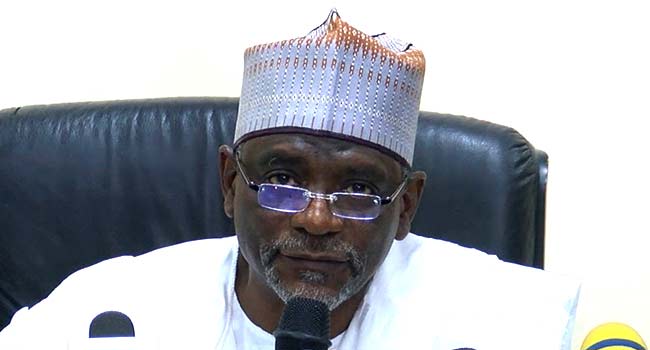
Several footages and images from some prominent Nigerian media houses quoted the minister of education, Mallam Adamu Adamu, to have issued the directive in a statement at the daily COVID-19 briefing in Abuja.

This purported decision by the government has since generated a lot of backlashes and criticisms against the government by many Nigerians, especially tertiary education students, who have been at home for nine months as a result of COVID-19 and the recently called-off strike embarked by Association of Staff Union of Universities (ASUU) in March 2020.

The federal government, through its relevant agencies in the education sector, recently issued a clearance to all schools in the country to reopen for academic activities on the 18th of January.

What the minister said

However, while fielding questions from reporters who wanted to know whether the government would stick to its earlier position concerning reopening of schools, Adamu said the government was still reviewing the process.

“It (January 18 date for reopening schools) is not sacrosanct. When we decided on that date, it was just a target towards what we were working on,” Adamu had said.

“Of course, we are keeping it in view and looking at what is happening in society and then it is supposed to be subject to constant review.

“Even today (Monday) at the PTF meeting, we looked at the rising figures and thought about if we should probably take another look at it. On the January 18 resumption, we are reviewing it, we are going to review it. At the PTF meeting today (Monday), we considered it and tomorrow (today, Tuesday), the ministry is going to take it up.”

Verdict

Based on what the minister said as monitored by The ICIR, reports about the indefinite suspension of school resumption are FALSE. As of the time of this report, no decision had been taken by the federal government to indefinitely move the reopening of learning institutions in Nigeria due to the surge in COVID-19 cases.


National Assembly approves budget for non-existing Office of Chief Economic Adviser to President for the 6th time

THE non-existing Office of the Chief Economic Adviser (OCEAP) to President Muhammadu Buhari got N46.86 million in the 2021 budget approved by the National Assembly. This is the sixth time the non-existing office is getting a budget approval from both chambers of the National Assembly.

The office, which clearly has no presidential appointee and personnel to account for monetary approvals allocated to it, has been receiving funds from the government coffers for six years.

The ICIR had reported in 2020 how the OCEAP got N496.8 million in five years without an appointee to answer for the monetary disbursements.

As of July 2020, data from the Office of the Accountant General of the Federation (OAGF) revealed that N116.97 million had been released to the OCEAP out of the N496.8 million cumulative budget.

In 2016, the office got N78.17 million as its capital budget from a total budget of N142.21 million. The following year, it received N60 million from N106.86 total approved budget.

Another N60 million was approved for the same OCEAP in 2018 from N106.86 total approved budget. By 2019, capital budget to the office dropped to N42.23 million from N89.08 million approved budget.

In 2020, reviewed capital allocation to the OCEAP further dropped to N19.71 million, from total approved budget of N51.77 million for the office.

But the 2021 approved budget shows that N46.86 million was approved for the controversial office which has no appointee.

The official website of the OCEAP – www.oceap.gov.ng, which was supposed to help Nigerians understand economic policies of the president, is currently inactive.

“Database connection error (1): The MySQL adapter ‘mysql’ is not available,” it read when The ICIR visited. This was exactly the message seen by this reporter while verifying the portal in August 2020.

OCEAP allocation tagged as overhead, office missing in State House website

Though there was no provision for personnel cost and capital allocations in the OCEAP budget, the N46.86 million sum was pegged as overhead.

Moreover, the OCEAP is excluded from list of offices under the presidency in the State House website.

Current offices contained in the websites include Office of the President, Office of the Vice President, Office of the Secretary to the Government of the Federation, Office of the Head of the Civil Service of the Federation, Office of the National Security Adviser and the State House Administration.

It is worthy of note that previous administrations from Olusegun Obasanjo had appointed chief economic advisers to provide sound advice on economic matters. The same appointment was made by former President Goodluck Jonathan whose chief economic adviser was Nwanze Okidegbe.

But Buhari is yet to have an appointee to occupy the office.

Adeyemi Dipeolu was only appointed as the special adviser to the president on economic matters in the Office of the Vice President.

Both Dipeolu and Laolu Akande, Vice-President Yemi Osinbajo’s media aide, had exonerated the former from being the occupier of the OCEAP.

A responded Freedom of Information (FOI) request to the Office also affirmed the president was yet to appoint anyone to manage the office.

“Please be informed that a Chief Economic Adviser to the President is yet to be appointed and therefore, this office is presently constrained in facilitating your request in respect to the above subject matter,” one Yusuf Ahmad Babatunde had responded in place of the yet-to-be-appointed chief economic adviser to the president.

Yusuf Ahmad Babatunde signed FOI response on behalf of yet to be appointed Chief Economic Adviser to the President.

Related StoryNon-existing office of Buhari’s Chief Economic Adviser gets approval for N573.45m in five years

Buhari’s stance on corruption

Buhari rode to power in 2015 on the political bandwagon of fight against corruption in Nigeria. He particularly vowed to fight against corruption and insecurity. These he restated during his inauguration into office after the election.

In 2018, he reaffirmed this commitment while receiving Thabo Mbeki, former South African President at the Presidential Villa in Abuja.

“We must fight corruption frontally, because it’s one of the reasons we got elected,” he told Mbeki. “We campaigned on three fundamental issues: security, reviving the economy, and fight against corruption. It’s the reason we got elected, and we can’t afford to let our people down.”

However, public perception shows the president is either partial with the anti-corruption fight or is not doing enough. Some have even described his scorecard on corruption as ‘failure.’

The 2019 Corruption Performance Index (CPI), released by Transparency International, which ranks nations based on the level of corruption perpetrated by its public sector, placed Nigeria at 146 out of 198 countries, scoring 26 of 100.

Fear of uprising in US as House prepares Trump’s second impeachment

AN uprising will likely take place in the United States of America if President Donald Trump is removed from office before January 20, the Federal Bureau of Investigation (FBI) warned on Tuesday.  

But the Democratic Party-dominated House of Representatives are adamant, with members to vote on Trump’s impeachment on Wednesday. Democrats in the House formally charged Trump on Monday with ‘incitement of insurrection’ at Capitol Hill—an incident on January 6 that tarnished US democratic image.

Five people died in the attack, including two police officers, as Trump told supporters to ‘fight like hell’ in his attempt to overturn election defeat by Joe Biden. Emerging video footage has revealed just how close the mob came to a potentially deadly confrontation with members of Congress.

On Capitol Hill, the House speaker, Nancy Pelosi, said on Monday that she would move forward with impeaching Trump if Vice President Mike Pence did not remove him from office under the 25th amendment to the US constitution.

“The president’s threat to America is urgent, and so too will be our action,” she said in a statement.

A resolution calling on Pence to work with other cabinet members to declare Trump unfit was objected on Monday by a Republican shortly after it was introduced in the House. The objection will make the whole House to vote on the resolution, which is already gaining the support of some Republicans as of Tuesday.

A clause in the 25th amendment, never before invoked, describes how members of the cabinet can agree to remove a president under extreme circumstances. Pence—a staunch loyalist until the climax of Trump’s efforts to overturn the election—has signalled no intention of joining such a move. Trump lost the November 2020 presidential election to Biden, but he refused to concede defeat till after the Capitol Hill ugly incident.

The already prospect of the vice-president invoking the 25th Amendment is becoming dim following a meeting between Trump and Pence at the White House on Monday.

According to a senior administration official, Trump and Pence agreed that “those who broke the law and stormed the Capitol Hill last week do not represent the America first movement” and “pledged to continue the work on behalf of the country for the remainder of their term.”

If Pence refuses to act within 24 hours, the House will then debate the charge on Wednesday.

Trump’s impeachment is gaining the support of Joe Biden. He was quoted to have said on Monday that he “thinks President Trump should not be in office. Period.”

Read also: Trump Twitter eviction should have been guided by laws—Merkel

David Cicilline, a Democrat, said that the party had sufficient votes to pass it and impeach Trump a second time – a first in American history. But for him to be removed would require a conviction in the Senate.

Some Republicans in both the House of Representatives and the Senate who fear Trump may return in 2024 to recontest as president have joined Democrats’ effort to remove Trump.

Adam Schiff, Democratic chairman of the House Intelligence Committee and a key figure in the first Trump impeachment, tweeted: “Every day Trump stays in office, he’s a threat to our democracy. Congress must act, and with urgency.”

Although there are concerns as to whether he can still be convicted by the Senate before the expiration of his term on January 20, legal experts have opined that the Senate can still convict and punish him by barring him from future elections in the United States. He can also be prosecuted.

Trump was charged with two articles of impeachment in December 2019 by the Democrat-dominated House, but was acquitted in February 2020 by the Republican-controlled Senate.

Aftermath of Capitol Hill Invision

On Sunday, after widespread criticism, Trump ordered that the US’ flags on any government facility, both within and outside the country, to be flown at half-mast in honour of Capitol policemen and two of its men that died from injuries inflicted by the mobs.

Two other Capitol police officers have been suspended and several others indicted due to their roles in the incident.

According to the US Department of Justice, 13 individuals have been charged so far in a federal court in the District of Columbia related to crimes committed during the protest. In addition to those who have been charged, additional complaints have been submitted and investigations are ongoing.


Board chairman sacked while probing allegations against DG, says he was not queried before dismissal

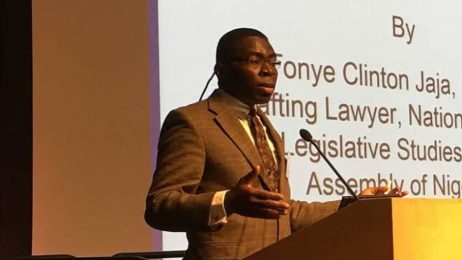
Former chairman of the Governing Board of the Nigerian Copyright Commission (NCC),‎ Tonye Clinton Jaja, who was recently sacked by President Muhammadu Buhari, has said that he was not issued any query before he was unexpectedly removed from the office.

‎Jaja was sacked on October 15, 2020, 17 months after his appointment as chairman of the NCC Governing Board on May 28, 2019.

He was removed from office at a time he was championing the investigation of allegations of corruption against the director-general of the Nigerian Copyright Commission, John Asein.

The allegations, detailed in an earlier report by The ICIR, were being investigated by the Code of Conduct Bureau before Jaja’s sack, and there are indications that the investigation has been discontinued, based on ‘orders from above’— going by findings made by our correspondent. ‎

The allegations against Asein, which are contained in several petitions from stakeholders in the copyright sector, border on corruption, conflict of interest and abuse of power.

Asein denied the ‎allegations when contacted by The ICIR as part of investigations for the earlier report.

In his capacity as chairman of the Governing Board of the NCC, Jaja issued queries to Asein over the allegations contained in the petitions filed against him (Asein). Investigations by The ICIR revealed that the DG refused to respond to the board chairman’s queries.

‎Jaja also forwarded a memorandum to the CCB as part of the investigations into the allegations against the NCC DG, and followed it up with a letter to Buhari asking for Asein’s suspension pending the conclusion of investigations into the issues.

However, some members of the NCC board disowned Jaja’s letter to the president, claiming that he did not carry the board along in recommending Asein’s suspension. The board members also accused Jaja of orchestrating phantom petitions against Asein, and alleged that he was seeking vengeance in respect of allegations of plagiarism levelled against him by Asein.

Asein has also accused Jaja of perjury.

Jaja’s sack came shortly after five members of the NCC Governing Board disowned the letter he wrote to Buhari to ask for the DG’s suspension.

‎‎His sack was announced in a letter with Ref. No. SGF/PS/NCC/668, dated October 15, 2020, and signed by Dayo Apara, solicitor-general of the federation and permanent secretary in the Federal Ministry of Justice.

The sack letter read, “I have been directed to notify you of your removal as the Chairman, Governing Board of the Nigerian Copyright Commission by the President of the Federal Republic of Nigeria, His Excellency, Mohammed Buhari, GCFR, as conveyed vide letter Ref: 59312/V/230 of 28th September, 2020. Your removal is with immediate effect and you are, therefore, expected to handover all the properties of the Commission in your possession to the Director General. While wishing you success in your future endeavours, please accept the assurances of the warm regards and best wishes of the Honourable Attorney-General of the Federation and Minister of Justice.”‎

The letter did not provide the reason for Jaja’s sack, but findings by The ICIR revealed that his dismissal was connected with his push for the investigation of the allegations against Asein.

Jaja had refused to comment on the issues surrounding his sack in the course of the earlier report done by The ICIR on the matter, but in WhatsApp messages sent to our correspondent afterwards, he disclosed that he was not issued any query before he was surprisingly removed as chairman of the NCC Governing Board.

He suggested that the attorney-general ‎of the federation and minister of justice, Abubakar Malami, did not provide him with the type of opportunities he made available to Asein to defend himself in his capacity as chairman of the governing board, while dealing with the numerous petitions against the DG of the Copyright Commission.

‎Noting that he handled petitions against Asein with fairness by giving the DG an opportunity to respond to allegations, Jaja also stressed that, contrary to claims of some of the members, he always carried the governing board along in all his actions concerning the allegations against Asein.

In a WhatsApp message sent to our correspondent, Jaja said, “In my capacity as the Chairman of the Governing Board of the Nigerian Copyright Commission, I always followed due process. I always carried along Members of the Governing Board of the Nigerian Copyright Commission.

“I always gave Mr John Asein the opportunity to defend himself by responding to any petition(s) against him.

Related Story: How push for investigation of corruption allegations ‎against DG of Copyright Commission led to sack of board chairman by Buhari

“However, I was never given such opportunity by the Supervising Minister, when on 19th October 2020, I was informed of my removal. There was no previous query against me, I was not invited to any meeting.”

Further investigations by The ICIR shows that about a month before Jaja was sacked, he had issued a query to Asein over a petition concerning his (Asein’s) engagement of one Joni Icheka as special assistant despite being the subject of an ongoing criminal prosecution by the Economic and Financial Crimes Commission (EFCC) over alleged forgery and embezzlement of over N7 billion belonging to the Nigeria Police Equipment Fund.

In the query dated September 21, 2020, Jaja had asked Asein to disengage Icheka until the governing board concluded investigations into the allegation. Jaja also asked Asein to respond to the allegation contained in a petition brought by a law firm, White Doves Solicitors, which represented the Copyright Society of Nigeria (COSON).

COSON is engaged in a protracted legal dispute with the Nigerian Copyright Commission over issues relating to copyright administration in the country. ‎

In the petition dated September 15, 2020, White Doves Solicitors had said that Asein failed to notify the NCC Governing Board ‎that Icheka was being prosecuted by the EFCC alongside Kenny Martins for his alleged role in the forgery of documents used to defraud the Nigerian Police Force of over N7 billion from the Police Equipment Fund.

The law firm, in the petition, alleged that Asein “concealed the critical information” and “deceived” the governing board ‎to approve Icheka’s appointment as special assistant to the DG.

The petition further alleged that Icheka was “heavily involved in manipulating the system to ensure that the DG of the NCC, Mr John Asein, keeps avoiding justice in the multiple allegations of corruption, conflict of interest and abuse of power” against him. The DG’s deception of the Board to appoint Mr Icheka cannot be allowed to go unaddressed,” the petition observed.

Jaja, in another WhatsApp message to our correspondent, suggested that his sack was not unconnected with ‘stepping on big toes’ when he asked Asein to discontinue alleged ‘illegal’ ‎moves to renew the licence of the Musical Copyright Society of Nigeria (MCSN) without the knowledge of the Governing Board of the Copyright Commission.

The development followed another petition by the same law firm, White Doves Solicitors, dated September 15, 2020, and titled “Petition against an attempt by the DG of the Nigerian Copyright Commission to issue a backdoor renewal of approval ‎to MCSN, a company which is presently listed as ‘inactive’ by the Corporate Affairs Commission.”

The petitioned urged the chairman and members of the NCC ‎Governing Board to halt the alleged surreptitious moves to renew the licence and also investigate the issue so that “innocent copyright owners and users in Nigeria are not continuously short-changed.”

Commenting on issues concerning the petition, Jaja said in the Whatsapp message, “This is another petition against Mr John Asein, the Director General of the Nigerian Copyright Commission. I received this petition in my capacity as the Chairman of the Governing Board of the Nigerian Copyright Commission.

“In accordance with the Rules and Regulations, I wrote to the members of the Board, including Mr John Asein himself asking him to respond to the allegations against him. He refused.

“I asked him to discontinue the renewal of licence until due process is followed by seeking the approval of the Governing Board of the NCC. This is where I stepped on big toes because the rumour is that a certain high ranking minister has vested interest in this particular organisation.”‎

The ICIR contacted the Office of the Attorney General of the Federation and Minister of Justice over the issues raised in this report, particularly Jaja’s claim that he was not issued any query before he was sacked.

Umar Gwandu, special assistant on media and public relations to the AGF and minister of justice, after listening to our correspondent, asked that questions should be sent to him through WhatsApp.

Gwandu confirmed that he has received the WhatsApp message, but he did not respond to the issues as of the time of filing this report.

Plans underway to incite religious violence in Lagos, Kano, S/E, others—SSS

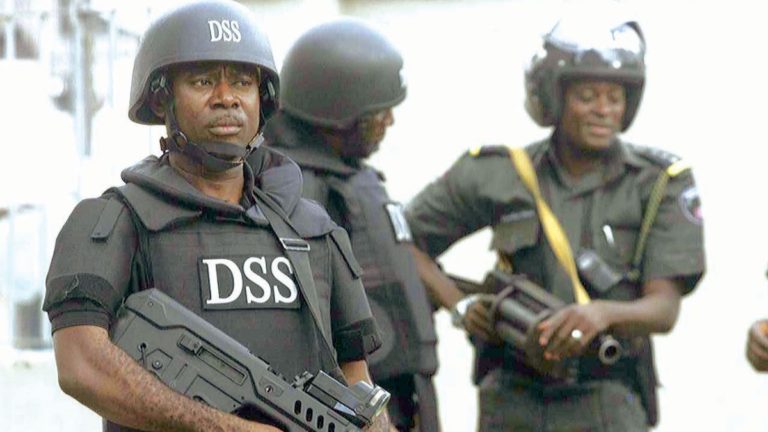
The State Security Service (SSS) say there are plans by undesirable elements working with external forces to incite religious violence across Nigeria.

Peter Afunanya, SSS spokesman, stated this in a statement issued on Monday.

Afunanya said that Sokoto, Kano, Kaduna, Plateau, Rivers, Oyo, Lagos and states in the South-East would be majorly affected by the violence.

“The DSS wishes to alert the public about plans by some elements working with external forces to incite religious violence across the country,” he said.

“Targeted States include Sokoto, Kano, Kaduna, Plateau, Rivers, Oyo, Lagos and those in the South East.

“Part of the plans is to cause inter-religious conflicts as well as use their foot soldiers to attack some worship centres, religious leaders, personalities, key and vulnerable points.”

He urged Nigerians to shun divisive tendencies aimed at creating violence, stating that his agency would work with sister institutions to maintain law and order across the country.

“Consequently, Nigerians are advised to be wary of these antics and shun all divisive tendencies aimed at inciting or setting them against one another.

“While the Service pledges to collaborate with sister agencies to ensure that public order is maintained, those hatching these plots are warned to desist from such in the interest of peace, security and development of the country.

“However, law-abiding citizens (and residents) are encouraged to report suspected breaches of peace around them to the nearest security agencies.”

In December, the DSS had raised a similar security alert, stating that there were plots by some criminal elements to bomb some selected places during the yuletide through the use of explosives, suicide bombing and other dangerous weapons.

Also, in December 2020, the United States named Nigeria for the second time as one of the Countries of Particular Concern (CPC) under its International Religious Freedom Act of 1998, indicting the country for tolerating religious persecution.

Read alsoSSS illegally detains victim for 14 months without trial, allegedly defies AGF’s order

In December 2019, Nigeria was added alongside Comoros, Russia, Uzbekistan, Cuba, Nicaragua and Sudan on a Special Watch List (SWL) for governments that have engaged in or tolerated “severe violations of religious freedom,” by the US following a report by the United States Commission for International Religious Freedom (USCIRF).

According to the report, religious freedom in Nigeria trended negatively in 2018. It accused the Nigerian government at the national and state levels of continuing to tolerate violence and discrimination on the basis of religion or belief, and suppressing the freedom to manifest religion or belief.

It noted that religious sectarian violence increased during the year, with Muslims and Christians attacked based on their religious and ethnic identities. It further accused Nigeria’s federal government of failing to implement effective strategies to prevent or stop such violence or to hold perpetrators accountable.

The report by USCIRF said that Boko-Haram and the Islamic State of Iraq and Syria-West Africa (ISIS-WA) had continued to perpetrate attacks against civilians and the military throughout the year, despite Nigerian government’s claims of progress in defeating them.

In addition, members of the military and the civilian joint task force in Borno were accused of human rights violations against civilians displaced by conflicts.