Home Blog Page 1901

FG dismisses lockdown rumours, says 10m doses of vaccine to arrive soon

0

THE federal government, through the Presidential Task Force (PTF) on COVID-19, has dismissed the rumour of an imminent lockdown in the country, classifying it as fake news.

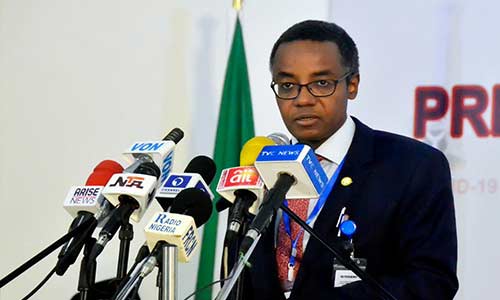
The PTF national coordinator, in a video statement on Thursday, said it was ‘absolutely not true’ that the federal government had declared a lockdown in the country as peddled on WhatsApp groups.

Aliyu asked Nigerians to ignore the messages on the social media regarding another lockdown, stressing that the country was expecting 10 million doses of vaccine, in addition to 100,000 arriving at the end of January.

He urged Nigerians to go about their normal businesses, encouraging citizens to wear their face masks, wash their hands regularly and observe social distancing.

On his part, minister of health, Osagie Ehanire, reiterated that Nigeria was expecting 10 million doses of COVID-19 viral vector vaccine. He said the Ministry of Health in affiliation with other stakeholders had put mechanisms in place for the vaccines management, stressing that the government was expecting more research done on the prophylactic use of Invermectin for COVID-19 treatment.

Vice President Yemi Osinbajo, while also speaking virtually, noted that this was the time to improve health infrastructure in the country, pointing out that Nigeria was at the point where it would benefit from the pandemic.

Related Story: COVID-19 second wave: Does Nigeria need another lockdown?

“A lot of what has been said will really help in putting this in perspective for us as a government so that we can resolve any of these problems and improve the environment for ourselves and for the coming generations in particular,” Osinbajo noted.

“It is evident that our experts, whether directly engaged or not, are also paying attention not just to an unfolding health problem but also the very many opportunities that this problem provides for us—opportunities to ramp up our public health capacities in various ways,” Osinbajo further said.

He acknowledged that Nigeria should be talking about local vaccine production now, improving the training of laboratory scientists and the the capacity to respond to emergencies such as the pandemic.

VISIT ICIR COVID-19 DASHBOARD

“We must focus on the opportunities that this period really gives us. I have noticed that unless something like this happens, we are often relaxed and hope for the best. I think we are in a position now where we can do a lot,” the vice president said.

He said the pandemic had provided another opportunity to prepare young people for the challenges ahead, while improving the quality of personnel.

Nigeria recorded 1,479 COVID-19 cases on January 14 with 23 deaths, which is a record mortality number.
Sokoto receives largest chunk of FG’s N123.3bn grant to states

0

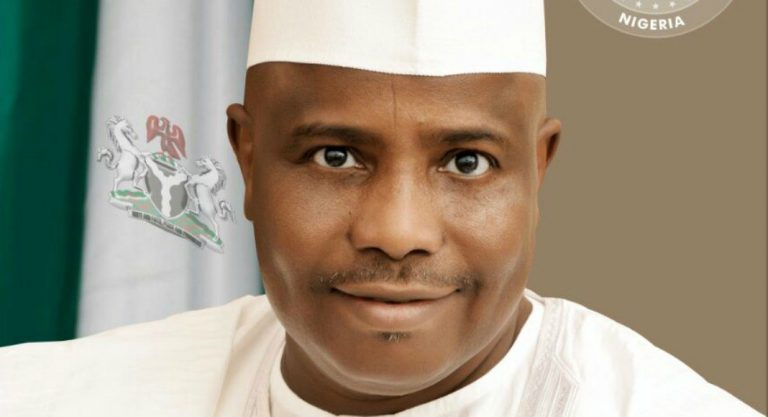
SOKOTO State has received the largest chunk of performance-based grant disbursed by the federal government under the States Fiscal Transparency Accountability and Sustainability (SFTAS) programme, according to finance minister, Zainab Ahmed.

In a statement signed by Hassan Dodo, director of press and public relations in Finance Ministry, Ahmed said Sokoto received highest amount totalling N6.612 billion whilst Kano got the lowest, N1.710 billion.

He said the disbursement was in line with accountability and transparency results achieved by states in the just concluded 2019 Annual Performance Assessment (APA).

She noted that the disbursement came after the recent one done in November 2020, where N66.5 billion was granted to 35 states which achieved results under the COVID-19 response programme.

The minister said that since the first disbursement in April 2020, the federal government had so far disbursed a total of N233 billion to the states under the N63 billion ($750 million) World Bank-Assisted SFTAS programme, stressing that the assessment was carried out by the Office of the Auditor General of the Federation as the independent verification agent (IVA) and approved by the Programme Coordination Unit (PCU) of the Ministry of Finance, Budget and National Planning.

She noted that some states got zero allocations due to their low performance in the assessment indices.

“Bayelsa, Imo, Rivers and Zamfara states got zero allocation due to their inability to meet the 2019 eligibility criteria which required states to publish online the approved annual budgets and audited financial statements within a specific timeframe,” she said.

She pointed out that the 2019 APA results were a significant improvement on the 2018 APA results, where performance-based grant of N43.416 billion was received by 24 eligible states, which was a substantial progress on fiscal reforms by states.

ALSO READ: Viral post on FG giving out grants to support Nigerians is a hoax

She said the World Bank-assisted programme was targeted at strengthening fiscal management at the state level in order to ensure effective mobilisation and utilisation of financial resources to the benefit of citizens in a transparent and sustainable manner, thereby encouraging fiscally responsible behaviour whilst reducing financial risks.

“We have thus far successfully adapted and implemented the SFTAS Programme to provide timely support to states with a view to strengthening their fiscal capacity for responding to numerous fiscal challenges in their respective domains,” she further said.

Presidency warns group over threat to Kukah

THE presidency has warned that no group or faction must issue quit notices to any Nigerian living in any part of the country.

Garba Shehu, the senior special assistant to the president on media and publicity, stated this in a statement on Wednesday in reaction to threats by Muslim Solidarity Forum (MSF), a Sokoto-based Muslim group, giving Matthew Kukah, the Bishop of Sokoto Diocese, an ultimatum to apologise for his Christmas message or vacate the State.

Kukah had spoken against how President Muhammadu Buhari is handling the affairs of the nation during his Christmas message to his teeming congregation in Sokoto.

He accused the president of turning nepotism into a state policy, noting that there could have been a coup if a non-northern Muslim president had done a fraction of what the president is doing.

He also said that the president is promoting and institutionalising a northern hegemony that has reduced others in public life to second-class status.

Kukah’s comments have earned him criticisms from the handlers of the president, sympathizers of the Buhari administration, sociopolitical bodies like the Arewa Youth Consultative Forum (AYCF) and religious body like Muslim Rights Concern (MURIC).

The latest threat by MSF was contained in a statement on Wednesday signed by its acting chairman, Isa Maishanu.

Isa said Kukah’s Christmas message was trying to break the age-long peaceful coexistence between the predominantly Muslim population and their Christian guests.

He called upon the cleric to “quickly and quietly leave the seat of Caliphate” or immediately stop his “malicious vituperations against Islam and Muslims” and tender unreserved apology to the Muslim Ummah.

According to the statement, “In February 2020, he (Kukah) staged a demonstration in the heart of Sokoto over the killing of a single Christian priest, presumably, by the Boko Haram insurgents, but did not consider hundreds of Muslims, Fulani herders that were mercilessly killed by the Christian militia in Taraba state in 2018.”

The statement went further to ask the clergyman what he thought could happen if the peace-loving Muslims of the seat of Caliphate, responded to his incessant provocative attacks on them and their religion like what happened in Kafanchan 1987, Zango Kataf 1992, Tafawa Balewa in 1991, 1993, 1995 and 2001, Yelwa Shandam 2004, Zonkwa and Jarkasa in 2011?”

Related StoryCAN warns group threatening Kukah, says no harm must befall him

However, Garba said the ultimatum by the group “is wrong because it is not in line with the Constitution of the Federal Republic of Nigeria.”

“Under our Constitution, every citizen has the right to, among others, freedom of speech and expression, the right to own property and reside in any part of the country, and the right to move freely without any inhibitions.

Nigeria’s strength lies in its diversity. The right for all religions to co-exist is enshrined in this country’s Constitution. The duty of the government, more so, this democratic government, is to ensure that the Constitution is respected. But all must respect the rights and sensitivities of their fellow Nigerians.”

He noted that Kukah has greatly offended many with his controversial remarks against the government and the person of the President, with some even accusing him of voicing anti-Islamic rhetoric noting that “on matters such as these, responsible leadership in any society must exercise restraint.”

“Knee-jerk reactions will not only cause the fraying of enduring relationships, but also the evisceration of peaceful communities such as Sokoto, the headquarters of the Muslim community as beacon of pluralism and tolerance.

Garba added that under Nigeria laws, groups or factions must not give quit notices, neither should they unilaterally sanction any perceived breaches. Where they occur, it is the courts of law that should adjudicate. Unilateral action is not the way to go.

“Groups such as the Muslim Solidarity Forum must be seen to share and uphold the country’s multi-religious principles. And individuals like Father Kukah must respect the feelings of his fellow Nigerians in his private and public utterances,” he said.

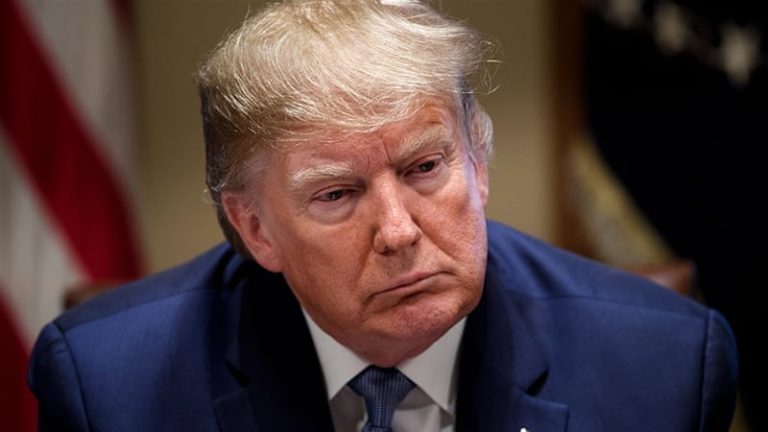
Trump becomes only US president to be impeached twice

THE House of Representatives has concluded the second impeachment of US President Donald Trump after it exceeded 217 votes needed to unseat him.

This makes Trump the only US president to be impeached twice. Two hundred and twenty-two Democrats and 10 Republicans voted to impeach Trump on Wednesday, signalling a disgraceful end for the president of world’s biggest democracy who incited violence at Capitol Hill on January 6. While 232 House members voted for Trump’s impeachment, 197 members did not want him impeached. Four members did not vote.

Trump was impeached for his role in Capitol Hill violence which led to the death of five people and stoked fears in the hearts of many Americans.

Until the incident, he had refused to concede defeat to Joe Biden who won the November 2020 election, making uncomplimentary and inciting remarks about the election even after the Electoral College called Biden as winner.

Trump had told his supporters to ‘fight like hell’ in clear attempt to overturn election defeat to Joe Biden, the US president-elect.

Many see Trump’s behaviour before and after the election as disgraceful for a country touted as world’s best democracy.

Related StoryImpeachment hearing: House compels Pence to declare Trump unfit as US president

What happens to Trump?

With the impeachment, Trump has become the first US president to be impeached twice in the history of the US.

He could be banned from engaging in politics in the US. This would make him unable to contest for presidency in 2024.He could also be prosecuted. However, his impeachment needs to be validated by the Republican-dominated Senate.

He is to leave office on January 20, but his impeachment process by the Senate could continue after he leaves office.


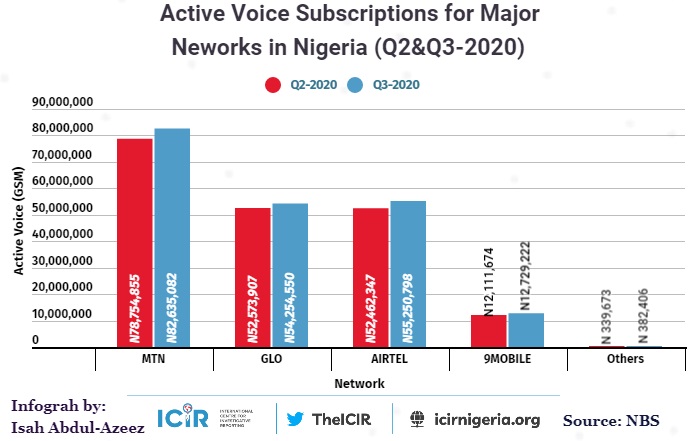
25% of active voice users are from Lagos, Kano, Ogun- NBS

TWENTY-FIVE percent of active call subscribers in Nigeria in the third quarter of 2020 were from Lagos, Kano and Ogun states, telecommunication data recently released by the National Bureau of Statistics (NBS) reveals.

The data also shows that MTN had the highest share of subscribers within the period, followed by GLO and Airtel.

THE ‘Active Voice and Internet per State, Porting and Tariff Information’ data for the second quarter (Q2) and the third quarter (Q3) of 2020, released by the NBS, shows that there were 196.242 million and 205.252 million active voice subscribers in Q2 and Q3 respectively. This represents a 4.59 percent increase in voice subscriptions from Q2 to Q3.

Read also: Nigeria’s VAT rises to N781.35bn in second quarter – NBS

Analysis of the data further shows that there were 143.636 million and 151.512 million active internet subscribers in Q2 and Q3 of 2020 respectively. This represents a 5.48 percent growth in internet subscriptions between the two quarters.

The data, which was provided by the Nigerian Communications Commission (NCC), was verified and validated by the National Bureau of Statistics (NBS).

From the data, it was recorded that Lagos State had the highest number of subscribers in terms of active voice per state in Q3 of 2020. This was followed by Kano and Ogun states. Bayelsa and Ekiti States had the least number of voice subscribers

Also in terms of internet subscribers, Lagos State still had the highest number, followed by Kano and Ogun states. Bayelsa and Ebonyi State had the least number of subscribers.

Retired soldiers occupy Finance Ministry in protest against unpaid pensions

0

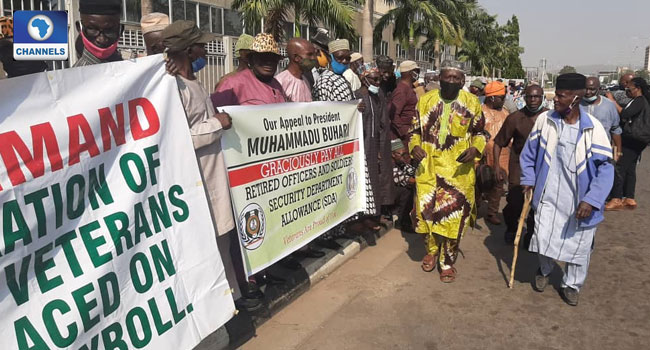
RETIRED soldiers occupied the Ministry of Finance in Abuja on Wednesday in protest against non-payment of their pension arrears.

The protesting ex-servicemen demanded inclusion of officers who fought in the civil war in the military pension scheme. They also wanted speedy payment of minimum wage arrears accruing to them from 2019 till date.

They further requested that the ministry stop all deductions on pensions of all retired medical officers.

A representative of the retired soldiers, Anthony Agbas, who delivered a letter to officials at the Ministry of Finance, told Channels Television that they deserved payment of their pensions, having fought for the country.

He expressed confidence that their demands would be met without further delay.

Not the first time

This is not the first time retirees have protested in Nigeria. In November 2020, retired soldiers had blocked federal highway in Calabar, Cross River State, protesting non-payment of their pensions.

Also in November 2020, retired civilians had raised placards in front of government secretariat in Abeere, Osogbo, Osun State capital, demanding payment of pension arrears. Earlier in September 2020, retirees in Ogun State under the aegis of Nigeria Union of pensioners (NUP) had staged a peaceful protest demanding release of N1 billion monthly as against state government’s proposed N500 million for the settlement of outstanding gratuities.

In June 2020, pensioners in Imo State pensioners had protested against non-payment of their five-month pensions since Hope Uzodimma became governor in January, urging the governor to pay 80-month entitlements of some of their members.

Several states in Nigeria owe their pensioners for months.

In Africa’s most populous nation, politicians live in affluence, but retirees live in penury. The country is characterised by wastages and graft, while the majority of citizens (almost 50 percent) live in poverty, with little support from governments at various levels.


Impeachment hearing: House compels Pence to declare Trump unfit as US president

DONALD Trump, United States president, is facing a second impeachment in 13 months as the House of Representatives voted 223-205 Wednesday to compel Vice President Mike Pence to invoke the 24th amendment and take over power from the president following the Capitol Hill attack.

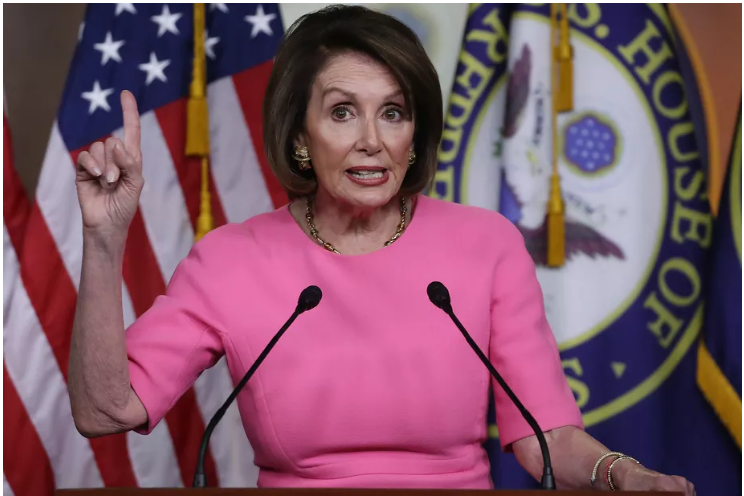
The development followed Pence’s rejection of a letter from the Speaker of the House Nancy Pelosi urging him to invoke the 24th amendment.

Pelosi had written to the vice president to declare Trump unfit to serve as president of the United States just seven days to the end of his tenure.

In response to Pelosi, Pence had said that invoking the 25th amendment at this time was not in the best interest of the country, stressing that he would not join in ‘political games.’

“I do not believe that such a course of action is in the best interest of our nation or consistent with our Constitution,” Pence wrote.

The motion for the resolution was moved by Jamie Raskin, a democrat and representative of Maryland, who insisted that “the time of a 25th amendment emergency has arrived.”

During deliberation on the motion, all House Republicans but one voted against the move of a second impeachment.

“The vice president has given you your answer before you asked the question. Your ultimatum does violence to a core feature of the architecture of the Constitution,” Representative Dan Bishop, Republican of North Carolina said.

While other House Republicans voted against the move, Representative Adam Kinzinger of Illinois voted in favour of the impeachment motion.

The House resolved to reconvene Wednesday to vote on the impeachment.

Related Story: Fear of uprising in US as House prepares Trump’s second impeachment

Can Trump be impeached again?

There are indications that the president could be impeached by the Democrat-controlled House for a second time.
However, if the president is impeached by the House, the Senate would sit to determine if he should be convicted of the allegations or not.

It is unlikely that he would be impeached by the Senate as seen in the previous impeachment by the House. Apart from all Democrats voting, about 17 Republicans would have to vote in favour of the move to achieve a two-thirds number in the Senate as stipulated by the US Constitution.

What happens if Trump is impeached?

If Trump is impeached, he would become the first US president to be impeached twice in the history of the nation.

Apart from that, Trump would be banned from engaging in politics in the US. This would make him unable to contest for presidency in 2024.He could also be prosecuted.

What led to talks of a second impeachment?

The move to impeach Trump for a second time followed charges of ‘incitement of insurrection’ at the US Capitol Hill on January 6, 2021.  Five people died in the Capitol Hill attack, including two police officers. Trump made inciting comments before the incident, asking his supporters to fight to regain their country. For many weeks, he refused to conceded defeat after losing November 2020 election to Joe Biden,a Democrat.

Trump had told his supporters to ‘fight like hell’ in clear attempt to overturn election defeat to Joe Biden, the US president-elect.

Several world leaders, including Zimbabwean president, Emmerson Mnangagwa, trolled Trump and the US over the attack on the Capitol Hill.

“Last year, President Trump extended painful economic sanctions placed on Zimbabwe, citing concerns about Zimbabwe’s democracy.

“Yesterday’s events showed that the U.S. has no moral right to punish another nation under the guise of upholding democracy. These sanctions must end,” Mnangagwa had said.

Ugandan election: Museveni deploys violent tactics to retain power after 35 years in office

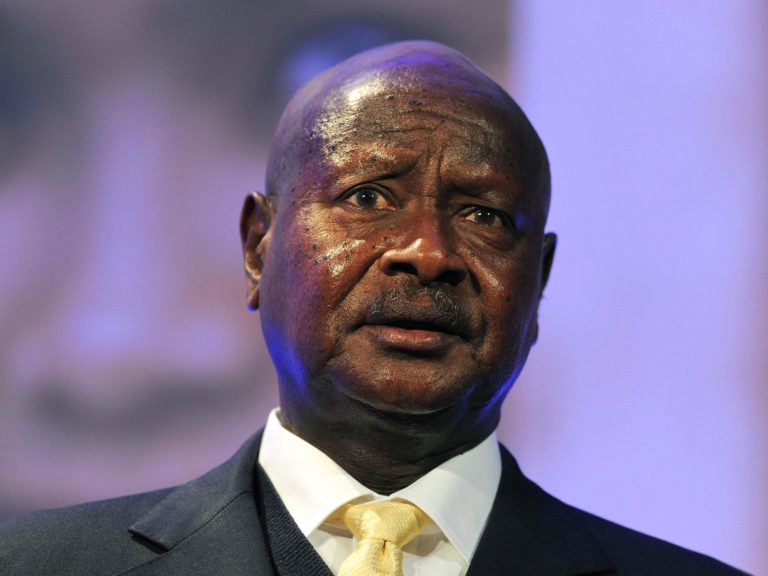
YOWERI Museveni, a former rebel and incumbent Ugandan President, has ruled the country for 35 years, but he is not ready to give up power as he faces 10 other contestants on Thursday presidential elections. The Ugandan parliament controlled by Museveni’s political party, National Resistance Movement, has changed the age limit for presidential contestants to pave the way for one of Africa’s longest-serving leaders to seek re-election on Thursday.

The age limit was formerly 35-75, but the rubber-stamp parliament has changed the constitution to accommodate the 76-year-old Museveni, who has ruled the country known as a ‘sleeping nation.’

Museveni has been heavily criticised by the country’s younger generation for his dictatorial approach and severe infringement on human rights.

Violence and repression; How Museveni is contesting his sixth term

Robert Kyagulanyi, better known as Bobi Wine, a 38-year-old singer and actor who was only three years of age when Museveni took over the reins of power, is the closest rival to the incumbent president.

Wine,  a former musician and running candidate of the National Unity Platform (NUP),  is looking to oust the old leader,  pointing at improved health care and education as his major agenda.

However, Wine and his allies have not had it easy following reports of state-sponsored violence against protesters and opposition members.

Earlier in November, Wine was detained at the police custody for two days before he was charged to court over flouting of coronavirus regulations.

After his arrest, there was mass protest by Wine’s supporters that led to the death of many civilians in the country who were demanding for his unconditional release from police detention.

Presidential Candidate of the National Unity Platform (NUP) Bobi Wine.
Photo Credit: The Guardian

Wine, through his official Twitter account, has on several occasions accused Museveni of using the Ugandan army to suppress him and his campaign team.

Just two days to the election, Wine said that men of the Ugandan army raided his home and took away his security guards after they had also raided the home of his personal assistant, Davie Bwanika, whisking him away to an unknown destination.

A video on social media with more than 90,000 views also shows how men in military uniform violently dealt with a man holding Bobi Wine’s campaign placard.

https://twitter.com/TracyZille/status/1348971784289320960?s=20

Less than 24 hours to the election, the government of Uganda has banned the use of social media in the country following a trending hashtag #WeAreRemovingADictator.

“The President warns that if the social media channels like @Facebook and @Twitter are not being friendly and equitable to some of the Ugandans, then there is no reason as to why we should have them operate here,” the government said on its official twitter handle.

Tibor Nagy, assistant secretary for U.S. Department of State’s Bureau of African Affairs, said Tuesday that such restrictions undermined human rights and fundamental freedoms.

“We are concerned by reports that the Government of Uganda has ordered Internet service providers to block social media platforms, messaging apps, and select content in the run-up to general elections on Jan 14. Such restrictions undermine human rights and fundamental freedoms,” Nagy noted.

The Ugandan election has raised concerns in the international community as previously held polls have been marred by several electoral irregularities as well as suppression of opposition voters by Museveni, according to the European Union.

The European Union said it would not deploy observer mission to the presidential election because complaints from previous observers to make the polls free and fair had gone unheeded.

“An EOM (election observer mission) will not be present in Uganda in 2021,” Attilio Pacifici, EU ambassador and head of delegation to Uganda, said in a report.

35 years of governing a nation; present state of Uganda

Museveni was a rebel leader against former dictators of Uganda. He was successful in ousting former Ugandan military dictators Idi Amin and Milton Obote and was praised for ‘restoring peace’ and bringing stability in governance as opposed to the several military coups that preceded his emergence.

Apart from bringing peace to the country, Museveni has been praised by the international community for his tremendous effort in the fight against HIV/AIDS in Uganda. But the praises have turned to curses.

The country’s economy is not progressing. As of 2019, Uganda is among the 20 countries with lowest GDP in the world- its economy stands at $34.683 billion. Appointed officials have been criticised for sleeping during the all-important presidential address.

The three major sources of income for the country are agriculture, industry and service sectors, two of which have witnessed decreases, according to the Uganda Bureau of Statistics.

The agriculture sector declined by 0.2 percent in Q1 of 2020/2021. The food crops and fishing activities registered 0.1 and 3.8 percent declines in Q1 2020/2021 respectively.

The services sector overall value-added declined by 6.2 percent in Q1 of 2020/2021 compared with a growth of 7.7 percent (revised) in Q1 of the previous year. This decline was mainly driven by a decrease in accommodation & food service as well as education activities which registered declines of 24.2 and 20.4 percent in Q1 2020/2021 respectively.

However, year-on-year value added in the industry sector grew by 4.3 percent in Q1 of 2020/2021 compared with a growth of 7.9 percent (revised) in Q1 of the previous year. The manufacturing sector registered a growth of 3.0 percent in Q1 2020/2021 compared with 7.4 percent (revised) in Q1 2019/2020.

In 2015, the Office of the Ugandan Auditor General expressed ‘deep concerns’ over the increase in borrowing to finance the country’s budget.

According to Office of the Auditor General, as of 2015, the country’s debt to the United States stood at $7 billion.

Data obtained from the World Bank show that only 42 percent of over 42 million population of the Ugandan population had access to electricity as at 2018.

FACT CHECK: Claim that Anambra’s debt profile is over N200bn is FALSE

A VIRAL post on Twitter claimed that Anambra State owes a combined debt of over N200 billion.

The claim was made by a Twitter user with the handle @NnamdiChife on January 10, 2021.

The handle currently has over 15,100 followers.

The tweet also stated that the former Anambra State governor, Peter Obi, handed over N72 billion in cash and $150 million in Anambra Generational Fund to his successor, Willie Obiano.

The tweet reads: “I am incredibly heartbroken.  Anambra State is owing a combined debt of over N200 billion!!! Peter Obi handed over this state to Obiano with N72 billion in cash and $150M in Anambra Generational Fund.  All frittered away, broken infrastructure, debt, and profligacy.”

The tweet, which also appeared on a blog here, has been retweeted more than 1,900 times and liked more than 2,700 times as of 8 p.m. on January 10.

A screenshot of the tweet.

THE CLAIMS

From the tweet, these two claims were established:

  1. Anambra State has a combined debt profile of over N200 billion.
  2. Former Governor Peter Obi handed over N72 billion in cash and $150 million to Governor Willie Obiano.

THE FINDINGS

CLAIM 1: Did Anambra State have a combined debt profile of over N200 billion?

Data show that this claim is FALSE.

The FactCheckHub checked Nigeria’s Debt Management Office (DMO)’s website, the government agency in charge of collating the total debts owed by the federal government of Nigeria as well as each state of the federation.

According to the latest data released by the DMO on 31st of December, 2020, for the domestic debt, Anambra State owed N59.013 billion as of September 30, 2020.

Screenshot of domestic debt. Source: DMO

Also, according to the latest data released by the DMO on September 9, 2020, for external debt, Anambra State owed $115.886 million as of 30th June 2020.

  Screenshot of external debt. Source: DMO

The FactCheckHub converted the total external debt owed by the state from dollar to naira.

As of June 30, 2020, the official exchange rate of dollar to naira rate was N360 to a dollar. When $115.886 million is multiplied by N360, it equals to N41.719 billion.

The FactCheckHub then added the total domestic debt owed together with the total external debt. (N59,013,845,976.50+N41,719,101,286 = N100,732,947,262).

From the findings, the total debt owed by the Anambra State currently stands at N100.732 billion

CLAIM 2: Did Peter Obi hand over N72 billion in cash and $150 million in Generational Fund to Willie Obiano?

It would be recalled that Peter Obi handed over the leadership mantle of Anambra State to Willie Obiano on March 17, 2014.

There is no publicly available data or document that shows that former Anambra State governor, Peter Obi,  handed over N72 billion in cash and $150 million in Anambra Generational Fund to his successor. There have also been several controversies surrounding the actual amount Peter Obi handed over to Willie Obiano.

For instance, in a report published here, Solo Chukwulobelu, professor and secretary to Anambra State Government, stated that the rumour that Peter Obi handed over N75 billion to Willie Obiano was far from the truth.

He said, “The N75 billion was not there; it was not handed over to anybody. At best, it can be half-truth.”

Chukwulobelu stated that what Obiano’s administration inherited from Obi was N9 billion cash and N26 billion near cash.

In addition, in 2015, Willie Nwokoye, principal secretary to Governor Obiano, said the amount in question included quoted stocks, state counterpart fund, long-term investments that were non-earning, including a refund from the federal government for road construction which was still an IOU, among others.

In the article titled, Dissecting The N75 Billion Handover Brouhaha In Anambra where he gave a breakdown of the items in the handover note, Nwokoye  said, “The nearest to cash in the foregoing is item 20, which is a USD 155 million investment in Eurobond and other foreign currency-denominated securities made by the previous administration (Peter Obi) at its twilight. In naira terms, this was worth N26.5 billion at handover.”

In response, Valentine Obienyem, media aide to Peter Obi, said that the former governor handed over N75 billion in cash and investment to his successor.

He stated that the breakdown was as follows: N27 billion in local currency investment; N26.5 billion in foreign currency investment and N28.1 billion in certified state/ MDS balances.

Also, data from DMO website revealed that as of December 2013, Anambra State under the leadership of Peter Obi owed N3.026 billion in domestic debt and a total sum of $30.324 million in external debt.

While it is difficult to ascertain which of the two parties is right, it is easy to conclude that the claim is MOSTLY FALSE, as the amount in contention has always been N75 billion and not N72 billion as stated in the claim.

In addition, from the reactions of the two parties it can be surmised that the amount in question is made up of cash and long term investments, which the Obiano camp said were mostly non-earning yet.

THE VERDICT

The claim that Anambra State has a combined debt profile of over N200 billion is FALSE.

The claim that Peter Obi handed over N72 billion in cash and $150 million in Generational Fund to Obiano is MOSTLY FALSE.

This report was originally published by FactCheckHub

Backlash against WhatsApp as Telegram gains 25m new users in 72 hours

0

TELEGRAM messaging app has gained 25 million new users in the last 72 hours, profiting from an ongoing backlash against WhatsApp’s new privacy policy.  

Telegram has reached 500 million users already and market sentiments show that the number will grow in the coming days due to WhatsApp’s ill-advised proposal to share users’ data with Facebook.

“In the past 72 hours alone, more than 25 million new users from around the world joined Telegram. These milestones were made possible by users like you who invite friends to Telegram,” Telegram said in a statement sent to users on Wednesday, including this writer.

“If you have contacts that joined on the last few days, you can welcome them using one of Telegram’s unique features, such as an animated sticker or avoided message,” Telegram further said.

WhatsApp, a Telegram competitor, recently unveiled a new privacy policy that asks users to allow Facebook to have their phone numbers and locations before February 8 or lose access to the app.

“It’s important for us to be clear this update describes business communication and does not change WhatsApp’s data sharing practices with Facebook. It does not impact how people communicate privately with friends or family wherever they are in the world,” WhatsApp chief executive officer Will Cathcart said on Twitter on January 8.

He said about 175 million people messaged a business account each day on WhatsApp, noting that the app was proud of its service and would continue to develop technology and practices to provide private, secure communications for as many people as possible.

“We’re in a competition on privacy with others and that is very good for the world. People should have choices in how they communicate and feel confident that no one else can see their chats. There are people who disagree with this, including some governments,” he further said.

But this does not augur well with many users who feel their personal data may be shared with the public and used against them. Many WhatsApp users on Twitter have said they would opt out of WhatsApp should the company insist on the privacy policy of sharing data with Facebook.

Daniel Bhatt, a WhatsApp user on Twitter, said: “As long as it is connected with Facebook, we will not use it, especially for privacy. So, first, separate WhatsApp from Facebook. We are in fear as our credit card, debit card, bank details and personal details will be on sale in nearby markets.”

Another WhatsApp user on Twitter named DoRadiology said, “There is no reason why users should trust anything coming from FB on privacy – that includes WhatsApp = Facebook.”

One Twitter user, Juan, with a handle @JFHoyer said, “I just do not want the business to share my personal information with Facebook. I cannot trust them from now on.”

Media reports say that WhatsApp users are moving to Telegram and Signal.

Financial Times reported on Wednesday that WhatsApp’s privacy policy had “sparked privacy concerns and prompted users to turn to rivals such as Signal and Telegram in droves.”

WhatsApp is already taking a hit as it recorded a 14 percent decrease in downloads a week after the announcement of the policy. Its downloads fell from 11.3 million to 9.7 million in one week.

Read alsoNigerians to see poverty, inflation, debt worsened in 2021— LCCI