THE Kwara State government has willfully disobeyed the Freedom of Information Act which holds the government and officials answerable, while hiding under the justification that the FOI Act hasn’t been domesticated by the state.
The Freedom of Information Act 2011 is an Act enacted by the National Assembly to make public records and information more freely available, provide for public access to public records and information, and to protect public records.
According to a Premium Times report, a decade after the Freedom of Information (FOI) Act was legislated in the country, no fewer than 16 states are yet to domesticate it or create comparative and parallel mechanisms that serve to promote transparency and accountability in government.
The 16 states include Imo, Anambra, Akwa Ibom, Edo, Osun, Ogun, Plateau, Kogi, Nasarawa, Niger, Kano, Sokoto, Bauchi, Adamawa, Taraba, Yobe and Kwara.
How Kwara Ministries Violate FOl Act
Recently, The ICIR approached the Kwara State government requesting for information about Covid disbursements to the state by Federal Government.
The FG granted the sum of 1 billion nairas to Kwara State and another 100 Million Naira from the REDISS (World Bank) programme disbursed through NDDC as Covid-19 support for the Kwara State government.
While speaking with Mr. Rafiu Ajakaye, the chief secretary to the Governor, he directed that a formal letter should be written to the concerned ministries to get the document on how the Covid-19 fund is spent in Kwara State and the details of contract awarded under Covid-19 projects.
“Please submit it to the relevant ministry you want to answer your questions. They will then copy the ministry of justice, ” he said.
The ICIR then wrote a letter dated November 20 requesting the details of how the Covid-19 fund is expended in Kwara State.
The letter was submitted to the ministry of finance on Monday, 23 and the scretary to the commissioner informed this reporter to come back on Thursday, 26th of November 2020 to obtain a reply.
When the reporter returned to the ministry on Thursday, 3rd of December 2020, the secretary to the commissioner instead directed this reporter to the permanent secretary’s office, and from there to the director’s office before he was later directed to the office of Olarenwaju O. Kikelomo who is in charge of FOI letter submitted to the ministry.
Mrs. Olanrewaju told this reporter to come back without any stipulated date, noting that the letter was still going through the due process and she requested for the reporter’s contact, with a promise to call to notify the reporter whenever the result of the letter is released.
Meanwhile, section 4 of the FOI Act specifies seven-day deadline for all requests.
Yet, a week after Mrs. Olanrewaju promised to contact this reporter, she defaulted.
When the reporter got to the ministry a week after, Thursday, 3rd of December, she informed this reporter to sign on the original document of the memorandum which contains that the Freedom of Information Act hasn’t been domesticated in Kwara State, and according to the legal input of the state’s ministry of justice, the FOIA doesn’t have an automatic application to states, and concluded that the document for the details on how Covid-19 fund is spent cannot be released.
When she was informed about the recent case between ALO v. Speaker, Ondo State House of Assembly in which the court held that the FOI Act is binding on all 36 states in Nigeria whether it has been domesticated or not. She replied that she was working on the order she was given, noting that she is not a lawyer but just a civil servant.
“That’s the response we received from Ministry of Justice,”– says Permanent Secretary to the Commissioner for Finance
In an interview with the permanent secretary, Folohunsho Abdulrasak, he explained that a letter was written to the ministry of justice and the reply the finance ministry gotten is that Kwara State is not binding to follow the FOI Act cited in the letter submitted to the ministry.
When he was asked whether the ministry of justice was not aware of the court of appeal ruling on the domestication of FOI Act in the state, he emphasised that’s the final response received from the ministry, and that the ministry even quoted a Supreme Court ruling to support their decision.
FOI Act applies to all states in Nigeria, Appeal Court rules
Nigerian states have no powers to deny requests filed under the Freedom of Information Act (FoI), the Court of Appeal has ruled.
In a March 27 decision at the Akure Division, the Court of Appeal ruled that the requests for information, particularly around public expenditure, under the FoI, are made in the public interest and should be honoured by all states.
This is an appeal case between ALO v. SPEAKER, ONDO STATE HOUSE OF ASSEMBLY & ANOR CITATION: (2018) LPELR-45143.
The decision was made in an appeal filed by Martins Alo who requested the audited report of Ondo State Government between 2012 and 2014 to properly access how public funds are utilised in the state. But the request was rejected, which made him seek judicial redress.
The Akure Division of Ondo State High Court had previously ruled in 2016 that Mr. Alo had no right to demand how the state was spending money, stating that the FoIA did not apply to states and the request was not in the public interest, to begin with.
The decision of the High Court was quashed by the three members panel of the court of appeal when they agreed with the appellant, Mr. Ilo that the FOI Act is applicable in all states and it was in the public interest for the state government to release its audited report.
Therefore, the refusal of the Kwara State Ministry to provide information on the details of how the Covid-19 fund is spent in Kwara state after 11 days of the receipt is a clear violation of section 4 of FOI Act which stated that;
“Where information is applied for under this Act the public institution to which the application is made shall, subject to sections 6, 7, and 8 of this Act, within 7 days after the application is received- (a) (b) 5. (1) make the information available to the applicant.
In addition to that, the Civil Society Network Against Corruption (CSNAC) has once written to the Lagos State Auditor General for Local Governments, in response to the latter’s assertion that the Freedom of Information Act does not apply to public records of the Lagos State Government.
According to the CSNAC letter which was signed by the Chairman of the organisation, Olanrewaju Suraju, the Auditor General’s statement had come up during the submission of the 2012 audited report of Local Governments and Local Council Development Authorities of Lagos State, as requested by the CSNAC.
Attempting to correct this position, the CSNAC wrote, “All states in Nigeria are bound to the Freedom of Information (FOI) Act, 2011. We argue not indeed that the National Assembly and House Assembly have concurrent powers to make laws within their respective powers of jurisdiction but this is not inclusive of all laws as is the case of the FOI Act.
The letter went further to outline precedent and patterns that establish the above.
“On September 17, 2013, the Attorney General of Oyo State also proposed the same argument at the Oyo State’s Stakeholders’ Town Meeting on Monitoring Democratic Governance project (1999 Constitution Review), South West geo-political Zone, when requested to make a pronouncement on the State’s position on the FOI Act. In his words,
“When the Federal Government passed the FOIA, information is not a matter under the exclusive list in the constitution… it is on the concurrent list. If the matter is on the exclusive list like aviation, maritime… it means it is being legislated for all of us. This is what we call the doctrine of covering the field”
An Oyo State High Court sitting in Ibadan Judicial division held that the application of the Act is for the entire federation, therefore, it does not need to be domesticated by any state before taking effect in all states across the federation.
According to a Business Day report showed that the presiding judge of the court, Justice S.A Akinteye said the National Assembly has the legislative competence to make laws for the peace, order and good government of Nigeria that is applicable to all states of Nigeria without infringing on the autonomy of the states if such legislation is designed to correct a malaise plaguing the country.
Justice Akinteye’s judgment was as a result of an application brought before the court by an Ibadan-based human rights activist and lawyer, Mr. Yomi Ogunlola, seeking the court to determine whether the Act needs to be domesticated by Oyo State before it becomes operational in the state.
Ogunlola had written a letter to the clerk of the Oyo State House of Assembly, requesting information according to section 2 of the FoI Act. The lawyer in his letter dated July 23, 2012, sought to know the source of the funding of the legislators’ wives trip to London, having regard to the fact that the women were neither public servants nor civil servants.
The Clerk, while replying to the letter dated July 25, 2012, stated: “You may, however, be informed that the FoI Act, 2011, under which you are requesting for the information contained in your letter is not presently applicable in Oyo State because it has not been domesticated by the state and this is similar to the response of Kwara State Ministry for Finance.
Meanwhile, despite the court of appeal ruling in the case of ALO V. Speaker Ondo State House of Assembly, Kwara State ministry of justice still wrongly advised the ministry of finance, claiming that FOI Act is not applicable in the state and that the Act doesn’t have an automatic application to States.
Experts weigh In
While speaking at the refresher course, a judge of the Kwara State High Court, Justice Abiodun Adebara stated that the FOI Act provides that “Everyone has a right to access information or records in the custody of public institutions (which includes relevant private entities), irrespective of the form in which such information or records are kept.”
He further noted that “People don’t have to provide any reason for requesting information or records. The Public institutions are statutorily obliged to create, keep, organize and maintain records/information about their set up, structure, operations, et al, in a manner that facilitates public access to such information,” the letter explained.
Also, “Chief Justice of Nigeria (CJN), Justice Aloma Mukhtar, speaking at the refresher course for judges on the Act charged them to have a proper understanding of the Freedom of Information Act 2011 as, according to her, the FOI Act is a watershed in Nigerian human rights jurisprudence.
In an Interview with Sofiullahi Balogun, the former Court of Appeal Judge, Law Student Judiciary, ABU Zaria, he clarified that the ruling in the case of ALO V. Ondo Speaker House of Assembly applies to all states, noted that the Supreme Court hasn’t made any decision on the domestication of FOI in the states contrary to what the permanent secretary to the commissioner said on FOI Act.
THE Shell Petroleum Development Company of Nigeria (SPDC) says the allegations in a Dutch Television documentary that its staff were involved in pipeline vandalism for personal gains lacks evidence.
It will be recalled that a Dutch Television in a documentary produced in collaboration with an environmental rights group Milieudefensie and aired on Thursday alleged that staff of SPDC benefit from vandalism of assets.
Reacting to the alleged complicity of staff, Mr Bamidele Odugbesan, SPDC’s Media Relations Manager said in a statement on Friday that there was no report of any staff involved in vandalism before it, adding that when there is any evidence the oil firm investigates it.
“SPDC does not have any formal report of named SPDC staff members or contractors involved in pipeline vandalism or crude oil theft.
“SPDC, like other Shell companies globally, investigates all credible reports it receives of misconduct or unethical behaviour and takes robust action where evidence exists.” Odugbesan said.
Odugbesan explained that SPDC has multiple ways the public can report allegations of wrongdoing by anyone working for SPDC, including a telephone helpline available round the clock and a dedicated email address.
He said the company monitored its facilities while any incident or suspected criminal activities are promptly reported to the regulators and government security agencies for investigation and possible prosecution.
He said that as part of measures adopted to discourage host communities from tampering with SPDC assets in their communities, clean up jobs were not give to community contractors if the leak was traced to sabotage.
He noted that as a policy the oil firm does not payil compensation for spills found to have resulted from sabotage activities.
“All spills are assessed by a government-led joint investigation team.
“Where sabotage is established, the clean-up contract is not awarded to contractors from the host community to ensure that possible accomplices do not benefit from such activities.
“SPDC cleans up and remediates areas impacted by spills that come from its operations, irrespective of cause of spill,” Odugbesan said.
SCORES of school children have been reportedly abducted by bandits at Government Science Secondary School, Kankara, in Kankara Local Government Area of Katsina State.
The incident occurred few hours after President Muhammadu Buhari arrived the state for a week long private visit.
Until Friday, the president last visited his home state in December 2019. ThisDay reported the abduction occurred Friday night, leaving parents and people of the community perplexed.
After terrorizing the community, the assailants went on to abduct the students, while those who were lucky to escape fled into nearby bushes to find their way to safety.
As at Saturday morning, parents were reportedly looking for their children whose whereabouts were not known.
The bandits rode on motorbikes and shot into the air sporadically before storming the school to whisk the children away.
A source in the school told the newspaper: “They abducted many of our students who were inside their hotels. I cannot say how many people were kidnapped, but they went away with many students.
“As we speak this morning (Saturday), our remaining students had left the school and their parents are here with us trying to know their whereabouts.
On April 2014, 276 female students were kidnapped from Chibok, Borno state by Boko Haram.
A large number of the children are yet to be found till date.
The belligerent group also abducted 110 schoolgirls from Government Girls’ Science and Technical College Dapchi in Bulabulin, Yunusari Local Government area of Yobe State on February 19 2018.
Five of the children were killed during the attack.
Over 100 of the girls were however released by the insurgents, while they held on to one of the girls, Leah Sharibu, who is said to remain with the group because of her refusal to renounce her Christian faith.
The abductions in Borno and Yobe states have been followed by several others in Kano, Lagos and other states in the country.
Nigeria faces security challenges, aggravated by emergence of Boko Haram insurgents in Borno state a decade ago.
Boko Haram, now joined by the Islamic State in West Africa Province (ISWAP) and other non-state fighters, has killed thousands, displaced millions, orphaned many children and destroyed infrastructures and means of livelihood in Borno, Yobe and Adamawa, which have been the epicentre of their operations.
After killing of nearly a hundred people in Zabarmari in Borno state fortnight ago, the House of Representatives passed a resolution inviting President Buhari to give account of his stewardship on security in the country.
The president, who had agreed to appear before the House last Thursday, suddenly made a U-turn before traveling to his home town Daura for a private visit.
AFTER the International Criminal Court, ICC announced an investigation into possible war crimes committed in Nigeria, Allamin Foundation for Peace Development, AFPD, a civil rights group has lauded the move and called on the ICC to ramp its efforts to ensure justice prevails especially for victims of enforced disappearances by security forces.
Hajia Hamsatu Alamin, founder of the Maiduguri-based group disclosed this to The ICIR on Friday, saying the call for speedy justice dates back to the early days of insurgency in the North East where security forces would make arrests and the suspects would disappear without a trace.
“Between 2012 to 2015, in the early days of insurgency before the declaration of State of emergency in the name of counter-terrorism, whenever there is an attack the Nigerian military would conduct house to house operations to arrest of young people who till date have not been heard from.
“While several of these young people who were arrested have no records with the military or the security forces to know their whereabouts others were shot and killed openly without accountability or a transparent process to determine if they were actually Boko Haram members or not,” she said.
The ICC is set to review the conflict in the Northeast and the operation of the Nigerian security forces and Boko Haram including its various splinter groups since 2010.
The insurgency has claimed the lives of thousands of Nigerians and left many more displaced.
Alamin who also doubles as the leader of a coalition of women in Bornu State whose family members “disappeared” after being arrested by members of the Nigerian security forces described the ICC intervention as a breath of fresh air.
“Many times when investigations were carried out on activities of the military in the North East. It has always revealed that the security forces in a bid to fish out terrorists have intentionally directed attacks against the civilian population who are not involved in hostilities.
“And findings of such investigations are usually swept under the carpet or it is denied by the military but with the involvement of the ICC we are excited that an independent body is looking at these crimes and we hope for speedy execution of justice,” she said.
Efforts to curb terrorism led to the formation of the Civilian Joint Task Force, CJTF, a network of vigilantes supported by the military.
Human Rights Watch, a New York-based human right organisation in a report says conscription of minors combatants or spies in hostilities is prevalent with Boko Haram and its splinter groups and the CJTF is not exempted.
However, Alamin told The ICIR that she has no substantive evidence on the conscription of minors in conflicts by either the military or the terrorist groups as her organisation amplifies the voices of women whose family members were forcefully disappeared in the conflict.
“I cannot comment on that because I don’t have evidence to show but if it is about the atrocities committed by both the Nigerian security forces and Boko Haram against civilians then I can talk about it because the evidence abounds,” she said.
PRESSURE is being mounted on President Muhammadu Buhari to reverse the ‘illegal’ transfer of the Nigerian Copyright Commission to the Ministry of Justice.
The law that established the Copyright Commission – the Copyright Act, 2004 – placed the commission under the supervision of the ‘minister charged with the responsibility for culture’, and the agency was originally a parastatal under the then Ministry of Culture and Tourism, which is now part of the Ministry of Information and Culture.
In February 2006, the Federal Executive Council, during the administration of former President Olusegun Obasanjo, ordered the transfer of the supervision of the Copyright Commission from the Ministry of Culture and Tourism to the Ministry of Justice.
The decision followed the recommendation of the White Paper on Harmonisation of Government Agencies and Parastatals, 2000.
“In implementation of the Federal Government White Paper of year 2000 on Harmonisation of Government Agencies and Parastatals, the President of the Federal Republic of Nigeria, at a Federal Executive Council meeting in February 2006, ordered the transfer of the responsibility for the supervision of the Nigerian Copyright Commission from the then Ministry of Culture and Tourism to the Federal Ministry of Justice. The objective of the transfer was to properly align the mandate of the commission with the administration of justice in Nigeria as well as ensure conformity with international best practices in the copyright system,” an extract on the website of the Nigerian Copyright Commission read.
However, the Federal Government did not amend the Copyright Act to reflect the new status of the Copyright Commission as an agency under the Ministry of Justice. As a result, while the establishing law, the Copyright Act, stipulated that the Copyright Commission should be supervised by the minister in charge of culture, the agency is currently being supervised by the Minister of Justice and Attorney General of the Federation.
Going by constitutional provisions, the supervision of the Copyright Commission by the minister of justice is unconstitutional, illegal, and contrary to the rule of law.
Stakeholders in the Nigerian copyright sector have been kicking against the development. A bid by the Performing and Mechanical Rights Society of Nigeria (PMRS) to get the Federal Government to reverse the status of the Copyright Commission suffered a legal setback when a Federal High Court ruled that the President has the right to authorise any minister to oversee any government agency, even without recourse to constitutional provisions.
“The President may, in his discretion, assign to the Vice President or any Minister of the Government of the Federation responsibility for any business of the Government of the Federation, including the administration of any department of government,” the court held, citing Article 148 (1) of the 1999 Constitution.
The Performing and Mechanical Rights Society of Nigeria had in the suit argued that the President acted unconstitutionally by ordering the transfer of the Copyright Commission to the Ministry of Justice without any legal backing from the National Assembly in the form of an amendment of the Copyright Act.
Also, checks by our correspondent indicate that stakeholders in the creative industry believe that the ministry of justice is not the appropriate government organ that should supervise the Copyright Commission, as, according to them, copyright mostly has to do with issues relating to culture, entertainment, information and publications, which are more in tune with the mandate of the Ministry of Information and Culture.
If the Federal Government is to reverse the transfer of the supervision of the Copyright Commission to the Ministry of Justice, the agency would automatically come under the Ministry of Information and Culture.
Our correspondent learnt that officials in the Ministry of Information and Culture, in league with some stakeholders in the copyright sector, have been lobbying for the ‘return’ of the Copyright Commission to the ministry.
A source in the Ministry of Information and Culture, who pleaded anonymity because he was not authorised to comment on the matter, disclosed that the lobby for the reversal of the transfer of the agency to the Ministry of Justice is mostly premised on the “unconstitutional nature of the continued supervision of the Nigerian Copyright Commission by the minister of justice”. They also point to provisions of the Copyright Act which clearly stated that the supervising ministry should be the ministry responsible for culture, which, currently, is the Ministry of Information and Culture.
The source added that stakeholders recognised the advantages of placing the Copyright Commission under the Ministry of Information and Culture, as already stipulated by the Copyright Act, moreso as the functions of the ministry are more aligned with the creative industry.
The ICIR contacted relevant government officials from the concerned institutions to get official reactions to moves by ‘stakeholders’ to reverse the transfer of the Copyright Commission to the Ministry of Justice.
Director General of the Copyright Commission, Mr John Asein, said it would not be ‘fair’ to expect him to comment on the matter, as it concerns the responsibility of his ‘superiors’ in the government.
Asein also observed that a court had made a pronouncement on the issue in the past.
“I don’t know if my views matter in this issue. I am in the Commission and it wouldn’t be fair to ask me to comment on which of my superiors should be doing what. That will be unfair.
“But I just have to mention that this question has been one of the issues canvassed in court and a judge had made a pronouncement on that issue and to that extent there is a court pronouncement so it will also not be fair for me to talk about the judgment. What the judge said was that the President has the powers to assign any agency or any duty to any minister,” Asein told The ICIR.
Special Assistant on Media and Public Relations, Office of the Minister of Justice and Attorney General of the Federation, Dr Umar Gwandu, asked our correspondent to send questions to him for ‘appropriate’ response. But, although questions were sent to him through WhatsApp on Thursday, December 10, he was yet to reply as of the time of filing this report.
Gwandu said, “I will find out (about the lobby) and get back to you. Write the questions, send to me and I will get back to you with the appropriate answers.”
Although the Special Assistant, Media, to the Minister of Information and Culture, Mr Segun Adeyemi, noted that he was not aware of the lobby for a return of the Copyright Commission to the Ministry of Information and Culture, he admitted that ‘representations’ had been made on the matter.
Speaking with The ICIR, he said, “I haven’t heard about the lobby by stakeholders but I know that the Copyright Commission used to be under the Ministry of Information and Culture and I know that it was taken away from here to the Ministry of Justice and I know there has been representations on whether it should go back to its original home but I don’t know of any lobby going on. It is not about what I think, it is about what the law says.
“If the enabling Act said it should be here (Information and Culture) then the government in its wisdom need to take a look at that. I do not know those who are lobbying but the information that the agency used to be under the ministry of Information and Culture is right.”
CSO threatens court action over Buhari’s silence on demand to return Copyright Commission to Ministry of Information and Culture
Meanwhile, a civil society organisation, Human & Environmental Development Agenda (HEDA) has said it would go to court to compel President Buhari to reverse the transfer of the supervision of the Copyright Commission to the Ministry of Justice.
HEDA had in a letter addressed to Buhari, dated June 9, 2020, demanded “the reversal of the position in the Federal Government White Paper of Year 2000 on Harmonisation of Government Agencies and Parastatals and decision of a Federal Executive Council on February 2006 and return the Ministry of Information and Culture as the supervisory agency in charge of the Nigerian Copyright Commission, as it is contained in the Act establishing the Commission”.
In the letter titled ‘Change of power – Appointment of the Minister of Information and Culture’, HEDA noted that, going by the Copyright Act, the Ministry of Information and Culture was the ministry that should exercise a supervisory role over the Nigerian Copyright Commission.
“As a believer in the rule of law, you will agree with us that the decision of the Federal Executive Council and a White Paper recommendation cannot override the provision in an Act of Parliament properly accented to by the President. Based on the above relayed, the current ministry supervising the Nigerian Copyright Commission is the Ministry of Justice, contrary to the Copyright Act, 2004.
“In relation to the above, we write for your urgent action and directive for the immediate reversal of supervisory over the copyrights to be reversed to the supervising ministry in accordance with the Act,” HEDA said in the June 9, 2020 letter to Buhari.
HEDA also noted that if the President feels strongly about the need to place the Copyright Commission under the supervision of the Ministry of Justice, an amendment of the Copyright Act should be proposed to the National Assembly with immediate effect.
With no response, or action, from the President, the group sent a reminder to Buhari on September 2, 2020. In the follow-up letter, the group noted that “Our letter was delivered in June 2020, however, up till date, we are yet to get any response to the letter, or on our request”.
“We hereby write to reiterate the urgent need for installation of the Ministry of Information and Culture as the supervisory ministry in charge of the Nigerian Copyright Commission as contained in the Copyright Act, 2004,” the civil society organisation added in the reminder.
The CSO said it would institute a court action over the matter if the President does not accede to the demand within two weeks of the September 2, 2020 reminder.
More than three months after the reminder, the President is yet to act on the demand for transfer of the supervision of the Copyright Commission to the Ministry of Information and Culture.
Chairman of HEDA, Mr Olanrewaju Suraju, told The ICIR on Friday, December 11, that the group will be going to court to compel the President to reverse the transfer of the Copyright Commission to the Ministry of Justice, in violation of the Copyright Act.
Suraju did not say whether the letter to the President, and the subsequent threat of court action, was part of the ‘lobby’ to return the Copyright Commission to the Ministry of Information and Culture, but when asked what was his organisation’s interest in the matter, he said “We (HEDA) are interested in all matters that concern accountability, transparency, good governance and strict adherence to the rule of law. Government should not violate the rule of law in its actions”.
“The second thing is that copyright has to do with culture, entertainment, information and publications and it is not something that should be handled by the Ministry of Justice.
Copyright should be handled by the Ministry of Information and Culture which deals with and understands the relevance of information, publications, entertainment and culture, so it is the appropriate ministry that should take care of that. It (Ministry of Information and Culture) is the ministry that has the requisite manpower and mandate to supervise issues relating to copyright,” he added.
Suraju noted that Obasanjo was merely playing politics when he ordered the transfer of the Copyright Commission to the Ministry of Justice in 2006.
“I think it was as a result of the politics that was playing out at that time, during the administration of former President Olusegun Obasanjo, in 2006. It is a matter of whether the President liked your face or not. It was also due to the arbitrariness of some government officials in the Obasanjo administration. If there was a need to transfer supervision of the Copyright Commission to the Ministry of Justice, the right thing that should have been done at that time was to simply ask the National Assembly to amend the law,” Suraju added.
“There was no response (to the letter) but we are going to court. The supervision of the Copyright Commission by the Ministry of Justice is illegal,” Suraju insisted.
The Nigerian Copyright Commission is the government agency responsible for all copyright matters in Nigeria, including administration, regulation, enforcement and prosecution, under the Copyright Act. Its statutory mandate include enlightening and informing the public on matters relating to copyright, and maintaining a data bank on authors and other copyright holders and their works.
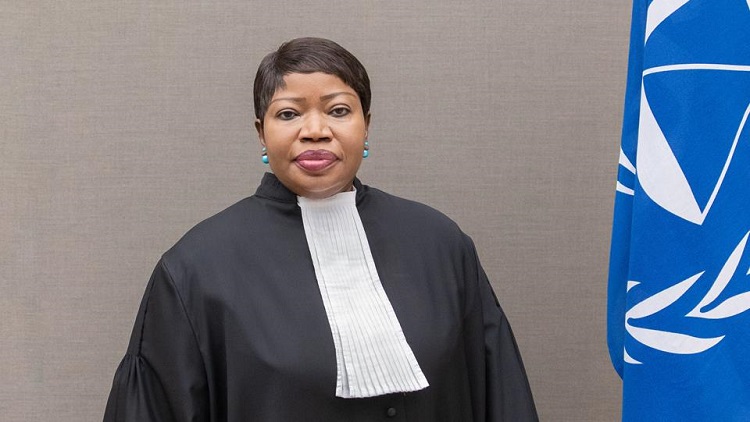
FATOU Bensouda, Prosecutor of the International Criminal Court (ICC), says her office has enough evidence to open a probe into human right abuses perpetrated by members of the Nigeria Security Forces (NSF), in Nigeria.
This was contained in a statement issued by the ICC prosecutor on Friday.
According to the statement, the ICC said its preliminary investigation into the situation in Nigeria has revealed that members of security forces in Nigeria are culpable of committing what she described crimes against humanity and war crimes.
“We have also found a reasonable basis to believe that members of the Nigerian Security Forces (“NSF”) have committed the following acts constituting crimes against humanity and war crimes: murder, rape, torture, and cruel treatment; enforced disappearance; forcible transfer of population; outrages upon personal dignity; intentionally directing attacks against the civilian population as such and against individual civilians not taking direct part in hostilities; unlawful imprisonment; conscripting and enlisting children under the age of fifteen years into armed forces and using them to participate actively in hostilities; persecution on gender and political grounds; and other inhumane acts,” part of the statement said.
While stating that the allegations were sufficiently enough to begin an investigation into the abuses, Fatou noted that the preliminary investigation which had started since 2010 took too much time to complete because her office has been supporting the Nigerian authority in dealing with these abuses domestically.
“These allegations are also sufficiently grave to warrant investigation by my Office, both in quantitative and qualitative terms. My Office will provide further details in our forthcoming annual Report on Preliminary Examination Activities.
“The preliminary examination has been lengthy not because of the findings on crimes – indeed, as early as 2013, the Office announced its findings on crimes in Nigeria, which have been updated regularly since. The duration of the preliminary examination, open since 2010, was due to the priority given by my Office in supporting the Nigerian authorities in investigating and prosecuting these crimes domestically.
“It has always been my conviction that the goals of the Rome Statute are best served by States executing their own primary responsibility to ensure accountability at the national level. I have repeatedly stressed my aspiration for the ability of the Nigerian judicial system to address these alleged crimes. We have engaged in multiple missions to Nigeria to support national efforts, shared our own assessments, and invited the authorities to act. We have seen some efforts made by the prosecuting authorities in Nigeria to hold members of Boko Haram to account in recent years, primarily against low-level captured fighters for membership in a terrorist organisation. The military authorities have also informed me that they have examined, and dismissed, allegations against their own troops.
“I have given ample time for these proceedings to progress, bearing in mind the overarching requirements of partnership and vigilance that must guide our approach to complementarity. However, our assessment is that none of these proceedings relate, even indirectly, to the forms of conduct or categories of persons that would likely form the focus of my investigations. And while this does not foreclose the possibility for the authorities to conduct relevant and genuine proceedings, it does mean that, as things stand, the requirements under the Statute are met for my Office to proceed,” she said.
She noted that the next step will be to request authorization from the judges of the pre-trial chamber of the court to open investigations into the abuses. She also called for the full support of the Nigerian authorities as the next step into the investigation begins.
“As we move towards the next steps concerning the situation in Nigeria, I count on the full support of the Nigerian authorities, as well as of the Assembly of States Parties more generally, on whose support the Court ultimately depends. And as we look ahead to future investigations in the independent and impartial exercise of our mandate, I also look forward to a constructive and collaborative exchange with the Government of Nigeria to determine how justice may best be served under the shared framework of complementary domestic and international action.”
The ICC’s announcement comes days the Amnesty International indicted both Boko-Haram and the Nigerian military in a report of committing egregious human rights abuses especially against older people in the Northeast.
THE Lagos state police command says it has recovered the stolen mace of the Ogun State House of Assembly.
On Thursday, Abimbola Oyeyemi, the Ogun state police spokesperson had confirmed to news men that the assembly was burgled by some hoodlums who carted away the assembly’s symbol of authority.
He, however, added that the coat of the arm on the mace has been recovered but the stick was still missing, saying the command has launched an investigation into the incident.
But in a statement on Friday, Muyiwa Adejobi, his Lagos state counterpart, said the police operatives attached to Trade Fair Station of the Lagos state police, acting on credible intelligence, recovered the mace around the Abule Ado area of Lagos.
“The police operatives attached to Trade Fair Station of the Lagos State Police Command today, Friday, December 11, 2020, recovered the missing mace of the Ogun State House of Assembly at Abule Ado Area of the state at about 8.30 am,” he said.
“The police operatives, who were responsive, worked on intelligence from the members of the community that someone in a moving vehicle, suspected to be Toyota Sienna Space Wagon, threw out an object into the nearby bush and recovered the object which was later identified to be the Ogun State House of Assembly Mace.”
He added that the mace has been handed over to the Commissioner of Police, Lagos State, Hakeem Odumosu, who later instructed the DCP State CID, Lagos State, Yetunde Longe, to protect the mace and liaise with the Ogun State Police Command on the return of the recovered mace to Ogun State.
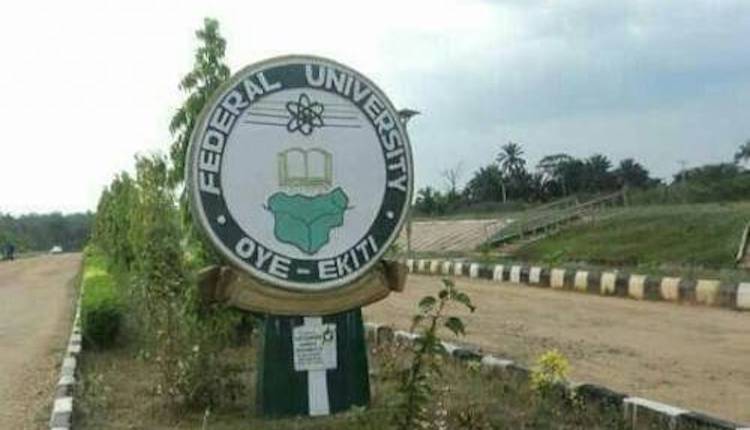
MEMBERS of the Academic Staff Union of Universities (ASUU) Federal University Oye Ekiti (FUOYE), chapter have expressed concerns over what they described as the skewed process in which the appointment of the next Vice Chancellor of the university has been handled.
The tenure of Professor Kayode Soremekun, incumbent Vice Chancellor of the university will soon come to end and the search for a suitable candidate for the post has pitched the academic union and university management against each other over the choice of Professor Sunday Fasina, a Deputy Vice-Chancellor as a replacement.
In a letter obtained by The ICIR, and signed by Habibat Adubiaro, Vice-Chairperson of ASUU in the university, the union accused Soremekun, and Lawan Muhammadu Yahuza, Chairman FUOYE Governing Council, of working together to scuttle and manipulate the process in favour of a certain candidate.
The letter which was addressed to the federal ministry of education, the national university commission and federal character commission, ASUU alleged that despite previous intervention by concerned authorities, the VC and the council chairman are not following due process in the exercise.
According to ASUU, two out of the external members council and a representative of the ministry of education in the council had recused themselves from the process due to the high handedness of the council chairman.
The three members, who complained that the process for the vice-chancellor selection had been subverted for a suitable and qualified candidate to emerge, had subsequently sent official letters to the secretary to the council and registrar of FUOYE, indicating that they were recusing themselves from the illegality being conducted by the council chairman.
The representative of the minister for education in the council who observed that the selection committee had been totally sidestepped, advised the university management and council to adhere strictly to the administrative procedure of proper selection of a new vice-chancellor as laid down by the federal ministry of education through the National Universities Commission.
Alkali Aji Kolo, another external council member who had recused himself from the process pointed to an existing court order that stops them from going ahead with the appointment ánd selection of a new vice-chancellor for the university which the pro-chancellor and council chairman and the outgoing vice-chancellor, have all ignored.
The union noted that the council chairman, who did not regard the concerns raised by the three members still went ahead to conduct a shadow council meeting consisting of himself and four internal members whose allegiances are to the outgoing vice-chancellor to perfect plans of imposing the supposed candidate.
ASUU wants both the vice-chancellor and council chairman to rescue themselves from the selection process to give room for a credible and emergence of a qualified candidate.
ASUU alleged that the “outgoing vice-chancellor is desperate to continue to control the Internally Generated Revenue (IGR) of the university even after leaving office, so his interest in installing his successor.”
While calling for the process to start afresh, ASUU wants the vice-chancellor to proceed on a terminal leave demanding that an acting VC should be appointed pending the conclusion for the selection of a new VC.
“From the above, it is clear that the process of selecting a new Vice-Chancellor for FUOYE has been compromised. The process needs to be halted, outgoing Vice-Chancellor recused from the selection process and due process followed whereby the selection committee is allowed to operate.
“The Chairman of Council should be advised to protect the best interest of FUOYE so that competent academics can successfully steer the ship of the university.”
More petitions
Similarly, the Senior Staff Association of Nigeria Universities (SSANU), Non-Academic Staff Union of Universities (NASU) and National Association of Academic Technologists (NAAT), in a joint statement addressed to Mallam Adamu Adamu the federal ministry of education, shared the position of ASUU.
The statement which was signed by Comrades Ojumoola Ayodele, Oyelude Yekeen, Abioye James, Ayeni Abraham, Faleye Benjamin O. and, Babafemi Oluwasola, chairmen and secretaries of SSANU, NASU and NAAT respectively, complained that the university governing council did not follow due process in the VC selection noting that “such is not good for the future of the university.”
Governing council suspends selection process
When contacted, Adeyinka Ademuyiwa, the institution’s deputy director of corporate services, referred this reporter to an earlier press statement and publication of The ICIR that announced the suspension of the VC selection process by the governing council on Thursday.
He said the council took the decision in order to address the concerns and complaints of some stakeholders involved in the selection exercise.
According to him, the council has received not less than 120 petitions before it
He added that since FUOYE is handling the process of appointing the vice-chancellor for the first time, human errors are bound to occur in what is essentially a learning process and assured that the institution management is ready to correct such errors and deliver an acceptable appointment process.
Ministerial directive
Sources at the Federal Ministry of Education told our reporter that the Minister of Education has directed Professor Abdulrasheed Abubakar, the NUC Executive Secretary to summon the council members, VC, Registrar and all members of both Search and Selection Committees.
“They were summoned on Tuesday 8th December 2020,” a ministry official who did not want to be named because he was not authorised to speak to the press said.
“At the meeting where everybody was allowed to express their minds, the Executive Secretary having listened to all parties warned the VC never to interfere in the appointment processes again,” said another source who was privy to the meeting.
“In fact, the Secretary told the VC that he has no job at the meetings of any of the committees that his job stopped at the election of the Selection Committee by the University Senate.”
He said the NUC Executive Secretary also warned the Council Chairman against further defiance to the laws and guidelines on the appointment of VC.
Abubakar was reported to have blamed the university Registrar of incompetence that he ought to have advised the Council appropriately if he knew the job.
“The Secretary recommended the Registrar for training immediately so as to avoid further administrative errors.”
In 2014, the Niger Delta Development Commission (NDDC) awarded 10 road projects worth over N2 billion in various communities in Edo State, with a 12-month completion period. Five years after, our reporter, SUNDAY ELOM N., who visited the project sites in the four local government areas, found that many of the projects were awarded to proxy companies or unregistered entities that did not have the capacity to execute them.
Poorly executed Amawu Street road
It was 2:27 pm on a sunny Tuesday in September when the reporter arrived at Deaconess Rose Arasomwan’s provision store on Amawu Street.
She had attended to only three customers since 6:00 am when she opened her small provision store in front of her house located along the road.
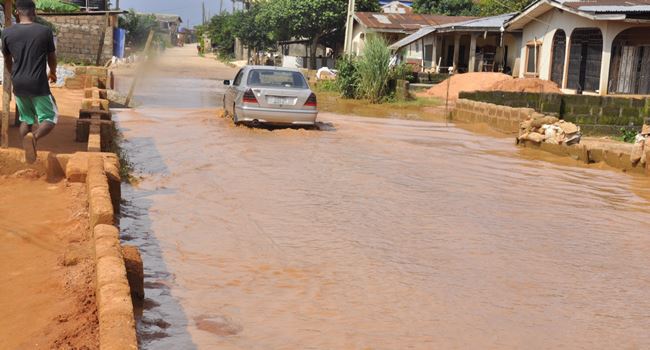
She told the reporter that her business crashed since the beginning of the 2020 rainy season as customers find it difficult to visit her provision store because the road was now waterlogged, from a failed NDDC road project.
The deep waterlogged portion starts a few meters away from the entrance of the street to Arasomwan’s provision store.
The problem is not just about her business.
“Water from the road floods my entire house whenever it rains,” she lamented.
The signpost at the entrance of the street shows that the road project was awarded to Derants System Limited and the reporter confirmed it was awarded at the sum of N249 million. Residents said the contractor, completed work on it in July 2019. Yet, the road has become impassable.
Although the stretch of the road is less than two kilometers, commercial tricycle riders charge between N500 to N1000 for a trip.
Deaconess Rose Arasomwan explaining the effects of the poorly executed Amawu Street road on her business and her house. Photo by Sunday Elom N.
Roseline Oliha who was identified as the first and oldest house owner in the area, said “Instead of using laterite to sand-fill the road, the contractor used sharp sand (grit)”
“They [the contractors] mixed 12 head-pans of grit, 12 head-pans of granite and half a bag of cement with some buckets of water for the construction,” the chairman of the residents association in the area, Kenneth Erhunmwunse, said.
He said they rejected the work but the contractor said if they don’t like it, he would abandon the job, and nobody would come again to do it.
Many parts of the road are completely waterlogged, making it impassable, even on foot. One of the waterlogged potions is almost knee – deep. To bypass the deep waterlogs, residents had to create narrow footpaths in people’s compounds, while in some places they have to jump over people’s fences.
Amawu Street Chairman and Roseline Oliha demonstrating how residents walk through the deep waterlog on the poorly executed road. Photo by Sunday Elom N
Nosakhare Nowanagbe, one of the leaders of the area,complained that their children miss school almost every day during the rainy season.
“At a point, the road became so bad that any tricyclist who agrees to carry the students to the main road from inside the street charges from N500 to N700,” he said.
When the reporter contacted the contractor, Engr. Law Aniebonam, he said he completed the project many years ago and that NDDC had approved his work, adding “so how it looks now does not concern me.”
Meanwhile, a search for Derants System Limited on the Corporate Affairs Commission (CAC) website did not turn up any result that the company was registered.
Abandoned Upper Ekenwan road
The reporter visited the Upper Ekenwan road project site in Egor local government area and found that the project had been abandoned.
Awarded to First Gilt Limited in December 2014 at the sum of N145m, the road is in a terrible state.
Residents said that in 2018, Eghe Ogbemudia, the chairman of Egor local government, did a temporary rehabilitation on the road by grading and sand-filling it.
Again, in 2019, according to Michael Idemudia who owns a restaurant by the side of the road, an unidentified construction company started work on the road. The contractor could not be confirmed as there was no sign post at the project site.
However, Benjamin Iserhianrhian, one of the elders at Ugbighoko community said the construction company suspected to be an NDDC contractor abandoned the road when COVID-19 started.
“They started construction of drains but reached half and stopped. When they wanted to sand-fill it halfway without making it a complete drainage, we refused,” Iserhianrhian said.
He lamented that the road has become a threat to the lives of users and the surrounding communities, especially from Powerline Junction to Gelegele Army Barracks.
Uncompleted drainage at the abandoned Upper Ekenwan Road. Photo by Sunday Elom N
“Most families close to the road have been displaced by erosion and flood from the uncompleted drainage,” he said. Three to four accidents occur on the road every week, it was learnt.
Three to four accidents occur on the road every week, it was learnt.
Twenty three-year-old Joy Olagoke owns a salon along the road. She told our reporter that “at least three to four accidents occur on this road every week.
“Sometimes okada riders fall into potholes with passengers and loads. And many traders have lost goods worth hundreds of thousands of naira on this road,” she added.
Apart from the frequent accidents, Iserhianrhian said the current state of the road has increased the cost of living in the area because motorists have doubled the fare from Ugbighoko to Ring road and from Ring road to Gelegele Army Barracks.
Commercial motorcyclists said they spend more time at the mechanic workshops repairing their motorcycles than the time they spend working.
The chairman of the Commercial Motorcyclists Association, Bayero Hassan Babba, said that most of his colleagues are working on “hire purchase.” Here Babba refers to a business agreement whereby someone buys a motorcycle and gives it to another person to use for commercial purposes with a mutual understanding of a particular amount of money the user would be remitting to the owner on weekly or monthly basis.
Abandoned Upper Ekenwan road project. Photo by Sunday Elom N
“When we couldn’t meet up, the owners always took the motorcycles from us and sometimes it led to police cases.”
Bayero said although they can make N5,000 a day, they spend more than N7,000 repairing their motorcycles.
“So, you see that it’s better we are making N3,000 without the kind of damages we are experiencing now,” he reasoned.
All efforts to contact First Gilt Limited failed as a CAC search did not come up with any records on the company. Also, on October 2, 2020, a Freedom of Information request to provide details of the contractor, including its registration and contact details was sent to NDDC. The commission acknowledged receipt of the request on October 5, 2020, but never provided the information as requested.
On October 9, 2020, our reporter submitted a press interview letter at the office of the Director, NDDC Edo Office at Murtala Muhammed Way, Avbiama, Benin City, but till the time of this report, the commission did not grant the interview.
Akengbuda Youth Road, Amagba Community abandoned
The Akengbuda Youth Road project in Amagba Community of Oredo Local Government Area, was awarded to Supply & Transport Integrated Services on August 22, 2014 at the sum of N219 million. But the road has been abandoned after five years despite N40m paid to the contractor.
The contractor constructed only the drainage in 2015.
There are three engineers involved in the implementation of Akengbuda Youth road project: Kingsley Ukaegbu, Patrick Emmanuel and Ijeoma Samuel.
It was confirmed that Kingsley Ukaegbu is the contractor who got the contract from NDDC and engaged the services of Patrick Emmanuel and Ijeoma Samuel as partnering engineers.
Engr. Samuel said he signed a Memorandum of Understanding (MoU) with Ukaegbu to use their money and execute the project until NDDC pays them mobilization funds.
“One Mr Stanley signed as his guarantor while Engr Okoye signed as my guarantor. We opened an account in Ecobank for the project,” Samuel said.
Abandoned Akengbuda Youth Road, Amagba Community. Photo by Sunday Elom N
Because NDDC had not paid them mobilization funds, Samuel said he gave Ukaegbu N800,000 for procurement of materials.
After constructing the drainage, “we submitted a certificate of progress and NDDC paid N40m for the contract in 2019,” Samuel confirmed.
After NDDC paid the N40m, Engr Ukaegbu abandoned the project. He also owes almost all the workers who worked with him.
“They owe everybody including the people who did the casting work,” a carpenter, Kenneth Iboyi told this reporter.
“At a certain point, we insisted that they must pay us or we stop working. They then paid each of us N20,000. As we speak, they are owing my brothers and I a total sum of N286,000,” he added.
When the contractor said there was no money to pay workers, Iboyi said “the same contractor started selling the cements we were using for the work.”
He said the contractor sent other workers away but asked him to stay at the site and monitor the materials,including 600 bags of cement and about 300 pieces of rods.
Also, a resident, Osaro Igbinidu, said he supplied some trips of grit which amounted to N365,000 to the contractor but he has not been paid.
As a Chief Liaison Officer (CLO), who supervised the project on behalf of the community, Thomas Oghodomwengbe, said the contractor ought to pay him for supervisory work but that he was not paid.
Iboyi said that when they finally stopped work, “we left seven trips of sand at the site but the last time I went there, I saw only one and a half trips of the sand, while all the other materials we left at the site are no longer there because people have taken them.”
Ukaegbu absconded with N40m
Iboyi said when NDDC paid the contractor, his partners “wanted them to share the money 50-50 but he [Ukaegbu] refused.”
Samuel said Ukaegbu “finally disappeared on December 2019,” and “we went to his apartment at Obigbo in Port Harcourt but he had relocated to an unknown destination while all his phone numbers have not been available.”
“We reported his disappearance with the money to the NDDC Edo office but they did not do anything,” he added.
When Ukaegbu could not be located, Samuel said he reported the case to the Economic and Financial Crimes Commission (EFCC).
He said EFCC arrested Ukaegbu’s guarantor when he could not also produce him.
“EFCC went to the NDDC headquarters and the account department of the commission released all the documents concerning the project including the account details to the EFCC and from there, they discovered the account Kingsley diverted the money to.”
He said he has all the documents for the project but could not release them to our reporter as the EFCC officer in charge of the case warned him not to release them.
When the reporter contacted Patrick Emmanuel, the second partner, he refused to provide information.
Signpost of abandoned Akengbuda Youth Road, Amagba Community lying inside bush. Photo by Sunday Elom N
“I don’t know what you want from this matter but I know you didn’t give me any job and you are not the one to question me in any way,” he shot at the reporter.
However Emmanuel later called this reporter back and claimed that he has all the information about the project because he did the job to some extent, adding that he was instructed not to say anything about it.
“I called the NDDC project supervisor who supervised the work and told him what you are saying but he said that I shouldn’t tell you anything,” Emmanuel submitted.
On October 9, 2020, this reporter requested for an interview through a letter to the office of the NDDC director in Edo State, located at Murtala Muhammed Way, Avbiama, Benin City, but till the time of filing this report, the commission had not responded to the letter.
Supply & Transport Integrated Services Ltd is not a Construction company
Engr. Samuel said although he is not sure, Ukaegbu claimed he owns Supply & Transport Integrated Services Ltd.
Known as S & T Integrated Services LTD, details of the company could not be found through a CAC search. However, information on its website showed that it is into sourcing, negotiating, procurement and delivering of marine transportation & logistics equipment.
When our reporter called the two phone numbers on the company’s website, the two different persons who answered the calls denied knowing Kingsley Ukaegbu.
Although Iboyi claimed that “Ukaegbu’s wife was working at NDDC headquarters, Port Harcourt and that she got the contract for her husband,” this claim was not confirmed as NDDC did not grant our reporter an interview to clarify many issues.
Abandoned Ikhi-Idumogo-NTA-Ora road is completely inaccessible
The abandoned Ikhi-Idumogo road in Esan West Local Government Area has become completely inaccessible.
Residents have to create narrow paths through people’s compounds, sometimes passing through passages in people’s homes.
It was confirmed that NDDC awarded Ikhi-Idumogo-NTA-Ora to Petony Technical Company Ltd in December 2014 at the sum of N244 million.
Chief Aigbojie 1 of Ekpoma Kingdom, who was the Chief Liarson Officer for the project said the NDDC’s Assistant Director, Project Management Department, Engr. Ray O. Okogbo, confirmed to him the award of the project.
But the contractor started the work in 2019 and only worked from Total Filling Station to NTA Road and from Idumogo Junction to Iruekpen Market square, leaving Ikhi-Idumogo Road unattended.
Abandoned Ikhi-Idumogo road project. Photo by Sunday Elom N
It was not confirmed why the contractor started implementation of a project awarded in 2014 in 2019. A freedom of information request for the details, including contact details of the contractor sent to NDDC on October 2, 2020, was denied, although the commission acknowledged the receipt of the request on October 5, 2020.
Also when our reporter contacted Engr. Okogbo on the phone, he said, “I am not in the position to speak to you in this regard. My director will be in a better position.”
Okogbo later sent a text message to our reporter saying that his director also said he cannot speak with the reporter.
Meanwhile, Chief Aigbojie said the contractor abandoned the project “because NDDC owes him N70 million.”
He however said he “confronted” the NDDC official, Engr. Okogbo, who told him that the commission could not release funds to the contractor because of COVID-19.
“He said that the commission will soon disburse funds for the project for the contractor to return to site.”
Meanwhile, Petony Technical Company Limited did not respond to the interview request sent to it by email.
Abandoned Adolor road
Signpost of the abandoned Adolor road project
Vehicular movement from Ojo Street to Atoe Junction has become a nightmare for the users of Adolor Road and residents of the community.
A tricycle operator, Stanley Osaze, said accidents, vehicle damages, injuries and loss of passengers’ properties, flood and displacement of residents of the community have become their accustomed experiences.
“Sometimes our passengers fall down from the ‘keke’ (tricycle) and get injured,” he said.
NDDC awarded Adolor Road project in Egor Local Government Area to Wintrakk Mega Limited on December 18, 2014, at the sum of N233 million.
Our reporter visited the project site and found out that,the contractor constructed only one kilometer of the road with drains. The road is over 3 kilometres.
Community leaders forbid people from talking to journalists about the road
A woman simply identified as the vice chairman of Adolor Community was visibly excited and willing to reveal everything about the project to this reporter but another leader of the community quickly winked her to silence.
Abandoned Adolor road where flood from the road displaces residents. Photo by Sunday Elom N
The man, tall and fair in complexion, who simply introduced himself as a retired director in the civil service said that reporters are not welcomed in the community to investigate anything.
“We did not invite you to come. If we feel that we need the media, we would deliberate on it in our community monthly meeting which we hold on every last Saturday of the month.
“You can’t just come to a community uninvited and Investigate whatever that is going on in the community. We don’t permit that in our place here and you don’t expect me to make any mistake after retiring as a director in civil service,” he told the reporter.
Although the chairman and the secretary were not around, the man insisted that “in fact, the Odionwere [the chairman] does not even have the power on his own to grant you permission to take pictures or interview our people.”
When this reporter insisted on knowing exactly what happened with the project, he became visibly angry and said:
“What will happen is that in our meeting, I will raise the issue, tell the community leaders that you came and why you came. If we agree, then we can invite you,” and immediately dismissed the reporter and his fixer, repeatedly warning him not to do anything in the community.
When the reporter went back to the community to find out their decision at the monthly meeting, he was not around. Residents did not agree to direct him to any of the other leaders’ houses.
Meanwhile, before the retired director remembered to apply the community’s laws, he had confirmed that flood from the abandoned road had displaced many residents of the community.
“When the contractor stopped work after constructing one kilometer, I begged them to extend the work but they did not listen to me.”
Also, the vice chairman, while leading this reporter to the retired director’s house, had lamented that flood from the road has displaced more than five families completely. Flood in her own compound was just drying off.
“The last tenant that was in my house left last week,” she lamented, referring to the week before this reporter visited the community.
Contractor evades interview
Wintrakk Mega Ltd was registered with CAC on July 31, 2014, with the RC number: 1207539. Its registered location is No. 60 Mbonu Street D/Line, Port Harcourt, PHC, Rivers State.
The company was also registered with the Edo State Public Procurement Agency (EDPPA) with certificate number: EDPPA/CR/2018/A0488, as a civil engineering, construction, Dredging and Marine Logistics company, with Evans Ehi Okojie as its director.
Our reporter called the director’s phone number provided on the EDPPA website three times but the receiver of the calls who rather identified himself as Lucky Otite first said he would inform the person who would speak on the matter, subsequently, he kept saying, “I will call you back.”
Ero Maho Bakery Road project could be a ghost project
One of the NDDC awarded projects this reporter visited Edo State to track was the construction of Ero Maho Bakery Road, Off Ekenwan Road in Oredo Local Government Area.
The project was awarded to Amoster Integrated Services Ltd on December 18, 2014, at the sum of N145 million.
However, for three days, this reporter went round the entire Ekenwan axis, including Ero Drive, Maho Street and almost all the bakery factories in Ekenwan but residents, motorists and shop owners said they do not know about such a location in Benin City.
Amoster Integrated Services Ltd could not be reached as its details could not be found. Also NDDC denied the Freedom of Information request sent to it for the details of the contractor.
Poorly constructed Limit Road has failed
Limit Road also known as Godwin Abbey Road in Oredo Local Government Area, was awarded to EWOSAT Integrated Services on December 18, 2014, at the sum of N219 million. However, the signpost at the project site shows that the contract was executed by Arowolo Group of Co. Limited.
Users said the road was constructed in 2018, but because it was poorly executed, some parts of the road, particularly from Negbenebor Secondary school, have failed.
“Sometimes these potholes cause accidents, especially at night,” a taxi driver, Johnson said.
Efforts to contact the contractor failed as our reporter could not trace the entity.
Failed portion of Limit Road. Photo by Sunday Elom N
Completed Projects
Of the 10 projects this reporter visited, only three projects have been completed.
These include construction of Owina Street/Efomo Lane, Off First East Circular Road in Oredo Local Government Area, awarded to Boloupesibo and Sons Ltd at the sum of N249m; construction of Uyi Aigbogun and Adjoining Streets Aigbogbun in Oredo Local Government Area, awarded to Northsea Nigeria at the sum of N199m and construction of Palace Road, Phase 1 Utek Ekoko Community, Ikpoba-Okha Local Government Area, awarded to Shepherd Voice Universal Services Ltd at the sum of N249m.
One of the completed roads (Uyi Aigbogun and Adjoining streets). Photo by Sunday Elom N
All the completed projects were in good condition as they appeared solid and newly constructed when this reporter visited the sites. There was no failed portion noticed at Owina Street/Efomo Lane, Uyi Aigbogun and Adjoining streets and Palace Road, Phase 1.
However, only Shepherd Voice Universal Services Ltd was verified on the Corporate Affairs Commission (CAC) website. The company was registered in July 31, 2013 with the RC number: 1132450. Its registered address is B2 MEDIATRIXCOM P79 STADIUM RD, RIVERS, RIVERS. Northsea Nigeria and Boloupesibo and Sons Ltd were not found on (CAC) website.
Although the projects awarded to these three companies were completed and found in good state at the time of this report, no authentic information could justify whether they are qualified to execute road construction contracts or not.
Stakeholders call for withdrawal of funding of NDDC over corruption
Many stakeholders and Civil Society Organisations (CSOs) across the region have complained that NDDC has been performing poorly.
In September 2020, a coalition of 30 civil society organisations drawn from across the Niger Delta region, under the aegis of Coalition for Sustainable Development in the Niger Delta (COSADNA), demanded that the federal government, multinational oil companies and development partners withdraw any form of funding to NDDC because of “massive corruption and pervasive culture of looting” going on in the Commission.
Speaking with our reporter, the Executive Director, African Network for Environment and Economic Justice(ANEEJ), Rev. David Ugolor, said that “it is such a bad record that for the past 10 years, the citizens who are supposed to be the beneficiaries of these projects cannot point out any visible projects done by the commission.”
“Few projects, particularly road projects the commission “managed to execute collapse after two years because of poor and substandard implementation.”
In 2019, ANEEJ had supported Edo State Governor, Godwin Obaseki, when he called on the federal government to probe NDDC on the N20bn utilisation funds.
“Just recently, you need to spend at least 5-7 hours on average to be able to move from Benin City to Warri in the neighbouring Delta State. That distance used to take less than an hour,” Ugolor said.
He said the state of roads in the region has caused enormous economic damages. Citing loses and damages to hundreds of heavy duty vehicles supplying oil products and other goods from the region to other parts of the country.
“Many of these trucks have been involved in terrible accidents leading to loss of lives and products worth billions of naira. The effects of which are on both the individuals and the government,” he said.
Residents of these communities find it almost impossible to move their agricultural produce from their places to their closest neighbouring communities and towns. While school children have come to understand that the roads have imposed unsolicited holidays on them during the rainy season.
Good roads enable connectivity and enhance socio-economic growth. However this investigation, has revealed that the many abandoned and badly constructed NDDC roads in Edo State, rather than improve the living standards of the people have brought them additional hardship, discomfort and pain.
Also given NDDC’s refusal to grant press interviews and respond to the FOI inquiry letters, one is compelled to believe that there is indeed a lack of transparency in the award, funding and supervision of these NDDC contracts
* This investigation is supported by the John D. and Catherine T. MacArthur Foundation and the International Centre for Investigative Reporting.
WOMEN farmers under the aegis of Small-Scale Women Farmers Organization in Nigeria (SWOFON) have retired their cutlass and hoes while demanding for a gender-friendly way to farming and security of lives.
The women farmers made these demands during a three-day programme held in Abuja.
On Tuesday, the women farmers visited the Cyprian Ekwensi Centre for Arts and Culture Abuja to retire their hoes and cutlasses as artefacts.
“This hoe can no longer feed us as farmers talk less of feeding the nation, so we want to tell the government that we are retiring this hoe to the museum and that we need mechanized farming to be able to increase production in our farmer and based on our population and what we do, we are sure that with mechanized tools, we can even feed the whole of Africa,” said Afan in an interview at the museum.
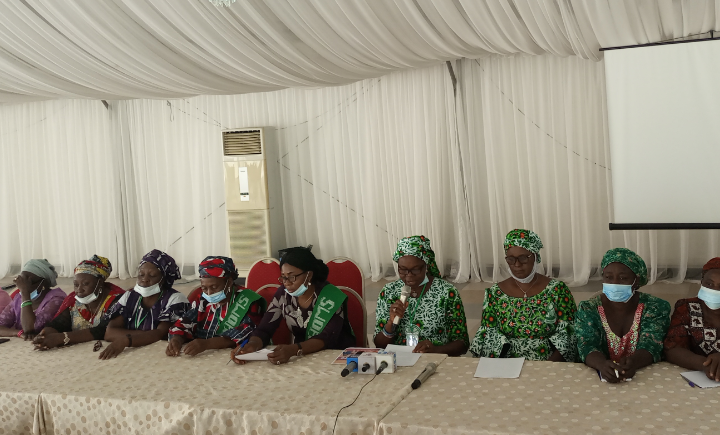
On Wednesday, during the a stakeholders meeting with the 36 state presidents of SWOFON, National executives and government officials, the women farmers discussed the effects of the COVID-19 on their livelihood.
Other stakeholders present at the stakeholders meeting include a representative of the federal ministry of Agriculture, Nigeria Agricultural Insurance Corporation (NAIC), FCTA Department of Agriculture, state government officials, among others.
“During the Covid 19 lockdown, many of the women farmers across the states could not access their farmlands due to the restriction of movement imposed by both the federal and state governments.
This led to various degrees of losses on their respective farms. Similarly, the closure of all markets meant that women farmers could not earn money from the sales of their farm products,” Afan said.
Responding to the agitations of the women farmers, Dandutse Muntari, the Chairman House Committee on Agricultural Production and Services said the government is committed to enhancing the welfare of women farmers because it is one of the key agenda of President, Muhammadu Buhari.
He said it is a shame that a country like Nigeria spends so much on the importation of food when there are capable farmers to do the job in the country.
While commending the association’s activities, Muntari said through further collaboration and other initiatives there would be more consideration of women farmers in the distribution of mechanical equipment and special agricultural interventions
Shehu Balarabe Kakale, member representing Bodinga, Dange Shuni and Tureta Federal Constituency and Robert Tyough, representing Kwande/Ushongo Federal Constituency were also present at the stakeholders meeting.
During the press conference, SWOFON noted that the most painful of the encounters of the women farmers across the country were the activities of kidnappers, bandits, and terrorist groups like the Boko Haram.
“As of today, many women farmers are afraid of going to their farmlands for fear of being kidnapped, raped, extorted by bandits, and killed like the ones recorded in Borno state,” the SWOFON secretary said.
She stated that the federal government gave out palliatives to households through the Conditional Cash Transfer Scheme and that little or nothing was done for women farmers who produce the bulk of food the nation consumes.
“There was a significant shortage or no distribution of inputs such as fertilizers, agrochemicals, seeds, and machinery, etc,” SWOFON noted.
Stating their demands, the association urged the federal and state governments to create a special intervention fund accessible to women farmers, to cushion the impact of the pandemic.
The organization further demanded deliberate steps in addressing the security challenges in the nation, especially those that affect agriculture and the availability of farm inputs for women farmers.
The association said its over 500,000 members are in dire need of gender-friendly equipment and training.