Home Blog Page 1915

INVESTIGATION: How NDDC spent N2bn on abandoned, non-existent road projects in Edo communities

In 2014, the Niger Delta Development Commission (NDDC) awarded 10 road projects worth over N2 billion in various communities in Edo State, with a 12-month completion period. Five years after, our reporter, SUNDAY ELOM N., who visited the project sites in the four local government areas, found that many of the projects were awarded to proxy companies or unregistered entities  that did not have the capacity to execute them.


Poorly executed Amawu Street road

It was 2:27 pm on a sunny Tuesday in September when the reporter arrived at Deaconess Rose Arasomwan’s provision store on Amawu Street.

She had attended to only three customers since 6:00 am when she opened her small provision store in front of her house located along the road.

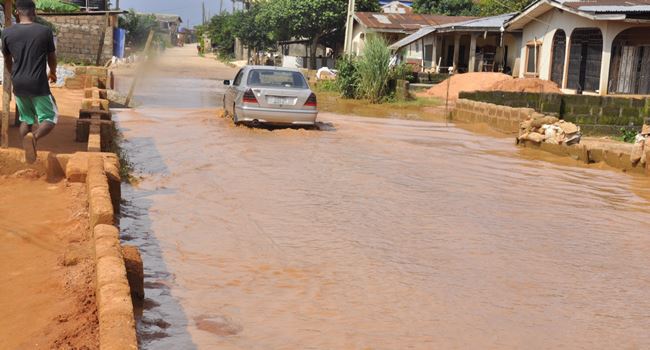
She told the reporter that her business crashed since the beginning of the 2020 rainy season as customers find it difficult to visit her provision store because the road was now waterlogged, from a failed NDDC road project.

The deep waterlogged portion starts a few meters away from the entrance of the street to Arasomwan’s provision store.

The problem is not just about her business.

“Water from the road floods my entire house whenever it rains,” she lamented.

The signpost at the entrance of the street shows that the road project was awarded to Derants System Limited and the reporter confirmed it was awarded at the sum of N249 million. Residents said the contractor, completed work on it in July 2019. Yet, the road has become impassable.

Although the stretch of the road is less than two kilometers, commercial tricycle riders charge between N500 to N1000 for a trip.

Deaconess Rose Arasomwan explaining the effects of the poorly executed Amawu Street road on her business and her house. Photo by Sunday Elom N.

Roseline Oliha who was identified as the first and oldest house owner in the area, said “Instead of using laterite to sand-fill the road, the contractor used sharp sand (grit)”

“They [the contractors] mixed 12 head-pans of grit, 12 head-pans of granite and half a bag of cement with some buckets of water for the construction,” the chairman of the residents association in the area, Kenneth Erhunmwunse, said.

He said they rejected the work but the contractor said if they don’t like it, he would abandon the job, and nobody would come again to do it.

Many parts of the road are completely waterlogged, making it impassable, even on foot. One of the waterlogged potions is almost knee – deep. To bypass the deep waterlogs, residents had to create narrow footpaths in people’s compounds, while in some places they have to jump over people’s fences.

Amawu Street Chairman and Roseline Oliha demonstrating how residents walk through the deep waterlog on the poorly executed road. Photo by Sunday Elom N

Nosakhare Nowanagbe, one of the leaders of the area,complained that their children miss school almost every day during the rainy season.

“At a point, the road became so bad that any tricyclist who agrees to carry the students to the main road from inside the street charges from N500 to N700,” he said.

When the reporter contacted the contractor, Engr. Law Aniebonam, he said he completed the project many years ago and that NDDC had approved his work, adding “so how it looks now does not concern me.”

Meanwhile, a search for Derants System Limited on the Corporate Affairs Commission (CAC) website did not turn up any result that the company was registered.

Abandoned Upper Ekenwan road

The reporter visited the Upper Ekenwan road project site in Egor local government area and found that the project had been abandoned.

Awarded to First Gilt Limited in December 2014 at the sum of N145m, the road is in a terrible state.

Residents said that in 2018, Eghe Ogbemudia, the chairman of Egor local government, did a temporary rehabilitation on the road by grading and sand-filling it.

Again, in 2019, according to Michael Idemudia who owns a restaurant by the side of the road, an unidentified construction company started work on the road. The contractor could not be confirmed as there was no sign post at the project site.

However, Benjamin Iserhianrhian, one of the elders at Ugbighoko community said the construction company suspected to be an NDDC contractor abandoned the road when COVID-19 started.

“They started construction of drains but reached half and stopped. When they wanted to sand-fill it halfway without making it a complete drainage, we refused,” Iserhianrhian said.

He lamented that the road has become a threat to the lives of users and the surrounding communities, especially from Powerline Junction to Gelegele Army Barracks.

Uncompleted drainage at the abandoned Upper Ekenwan Road. Photo by Sunday Elom N

“Most families close to the road have been displaced by erosion and flood from the uncompleted drainage,” he said. Three to four accidents occur on the road every week, it was learnt.

Three to four accidents occur on the road every week, it was learnt.

Twenty three-year-old Joy Olagoke owns a salon along the road. She told our reporter that “at least three to four accidents occur on this road every week.

“Sometimes okada riders fall into potholes with passengers and loads. And many traders have lost goods worth hundreds of thousands of naira on this road,” she added.

Apart from the frequent accidents, Iserhianrhian said the current state of the road has increased the cost of living in the area because motorists have doubled the fare from Ugbighoko to Ring road and from Ring road to Gelegele Army Barracks.

Commercial motorcyclists said they spend more time at the mechanic workshops repairing their motorcycles than the time they spend working.

The chairman of the Commercial Motorcyclists Association, Bayero Hassan Babba, said that most of his colleagues are working on “hire purchase.” Here Babba refers to a business agreement whereby someone buys a motorcycle and gives it to another person to use for commercial purposes with a mutual understanding of a particular amount of money the user would be remitting to the owner on weekly or monthly basis.

Abandoned Upper Ekenwan road project. Photo by Sunday Elom N

“When we couldn’t meet up, the owners always took the motorcycles from us and sometimes it led to police cases.”

Bayero said although they can make N5,000 a day, they spend more than N7,000 repairing their motorcycles.

“So, you see that it’s better we are making N3,000 without the kind of damages we are experiencing now,” he reasoned.

All efforts to contact First Gilt Limited failed as a CAC search did not come up with any records on the company. Also, on October 2, 2020, a Freedom of Information request to provide details of the contractor, including its registration and contact details was sent to NDDC. The commission acknowledged receipt of the request on October 5, 2020, but never provided the information as requested.

On October 9, 2020, our reporter submitted a press interview letter at the office of the Director, NDDC Edo Office at Murtala Muhammed Way, Avbiama, Benin City, but till the time of this report, the commission did not grant the interview.

Akengbuda Youth Road, Amagba Community abandoned

The Akengbuda Youth Road project in Amagba Community of Oredo Local Government Area, was awarded to Supply & Transport Integrated Services on August 22, 2014 at the sum of N219 million. But the road has been abandoned after five years despite N40m paid to the contractor.

The contractor constructed only the drainage in 2015.

There are three engineers involved in the implementation of Akengbuda Youth road project: Kingsley Ukaegbu, Patrick Emmanuel and Ijeoma Samuel.

It was confirmed that Kingsley Ukaegbu is the contractor who got the contract from NDDC and engaged the services of Patrick Emmanuel and Ijeoma Samuel as partnering engineers.

Engr. Samuel said he signed a Memorandum of Understanding (MoU) with Ukaegbu to use their money and execute the project until NDDC pays them mobilization funds.

“One Mr Stanley signed as his guarantor while Engr Okoye signed as my guarantor. We opened an account in Ecobank for the project,” Samuel said.

Abandoned Akengbuda Youth Road, Amagba Community. Photo by Sunday Elom N

Because NDDC had not paid them mobilization funds, Samuel said he gave Ukaegbu N800,000 for procurement of materials.

After constructing the drainage, “we submitted a certificate of progress and NDDC paid N40m for the contract in 2019,” Samuel confirmed.

After NDDC paid the N40m, Engr Ukaegbu abandoned the project. He also owes almost all the workers who worked with him.

“They owe everybody including the people who did the casting work,” a carpenter, Kenneth Iboyi told this reporter.

“At a certain point, we insisted that they must pay us or we stop working. They then paid each of us N20,000. As we speak, they are owing my brothers and I a total sum of N286,000,” he added.

When the contractor said there was no money to pay workers, Iboyi said “the same contractor started selling the cements we were using for the work.”

He said the contractor sent other workers away but asked him to stay at the site and monitor the materials,including 600 bags of cement and about 300 pieces of rods.

Also, a resident, Osaro Igbinidu, said he supplied some trips of grit which amounted to N365,000 to the contractor but he has not been paid.

As a Chief Liaison Officer (CLO), who supervised the project on behalf of the community, Thomas Oghodomwengbe, said the contractor ought to pay him for supervisory work but that he was not paid.

Iboyi said that when they finally stopped work, “we left seven trips of sand at the site but the last time I went there, I saw only one and a half trips of the sand, while all the other materials we left at the site are no longer there because people have taken them.”

Ukaegbu absconded with N40m

Iboyi said when NDDC paid the contractor, his partners “wanted them to share the money 50-50 but he [Ukaegbu] refused.”

Samuel said Ukaegbu “finally disappeared on December 2019,” and “we went to his apartment at Obigbo in Port Harcourt but he had relocated to an unknown destination while all his phone numbers have not been available.”

“We reported his disappearance with the money to the NDDC Edo office but they did not do anything,” he added.

When Ukaegbu could not be located, Samuel said he reported the case to the Economic and Financial Crimes Commission (EFCC).

He said EFCC arrested Ukaegbu’s guarantor when he could not also produce him.

“EFCC went to the NDDC headquarters and the account department of the commission released all the documents concerning the project including the account details to the EFCC and from there, they discovered the account Kingsley diverted the money to.”

He said he has all the documents for the project but could not release them to our reporter as the EFCC officer in charge of the case warned him not to release them.

When the reporter contacted Patrick Emmanuel, the second partner, he refused to provide information.

Signpost of abandoned Akengbuda Youth Road, Amagba Community lying inside bush. Photo by Sunday Elom N

“I don’t know what you want from this matter but I know you didn’t give me any job and you are not the one to question me in any way,” he shot at the reporter.

However Emmanuel later called this reporter back and claimed that he has all the information about the project because he did the job to some extent, adding that he was instructed not to say anything about it.

“I called the NDDC project supervisor who supervised the work and told him what you are saying but he said that I shouldn’t tell you anything,” Emmanuel submitted.

On October 9, 2020, this reporter requested for an interview through a letter to the office of the NDDC director in Edo State, located at Murtala Muhammed Way, Avbiama, Benin City, but till the time of filing this report, the commission had not responded to the letter.

Supply & Transport Integrated Services Ltd is not a Construction company

Engr. Samuel said although he is not sure, Ukaegbu claimed he owns Supply & Transport Integrated Services Ltd.

Known as S & T Integrated Services LTD, details of the company could not be found through a CAC search. However, information on its website showed that it is into sourcing, negotiating, procurement and delivering of marine transportation & logistics equipment.

When our reporter called the two phone numbers on the company’s website, the two different persons who answered the calls denied knowing Kingsley Ukaegbu.

Although Iboyi claimed that “Ukaegbu’s wife was working at NDDC headquarters, Port Harcourt and that she got the contract for her husband,” this claim was not confirmed as NDDC did not grant our reporter an interview to clarify many issues.

Abandoned Ikhi-Idumogo-NTA-Ora road is completely inaccessible

The abandoned Ikhi-Idumogo road in Esan West Local Government Area has become completely inaccessible.

Residents have to create narrow paths through people’s compounds, sometimes passing through passages in people’s homes.

It was confirmed that NDDC awarded Ikhi-Idumogo-NTA-Ora to Petony Technical Company Ltd in December 2014 at the sum of N244 million.

Chief Aigbojie 1 of Ekpoma Kingdom, who was the Chief Liarson Officer for the project said the NDDC’s Assistant Director, Project Management Department, Engr. Ray O. Okogbo, confirmed to him the award of the project.

But the contractor started the work in 2019 and only worked from Total Filling Station to NTA Road and from Idumogo Junction to Iruekpen Market square, leaving Ikhi-Idumogo Road unattended.

Abandoned Ikhi-Idumogo road project. Photo by Sunday Elom N

It was not confirmed why the contractor started implementation of a project awarded in 2014 in 2019. A freedom of information request for the details, including contact details of the contractor sent to NDDC on October 2, 2020, was denied, although the commission acknowledged the receipt of the request on October 5, 2020.

Also when our reporter contacted Engr. Okogbo on the phone, he said, “I am not in the position to speak to you in this regard. My director will be in a better position.”

Okogbo later sent a text message to our reporter saying that his director also said he cannot speak with the reporter.

Meanwhile, Chief Aigbojie said the contractor abandoned the project “because NDDC owes him N70 million.”

He however said he “confronted” the NDDC official, Engr. Okogbo, who told him that the commission could not release funds to the contractor because of COVID-19.

“He said that the commission will soon disburse funds for the project for the contractor to return to site.”

Meanwhile, Petony Technical Company Limited did not respond to the interview request sent to it by email.

Abandoned Adolor road

Signpost of the abandoned Adolor road project

Vehicular movement from Ojo Street to Atoe Junction has become a nightmare for the users of Adolor Road and residents of the community.

A tricycle operator, Stanley Osaze, said accidents, vehicle damages, injuries and loss of passengers’ properties, flood and displacement of residents of the community have become their accustomed experiences.

“Sometimes our passengers fall down from the ‘keke’ (tricycle) and get injured,” he said.

NDDC awarded Adolor Road project in Egor Local Government Area to Wintrakk Mega Limited on December 18, 2014, at the sum of N233 million.

Our reporter visited the project site and found out that,the contractor constructed only one kilometer of the road with drains. The road is over 3 kilometres.

Community leaders forbid people from talking to journalists about the road

A woman simply identified as the vice chairman of Adolor Community was visibly excited and willing to reveal everything about the project to this reporter but another leader of the community quickly winked her to silence.

Abandoned Adolor road where flood from the road displaces residents. Photo by Sunday Elom N

The man, tall and fair in complexion, who simply introduced himself as a retired director in the civil service said that reporters are not welcomed in the community to investigate anything.

“We did not invite you to come. If we feel that we need the media, we would deliberate on it in our community monthly meeting which we hold on every last Saturday of the month.

“You can’t just come to a community uninvited and Investigate whatever that is going on in the community. We don’t permit that in our place here and you don’t expect me to make any mistake after retiring as a director in civil service,” he told the reporter.

Although the chairman and the secretary were not around, the man insisted that “in fact, the Odionwere [the chairman] does not even have the power on his own to grant you permission to take pictures or interview our people.”

When this reporter insisted on knowing exactly what happened with the project, he became visibly angry and said:

“What will happen is that in our meeting, I will raise the issue, tell the community leaders that you came and why you came. If we agree, then we can invite you,” and immediately dismissed the reporter and his fixer, repeatedly warning him not to do anything in the community.

When the reporter went back to the community to find out their decision at the monthly meeting, he was not around. Residents did not agree to direct him to any of the other leaders’ houses.

Meanwhile, before the retired director remembered to apply the community’s laws, he had confirmed that flood from the abandoned road had displaced many residents of the community.

“When the contractor stopped work after constructing one kilometer, I begged them to extend the work but they did not listen to me.”

Also, the vice chairman, while leading this reporter to the retired director’s house, had lamented that flood from the road has displaced more than five families completely. Flood in her own compound was just drying off.

“The last tenant that was in my house left last week,” she lamented, referring to the week before this reporter visited the community.

Contractor evades interview

Wintrakk Mega Ltd was registered with CAC on July 31, 2014, with the RC number: 1207539. Its registered location is No. 60 Mbonu Street D/Line, Port Harcourt, PHC, Rivers State.

The company was also registered with the Edo State Public Procurement Agency (EDPPA) with certificate number: EDPPA/CR/2018/A0488, as a civil engineering, construction, Dredging and Marine Logistics company, with Evans Ehi Okojie as its director.

Our reporter called the director’s phone number provided on the EDPPA website three times but the receiver of the calls who rather identified himself as Lucky Otite first said he would inform the person who would speak on the matter, subsequently, he kept saying, “I will call you back.”

Ero Maho Bakery Road project could be a ghost project

One of the NDDC awarded projects this reporter visited Edo State to track was the construction of Ero Maho Bakery Road, Off Ekenwan Road in Oredo Local Government Area.

The project was awarded to Amoster Integrated Services Ltd on December 18, 2014, at the sum of N145 million.

However, for three days, this reporter went round the entire Ekenwan axis, including Ero Drive, Maho Street and almost all the bakery factories in Ekenwan but residents, motorists and shop owners said they do not know about such a location in Benin City.

Amoster Integrated Services Ltd could not be reached as its details could not be found. Also NDDC denied the Freedom of Information request sent to it for the details of the contractor.

Poorly constructed Limit Road has failed

Limit Road also known as Godwin Abbey Road in Oredo Local Government Area, was awarded to EWOSAT Integrated Services on December 18, 2014, at the sum of N219 million. However, the signpost at the project site shows that the contract was executed by Arowolo Group of Co. Limited.

Users said the road was constructed in 2018, but because it was poorly executed, some parts of the road, particularly from Negbenebor Secondary school, have failed.

“Sometimes these potholes cause accidents, especially at night,” a taxi driver, Johnson said.

Efforts to contact the contractor failed as our reporter could not trace the entity.

Failed portion of Limit Road. Photo by Sunday Elom N

Completed Projects

Of the 10 projects this reporter visited, only three projects have been completed.

These include construction of Owina Street/Efomo Lane, Off First East Circular Road in Oredo Local Government Area, awarded to Boloupesibo and Sons Ltd at the sum of N249m; construction of Uyi Aigbogun and Adjoining Streets Aigbogbun in Oredo Local Government Area, awarded to Northsea Nigeria at the sum of N199m and construction of Palace Road, Phase 1 Utek Ekoko Community, Ikpoba-Okha Local Government Area, awarded to Shepherd Voice Universal Services Ltd at the sum of N249m.

One of the completed roads (Uyi Aigbogun and Adjoining streets). Photo by Sunday Elom N

All the completed projects were in good condition as they appeared solid and newly constructed when this reporter visited the sites. There was no failed portion noticed at Owina Street/Efomo Lane, Uyi Aigbogun and Adjoining streets and Palace Road, Phase 1.

However, only Shepherd Voice Universal Services Ltd was verified on the Corporate Affairs Commission (CAC) website. The company was registered in July 31, 2013 with the RC number: 1132450. Its registered address is B2 MEDIATRIXCOM P79 STADIUM RD, RIVERS, RIVERS. Northsea Nigeria and Boloupesibo and Sons Ltd were not found on (CAC) website.

Although the projects awarded to these three companies were completed and found in good state at the time of this report, no authentic information could justify whether they are qualified to execute road construction contracts or not.

Stakeholders call for withdrawal of funding of NDDC over corruption

Many stakeholders and Civil Society Organisations (CSOs) across the region have complained that NDDC has been performing poorly.

In September 2020, a coalition of 30 civil society organisations drawn from across the Niger Delta region, under the aegis of Coalition for Sustainable Development in the Niger Delta (COSADNA), demanded that the federal government, multinational oil companies and development partners withdraw any form of funding to NDDC because of “massive corruption and pervasive culture of looting” going on in the Commission.

Speaking with our reporter, the Executive Director, African Network for Environment and Economic Justice(ANEEJ), Rev. David Ugolor, said that “it is such a bad record that for the past 10 years, the citizens who are supposed to be the beneficiaries of these projects cannot point out any visible projects done by the commission.”

“Few projects, particularly road projects the commission “managed to execute collapse after two years because of poor and substandard implementation.”

In 2019, ANEEJ had supported Edo State Governor, Godwin Obaseki, when he called on the federal government to probe NDDC on the N20bn utilisation funds.

“Just recently, you need to spend at least 5-7 hours on average to be able to move from Benin City to Warri in the neighbouring Delta State. That distance used to take less than an hour,” Ugolor said.

He said the state of roads in the region has caused enormous economic damages. Citing loses and damages to hundreds of heavy duty vehicles supplying oil products and other goods from the region to other parts of the country.

“Many of these trucks have been involved in terrible accidents leading to loss of lives and products worth billions of naira. The effects of which are on both the individuals and the government,” he said.

Residents of these communities find it almost impossible to move their agricultural produce from their places to their closest neighbouring communities and towns. While school children have come to understand that the roads have imposed unsolicited holidays on them during the rainy season.

Good roads enable connectivity and enhance socio-economic growth. However this investigation, has revealed that the many abandoned and badly constructed NDDC roads in Edo State, rather than improve the living standards of the people have brought them additional hardship, discomfort and pain.

Also given NDDC’s refusal to grant press interviews and respond to the FOI inquiry letters, one is compelled to believe that there is indeed a lack of transparency in the award, funding and supervision of these NDDC contracts

* This investigation is supported by the John D. and Catherine T. MacArthur Foundation and the International Centre for Investigative Reporting.
Women farmers dump local hoes, demand mechanised tools, security from govt

0

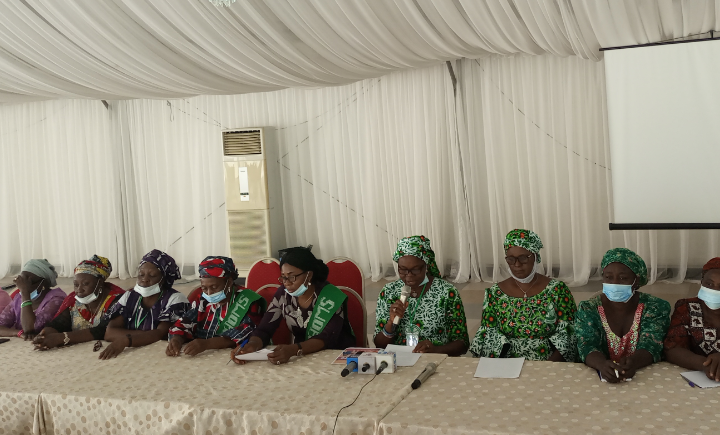
WOMEN farmers under the aegis of Small-Scale Women Farmers Organization in Nigeria (SWOFON) have retired their cutlass and hoes while demanding for a gender-friendly way to farming and security of lives.

The women farmers made these demands during a three-day programme held in Abuja.

On Tuesday, the women farmers visited the Cyprian Ekwensi Centre for Arts and Culture Abuja to retire their hoes and cutlasses as artefacts.

“This hoe can no longer feed us as farmers talk less of feeding the nation, so we want to tell the government that we are retiring this hoe to the museum and that we need mechanized farming to be able to increase production in our farmer and based on our population and what we do, we are sure that with mechanized tools, we can even feed the whole of Africa,” said Afan in an interview at the museum.

On Wednesday, during the a stakeholders meeting with the 36 state presidents of SWOFON, National executives and government officials, the women farmers discussed the effects of the COVID-19 on their livelihood.

Other stakeholders present at the stakeholders meeting include a representative of the federal ministry of Agriculture, Nigeria Agricultural Insurance Corporation (NAIC), FCTA Department of Agriculture, state government officials, among others.

“During the Covid 19 lockdown, many of the women farmers across the states could not access their farmlands due to the restriction of movement imposed by both the federal and state governments.

This led to various degrees of losses on their respective farms. Similarly, the closure of all markets meant that women farmers could not earn money from the sales of their farm products,” Afan said.

Responding to the agitations of the women farmers, Dandutse Muntari, the Chairman House Committee on Agricultural Production and Services said the government is committed to enhancing the welfare of women farmers because it is one of the key agenda of President, Muhammadu Buhari.

He said it is a shame that a country like Nigeria spends so much on the importation of food when there are capable farmers to do the job in the country.

While commending the association’s activities, Muntari said through further collaboration and other initiatives there would be more consideration of women farmers in the distribution of mechanical equipment and special agricultural interventions

Shehu Balarabe Kakale, member representing Bodinga, Dange Shuni and Tureta Federal Constituency and Robert Tyough, representing Kwande/Ushongo Federal Constituency were also present at the stakeholders meeting.

During the press conference, SWOFON noted that the most painful of the encounters of the women farmers across the country were the activities of kidnappers, bandits, and terrorist groups like the Boko Haram.

“As of today, many women farmers are afraid of going to their farmlands for fear of being kidnapped, raped, extorted by bandits, and killed like the ones recorded in Borno state,” the SWOFON secretary said.

She stated that the federal government gave out palliatives to households through the Conditional Cash Transfer Scheme and that little or nothing was done for women farmers who produce the bulk of food the nation consumes.

“There was a significant shortage or no distribution of inputs such as fertilizers, agrochemicals, seeds, and machinery, etc,” SWOFON noted.

Stating their demands, the association urged the federal and state governments to create a special intervention fund accessible to women farmers, to cushion the impact of the pandemic.

The organization further demanded deliberate steps in addressing the security challenges in the nation, especially those that affect agriculture and the availability of farm inputs for women farmers.

The association said its over 500,000 members are in dire need of gender-friendly equipment and training.

Shell Nigeria always knew its employees had been involved in pipeline leaks for profit racket, says environmental rights group FoEI

0

AFTER an investigative report revealed that Shell’s Nigerian subsidiary employees had devised means of damaging oil pipelines to profit from the money spent on clean-up operations, environmental rights group alleges that Shell had always been aware of its staff complicity.

Zembla, a Dutch investigative TV programme had reported that employees of Shell Petroleum Development Company SPDC, recruited local youths to sabotage Shell oil pipelines and hired them back as workers to clean up the mess.

It was also hinted in the investigation that Shell officials and the Dutch ambassador to Nigeria were made aware of the matter by local leaders in 2018, but did not act on those warnings.


READ ALSO:

Donald Pols, Director of Friends of the Earth International, FoEI based in the Netherlands, also known as Milieudefensie is one of the world’s largest grassroots environmental network said the multinational company always blamed others for their failings.

“Shell always claims it’s not their responsibility for global warming, earthquakes in Groningen, or oil spills in Nigeria.

“The big question now is how many of the countless oil spills were caused by Shell employees and why does Shell management continue to point the finger at others,” he said.

The joint investigative report which was carried out by FoEI and Zembla focused on Ikarama in Yenogoa Local Government Area, Bayelsa State, having experienced over 30 oil spills in the last 13 years.

“The majority of the leaks in Ikarama were the result of instructions given by Shell Nigeria employees,” the investigation revealed.

The profit made from the cleaning operations was split between SPDC employees and the youths, Zembla said, referring to statements provided to police and Ikarama Youth Council by witnesses and people who said they or their family members had taken part.

Chima Williams, Acting Executive Director of Friends of the Earth Nigeria, FoEN reiterated that Shell had always been informed of their staff complicity in pipeline vandalism.

“These disturbing findings have again confirmed what we have long suspected. Shell must own up to the destruction of the local community and made to pay heavily for these deliberate infractions,” he said.

Milieudefensie had sued Shell in 2008 for the oil pollution in Nigeria, in the first case ever involving a Dutch corporation being held accountable for environmental pollution in a foreign country.

According to a Reuters report, SPDC announced in 2019 that there was a 41 per cent rise in the number of crude oil spills caused by theft or pipeline sabotage

However, the verdict of Shell’s appeal is due for January 29, 2021 which is described as one of the world’s largest oil disaster cases.

Number of poor people in Nigeria to increase by 20 million in next 2 years – World Bank

0

THE number of poor people in Nigeria would increase by 20 million in the next two years, according to the latest edition of the World Bank’s Nigeria Development Update.

The Nigeria Development Update (NDU) is a World Bank report series produced twice a year, which assesses recent economic and social developments and prospects in Nigeria. The report also provides an in-depth examination of selected economic and policy issues and an analysis of Nigeria’s medium-term development challenges.

The latest update, titled ‘Rising to the challenge: Nigeria’s COVID response’, was released on Thursday, December 10. It focused mostly on the impact of the COVID-19 pandemic on Nigeria, and efforts by the Federal Government and state governments to address the situation.

Nigeria was designated as the ‘poverty capital of the world’ following a projection by the World Poverty Clock, compiled by Brookings Institute, that the country has the largest number of people living in extreme poverty, with an estimated 87 million Nigerians, or around half of the population, believed to be living on less than $1.90 a day.

However, the World Bank, in its latest Nigeria Development Update, predicted a further increase in the level of extreme poverty in Nigeria.

“The extreme poverty rate is expected to rise, with the number of poor likely to increase by 15 to 20 million by 2022. The human and economic costs would be amplified if the global economic recovery is less robust or takes longer than hoped and if Nigeria fails to take the needed policy and fiscal measures to free up the space of a rapid private sector-led recovery,” the World Bank report said.

The World Bank stressed that Nigeria is currently at a critical historical juncture due to uncertainties surrounding the COVID-19 pandemic.

The report observed that the Federal Government’s plan to lift 100 million Nigerians out of poverty by 2030 was a big challenge in normal circumstances and has become more difficult because of the pandemic.

The report stated, “While there is a lot of uncertainty about when the pandemic will end, it is clear that Nigeria faces an unprecedented crisis that requires an equally unprecedented policy response.

“Realising the government’s ambition of lifting 100 million Nigerians out of poverty by 2030 would be challenging even under normal circumstances. The onset of the COVID-19 crisis has made the task much more challenging and urgent because of the severity of the economic downturn and the decline in fiscal resources.”

Projecting a gloomy outlook for Nigeria’s economy in the short and medium-term, the World Bank noted that, in its baseline scenario, by 2023, Nigeria’s GDP per capita is expected to be roughly similar to that of 2010.

“This means that Nigeria would lose 14 years in per capita incomes. By contrast, if we compare Nigeria with an average of middle-income economies worldwide, we find that other countries are expected to lose around seven years.

“In other words, while COVID-19 will hit incomes across all countries, Nigeria is expected to suffer twice as much. But that is not all. In fact, because Nigeria’s growth has been uneven and volatile, once we adjust for inflation, we find that for Nigeria going back to 2010 is equivalent to going back to the 1980s,” the report added.

The Nigeria Development Update assessed employment conditions, social protection, public health and education in Nigeria under COVID-19.

According to the report, findings from a sample of household heads interviewed in successive rounds of the Nigeria COVID-19 National Longitudinal Phone Survey (NLPS) since March 2020 indicate that employment contracted sharply and job turnover increased significantly in April, but both appear to have stabilised by the end of August.

“Even though many Nigerians returned to work after the easing of strict lockdown measures in the early phase of the COVID-19 crisis, most households remain in an economically precarious situation,” the report said, noting that more than two in three households report lower incomes now than one year ago.

Nigerian households are facing increased economic precarity – unemployed workers have migrated back to the low productivity agricultural sector, and reports of food insecurity have increased substantially from the previous year, the World Bank observed, adding that women were more affected.

The effectiveness of intervention and empowerment schemes launched by the government under the National Social Investment Programs were undermined by critical financing gaps and institutional challenges, the report said.

“Most safety nets are limited in scope, and social-protection programs cover only a small fraction of their target populations,” the World Bank report said.

Available indicators, such as the total number of deaths, case fatality rate, and the total number of confirmed cases, show that Nigeria has fared reasonably well in responding to the COVID-19 pandemic but the report observed that “COVID-19 has had a substantial negative impact on service delivery for both disease control programs and essential health care services” in the country.

The COVID-19 pandemic had already plunged Nigeria’s economy into recession – the country’s second recession in less than five years during the administration of President Muhammadu Buhari.

The latest recession, which was forewarned by the World Bank after the COVID-19 pandemic led to a sharp fall in the price of crude oil, Nigeria’s major source of revenue, was confirmed by figures published by the National Bureau of Statistics, in its Gross Domestic Product report, on November 21.

FUOYE governing council suspends VC selection process

0

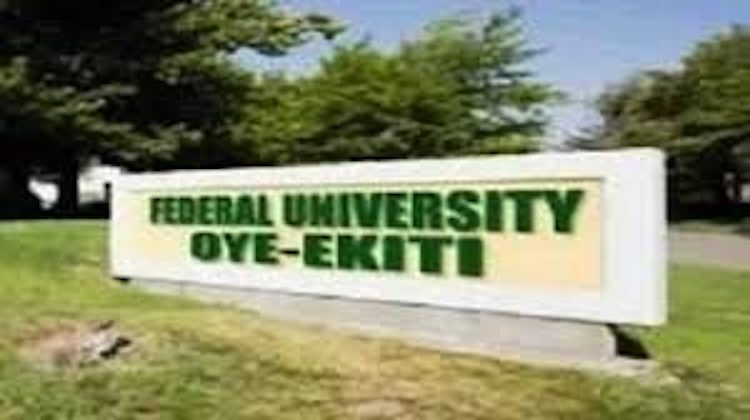
THE governing council of the Federal University Oye Ekiti (FUOYE), Ekiti state, has suspended the selection process for a new vice chancellor for the institution.

Adeyinka Ademuyiwa, the institution’s director of corporate services, who announced this on Thursday, said the decision was necessary to address the concerns and complaints of some stakeholders involved in the selection exercise.

According to him, the council has received not less than 120 petitions before it.

“In a session presided over by the University Governing Council Chairman, Dr Lawan Yahuza on Wednesday, members agreed to temporarily halt the ongoing processes to appoint a new vice-chancellor,” he said.

“FUOYE governing council remains committed to credible, transparent, fair, and just processes; and is open to suggestions and corrections that will help to deliver on this sensitive assignment.

“Both Yahuza and the vice-chancellor, Prof. Kayode Soremekun, wish to appreciate the diligence, steadfastness, commitment, and patriotism of council members and friends of FUOYE.”

He added that since FUOYE is handling the process of appointing the vice-chancellor for the first time, human errors are bound to occur in what is essentially a learning process and assured that the institution management is ready to correct such errors and deliver an acceptable appointment process.

“The governing council will reconvene on December 17 to discuss the way forward.

“This is to further underscore the council’s unflinching resolution to deliver a credible, transparent, fair and just process which will result in the emergence of a new vice-chancellor.”

The ICIR can confirm that not less than 72 candidates are jostling to occupy the position of Kayode Somerekun, the current vice chancellor of the university whose tenure will be ending by February 2021.

Buhari announces increase of N-Power, GEEP beneficiaries to one million

PRESIDENT Muhammadu Buhari has announced the approval of the increase of N-Power and GEEP beneficiaries to one million.

He has also declared that the number of pupils fed through the Federal Government’s funded school feeding programme should be increased to five million.

In a tweet on his verified Twitter page on Thursday, the president attributed the decisions to his administration’s pledge to lift 100 million Nigerians out of poverty.

“We remain committed to the plan to lift 100m Nigerians out of poverty. To this end, I have approved an increase in scope of our Social Investment Programme: Doubling of @npower_ng beneficiaries to 1 million; 1 million new @geep_ng beneficiaries & 5 million new pupils for @NHGSFP,” the president said.

The N-Power Programme is a job creation and skills empowerment programme of the Federal Government. It is designed to help young Nigerians acquire and develop life-long skills to become practical solution providers in their communities, enabling them to become innovative players in the domestic and global markets.

The programme such as N-Build, N-Creative and N-knowledge, which is designed for young people between the ages of 18 and 35,  targets non-graduate applicants.   For the graduate programme, the initiative includes N-Agro, N-Health, N-Teach and N-Tax. And under Government Enterprise and Empowerment Programmes, GEEP, there are interventions such as  Trader Moni, Farmer Moni and Market Moni.

The National Home Grown School Feeding Programme (NHGSFP) aims to deliver a cost-effective home-grown school feeding programme with a specific focus on increasing school enrolment, reducing the incidence of malnutrition especially among the poor; empowering cooks while supporting local agriculture through smallholder farmers, thereby stimulating economic growth through the socio-economic value chain.

 Federal Ministry of Humanitarian Affairs, Disaster Management and Social Development oversees many of these initiatives, some of which have now  attracted wide allegations of corrupt practices.


Africa needs $9 billion to purchase 1.4 billion doses of COVID-19 vaccines – WHO

0

THE World Health Organisation, WHO disclosed that Africa needs at least $9 billion to procure and distribute 1.4 billion doses of COVID-19 vaccines.

Richard Mihigo, WHO Immunisation and Vaccines Development Programme Coordinator, revealed this at the WHO Africa online press briefing on readiness for COVID-19 vaccine roll-out in Africa on Thursday.

In a Twitter post, Mihigo emphasised that there is a need to ensure an equitable and timely distribution of the vaccines.


“We will definitely need to vaccinate between 60 to 70 per cent of the African population.

“So, if you consider that we have about 1.2 to 1.3 billion people on the African continent and you take 60 per cent of that with the assumption that you will need maybe two doses per population, we are talking about close to 1.3 to 1.4 billion vaccine doses that will be needed to immunise 60 per cent of the people in Africa to reach a herd immunity,” he said.

He explained that the cost of the vaccines was not problematic compared to the cost of delivering them and ensuring they get to the right locations.

“So if we compute that number with the preliminary information that we are getting with these vaccine manufacturers because it is not only the cost of the vaccines. There are also additional costs that are needed to deliver those vaccines,” he said.

According to an Oxfam report, Africa is not likely to recieve enough vaccines from COVAX to reach the goal of vaccinating 60 per cent of the population to achieve herd immunity because rich countries have purchased surplus of the vaccinces for their countries.

COVAX facility is a Gavi-coordinated pooled procurement mechanism for developing COVID-19 vaccines and ensuring fair and equitable access to make 20 per cent of the vaccines available.

The report states that Canada bought enough doses to vaccinate its population five times over, while South Korea, has bought sufficient vaccine for 88 percent of its population of more than 50 million people.

Mihigo added that there were no guarantees that there would be enough supplies for Africa before the end of 2021.

“We know very well that the preliminary rough estimation that is being done, we may need up to $9 billion.

“We are not sure that we are going to get enough supply to immunise everybody by the end of 2021. This may spill over to the year after but also to mobilise such an amount of money, I think it will be an additional challenge,” he said.

He also revealed that there are ongoing discussions with the African Union to work with other multilateral or development banks like the World Bank, Afrexim Bank to mobilise resources.

Maina, like other public officials accused of corruption, feigns sickness in court

0

ABDULRASHEED Maina,  former Chairman of the defunct Pension Reformed Taskforce Team (PRTT), is the latest addition to the other Nigerian public officials that have created a dramatic scene during court trial or on National television.

Maina on Thursday, collapsed in the dock during the resumed hearing in his N2billion money laundering trial at the Federal High Court, Abuja.

And many Nigerians have branded his action as same old trick used by  top government officials in the country.

Maina was recently extradited from the Niger Republic to Nigeria after he jumped bail and escaped from the country.

Before his dramatic collapse in the court, Anayo Adibe, Maina’s counsel was praying the court for an adjournment to enable him get records of court proceedings.

The case has now been adjourned till December 21 and 22.

Maina’s purported ill-health has been a major reason for his prolonged trial. In November 2019, his trial was stalled after a medical expert testified to his inability to appear before the court due to health reasons.

On another occasion, his lawyer claimed that Maina was bleeding during a court sitting.


Former Pension boss, Maina slumps in court


The ICIR in this report, compiles list of other top Nigerian officials who gave a “Oscar-worthy” performances when charged to court for a case of money laundering, fraud or any other crime.

These top guns often fall ill, get admitted to a hospital, and then show up in court in a wheelchair. There are those who also put appearance of sickness on national television.

Dino Melaye

Dino Melaye. a Nigerian politician that represented Kogi West Senatorial district in the 8th National Assembly, is one of them.

Melaye is aguably one of the most dramatic politicians in Nigeria, as no Nigerian politician feeds off controversy like him.

In April 2018, Melaye jumped out of a moving police van as he was being transported to face criminal charges in Kogi State.

On January 4, 2019, Melaye surrendered to the police after a seven-day siege was placed on his Abuja Maitama residence. Police officers had invaded his Abuja home on Friday, December 28, 2018 to arrest him for his alleged involvement in the shooting of a police officer, Danjuma Saliu, a Sergeant in July 2018.

Minutes after his surrender, Melaye slumped and was assisted to the police car. On arrival at the police headquarters, he appeared very weak and could not walk by himself and had to be helped into the office where he slumped again as he was breathing heavily. He was said to be asthmatic.

In 2019, Senator Dino Melaye slept outside the DSS hospital after he was moved there by police personnel insisting that he would not enter the DSS medical facility until he was told why he was moved from the Police Hospital in Abuja.


Dino Melaye sleeping outside the DSS hospital

Olisa Metuh

Olisa Metuh is a Nigerian Lawyer, politician and the former National Publicity Secretary of the People’s Democratic Party (PDP).

He was arrested in 2016 by the Economic and Financial Crimes Commission, (EFCC) for the N400 million he and his company Destra Investment Limited allegedly received from the office of the National Security Adviser (NSA) in 2014.

His drama started following a confusion caused by his sudden collapse in the court. The development forced the presiding judge,  Justice Okon Abang, to stand down the matter for almost half an hour to enable medical officials attend to him.

On February 5, 2018, Metuh appeared in court on a stretcher after Justice Abang ruled that he would have his bail revoked if he didn’t show up for the continuation of his trial. Again on March 14, 2018, Metuh appeared in court on a wheelchair. And on May 21, 2018, he collapsed while making his way to the dock for cross-examination.

After making several court appearances coupled with slumping dramas, Metuh was found guilty of money laundering and sentenced to seven years in prison on February 25, 2020.


Olisa Metuh collapses in court during trial

Ayodele Fayose, the famous “I am in pains” former governor of Ekiti

Peter Ayodele Fayose is a former governor of Ekiti State.

He is best known for one his famous line “I am in pains”, “I am in severe pains” acting on national television.

Fayose cried while speaking on Channels Television in 2018, saying he was in pains after he was allegedly “shot at” and manhandled by security agents.

He then broke down into tears, lamenting “I cannot take this anymore” before crawling away from the camera.

“How can I be Governor of Ekiti State and be treated like this in my own country? My people, I call on all of you: Stand and remain standing,” he said to the crowd. “I will go back to the hospital for a while to rest… I am having a lot of pains, but I prefer to bear these pains because of you. I prefer to bear these pains because of you…” Fayose said amidst sobs.

Lere Olayinka, spokesman of the former governor, said his principal lost consciousness and was taken to the Government House Clinic after policemen fired teargas canisters into the Government House.

Ayodele Fayose crying  “I am in severe pains” on national TV


Daniel Pondei

Although, not a politician, Kemebradikumo Daniel Pondei is a Nigerian professor and the current acting managing director of Niger Delta Development Commission.

The acting Managing Director of the Niger Delta Development Commission (NDDC), fainted as the House of Representatives Committee on NDDC grilled him on Monday July 20, 2020 during an investigation on alleged financial misappropriation at the commission.

Pondei had been grilled for over an hour when he slowly slumped over his desk, appearing to faint.

Several people present at the hearing rushed to his aid, propping him up and attempting to stabilise him, with the proceedings halted.

He then appeared to be in a seizure with a man holding open his mouth as others held him upright.

Pondei, however, replied critics who desribed his action as shameful.

“I had an unexplained, unexpected health challenge. It is ridiculous to think that people believed I was acting.

“I would not pray for anyone to experience what I went through.

“I do not run from issues. I have put all that behind me,” he said in an interview with Vanguard.

NDDC Probe: Pondei slumps on National TV

Maj. Gen. Hakeem Otiki

The former GOC faces court martial in wheelchair over the alleged diversion of N400m by five runaway soldiers attached to the division in September 2019.
He appeared to be ill and was brought into the court on a wheelchair, having beside him medical officers of the Nigerian Army who monitored him during the trial.

On June 16, 2020 a military court headed by the army’s chief of policy and plans, Lamidi Adeosun, found Mr Otiki guilty of disobedience to service orders, theft of public property, diverting operational money and engaging in private businesses.

The tribunal ordered that he should be demoted from major general to brigadier general and dismissed.

Major General Hakeem Otiki, General Officer Commanding 8 Division Nigerian Army, appeared in a wheelchair during his trial.

Haliru Bello

Haliru Bello Mohammed, a former chairman of the Peoples Democratic Party PDP,  appeared before the Federal High Court, Abuja, sitting in a wheelchair.

The EFCC had on December 26, 2015, filed a four-count charge of money laundering against the politician for his alleged role in the diversion of funds meant for the procurement of arms in the office of the National Security Adviser.

Haliru Bello Mohammed arrives court on wheelchair

Nigerians are tired of same script by government officials

The ICIR monitored reactions by some Nigerians online after news broke out that Maina also slumped during his court trial on Thursday.

A Twitter user identified as Sammie said “This is never a serious country. We have not recovered from Prof. Pondei’s fainting and Maina is slumping. Many pensioners died because of his reckless act, pls can the judge sentence him to death recklessly too, until strict laws are taken corruption will always become a tradition.”

Loho Samuel wrote “Very popular act! When the heat is on, they become like Pete Edochie and Ramsey Noah. I think these guys deserve oscars for their acting proficiency.”

Ogheneochuko said “I think certain English clubs need to start employing the service of Nigeria politicians. They are so skilled with different tactics to manoeuvre their way out of difficult situations.”

Abi Baiyewu tweeted, “The content on Nollywood has improved over time. Public office entertainers in Nigeria are yet to catch on. Same ol’, same ol’. Our dear #Maina followed the traditional courtroom script.”

Ebitu Promise said: “What’s really the mystery behind these politicians slumping when it’s time to question them about their corrupt activities.”


Akwa Ibom police command charges #ENDSARS protesters with treasonable felony

0

THE Akwa Ibom state police command has charged four citizens of the state with treasonable felony for leading #ENDSARS protest in the state on Tuesday.

The suspects, whose names were identified as Idopise Ette Oton, Obot MfonGod, God’sfriend Michael and Victor Nta George, are part of a group named ‘End Bad Governance Initiative’ in the state.

The ICIR learnt that they had gone to the Akwa Ibom State House of Assembly to protest against bad governance, the ongoing strike by the Academic Staff Union of Universities (ASUU), freezing of accounts of ENDSARS protesters, border closure, increment in electricity tariffs, fuel pump price, misgovernance by the state government, among other sundry issues, when they were arrested by the police.

The police subsequently charged them before the magistrate’s court in Uyo presided over by Chief Magistrate Winifred Umohandy with fraudulent, malicious and frivolous charge of forming intention to overthrow President Muhammadu Buhari and Governor Udom Emmanuel on Wednesday.

But the case was soon dismissed following an objection that the magistrate’s court lacks jurisdiction to entertain the treasonable felony charge brought against the accused persons.

However, The ICIR was told that no sooner had the case been dismissed that armed policemen acting on the directive of the governor through the commissioner of police arrested the accused persons right in the court’s premises.

Inibehe Effiong, a human rights lawyer, who gave the account of the incident in a Facebook post has condemned the action of the state government and the police.

“The protesters who were freed by the court are still in the custody of the police. This shameful action by governor Udom Emmanuel is only the latest in a string of dictatorial actions that Mr Udom Emmanuel has carried out since he came to office,” he said.

It is shameful that Udom Emmanuel, who pretends to be an opposition leader in the country, has desecrated the hallowed temple of justice in his bid to quell all forms of dissent in the State. Akwa Ibom State is under a fascist regime that uses terror, fear and violence as instruments of control.

Effiong added that it is distasteful that the recently posted Police Commissioner, will reduce the State Police Command to a political weapon for corrupt politicians, and allow himself to be used as a tool by the governor to witch-hunt citizens who are exercising their rights under the Nigerian Constitution.”

He called for the immediate release of the protesters.

Every attempt to reach the state police command proved abortive as calls repeatedly put across to Nnudam Fredrick, the police spokesperson were not answered.

Also, a text message sent to his phone was not replied to as at the time of filing this report.

ICIR-funded report, others emerge winner at 2020 Wole Soyinka Award for Investigative Reporting

AN investigative report funded by the International Centre for Investigative Reporting, ICIR, on Wednesday emerged winner at the 2020 Wole Soyinka Award for Investigative Reporting (WSAIR).

The 15th edition of the award programme which held in Lagos had in attendance investigative reporters, news editors and dignitaries.

WSAIR  promotes and encourages best practices in journalism and works that focus on themes ranging from regulatory failures, corruption in the public and corporate spheres, and human rights abuses in the country.

Damilola Banjo, an investigative reporter with BBC, won the overall Nigeria Investigative Journalist of the year 2020 for her investigation on Justice for Sale: Inside the Lagos Anti-Cultism ‘Illegal’ Detention Centre which was published by The ICIR.

 The joint investigative piece by Habib Oladapo and Damilola Banjo, “Inside a Lagos state school where A1 can be bought” (Part 1& 2), published by The ICIR, was commended in the same category.

Banjo’s report exposed the encounters of several Nigerians, old and young, with the police institution in Nigeria that brazenly violates the fundamental human rights of citizens and the country’s law through arbitrary arrests, illegal detention, torture, and commoditizing justice and bail.

Her investigation showed that at every point in the Nigerian justice system, there is a corrupt government official ripping innocent Nigerians off and doing it so brazenly.

Her second report exposes examination malpractices in a popular Lagos school during the last WAEC and JAMB exams.

A victory for grit, hard work and mentorship – Banjo told The ICIR

In a phone conversation with Damilola Banjo, she said emerging overall Nigeria Investigative Journalist of the year 2020 at the WSAIR is a victory for grit, hard work and mentorship. “I will like to give a special mention to the man who gave me my first shot, Omoyele Sowore, and every person that have helped me in my very young career,” she said.

According to her, there has been a frightening surge in violation of press freedom and human rights across the country. Just as journalists are being hounded and their words maliciously taken out of context, we have also seen war weapons deployed to quell peaceful protests.

“It is a hard time to be a Nigerian and indeed a dangerous time to be a journalist. Yet, it is the time for more rigorous, fact-based journalism that continues to uphold the truth, strengthen our democracy and hold everyone to account—not just the government.

“This award is to everyone who have labored for people like me to come through. To all the journalists putting their safety at risk to tell the much needed stories.”

Banjo went further to thank “Selase Kove-Seyram, an astute journalist from Ghana, the TigerEye Foundation and the International Centre For Investigative Reporting (ICIR) that funded the impactful stories that was awarded. Idris Akinbajo of Premium Times and Amzat Ajibola of The ICIR, two renowned editors who continue to show me how indispensable editors are. Editors are gods.

“I dedicate this to my two mums, single mothers who taught me perseverance and hard work, my little brother, my colleagues and friends. This is a victory for you all,” she said.

She, however, thanks Wole Soyinka Centre for Investigative Journalism for the yearly encouragement they give to journalists in Nigeria.

Other winners from the 2020 WSAIR include Victor Asowata of Punch Newspaper, who won the Editorial Cartoon Category and Bukola Samuel Wemimo of TVC News as the winner of the Television category.

To reinforce WSCIJ’s three-day in-depth media conference and awards’ campaign on the theme – Masked not silenced, Juliana Francis, the 2014 WSCIJ-Nigerian Investigative Reporter of the Year, made a statement on behalf of the organisation.

The statement highlighted the fact that the media has been masked by many challenges, but it remains undaunted and cannot be silenced. Juliana concluded the speech with a call to action for reporters to investigate the death of Pelumi Onifade, the Gboah reporter who died in the custody of officers attached to the Lagos Task Force.

Held first in October 2005, the programme has produced 102 finalists with 11 investigative journalists of the year and 24 honorary awards recipients. This year, the winners, runners-up and commended works were presented cash prizes of N200,000, N100,000 and N50,000 respectively, plus a certificate of commendation. In addition, winners got award plaques and a laptop; runners-up got a smartphone and commended works got a hard drive.

The promo of “Child sex trade”, a documentary by Sharon Ijasan which will be aired on TVC on Sunday 13 December during the 10pm news, was aired at the award event. Ijasan received an anonymous grant at last year’s edition where she was runner up for her work on child labour. The 2020 ceremony was moderated by Deji Badmus, Executive Director, TV360, and three-time winner of the award. It was enlivened by a musical dance performance by the Kininso Koncepts which faulted the impunity with which politicians and men in uniform attack and harass journalists for speaking the truth to power.