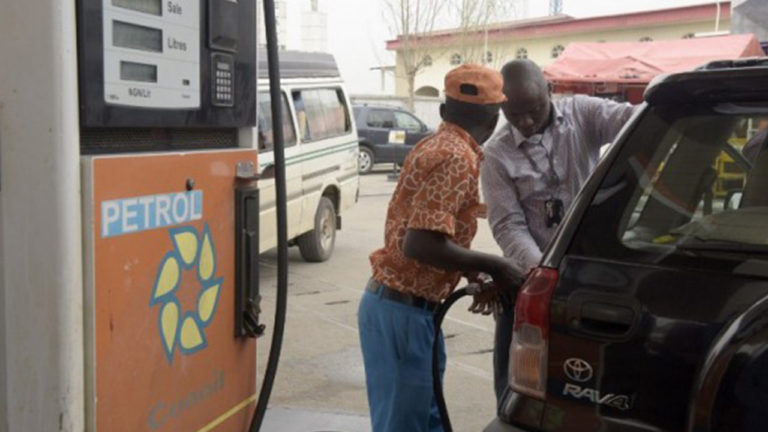
ON Tuesday, the Federal Government announced a reduction in the pump price of petrol from N168 to N162.44 per litre which is set to take effect from December 14.
Chris Ngige, the Minister of Labour and Employment disclosed this at the end of a meeting with labour union leaders.
Following the decision of the Petroleum Products Marketing Company, PPMC to increase the ex-depot price of petrol from N147.67 per litre to N155.17 per litre in November which is currently being sold at N168 at fuel stations.
The ex-depot price is the price at which the product is sold by the PPMC to marketers at the depots.
Ngige said a technical committee has been set up to ensure price stability in the industry which will send in their report on January 25, after appraising the market forces and other things that would ensure stability in the industry.
“Our discussion was fruitful and the Nigerian National Petroleum Corporation, NNPC which is the major importer and marketers of petroleum products and customers have agreed that there will be a slide down of the pump price of PMS and that the price cut will get us about N5 per litre and that the price cut will take effect from next Monday, a week today,” he said.
Ngige explained that the price reduction was not meant to suspend deregulation because it did not affect the price of crude oil but on areas where the NNPC as the main importer had agreed that it could cut costs like freight and demurrage costs.
He said the new price slash was a product of a meeting by joint committee of the NNPC and labour representatives, which looked into ways of cutting costs.
On electricity tariff, both parties agree to stand down until January 25, to enable the special committee dealing with complaints conclude their deliberations.
NII Lante Vanderpuye, the National Democratic Congress (NDC) parliamentary candidate for the Odododiodio Constituency Ghana election who was arrested last night has been released.
He was accused of gun shooting around the Modark hotel where the incumbent lawmaker was involved in an incident that resulted into a clash between supporters of the NDC and the ruling New Patriotic Party (NPP).
He was arrested alongside other suspects who lodged with him at the hotel.
According to his lawyers, no charges have been levelled against him but other suspected individuals are still in police custody.
Odododiodio constituency is one of the flashpoints identified during this election by the security agencies.
Prior to the collation process, some NDC party loyalists were seen celebrating victory even though the electoral commission was yet to announce the final result.
The jubilations stretched all through the night that it caught the attention of security operatives including the immigration officers.
The election has been described as a contest majorly between NDC and the NPP candidates. While the incumbent president is contesting under the NPP platform, his major rival, John Mahama is a candidate of the NDC.
As of the time of filing this report, the electoral body is yet to declare winner of the elections.
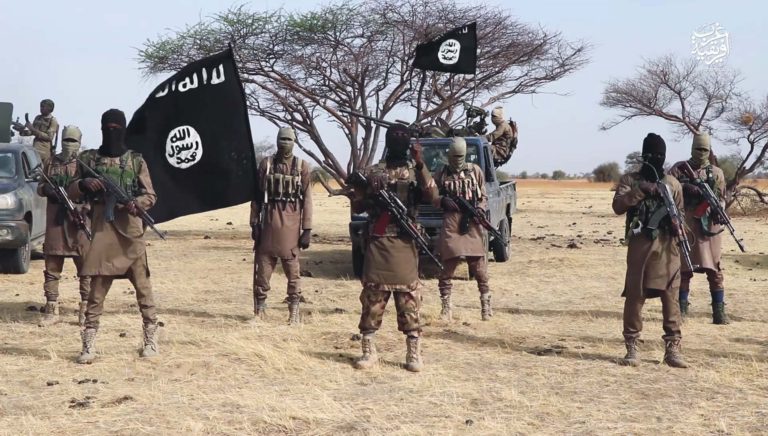
THE Islamic State West Africa Province (ISWAP), one of the two Boko Haram factions operating in Nigeria, has abducted an aid worker and a policeman in Borno State, Northeast Nigeria, The ICIR has learnt.
One of the kidnapped persons was said to be on the staff of the Nigerian Red Cross but Chima Nwankwo, Head of Communications at the humanitarian organisation denied it , saying no worker in the agency was abducted. He disclosed, however, that staff of a “side organisation” was kidnapped but he did not mention its name.
The two separate incidents happened on December 2 at Kareto, a village about 80 kilometres from Damasak, headquarters of Mobbar Local Government Area. They were taken away when the vehicles they were traveling in were stopped a checkpoint mounted by the insurgents.
According to eyewitnesses, ISWAP fighters had mounted a checkpoint the previous day and stood there observing vehicles and passengers passing by before returning the following day with some pictures. They compared the pictures with passengers in all the vehicles they stopped, an indication that they were looking for specific individuals.
“They finally found one passenger who matched one of the pictures. When they told him that he was a staff of Red Cross, he denied, so they brought another picture of him in a Nigerian Red Cross uniform. At that point, he did not say a word. So, they went away with him,” an eyewitness told The ICIR.
Later that day, they stopped another vehicle and identified a passenger they said was a Nigerian Police Force personnel. The man denied being a policeman but they told him they recognised him at the Damasak police division and went away with him.
Drivers in Maiduguri confirmed the incident to The ICIR and said all their members refused to ply the Maiduguri-Damasak road the next day out of fear. While some drivers have since resumed, others have refused to ply the road.
According to The ICIR’s findings, ISWAP was very active around Kareto for three days before the abductions. Due to the rife insecurity in the area, which has made it difficult for civilians to live there, the Nigerian military on 29 November sent soldiers from its base in Damasak to clear and prepare the village for military deployment.
However, the following day, 30 November, ISWAP fighters attacked the town and burnt down the entire village, including the newly built houses meant for civilian occupation.
As of the time of filing this report, drivers continued to report that the checkpoint is still present at Kareto.
The ICIR has documented several cases of kidnappings for ransom by both factions of Boko Haram in addition to dozens of armed robberies against civilians at checkpoints and villages. Villagers and passengers are forced to part with their food, money, mobile phones, livestock and even the clothes on their backs.
While the Abubakar Shekau-led Jamā’at Ahl as-Sunnah lid-Da’wah wa’l-Jihād (JAS) faction targets everybody for abduction, ISWAP only goes after non-Muslims.
However, both groups do not spare security forces personnel, government officials and humanitarian workers irrespective of their religion.
The ICIR also gathered that on 4 and 5 December, ISWAP stopped all trucks transporting relief materials to Damasak at Kareto and set them ablaze. This has resulted in the refusal of truck drivers to risk the journey in the last two days.
“They asked me today (7 December), ‘where are the trucks carrying NGO goods and why have they stopped coming?’ Anyone that passes through here will be stopped and burnt down,” a commercial taxi driver, who returned from Damasak, told The ICIR in Maiduguri.
In 2018, two Red Cross staff members were kidnapped and killed in Rann, Borno State by Boko Haram along other humanitarian workers and soldiers. In June, 2020, five aid workers were abducted and later killed in the North east.
THE Electoral Commission of Ghana (EC) has debunked claims of alleged stuffing of ballots in Asawase Constituency of Ashanti Region of the country.
Mubarak Muntaka, Member of Parliament from the Asawase Constituency, had alleged a parliamentary ballot box in one of the polling stations was stuffed with marked ballots.
But the electoral body on Tuesday said it was single case where a voter attempted to put in fake ballots into the parliamentary ballot box.
This, the commission emphasised was established while working closely with the security operatives to identify the discrepancies.
According to the commission, the serial numbers in the fake ballots did not tally with the counter foils in the original ballot booklet.
It stated that the fake ballots were much lighter in texture than the commission’s original ballot papers.
Also, the colours on the fake ballots were said to be much fainter than that of the electoral commission.
Moreover, the commission discovered the colours behind the fake ballots were oval contrary to the commission’s validating stamps.
“The electoral commission, working closely with the security services thoroughly investigated the incident and identified that a voter unscrupulously and unsuccessfully attempted to put in fake ballots into a parliamentary ballot box,” the EC stated.
The commission encourages the public to report suspected instances of electoral malpractices.
In a statement, it urged the public to desist from issuing unverified proclamations that might lead to unnecessary tension and cause confusion.
Meanwhile, from the 275 Constituency Collation Centres, only 38 results have been announced with the incumbent President in an early lead.
Though no official figure has been released by the electoral body, reports from the local media says, Nana Akufo-Addo, the New Patriotic Party (NPP) candidate has so far polled 574, 018 votes from the 38 results collated while the major contender, John Mahama, who is contesting under the National Democratic Congress (NDC) 495,171 as of the time of filing this report.
NPP General Secretary, John Boadu also claimed the party’s candidate was leading the opposition with 6,085,708 valid votes, a figure he stated represents about 52.72 per cent.
THE United States has again named Nigeria as one of the Countries of Particular Concern (CPC) under its International Religious Freedom Act of 1998 guilty of tolerating religious persecution.
Michael Pompeo, the US Secretary of States announced this in a statement on Monday.
Other countries named are Burma, China, Eritrea, Iran, the Democratic People’s Republic of Korea (DPRK), Pakistan, Saudi Arabia, Tajikistan, and Turkmenistan
“Today the U.S. designates Burma, China, Eritrea, Iran, Nigeria, the DPRK, Pakistan, Saudi Arabia, Tajikistan, and Turkmenistan as countries of concern under the International Religious Freedom Act of 1998 for engaging systematic, ongoing, egregious religious freedom violations,” he said.
The statement added that the US is unwavering in its commitment to religious freedom and will always act when religious freedom is attacked.
“No country or entity should be allowed to persecute people with impunity because of their beliefs. These annual designations show that when religious freedom is attacked, we will act.”
In December 2019, Nigeria was added alongside Comoros, Russia, Uzbekistan, Cuba, Nicaragua and Sudan on a Special Watch List (SWL) for governments that have engaged in or tolerated “severe violations of religious freedom,” by the US following a report by the United States Commission for International Religious Freedom (USCIRF).
According to the report, religious freedom conditions in Nigeria trended negatively in 2018. It accused the Nigerian government at the national and state levels of
continuing to tolerate violence and discrimination on the basis
of religion or belief, and suppressed the freedom to manifest religion or belief.
It noted that religious sectarian violence increased during the year, with Muslims and Christians attacked based on their religious and ethnic identity accusing the Nigerian federal government of failing to implement effective strategies to prevent or stop such violence or to hold perpetrators accountable.
The report USCIRF that Boko-Haram and the Islamic State of Iraq and Syria-West Africa (ISIS-WA) continued to perpetrate attacks against civilians and the military throughout the year, despite Nigerian government’s claims of progress in defeating them.
In addition, members of the military and the civilian joint task force in Borno were accused of human rights violations against civilians displaced by conflict.
It also cited how the Nigerian military and government continued to violate the religious freedom and human rights of the Shi’a members of the Islamic Movement in Nigeria (IMN) with IMN leader Sheikh Ibrahim ElZakzaky remaining in detention, along with his wife against court judgement granting them bail.
MINISTER of information and culture, Lai Mohammed who recently disclosed that some world powers have refused to sell weapons needed to fight insecurity in Nigeria, may have been telling the truth after all, but he overstated the fact.
Powerful countries such as the United States, Russia, France, and China indeed continue to sell weapons to Nigeria, but the sales have been on a steady decline since the beginning of the Buhari administration in 2015.
The information minister while speaking to the News Agency of Nigeria (NAN) Forum in Abuja disclosed that some world powers had refused to sell to Nigeria vital weapons needed to fight against insurgency.
“For more than two to three years now, we have paid for certain vital weapons that they have not released to us and they even refused to give us spare parts, ” he told NAN.
The ICIR also reported the statement made by the minister.
While the claim by the information minister is not incorrect, it is exaggerated.
Records published by Stockholm International Peace Research Institute, SIPRI show that Nigeria has ordered a total of 1, 318 from the United States, China, Germany, France, and Russia, and other countries in the last five years, but taken delivery of only 355 arms.
The list includes 178 aircraft, 92 ships, 65 armoured vehicles, 10 artilleries, 6 engines, and 3 missiles.
The number excludes the delivery taken at the twilight of the Jonathan administration.
SIPRI, established in 1966, is an independent international institute that collects data about conflict and armaments.
According to the Institute, Nigeria has indeed taken delivery of 19 assorted weapons from the United States between 2014 and 2019.
The list includes Alpha Jet-A- Version (4), Caiman APC (16), MaxxPro APC (10), Power Stroke (10) for 90 Spartan APC, VT-400 Diesel engine (25) for 87 Typhoon APC, and ISL Diesel engine for Ara-2 APC.
In fact, six of 12 A-29 Super Tucano aircraft ordered from the USA in 2018 is due for delivery in 2021, the Nigerian Air Force (NAF) disclosed on 30 November.
“The A-29 Super Tucano aircraft project is on track to be delivered on schedule and in accordance with the Terms of the Contract. Currently, six of the expected 12 aircraft have been produced and are presently being employed for conversion training of six NAF pilots who are in the USA, along with 26 NAF engineers, technicians, and logisticians, who are also undergoing various training on the aircraft as part of the provisions of the Contract,” the NAF said.
But the Advanced Precision Kill Weapon System (APKWS) for SuperTucano aircraft is yet to be delivered.
Indeed, the manufacturing of some military hardware takes years to complete, the reason for pre-order.
Russia, for instance, has delivered 150 anti-tank missiles (9M114 Shturm/AT-6) to Nigeria between 2017 and 2019 out of the 300 ordered for, as well as six combat helicopters within the same period.
Other military weapons delivered to Nigeria during the Buhari administration include six Combat helicopters (Mi-35) and six Mi-171Sh transport helicopters (armed version) from Russia.
Just last week, NAF took delivery of a second Mi-171E helicopter from Russia.
The new aircraft, according to Air Officer Commanding Tactical Air Command (AOC TAC), Air Vice Marshal Olusegun Philip, who received the aircraft on behalf of the Chief of the Air Staff, Air Marshal Sadique Abubakar, is the second of two Mi-171E helicopters procured by Buhari administration.
“The new delivery brings to 23 the total number of brand new aircraft acquired since 2015,” the NAF said.
The 23 aircraft include Mi-35M, AW109M, Bell 412 and Super Mushshak types.
The NAF is still to receive three JF-17 Thunder jet fighters and 12 EMB 314/A-29 Super Tucano light attack turboprops along with eight Wing Loong II, CH-3 and CH-4 unmanned aerial vehicles.
The administration of President Muhammadu Buhari has also ordered nine patrol craft, FPB series, from France between 2016 and 2019, and six of them have been delivered already, according to SIPRI database.
China has donated a patrol craft to Nigeria in 2015 after selling two P18N OPV at the cost of $42 million between 2014 and 2016.
Also, 120 APCs ordered by Nigeria in 2013 have all been delivered between 2014 and 2015.
Other countries that have sold arms and ammunition to Nigeria during the Buhari administration include Germany and Canada.
While Canada sold 20 APCs in 2015 to Nigeria, Germany sold four MTU-4000 Diesel engines for 2 P18N OPV the same year.
Apart from the superpowers, countries such as Austria, Brazil, Bulgaria, Ukraine, UAE, Italy, Czech, Serbia, Pakistan and South Africa have also sold arms and ammunition to Buhari government.
Though Nigeria is restrained free access to weapons because of its human rights records, the country only experienced a major arm embargo in 1995 during the Abacha regime. But the ban was lifted in 1999 at the return of civil rule.
The ICIR contacted the information minister on Sunday through SMS and Whatsapp for further clarification but he has not responded as of the time publishing.
THE slow pace of work on the Abuja-Kaduna-Zaria-Kano road has contributed to the high rates of accidents along the corridor, investigation by PRNigeria has shown. About 4,954 road traffic accidents have been recorded in the Kano-Kaduna zone of the road between 2017, when the contract for reconstruction of the road was approved, and 2,020, six months to its delivery date.
Exclusive medical records of road traffic accident victims indicate that men between the ages of 21 and 62 years account for about 81 percent of accident victims on the road during this period. Except for 2020, analysis showed that there has been a steady rise in the rate of road accidents since 2017 when the contractor for the road moved to site.
No fewer than 1,035 people were victims of road accidents between January to December 2017, with 989 males and 316 females. In 2018, about 1,300 persons were road accident victims, with 1,031 males and 269 females, documents made available to PRNigeria show.
Also in 2019, about 1, 770 victims were recorded. No fewer than 1,443 males and 238 females crashed along the route while 783 males and 76 females were road accident victims between January and September 2020. A total of 783 deaths recorded. The Kaduna zone recorded the highest number of accidents in 2018 and 2019, according to the annual report by the Federal Road Safety Corps (FRSC).
FRSC officials confirmed that the state of the road is largely responsible for the record of high casualties along the Kaduna zone. Despite the spate of fatal accidents recorded, most hospitals along the route, including Kura General Hospital, are poorly equipped to attend to emergencies.
“Males are the highest casualties and victims are mostly brought in dead on arrival. This may not be unrelated to the bad road which makes the ride to this place bumpy and slow,” said a medical officer who spoke on the condition of anonymity for fear of losing his job.
State of the Road
Abuja-Kano Road Project: How it all started
In 2017, the Federal Executive Council (FEC) approved the award of N155.48 billion to Julius Berger Plc, for the construction of a hybrid two-lane-six-lane road network that starts from Abuja through Kaduna-Zaria to Kano. On February 12, 2020, FEC again approved another N867 million for the engineering design to adding an extra lane on both sides of the 375 kilometer road.
Beset with no less than eight major diversions, dangerous potholes, loss of lives and disruption of economic activities, the road has aggravated the sufferings of commuters and residents along the Abuja-Kano corridor. And it also aided bandits who take advantage of the poor condition of the road to carry out their criminal and nefarious activities, including kidnapping people for ransom.
Recently, about nine students from the Department of French, Faculty of Arts, Ahmadu Bello University Zaria were kidnapped along the route while on their way to Lagos for a language immersion program. The students were released about a week later after reportedly paying N1million each as ransom.
Recalled that three final year students of the faculty of Law, Ahmadu Bello University Zaria were kidnapped on the same expressway earlier in August 2019.
On November 15th, at least 15 people were killed on Sunday and many others abducted when kidnappers blocked the Kaduna-Abuja expressway around 5 pm, witnesses said.
It was gathered that nearly 20 vehicles were forced to stop at the bushy and sloppy location when the gunmen laid siege.
“At its height, the road had 10 kidnappings per day with 20 different groups operating on the route,” says police commander Abba Kyari, who heads a special unit fighting kidnappers.
The true figures are likely to be higher, as some families, choose not to report to officials, deciding to negotiate with the kidnappers directly.
This has resulted to the road being deserted by travelers thereby crippling economic activities.
Kantin Kwari Market in Kano is the biggest textile market in Africa with many traders in coming from all parts of the country to purchase goods in bulk with recent development, many would rather not risk their lives again while some have taken to the rail option for their travels but even at that, tickets and space are scarce with about 5,000 commuters packing on to them daily.
State of the Road
Many passengers miss scheduled trips because of the huge demand. This is more so because many of the civil servants who work in Abuja live in Kaduna.
Those who have tickets but cannot find seats have the option of standing for the two-hour journey for the same fee.
Mannir Awal Addo, a trader in Abuja who has family that he visits every weekend in Kaduna, was kidnapped on the Abuja-Kaduna highway earlier this year and held for five days.
He told the BBC in an interview monitored by PRNigeria that he paid his abductors N500,000 for his freedom: “It was a traumatic experience.”
He was affected by polio as a child and said he could not run away when kidnappers attacked the vehicle he was travelling in.
“Since then, honestly I don’t use car transport because I am afraid of the road. It’s better for me to take the train because of its safety.”
Kura Hospital Entrance
A Travelers’ Nightmare
Work was ongoing when this reporter visited in October with 27km of the nearly 400 – kilometres road completed. The breakdown shows that 11km of the 160km stretch of the road between Zaria to Kano had been completed while 6km of the 75km Kaduna to Zaria axis had been executed and 10km of 165km journey from Zuba to Kaduna has been done.
“The road is too dangerous and deadly for us, but we have no option than to ply it that way. Look around, you will see that most of our vehicles either have no side mirrors or have been panel beaten on the side as a result of constant collisions and breakdowns. The diversions and deep potholes causes collisions, summersaults, and in some cases, car explosions,” Ibrahim a motorist who constantly ply the route lamented.
The general state of the road remains a nightmare for motorists and travelers. With its decrepit state and constant degeneration over the years, a journey of less than four hours on average speed of 100km/hr, now take about seven to eight hours.
[Insert photos of fallen truck in the middle of the road and that of road closed for two years]
Findings by PRNigeria showed that Kura to Chiromawa (in Kano), Zaria to Lamban Sambo (in Zaria), Jaji to Kaduna (in Kaduna), Rijana to Gadan Mallam Mamman (in Kaduna) and Audu Jamgwam-Katari-Gidan Busa (along Kaduna-Abuja) are the most accident – prone zones with deep potholes sometimes up to the knee level.
It is estimated that about six people die daily at the Chiromawa hotspot of the road in Garun Mallam Local Government Area of Kano state, residents told this newspaper.
The rate places an immense burden on hospitals and health systems generally, particularly Kura General Hospital, which is a cottage affair and has no capacity to accommodate the daily numbers of casualties.
Fallen truck in the middle of the road
“We register accident cases every day. Don’t be surprised that before you leave here, a case will come in. Because of the nature of the accidents on the road and the pressure on our facility, this place needs to be upgraded to a trauma center,” said a top medical personnel of the hospital.
Further inspection of the route reveals that a portion of the expressway in Gangarida town, Ikara Local Government Area of Kaduna State was shut down about six months to the 2019 elections. For over a year, that side of the road has not been put to use and that has worsened the suffering of communities on that stretch of the road.
Ibrahim Jar-marmara, a resident of the town, said his business and farming activities has been affected due to vehicular pressure on one side of the road.
“This closure is a nightmare for us as two-way traffic is now concentrated on one side of the road. Accident are horrific and this experience has affected our business, farming activity, and made commuting very uneasy,” he said.
Kura Hospital entrance
Kura Hospital Ambulance
Kura Hospital
He explained that most of their farms close to the roadside have been abandoned because it is not unusual for colliding or skidding vehicles to derail and instantly crush many on the spot.
Mallam Imrana Kabir, a petty trader and resident of Chiromawa, lamented that the ongoing construction has brought about a disruption in his mode of doing business. He said since transporters can no longer stop to patronize him due to the road closure, he has to risk his personal safety by bringing his wares close to the road.
“We used to conduct our business from a safe distance but now because the drivers can no longer stop and patronize us, we have to bring to them on the road. We witness between five to 10 accidents here daily and sometimes we are victims,” Kabir said.
“A lot of our children have been knocked down here but we still have to continue hustling because we must feed our family.”
Corroborating Mallam Kabir, Ibrahim Mai Kwan Zabi, another resident, blamed the surge in the number of road accidents on the slow pace of work by the contractor, adding that he has witnessed two accidents on the road.
“There was this devastating one that occurred between Bebeiji and Garun Mallam involving a Julius Berger truck and a Hummer bus. I have never witnessed such a devastating accident in my life before, peoples’ bodies dismembered in different parts and so on,” he said.
Chronology of Mortal Accidents
Recently, among many deaths and crashes recorded during the period of this investigation is that of October 6, where nine persons were feared dead and three injured in a ghastly motor accident on Kano-Zaria Road. According to Federal Road Safety Corps (FRSC), Kano State Commander, Mr Zubairu Mato, the accidents happened when two vehicles collided at Imawa village in Kura Local Government Area of the state.
On October 27, no fewer than 13 persons were confirmed dead in a motor accident at Jar-marmara village in Ikara Local Government Area along Kaduna-Kano expressway. Many passengers also sustained various degrees of injury in the fatal crash involving a Kano-bound Marcopolo luxury bus and four other vehicles.
On the same day, about 20 people lost their lives in another ghastly accident involving a Land Star vehicle and three smaller saloon vehicles between Kwanar Dangora and Kunkumi communities along the highway.
Fallen truck in the middle of the road
Even the rich and influential persons are not spared. In June 2019, a veteran broadcast journalist and Deputy President, Nigerian Guild of Editors, (NGE), Umar Sai’d Tudun Wada, died in a ghastly auto crash in Kura, one of the hotspots along the route, while returning from an engagement in Abuja.
In September 2019, the Department of State Service (DSS) lost two of its personnel at Gidan Busa along Abuja-Kaduna Expressway. The DSS said that the team was heading to one of the seven states in the North-West zone for an undisclosed operation when the Hilux vehicle conveying them somersaulted.
A Road Project Serving Kidnappers
Various motorists plying the routes have testified that the state of the road in itself has contributed to the worsening insecurity in the region, giving kidnappers and bandits a perfect spot to mount their block.
“In some instances, we just have to abandon the car and run for our lives because if you want to escape with your car, where is the road to do so? Not even when the kidnappers sometimes pose as security operatives,” said Farouk, a driver at the Ramin Alkhairi Park, Kano
What is more worrisome for them is not even the pace of construction, but the level of dilapidation along the road.
“We wish they would fill up the potholes for us pending when the job is completed. Take for instance from Tashan Yari to Zaria and from Zaria to Kaduna, if you are not careful in this two places, you either ruin your car or you lose your life,” he said.
Farouk, a driver at the Ramin Alkhairi Park, Kano
Farouk recounted how he narrowly escaped the kidnappers recently.
“ I just summoned the guts, revved my car and zoomed despite the threat posed by the potholes. We have already given up on security they should just come and fill up the roads for us and we will take care of the rest on our own. As I am talking to you my car is with the mechanic for repairs.”
Another driver, Yushau Sale, has a similar experience.
“I have been shot at by the kidnappers while escaping. I have been laid on the ground and trampled on. This my friend (pointing at his colleague) if he will show you his back, you will see where he was hit. If his car was here, you will see where they pummeled it.” Yusuf recounted.
“A Cry for Help” – District Head, Others…
Speaking on the situation, Alhaji Lawan Abubakar Madaki, the district head of Garun Mallam decried the slow pace of construction, noting that it has placed a burden on his community of people.
“From the beginning of this road rehabilitation, no day goes by without us witnessing an episode in this community. Right from Chiromawa down to Duruwan Salau, Yadakwari, Dakasoye and so on, it has always been a gory experience for us, a week hardly goes by without us losing a child of this community to the road,” said Madaki.
All the incidents are on record. “One that occurred in Yadakwari sometimes in May this year rattled me so much. A car skidded and ran into people frying yam and egg, and none of them survived.”
[District Head Photo]
Madaki urged the government to identify challenges responsible for the slow pace of work on the road, and promptly resolve them.
Other residents of the affected communities also called for urgent intervention from necessary quarters adding that the work is excruciatingly slow.
On his part, Muazu Lawal, popularly known as TaBala, a resident of Kura, said the community is in dire need of help as he has lost countless friends on the road, noting that Fridays are the worst.
Long Way to Go…
With barely 30% of the road project completed in more than two years, meeting up with the May 2021 deadline is highly unlikely.
Several attempts to get an official explanation for this proved abortive.
A Freedom of Information, (FOI) request sent to the Federal Ministry of Budget and Planning for details of budgetary allocations and releases on the road project was not responded to after the stipulated seven days. A similar request sent to the Federal Ministry of Works and Housing (FMWH) for details of the project completion and projected time of completion got no response.
When contacted, Boade Akinola, Director Press and Public Relations, FMWH, said she was ill and had not resumed work.
She, however, said that the COVID-19 pandemic coupled with the rainy season may be responsible for the slow pace of work.
She then requested questions be sent on WhatsApp for her to forward to the necessary quarters for action. This was done and followed up with a call the next day and she acknowledged that her office is working on the document. However, as at the time of filing this report, there has been no tangible feedback received from her.
However, the Minister of Works and Housing, Babatunde Fashola, probably provided a hint as to why the construction of the road is dragging when he said in late November that the delay was caused by the need to add extra lanes to the road being constructed.
Speaking at a townhall meeting organized by the ministry in Kaduna, Fashola said that members of the National Assembly requested that an extra lane should be added to the road contract.
“Shortly after we flagged off the road, we received a letter from the senators in the National Assembly asking the federal government to expand the road from two lanes to three lanes, that was not from us, it was from the National Assembly, the senators and they wrote to the president and copied my ministry, the minister explained.
He said further that the government had to redesign the road contract to “accommodate about 40 different bridges on this road to align with the lanes”.
“So, if they are going to expand from two to three lanes, a new design needed to be created. The process for doing that required us to hire a design consultant. We had to follow the procurement process established by the National Assembly,” Fashola explained further.
But the minister corroborated fears that the suffering Nigerians who use the road might continue for a little longer as he said that the process of adding the new components of the contract will take a while.
“So, if they are going to expand from two to three lanes, a new design needed to be created. The process for doing that required us to hire a design consultant. We had to follow the procurement process established by the National Assembly,” the stated.
Mamman Dahiru, an experienced civil engineer, says many factors may be responsible for the delay in the project, including possible corruption.
“A lot of contractors are already aware of how corrupt Nigerian officials can be, so they connive with these officials while deliberately delaying the project,” he said.
State of the Road
Pothole
According to him, when cases of force majeure come into play during the period of a deliberate delay, like in this Abuja-Kano road project, the blame could be easily shifted to disruptions caused by the COVID-19 pandemic.
“So the project is re-evaluated along with possible inflations, and the revaluation cost sometimes may end up being more than the initial amount approved for the work. This has happened on many Nigerian road projects,” he said, citing the Lokoja-Ajaokuta Road, which he noted was re-evaluated about five times before it was eventually completed.
Meanwhile, Julius Berger, the contractor handling the project, has not been forthcoming on the status of the project. This reporter was denied entry into its headquarters in Jabi, Abuja to see the Public Relations Officer. Instead, he was told to direct enquiries via phone number. Calls placed to the number did not connect after several attempts were made.
When contacted, the Director, Information, Press and Public Relations at the Office of the Accountant General of the Federation (OAGF), Henshaw Ogubike, said that the OAGF office does not concern itself with monies allocated for projects.
“It’s the ministry that issues the certificates that they release money. It is their own budget and they are accountable for their budget. They are accountable to EFCC and ICPC. They have their own directors of finance and accounts. It’s what they have spent that the voucher will now come here finally and we look at it. We don’t withhold payments,” he said.
Speaking on the deplorable state of the road, Kabiru Dakata, Executive Director, Centre for Awareness on Justice and Accountability (CAJA), said under the circumstance, it has become expedient for the Federal Government to direct the Federal Roads and Maintenance Agency, FERMA, to patch up potholes along the deadly zones pending when reconstruction work will reach that point.
“First, the Kura General Hospital should be upgraded to a Trauma Centre with some functional ambulances. Then, in order to check the rising spate of kidnapping, police and military patrol vehicles should be conspicuous at each check points in order to enable motorists differentiate between security and kidnapers.”
Dakata believes this will reduce the series of road traffic accidents and put a check on wanton kidnappings, which the road is notorious for.
* This investigation is supported by the John D. and Catherine T. MacArthur Foundation and the International Centre for Investigative Reporting.
A report by Amnesty International has accused and indicted the Nigerian Army of committing war crimes against older people in the Northeast.
This latest report, which was contained in an email sent to The ICIR by Amnesty International, is the outcome of the field work and research conducted between November 2019 and October 2020.
The AI said it interviewed 62 older women and 71 older men affected by the conflict. It also interviewed representatives of international and local humanitarian organisations operating in northeast Nigeria, as well as witnesses to atrocities against older people, hospital staff, and prison staff in a facility where people are detained amid the conflict.
It shows how many have been starved or slaughtered in their homes or left to languish and die in squalid, unlawful military detention, and how many displaced older people are consistently overlooked by the humanitarian response.
“When Boko-Haram has invaded towns and villages, older men and women have often been among the last to flee, leaving them particularly exposed to the armed group’s brutality and repression – amounting to war crimes and likely crimes against humanity. This has included torture, being forced to witness killings and abductions of their children, as well as looting resulting in extreme food insecurity,” said Joanne Mariner, Director of Crisis Response at Amnesty International.
“Nigeria’s military, in turn, has repeatedly shot older people to death in their own homes during raids on villages in Boko-Haram-controlled areas. Thousands of older people have been denied dignity in hellish conditions in military detention, with many hundreds of them dying in squalor. These, too, amount to war crimes and potentially crimes against humanity.”
It noted that many villages in areas under Boko Haram control are disproportionately populated by older people who are unable to flee or who choose to stay and continue working their land despite the activities of the insurgents.
In some of these villages, older people face threats from all sides. Boko-Haram loots their property and often restricts older women’s movement, making it harder for families to earn money and feed themselves. The insurgents also abduct or kill their children and grandchildren, and sometimes tortures or kill the older people themselves.
“Boko Haram… asked why I was still around when others had run away… I told them it was my house and I was not scared of dying. Some of them said instead of killing me, they’d put me in permanent pain. They brought out their knife and stabbed me in my foot, leaving a big gash,” said an 80-year-old woman from a village in Michika local government area (LGA), Adamawa State.
Citing the recent attacks and killings of more than 43 rice farmers in Kwashebe Zabarmari axis of Jere Local Government Area of Borno state on 28 November 2020, the AI said the most of the victims were mostly killed with machetes or knives. It added that dozens more civilians from the area remain missing.
It said it interviewed a 65-year-old man who was among those captured and who was on a one-week contract for farm labour, as he said the food assistance his family receives in displacement is irregular and insufficient to feed them when the insurgents struck. He said Boko-Haram spared and released him, but murdered two of his sons.
“Those boys, they’re the ones who help me stay alive,” the man said. Boko-Haram had murdered another of his sons five years earlier, during an attack that forced his family to flee their village in Mafa LGA.
It said it received reports of many older people dying of starvations as a result of looting of farmers’ harvests by Boko-Haram’s and combined with military’s severe restrictions on aid access, has resulted in extreme food insecurity for older people.
In September 2020, the United Nations Secretary-General indicated that Northeast Nigeria was at risk of famine, with “alarming levels of food insecurity and hunger”.
AI accused the Nigerian military of committing war crimes when the military fails to distinguish civilians and at times, even deliberately targets civilians in its operations against Boko Haram.
The international human rights watchdog found that many older people with limited mobility are unable to flee and have been shot and killed or seriously injured when soldiers spray bullets through houses. Others have burned to death inside their homes when the military torched villages perceived to support Boko Haram.
A man in his late 50s from a village in Bama LGA, Borno State, told the AI how Nigerian military attacked their house and killed his father who is more than 75 years of age.
“They came in the night… My father was an older man – more than 75. I said we should run to the bush. He said he couldn’t, he was too old… We came back, around 2 a.m. He had bullets all in his body. We took the body to the farm area, and we buried it there.”
It added that older people are not spared the military’s widespread unlawful detention of people fleeing Boko-Haram areas – even without any evidence that the person was linked to the armed group, much less involved in violence.
Al said it interviewed 17 older men and nine older women who were unlawfully detained – for periods ranging from four months to more than five years – in unfathomably inhumane conditions in Maiduguri’s infamous Giwa Barracks and other sites.
“Severe overcrowding, scarce food and water, extreme heat, infestation by parasites and insects, and lack of access to adequate sanitation and health care are among the litany of violations at Giwa. While there have been improvements in recent years, the conditions remain inhumane and, from 2013 to 2017, were so extreme that they amounted to torture for everyone detained there. Older detainees described how the grossly inadequate sanitation meant they frequently urinated or defecated on themselves – an assault on their basic dignity.”
It estimates that, in the context of the Boko-Haram crisis, at least 10,000 people have died in custody since 2011, many of them in Giwa Barracks. The organization reviewed more than 120 images of corpses brought from the barracks to a local mortuary, and spoke to individuals with insider knowledge who estimated that 15-25% of those who have perished are older men. This is disproportionately high, as older men appear to account for no more than 4% of the population in Northeast Nigeria. In April 2017 alone, 166 corpses were transferred from Giwa to the mortuary.
Displacement and humanitarian response
The report also examines the humanitarian response to the conflict, and calls for older people to be fully included in the design and implementation of humanitarian programmes to assist the war’s displaced. Humanitarian agencies estimate that older people account for around 150,000 of the 2.1 million people displaced by the conflict in Northeast Nigeria.
In displacement camps, the failure to ensure that humanitarian aid is adequate and reaches some of the most at-risk people, including older people, has led to the violation of their human rights.
It said it spoke to older people from 17 camps across Borno State and none of them had received targeted assistance as an older person. They felt invisible or as if they were treated as a “burden”. Some reported having to beg just to have enough food and medicine to survive. Others said they were forced to go without essential medication.
According to AI, many older women in particular face further challenges as they care for grandchildren whose parents were killed, abducted, or detained by Boko-Haram or the Nigerian military.
It noted that gender discrimination and patriarchal norms in Northeast Nigeria pose additional barriers to older women’s participation in processes that impact their lives. “Nobody is hearing us, nobody is seeing us,” one older woman told the organization.
Sustained data collection and analysis is the first step towards ensuring inclusion of older people. Nigerian authorities and humanitarian organizations should follow existing standards and practices by systematically engaging older people – including older women, older people with disabilities, and older people living alone – in assessments and programme design.
“All too often, older people have been ignored in aid provision in Northeast Nigeria. Inclusion means respecting the rights of people with different needs and risks, including those associated with ageing. It is time to stop treating older people as an afterthought,” said Osai Ojigho, Director of Amnesty International Nigeria.
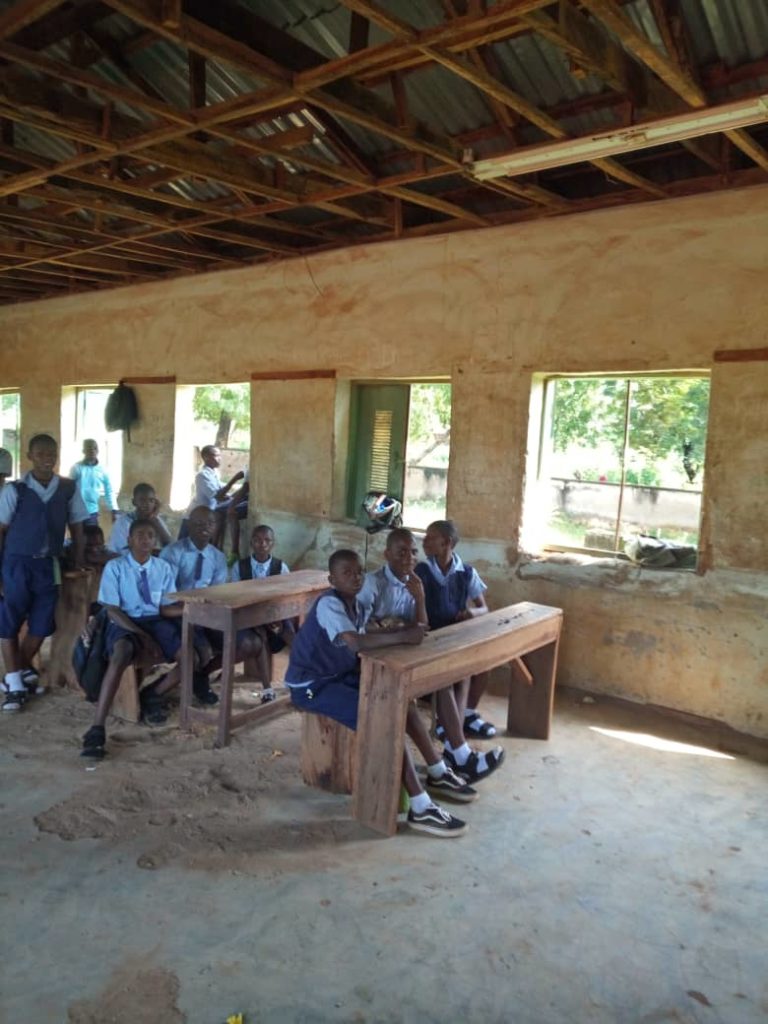
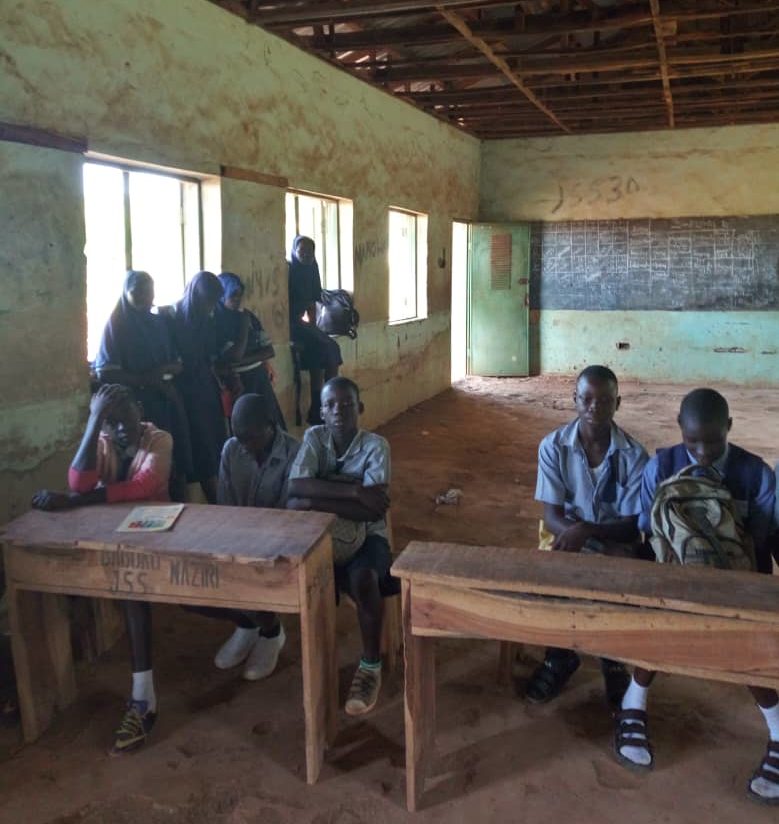
IN January, while launching the distribution of exercise books to public schools, the governor of Kwara State, Abdulrahman Abdulrazaq, expressed dismay that over 100 public schools across the state were in dire conditions and announced plans to reconstruct 31 of the dilapidated schools. Eight months after, accusations of inflated contracts awarded to contractors with no track records as well as shoddy jobs have trailed the projects. DARE AKOGUN visits six of the schools in the three senatorial districts of the state and reports.
From the secrecy of the amount earmarked for each project, through the details of contractors who kept changing their addresses and other information on the project signboards, to implementing projects different from what was advertised, the entire school rehabilitation project of the Kwara state government was poorly implemented, despite the huge amount budgeted for it, a Sobi FM investigation has revealed.
Government High School Adeta
Shortly after the Kwara State Government announced the commencement of renovation exercise for 31 schools across the state, Governor Abdulrahman Abdulrazaq came under intense criticism after it was alleged that some contracts in the state school rehabilitation projects had been hyper-inflated. The state government had budgeted N2.1 billion for the 31 projects in the 2020 budget under the Ministry of Education and Human Capital Development. However, apart from the total figure earmarked for the reconstruction, no other information was stated nor a breakdown of the amount earmarked for each school.
One of the school contracts, which generated talking points, was the complete renovation of Government High School. Adeta, in Ilorin, the state capital. The school was originally owned by the late elder statesman and legal luminary, Alhaji AGF Abdulrazaq (SAN), the governor’s father and was known as Ilorin College at inception in 1967.
According to documents released by the government under the state Social Audit Policy to an Ilorin based Civil Society group, Elites Network for Sustainable Development (ENetSuD), the renovation project for Government High School gulped a total of N361,957,438.82 – split into Lot 1 and Lot 2 as part of 33 projects to be executed in the school.
Governor Abdulrazaq had in August, in a virtual meeting with the coordinator of ENetSuD, Dr. Abdullateef Alagbonsi, proposed a social auditing policy which would see civic groups and communities monitoring projects and issuing independent reports that would form the basis of his administration making payments to contractors after the initial mobilization fee.
Government High School Adeta Fence
Six weeks after renovation, fence collapses in Adeta’s school
On September 2, 2020, exactly 46 days after the rehabilitation of Government High School, a part of the fence for which reconstruction N42milion was earmarked collapsed. According to a document released to the CSO, the project is meant for the reconstruction of the whole school fence, leading some residents to raise concerns about the basis for the high amount approved for the fence work in the Bill of Quantity.
On a visit to the school, it was observed that the newly constructed fence collapsed partially on the axis leading to Ipata Oloje Area housing the popular motor spare parts market in the Ilorin metropolis. Although there was no official statement from the state government or the contractor on the cause of the collapsed fence, residents around the area linked it to the downpour of a day earlier.
The status of the project is unknown as at the time our reporter visited during the West African Examination Council, WAEC, examination in August 2020, as ceiling works had not been done and the contractors were not on site.
Government High School Adeta Contractor CAC Check
Government High School Adeta Contractor CAC Check
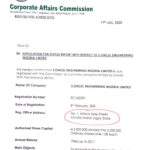
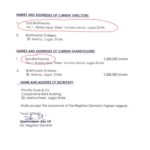
The contract for the Government High School, according to documents obtained by our reporter, was awarded to CONCEL Engineering, a Lagos-based company owned by Sola Braithwaite, and registered at the CAC with No 1 Abiola Ajayi Street, Victoria Island, Lagos as its address.
Despite having no track record of similar construction, the company got the contract for the highest amount budgeted for the school renovation project. Further checks also revealed that the CAC record of the company shows its status as ‘inactive’ while the last time it filed annual returns was in 2011.
As at the time of last visit to the school in October 2020, part of the school had already been painted even though work was still ongoing, and places where corrections are needed like openings on the wall were not done before the painting work. This calls to question the level of professionalism of the contractor that handled the project.
Government High School Adeta Classes wall painted without ceiling
Visited schools in Kwara north
In Kwara North Senatorial district, our correspondent, who visited Pategi Secondary School, gathered that the contract sum released for the renovation, according to available document released by the Elite Network for Sustainable Development (ENETSUD), is N164, 042, 340. It was gathered that the school is one of the eight other first-generation schools where the state government announced that it would carry out a comprehensive renovation.
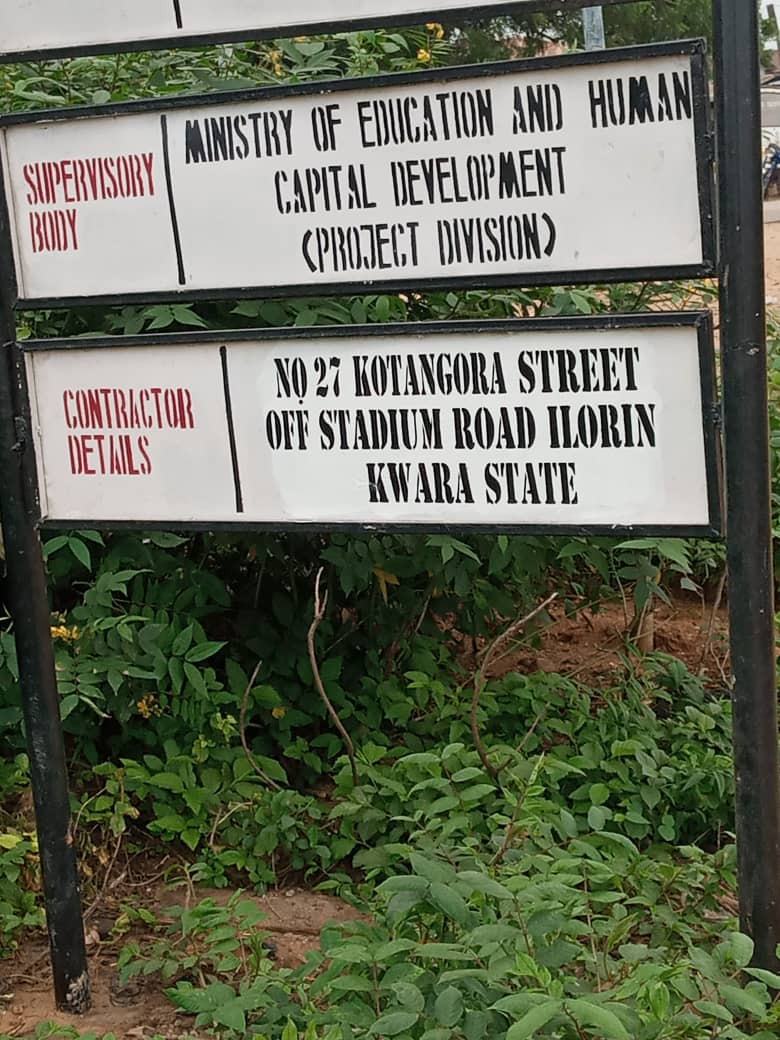
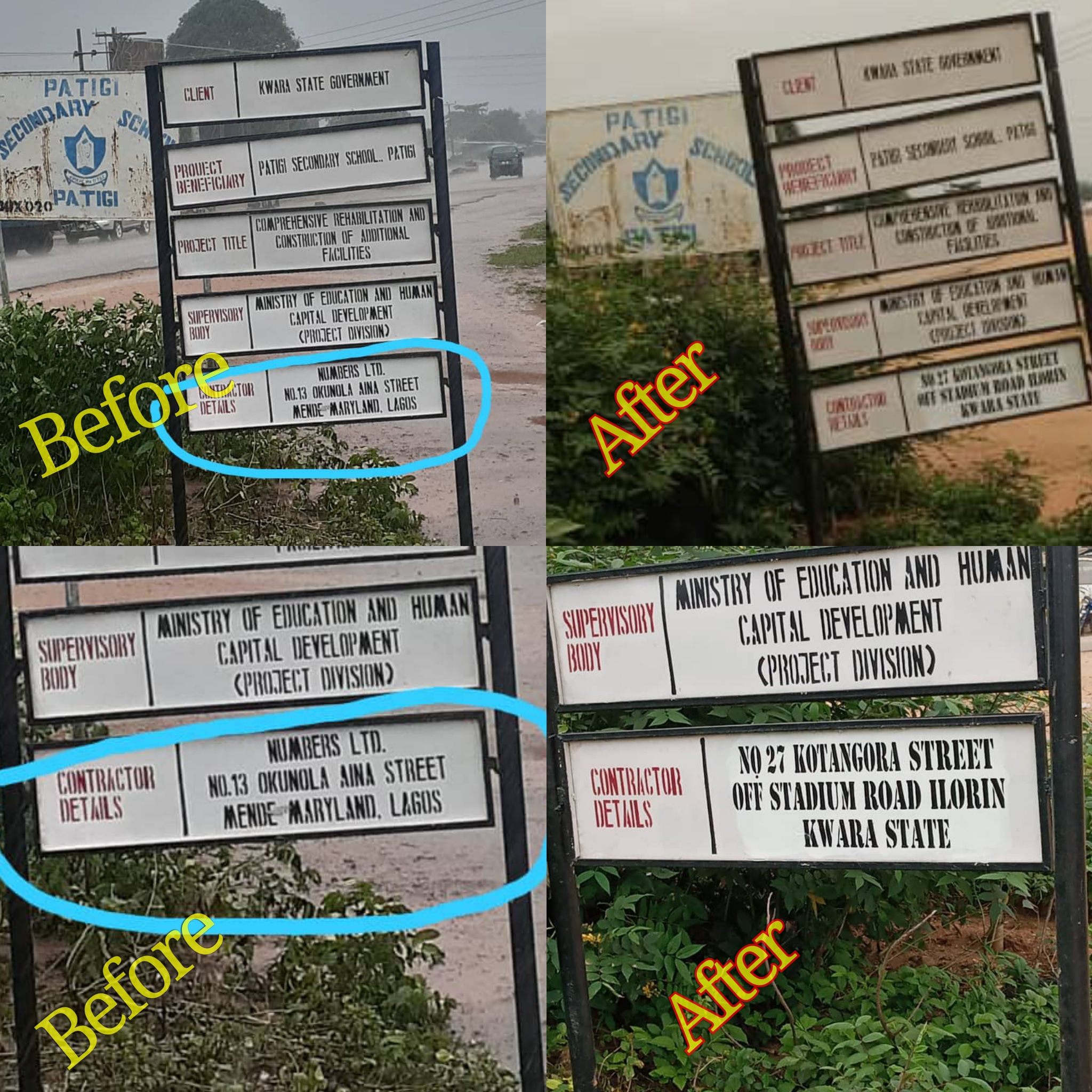
The first sign that there was something fishy about the contract was the removal of the project signpost following allegations that it was awarded to a company named NUMBERS Limited with a Lagos address, No 13 Okunola Aina street, Mende Maryland instead of an indigenous company. The address was later changed to No 27 Kotangora Street off Stadium Road Ilorin, Kwara State.
The President Pategi Progressive Minded Youths (PPMY), Usman Baba Mahmud, who told this reporter that his group monitored the entire process when the renovation exercise took place added that the work done falls short of the expectation of the community.
According to him: “The people of this community still have reservations in terms of the ‘comprehensive renovation’ as used by the government in the advertisement, because there are many areas that were left out of the renovation and we believe if this was done, the investment in the renovation won’t amount to waste.
Government Secondary School Pategi, Sign Post
“The dilapidated school hostels were not touched at all, and 75 percent of students who came from neighboring villages had to resort to renting houses in the community, thereby denying the teachers opportunity to give close supervision to the students and also exposes the students to all form’s vices,” he lamented.
Mahmud also expressed worry that there was no form of security provided for the facilities in the classrooms and the principal office where vital documents of past and present students are kept.
“Both classes and quarters have no burglary proof, how do you intend to secure these installations that anyone can just remove the Louvre glasses and access these classes and cart away anything unchallenged, even perimeter fencing was not also done, what you have is the fence in the frontage of the school just for decorations purposes, security is not a thing anyone can toy with,” he said.
From the grand summary of the description of work sited by our reporter, the renovation project is to cover SS 1B AND C (Home Economics Lab), Multipurpose Lab, Intro-tech workshop, SS3 and Library block, Administrative block (JSS & SS), Examination Hall with an Office, SS2 block, Computer room and the Physics lab. Others are Staff quarters, Supply of furniture to laboratory and computer rooms (Chemistry, Physics and Biology), toilets and external works comprising of construction of fence wall, paving of assembly ground amongst others.
Further breakdown of the project revealed that for the completion of the science laboratory block N14, 284, 668 was released, while anotherN8, 656, 934 was released for the renovation of the physics laboratory. The amount released for the supply of furniture for the three laboratories is N3, 800, 000.
It was however gathered that no work was done at the physics lab because it was renovated by an old student Engineer Professor Muhammed Yisa Gana a member of the 1976 set of the school.
Gana who was a former commissioner for Agriculture in Kwara state carried out the renovation when he was the Nigerian Ambassador to Japan in 2018. The renovation comprises of a total renovation of the Physics lab building and supply of furniture (stood) for the laboratory.
GOVERNMENT SECONDARY SCHOOL PATIGI LAB
The Principal’s Lodge, which is also in very bad shape and uninhabitable, was not touched at all in contrast to other schools like the Government High School where a similar project was carried out.
At the time our reporter visited the school, some of the renovated classes were already leaking, while the roofs of some classes HAD been eaten by termites.
Also, during the renovation, it was observed by our reporter that, to a large extent, most of the wood used in roofing the over 50-year-old school were re-used by the contractor who only just fixed some and covered it with the roofing sheets procured. This was confirmed by the school principal, who said that this might be the cause of the termites’ attack on the woods.
Speaking in Ilorin, however, on behalf of the contractor who was said to be out of the country, one of the supervising architects, Mr. James Sunday Afolayan, said the renovation carried out was in the scope of the contract as awarded by the government.
Talking about the re-used woods for the roof of the admin block, he confirmed that the wood used previously were still very good and strong compared to what was obtained in the market today and the contractor converted the cost to build a block of classrooms originally not included in the scope of work after seeking approval from the ministry.
Government High School Adeta Contractor CAC Check
Government High School Adeta Contractor CAC Check
Speaking on the early deterioration of the renovated project, a Civil Engineer and lecturer with the Department of Civil Engineering, University of Ilorin, Dr. Adeola Adedeji, stated that it should take 50 years before a building starts to deteriorate., the period being the stipulated life span of the building given by engineers.
“It cannot be accurate to say a building will begin deteriorating in a particular given year. The deteriorating is a two-way thing. If the material is substandard, the building might deteriorate faster or depend on the type of workers that handle the building,” Adedeji said.
“Generally, many things are involved before a building starts deteriorating. The people that work on it, the design of the building or the materials used will also determine the life span,” he added.
Few of the staff quarters were renovated and the teachers are making use of the dilapidated quarters as make-shift because the renovated ones are yet to be handed over to the school when our reporter visited in October.
Renovating the abandoned hostels and staff quarters would have an impact on the academic performance of the students, in addition to affording the teachers the opportunity to give closer supervision to the students, since the main purpose of the renovation is to improve education and learning, teaching and learning will not be achieved without facilities.
At the Government Unity School Kaiama, in Kaiama local government area, which is one of the schools earmarked for comprehensive renovation/construction by the state government, the contract handled by two contractors comprises of the renovation of the administrative blocks, assembly hall, boys’ and girls’ hostels and staff quarters.
Although the contract details and scope were not made available by the ministry, which fails to reply an FOI request from our reporter. When our reporter visited the school October, the project was yet to be completed although at an advanced stage, but the contractor had left the site. The people who spoke with our reporter, could not give any concrete reason for that.
FOI Letter
FOI Letter
Alhaji Mohammed Abu Kakagida, a community leader, said the people of the town appreciated the work done by the contractor as most of the buildings in the school were touched.
According to him “As you can see this is a massive project and the first of its kind in this area, although there are few things that need to be done but I believe when the contractor comes back to site all the remaining things will be done,” he said.
However, like it was done at the Government High School, Ilorin, it was observed that part of the renovated school was already painted even though work was still ongoing.
Kwara south
In the course of this investigation, our reporter visited three schools in Kwara South Senatorial District to ascertain the status of the renovated schools. At the Offa Grammar School in Offa Local Government Area, it was observed that no single renovation work had taken place by government contractors despite being one of the schools advertised for renovation.
An anonymous source who spoke with this reporter said the school has a vibrant Alumni Association which has been in charge of maintaining its infrastructures. It was gathered that when the name of the school popped up among the schools penciled down for renovation by the state government, the alumni association advised the officials of the Ministry of Education to, instead, direct its attention to another school within Offa Township for renovation. Attempts to speak with the Principal or official of the school proved abortive. The principal was said not to be around the two times when our reporter visited. No other member of staff was willing to offer any information as our reporter was directed to meet with the officials at the ministry.
Similar situation in Omu Aran
During a visit to Government Secondary School, Omu Aran, this reporter encountered a somewhat similar situation with Offa Grammar School as only a block of three classrooms under construction was taken over by the government and completed.
Omu Aran renovated Block
The school, located in Irepodun Local Government Area is one of those advertised by the state government to benefit from the comprehensive renovation. However, findings show that the students’ Alumni Association had already carried out a comprehensive renovation of the school during its 50th year anniversary in November 2017 when about 300 million naira was spent.
The National President of the Old Boys Association, Olusegun Adeniyi, listed the projects executed to include the construction of a kilometer road that leads to the main entrance of the school and building of a 1,000 capacity ultra-modern auditorium.
He added that other projects include administrative block, library block, laboratory blocks of classrooms, computer and Internet facilities, modern toilet facilities and a Toyota Hiace bus procured for the school.
A worker in the school who pleaded anonymity said the completed block of three classrooms in the school by the government was renovated by the 1975 set of the old boy’s association and 75 percent of the work have been done before the government took over and completed it.
“This job done by the government was surprising to everyone in the school because the old boys are already working on the project and it is not that work has stopped. But suddenly we heard that the government has taken over the project and will complete it,” the worker said.
“We don’t know if it was a member of the 1975 set that influenced government intervention. We even later thought the government would do other projects since we heard that our school was earmarked for a comprehensive renovation.
“There are other structures like the old hostels and some classrooms that need attention but nothing was done,” he said.
It was gathered that officials from the ministry visited the school on a Sunday to select the projects to be renovated, despite the fact that there were numerous projects begging for attention in the school like the abandoned hostel, a more convenient one was chosen.
At the Osi Secondary School in Ekiti Local Government Area of the state, the contract was for the construction of a block of three classrooms with two offices, according to the description in the government advertisement about the project.
When our reporter visited the school, the project had been completed but details of the contract and the contractor was not made available to ascertain the compliance with the bill of quantity. All efforts to speak with officials of the school were turned down, as they directed our reporter to the Ministry of Education for any information concerning the renovation carried out in the school.
Ministry keeps mum about identity of contractors
The Kwara State Commissioner for Education and Human Capital Development, Hajia Fatimoh Ahmed while speaking with our reporter earlier in September said the state opted to do open bidding for the school projects in line with the administration’s policy on transparency.
When asked about the identity and details of the contractors handling the projects, she only said they were indigenous contractors with a track record of executing such projects. She was, however, silent on the amount earmarked for each school project and how the decision for allocation to the schools was reached.
However, in stark contrast to what the commissioner said, the President, Kwara State Indigenous Contractors and Suppliers, Moshood Bolakale Aigoro, said the association was given only two contracts in the first phase of the state’s school renovation project.
Aigoro said the two contracts awarded to the association are the Esie-Iludun Oro Technical School and the Edidi Comprehensive High School, both in Irepodun Local Government Area.
“I can’t argue the fact the school renovations were not given to the local contractors in the state, but the indigenous contractors under me as President, with a population of 25,250 members across the 16 local government areas of the state were awarded only two contracts”, he said.
Our correspondent had asked the Ministry of Education and Human Capital Development to provide information on the contractors and the funds released for the various project renovations but it has failed to do so. A Freedom of Information Act, FOIA, request sent to the ministry dated October 2, 2020, did not elicit any response despite several follow-ups. Efforts to once again speak with the Commissioner of Education and Human Capital Development were unsuccessful as she was said to be busy during each visit.
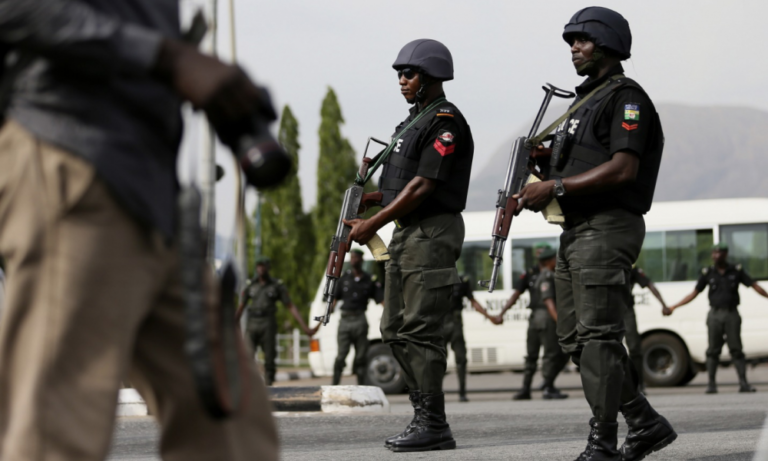
OPERATIVES of the Nigeria Police officers have been deployed to some locations in Lagos and Ogun states to prevent a second wave of the ENDSARS protests.
Abimbola Oyeyemi, the Ogun Police Public Relations Officer confirmed that officers were deployed to strategic places in the state including the capital, Abeokuta.
“Our men are presently at Panseke, NNPC, Abeokuta, and other strategic points in the state. We got information that some youths want to stage protests across the state today,” Oyeyemi said.
According to him, nothing warrants the protest because the Special Anti-Robbery Squad (SARS) has already been disbanded.
“There is nothing to warrant any so-called #EndSARS Phase Two Protest because SARS (Special Anti-Robbery Squad) is no longer in existence. Can you stage a protest against an outfit that is no longer in existence,” Oyeyemi stated.
In Lagos state, police were reportedly deployed to the Lekki toll gate to prevent a recurrence of the ENDSARS protest in the state.
Muyiwa Adejobi, the Lagos Police Public Relations failed did not respond to calls or reply text messages sent to him for comment.
However, in a statement signed by Adejobi on Monday to debunk reports that there a protest was being held at the Lekki toll gate, he said the police command is prepared ‘to deal decisively, within the ambit of the law, with any act of lawlessness that could lead to break down of law and order in the state’.
In a similar attempt to dissuade another protest, Muhammadu Buhari, the Nigerian President warned on Monday that no form of ‘hooliganism’ hiding behind lawful and peaceful protests will be dealt with decisively.
The ENDSARS protests that started peaceful earlier in October was hijacked by hoodlums following the shooting and killings of Nigerians by military officers.