Home Blog Page 1929

Nigerian government-aligned Twitter network targets #EndSARS protests

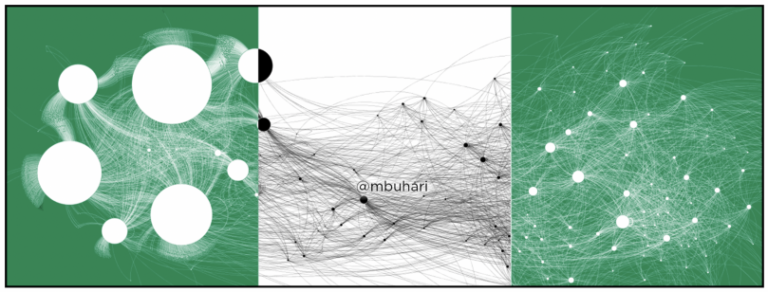
By Jean Le Roux (Source:@jean_leroux/DFRLab via Photoshop and Gephi)


Two networks of Nigerian Twitter accounts are amplifying pro-government content and appear to be staging an online suppression campaign to delegitimize the nationwide #EndSARS protests against police brutality.
From at least late October, 2020, these two networks –comprising a cluster of recently created grassroot sockpuppet accounts, and the second a group of high-follower paid influencers — posted and amplified content and hashtags supporting Nigerian President Muhammadu Buhari and his incumbent political party, the All Progressives Congress (APC). The accounts also shared and amplified content meant to suppress #EndSARS protesters, delegitimize prominent eyewitnesses and vilify local organisations pushing for accountability on the part of government.

The accounts did this by circulating meme-like graphics in a loosely coordinated manner. Over the span of a few minutes to several hours, these images — using the same fonts, colors and graphical elements — would be posted and amplified by both of these networks. The accounts frequently interacted with and amplified each other’s posts through retweets and quote tweets. The accounts coordinated their activity using a distinct set of hashtags, particularly #OneNigeria, #LeadWithLove, #EndViolence, and more recently, #EndViolenceInNigeria.

Considering the scale and persistence of the #EndSARS movement on social media, such a campaign stands to benefit President Buhari and his government. Although there is no direct evidence linking President Buhari’s government to these accounts, the content being shared is strongly biased in favor of President Buhari, his government and the Nigerian armed forces.

The current cycle of #EndSARS activism was sparked on October 4, 2020, when video footage taken near the Wetland Hotel and posted on Twitter claimed the Nigerian Special Anti-Robbery Squad (SARS) shot and killed a young Nigerian man before speeding off in his car. The scale and resilience of the #EndSARS campaign on social media is noteworthy — the hashtag made 302 billion impressions between October 1 and November 18, 2020.

An analysis using Meltwater Explore indicating the volume of tweets using #EndSARS. Between October 1 and November 18, 2020, the hashtag has been used 185 million times by 31.5 million users. A large portion of this traffic was retweets. (Source: Meltwater Explore)

The claims surrounding the Waterfront Hotel video was false, though: it was later revealed the man had jumped from his moving car after being arrested by Delta Safe, a different law enforcement unit from the area. But despite the questionable narrative surrounding the Wetland Hotel video, the incident served as a catalyst: numerous Nigerians shared other videos of police brutality perpetrated by SARS officers against civilians under the same hashtag.

Within a week, nationwide protests were organized to call on the Nigerian government to disband the unit altogether. Within another week, international celebrities and Twitter’s Jack Dorsey rallied behind calls to #EndSARS.

An inflection point was October 20, 2020, at the Lekki toll gate in the south of Lagos. Video footage and social media posts suggested Nigerian soldiers had opened fire at protesters at the toll gate: a DFRLab investigation confirmed that Nigerian soldiers, firing their weapons, could be placed at the scene along with injured civilians. The Nigerian military labelled these initial reports as “fake news.”

While the governor of Lagos has since instituted a commission of inquiry into the incident, fears remain of a possible cover-up. The Nigerian army initially denied deploying any soldiers to the scene at all, but in a series of cascading retractions it later admitted to the deployment, but not opening fire, then subsequently admitting that soldiers fired their rifles, but claimed no live ammunition was used. The Nigerian minister of Justice Abubakar Malami has also suggested that hoodlums dressed in Nigerian military uniforms could be behind the shooting.

It is amid these fears of a cover-up and the rewriting of the narrative by state forces that these suspicious networks of accounts have now surfaced.

During October and early November 2020, several Twitter accounts began sharing similarly stylized content using a combination of recurring hashtags: #OneNigeria, #LetLoveLead, and #EndViolence. Later, #EndViolenceInNigeria would also be used.

An analysis using Meltwater Explore of tweet volumes mentioning the hashtags #OneNigeria, #LetLoveLead, #EndViolence and #EndViolenceInNigeria. The initial spike on October 1 and October 2 related to the celebration of Nigeria’s 60th year of independence. (Source: Meltwater Explore)

Although some of these hashtags were used organically for real-world events at the time — such as #OneNigeria during celebrations of Nigeria’s 60th year of independence on October 1 and 2 — some of the accounts persistently engaging with these hashtags appeared suspicious. A recurring set of Twitter accounts used the hashtags to post, retweet and quote-tweet meme-like graphics.

The similarities between these images were striking; across multiple topics and subjects, the slides used a similar font, typographical style and artistic assets. This suggested that the content was created centrally for distribution by these accounts.

Examples of similarly stylized content shared by one of the more prominent accounts in the network. Over multiple days, the account posted images using the same typeface, quote-style format and repeated graphical assets. (Source: @mickiebrownkie / archive, top left; @mickiebrownkie / archive, top center; @mickiebrownkiev / archive, top right; @mickiebrownkie / archive, bottom left; @mickiebrownkie / archive, bottom center; @mickiebrownkie / archive, bottom right)

These users’ timelines revealed that they were tweeting the same images in a loosely coordinated way. Although there were slight variations in the accompanying text, the central message remained the same. The accounts also shared the same series of images within a timespan of a few minutes to several hours, again suggesting a very relaxed level of coordination. The accounts also frequently retweeted and quote-tweeted each other’s posts. This behavior could be observed over multiple days.

Screengrabs of examples from these influencer/digital marketing accounts distributing the same images on November 5 (top), November 10, (center) and November 13 (bottom). (Source: @johnfanimokun/archive, left; @mickiebrownkie/archive, center left; @lollylarry1/archive, center right; @cbngov_akin1/archive, right)

In addition, these high-follower accounts were seemingly supported by a group of low-follower sockpuppet accounts. Several of these were recurringly found to have retweeted and quote-tweeted tweets using the hashtags or related images.

Screengrabs from the @abubaka62933112 Twitter account showing the large number of retweets of related content and hashtags. (Source: @abubaka62933112 / archive)

Specific examples of campaign “tracks” shared by this network included celebrating the Nigerian army’s victory over Boko Haram rebels; spotlighting infrastructure spending by the incumbent government; and a series of questions delegitimizing Obianuju Catherine Udeh, a popular Nigerian musician and eyewitness to the Lekki toll gate shootings. Shortly after an NGO with links to the Nigerian military provided Amnesty International Nigeria with an ultimatum to leave Nigeria or risk being lynched, this network circulated graphics that labeled Amnesty International “a threat to Nigerian national security.”

The content of these images could be classified into positive, negative and suppressive content. The positive content celebrated the achievements of the incumbent government, the Nigerian armed forces, or President Buhari himself. These were contrasted with negative content that cast doubt on the events of the Lekki shooting, criticized prominent witnesses and targeted the media and NGO’s such as Amnesty International Nigeria, who has been vocal in calling for accountability of the shootings.

Several of the images shared by these accounts took aim at supporters of the protests (left), showed support with the Nigerian armed forces (center) or supported the federal Nigerian government and President Buhari (right). (Source: @iam_ademuyiwa / archive, top left; @mickiebrownkie / archive, bottom left; @iam_demuyiwa / archive, top center; @iam_ademuyiwa / archive, top right; @iam_ademuyiwa / archive, bottom right)


A third category of content seemed aimed at dissuading social media users from participating in the protests. These urged the so-called Soro Soke generation (Yoruba for “Speak louder!”) participating in the protests to reconsider, as they can expect to be outmaneuvered politically by the children of the leaders they are protesting against. This echoed similar narratives delegitimizing the protests, insinuating the protests are an excuse for hooliganism and urging protesters to heed calls for a unified Nigeria.

To explore the nature of this network of accounts, the DFRLab extracted tweets using the hashtags #OneNigeria, #LetLoveLead and #EndViolence for the period from October 30, 2020 until November 12, 2020. The resulting data was visualized as a social network graph using Gephi to identify the most prolific tweeters and the accounts that amplified them. This revealed two distinct networks.

A social network graph of the accounts using #EndViolence, #OneNigerian or #LetLoveLead between October 30 and November 12, 2020. The analysis revealed two distinct networks — a sockpuppet retweet network indicated in green, and a number of pro-government influencers indicated in purple. (Source: @jean_leroux/DFRLab via Gephi)

The first of these networks, indicated in green above, bore hallmarks of a sockpuppet or astroturfing network. These accounts tried to create the impression of grassroots or organic support for tweets using either the hashtags or the related graphics. The accounts retweeted and quote-tweeted each other frequently, creating the dense network seen in the network graph.

The active accounts within this sockpuppet network had relatively small followings, and in some cases their followers consisted mainly of other accounts within the same network. Many of the newer created accounts also used the stock profile picture.

Screengrabs from the Followers tabs for three of the recently created sockpuppet accounts, indicating that the mutual followers are all within the same network. The account creation dates are also indicated in the image above. (Source: @feyiofada / archive, left; @kelvinchinons15 / archive, center; @sirdeeh12 / archive, right)

One of the most prolific accounts in this network (@abubaka62933112) was created five days after the Lekki toll gate shooting, but has to date tweeted 846 times. Of these tweets, 95% were retweets or quote-tweets of accounts which form a part of this network.

Screengrabs from the @abubaka62933112 Twitter account showing the largest portion of retweets by the account were of accounts identified within this network. All of the top nine most retweeted accounts were identified within the full network. (Source: @abubaka62933112 / archive @jean_leroux/DFRLab via TruthNest)

Some of the accounts in this network were created recently, and even in short succession: for example, three of the accounts in this network — @abuduwyinmi, @FeyiOfada, and @FardaGobir- were created within the span of five minutes. There are indications that at least two of these accounts were created using the same mobile phone number.

Screengrabs from several accounts that engaged with related hashtags revealed that many of these accounts were recently created, some in short succession. These accounts used profile images and banners related to the imagery used as well. (Source: @abuduweyinmi / archive, top left; @feyiofada / archive, top center; @faridagobir / archive, top right; @kelvinchinons15 / archive, bottom left; @ene_uk / archive, bottom center; @sirdeeh12 / archive, bottom right)

The account creation dates for this part of the network varied, and not all of them were newly created. Some of the accounts were created as far back as 2014, but only recently returned from extended periods of inactivity to engage exclusively with the same hashtags and graphics.

Screengrabs from the accounts for @Mr_eemraan (left) and @princpogu (right) indicating the extended periods of inactivity. A timeline of their recent activity corroborates their sudden reappearance. (Source: @mr_eemraan/archive, left; @princepogu/archive, right; via Twitonomy)

There are also indications that multiple Twitter accounts are being created and used within the network; examples such as @faysal306/@306faysal, @1unitednaija/@1unitednaija1, and @aliyuAfar/@aliyuafaru were found within the network.

The second portion of the network consisted of a group of highly active influencer and digital marketer accounts with relatively high followings. Some of these accounts are overtly aligned with the incumbent government and President Buhari, while others were paid marketers.

Screengrabs of the profiles of several of the prominent accounts in the influencer/paid marketer network. These accounts were either open about their communication and paid marketing roles (yellow) or overtly supportive of the Nigerian government (red). (Source: @scarfizal/archive, top left; @mickiebrownkie/archive, top center; @lollylarry1/archive, top right; @johnfanimokun/archive, bottom left; @cbngov_akin1/archive, bottom center; @iam_ademuyiwa/archive, bottom right.)

These accounts were very prominent in the network of tweets, likely as a result of their substantial followings. Whereas the sockpuppet accounts had mostly single digit follower numbers, these accounts had substantially more: the most prominent accounts had at least 20,000 followers, with the largest clearing just north of 81,000 followers. This is evidenced in the large number of engagements their accounts were responsible for within the network, visible as the size of their respective nodes.

A network analysis revealed the second group consisted of high-follower paid influencer and digital marketing accounts amplifying the hashtags and graphics related to the broader campaign. The size of each account indicates the account’s degree, or level of interaction with the hashtags in the network. (Source: @jean_leroux/DFRLab via Gephi)

As already demonstrated, these accounts posted the same content related to the campaign in a loosely coordinated manner. Their activity does not appear to be either fake or automated, but instead present as real social media influencers that are participating in this campaign.

This network appears to be an attempted counter of the #EndSARS movement’s popularity online, combining a mixture of social media influencers and sockpuppet accounts to amplify content beneficial to the Nigerian armed forces, President Buhari and the Nigerian government. At the same time, these accounts cast doubt at the legitimacy of the protests and the demands underpinning them.

This behavior is deceptive, and creates the impression of support for this content where there is little authentic support for it. There are also indications that the network is expanding: new sockpuppet accounts have already joined the accounts indicated here since our research began.

Jean Le Roux is a Research Associate, Southern Africa, with the Digital Forensic Research Lab and is based in Cape Town.

The DFRLab team in Cape Town works in partnership with Code for Africa.

This report is published with permission from DFRLab 
 

Stakeholders seek collaboration to address farmers–herders’ crisis

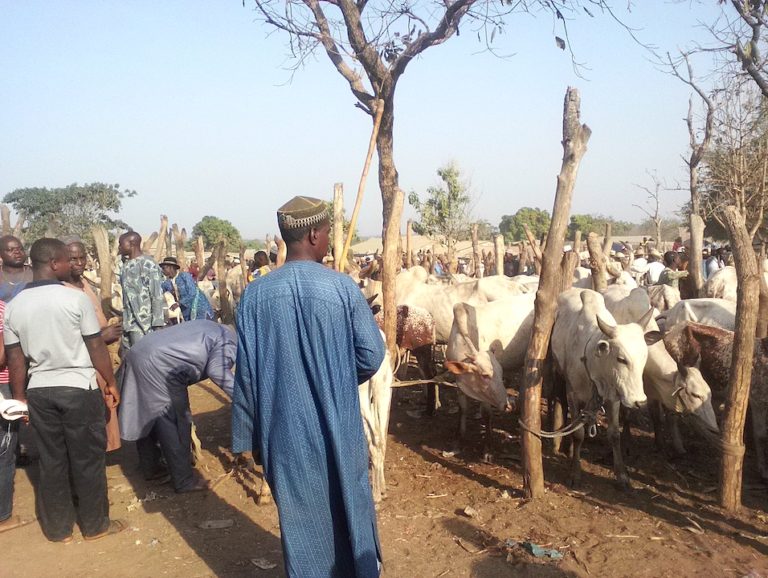
STAKEHOLDERS in the agriculture, security and development sectors have called for deliberate and sustained commitments to address the farmers-herders crisis ravaging the country.

The experts who expressed concerns that the crisis has gradually been transiting into banditry spoke at a knowledge-sharing event organised by the Centre for Democracy and Development (CDD), Friday in Abuja.

Idayat Hassan, CDD’s Director said the situation could be addressed through effective implementation of the National Livestock Transformation Plan (NLTP) through partnership with the locals, Civil Society Organisations and other relevant organisations.

She identified the fight for natural resources control such as water, climate change and other economic challenges as some of the contending issues exacerbating the farmers-herders crisis.

“For instance, as CSOs, we are to provide support to the government and one of the key things which we think is quite important is for people to be aware of this because the implementation cannot be done in isolation of people who are the direct beneficiaries of such interventions…,” Hassan, who was represented by Yusuf Shamsudeen, the Centre’s Principal Programme Officer stated.

“We cannot also do that without understanding the emerging concerns to farmers’/herders’ conflict in the country. So, one of the key things is that it’s important for us to dwell more on how to bring socio-coherence among these people because they need to work together for a common aim and we cannot do that without the need to address the differences between them.”

The NLTP was inaugurated last year September by the vice-president, Yemi Osinbajo to support the livestock sector and seek to end the crisis between farmers and herders in the country. Between 2017 to 2018, the Nigeria Crisis Group reported at least 1, 500 deaths as a result of the crisis and about 300, 000 others displaced in four states of Nasarawa, Benue, Plateau and Taraba.

The N100 billion initiative was to be piloted in seven states including Benue, Kaduna, Adamawa, Plateau, Nasarawa, Taraba and Zamfara but it is not restricted to cattle but the entire animal husbandry.

“It is a plan that hopes to birth tailor-made ranches where cattle are bred, and meat and dairy products are produced using modern livestock breeding and dairy methods,” Osinbajo disclosed at the project launch.

“This solves the problem of cattle grazing into and destroying farmlands. It ensures a practical response to the pressures on water and pasture by forces of climate change.”

The special adviser to the president on agriculture and coordinator, NLTP, Andrew Kwasari, however, said the meeting was to take stock of achievements and way forward in addressing the conflicts.

Kwasari said there are security, livelihood, and relationship issues hampering the farmers’ and herders’ conflict resolutions.

“If you deal with livelihood issues, you are also dealing with security issues and when you deal with security issues you are also addressing more fundamental issues that affect the Nigeria economy,” Kwasari said.

He also noted the major thing to do is figure out what every stakeholder is doing in terms of intervention and find a common ground outside the government and CSOs to adopt.

Chris Kwaja of the Centre for Peace and Security Studies at the Modibbo Adama University of Technology, Yola said, so far, 19 northern governors have committed to resolving conflicts between the farmers and herders in line with the NLTP.

According to him, the state governments found the locations they preferred within the grazing reserves and were willing to remodel it as areas for livestock production.

“Almost all the governors believe in the NLTP and they know that because it allows them to implement in line with the realities of their own situations so there is no one size that fits every state,” he noted.

Other participants at the event include representatives from the United States Institute of Peace (USIP), the Forum for Farmers and Herders Relations in Nigeria (FFARN), and the NLTP.

Former NUPENG boss Ebenezer Amah abducted, shot by gunmen

0

THE Rivers State Police Command on Friday confirmed the kidnap and killing of a former Rivers State Chairman of the Nigeria Union of Petroleum and Natural Gas Workers, NUPENG, Ebenezer Kalabo Amah, according to a report.

Nnamdi Omoni, Rivers State Police Public Relations Officer, who confirmed the incident said the deceased vehicle was recovered at the abduction scene, while his lifeless body was located at Peter Odili Road, in PortharCourt the next day.

“He was kidnapped in Woji on the November 17 and the police recovered his vehicle the same day. While we were searching for him, we got information that his body was dumped somewhere at Peter Odili Road.

“So the following day on November 18, we got there and confirmed that he was the same person that was kidnapped the previous day. His body was evacuated and taken to the hospital mortuary for preservation,” he said.

He was allegedly kidnapped by unknown gunmen who trailed him to his residence in Woji, Obio/Akpor Local Government Area of the state while he was driving into his house.

Amah who retired from the Shell Petroleum Development Company was shot minutes after he was kidnapped and his body dumped along the Peter Odili Road in Port Harcourt.

Though the circumstances that led to his abduction remains sketchy and the gunmen are yet to be identified.

“The vehicle is in our custody. The investigation has commenced into the incident to ensure that the suspects behind the dastardly act are apprehended,” Omoni said.

This incident is coming on the heels of the arrest of Honest Diigbara, allegedly described as “the most wanted” kidnapper, armed robber and contract killer in the state by the Rivers State Police in September.

The notorious gang leader who had been on the Police watch list was declared wanted and the state government placed N30 million bounty on him before his eventual arrest.


Court dismisses Akwa Ibom govt suit against journalist, Kufre, over alleged ‘criminal defamation’

0

A Magistrate court sitting in Akwa Ibom has dismissed a suit filed by the State government against Kufre Carter, a sports journalist over alleged ‘criminal defamation’.

The case was dismissed on Friday by Winifred Umohandy, the State’ Chief Magistrate over lack of diligent prosecution.

Carter who had spent a month in police detention was represented by Inibehe Effiong Chambers.

Kufre was arrested and arraigned in court in April by the State Security Service (SSS) over a viral audio message where he criticized Dominic Ukpong, a former Akwa Ibom state Commissioner for Health and the State Government for poor handling of the COVID-19 pandemic.

Inibehe Efiong chambers said the state government was unable to provide any witness in court on Friday.

Kufre’s legal counsel added that Ukpong and other representatives of the government were also absent from the court to stand by their suit.

The ICIR had reported that Carter was taken into custody by operatives of the SSS on April 27, after his visit to the state office in the company of his lawyer, Augustine Asuquo.

Asuquo said he was not granted access to witness the interrogation of his client and was walked out of the premises by the security agents.

Inibehe Effiong, Head of Inibehe Effiong Chambers who also offered legal representation to Carter in a statement alleged his client was being tortured by the SSS operatives to forcefully obtain a confession from him.

“From all indications, we reasonably believe that SSS officers are torturing Kufre Carter in their custody in their effort to extract a ‘confessional statement’ from our client. The SSS is torturing our client for him to hand over his private mobile phone to them,” Effiong said.

Earlier in May, the SSS had shunned a court order for the release of Carter on excuses that it was waiting for the order of the state governor, Samuel Udom, according to Effiong before he eventually regained his freedom on May 28.

Oyo State takes full ownership of LAUTECH

0

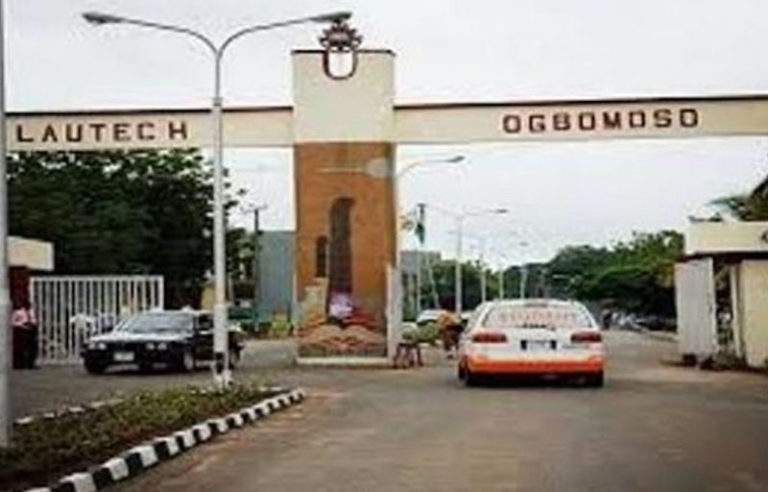
OYO State government has taken full ownership of the Ladoke Akintola University of Technology (LAUTECH), Ogbomoso, putting to rest the lingering ownership crisis between the state and Osun State.

Abubakar Rasheed, the Executive Secretary of the National Universities Commission (NUC), stated this at a press briefing on Friday in Abuja.

While stating that the dissolution was upon the Memorandum of Understanding (MoU) signed by the two states, he noted that the Osun State Government is to take over the institution’s College of Health Sciences in Osogbo.

Abubakar expressed optimism that the new arrangement would restore peace to LAUTECH.

“It is gratifying to note that after extensive deliberations, negotiations and consultations, both owner states mutually agreed terms and the joint ownership of LAUTECH was formally dissolved,” he said.

The joint ownership of the institution has always been an issue of contention between the two states.

In 2018, the institution’s chapter of the Academic Staff Union of Universities embarked on a protracted strike that crippled academic activities for months over the neglect of the school by both the Oyo and Osun State governments respectively.

In 2019, Seyi Makinde, Oyo State governor, had stated during a visit to the institution that the perennial and persistent industrial action experienced by LAUTECH, will be resolved if it is transferred to the state.

He said that the state was financially prepared to shoulder the responsibility of the school if the proposal is granted.

Akwa Ibom govt denies budget fraud, presents doctored Auditor General’s report

0

Ekemini SIMON & Abasifreke EFFIONG


THE Akwa Ibom state government has said that the fraud, inflation of contracts and extra – budgetary expenses spotted in its Accountant General’s annual report and audited statements of the state for 2019 were caused by “coding errors”.

An extensive investigation which lasted for two months, which was published on Tuesday, revealed that offices of the governor and Secretary to State Government, SSG, incurred unbudgeted expenses in excess of N10 billion on the maintenance of the State aircraft, purchase of cars, fuel and lubricants, governor’s hospitality.

The Governor’s Office and Secretary to the State Government, Emmanuel Ekuwem, refused to respond to Freedom of Information Requests sent to them during the investigation to clarify things.
However, in reaction to the publication of our report, the government held a press conference on Wednesday addressed by the Commissioner for Economic Development and Ibom Deep Seaport, Akan Okon; Commissioner for Finance, Nsikan Nkan; Commissioner for Information and Strategy, Ini Ememobong and the Accountant General, Uwem Andrew-Essien, where it said that the extra budgetary expenses pointed out in the report were as a result of coding errors in the International Public Sector Accounting Standards (IPSAS Accrual) software used by the Accountant General’s office.

Akwa Ibom
From left to right: Commissioner for Finance, Mr Linus Nkan; Commissioner for Economic Development and Ibom Deep Seaport, Mr Akan Okon; Commissioner for Information and Strategy, Mr Ini Ememobong; Accountant General, Pastor Uwem Andrew-Essien.

Okon claimed the annual report was withdrawn via a circular dated 2nd September 2020, after errors were spotted in the annual report and audited financial statements circulated by the state government.

He emphasised that the IPSAS template is new to the state.

“As you are all aware, our account is prepared under IPSAS and this is a new system. It is very cumbersome. Even printers are having challenges. In the process of printing our 2019 budget (Accountant General Report) there was a coding error. This was promptly discovered by the office of the Accountant General and a memo was issued retrieving that Account that was in error. And the correct one, properly coded.”

“You need to read this side-by-side with the state budget 2019 and you’ll come to the conclusion that there was no extra-budgetary expenditure by the government and that all expenditures were in line with the budget and some of them here, the amount spent was not up to the budgeted amount,” Okon said.

However, Okon’s claim is untrue as the Akwa Ibom state government adopted the International Public Sector Accounting Standards template in preparation and reporting of her financial accounts since 2014 under the Chief Godswill Akpabio administration.

Besides, the source who made the Auditor General’s report available to our reporter in the first instance, a senior official of the government, confirmed that the original document was what was submitted to the Akwa Ibom State House of Assembly.

The government distributed what it called the “authentic” Audited General’s report to journalists at the press conference but a close look at it showed that it had been doctored. The new report also threw up new discrepancies and questions.

In fact, the new report calls to question the government’s claim that its officials still do not know how to handle the software as it showed that hundreds of them were trained.

For example, the Office of the Accountant General spent N132 million on training of staff on IPSAS and procurement of IPSAS hard ware. The expenditure is spread as follows: IPSAS hardware – N20 million; Training of 200 Accountants in the State on IPSAS Accrual – N62 million; and N50 million on IPSAS Accrual Software/Renewal License.

In 2020, Nigerian Governors’ Forum rated Akwa State among the top five States in the adoption of International Public Sector Accounting Standards (IPSAS) Cash Basis in Nigeria.

Akwa Ibom Accountant General, Pastor Uwem Andrew-Essien during the Press briefing. Photo Credit: Akwa Ibom State Ministry of Information and Strategy
Commissioner for Finance Retracts earlier position

The Commissioner for Finance, Nsikan Nkan, like his Economic Development colleague, said the extra-budgetary expenditures noted in the first annual report was a result of coding error.

“In Akwa Ibom State, we want to assure you that the governor we have is a man of integrity. God who judges and knows the heart knows that he as a human being has tried everything possible to ensure that resources of this State are properly accounted for as it is being managed. I want Akwa Ibom people to be rest assured that their resources are in good hands and they are managed properly.

“Errors like these happen, we didn’t know that this will happen. The Accountant General and the finance sector had taken steps to correct this. If we had known that it is going to happen, maybe we would have even called this press conference”, the Finance Commissioner said on Wednesday.

The remark by the Finance Commissioner at the press conference contradicts his earlier submission when our reporters contacted him.

Nkan had defended the over -expenditures, saying that the State Executive Council has the powers to carry out virement.

He had argued that they “leveraged on margin of increased cost” provided in the budget office to spend more monies than what were approved on aircraft maintenance, cars, fuel and lubricants, security, welfare for pilgrims, government special projects, governor’s hospitality, among others.

The Commissioner had said “virement process in budgeting allows the Executive to move items from a subhead that is under-utilised to another that needs attention…it is not always easy to anticipate everything that will be needed to be done immediately. So, provisions must be made for unforeseen circumstances or events.”

As at Wednesday when these reporters discussed the issues of the extra budgetary expenses spotted in the first report with Nkan, neither he nor a Director in the Ministry of Economic Development and Ibom Deep Seaport, who contributed in explaining the powers of the executive to vire money from one budget item to the other, said anything about a coding error or withdrawal of the document. Both of them based their defence on the copy of the report these reporters showed to them.

Observation of new “authentic” report.

Despite denial by the Secretary of the Akwa Ibom State Pilgrims Welfare Board, Nsikak-Abasi Nnam-Okuo Orok, that the Board did not spend money on production of “security encoded ID card” for intending pilgrims in 2019, the new “authentic” report still posted an expenditure of N9 million on this budget item.

Orok had told our reporter on Monday that the Board did not apply for money for the item.

“I am surprised! I am just hearing that for the first time. For you to say that there was an approval, I’m even surprise. We never even applied for the production of any ID. They wouldn’t have even given us approval of N120 million for an item that had N9 million approved for it in the budget. And, how will you apply for something that was N9 million and the Governor will give you N120 million? I think something is wrong somewhere.”

Initially, N120 million was posted as expenditure for the production of security encoded ID cards for intending pilgrims in the annual report and audited statement which the state government claimed it had retrieved through a treasury circular on September 2.

In our earlier report, a staff of the Board and some of the persons who were sponsored by the state government to pilgrimage in 2019, said that ID cards were not produced for any of the Pilgrims.

In the new report, the state government claimed that it spent N1.022 billion on pilgrims activities in 2019; this is almost the total N1.55 billion net amount Osun State received in March 2019 from the Federation Account Allocation Committee.  Our earlier investigation indicated that 123 people from the state went on pilgrimage that year; three out of this number were self-sponsored.

The new report indicates that the state government spent 100 per cent of the approved amount for all the items that our earlier report pointed to as having extra-budgetary expenses on them.

For instance, N1.3 billion was budgeted for fuel and lubricants, N800 million for governor’s hospitality and traditional gifts, N3.6 billion for government special projects, N738 million on 15 units of Prado Jeeps, and N2.5 billion on maintenance and repairs of the state aircraft and the government now claims to have spent exactly how much was budgeted.
The report also shows that N1.57 billion was spent on the celebration of democracy day, state anniversary, disability day, independence day, children’s and widows day in 2019.

CSO reacts to new “authentic” report

A non-governmental organisation working on fiscal governance in the South-South, Nigeria, has urged the state government to address the “main issues” raised in the investigative story on the multi-billion Naira scandal.

Policy Alert in a statement in Uyo described as “uncharitable and unsatisfactory” the response from the Akwa Ibom State government on recent allegations of extra-budgetary and spurious expenditures.

In the statement signed by its Communications and Stakeholder Engagement Officer, Utibe Archibong, the organization said “over the last three weeks, Policy Alert has, in its traditional manner, and true to it’s mandate, been engaged in analysis on the 2021 budget proposals for states in the Niger Delta, including Akwa Ibom. In doing this, we made comparisons between current proposals and actual spending for recent years.”

“For Akwa Ibom State, this meant we had to rely on the Report of the Accountant General of the State for 2019, which is the most recently available. We also did extensive public mobilisation, sensitisation and even made a presentation to the Akwa Ibom State House of Assembly based on the same report.”

“It was therefore startling to us for government to claim that the version of the report that civil society groups and the media relied on for their engagement was ‘spurious’ and ‘erroneous’ and that the said report had been earlier recalled.

Government even went further to label citizens and the media as mischievous for performing what is just their civic  responsibility.”

She added: “We find the attitude of the state government on this matter rather uncharitable. Granted that we have to accept the so-called “authentic” report and its corrections on the matter of extra-budgetary expenditure, the response of government stills falls far short of addressing the many other issues raised in the said publications, especially those bordering on misplaced priorities and questionable spending.”

“We applaud the growing consciousness on the budget among Akwa Ibom people and reiterate our commitment to continue to simplify fiscal data and make them accessible to every citizen.

“We urge oversight institutions in the state, such as the Office of the Auditor General and the House of Assembly to step up to the plate by addressing these flagged issues, so that the next fiscal year can take off on a healthy note”, the statement added.

The state government officials did not address the contention on the award of contract for the maintenance and repairs of the state aircraft, a Bombardier Global 5000. Our investigations revealed that CAMOSA Projects Limited engaged by the Udom Emmanuel administration for the maintenance and repairs of the state aircraft since it came onboard only registered officially with the Corporate Affairs Commission in December 2019.
Checks with the Akwa Ibom State Internal Revenue Service indicate that CAMOSA Projects Limited was not on the database of companies paying taxes to the State despite drawing N2.5 billion from the State coffers in 2019 alone, according to the new ‘authentic’ report.

Meanwhile, Ememobong, has said that the government will continue engage the public on issues arising from the contentious report.

“We are open to extensive discussions on 2019. Interestingly, we are discussing money that has already been spent and the issues have already been done. We are open to these discussions because we are servants of the people. We are holding public office in trust for the people. That is why we are happy to be here to explain to you, that is why we are also open for further discussions on this matter”, Ememobong said.

Nigeria, Africa’s biggest oil producer to import petrol from Niger Republic

0

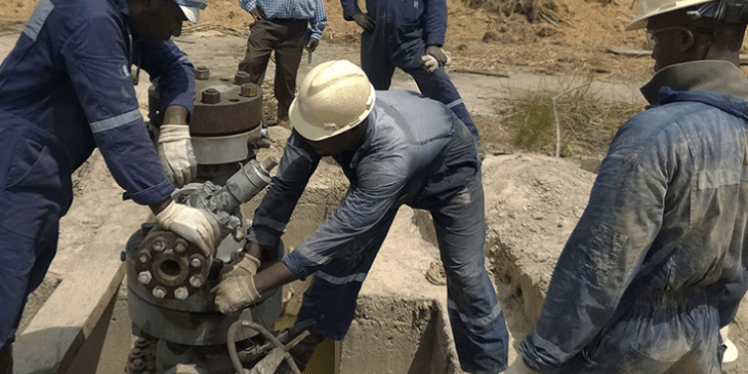
Nigeria, Africa’s biggest oil producer, is set to resume imports of petroleum products from the neighbouring country, Niger Republic.

This was disclosed at the Memorandum of Understanding, MOU, between the two countries on petroleum products transportation and storage which was facilitated by the Ministry of Petroleum Resources.

Present at the signing of the MOU ceremony includes Mele Kyari, MD of the Nigerian National Petroleum Corporation, NNPC, Alio Toune, Director-General of SONIDEP representing Niger’s petroleum agency and Omar Ibrahim, the Secretary-General of the African Petroleum Producers Organisation.

Others are Timipre Sylva and Foumakoye Gado who are Ministers of State for Petroleum for both countries.

Soraz Refinery located in Zinder, Niger which is a joint venture between the China National Petroleum Corporation, CNPC, and the Nigerien government has a capacity of 20,000 barrels per day and started production in 2011.

The refinery was built using a $980 million loan secured by the Nigerien government from China’s Exim bank and refinanced in 2012 at an interest rate of 2 per cent over 20 years.

“Niger’s total domestic requirement is about 5,000bpd, thus leaving a huge surplus of about 15,000 barrels per day, mostly for export,” a section of the document stated.

Nigeria currently boasts of the second-largest crude oil reserves in Africa with an estimated 37 billion barrels while Niger has 150 million barrels of proven oil reserves as of 2016.

However, between 2013 to 2015, Nigeria had spent $396 million to carry out turnaround maintenance for four of its refineries without a tangible result.

Speaking, at the signing of the MOU Sylva said the Niger Republic had excess crude oil constituents which would benefit the Nigerian market.

“This is a major step forward. Niger Republic has some excess products which need to be evacuated and Nigeria has the market for these products. Therefore, this is going to be a win-win relationship for both countries,” Sylva said.

Kyari said the two countries had had long engagements in the last four to five months with a view to restoring the importation of petroleum products (excess production) from Niger into Nigeria.

“With this development, we hope to have a long-lasting and sustainable commercial framework to having a pipeline from the Soraz Refinery in Zinder (Niger) into the most proximate Nigerian city so that we can develop a depot,”he said.

Gbajabiamila: Lawyers seek probe, want those indicted in the killing of Abuja newspaper vendor prosecuted

LAWYERS on Friday reacted to the incident that led to the death of Ifeanyi Elechi, a newspaper vendor shot by undisclosed security operative attached to Femi Gbajabiamila, Speaker of the House of Representative.

The lawyers argued both the Speaker and the security official should be held responsible for taking life of the deceased, despite being unarmed. The Speaker earlier claimed the security operative shot in the air to disperse the people obstructing his convoy and not at the vendor.

Tope Akinyode, one of the legal practitioners, reacting to the death said the victim was killed in an extra judicial manner, even though the deceased was not a hoodlum.

As a result, he called for the probe of the incident and immediate arrest of the Speaker, stressing that Gbajabiamila is not under immunity.

“The police must immediately arrest Mr Femi Gbajabiamila, take him into custody for interrogation and prosecute him within 48 hours. Mr Speaker is not protected by any immunity under the Nigerian laws. The killers of a street vendor in Abuja yesterday must be brought to book,” he stated.

Solomon Okedara, Human Rights Lawyer

Solomon Okedara, Human Right Lawyer also demanded for a thorough probe of the incident.

He argued the police is mandated to protect the citizens and not otherwise. The deceased, he explained has been denied of his fundamental human right to life.

In her reaction, Wumi Oluseye, a female lawyer disclosed that the case could be handled as a criminal liability or civil liability.

According to her, if the case is to be approached as a criminal matter, the person who shot at the late Elechi would be held liable. On the contrary, as a civil case, both the security operative and the principal would have to face the consequence of the action.

The principal in this context, she said is not necessarily the lawmaker but the security authority that deployed the operative.

“They can be charged under guilty of care as well. It is just like being responsible for the safety of other road users as a driver. So, the person who is being protected and the officer could be charged to court as a civil liability.”

Meanwhile, the case of arbitrarily killing by security operative is not new.

In 2019, Bisi Fayemi, Wife of the Ekiti State Governor was allegedly accused of ordering the shooting of students during a protest at the Federal University Oye-Ekiti (FUOYE). Though, she denied the incident Nigerians called for her prosecution.


We want justice – newspaper vendors protest 

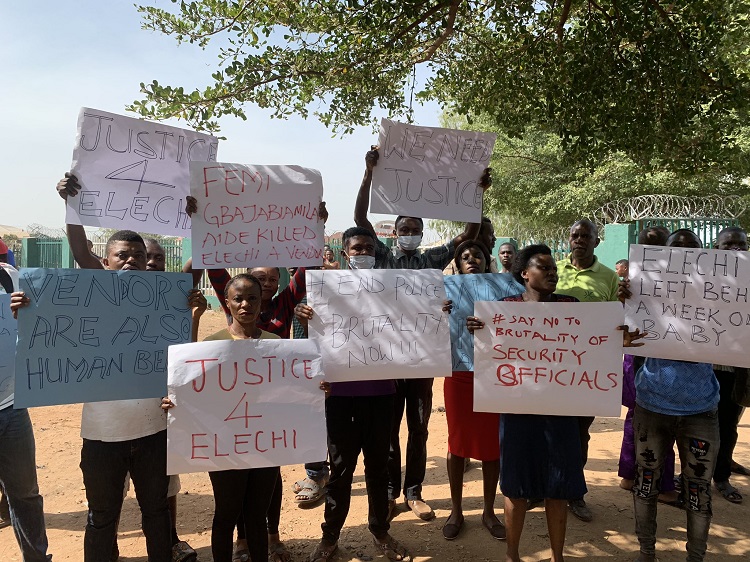
The killing of Elechi the newspaper vendor has eventually led to a protest by relatives and members of the Newspaper Vendors Association.

In placards with different inscriptions, the demonstrators demanded for justice. Some of the writings are: “Femi Gbajabiamila aide killed Elechi a vendor,” “End Police Brutality Now,” “Vendors are also humans”, “Vendors lives matters,” among others.

While Okedara called for a petition to Mohammed Adamu, the Inspector General of Police (IGP), he emphasised probing the incident would unravel if the officer shot at will to protect the lawmaker or he was under an instruction.

Citing the Administration of the Criminal Justice Act (ACJA) 2015, the Okedara explained that in a situation such as the incident, it is only the culprit (officer) that would be held responsible. He, however, added that the lawmaker could be brought into the case if the police officer had acted under instruction of an authority.

“As he was denied right to life, there is need for thorough investigation into the matter. And anyone indicted in the case must face the consequence,” he stated.

He also called for full compensation for the deceased as he has relatives and other dependents who look up to him to meet their needs.

“Let there be a petition to the IGP asking for a thorough investigation of the matter. And while the matter is being investigated and prosecution of those being investigated, another case should be filed on the basis of breaching his fundamental human right.

“We are asking substantial compensation for the family. From the narrative, somebody somewhere depends on him. And the moment his life was taken away, the people are rendered helpless.”

COVID-19 Survival Fund: Ondo artisans accuse agency chairman of diversion

0

THE Ondo State artisans have accused Kosemani Kolawole, Chairman of the Ondo State Micro-Credit Agency of diverting the COVID-19 Survival Fund to her church members.

They made this disclosure during a protest in Akure, the state capital on Friday, The Punch has reported.

They alleged that Kosemani, who is also the coordinator of the survival fund in the state marginalized them by replacing their names with her church members. They alleged that it was only a few of them that got the money.

Speaking, one of the protesters, Mr. Onile Adams, said they were worried about how the funds were released to some artisans, while others did not get anything, hence the protest.

“We have over 97 associations and we expect each association to get up to 60 percent of what was sent to them. We did all we were asked to do. We had several meetings and submitted many forms. There was no reason to do online registration,” he said, 

“What we now heard was that enumeration was done inside the church and other people that are not artisans were enumerated. About 4,500 artisans were supposed to get the alert but we didn’t receive an alert.”

But Kolawale has denied the allegation. She said the fund was paid directly to beneficiaries.

“I didn’t divert anything to my church members. We are not paying money to artisans. It is the Federal Government that is paying. Monies are being paid directly to those enumerated,” she said.

The COVID-19 Survival Fund is a N75 billion monetary intervention of the federal government to mitigate the economic consequences of the COVID-19 outbreak on Small and Medium Enterprises (MSME) in the country.

Registration for the funds which is the core of the N2.3 trillion stimulus package of the Nigerian Economic Sustainability Plan began in September.

CPJ honours Premium Times publisher, others with International Press Freedom Awards

DAPO OLORUNYOMI, Premium Times publisher and three other journalists have been honoured by the Committee to Protect Journalists with the 2020 International Press Freedom Awards for their courageous journalism over the years.

According to the organisers, all four honourees have been arrested or faced criminal prosecution from state authorities for their reporting.

The award which was held virtually due to COVID-19 restrictions on Friday, and was chaired by Patrick Gaspard, the president of Open Society Foundations, was hosted by Lester Holt, NBC’s veteran broadcast journalist.

Olorunyomi, who is Premium Times’ co-founder and CEO, was awarded for his decades-long journalism career which has been geared towards press freedom in Nigeria, amidst repeated government harassment and arrests.

He was arrested twice during the brutal Abacha junta in 1995 before going into exile at the time. More recently, he was again arrested alongside a colleague in 2017 when police raided the Premium Times headquarters on the allegations of defamation.

In his acceptance speech, Olorunyomi said the recognition reminds him of the important work that remains undone in the development of media and the struggle to deepen democracy.

Other awardees include Bangladeshi Shahidul Alam, Iranian Mohammad Mosaed, and Russian Svetlana Prokopyeva.

Alam, a photojournalist and the founder of the Bangladeshi multimedia training organization, the Pathshala Media Institute and the Drik photo library, has a career spanning decades.

For 102 days, between August and November 2018, Mr. Alam was kept in custody and tortured by Bangladeshi officials after he posted a video to social media about student protests in the capital Dhaka.

Also, Mr. Mosaed, a freelance journalist who investigates corruption, labour issues, economic sanctions, and popular protests was forced to resign from a reformist newspaper, banned from practicing journalism, and sentenced to four years imprison for his critical reporting.

Not done, he began to publish his stories on social media platforms, but he was arrested in late 2019 in relation to a tweet and would be released in early 2020. By February, he was re-arrested for criticizing the Iranian government’s handling of COVID-19, CPJ wrote in a statement.

Meanwhile, Ms Prokopyeva, a regional correspondent for Radio Free Europe/Radio Liberty, known as Radio Svoboda, was awarded for her experience in early 2019, when Russian authorities raided her home, seized her equipment and personal belongings, and detained her.

CPJ said she was charged with “justifying terrorism” and her bank accounts were frozen in relation to comments she made on liberal radio station Ekho Moskvy in 2018 when she discussed a suicide bombing attack. This month, she was convicted and ordered to pay a fine of 500,000 rubles (US$6,980).

“Like brave and committed journalists everywhere, CPJ’s honorees set out to report the news without fear or favor for the benefit of their communities, their country, and the world,” CPJ’s executive director, Joel Simon, earlier said.

“They understood that they would confront powerful forces, enemies of the truth, who would try to stop them from doing their work. What they did not foresee was COVID-19.

“The global pandemic has not only made their jobs more difficult and dangerous, it has fueled a ferocious press freedom crackdown as autocratic leaders around the world suppress unwelcome news under the guise of protecting public health,” Mr. Simon added.

Meanwhile, Press right advocate group, CPJ, also honoured Amal Clooney, a lawyer, with the Gwen Ifill Press Freedom Award.

Clooney was honoured for her pro bono legal representation of embattled reporters around the world, including Wa Lone and Kyaw Soe Oo of Reuters, who were jailed in Myanmar for 17 months.

According to CPJ, Gwen Ifill Press Freedom Award is given annually by CPJ’s board of directors to recognize extraordinary and sustained commitment to press freedom.