Home Blog Page 1943

Two Nigerian-Americans clinch legislative seats in US elections

0

OYE Owolewa became the first Nigerian elected as a shadow United States Representative out of the District of Columbia, following the announcement of election results on Wednesday.

This was disclosed on the Twitter handle of ABC 7 News, a US-based news agency after counting of votes in the district of Columbia was concluded.

“Democrat Oye Owolewa will be elected as a shadow US Representative out of the District of Columbia,” the tweet read.

Oye polled 82.65 percent of the votes, which accounts for 135,234 votes against Joyce Robinson-Paul, who had 15,541 votes, and Sohaer Syed with 12,846 votes.

The voters of the District of Columbia elect one shadow representative who is recognized as equivalent to US representatives by the District of Columbia, but the US government does not recognise the individual as an actual member of the house of representatives.

A Ph.D. holder from the Northeastern University, Boston, Owolewa is the first Nigerian-American to be elected to the US congress.

Another Nigerian-American Esther Agbaje won a house of Representatives seat in Minnesota, representing District 59B in the 134 member house on the democratic farmer Labor Party, an affiliate of the Democratic Party.

Esther Agbaje, first Nigerian elected into the Minnesota House of Representatives.                        Credit: estheragbaje.com

She becomes Minnesota’s first Nigerian-American legislator after winning the seat formerly held by long-time state Representative Raymond Dehn.

Agbaje won by a landslide, scoring a total of 17,396 votes, which represents 74.7 percent of the total ballots cast.

Her closest rival, Alan Shilepsky, a nominee for the Republican Party, scored 4,126 votes, which represents 17.7 percent of the total votes cast.

She will represent district 59B in the 134 member house on the platform of the Democratic farmer-labor Party, an affiliate of the Democratic Party.

Agbaje was born in St. Paul, the state capital of Minnesota, to Nigerian immigrant parents and attended George Washington University, DC, with a first degree in political science.

She also holds a master’s degree in public administration from the University of Pennsylvania, and a law degree from Harvard University.

We are losing N19.3million monthly to 362 ghost workers, says Ekiti govt

THE Ekiti State government has said that it is losing N19.3 million monthly to 362 ghost workers who are civil servants across 16 local governments of the state.

Adio Folayan, the Co-Chairman of a verification Committee and Commissioner for Local Government Affairs disclosed this on Tuesday in Ado-Ekiti, the Ekiti state capital.

According to Adio, the amount represents salaries and emoluments drawn monthly by the 362 ghost workers discovered in a just-concluded verification exercise.

However, after a breakdown of the N19.3 million the government is allegedly losing to the 362 ghost workers, it shows an unlikely salary and emolument payment of N533, 000 every month. It is inconceivable that a local government in Nigeria pays that much as monthly wages

The state government had earlier in the year set up an 11-member committee and seven-member subcommittee to investigate the issue of ghost workers in a bid to block financial loopholes in the Local Government System

Adio said it was discovered that the 362 absent workers are on the payroll of the local government service after ‘thorough screening and verification’.

He added that the committee recommended that all illegal salaries earned by the affected workers should be deducted from their pension and gratuity and subsequently prosecuted for fraud with their accomplices.

The Commissioner also directed the councils’ Heads of Department to enforce discipline while the practice of giving schedules of duties to their officers should be adopted so that errant officers would be punished for any infraction.

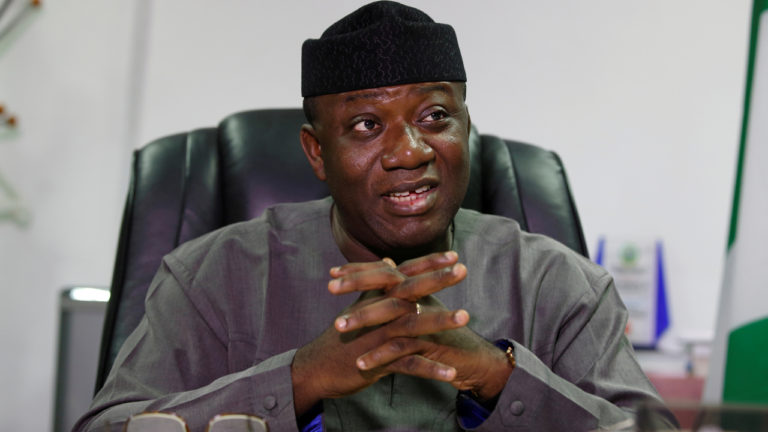
Speaking on the findings and recommendations of the Committee, Kayode Fayemi, the Governor of Ekiti state said the money recovered into the state coffer from the ghost workers would be used to attend to other government obligations to workers in the State.

“This is a matter we need to look into, you can’t sit in Lagos and be earning salaries in Ekiti for work you have not done. But it is our duty to stop that from happening, it is not the duty of the person that is cheating the system.

“The resources available to us is limited, we all know this, some pretend not to know but anyone that has a limited knowledge of government finances will know that already we spent a bulk of what comes to this state on emolument and we have many people who are not public servants or political appointees, yet they too expect that government will touch their lives,” Fayemi said.

He added that the only way to touch the lives of residents who are neither civil servants nor public officials is to provide them with basic amenities.

“The only way we can touch their lives is to fix the road in their community, improve on their schools and their health facilities and that would provide empowerment for them in their community if we can’t find money to do that,” Fayemi added.


Wike redeems N200m pledge to families of security operatives killed by IPOB

0

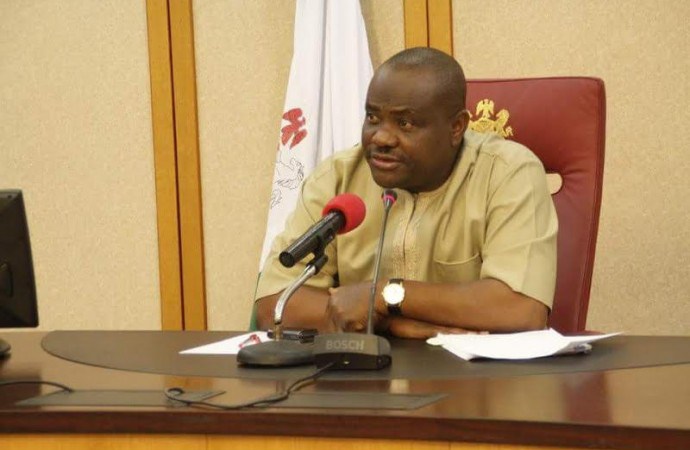
NYESOM Wike, governor of Rivers State, has redeemed his pledge of N20 Million to each family of the ten security personnel killed by members of proscribed Indigenous People of Biafra (IPOB), in Oyigbo local government area.

Wike had on Wednesday last week during a condolence visit to  Joseph Mukan, the Rivers State commissioner of police, announced the donation of 20 million naira to each family of the four policemen and six soldiers killed by IPOB members in Oyigbo.

Joseph Mukan and Tammy Wennike Danagogo.

According to Kelvin Ebiri, special assistant on media to the governor, cheques were presented to the bereaved widows at the state police command and 6 Division, Nigerian Army, in Port Harcourt, respectively on Tuesday.

Speaking on behalf the governor Tammy Wennike Danagogo, Secretary to the State Government, reiterated that the gesture is in fulfilment of his earlier promise to alleviate the plight of the widows and their children.

Danagogo, while describing the murder of the security personnel by IPOB members as unacceptable and should be condemned by every right-thinking Nigerian, said the state government will not tolerate any terrorist group like IPOB in the state or allow them to kill any innocent citizen, particularly policemen and soldiers who are defending and protecting citizens of the state.

“As a Governor who matches his words with action, he has sent us to come and redeem that promise and to present the cheques of 20 million each to the widows of the four police officers killed by IPOB.”

Governor Wike assured the state commissioner of police that the state will always stand with the police to fight crime.

In his response,  Mr.  Mukan, on behalf of the Inspector General of Police, Mohammed Adamu thanked Governor Wike for fulfilling his promise.

He said the police have recovered some arms and arrested some persons who have made confessional statements. According to him, 22 persons have been charged to court.

Similarly, at the 6 Division, Nigerian Army, Port Harcourt, the governor commiserated with the Nigerian Army, the widows and families of the 6 soldiers killed by IPOB.

He said Rivers State government will ensure that the criminal elements who killed the soldiers and cart away their arms and ammunition are arrested and prosecuted.

“The governor made a pronouncement that he will give a token sum of 20 Million to each of the widows of the slain soldiers. So, we are here to fulfil that promise to give cheques to the widows so that they can be able to survive in the absence of their breadwinners” he said

Orlu Irefin, the General Officer Commanding 6 Division, Nigerian Army, in his remarks, expressed the gratitude on behalf of the chief of army staff, Tukur Yusuf Buratai and the entire Nigerian Army to the Rivers State governor for the kind gesture to the widows of the slain soldiers.

He dispelled the rumour on social media on the activities of the Army in Oyigbo, emphasizing that action of the army in the area is within the ambit of the law and rules of engagement

Danagogo was accompanied by Pastor Paulinus Nsirim, the state commissioner for information and communications, and Inime Aguma, commissioner for social welfare.

US formally exits Paris Agreement to curb climate change, a day after elections

0

THE United States on Wednesday formally withdrew from the Paris Agreement, a global treaty formed five years ago to prevent the threats of climate change.

This move which was kickstarted by US President Donald Trump a year ago further confines the US from the world stage, but has no immediate impact on international efforts to curb global warming.

Over 189 countries are committed to the 2015 Paris Accord, which aims to keep the increase in average temperatures worldwide “well below” 2 degrees Celsius (3.6 degrees Fahrenheit), ideally, no more than 1.5C (2.7 F), compared to pre-industrial levels. A further six countries have signed, but not ratified the pact.

The Paris Accord requires countries to set their own voluntary targets for reducing greenhouse gases such as carbon dioxide. The only binding requirement is that nations have to accurately report on their efforts.

Scientists say a rise beyond 2 degrees Celsius could have a devastating impact leading to rising sea levels, worsening droughts and floods.

The US is the world’s second-biggest emitter after China of heat-trapping gases such as carbon dioxide.

In recent weeks, China, Japan and South Korea have joined the European Union and several other countries in setting national deadlines to stop pumping more greenhouse gases into the atmosphere.

While the Trump administration has shied away from federal measures to cut emissions, states, cities and businesses in the US have pressed ahead with their own efforts.

Democratic presidential candidate Joe Biden has said he favours signing the US back up to the Paris Accord.

With the United States outside the Agreement, it will be harder for the rest of the world to reach the agreed goals.

COVID-19: Lagos warns residents to adhere strictly to safety protocols to avoid another lockdown

THE Lagos State Government has stressed the need for residents to strictly adhere to precautionary measures against the transmission of COVID-19 to prevent another lockdown of the economy, adding that a resurgence of cases in Lagos may stall measures put in place by the Government to open up the economy.

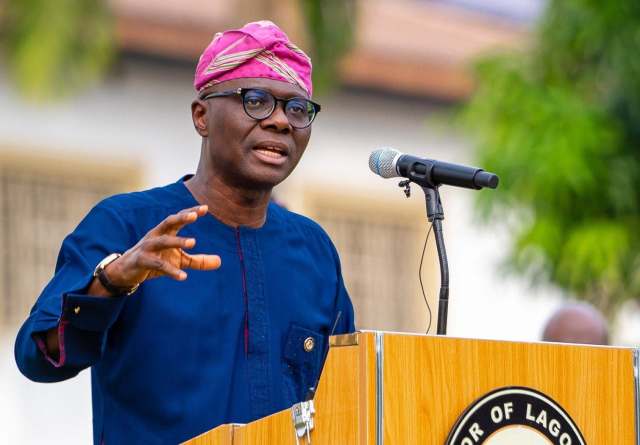
Akin Abayomi, the state commissioner for health, disclosed this while speaking on efforts being made by the government to sustain the gains that have been made to control the global pandemic in Lagos State.

He explained that many countries and cities are experiencing a second and third wave of the COVID-19 pandemic with a resultant spike in the number of cases and fatalities. 

He noted that many of the affected countries around the world have found it necessary to impose a second lockdown and restriction of movements, which have significant socioeconomic and security consequences.

The commissioner, however, warned that the continuous flagrant disregard of safety guidelines by citizens herald danger and may lead to the second wave of new infections in Lagos, advising all residents against unnecessary movement and social gatherings, while travelling into and outside the country should be discouraged except when absolutely essential.

Abayomi expressed concern over the fading COVID-19 induced culture of face mask use, physical distancing and hand hygiene amongst citizens, calling for reinforcement and adherence to various preventive measures put in place by the State government to tackle the disease.

While noting that the increased COVID-19 testing capacity of the State has been very impactful in checking community transmission, the commissioner urged citizens, who experience symptoms of COVID-19 infection, to visit any of the dedicated sample collection sites in their local governments or public laboratories to get a test done free of charge.

He noted that early diagnosis aids prompt management and care of patients, resulting in the prevention of transmission to other citizens, particularly vulnerable and elderly members of society who may have underlying predispositions.

He emphasised that COVID-19 testing for other purposes, such as travelling or as a requirement for professional reasons, which are not part of the public health response, can be done at any of the 10 Government accredited private laboratories or by booking a test online at covid19.lagosstatebiobank.com or the National portal specific for travelers on nitp.ncdc.gov.ng .

Abayomi explained that Lagos State has a quality assurance process for every test that is done within its boundaries, noting that the need to oversee the process cannot be overemphasised because COVID-19 is a public health care emergency.

The commissioner explained that the state is also providing, free of charge, all social amenities such as the EKOTELEMED service, the delivery of COVID-19 Care packs, sample collection logistics as well as monitoring and validation of all laboratories and isolation centres.

“We are doing everything required to maintain a high quality of testing and care within the boundaries of Lagos State”, he stated.

Abayomi further added that Babajide Sanwo-Olu, Lagos State Governor, is very committed to protecting the lives and livelihood of its residents as the State continue to permit a gradual return to socio-economic activities, assuring that the government will continue to ensure that testing and isolation, if required, remain accessible and free to citizens as required.

“This is not the time to relax our guards, if you have any reason to believe you fit the case definition for COVID-19 or you have any questions, please call the EKOTELEMED the toll-free line 08000356633 to speak with any of our medical personnel 24 hours a day, seven days a week,” he said.

There are 47.6 million confirmed cases of COVID-19 worldwide. Of the total, over 31.7 million patients have recovered while 1.22 million persons have died of the infection.

Since its outbreak in Nigeria in February, Nigeria has a total number of 63,173 cases with 59,634 recoveries and 1,151 deaths.

Lagos which is the epicenter of the COVID-19 outbreak in Nigeria currently has 20,935 cases with 20,029 recoveries and 208 deaths.

Nigerian government rakes in N424.71 billion as VAT in Q3, 2020

By Isah Abdul-Azeez


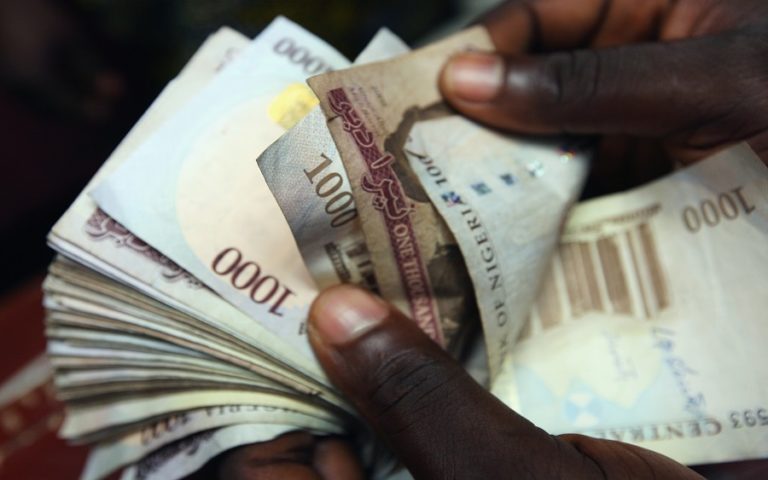
THE Nigerian government has raked in N424.71 billion as value-added tax (VAT) in the third quarter of 2020, according to the National Bureau of Statistics.

The data provided by the Federal Inland Revenue Service (FIRS), verified and validated by the NBS shows that there was an increase of about 54.37 percent in the VAT received in Q3 of 2020 when compared to that of Q3, 2019 (N327.2 billion).

According to Investopedia, VAT is a consumption tax that is levied on a product repeatedly at every point of sale at which value has been added.

Analysis of the VAT data shows that ‘Other Manufacturing’ generated the highest amount of VAT with N47.07 billion generated and closely followed by Professional Services generating N44.01 billion.

Commercial and Trading generated N21.18 billion while Mining generated the least and closely followed by Textile and Garment Industry; and Pharmaceutical, Soaps & Toiletries with N64.50million, N346.27 million and N386.16 million generated respectively.

Out of the total amount generated in Q3 2020, N214.66 billion was generated as Non-Import VAT locally while N115.34 billion was generated as Non-Import VAT for foreign.  The balance of N94.70bn was generated as Nigeria Customs Service (NCS)-Import VAT.

The federal government on September 13, 2019, had increased the VAT rate from 5 percent to 7.5 percent. Economic experts have said this will increase the amount generated from VAT by the government.

In an interview with The ICIR in May, Aboderin Martins, a financial consultant, had said that revenue from VAT would increase because of the increase in VAT.

“Nigerians should expect increased revenue from taxes because of the recent increase in VAT, but the question is, would it be channeled into the right place,” Aboderin said.

US Election: Trump to stop ongoing counting of votes at Supreme Court

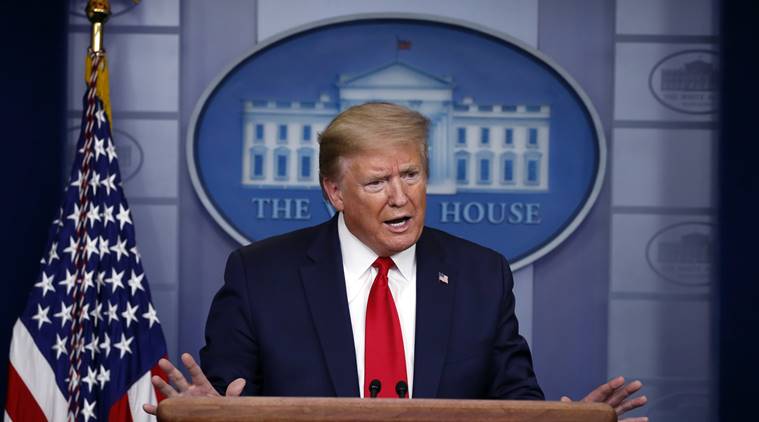
DONALD Trump, president of the United States and Republican candidate in the 2020 US election has threatened to take legal action to stop the ongoing counting of votes.

He said this in a video from the White House on Wednesday morning.

Trump who claimed he has won the yet to be announced result of the ongoing polls said there are efforts to steal and undermine the credibility of the election.

“For the good of this nation, this is a very big moment. This is a major fraud in our nation. We want the law to be used in a proper manner. So, we will be going to the US Supreme Court,” Trump said.

“We did win this election,” he added.

The Republican, who according to live results by the Associated Press is in a neck-and-neck race with Democrat Joe Biden, said he would go to court and “we want all voting to stop.”

He appeared to mean stopping the counting of mail-in ballots which can be legally accepted by state election boards after Tuesday’s election, provided they were sent in time.

Biden on the other hand has said earlier that he believes he is “on track to win this election”.

“It ain’t over until every ballot is counted… but we’re feeling good about where we are,” Biden added in Delaware.

Speaking on Trump’s comments about electoral fraud with mail-in ballots, David Levine, elections integrity fellow, Alliance for Securing Democracy, had said at a foreign press briefing that the process is secure. 

“I think that mail-in voting is a secure process. We’ve had mail-in voting right in the United States since the Civil War,” Levine said.

“We’ve seen state and local election officials across the political spectrum that have some form of mail and voting that exists. And we’re of course expecting a record number of voters to be able to cast ballots by mail.”

He added that “it’s really important the trusted sources of information are proactively sharing what processes are in place to ensure that mail-in voting is, of course, safe and secure.”

COVID-19: Sub-Saharan Africa is faring better than expected as ‘First World’ countries go into second lockdown

AS of November 2, ‎according to data obtained from the website of the European Centre for Disease Prevention and Control, 46,597,299 cases of COVID-19, including 1,201,162 deaths, have been recorded across the world.

Out of the number, Africa accounted for 1,796,748 cases, including 43,302 deaths.

The United States – a ‘First World’ country – recorded 9,207,362 out of the total of 20,807,415 cases on the American continent. The US also recorded 230,996 deaths.

Also, majority of the 10,324,515 cases recorded in Europe were in highly developed, ‘First World’ countries such as France, 1,413,915; Spain, 1,185,678; United Kingdom, 1,034,914; and Italy, 709,333.

UK, Italy, France and Spain also have the largest share of the 270,313 deaths recorded in Europe, with 46,717, 38,826, 37,019, and 35,878, respectively, as of November 2.

As of that date, the countries that rep‎orted the most cases in Africa were South Africa, 726,823; Morocco, 222,544; Egypt, 107,736; Ethiopia, 96,583; and Nigeria, 62,964.‎

South Africa has recorded the most COVID-19-related deaths in Africa, 19,411; followed by North African countries – Egypt, 6,278; Morocco, 3,762; ‎Algeria, 1,973 – and Ethiopia, 1,478. Nigeria, as of November 2, had recorded 1,146 deaths.‎

While the data from Nigeria and other African countries – especially Sub-Saharan Africa – are generally seen as not reflecting the exact COVID-19 situation due to low levels of testing, it is instructive to note that life in the region has largely returned to normal, as most governments have lifted lockdowns imposed to check the spread of the virus.

But, on the other hand, a number of the highly developed ‘First World’ countries are going into a second lockdown at the same period.

Doomsday prophecies

When Nigeria recorded sub-Saharan Africa’s first case of coronavirus on February 25, doomsday predictions for the region came in thick and fast as experts predicted the annihilation of the continent, which is home to most of the ‘Third World’ countries.

Even as the virus was already having a huge toll on the US and other Western ‘First World’ countries before it officially arrived in Africa, all the worst case scenarios projected by experts indicated that millions would perish in Sub-Saharan Africa. In early April 2020, when the figure stood at ‎13,814 confirmed cases of COVID-19 in 52 countries across Africa, with about 747 deaths, Melinda Gates, wife of billionaire Bill Gates, and Co-Chair of the Bill and Melinda Gates Foundation, predicted that dead bodies would litter the streets of African countries in the coming days.

In an interview with CNN, she said, “‎It’s going to be horrible in the developing world. ‎Part of  the reasons you are seeing the case numbers still do not look very bad, is because they don’t have access to many tests. Look at what is happening in Ecuador, they are putting bodies out on the streets, you are going to see that in countries in Africa.‎”

Speaking of her concern when the world was watching as China struggled to isolate an enormous part of its population, Gates noted, “My first thought was Africa. How in the world are they going to deal with this? I have been in townships all over Africa and slums. When we talk in-country physical distancing and hand-washing, if you live in slums you can’t physical distance, you have to go out and get your meals. You don’t have clean water to wash your hands.”

‎The World Health Organisation, and the United Nations, ramped up the doomsday prophecies, when, also in April 2020, the global health agency warned that Africa could become the next epicentre of the COVID-19 outbreak.

The UN Economic Commission for Africa added that ‎it is likely that the pandemic will kill at least 300,000 people in Africa.

For Nigerians, fears that the pandemic would have a huge human toll in Africa’s most populous nation were heightened by reports that there are just a few functional ventilators in the country. Ventilators are required for treatment of critical cases of coronavirus, especially those involving breathing difficulties.

Panicked, the Federal Government, through the Ministry of Finance, in April 2020, openly, on Twitter, begged a US billionaire, Elon Musk, owner of American automotive and energy company, Tesla Inc,‎ to support Nigeria with ventilators for the treatment of coronavirus patients in the country.‎

‎The Federal Government had resorted to ‘online begging’ after ‎Mr Musk, in a post on Twitter, announced that his company had extra ventilators available for shipping worldwide and that anyone who needed should indicate interest so as to have it delivered for free.

The tweet by Mr Musk read, “We have extra FDA-approved ventilators. Will ship to hospitals worldwide within Tesla delivery regions. Device & shipping cost are free. Only requirement is that the vents are needed immediately for patients, not stored in a warehouse. Please let me or @Tesla know.”‎

‎Pouncing on the opportunity, the Federal Government responded, s‎aying that Nigeria needs about 100-500 ventilators to assist with the rising cases of COVID-19 in the country.

The tweet by the Ministry of Financ‎e read, “Dear @elonmusk @Tesla, Federal Government of Nigeria needs support with 100-500 ventilators to assist with #Covid19 cases arising every day in Nigeria.”‎

The Federal Government’s action was roundly criticised by Nigerians, who felt that the development was embarrassing, but it reflected concerns that the country, and other Sub-Saharan African countries, lacked the ability to withstand the coronavirus pandemic.

Sub-Saharan Africa fare better than expected

However, ‎seven months later, by November, the doomsday prophecies have not come to pass. Rather, Sub-Saharan African countries are faring better than expected, unlike the ‘more distinguished’ First World countries.

On the whole, Africa’s COVID-19 figures are far lower than those in Europe, Asia or the Americas, and reported cases are continuing to decline. The region has a population of more than one billion, but has just about 1.7 million cases, according to data compiled by the John Hopkins University.

While the low testing levels in Sub-Saharan African countries have been ‎cited to cast doubts on the accuracy of the official COVID-19 situation in the region, the fact remains that the expected mass deaths has not happened.

Despite low testing rates, ‎Dr John Nkengasong, the head of Africa Centres for Disease Control and Prevention (Africa CDC), told the BBC that there is no indication that a large number of COVID-19 deaths have been missed.‎‎

‎Also, ‎a recent continental study by Partnership for Evidence-based Response to COVID-19 (PERC), which brings together a number of private and public organisations, noted that Africa was recording a fewer number of COVID-19 fatalities, compared to other continents.

“The case-fatality ratio (CFR) for COVID-19 in Africa is lower than the global CFR, suggesting the outcomes have been less severe among African populations,” the PERC‎ report noted.

Why has Sub-Saharan Africa fared better than expected?

‎The PERC report praised many African countries for waging an effective campaign to combat the spread of COVID-19, even though they are known to have fragile heath systems.‎

The PERC study noted that African countries acted fast to contain the spread of the coronavirus disease.‎ Public health measures, including avoiding handshakes, frequent hand-washing, social distancing and wearing of face masks, were quickly introduced and some countries, such as Lesotho, acted even before a single case was reported. Lesotho declared an emergency and closed schools on March 18, going into a three-week lockdown for about 10 days. It was‎ only days after the lockdown was lifted, in early May, that Lesotho recorded its first confirmed cases.‎

Also, a‎ survey conducted in 18 countries in August by PERC noted that public support for COVID-19 safety measures was high as 85 percent of respondents said they wore masks in the previous week.

“With strict public health and social measures implemented, African Union member states were able to contain the virus between March and May,” the report said, noting that ‎”minor loosening (of restrictions) in June and July coincided with an increase in the reported cases across the continent”.

Africa’s relatively younger population has also been cited as a reason for the ‘milder’ nature of the COVID-19 disease in the continent, particularly in Sub-Saharan Africa.  WHO Africa Head, Dr Matshidiso Moeti,‎ observed, “‎The pandemic has largely been in younger age groups. About 91 percent of COVID-19 infection in sub-Saharan Africa are among people below 60 years and over 80 percent are asymptomatic.”

Those aged 65 years and above make up just about three percent of the population in Sub-Saharan Africa. In comparison, Europe, North America and wealthier Asian countries have the oldest inhabitants.

“One of the big drivers (for COVID-19 infection and death) in Western countries is that the elderly people were living in specialised homes and these became places where the transmission was very intense,” Moeti added.

Older peoples’ homes are uncommon in most African countries, where older people are more likely to be living in rural areas.‎ In most African countries, people return to their rural homes when they retire from employment in urban areas.‎ Also, according to a report by the BBC, population density in rural areas is lower and therefore it is easier to maintain social distance.‎

The BBC report also noted that an underdeveloped transport system within and between countries means that Africans do not travel as much as people do in more developed economies, thereby minimising contact.‎

‎The climate in Sub-Saharan African countries has also been suggested as a reason for the lower level of COVID-19 infection and deaths in the region. A‎ study conducted by the University of Maryland in the US found a correlation between temperature, humidity and latitude and the spread of COVID-19.‎

‎”We looked at the early spread [of the virus] in 50 cities around the world. The virus had an easier time spreading in lower temperatures and humidity. Not that it doesn’t spread in other conditions – it just spreads better when temperature and humidity drop,” ‎Mohammad Sajadi, the lead researcher in the University of Maryland study said. ‎

‎The study’s findings have mirrored the situation on the ground in the continent – North African countries, which are colder, have been worse off and while the spread of the virus accelerated in South Africa as the southern hemisphere went into winter, the number of cases dropped significantly when it became warmer, impacting the continental outlook, as South Africa accounts for almost half the total number of cases and deaths on the continent.

The experience gained from combating seasonal Ebola outbreaks in Sub-Saharan Africa was also cited as a reason for the region’s ‘good performance’ in containing the coronavirus disease. ‎The BBC report noted that several West African countries, which battled the worst ever outbreak of Ebola from 2013 to 2016, had mastered the public health measures that have been used to prevent COVID-19, including isolating the infected, tracing their contacts and then getting them quarantined while they get tested.‎

‎Africa CDC head, Dr Nkengasong, in an interview with The Telegraph, added that African countries took bold, aggressive and courageous steps in locking down their economies very early.‎

He also pointed to ‎a large number of asymptomatic coronavirus cases in the region.

A ‎review by the World Health Organisation’s Africa Office in September noted that more than 80 percent of African COVID-19 cases have no symptoms, compared to about 40 percent in parts of Europe and the US.

‎Dr Nkengasong also pointed to the continent’s youthful‎ population. According to him, the median age of the continent is about 19 years old while the median age in Europe is around 43 to 45.  It had been established that o‎lder people are far more likely to die of COVID-19. Only about three percent of the population of Sub-Saharan African countries are over 65 years old, compared to nine percent in Brazil and 19 percent in the UK.

However, Dr Nkengasong‎ did not rule out genetic factors for the lower Case-Fatality Ratio ‎in the continent.

He said, “What we don’t know yet is if this (lower number of deaths and higher number of asymptomatic cases) is due to genetic factors. We need to extensively sequence all the viruses on the continent to understand if there are certain mutations that are happening that are making (Africans to) behave differently.‎ The second and more important point is to look at the host factors, to look at the genetic factors on the continent to see there are common traits genetically that are making a high rate of asymptotic cases.‎ Thirdly, I would ask the continent to look at preexisting conditions, to look at how BCG vaccines ‎or Tuberculosis may lead to some kind of immunity.”

In the same vein, a recent ‎paper in the journal, Science, reportedly suggested that early and frequent exposure to a host of other pathogens could mean the immune systems of people in Africa are better able to fight invaders, such as the coronavirus.

Be that as it may, Dr Nkengasong noted that the Doomsday prophecies concerning Africa were based on stereotypes, and not science. ‎

He told The Telegraph, “They were embedded in a shallow understanding of the continent, and a rush to make headlines.‎ If you say that three million Africans are going to die, or half a million are going to die in six months, that is news. And then, of course, it is convincing because the continent is poor and has weak health systems. ‎It was not based on science. I don’t think the assumptions were solid. I think they were based on stereotype.”

Dismissing the Doomsday prophecies, ‎Dr Nkengasong pointed to ‎South Africa, Senegal, Rwanda and Nigeria as ‘success stories’.

S‎outh Africa has been the worst-hit African nation but the Africa CDC head sees things differently. According to him, “Success should be seen as anyone who can deploy public health measures to control and bring down the pandemic and South Africa has done that twice. ‎Look at what Nigeria has done. A country of 200 million. Everyone said it was impossible to lock down a city like Lagos. But they did it for weeks.‎ It could have been millions of cases. Look at what is going on in Brazil or India. But we don’t see that in Nigeria or South Africa.”

A second lockdown in the ‘First World’

Last week Europe registered a record 1.5 million new cases of COVID-19, making it once again the centre of the pandemic. The more developed countries in the continent accounted for most of the cases and England will enter a new lockdown on Thursday, November 5. ‎Prime Minister, Boris Johnson announced the decision after the UK passed the milestone of one million coronavirus cases‎.‎ The Office for National Statistics now estimates that 1 in 100 people in England have COVID-19, an average of 568,100 people.

Germany imposed wide-ranging lockdown measures from Monday, November 2, in an attempt to slow down the spread of the coronavirus‎, after the country reported a record number of cases for a fourth day in a row on Saturday with 19,059 new infections in 24 hours, according to the country’s disease control agency, the Robert Koch Institute (RKI).

Th‎e number of new infections on Saturday broke Friday’s record of 18,681 cases. Germany’s death toll has risen to more than 10,452, according to data from RKI‎.

In the new lockdown, bars, restaurants and cafes will remain shut except for takeout. Theaters and concert halls will be closed, as will amateur and recreational sports facilities‎.

Also, Belgium imposed new lockdown measures for six weeks starting from Sunday. ‎Belgium has the second highest number of infections per 100,000 people in the European Union and UK, after the Czech Republic.‎

In the same vein, France entered a second national lockdown on Friday that will last an initial four weeks, until December 1 at minimum. ‎French President Emmanuel Macron noted that the virus was circulating at a speed that “even the most pessimistic had not predicted”.

The World Health Organisation’s Europe director, Hans Kluge, last Thursday noted that COVID-19 deaths rose by 32 percent across Europe last week.‎

Alarming situation in the US

The New York Times, on November 3, reported that ‎at least 540 new coronavirus deaths and 93,581 new cases were reported in the US on November 2. In an update posted on its website, the New York Times reported that over the past week, there has been an average of 85,563 cases per day, an increase of 44 percent from the average two weeks earlier.‎

“Case numbers in the United States have reached alarming new records in recent days as outbreaks continue to grow across the country. Weekly infection reports reached record levels in more than half the country during October, and there were few hopeful signs in the data‎,” the New York Times said.

The New York Times observed that ‎American life has been fundamentally reordered because of the virus as concerts, parades and high school football games continue to be called off. ‎

COVID-19 and ‘myth’ about First and Third world competence

Interestingly, in an article titled ‘COVID-19 has blown away the myth about ‘First’ and ‘Third’ world competence’, published in The Conversation on May 13, Steven Friedman, Professor of Political Studies at the University of Johannesburg, observed that Britain and the US have been two of the biggest failures at handling COVID-19 while other Western countries, such as France, Italy and Spain, have battled to contain the pandemic.

After an assessment of measures by national governments to protect their citizens from the pandemic, Friedman noted that “the star performers are not in the traditional First World”.

Friedman went ahead to suggest that developments arising from the COVID-19 pandemic should trigger new thinking in Africa and other ‘Third World’ countries.

Oyo state approves 6-month maternity leave for state civil servants

THE Oyo state government has approved a six month maternity leave period for pregnant women and nursing mothers in the employment of the state.

Daud Shangodoyin, the state Commissioner for Establishment and Training, revealed this to newsmen shortly after the weekly State Executive Council Meeting in Ibadan on Tuesday.

Shangodoyin, while adding that the Council has also adopted the World Health Organisation (WHO) recommendation on exclusive breast-feeding of a child noted that the upward review of maternity leave from the usual four to six months in the state was approved following a deliberation on a memorandum for the review.

“At the 38th meeting held today, we deliberated on a memorandum on the review of maternity leave for pregnant and nursing mothers in the employment of Oyo State for every motherhood and we resolved and approved as follows:

“The adoption of WHO recommendation on this matter on exclusive breast-feeding of a child.

“An upward review of maternity leave period for pregnant and nursing mothers in the employment of the state from four to six months, weekends inclusive, with full payment of salaries and other benefits.

“Also, the period of closing at 2pm for six months, upon resumption has been cancelled. The application shall be for civil and public service workers only.

“The Executive Council also approved that the leave shall commence from four weeks to the expected date of delivery and it shall be mandatory for beneficiaries to proceed for the four weeks pre-natal leave as specified in the civil service rule.

“Also, we approved that the review is for female employees of Oyo State Government only and it shall be enjoyed at most four times in her service years.”

PDP to Buhari: Consider 2014 Confab report for genuine restructuring of Nigeria

THE People’s Democratic Party (PDP) on Tuesday tasked President Muhammadu Buhari to adopt the 2014 National Conference report to satisfy popular demands of Nigerians calling for the restructuring of the country.

The document, the party says reflects concerns of most Nigerians across different divides, thus should be adopted and presented to the National Assembly (NASS) for consideration.

“Our party stands at the forefront of efforts for genuine restructuring, but we hold that the authentic materials for a genuine restructuring are contained in the 2014 National Conference report, wherein, Nigerians, across all the divides, collectively provided a roadmap out of our constitutional quagmire,” Kola Ologbondiyan said in a statement.

He accused the Progressive Congress (APC) of frustrating the restructuring demands of the people, stressing that the document is capable of addressing some of the constitutional problems confronting the country.

Ologbondiyan stressed that other alternative measures or contrary documents proposed as a substitute to the confab report might not ‘genuinely restructure’ the nation.

According to the PDP spokesperson, the APC had commenced plans to present an alternative report produced by its committee setup on restructuring. The contrary report, he alleged, was to replace the 2014 national conference report.

“Nigerians are also alerted of a fresh ploy by some ambitious APC leaders to blackmail the legislature and create an impression of commitment to restructuring, just to beguile the people and soften the ground for their personal political and particularly, presidential ambitions ahead of the 2023 elections.

“It is therefore unacceptable that the 2014 National Conference report, which embodies the desires and hopes of over 200 million Nigerians, has been shelved by President Buhari since his predecessor in office, President Jonathan personally handed it over to him in 2015 for implementation in line with the wishes and aspirations of the people,” it reads in part.

“Our party, therefore, charges President Buhari to bring out the 2014 National Conference Report, dust it up and present it as an executive bill to the NASS to guide the desired amendment to the 1999 Constitution (as amended) with regard to restructuring,” the statement added.

Many Nigerians have recently called on the President to consider restructuring the nation to reflect the true demands of the people.

Though the APC claimed to have commenced gradual consideration of the confab report, last month, Bolaji Akinyemi, a former Minister of External Affairs expressed concerns about why the president is believed to be reluctant in implementing the report.

The gesture, it is assumed would offer a new dimension of socioeconomic growth, improve the electoral system, enable devaluation of power, and reduce authorities of the federal government regarding items in the exclusive list.