Home Blog Page 1946

SARS officers threw me from two-storey building, broke my spinal cord, victim tells Lagos panel of inquiry

0

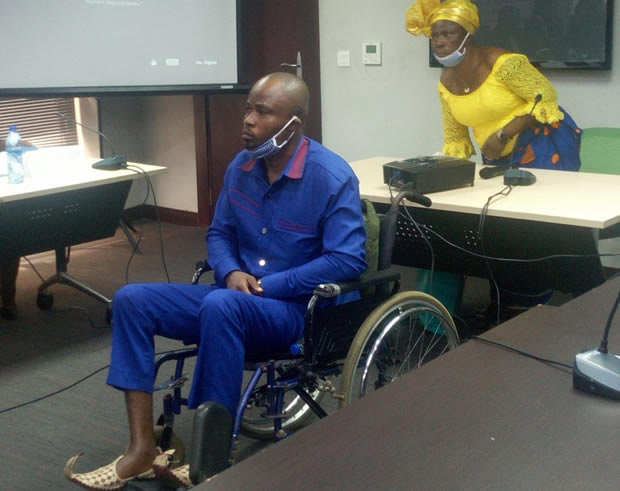
NDUKWE Ekwekwe, another petitioner at the ongoing Lagos panel of inquiry has narrated how officers of the disbanded Special Anti Robbery Squad (SARS) tortured him, threw him from a two-story building, and had his spinal cord broken in the process.

The ICIR had on October 27, reported the ordeal of Okoli Agwu Abunike, the first petitioner at the panel of inquiry.

Ndukwe Ekwekwe, who appeared at the panel on Tuesday on a wheelchair, recounted how he was stripped naked and severely tortured by SARS officers in 2016.

Ekwekwe said he was a trader at the Alaba-Rago market before the SARS operatives led by Inspector Haruna invaded his shops to arrest him without telling him is offense.

““I was at my shop at Alaba-Rago Market on that fateful day in February 2018 for the day’s sales when some police officers from the Special Anti Robbery Squad (SARS) came to me fully armed. I asked them what they wanted and they said they wanted to arrest me. Why? They didn’t say anything.”

He stated that they forced their way into his shop, scattered his goods, and shooting gun and tear gas into the air to disperse other traders that came to his rescue before they eventually dragged, handcuffed and whisked him to the Lagos Police Command, Ikeja.

“They forced their way into my shop, scattered all my wares but they didn’t find anything. This time, other traders had come around and they demanded to see their ID cards but they fired their guns and teargas into the air and they all left.

“After they ransacked all my shop, I was dragged outside, handcuffed and taken to the Lagos Police Command, Ikeja,” Ekwekwe narrated.

Ekwekwe further narrated that he was thoroughly beaten at the police command before they told him they had an intelligence report with an order from the Inspector General of Police to effect his arrest.

“At Ikeja, I took out my phone to call my mother but as soon as I was sighted by one of the officers, he hit my hand and head with a gun butt and I was dragged out of the van into the torture room where I was stripped naked and tortured and treated like a criminal without telling me what I had done wrong.

“I was persistent to know what I had done wrong and they told me they had an order from the Inspector General of Police to effect my arrest. They said they had an intelligence report on me. After I was thoroughly beaten, another team came around and began another round of beating. They later asked if I should be killed and the man I later know as Inspector Haruna said not yet.”

He said he was later dragged back to his shop the following day where goods at his three shops, running into N18m were sold by the SARS officers before he was thrown from a two-storey building to the ground and had his spinal cord broken in the process.

“The following day around 8 pm, I was taken back to my shop with my hands and legs chained. They broke into the shops, brought out my wares and sold everything to traders and passersby. I lost all the wares in my three shops worth N18m.

“While they were doing this, I started shouting to attract the attention of passersby and few of the traders around. When they discovered that I was agitated, the commander ordered one of his boys to keep me busy and he pushed me from a two-storey building to the ground.

That was how my spinal cord was broken. I fell to the ground unconscious. My mother told me that I was dumped at the police college.”

Ekwekwe said he was later taken to the Lagos University Teaching Hospital (LUTH), where he was operated on.

“I was taken to Igbobi Orthopedic Hospital but I was rejected and was later taken to Lagos University Teaching Hospital, LUTH where I was operated upon.”

The chairman of the judicial panel of inquiry, Doris Okuwobi, however, admitted the X-ray from the police college hospital in Ikeja, hospital bill, list of phone numbers of SARS officers involved, picture of the petitioner with a bandage on his head as exhibits.

The judicial panel has adjourned further hearing on the matter till November 13.

Nine Nigerian-Americans contesting in Tuesday’s US elections

0

NO fewer than nine Nigerian Americans are on the ballot for Tuesday’s general elections in the United States, the News Agency of Nigeria (NAN) reports.

Running mostly on the platform of the Democratic Party, the candidates are bidding for different offices at the federal, state and local levels.

NAN reports that besides the presidential election, governorship polls are holding in 11 states and two territories, in addition to other state and local elections.

Congressional elections are also holding on Tuesday with all the 435 seats in the U.S. House of Representatives, and 35 of the 100 seats in the Senate up for grabs.

At the federal level, Oye Owolewa, whose father is from Kwara and mother from Oyo, is aiming for a ‘shadow’ (non-voting) seat in the House of Representatives.

Mr Owolewa, a Ph.D holder in Pharmacy from the Northeastern University, Boston, is seeking to represent the District of Columbia (DC) under the Democratic Party.

If elected, the 30-year-old, whose agenda includes fighting income inequality in the U.S., would be the first Nigerian congressman in the country’s history.

Mr Faparusi holds a doctorate in Medicine from the University of Ibadan, a Ph.D. in Health from Johns Hopkins University, and Juris Doctorate from the Widener University School of Law, Delaware.

This is not his first shot at the U.S. Congress. In 2014 and 2016, he vied for the Republican Party’s ticket to the House of Representatives, but lost in both occasions

Mr Faparusi’s priorities include being a positive voice for all Nigerians in the U.S. Senate, and inspiring Americans of African or Nigerian descent to seek public office in the country.

In Missouri, a Republican-controlled state, Yinka Faleti from Lagos is the Democratic Party flagbearer in the election for the office of Secretary of State.

According to Wikipedia, Mr Faleti was in the U.S. Army as an active-duty officer from 1998 to 2004. He served in Kuwait, first under Operation Desert Spring and later as part of Operation Enduring Freedom.

The 44-year-old father of four holds a Bachelor’s degree from the United States Military Academy, West Point, and a Juris Doctorate from the Washington University School of Law.

His goals as a Secretary of State include protection of the “right to vote for Missouri families”, and ensuring elected officials hear the people’s voice.

Also at the state level, Paul Akinjo from Ondo is running for election to the California State Assembly under the Democratic Party to represent District 12.

Akinjo once served as Vice Mayor of Lathrop, California, and in the U.S. Army Reserve from 1982 to 1989. His priorities include housing, immigration and transportation.

In Delaware, a small Mid-Atlantic U.S. state, Adewunmi Kuforiji is aspiring to represent District 34 in the state House of Representatives.

Mr Kuforiji, originally from Ibadan, Oyo, secured the Democratic Party’s ticket on September 15 after defeating his challenger, Robert Haynes, at the primary. He holds a Bachelor in Accounting and a Masters in Business Administration from the Delaware State University.

In the 2018 mid-term elections, he vied for the same position but lost to the incumbent, Lyndon Yearick, of the Republican Party, whom he is facing on Tuesday.

Also at the state level, Esther Agbaje is seeking to represent District 59B in the Minnesota House of Representatives on the platform of the Minnesota Democratic–Farmer–Labor Party (DFLP), an affiliate of the U.S. Democratic Party.

The 35-year-old daughter of an Episcopal priest and a librarian, both Nigerian immigrants, defeated longtime state Representative Raymond Dehn in the party’s primary in August.

She is one of four progressive greenhorns who defeated established Democratic legislators in the primary.

Ms Agbaje has a law degree from Harvard University, a Master’s from the University of Pennsylvania, and has served in the U.S. Department of State, among others.

As a millennial, a “generation that has suffered numerous setbacks”, she seeks to bring a fresh perspective and new ideas to government.

On the ballot at the local government level are April Ademiluyi, Ngozi Akubuike and Benjamin Osemenam.

Ademiluyi, 39, is running on the Democratic Party’s ticket for Judge of the Seventh Circuit Court in Prince George’s County, Maryland.

For her part, Ms Akubuike, a legal practitioner, is an independent candidate for judge of the Minnesota 2nd District Court Position 8.

Ms Akubuike studied law in Nigeria, then worked in the banking sector before moving to the U.S. where she graduated from the Mitchell Hamline School of Law.

She has served in several capacities, including legal manager for the state of Minnesota.

Mr Osemenam, who moved to the U.S. in 1982, is contesting for a seat in the Brooklyn Park City Council of Minnesota to represent East District.

An engineer with the Minnesota Department of Transportation, he is vying on the platform of National Party.

He is a former president of the Association of Nigerian Engineers in Minnesota.

(NAN)

Côte d’Ivoire election: President Ouattara’s third term bid could lead to civil war – Opposition parties

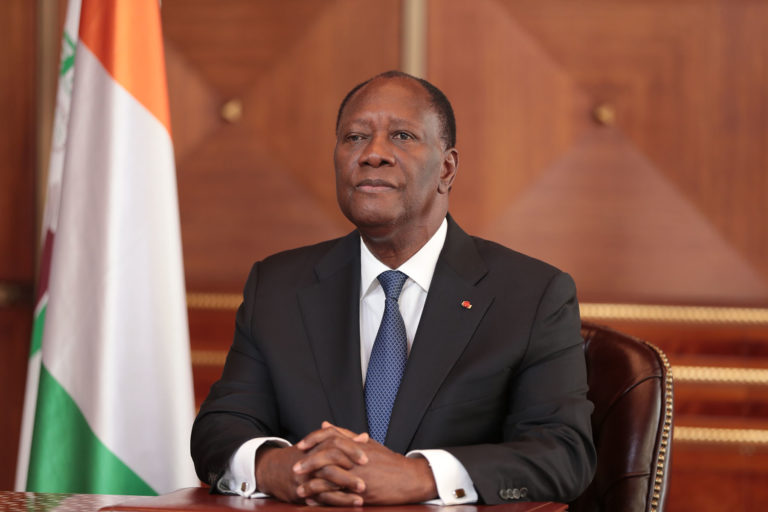
THE re-election of Ivory Coast President Alassane Ouattara for a third term bid and his maintenance as head of state is likely to lead to a civil war, opposition parties and political groups in the country have stated in a communiqué released on Monday.

On Tuesday, 78-year-old Ouattara who has served as president of Côte d’Ivoire since 2010, was declared the winner of the controversial election marred by violence, after garnering 94.27 percent of the vote in the first round at a participation rate of 53.90 percent.

But his re-election has been rejected by major opposition political parties, who withdrew their participation from the election and promoted civil disobedience.

Pascal Affi N’Guessan, former Prime Minister and spokesperson for the political parties and groups of the opposition, stated in a press release that majority of Ivorians followed the civil disobedience slogan launched on September 20 and boycotted the election.

He added that the electoral body only succeeded in getting eight percent of the electorate to vote – a reality he explained has outlawed and called to question the victory of Ouattara, who only started seeking a third term in August, following the death Amadou Gon Coulibaly, the initial presidential candidate of Rally of the Republicans (RDR), a liberal party in Ivory Coast.

N’Guessan submits that at least 90 percent of Ivorians reject the ‘the illegal and unconstitutional candidacy of Ouattara’, whose third term in office is unconstitutional as the law permits a cycle of two five-year terms for presidents.

The opposition political groups have also called for a National Transitional Council, to be chaired by Henri Konan Bedie, President of the PDCI-RDA and of the CDRP platform, who it says will prepare ‘the framework for the organization of the fair, transparent and inclusive presidential election; convene the national meeting for national reconciliation with a view to the return to a definitive peace in Côte d’Ivoire.’

The group has also called for the set up of a transitional government but the Ivorian Popular Front (FPI) party argued that it was too early to form one in the current environment, saying a civil disobedience movement is enough to force Ouattara to negotiate in a legal manner.

In addition, maintenance of Ouattara in office could lead to instability despite his efforts in bringing infrastructure projects and economic growth in the country, known to be the world’s top cocoa producer – a development that has earned him commendation among supporters, the group said.

Many fear that post-election violence is looming. Already, no fewer than 30 persons have been killed in pre-election clashes, according to local authorities, with concern that a repeat of 2010 and 2011, a period that recorded the deaths of some 3,000 people from months of post-election violence could re-occur.

INVESTIGATION; How online fraudsters feed on greed, naivety of victims in Nigeria

0

 As Nigeria transits into a cashless society, the evolution also creates opportunities for internet fraudsters to take advantage of unsuspecting citizens. Abdulrasheed HAMMAD reports about how Nigerians are getting fleeced of their hard-earned money by internet crooks.


Victims of internet fraud recount experience

A victim of online fraud, Eziri Tina, an indigene of Delta state, narrated how she met one Orave Olufu, a member of a scam syndicate on Facebook. Orave describes herself as a cloth seller on Facebook and Tina asked to be introduced to her supplier. She was later introduced to Efe Mercy Morrison, the alleged fraudster who lies to her victims on Facebook that she imports clothes from China.

After a long negotiation, Morrison showed her victims the pictures of the goods that would be supplied to her and requested payment in the sum of N57, 500. Immediately, Tina transferred the money into a Keystone Bank account – 6030589177 bearing the name: Efe Mercy. A few minutes later she was blocked.

When she reported the scam to Keystone bank, they asked for the account details of the swindler. She also reported the fraud to her bank and the staff who attended to her promised they would do their best to recover her money.

This happened on 21 July and as of the time of filing this report, Tina is yet to recover her money.

Busola Saa’dudeen is another victim of an online scam. She narrated how her friend on Facebook, Olaitan Adebesin introduced an investment program to her.

According to Saa’dudeen, she was constantly persuaded by her friend to invest and receive double the amounts invested within two days.

“Two days after I sent the sum of N10,000 to them, which is the day I was supposed to be credited the double amount as promised. I talked to the person and she told me they have a problem with their network. Not long after that, they stopped responding to all my messages,” she lamented. The Trucllaer showed her name as Victoria Investment.

It was later she discovered that her friend’s Facebook account had been hacked. When asked why she didn’t inform the police, she told The ICIR that her friend informed her that the police would not do anything to it, rather they would fleece her.

The stories of Tina and Saa’dudeen illustrate the travail of victims of online scam in Nigeria, and the frustration they experience in the quest to seek redress.

Online scam in Nigeria is now  rampant as more youths engage in swindling others as a means of survival.
The Federal Bureau of Investigation (FBI) in the US recently indicted 80 suspects, 77 of them Nigerians – in what it describes as the “largest case of online fraud in US history.”
Also, last year, Nigeria’s Economic and Financial Crimes Commission (EFCC) along with the Federal Bureau of Investigations (FBI) arrested 281 individuals for cyber-enabled financial fraud, among who 167 were Nigerians.
The estimated annual financial loss in Nigeria due to cybercrime was N250 billion ($649 million) in 2017 and N288 billion ($800 million) in 2018, yet 95 percent of cybercrimes go unreported

Another victim, Oladipupo Success narrated how her friend’s WhatsApp number was hacked and used to defraud her. They are in the same WhatsApp group for Christian fellowship. The victim, a 200-Level student of Anatomy at the University of Ilorin, didn’t know her friend physically, but she knows she is a member of her church.

According to her, the WhatsApp contact of a friend named Blessing was hacked and they used the contact to send an advertisement on Helping Hand Investment and after she joined their WhatsApp group, she received their call instantly.

“He said I should send my account details that he is going to send the account details of the account that I will be sending the money to. He promised me that after five minutes, I will be getting the alert, ‘just like that’,”

The victim sent a sum of N5,000 four different times to Ijaleye Seun’s account number: 2144066629/UBA. But she didn’t approach the bank because she is ashamed to let other people know that she was duped.

Shehu Majindadi Al-Korowy also recalled how his elder brother’s Facebook account was hacked without his knowledge. He was asked to pay into JAMALIFE INVESTMENT ACCOUNT bearing the following details Nwaogu Ifeanyichukwu/4893001493/Eco Bank. The WhatsApp contact used is 07026836144 registered in Williams Davidson’s name.

Faces of some the Online scammers

He sent the sum of N10,000 to them and they used another prank to collect the sum of N16,000 from him. After he sent the N26K, his Facebook account was hacked and they blocked him.

He lodged a complaint at Kwara state police headquarters on the 7th June 2020, and the police promised to recover his money back upon the payment of N6,000.

He later contacted the swindler through another phone number, negotiating another deal, and they sent two different account details. The first belongs to Daniel Agbeaku: 3153720098, Access Bank while the second belongs to Muhammad Hawa: 3153720098, First Bank.

As at the time of filing this report, the police have not recovered the money.

Sofiullahi Balogun, also recollected how his WhatsApp account was hacked by scammers and his identity used to defraud one of his friends of N20,000.

He wrote a formal complaint to the Economic Financial Crime Commission (EFCC), and the police, but they are yet to apprehend the scammer.

Verified list of SCAM Sites gathered by the Central Intelligence Agency

The petition, which was written on the 12th of November accused Olele Kingsly the owner of the First Bank account (3143821125) into which the alleged sum was paid.

In a related development, Aminat Lawal also narrated her experience to The ICIR  about how a suspected internet fraud hacked one of his brother’s Facebook accounts and used it to dupe a victim.

The suspect’s account detail is Oyakhiko Sunday Messi, 3049252622, Polaris Bank.

Verified list of SCAM Sites gathered by the Central Intelligence Agency

A Personal Experience with Scammers

To get a first-hand experience, the reporter decided to create a new Facebook account with the name Rasak Arigbabuwo, and changed Whatsapp name to reflect the same identity.

The reporter’s first observation is that almost everyone on his new friend list uses hacked Facebook accounts. And once they succeed they proceed to use the phone  lines for their fraud activities. Some of them parade as CEOs of investment clubs,  claiming to pay double the amount invested within an hour.

Others pretend as herbalists while some parade as millionaires interested in doing online giveaways. But the goal is the same: To defraud their quarry.

One of the scammers introduced Good Life investment to the reporter through WhatsApp group. Later, one Eniola asked the reporter to send his bank detail, phone number, the amount to be invested, and mode of payment.

He told the reporter that she has registered the details sent to her and the reporter should go and make payment to GTB account number 0114278244 belonging to Apuede Eunice, though she introduced herself as Eniola.

However, when asked her what is the assurance that she would not block the reporter after making the payment, she did not reply, rather she urged the reporter to promptly deposit the money into the account.

During the course of this investigation, one woman chatted with the reporter privately, introducing Binomo Investment Trade. She promised that the reporter would never regret investing money and sent the account detail of the purported Binomo Manager— Mr. Fredrick Issac Osasere/3146296407/ First Bank.

The reporter conversed with another swindler on Facebook, telling him about his interest in online investment, he called immediately even before the reporter gave him his phone number. He gave a GTB account number—0572161403 belonging to Tambori Clement.

A certain Mr. Isreal persuaded the reporter to invest in Nigeria Social Insurance Trust Fund.

After collecting details for the registration, he implored the reporter to make the payment to this account detail:John Oisamaye David/3152875805/First Bank so that he would get double the amount.

Professional hacker’s opinion

While speaking with Abdulgafar Taoheed, an expert in White Hat Hacker, he revealed that the act of receiving fake alert is called ‘revoked’ and it’s very easy for these scammers to use the application to convince people that the investment is real.

He admonished Facebook users to change their passwords at a 3-month interval. This will help in securing their accounts from time to time.

“If you press any weird link, they will have access to all your phone details and social media accounts and they can easily hack any of your social media accounts,” he warned.

He also advised social media users to do the two steps verification code in their social media account to protect it from being hacked.

The legal perspective

Section 5-16 under part III of CYBERCRIMES (PROHIBITION, PREVENTION ACT, 2015, provided the punishment for the perpetrators of online scams.

Section 6(1) states that: “Any person, who without authorization, intentionally accesses in whole or in part, a computer system or network for fraudulent purposes and obtain data that are vital to national security, commits an offense and shall be liable on conviction to imprisonment for a term of not more than 5 years or to a fine of not more than  N5,000,000.00 or to both fine and imprisonment.”

Police reacts

All efforts to reach the Police PRO, Frank MBA, and his deputy, Adeniran Aremu, proved abortive as several messages on Whatsapp and calls were ignored.

But in an interview with the Public Relations Officer of Kwara state, DSP Okasannmi Ajayi explained to The ICIR that the first step the police force is taking to curb the menace of online scam is by sensitising the people about the dangers involved.

“We will sensitise people to be conscious of the links they click and the kind of text messages they react to and should also be enlightened to be very cautious of information they post out on social media either on their private or public spaces.

“Secondly, any complaint of any cybercrime that we receive, we will make an effort to investigate it. The one that has to do with the bank, we will get the account details and we will investigate the BVN of such a scammer and we will notify the bank to inform the police anytime these scammers are making any attempt to withdraw the money at the bank, they will be arrested, ” he disclosed.

He warned that people should be cautious online when dealing with unknown people. The Police work with banks to unravel these crimes and the cooperation has been good.

When the reporter inquired about why people are usually reluctant to report an online scam to the police, he replied that they have their own reason for not coming and if they decided not to come and complain that they have been swindled, there is nothing the police can do about it. He also pointed out that the police are willing and available to investigate any case reported to them.

“As far as we are concerned, the police are ready to investigate any case reported, if they don’t report to us, there is nothing we can do about it, ” he said.

He, however, admonished the people to mind the information they post on social media about their financial status and should also be careful while receiving any bank messages.

He insisted that the police do not ask for money from anybody before receiving a complaint or carry out an investigation on cybercrime, a claim contrary to Shehu Majindadi Al-Korowy’s allegation who paid N6,000 to a police officer when lodging his complaint at police headquarters in Ilorin.

Bank reacts

While speaking with one of the officials of Union Bank, Ilorin Branch (Name Withheld), he clarified that victims of online scams could always get their money back if the money is passed through account details.

“Even if they transfer the money from the account, their account is not closed and it’s possible to track those scammers through their BVN. His BVN can also be blacklisted.”

One of the staff at First Bank, Ilorin Branch (Name Withheld), said it is advisable for victims of the online scams to report at their bank. The bank can help in investigating the matter in order to refund the money to the victim.


Sporadic gunshots, illegal arrests, death, unrest – Resident recounts experience in Oyigbo LGA

FOR more than a week, residents of Oyigbo, a local government area located about 30 kilometres east of Port Harcourt, Rivers State, have experienced gruesome killings, destruction of properties and complete unrest, allegedly aided by Nigerian soldiers, a resident who pleaded for anonymity has told The ICIR. 

Shortly after the #EndSARS protests in Rivers State, another group of Nigerians suspected to be the outlawed Indigenous People of Biafra (IPOB) embarked on another round of protests that turned violent.

A resident told The ICIR that suspected IPOB protesters vandalized and burnt three police stations including Afam police station, Umuebule 1 police station and Oyigbo police station, killing at least five policemen. He added that a court in Oyigbo and a security checkpoint in Afam were also torched.

The acts of violence carried out by the group, which has been proscribed in Nigeria since October 2017, can be traced to Nnamdi Kanu, the leader of the group who in a widely-circulated voice note and video called on his followers to burn down police stations and kill security officers.

“I don’t want to see a policeman on the streets. Go and look for weapons, arm yourselves, build weapons if you don’t have one, and destroy them. Mad people everywhere. They want destruction, we’ll give them destruction,” the message in the voice not by Kanu reads in part.

Kanu is described as a British Nigerian Biafra political activist, who is resident in the United Kingdom (UK). He is also the director of a UK registered radio station named Radio Biafra.

The main aim of IPOB is to create an independent state for the people of the old Eastern Region of Nigeria through a referendum.

It is believed that the Kanu’s instruction to his followers gave rise to the crisis now rocking Oyigbo, forcing the Nyesome Wike, the governor of Rivers State to impose a 24-hour curfew.

The 24-hour curfew which started on October 21, has now dragged on for 12 days, with reports by Amnesty International, a global rights group stating that Nigerian soldiers tasked to enforce the movement restriction have engaged in alleged extra-judicial killings.

According to a resident, the soldiers who were deployed to curb the violence in the area have now turned on the ordinary citizens, whether they are IPOB members or not.

“A number of Soldiers were deployed to the area to curb the violence, probably recover whatever was stolen during the vandalization and then apprehend the perpetrators of such acts. But what we see is soldiers shooting sporadically, and in some cases, the guns are aimed at people whether intentionally or not,” a resident told The ICIR.

Reports state that Oyigbo is now desolate, with some residents hiding in their homes with no food, light, or water just to avoid getting shot by Nigerian soldiers.

“The people stuck here are steadily graced with gunshot sounds and if you come out and you receive shots, you take.

“While they are searching for the IPOB members, they are also shooting sporadically, going from house to house in search of stolen weapons. So, some people are totally missing probably arrested as suspected IPOB members, their properties burnt and no idea where they are taken to and if they are alive or dead,” a resident told The ICIR.

In the midst of what Socio-Economic Rights And Accountability Project (SERAP), a legal and advocacy organisation describes as ‘grave human rights violation’, the curfew imposed by the governor is still on, leaving residents with no means of survival.

“The 24-hour curfew is still on, we can’t go out, food is running out, and not everyone is on the same level financially. Some families are already starving, you come out, they shoot you, you stay in you starve,” a resident lamented.

Nnamdi Omoni, Rivers police Public Relations Officer (PRO) ignored phone calls and is yet to respond to messages sent to him before filing this report.

Wike has denied deploying soldiers to Oyigbo LGA. While speaking during an interview on Africa Independent Television (AIT) on Monday, the governor said he ordered “security agencies”, not specifically the army, to bring to justice any member of the (IPOB) group disrupting the peace in the state.

“The issue of people saying I sent soldiers to Oyingo to kill Igbo people is balderdash; It is completely a non-issue. Have I even directed police one day? I have no command over the police so how will I now begin to direct the army?

“I said security agencies, I never said the military, are to make sure this ban on IPOB is maintained and that they should not allow the activities of IPOB, anywhere in any of the local governments,” Wike said.

The governor on October 28, had tweeted plans to rebuild all torched police stations, promising that IPOB members responsible for the destruction would be apprehended and made to face the full wrath of the law.

WHO boss in isolation after contact tests positive for COVID-19

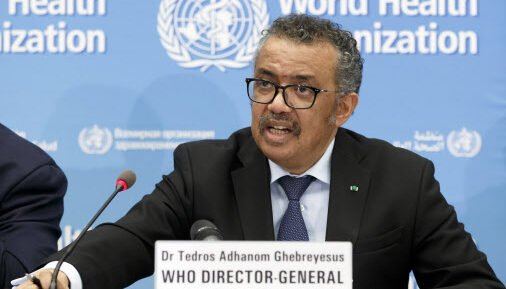
TEDROS Ghebreyesus, Director of the World Health Organization (WHO), has announced that he has gone into isolation after someone he had come in contact with tested positive for COVID-19.

“I have been identified as a contact of someone who has tested positive for #COVID19,” he said in a tweet.

“I am well and without symptoms but will self-quarantine over the coming days, in line with @WHO protocols, and work from home,” he added.

Tedros, who has been in the forefront of the WHO’s efforts to confront the COVID-19 outbreak since its outbreak in China, last year, stressed the need to comply with health guidance to suppress the virus and break the chain of transmission of the virus.

“It is critically important that we all comply with health guidance. This is how we will break chains of #COVID19 transmission, suppress the virus, and protect health systems.”

There are 46 million confirmed cases of COVID-19 worldwide. Of the total figure, over 33 million patients have recovered while 1.2 million persons have died of the infection.

Nigeria has a total number of 62,964 cases with 58,790 recoveries and 1,146 deaths.

WAEC withholds results of 215,149 candidates in 2020 examination over malpractice

THE West African Examination Council (WAEC) says it has withheld the results of 215,149 school candidates representing 13.98 per cent of the entire students over reported cases of examination malpractices.

Patrick Areghan, the Head of the Nigeria national office of (WAEC) made this known during a press briefing held to announce the release of results of the 2020 school candidates on Monday in Yaba, Lagos state.

“The results of two hundred and fifteen thousand one hundred and forty-nine (215,149) candidates, representing 13.98 per cent of the total number of candidates that sat the examination, are being withheld in connection with various reported cases of examination malpractice,” said Areghan.

He added that the reported cases are being investigated while the reports of the investigations would be presented to the appropriate committee of the council for determination in due course.

According to Areghan, 1,538,445 candidates sat for the 2020 examination across 19,129 recognised schools in Nigeria.

He added that one million three hundred and thirty-eight thousand three hundred and forty-eight (1,338,348) candidates, representing 86.99 percent, obtained credit and above in a minimum of any five subjects.

Areghan further stated that one million three thousand six hundred and sixty-eight (1,003,668) candidates, representing 65.24 percent, obtained credits and above in a minimum of five (5) subjects, including English language and Mathematics.

Areghan noted that 497,139 representing 49.53 percent of the population were male students while 506,529 representing 50.47 per cent were female.

For candidates with special needs, Areghan said a total of four thousand two hundred and eighty (4,280) candidates with varying degrees of special needs were registered for the examination.

“Out of this number, two hundred and thirty (230) were visually challenged, seven hundred and forty-five (745) had impaired hearing; two thousand eight hundred and fifty-two (2,852) had a low vision; thirty-eight (38) were spastic cum mentally challenged, and fifty-eight (58) were physically challenged,” Areghan stated.

He said the examination was also conducted in Chibok local government area of Borno state, for the first time in six years since the abduction of over 276 schoolgirls in the area by insurgents.


Groups urge lawmakers to disregard lobby to pass controversial Water Resources Bill

THE Amalgamated Union of Public Corporations Civil Service Technical and Recreational Services Employees (AUPCTRE) and the Corporate Accountability and Public Participation Africa (CAPPA) have called on lawmakers in the National Assembly to disregard an alleged lobby for the passage of the Water Resources Bill despite its rejection by Nigerians.

The groups described the unrelenting lobby for passage of the Bill by Suleiman Adamu, Minister of Water Resources, as an insult to the sensibilities of Nigerians who have unanimously rejected the Bill.

Last week, media reports indicated that the minister met with the House of Representatives Committee on Water Resources to advance arguments why the Bill should be passed as it is and accused those criticizing the Bill across the country as misled.

The Bill was criticised by various pan-ethnic groups in the country including the Ohaneze Ndigbo, Afenifere, and the Ijaw Youth Council (IYC) which had on October 20, 2020 alleged lopsided applications of the mining regulations in the country. Nobel laureate and playwright, Wole Soyinka, and Spokesman of Afenifere, Yinka Odumakin are also vocal opponents of the Bill.

The Bill was withdrawn on Tuesday, September 29, 2020, after a heated debate in the House when some lawmakers alleged a breach of House Standing Rules while working towards passing the bill into law and relied on the anomaly to ask Femi Gbajabiamila,  Speaker of the House of Representatives, to throw it away or at best have it reworked and then represented for consideration.

Subsequently, Majority Leader of the House of Representatives, Alhassan Ado Doguwa said that the House would start the consideration of the Bill afresh.

But in a statement issued in Lagos, AUPCTRE and CAPPA described the minister’s ongoing lobby effort as a reflection of desperation, cautioning that Nigerians will not accept a law that does not follow the right trajectory which includes consulting with and seeking the input of Nigerians in all the processes in the National Assembly.

Benjamin Anthony, AUPCTRE National President, urged the minister to respect the will of Nigerians by acceding to a truly consultative process to birth a true and pro-people Water Bill, even as he added that, “No backdoor arrangement will be accepted by Nigerians now or in the future. That era is gone”

“We are now vindicated when we say the motives of the promoters of this ill-conceived Bill are suspicious. The Minister must respect the popular views of Nigerians that a fresh Bill with input from Nigerians begins. The stepped down Bill is exactly the opposite of what Nigerians want and will only hand our water resources to for-profit only entities. It is unacceptable”

On his part, Akinbode Oluwafemi, CAPPA Executive Director, said: “that the remarks and activities of promoters of the Bill, especially the Minister of Water Resources since it was stepped down in September show that there is clearly a hidden agenda that they are trying hard to make Nigerians swallow even when the dangers inherent in the Bill have been highlighted and articulated in the public space.”

“By his words and actions the minister is subverting our democratic process because clearly, he is inferring that the views of the majority of Nigerians no longer count on policy development and laws that concern all. We will not accept that. He must allow the process uninterrupted”

Among a host of reasons, AUPCTRE and CAPPA say that Public-private partnership is portrayed as beneficial and depicted as only applying to the infrastructural development of water resources in the Bill when in actual fact there was no way private corporations would commit resources to the development of water without a measure of control and ownership.

They maintained that any lobby to ram through the rested Bill smacks of respect for the wishes of Nigerians who have unanimously called for it to be trashed because of its ambiguous, obnoxious, and pro-privatisation clauses.

They urged the House of Representatives not to entertain the Bill in the form it was presented before it was rested, advising that Nigerians must be part of the process of a genuine people-centered Bill from the initial stages through the entire process at the National Assembly.

“We are clear-cut when we say the motives of the promoters of this ill-conceived Bill are suspicious. The minister should come clear what those interests are. But Nigerians have spoken and loudly too. We will not accept a pro-privatisation draconian Water Bill that will benefit a few at the expense of many,” they insisted.

Fraud allegations rock NAFDAC

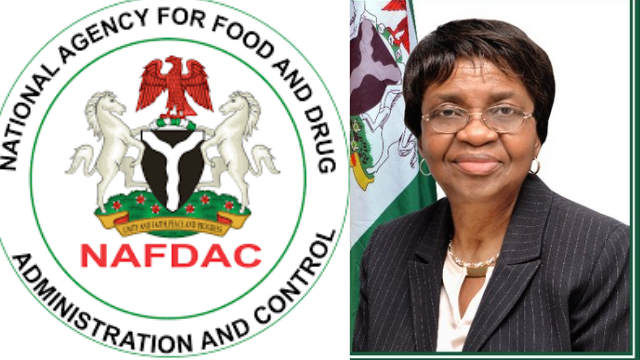
THE National Agency for Food and Drug Administration and Control (NAFDAC) is being rocked by series of allegations of fraud and misappropriation of funds.

Management staff of the agency are at the centre of the allegations, which are already subject of various petitions and ongoing investigations ‎by anti-graft agencies and an internal disciplinary panel.

Principal characters in the allegations include a former Director-General of the agency, Paul Orhii, a former Acting DG, Mrs Yetunde Oni, a one-time Acting DG, Ademola Mogbojuri, and the current DG, Prof. Mojisola Adeyeye. ‎

The allegations were brought to the fore by whistle-blower, Mogbojuri, who claimed that he was suspended by Adeyeye, and later transferred out of NAFDAC Abuja headquarters, because he was seen as an ‘obstacle’ to corruption in the agency.

Mogbojuri acted as DG for a period of two months – just before Adeyeye resumed as the substantive DG on November 30, 2017 before he was suspended, over an alleged N500m contract scam. After the suspension, he was transferred to the agency’s Training Institute in Kaduna.

Allegations against DG, Adeyeye

Allegations against Adeyeye, which were backed by documents made ‎available to The ICIR, include using a Guaranty Trust Bank account number – 0116036478 – belonging to one Mr Ayeni Odunayo Adeola, to collect her salaries from November 2017 to July 2018. According to Mogbojuri, the act was to conceal the fact that she was being paid as NAFDAC DG for those months, whereas she was yet to resign from her lecturing job in the United States – a development which means that she was collecting salaries in two places simultaneously.

Also, Adeyeye, allegedly, collected salary from 1st to 30th November, 2017, even though she only resumed work in NAFDAC on November 30th, 2017. A development which meant she collected salary for a period she did not work for.

Although the Assumption/Resumption of Duty Certificate filled by Adeyeye was dated November 3, 2017, she actually resumed duty on November 30, 2017.

A reception was held in her honour at NAFDAC headquarters, in Abuja, on November 30, 2017, to mark her resumption to the office. The ICIR sighted a programme of of activities for the reception.

Adeyeye was also accused of age falsification. Her payslip, a copy of which was seen by The ICIR, indicated that she was born on May 29, 1958 but although the petition against her did not state her real age, it noted that the date stated on the payslip was suspicious, as it suggested that she graduated from the university at the age of 18.

Furthermore, the NAFDAC DG was alleged to have purchased vehicles, including a Toyota Prado sports utility vehicle, for herself, in January 2018, without following due process. ‎

A memo marked ‘secret’ which was dated January 2018, and captioned ‘Memorandum to NAFDAC Tender’s Board For Consideration Of Request For Approval To Award Contract For The Purchase Of One (1) Unit Of Vehicle For NAFDAC Operational Office, Lagos’, which was seen by The ICIR, requested the NAFDAC Tenders Board to approve the award of the contract for supply of a Toyota Prado TX 7-5 AT LS in the total sum of N47,222,222.22 in favour of Messrs Elizade Nigeria Limited.

Another memo, signed by Musa M. Bashir, ‘CEO (Transport)’ and dated January 8, 2018, requested the AD (Procurement) to purchase one Toyota Prado and one Toyota Hilux as operational vehicles for the Lagos formation from Messrs Elizade Nigeria Limited.

Adeyeye collected the sum of N560,000 in lieu of accommodation for 28 days. A memo signed by Mrs Osayi Emem, E, said the payment was due to her in line with PSR 130105. However, it was alleged that Adeyeye was not entitled to the payment, as she had already been paid a lump sum for accommodation allowance for political office holders.

Adeyeye’s defence

The NAFDAC DG dismissed the allegations against her during an interview with The ICIR.

  • Odunayo’s account number sent to IPPIS in error

According to her, Odunayo – whose GTB account number she used to receive salaries from November 2017 to July 2018 – was her husband’s PA, and a volunteer manager in an orphan home she has been running in Nigeria.

Adeyeye said she has been sending money from US to Nigeria for the running of the orphan home through Odunayo, and mistakenly sent his account number to IPPIS when she was asked to submit her account details, upon her appointment as NAFDAC DG.

Adeyeye said the issue had already been investigated by the EFCC, following an alleged petition by Mogbojuri. ‎

She said, “He (Mogbojuri) has taken us to EFCC and Mr Ejiofor went with me. That is his practice, to steal documents and take them to the EFCC.

“Odunayo is my husband’s PA. He has been managing our orphan home since 2007, I usually transfer money from US to Nigeria through his account so when they asked for my account number for IPPIS I mistakenly sent my husband PA’s number to them.

“Odunayo was like a son to me. I would trust him with anything so after two or three months he said there is a strange sum of money coming into his account. It was being paid into his account and when we discovered it, we started correcting it. We had to go to GTB and they corrected it but it took a while to correct it. But they (EFCC) said I must have been paying Odunayo for some contract and when they ‎asked me to bring all the contracts I have signed since I came they couldn’t find anything. What EFCC asked me was why did it take long? And they wanted to find out that government wasn’t paying double. I said if government was paying double they should find out. How can government pay double? Did I give two accounts at the same time? This is what Mogbojuri went to EFCC to allege. The thing was corrected and they started paying money into my account.”

Adeyeye resumed at NAFDAC in November 2017 and The ICIR sighted a letter, dated August 30, 2018, and addressed to the Office of the Accountant General of the Federation, captioned ‘Correction of bank details of the Director General (NAFDAC)’ which requested authorisat‎ion to change Adeyeye’s account details on the IPPIS platform from Odunayo’s account number to her own GTB account.

The ICIR did not ascertain when the correction of Adeyeye’s account details was finally effected on the IPPIS but the August 30, 2018 letter shows that she received her salaries through Odunayo’s bank account for up to eight months after her appointment.

‎* ‘I returned salary paid to me before resumption’

The NAFDAC DG explained that she was paid salary for the month of November 2017 be‎cause, although she resumed work on November 30, 2017, the date on her appointment letter was November 3, 2017, which she said was the date captured on the IPPIS platform.

“In the United States the date that is indicated as the date of appointment is when your salary starts running. November 3 is what is on my appointment letter and it is a tenured appointment,” she said.‎

Although she stressed that she did not see anything wrong with her being paid salary for November 2017, Adeyeye said she returned the money to the Federal Government’s coffers when the matter became an issue.

“When it was said that I got unearned salary, my husband said return the money and I returned it,” she said, adding that she intends to get the money. “I am still getting the money back,” Adeyeye said.

The ICIR, however, could not confirm Adeyeye’s claim that the money was returned. Evidence of return of the salary, which The ICIR requested in an SMS sent to her, was not provided. The SMS was not replied.

‎* Alleged discrepancy in age was caused by settings on IPPIS platform

Responding to allegations that she falsified her age upon her appointment as NAFDAC DG, Adeyeye said she had no reasons to falsify her age since she was a political appointee and her Curriculum Vitae, which was submitted to the Federal Government, already had her age, with date of birth.

She said the software settings on the IPPIS platform, which, according to her, was initially designed solely for civil servants whose retirement age is 60 years, was responsible for the disparities in her age. ‎

According to Adeyeye’s explanations, initially the IPPIS could not accept any age above‎ 60, which was the case with political appointees who were not factored into the settings when the payment platform was designed.

So, according to her, to enrol her on the IPPIS, the IPPIS desk officers said they will have to ‘drop her age down’, or lower her age.

*Toyota Prado‎ purchased directly from seller

Adeyeye denied allegations that the purchase of the Toyota Prado did not follow due process.

“We had need for the vehicle, we didn’t buy it through any contract. We bought it from the seller. Nobody got any profit from it. It was taken to tender,” she said. ‎

‎* NAFDAC top job not ‘compensation’ for husband 

Adeyeye also reacted to Mogbojuri’s claims that she allegedly said she was given the NAFDAC top job as‎ a sort of ‘compensation’ for her husband.

The NAFDAC DG’s husband, Senator Olusola Adeyeye, was Chief Whip during the Eighth Senate.

Dismissing insinuation that her husband’s influence got her the job, she insisted that ‎she was the most qualified among several people that applied for the job.

Adeyeye observed that Mogbojuri, who acted as NAFDAC DG in acting capacity for two months before she came, was scheming to become the substantive Director-General of the agency. She noted that Mogbojuri, being an accountant, was not qualified to head NAFDAC.

“It is an insult for a Director of Finance and Accounts (Mogbojuri) to be managing a food and drug administration agency. I resigned in May and I had a virtual company I turned into an on-site company and rented an office. I put my CV on my business website and it was the CV that kept everybody quiet when I was announced as the DG. I was the best qualified and my CV shows it,” she said.

The ‘N500m contract scam’ allegation against Mogbojuri

Although Mogbojuri allegedly initiated investigations by anti-corruption agencies into the alleged fraudulent practices in NAFDAC, The ICIR also found that he also has allegations hanging on his neck.

Mogbojuri said he is being victimised by Adeyeye because of his ‘anti-corruption’ disposition, and also because she (Adeyeye) wants to cover the up the corrupt acts of some of her predecessors – ex NAFDAC DG, Paul Orhii, and former Acting DG, Yetunde Oni.

But Adeyeye said an investigative panel she set up a week after resuming at NAFDAC discovered that Mogbojuri misappropriated N500m in the two months he served as Acting DG before her appointment.

According to Adeyeye, she had to set up the investigation panel when she met a debt of N3.2bn on resumption in the agency.

Adeyeye said in November 2018, she had to pay an outstanding N3.1bn that was not r‎emitted to the Federal Government from the agency’s revenue.

‎Noting that she met a ‘mess’ when she resumed, Adeyeye said, ‎”I set up an investigation panel on December 3rd or 4th, a week after I came. I met N3.2bn debt and when the then Deputy Director of Finance came and I asked him that I want to look at the books before I start anything. That was when he showed me N3.2bn debt. And he said N500m was the amount spent when Mogbojuri was there for two months. I was floored. I have never heard anything like that, in two months? And I said go to accounts department and get vouchers, let’s see how many of these contracts were awarded.” ‎

‎According to her, out of the N500m spent by Mogbojuri in the two months, she was able to stop contracts worth N144m that have not been financed.

She added, “‎They (investigation panel) did their‎ investigation within a week and submitted their report on December 10. I told them to give me incontrovertible evidence. Then they brought me evidence. Mogbojuri was using letterheads of companies to award contracts. We decided to get in touch with the companies and the companies wrote a letter saying they didn’t know they were given contacts. That is what Mogbojuri did. He was issuing contracts on their behalf.”

Adeyeye further claimed that, after her appointment, be‎fore she eventually resumed, people were calling from NAFDAC “begging me to resume, that Mogbojuri and his boys were looting NAFDAC”.

‎Following the discovery of the ‘N500m contract scam’, Mogbojuri was suspended by Adeyeye in January 2018. He was recalled in July 2018 and subsequently transferred out of the Abuja headquarters to Kaduna, where he currently heads the NAFDAC Training Institute, Kaduna.

But the allegations against Mogbojuri are still being investigated by an internal disciplinary panel. ‎

Mogbojuri’s defence, and counter-allegations‎

When The ICIR spoke with Mogbojuri in the evening of Thursday, October 29, ‎he said he appeared before the panel earlier in the day.

He insisted, in a chat with our correspondent, that he was a victim of witch-hunt owing to his opposition to corruption within the agency.

According to him, his removal as Director of Finance and Accounts (DFA) was a punitive measure that was also aimed at paving the way for misappropriation of funds in NAFDAC. ‎

He alleged that the ‘conspiracy’ against him involved a former DG, Paul Orhii, a former Acting DG, Yetunde Oni, and current ‎DG, Adeyeye. ‎

‎It was Orhii who initially removed Mogbojuri as DFA and moved him to the Planning, Research and Statistics (PRS) department, and later to the Training Institute, Kaduna.

While in Kaduna, Mogbojuri was recalled back to Abuja to serve as the Acting DG after Oni’s retirement. Oni had also acted as DG, for 21 months. When Adeyeye took over from Mogbojuri, he (Mogbojuri) returned to his previous office as DFA. But Adeyeye later moved him back to PRS and later, again to Kaduna, where he is, currently.

‎”They did it (removal as DFA) because they felt I was a stumbling block. That is what the current DG is also doing, because they told her that I am the only person that can stand and tell you the truth. ‎She has reported me to the E‎FCC just because they told her I will not allow her to loot,” he claimed.

Insisting that there was no proof to the allegations against him, he added, “All these allegations against me how come she has not proven them? And how come she has not allowed me to defend myself until today when the panel invited me to the conference room? She has set up several investigative panels to probe me but no report has been produced.

‎”When some Senators called me to say that Adeyeye said I misappropriated N500m in the two months I acted before she came, I thought it was a joke because it did not happen.

“She started investigating me a week after her resumption and even when she travelled after a week and handed over to me, I was not allowed to see the documents. Yetunde Oni acted for 21 months and when I took over some senators told me to probe her, that she has stolen too much.”

Mogbojuri further alleged that most of the contracts involved in the N500m he was accused of misappropriating were ‎awarded by Oni, who he accused Adeyeye of shielding.

He said, “About N200m of the contracts was written by Yetunde Oni, she has left office but was still awarding contracts a‎nd Adeyeye was covering her. When Adeyeye was to give me query she removed the N200m and told me to account for N300m and most of the (N300m) were documents I met on the ground.

“I did not pay any contractor. Most of the contracts I approved Adeyeye cancelled them (when she took over) and those that were approved she did not pay for more than a year.”

He said he was asked to “explain certain things” by the panel at Thursday’s sitting.

But, according to him, members of the panel were people that worked with Oni, and part of the alleged conspiracy against him. ‎

“The people that are probing me, before Adeyeye came, awarded contracts of N236m‎ and it was later subtracted from the N500m they said I misappropriated. The investigation is supposed to take three months. Why is it taking 3 years?‎ The place (NAFDAC) is laden with fraud,” he said.

‎Mogbojuri equally claimed that he was kidnapped, alongside his wife, in the course of the ongoing saga.

Oni’s response

Oni, who had since retired, denied Mogbojuri’s allegations when she was contacted by The ICIR. She equally described Oni as a ‘serial petitioner’.

Oni said, “I left NAFDAC three years ago and I don’t know what documents you have but I don’t have any issues with misappropriation of funds. I rose to the highest rank in NAFDAC and being known as Madam Due Process, I can tell you that NAFDAC will never embark on anything that did not pass through due process.

“‎There has been a lot of discord in NAFDAC lately and that is unfortunate. The man (Mogbojuri) goes about writing petitions and making allega‎tions, when he meets a brick-wall somewhere because there is no substance to the petition he goes to another place to represent the petition.”

She noted that the allegations are distractions that could undermine the agency’s efficiency.

IPPIS platform not responsible for discrepancy in age… Office of Accountant General of the Federation (OAGF)

Meanwhile, the Office of the Accountant General of the Federation has described as false, the claim that the software of the IPPIS platform ‎lowered the age of political appointees who were above 60, in order to enrol them on the payment system.

Adeyeye had explained that the discrepancy in her age was due to a fault in the settings of the platform, but in response to further enquiries by The ICIR, the spokesman of the OAGF, Henshaw Ogubike, said the explanation was ‘fake information’. “This is fake information please,” Ogubike said in an SMS in response to The ICIR’s enquiries. ‎

Four Nigerian journalists shortlisted for Fetisov 2020 Journalism Awards

FOUR Nigerian journalists have been shortlisted for the 2020 Fetisov Journalism Awards.

Fetisov announced a total of 35 entries from 21 countries selected across four categories: contribution to peace, contribution to civil rights, investigative reporting and environmental journalism.

The four Nigerian journalists shortlisted are – Fisayo Soyombo for outstanding investigative reporting on Undercover Investigation on Nigeria’s Criminal Justice System,  Kelechi Iruoma and Ruth Olurounbi, whose joint entry on oil spill pollution in the Niger Delta, was shortlisted under the “excellence in environmental journalism” category.

Philip Obaji of SaharaReporters featured in the “outstanding contribution to peace” category; and Olatunji Ololade of The Nation made it in the “outstanding investigative reporting” category.

Fetisov Journalism Awards seeks to promote “universal human values such as honesty, justice, courage and nobility through the example of outstanding journalists from all over the world.”

According to the organisation, the first, second and third place winners in each category will receive CHF100,000 (US$104,005), CHF20,000 (US$20,801) and CHF10,000 (US$10,400), respectively.

The shortlisted entries also featured two of the International Centre for Investigative Reporting (ICIR) co-founded stories on Undercover Investigation on Nigeria’s Criminal Justice System done by Fisayo Soyombo and a joint entry on how oil pollution continues to kill Nigerians in Delta region done by Kelechukwu Iruoma and Ruth Olurounbi.

It will be recalled that ICIR reporter Amos Abba emerges 3rd place winner of Fetisov journalism award last year in Environmental Journalism category, for his report on  How Nestle Nigeria contaminates water supply of its host community in Abuja, which was published in April, 2019.