Home Blog Page 1949

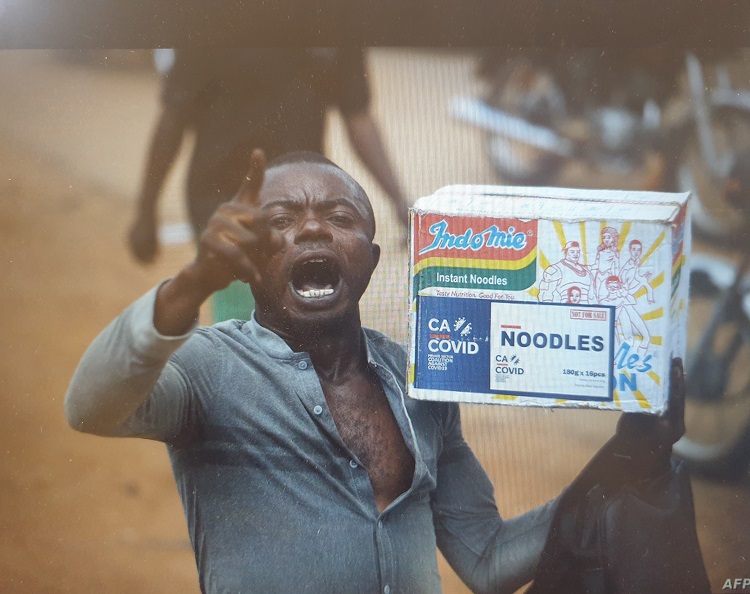
Why angry Nigerians help themselves with food items kept in discreet warehouses

THE EndSARS protest has been described as probably one of the landmark acts of resistance in the history of Nigeria. And the invasion of food warehouses by angry Nigerians has sent an unmistaken message to the ruling class that injustice of any form will no longer be taken with silent equanimity.

Thousands of protesters from various states had occupied major cities from seventh to 20 October, demanding the disbandment of the Special Anti-Robbery Squad (SARS) unit amidst agitations for good governance.

Though initially peaceful and coordinated, the protest suddenly took a new twist immediately it was hijacked by the fiery youth. A day after the Lekki shootings, it culminated in forceful retrieval of public and private properties, widely blamed on years of systemic failure and lack of public trust in governments.

But of particular interest are the CACOVID food warehouses invaded by Lagos residents. Incidents were recorded in Plateau, Osun, Taraba, Adamawa and the Federal Capital Territory (FCT), where the palliatives were allegedly kept away from the people,  a position widely contested by the state government authorities.

Roof to a warehouse in Jos used to store COVID-19 palliative being removed by members of the public. Photo Source: UK Daily Mail

“Both the state emergency management agency as well as the state governments are in the position to prepare food items and other materials in case of any eventualities. So, it is not true that the state governments and the FCT are withholding foods,” Abbas Idris, Director-General FCT Emergency Management Agency said Tuesday while debunking the allegation.

Several videos and pictures have shown how aggrieved persons stormed the various locations carting away bags of rice, cartons of noodles and other food items.

On October 23, Osun State government raised alarm about the attack on its warehouse used to store palliative supports received from the Cacovid. The next day, a similar attack took place in Ekiti state as residents stormed a warehouse oblivious of the fact that the Cacovid was earlier disbursed while what the public termed as the interventions were poisonous grains kept in the state’s silos for cultivation purpose.

The 24th of October also witnessed another attack on a warehouse in Edo State.

Many believe the state governments deliberately hoarded the palliatives despite evidence of hardship in the country.

CACOVID, a group of private sector alliance working to support the federal government and the World Health Organisation (WHO) to address relevant problems posed by the global pandemic raised about N30 billion part of which was used to provide the looted food items. Though it is yet to make an official statement on the incidents, reports show that the group gave reasons for the staggered distribution of the palliatives.

Drawing the line between morality and poverty

During first quarter of the year, at the onset of the Coronavirus Disease (COVID-19) outbreak, a report from the National Bureau of Statistics (NBS) revealed a high level of poverty in the country. The NBS report titled, 2019 Poverty and Inequality in Nigeria says 40 per cent of Nigerians, almost 83 million people live below the poverty line of N137, 430 yearly.

In August, Kingsley Moghalu, former Deputy Governor of the Central Bank of Nigeria (CBN) shared concerns on the extreme poverty rate in the country. His concerns were particularly on how poor governance and corruption have affected the nation’s growth, thus driving the socio-economic problem.

“90 million Nigerians live in extreme poverty and the country is essentially bankrupt…” he tweeted.

Extreme poverty is defined by the United Nations as a situation characterised by severe deprivation of basic human needs, drinkable water, shelter, food and even sanitation facilities. Current reality has further shown level of poverty in the land. Majority lack access to these basic needs. Most worrisome are the homes of politicians and the Oba of Lagos raided by the aggrieved persons.

So the question is how justified is the action of those who invaded warehouses? Should they have allowed reason and morality to overshadow their hunger? There were concerns the palliative might not get to the beneficiaries due to the corruption of the public officers.

The federal government, for instance, had repeatedly claimed the nation is food secured, independent findings by The ICIR showed otherwise.

Nigeria Poverty Clock shows 51 per cent of Nigerians living in extreme poverty. Photo Credit: Poverty Clock

The World Poverty Clock, a global initiative used to measure the extreme poverty rate across nations further adduced to the above findings on the rising poverty rate in the nation.

As of date, the clock shows that 51 per cent of Nigerians are living in extreme poverty. The figure amounts to 105, 097, 856. A further breakdown shows 53, 133, 553 males and 51, 964, 303 females.

From the perspective of the United Nations Human Development Index (HDI), Nigeria still appears to be on a low ranking. The 2020 HDI rates Nigeria 0.53 among the least developed countries, two places to Sudan and six to Yemen.

First launched in 1990, the HDI is ranked on a scale of 0 to 1.0. While nations within the range of 0.8 to 1.0 are considered high in the HDI ranking, those below 0.55 takes the lowest ranking.

The HDI is measured using indicators such as per capita income, education and life expectancy. As such nations with high HDI have a higher level of education, higher lifespan and greater wealth but that’s not the case with Nigeria.


Hoarding of palliatives proof of government wickedness, ineptitude –  Nigerians

“…it is a product of government’s ineptitude, greediness and wickedness,” Francisco August said, reacting to the incident.

“So during the lockdown, they were just hiding the food. I wonder about the kind of government we have. Many people have died of hunger,” Mafeg Pam, who lives in Jos told TheJakartaPost.


Chinoso Eze said the government should be blamed for hoarding the palliatives, and not the people who retrieved it. “They hid the COVID-19 palliatives, now the citizens found it by themselves. So it is not looting. They are taking the COVID-19 palliative that was meant for them.”

This argument is perhaps, the most popular among the people, but despite this submission, opposing opinions posit that no matter the condition, taking food items without permission should not have been an option.

In the meantime, Plateau and Osun state governments, for instance, have issued a 48-hour deadline for looters to return palliatives earlier taken from the warehouses. In Abuja, security officials have also been visiting individual’s homes to recover the food items, and parading the suspects including those who have taken items other than food items.


.

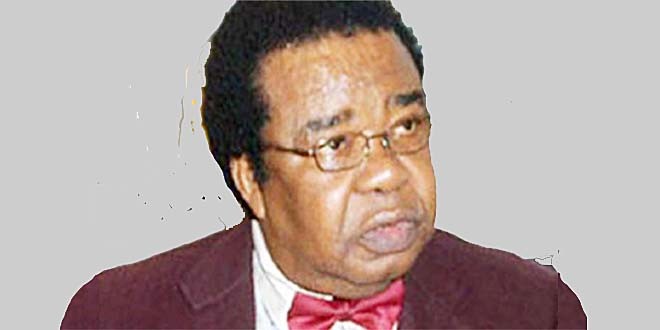
#ENDSARS: Lagos panel should give Lekki shooting top priority before the world moves on – Bolaji Akinyemi

0

BOLAJI Akinyemi, a professor of political science and former external affairs minister said the probe of the shooting at Lekki toll gate should be given top priority before considering petitions filed by people abused by the disbanded Special Anti-Robbery Squad (SARS).

Akinyemi disclosed this on Wednesday during a current affairs programme on Arise TV, saying the focus of the Lagos state panel probing the disbanded Special Anti-Robbery Squad (SARS) should first be on the shooting at Lekki toll gate.

“I wish the panel had really started with the shooting at the toll gate rather than the petitions, filed by people who have issues with SARS. This does not deny the fact that people have issues with SARS,  because this is what touches them.

“Given the national and international attention that is focused on Nigeria if I was the Chairman, of the panel, that issue would be first, but the panel itself knows best,” he said.

The former minister described Nigeria’s #ENDSARS protests as both lucky and unlucky within the international community, saying the outcome of the Lagos panel would decide Nigeria’s fate.

“Within the international context, Nigeria is both lucky and unlucky. Nigeria is lucky in the sense that our own crisis side has come in that season of protests, Black lives matter in the US, Thailand protests, Chile protests amongst others.

“The #ENDSARS protests do not paint Nigeria as being a bad boy within the international community but rather unlucky because, after 13 days of protests several protesters were being shot. Compared to Thailand where protest has been going on for more than a month or Chile there has been no shooting,” he said.

Last week, men in army uniform stormed the Lekki toll gate where #EndSARS protesters had gathered for 13 days and dispersed them using live bullets.

The incident had triggered an outrage locally and condemnation from the international community though, the army had denied being responsible while the federal government said it would investigate the tragic incident.

“I think the international community itself is probably still waiting for that Lagos panel’s decision. And I hope they are not going to take all the time about it because the US elections are seven days away.

“And the world is going to move on, if we want to keep the attention of the world on this issue, then the panel has to speed up its procedure and processes,” he said.

On the speech by President Buhari on the shooting of the #ENDSARS protesters, Akinyemi said the speech was uncivil and lacked finesse, describing the choice of words in the speech was inappropriate.

“I don’t think the speech was helpful because when a Head of State decides to demonise the international community by basically asking them to either mind their business or that they don’t know what they’re talking about. It’s insulting.

“Invariably, because of technology, the international community actually knows what they are talking about but if you are going to disagree with them you have to do so in a civil way,” he said.

Speaking on Nigeria’s global human rights rating, he stated that the country is still an important regional player despite its human rights flaws.

“Nigeria for all its worth is still perceived as a regional player with sufficient capability to impose its views in West Africa.

Buttressing his point, he stated that former Nigeria’s dictator, Sani Abacha intervention in Sierra Leone was an international relations contradiction.

“We still teach our students the Abacha contradiction who was a brutal dictator, but was trying to reintroduce democracy in Sierra Leone while the world watched because his objective in Sierra Leone was what the world wanted,” he said.

Akinyemi stressed that restructuring the nation’s polity, was not a power shift from North to South saying the #ENDSARS protests was an eye-opener.

“We’ve just seen how every governor was scrambling over the past two weeks to control the outbreak of violence when hoodlums hijacked the protests. If you allow each state to have state police, you wouldn’t have had this situation where governance in almost every state was threatened by hoodlums.

“People tend to think that restructuring is taking power from the North and giving it to the South but that is not the case. I may be wrong but if these issues are not addressed within two weeks don’t be surprised if the youths come back to streets,” he said.

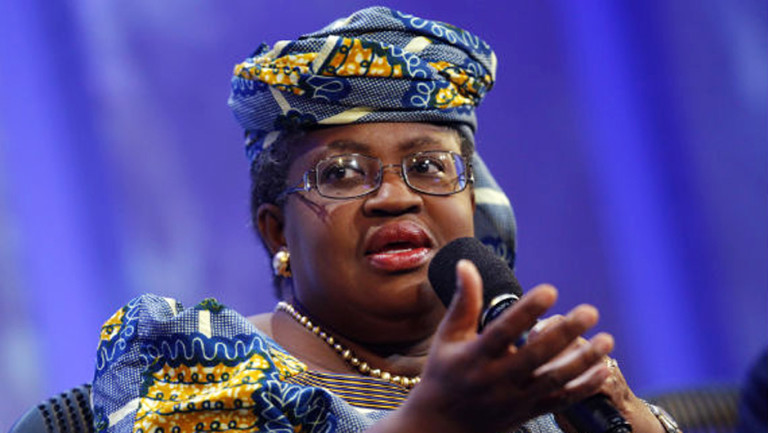
Okonjo-Iweala endorsed as WTO’s director-general

NGOZI Okonjo-Iweala, Nigeria’s former minister of finance has been endorsed to become the next the Director-General of the World Trade Organisation (WTO), and the first woman to occupy the office since the establishment of the world largest trade organization in  1995.

However, during the tense anticipation for the declaration, many Nigerian media organisations hastily published reports suggesting that Okonjo Iweala has been “elected”.

In several headlines, the Nigerian media, both print and broadcast told their audience that the former Nigeria minister, Okonjo-Iweala has been appointed. Some of the media organisations include The Punch newspaper, The Cable, Arise News, Pro Share, Vanguard newspaper among others.

Whereas Okonjo-Iweala only secured a vital endorsement from the WTO’s selection committee on Wednesday, a position that may seal the fate of her South Korea’s counterpart, Yoo Myung-hee.

According to a report,. the panel of three senior WTO ambassadors told Okonjo-Iweala that she had a wide margin of support and is best poised to command a consensus from the organization’s 164 members.

In contrast to the previous reports by a few of the Nigerian media organisation, Sherwin Bryce-Pease, the United Nations Bureau Chief of the South African Broadcasting Corporation (SABC) reported that the WTO General Council Chair has recommended Nigeria’s Dr Ngozi Okonjo-Iweala to be the next DG of WTO.

He added that the United States insisted that the South Korean candidate remains in the race for DG job, adding that they could not join consensus around Okonjo-Iweala.

It turned out later that the General Council has shifted the decision to elect the next Director-General of the WTO to November 9th.

“NO new DG has thus been named today despite strong support for Dr Ngozi Okonjo-Iweala and despite the proliferation of misinformation on Twitter,” he tweeted.

Okonjo- Iweala is an expert in development economist, finance and international development expert.

She graduated from Harvard University in the United States (US) and earned a doctorate degree in regional economics and development from Massachusetts Institute of Technology (MIT), also in the US.

She also has 15 honorary degrees from top universities around the world including Yale, Brown, and the University of Pennsylvania.

She has served twice as Nigeria’s finance minister, under the Goodluck Jonathan administration as well as during the Olusegun Obasanjo’s administration following a successful career in the World Bank where she rose to the second-highest position in the bank as  Managing Director.

During her time, as a Minister in Nigeria, she secured a multi-billion-dollar debt relief package of $18 billion for Nigeria as well as a deal to return part of the Paris Club fund.

The ICIR had reported that all 27 European Union (EU) governments have thrown their weight behind Okonjo-Iweala to head the World Trade Organization (WTO) against Yoo Myung-hee, her South Korean counterpart.

Okonjo-Iweala and Yoo Myung-hee made it to the final stage of the election among eight other candidates.

Roberto Azevedo, the former DG of the WTO stepped down from his post in August, a year before the end of his tenure.

The WTO was established in 1995 to deal with the global rules of trade, pushing for a coherent and smooth regulation of trade among nations of the world.


*Note:
This report was reviewed when it became clear that the decision to elect the next director-general of the WTO has been shifted to November 9.

Palliatives looting: Group urges ICPC, EFCC to investigate government officials, MDAs responsible for distribution

Follow The Money, a Civil Society Organisation has called on the Independent Corrupt Practices and other Related Offences Commission (ICPC) and the Economic and Financial Crimes Commission (EFCC) to investigate Government Ministries, Departments and Agencies (MDAs) responsible for the acquisition and distribution of COVID-19 palliative relief materials.

“The EFCC and the ICPC must thoroughly investigate procurement fraud and mishandling of COVID19-related funding and resources at State and Federal level, bringing culprits to justice, the CSO said in a statement made available to The ICIR.

“The National Assembly should also hold public hearings on the Palliatives looting and citizens properly briefed on outcomes. These public officials must be held accountable for the lapses inefficiency.”

The statement was its reaction to ‘the discovery of government storehouses for COVID-19 palliatives and the looting spree of the food items and material resources across the country’.

Follow The Money said during the wake of the COVID-19 pandemic, a total of 57 Freedom of Information (FOI) request letters were received by 27 State Government agencies, requesting details of COVID-19 funds and the distribution of palliatives— only six responded.

The group said the six states that responded assured that the palliatives were distributed accordingly, even though they refused to provide details of distribution and evidence of the same.

“The discovery of palliatives hideouts further indicates a systemic failure in governance and a distrust in leadership. There is no reason why the distribution of these items should have been delayed—knowing that the coronavirus pandemic worsened the country’s economic situation and increased poverty level, said Hamzat Lawal, the Founder of  Follow The Money.

“This discovery further exposes the rot and persistent corruption in the Nigerian system.”

He added that the ‘Nigerian government continues to thwart the possibility of gaining the trust of its citizens, especially with its opacity and poor accountability, which have now snowballed into a mob action and heavy looting of COVID-19 palliatives’.

Lawal further stated that there is an urgent need for the Presidential Task Force (PTF) on COVID-19 to prioritise addressing the lapses identified—from operational mistakes to gross mismanagement of logistics, leading to the mob action of palliatives looting.

CSOs kick as government again pushes for anti-social media law

ON Monday, October 26, the Federal Government, through the National Broadcasting Commission (NBC) slammed fines of N3 million against ‎three major broadcast stations over what it described as ‘unprofessional coverage’ of the #EndSARS protests. ‎The broadcast stations are Arise TV, African Independent Television (AIT) and Channels Television.  They were penalized for‎ allegedly airing unverified images from social media.

In announcing the sanctions, NBC blamed the television stations for the violent turn which later characterised the protests. “Channels Television, Arise TV and AIT especially continued to transmit footages obtained from unverified and unauthenticated social media sources,” Acting Director-General of the NBC, Prof. Armstrong Idachaba said, adding that the pictures stimulated anger and heightened the violence that was witnessed during the crisis.

The fines generated criticism from several quarters and have been described as an attempt to muzzle the press. The Socio-Economic Rights and Accountability Project (SERAP) has threatened legal action against the Federal Government for failing to respond to public calls to cancel the fines.

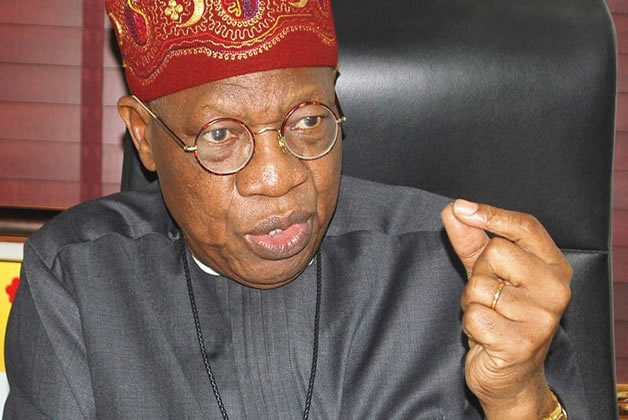
However, barely 24 hours after the Federal Government handed down the fines on the broadcast stations, Minister of Information and Culture, Lai Mohammed, on Tuesday, October 27, used the #EndSARS protests as justification to make yet another push for social media regulation in the country.

The minister had appeared before the House of Representatives‎ Committee on Information, National Orientation, Ethics and Values ‎to defend the 2021 budget proposed by the Ministry of Information and Culture but he used the occasion to insist on the need for the enactment of an anti-social media law.

Addressing the lawmakers, Mohammed warned that Nigeria was sitting on a keg of gunpowder, which could consume the country if the issue of fake news was not urgently addressed.‎

Making reference to the #EndSARS protests, Mohammed noted that the next war in the country might be fought on social media platforms.

The Federal Government has already put regulations in place for the print and broadcast media – through the Nigerian Press Council and National Broadcasting Commission but going by Mohammed’s submissions, ‎Nigeria’s biggest challenge at the moment is the absence of regulatory laws for the social media.

The minister claimed that the younger people, who make greater use of social media platforms, do not watch television, ‎listen to radio or read newspapers.

‎Describing the #EndSARS protests as a ‘war’ that was fought on the social media with ‘smartphone and data’, Mohammed maintained the position adopted by the Federal Government and the Nigerian Army by suggesting that viral videos and images which depicted the suppression of protesters were photoshopped, and as such, fake news.

‎He said, “The recent #EndSARS war was fought on social media. They mobilised using the social media. The war today revolves around two things – smartphone and data and these young men don’t even watch television or listen to the radio or read newspapers. You will be shocked that when you start arguing with your children, they will be quoting the social media. So, we need a social media policy in Nigeria and we need to empower the various agencies and we need technology to be able to regulate the social media.”

‎Warning that Nigeria faces imminent destruction from fake news, if the social media was not regulated, Mohammed added, “The biggest challenge facing Nigeria today is fake news and misinformation. Based on that, we dedicated an entire National Council on Information’s meeting to that issue, after which we launched a national campaign against fake news in July 2018.

“We said, then, that the next war will be fought without a shot being fired, but with the use of fake news. We didn’t stop there.

“We went on a tour of all media houses to solicit their support in the fight against fake news. We launched the campaign to regulate social media, which was bitterly contested by the stakeholders. We kept saying that if we don’t regulate social media, it will destroy us. Social media and fake news will not destroy Nigeria.”‎

However, the minister’s submissions did not receive the support of members of the House of Representatives‎ Committee on Information, National Orientation, Ethics and Values, who cautioned against any attempt to clampdown on freedom of expression in the country.

Information minister, Mohammed, has been championing the Federal Government’s bid to regulate the social media through the enactment of an anti-social media law.

In a lecture titled ‎’Fake News, Hate Speech and National Security in Nigeria’, which he delivered at the National Defence College‎, in Abuja, on October 15‎, the minister canvassed a national policy on social media usage‎.‎ He also made a case for a campaign against fake news as a feature of the national security programme. ‎

‎Insisting on the regulation of the social media, Mohammed cited a report by social media marketing platform, Hootsuite, which noted that Nigerians spend an average period of about three hours 17 minutes on the social media each day – a longer duration than the global average of three hours 14 minutes.

‎”The fact that the Internet is unrestrained and the absence of a policy or Act of Parliament to regulate its use, at least for communication purposes, makes the platforms susceptible to abuse,” the minister said in the lecture, adding that “wilful circulation of fake news can put the lives of the citizens in danger and put the very existence of a nation in jeopardy‎”.‎

The Federal Government’s fresh push for an anti-social media law is coming against the backdrop of stiff resistance from the citizens to earlier attempts by the government to introduce the Social Media Bill. ‎

The Social Media Bill, also known as the Protection from Internet Falsehood and Manipulations and for Related matters Bill, 2019,‎ proposed ‎steep fines or jail time for spreading what the government deems as fake news‎.‎

The proposed legislation sought to give government regulatory control over conversations on social media platforms‎, and individuals whose posts are thought to threaten national security or diminish public confidence in the government could be arrested. Authorities could also cut the Internet access of those that violate the regulation.‎

Penalties for breaking the social media law, according to the draft bill, include a fine of up to ₦300,000 or three years imprisonment for individuals and ₦10 million for corporate organisations.‎‎

However, the passage of the Social Media Bill was stalled after it ‎was greeted with spirited opposition from Nigerians who feared that it could lead to censorship and a crackdown on dissent.‎

Meanwhile, several civil society organisations and rights groups who spoke with the ICIR on Wednesday knocked the Federal Government for continuing to push for an anti-social media law in Nigeria. ‎
‎‎‎
Groups which reacted to Mohammed’s comments at the National Assembly include the Human Rights Writers Association of Nigeria (HURIWA), the International Federation of Women Lawyers (FIDA), the Youth Initiative for Advocacy, Growth and Advancement (‎YIAGA Africa) and the Resource Centre for Human Rights and Civil Education.

National Coordinator of HURIWA, Emmanuel Onwubiko,‎ condemned what he described as the Federal Government’s fixation with the anti-social media law.

Onwubiko noted that Mohammed appears bent on stifling press freedom in the country ever since he took office as Information Minister.

“Since he (Mohammed) came into office ‎he has been trying to stifle the freedom of the press. The way he is carrying-on makes one wonder whether he was given a special assignment to muzzle the press, including the social media. The Federal Government’s fixation with the anti-social media law is troubling – it is uncalled for.”

The HURIWA national coordinator observed that several existing laws in the country are enough to regulate the social media. He listed subsisting libel laws, and the Anti-Cybercrime Act, 2015, as legal instruments that are already regulating the use of social media.

Onwubiko told the ICIR that any fresh attempt by the Federal Government to enact an anti-social media law‎ would be resisted.

Rhoda Tyoben, ‎President, FIDA Nigeria, insisted that the association would never support the enactment of an anti-social media law in the country.

Noting that FIDA had achieved a lot through the social media, she said, “Gagging ‎the citizens will be a big drawback on winning the fight against sexual gender-based violence which has gained so much support through the social media.”

‎Executive Director of YIAGA Africa, ‎Samson Itodo, told the ICIR that it was not surprising that the Federal Government would seek to ‘shrink the civic space’ after the #EndSARS protests questioned bad governance in the country and also exposed government’s lack of respect for human rights.

“We shouldn’t be surprised by this resurgence in the demand by the Federal Government on the National Assembly for legislation to regulate the social media. The #EndSARS protests have exposed this government as one that has no respect for human rights and this has made them push for the regulation of the social media,” Itodo said.

He further observed that it was ironic that the government was pushing to regulate the social media when the Federal Government was actually “the ‎purveyor of fake news by using misinformation to counter the protests”.

“The state wants to shrink the civic space. It is an attempt to entrench authoritarianism and we call on the National Assembly to resist this attempt,” Itodo added.

Executive Director, Resource Centre for Human Rights and Civil Education, Ibrahim Zikirullahi, insisted that any attempt by the government to push for the enactment ‎of an anti-social media law will fail.

“The Federal Government has been trying to constrict the civic space. They have been trying to block the social media which has given voice to the masses. The mainstream media organisations are owned by the business class and the politicians and as such, they do not serve the people. The social media democratised the media space, that is why the Federal Government is trying to block it,” ‎Zikirullahi said in an interview with The ICIR.

He further observed that the President Muhammadu Buhari-led Federal Government used the social media to get into power.

“The present government rode on the powers of the social media to ascend to power and if they think they can turn round to constrict the ‎civic space today, they are wasting their time,” Zikirullahi added.

‎It would be recalled that 95 Civil Society Organisations, under the aegis of Coalition of Civil Society Organisations for Protection of Civic Space, had in March 2020 called on the National Assembly to reject Social Media Bill.‎

The coalition described the Protection from Internet Falsehood and Manipulations and for Related matters Bill, 2019 (Social Media Bill) as a draconian and modified version of the ‘defeated’ Bill for an Act to Prohibit Frivolous Petitions and other Matters Connected Therewith, 2015, sponsored under the 8th National Assembly.

The Bill for an Act to Prohibit Frivolous Petitions and other Matters Connected Therewith, 2015,‎ which also targeted the Internet and social media platforms such as Facebook, Twitter, Instagram, YouTube, WhatsApp and others, was dropped by the 8th Senate in 2016, following spirited opposition from Nigerians.


Fayemi presents N109.66bn budget for 2021

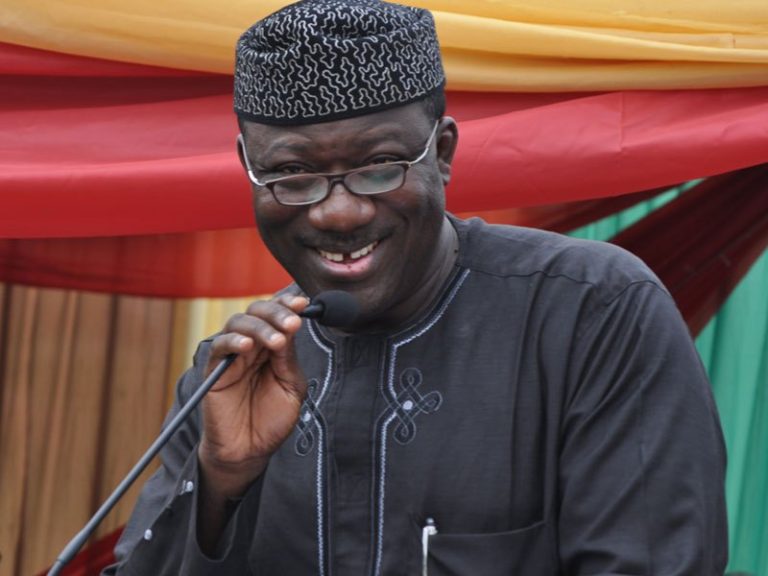
KAYODE Fayemi, Ekiti State governor, on Tuesday presented the 2021 budget of N147.9 billion to the state House of Assembly for approval.

The state Appropriation Bill which was christened ‘Budget of Recovery and Economic Restoration’ is made up of N57.997bn as recurrent expenditure and N51.668bn as capital expenditure.

“The 2021 budget is aimed at speedy economic recovery and restoration from the debilitating effects of COVID-19. Based on global forecast, it is envisaged that the impact of the pandemic would span for a period of two to three years,” he said.

“We are all aware of the security challenge being faced in the country. The recent EndSARS protest of our youths, which was hijacked by hoodlums, is an eye opener. We have made provision for the Safe City Project in the 2021 budget. Also, the Regional Security Network, Amotekun, shall be fully operational in 2021.”

He also reiterated his administration’s commitment to workers’ welfare, saying, “We have kept faith with our electioneering promise of prompt payment of salaries. We are also committed to clearing backlogs of outstanding salaries and other emoluments.

“Provision has been made in the 2021 Budget to implement the new minimum wage. Adequate provisions have been made in the 2021 proposed budget to consolidate our efforts on the provision of the basic infrastructure to improve their aesthetic and economic values.”

Compared to N91.128bn for the previous year, the 2021 budget spikes by 20 percent.

Anchor Borrowers Scheme and dashed hope of cotton farmers in Adamawa

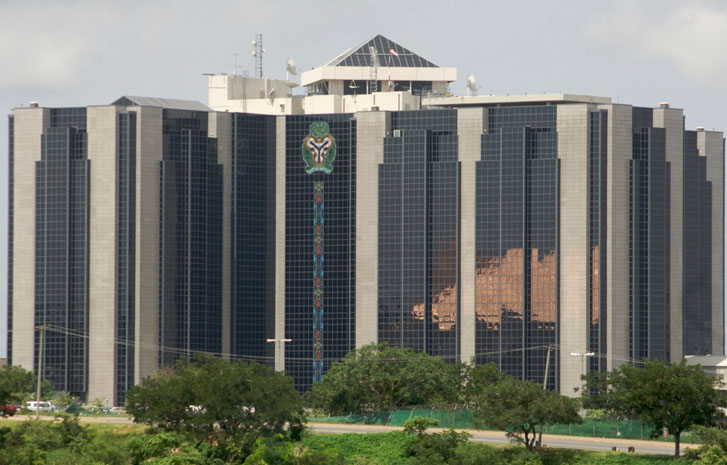
There have been some unresolved issues and allegations surrounding the implementation of CBN’s Anchor Borrowers Programme between the Apex bank, the lender and the beneficiaries, the farmers.  PADIO PHINEAS digs deeper into the issues in this revealing investigation.


BASED on his enlistment as one of the beneficiaries of the Central Bank of Nigeria, CBN’s Anchor Borrowers Program in Adamawa State for the 2020 wet planting season, James Ezra, had high hopes regarding his newfound occupation. He looked forward to a good harvest during the year as a cotton farmer, especially having been enlisted as a member of the National Cotton Association of Nigeria (NACOTAN).

According to the Economics Of Production (EOP) issued by the CBN, each of the 256,000 smallholders farmers captured under the programme nationwide to cultivate cotton for the 2020 wet season was allocated N158,502 (in kind and cash) per hectare; to be disbursed through the Anchor and Unity Bank.

The tabular breakdown of the EOP, indicated that each farmer would be allocated 25kg of cotton seeds, five bags of fertilizer, 12 liters of assortment of agrochemicals, a knapsack sprayer and 30 empty bags for harvest. The sum of N30,000 was also earmarked for mechanised land preparation and another N30,000 for sundry services on the farm leading to harvest.

Furthermore, the guidelines for the programme shows that upon harvest, benefiting farmers are expected to repay their loans with harvested produce (which must cover the loan principal and interest at 9 percent rate).

However, contrary to Ezra’s expectations of the support that would have boosted his cultivation, he told Nigerian Pilot that he was given only 25kg of seeds, two liters of chemicals and a knapsack sprayer. He said he was not given the promised money and fertilizer.

“Even at that, we got these items after parting with N5,500, paid to NACOTAN as registration fees, besides personally spending over N10,000 transportation fare going forth and back, in an effort to access the inputs”, he alleged during a visit to his farm in Jabbi-Lamba, under Girei local government area of Adamawa state.

NACOTAN chairman in the state, Sale Mohammed Gbalang admitted charging members N5,500, saying, “It’s true our members have paid N5,000 each for membership registration and N500 service charge for officers who will handle disbursement of inputs from the store.” On the delayed supply of fertilizer, Ezra said, “as you can see the farm yourself, it is already at the flowering stage, and today being the 8th of September, 2020, we are yet to see either fertilizer or chemicals for pest control”.

He alleged further, “For me, I can say without mincing words that we were tricked into the program for the benefit of some people. Yes, I make bold to say without any fear of contradiction that the program is not to help smallholder farmers as claimed; but we leave them to God.”

Ezra’s one-hectare cotton farm looked scourged and in need of fertilizer and under heavy pest attack when the reporter visited the farm. Given the look of the crops, it would be difficult, if not impossible, to get a reasonable harvest. This is because the crops have already formed balls with flowers opening. Ezra is one of the beneficiaries of the revolving loan for smallholder farmers of the program in Adamawa, Gombe and Taraba who claimed that they did not get all they were supposed to be given.

President Muhammadu Buhari, had in November 2015 launched the ABP under CBN to provide farm inputs in kind and cash to smallholder farmers in the country.

CBN’s Director, Development Finance Department, Yila Yusuf, explained that the bank was trying to bring back the glory of textiles of those days where the industry used to employ 10 million people across the country.

Gbalang told our reporter that 27,000 farmers were mobilized for the wet planting season. And going by the EOP, N3,170,040,000, was allotted to the state. During the flag-off of distribution witnessed by our reporter in Numan local government area in early May, farm inputs as indicated in the EOP were distributed accordingly, but to about fifty farmers only. As it was explained, the general distribution would continue in the coming week.

Jibril Aliyu, is one of the lucky farmers who took home inputs as provided in the EOP. “I was given all the items listed in the EOP, except mechanised land preparation or its monetary value which is N30,000 and another N30,000 as I was made to understand”.

Notwithstanding, as at early June when our reporter first contacted him, Gbalang, claimed that inputs were being distributed to all farmers in a week long exercise across the state as detailed in the EOP.

“Here in Adamawa we have 27,000 cotton farmers in our membership and I can confirm that we have commenced the disbursement of the inputs. And we are doing so in strict compliance with the EOP as handed to us by the Central Bank”, he added.

No CBN officials monitored the disbursement, as observed by our reporter. Our reporter then went to the Yola branch of the apex bank to find out why no official of the bank was assigned to monitor disbursement. At the bank, an official simply replied, “we don’t speak to journalists on any matter at this level; you may wish to go to Abuja”, he said.

Auwal Bawuro, in the same cluster group as Ezra, also told Nigerian Pilot that all he got were cotton seeds, a knapsack sprayer and two liters of chemicals. “Going by the EOP of the loan scheme, a tractor should have ploughed my land in the first place. But that never happened anywhere as I know of in this state. We handled the expenses on our own and ploughed the fields.

Bawuro also flagged another problem: even the seeds distributed are suspected to be bad. “It’s widely suspected that the cotton seeds were substandard, because in my cluster group of about 50 farmers, we all had problems with germination, except one person. Like me, so many of us had to buy cotton seeds from the market to plant.

“Sadly, NACOTAN fertilizers and other inputs are yet to be given to us as at September 8, 2020”, the farmer lamented, alleging that, “they are being smuggled out to Cameroon on a daily basis”.

Amos Marato, Jummai Sajo and several other farmers interviewed in Song, Numan, Demsa, Yola-North and Fufore local government areas had the same tale of discontent. For Marato, joining NACOTAN was regrettable. “I abandoned my traditional crop cultivation, which used to be maize and sorghum to venture into cotton production.

“We were told to join NACOTAN so we could access government funds to cultivate cotton for a ready market, but as it is I regret abandoning my former major, which is maize. Practically, I got only seeds and two liters of chemicals from what was promised and as it is, I had to plant beans among the cotton, so as to minimize loss,” he said.

Dauda Murke said he used personal money to buy fertilizer and agrochemicals for pest control because, “my cotton farm looks promising, so I wouldn’t sit back waiting for their endless promises”.

Asked why all the items listed on the EOP have not been given to the farmers and why the distribution was in segments; Gbalang responded that  “disbursement of inputs for the 2020 season is different from how it was done last year; in 2019, farmers got everything at once but 80 per cent of them sold off the inputs.”

“Given the experience, NACOTAN headquarters directed all state branches to disburse according to prevailing needs in installments. The measure was to ensure the inputs are taken to the farm and not sold.

“We took this decision because as the anchor, the responsibility of loan recovery lies with us. That is why we set up a committee to visit all the farms to confirm existence so we would deliver the inputs to actual farmers. Those who utilized the initial inputs collected were given fertilizer and agrochemicals, but those who didn’t were denied the remaining items.

“For example, in Mayo-Belwa local government area, 500 farmers took the initial disbursement, comprising cotton seeds, knapsack sprayer and two liters of chemicals. But we verified only nine persons cultivated cotton”, he said.

Asked to further explain why NACOTAN failed to provide a tractor for land preparation as indicated in the EOP to start with, the chairman said the program was facing many challenges. “Mr. Journalist, I cannot answer every question, please. Do you know that government officials have asked me to take three and a half trailer loads of fertilizer to myself, and the burden of recovery be lifted from us, but I refused?

When asked to name which government official or agency offered him a bribe, he declined saying “I don’t want to further talk about that, please. I declined the offer because I’m a God-fearing person; I cannot accept a bribe. I refused personal enrichment with public resources.

“Granted, its true that CBN provided N30,000 for land preparation, and I can confirmed that land preparation was not done; it means therefore that the amount would be deducted from the loan principal during recovery. Sincerely, there are issues with the program, so complicated, such that even the end-users, the farmers themselves are part of the problems. Yes they are; I can testify that I saw how some of them collected and sold the inputs right there and then,” he stated.

Ezra, Bawuro and Murke, have vehemently denied the allegation. “In the first place why didn’t they (NACOTAN) prepare the land for us and how would they want to convince Nigerians and the government in particular that they didn’t plan for failure?

“Government provided N30,000 for mechanised land preparation but they kept it, why? Was the provision not made based on needs assessment”, Ezra asked.

Regarding the allegation of inducement by government officials, findings indicate that no government agency was appointed to monitor the disbursement. NACOTAN took delivery of the facility on behalf of its members from CBN and is expected to effect recovery.

Mixed blessing in Taraba State

In Taraba State, a total of 4,276 farmers were mobilised, according to the state Chairman of NACOTAN, Bayero G. Bashir. Going by this figure and relying on the EOP, the sum of N677,754,552  was deployed to enhance cotton production and to create jobs in the state.

“I may not have all the figures handy, but I confirm that we took delivery of inputs proportionate to our membership. Yes, we were given everything spelt out in the EOP according to our membership registration, which is 4,276”, Bashir said.

Like his Adamawa state counterpart, Bashir told our reporter that inputs were disbursed in line with CBN’s EOP, but he admitted there were problems with the seeds. He noted that a germination problem was encountered initially and many farmers had to plant as many as three times before it germinated. Nonetheless, he blamed the lack of early rainfall on the problem.

However, some of the farmers interviewed across the state contradicted the chairman on the distribution of inputs. They confirmed receiving only 25kg of seeds, a knapsack sprayer and 2 liters of chemicals.

Farmers from Bali, Gassol, Ardo-Kola and Jalingo local government areas, lauded the Anchor Borrowers Program, but lamented none delivery of farm inputs to them, as of September 4, 2020. Vakoro Kilyobas, a member of NACOTAN from Ardo-Kola, narrated his frustration thus: “its been quite frustrating for me, because right from planting, it has been problems. I had to plant three times before it germinated.

“And as you can see for yourself, it is already at flowering and ball formation stage, yet we hadn’t been given either fertilizer or chemicals for pest control. Government needs to take this programme seriously by delivering all the inputs to us latest by the end of May. They keep telling us inputs are coming, but this is September already, “ he stated.

Adamu Abubakar, a farmer from Gassol said, “as a first-timer, I can tell you the Anchor Borrowers Program is a laudable one. But the problem is that up to this time of the year, (September) we have yet to access fertilizer and chemicals for pest control; that is not good for cotton cultivation. As a matter of fact, I had to borrow from our locally arranged neighborhood lean season savings to buy fertilizer. And as it is, I may have to resort to the same facility for pest control”, he said.

For Abdullahi Sani, from Jalingo, “the Anchor Borrowers Program, can revolutionised cotton production, but government must find a way to deal with farmers directly. Because this is September already and besides the initial seeds and two liters of chemicals, farmers don’t have fertilizer and pest control”.

Also, Emmanuel France from Ardo-Kola, lamented, “if I had known by now (September) there would be no fertilizer and agrochemicals, I wouldn’t have accepted the seeds and two liters of herbicides. It would have been better to tell us, take seeds, go and source the remaining inputs”, he said.

When asked about the farmers’ complaints, Bashir, said, “It’s true we have yet to distribute fertilizer and the remaining chemicals, but we’ll do so in due course”. He was however not specific on when is due course.

Gombe case slightly different

The Gombe State NACOTAN chairman, Abubakar Bappi, said 7,000 members of the association have benefitted from the ABP loan disbursement. According to him, the sum of N1,109,514,000 was sunk into cotton cultivation in the state. Bappi, assured that the distribution of farm inputs was done as specified in the EOP. Farmers interviewed in Billiri, Kaltungo, Yamaltu-Deba, Gombe and Chongom local government areas, admitted collecting all the farm inputs.

Ali Bogo, a NACOTAN member in Gombe, told our reporter that he was given 25kg of seeds, five bags of fertilizer, a total of12 liters of assorted agrochemicals.

“I can confirm that all of us in Gombe local government have taken delivery of all the items I’ve just listed, what is left out is the cash components” he said. Asked why land preparation and N30,000 cash were omitted in the disbursement, the Gombe Chairman, said, “there is no such provision of cash in the program. If you claim that you saw money provided in the EOP, then it means you misunderstood the documents”, he said.

When told that his Adamawa counterpart admitted that cash components have been itemised in the EOP, he retorted, “I’m Chairman of Gombe and not Adamawa; for me, I don’t know about that”.

Experts’ view on non-release of critical inputs

Commenting on the implications of non-disbursement of fertilizer and other crucial inputs, an agronomist, Ibrahim Gunda, observe that with the current situation, government might have pumped money down the drain as it would be difficult to recover the loans.

It simply means the program will not make the desired impact on one hand and, on the other, it would be difficult, if not impossible, to recover the loan”.

For Vanye Barau, an economist and a financial expert, there could be a problem with the program, which might need to be reassessed: “If this is true, then there is a fundamental problem with the program. Presumably, the loan was packaged based on needs assessment; so to not carryout land preparation and to not deliver fertilizer, it means there is no programme.

“No rocket science knowledge is required to know that no agricultural venture is done this way anywhere in the world. We can only conclude that the lender is not interested in recouping his money,” he said.

Suspected CBN’S complicity in loan recovery fraud

A Yola-based risk management expert, Garba Donald, said recouping billions of naira granted small holder farmers in the federal government’s Anchor Borrowers Programme may be difficult, considering the implementation of the project.

“It is instructive to note that despite the huge funds committed to the revolving loan scheme, the apex bank has been conspicuously silent on the loan performance. It does not comment on its inability to recover the facilities from the farmers or anchors as the case may be.

“It does not even seem to be interested in evolving pragmatic measures that can raise the recovery levels. Instead, as drum beats are already sounding, the COVID-19 outbreak may likely take the blame for this year’s inability to recover the facilities,” Donald observed.

Similarly, another financial expert, Hassan Bauchi, recalled that in December 2019, the House of Representatives investigated the non-recovery of over N81 billion from defaulting anchor companies, adding that “even that has yet to yield any desirable outcome of public benefit.

“The entire ABP is operating without legal backing that can guarantee loan recovery. Usually, when a facility is given without collateral, it means the lender has assumed responsibility for the risk involved”, he said.

Speaking on the programme, the Commissioner of Agriculture in Adamawa State, Dishi Khobe, said, “it is not our own as such we have no stake. On whether farmers were shortchanged, we do not have any official complaint about it yet”, he said.

When contacted, the Acting Director, Corporate Communications, CBN, Osita Nwanisobi, dismissed the allegations, saying, “CBN can never be part of this. Let me commend you for this patriotic investigation of the performance of the Anchor Borrowers Programme. “I assure you that we’ll set up a machinery to investigate the claims, after which I’ll make the findings available to you”, he said.

Another official of the apex bank introduced as the team-lead on NACOTAN relations, and simply identified as Khadiri, stated that the only outstanding issue about the programme is about the N30,000 that was not paid to farmers for mechanisation. The companies, according to him, were contracted to carry out the mechanisation.

“As I’m talking with you, we realised last week that some of the farmers carried out mechanisation themselves. They’ve written to us about all the farmers that carried out mechanisation themselves.

“And we said all the contractors that did not do mechanisation under NACOTAN would not be paid money because we are still in the process. That money would be credited to those framers’ accounts.

“What Unity and Keystone Banks are trying to do is that the money would be credited to the accounts of those farmers. When the money is credited to their accounts, rather than paying the loan of N181,000 it would be deducted from their repayment”, he said.

On alleged diversion of fertilizer, he said, “in locations where they didn’t get their inputs early, we told them that these are the problems: we had issues getting security clearance because you cannot move NPK to a place like Yola”.

When told that fertilizers were brought at the same time as cotton seeds and that NACOTAN fertilizers were seen in the markets and also taken across the border, Khadiri said that such situations are dealt with accordingly when discovered.

“You can go to Zamfara and confirm; a man stole fertilizer there and was arrested by the police and the fertilizer recovered”. Instead of writing about the allegation, Kadiri asked to set up a meeting with NACOTAN so that they can be confronted with our reporter’s findings.

*This investigation is supported by the John D. and Catherine T. MacArthur Foundation and the International Centre for Investigative Reporting

This report is published with permission from Nigerian Pilot.

Osun State to commence house-to-house search to retrieve looted items 

THE Osun State government says it will commence house- to- house search on Thursday to retrieve items looted by hoodlums in the state last week.

Gboyega Oyetola,  Governor of Osun State who while inspecting some of the recovered loots deposited at the parking lot of the Government House, Osogbo, warned those still in possession of stolen items to return them before the commencement of the house-to-house search by security agents.

Oyetola, while stating that the wrath of the law would be unleashed on anyone who disobeys the amnesty period, stated that about 20 per cent of the looted items have been returned.

“For us, this voluntary return of the loots is a welcome development. The intention is to assist the various owners of these items to have the opportunity of getting their properties and belongings because we believe strongly that it is going to be a big setback for them to have all these properties lost,” he said.

“What they should realise is that there are a lot of video clips and video coverage for all the looting that took place in the state. The implication of this is that there is no hidden place for anybody that looted anything in Osun.”

The Governor maintained that it is in the interest of those in possession of those items to voluntarily return all the items or face the wrath of the law after the expiration of the 72hours.

“We are not going back after this period. We are going to go from house to house to retrieve the looted items.”

Last week, some suspected hoodlums, who took advantage of the #ENDSARS protest in the state to unleash mayhem and launched an attack against private and public properties in the state.

Many items worth millions of naira were carted away. While the state warehouse housing the COVID-19 palliatives donated to the state by Coalition Against COVID-19 (CACOVID), was completely looted by residents.

Lekki Shootings: PANDEF supports Catholic Bishops’ call for thorough investigation, asks Buhari to take responsibility

THE Pan Niger Delta Forum (PANDEF), has supported calls by Catholic Bishops Conference of Nigeria for a thorough investigation into the shootings of peaceful #EndSARS protesters at the Lekki tollgate by operatives of the Nigerian Army on Tuesday, October 20.

“We are supporting the Catholic Bishops’ resolution, and similar expressions by patriotic individuals and groups in the country, as well as, the International Community, for an immediate and transparent probe of the incident, whereby persons in Army uniform indiscriminately shot at young Nigerians that were peacefully protesting against police brutality,” the Forum said.

Ken Robinson, PANDEF’s spokesperson, in a statement on Wednesday also called on President Muhammadu Buhari, to take full responsibility and bring the perpetrators of the dastardly act to book.

The Niger Delta Forum said the ramifications of the Lekki Tollgate incident go beyond portraying Nigeria to the world in a bad light saying that it as a threat to the nation’s democracy if it was true that Governor Babajide Sanwo-Olu had no foreknowledge of the incident.

“It raises further questions on the viability of the nation’s security architecture and its configuration vis-a-vis the need for a holistic overhaul,” it said.

“PANDEF has backed the call by the Catholic Bishops Conference of Nigeria for a thorough investigation into the shooting of peaceful #EndSARS protesters at the Lekki Tollgate, Lagos, on Tuesday, last week.”

It argued that “Whoever ordered the barbaric action, and those who carried it out, should be identified and made to face the consequences.”

While stressing that the government must ensure that justice is served, PANDEF said the seeming delay by the Federal Government to investigate was unbecoming.

It called for an independent probe and investigation of the incident as against the judicial panel of inquiry set up by the Lagos State Government to probe police brutality and related extrajudicial killings.

“Lekki shooting investigation should be committed to another panel that should be set up by the Federal Government and should be comprised of men and women of impeccable character, drawn from relevant strata of the society, including the military, civil society, and representatives of the #EndSARS protesters.”


Lekki Shootings: Amnesty International says it has credible evidence soldiers killed protesters

AMNESTY International, human rights advocacy group says it has received ‘credible but disturbing evidence’ that security forces of the government killed peaceful protesters at Lekki Toll Gate area of Lagos on October 20. 

“The Nigerian authorities’ must end their attempts to cover up the Lekki Toll Gate massacre, Amnesty International said, as it released a new timeline investigating the atrocity one week later,” Amnesty International said in a new investigative timeline released on Wednesday.

“The timeline – available here – collates photographs and video footage to confirm that Nigerian Army vehicles left Bonny Camp, a military base approximately a seven-minute drive from the toll gate, at 6.29 pm local time on 20 October.”

Footage then tracks the vehicles to the toll gate. At approximately 6.45pm, the Nigerian military opened fire on the #EndSars protesters who were peacefully calling for an end to police brutality.

Osai Ojigho, Country Director of Amnesty International said, “What happened at Lekki Toll Gate has all the traits of the Nigerian authorities’ pattern of a cover-up whenever their defence and security forces commit unlawful killings.”

“One week on, the Nigerian authorities still have many questions to answer: who ordered the use of lethal force on peaceful protesters? Why were CCTV cameras on the scene dismantled in advance? And who ordered electricity being turned off minutes before the military opened fire on protesters?

Ojigho said the initial denials of the involvement of soldiers in the shooting was followed by the shameful denial of the loss of lives as a result of the military’s attack against the protests.

According to her, many people are still missing since the day of the incident, adding that credible evidence shows that the military prevented ambulances from reaching the severely injured in the aftermath.

Amnesty International, she said is again calling on Nigerian authorities to bring to justice those behind the shooting and to protect those who are exercising their right to freedom of assembly.

The organization is still investigating the shooting, and the reported removal of bodies of those killed by the military in an attempt to remove evidence, Ojigho said.

Tracking the military’s movements

Amnesty International’s Crisis Response experts investigated and verified social media videos and photographs that confirm the Nigerian security forces were present at the Lekki Toll Gate when the shootings occurred.

At 6.29pm local time in Lagos, two military vehicles were filmed leaving Bonny Camp on videos shared on social media. Later footage shows four vehicles with flashing lights in a convoy, and they appear to be vehicles used by the Nigerian military and police.

The same vehicles head east along Ozumba Mbadiwe Avenue – which changes its name to the Lekki-Epe Expressway – in the direction of the Lekki Toll Gate. On this route, the vehicles pass several international embassies and consulates, including the Japanese Embassy and the Australian High Commission.

Further photographs and footage capture the vehicles arriving at the toll gate, before the peaceful protest is disrupted by men in military uniform and gunfire is heard. As night time descended, protesters continued to film and share videos of the shootings. Later in the evening, videos of the victims were also shared on social media.

Amnesty International said it has been monitoring developments across Nigeria since the #EndSars protest began on 8 October 2020.

Nigerians have been taking to the streets, peacefully demanding an end to police brutality, extrajudicial executions and extortion by the Special Anti-Robbery Squad (SARS), a unit of the Nigerian police tasked with fighting violent crimes.

At least 56 people have died across the country since protests began. In multiple cases, the security forces have used excessive force in an attempt to control or stop the protests.

On its Twitter handle on Wednesday, the “Amnesty International said has received credible but disturbing evidence of excessive use of force occasioning deaths of protesters at Lekki toll gate in Lagos.

“While we continue to investigate the killings, Amnesty International wishes to remind the authorities that under international law, security forces may only resort to the use of lethal force when strictly unavoidable to protect against an imminent threat of death or serious injury,” the group shared on its Twitter page.