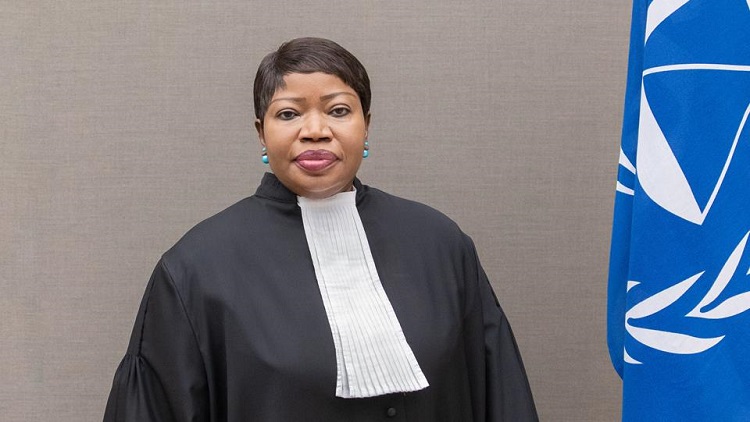
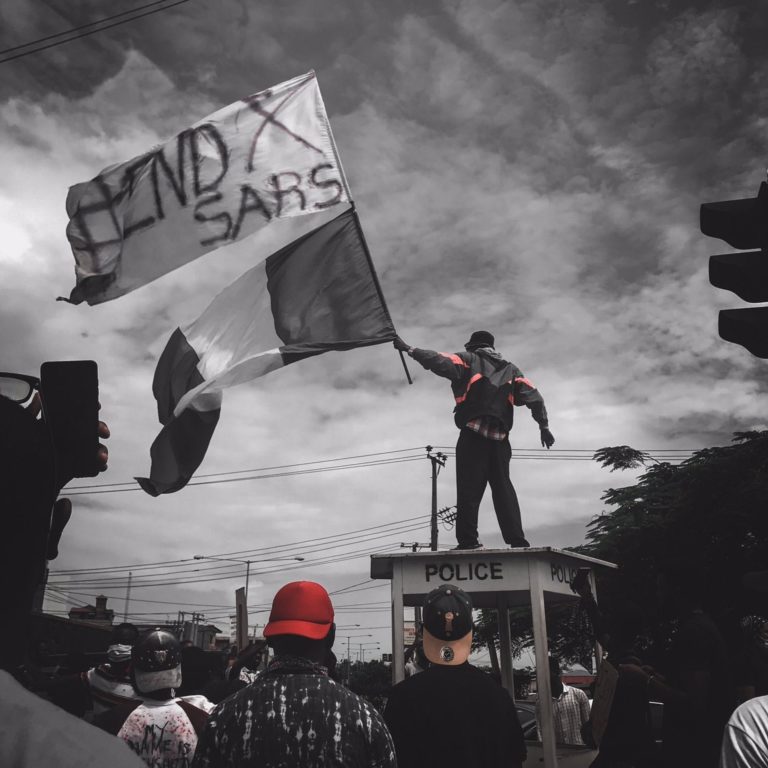
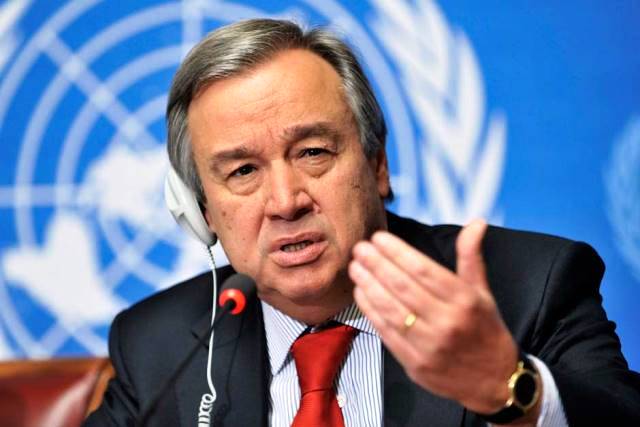
FATOU Bensouda, Prosecutor at the International Criminal Court (ICC) Thursday disclosed that her office has received reports of crimes committed during the #EndSars protests and the Court is keeping a close watch on the developments.
“My office has been closely following the events around the current protests in Nigeria and the reaction of Nigeria’s law enforcement and security agencies,” the ICC tweeted.
Bensouda also acknowledged the reported reactions of the Nigerian security operatives during the peaceful demonstrators.
“Any loss of life and injury is concerning. We have received information alleging crimes and are keeping a close eye on developments, in case violence escalates and any indications arise that Rome Statute crimes may have been committed.”
She, however, called for restraint from government authorities against the peaceful demonstrators.
Aside from the ICC, the United Nations had earlier reacted to the alleged killing of protesters in Nigeria by the government forces, calling for calm.
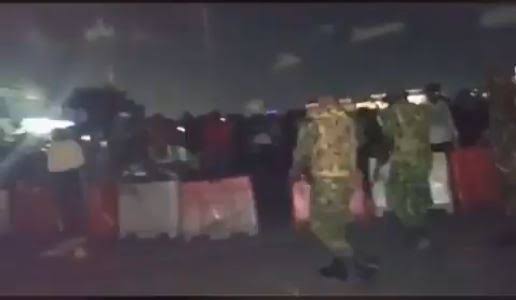
No official casualty figures from government authorities have been made public since Tuesday night when soldiers opened fire at unarmed protesters at the Lekki Toll Gate in Lagos, but there are several video and photograph evidence of casualties.
The Military and Lagos State authorities have denied any form of human rights violations.
A coalition of Civil Society Organisations (CSOs) and other interest groups had earlier called for the intervention of the ICC due to the violent attack on the demonstrators.
The CSOs also charged the National Assembly to hold an urgent meeting over the human rights violations.
President Muhammadu Buhari, has not made any broadcast on the incident, though the Vice President, Yemi Osinbajo sympathised with relatives of those who lost their lives to the Lekki shootings.
“I spoke to some of those in hospital. The pain of these terrible events is palpable in our towns and cities, and some losses are irreplaceable, but we can and will get justice for all of them. I stand with Lagos & all other affected states in these trying times,” Osinbajo stated.
Imagine that you have a medical emergency, but you can’t communicate with the doctor because he doesn’t understand what you are saying. Imagine the doctor asking you questions to diagnose your ailment, but you don’t understand what he is saying or what the medication he has prescribed for you is for. JOSEPHINE EJEH looks at this and many other challenges faced by people with hearing loss when accessing healthcare services in public hospitals in Abuja, Nigeria’s Federal Capital Territory (FCT) due to the absence of sign language interpreter
Parents of Children with Speech and Hearing Loss to the Rescue
Normally, children of the age of Nuhu Yakubu, the son of the village chief of Tunga-Ashere, Sani Yakubu are able to communicate directly with the doctors about their symptoms. But for the 8-year-old born with speech and hearing loss, that is almost impossible. Hence, Yakubu acts as an interpreter for his son in the absence of a sign language interpreter.
His worry, however, is the difficulty other children with speech and hearing loss in his community would encounter when they are fully grown and become independent if the hospitals continue to operate without addressing their needs.
“For now, since he is still young, his mother and I used to take him to the hospital when we noticed he is sick because he cannot communicate directly with the doctor. We used to help the doctor to identify what is wrong with him because there is nobody in the hospital that can understand him. These children will find things very difficult when they become adults if there is nobody to interpret for them. We beg the government to employ interpreters in our health centres to make life better for our deaf children,” the village chief told The ICIR.
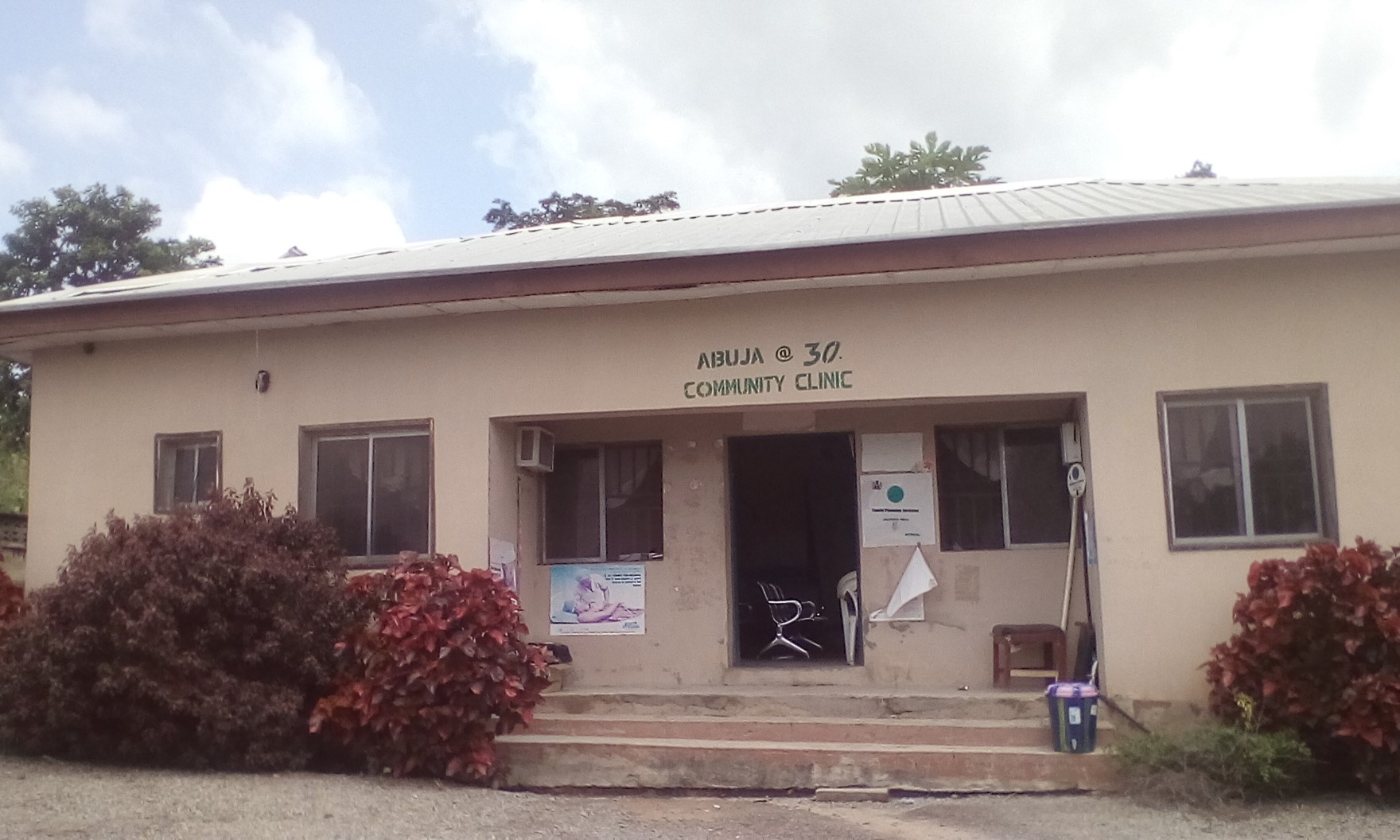
Abuja @ 30 Community Clinic in Pegi, Kuje Area Council where health workers communicate with Deaf patients through writing.
Hadiza Musa, who also serves as an interpreter for her 10-year-old daughter, Labira Musa, also born with speech and hearing loss, shares the same concern as Yakubu.
“For the sake of the future of our children, we want to have sign language interpreters in our hospital because one day, Labira will become a grown-up girl and will become independent,” said the mother of four whose last-child, Jabiru also suffers a similar fate.
The ICIR visited the Primary Health Care Centre in Tunga-Nasara community under AMAC, where the health officer in charge of the health centre, Abubakar Tanko confirmed that since 2017 when he resumed at the office, no sign language interpreter has been deployed to the centre.
He expressed the need to have one on the ground in case of an emergency.
At Karu Primary Healthcare Centre, investigation also shows there is no professional sign language interpreter in the health centre. The health officer in Charge, Akila Udoji confirmed to The ICIR that since three years ago that he was deployed to the centre, the health facility had not engaged the services of a sign language interpreter.
Sani Yakubu, the village chief of Tunga-Ashere is worried about the difficulty Deaf children in his community like his son Nuhu would encounter when fully grown, should health care centres and hospitals continue to operate without putting the need of the Deaf people into consideration.
Born Deaf, 8-year-old Nuhu Yakubu is the son of the village chief of Tunga-Ashere , Sani Yakubu.
The Primary Healthcare Centre at Tunga-Nasara in Abuja Municipal Area Council (AMAC).
While some health workers acknowledged the need to have a professional sign language interpreter on ground in their health facilities, Udoji thinks otherwise.
“We don’t have any interpreter here. The issue is, what will they be doing here. If we were to employ one, the person will have to sit all day doing nothing,” the officer who did not see the need for an interpreter to be stationed at the centre said.
According to him, since he was deployed to the centre, it is only one patient with hearing loss that has visited the hospital and “she came with somebody who was interpreting for her.”
When asked during a visit to the health facility to confirm if the hospital had a sign language interpreter on ground at the hospital, Dr Lasisi Akinola Muideen, the Medical Director of Kubwa General Hospital, said he does not talk to the press when there is no issue.
The doctor who declined further comments on the issue said: “We don’t have any issue with that. We have rapport and we are working with the deaf people association so there is no problem. We are civil servants so we are not allowed to talk to the press.”
In Bwari General Hospital, a top management staff who doesn’t want his name mentioned claimed that the hospital has a nurse who has a basic knowledge of sign language. She helps out with the interpretation whenever the need arises.
“We also have somebody we usually call when a deaf person visits the hospital,” the source said.
Deaf Persons resort to Self-Medication
Due to the communication difficulty, many people with hearing loss and speech impairment stay away from the hospital and indulge in self-medication at greater risk to their health.
Mahapatra Tanmay, Department of Epidemiology, School of Public Health, University of California, Los Angeles, California, USA in a Commentary on Self-care and self-medication published online by Annals of Tropical Medicine and Public Health.org cited Maria Esperanza Ruiz and the World Health Organisation(WHO)as saying, the self-medication might lead to “ incorrect self-diagnosis, inappropriate choice of therapy, bacterial resistance, drug interactions, failure to seek appropriate care, prolonged treatment period, serious adverse effects (often irreversible), treatment failure, drug dependency, abuse and delay in treatment for malignant cases.”
But due to the existing communication barriers, people with speech and hearing loss like Bose who goes to health care in Kuje General Hospital resort to self-medication especially when her daughter who sometimes accompanies her to the hospital to interpret for the health workers is not available.
She expressed frustration she faces during some the visits to the public hospitals
“Because they don’t have a sign language interpreter. It is very discouraging. Most of the time we are not comfortable. The doctor does not give me the needed attention because we have to write and write so sometimes, I go to the pharmacy to get my drugs instead. I want the government to employ interpreters in the health facilities and health workers should learn sign language also. It will go a long way to address the communication problem we face,” she said.
A top management source in the hospital who spoke on the condition of anonymity, however, claimed the hospital has a desk officer who is knowledgeable in this sign language. “She is always on standby. We contact her when there is a special need,” the source told our reporter.
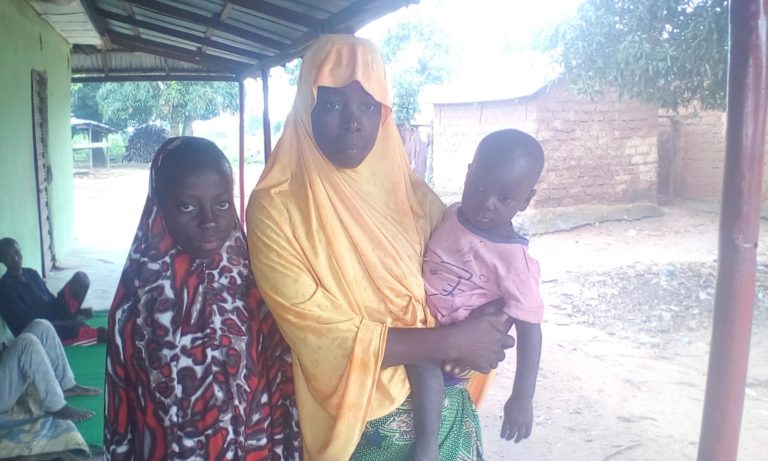
At an early age, 7-year-old Manir Umar is already getting used to self-medication. His mother, Zuliar Umar hardly takes him to the hospital when he is sick. She rather buys him drugs from a medicine store. On very rare occasions when she takes him to the hospital because there is nobody at the Tunga-Ashere health centre, she translates for her son.
Manir Umar(left) depends on his mother, Zuliar to explain his symptoms to the health workers on rare occasions that he is taken to the hospital
Manir Umar(left) depends on his mother, Zuliar to explain his symptoms to the health workers on rare occasions that he is taken to the hospital
Manir Umar(left) depends on his mother, Zuliar to explain his symptoms to the health workers on rare occasions that he is taken to the hospital
Non-Governmental Organizations to the rescue
Though non-governmental organizations have done much to improve the welfare of people with speech and hearing loss especially in the area of healthcare delivery, there is still a huge gap because the Nigerian government which has the constitutional obligation to ensure healthcare services for all without discrimination has done little for people living with disabilities, according to a recent report by The ICIR.
Previous interventions by non-government organizations in this respect were hardly complimented by the government.
One of such commendable efforts that come to mind is the free sign language interpretation services for women with speech and hearing loss, sponsored by an international nongovernmental organization, Ipas Nigeria in partnership with the Australian High Commission between 2016 and 2017 in about public hospitals in the Federal Capital Territory (FCT).
The six months pilot project aimed at increasing access to reproductive health services for women with speech and hearing loss.
After relentless advocacy, the Deaf Women Aloud Initiative and Deaf Women Association, secured a project to partner with the organisation and commission to train twelve professional sign language interpreters who were deployed in six public hospitals in the FCT to offer free services for people with speech and hearing loss. The project made accessing healthcare services very easy for people with speech and hearing loss.
Several men, women with speech and hearing loss and their children who had not visited the hospital before, came from the communities to access healthcare services free of charge in the hospitals at the expense of Ipas and the embassy because there were sign language interpreters in the hospital all the time.
But six months after the pilot project ended, the Nigerian government failed to sustain the effort despite calls from Ipas to ensure that at least one professional sign language interpreter is stationed in public hospitals.
The government turned deaf ears to the call and three years on, it is still yet to implement the recommendation in a policy brief issued during the end of the project dissemination meeting in respect of the deployment of at least one sign language interpreter in all public health facilities in the country.
Speaking during the end of project dissemination meeting of its “increasing access to reproductive health services for deaf women” project, Country Director of Ipas Nigeria, Mrs Hauwa Shekarau had said the pilot project was aimed at the overall goal of reducing maternal morbidity and mortality among deaf women in the FCT.
She said for many years before the project, many women with speech and hearing loss could not go to hospitals because of the communication barrier with health personnel, saying that many pregnant women suffering from the same issue could not go for ante-natal and delivered their babies at home. This reportedly resulted in increased maternal and child mortality rate among deaf women.
The Deaf Women Association of Nigeria (DWAN) for the FCT has been advocating for the deployment of sign language interpreters to public hospitals for many years without any tangible response from the government side.
With support from some organisations like Maries Stopes, DWAI is championing the development of health-specific sign language glossaries to help health workers such as doctors and nurses to understand the health challenges of persons with hearing loss and be able to communicate with them in the absence of sign language interpreters.
The Chairperson of the association in Abuja, Janet Fasakin told The ICIR that she is overwhelmed with complaints from her members on a daily basis, Janet, a hearing-impaired person, is overwhelmed with complaints from her members who encounter communication challenges in accessing health care service on a daily basis.
Chairperson of the Deaf Women Association of Nigeria (DWAN) for the FCT, Janet Fasakin says the association has been advocating for deployment of sign language to public hospitals to no avail
“The absence of sign language interpreters in hospitals is affecting our members very much. When they go to the hospital to check their health and there is no interpreter in the hospital, the doctor or other health workers will always want to communicate by writing but what about the Deaf person that cannot read or write because he or she is illiterate?
“How can this be possible? They may want to discuss or explain their challenge to the doctor, but how can they go about this,” she queried.
As a leader who desires to proffer solutions to the myriads of challenges confronting her members, it is either she accompanies them to the hospitals or gets an interpreter that can escort them to the hospital.
“Better still, some of their family members follow them to the hospital but this is wrong because it is their privacy that is being invaded. They want to explain what is wrong with them privately to the doctor but when you are bringing in a third party, the conversation is no longer private. If there is an interpreter, it will reduce the challenge of bringing in the third person because, with that independent interpreter, the patient will confidentially see the doctor,” she told The ICIR.
Janet, who is hearing impaired said the government should stop ignoring the needs of people with speech and hearing loss, consider their health and total wellbeing as a priority by employing sign language interpreters in all the hospitals.
On efforts made by the FCT Health Management Board, the Acting General Manager, Dr. Francis Alu told The ICIR that the board had taken steps to ensure persons with speech and hearing loss have easy access to healthcare services.
The health management board ensured that phone numbers of trained sign language interpreters were given to public hospitals in the FCT and also displayed at strategic places in the hospital to enable health workers reach out to them when the need arises.
“We also encouraged the Association of People with speech/hearing impairment to always ensure their members come with or reach out to those trained sign language personnel whenever they are coming to the hospitals to make it easier for them to be attended to,” he told The ICIR through an SMS.
Asked who picks up the bill for the services rendered by the trained sign language interpreters, Dr Alu said organizations that cater for and support the people with disabilities pick the bills while the staff of the hospitals who are trained on sign language do it on a volunteer basis.
FCT Primary Health Care Centre Lack Adequate Manpower
In an interview, the Director Primary Health Care, FCT Primary Healthcare Board (PHCB), Dr. Ruqqaya Wamakko told The ICIR that the agency considers people living with disabilities as an integral part of the society.
She said the over 250 primary health care centres in the FCT were generally bedevilled with the challenges of manpower, let alone sign language interpreters.
Dr. Ruqqaya said the board lacked the resources to employ and deploy sign language interpreters to all its health centres.
“On the issue of having stationed people to interpret, we don’t have sign language interpreters to interpret between health workers and deaf people because we don’t have enough facility to do that. But we partner with the Deaf Women Aloud Initiative because we still know the importance of taking care of people with disabilities especially in terms of maternal, sexual reproductive health and neonatal and child nutrition. This is key because we want to prevent maternal and child mortality,” she said.
She, however, said that the agency has been supporting Deaf Women Aloud Initiative with the formation of sign language glossaries over the years.
The Director of Primary Health Care, assured that when the glossary is out, health workers would be trained and the glossaries made available on their desk so that when people with hearing loss visited the hospitals and health centres, they could go through it and be able to communicate with them and manage them well.
“Since the board does not do the employment of staff personnel, it is easy to train our health care workers on basic sign language so we call on partners that can support us with the training,” she said.
The ICIR contacted the Spokesman of the Federal Ministry of Health, Jimi Oyetomi to inquire about the intervention the ministry is carrying out to ensure persons with speech and hearing loss and other people living with disability have unhindered access to healthcare but he became furious and declined to comment on the issue.
“Did the deaf people complain to you that they are not able to access healthcare? Most of the time you journalists come up with hypothetical situations. I cannot respond to this kind of thing,” he told this reporter.
Pressed further, Jimi said: “Write what you are asking for, type it and come and submit it to the Honourable Minister of Health at the registry.”
The Public Relations Officer of the National Primary Healthcare Development Agency, Ohitito said it is not the responsibility of the agency to provide sign language interpreters at the PHCs because the Federal Government does not have direct dealings with them.
Way forward
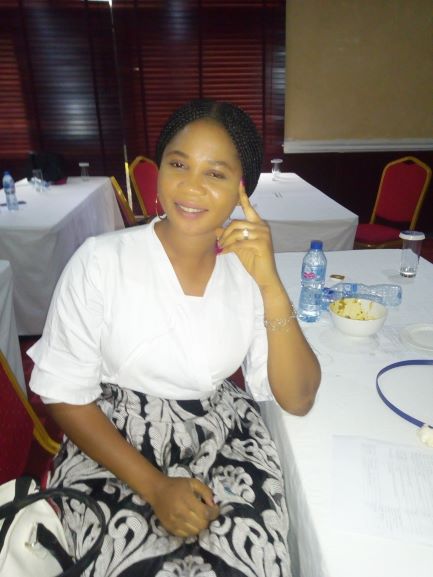
A health worker in charge of the Abuja @ 30 clinic in Kuje, Mary Innocent believes that attending to patients with speech and hearing challenges will be easier if health workers are trained on sign language rather than depending on the writing.
Justina Faruk, 22, is one of the Deaf patients Midwife, Rebecca in Leleyi Gwari community has cared for over the years. They both communicate through the method of lip reading.
While stressing the urgent need to bridge the communication gap between healthcare providers and people with hearing impairment to make it easier for them to access healthcare facility, the Executive Director of Women Aloud Initiative called on all stakeholders to unite in the endorsement of the need to secure and promote the human rights of deaf people as well as reaffirming their support for full participation with sign language.
President Muhammadu Buhari had recently, approved the appointment of an Executive Secretary(a hearing-impaired person and sign language user) for the National Commission for Persons with Disability and other members.
Helen believes that despite the giant step a lot still needs to be done to sensitize the society, media, NGOs, CSOs, institutions and government and non-government organizations etc about the importance of sign language and ensure that the content of Discrimination Against Persons with Disabilities Prohibition Act 2018 yielded the best outcomes.
Now in her sixties, the National President, Deaf Women Association of Nigeria (DWAN), Deaconess Adedoyin Beyioku-Alase popularly known as Mama Deaf, whose hearing loss occurred at the age of 18 said: “The Society is our problem because they make us afraid of everything. Deafness or disability is not our problem.”
The member, Board of Trustees of Deaf Women Aloud Initiative said deafness and disabilities can happen to anyone so the society should be structured to accommodate the needs of Deaf persons and other persons living with disabilities in all spheres.
The National President, Deaf Women Association of Nigeria (DWAN), Deaconess Adedoyin Beyioku-Alase popularly known as Mama Deaf dreads the hospital because of the attitudes of doctors and nurses towards Deaf people.
With the approval of the composition of the governing council of the National Commission for Persons with Disabilities (NCPWD) on August 24, 2020 by the Nigerian President Muhammadu Buhari, expectations are high that when the commission hits the ground running, it will address the plights of people living with disabilities who suffer discrimination in different spheres of the society.
It is, however, uncertain whether the budget of the NCPWD will feature in the 2021 appropriation to avoid financial hiccups in the take-off of the commission.
BABAJIDE Sanwo-Olu, the Governor of Lagos State has maintained that there is no record of death after soldiers believed to be from the Nigerian Army opened fire at #EndSARS protesters singing the national anthem and waving the Nigerian flag Tuesday evening at the Lekki Toll Gate Plaza.
“As at the time of the broadcast, we didn’t have any confirmed deaths from that unfortunate incident at Lekki Toll Plaza,” Sanwo-Olu said Thursday morning during an interview on Arise television.
“Thereafter, at about 11pm, I shared a tweet, where we said that there was a dead body that was brought to a hospital in Lekki and from the preliminary investigation it wasn’t due to any gunshot.”
“Based on reports from the morgues. We visited all the morgues around Lagos and these two incidents explained, I do not have any confirmed evidence of deaths from that (Lekki Toll Gate) incident,” he added.
The international rights group, Amnesty International (AI) has said that its on-ground investigation showed that over a dozen protesters were killed.
“An on-the-ground investigation by Amnesty International has confirmed that the Nigerian Army and Police killed at least 12 peaceful protesters yesterday at two locations in Lagos. Killings took place in Lekki and Alausa, where thousands were protesting police brutality,” the group posted on its Twitter page.
The Lagos State Governor also said he didn’t know who ordered the deployment of the soldiers who opened fire at protesters at the Lekki Toll Gate Plaza, adding that he can’t explain who gave the orders.
“The event that happened at 7 pm came as a total shock to me and those around me. The instructions were that the police shouldn’t be out until 10 to 11 pm. I can’t explain who gave orders to the military,” Sanwo-Olu said.
Earlier, Sanwo-Olu had said forces beyond his control were to be blamed for the murder of #EndSARS protesters by government forces.
“This is the toughest night of our lives as forces beyond our direct control have moved to make dark notes in our history, but we will face it and come out stronger,” a post on Sanwo-Olu’s official Twitter page shared around 4 am on Wednesday read in part.
Meanwhile, the Nigerian Army had denied having any of its men at the area of the shootings. In a tweet on its official Twitter page, the Nigerian Army tagged evidence of soldiers shooting at unarmed protesters in Lekki toll gate as ‘fake news’.
However, Bertram Hill, an open-source intelligence journalist with BBC, shared a video of military men shooting at protesters, disclosing the coordinates and exact location of where the clip was captured.
“Here’s the clearest view I’ve seen thus far of some of the gunfire at Lekki Tollgate. In this footage, men in camo uniform fire their weapons at: 6.435886, 3.447423, 15m from the East side of the toll gate. Some of the #EndPoliceBrutalityinNigera protestors had sat down,” his tweet read.
Many clips of the happenings at Lekki Toll Gate on Tuesday have been shared on social media including a viral photo of a yet-to-be-identified man removing cameras after what seemed to have been an uninstallation – a move Amnesty International said was to conceal evidence.
Defending the photo, Sanwo-Olu said: “Nobody ordered the removal of cameras at the Lekki tollgate. The MD of LCC said because of the curfew, they made the decision to take out installations. The cameras you saw are not security or motion cameras, they are laser cameras for vehicles.”
Protesters also reported that lights around the Lekki Toll Plaza were cut out, rendering the area dark before gunshots were fired.
Many have questioned the power outage at Lekki Toll Plaza at the time of the gunfire.
The Lekki Concession Company (LCC), set up to execute the Eti-Osa Lekki Toll Road Concession project in a statement disclosed that it receives power from an Independent Power Plant (IPP). LCC said that the curfew hindered the restoration of power when it went off.
“LCC receives power from the IPP grid, the power albeit stable is taken off from time to time. At such times, LCC relies on the backup generators for power supply, however, following the declaration of the curfew by the state governor LCC withdrew all her staff from the office locations.
“This is the reason why the lights could not be restored when the mains from IPP went off temporarily. This is verifiable,” the statement read in part.
SINCE the cyber attack on the official website of the Nigeria Police Force (NPF) a week ago, the platform has remained offline, causing the Police to disseminate information to the public only through its social media accounts.
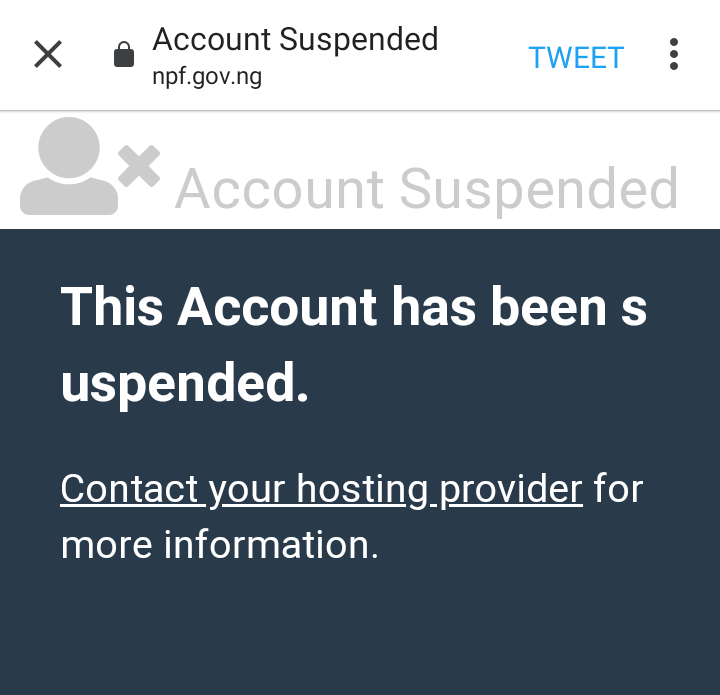
When The ICIR visited the website at 9:02 am, the message displayed on the website stated the webpage was temporarily inaccessible due to network errors or attacks.
“You cannot visit npf.gov.ng right now because its certificate has been revoked. Network errors and attacks are usually temporary, so this page will probably work later,” it read.
On October 15, an international hacking group Anonymous shut down the police website and exposed the data of some police officers in the country operating under the Special Anti Robbery Squad, SARS unit, after the attack on the NPF database.
The cyberattack on the NPF website could be attributed to a series of the onslaught against websites and social media accounts of public institutions in Nigeria carried out by Anonymous.
The group published data of the NPF in batches code-named into files which include ‘arms details’, ‘user uploads’ containing names of police officers that have access to weapons, states in Nigeria where the police have command posts, amongst others.
The hacktivist group which has continued to tweet in support of the #EndSARS movement also attacked the Twitter handle of the National Broadcasting Commission, NBC, posting messages relating to #ENDSARS protest.
It also attacked the website of the Central Bank of Nigeria (CBN) which was down for several hours before it was later recovered.
However, the NPF currently issues its press releases and public notifications through its Twitter handle and Facebook page.
To date, the NPF has not issued any statement indicating its website was hacked or its personnel information was leaked.
When The ICIR reached out to Frank Mba, the Police Public Relations Officer to know why the website had not been restored since the attack seven days ago, he did not answer his call or answered tex messages.
Meanwhile, Kaspersky (https://africa.Kaspersky.com), a cybersecurity company has warned of cyber against African countries, including Nigeria.
According to the company, Africa is open to the evolving techniques of Advanced Persistent Threats (APTs), and vulnerable to a future target of hacking-for-hire threat actor groups.
Kaspersky has seen a rise of hackers-for-hire or cyber mercenaries during the first two quarters of 2020.
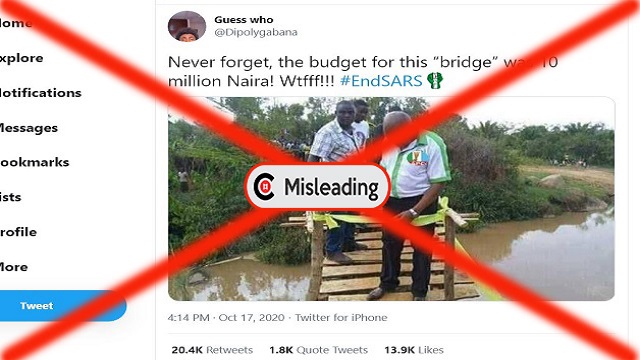
“NEVER forget, the budget for this “bridge” was 10 million Naira,” says a Twitter post by Guess Who published on Saturday, October 17, 2020.
The post has a picture of a man cutting a ribbon to commission a small rickety wooden bridge. The man’s white shirt has the logo of All Progressives Congress (APC).
The APC is the ruling political party in Nigeria.
The post suggests that the government (APC) was responsible for an overpriced bridge by adding the hashtag #EndSARS. It seeks to amplify the demands of Nigerian youths who have continued to demonstrate against Police brutality and bad governance in the country using #EndSARS.
The tweet was made at about 4:14 pm on Saturday and within 24 hours, the tweet garnered over 20, 000 retweets and more than 13, 700 likes.
THE CLAIM:
That the image shows an APC leader commissioning a wooden bridge that was supposed to have cost 10 million Naira.
THE FINDINGS:
Checks by the FactCheckHub show that the picture was manipulated and therefore MISLEADING.
Using the Reverse Image Search and Tin Eye tools, the picture was traced to publications in Zambia, Ghana, Kenya, Sierra Léon and other forums in Nigeria.
The Google reverse image showed the picture first appeared on the internet on Monday, February 6, 2017 on a Kenyan platform.
“Kenya’s social media is a gold mine of crazy. From misspellings, photoshop fails, memes and strange habits caught on camera, they are sprawling from all corners of this country,” the post read.
A few weeks after, the image was tweeted by a South African government official Tito Mboweni on February 26, 2017.
In addition, the Zambian Scribe used the same picture on January 21, 2019, to complement a story alleging that a member of parliament from an East African country commissioned the wooden bridge said to have cost 500, 000 dollars.
The picture which showed a man about to cut a ribbon does not have the APC logo on his shirt as portrayed in the viral picture.
It also appeared on a Nairaland, a Nigerian platform on May 27, 2019; this time around, the APC logo which was not there initially was added.
The size and dimension of the logo relative to the size of the man are off, in that the logo is too big, plus it looks super-imposed.
Furthermore, the image was earlier fact-checked in January 2019 when The Nigeria Politics Today, a Facebook page shared it.
THE VERDICT:
From the information above, it is evident the APC logo was superimposed on the image, thus it is MISLEADING.
This report was originally published by FactCheckHub
EYEWITNESSES and others who witnessed the incident on video which went viral on the social media, watched in shock as black Toyota Prado sports utility vehicles pulled up at the scene, and slowed down long enough to pick up a pack of thugs, who were armed with assorted dangerous weapons.
Men, clad in dark suits, who appeared to be government officials, could be seen opening the doors of the SUVs for the thugs, who rushed inside as the vehicles sped off.
A hysterical voice, which ran a commentary, narrating what was going on in the viral video, expressed shock at the development.
The Toyota Prado SUVs – the Federal Government’s choice vehicle – were transporting thugs to protest venues to attack unarmed citizens who are protesting against police brutality.
Apparently, from what could be seen in the videos, the government was providing logistics support for the hoodlums, who have been attacking protesters in various parts of the country, all in a bid to shut down the #EndSARS protests.
Cases of thugs launching unprovoked attacks on the protesters escalated after the protests continued even after the Federal Government disbandeed of the Special Anti-Robbery Squad (SARS) of the Nigeria Police Force and speedily replaced the outfit with the Special Weapons and Tactics (SWAT) Team.
The hoodlums had initially commenced their operations by staging parallel protests in support of SARS, but gradually they turned on the #EndSARS protesters with violence.
Protesters were attacked and harassed in calculated moves that were obviously aimed at intimidating them into giving up the campaign.
To further discredit the #EndSARS movement, the thugs destroyed vehicles and other property belonging to members of the public who were not even participating in the protests.
This was the case at the Julius Berger roundabout in the Wuse area of Abuja, the Federal Capital Territory, on October 14.
The apparent intention was to create the impression that the protesters have become violent, and thereby provide the security agencies a reason to clampdown on them.
Eventually, it appeared that the mandate of the hoodlums became deadlier, culminating in murderous attacks on protesters across the country on Tuesday, October 20.
However, not all victims of the attacks were protesters – in some cases, passers-by were caught up in the state-sponsored violence that was unleashed on the #EndSARS movement.
October 20, a day which became known as ‘Black Tuesday’ in the social media, was to go down in history as another of those infamous dates on which dictatorial regimes suppressed popular dissent with brutal force when soldiers rained live bullets on unarmed protesters at the Lekki Toll Gate in Lagos.
The daily barricade of the Lekki Toll Gate by mostly youthful protesters was a major highlight of the #EndSARS protests and dislodging the crowd at the Gate was key in the agenda to forcefully suppress the movement, which the army and some backers of the Federal Government were beginning to liken to a push for ‘regime change’.
Many protesters were killed in the ‘Lekki Killings’ and many more were critically wounded.
By the end of the day, pictures of a blood-stained national flag, which went viral across social media platforms, has become the symbol of ‘Black Tuesday’.
Interestingly, the Lekki Killings of Black Tuesday mirrored the events which culminated in the Tiananmen Square Massacre in China, on June 4 and 5, 1989.
Tianamen Square killings
The Tiananmen Square protests – student-led demonstrations calling for democracy, free speech and a free press in China, were suppressed in a bloody crackdown, known as the Tiananmen Square Massacre, by the Chinese government on June 4 and 5, 1989.
Following the death of Hu Yaobang, a former Communist Party leader who had worked to introduce democratic reform in China, pro-democracy protesters, mostly students, initially marched through Beijing to Tiananmen Square.
In mourning Hu, the students called for a more open, democratic government.
Eventually thousands of people joined the students in Tiananmen Square, with the protesters numbers increasing to thousands by mid-May.
Tiananmen Square Crisis
The protesters were unhappy with the one-party form of government in China, which limited political freedom.
They also complained about economic challenges in the country, which was ruled by the Communist Party.
Although China’s government had instituted a number of reforms in the 1980s that established a limited form of capitalism in the country, poor and working-class Chinese still faced significant challenges, including lack of jobs and increased poverty.
In the same vein, the students also argued that China’s educational system did not adequately prepare them for an economic system with elements of free-market capitalism. While some leaders within China’s government were sympathetic to the protesters’ cause, others saw them as a political threat.
By May 13, a number of the student protesters initiated a hunger strike, which inspired other similar strikes and protests across China and as the movement grew, the Chinese government became increasingly uncomfortable with the protests, particularly as they disrupted a visit by Prime Minister Mikhail Gorbachev of the Soviet Union on May 15.
As a result of the protests, a welcome ceremony for Gorbachev originally scheduled for Tiananmen Square was instead held at the airport. Other than that inconvenience, the Russian leader’s visit passed without any unsavoury incident as the protesters conducted themselves in a peaceful manner.
But still, feeling the demonstrations needed to be suppressed, the Chinese government declared martial law on May 20 and 250,000 troops were deployed in Beijing.
By the end of May more than one million protesters had gathered in Tiananmen Square, where they held daily marches and vigils, and images of the events were transmitted by media organisations to audiences in the United States and Europe.
When the initial presence of the soldiers failed to quell the protests, the Chinese authorities decided to increase their aggression and at 1:00 am on June 4, Chinese soldiers and police stormed Tiananmen Square, firing live bullets into the crowd. While many of the protesters tried to escape, others fought back, stoning the attacking troops and setting fire to military vehicles. Reporters and Western diplomats who were at the Square, covering the protests, estimated that hundreds to thousands of protesters were killed in the Tiananmen Square Massacre, and as many as 10,000 were arrested.
The massacre attracted condemnation from world leaders, including Gorbachev himself, and, about a month later, the United States Congress voted to impose economic sanctions against China, citing human rights violations.
Just like in the case of the protests that culminated in the Tianamen Square Massacre, the #EndSARS protests in Nigeria were led by youths who were fed up with police brutality, a phenomenon that is personified in the activities of the bloody SARS outfit. Beyond the ‘end of SARS’, they demanded immediate release of all arrested protesters, justice for all deceased victims of police brutality and compensation for the families, setting up of an independent body to oversee the investigation and prosecution of all cases of police brutality, psychological evaluation and retraining of all officers of the disbanded SARS before they can be redeployed, and increment in police salary to compensate them for protecting lives and property.
As the protests continued, even after the Federal Government gave in to the demand to disband SARS, and pledged to implement other demands, the protesters began to question other aspects of bad goverance in the country. Government at all levels became uncomfortable. It became clear that the protest has taken on a life of its own and there was no certainty about when it will end.
Hence, the ugly incidents of Black Tuesday.
Lekki Killings has already been condemned by some world leaders, with the United Nations demanding that the perpetrators must be brought to book.
“The Secretary-General (António Guterres) is following recent developments in Nigeria and calls for an end to reported police brutality and abuses.
Condeming the violent escalation on 20 October in Lagos, he calls on the Nigerian authorities to investigate these incidents and hold the perpetrators accountable,” parts of a statement issued by the UN said.
But it remains to be seen whether the perpetrators would be brought to book, more especially when the government, accused of sponsoring the mayhem, will also be the umpire.
A GROUP of Civil Society Organisations (CSOs) has asked the International Criminal Court (ICC), Hague to commence a probe of arbitrary killings of the #EndSars protesters allegedly shot by security operatives at different demonstration grounds across Nigeria.
The group which comprises 30 CSOs described the killings as highly unacceptable, also charged members of the National Assembly (NASS) to immediately hold an emergency session to check the continuous killings of the demonstrators.
In a joint statement issued Wednesday following the shooting of protesters Tuesday night by security personnel believed to be Nigerian soldiers, the group urged the lawmakers to organise a national public hearing to investigate abuse of power by security operative and failure of the security agencies to arrest thugs and hoodlums who had attacked the peaceful protesters.
“This coalition calls on the International Criminal Court to open an investigation to ongoing crimes against humanity being committed against the peaceful and unarmed #EndSars protesters in Nigeria,” the coalition demanded.
“We also demand an open trial of all those involved in previous acts of police brutality, human rights abuse and crackdowns, which have led to the needless deaths of defenceless citizens.”
The CSOs comprising the Centre for Democracy and Development (CDD), Global Rights, BudgIT and 27 others claimed to have documentary evidence to prove the several injustices against the peaceful protesters.
“Particularly disturbing is the massacre of unarmed and very peaceful protesters at the Lekki Toll Gate in Lagos yesterday. The sight of the Nigerian flag stained with the blood of the nation’s youth, in a month the country celebrated sixty years of independence, is a gory sight to behold. These killings are totally unacceptable, just as they stand condemned.
“It is pertinent to recall that this coalition previously warned the Nigerian authorities about the danger of deploying the military to confront unarmed protesters,” the statement reads.
The group expressed its solidarity towards the protesters and mourn the deceased, saying the incident was a reminder of the fragility of the nation’s democracy.
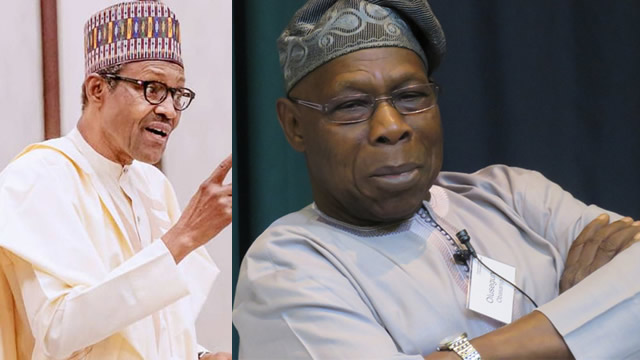
OLUSEGUN Obasanjo, a former Nigerian President has asked President Muhammadu Buhari to act on the #ENDSARS protest before it is too late.
“We are at a critical moment in this crisis and Mr. President must act now before it is too late. This time demands leadership and mature leadership at such,” said Obasanjo in a statement Wednesday as his reaction to the killing of protesters Tuesday evening in Lagos State.
Obasanjo appealed to President Buhari and Nigerian citizens to embrace peace and dialogue in resolving the crisis.
“It is with a heavy heart and a deep sense of concern about the ongoing violence, chaos, and unrest in many parts of Nigeria that I make this appeal to the government and people of our dear country, Nigeria, to eschew violence and embrace peace and dialogue in finding solutions to the challenges we face as a country,” Obasanjo stated.
He urged the incumbent president to restrain the military and other security agencies from using brute force as a way of ending the crisis.
“The shooting and murder of unarmed protesters, no matter the level of provocation, has never been effective in suppressing public anger and frustration,” Obasanjo said.
He noted that “Instead, such actions only reinforce the anger and frustration of the populace and close the window of dialogue and peaceful resolution.”
According to the former president, the Nigerian President did not exhaust the opportunities for dialogue with the protesters before resorting to the use of force.
“It is worse that there is a denial of wrongdoing in spite of overwhelming visual evidence. Great harm has been done but it can be stopped before it completely spirals out of control,” he said.
Obasanjo, who served Nigeria both as a civilian and military president said Buhari must demonstrate meekness, humanity and sincerity in meeting the legitimate demands of the ENDSARS protesters.
“Most of the demands of the protesting youth, which Governor Babajide Sanwo-Olu of Lagos State swiftly took to the President, are not unreasonable and can be met without anyone’s political interest or ambition being threatened,” he said.
“It is imperative that leaders at all levels, starting with Mr. President, must demonstrate meekness, humanity, and sincerity in meeting the legitimate demands of the protesters and ensuring that justice is served where it must be served. These are the most potent ways of ending this crisis now.”
ANTONIO GUETERESS, the Secretary-General of the United Nations has called for an end to police brutality in Nigeria.
Stephane Dujarric, Spokesman for the Secretary-General made this known in a statement on Wednesday.
“He condemns the violent escalation on 20 October in Lagos which resulted in multiple deaths and caused many injuries,” the statement read in part.
According to Dujarric, Gueteress expressed his condolences to the bereaved families and wished a speedy recovery to those injured.
He further called on the Nigerian authorities to investigate the incidents and hold the perpetrators accountable.
The Secretary-General urged Nigerian security forces to act at all times with maximum restraint while calling on protestors to demonstrate peacefully and to refrain from violence.
He also encouraged the government authorities to swiftly explore avenues to de-escalate the situation adding that the United Nations is ready to support national efforts towards finding a solution to the crisis.
On Tuesday, The ICIRreported that soldiers shot at peaceful ENDSARS protesters at the Lekki toll gate in Lagos State.
During the attack, some of the protesters were killed while many sustained injuries.
Images and videos of the shooting soldiers were shared on social media.
In some of the clips, soldiers were seenn moving towards the protesters and shooting directly at them.