IN the past 12 days, many Nigerians have taken to the streets to demand an end to police brutality across the country.
Their resolve to see a total overhaul of the police force, particularly the disbanded Special Anti-Robbery Squad (SARS), has fueled the spate of #EndSARS protests in several states. As the protests continue to gain momentum, Jake Okechukwu Effoduh (an Abuja Global Shapers Alum) with input from Abuja Global Shapers have compiled a list of 10 guidelines to direct and inform the activities of protesters.
1. Protesters do not require formal approval to conduct a protest or demonstration in Nigeria. Protesters don’t need a police permit, or a certificate to organize a protest.
2. Protesters do not need any permission to make or hold signs, flags or banners. Protesters also do not need permits to use their blankets, individual chairs, tables etc.
3. Protesters are allowed to sing, march and dance etc. Songs and chants, however, should not be offensive, harmful, or be unreasonably loud.
4. Food and beverages are allowed to be consumed during protests. Alcohol is however not permitted to be sold, distributed or consumed. Protesters should avoid lighting fires, throwing knockouts, or erecting structures that will damage the land.
5. It is important that at intervals protesters allow for the free movement of other road users or pedestrians. When roads are blocked by protesters, they can ensure there are alternative routes created for people to move and commute.
6. Protesters can also use their vehicles and other automobiles, but vehicles should not be parked on public landscaped areas. Cars should be driven at very minimal speed so as not to run into other protesters.
7. Protests are required to be civil. There should be no trespass to private property; there should be no obstruction of protected premises; and there should be no physical violence without lawful excuse. Violence in any form should be deescalated, denounced and reported.
8. Hijackers of protests when identified should be disassociated from the group and handed to the authorities. Weapons are not advised to be around protest premises. The use of sticks, stones, farm equipment or any objects that can cause injuries are advised to be kept away and removed.
9. Infants and children should not be engaged in crowded protests. First aid kits, umbrellas, jackets, face masks and water bottles are helpful during protests. COVID-19 protocols should be observed. Minority groups especially persons living with disabilities should be respected and protected within these spaces.
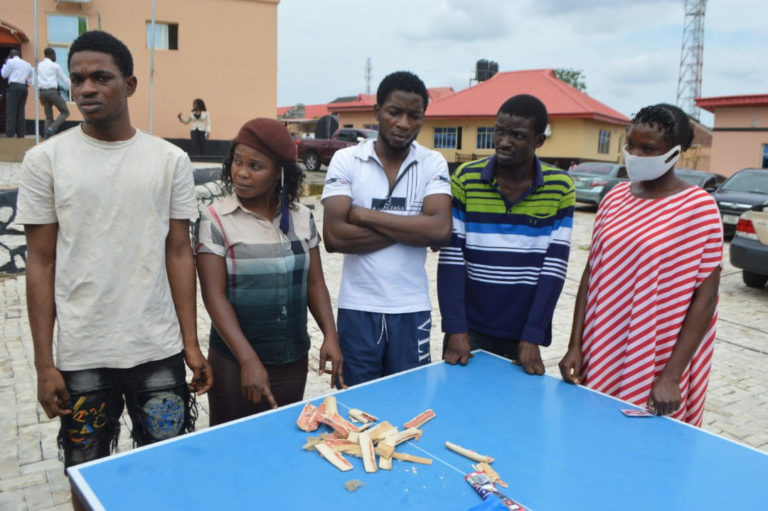
THE Economic Financial Crimes Commission (EFCC) says two ladies, Jumoke Ayodele and Opeoluwa Temitayo have been arrested for attempting to smuggle substances believed to be hard drugs to suspects in the custody of the Commission.
According to a statement signed by Wilson Uwujaren, the EFCC Head of Media and Publicity, the duo was arrested at its Ibadan Zonal Office earlier on Tuesday.
Uwujaren said the substance which was examined by a medical officer with the Commission is ‘colorado drug’ that is noted for having a dire psychological effect on its abusers.
He stated that the arrested ladies admitted that the substance was a hard drug which was meant for the consumption of three detainees in custody of the Commission.
Uwujaren said “to convey the drugs, the duo wrapped them in small cellophane packs, and tucked them inside sausages they brought for the detainees.
He added that ‘though EFCC detainees are fed by the Commission, they are nonetheless allowed to receive meals from their visiting relatives, which are carefully evaluated by the Commission’s officers to ensure that the detainees do not come to harm as a result of what they ingest’.
According to him, the detainees who were to receive the hard drugs include Itiowe Kelvin, Oluwatobi Damilola, and Ayodele David who were among those arrested during a recent raid on suspected internet fraudsters in the state.
He stated that the ladies would be handed over to the National Drug Law Enforcement Agency (NDLEA) for further investigation and possible prosecution.
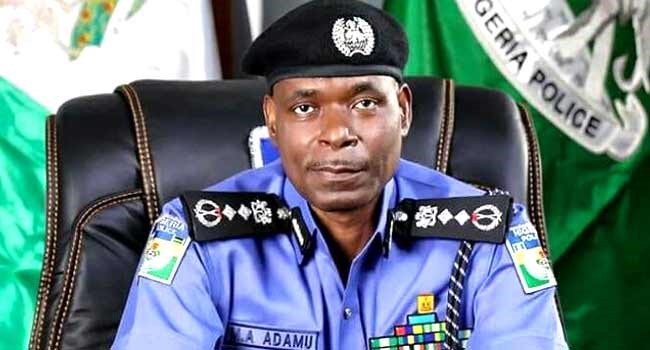
MOHAMMED Adamu, Inspector-General of Police on Tuesday ordered the immediate deployment of Nigeran anti-riot police unit of the Police Mobile Force to protect lives and property of Nigerians, following the ongoing violence that has characterised the #EndSARS protest.
Adamu said the deployment of the special police unit was to secure critical national infrastructure across the country.
This was disclosed in a press statement titled, ‘Attacks On Police Facilities, Others” signed by Frank Mba, the Force Public Relations Officer on behalf of the IGP.
“The IGP has also ordered massive deployment of Police operatives to strengthen the security around Correctional facilities nationwide,” added, Mba a Deputy Commissioner of Police.
He noted that the orders were coming on the heels of increasing attacks including acts of arson and malicious damage to public and private facilities as recorded in some states of the Federation including the Federal Capital Territory.
On Monday, hoodlums attacked police in the Yaba area in Lagos State, destroying police trucks and chased police officers.
It is the second successive day that a police station was set on fire.
But organisers of the peaceful protests say their protests have been taken over by sponsored thugs.
Also in Edo State, two police stations were attacked by hoodlums who burnt cars and stole police equipment. There were also jailbreaks at two prisons in the state, leading the State Government to declare a curfew.
In Abuja, protesters have accused the police of supporting armed thugs who attacked peaceful protesters, leading to the death of three persons and the burning of several cars.
“Consequently, the Commissioners of Police in the 36 states of the Federation and the FCT are to identify and isolate law-breakers from peaceful protesters; immediately arrest and diligently prosecute such perpetrators of violence in their respective Commands,” Mba said.
“The Inspector-General of Police calls on members of the public to avail the police with useful information that can lead to the re-arrest of the fleeing inmates, unlawfully released from Correctional facilities.”
He advised parents and guardians “to prevail on their children and wards to steer-clear of acts of violence and criminality as the Force will henceforth exercise the full powers of the law to prevent any further attempt on lives and property of citizens.”
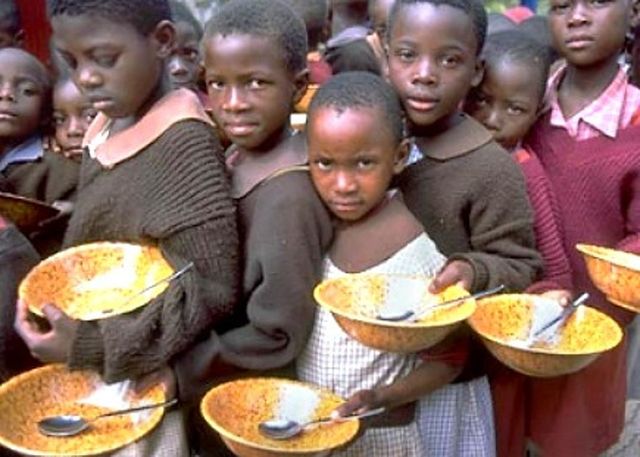
NIGERIA has been ranked 94 out of 107 countries in the 2020 Global Hunger Index (GHI), revealing there is a ‘serious’ level of hunger in the country.
“In the 2020 Global Hunger Index, Nigeria ranks 98th out of the 107 countries with sufficient data to calculate 2020 GHI scores. With a score of 29.2, Nigeria has a level of hunger that is serious,” parts of the 2020 Global Hunger Index report, published on globalhungerindex.org, said.
The development means that, despite being one of the biggest producers of crude oil in the world, and also possessing large deposits of natural gas and other abundant economically viable mineral resources, Nigeria only performed better than nine other countries out of the 107 nations whose data were calculated for the 2020 GHI scores.
The nine countries which recorded worse hunger levels than Nigeria are Afghanistan with a score of 30.3 in 99th position, Lesotho, 30.7, 100 position, Sierra Leone, 30.9, 101st position, Liberia, 31.4, 102nd position, Mozambique, 33.1, 103rd position, Haiti, 33.5, 104th position, Madagascar, 36.0, 105 position, Timor-Leste, 37.6, 106th position, and Chad, which fared worst in the ranking by taking the 107th position with a hunger score of 44.7.
The GHI classifies hunger scores from 35.0 to 49.9 as ‘alarming’, while scores ranging from 20.0 to 34.9 are classified as ‘serious’, the category which Nigeria fell under.
Hunger scores in the range of 10.0 and 19.9 are classified as ‘moderate’, while 9.9 is categorised as ‘low’.
African countries, among those whose data were calculated for the 2020 GHI scores, which performed better than Nigeria, include Tunisia – the best-ranked country in the continent at 23rd position with a score of 5.7, Egypt, 54th position, 11.9, South Africa, 60th position, 13.5, Ghana, 63rd position,15.2, Senegal, 65th position, 17.1, Gambia, 67th position, 17.8, Gabon, 68th position, 18.2, Cameroon and Namibia at 70th position with the same score, 19.1, Benin, 79th position, 22.4, Botswana and Malawi, both 80th position, 22.6; Mali, 82nd position, 22.9, Kenya, 84th position, 23.7, Mauritania, 85th position, 24.0, Togo, 86th position, 24.1; Cote d’Ivoire, 87th position, 24.5; Tanzania, 89th position, 25.0; Burkina Faso, 90th position, 25.8, Congo, 91st position, 26.0, Ethiopia, 92nd position, 26.2, Angola, 93rd position, 26.8, Sudan, 94th position, 27.2, and Rwanda, 97th position, 28.3.
Beginning from 2006, in October every year, the Global Hunger Index is jointly published by Concern Worldwide and Welthungerhilfe, with the objective of comprehensively measuring and tracking hunger at the global, regional, and country levels.
GHI scores are calculated each year to assess progress and setbacks in combating hunger. The GHI is designed to raise awareness and understanding of the struggle against hunger, provide a way to compare levels of hunger between countries and regions and call attention to those areas of the world where hunger levels are highest and where the need for additional efforts to eliminate hunger is greatest.
Its scores are calculated using a three-step process that draws on available data from various sources, and for each country, values are determined for four indicators namely undernourishment, child wasting, child stunting, and child mortality.
Undernourishment deals with the proportion of the population that is undernourished (whose caloric intake is insufficient), child wasting looks at the share of children under the age of five who are wasted (who have low weight for their height, reflecting acute undernutrition).
In the same vein, child stunting is the indicator that looks at the proportion of children under the age of five who are stunted (who have low height for their age, reflecting chronic undernutrition) while child mortality deals with the mortality rate of children under the age of five (in part, a reflection of the fatal mix of inadequate nutrition and unhealthy environments).
The 2020 Global Hunger Index, which is the 15th edition of the annual survey, noted that, in Nigeria, disparities were observed in some aspects of the indicators, with some states and regions having greater challenges than others.
“Parts of the 2020 GHI report, with specific reference to Nigeria, read, “At the state level, the highest stunting rate is in Kebbi State, at 66 per cent, while the lowest stunting rate is in Anambra State, at 14 per cent.
“Wasting is highest in Sokoto State, at 18 per cent, compared with a rate of just 1 per cent in Bayelsa State. Twenty-five per cent of children in Kebbi State do not live to their fifth birthday, while the under-five mortality rates in Lagos State and Bayelsa State are remarkably lower, at 3.1 and 3.0 percent, respectively.”
It added that “the states with the greatest challenges are consistently in the north of the country (Nigeria), which has been plagued by violence in recent years”.
According to the GHI, an analysis of the effects of conflict on child wasting has confirmed that children exposed to conflict in Nigeria are much more likely to suffer from acute malnutrition.
The report added, “The disparities between the best and worst performers for each indicator are striking, and while there is some overlap in terms of which states face the greatest struggles according to different indicators, it is also clear that the nature of the problem varies from state to state.”
Overall, the 2020 GHI reported that hunger was highest in Sub-Saharan Africa and South Asia, whose 2020 GHI scores are 27.8 and 26.0, respectively. “According to the GHI Severity Scale, these scores indicate serious levels of hunger. In contrast, the 2020 GHI scores of Europe and Central Asia, Latin America and the Caribbean, East and Southeast Asia, and West Asia and North Africa range from 5.8 to 12.0, indicating low or moderate hunger levels,” the report observed.
The high GHI score in Sub-Saharan Africa, including Nigeria, was attributed largely to the huge number of undernourished people in the region.
According to the report, between 2017 and 2019, more than one in five people – 21.2 percent – in Sub-Saharan Africa did not get enough calories. The rate, which has been rising gradually since 2014, is the highest of any region in the world and represents 230 million people who are undernourished in Nigeria and other Sub-Saharan African countries.
However, on a global level, although the 2020 GHI reported that worldwide hunger was at a ‘moderate level’, it also noted that too many individuals are suffering from hunger and undernutrition.
“Nearly 690 million people are undernourished; 144 million children suffer from stunting, a sign of chronic undernutrition; 47 million children suffer from wasting, a sign of acute undernutrition; and in 2018, 5.3 million children died before their fifth birthdays, in many cases as a result of undernutrition,” the report said.
It added that the world was not on track to achieve the second Sustainable Development Goal – Zero Hunger by 2030.
According to the report, at the current pace, approximately 37 countries will fail even to reach low hunger, as defined by the GHI Severity Scale, by 2030.
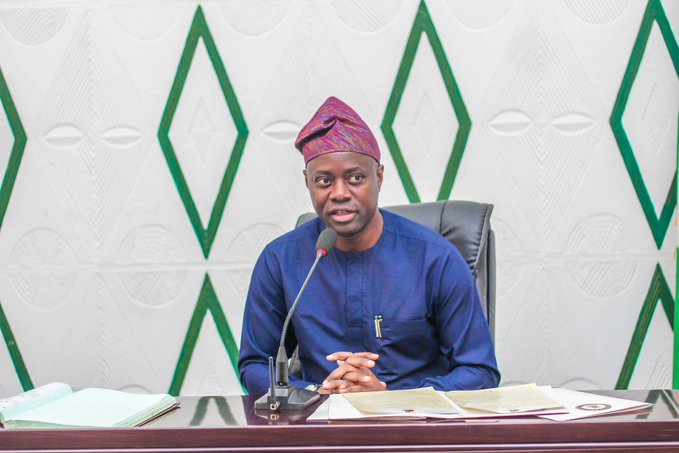
SEYI Makinde, the Governor of Oyo State has deployed a joint security outfit, Operation Burst to protect genuine #ENDSARS protesters in the state.
“We are deploying members of Operation Burst to various hotspots in Ibadan to arrest the situation and restore normalcy. The members of the team will continue to protect genuine protesters and their right to protest,” Makinde said Tuesday in a live broadcast following reports of violence from the protests.
The governor added that in the past two days, the protest has seen a new dimension where hoodlums have used the opportunity to perpetrate crimes.
“Thugs and hoodlums have taken advantage of the situation to perpetrate uncivil acts and harass citizens who are going about their day-to-day activities,” he said.
“Some thugs are going as far as forcing people who have businesses open to close shop and join in the protests. We know these are criminal elements. And so, as a state, we must act to protect the citizenry.”
He stated that the Director of Public Prosecution, Ministry of Justice of Oyo State, has withdrawn cases against #ENDSARS protesters, noting that those in custody have been released.
According to the governor, the Oyo State Government has set up platforms for reporting past and present incidents of police brutality and injustice.
“This will naturally pave the way for the next steps in our quest to get justice for the victims. I urge the good people of Oyo State to trust the process that we have set up and rest assured that every case will be pursued to a logical conclusion,” he noted.
However, Makinde has directed all schools in Ibadan, the state capital to close from Wednesday, October 21, till the rest of this week.
He said the situation would be reviewed on Friday, October 23, and then further directives would be given.
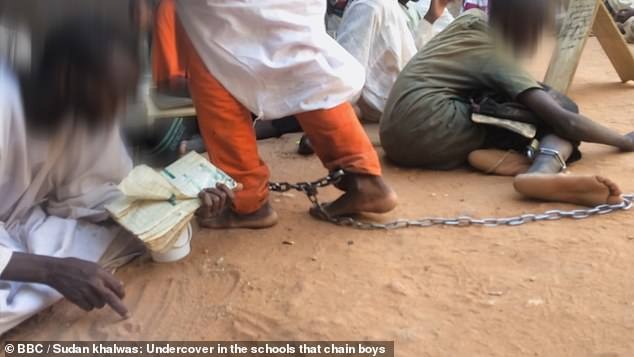
AN undercover investigation by the British Broadcasting Corporation (BBC), has revealed that thousands of boys have been kept under chains and serious torture and abuse in Islamic schools across Sudan.
Marina Forsythe, BBC World Service Group Communications, in a statement to The ICIR, said the investigation which was titled, “The Schools that Chain Boys”, has found that boys as young as five-years-old are routinely chained, shackled and beaten by the “sheikhs”, or religious men in charge of the schools, which number nearly 30,000 in the country.
The investigation also found evidence of sexual abuse of the boys.
She noted that the 18 months investigation was carried out by Fateh al-Rahman al-Hamdani, its undercover reporter, who used to study at a khalwa himself and secretly filmed inside 23 khalwas across Sudan. The reporter found boys shackled and chained and witnessed brutal routine beatings.
The statement added that many of the children were malnourished and living in squalid conditions, forced to sleep on the floor in extreme heat. Sick children were left without medical help.
At the heart of the BBC investigation, Forsythe said are two boys; Mohamed Nader and Ismail – who were beaten so badly they nearly died. The boys were imprisoned and tortured for five days in their khalwa without food or water and had tar rubbed into their wounds.
A few months into his recovery, Mohamed Nader told BBC the reporter that he witnessed boys being raped inside the khalwa by older students.
“The worst thing about the khalwa is the rape. They make you go against your will,” he said
BBC said when it confronted the sheikh in charge of the boys’ khalwa, he admitted that it was wrong to imprison the children but maintained that beating and shackling were “packed with benefits” and that “most khalwas use chaining, not just me.” When asked about allegations of sexual abuse he categorically denied these claims and accused our reporter of attacking the Koran. The sheikh died in a car accident earlier this year.
The film follows the boys’ recoveries and their families’ fight for justice as they take on the sheikhs who wield huge power and influence in Sudan.
Mohamed Nader’s mother, Fatima, hopes that since the 2018 revolution and the ousting of Omar al Bashir’s Islamist government, they stand a better chance of holding those in charge of the khalwas accountable.
During the course of the investigation, the BBC came across further reports of rape and sexual abuse in other khalwas. A forensic doctor, who examined three boys that recently escaped from one of Sudan’s many khalwas, told the BBC that boys were repeatedly raped: “I asked them ‘“How were you raped?” They said, “Sometimes our families visit us, they rape us just before they arrive.”
The investigation reveals that it’s not only children who are being abused. In a khalwa in central Sudan, the BBC filmed grown men chained to their beds, supposedly being treated for mental illness and addiction. One man told our undercover reporter, “They chain you up and beat you with a stick like a donkey… we are their slaves.”
In Sudan state prosecutors are obliged to take on all cases of crimes against children but when they take place inside khalwas the authorities are slow to act. When asked whether the beating, shackling and torture of children inside khalwas are considered a violation of children’s rights, a Public Prosecutor in Omdurman, Batool Sharif Ahmed, told the BBC “This is just normal practice inside khalwas. These children are sent to the khalwa with the consent of their parents.”
In the case of Mohamed Nader and Ismail the police arrested the sheikh in charge of the school and three other teachers. They were charged with assault and perverting the course of justice and released on bail. The khalwa remains open and the new sheikh in charge told the BBC that under his management the beating of children would not be tolerated.
At the time of publication, thousands of children are still at risk of being abused inside khalwas. The Minister of Religious Affairs told BBC News Arabic that they are assessing the state of khalwas across the country but that it is impossible to “solve a problem caused by 30 years of the old regime overnight.”
You can watch the full documentary of the investigation here.
Reports of torture inside khalwas are not limited to Sudan. In recent years, there have been reports about abuse of boys at religious schools in Nigeria, Senegal and Pakistan.
AS the ENDSARS protests escalate into violence and disruption of daily activities in Nigeria, the Senate has urged the president, Muhammadu Buhari to break his silence and address the nation over the issue.
“Senate resolves to urge Mr President to address the nation as soon as possible on the issue,” a statement from the Senate read in part.
Buhari has failed to address the citizen on the ENDSARS protest since it began more than ten days ago in some part of the country.
The call was made on Tuesday during the Senate plenary when Biodun Olujimi, the senator representing Ekiti South sought the leave of the Senate to present a Motion on the #EndSARS and the need for comprehensive police reforms.
Speaking on the motion, Ovie Omo Agege, the Deputy Senate President said the ENDSARS protest is one that everyone identifies with because he had also been a victim of the defunct Special Anti-Robbery Squad (SARS).
“All of us in this Chamber are co-sponsors. We need to be made co-sponsors because these children who are on the streets are our children.
“I don’t know of anyone in this country who supports the illegal activity of SARS. I stand here as a victim of SARS.
“Nobody here is a friend of the illegal activities of SARS. When our children went in the streets demanding an end to SARS, I think it is a cry we all identify with and we will continue to identify with provided the protest remains peaceful,” said Omo Agege.
However, he noted that the protest has now been hijacked due to recent happening in some part of the country.
“What we have today right now is that the very good actions of our children is being hijacked. My own children are in the streets of the U.S. participating in this #EndSARS protest.
“I am not sure that my kids are in support of those who have hijacked this protest to go release prisoners. I urge that they should remain lawful. The protest should remain peaceful while they give government the opportunity to address these demands.
“We don’t want any harm to befall our children. We want to appeal to our children and kids to give this government the opportunity to address this issue,” Omo Agege further stated.
Enyinnaya Abaribe, the Senate Minority leader supported the motion and recommended that Buhari addresses the nation over the issue.
“I support this motion. I think part of what is going to resolve this issue is for the President of the Federal Republic of Nigeria to look at the issue and address the Nation on them.
“And I think that the people will listen knowing that he has now come out directly to deal with the issue.
“I suggest also that in doing that, he must try a way of setting up a judicial panel that will have people that are well respected by the same youth so that they can address a certain issue and that issue is those notorious SARS officers that have been identified and even identified by the presidential panel,” Abaribe said.
After submissions from the senators, the Senate resolved to urge the President to address the nation as soon as possible on the issue, call upon the Police to operate strictly in accordance with the rules of engagement appropriate in a democratic environment and urge all tiers of government to put in place and sustain policies of social-economic reforms that raise the standard of lives of Nigerians.
The Upper Chamber appealed to Nigerians to resort to using legal institutions to resolve disputes and conflicts, stop their actions and embrace genuine dialogue . He also urged the Police to accompany protesters during their peaceful demonstration.
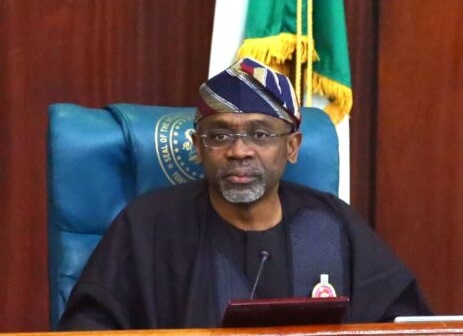
Femi Gbajabiamila, Speaker of the House of Representatives on Tuesday revealed that the 2021 Appropriation Bill before the National Assembly might not be signed if provisions for the compensation of the families of victims of police brutality were not included.
Gbajabiamila disclosed this at the opening of House Plenary Session which held in Abuja at the National Assembly.
“I will not sign off on a 2021 budget that does not have adequate provisions to compensate those who have suffered violence from police in the last decade,” he said.
The Speaker of the House and President of the Senate sign bills passed by the National Assembly before they are transmitted to the President for assent.
The Nigeria Police was not above the laws of the land and must be held accountable to the citizens.
He reiterated the commitment of the National Assembly to “establish a system of citizen-led accountability for the Nigerian Police Force because in a democracy we have set out to build, the police are not above the citizenry.
“We see your true cause. Please do not allow your righteous cause to be hijacked by those with base motives, who see at this moment an opportunity to pursue vendettas, to spread division, exploit the many existing fissures that exist in our society and bring our nation to its knees,” he said.
He said the Federal Government, through the National Human Rights Commission, NHRC had set up a panel of enquiry to take complaints from victims of police brutality.
The draft legislation would be enacted in collaboration with the Nigeria Bar Association (NBA) and the NHRC which he said will be ready for consideration within 30 days.
Gbajabiamila also appealed to the #EndSARS protesters not to allow the protests to be hijacked by unscrupulous elements seeking to cause chaos in the country.
However, the Lagos State Government announced a 24-hour curfew after hoodlums set fire to a police station in the Orile part of the state, as widespread protests continue across the country over police brutality.
Amnesty International on Monday said that police violence against protesters had continued and that at least 15 people had been killed since the protests began two weeks ago.
Imagine that you have a medical emergency, but you can’t communicate with the doctor because he doesn’t understand what you are saying. Imagine the doctor asking you questions to diagnose your ailment, but you don’t understand what he is saying or what the medication he has prescribed for you is for. JOSEPHINE EJEH looks at this and many other challenges faced by people with hearing loss when accessing healthcare services in public hospitals in Abuja, Nigeria’s Federal Capital Territory (FCT) due to the absence of sign language interpreters.
IT was her first pregnancy in 2012. Like every other expectant mother, she was very excited to register for her ante-natal clinic. Her expectation was that she would be given all the necessary healthcare support other pregnant women usually enjoyed. But against her expectation, it all turned out to be one of her worst nightmares ever as her pregnancy progressed.
Beyioku-Alase Hellen is hearing and speech impaired, a condition that makes her unable to hear or speak. She developed these conditions in 1994 at the age of six.
Though she had heard many unpleasant tales of how people with speech and hearing loss were marginalized at public hospitals, the 32-year-old expectant mother had thought health workers in the hospital where she enrolled for the ante-natal care would be sympathetic with a pregnant woman who is speech and hearing impaired.
Hellen was wrong.
Her hope of getting the best ante-natal care continued to dim after each appointment in the hospital. She would leave her home very early in the morning so that she would be among the first few pregnant women to arrive at the hospital, yet she always ended up being the last patient to leave the hospital as a result of the communication barrier. Oftentimes, her hospital card would be abandoned after the nurses have repeatedly called her name without any response.
On the first day of her ante-natal clinic, Hellen, now a mother of four, was the first to arrive at the clinic so she was the first on the list of patients for medical attention, but she was left unattended to for almost nine hours and not allowed to see the doctor until other expectant mothers had seen the doctor. All her efforts to get the attention of the nurses and other health workers when they were calling out names and she couldn’t hear them, were frustrated. The health workers shouted her down and ordered her to sit down.
In her confused state, after so many hours, Hellen mustered the courage to report the matter to the medical director of the hospital.
“I was very angry, so I summoned the courage to approach the Medical Director of the hospital. I laid my complaints to her in writing and she was sympathetic with my plight and the issue was resolved. I thought that was all, but I was wrong. When I went into labor subsequently and went to the hospital, there was no health worker to explain to me what I should do at each stage of my labor. The nurses just signaled to me with their hand to wait and left me in severe pain for up to 45 minutes. I felt so bad,” she narrated to The ICIR.
Throughout the period of her painful labor, Hellen could not explain to the nurses how she felt. She muttered some sounds, but no one understood what she meant. Even when she felt the baby head was coming, the nurses were nowhere to be found and she could not call out to them. Hellen laid there in the labor ro0m all alone panicking that something bad could happen if the baby arrived when nurses were not around.
“As God would have it, a nurse came in to check and behold she saw the head of the baby and shouted. She was not prepared to deliver the baby so that was how God saved me and my baby,” she said.
Front View of Kubwa General Hospital, Abuja
It was a similar experience during her second pregnancy. Hellen would be in the hospital as early as 6 am but nobody cared if she was around or not. Some expectant mothers who arrived at the clinic hours later would be attended to while she was left out.
During the sessions of health talks for pregnant women, she would sit down among other expectant mothers in the clinic feeling ignored, marginalized, neglected and left out because she could not make any sense of what the nurses were saying. Hellen had no slightest idea of the things she ought to do as an expectant mother and what not to do due to the communication barrier.
In one instance, she wrote to a nurse to plead with her to explain in writing what she lectured the other pregnant women but, the nurse shouted at her down, saying that she was disturbing her.
The attitudes of the health workers made Hellen who was then a student of Abuja University to resolve never to return to the hospital again for delivery since she realised she could not trust them with her life and the life of her unborn baby. She re-enrolled in a private maternity clinic belonging to a church to deliver her second baby.
Like Hellen, many women with speech impairment and hearing loss have been forced to boycott ante-natal clinic when pregnant because of the hostile and unfriendly attitude of health workers. Some of them even prefer to deliver their babies at home to avoid the harsh experiences they have in the hospitals.
“When you are sick, you have the right to go to the hospital but when you go to the hospital, you don’t find anybody who understands your language. Sign language is the language of the deaf so if I don’t have anybody who understands my language how do I express myself? Imagine as a pregnant woman I go to an ante-natal clinic. I sit down like every other woman, but there is no interpreter. How do you expect me to be able to make sense of what is being said? How do I take care of myself as a pregnant woman, if the information is not available because of communication barriers?
“So, how do the deaf get all that information? This is one of the sad experiences that makes deaf women not go to the hospital because we feel ignored, marginalized and not considered. It is as if our human rights don’t matter to the health workers. They feel hospitals are for only people who can speak and not for deaf people, that is wrong,” Helen said while recanting her ordeals in the hospital during her first pregnancy.
“Even if I remember that experience most of us prefer to give birth at home. Just imagine if the woman dies giving birth herself. So, we need to change the attitude and orientation of doctors and nurses to know that we are all humans too. We are all humans. We have equal rights when it comes to health. Whether deaf, blind or physically challenged, we are all the same,” she said.
Hellen’s sad experiences in the public hospital birthed the Deaf Women Aloud Initiative (DWAI), an initiative she pioneered.
DWAI is an organisation which promotes the rights of deaf women and girls, works to ensure proper access to health care services and information as well as help them to fight sexual and gender-based violence, among others
Years later, the thought of how to communicate with the doctors and other health workers remains a source of worry to the Executive Director of Women Aloud Initiative, whenever she is ill.
“As I am here today, each time I feel any pain or discomfort in my body, what comes to my mind is, if I go to the hospital, how will I be able to communicate with the doctor? I may be educated and can write but what about other deaf people who only depend on sign language because they can neither read nor write,” Helen asked?
With her experiences and those of other pregnant women suffering from speech and hearing loss, who died due to negligence and lack of communication, she was determined to change the situation so that other women with speech and hearing loss will not have the same experience.
Hellen is one of the thousands of faceless people with speech impairment and hearing loss facing the challenges of accessing healthcare service due to the communication barrier with health workers in Abuja public hospitals.
Enniyin Bose, 46, always feels frustrated anytime she visits the Kuje General Hospital because she can’t communicate with any of the health workers in the hospital.
Due to the language barrier and the absence of a sign language interpreter, often spends longer periods in the hospital before she eventually sees the doctor.
Her predicament is compounded as she is further subjected to the rigors of communicating with the doctors through writing.
“It is not always easy because when I submit my hospital card, the nurses will keep calling and shouting my name, I will not hear so I will not answer. So, sometimes I get very angry and frustrated that I am kept so long in the hospital,” Bose, who lost her hearing and speech at the age of nine due to medical complications, told The ICIR.
Ignored and marginalized
The enjoyment of the highest attainable standard of health is one of the fundamental rights of every human being, including people with hearing loss, according to the United Nations in the World Health Organisation(WHO) World Report on Disability, 2011.
Also, access to health care without barriers is one of the rights of people with disabilities clearly defined by the United Nations Convention on the Rights of People with Disabilities (UN- SCRPD). Based on this provision, people with hearing loss and speech impairment have the right to enjoy the highest attainable standard of health, yet the communication barrier has resulted in health workers ignoring and neglecting them, making them feel frustrated, intimidated, and marginalized.
United Nations Convention on the Rights of Persons with Disabilities
On March 30, 2007, Nigeria signed the United Nations (UN) Convention on the Rights of Persons with Disabilities. Subsequently, on September 24, 2010, it gave a formal confirmation, ratified and assented to the Convention.
The 2006 UN Convention enjoins the States Parties to secure the human right to a signed language in legislation; to ensure its use in civil society, educational settings and cultural settings; and to secure its use as a means of access to wider society, including health services.
Article 30 of the Convention enjoins States Parties to provide early intervention services designed to minimize and prevent further disabilities, and that best practices in health-care access should follow these Articles, as well as Article 9, which mandated the provision of accessibility in health-care settings via national signed language interpreters.
Although Nigeria is one of the signatories to the Convention and its Optional Protocols, it has not lived up to the expectations of the Convention because in the area of health, accessing healthcare remains a challenge for individuals with speech and hearing impairment in various parts of the country, including Abuja, the Federal Capital City of Nigeria where they are constantly discriminated against, intimidated and ignored.
No Professional Sign Language Interpreters to Sign for Deaf Patients
Investigation revealed that many hospitals in the FCT-primary, secondary and tertiary health facilities, do not have professional sign language interpreters who are very important to bridge the communication gap between health workers and patients with speech and hearing loss visiting the hospitals.
Nearly all the public hospitals visited by our reporter do not have professional sign language interpreters that would have helped to bridge the typical communication gap people with speech and hearing loss usually face with health workers in hospitals.
Hospitals Rely on Note Taking to Communicate with Patients with Hearing
Checks also revealed that many of the hospitals in the FCT predominantly rely on note-taking as the method of communicating with patients suffering from speech and hearing loss.
In many instances, doctors or other health workers were not even patient enough to allow such patients ample opportunity to explain vividly in writing, their health challenges.
Demian Ayo, who lost his hearing at the age of eight is one of such persons who are being deprived of the right to receive the best medical attention.
Each time he visits the Asokoro General Hospital where he accesses healthcare services, he faces communication barriers because there is no sign language interpreter in the hospital. Demian often feels sad because, on many occasions, he is not given the opportunity to be diagnosed.
“Sometimes the doctors are patient to write, sometimes they just look at me and administer treatment or drugs without saying anything to me,” he told The ICIR.
Doctors and other health workers in Nyanya General Hospital also depend primarily on note-taking. A female nurse confirmed to The ICIR on the condition of anonymity that there has been no professional sign language interpreter in the hospital for over three years that she has been in employment, so the health workers communicate with patients with speech and hearing loss basically by writing notes.
When The ICIR visited that hospital, Dr. Ekpe Philip, the Medical Director of the hospital could not be reached. Our reporter was asked to wait for hours to see him. But after waiting for hours, she was denied access to him and told instead by his Personal Assistant to write an official letter requesting to have a chat with the Medical Director.
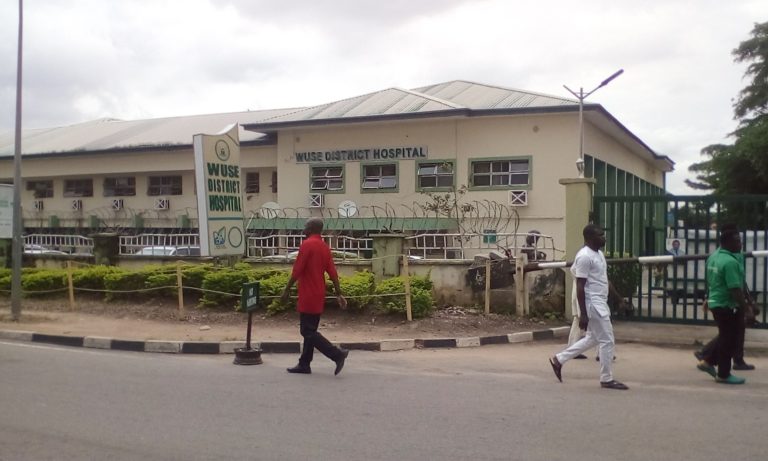
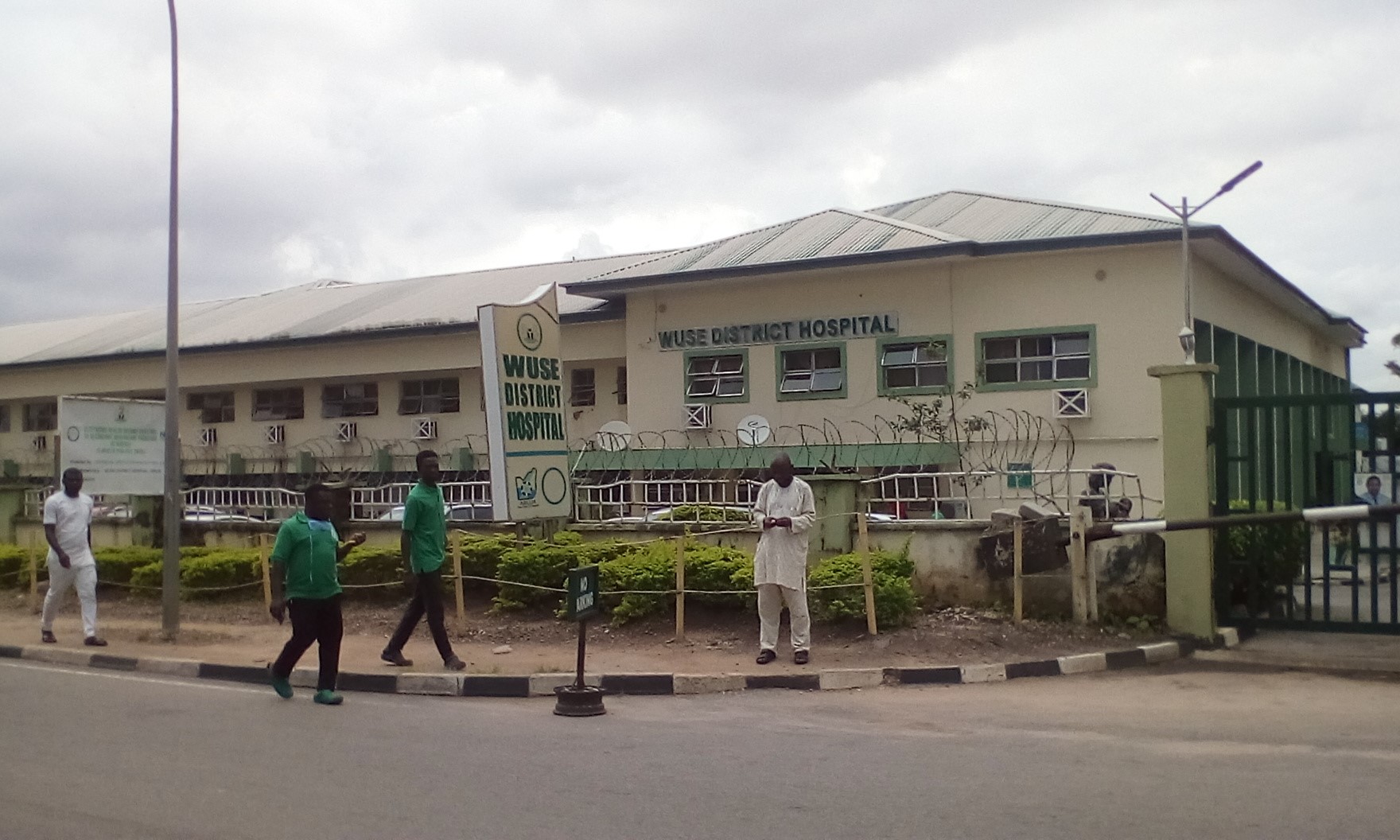
The situation is the same at Wuse Hospital, where a top management staff also confirmed to our reporter that the hospital depends on the writing method to communicate with speech and hearing-impaired patients.
Other patients who cannot read or write, usually come to the hospital with an interpreter.
High Cost of Hiring Services of Private Sign Language Interpreter
Hearing and speech impaired people from wealthy backgrounds and those of average economic status living within the city centre, pay for the services of professional sign language interpreters to escort them to the hospital. However, how many poor persons with speech impairment and hearing loss in the hard-to-reach communities in the FCT struggling to make ends meet are financially buoyant to pay for the services of a sign language interpreter?
Sometimes, even those who can afford to hire the services of an interpreter, face the difficulties of finding one on short notice. There is also the issue of confidentiality as persons with speech and hearing loss who spoke with TheICIR said they feel ashamed disclosing personal information, asking and responding to private issues in the presence of an interpreter, a friend, or family member.
Family members, friends and children used as interpreters
In most of the communities visited, people with speech and hearing loss use family members, friends and their children as interpreters because they cannot afford the service of a private sign language interpreter.
Where they are not available, they (people with speech and hearing loss) visit the hospital alone without communication support and demonstrate how they are feeling by just pointing to the part of their body where they have discomfort, leaving the health workers with the difficult task of figuring out what he is implying.
Joseph Denda, 43, uses his younger brother Benjamin as an interpreter whenever he visits the Primary Healthcare Centre in Leleyi Gwari community in Kwali Area Council where he lives.
The peasant farmer whose speech impairment resulted from an illness, can hear what the health workers say but due to the speech challenge uses gestures to respond to the health workers’ enquiries with the help of his brother.
Benjamin who always feels sad and frustrated each time he has to accompany his elder brother who is a grown man to the hospital like a child shares similar feelings with other relatives of people with speech impairment and hearing loss who are forced to abandon their works or other activities to accompany their relatives to the hospital.
Mitsi Dimitra, Armyra Christina, Fradelos Evangelos in a publication on ‘Deaf People Accessibility in Health Services” published on researchgate.net, observed: “The use of these individuals as interpreters and mostly deaf children should be avoided as interpreters as it is more likely to make mistakes due to their lack of knowledge of the medical terminology.”
The researchers noted that the personal relationship of these persons with deaf people put to question the impartiality and credibility “as there is the possibility of concealment or paraphrasing of the content provided by the physician or patient’s information.”
They also observed that “the presence of these people and the use of them as interpreters may inhibit discussion and reporting of sensitive issues such as domestic violence, substance abuse and sexually transmitted diseases.”
For Bose and other persons with speech and hearing loss who are literate, noting taking may provide an alternative in the absence of a professional sign language interpreter, but can this equally apply for uneducated ones who can neither read nor write?
Patients with Speech and Hearing Loss Misdiagnoses and not Diagnosed
Finding shows that many people with speech and hearing loss are often not diagnosed properly. Symptoms point the doctor in the right direction, hence, a patient’s description of the symptoms he or she is having helps the doctor identify the problem. But due to the communication barrier, patients with hearing and speech impairment are not able to explain their symptoms vividly to the doctor for correct diagnoses.
The Executive Director of Deaf Women Aloud Initiative (DWAI)who also confirmed this at the recently held 2020 International Week of the deaf said people with speech and hearing loss are at a greater risk of being misdiagnosed or not diagnosed at all because of the existing communication barrier between them and health practitioners.
“They (patients with speech and hearing loss) touch their head to demonstrate that it is aching and that’s all, but how do you figure out exactly what their ailment is with just that? Honestly, most of us go to the hospital with malaria and other ailments but the doctors prescribe only paracetamol for us because we were pointing to our head, so they assume it is a headache that is the issue,” the said with a sad look on her face.
Whenever Patrick Usman, a blacksmith visits the health centre in Passepa community in Bwari Area Council where he lives, he usually points to where he is experiencing a disorder in his body, leaving the doctor or health worker to presume what could be the issue.
Patrick Usman became Deaf at the age of 10, following an ailment. The 34-year-old blacksmith is frustrated that he can’t explain how he feels whenever he visits the hospital or health care centre as he can only point to the part of his body where he has a disorder when he visits a doctor.
“I feel very bad and frustrated whenever a very serious sickness takes me to the health centre because I can’t explain exactly how I feel. Nobody understands me so I just point to the part of my body that I’m not feeling well. If it is a headache, I will use my hand to touch my head and if it is a stomach ache, I do the same thing,” the 34-year-old who spoke through his childhood friend who understands his signs told The ICIR.
Like other persons with speech and hearing loss, Patrick believes that if a sign language interpreter is stationed at the hospital, the communication barrier he experiences would have been surmounted.
Patrick’s story is not different from that of Maikasuwa Sharia, who lives in Kayache also known as Buzunkure in Kuje Area Council of the FCT.
His wife, Tausayi sometimes accompanies him to the hospital when he is sick to explain his symptoms better to the doctor since there is no sign language interpreter at the clinic in Kuje where he accesses health services.
However, if the situation requires urgent medical attention and Tausayi is indisposed, the 37-year-old man has no other choice but to visit the clinic alone without communication support.
Due to the communication barrier, all Maikasuwa does is point to the part of the body where he is having the discomfort and it is left for the doctor to figure out what he is implying.
The mother of four, who always abandons her children at home to escort her husband to the hospital, believes that a sign language interpreter at the hospitals will save her all the stress.
“Since he (Maikasuwa) is an adult, I don’t need to be following him to the hospital like a child because he can explain what is wrong with him to the doctor by himself if there is somebody at the hospital to interpret his sign language,” she said.
Health Workers Rely on Lip reading to Communicate with the Deaf
Over the years Rebecca Adeyanju, a midwife at the Primary Health Centre in Leleyi Gwari community in Kwali, relied on lip-reading methods to communicate with her patients since there is no sign language interpreter in the clinic.
Justina Faruk is one of the persons with speech impairment and hearing loss in the community Rebecca has cared for over the years. She lost her hearing at the age of seven due to meningitis infection when she was only in primary school three.
Pointing to the 22-year-old mother of two at the premises of the hospital, Rebecca said: “We communicate very well. We understand each other. When I speak, she reads my lips because she can’t hear but she replies to me because she can speak.”
Though, health practitioners like Rebecca, believe lip reading or speech reading and note writing provide effective health communication, Lieu, Sadler, Fullerton and Stohlmann in a 2007 study on “Communication Strategies for Nurses Interacting with Patients who are Deaf, describe these methods as “ineffective communication modalities for healthcare conversations.”
According to the researchers, “Deaf people who have practiced lip-reading/speech-reading for many years and who are familiar with spoken language are able to understand at best 30–45 percent of spoken English.”
A visit to Tunga-Ashere, a community in Angwan Madaki District under Abuja Municipal Area Council (AMAC), revealed a similar communication gap between health workers and people with speech and hearing loss.
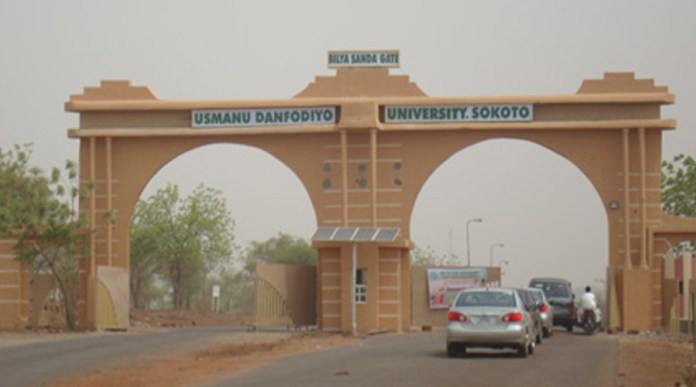
THE Academic Staff Union of Universities (ASUU), Usmanu Danfodiyo University Sokoto chapter, says its members will continue with the ongoing strike in Nigerian universities until all pending issues with the Federal Government are resolved
The union made this known at the end of a consultative meeting held Monday to deliberate on the proposals by the Federal Government in order to present its stand on the months-long industrial action.
In a statement signed by Abubakar Sabo, the Chairman of ASUU-UDUS, the chapter said it accepted the N20 billion offered by the Federal Government as part payment of the revitalization fund which is expected to be paid latest by January 2021.
It, however, rejected “the N30 billion offered by the Federal Government and demanded the increase of the fund to N40 billion.
The Branch also resolved that the payment should be made before the strike is suspended while also agreeing with the guideline given by the Federal Government on the visitation panel to Nigerian universities.
It accepted the proposal of the Federal Government and demanded that all issues contained in the 2009 Agreement be resolved based on the December 2020 deadline.
On IPPIS, the chapter rejected the payment system while stating that the ASUU’s proposed payment system that is currently undergoing an integrity test should be the only acceptable payment platform for its members.
“The Branch rejected IPPIS and preferred only UTAS as the only acceptable payment platform for its members. The Branch also advised that FG should pay our salaries using GIFMIS before UTAS is finally deployed,” it said.
“The previous platform used in paying February and March salaries was characterized by a lot of anomalies and inconsistencies.”
“The Branch is not comfortable with the FG saying it will pay our withheld salaries and allowances immediately without any time frame. Hence, the Congress resolved that all withheld salaries and entitlements must be paid before Friday 23rd October 2020 using GIFMIS platform in the interim.”
University lecturers in Nigeria have been on a strike over six months ago to protest against poor funding of federal universities in the country and the Federal Government’s ss insistence on compulsory enrolment of ASUU members on IPPIS for the payment of salaries like it does to all Federal Government workers.
The union argued that the new payment system would undermine the university autonomy.
In January, the Federal Government vowed to stop the salaries of university lecturers who failed to comply with the directive to enroll on IPPIS by December 31, 2019.
Responding to the threat, ASUU issued an ultimatum to the government to reverse the decision or risk a shutdown of the university system through a nationwide strike.
Last week, the Federal Government met with the leadership of the striking lecturers to iron out the outstanding issues.