Home Blog Page 198

AC Milan pulls out of Victor Boniface deal after failed medical

0

ITALIAN giant AC Milan has called off their move for Nigerian striker Victor Boniface after the player reportedly failed to pass medical tests in Milan.

The 24-year-old forward had travelled to Italy on Friday, August 22, with both clubs reaching a verbal agreement for a deal worth €5 million as a loan fee with an obligatory buy clause of €24 million.

However, reports indicated that Milan had decided to withdraw from the transfer following the results of Boniface’s medical examinations.

The striker, who had been expected to strengthen Milan’s attacking options this season, is now set to return to Germany, where he currently plays, according to one of the leading transfer news journalists, Fabrizio Romano.

Boniface, who has enjoyed an impressive rise in European football, had attracted interest from several top clubs after his performances in the Bundesliga in the last two years.

Earlier today, Milan’s sporting director, Igli Tare, confirmed that doubts arose after reviewing the medical results, even though the player’s quality was never in question.

“We are checking Victor Boniface’s medical. His football skills are excellent, but we need to make the right decision.

“We will make a final decision soon on his medical, also with our coach Max Allegri,” he was quoted to have saying.

The collapse of the Milan deal further casts uncertainty over his immediate future.

The ICIR reports that since joining Bayer Leverkusen in 2023, the Nigerian forward has emerged as one of the Bundesliga’s brightest attacking talents, while playing a vital role in helping the club secure their first-ever league title under coach Xabi Alonso. 

Last summer, the Nigerian striker came close to a lucrative move to Saudi Pro League side Al Nassr FC, but negotiations also broke down late in the process.

SEC urges market operators to be transparent, accountable

TO strengthen investor confidence in Nigeria’s capital market, the Securities and Exchange Commission (SEC) has called on market operators and institutions to be transparent and accountable.

The Director General, Emomotimi Agama, made the call at a stakeholder engagement on internal control over financial reporting in the public sector, according to a statement issued on Sunday, August 24, by the SEC.

The engagement, focused on ‘Strengthening Accounting and Transparency through ICRC,’ was organised by Smith Ighodalo Adewale Odiachi, SIAO under the Internal Control over Financial Reporting (ICFR), in collaboration with the Financial Reporting Council (FRC).

The Director General stressed that proper internal control mechanisms over financial reporting are essential for market integrity and investor trust.

“Internal control over our financial reporting is a critical part of disclosures. Whether in the securities market, for public companies, or other organisations, these controls strengthen accountability, transparency, and integrity within the financial system,” Agama said.

He said investors’ confidence is closely tied to market operators’ and financial institutions’ transparency and accountability.

“For investors, what matters is knowing that there is accountability, that people are doing what they ought to do, and that stewardship is being upheld.

“When investors see that management is committed to these principles, they are more likely to invest,” Agama said.

Hinting at the recently passed Investment and Securities Act (ISA) 2025, he described it as a milestone in capital market reform.

The ISA 2025 has introduced key reforms aimed at fostering a more transparent and efficient market.

“We are already seeing improved investor sentiment and increased confidence in the system.”

The ICIR reported that President Bola Tinubu signed the ISA 2024 into law on March 25 this year.

The Act is aimed at strengthening the financial sector as the country pushes toward achieving a $1 trillion economy by 2030.

It repeals and consolidates several outdated insurance laws into a single, modern legal framework, providing for comprehensive regulation and supervision of all insurance and reinsurance businesses operating within Nigeria.

Nigeria police repatriates wanted chinese gang leader

0

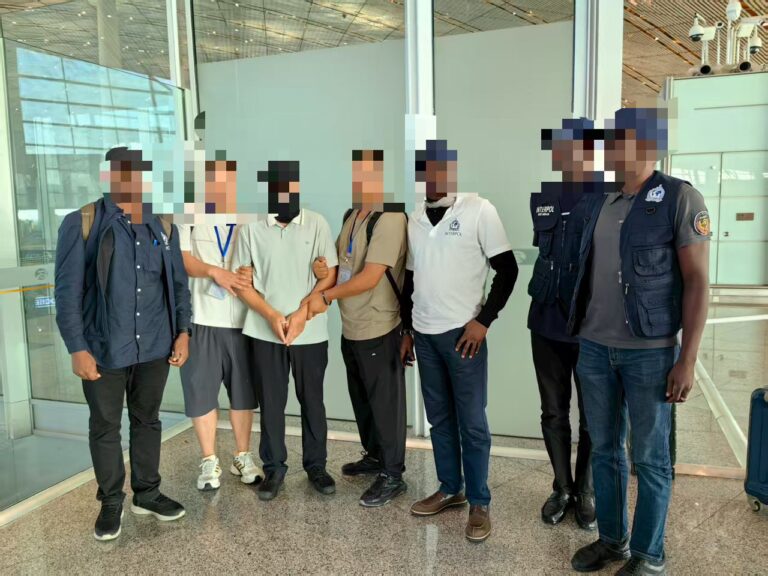
THE Nigeria Police Force (NPF) has repatriated a notorious Chinese fugitive, Dai Qisheng, to Beijing after he was arrested in Abuja, in what authorities described as a landmark operation against transnational organised crime.

The operation, carried out by the Police through the INTERPOL National Central Bureau (NCB) Abuja, was done in collaboration with INTERPOL NCB Beijing and the Embassy of the People’s Republic of China in Nigeria.

A statement by the police spokesperson Muyiwa Adejobi on Sunday, August 24, stated that Qisheng, a gang leader wanted in Guizhou Province, China, was declared a fugitive in 2024 after the Public Security Bureau of Zhijin County issued a warrant for his arrest over violent organised crimes. 

He added that the wanted Chinese fled China to evade justice and sought refuge in Nigeria.

According to the police, operatives of INTERPOL Abuja tracked, monitored, and eventually arrested him in the Federal Capital Territory on August 8, 2025. 

“Dai Qisheng, a notorious gang leader wanted in Guizhou Province, China, for orchestrating and leading violent organized crimes, fled his home country in 2024 after a warrant for his arrest was issued by the Public Security Bureau of Zhijin County. Determined to evade justice, he sought refuge in Nigeria. Operatives of INTERPOL NCB Abuja tracked, surveilled, and apprehended the fugitive in Abuja on 8th August 2025. 

“Following his arrest, the fugitive was repatriated on 15th August, 2025, to Beijing under the established framework of police-to-police cooperation, coordinated by INTERPOL,” he wrote.

He stated that the Inspector-General of Police, Kayode Egbetokun, described the successful operation as a clear demonstration of Nigeria’s commitment to ensuring that its territory does not become a haven for fugitives.

“The Inspector-General of Police, IGP Olukayode Adeolu Egbetokun, Ph.D, NPM, has reassured of the Nigeria Police Force’s commitment to continuously improve on international alliances, leveraging intelligence-sharing and operational collaboration to ensure that borders never become barriers to justice.

“The arrest and repatriation of Dai Qisheng is a clear message to criminals worldwide that the Federal Republic of Nigeria will not be a hiding place for fugitives,”he added.


ICPC boss seeks definite timeline for corruption cases

0

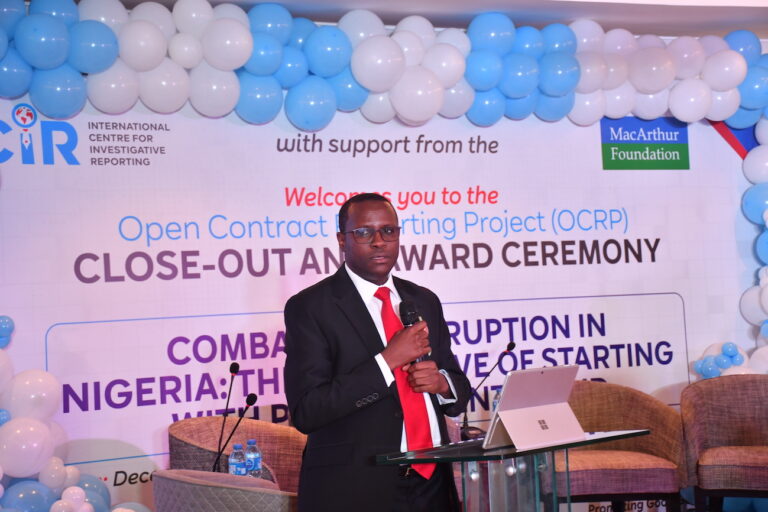
THE Chairman of the Independent Corrupt Practices and other Related Offences Commission (ICPC), Musa Aliyu, is advocating for constitutional provisions that would establish deadlines for prosecuting high-profile corruption cases involving politicians and other prominent figures.

Speaking on Inside Sources, a Channels Television programme, on Saturday, August 23, Aliyu said corruption trials should not be left open-ended but concluded within clear timelines.

Expanding on his call for constitutional reform, Aliyu noted that corruption trials often drag on for over a decade in the absence of clear timelines.

“Initially, I had the view that we don’t need special courts, but now, when I have a second look at it, I look at some countries and I discovered that we need it. Why? Because you need a time frame to finish corruption cases.

“So this is one challenge, because if you keep on dragging corruption cases, it will take 10, 12, 15 years… Even the chairman of ICPC will have finished (his tenure),” Aliyu said.

He expressed concerns that the constitution did not mention a clear timeline for cases, adding that you cannot determine the time within which they can be finished unless it is stipulated in the constitution.

Commenting on the Supreme Court’s ruling on local government’s autonomy, Aliyu said political interference continued to hinder its implementation.

He noted further that despite the court’s decision, enforcing it remained difficult, adding that state-independent electoral commissions also posed a major challenge to credible democracy.

Aliyu stressed the need to review the role of state electoral bodies, describing them as lacking independence and transparency. He argued that for democracy to thrive, elections must be conducted by a truly independent and credible umpire, pointing out that in most states, the ruling party always emerged as the winner.

On the anti-graft war, the ICPC boss said recent reports showed encouraging progress, with more citizens rejecting bribes and actively reporting corruption.

“When you look at the third corruption survey, which was done by the United Nations Office on Drugs and Crime, and other stakeholders, ICPC, EFCC, and other agencies included, and National Bureau of Statistics, you will see that from that report, which was in 2024, it has shown that… yes, Nigerians, 70% of Nigerians that were probably demanded bribes within that period of time between, I think, 2019 and 2023, they refused to pay bribes,” Aliyu explained.

He further commended Nigerians for increasingly reporting corruption, noting that greater awareness and reduced fear of backlash have boosted confidence in engaging with anti-corruption agencies.

He also described Nigeria’s slight improvement on Transparency International’s Corruption Perception Index, moving from 145th to 140th place, as modest but meaningful progress.

UK plans asylum system reform amid growing protests

0

THE United Kingdom (UK) government said on Sunday, August 24, that it would reform the country’s asylum system following protests at hotels housing migrants, with more demonstrations expected.

It explained that a new independent body would be created to expedite appeals by rejected applicants and reduce reliance on costly asylum hotels, which have fueled public discontent.

The Labour government also stated that it would challenge a court ruling that blocked plans to house asylum seekers in a controversial hotel in southeast England, noting that the decision had sparked nationwide protests and counter-protests outside migrant hotels.

Demonstrations under the banner “Abolish Asylum System” took place on Saturday, August 23, across several UK cities and towns, including Bristol, Exeter, Tamworth, Cannock, Nuneaton, Liverpool, Wakefield, Newcastle, Aberdeen, Perth, and central London.

In Bristol, mounted police intervened to separate rival groups, leading to scuffles between officers and protesters.

Keith Smith of Avon and Somerset Police praised the force for handling a “really challenging situation” admirably.

He noted that although there were moments of disturbance, the two protests concluded without any major incidents.

Eleven people were arrested at the Liverpool protest for offences ranging from assault to drunken and disorderly behaviour.

The latest wave of demonstrations started outside a hotel in Epping, southeast England, after a resident was charged with sexually assaulting a 14-year-old girl. More protests were scheduled for Sunday and Monday, a public holiday in the UK.

According to official figures, over 32,000 asylum seekers were being temporarily housed in UK hotels as of the end of March. The government says it is working to cut down the backlog of asylum claims and appeal delays, which it identifies as the main source of pressure on the asylum accommodation system.

Interior Minister Yvette Cooper, in a press release on Sunday, August 24, said the government inherited an asylum system in “complete chaos,” marked by a growing backlog of cases and a failing appeals process.

She stressed the government’s determination to cut down the number of people in the system as part of efforts to phase out asylum hotels, adding that the current delays in appeals were “completely unacceptable” and could not continue.


Nigerians dying in South Africa over hospital ban by antimigrant group– NUSA President

0

THE President of the Nigerian Union South Africa (NUSA), Smart Nwobi, has raised an alarm that Nigerians are dying daily in the country following a ban by an anti-migrant group preventing foreigners from accessing government-owned hospitals.

Nwobi, who spoke in an interview with Punch Newspaper, described the development as unlawful and xenophobic, stressing that the action contravenes Section 27 of the South African Constitution, which guarantees healthcare access to everyone without discrimination.

According to him, members of a group known as Operation Dudula have stationed themselves at hospital entrances where they demand identity cards and chase away those unable to present South African citizenship documents.

He noted that even naturalised citizens who could not speak the local language had been ordered out of health facilities.

Nigerians have resorted to self-medication, which is detrimental to their health. Some of them are losing their lives every day. The statistics are there. Nigerians are now afraid of going to public hospitals in South Africa to avoid being beaten to death or assaulted. That is the unfortunate part of it. So, this requires urgent intervention.

“Now, as it is getting close to election time, foreigners, especially those doing business, are always the target. That anger against the ruling party, the government, is transferred to foreigners. Nigerians are always among the victims when this happens,” Nwobi said.

Backstory

The ICIR reports that the anti-migrant group, Operation Dudula, has been preventing ‘undocumented foreigners’ from accessing treatment at public clinics and hospitals, insisting that their presence places an additional burden on South Africa’s already strained healthcare system.

In early August 2025, members of the group reportedly stormed the Lilian Ngoyi Community Health Centre in Diepkloof, attempting to force a shutdown of operations. “Our action was to highlight the growing concern around healthcare access for foreign nationals that is impacting our local communities.”

Their campaign, however, has drawn sharp criticism from the South African Department of Health, which maintains that the constitution guarantees healthcare access to all people, regardless of nationality or legal status. 

According to reports, some of their members were arrested for intimidating healthcare workers and enforcing the campaign, but were later released on bail on Monday. But authorities have promised a stronger crackdown on similar disruptions in the future.

The Department of Health had condemned Operation Dudula’s ongoing actions, saying they interfere with the delivery of essential services in public hospitals and clinics.

“As the department, we have noted the ongoing protest action happening around our health care facilities by members of Operation Dudula and other organised groups.

“We do not condone these actions, which serve to interfere with the provision of health care services in our health facilities,” health department spokesperson Foster Mohale said in a report published on August 12, 2025.

Mohale added that the concerns raised by Operation Dudula were broader societal issues, not matters to be fought out at hospital gates. 

However, Nwobi, who spoke with Punch, explained that although doctors in the country had rejected the group’s stance, insisting that their professional oath required them to treat all patients, the activities of Operation Dudula had created widespread fear among foreigners, particularly Nigerians.

He added that the group, which initially targeted migrants in the informal trade sector, had now shifted focus to healthcare and recently threatened to extend its campaign to schools attended by foreign children.

The NUSA president said the union had written to the Nigerian Consulate and Embassy on the matter, but had yet to receive any intervention. He appealed to President Bola Tinubu to wade into the crisis, especially as world leaders are expected to gather in South Africa for the G-20 summit in September.

Nwobi also revealed that, to cushion the impact, NUSA had organised medical outreaches where African doctors are paid to provide free treatment to Nigerians, but noted that the effort was limited due to a lack of external funding.

“The Nigerian Union South Africa, in one of the provinces, organised a medical outreach to assist Nigerians in the country. Under the scheme, African doctors are paid to carry out tests and treat Nigerians for free. This is done within a limited budget because we do not benefit from any funding outside of members’ contributions,” he said.

He maintained that claims by the anti-migrant group that foreigners were overstretching South Africa’s public health system were unfounded, adding that their actions amounted to xenophobia and Afro-phobia.

Lawmakers query NERC over ₦59 billion metering funds

THE House of Representatives has questioned the Nigerian Electricity Regulatory Commission (NERC) over the ₦59 billion loan from the Central Bank of Nigeria meant for the National Mass Metering Programme (NMMP) and its inability to close the widening metering gap.

The Joint Committee investigating the disbursement and use of the loan also queried Meristem Wealth Management Limited and the Nigeria Electricity Supply Industry Industry Stabilisation Limited (NESI SSL) for approving a firm to receive 0.5 per cent of annual collections from electricity distribution companies until 2030.

In a statement on Saturday, August 23, Chairman of the investigating committee, Uchenna Okonkwo, said preliminary findings showed that the NMMP, initiated by NERC in 2020 to close the metering gap, support local meter manufacturers, and curb estimated billing, has so far failed to deliver the expected results.

“The review of the management of the programme has shown a lot of ambiguities, inconsistencies, and contradictions, which point to the fact that the programme has not been successfully handled to achieve the desired objectives.

“The committee has decided to carry out a full investigation with a view to addressing several anomalies in the electricity distribution in the country,” Okonkwo noted in the statement.

According to Okonkwo, the CBN appointed NESI-SSL as the special purpose vehicle for the NMMP, while Meristem Wealth Management Limited was named fund manager. He noted that the companies have not provided the required submissions, warning that the committee would apply constitutional measures against anyone obstructing the probe.

The committee further raised concern that, despite evidence showing several electricity distribution companies — including Abuja, Eko, Enugu, Ibadan, Ikeja, Jos, Kano, and Yola — still owe the CBN for meter installation funds, NERC has yet to verify whether those meters were actually installed.

They further directed Meristem Wealth Management Ltd, NERC, NESI-SSL, and other relevant stakeholders to attend its next sitting.

FAAN resumes direct cargo revenue collection at Lagos airport after 15 years

0

THE Federal Airports Authority of Nigeria (FAAN) has announced the resumption of direct revenue collection at the cargo terminals of Murtala Muhammed International Airport (MMIA), Lagos, after a 15-year suspension.

According to FAAN, officials from its Directorate of Cargo Development and Services (DCDS) have been deployed to the cargo release points of the Nigerian Aviation Handling Company (NAHCO) and Skyway Aviation Handling Company (SAHCO) warehouses to oversee real-time monitoring of accrued cargo charges.

A statement by the airports authority, on Saturday, August 23, said the development followed months of stakeholder engagement led by FAAN’s Director of Cargo Development and Services, Lekan Thomas, and MMIA Airport Manager, Olatokubo Arewa. 

The agency added that the process gained momentum after a high-level meeting involving FAAN’s Managing Director/Chief Executive, Olubunmi Kuku, Comptroller-General of the Nigeria Customs Service, Bashir Adewale Adeniyi, and other key aviation stakeholders.

“For the first time in over a decade, FAAN officials from the Directorate of Cargo Development and Services (DCDS) are now stationed at the cargo release points of the Nigerian Aviation Handling Company (NAHCO) and Skyway Aviation Handling Company (SAHCO) warehouses to oversee real-time collection of accrued cargo charges.

“This strategic development follows months of stakeholder engagement led by FAAN’s Director of Cargo Development and Services, Mr. Lekan Thomas, and the Airport Manager, Mr. Olatokubo Arewa. The initiative received a major boost following a high-level meeting between the Managing Director/Chief Executive of FAAN, Mrs. Olubummi Kuku, and the Comptroller-General of the Nigeria Customs Service, Mr. Bashir Adewale Adeniyi,” the statement read in part.

FAAN noted that the initiative is being implemented in close synergy with the Permanent Technical Committee (PTC) Customs Area Command, headed by Comptroller T. Awe. 

The collaboration, the agency said, has already started reducing revenue leakages and improving accountability in the nation’s air cargo value chain.

“This milestone is a testament to FAAN’s renewed commitment to operational efficiency, transparency, and inter-agency collaboration to enhance revenue performance and improve the ease of doing business in Nigeria’s aviation sector.

“The breakthrough at MMIA is expected to serve as a model for replication at other airports across the country, reflecting FAAN’s vision to optimise cargo operations and unlock new streams of value for the industry,” the authority said.

The ICIR reports that MMIA is one of Nigeria’s busiest airports and a major hub for both passenger and cargo traffic.

Baba-Ahmed’s attacks on coalition personal opinion- ADC

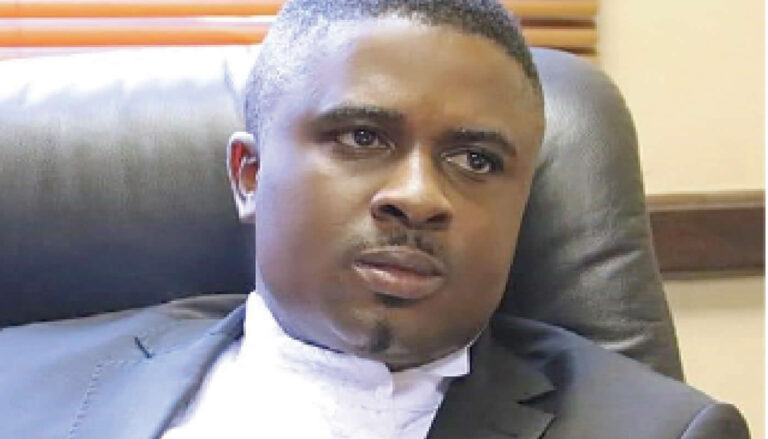
The African Democratic Congress (ADC) has disowned recent remarks by the Labour Party’s 2023 vice-presidential candidate, Datti Baba-Ahmed, clarifying that his criticisms of the opposition coalition were his personal opinions and not the party’s official position.

In a statement signed by its Deputy National Publicity Secretary, Jackie Wayas, on Saturday, August 23, the party restated its commitment to building a united opposition ahead of the 2027 elections.

Baba-Ahmed, during an appearance on Channels Television’s ‘Politics Today’, on Friday, August 22, accused the coalition of “deceiving Nigerians” and lacking the capacity to rescue the nation from underdevelopment. He also restated his willingness to contest alongside Peter Obi in 2027.

The party, however, stressed that the coalition is a serious and collective initiative aimed at offering Nigerians a credible alternative to President Bola Tinubu’s government.

It explained that the alliance enjoys the backing of key political figures, including former vice president Atiku Abubakar, ex-Kaduna State Governor Nasir El-Rufai, David Mark, Ogbeni Rauf Aregbesola, Rotimi Amaechi, and Mr. Peter Obi.

ADC, also recalled that Peter Obi had publicly endorsed the party as the coalition’s platform for the 2027 elections, noting that he emphasised the need for a united opposition to dismantle Nigeria’s entrenched structures of poverty and insecurity. The party stressed  Obi’s stance that no single group could change Nigeria alone, while insisting that a new Nigeria was possible through effective collaboration.

Clarifying further its stance, the party maintained that Baba-Ahmed’s remarks were strictly personal, with Wayas stating that his assertions did not reflect the position of the party or its coalition partners. The party, however, extended a conciliatory hand to him, describing him as a principled leader whose voice remained valuable in the national discourse.

“Senator Datti Baba-Ahmed is a respected voice who has always stood for integrity and justice.

“Since the coalition is a collective effort that requires the strength and skills of all patriots, we sincerely hope he comes on board to contribute to this shared vision for a better Nigeria,” Wayas noted.

The statement reassured on its its mission to unite the opposition under a transformative agenda and urged Nigerians to support the coalition in its efforts to rescue the country.

Survivors of GBV in Nigeria deserve faster justice — Special Courts may be the answer

The contrasting cases of Elizabeth Ochanya Ogbanje and John Otema highlight the complex challenges of prosecuting sexual violence in Nigeria.

Ochanya, a 13-year-old girl from Benue State, suffered years of abuse and died in 2018. Her case dragged on for nearly five years in a regular High Court, weighed down by conflicting medical reports, weak forensic evidence, and repeated adjournments. By contrast, within two years of his arrest, University of Lagos graduate John Otema was convicted and sentenced to 50 years in prison for rape and assault. His case, tried at Lagos State’s specialist Sexual Offences and Domestic Violence Court, benefited from clear victim testimony, corroborating evidence, and a streamlined trial process.

These two cases do not only reflect the difference between regular and specialist courts; they also expose how the quality of evidence, prosecutorial capacity, and judicial prioritisation together determine speedy delivery of  justice.

Justice delayed: Ochanya’s long struggle through the courts

In October 2018, 13-year-old Elizabeth Ochanya Ogbanje died after suffering years of sexual abuse while living with the Ochiga-Ogbuja’s family to get a better education in Ugbokolo, Benue State.

Andrew Ochiga-Ogbuja and his son, Victor Ochiga-Ogbuja, both maternal relations of the deceased, were accused of serially raping her.

Ochanya spent four months in diapers’ before seventeen tests revealed that she was sexually violated through her vagina and anus. Doctors later diagnosed Ochanya with Vesico-Vaginal Fistula (VVF) and she was admitted at the Federal Medical Centre in Makurdi for two months before she died on October 17, 2018.

Although Ochanya’s death sparked national outrage, the pursuit of justice moved at a slow pace.

Ochiga-Ogbuja, a lecturer at the state polytechnic was arrested and remanded in custody while his son, Victor was on the run.

Her case was filed before a regular High Court in Makurdi. This meant competing with a backlog of civil, criminal, and land disputes, infrequent hearings, and repeated adjournments.

Nearly four years later, on April 28, 2022, a High Court in the state acquitted Ochiga-Ogbuja, ruling that the prosecution failed to meet the burden of proof while his wife, Felicia Ochiga-Ogbuja in a separate Federal High Court was convicted of negligence and received a five-month prison sentence without the option of a fine. 

When Ochiga-Ogbuja and his wife were arraigned in October 2019, the National Agency for the Prohibition of Trafficking In Persons (NAPTIP) presented medical reports, video testimony from the victim, and eight witnesses, including police, medical experts, and family members. 

However, two conflicting autopsies clouded the narrative, one local autopsy attributed Ochanya’s death to natural causes, while another in Lagos suggested sexual violence. 

The court found a gap in the lack of provision of a  deoxyribonucleic acid (DNA) evidence or other forensic linkage to Ogbuja, leading to his acquittal.

However, critics condemned the judgment as a technical victory devoid of substantive justice. 

One of the advocates, Onikepo Braithwaite noted that “matching a perpetrator’s specimen to the victim should not be the only standard to prove rape.”

Justice delivered: Otema’s swift conviction in Lagos

Meanwhile, in sharp contrast, while Ochanya’s case was ongoing, a University of Lagos graduate John Otema was handed a 50-year prison sentence for raping a student. 

Otema was accused of having sexual intercourse with two students without their consent. For student A the incident happened on January 31, 2018 at his home while the incident with Student B had earlier happened on January 17,  where he was accused of physically assaulting her around DLI in UNILAG by hitting her several times in the face and biting her back.

According to the prosecution, Otema had asked B for directions to Moremi Hall and compelled her to enter his car under the pretext of giving her a ride.

Upon entering the car, Otema, however, locked the car doors and drove to DLI, where he assaulted her by punching her in the face several times, biting her back, ordering her to undress and taking her nude photos.

In August 2020 the case was tried at the Sexual Offences and Domestic Violence Court in Ikeja.  During the trial, the prosecution called six witnesses, which included the two victims and supporting documentation to form a compelling narrative.

The judge, Abiola Soladoye found Otema guilty of raping and assaulting student B.

The case was concluded in less than two years, without procedural stalling or multiple adjournments unlike Ochanya’s case that took over four years. 

The Federal High Court claimed that Ochanya’s case was weakened early on by contradictions in the medical findings, a lack of forensic corroboration, no DNA, and  no biological evidence tying Ochiga-Ogbuja to the crime. 

How specialist courts make a difference

Ochanya’s case illustrates how easily justice can falter within Nigeria’s overstretched judiciary. Regular courts handle an overwhelming mix of criminal, civil, and land disputes, often leading to adjournments, procedural delays, and limited forensic capacity. In sexual violence cases, these delays are especially damaging evidence weakens over time, and survivors are forced to endure prolonged retraumatisation.

By contrast, the Otema trial shows what is possible when both evidence and judicial structures are strong. The case benefited from clear, well-documented testimony and supporting proof, as well as a specialist court designed to fast-track sexual-offence matters.

The Sexual Offences and Domestic Violence Court in Ikeja was established to give such cases priority. Freed from competing dockets and unnecessary procedural hurdles, it could move quickly and decisively, demonstrating how specialised courts can transform outcomes in gender-based violence trials.

By contrast, Otema’s conviction makes a case for specialist courts which:

  • Prioritisation – GBV cases are not competing with other cases.
  • Speed – streamlined processes reduce adjournments and delays.
  • Focus – trained judges and prosecutors handle sensitive GBV matters.
  • Survivor-sensitive trials – reducing prolonged trauma for victims.

In 2018, during the inauguration of special offences court in Lagos, the then, deputy governor of Lagos, Oluranti Adebule who represented his principal said, “I am particularly glad about the designation of two courts to handle sexual related offences as it complements our fight against sexual abuse.

“These sexual offences courts will have trained and experienced prosecutors to interact with survivors, provide support and ensure timely prosecution of the cases.”