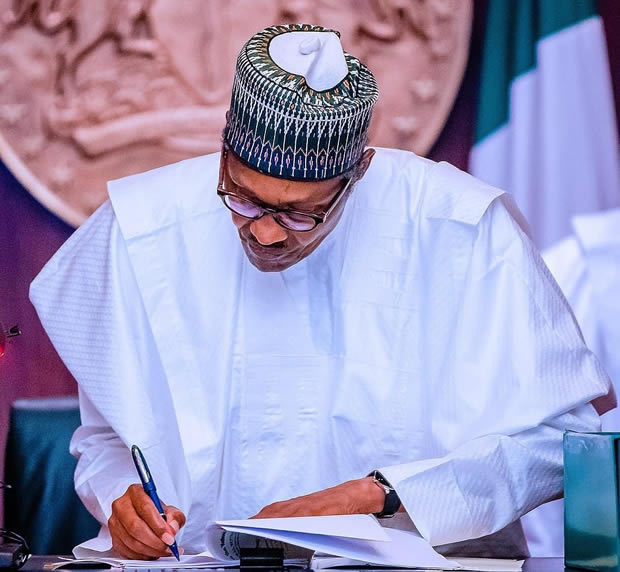
AFTER 30 years, President Muhammadu Buhari on Friday in Abuja assented to the Companies and Allied Matters Bill, 2020.
Disclosing the development, Femi Adesina, Special Adviser to the president on Media and Publicity, in a statement stated that, “The President’s action on this important piece of legislation, therefore, repealed and replaced the extant Companies and Allied Matters Act, 1990, introducing after 30 years, several corporate legal innovations geared toward enhancing ease of doing business in the country.”
Adesina explained that the innovations encapsulated in the bill include filing fee reductions and other reforms that would make it easier and cheaper for small and medium-sized enterprises to register and reform their businesses in Nigeria.
He also said the bill would give room for corporate promoters of companies to establish private companies shareholder and as well create limited liability partnerships and limited partnerships to give investors and business people alternative forms of carrying out their business in a flexible and efficient way.
Other benefits outlined to come with the bill, according to Adesina’s statement, are “Innovating processes and procedures to ease the operations of companies, such as introducing statements of compliance, replacing “authorised share capital” with minimum share capital to reduce costs of incorporating companies.
Others are, “electronic filing, electronic share transfers, e-meetings as well as remote general meetings for private companies in response to the disruptions to close contact physical meetings due to the COVID-19 pandemic, requiring the disclosure of persons with significant control of companies in a register of beneficial owners to enhance corporate accountability and transparency; and
“Enhancing the minority shareholder protection and engagement; introducing enhanced business rescue reforms for insolvent companies; and permitting the merger of Incorporated Trustees for associations that share similar aims and objectives.”
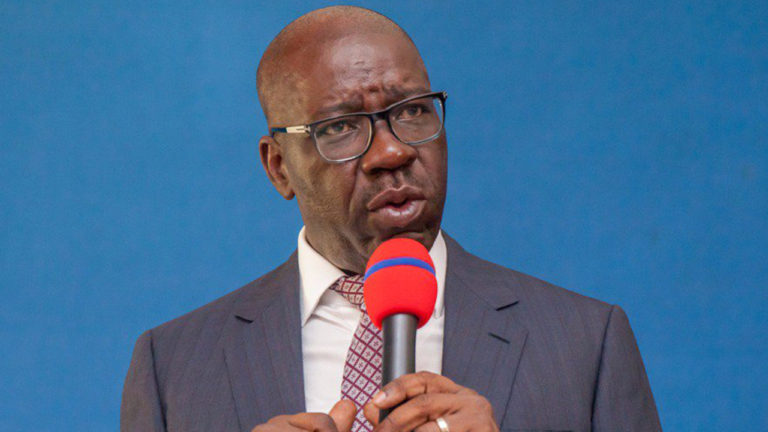
GODWIN Obaseki, Governor of Edo State says the invasion of the state House of Assembly complex on Thursday was an attempted coup which did not succeed.
Obaseki who stated this while speaking at a live broadcast on Friday concerning the state House of Assembly crisis, said the events portend grave danger to the safety and security of the polity.
“These events portend grave danger to the safety and security of our polity. It had all the hallmarks of an attempted coup d’état. The people of Edo State rose as one to prevent the desecration of our democracy,” the governor said.
“It is however worrisome that certain persons are willing to plunge the society into avoidable anarchy and conflict just to satisfy their illegitimate objectives, these acts are tantamount to treason, contrary to the provisions of the Nigerian Constitution.”
He added that the crisis was fuelled by a former governor of the state who according to him, is ‘bent on throwing the state into crisis’.
“This unfortunate situation has festered because a former governor of the state is bent on throwing the state into crisis ahead of the forthcoming governorship elections,” Obaseki stated.
He noted that the state legislative power tussle, worsened when the leadership of the assembly declared the seats of 12 members vacant and demanded a fresh election by the Independent Electoral Commission (INEC) because they failed to sit for over 180 days.
“Following this action by the leadership of the House, the 14 members-elect approached the Federal High Court, Abuja, to challenge the constitutionality or otherwise of the declaration of their seats vacant. This suit is still pending in the court,” Obaseki explained.
The governor commended the residents of the state for standing up against the ‘evil plans’ of the perpetrators of the crisis.
“I want to salute the resolve of all well-meaning Edo people in standing up to thwart the evil plans of these undemocratic elements who are bent on perpetrating an illegal assault on our democracy by the purported inauguration in a private residence.
Be assured, dear people of Edo State, that this government will take all steps necessary to defend the rule of law and democratic ideals. Any person or group of persons who set out to test our will in this regard will meet with the full wrath of the law,” he added.
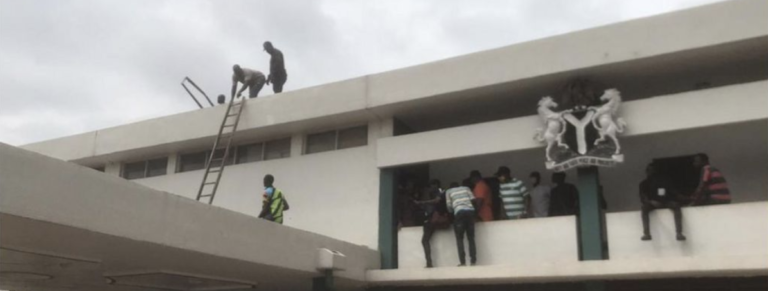
The ICIR had reportedhow hoodlums on Thursday, stormed and vandalised the Edo State House of Assembly Complex, removing the roof, and taking down the symbolic legislative mace statue on top of the building.
Security officials had besieged the complex earlier in the day to forestall the occurrence, however, the hoodlums who could not gain entrance into the building resorted into vandalising the structure of the Assembly complex.
Edo State Government has been at disunity following the escalated crisis between the Obaseki and the immediate past governor of the state, Adams Oshiomole which led Obaseki’s failure to secure the ticket to run as a second-term governor on the platform of the All Progressive Congress (APC) where Oshiomole is a former National Chairman.
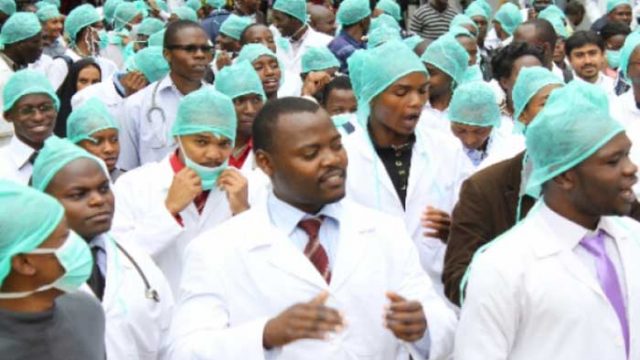
THE Medical and Health Workers Union of Nigeria (MHWUN) has threatened to shut down the Nigerian health system over failure by the Federal Government to pay its members’ hazard allowances in full.
Josiah Biobelemoye, the National President of MHWUN made this known on Friday when paid a visit to Ekele Bisalla, the Chief Medical Director (CMD) of University of Abuja Teaching Hospital (UATH).
Biobelemoye disclosed that members of the union only got 10 per cent out of 50 per cent of hazard allowances jointly agreed by stakeholders of the sector.
“We have resolved to shut down the health system if the government doesn’t correct the anomaly before payment of the third batch of the COVID-19 allowances,” he said.
“To the best of our understanding, the agreement signed with the Ministry of Health on the COVID-19 allowance was that those who earned N5000 as hazard allowance would be replaced with 50 per cent of their basic salary.”
He lamented that instead of implementing the agreement accordingly, the Chief Medical Directors of various hospitals were misled to implement only Part D of the agreement.
Biobelemoye added that the CMDS misunderstood this to be 10 per cent was given to members of the union considered as non-medical professionals.
According to him, the Federal Ministry of Health also agreed that there was an error in the circular for an initial payment of the allowances.
“This was confirmed even when we met with the Federal Ministry of Health officials, they agreed that there was an error and asked us to provide for them the lists of those that were wrongly paid 10 per cent, we have done that with the financial implication,” he added.
The MHWUN president also clarified that the union is not demanding the same salary scale as doctors as alleged by the ministry of health.
“Regarding speculations that the union is asking for the same salary scale with medical doctors, it was far from the truth, we only want leaders in the sector to ensure actions that would promote industrial harmony in the system and not the other way round,” Biobelemoye noted.
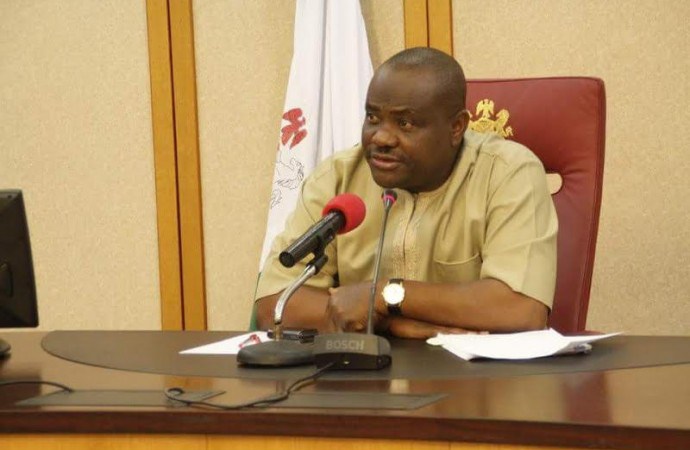
THE management of ThisDay newspapers has reacted to a legal suit instituted against it by Nyesom Wike, the Governor of Rivers State.
The ICIR reported that the governor had in a statement on Wednesday through Paulinus Nsirim, the State’s Commissioner for Information and Communications, said that he has instituted a libel suit against the newspapers to the tune of N7 bllion over a publication published by the media house against him.
According to the statement, Emmanuel C.Ukala, Esq, (SAN), Counsel to the governor who filed the case at the Port Harcourt High Court, said the publication which was captioned; “With Wike, Obaseki Meets His PDP’s Waterloo, Almost,” and published on June 23, 2020, maliciously and falsely portrayed his client by the newspaper as an unreliable friend/person.
He further stated that the media house further portrayed Wike as a selfish politician and a person who meddled in and exerts subterranean influence in judicial matters in courts sitting in Port Harcourt to achieve selfish political interest and that he is not a true democrat.
The governor, according to him, wants the court to compel the newspaper to withdraw, retract and recant the publication.
The retraction is to be published in a full front page of the newspaper, and thereafter a full page apology “acceptable” and subjected to the approval of the governor also be published at the back page of the newspaper, he said.
However, in a telephone conversation with The ICIR on Friday, Eniola Bello, the Managing Director of ThisDay newspapers, said the media house was yet to receive any court papers from the governor or his representative, saying as far as he is concerned ‘there is no court case.’
“What case? This media house has not received any court papers from anyone. When you sue someone, you send them court papers. So if there are no court papers, we can’t be responding and talking about a suit,” Bello said.
Internally displaced persons resident in the Federal Capital Territory, Abuja are finding it more difficult to get by during the COVID period. Ihuoma CHIDOZIE visited six IDP camps in the FCT to report about the condition of living of this vulnerable group.
“During the lockdown, the National Emergency Management Agency came here with two buckets and liquid soap so that we can wash our hands for prevention of the coronavirus disease. But they did not bring foodstuffs or any other palliatives for us, even though our major problem is hunger,” Luka Yadume said, sadness and despair written all over his face as he spoke of the travails of internally displaced persons at an IDP camp in New Kuchingoro, a sleepy village in the Abuja Municipal Area Council of the Federal Capital Territory.
The interview with Yadume took place during a visit to the IDP camp on July 13, 2020. Yadume is the secretary of the camp, which has about 2,000 residents, mostly refugees from Borno and Adamawa states, who had been displaced from their homes by Boko Haram.
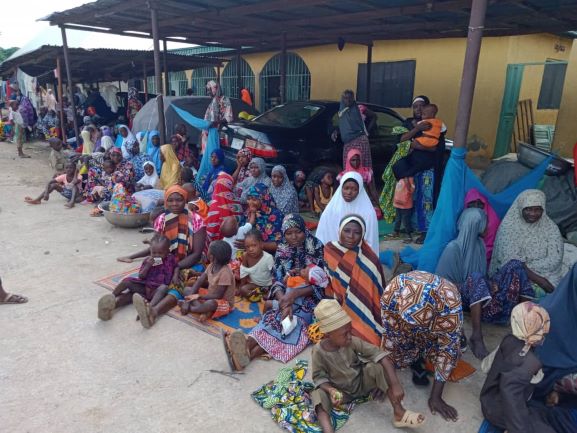
The New Kuchingoro IDP camp, a ramshackle, squalid, barely habitable cluster of tents made of tarpaulin, zinc and fabric, sprang up in 2014 in what was hitherto undeveloped hectares of land filled with cashew trees.
Six years after the IDPs settled in the camp, the residents still lack the most basic amenities.
Some old women sat on the floor, under the tree shade, looking on, silently, as Yadume spoke of challenges faced by residents of the camp. Children, clad in dirty and torn clothes, ran about the camp, seemingly oblivious of their unfortunate situation. The few youths around sat in a group under another tree, discussing in subdued tones.
Women sitting under a tree at New Kuchingoro IDP camp
The Federal Government, through the Ministry of Humanitarian Affairs and Disaster Management, reportedly spent billions of naira on palliatives to vulnerable Nigerians during the recent lockdown that followed the outbreak of the COVID – 19 disease in the country.
However, investigations revealed that the IDPs, who should ordinarily be classified among the most vulnerable Nigerians, barely got any palliatives from the government during the period.
”We did not receive any palliatives from the government during the lockdown. We only got support from some NGOs (non-governmental organisations),” Yadume said.
It was the same story in other IDP camps visited during the investigation. Residents of IDP camps at Karamajiji, along airport road, Lugbe; Durumi 1, near Area 1; and Pegi, in Kuje Area Council, all in the FCT, said they did not receive palliatives from the government.
Also, IDPs at a camp in Gurku, in Nasarawa State, as well as those in a camp at Cheku, in Niger State, narrated similar experience.
Yadume said the IDPs at New Kuchingoro have long lost hope in the government.
But he noted that it was highly disappointing that NEMA, a Federal Government agency that coordinates response to disasters, could only bring ‘two buckets and liquid soap’ for IDPs in the camp during the lockdown.
”We heard when the Federal Government said it will feed IDPs for two months during the lockdown but we IDPs in New Kuchingoro did not receive any palliatives.
“The IDPs here in New Kuchingoro have lost interest in the government. We are law-abiding citizens that is why we ran away from our homes, otherwise, some of us could have stayed back to join Boko Haram.
“Look at the environment here. This place is not conducive, especially for children and women. Most of the children are not in school. Also, we have serious issues with healthcare in the camp. There are no facilities for antenatal care for pregnant women,” Yadume said.
He revealed that more than 25 IDPs in the camp died due to the inability to access basic healthcare.
Forced into destitution and penury after losing all they had while fleeing from Boko Haram, the older IDPs among the residents of New Kuchingoro desire a better future for their children.
Yadume was quick to draw a link between lack of education and the Boko Haram insurgency. Uneducated youths, in most cases, are easily recruited by the insurgents.
However, left to fend for themselves, without support from the government, the IDPs had to find ways to educate the children among them. An improvised primary school, run by volunteer teachers, has been set up in the camp.
Volunteer teachers inside the Karamajiji IDP camp classroom
Explaining further, Yadume said, “Because of the problems caused by the high level of illiteracy in the North-East, which contributed a lot to the insurgency, we decided to establish a school for the children in the camp.
“Our children were growing here without education so we decided that it is important to do something about their education before it is too late so we established a school that is run by volunteer teachers. The school started with three volunteer teachers in 2018 and now we have about 10 volunteer teachers who teach the children regularly.
“Currently, we have kindergarten and early age primary school classes but we need the support of the government. We have students of secondary school level who are not going to school because their parents cannot afford to pay for their education. Most of them dropped out of school after finishing primary six.”
Apart from his role as ‘secretary’ of the IDP camp, Yadume, whose dream of completing higher education was aborted by the Boko Haram insurgency, serves as one of the volunteer teachers.
Eviction notice
Lack of basic amenities and neglect by the government is currently the least of the problems faced by the IDPs of New Kuchingoro, as they are now confronted with the threat of imminent eviction from the camp. And they don’t have anywhere to go.
The residents of New Kuchingoro IDP camp may, very soon, become homeless. The land on which the IDPs set up the camp is private property and the owner of the plots has asked them to leave to enable him develop it.
The owner of the property had earlier, in 2019, notified the IDPs of his plan to develop the plots. A fresh eviction notice was issued to the IDPs in June 2020, shortly after the Federal Government started easing the lockdown.
“The owner of the property first came here in 2017 to inform us that this place belongs to him. Then towards the end of 2019 he came again to inform us that he intends to develop the property and that we should leave. He did not come back until June when he came again to ask us to leave. He said he is now ready to develop the property. We have pleaded with him but he said he wants to develop his property. He is insisting that we must leave,” Yadume explained.
The New Kuchingoro IDPs have found themselves in a tight condition – displaced from their homes by the Boko Haram insurgency, they now face the added jeopardy of being evicted from a sanctuary where they have found refuge.
Yadume added, “This is a very difficult time for us and it will not be easy to leave. It is the rainy season and we don’t know anywhere. It will be very difficult for anybody to relocate.”
The IDPs, according to Yadume, had informed the Ministry of Women Affairs of their plight. But they did not get any response.
“We informed the minister of women affairs about our predicament but nothing has been done about it. The government is not involved in the process of relocating us or getting a new place for us. We will have to bear the cost of setting up a new accommodation because the government is not involved in our welfare and we don’t have the resources to set up a new camp,” he said.
Karamajiji IDP Camp
Tales of government neglect also resonated at the Karamajiji IDP camp, near Lugbe, in AMAC, FCT.
Living quarters in Karamajiji IDP camp
The primary school in the IDP camp is a decrepit building, with collapsed ceiling and blocks. Although schools have not reopened as a result of the COVID – 19 pandemic, malnourished looking pupils and their teachers were seen huddled inside the only available classroom.
The school is run by the IDPs with support from an NGO – the Association of Muslim Women.
Suraju Musa, an IDP who introduced himself as the ‘vice headmaster’, stated the obvious when he explained that the school was not conducive for learning.
“We have a lot of problems. The school building is in poor condition. We don’t have facilities for learning. There is no ventilation in the classroom and as a result, during the dry season, it gets very hot and uncomfortable for both pupils and teachers. The roof leaks and rain comes into the classroom during the rainy season.”
“We don’t have funds to run the school and pay teachers’ salaries – the parents of the pupils don’t have enough money to pay school fees. Government is not assisting us, it is only an NGO, the Association of Muslim Women, that has been assisting us,” he added.
Pupils in the school, who number about 500, pay N300 each as school fees. The money realised from the fees is used for teachers’ salaries – the teachers are paid N5000 per month, while the two headteachers, the headmaster and vice headmaster, receive N10,000.
Children in the primary school at Karamajiji IDP camp
Musa disclosed that the Association of Muslim Women gives the school N15,000 each month. The amount takes care of the salary of three teachers.
Durumi 1 IDP camp
For residents of an IDP camp at Durumi 1, near Area 1, in Abuja Municipal Area Council, access to medical care is currently the biggest challenge, following the suspension of healthcare subvention hitherto provided for the IDPs by the National Commission for Refugees, Migrants and Internally Displaced Persons.
Chairman of the camp, Ibrahim Ahmadu, a native of Gwoza LGA of Borno State, who was nursing a fresh bullet wound which he blamed on ‘trigger-happy policemen’, explained that before now, IDPs from the camp received free medical care at the National Hospital, Abuja, upon the presentation of a letter from the Commission. But lately, that is no longer the case.
Ahmadu said, “Our major challenge is healthcare. Before now, the National Commission for Refugees usually takes care of the medical bills of our people who are treated at the National Hospital. But now they have stopped doing that. Usually, when we present a letter from the Commission indicating that we are from the IDP camp, the National Hospital will treat us without asking for money and the Commission will pay.
“But now the Commission is no longer issuing letters to our people. They did not tell us why but we learnt that the Commission is owing to the National Hospital a huge sum for previous treatments given to our people.”
The IDP camp at Durumi is located on land that is meant for the construction of the permanent site of a Federal Government agency, and judging by the structures and other amenities at the place, the IDPs there seem to enjoy a comparatively better lease of life than their counterparts in other places.
But Ahmadu also spoke of government neglect, noting that it is only NGOs that have been coming to their aid.
”Some NGOs have been assisting us by bringing foodstuffs and other essential items. An NGO provided two medical doctors who come here to treat our people free of charge. During the lockdown different NGOs and some individuals brought food items for our people,” he said.
The camp, populated mostly by people from Borno, Yobe and Adamawa states, currently has 2,830 IDPs.
Apart from medical care, Ahmadu said IDPs in the camp also need foodstuffs, ’empowerment’, education, and financial support.
Gurku IDP camp
Series of disappointing experiences has entrenched a deep sense of distrust for outsiders, including government and private organisations and individuals, among residents of the IDP camp at Gurku, a remote village in the Karu Local Government Area of Nasarawa State.
The camp, occupied mostly by IDPs from Borno and Adamawa states, was initiated by of an individual, Mr. Marcus Gamache, who, reportedly, set up the structures and amenities in the place with support from foreign donors.
IDPs in the camp vehemently refused to give out information, even concerning their challenges. According to them, they have not gained anything from countless occasions in the past when they told visitors about their problems. Rather, they alleged that government agencies and private organisations and individuals who visited the camp to ask about their well-being used the information to enrich themselves.
The camp chairman, Yohanna Zidiko, said he will only talk if presented with gift items for IDPs in the camp.
”The camp initiator has given us instructions regarding how we give out information concerning the camp to visitors, including journalists, NGOs and government officials. We were directed to stop giving out information to anybody. This is because, for more than four years now different organisations and individuals have been visiting this camp to collect information and we have found out that they use the information we give them for their own benefits, without any benefit coming to us.
“That is why the camp initiator instructed that we should not give out any information, and before we give out information we must ensure that the person or organisation seeking that information have brought things for us – no matter how little.
“That is the instruction that was given to us, no matter who it is. Even if the government comes to ask for information we have been instructed not to give them that information,” Zidiko said.
Noting that the IDPs in the camp have become disillusioned after serial disappointing experiences, he added, “There is hardly any government agency that has not come to this camp. Many journalists have been to this camp. In fact, there are few media houses in Abuja and in this Nasarawa that have not visited this camp. Even the current Secretary to the Government of the Federation (Boss Mustapha) before he was appointed as the SGF, came to this place.”
Zidiko refused to reveal the population of the IDP camp. ”I can’t tell you the number of people in the camp. That is one of the information we were instructed not to disclose,” he said.
But he was quick to reveal that the IDPs did not receive any palliatives from government during the lockdown.
“The government did not bring any palliatives for us during the lockdown,” he stressed.
Asked to state what the IDPs in the camp want from the government, Zidiko noted that requesting anything from the government was a waste of time.
“Whether we say it or not we are sure that the government of Nigeria will not do it. We have been here since 2014. There is nothing that the government has done. The Human Rights Commission has come here, even the House of Representatives has visited this place. The Senators representing our areas are here in Abuja. Did they ever send anything to us? Senator Mohammed Ali Ndume is the one representing Gwoza Senatorial District. We have Senator Elisha Abbo representing Mubi Senatorial District. They are aware of this place, they know their people are here, did they do anything? Even President Muhammadu Buhari himself, he is aware of this camp, has he done anything? For more than five years government has not done anything for us,” he said in a dismissive tone.
Pegi IDP settlement
Unlike IDPs in most other places, the displaced persons at the IDP settlement in Pegi, a village in the Kuje Area Council of the FCT, live in rented accommodation. The IDPs, who are mostly indigenes of Chibok town in Borno State who were displaced from their homes by Boko Haram, live among the villagers in the remote rural community.
Rent for the houses occupied by the IDPs varies according to the condition of the building but the regular houses cost N30,000 per annum.
Naomi Joseph, a widow and mother of five, explained that the IDPs engage in farming within the village and neighbouring communities, as a means of livelihood. The farms are also rented, with the rent determined by the size of the farmland. The larger farms are rented for N10,000 per annum, while smaller ones go for N5000, per annum.
Naomi Joseph at Pegi IDP camp
The harsh conditions in which the IDPs live was evident from the squalid surroundings, and the dirty, unkempt and malnourished appearance of most of the women and children.
Naomi explained that IDPs in the camp have not had any contact with the government since they moved into the area in 2014. The situation did not change during the lockdown – the IDPs did not receive any palliatives from the government. She added that NGOs hardly visit the camp, which is located in the remotest part of the remote village.
Ironically, Naomi’s husband had succeeded in escaping with his family from Boko Haram attacks back home in Chibok, only to lose his life in an armed robbery attack in the FCT, where he found refuge.
Narrating how her husband died, Naomi said, “My husband brought us here in 2014 after we escaped from Boko Haram attacks in Chibok. He was a businessman before but because we lost everything while escaping from Boko Haram, he had to become an okada rider when we got here. Three years ago armed robbers killed him and collected the okada he was riding.”
Cheku IDPs
The IDPs at Cheku, a rural village in the Lapai Local Government Area of Niger State, were not displaced by insecurity. They were driven from their homes by flooding, a yearly occurrence which usually force them to become temporary refugees. Usually, when the rains start, the river overflows its banks, flooding homes and farmlands, forcing the villagers to vacate their houses and currently, they are taking refuge in a makeshift, open camp set up by the courtyards of offices at the local government secretariat. They will remain refugees until the rains stop.
During a visit to the camp, women, and children, looking helpless and stressed out, sat on mats positioned under trees, which provide shade from the scorching sun. Mosquito nets were placed on the pavement, where the refugees sleep at night. Cooking utensils littered the grounds in the dirty environment. Some of the younger children were observed begging for alms from passers-by along a road in front of the secretariat. One of the IDPs, who simply introduced himself as Hussaini, said they depend on alms from members of the public for survival. Government support is non-existent.
Residents of Muye, another community in Lapai LGA, are also affected by floods. But, so far, they have been spared the disaster since the rains started this year.
IDP situation in Nigeria
Although the United Nations High Commissioner for Refugees – a UN agency with the mandate to protect refugees, forcibly displaced communities and stateless people – stipulates that IDPs should be under the protection of their own government, travails of displaced persons in most IDP camps in Nigeria suggests that government at all levels is neglecting the highly vulnerable segment of the society. The situation is more worrisome as worsening insecurity is continuously turning more Nigerians into refugees in their own country.
The level of insecurity in Nigeria has heightened in recent years, due largely to the activities of Boko Haram jihadists and bandits in the northern part of the country. The situation is exacerbated by incessant attacks by armed herdsmen on pastoral communities in the Middle Belt and parts of the South.
Insecurity has led to the displacement of several individuals and households – the Internal Displacement Monitoring Centre stated that 2,583,000 Nigerians were living as IDPs, due to conflict and violence, as at December 2019. Disasters, especially flooding, also contributed to the high rate of internal displacement. Disasters accounted for 157,000 new displacements from January 1 to December 31, 2019.
Investigations have shown that IDPs are largely left to fend for themselves, without any support from the government. In all the IDP camps visited across the FCT and parts of Nasarawa and Niger states, IDPs bitterly complained of neglect by the government. Members of all the IDP camps said they did not receive any palliatives from the government during the lockdown.
Federal Government keeps mum
But the Federal Government had said it spent billions of naira to provide palliatives to vulnerable Nigerians across the six geo-political zones during the lockdown.
Officials of the Ministry of Humanitarian Affairs and Disaster Management, the ministry which supervised the implementation of the palliatives, refused to respond to questions concerning the non-inclusion of IDPs, who are among the most vulnerable Nigerians, in the palliatives scheme.
When contacted, a spokesperson in the ministry, Rhoda Iliya, said the question should be forwarded to her through SMS. But the SMS sent to her was not replied, and subsequent calls to her mobile phone were not answered.
The amounts the Federal Government claimed it spent to provide palliatives to vulnerable Nigerians during the lockdown has raised eyebrows, and already, a group, the Socio-Economic Rights and Accountability Project, has filed a lawsuit asking the Abuja Federal High Court to order the Federal Government and the Central Bank of Nigeria to disclose the identity of Nigerians who benefited from the programme.
FG pampering ‘repentant’ Boko Haram fighters while neglecting their victims
Yadume, the Secretary of the New Kuchingoro IDP Camp, expressed regrets that the Federal Government was ‘pampering’ ‘repentant’ Boko Haram members, while at the same time neglecting their victims, who have been turned into IDPs. He observed that the development was sending out wrong signals to the youths, who are beginning to believe that they will only be ‘recognised’ by the government if they take up arms.
Ex-Boko Haram fighters are being rewarded with scholarships and employment as part of a ‘reintegration and de-radicalization’ programme implemented by the Federal Government.
“If the government is taking care of the ex-Boko Haram fighters, it is only fair that government should also look after the IDPs who are victims of the Boko Haram insurgents.
“The ex-Boko Haram are the ones who put these IDPs in this situation and neglecting the IDPs while you take care of the ex-Boko Haram is not fair. It now gives the impression that you have to become a Boko Haram member before the government can recognise you. The government should address this situation,” Yadume said.
Not yet safe to go home
Faced with hardship in ‘foreign lands’, the IDPs desire to go back home, where they experienced better days that now seem like a lifetime ago.
However, they also believe that it is not yet safe to return to their homes.
Ahmadu, chairman of the Durumi IDP Camp, noted that the Federal Government was not saying the truth when it declared that Boko Haram has been defeated.
“Unfortunately, the authorities are not being truthful in claiming that Boko Haram has been defeated, the area is still not safe and they are still launching attacks and killing people,” Ahmadu said.
Although he expressed a burning desire to leave the IDP camp and return home, Yadume noted that it will not be possible until a time when it will be safe to do so.
He said, “We will be very happy to go back to our homes but the problem is our homes are still not safe. Boko Haram is still killing people back home. They are killing soldiers and civilians.
“So we can’t think of going back home yet. If it is safe we will be very happy to go back. But for now, we can’t go home. What is the point in losing family members, losing your property and escaping with your life, only for you to go back after some years and you get killed?”
THE Presidential Task Force (PTF) on COVID-19 has announced that bars, gyms and night clubs are to remain closed until further evaluation.
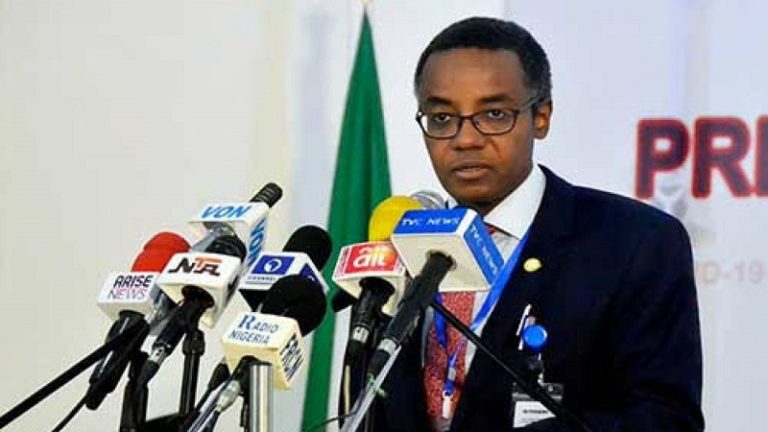
Sani Aliyu, the National Coordinator of the PTF made this known during the press briefing on COVID-19 on Thursday.
Aliyu said all hotels, restaurants and eateries in the country are to remain open but must adhere to the guidelines earlier outlined by the PTF.
“Hotels, restaurants, eateries may continue to remain open but must observe all compulsory non- pharmaceutical interventions. Bars, gyms and night clubs remain closed until further evaluation,” Aliyu said.
He further noted that international flights may resume soon as recommendations have been made to the Ministry of Aviation.
“For international travel, we have made recommendations to the aviation industry to commence the process for opening international airports provided all existing international & local preventive guidelines,” Aliyu noted.
The restrictions in the education & entertainment sector, as well as other activities that attract mass gathering, such as the operation of markets & worship centres, to remain.”
He recommended that all government meetings should continue to be virtual and restrictions on physical distancing should be maintained during official trips and board meetings.
THE United States of America (USA) has issued a travel advisory to its citizens against travelling to Nigeria over insecurity challenges and the COVID-19 pandemic.
The US State Department had in a statement on its website, urged its citizens to reconsider travelling to Nigeria due to COVID-19 and crime such as terrorism, civil unrest, kidnapping, and maritime crime.
According to the statement, the US Center for Disease Control and Prevention (CDC) had issued a Level 3 Travel Health Notice for Nigeria due to COVID-19.
The security advisory, which was dated August 6 said citizenry should not travel to Borno and Yobe, and Adamawa states due to terrorism.
It also listed Adamawa, Bauchi, Borno, Gombe, Kaduna, Kano, and Yobe States as areas vulnerable to kidnapping.
For maritime crimes, civil unrest, kidnapping and other crimes, the consulate listed the coastal states of Akwa Ibom, Bayelsa, Cross Rivers, Delta, and Rivers as vulnerable areas.
Do Not Travel to: Borno and Yobe States and Northern Adamawa State due to terrorism: Adamawa, Bauchi, Borno, Gombe, Kaduna, Kano, and Yobe states due to kidnapping: Coastal areas of Akwa Ibom, Bayelsa, Cross Rivers, Delta, and Rivers states (with the exception of Port Harcourt) due to crime, civil unrest, kidnapping, and maritime crime,” the statement read.
The statement titled, “Country Summary” also said Nigeria is known for violent crime – such as armed robbery, assault, carjacking, kidnapping, and rape – is common throughout the country. Exercise extreme caution throughout the country due to the threat of indiscriminate violence.
The US advisory is coming few days after the United Kingdom (UK) issued a travel advisoryto its citizens in Nigeria against travelling to Kaduna and some other states in the country over insecurity challenges.
The UK Government stated all but essential travels to Kaduna, Bauchi, Zamfara, and Kano states should be avoided by Britons in Nigeria.
According to the UK Government, its citizens should avoid travelling to Borno, Yobe, Adamawa, Gombe states.
The riverside of Delta, Bayelsa, Rivers, Akwa Ibom and Cross River states within 20kilometre of the border with Niger in Zamfara State were also among the states on the red flag by the UK Foreign Office.
The UK Foreign Office further stated that the current insecurity in Nigeria has necessitated the temporal withdrawal of a small number of UK staff and dependants at the British High Commission in Abuja and the British Deputy High Commission in Lagos.
IN clear violation of the new guideline by the Bureau of Public Procurement, BPP, the Nigerian Centre for Disease Control (NCDC) has spent the sum of N202 million on six contracts from the COVID-19 Intervention Fund without evidence of procurement plans, The ICIR has found out.
The projects were part of a list of 49 contracts awarded during the current pandemic with a total sum of N1,167,696,509.84.
Some of the fundings were donations from corporate organisations and individual Nigerians to support the Federal Government’s effort to cushion the effects of the pandemic. As of June 30, CACOVID has donated N30.15 billion.
CACOVID is a private-sector task force working in partnership with the Federal Government, the Nigeria Centre for Disease Control (NCDC) and the World Health Organisation (WHO) with the sole aim of combating Coronavirus (COVID-19) in Nigeria.
But while the 49 awarded projects were detailed in the Nigeria Open Contracting Portal (NOCOPO) of the Bureau of Public Procurements (BPP), six other contracted projects were missing from the BPP’s procurement plans database, even after the projects have been completed.
The projects include: Procurement of real-time PCR machine to the NCDC in the fight against COVID-19 (N9,836,400.00); establishment of molecular laboratory testing centre in Adamawa (N43,250,000.00); emergency procurement of critical supplies (N45,500,000.00) and an emergency supply of personal protective equipment, accessories cover and other items to the NCDC awarded at (N48,450,000.00).
Others were the procurement of VTM and SWAB Sticks (N16,974,000.00) and the procurement of critical supplies for COVID-19 response (N38,400,000.00).
An infographic detailing the NCDC’s flawed procurement
The BPP has stated on its website that though, it temporarily suspended the normal Open Competitive Bidding Method due to the pandemic, only emergency procurement for essential goods would be conducted.
Nevertheless, the BPP gave a caveat allowing all MDAs with emergency projects, to submit procurement plans to its website before they can be awarded and payments made.
“All procuring entities are to prepare procurement plans for all projects that specifically respond to the COVID-19 pandemic,” the bureau stated in the guideline signed by Mamman Ahmadu, the Director-General. “Any project that is not included in the procurement plan of the procuring entity shall not be processed for payment notwithstanding the source of funding for the project.
“COVID-19 Projects not captured in NOCOPO may not be funded by the Federal Government for implementation.”
The decision, it stated, is to ensure transparency and accountability when projects are awarded, despite easing its strict procurement guidelines.
COVID19 projects executed by NCDC without procurement plan. Source: BPP
On May 28, Isaiah Yesufu, a top official of the BPP in a presentation to the Independent Corrupt Practices and Other Related Offences Commission (ICPC) also reaffirmed the position of the Bureau on COVID-19 emergency procurements.
He said the pandemic had redefined global socio-economic activities including procurements. The new approach, he said, is in line with Section 43 of the PPA, 2007.
“A procuring entity may for the purpose of this Act, carry out an emergency procurement where: the country is either seriously threatened by or actually confronted with a disaster, catastrophe, war, insurrection or Act of God.”
Extract from Powerpoint Presentation made by Isaiah Yesufu, the BPP official on May 28, 2020, during ICPC event.
More so, to ensure accountability and transparency, the Office of the Accountant General of the Federation (OAGF), Federal Ministry of Finance directed government establishments benefitting from the COVID-19 funds to publish daily payment reports, the amounts, purpose of which payments were made, including the beneficiaries of any payment on the open treasury portal.
This is applicable to any payments above N5 million made from the COVID-19 fund.
“In addition, each MDA shall publish a detailed report of its activities relating to COVID-19 Fund on its website at the end of every week,” AGF framework for the management of COVID-19 fund, signed by Ahmed Idris stated.
Idris signed the working document on May 5. Though NCDC disclosed major items purchased with the COVID-19 fund, the monthly fiscal account which should detail MDAs’ spendings on COVID-19 has not been uploaded as required by the new guideline. In fact, the last update was in February.
Aside from the NCDC, the Federal Teaching Hospital, Abakaliki has also failed to comply with the emergency procurement guidelines. All the three projects awarded in 2020 by the facility were missing in the procurement plan.
The identity of the contractor who got nearly N8 million for the supply and installation of 100KVA soundproof power for the Lassa Fever COVID-19 centre was also missing in the contract report.
MDAs compliance with procurement guideline
Beyond NCDC and Abakaliki teaching hospital, The ICIR extended its search to other agencies and federal government establishments that have executed similar emergency projects during the pandemic.
For instance, the Obafemi Awolowo University Teaching Hospital, awarded and executed three projects. The three projects were listed in the procurement plan, including an additional project yet to be awarded.
The projects include procurement of hospital mattresses for isolation ward at N350, 000; supply of AVl 9180 electrolyte analyser at the sum of N1,2000,000 and purchase of hand sanitisers awarded at N1,170,000.
Unlike NCDC and Abakaliki teaching hospital, projects executed by the OAU teaching hospital reflected in the procurement plan despite being funded from the hospitals Internally Generated Revenue (IGR).
The Environmental Health Registration Council of Nigeria (EHORECON), through the Federal Ministry of Environment also executed 11 projects and each of the projects reflected in the procurement plan as stipulated by the procurement guideline.
Similarly, the Nigeria Security and Civil Defence Corps (NSCDC), a para-military organisation under the Federal Ministry of Interior awarded nine projects and all the projects have procurement plans.
NCDC Reacts
The ICIR contacted Emeka Oguanuo, the NCDC Spokesperson to verify why the contracts were missing in the database, contrary to the BPP guideline but he could not immediately provide an answer to the request.
“Personally, I don’t know. We have a procurement unit,” Oguanuo told the reporter. He thereafter scheduled an appointment with The ICIR to visit the NCDC Headquarters.
On Thursday, July 23, the appointment day, the reporter visited NCDC. After waiting for almost an hour, Oguanuo appeared to the reporter at the security point and said the Director of Procurement was out of town.
He said the NCDC official would not return until 27th July. The ICIR asked if he could speak with the deputy head of the procurement department, but he said the official was in a meeting.
Eventually, he advised the reporter to send an official request to the NCDC email: info@ncdc.gov.ng. The email was sent on July 23 as suggested but as of the time of this report, no response came from the Centre. And the spokesperson did not also revert.
MDAs must submit procurement plans – BPP
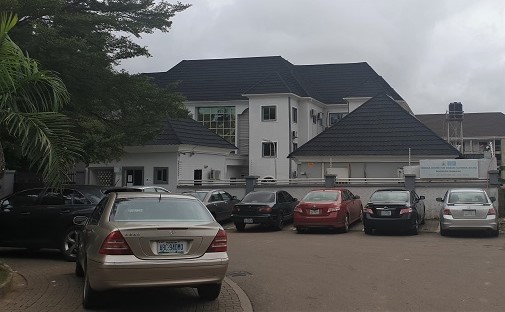
Bureau of Public Procurement Office, 11 Suleiman Barau Street, Presidential Villa, Abuja Photo Credit: Olugbenga Adanikin, The ICIR
On July 24, Segun Simmons, BPP spokesperson was contacted to verify possible implications of flouting the procurement guideline. After a brief conversation to ascertain the exact breach, he invited The ICIR to the BPP Headquarters in Abuja.
During the meeting with Eze Obasi, the Director for Special Procurement, he noted that the MDAs are expected to send their procurement plans to the NOCOPO. They ought to send procurement records as well but the procurement plans should precede projects awarded by the relevant agencies.
“We are mandating them to key into the NOCOPO. There is already a circular to MDAs to send all procurement plans of 2020 and procurement records of 2019 must be uploaded to the portal,” Obasi said.
“The intention is to see what each agency is doing and they also need to update us that they have uploaded their procurement plans and procurement records.”
He said the MDAs were given a deadline of July 31 to upload the details with their revised procurement plans in line with the amended budget.
Obasi emphasised that the guidelines were also applicable to projects executed from the COVID-19 fund as with the case of NCDC.
Flouting these provisions, he noted, would attract sanctions as stipulated in Section 58 of the BPP Act.
Nevertheless, the director explained that procurement audits would be conducted after the budget circle with supports from the Accountant-General’s office, the antigraft agencies, and Civil Society Organisations (CSOs).
The intention of sending procurement plans and procurement record, it was gathered is to monitor procurement activities of the agencies.
“…The bureau will still carry out procurement audit and we will do it with Independent Corrupt Practices and Other Related Offences Commission (ICPC) and the Economic and Financial Crimes Commission (EFCC) and the accountant general’s office to find out if there has been infringement and any infringement would be brought to book in line with what the Act says.”
“In sending the procurement plans, they will include the method adopted by the agencies and it is that method we will be looking for when we go for a procurement audit.”
Expert opinion
In his reaction, Joshua Olufemi, Executive Director of Dataphyte said the coordinating or regulatory agencies such as BPP, OAGF ought to do more to ensure full compliance with prepared guidelines.
A lot of procurement personnel at the MDAs, he noted, are still new to the regulation as well as the policy framework, “even though some are also caught in the curse of corruption.”
However, Olufemi advocated for sanctions from the BPP to ensure compliance.
“Releases to MDAs and contractors on projects should be tied to corruption assessment, compliance even during emergencies,” he suggested.
“Whatever makes a contractor or MDA inadequate or ineligible before COVID will very likely repeat itself during an emergency procurement. Above all, tools and templates should be provided to MDAs to ease the development of planning documents.”
We are monitoring COVID-19 procurements – ICPC
When contacted, Azuka Ogugua, the ICPC spokesperson said the Commission is currently monitoring the COVID-19 procurement processes. She also acknowledged the Commission’s partnership with the BPP and Office of the Accountant General of the federation to ensure the procurement guidelines are adhered to strictly.
“The Commission is monitoring the procurement process which is still ongoing and deserving cases will be investigated,” she told The ICIR.
The spokesperson, however, said the reporter would need to send a petition to the Commission for a possible investigation.
“It could be something we can investigate if you point us in the right direction. We may do a preventive engagement because we investigate particular individuals and particular process but then, we can also study the process. ….if there is anything that BPP flags to us, we would work with them.”
But contrary to the statement of Mrs. Ogugua, the ICPC is mandated to prohibit corrupt practices and other related offences without waiting for such a petition.
A GROUP of hoodlums on Thursday, vandalised the Edo State House of Assembly Complex, removing the roof, and taking down the symbolic legislative mace statue on top of the building.
This happened about 24 hours after members of the Assembly impeached Yekini Idiaye, the Deputy Speaker of the House.
Video footages show three men removing the symbolic mace statue mounted on the roof of the state Assembly complex.
Roland Asoro, a member representing Orhionmwon-South constituency, was subsequently appointed as the Deputy Speaker of the House.
Earlier in the day, it wasreported that policemen took over the complex in order to prevent the event of an attack.
Channels Television reports that dozens of the security officials stormed the complex while patrol vehicles were stationed there.
It was gathered that the police officers were led to the Assembly by Ayoola Ajala, Deputy Commissioner of Police (Operations).
However, in a video shared by Channels Television, no security operative was seen as the hoodlums vandalised the complex in broad daylight.
In the video, trucks unloading gravel at the entrance of the Assembly Complex were also captured. The Punch reports that Governor of Edo State, Godwin Obaseki, may have ordered the “immediate renovation” of the state House of Assembly.
Obaseki, whose tenure as governor is coming to an end, is seeking reelection on the platform of the Peoples Democratic Party, PDP, and is set to contend with Ize-Iyamu of the All Progressives Congress, APC, and other aspirants.
Meanwhile, the All Progressives Congress (APC) hasissued a warning to the main opposition party, the Peoples Democratic Party (PDP), ahead of the September 19, governorship election in Edo State, saying the election is “One person, one vote”.
THE Lagos State Police command has detained Azeez Fashola, the controversial Nigerian singer popularly known as Naira Marley for flouting movement restrictions amid COVID-19 pandemic after he performed in a concert in Abuja.
His arrest and detention came two months after he flown into Abuja in a chartered flight and performed at a concert at Jabi Lake Mall, violating COVID-19 guidelines against public gathering and interstate travel.
He made headlines after videos surfaced online of the concert and him and his crew members boarding the chartered flight.
The Federal Capital Territory Ministerial Enforcement Task Force on COVID-19 Restrictions later sealed off Jabi Lake Mall for two weeks for violating the government’s ban on public gathering.
Meanwhile, the federal government also suspended Execujet, owners of private jet that brought the singer to the Abuja concert.
On Thursday, however, Bala Elkana, Public Relations Officer to Lagos State Police Command confirmed that Naira Marley was arrested and detained over the concert.
He explained that the concert violated the safety guidelines put in place by the Federal Government to curb the spread of COVID-19.