Home Blog Page 2034

Kashamu: Nigerians would watch out for your own end too, Fayose tackles Obasanjo

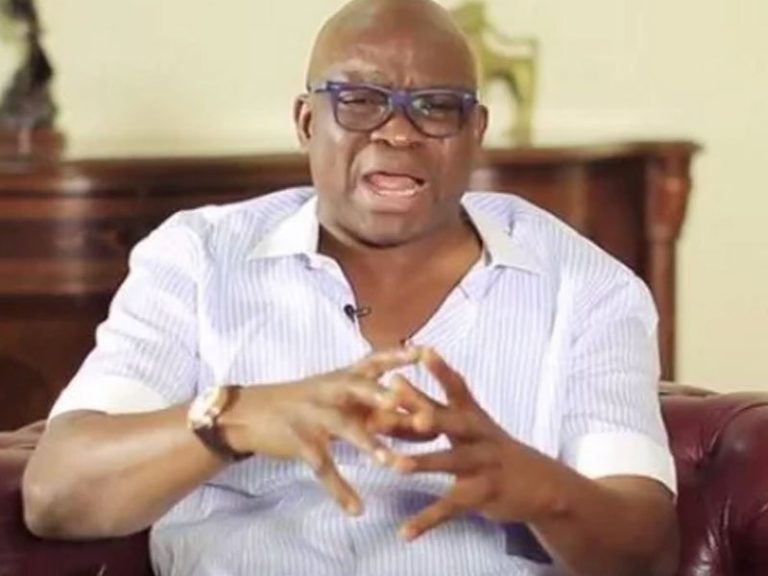
AYODELE Fayose, a former governor of Ekiti State says Nigerians would wait to see the end of the former Nigeria President, Olusegun Obasanjo after his comments on the death of Buruji Kashamu, a senator of the Eight National Assembly who died of COVID-19 complications on Saturday.

Former president Obasanjo had in his condolence message on the death of Kashamu said that the late lawmaker escaped justice but couldn’t escape death.

He had in a statement signed by spokesman Kehinde Akinyemi had said Kashamu was able to manoeuvre laws and politics of the society on alleged crime in and outside of Nigeria but unable to avoid death.

“Senator Buruji Kashamu in his lifetime used the manoeuvre of law and politics to escape from facing justice on the alleged criminal offence in Nigeria and outside Nigeria.

“But no legal, political, cultural, social, or even medical manoeuvre could stop the cold hand of death when the Creator of all of us decides that the time is up,” Obasanjo said.

But in a series of tweets on his Twitter handle, Fayose commiserated with the family of Kashamu over his death and condemned Obasanjo’s reaction to Kashamu’s death.

“Nigerians will watch out for Obasanjo’s own end. He should stop forming a saint because he is not.  He should also remember that his own end will come too and nobody knows how the end will be, Fayose said.

He challenged Obasanjo to say in good faith if he had never collaborated with Kashamu in matters of politics.

“It is regrettable that Obasanjo could say what he said about Buruji Kashamu after his death and when he can no longer question him. Why didn’t he say that when Kashamu was alive?

“Can Obasanjo say in good conscience that he did not at some point collaborate with Kashamu and most of the things he (Kashamu) did politically were not with his collaboration,” Fayose questioned Obasanjo


Five men face death sentences for disrupting mobile court, families say they are innocent

FIVE suspects could be facing death sentences over the disruption of a Mobile Court sitting in Zaria, Kaduna State, a Magistrate Court in Kaduna has said.

According to the prosecutor, the five suspects,  Alhaji Bello, Ibrahim Adamu, Sadam A. Mohammed, Basiru Abdullahi and Habibu Bello were arraigned following a complaint by the Magistrate of a Mobile Court, Lamido Abubakar.

Abubakar filed the complaint to the police alleging that the suspects chased him away from the Magistrate Mobile Court stationed in the Maraban Gwanda and Sabon Gari area of Zaria.

The prosecutor quoted the magistrate, who is the victim of the alleged attack by the suspects as saying that his auxiliary staffs were attacked while he sustained injuries on his leg and finger.

He further alleged that the defendants damaged parts of the Hilux bus attached to the court, an act he described as an attempt to commit homicide and obstruction of public servant on duty.

During a hearing of the case by a Magistrate Court, sitting in Chediya, Mustapha Dahiru Isah, the magistrate said his court lacks jurisdiction to hear the case, but the offence was an attempt to commit homicide, which penalty was “life sentence or death penalty.

Isah ordered the suspects to be remanded in the Nigerian Correctional Service facility pending an advice from the Kaduna State Ministry of Justice on the next line of action.

He adjourned the case to September 19,  for further hearing.

However, DailyTrust reported that families of some of the suspects alleged that the suspects were randomly picked and were not perpetrators of the alleged offence.

“Actually, those that chased away the Magistrate of the mobile court were motorists plying the Zaria-Kano express road, as their colleague died in the hands of the vigilantes attached to the court,”  a relative of one of the suspect said.

COVID-19 response: World Bank, AfDB approve total of $402.5m for Nigeria

THE World Bank and African Development Bank (AfDB) have approved a total of $402.5 million for Nigeria for the fight against COVID-19 pandemic and cushion its impacts on the economy.

While the World Bank approved $114.28 million financing in August, the AfDB, in June, approved a $288.5 million loan to help Nigeria tackle the COVID-19 pandemic and mitigate its impact on people and businesses.

According to a statement from the World Bank released on Friday, the financing included $100 million credit from the International Development Association (IDA) and $14.28 million grant from the Pandemic Emergency Financing Facility.

The financing is to help scale up the country’s state-level responses to the virus, the bank submitted.

“Nigeria has ramped up its efforts to contain the COVID-19 outbreak, but more needs to done at the state level, which are at the front line of the response,” Shubham Chaudhuri, the World Bank’s director for Nigeria said.

On the other hand, AfDB’s financing to Nigeria is the Bank’s initial response to help allay the slump in oil prices and its impact on the national economy.

“The proposed program will ensure that the fiscal position and the economy are sufficiently supported to weather the COVID-19 shocks, thereby limiting its potential adverse impact on livelihoods and the economy more generally,” Ebrima Faal, Senior Director of the AfDB for Nigeria said.

Back in April, the Board of the International Monetary Fund, IMF, approved $3.4 billion emergency loan for Nigeria to address the dire impact of the COVID-19.

The emergency financial assistance was provided under the Rapid Financing Instrument (RFI).

The IMF’s RFI provides rapid and low-access financial assistance to member countries facing an urgent balance of payments need, without the need to have a full-fledged program in place.

Meanwhile, in clear violation of the new guideline by the Bureau of Public Procurement, (BPP), the Nigerian Centre for Disease Control (NCDC) spent the sum of N202 million on six contracts from the COVID-19 Intervention Fund without evidence of procurement plans, The ICIR found out.

Power should move to southern Nigeria in 2023 — El–Rufai

NASIR El-Rufai, Governor of Kaduna State has said that Nigeria’s next president in 2023 should come from the southern part of the country.

El-Rufai stated this during in an interview session with the BBC Hausa Service on Saturday.

He added that he is not in support of a northerner to vie for the seat after President Muhammadu Buhari, based on Nigeria’s political arrangement.

The governor noted that although the power shift arrangement among the various regions of the country is unconstitutional, it is, however, a political design that must be respected.

“I believe that (there is) no developed country across the world that considers leadership based on where someone comes from.

“However, in Nigerian politics, there is an arrangement that we all believe on rotational leadership. We are aware of that, anyone who denies that is wrong,” he said.

El-Rufai, however, debunked the speculation that he is aspiring for the presidency, saying the speculation has been there for a while from the time he was a minister of the FCT.

“It is a baseless speculation. I don’t want to be president; only God decides someone’s future whether you like it or not, I have never shown interest for the presidency.”

Five takeaways from the new Companies Allied Matters Law

0

By Vincent UFUOMA


It is no longer a news that the re-enacted Companies Allied Matters Act was signed into law by President Muhammadu Buhari on Friday, August 7.

The Act, which was a replacement for the 1990 Act by the 8th Nigerian Assembly in 2018, is to promote the ease of doing business in the country.

Bukola Saraki, the president of the Nigerian 8th Senate, while commenting on the Bill shortly after it was passed , described it as “a significant milestone and far-reaching” in the nation’s legislative agenda.

“Today’s passage of the repeal and re-enactment of the Companies and Allied Matters Act (#CAMA) is a significant milestone in our legislative agenda. This is by far the most far-reaching legislation ever passed by any legislature in our country,” Saraki said.

According to Business Made Easy Nigeria, an online business medium, the law is to boost the new CAM law “seeks to promote reform of the onerous legal and regulatory framework as well as administrative bottlenecks which, for close to three decades, have made doing business in Nigeria substantially difficult – particularly for Micro, Small and Medium Enterprises (“MSMEs”) – and had made the economy less attractive to investments hence less competitive.”

The key takeaways

The ICIR has taken a look at some of the critical takeaways from the law. These include;
A. Starting and running a business to become more seamless and less expensive. Under this, it includes:

The provision for a single member/shareholder company in contrast to the old ones that required at least 2 people to form a company; Declaration of compliance no longer required to be made by a Legal practitioner; Replacement of Authorised Share Capital with Minimum Issued Share Capital; Incorporation of a Private Company Limited by Guarantee – Consent of AGF no longer required; Common Seal no longer mandatory for companies; Provisions for electronic filing & issue of documents, electronic Share Transfer and e-Meetings for private companies; Exemption from Audit & Annual General Meeting; Appointment of a Company Secretary – Optional for Private Companies; Prescription of Model Articles for adoption by companies; Provisions for Limited Liability Partnership (LLP) & Limited Partnership (LP); Reduction in Filing Fees for Registration of Charges and Merger of Incorporated Trustees.

B. Corporate governance practice to improve within business organizations: Which includes the Disclosure of persons with significant control in companies; Restriction on Multiple Directorship in Public Companies and Public companies to display their Audited Accounts on Websites.

C. Clear and practical framework for resolving insolvency: Which includes Business Rescue Provisions for Insolvent Companies

The CAM Bill contains frameworks for rescuing a company in distress and keep it alive as against allowing it to go into insolvency. Hence, provisions are made with respect to Company Voluntary Arrangements (sections 435 – 443); Administration (sections 444 – 550), and Netting (sections 719– 722).

Upon coming into force of the CAM Bill, the following provisions will be in full operation:

i. A financially distressed company (or a company likely to become financially distressed) will be able to partake in a business rescue re-organization such as a Company Voluntary Arrangement and Administration, as an alternative to Winding Up.

ii. Winding Up and Receivership will be converted to Administration.

iii. While a company is undergoing Administration, there will be a suspension on the enforcement of securities, court actions, sequestration of assets, etc.

iv. A company will now be able to disclaim onerous contracts with the leave of court.

v. If it is found that certain undervalued transactions may have led to a company’s financial distress, such a company can obtain a court order restoring it to its previous position.

vi. During winding up or a re-organization, contracts for the supply of essential services may be entered into or continued on the basis that the supplier obtains a personal guarantee by the officeholder in charge of rescuing the company.

The CAM Bill has also modified the conditions for Winding up and clearly set out the rights of secured creditors in Winding up. Henceforth;

i. The minimum trigger debt for bringing a Winding up petition against a company will be N200,000 (Two Hundred Thousand Naira) as opposed to the former debt trigger of N2,000 (Two Thousand Naira).

ii. Interests/claims of holders of fixed charges will rank in priority to other claims and expenses of winding up.

iii. While a company is being wound up, only a fixed charge holder (or any other validly created and perfected security interest holder other than a floating charge holder) will now be able to enforce security, sequestrate, attach or levy execution on the assets of the company.

D. More statutory safeguards against oppression of minority shareholders:
Enhancement of Minority Protection and Shareholder Engagement

There are various provisions in the CAM Bill which seek to either prevent injustice to, or further ensure justice for, minority shareholders in the events of actions of the company which are considered oppressive, prejudicial or illegal outright. In this connection, upon the CAM Bill becoming operational, the following conditions shall apply:

i. Restriction of the appointment of the same person as Chairman and Chief Executive Officer (CEO) of a private company.

ii. Full disclosure of all material facts relating to buyer-seller transactions and the existence of a conflict of interest, where it applies.

iii. Preservation of the preemptive rights of existing shareholders where new shares are issued.

iv. Expansion of the grounds under which shareholders can hold the Board liable for damages caused by related third-party transactions, now to include conflict of interest.

v. Disqualification of erring directors from continuing to serve for a one-year period, for causing loss to the company.

vi. The requirement of a minimum of three (3) independent directors on the Board of private companies.

vii. The courts will now be able to rescind third party transactions which are proved to be unfair or oppressive or cause economic harm to the company, in general.

viii. It will now become mandatory to seek and receive the consent/approval of minority shareholders whenever there is a proposed sale of more than fifty-one per cent (51%) of the company’s assets.

Finally, regulation and compliance, new mechanisms for making regulations more effective, and compliance a lot easier, are introduced into the governing framework for supervising business entities. These include the following: A more inclusive CAC Governing Board; Power of the CAC to initiate investigation of a company; Treatment of Related Associations as one and Pre-Action Notice to precede institution of court actions.

Boko Haram told me Leah Sharibu has been married to a commander, kidnapped victim says

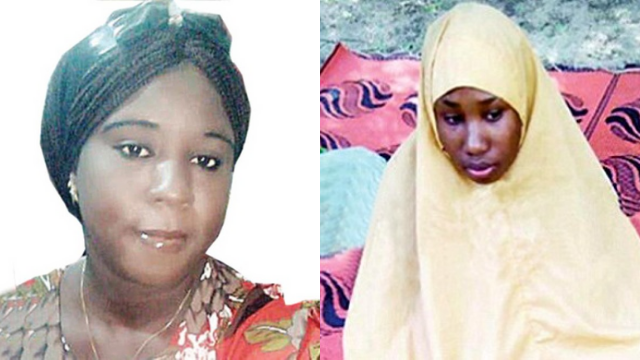
ADARJU Juliet, a Boko Haram kidnapped victim who spent two weeks in captivity has disclosed that her abductors revealed to her that Leah Sharibu, the kidnapped Dapchi schoolgirl has been married off to a Boko Haram Commander.

The 28-year-old trader who was abducted by suspected Boko Haram members on her way to Maiduguri, Borno State in an interview with The Punch Newspaper stated that she was asked to renounce her Christian religion or be another Leah Sharibu.

She said, “they said she is alive (Leah Sharibu) and that she was married to their commander.”

Leah Sharibu was the sole Christian among 110 schoolgirls abducted by Islamic State in West Africa (ISWAP) from their school in Dapchi, Yobe state on 19 February 2018.

While her surviving classmates returned a month later following government negotiations, she was denied her freedom for refusing to convert as a precondition for her release.

Also in a tweet on January 26, Ahmad Salkida, a journalist with access to the insurgents, said Sharibu is now a mother, but that he has no knowledge of the baby gender.

“Why, I wonder, do we pretend that leaving Leah behind won’t result in pregnancy? Since the terror group announced condemning her to slavery, is there any step or collective focus on preventing similar occurrences? She’s a mother, but I don’t know about the gender of the baby,” Salkida had tweeted.

Adarju had in the interview disclose that she was abducted in January 2020 on her way to Maiduguri along Damaturu road.

“Early in January, 2020, my mother fell ill. So, my elder sister told me to bring her to Maiduguri for treatment. On our way to Maiduguri, along Damaturu road, we heard gunshots. The people who fired the shots came out with their faces covered and stopped us.

“Three of us in the vehicle were women. The armed men asked for our names and religion. Those of us who identified ourselves as Christians were separated and I was the only lady among them. After that, they collected all we had and told our driver to leave with my mother because they would take me away.”

On who abducted her, Adargu said, some of them were Boko Haram members while some were a group of kidnappers operating from the bush and working with Boko Haram.

“The insurgents used to come to our location to ask the kidnappers the number of victims they had in their custody. They collected money from the kidnappers any time they came, and if the victim is a woman, they took her away.”

“They told me to choose between denying my faith so as to regain my freedom or they would call a Boko Haram member to take me to Sambisa forest. I wept and told them I would not deny my faith. I cried throughout that day because my mother was sick and didn’t know anywhere in Maiduguri.”

She further disclosed that 1.5 million was paid by her guardian in securing her release.

“They told me to give them the phone number of any of my guardians so that they would inform my family that I had been kidnapped. But I told them that my dad is late and I didn’t have anyone; it is my pastor that has been a father to me.”

“Truly, my dad died when I was three years old. They collected my pastor’s number and told him that his daughter had been kidnapped. They told him that they had not concluded on whether they would kill me, give me away to the Boko Haram insurgents or collect a ransom. After calling the family of a victim, they remove the SIM card and discard it.”

“When they saw that I was crying because I was worried about my mother’s whereabouts, they decided not to give me away to the Boko Haram insurgents. But they argued among themselves on this before reaching a conclusion to collect a ransom for my release.”

“The pastor tried his best, with the help of other Christians, to raise N1.5m. They told him to bring the N1.5m because they were under pressure from Boko Haram to either release me or kill me. They told the pastor how to deliver the money to them. They later dumped me somewhere and told me to find my way from there.”

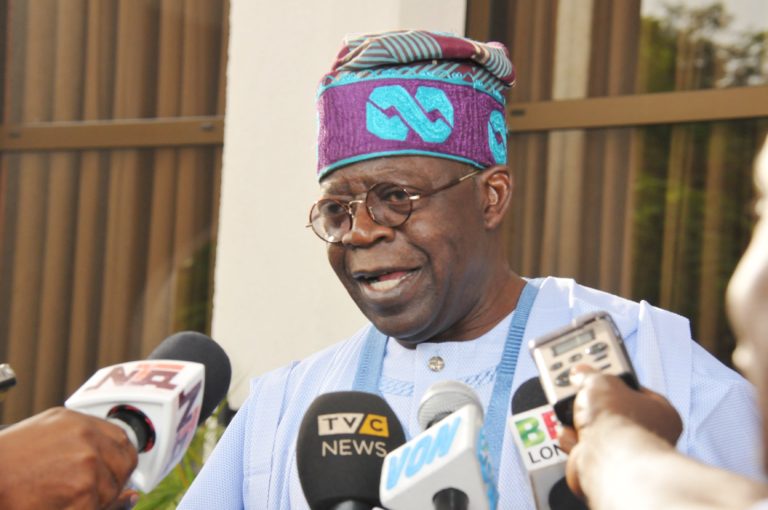
Edo Crisis: Obaseki’s conduct in the past year is undoubtedly impeachable – Tinubu

BOLA Tinubu, the National Leader of the All Progressives Congress (APC) says Godwin Obaseki, the Governor of Edo State’s conduct in the past year has been impeachable.

The former governor of Lagos State stated this in a series of tweets on his Twitter handle late Friday evening over the crisis that has rocked the Edo State House of Assembly.

“Although Governor Obaseki’s conduct in the past year is undoubtedly impeachable, these legislators have made no threat to impeach the Governor,” Tinubu wrote.

He added that as a governor, Obaseki ought to know better than to obstruct the functioning of his own legislature, but perhaps he is in need of a ‘quick lesson’.

Tinubu alleged that Obaseki sponsored hoodlums to deface and destroy some part of the State Assembly Complex under the pretext of renovation.

“First, he sponsors hoodlums to deface, indeed destroy, parts of the House of Assembly Building in Benin, feigning the building is undergoing renovation. Then, he imports sand and gravels to prevent access to the assembly complex.

“In effect, the man has spent state funds to thwart the very apparatus of the state government he was sworn to uphold. He has squandered public money to defeat the very will of the public. This is tragic beyond words,” Tinubu stated.

He further stated that the Edo State governor has refused to allow the State House of Assembly to function.

“As a pretext for his refusal to allow the Edo House of Assembly to function, Governor Obaseki’s actions are perverse. This is a cowardly act and a move to thwart representative democracy in Edo,” Tinubu stated.

Hate speech fine was increased to N5m to stop people from destabilizing Nigeria- FG

0

The Federal Government has explained the reason for the increase in the fine for hate speech, stating that it was to stop people from willingly violating the provision to destabilise the country.

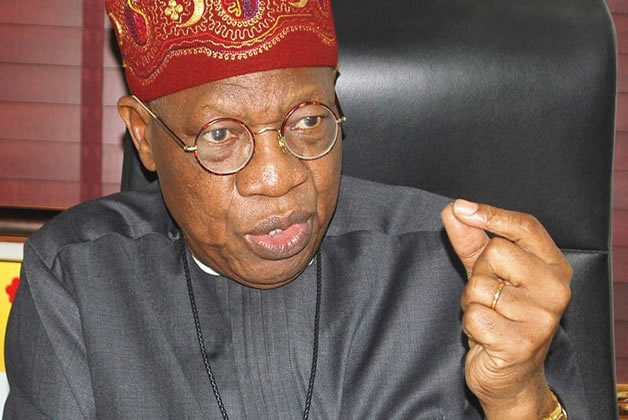
Lai Mohammed, the Minister of Information and Culture gave the explanation on Friday when he featured on a TVC live Programme, “This Morning”,News Agency of Nigeria reports.

The Minister stated that the hate speech provision was being violated at will when the fine was pegged at N500,000 because it was affordable.

“What motivated the amendment was that when the fine was N500,000 we saw the provision being violated at will because the amount was very easy to pay,” Mohammed said.

He explained that some people who were desperate usually go ahead in broadcasting hate speech contents despite knowing it violates the law because they could afford the money.

It would be recalled that the minister in 2019 announced the approval of President Muhammadu Buhari for the increase of the fine which was later stipulated in the amended Broadcasting Code.

The Minister noted that those attacking the government over the increase must remember that hate speech had destroyed many countries.

He stated that Rwanda lost 800,000 lives to hate speech while Bosnia and Cambodia equally lost thousands of lives to the menace.

Mohammed further said that Nigeria is not the only country to impose sanction on hate speech, adding that some nations have more stringent provisions.

“Chad has today slowed down the speed of its internet service to slow down the growth of hate speech.

“Iceland has a provision in its penal code against hate speech and the punishment is up to five years in jail.

“The sanction in Norway is up to two years imprisonment while South Africa separated hate speech from the protection their citizens can get from the constitution,” he said.

The Minister, however, said that the speech is not new but the social media and its wildfire capacity to spread information made it to be more problematic.

He, therefore, reiterated the resolve of the government to regulate social media without stifling the freedom of speech

US expresses concern over political tension in Edo State

0

By, Vincent UFUOMA


The United States embassy in Nigeria on Friday expressed concern over the rising tension in the forthcoming governorship election in Edo State.

The US in a statement on its social media account, said it was disturbed and disappointed with the role played by some political actors in the state and the interference of security forces in political matters.

“As long-time friends of Nigeria, we continue to follow political developments ahead of off-cycle elections in the country,” the statement read.

“The United States supports a democratic process where the will of the Nigerian people is reflected in the results, and does not favour any party or candidate.”

The US government said it was concerned with reports of the deteriorating political climate in Edo State.


READ ALSO:

“We are especially concerned with allegations of interference by security forces in political matters, which we will continue to monitor closely in the run up to gubernatorial elections in the state in September.”

It urged stakeholders in the election to give peace a chance as they work towards a free, fair, and transparent election.

“As we approach the 2020 off-cycle elections in Edo and Ondo, we urge all stakeholders to work towards a free, fair, transparent, and peaceful process. We encourage all stakeholders, including INEC, political parties, and the security services, to continue to improve the electoral process,” it said.

“The US said it looked to Nigeria as an important leader on the African continent, noting that as a democratic partner of Nigeria, it remains committed to working together to achieve mutual goals of peace and prosperity for the citizens of both countries.

The ICIR reported on Thursday how some hoodlums vandalised the Edo State House of Assembly Complex by removing the roof, and taking down the symbolic legislative mace statue on top of the building.

Earlier on, it was also reported by Channels Television, that security operatives led by Ayoola Ajala, Deputy Commissioner of Police (Operations), had taken over the assembly complex to prevent the event of an attack.

But in later footages shared on social media, no security operatives were seen around while the complex was being vandalised by the hoodlums.

However, in a state-wide broadcast on Friday morning, Godwin Obaseki, the Governor of Edo State who is also the People’s Democratic Party (PDP)s candidate in the September 19 poll, described the invasion of the State House Assembly complex as an attempted coup.

He accused a former governor of the state of trying to throw the state into crisis, as he commended the residents of the state for standing up against the ‘evil plans’ of the perpetrators of the crisis.

FACT-CHECK: Did ICT contribute 14 percent to Nigeria’s 2020 first quarter GDP?

0

The Director-General  (DG) of the National Information Technology Development Agency (NITDA), Kashifu Inuwa, said Information and Communication Technology (ICT) contribution to Gross Domestic Product (GDP), was 14 percent in the first quarter of 2020.

The DG who was represented by NITDA Director of  E-Government Development and Regulations, Dr. Vincent Olatunji, made this statement at a webinar organised by Abuja and Kano Chapters of  Information Technology Association of Nigeria (ITAN).

He said the growth of 14 percent represented an increase of almost 1 percent when compared to the contribution of 13.12 percent in the last quarter of 2019.

This assertion was reported by several new platforms; Nigerian Tribune, NNN, and others.

In the report, Inuwa said, “in spite of the ravages of the COVID-19 pandemic on all economies of the world, ICT  grew by 14 percent compared to the initial growth of 13.12 percent in the last quarter.”

He added that “the agency’s mandate of regulating the IT sector ensured that it created initiatives and schemes to mitigate the effect of COVID-19 pandemic on the ICT sector. We are ensuring the growth of the sector by promoting the startups’ ecosystem”.

The claim has sparked debate among Nigerians on whether the ICT sector can actually account for 14 percent percent of the country’s GDP.

This is probably due to the linear view of what some people perceive to comprise the ICT sector. The general notion is that the ICT sector covers only telecommunications and information services.

This will not be the first time this figure would be questioned,  A report published in May where the Minister of Communications and Digital Economy, Isa Pantami, said ICT  contributed 14.07 percent to the nation’s GDP also got people talking.

In response to the report, a user with the name Thusspokez wrote “I have no idea where these figures came from. Could he be talking about the real growth of the ICT sector? For example, the petroleum industry contributes 10 percent of GDP; agriculture 22 percent, etc. Nigeria is not even in the Information Technology minor league like Malaysia with 18-19 percent to its GDP”.


THE CLAIMS:

Claim 1: That the ICT contributed 14 percent to Nigeria’s GDP in the first quarter of 2020

Claim 2: That the ICT in the last quarter of 2019 was 13.12 percent and 14 percent for the first quarter of 2020.


THE FINDINGS:

In a bid to verify the claim, The ICIR checked the National Bureau of Statistics (NBS) website for the latest data on Nigeria’s GDP to get the scope of what the ICT sector covers.

The report explained that the ICT sector is composed of the four activities of  (1) Telecommunications and Information Services; (2) Publishing; (3) Motion Picture, Sound Recording, and Music Production; and  (4) Broadcasting.”

The data also showed that the ICT contributed 14.07 percent to total real GDP in the First Quarter of 2020.

The data report stated that “The sector contributed 14.07 percent to total real GDP in Q1 2020, higher than its contribution a year earlier (13.32 percent ) and in the preceding quarter, in which it accounted for 13.12 percent.”

A page from NBS 2020 Q1 report

THE VERDICT:

From the information gotten from the NBS the claim that the ICT contributed 14 percent to Nigeria’s GDP in the first quarter of 2020 is TRUE, However, the exact figure is 14.07 percent.

The claim that the ICT in the last quarter of 2019 was 13.12 percent and 14 percent for the first quarter of 2020 is also TRUE, However, the exact figure is 14.07 percent.