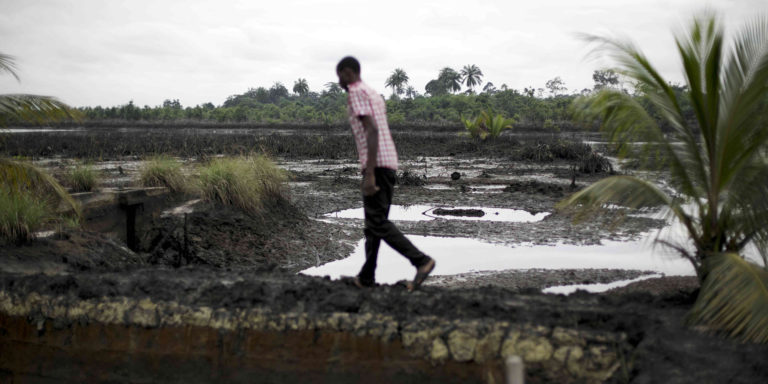
FOUR months after The ICIR’s investigation on how pollution as a result of oil spills in Nigeria’s Niger Delta is silently killing the people of Ogoniland in Rivers state, the Federal Government has said it would hire six contractors to provide potable water in the affected communities.
Recall that two weeks ago, FG opened a fresh bid to select contractors to provide potable water in oil spills impacted communities in Ogoniland. Over 40 companies submitted their expression of interest to participate in the bidding for the project.
Marvin Dekil, the project coordinator, Hydrocarbon Pollution Remediation Project (HYPREP) said at the opening of the bid in Port Harcourt that the project was an initiative of the UN Environment Programme (UNEP) report on Ogoniland.
“Today we are opening bids for six lots to six competent companies to provide potable water to various locations in the four local government areas of Ogoniland,” he said.
In 2011, UNEP recommended the provision of running water for Ogoni communities whose underground water got polluted by decades of oil spills.
Nine years after the recommendation, no action was taken by the federal government to implement the UNEP report.
Two journalists Kelechukwu Iruoma and Ruth Olurounbi released an investigative report published by The ICIR on how oil pollution and the lack of potable water in the Ogoni area contributed to the health issues of the people in the region. They visited Goi, Bodo, K-Dere and B-Dere.
Dekil said that HYPREP under the federal ministry of environment would coordinate the water projects in four local governments of Eleme, Gokana, Khana and Tai areas, covering Ogoniland to ensure early completion.
“In addition, the water that we are going to provide in Ogoni communities will meet the United Nations and World Health Organisation standards.
“Ogali, Kpean, Nsisioken, Korokoro, K-Dere and B-Dere communities in Ogoni are the communities that UNEP identified for the water projects. These communities will get the six lots in the first phase of the water project, while others will benefit from subsequent phases as we progress,” he said.
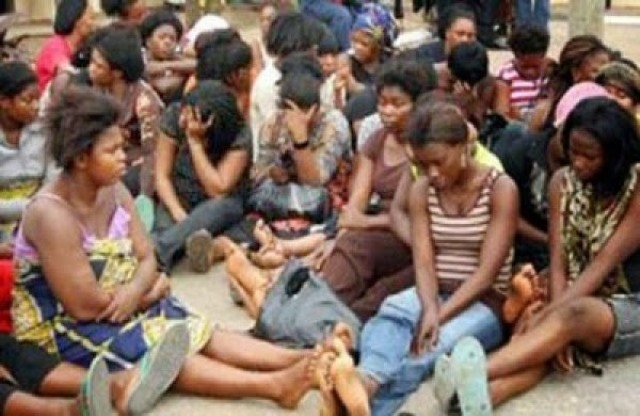
THE National Agency for the Prohibition of Trafficking in Persons (NAPTIP) says it has convicted over 500 traffickers and rescued over 18,000 victims of human trafficking across the country from 2004 till date.
Nduka Nwawene, Uyo Zonal Commander of NAPTIP, revealed this in an interview with newsmen on Thursday in Calabar, Cross River State.
Nwawene was speaking at the event commemorating the 2020 World Day Against Trafficking in Persons.
World Day Against Trafficking in Persons is celebrated annually on July 30, following a United Nations’ declaration on the need to raise awareness on the plight of trafficked victims across the world.
The theme of the 2020 commemoration is “Committed to the Cause, Working on the Front Line to End Human Trafficking” which focuses on the efforts of first responders to the issue of trafficking.
According to the NAPTIP chief, women and girls constituted over 70 per cent of trafficked victims in Nigeria and the world, hence the importance of the commemoration to
He added that Nigeria is a source and breeding ground for traffickers and trafficked victims.
”Nigeria is a source for transit and destination country for traffickers and has been very much affected by this malaise, both internally and externally,” Nwawene said.
“Even during the lockdown, victims who were Europe bound were rescued by first responders and brought to our command.”
He noted that many people always claim they want to travel abroad because of the poverty in the country, believing that they can pluck gold on the streets of Europe.
“But they are deceived by the traffickers because they are smuggled out and over there, they discover a different scenario and become slaves,” Nwawene said.
“Other reasons why people get trafficked include ignorance, peer group influence, globalisation and even family pressures.
“If not for NAPTIP and the sister agencies like the Nigeria Immigration Service, Nigeria Police, Ministry of Women Affairs and others, the situation of trafficking in the country would have been more terrible.”
Nwawene advised Nigerians to be vigilant, so that no one would fall victim of the antics of traffickers,as they usually convince their victims to take oath of secrecy and not tell anyone of their plans.
Adding that parents must also stop mounting pressure on their children to travel out and endanger their lives so as to send money back home, Nwawene said. parents who pressure their children into such acts would be punished if caught.
“Because of the family pressure, many of them end up as sex slaves in all sorts of dehumanizing conditions. If we get any of such parents, they will be prosecuted,” he said.
DUBAI’s ruler, Sheikh Mohammed bin Rashid Al Maktoum has agreed to pay for the hospital expenses of a Nigerian mother and her quadruplets stranded in the country with mounting medical bills, the hospital said Wednesday.
Suliyat Abdulkareem, 29, gave birth to the babies, two boys, and two girls, at the Latifa Hospital for Women and Children on July 1.
They were born prematurely at nearly 31 weeks through an emergency C-section and placed on ventilators at the neonatal intensive care unit, the hospital said in a statement.
However, the family had no medical insurance and racked up more than AED 400,000 (about $108,000) in medical expenses since the quadruplets were born, their father Tijani Abdulkareem told CNN.
The Nigerian community and other nationals in Dubai rallied around them to help raise AED 42,000 (around $11,500) to pay part of the bills.
Sheikh Al Maktoum stepped in to pay the bills after he came across the initial CNN report highlighting the family’s story.
He was moved by their plight and informed his office to assist the family, the government media office told CNN.
Abdulkareem told CNN he was shocked by the ruler’s generosity, and the couple have decided to name two of their babies after him.
One of the girls will also be called Latifa after the hospital, he said.
“It’s just a huge favor, and we are still in shock because we didn’t even know how to get the money. I had been sleepless wondering how to pay the bill,” Abdulkareem said.
Abdulkareem, a chef at a restaurant in the city, said he was distressed when he discovered his wife was going to have quadruplets.
Latifa hospital CEO Muna Tahlak said the hospital staff are “overwhelmed” that the country’s ruler has pledged to cover the full medical bills of the quadruplets who are still being cared for at the health facility.
The babies, two boys and two girls, have gradually been taken off ventilators and two of them now weigh 1.8 kilograms. Doctors expect they will soon be strong enough to go home.
The couple, who live in Dubai, had planned to have the babies in Nigeria because they could not afford medical insurance but were unable to travel because of the coronavirus air restrictions that prevented commercial flights between the two countries.
Abdulkareem said his wife gave birth nearly two months earlier than her delivery date.
The elated father said the family has received “unbelievable” support from the Nigerian community, and various nationalities which has helped them pay for two months rent for a bigger place to accommodate the quadruplets.
“We have been getting calls from Portuguese and Brazilian nationals in Dubai. People have been trying to reach us. The Nigerian community has been following us every step of the way,” Abdulkareem said.
A WIDOW and mother of two who did not want her name mentioned has alleged that a police officer identified as Peter Ebah threatened and raped her for not wearing a facemask in Rivers State.
Ebah is a police officer with the rank of an inspector attached to the Saakpenwaa Police Division in the Tai Local Government Area of Rivers State.
The mother of two said she was on a bus travelling from Bori, Khana Local government Area in Port Harcourt on Tuesday before she was ejected from the bus by the police officer for not wearing a facemask.
According to her, she was detained at a police checkpoint for several hours before she was taken into a police van.
She stated that under the pretence of heading to the police station, Ebah drove her to a guest house where she was threatened and raped by the officer over the night.
“After a while, they took me to a guest house, where one of them, Inspector Peter Ebah, from Sakpenwa Police station raped and threatened to kill me if I misbehaved and held me there till this (Wednesday) morning,” she said.
The following morning, Officer Ebah allegedly requested for her account details and transferred N2,000 into her account.
“In the morning, he asked me to give him my account number so that he would transfer N2,000 into it. I played along and gave him the account number because I didn’t know what he would do to me if I had refused,” she noted.
Confirming the incident, Omoni Nnamdi, the Rivers State Police Spokesperson told The ICIR that the State Commissioner, Joseph Mukan has ordered an investigation into the matter.
He stated that the victim was invited to the State Police headquarters where she narrated what transpired between her and the officers.
Nnamdi said the alleged rapist, officer Ebah and his accomplices have also been invited and are en route to the headquarters to share their side of the case.
He further stated that members of the public would be briefed after the conclusion of the force’s investigation.
“I’m in my office now, as we speak, the officers and the woman are on their way to my office and we will issue a press statement after hearing both sides of the matter,” Nnamdi said.
THE Presidency has clarified that the Azura-Edo Independent Power Project (IPP) is a pioneering deal that stands both as contingent liability and asset for Nigeria, debunking the claim that the country is liable to lose $1.2 billion for the widely-speculated botched deal.
The presidency made this disclosure in a recent press release signed by Ahmed Rufa’i Zakari, special adviser to the president on infrastructure, in which, it stated that the Pull Call Option Agreement (PCOA) between the country and Azura, a power generation company and operator of IPPs across Africa, guarantees Nigeria purchases the asset upon default or termination of the contract.
The Azura power deal birthed the Azura-Edo Power Station, a natural gas-powered electricity generation plant with a 461 megawatts generation capacity.
The presidency in its statement further clarified that the Azura deal is not another Process and Industrial Developments Limited (P&ID) case.
In 2010, P&ID entered into a 20-year agreement with the federal government of Nigeria to build a gas processing plant. However, the Nigerian government failed to meet its commitments and for defaulting, a United Kingdom (UK) court ruled that the country’s state-owned assets could be seized if the country refused to settle its fine of $9.6 billion.
In Azura’s case, the presidency said the deal which was signed in 2013 by the previous administration was only guaranteed in 2015 by President Muhammadu Buhari.
On August 21, 2015, the Federal Government signed partial risk guarantees (PRGs) with the World Bank to provide backing for the Azura-Edo Power Plant.
It further disclosed that repudiating the contracts which already had a valid and binding agreement between the Federal Government and Azura-Edo would have resulted in another P&ID scenario.
While the presidency appears to have dodged a bullet by signing the deal, Nigeria is still obligated to pay $30 million dollars monthly to Azura, whether or not power is evacuated from the generation plant.
A reality that had sparked a demand for cancellation of the deal by Ovie Omo-Agege, Deputy Senate President.
Omo-Agege, while speaking on the floor of the Senate on July 23, had submitted that the commitment to Azura had placed enormous strain on the country’s resources, demanding that the deal be terminated.
The Aura-Edo Power is privately-owned though responsible for generating eight percent of the power on Nigeria’s National Grid, according to the presidency.
THE Lagos State Government has directed all students in Senior Secondary class 3 and Technical Studies (TEC3) in both day and boarding schools in the state to resume on Monday, August 3.
This follows Federal Government’s directive that students in exit classes across the country should resume on Tuesday, August 4 for revision classes ahead of their forthcoming final year examinations.
Folasade Adefisayo, Lagos State Commissioner for Education who disclosed this on Thursday in Alausa, Ikeja, stated that the directive was to allow for revision classes and adequate preparation ahead of their forthcoming West African Senior School Certificate Examination (WASSCE).
Adefisayo explained that the decision became imperative due to the newly announced date by the West African Examination Council (WAEC) for the 2020 WASSCE scheduled to commence on the August 17.
“Only SS3 and Technical Study Three (TEC3) students are permitted to resume for the Day and Boarding Schools on the 3rd of August for revision classes and examinations,” she said.
While imploring all schools in the state to follow the required public health guidelines and protocols for re-opening of schools for this category of students, Adefisayo stressed that the government is considering the option of using the first and second term examination results or continuous assessment to promote students in other exit classes.
The Commissioner revealed that various meetings have been held with stakeholders in the education, health and safety sectors in a bid to ensure that adequate precautionary measures are put in place to ensure the safety of the students before resumption.
“The Office of Education Quality Assurance will be going round all the schools across the State to monitor the level of safety and protocol compliance expected to be put in place by both private and public schools,”she asserted.
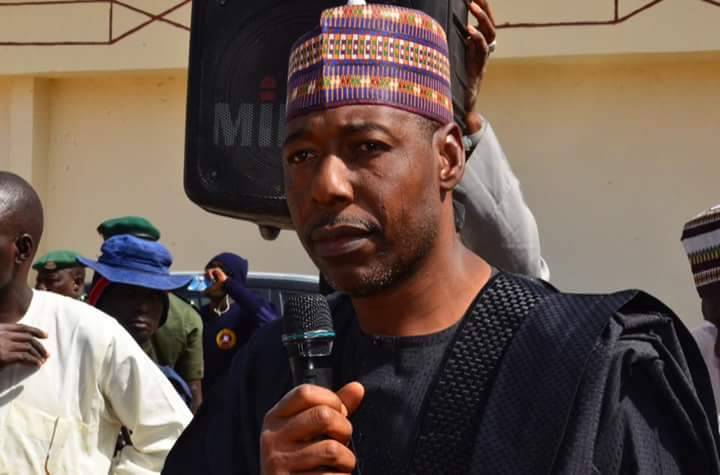
BABAGANA Zulum, the Governor of Borno State has berated the Nigerian Army over attack on his convoy on Wednesday in Baga area of the state on his way to distribute relief materials to people affected by insurgency .
“You people said there’s no Boko Haram here, and then who attacked us ?” Zulum questioned the military head in a video aired by the Channels Television on Thursday.
Zulum stated that despite having 1,181 soldiers in Baga town which is five kilometres away from the a military base, his convoy was still attacked.
“You have been here for over one year now, there are 1,181 soldiers here, if you cannot take over Baga which is less than five kilometer from your base, and then we should forget about Baga,” Zulum said.
He threatened to inform Tukur Buratai, the Chief of Army Staff, of the happening and request for the soldiers to be deployed to another location where they could be ‘useful’.
“I will inform the Chief of Army Staff to redeploy the men to other places that they can be useful,” Zulum added.
On Wednesday, a viral video on social media showed how the convoy of the governor was attacked and gunshots were exchanged.
Zulum was en route to Baga, a fishing town on the shores of the Lake Chad region before his convoy was attacked by the suspected Boko Haram terrorists.
3. Ali Ndume spoke the truth, the whole truth, nothing but the truth. Just yesterday, the convoy of Zulum, the Gov. of Borno state, was attacked at Baga, a town in Borno state.
The Boko Haram is so emboldened now, by the reintegration largesse coming from the stables of Buhari. pic.twitter.com/EuZuaTMvk8
In 2018, BBC reported that the insurgents ‘seized’ Baga town when they hoist their flag and had hundreds of people who flee the town out of fears for their lives.
According to BBC, the militants seized weapons from a military base and torched a naval base on the shores of Lake Chad said a resident of Baga town.
DAPO Abiodun, the governor of Ogun State has disclosed that failure to wear a facemask in the state would attract a six months imprisonment.
Abiodun said this on Wednesday during his statewide address ahead of the Eid-el Kabir celebrations in the state.
“Wearing of a facemask by every person in the public as part of measures to prevent the rapid spread of Coronavirus pandemic called COVID-19, failure to do so is punishable by up to six months imprisonment under Regulation 8 of the Obligation act and Section 68 of the law,” Abiodun said.
He added that it was worrisome that Ogun State, like the whole country, has witnessed an increase in the number of confirmed COVID-19 cases since his last related press briefing.
Abiodun noted that one of the major contentions in public space is the reopening of schools in Nigeria.
He said the State Government has sent available Risk Assessment Forms to private schools to evaluate readiness for the adoption of the Federal Government’s resolve to allow SS3 students to resume on August 4 to prepare for Senior Senior Secondary Certificate Examination (SSCE).
“A mandatory virtual training is also being organised for school staff on decontamination, medical equipment, toilet facilities, the flexibility of closing times, and special requirements for boarding schools,” the governor said.
According to Abiodun, worship centres in the state would open tentatively on Friday, August 14 provided the centres adhere to agreed guidelines.
“These are on the use of facemasks and hand sanitizers; distancing; and provision of medical, toilet and hygiene facilities including Veronica buckets,” Abiodun stated.
He further listed conditions for worship centres in the state some of which includes performing ablutions at home, provision of isolation rooms, adequate medical support for sick persons, and reduction in duration of services among others.
Abiodun also listed prohibition of handshakes, hugs and air conditioners in all centres and constant sensitisation on the dangers, preventive measures in sermons as part of conditions for the reopening of worship centres in the state.
AS Nigeria battles the deadly Coronavirus, disturbing indications have emerged in Lagos State, showing how, for fear of contracting Coronavirus, the staff of government hospitals abandoned non-COVID patients to die. Bankole Shakirudeen ADESHINA reports for The ICIR in Lagos.
Preventable deaths
AT about 2:00 am on Friday, June 5, 2020, Alhaja Fhadeelat Talib, a 57-year-old mother of four, died at the Medical Emergency Department of the Lagos State University Teaching Hospital (LASUTH), Ikeja, Lagos.
Late Alhaja Fhadeelat
Twelve hours earlier, she had been rushed to the teaching hospital with the hope of getting her urgent medical attention.
But nobody attended to Fhadeelah until she breathed her last.
For about 12 hours, Fhadeelah who was said to be hypertensive, arthritic, and had manifested symptoms synonymous with food poisoning, according to her family, waited in excruciating pains for the life-saving medical intervention that never came.
The urgent appeal by Yusuf, the youngest son of the deceased, to the doctors and nurses on duty to attend to her dying mother, all fell on deaf ears.
How Fhadeelah died
A day earlier, at about 2:15 pm, Fhadeelah had been transported to the Medical Emergency Department of LASUTH, via a rented ambulance, with an oxygen mask covering her mouth and nose.
The transfer was said to have been necessitated by her deteriorated health condition at Gowon Estate Clinic, where she was initially admitted before she was referred to Crystal Hospital, a specialist hospital along -Akowonjo Road, Lagos, and later to LASUTH.
The sickness began barely 48 hours earlier, according to her family.
Rahmat, the eldest daughter of the deceased in an interview with The ICIR, accused LASUTH medical officials of ‘killing’ her mother.
Without any test whatsoever, “the doctors concluded that she was a coronavirus patient,” the 33-year-old lady said, still in shock.
She was visibly grief-stricken, gnashing her teeth and shaking her head as she spoke.
Rahmat said if her mother was COVID-19 positive as claimed by LASUTH, the two other hospitals would have so confirmed.
Rahmat also accused LASUTH officials of criminal negligence of duty, and wanted the officials to be held accountable for their wrongdoing.
“Initially, when we arrived at the Medical Emergency Department of LASUTH, we were immediately turned back,” she explained, saying it took them unending hours, begging, and calling influential individuals who interceded on their behalf before they were eventually admitted.
“Even at that, it was an Isolated Ward, said to be the hospital’s COVID 19 Center, that my mother was dumped.
“While waiting to be attended to, the oxygen my mother was placed was exhausted; we had to use the manual procedure to pump air into her lungs, with the support of a nurse that came with us from Crystal Specialist Hospital,” she told this reporter.
As she left this reporter for the waiting ambulance that was conveying the remains of her mother to the cemetery, she shook her head in grief, saying “my mother was literarily killed by the doctors and nurses at LASUTH.”
The first son of the late Fhadeelah, Papa, as he was fondly called, reiterated his sister’s accusation. He said: “There are no two ways about it: The death of my mother was caused or hastened by the medical doctors and nurses we met at LASUTH, who couldn’t attend to us till she gave up the ghost.
Late Alhaja Fhadeelat, and her son, Papa
“For God’s sake, even if my mother was going to die eventually, shouldn’t she be attended to? Where do we turn to now in this country?” he asked, rhetorically.
He shared his grievance with this reporter, who rode with him in his car on the way to a private cemetery at Hausa Community in Agege where the deceased was later buried.
At Hausa community cemetry in Agege
At exactly 3:53 pm, the remains of Fhadeelah was lowered in the six feet grave.
The deceased’s final home was surrounded by half a dozen more open graves, to be occupied by other corpses who, according to the gravediggers, would arrive sooner or later.
The ICIR gathered that seven corpses had been buried the same day inside the facility, but the paper could not ascertain whether the deaths are COVID-19-related.
One of the gravediggers, who simply identified himself as Mallam Kabiru, said the number of people that are being buried on a daily basis at the cemetery has increased in the last two months.
“Yes, people I dey die plenty now. Before, people I dey bury five, six or seven here every day. But now, he dey pass 10, 12 and sometimes 14,” Kabir said in pidgin English.
Kabir’s position was also corroborated at the graveside by the officiating cleric, Imam Muhasheed, who disclosed that more than five relatives of his have died in the last two weeks.
According to him, the frequent deaths are becoming worrisome to people in the community.
“In two weeks alone, I have been bereaved of seven direct relatives; two elderly men and women, two young men, and one young lady.
“The deceased we are burying here today, was with us yesterday. In fact, we were together five days ago (on Sunday), at the nikkah (marriage) of her son. I could recall that she was sitting in my car and we discussed at length about life, the deen (faith), and the thereafter (the Judgment Day). I didn’t know it was her way of saying goodbye.
“I’m not a medical doctor; or an unbeliever, but I know and believe firmly, that every single soul shall have a taste of death, but Nigeria needs to do more in terms of how to care for its citizens.
“Yes, we all are going to die by a shabbab (cause), but the healthcare professionals in our hospitals should do better and not hasten people’s deaths,” he said.
Cancer Patients at LASUTH
Unlike Fhadeelah, who could not live to tell her story, Iyanuoluwa Damilola, a chemotherapy patient at the Oncology Department of the Lagos State University Teaching Hospital, LASUTH Ikeja, Lagos, shared her painful experience at LASUTH with The ICIR.
A graduate of Economics from the University of Lagos, Damilola has been managing Colorectal Cancer for about a year.
Prof Adetokunbo Fabamwo, CMD, LASUTH
Her struggle with the disease was characterised by a monthly chemotherapy appointment at the Oncology Department of LASUTH.
It is a painful but necessary process she must pass through if she must survive the deadly disease.
A medical surgery in an Indian hospital is already slated upon the completion of her chemo sessions. Everything must work according to plan to boost her recovery chances, doctors had told her.
This process, however, was abruptly truncated on Monday, May 18, when upon arriving at LASUTH for her chemo session, Damilola discovered that the department has been put under lock and key.
The center, according to findings, had been locked for weeks, without a plan to cater to scores of terminally ill patients who depended on its service for survival.
There was nothing they could do other than to wait, a decision that many described as costly.
“Days became weeks, as we continued to visit the hospital but to no avail,” Damilola told The ICIR in an interview, conducted over a month ago
According to her, the situation was not only life-threatening, as the disruption could relapse her progressive healing over the year, but also to other patients.
Investigation revealed that there were over three to five dozens, who visited the hospital, on appointment days –Monday, and Tuesdays; with most of them managing one terminal illness, or the others.
“I could recall a woman, who appeared to be in her early 50s. Apparently, she is a very rich woman. But she has been battling heavy bleeding for over a month and was referred to the Oncology Department of LASUTH for chemotherapy.
“She was crying profusely and begging to be attended to. At a time, she rolled herself on the floor, asking God to take her money in return for sound health. She was doing this until other patients were overwhelmed with tears. It was a very sad experience,” she told The ICIR.
Why was Oncology department of LASUTH shut?
The ICIR paid an unscheduled visit to the Oncology Department of LASUTH which looked like a ghost town on Wednesday, June 10.
Though the entrance was open, indicating activities were going on for the day, but inside of the department, nothing was visibly happening.
Throughout the 15-minute period spent by this reporter, no single official was in sight.
The front desk and the entire passageway was empty. The consultancy room and the files/registration rooms were all empty.
On other days, especially Mondays, and sometimes Tuesdays, the department is a beehive of activities, with staff attending to patients, who depend on the hospital service to rem.
Against the backdrop of Damilola’s lamentation, however, The ICIR spoke to the spokeswoman of LASUTH, Mrs. Sheyi Oniyide, who confirmed that the department was closed because of the outbreak of COVID 19 virus in the department.
Seyi Oniyide, LASUTH PRO
Dr. Adewunmi, a senior medical officer in charge of the Welfare Department of LASUTH, who also spoke to this reporter, apologised for the development.
“I must tell you the decision was due to an outbreak of COVID 19 in the department, and it affected a number of our healthcare workers. It was in a bid to forestall this that the department was disinfected and locked down. I am very sure it would reopen next or upper Monday,” Dr. Adewumi said, believing he was speaking to the family of a patient.
When the reporter called other hospital staff to confirm the claim of COVID 19 outbreak in the Oncology Department, all the officials declined to comment.
Isolo General Hospital
March 27, an athletic young man of average height known as Joel, allegedly died at Isolo General Hospital, without been unattended to by the hospital staff.
Some minutes before his death, according to Punch’s report, the deceased, who was said to have slumped during a friendly football march with his other friends, went into a coma and was wheeled into the hospital.
The nurses on duty reportedly said they were too busy to attend to him. He died while awaiting medical attention at the hospital.
“The medical system failed my friend today and I’ll get over it,” Amaka, on her Twitter account wrote, explaining that the deceased “was playing football on the field this morning and slumped and stopped breathing. He was immediately rushed to the Isolo General Hospital for urgent medical attention. But getting there, they refused to let him in because they said they don’t know if he has Coronavirus.”
According to her, “his family members kept begging and begging because time was running out and he wasn’t getting any better, he was still not breathing… The nurses did not attend to him, because according to them, they were overwhelmed with other emergency cases. They had to return him to the car and resulted in prayers.
“In tears, his elder sister still went back in and requested to see any doctor on duty, after so much argument, a doctor came out, heard the whole story from the nurses on duty and without taking a look at him (Joel) in the car or bringing him in to check him out, did certify him dead. He ordered that Joel should be transferred to the mortuary. His mother collapsed on the sport,” she narrated.
In defense of the hospital, the Chief Medical Director of the hospital, Dr. Godwin Akhaboa, who reportedly said the health institution does not usually reject patients, told The Punch that patient was brought into the hospital dead.
“There are parameters to look at before certifying a patient dead, and no doctor will say a patient is dead without checking those parameters. It’s never done; no nurse or doctor will do that. The patient had a cardiac arrest on a football field and he was brought in dead,” Akhaboa told Punch reporter.
The ICIR independent investigation revealed the CMD might not be completely truthful in his claim.
Speaking with this reporter, Dr. Lanre Soyinka, medical expert and Chief Medical Director, Oohbee Hostel, Lagos, and Dr. Favour Smart, a US-based medical doctor, disagreed with Akhaboa.
They dismissed the claim in entirety, arguing that “it would be practically and medically impossible to certify a patient dead without examining him or her!”
According to Soyinka, “certifying a patient dead without examination is like saying a soup is not sweet from its look.”
A physician and graduate of the University of Donetsk, Ukraine, Smart expressed the need for preventive measures against criminal negligence by Nigerian medical practitioners.
Smart, who completed her one-year Houseman-ship at LASUTH, said “Government hospitals in Nigeria are not well equipped to attend to many critical emergencies, but the unfortunate thing is that most of the medical personnel also complicate issues.”
Orile Agege General Hospital
A mild drama ensued at the Gynecology Department of Orile-Agege General Hospital on Thursday, June 25 concerning the COVID 19 status of a patient who died at the hospital two days earlier.
Inside Orile-Agege General Hospitals.
The Septuagenarian, according to her relatives, was brought from an undisclosed hospital in Ibadan, Oyo State where she was previously being attended to for an ailment.
“Monday made it two weeks we have been at this general hospital in Orile-Agege,” a niece of the deceased, who identified herself as Amaka, told this reporter, whom she presumed to be a relative to another patient in the hospital.
“My Aunt was being treated in the general ward, together with other regular patients, and she was responding to treatments up until when she passed on two days ago,“ Amaka lamented.
At exactly 3:54 pm, the remains of this patient was packaged in a body bag by officials, wearing Personal Protective Equipment, and dropped in a waiting mobile morgue belonging to the state Ministry of Health.
There was another body bag inside the van with registration number KTU 541 ER.
As the van navigated its way out of the hospital premises, relatives of the dead woman were seen chasing the vehicle, insisting their dead relative was not COVID-positive.
“We have paid all the bills; the results of the test are here, she is not a COVID 19 patient, kindly release her for us to go and bury,” a relative of the dead said.
“That was how they did at Ifako Ijaiye last week when they insisted that another patient who died of other sicknesses entirely be taken over to Yaba because of the argument that she could have died of COVID-19. The family also resisted it, explaining that she was not, but the officials didn’t listen. They forcefully took her corpse away,” a sympathizer accused the officials.
Remains of a suspected COVID 19 disease is seen being taking out of the Orile-Agege General Hospital.
Like LUTH, the Medical Emergency Department at the general hospital was also under lock and key. It was said to be under construction, without providing an alternative for the hundreds of patients that visit this facility every day.
The maternity, children and women wards were the only places where activities were going on, apparently, but there was no doctor to respond to all of this reporter’s questions.
Inside Lagos University Teaching Hospital (LUTH)
My Aunt lives here in Ketu, but became sick middle of March, during the COVID 19 lockdown. All the initial medical interventions couldn’t normalize her. We had to rush her to LUTH.
“Unfortunately, on getting to LUTH, we were refused entry at first. After hours of waiting, we were told to take her to Yaba Hospital, where they are treating COVID patients. We were so shocked because my aunt wasn’t a carrier of the virus.
“Getting to Yaba, they referred us back to LUTH; getting back to LUTH, we were sent back to Yaba. And in the process, my aunt died a painful death,” Mrs. Dorcas Akoja, narrated a yet another painful episode to this reporter in her home in Andun Street, Ketu area of Lagos State.
As she narrated her story, she recalled other desperate patients that were brought to LUTH the same day but rejected for the fear of Coronavirus.
“There were two other patients during our time at LUTH. One of them crashed into our car, hence my vivid recollection of the event.
“They looked so worried and desperate. While we left for Yaba, they were still begging to be attended to. On our second return, we found all of them to be crying. Their sick relative appeared to have died.
“They said the deceased was diabetic or hypertensive or something, I couldn’t place it. We were so worried about our ordeal,” Mrs. Akoja narrated.
During the entire lockdown, The ICIR findings revealed that for weeks, LUTH was shut down, with the exemptions of gynecology services and all surgical emergencies. Interaction with senior officials during a visit to the apex medical institution in Lagos also corroborates this development.
But why are patients then turned back, if truly the hospital was opened for the said few services?
A visit to LUTH
As early as 8:00 am on Tuesday, June 23, activities had resumed at the Lagos University Teaching Hospital (LUTH), Idi-Araba, Lagos.
At all entry points, officials and persons suspected to be on medical appointments were seen trooping into the facility, hurrying to catch up with time.
For first time visitors, there were demarcations of carriageways for the COVID 19 patients within the hospital, with warning signs boldly written in red inks.
“COVID 19 High-Risk Area. Please Keep Off,” one of the banners read.
Opposite the hospital’s Oncology Department is the makeshift testing center for suspected coronavirus patients arriving at the center.
More than half a dozen individuals, accompanied by their relatives, were seen being attended to by healthcare officials, dressed in protective medical gear.
Those who tested positive to coronavirus are promptly transferred to the Isolation Center. Unlike this location, the Dialysis Department of LUTH, a compartment on Ward C Line was less busy. In fact, no patient was seen during this report’s visit to the place, except for two health officials, wearing laboratory aprons, gloves, booths, and facemask.
Head of the Unit, who simply identified himself as Mr. Michael declined to comment because he was busy. When The ICIR called him several times later, he didn’t answer the calls.
Speaking in defense of the hospital, its Chairman, Medical Advisory Committee, Professor Wasiu L. Adeyemo,said LUTH should instead be commended for its resilience.
Prof Wasiu, Chairman, Medical Advisory Committee, Lagos University Teaching Hospital (LUTH)
Adeyemo, an oral and maxillofacial surgeon by specialisation, said LUTH doesn’t have the luxury of referring patients who are brought in for care to other hospitals, no matter how bad is the situation.
This is the reason LUTH had to engage in aggressive training of staff and the 120 healthcare volunteers enlisted for the COVID-19 period, he said.
“The training is necessary to give our best while we protect our lives in the process,” he said.
“The initial lockdown affected our operations significantly, as patients and some healthcare workers found it difficult to navigate the restrictions; but we are now stabilised.
“At some point, LUTH had to scale down some of its activities because of the movement restrictions
“It is noteworthy however to state that in the height of the lockdown, we never shut down the hospital. We were still attending to emergency surgeries and revived many other life-threatening situations.
“LUTH does not abandon, imprison patients”
Adeyemo spoke passionately in defense of his hospital, insisting that in spite of the challenges, LUTH has continued to give its best to Nigerians.
Dismissing the allegation of abdication of duty and criminal negligence during the COVID lockdown or at any other time, the medical expert submitted that the one big issue that needs to be fixed in this country is that of affordability of healthcare services.
According to him, patients or relatives of patients who could not afford the cost of treatments administered on them would continue to hold the hospital in a bad light because of their own inadequacy, unless the country provides affordable National Healthcare Insurance Policy for all.
According to him, “I am sure you must have heard about some unfounded allegations that LUTH holds patients, hostage, because of lack of payment for treatments.
“The truth remains that we do not have detention here in LUTH. On the contrary, however, what usually happens is that patients come into the facility near dead. We attend to them; resuscitate them. They needed surgery; we did for them. They needed treatment; we administered. We do all of these even if you have not paid a single dime to us because the government policy does not allow us to refuse them the essential service, payment or not. But when it is time to pay, the issue would start,” he explained.
“Meanwhile, to ensure uninterrupted service, we have created what I can call a social welfare/health basket where we pull out funds from where we administer all these treatments. And when patients are well, they are expected to pay so as to replenish the pool,” he explained.
The surgeon said the issue of affordability of healthcare is the most pressing problem in Nigeria.
“Because we witness this situation often, it has become obvious that many Nigerians can’t afford even the most basic and inevitable life-saving healthcare services. The solution is simply the Healthcare Insurance Policy for all Nigerians.
“I am aware there is a Bill yet to be assented to by President Muhammadu Buhari on this; perhaps in the next few weeks, he is going to append his signature. The bill, when signed into law, would make it compulsory for everybody to access affordable healthcare service,” he concluded.
Lagos State government reacts
Professor Akin Abayomi, Commissioner for Health, vehemently defended the State Government, saying the Babajide Sanwo-Olu-led administration is “evidently” the most responsive and efficient in the management of all health-related crises in the country, especially during the COVID 19 pandemic.
Abayomi said pursuant to this commitment, 26 of the 27 general hospitals in the state were dedicated to non-COVID treatments.
According to him, “there is only one General Hospital that is managing COVID; and that is the Infectious Diseases Hospital, Yaba. The remaining 26 hospitals are continuing to provide, non-COVID 19 treatment to all Lagosians,”
Corroborating the commissioner’s submission, Dr. Muyiwa Eniayenwun, State Permanent Secretary, Health Service Commission, added that “we are quite aware of the fact that taking care of the patients with COVID 19 infection and the others with pre-existing conditions is our responsibility as a government. And that is exactly what we are doing.
Eniayenwun acknowledged that “I know that there were issues of healthcare workers not responding to patients before but that has been overcome by training and I can assure you that our facilities now respond appropriately.
“You may say that when they are doing that, the processes may slow things down a little bit, but that does not mean that the hospitals don’t take care of their normal patients,” he said.
The Permanent Secretary however pleaded with this reporter to furnish him with the details of the persons affected, with a promise that he would prompt LASUTH management to commence an immediate investigation into it.
He said he did not have such a report of the allegation and promised to investigate and make the finding public.
What the law says about criminal negligence by healthcare workers
Ifeoma P. Enemo, a Professor of Law from the University of Nigeria, in her book: “Medical Negligence: Liability Of Health Care Providers And Hospitals”, defined Medical Negligence as a breach of a duty of care by a person in the medical profession, to a patient, which results in damage to the patient
Enemo submits that criminal or civil proceedings may be instituted against health care providers for negligence in the performance of their duties because the practitioners could be said to be those who are qualified and appropriately registered (where necessary) to practice any of the health-related professions within the medical field.
Healthcare workers include doctors, nurses, ophthalmologists, physiologists, physiotherapists, dentists, pharmacists, laboratory scientists and others.
“If a health care provider does not use reasonable care, or his conduct falls below the standard of care required by law, he is said to be negligent,” she said.
The book’s abstract notes that:
“The healthcare system in Nigeria has recorded unimaginable and unsatisfactory performance in quality delivery for a very long time.
“Medical services are still not accessible to many people, especially the poor. When accessed, patients receive sub-standard care in many cases due to the negligence on the part of one health care provider or another.
‘When services are unaffordable, the patients go to quacks who may provide cheaper services, while causing greater harm or damage to the injured patients and their families.
“The truth is that many people in Nigeria do not know their rights, and many have limited knowledge. Certainly, if those patients become better informed of their rights and the reality of their taking out successful lawsuits against negligent health care providers, the quality of health care may improve in Nigeria.”
But the professor did not add that seeking justice in Nigeria is a also frustrating experience, even for the privileged. Therefore, for those who lose family members due to hospital negligence, they just want to bury their dead and leave justice to God, rather than spending more money to squeeze out equity from the failed Nigerian justice system.
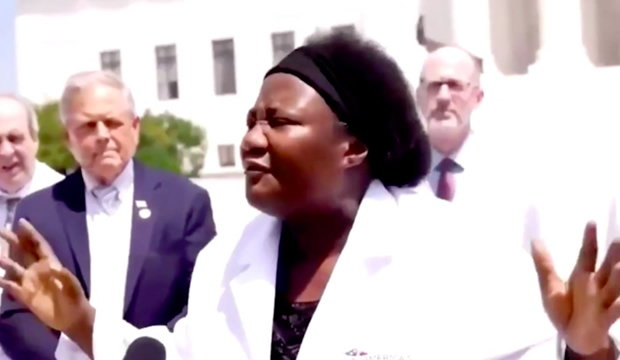
A video of Dr Stella Immanuel, a United States based medical doctor came up on social media with claims to have discovered the cure to the Coronavirus (COVID-19).
The video has since gone viral. In the video, Dr Immanuel who was speaking was surrounded by people wearing medical coats.
She said she has treated over 350 COVID-19 patients including those with diabetes, high blood pressure (HBP), asthma and the elderly with a combination of Hydroxychloroquine, Zinc and Azithromycin.
“The oldest among the patients is 92 and the result has been the same,” Immanuel said.
“I put them on Hydroxychloroquine, Zinc and Zithromax and they are all well.”
She added she has recorded no casualty, and that she as well as other medical staff working with her were administered with the same drug as a preventive measure against contracting the virus.
She said: “There is no way I can treat 350 patients, still counting and no one is dead and even doing better. This virus has a cure. It is called Hydroxychloroquine, Zinc and Zithromax.”
Before her relocation to the US, Immanuel identified Hydroxychloroquine as one of the drugs she had used to cure malaria infection in Nigeria.
The video generated reactions on social media and was a point for discussion across several media platform in Nigeria and across Africa.
THE CLAIMS
Claim 1
That Hydroxychloroquine, Zinc and Zithromax combination is the cure for COVID-19.
Claim 2
That you don’t need a face mask to protect yourself from COVID-19 because there is prevention and there is a cure.
THE FINDINGS
CLAIM 1
In March, the US President Donald Trump approved the use of Hydroxychloroquine Zithromax also known as azithromycin as a possible cure for COVID-19.
He advised those infected by the virus to consider the use of both drugs with inputs from the Food and Drug Administration (FDA).
This followed an emergency use authorisation from the FDA, despite warnings from medical experts.
But on June 15, the FDA revoked the emergency use authorisation for the drug use.
It expressed concerns the drugs might be ineffective in treating patients due to its side effects.
“In light of ongoing serious cardiac adverse events and other potentially serious side effects, the known and potential benefits of chloroquine and hydroxychloroquine no longer outweigh the known and potential risks for the authorised use,” the FDA, an agency under the supervision of the US Department of Health and Human Services had stated.
The FDA, in April, warned against the use of hydroxychloroquine or chloroquine for the treatment of COVID-19 outside the health facilities due to possible kidney injuries, liver and heart problems among other likely complications.
On the use of Zinc, some health experts believe the material could play an important role in boosting the body immune system, particularly against COVID-19.
But, except in a clinical trial, Mohammed Razzaque, a medical expert warned against the use as supplements above the recommended diet.
Zithromax, the third drug mentioned by Dr Immanuel is also known as azithromycin. It is an antibiotic drug used to fight bacteria.
Reports from Drugsite Trust, a New Zealand based pharmaceutical firm that manages drugs.com says Zithromax could treat infections such as respiratory infections, skin infection ear infection and sexually transmitted diseases. Nevertheless, it excluded COVID-19.
But as of date, the World Health Organisation (WHO) is yet to establish a cure for the coronavirus disease.
Though there are ongoing clinical studies reviewing possible treatments, the global health organisation has not pronounced acceptable vaccine or drugs for the virus.
On July 6, WHO accepted recommendations from the Solidarity Trial International Steering Committee to stop further check on hydroxychloroquine and lopinavir/ritonavir due to the inefficiency.
“These interim trial results show that hydroxychloroquine and lopinavir/ritonavir produce little or no reduction in the mortality of hospitalized COVID-19 patients when compared to standard of care. Solidarity trial investigators will interrupt the trials with immediate effect.”
The ICIR contacted Professor Bola Olayinka, Infection, Prevention Control expert at the WHO Office, Nigeria to further verify the claim. She said there is currently no evidence to back up the claim on the use of Hydroxychloroquine, Zinc and Zithromax combination as a cure for COVID-19.
She noted that based on well-planned studies on thousands of people that are scientifically documented, Immanuel’s claim can’t be verified.
However, she advised the medical doctor could conduct a well-planned study with ethical approval or provide the data of what she has collected over time and present to the right authorities for proper validation.
“We do not have proof that it cures it (COVID-19),” Prof. Olayinka stated.
“For studies that have been done, it has not demonstrated any positive effect on the disease.”
Prof. Olufemi Babalola, the President of Guild of Medical Directors also faulted the claim. He described Dr Immanuel’s claim as unscientific and unsubstantiated.
“Dr Stella Immanuel strongly attests to treating over 350 patients in her clinic in Houston, Texas, with the combination of Hydroxychloroquine, Zinc and Zithromax. However, people must understand that this is not scientific evidence and just her own personal, unsubstantiated claims.”
He explained further about conflicting evidence regarding the drug stressing that while some studies assumed it is effective, others concluded with the opposite view.
Moreover, the Nigerian Government also has debunked the use of hydroxychloroquine. It says it is only limited to clinical trials.
The Nigeria Centre for Disease Control (NCDC), an agency under Nigeria’s Federal Ministry of Health maintained the drug is yet to be validated.
CLAIM 2
Immanuel, the medical doctor who claimed to have found a cure and prevention for COVID-19 says there is no need for masks.
She said “I know you people want to talk about mask. Hello! You don’t need mask, there is a cure. I know they don’t want to open school. No! You don’t need people to be locked-down, there is prevention and there is a cure.”
The prevention and cure Dr Immanuel refers to here is a combination of Hydroxychloroquine, Zinc and Zithromax. She claims she has administered the drugs to herself and other medical staff who are exposed to COVID-19 patients as a form of prevention, and it works.
However, these combination have not yet been approved by the relevant bodies.
WHO recommends the use of face masks as a protective measure against the virus spread. Since the virus is a respiratory infection which could spread through droplets from infected persons, the global health organisation advised the general public to make use of facemasks, aside from maintaining proper hand hygiene.
Other experts who earlier spoke with The ICIR regarding a recent Fact-Checkinformed stressed the need to use facemasks always as against face shield. This is expected to reduce the virus spread.
THE VERDICT
There are potential drugs which have been on clinical trial but are yet to be approved by the WHO as safe for use by the general public. Studies have shown the effects of hydroxychloroquine on patients who complained of hearing loss, tinnitus and other complications. Therefore the claim that Hydroxychloroquine, Zinc and Zithromax combination is the cure for COVID-19 is MISLEADING.
And the claim that you don’t need mask because there is prevention and cure is also MISLEADING.
This is because the claim is based on the premise that the cure and prevention -Hydroxychloroquine, Zinc and Zithromax combination – against COVID-19 has been found. These combination have not yet been approved by the relevant bodies.