Home Blog Page 2041

It would amount to third term for APC to field northern candidate in 2023- Ndume

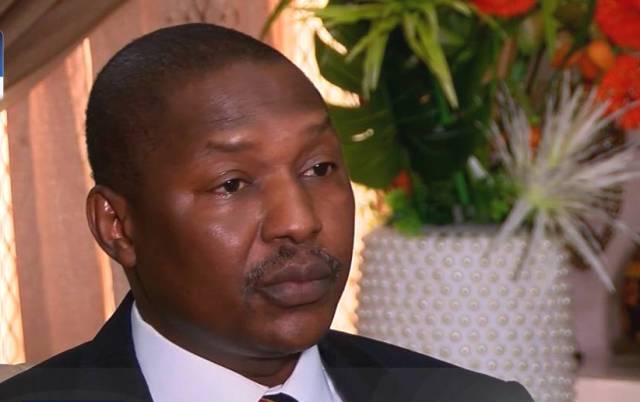
MOHAMMED Ali Ndume, the senator representing Borno South Senatorial District says it  would amount to third term if the All Progressives Congress (APC) fields a northerner as its presidential candidate in 2023.

The former senate leader in an interview with Daily Trust, said in the spirit of fairness, justice and fair play, the party should zone its presidential ticket to the South.

Series of reactions have trailed the President Muhammadu Buhari’s nephew, Mamman Daura’s, statement that zoning should be jettisoned in 2023.


Read Also:

Ndume said the party should zone its ticket to the South, adding that retaining the presidency in the North would be unfair for the party and the country.

“To me, as a founding member of the APC that witnessed the first convention where the presidency was deliberately zoned to the North and four candidates from the region: President Muhammadu Buhari, former Vice President Atiku Abubakar, Senator Rabiu Musa Kwankwaso and Sam Nda-Isaiah, slugged it out, with Rochas Okorocha exercising his constitutional rights.

“I, Senator Mohammed Ali Ndume, I feel that it would not be fair, equitable and just to field a northern candidate for the presidency in APC, 2023. To me, fielding a northern candidate will be tantamount to third term; which is unconstitutional,” he explained.

He further said the best thing is to allow southerners to slug it out among themselves for the 2023 presidential ticket of the APC.

“For me, I have drawn the line already because everybody will stand before God and account for his deeds. We supported the zoning of the presidency to the North and we supported the president and he is spending his eight years in line with the constitution of the country,” Ndume said.

“By extension, the North is only allowed to serve two terms. So, if a northerner comes in again, it does not matter whether the person is Buhari or not, or a new name, that would mean that the North is going in for a third term; which is unconstitutional.”

Also speaking on the party’s forthcoming convention, he said the zoning of the party’s presidential ticket to the South would mean that the North would produce the next National Chairman of the APC.

“I’m somebody that believes in equal rights and justice, because it is only when you adhere to that that you will have peace.

“So, I don’t want to dabble into leadership zoning; but impliedly, if I’m saying that the southern part should produce the president, then the chairmanship position should go to the North,” Ndume said.


Coalition writes Buhari, lists 14 high profile corruption cases against Malami

A coalition against corruption has called on President Muhammadu Buhari to probe Abubakar Malami, the Attorney General and Minister of Justice, for corruption.

The coalition in a petition signed by Olanrewaju Suraju, Chairman, Civil Society Network Against Corruption (CSNAC), Debo Adeniran, Chairman, Centre for Anti-Corruption and Open Leadership, (CACOL) and Ezenwa Nwagwu, Co-founder, Say No Campaign,  listed 14 high profile corruption allegations against Malami.

The allegations range from financial sleaze involving him and his family to influence peddling.

The groups said the immediate option before the AGF is to resign and give way for full inquiry into the grand allegations that seem to portray him as stunningly corrupt.

In the petition, President Buhari was urged to put in place a public inquiry or risk legal fireworks from lawyers in the country.

“It has to be now or never. There are very strong allegations of corruption against Mr Abubakar Malami with clear evidence,” the coalition said.

“President Buhari should act now. We have listed these corruption cases after painstaking compilation of high profile corruption cases involving the country’s No 1 law officer. The President must act without delay.”

The coalition, however, expressed fear over the weight of the allegations levied against the AGF, saying President Buhari’s action would determine the future of the anti-corruption campaign in the country.

While noting that they were perturbed by “these reports considering the revered position occupied by Malami, being the number one law officer of the country, members of the coalition remarked that some of the allegations as conveyed in the media reports go to the root of breakdown of law and order and total disregard for the rule of law.

“These allegations serve as a slap in the face to your Excellency’s administration foremost goal of ridding the Nation of corruption,” the coalition stated.

” These allegations are totally opposite the core objectives of your administration and international perception of the country.”

Top on the list of the allegations against Malami  is the alleged auctioning of sea vessels holding crude oil seized by the Federal Government, saying it violated Section 31(2) and (4) of the EFCC Act 2004.

“The AGF also authorized the sale of these vessels by companies under EFCC prosecution for similar offence of illegal bunkering and this action was admitted by the AGF through his media aide pleading presumption of innocence on the part of the accused, in the case being prosecuted by the Federal Government through EFCC.”

The coalition also accused Malami of twisting the law to shield his family members, corrupt officials and institutions in the most brazen manners.

Malami was said to be responsible for the reinstatement of Abdulrasheed Maina, former chairman of the Pension Reform Task Team (PRTT) into the Federal Civil Service Commission without due process.

“He also filed for the discontinuation of a N25 billion criminal charge against Senator Danjuma Goje without any justification, after over seven years of diligent investigation and prosecution by the EFCC, whereas in June this year, he allegedly withdrew criminal charges against soldiers who were accused of killing police officers and a civilian in the bid to aid the escape of Wadume, a millionaire kidnapper.”

The coalition also explained that, “on November 18, 2018, Mr Malami, through a lawyer from his office, Mr Pius Akuta, came to Lagos High Court to withdraw a case of fraud filed by EFCC against one Dr. John Abebe, a businessman and younger brother to late Stella Obasanjo but the EFCC resisted the illegal move before Justice Dada of the Lagos High Court on the ground that the AGF has no constitutional power to take over a case filed in Lagos High Court.”

Other examples listed included the withdrawal of the case against the Chairman, Code of Conduct Tribunal (CCT), Mr Danladi Yakubu for criminal charges, demand for the withdrawal of the cases against Bello Adoke, Diezani Alison-Madueke and others involved in the Malabu scandal and his halting investigation of huge fraud in Nigeria Incentive-Based Risk Sharing System for Agricultural Lending (NISRAL).

The Malabu scam involves the controversial OPL 245 which has seen Nigeria recover some $78 million from individuals already convicted in Italy as oil giants linked with the graft continue to face prosecution in Milan.

The AGF was said to have sent a letter ordering the Economic and Financial Crimes Commission, the Independent Corrupt Practices and Other Offences Commission, (ICPC) and the Department of State Services, (DSS) and the Nigeria Financial Intelligence Unit, (NFIU) to all stop probe of the NIRSAL scam. He was said to have described the investigations as an “unhealthy competition” and “sheer waste of government resources”.

Malami is also accused of being the kingpin in the alleged duplicity of payment of $16.9 million fees to two friends as new lawyers for the recovery of the loot traced to a former Nigerian Head of State, Sanni Abacha, after a Swiss lawyer hired and fully paid by the previous government, Enrico Monfrini, to help in the recovery had completed his brief as reported.

Malami was said to have barred the prosecution of the former Comptroller General of Customs, Mohammed Inde Dikko, through a suspicious deal between the AGF and the Immediate past DSS Director on one side and the Comptroller General of Customs to refund $8 million to the Federal Government. The case was discontinued as Justice Dimgba refused to allow further prosecution of this matter under the guise that Mr. Dikko had kept his promise under the agreement by refunding N1,576,000,000 and more to the FG through the EFCC funds recovery account in the Central Bank of Nigeria (CBN). The FG earlier accused Mr. Dikko of stealing over N40 billion.

The groups said its investigations and media reports suggest that Malami own assets worth billions far ahead of what he owned before his appointment as the country’s AGF. Some of the properties listed in his name were a multimillion naira Rayhaan Hotels worth about N500million, located at opposite Aminu Kano Teaching Hospital, Zaria Road, Kano State, a property worth about N600million Naira locate at Ahmadu Bello Way, Nasarawa GRA, Kano, a newly constructed school at the back of Nitel at Gesse Phase 1, Birni Kebbi worth about N700million, a multi million Naira property built by Mr. Malami for his son located at Gesse Phase II in Birni Kabbi worth over N400 million, a mansion known as Azbir Arena allegedly built by Mr. Malami for his second son. Azbir Arena an entertainment centre worth over N3 Billion, with a big plaza and kids playing centre and hotel all combined in one expansive property.

The groups accused Mr. Malami of other misconducts like using the official letterhead of the office of AGF to seek support for his son’s wedding and that he encouraged the defacing of Naira and other currencies to the embarrassment of the country and in violation of section 21(1) and (3) of the Central Bank Act, 2007.

During the wedding of his son, Mr. Malami was also accused of allowing the breach of Covid-19 protocol and regulations putting the lives of Nigerians at risk. In Ghana recently, a similar incidence led to the resignation of a minister for breach of the country’s Covid-19 protocols.

The coalition stated, “At ICPC, Mr Malami also displayed his unpretentious hatred for the fight against corruption by writing a letter dated 16th December, 2016 withdrawing the case of fraud filed against Mr. Godsday Orubebe, the former Minister of Niger Delta, in a case involving over N1.97billion, on the ground that in his opinion, there was no basis for filing the charge against him.”

“We strongly believe that the above allegations are deserving of thorough, immediate and urgent investigation through an independent panel of inquiry and the Attorney General suspended from office pending the conclusion of this investigation; the veracity or otherwise of these allegations is essential for the sanity of the public service.”

The groups said “the law presumes any allegation as a suspicion until the suspect is so proven guilty; we as organizations, relentless in seeing transparency and accountability actualized and that due process is deployed in investigating corruption, abuse of power and office belief the allegations leveled against the Attorney General of Federation and Minister of Justice, Mr. Abubakar Malami is deserving of your urgent action.”

The coalitions said they believe in the prevalence and sanctity of the rule of law. “We believe in due process which is why we have forwarded this petition to your Excellency for proper and diligent investigation and timeous action in order to restore the sanity of the core mandate of your administration to fight corruption which is at the verge of collapse as a result of the alleged abuse of power and office by the incumbent Attorney General and Minster of Justice.”

Post COVID-19: PIND canvases innovative approaches to skills development, economic recovery

DARA Akala, Executive Director of Foundation for Partnership Initiative in the Niger Delta (PIND) says the Niger Delta region needs innovative approaches to skills development that will contribute to economic and growth post COVID-19 pandemic.

Akala said the issue of unemployment is probably the most significant development challenge this time for government both at national and sub-national levels including the Niger Delta region as the world battles with the COVID-19 pandemic.

He stated this during a virtual roundtable Themed ‘Re-imagining Youth Skills Development Program and Job Creation for Positive Impact in Post-COVID-19 Economy’, organized by the Foundation.

“So addressing the issue of unemployment is probably the most significant development challenge this time for government both at national and sub-national levels including our region, the Niger Delta, we need innovative approaches to skills development that will contribute to economic and growth post COVID-19 pandemic,” Akala said.

He attributed lack of access to economic activities to the problem of unemployment in the Niger Delta, which according to him, is a driver of conflict and youth restiveness in the region.

“As a matter of fact, the region has recorded some of the highest rates of unemployment in the country and in 2018 for example, according to the National Bureau of Statistics (NBS), Akwa Ibom State reported the highest rate of unemployment,” the PIND Foundation Executive Director said.

“This stood at 37.7 per cent, followed by Rivers State with 36.4 per cent, Bayelsa 32.6 percent and Abia State 31.6 percent and so on and forth. And this was before the advent of COVID-19 pandemic.”

Quoting the International Labour Organisation (ILO), Akala said COVID-19 has been described as the most severe crisis since World War 11.

He added that with a 30.4 per cent economic shrink in Nigeria this year as projected by International Monetary Fund (IMF), due to COVID-19, the country’s jobless rate already at an average of about 23 per cent is expected to climb even higher.

The Niger Delta region would not be left out of this worsening unemployment situation, he said.

Speaking on the intervention by the Foundation to address youth unemployment, he stated that PIND came up with Niger Delta Youth Employment Pathway (NDYEP) in 2017.

“This project that we started in 2017 to address the issues of youth job readiness, work force development and jobs creation are being piloted in three states of Abia, Akwa Ibom and Rivers.
we focus on few sectors that were pre-selected: ICT is one of them and renewables, construction, agriculture and other emerging growth sectors showing potential for youth employment,” Akala explained.

According to him, “In the pilot phase, NDYEP has enrolled and delivered short-term technical, soft skills training and job/enterprise linkages to over 4,500 youth while over 1,300 youth who successfully completed the program have been supported to transition into internship placements, waged employment and entrepreneurship/self-employment.”

He explained that NDYEP is an innovative model that is designed not just to train but prepare youths including the young people living in the rural areas, women and persons living with disability with market relevant skills for securing sustainable jobs.

On the motives behind the roundtable, Akala disclosed that meeting was organized by PIND with support from Ford Foundation to share the key features and learnings from the NDYEP model and seek collaboration for demand driven job creation programming with state governments in the Niger Delta towards addressing prevalent youths’ unemployment in the region.

He said the Foundation sought to build knowledge and understanding on current approaches towards youth skills development and regional action to address post-COVID-19 youth unemployment dynamics.

“We want to be more consensus around the need for more strengthened regional collaborative efforts between states towards the adoption of and or adaption of the NDYEP practices and ultimately concerted determination in tackling youth unemployment in the Niger Delta. We want to stimulate the buying of the motivated states in the region to adopt or adapt more demand led youth model to NDYEP,” he said.

“PIND is willing to work in partnership with State governments through provision of technical support, to enable them develop the right kind of youth policies and youth employment programs that replicate or run on similar principles as NDYEP,’’ Akala affirmed.

Speaking at the meeting, Afolabi Imuokhuede, Senior Special Assistant to President Muhammadu Buhari on Job Creation and Youth Employment, stressed that it takes a collective effort of all stakeholders within the region, government and others to tackle the challenges of addressing unemployment in Nigeria and the Niger Delta.

Joe Keshi, Director General of the BRACED Commission in his keynote address asked policymakers to step up and address the most important challenges like unemployment and the growth of the private sector especially as the world enters the fourth industrial revolution.

PIND Foundation is a Nigerian non-profit organization established in 2010 by Chevron Corporation to promote equitable economic development and peace in the Niger Delta through multi-stakeholder partnerships.

SERAP seeks court order for Buhari to publish details of Nigeria’s loans since 2015

0

THE Socio-Economic Rights and Accountability Project (SERAP) has asked the Federal High Court sitting in Abuja to direct President Muhammadu Buhari to publish details of loans taken so far by the country since May 2015.

This request was disclosed, after the human rights group filed a suit marked FHC/ABJ/CS/785/2020 asking the Court in Abuja to compel the president to direct anti-corruption agencies in the country to monitor the disbursed spendings from loans incurred since May 2015.

In the suit, SERAP is demanding that the president give names of countries and bodies that have given the loans, specific repayment conditions, and whether any public officers solicited and/or received bribes in the negotiations for any of the loans, and if there is a plan to audit the spending of the loans, to resolve any allegations of mismanagement and corruption.

The suit also seeks for details of the interest rate on the loans taken by the country within the period, the total amount of debts t incurred by the government, as well as details of the projects on which the loans have been spent.

Other respondents to the lawsuit include Abubakar Malami, Attorney General of the Federation and Minister of Justice, Zainab Ahmed, Minister of Finance, Budget and National Planning and Patience Oniha, Director-General of the Debt Management Office.

Justifying the essence of the lawsuit, SERAP, in a statement explained that Nigerians should be aware of the nature of the loans incurred on their behalf.

“This suit is permitted under the Freedom of Information Act, the African Charter on Human and Peoples’ Rights, and the UN Convention against Corruption to which Nigeria is a state party.

“While access to loans can provide indispensable resources, the mismanagement and squandering of any such resources would be counter-productive. Nigerians should no longer be made to repay debts incurred in their name but which have not benefited them in any manner, shape or form,” the statement reveals.

President Buhari had sought the National Assembly’s approval for a loan of $5.513bn, reportedly to fund the 2020 budget deficit, critical projects, and support some states as the National Assembly also recently approved an N850 billion loan.

There is no specific date slated for the hearing of the suit yet.

Provide evidence that I diverted funds, Magu challenges Malami, Presidential Committee

Ibrahim Magu, the suspended acting chairman of  Economic Financial Crimes Commission (EFCC) has challenged Abubakar Malami, the Attorney General of the Federation and Minister of Justice as well as the Presidential Committee on Asset Recovery to provide evidence that he diverted funds belonging to the commission.

“Not a dime of the recovered funds was fraudulently converted to my personal. I challenge my accuser to produce evidence of such fraudulent conversion,” Magu said in his response to the petitions against him.

His response was contained  in a long letter issued since his ordeal began on July 6 following arrest by security operatives on his way to the Police Headquarters, Abuja.

The suspended EFCC chief is being investigated by a Special Presidential Probe Panel following allegations levied against him by Malami and the final report of the Presidential Committee on Audit of Recovered Assets (PCARA): Mismanagement and Lack of Transparency in Managing Recovered Assets.

Magu  who spent about 10 nights in detention while being interrogated by the probe panel in his defence argued that the allegations were targeted at him in order to tarnish his name and the image of the Commission.

“I unequivocally deny this allegation as same is untrue and merely calculated to tarnish my name, the Commission, and the giant strides this administration has achieved in the fight against corruption and recovery of proceeds of unlawful activities,” he said.

He further alleged that the Office of the Attorney General of the Federation has either interfered in the workings of the Commission under him or less supportive.

“On the contrary, in several cases under investigation, recovery and management of assets, the office of the HAGF (Honourable Attorney General of the Federation) has either interfered with the process or has been less cooperative and supportive,” Magu alleged.

According to him, he was not invited by the Presidential Committee to defend himself against the allegations before he was indicted.

“I was not invited by the Committee to defend myself and the Commission before the purported findings were made. That fair hearing demands that I should not be indicted without being heard.”

On allegations on inconsistent amount of funds recovered by the Commission according to PCARA, Magu said the Committee must have failed to take note of some recoveries.

“The figures reported by PCARA may not have taken note of third party recoveries that would have been transferred to the respective beneficiaries directly.”

“Such direct beneficiaries include; Federal Inland Revenue Service (FIRS), Nigerian National Petroleum Corporation (NNPC), Asset Management Corporation of Nigeria (AMCON), Nigerian Customs Service, commercial banks, corporate organisations and private Individuals,” Magu’s letter read in part.


One year after ICIR-funded investigation, Wike suspends council boss over illegal tax collection

By Kelechukwu IRUOMA


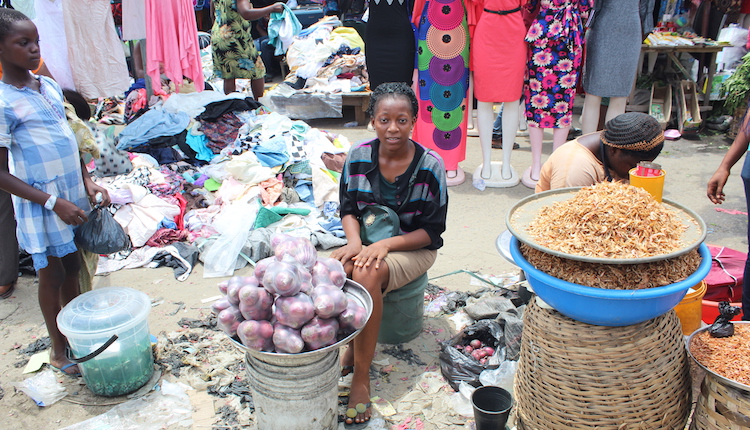
ONE year after ICIR-funded investigation on how thugs in Rivers State are used by local governments in Port Harcourts to collect illegal taxes from small businesses, governor Nyesome Wike has suspended the council Chairman, Hon. Victor Ihunwo.

Wike also suspended tax collection for SMEs including shop owners such as hairdressers in Rivers State for the year 2020.

He directed traders at the Ogbum-nu-Abali Fruit Garden Market to stop dealing with anyone who claims to be acting on behalf of Port Harcourt Local Government Area.


READ ALSO:

The Rivers State Commissioner for Information and Communications, Pastor Paulinus Nsirim, said in a statement that the state government has also removed JAAC Accounts from all the banks that gave loans to some local government councils without the authorisation of the state

In July 2019, freelance journalist Kelechukwu Iruoma visited six popular markets in Port Harcourt, including the Ogbum-nu-Abali fruit market and exposed thugs who forcefully harassed and collected illegal taxes from small businesses.

The report, which won the 2019 tax reporting category of PricewaterhouseCoopers (PwC) Media Excellence Awards showed how illegal tax collection has created stumbling blocks to local businesses in the state.

Sanwo-Olu orders reopening of places of worship, increases public gathering capacity

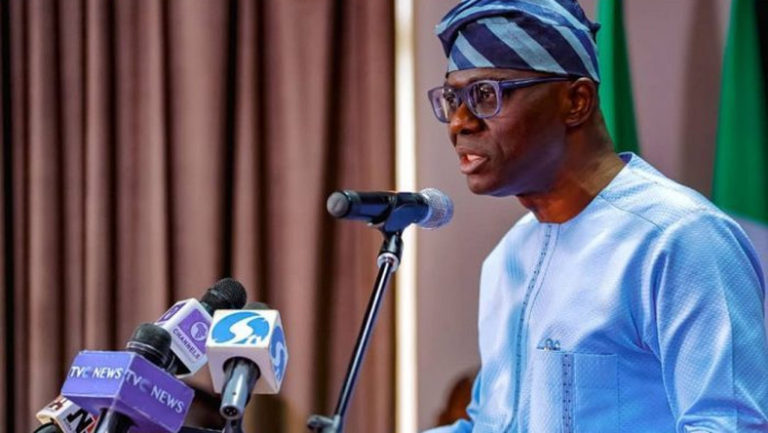
BABAJIDE Sanwo-Olu, Governor of Lagos State has ordered the reopening of mosques and churches in the state as from August 7.

The governor while making the announcement during a press briefing held at the Government House on Saturday added that the state would only allow a maximum of 50 percent capacity at either the church or mosque while the number of public gathering capacity be increased from 20 to 50 people.


READ ALSO:

In a 44 seconds video posted on Twitter by  Gboyega Akosile, Sanwo-Olu’s Chief Press Secretary, the governor stated that all religious houses in the state can be opened with 50 per cent capacity on Fridays only and Sundays only.

“The places of worship are only permitted to have their regular once a week service on designated days. For the avoidance of doubt, there will be Friday worship for our Muslim brothers and Sunday worship for our Christian followers,” the governor said.

He added that the state government “will monitor this for the next couple of weeks and see” the level of compliance.

According to him, no night vigils would be allowed while persons of  65 years and above  were strongly advised to stay at home.

He noted that social clubs and recreational centers would also be allowed to open from 14 of August, after being re-certified by the Lagos State Safety Commission.

The ICIR  reported that Lagos State Government suspended the reopening of places of worship and event centres and gatherings which was scheduled for  June 19 and 21, as a result of advice from health officials.

According to The ICIR’s COVID-19 dashboard, as of  August 1, Lagos State tops the list with a total of 15,121 number of confirmed cases out of 19,565 in the country


Amaechi explains sovereignty clause in $500m Chinese loans

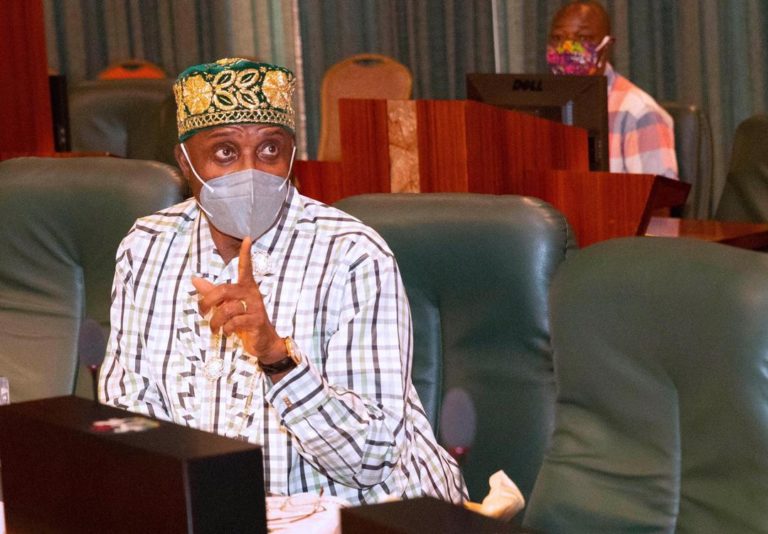
ROTIMI Amaechi, the Minister of Transportation has explained the sovereignty clause in the loan agreement between Nigeria and China.

Amaechi during a conversation on the African Independent Television (AIT) programme, stated that the clause ‘waiving sovereignty’ in the loan agreement between Nigeria and China was only a contract term, a sovereign guarantee that assures payback according to the terms and conditions of any loan.

“Now, when you say ‘I give you a sovereign guarantee and I waive that immunity clause, the immunity clause is that, if tomorrow I’m not able to pay you and you come to collect the items that we’ve agreed upon, that these are items I have put down as guarantee, I can waive my immunity and say no, you cannot touch our assets, we are a sovereign country (the Chinese) are saying, if you are not able to pay, don’t stop us from taking back those items that will help us recover our funds,” he explained.

He further said that it is a common practice to guarantee that a debtor would pay back and not necessarily because it has to do with China.

“It’s a standard clause, whether it’s with America you signed it or with Britain or any country, because they want to know they can recover their money. What the clause does is to say to you, I expect you to pay according to those terms and conditions. If you don’t pay, don’t waive your immunity on me (the lender) when I come to collect back what is the guarantee you put forward,” he said.

The minister further explained that the Chinese loans were not being paid to him nor the ministry but directly to the contractor that would execute the projects the loans were borrowed for.

“I told them at that meeting, that these loans are not given to us, they are paid directly to the contractor. Once we sign that the job has been done, they pay the contractor. And this has never been done before. So what is critical is that the projects are being done.

“The waiving of immunity simply means in trade parlance that I’m not giving you this loan free of charge. Just like if you go to take a loan from the bank, the moment you don’t pay, they go after the assets you put down. And people are politicising it.

Allaying the fear of some Nigerians asking if it’s possible to repay the loan, Amaechi stated that the loan was already being repaid.

“But we’re paying, he said, adding that, “tn the same National Assembly Committee sitting, they were told that out of the 500 million dollars, we’ve paid 96 million dollars already. Nigeria is already paying… So, it’s not that Nigeria doesn’t have the capacity to pay back.

“We’ll pay back. At 2.8 per cent, what other country would give you that loan? 2.8 per cent for 20 years with seven years moratorium, why can’t you pay back? The repayment plan is not done by us, it’s done by the Ministry of Finance, but they are meeting the requirements.”

The minister further explained that the loans were not paid to him nor the ministry, which automatically eliminates any fear of corruption or diversion of funds. They are paid directly to the contractor in China.

“I told them at that meeting, that these loans are not given to us, they are paid directly to the contractor. Once we sign that the job has been done, they pay the contractor. And this has never been done before. So what is critical is that the projects are being done.

“These loans are not paid here, so you can’t even steal it. What we do is ensure that the work is done. We hired an Italian company that goes with our engineers in the ministry to ensure that the Chinese meet the European standard, so that there are no fake things or poorly done work.

When they check and say yes, this has been done and done to the standard of the contract approved, then they pass it on to us, we sign and approve that the work has been done. It is then sent to the ministry of finance who also appends their signature and passes it on the Chinese Exim bank who then pays to the contractor. So how do you see the money?

“The job is development related. If you don’t do it, you don’t get paid. So the contractor would want to do the job, he wants to satisfy his client, so that the client can sign to say that he has done the job. So what is the problem. Is this political?

Amaechi, however, called on the National Assembly to put a hold on the probe as some loans were still being expected for the completion of Lagos to Ibadan and the construction of Ibadan to Kano and Port Harcourt to Maiduguri rail.

“There is an agreement for Abuja to Kaduna which was signed before we came, we signed the Lagos to Ibadan, we want to sign the Ibadan to Kano. Now we’ve also applied for them to give us a loan for Port Harcourt to Maiduguri which entails that when the loan is approved, we’ll construct the rail from Port Harcourt to Aba to Owerri to Umuahia to Enugu to Makurdi to Lafia to Jos to Bauchi to Gombe and then to Damaturu,”  he said.

“So what should be primary to them is national interest, because we need to construct Lagos to Ibadan to be able to evacuate cargoes that come from Lagos to the hinterlands. So what they are doing now, may likely stop that. The same way, the government is under pressure to construct Port to Maiduguri which passes through the south Eastern States and the North Eastern states.”

“So if we go now and the Chinese say ‘we won’t give you the money because the arm of government that is supposed to approve this loan, which they have already approved are beginning to question the loan they have approved, we are not sure that we can recover the loan,’ then we can’t finish our projects.”

Fayemi recovers from COVID-19

0

By Vincent UFUOMA


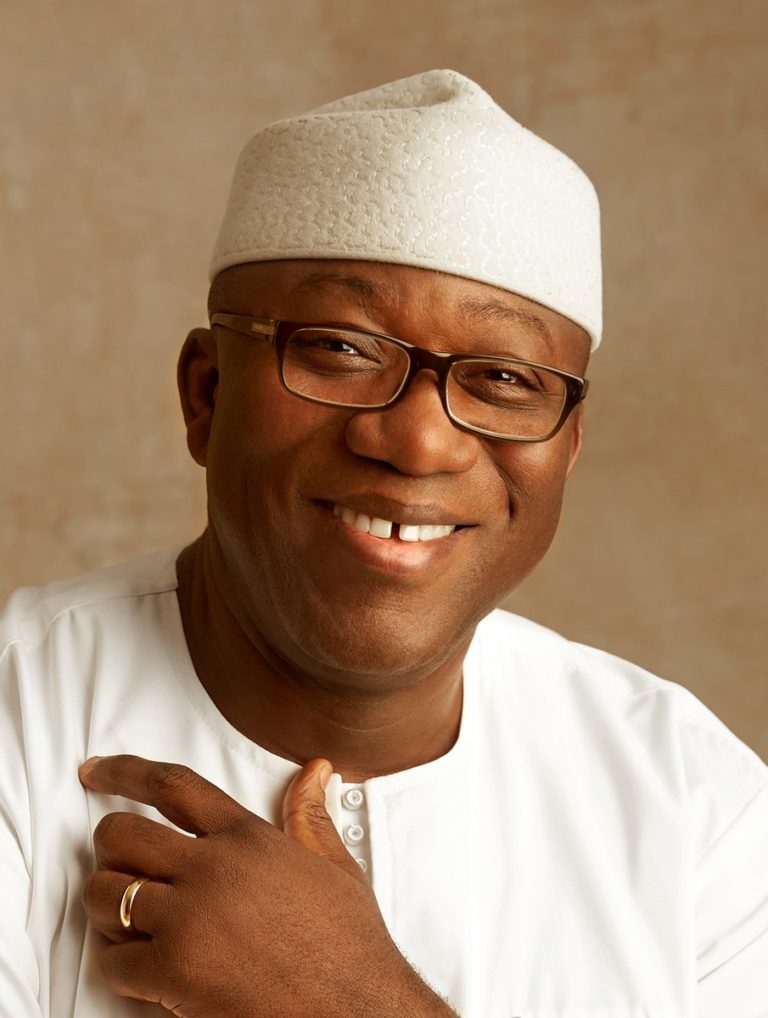
The governor of Ekiti State, Kayode Fayemi, has tested negative to COVID-19 almost two weeks after he tested positive for the virus.

Fayemi confirmed his status on his official Twitter handle on Saturday morning, where he stated that his test results came back negative after repeated tests.

“After 11 days in isolation, I received news that my CoviD 19 repeat test came back negative. My sincere gratitude goes to God Almighty, my family, my medical team and all well wishers for the prayers and solidarity. We must continue to do all we can to tackle the pandemic,” he said.

He is the 6th Nigerian governor who has recovered from testing positive to COVID-19.

The ICIR had reported earlier that Mr. Fayemi tested positive to the Coronavirus.

FACT-CHECK: Does Nigeria account for 5 per cent COVID-19 deaths in Africa?

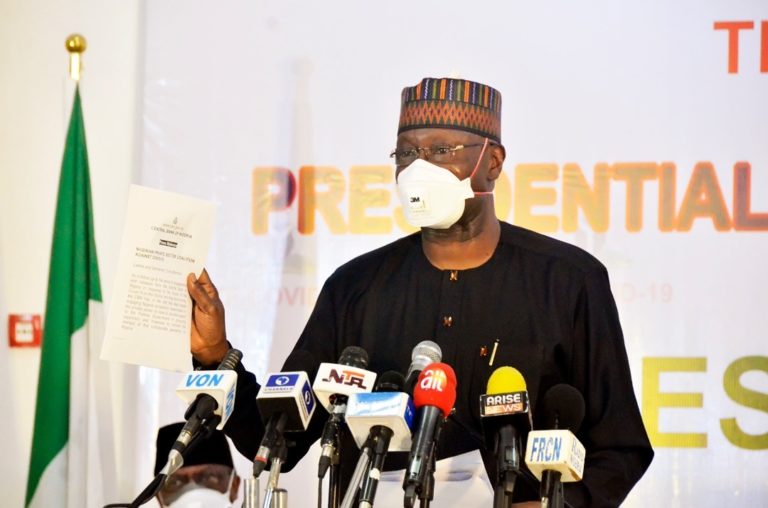
BOSS Mustapha, the Secretary to the Government of the Federation (SGF) of Nigeria on Thursday, July 23, announced that the country has recorded 5 per cent of the total Coronavirus  (COVID-19) deaths in Africa.

He made the declaration in Abuja, Nigeria during the regular updates by the Presidential Task Force (PTF) on COVID-19.

Mustapha, the PTF Chairman warned Nigerians who still doubt reality of the pandemic to reconsider and abide by the laid down guidelines provided by the Nigeria Centre for Disease Control (NCDC).

“On the African continent, the cumulative total for Africa has risen to 773,804 including 16, 448 fatalities,” Mustapha said.

“Nigeria with 38, 344 cases accounts for about 5 per cent of Africa’s numbers. Similarly, Nigeria with 813 deaths accounts for 5 per cent of fatalities in the continent.”


THE CLAIMS

Claim 1: That Nigeria accounts for 5 per cent of COVID-19 deaths in Africa.

Claim 2: That Nigeria records almost 5 per cent of COVID-19 cases in Africa.

Claim 3: That the cumulative figure of COVID-19 risen to 773, 804.


THE FINDINGS

Claim 1

Data provided by NCDC on the figure of confirmed COVID-19 cases as of July 23 in the country was 38, 948, while 16, 061 cases were discharged and 833 deaths recorded,  but Mustapha had said the casualty figure was 813 deaths which is less by 20 deaths.

The NCDC  COVID-19 daily reports are not made public until almost midnight each day as such the data Mustapha was using would have been that of the previous day which was July 22.

The ICIR analysed the July 22 data and the findings shows that the figure from the NCDC  matched with those of the Mustapha – 38, 344 total confirmed cases and 813 deaths.

This implies that the SGF had bench-marked his claim with the July 22 daily report of the NCDC.

Data on COVID 19 Cases in Africa as of July 23. Infographics Credit: WHO Africa Region

As of July 23, the World Health Organisation (WHO), African Region Office confirmed 769, 608 cases of the virus in all African nations.

The data released by WHOAFRO is from the previous day. “WHO only publishes verified information. Data may reflect difference in reporting methods, retrospective data consolidation and reporting delays” reads a caveat on the health organisation daily infographic updates.

To check Mustapha’s figures, The ICIR instead of using July 22 as was done with the NCDC report, data released on July 23 by WHO was used. This is because WHO clearly states that it data for July 23 was from confirmed cases as at 22/07/20.

It states that 16, 435 deaths were recorded while Mustapha has said the casualty figure was 16,448 which makes his higher with 13 deaths. However the deaths in Nigeria figure he gave matched with that of WHO at 813.

So, to verify the five per cent figure claimed by the SGF, The ICIR calculated the percentage of the number of deaths recorded in Africa on July 22 – using the WHO July 23 data –  total number of deaths in 16,435 Africa and 813 Nigeria.

The result is 4.95 per cent.

Claim 2

As at July 22 Africa has 769,608 confirmed cases says WHO, this is lesser than the figure Mustapha gave, which was  773,804 –  a difference of 4,196.

However, the number of confirmed cases in Nigeria from the NCDC on which Mustapha bench-marked his figures tallied with that of WHO at 38,344.

To check the SGF’s assertion that Nigeria now accounts for almost 5 per cent of COVID-19 cases in Africa The ICIR used the WHO data on Number of confirmed cases in Africa and Nigeria and the result is 4.98 per cent.


Claim 3

The third claim by the SGF is about the cumulative figure of confirmed COVID-19 cases in Africa which he announced as 773, 804.

As earlier stated, as at July 22 Africa has 769,608 confirmed cases according to WHO, this is lesser than the figure Mustapha gave which was  773,804 –  a difference of 4,196.


THE VERDICT

The claim that Nigeria accounts for 5 per cent of COVID-19 deaths in Africa is TRUE.

The claim that Nigeria records almost 5 per cent of COVID-19 cases in Africa is TRUE.

The claim that the cumulative figure of COVID-19 has risen to 773, 804 is MOSTLY TRUE. This is because the figure given by WHO is less with 4,196 and this might due to the updating methods adopted by different countries across africa which might account for a lag.