Home Blog Page 2063

Polio-Free Status: Buhari thanks Merkel, Osinbajo, Sultan of Sokoto, others for job well done

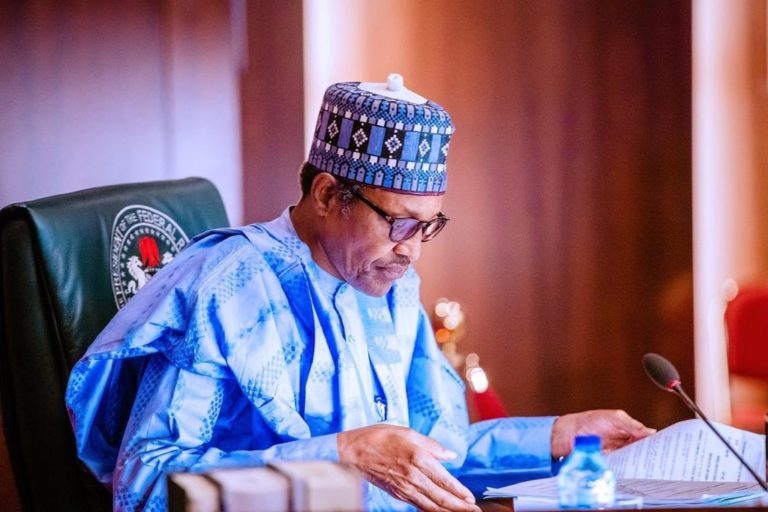
PRESIDENT Muhammadu Buhari has written to world leaders and partners to appreciate their support towards helping Nigeria attain a Wild Polio Virus (WPV) free status.

In a press statement signed by Garba Shehu, Senior Special Assistant to the President on Friday, Buhari  also assured that his administration would sustain the momentum and strengthen the primary health care system in the country.

The President also commended Vice President Yemi Osinbajo, Chairman Presidential Taskforce on Polio Eradication, and his team, for making Nigeria proud and saving children from the scourge of poliomyelitis.

‘‘This is to express our profound appreciation for your leadership of the Presidential Taskforce on Polio Eradication and Routine Immunization,” the President said.

‘‘The declaration of Nigeria as a Wild Polio free country is the result of your effective coordination of the Nigerian Polio eradication program through the Presidential Taskforce on Polio Eradication and Routine Immunization, Federal Ministry of Health and the National Primary Health Care Development Agency.

‘‘Please extend my personal appreciation to all members of the Presidential Taskforce on Polio Eradication for making Nigeria proud and saving her children from the scourge of Poliomyelitis.

‘‘I urge the Taskforce under your leadership to sustain this coordination especially in mobilizing State Governors to provide the needed oversight and resources to sustain the momentum and strengthen the primary health care system by improving routine immunization, maternal, newborn and child health services.

‘‘I urge you to sustain the momentum as I look forward to us leveraging on the polio infrastructure and experience to drive other health interventions.”

He also wrote to Angela Merkel, German Chancellor thanking the European country for decades of financial support to Polio Eradication Initiative (PEI) programme in Nigeria through KfW.

‘‘Please be assured that my government will remain committed and focused to ensuring the needed resources will be provided to sustain the momentum and strengthen the primary health care system of our great country,’’ the President said in his letter to Chancellor Merkel.

Buhari further extended his appreciation to  traditional and religious leaders, who through their leadership built community trust for the polio programme thereby increasing acceptance and ensuring all eligible children are reached with the polio vaccine.

Specifically, he wrote Alhaji Muhammad Saad III, Sultan of Sokoto, the leadership of Jama’atul-Nasirl Islam (JNI) and the President, Christian Association of Nigeria (CAN).

The President also wrote separate letters of appreciation to Bill Gates, the European Union, Tedros Adhanom Ghebreyesus, Director-General, World Health Organization, Robert R. Redfield, Director, U.S Centers for Disease Control and Prevention, Henrietta Fore, Executive Director, United Nations Children’s Fund, David Malpass, President, World Bank Group and John Barsa, Acting Administrator, United States Agency for International Development.

Others are, Global Affairs Canada, Professor Shinichi Kitaoka, President, Japan International Cooperation Agency, and the International President, Rotary International.

President Buhari also appreciated the support of Aliko Dangote, Chairman Aliko Dangote Foundation,  Emeka Offor and Governor Kayode Fayemi, in his capacity as the Chairman, Nigerian Governors Forum.

The World Health Organization in June declared Nigeria polio free after the country completed it’s documentation for the wild polio free status and was accepted by the African Regional Certification Commission for Polio Eradication.

Afghanistan and Pakistan are the only two countries in the world still battling with the devastating  disease endemic.
Making the best of the public anger on Sexual and Gender-Based Violence

Udo Jude ILO


Vera Uwaila Omozuwa, a 22-year-old microbiology student of the University of Benin was brutally raped and murdered in May 2020. The horror of her attack sent the whole country into an outrage. The images of her battered body became a gruesome testament to the depravity of her attacker(s) and the horrid experiences women are going through in Nigeria.

Uwa’s murder triggered an unprecedented momentum for the fight against Sexual and gender-Based Violence (SGBV). There have been 717 rape cases reported in Nigeria from January to May 2020 according to the Nigeria Police. Between the date of Uwa’s murder and the month of July, more than 154 women and children were raped and some of them killed. Cases of rape of minors and sometimes by fathers against their daughters became an abominable daily refrain.

Understandably, the pandemic of sexual violence forced reactions by key institutions of government. The National Assembly on 7th June 2020 declared a state of emergency on sexual and gender-based violence. On the 12th of June, Democracy Day, President Buhari reiterated his government’s commitment to tackle gender based violence. The Nigeria Governors’ Forum committed its members to pass the Child’s Rights Law and the Violence Against Persons Law. Not wanting to be outdone, the Nigerian police followed with a raft of new operational policies to improve their response and prosecution of SGBV. Before these developments, the National Human Rights Commission through its newly strengthened Gender Unit had started special programs on SGBV in Nigeria. It was indeed a season of government outrage and promises. CSOs, who had been the lone voices calling attention and providing support to survivors of SGBV in Nigeria also upped the ante in responding to SGBV.

While these actions are welcome, like everything Nigerian, this winter of outrage can easily morph into a summer of convenient amnesia and business as usual. We cannot let that happen! The unfortunate events in recent months provide us with an unprecedented opportunity to build on the public mood to ensure that an enduring system for protecting women and children against sexual and domestic violence. It is not going to be easy but with strategic collaboration and consistent engagement, this is possible.

Effective SGBV response needs to be built around three pillars- Prevention, accountability and support. We need to make effort to prevent SGBV. When it happens, we must ensure accountability and there must also be support system for survivors to ensure justice and healing. These three elements are equally important and only a holistic strategy encompassing their various elements will help us move the needle. We need a National Response Plan to SGBV which should be an overarching national strategy that provides the needed framework, signposts and target for confronting this unfortunate pandemic. This strategy should be built on a comprehensive SGBV infrastructure audit. Baseline studies should identify existing policies, conventions, laws, institutions, projects and group that have relevance to SGBV in Nigeria. This process has to be owned by the Nigerian government and not pawned off to funders. It should be a clear demonstration of the government’s commitment. By knowing where we are, it will be easier for the government to make a case for the support it needs.

In the interim, we need to focus on the quick wins in front of us. The commitment of the Nigeria Governors’ Forum NGF to pass the relevant legislation provides a solid starting point to creating a mechanism of prevention and accountability that helps our cause. More than a month after the commitment by the NGF, only 14 states have passed the VAPP law and 25 have passed the Child Rights Law. The NGF and indeed Nigerians need to call out the states who have not passed these laws. But beyond passing the laws, the framework which the law creates must be resourced. We have never been a country lacking in legislations. We just do not concern ourselves with implementing them. We must make it difficult for states to renege on this commitment. The federal government must consider some incentives to encourage states to do the right thing.

A special SGBV support fund should be created at the federal Level to help in providing support to survivors. The Legal Aid Act in Section 9, provides for a Legal Aid Fund to support indigent Nigerians caught up in the legal system. This fund should be quickly established and a significant portion of it dedicated to SGBV survivors. Through this Fund, the federal government can also incentivise the states in establishing Sexual Assault Referral Centres.

A deliberate policy of support must also accommodate the peculiar needs of survivors. It should be possible for any survivor of SGBV in Nigeria to walk into any hospital and get treatment and also preserve forensic evidence. Through the federal and state ministries of health, this protocol can be established. The SGBV support fund can be deployed to pay claims from the hospital within specific safeguards and procedures. This way, the perennial loss of evidence or inadequate care that has been the lot of many survivors will be addressed. This will also encourage survivors to come forward.

Another important reform that needs to happen now is the establishment of national SGBV response protocols for all the law enforcement agencies in Nigeria. This will require some inter-agency collaboration but a process that can be led by the National Human Rights Commission. There has to be a minimum standard of response that is expected of any agency of government that is confronted with SGBV case. This protocol must provide for physical protection of survivors, access to medical care, management of evidence amongst others. These standards will not only protect survivors but also provide a roadmap for agencies who are often at loss about what to do with survivors. Similar operational regulations must also be adapted for NGOs working on SGBV. There must be some standard of care that operates across the board and helps with the maximum protection of survivors.

Most survivors of SGBV are often in a disadvantaged relationship with their abusers. This toxic dependency makes it difficult for survivors to escape their environment. They are reliant on their abusers for livelihood. While existing legislation has not adequately addressed this existential reality, government policies can address this by ensuring a solid mechanism for livelihood support to survivors. This is a collaborative effort that can be led by the State but incorporating the private sector, NGOs, and credible religious institution. Frontline defenders working on SGBV issues should be treated as essential workers with adequate protection. Without resourcing and focusing on an enduring support system for survivors and frontline workers, we will only contribute to entrenching the culture of silence where survivors never come forward.

We need more than just reforms. We need to change minds. The toxic culture of masculinity and inequality sustains the narrative that the stronger can always take whatever they want even when it comes to the human body. Cultural, religious and social narratives embolden the reckless behaviour of men when it comes to the treatment of women. This power imbalance is so ingrained in our daily lives that a lot of women accept the subjugation and abuse they suffer in the hands of men. A lot of men fail to see the folly of their action and often feel entitled to their foolishness. This has to stop. The gradual task of changing mindset, building a new crop of men and empowering women to have a voice and fist must be

embraced with the urgency it deserves. Nobody should be in doubt where our values are when it comes to women. We should utilise every available institution- family, schools, religious houses, media, social media and sports to create a new narrative of respect of women and children. No nation can ever be great if women and children are an endangered specie or easy prey for toxic masculinity. We have serially failed our women and children in this country. We now have an opportunity to make amends. Uwa’s blood is a silent scream for help. Let her martyrdom count for something.

Udo Jude Ilo heads the Nigeria office of the Open Society for West Africa, OSIWA. He tweets as @udoilo

Nigerian singer, D’banj slams N1.5b lawsuit against accuser over alleged rape

SINGER Oladapo Oyebanjo, popularly known as D’Banj D Kokomaster, has filed a N1.5 billion lawsuit against Seyitan Babatayo, for falsely accusing him of raping her in a Lagos hotel in 2018.

In the suit filed on his behalf by Mike Ozekhome, his lawyer, the singer is asking the Federal Capital Territory (FCT), High court sitting in Abuja to order Babatayo to write a letter of apology for the accusations levelled against him.

D’Banj argued that the accusation has caused him embarrassment, marital disharmony and psychological trauma, while he asked the court to grant him N1 billion for defamatory damages over her tweets on the alleged rape incident.

“An order directing the defendant to pay the claimant, the sum of #1, 000,000,000.00 (One Billion Naira) only, representing general damages over the untold embarrassment, derision, public ridicule, odium, obloquy, marital disharmony, mental agony and psychological trauma which the defendant’s tweets and publication have caused the claimant,” a section of the lawsuit reads.

For costs, he had incurred the singer also requested for an additional N500 million for aggravated, punitive and exemplary damages.

It was first alleged by Benjamin Ese, a modelling agent that D’Banj raped his friend on December 31, 2018, at Glee Hotel in Victoria Island, Lagos.

Babatayo, however, corroborated the claim by identifying herself as the lady before reeling out her account on how the incident transpired on Twitter insisting that D’Banj issue a public apology to her through her lawyers.

On June 15, D’Banj, through his lawyer, Ozekhome, threatened to sue Babatayo and demanded N100 million as compensation for falsely accusing him of rape to be paid within 48 hours or risk legal action.

The Inspector-General of Police, Mohammed Adamu, had last month ordered an investigation into the allegations levelled against D’Banj by Babatayo but the outcome were yet to be made public.

On June 23, Babatayo released a statement through Stand To End Rape, where she narrated her ordeal since she went public with her accusation.

She also recounted her ordeal in the hands of police when she was reportedly arrested and detained on June 16 based on a complaint by D’Banj.

Pantami: Minister denies purchasing new houses for his three wives in Abuja

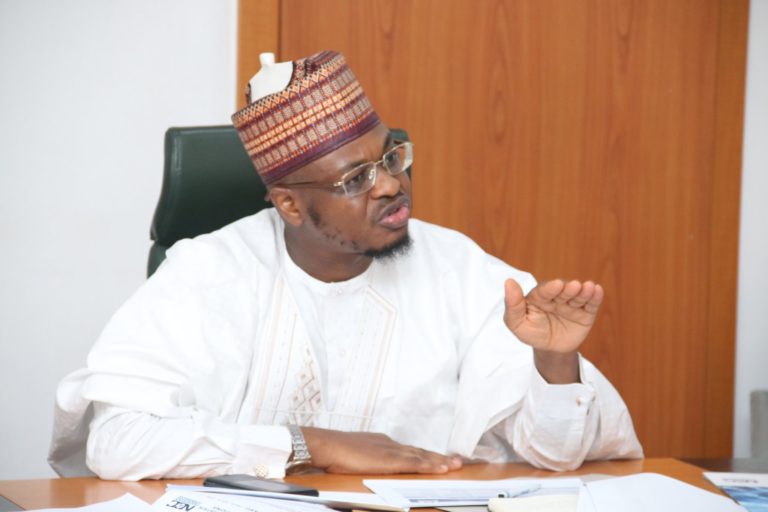
ISA Pantami, the Minister of Communication has debunked reports that he recently purchased three houses in Abuja for his three wives.

Pantami stated this in a press statement shared on the official Twitter page of the Federal Ministry of Communication on Friday.

According to the minister, since his assumption into office, he hasn’t procured a single property anywhere in the world.

The statement signed by Uwa Suleiman, spokesperson to the minister, disclosed that the houses in the photos being circulated online were not his with the exception of two houses.

It explained that one of the houses has been occupied by the minister since 2017, two years before his appointment as Minister of Communication.

Pantami  was appointed as Minister of Communication by President Muhammadu Buhari in August 2019.

The statement added that another house in the photo is a rented property of the minister, emphasizing that the two other houses in the photos are not owned or known by the minister.

“For the purpose of setting the records straight, the Honourable Minister has not purchased a single property anywhere in the world, in the period he has been in office as minister,” the statement read.

“One of the apartments in the images published is one which the minister has occupied since January 2017, more than two years before becoming minister, while the other one is a house he rented since 17th December 2019. Two images are not even known to him.”

The statement further disclosed that the minister’s current salaries and allowances are lower than his earnings when he worked as a professor at the International University, Madinah, in Saudi Arabia.

According to the remuneration packages approved by the Revenue Mobilisation, Allocation and Fiscal Commission (RMAFC), the current cohort of Nigerian ministers earn up to N13.3 million annually, including allowances.

Defending his integrity, the statement spelled that the minister made a sacrifice to serve the nation, reiterating that he is driven by selfless service and patriotism.

The statement also submitted that Pantami, a successful businessman abhors corruption and fights it in both professional and personal capacity.

“Dr Pantami’s integrity and credibility precede him, and his fight against corruption in both official and personal capacities have become a reference point not only nationally, but globally,” the statement read.

Sahara Reporters on Thursday published a photo news alleging that Pantami purchased three new house in Wuse area of the FCT for his three wives. In one of the photos, the minister is seen sitting on a couch in one of the supposed houses.

Hushpuppi risks 20 years in jail as FBI uncovers attempt to dupe EPL club of £100m

FEDERAL Bureau of Investigation (FBI) has alleged that Ramoni Abbas, a suspected Nigerian internet fraudster, popularly known as Hushpuppi, attempted to dupe an English Premier League football club of £100 million (N48.4billion).

Hushpuppi on Friday  appeared in an American court where according to the FBI, he is facing charges of conspiracy to commit money laundering among others.

The allegation is contained in an affidavit deposed to by Andre Innocenti, FBI Special Agent, who is assigned to the Los Angeles Filed Office High-tech Organise Crime Squad.

“Abbas and others further conspired to launder hundreds of millions of dollars from other fraudulent schemes and computer intrusions, including one scheme to steal £100 million (approximately $124 million) from an English Premier League soccer club,”the affidavit read in part.

The FBI further stated that should Hushpuppi be convicted, he risks spending 20 years in jail.

“If convicted of conspiracy to engage in money laundering, Abbas would face a statutory maximum sentence of 20 years in federal prison,” the FBI said.

The affidavit alleges that Hushpuppi and others committed a Business Email Comprise scam that defrauded a client of a New York-based law firm out of approximately $922,857 (N350.6m) in October 2019.

The suspect and co-conspirators allegedly tricked one of the law firm’s paralegals into wiring money intended for the client’s real estate refinancing to a bank account that was controlled by Hushpuppi and the co-conspirators.

American authorities also alleged that Hushpuppi conspired to launder funds stolen in a $14.7 million (N5.5 billion) cyber-heist from a foreign financial institution in February 2019, in which the stolen money was sent to bank accounts around the world.

Abbas allegedly provided a co-conspirator with two bank accounts in Europe that Abbas anticipated each would receive €5m (N2.1bn) of the fraudulently obtained funds.

It will be recalled that Dubai Police in June had arrested  Hushpuppi and 11 African cybercriminals in a special operation dubbed “Fox Hunt 2.

The operation took down the suspects for committing crimes outside the UAE, including money-laundering, cyber fraud, hacking, criminal impersonating, scamming individuals, banking fraud and identity theft.

The suspects were caught in a series of synchronized raids by six SWAT teams from Dubai Police who foiled the gang’s bid to deceive many people from around the world and steal their money.

See full statement from the U.S Department of Justice:

Nigerian National Brought to U.S. to Face Charges of Conspiring to Launder Hundreds of Millions of Dollars from Cybercrime Schemes

COMPLAINT

LOS ANGELES – A Dubai resident who flaunted his extravagant lifestyle on social media has arrived in the United States to face criminal charges alleging he conspired to launder hundreds of millions of dollars from business email compromise (BEC) frauds and other scams, including schemes targeting a U.S. law firm, a foreign bank and an English Premier League soccer club.

Ramon Olorunwa Abbas, 37, a.k.a. “Ray Hushpuppi” and “Hush,” a Nigerian national, arrived in Chicago Thursday evening after being expelled from the United Arab Emirates (UAE). Abbas made his initial U.S. court appearance this morning in Chicago, and he is expected to be transferred to Los Angeles in the coming weeks.

Abbas was arrested last month by UAE law enforcement officials. FBI special agents earlier this week obtained custody of Abbas and brought him to the United States to face a charge of conspiring to engage in money laundering that is alleged in a criminal complaint filed on June 25 by federal prosecutors in Los Angeles.

According to an affidavit filed with the complaint, Abbas maintains social media accounts that frequently showed him in designer clothes, wearing expensive watches, and posing in or with luxury cars and charter jets. “The FBI’s investigation has revealed that Abbas finances this opulent lifestyle through crime, and that he is one of the leaders of a transnational network that facilitates computer intrusions, fraudulent schemes (including BEC schemes), and money laundering, targeting victims around the world in schemes designed to steal hundreds of millions of dollars,” according to the affidavit.

The affidavit describes BEC schemes as often involving a computer hacker gaining unauthorized access to a business’ email account, blocking or redirecting communications to and/or from that email account, and then using the compromised email account or a separate fraudulent email account to communicate with personnel from a victim company and to attempt to trick them into making an unauthorized wire transfer.

“BEC schemes are one of the most difficult cybercrimes we encounter as they typically involve a coordinated group of con artists scattered around the world who have experience with computer hacking and exploiting the international financial system,” said United States Attorney Nick Hanna. “This case targets a key player in a large, transnational conspiracy who was living an opulent lifestyle in another country while allegedly providing safe havens for stolen money around the world. As this case demonstrates, my office will continue to hold such criminals accountable, no matter where they live.”

“In 2019 alone, the FBI recorded $1.7 billion in losses by companies and individuals victimized through business email compromise scams, the type of scheme Mr. Abbas is charged with conducting from abroad,” said Paul Delacourt, the Assistant Director in Charge of the FBI’s Los Angeles Field Office. “While this arrest has effectively taken a major alleged BEC player offline, BEC scams represent the most financially costly type of scheme reported to the FBI. I urge anyone who transfers funds personally or on behalf of a company to educate themselves about BEC so they can identify this insidious scheme before losing sizable amounts of money.”

“This was a challenging case, one that spanned international boundaries, traditional financial systems and the digital sphere,” said Jesse Baker, Special Agent in Charge of the United States Secret Service, Los Angles Field Office. “Technology has essentially erased geographic boundaries leaving trans-national criminal syndicates to believe that they are beyond the reach of law enforcement. The success in this case was the direct result of our trusted partnerships between the Department of Justice and our federal law enforcement colleagues. These partnerships helped dismantle a sophisticated organized crime group who preyed upon unsuspecting businesses. It is thanks to these partnerships that the American people can feel a bit more secure today.”

The affidavit alleges that Abbas and others committed a BEC scheme that defrauded a client of a New York-based law firm out of approximately $922,857 in October 2019. Abbas and co-conspirators allegedly tricked one of the law firm’s paralegals into wiring money intended for the client’s real estate refinancing to a bank account that was controlled by Abbas and the co-conspirators.

The affidavit also alleges that Abbas conspired to launder funds stolen in a $14.7 million cyber-heist from a foreign financial institution in February 2019, in which the stolen money was sent to bank accounts around the world. Abbas allegedly provided a co-conspirator with two bank accounts in Europe that Abbas anticipated each would receive €5 million (about $5.6 million) of the fraudulently obtained funds.

Abbas and others further conspired to launder hundreds of millions of dollars from other fraudulent schemes and computer intrusions, including one scheme to steal £100 million (approximately $124 million) from an English Premier League soccer club, the complaint alleges.

A criminal complaint contains allegations that a defendant has committed a crime. Every defendant is presumed innocent until and unless proven guilty beyond a reasonable doubt.

If convicted of conspiracy to engage in money laundering, Abbas would face a statutory maximum sentence of 20 years in federal prison.

The FBI led the investigation of Abbas, and the United States Secret Service was also involved and provided substantial assistance. The FBI further thanks the government of the United Arab Emirates and the Dubai Police Department for their substantial assistance.

This case is being prosecuted by Assistant United States Attorneys Anil J. Antony and Joseph B. Woodring of the Cyber and Intellectual Property Crimes Section. The Criminal Division’s Office of International Affairs provided substantial assistance in this matter.

Lagos fixes August 3 for partial schools’ resumption, worship places remain closed

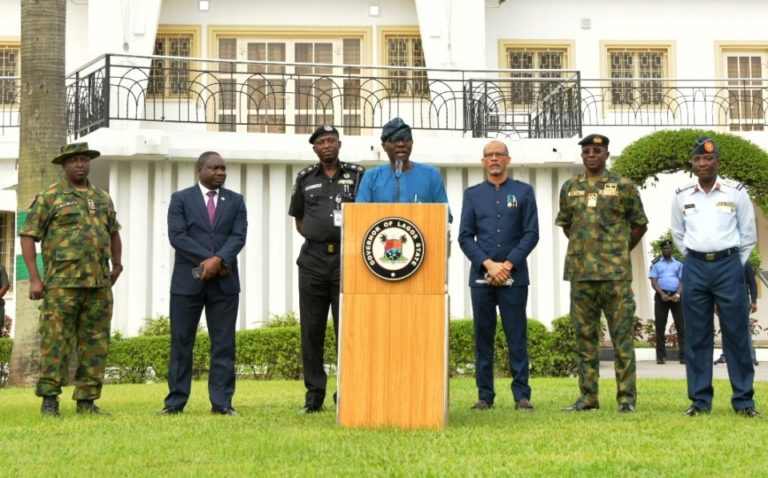
BABAJIDE Sanwo-Olu, Governor of Lagos State, has announced August 3 as the date for resumption of schools in the state.

Announcing the date at a media briefing on Friday, the governor said the resumption is for students who are in Senior Secondary School 3 (SSS 3) alone.

Sanwo-Olu said dates for Junior Secondary School (JSS3) re-opening for revision classes and examinations will be announced in due course.

According to him, all restrictions applying to mass gatherings will remain in force with no more than 20 persons permitted, adding that this includes funerals as well.

Meanwhile, opening times for government and private offices, markets, supermarkets, eateries and so on, will remain as approved, the Governor said.

According to Sanwo-Olu, places of worship will also remain closed in the state until further notice.

He maintained that all social and events centers, will also remain closed for now.

Bauchi Gov suspends First Class Emir over communal clashes

By Haruna Mohammed SALISU


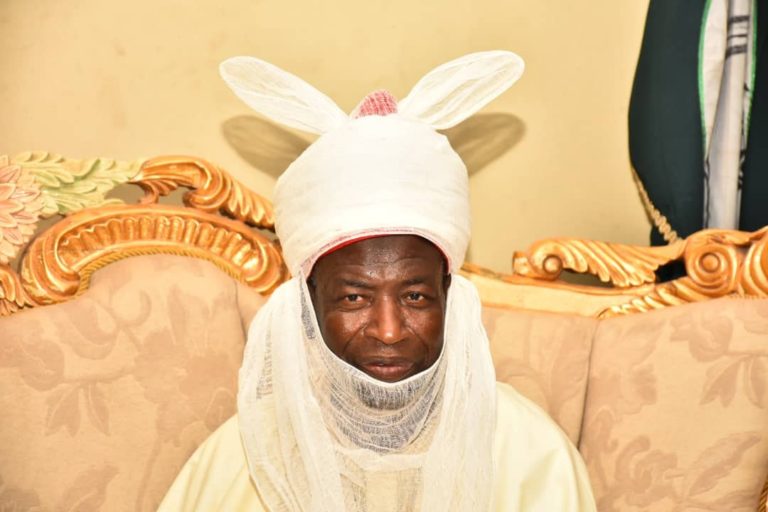
BAUCHI State Governor Bala Mohammed has suspended the emir of Misau Alhaji Ahmad Suleiman over communal clashes between farmers and herders that resulted in the death of nine people and injury of any others.

The suspension of the emir and other traditional title holders in Misau followed allegations of culpability and complicity in igniting the crisis through shoddy deals and illegal confiscation and distribution of government lands.

Governor Bala also suspended the Village head of Zadawa and District Head of Misau, Ciroman Misau and banned them from moving out of the local government until the committee set up to investigate the crisis finishes its assignment.

The suspension of the district heads according to Governor Bala Moahmmed followed a petition written by Fulani leaders in Misau local government area who alleged the involvement of the leaders in illegal confiscation and distribution of land that ignited the Misau crisis.

“The Traditional rulers and some disgruntled elements either masterminded or actively participated in this crisis.

“As a responsible government that has the safety and wellbeing of its people at hands, we will not fold our arms and watch the culprits go unpunished,” Governor Bala vows while suspending the Emir and the two district heads in Misau LGA.

“We are therefore duty-bound to make sure that we identify those people and bring them to book.

“This will surely serve as deterrence to others who have similar intentions.

“We must do everything to stop these sharp practices that were causing so much pain to the common people, especially the Fulani people, because that is what is turning them into kidnappers, criminals; because they have lost their own identity”, the governor said.

Governor Bala added that; “we are aware that this flagrant abuse of trust in the hands of local government chairmen administrations in various local governments and the traditional institutions and other security agents is being reported to us.

“This evening, we will set up another committee to look at these issue”, the governor said.

The governor said his administration will not spear anybody no matter how highly placed they are to disrupt the peaceful atmosphere in the state.

The governor inaugurated a committee of inquiry headed by Retired Air Commodore Tijanni Baba Gamawa.

The committee was given three weeks to submit its reports. 

NYSC rectifies error in Obaseki’s certificate, issues new one

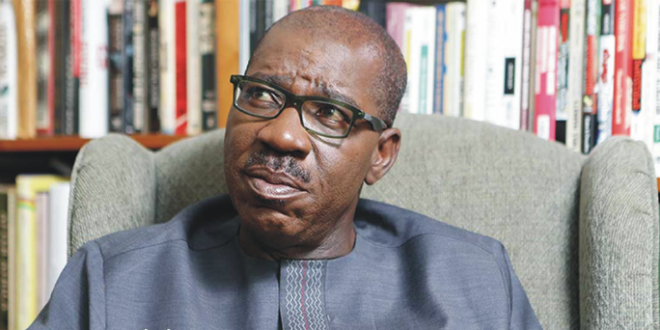
THE National Youth Service Corps (NYSC) has issued a new certificate to Godwin Obaseki, Governor of Edo State, following the rectification of an error in his surname from Obasek to Obaseki on his discharge certificate.

The corps in a letter dated June 19, signed by Okonofua K .N  n behalf of the NYSC Director General, said it had carried out an investigation which proved a need for re-issuance of the certificate to reflect the correct name of the governor.

“I refer to your letter referenced EOG/ABI/99/VOL IV/172 dated 18th June, 2020, on the above subject matter please,” the letter read.

“I am directed to inform you that after investigation, the management of the National Youth Service Corps has approved that a new Certificate of National Service reflecting the Surname OBASEKI be produced as the earlier Certificate number 063107 dated 6th August, 1980 has been cancelled due to error in the surname i.e OBASEK.

“Accept the assurances of the Director-General’s regard,” the letter read.

Obaseki was disqualified by the Screening Committee of the All Progressives Congress (APC) from the party’s governorship election primary in Edo State citing discrepancies in the academic certificates submitted by the governor.

Subsequently, Obaseki defected to the Peoples Democratic Party (PDP) where he contested and won the party’s governorship primary election.s.

Meanwhile, a suit accusing the governor of forging his Bachelor of Arts (B.A.) certificate in Classical Studies from the University of Ibadan was dismissed by a Federal High Court in Abuja.

The case was dismissed by the presiding judge, Justice Anwuli Chiekere, due to the absence of the plaintiffs and the defendant.

Durumi N228.4 million solar project broken down four years after launch, as denial trails how fund was spent

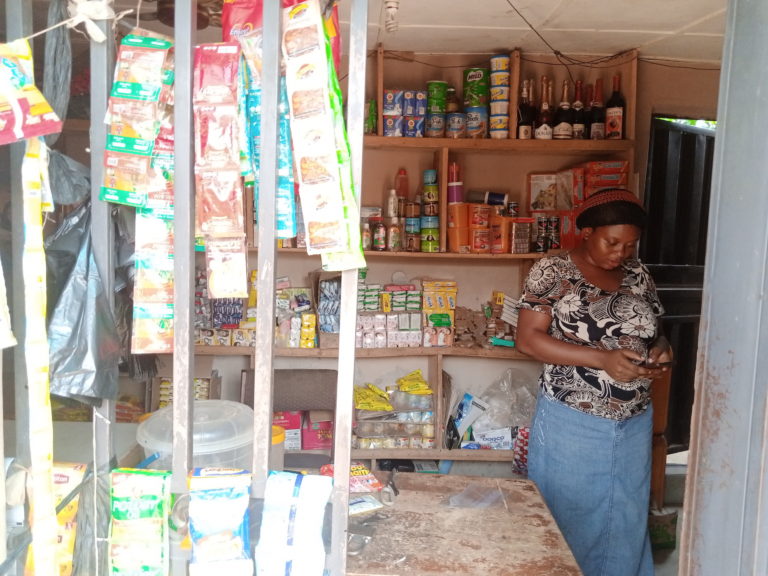
FAVOUR Chijioke, 32, moved from one end of the grocery store to the other while she arranged her goods for display and attends to a customer at the same time, the smile on her face is at odds with her current reality.

The mother of two runs a grocery store in Suleja, Niger State, where until last year she spends about N3,500 ($9) weekly on petrol for her generator to be able to power the appliances in her store which is not connected to the national electricity grid.

 She decided to opt for a solar mini-grid connection because of the expensive cost of buying petrol to power her generator.

“When I checked the amount I had spent on buying petrol every day I had to buy this solar home system and the situation is far better now than before,” she said.

Whenever Favour turns on her solar micro-grid system of 1.5 kilovolts, Kv, she promptly unplugs the freezer and electric fan in the shop so that she can charge her phone and light the three bulbs. 

Though the generator produces noise and fumes, it can power all the appliances in her shop, whereas the solar mini-grid system which costs N74,000($190) offers limited power supply that can barely power the freezer.

Favour is among Nigerians who spend $14 billion yearly on small generators according to a World Bank data.

Huge Investments, Failed Solar Projects

In 2014, the Nigerian government under President Goodluck Jonathan launched Operation Light Up Rural Nigeria, OLRN, a project designed to use renewable energy to provide electricity to 109 rural communities in 16 states but the project was abandoned after the pilot phase.

The project was later renamed Renewable Energy (Solar) Micro Utility (REMU) with three solar mini-grid projects in six geopolitical zones of the country by President Buhari government in 2015.

The first phase was to provide a solar-powered off-grid programme in three rural communities in Abuja, one of the projects was flagged off in Durumi, Mpape,  in Bwari Area Council, to deliver electricity to 1,000 households.

This borehole in Durumi failed when the solar project was abandoned in the community. Credit: Amos Abba

Schneider Electric Nigeria Limited, a French-owned renewable solutions company, was awarded the contract to construct Durumi grid at the sum of N228.4 million. Four years after the project was completed, it suffers decay.

When The ICIR visited the community in May, the dilapidated solar hub system had packed up and was under lock and key while the solar panels for the street lights were broken.

David Nyagam a youth leader in the community said the solar project has been a relic for as long as he could remember.

“As you can see this solar project has not been working for over four years so the community had to look to other sources of power supply. There was a public borehole that supplied water for free from the solar mini-grid but since it stopped working we had to start buying drinking water,” he said.

 John Nwafor, a resident who operates a phone charging service in the community, said the frequent power cuts and failed solar project has created a boost for his business enterprise despite expenses on petrol for his generator. 

The relic of a non-functioning solar hub in Durumi, near Maitama, Abuja. Credit: Amos Abba

“I did not benefit from the solar project because my shop was not connected to the solar mini-grid but my customers have increased because they charge relatively everything from rechargeable torches, phones and radios. I spend more on petrol for the generator but with business flowing, I can’t complain,” he said.

At a plenary hearing at the House of Representatives in March, it was revealed that two companies Schneider Electric Nigeria Limited and Lordezetech International Ltd had received N228.4 million and N218.9 million respectively to set up solar mini-grids in Durumi and Shape communities in Abuja.

Budget records show that N652.4 million was spent on the OLRN project, while REMU received N465.1 million between 2014 and 2017 for solar projects littered across the country, though both programmes have been without funding since 2018.

The reporter reached out to Schneider Electric Nigeria Limited, via email to ascertain why the solar project in Durumi packed up within two years after its completion.

Viviane Mike-Ezeh, the renewable company’s media officer who replied in an email said Schneider’s involvement in the project with the Ministry of Power was mainly on a pro-bono basis.

“Please be informed that for the Light Up Nigeria program, Schneider Electric was requested to provide quality solar equipment, which was done mostly pro-bono.

“The installations require a certain level of maintenance which was not part of Schneider Electric’s scope, however, we endeavoured to provide free training to the community and end-user. Until date, no formal complaint has been received from the client,” the email read.

The ICIR contacted the Special Adviser on Media and Communications to the Minister of Power, Aaron Artimas to verify the claims made by Schneider Electric Nigeria Ltd and also how the money for the project was spent.

He replied in a text message that a project executed pro-bono would be without the required contractual agreements, stating he would check the status of the project and get back to the reporter, but he never did until the time of filing the report.

The ICIR reached out to the Director of Media at the Ministry of Power, Etore Thomas, who referred the reporter to an unnamed official that worked on the project but he said there was no financial record on the OLRN project.

Etore confirmed to The ICIR that the Ministry was not aware of the financial expenditure on the project because they only carried out a supervisory role on the project.

“If there was anything that should be written it is Schneider’s side of the story that you should be talking about not our side because we don’t know if the project is pro-bono or not, what we know is that we supervised the project if you must write anything stick to that side of the story and leave Government out of it,” she said.

In March, the Nigeria Electrification Project, NEP, was launched with a $200 million loan grant to provide off-grid solar energy to over 500,000 people across 105,000 households in rural communities across the country.

With the poor execution of OLRN and REMU projects, it is yet to be seen if NEP will not go down the same road as the others.

An Expensive Alternative

Ifeanyi Valentine, founder of Elixir Innovations Nigeria Limited a renewable company said the increase in the cost of solar panels and batteries from Value Added Tax, VAT, was making access to renewable energy in Nigeria difficult.

“There is a 20 per cent VAT on solar panels and batteries imports which makes it difficult is for business people like us to make this technology accessible for the average Nigerian. We are a consumer state so it is likely that the price of a solar installation will be higher because we have not imported since the onset of COVID-19,” he said.

The operational cost for constructing a 200 kiloWatts solar-diesel hybrid mini-grid is about $2 million while the annual cost for operation including customer service and overhead can also exceed $100,000.

Adetayo Adegbemle, a renewable energy advocate said the removal of VAT by the Federal Government in May was the right action to take.

“The removal of VAT on solar batteries would go a long way in lowering the costs incurred by businesses,” he said.

Court jails hacker, Bureau De Change operator over N2.5b fraud

THE Economic and Financial Crimes Commission, (EFCC), Lagos Zonal office, has secured the conviction of one Abass Mohammed and a  Bureau De Change, (BDC) operator, Ibrahim Saidu Jogal, who connived to hack into the Flexcube database of Union Bank and defrauded the bank of N2,550,000,000 (Two billion Five hundred and Fifty million Naira).

In a press statement issued by Dele Oyewale, Head of Media and Publicity at EFCC, the anti-graft commission said it received a petition alleging that fraudsters had hacked into the bank’s database and diverted the sum of N2,550,000,000.

Oyewale explained that investigation by the EFCC into the petition revealed that the said money was fraudulently credited into the accounts of mostly BDC operators, including one Jaxmine BDC, Gona BDC and Great Well Communication.

He further revealed that Mohammed Abass sourced for the account details of Jaxmine BDC from one of his friends, Lawal Ubah, who was a signatory to the account, and subsequently gave the details to one Salisu Liman (aka Zico), the ring leader of the syndicate.

The sum of N450 million was then credited into the account.

Subsequently, the sum of N79 million was transferred from the account of Jaxmine BDC into the account of Digare BDC owned by Jogal for the purpose of buying $500,000.

The EFCC spokesperson stated that further investigations revealed that Jogal only paid $80,000 to Mohammed and kept the balance of $420,000.

According to him, Jogal during the investigations disclosed that he got information that the money was not genuine but fraudulent, thereby  prompting Mohammed to open up to him that the money was stolen.

The duo were arraigned before Justice K.A. Jose of the State High Court sitting in Igbosere, Lagos on three-count charges bordering on conspiracy, retention and use of proceeds of criminal conduct contrary to Section 331(1)(b) of the Criminal Laws No. 11, Vol 44 of Lagos State 2011.

They pleaded “not guilty” to the charges, which resulted in the commencement of their trial.

In proving its case against them, Oyewale said the EFCC presented three witnesses – Vincent Agwu, a Union Bank official, and two investigators, Joseph Nkeson and Aliyu Abubakar.  Several documents were also tendered in court by the prosecution.

Justice Jose while delivering judgment, found the defendants guilty on counts two and three, and discharged them on count one, which bordered on conspiracy to defraud.  Mohammed was sentenced to a term of one year in prison.

Jose further ordered that the sum of $37,000 and $7,000 recovered from him by the EFCC should be handed over to Union Bank, while the car recovered from him should be sold and the proceeds given to the bank.

Justice Jose observed that Jogal showed no contrition, and failed to pay back a substantial sum of the money traced to him.   Subsequently, he was sentenced to a term of three years, and ordered to return the sum of $220,000 and another $200,000 earlier recovered from him by the EFCC to Union Bank.

The judge also ordered that his property, whose title documents he gave to the Commission be sold and the proceeds handed over to the bank.