DESPITE a downward budget review that affected the allocations to education and health ministries, the Presidential Amnesty Program PAP, has retained its initial ₦65 billion budgetary appropriations for 2020. This is nearly the same amount allocated to the Niger Delta Development Commission(NDDC) and the North East Development Commission (NEDC) which received the allocation of ₦44.2 billion and ₦20.94 billion respectively.
Against the background that allocations to critical development items such as education and health have been reviewed downward, this provision has raised concern. A recent DATAPHYTE report revealed about 55 percent downward adjustment of the statutory transfer to Universal Basic Education. Also, Basic Health Care Fund was downsized by over 42 percent of the initial budgetary allocation.
In the same vein that the reduction of capital allocation to health and education is raising concerns among citizens and stakeholders, retained allocation to the Amnesty Programme has raised questions. As a reminder, the Presidential Amnesty Programme was initiated in 2009 to resolve the agitations and militancy in the Niger-Delta. The militancy reform program, which has operated for over ten years, had about 20,000 repentant militants as participants at its start.
Allocation to Amnesty Programme Almost the Combined Allocation to NDDC and NEDC
A DATAPHYTE analysis in March revealed that monthly stipends to ex-militants amounted to about ₦1.3 billion monthly. Over the span of years, not less than ₦150 billion must have been spent on monthly stipends for ex-militants alone. This is exclusive of other costs including administrative costs as well as the cost of vocational training. Between 2009 and 2011, a gross budgetary allocation of ₦127 billion was allocated to the amnesty initiative.
Despite the huge investment, opinions suggest that the scheme has not necessarily addressed the root causes of the crises in the Niger-Delta. Also, the Amnesty Programme has received numerous petitions and allegations of corruption and systemic gaps in the program structure have allowed for abuse of processes. Further, there are views that after ten years of presidential support, PAP have served its time and should be overhauled.
As at the time of this publication, even the website account of the organisation has been suspended.
Beyond the inefficiencies in PAP, the revised budget revealed that the gross budgetary provision for PAP is a tiny fraction less than combined provision for the infrastructure needs of both the Niger-Delta and the North East regions. While a budgetary provision of ₦65 billion has been earmarked to PAP, the Niger Development commission is to receive ₦44.2 billion. Also, only ₦20.94 billion has been allocated to the North East Development Commission. In total, only ₦65.15 billion has been allocated for the development needs of the 15 states under the purview of these two development agencies.
The fiscal rational to prioritize the rehabilitated militants over the infrastructure needs as well as the education and health needs of Nigerians is disturbing. From the revised budget, it appears that vulnerable and underserved Nigerians will continue to be robbed just to pay militants. With the realities, it may appear that violence and militancy are indeed highly profitable in Nigeria.
Above all, the retained ₦65 billion budgetary provision for the Presidential Amnesty Programme raises questions on the importance of the program. Perhaps it is time for the government to explain why the amnesty program rates above citizen’s need for education and health. Also important is the need for the government to explain why militant’s payment is more priority than the infrastructure needs of over 15 states. It should also explain why the Presidential Amnesty Program remains untouched in the budget revision. There is also the need for the government to provide clarification on the state of accountability in the Presidential Amnesty Program.
OBY Ezekwesili, a former Minister of Education, says the culture of impunity embedded in the affairs of Nigeria has aided and normalized sexual violence against women where perpetrators go unpunished.
Ezekwesili stated this on her Twitter page while reacting to the death of Uwaila Omozuwa, a 22-year-old Microbiology student of University of Benin who was raped and murdered in the building of a Redeemed Christian Church of God (RCCG) in Benin City, Edo State on May 27.
She said the police should optimize the cooperation of RCCG for a rapid investigation and conclusive prosecution of the savages that brutally violated and ended the life of an outstanding young woman.
“This case must not derail into the usual cold trail of many others, Mr. IG,” Ezekwesili’s tweet read.
In reaction to the rape and murder of Omozuwa, Ezekwesili, who reached out to the parents of the late student expressed sympathy and charged the police to carry out a rapid investigation and bring those responsible to book.
She added that it “should worry our Governments at all levels — State Governors especially— that our young daughters and women in general increasingly feel unsafe because of the culture of impunity that has normalized sexual violence.”
“Change this now. Lead for conclusive actions on all cases.”
Like Ezekwesili, many Nigerians have taken to various social media platforms to demand justice for Omozuwa.
In a Twitter post, Bukola Saraki, former Senate President, expressed shock over the incident that led to the death of Omozuwa.
Saraki urged the police to do the needful in ensuring that justice is served advising that such abuse of girls and women should not be condoned as it has no place in the Nigerian society.
“As a people, we have to work to create safe spaces for our girls and women – in our homes, at work and in our places of worship – free from any and all sorts of sexual violation. And I say this not just because I’m a #girldad but because it is the right thing to do,” he said.
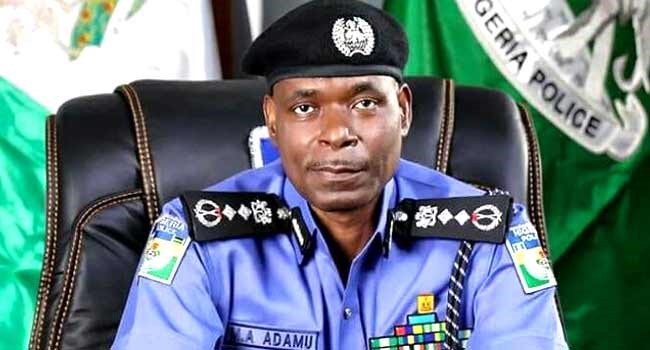
Meanwhile, Muhammed Adamu, the Inspector-General of Police, has assured that the killers of Omozuwa, would be brought to book.
The ICIR earlier reported that Frank Mba, the Police Public Relations Officer, quoted the IGP as saying that the police would unravel the circumstances surrounding the brutal attack and unfortunate death of Omozuwa,
Meanwhile, a press statement released by RCCG and signed by Olaitan Olubiyi, a pastor in the church, disclosed that Omozuwa had secured the keys to the church building, where she used for her study time.
Olubiyi explained that the security guard of the church arrived at his duty post around 7pm, and found Omozuwa half naked on the floor, in a pool of her blood.
It was gathered that she was rushed to the University of Benin Teaching Hospital (UBTH), where she eventually died.
MUHAMMED Adamu, the Inspector-General of Police, says killers of Uwaila Omozuwa, a 100-level student of the University of Benin, who was raped and murdered over on Saturday May 27 will be brought to book.
Adamu said he has deployed forensic support to the Edo State Police Command to complement and quicken actions in the ongoing investigation into the crime.
In a statement on Monday by the Police Public Relations Officer, Frank Mba, shared through the police official Twitter handle, the IGP said the police would unravel the circumstances surrounding the brutal attack and unfortunate death of Omosuwa.
Omozuwa was raped and murdered by some unknown persons when she went to read at the Redeemed Christian Church of God (RCCG), Miracle Sanctuary Mega Parish, Edo Province 10, in Benin City on May 27.
The IGP, while condemning the attack, commiserated with the family, friends and colleagues of the deceased.
He called for calm and assures that the Force will surely bring the perpetrators of the callous act to book in the shortest possible time.
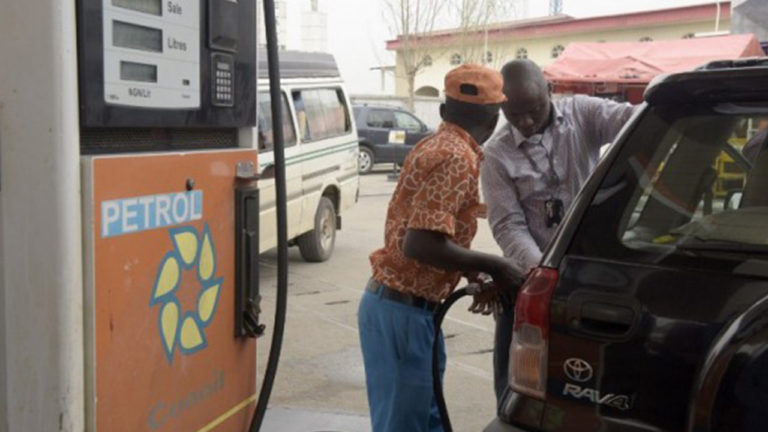
FOR the third time in three months, the Petroleum Products Pricing Regulatory Agency (PPPRA) on Monday announced a new pump price band of N121.50 to N123.50 per litre of Premium Motor Spirit, (PMS) also known as petrol.
The PPPRA disclosed this in a memo where petroleum marketers across the country were directed to comply with the new pump price band of N121.50 to N123.50 per litre.
In the wake of the outbreak of COVID-19 which affected prices of crude oil at the global markets, the agency announced a reduction in the pump price of PMS from N145 per litre to N125 and stated that the retail price of petrol would be adjusted monthly to reflect current realities in the global crude oil market.
“Please recall the recently approved pricing regime which became effective March 19, 2020, and the provision for the establishment of a monthly price band within which petroleum marketers are expected to sell PMS at the retail stations.
“After a review of prevailing market fundamentals in the month of May and considering marketers realistic operating costs as much as practicable, we wish to advise of a new PMS guiding pump price with a corresponding ex-depot price for the month of June 2020, as follows; price band N121.50 – N123.50 per litre,” the PPPRA said in the memo.
In March, the Federal Government announced its first review of the petrol pump price per litre for the year from N145 to N125 per litre.
On April 1, the PPPRA, through , Abdulkadir Saidu, its Executive Secretary had announced that all retail petrol outlets should start selling at the new pump price of N123.50k and N125 per litre of petrol.
Oil retailers were to choose between two price bands of N121.50k and N1253.50k at which they were supposed to sell to their customers.
The price review was orchestrated by a drop in crude oil prices due to the spread of coronavirus as the landing cost of petrol hit a record low in March, while the petrol subsidy was temporarily removed.
“Ex-Depot price N102.13 – N104.13 per litre. Ex-Depot for collection N109.78 – N111.78 per litre. All marketers are advised to operate within the indicative prices as advised by the PPPRA,” a section of the memo reads.
Though there has been a glut in the global crude supply, Nigeria heaved a sigh of relief last week when Indian oil firms took in about 6 million barrels of Nigerian crude oil stock after awarding a tender to Total for Akpo crude.
With 50 unsold cargoes of Nigerian crude seeking buyers for June and July consignment, its European demand is largely non-existent and the pump price of petrol is likely to be affected in the coming weeks according to a report.
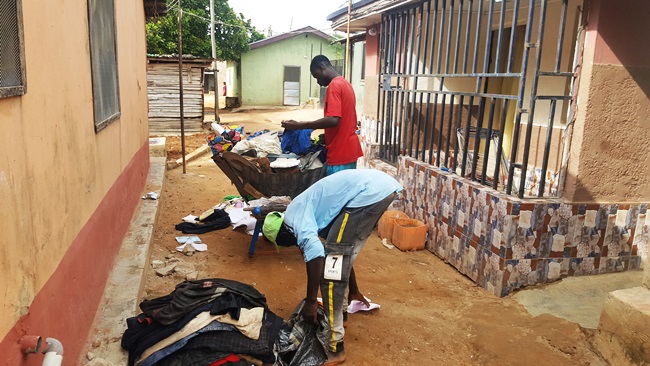
This report tells the stories of over 20 waste collectors in Abuja who through their disregard for protective measures expose themselves to the danger of contracting COVID-19 and pose danger to the customers they serve.
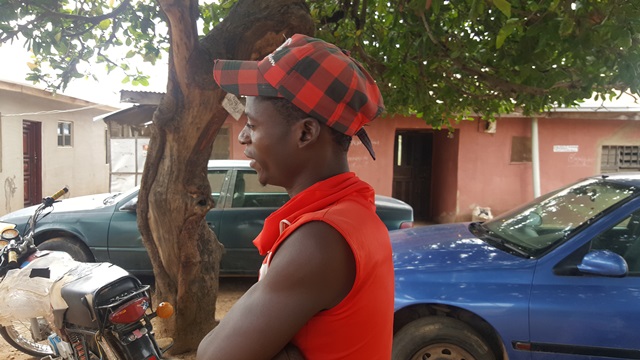
“CUSTOMER! Mai dust bin!” Aminu Sani, from Zamfara State, calls out to prospective customers as he moves from one apartment to another with his old brown wheelbarrow in search of wastes.
He repeatedly hits his barrow with a tiny iron to attract residents who may want to dispose of their wastes.
“Akoi, dust bin,” meaning – “Yes, I have a dust bin” – the usual response Sani gets once a resident indicates interest.
He visits various neighbourhoods daily to pick bags of refuse, which are later deposited at dumpsites located at Gosa, Mpape, or Idu in the Federal Capital Territory (FCT). He renders this service for amounts not less than N30.
Sani collects all manners of domestic and medical wastes, without protecting himself, thereby posing risks to himself and the residents he serves.
Aminu Sani waste collector visits residential areas along with a friend around neighbourhoods around the Umar Yar’dua Highway Airport Road, Abuja in search of wastes Photo Credit: Olugbenga Adanikin, The ICIR
Abu Ali, another waste collector sits nearby a power transmission facility at the Umaru Musa Yar’dua highway, towards the Abuja City Gate.
He gazed at a filled waste container a few metres to the electric installation near the dumpsite.
More than 20 of his friends, he said, have just returned to the northern part of the country because they suffered from malaria fever, cough, and chest pain. Six of them left Abuja earlier while others followed shortly after. “But, I could not reach out to them to ascertain their current health status. My phone was already stolen,” he told the reporter.
Ali, 22, an indigene of Katsina State, Baure Local Government Area arrived Abuja in 2011. He has colleagues who also came from Zamfara, and Kano to make a living in the FCT. They are all involved in the informal business of waste collection, but none wears PPE.
While the Abuja Environment Protection Board (AEPB) focuses on highbrow areas such as Central Business District, Maitama, Wuse, Gwarimpa to mention but a few, Ali’s friends visit neighbourhoods and locations left uncovered by the AEPB. They are also paid N30 for each bag of waste, like Sani.
But, unlike Ali and his friends who collect waste from residential areas, other scavengers only stop at the dumpster by the major roads. They sort the collected wastes and pick items such as Aluminium materials, plastic bottles, cans and other metallic objects sold for recycling purposes.
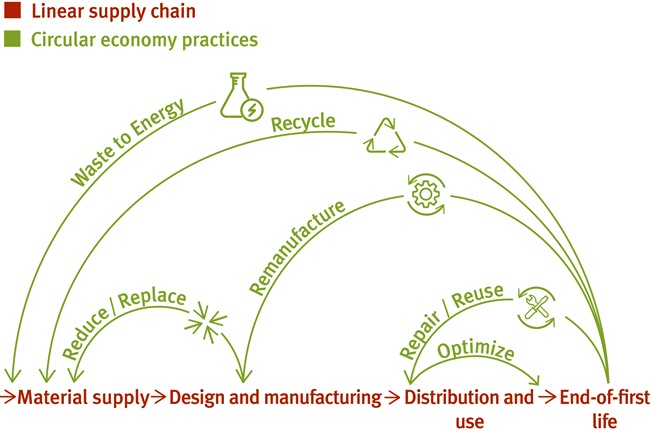
Though waste scavenging has been banned in the city centres in 2018, experts believe that the waste scavengers play a significant role in the circular economy, promoting waste recycling as a form of achieving the Sustainable Development Goal (SDGs) in 2030.
Scavengers in the face of COVID-19
Shortly after the FCT recorded its first case of the COVID-19, six of Ali’s friends who were waste scavengers became ill. While Ali could not ascertain whether their ailments were COVID-19 related, he assumes so.
“…We have a lot of our people who are into this waste collection job. We are up to 50. Suddenly, some became very sick and patronised local chemists, Ali told The ICIR.
“They went to the chemist for medications but there was no improvement. They used herbs and it was still the same.”
He believes they might have contracted the virus while visiting different homes to pick up wastes, which, he said usually include disposed face masks, hand gloves, medical wastes and other unclean items.
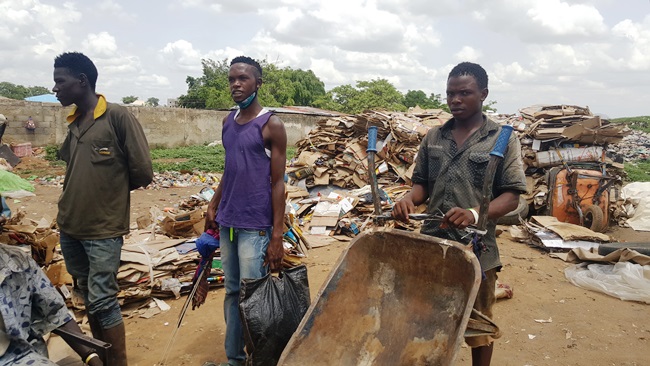
Teenage waste collectors at another dump within the AMAC area. Photo Credit: Olugbenga Adanikin, The ICIR
Ali and Usman Mohammed, 27, expressed anger that he and his colleagues are exposed to danger that nobody cared about.
There are scores of waste collectors across the FCT, working in the frontline of the battle against the Covid-19 pandemic. And they continue to work despite movement restrictions.
Proper hygiene, safety kits vital to keeping safe amidst pandemic
Since the outbreak of the global pandemic in Wuhan China, late 2019, the World Health Organisation (WHO) recommended the use of face masks, hand gloves, and social distancing as parts of safety measures. The same guidelines were adopted by the Nigeria Centre for Disease Control (NCDC).
Globally, the number of COVID-19 cases has risen to 6, 246, 018, with over 373, 348 deaths. As of 1st June in Nigeria, the total figure of confirmed cases has risen to 10,168 cases, 6,861 active cases, 3,007 recovered while 295 deaths were recorded.
So far, government responses to Covid-19 pandemic including the daily briefing by the Presidential Committee have not addressed the plights of waste collectors
Concept of Circular Economy, Illustration Source: UNIDO
The United Nations Industrial Development Organisation (UNIDO), recognises waste scavengers as significant contributors in the cycle of waste management. An Environmentalist, Nnimmo Bassey, believes that waste collectors deserve government attention and economic support. He says they play a significant role in keeping the environment healthy but does this without PPEs.
“They would sort and clean up solid wastes at great risk to themselves,” Bassey adds, stressing that the public waste management system in the country is still elementary.
Findings by The ICIR also revealed that few scavengers make use of hand gloves. Majority of them, including the ones approached by this reporter, do not have facemasks or other forms of protective kits. “I was advised by my brother to wear a hand glove and cover my nose to keep safe from coronavirus but it is God that protects us,” Sani told this reporter.
As he spoke, he bent and pulled out a red rubber hand glove from the corner of his wheelbarrow. But prior to the conversation with this reporter, he had no face mask or hand glove on. Yet, he pressed the waste in his wheel-barrow with his bare hands to create space for more dirt.
I’m done working until COVID-19 is over
Jamiu Yusuf, 23, is new in the waste collection business. But while he moves from one house to another with his wheel-barrow, he is conscious of the new danger his work poses. He would rather suspend the business of waste collection until the pandemic is over but Sani, his master, would not bulge.
Jamilu Yusuf 23-year-old scavenger wants to return home until COVID-19 pandemic is over. Photo Credit: Olugbenga Adanikin, The ICIR
Findings by The ICIR reveal that most of the waste pickers still hold the belief that Covid-19 is a disease that afflicts only the rich, especially those who travel via aircraft. Their belief that God would protect them from the disease despite their non-adherence with safety measures makes them more susceptible to contracting the virus. Among several concerns, the scavengers pleaded with the AEPB to organise the informal sector and provide supports such as training and safety kits. They also called for proper coordination and monitoring of the group, including the contractors to reduce exploitation.
Jamilu Yusuf stands at a strategic street waiting for that call to offtake wastes. Photo Credit: Olugbenga Adanikin, The ICIR
Expert opinions
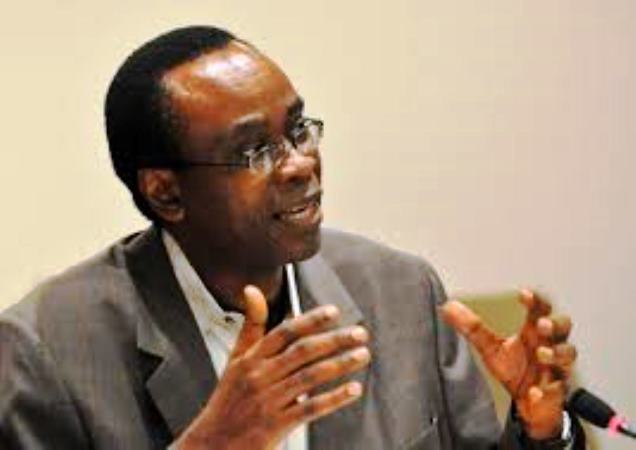
Nnimmo Bassey, Executive Director, Health of Mother Earth Foundation. Photo Source: Vanguard Newspaper
Bassey, Executive Director, Health of Mother Health Foundation, however, advised a complete overhaul of the waste management system. He wants waste collectors to be recognised as service providers rather than scavengers. The government, he said, should train and supply them with PPE so they could safely engage in waste collection, segregation, and recycling.
He described the waste collectors as a critical part of health service delivery.
To him, they bear a great risk as they go round picking wastes used by everyone at various homes, oblivious of their medical status.
“Covid19 has generated a situation whereby used nose masks that ought to be treated as medical wastes are being handled like ordinary wastes. Scavengers can easily get exposed to the virus if they pick masks that had been used by infected persons,” says Bassey.
“In addition to those specific medical wastes that should be handled professionally, any waste generated by an infected person has a potential of passing on the infection to them.”
Mike Terungwa, Executive Director, Global Initiative for Food Security and Ecosystem Protection (GIFSEP) Photo Source: Twitter
David Terungwa, Executive Director of the Global Initiative for Food Security and Ecosystem Protection (GIFSEP), acknowledged the vulnerability of waste collectors in the pandemic and how they simultaneously pose a threat to the public..
According to him, the waste collectors come in handy and are still patronised by ‘thousands of people.’ He, however, called for proper coordination and sensitisation of the group.
“…There are reports of people picking up facemasks from dumpsites, washing and reselling them to the public. They are at risk to themselves and the general public. They should, therefore, be sensitised instead of looking at them as a nuisance to the society,” says Terungwa.
“We are as strong as our weakest link.”
AEPB – They are on their own
On 22nd May, The ICIR reached out to the AEPB to find out what assistance it offers waste collectors in the informal sector, particularly during the pandemic, but a top official who pleaded anonymity simply said, “they [waste scavengers] are on their own.”
When asked about policy guiding the operation of informal waste collectors, AEPD official responded that only environmental health workers could respond to the question.
But the source disclosed that the AEPB has registered contractors it works with on waste collection.
“The officials in uniform you see packing wastes within the city are our contractors. The cleaning service has been contracted out…but as for the scavengers. Honestly, those ones are on their own.”
When Mrs Janet Peni, AEPB Director of Information was contacted, she promised to reach out to the staff suitable to comment on the issue.
On 24th May, she sent the mobile number of Benjamin Ewerem, AEPB Deputy Director in charge of environmental health. The ICIR directed its question to Ewerem but, again, he referred the reporter to another official at the AEPB headquarters.
On 27th May, the reporter met with Ewerem at about 11:30 am, but, again, he referred the reporter to the Administrative Head of the AEPB after listening to the questions. At the MD’s office, the secretary said the reporter would need to write officially. She advised the reporter to again speak to Mrs Peni. The ICIR eventually wrote a request letter but got no response as of the time of filing this report.
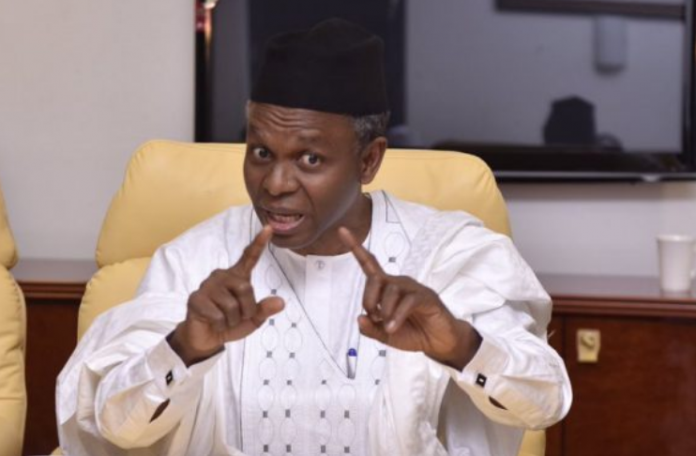
NASIR El-Rufai, Governor of Kaduna State has warned that parents who enroll their children into the Almajiri system of education in the state risk two-year jail term.
El-Rufai issued the stern warning when he visited some 200 Almajiri children that were repatriated from Nasarawa State to Kaduna and are undergoing rehabilitation at Government College, Kurmin Mashi.
While noting that the repatriated Almajirai are citizens of Kaduna State, the governor stated that the the state government would give them all the opportunities that they deserve to grow and develop.
He expressed satisfaction with the ongoing transformation of the Almajiri pupils from hopelessness to hope and confidence, assuring that the state would do whatever it can to give them a better future.
“We will, therefore, continue to take delivery of every Almajiri pupils indigenous to Kaduna state for rehabilitation, treatment and enrolment into formal schools nearest to where their parents live,” he said.
“We will continue to do this until we clear Kaduna state of the menace of Almajiri system, which is not education but the abuse of the privilege and future of a child.”
El-Rufai said that the ultimate goal of his administration is for the children to acquire formal education without depriving them of the opportunity to acquire Quranic education.
“They will continue their Quranic education but under the care of their parents and not under someone who does not know them or who was paid to look after them,” he said.
He explained that the Ministry of Human Services and Social Development (MHSSD), along with UNICEF would closely monitor them and ensure that no child would leave his locality until he finishes primary and junior secondary school.
He stressed that every child in Kaduna State must get a 12-year free and compulsory primary and secondary school education, adding that ‘those that cannot proceed to senior secondary school will have the opportunity to go to vocational schools, which are also free.’
Similarly, the governor threatened to prosecute any Islamic cleric who enrolls children into an Almajiri school, saying that such clerics will be jailed and fined N100,000 or N200,000 per child.
AKINOLA Bashiru, spokesperson of the ninth Senate, says the National Assembly will under no circumstance back down on its probe of the Niger Delta Development Commission (NDDC).
In a statement released on Twitter, Bashiru added that the Commission should provide evidence of alleged corruption claims against lawmakers of the Senate and House of Representatives to anti-graft agencies for investigation.
He maintained that no amount of blackmail against lawmakers or the institution of the National Assembly would stop ongoing investigations into the financial transactions of the Commission.
The Senate spokesperson said the attention of the Senate was drawn to a statement credited to Cairo Ojougboh, the Executive Director of Projects at the NDDC under the Interim Management Committee (IMC) in which he (Ojuogboh) alleged that senators and members of House of Representative were behind the NDDC fraud.
The NDDC had in recent times been enmeshed in corruption scandals with individuals and groups accusing the Interim Management Committee of embezzling funds meant for developmental projects through various means.
Only last Thursday, the Commission announced the death of Ibanga Bassey Etang, its acting Director of Finance and Administration,
Etang’s death came in the midst of the Forensic Audit of the NDDC ordered by President Muhammadu Buhari and the probe of the agency’s finances by the National Assembly.
Bashiru noted that the National Assembly was at a loss as to why Ojougboh has repeatedly made such allegations at a time when the NDDC was under scrutiny of forensic audit and investigation by the same National Assembly.
“Apparently, Cairo Ojougboh is ignorant of the constitutional mandate of the National Assembly to carry out oversight function over all agencies expending government resources with a view to exposing and preventing corruption, abuse and inefficiency,” Bashiru stated.
Speaking on the Constitutional responsibility of the National Assembly to perform oversight duty on the Commission, the lawmaker explained that the oversight function was aimed at facilitating rapid and sustainable development in the Niger Delta, as well as ensure the proper application of funds for the region.
Bashiru stressed that while the National Assembly is committed to reposition the NDDC to address the challenges of the Niger Delta through facilitating the rapid and sustainable development of the area, however, it is naturally concerned about the allegations of poor management or outright fraud in the management of the funds and operations of the commission.
He added that the probe of the Commission by the National Assembly was not maliciously intended or aimed at victimizing anyone at the NDDC.
“The setting up of the investigation is predicated on the above concern and not to victimise or witch-hunt anyone. It was also in this regards that the National Assembly has accorded the executives the necessary cooperation that will facilitate the completion of the forensic audit,” he said.
He stressed that National Assembly in line with carrying out its oversight functions, “will appraise the budget and its operations of the Commission like other agencies to entrench a culture of transparency and accountability.”
Taking a look at the Commission over allegations of corruption against lawmakers, Bashiru asked the management of the Commission in view of its recent claims to make same available to the Economic and Financial Crimes Commission (EFCC) and the Independent Corrupt Practices Commission (ICPC) for investigation.
“Therefore, the allegations in respect of the budget clearly smacks of cheap blackmail predicated on falsehood. One would have expected an organisation of integrity to have formally made complaints to the anti-corruption agencies of the purported allegations against senators and members of House of Representatives of the NDDC committees, if there are facts to substantiate same,” he said.
“This is a very disturbing trend and the Senate will not tow this path. The proper avenue to challenge exercise of power of the National Assembly is the court of law, not spewing falsehood on pages of newspapers and electronic media.”
He further added that National Assembly will not succumb to cheap blackmail from any quarter noting that it is committed to ensuring probity and accountability of all agencies of government, no matter whose ox is gored.
DANGIWA Umar, a former military governor of Kaduna State has warned that lopsided appointments by President Muhammadu Buhari into the offices of the Federal Government would ruin and bring destruction to the country.
“Mr President, I regret that there are no kind or gentle words to tell you that your skewed appointments into the offices of the federal government, favouring some and frustrating others, shall bring ruin and destruction to this nation,” Umar, a retired Colonel, said in an open letter to the president.
Umar’s Open Letter “Mr President Please Belong To All Of Us, addressed to President Buhari was dated May 30, 2020 and personally signed by him.
In the letter, the vocal retired Colonel lamented that appointments made by the president gave undue preferences to some sections of the country at the expense of others even as he added that this is more pronounced in the leadership cadre of security services.
According to him, Nigeria has become “dangerously” polarized and risk sliding into crisis on account of these appointments.
While citing instances of appointment patterns of the then NPC-led Federal Government between 1965 and 1976, he said,” Mr President, as a witness and beneficiary, it is our expectation that you would emulate these great acts of statesmanship. Which is why we have continued to engage with you.”
He pointed out that the enthusiasm for celebrating his 5th year in office was not shared equally by the public.
Umar pointed out that many segments of the public were convinced that the president’s five years in office have not met the yearnings, expectations and change promised Nigerians.
However, he urged Buhari to check the lapses stating that his achievements at the end of eight years would not be measured solely by the physical infrastructure built by his administration but through intangible things” like how much you uplifted the spirit and moral tone of the nation.
“How well have you secured the nation from ourselves and from external enemies?” he added.
Umar stated that he was prompted to write the open letter, by the loud sounds of drums, singing and dancing that erupted within many groups in the last few days on the grounds that the president attained the 5th year in office as President of Nigeria.
“It comes as no surprise that enthusiasm for the celebration is not shared equally by segments of the public. While your admirers and supporters believe you have performed well, many others believe the five years you have been in office as our President has not met the yearnings, expectations and change promised Nigerians,” he said.
Still dwelling on the appointments made by the president, the former governor of Kaduna State further stated that the president should not gloss over the chaos that has overtaken appointments into government offices in his administration.
“All those who wish you and the country well must mince no words in warning you that Nigeria has become dangerously polarized and risk sliding into crisis on account of your administration’s lopsided appointments which continues to give undue preference to some sections of the country over others,” Umar said.
“Nowhere is this more glaring than in the leadership cadre of our security services.”
THE Amnesty International says the poor response of Nigerian government to rising cases of rape across the country was encouraging perpetrators, describing government’s response as “woefully inadequate.”
The rights organisation stated this while condemning the rape and brutal murder of Vera Omozuwa, a 22-year-old 100-level student of the University of Benin, Edo State.
Omozuwa was raped and killed inside a Redeemed Christian Church of God in Benin city on Saturday, May 30.
In a statement released on its official Twitter page, the organisation stated that although rape is a crime in Nigeria, government’s response to it continues to be, woefully inadequate.
It lamented that Omozuwa was raped and killed at a time the ‘nation was still coming to terms with the gross violation, in Jigawa State where 11 men were arrested for raping a 12-year old girl at Limawa in Dutse, the state capital.
Amnesty International attributed the rising cases of rape across Nigeria to the failure of law enforcement agencies to ensure that rapists face justice.
“We are deeply concerned that perpetrators of rape in Nigeria invariably escape punishment,” the organisation said, calling on the Nigerian authorities to strongly discard discriminatory laws that condone rape or prevent its successful prosecution.
The tragic incident, according to Omozuwa’s friends, saw her attackers smashing her head with a fire extinguisher and leaving her unconscious around the Ikpoba Hill area of Benin City, the state capital.
Although she was rushed to the intensive care unit of a hospital, Omozuwa died shortly due to the degree of injuries she sustained.
Friends and all those, who knew her closely during her lifetime, have been paying tributes and calling for the perpetrators of the crime to be brought to justice.
“It is with a heavy heart that I announce the passing away of our loved one, friend, sister and course mate.
“She was raped on her way home from church and had her head smashed with a fire extinguisher in broad day light around Ikpoba Hill, Benin City. This happened yesterday, May 30, 2020,” one of her friends wrote on social media.
THE Socio-Economic Rights and Accountability Project (SERAP) has asked President Muhammadu Buhari, to make public the spending details of all loans his administration has taken since 2015 when he was inaugurated.
The organisation also requested the president to include in the detail, list of projects, amount of loans since 1999, repayment conditions.
SERAP tweeted on Sunday that if the president was able to meet up with its request which also include to audit all the loans, it would remove opacity, improve transparency and public trust in his administration.
This followed a Freedom of Information (FoI) request by the organisation sent to the president on Saturday in which it made those requests.
The FoI request sent yesterday, read: “While governments since 1999 have borrowed money in the name of Nigeria and its citizens, much of the funds have reportedly been mismanaged, stolen or squandered, leaving the citizens with the burden of having to repay these loans,” SERAP wrote on Twitter.
The requests are according to SERAP are “Details of the spending of loans obtained by your government since May 29, 2015, including specific details of projects and locations of the projects as well as the conditions of any such projects.
“Total amount of debts that have so far been incurred by your government, including the interest rate, the details of debts inherited from the previous administrations, and details of refinancing of any such loans, as well as any strategy put together on borrowing decisions, and to promote sustainable borrowing.
“Wether any public officials solicited and/or received bribes in the negotiations for any of the loans.”
In the letter signed by Kolawole Oluwadare, SERAP deputy director, the organisation urged the Nigerian leader to use his leadership position and the opportunity of the fifth year anniversary of his government to grant its request.
Few weeks ago, SERAP sent an open letter Buhari urging him to use his “leadership position to follow the ‘Namibia example’ by urgently issuing an executive order to ban the purchase of new cars by the presidency, and all ministers for the remainder of the tenure of your administration, that is, until May 2023.”
It will be recalled that President Buhari had last week sought the National Assembly’s approval for a fresh loan of $5.513bn, reportedly to fund the 2020 budget deficit, critical projects, and support some states.
The National Assembly had also recently approved a loan of N850 billion for the president while another loan of $22.79billion, already approved by the Senate, is pending before the House of Representatives.
SERAP said: “Opacity in the spending of loans would continue to have negative impacts on the fundamental interests of citizens. Transparency would ensure that the loans are not diverted to private pockets, increase public trust that these loans would be used to benefit Nigerians, provide good value for money, and reassure Nigeria’s creditors.”
According to SERAP, “Rather than taking more loans and increasing Nigeria’s debts burden to fund the opulent lifestyles of former state governors receiving life pensions, we urge you to cut the costs of governance, including by obeying the judgment ordering your government to challenge the legality of states’ pension laws, and to recover pensions collected by former governors.”
SERAP also expressed “concerns about the massive and growing national debts, and the negative impacts on socio-economic development as well as access of Nigerians to public goods and services, including quality education, adequate healthcare, clean water, and regular electricity supply.”
The FoI request, read in part: “While access to loans can provide indispensable resources, the mismanagement and squandering of any such resources would be counter-productive. Nigerians should no longer be made to repay debts incurred in their name but which have not benefited them in any manner, shape or form.”
“Any unresolved allegations of mismanagement, bribery and corruption in the use of loans would continue to deprive millions of Nigerians access to basic public goods and services, and would leave your government without the resources to respond to the COVID-19 crisis.”
“We would be grateful if the requested information is provided to us within 7 days of the receipt and/or publication of this letter. If we have not heard from you by then, the Registered Trustees of SERAP shall take all appropriate legal actions under the Freedom of Information Act to compel you to comply with our request.”
“We urge you to ensure that those suspected to be responsible for any mismanagement and corruption are promptly referred to appropriate anti-corruption agencies for further investigation, and where there is relevant admissible evidence, prosecution.”
“Transparency and accountability in the spending details of all the loans that have so far been obtained by your government, and those obtained by previous administrations would mean that the loans can help Nigeria to overcome its acute development challenges, reduce the possibility of mismanagement and corruption.”
“It would also help to avoid a morally repugnant result of visiting the sins of corrupt governments and officials on innocent Nigerians.”
“We also urge you to promptly instruct Independent Corrupt Practices and Other Related Offences Commission (ICPC) and Economic and Financial Crimes Commission (EFCC) to monitor the spending of all loans obtained since the assumption of office in May 2015.”