Home Blog Page 2097

Exclusive: Inside multi-billion naira ‘fraud’, contract racketeering in PTI

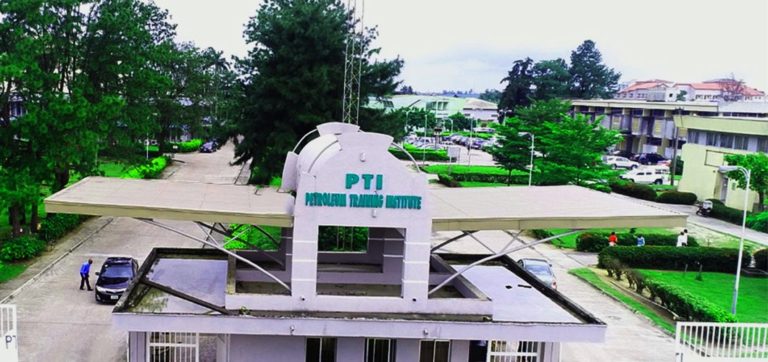
AUDU Oshiokhamele, Chairman of the Petroleum and Natural Gas Senior Staff Association Nigeria (PENGASSAN), Effurun branch, has accused Professor Sunny Iyuke, the Chief Executive of the Petroleum Training Institute (PTI) of a N5.8 billion fraud.

According to him, the sum was allegedly withdrawn from the institute’s coffer for three years without due process under Iyuke’s leadership.

This includes other allegations such as contract racketeering and salary payments into about 500 accounts of ghost workers in the organisation.

In a petition signed by Audu Oshiokhamele on 14th February, and acknowledged by the office of the Minister of Petroleum Resources, Timipre Sylva, in Abuja, the Union claimed that Iyuke arbitrarily moved the money as virement from the PTI’s personnel cost with supports of Aliyu Mafindi, PTI’s Director of Finance and Account.

“We wish to bring to the attention of the Honourable Minister of Petroleum Resources on the uncanny prevailing atmosphere at the Petroleum Training Institute arising from recent petitions from our Association and many other petitioners bothering on gross mismanagement and mal-administration by prof. Sunny Iyuke led management,” the document reads.

According to the 41 pages document obtained by this centre, Mafindi allegedly used his accounts to launder the funds from the institute’s accounts through transfer from the Government Integrated Financial Management Information System (GIFMIS) – to Remita which allowed the funds to be easily manipulated.

However, findings by The ICIR revealed that three hundred and thirty-seven million Naira (N337M) was discovered to have been removed from institute’s personnel cost from 2017 to 2019, using over 500 names of staff in a pay voucher number (PV no.) 78313 of which the fund was claimed to have been credited to dead, retired and existing staff.

The ICIR reached out to Mafindi to have his side on the allegation. Unfortunately, he declined on the provision that he is a public servant and can not talk to the press.

In fact, in a letter dated 12th March 2020 and in response to Oshiokhamele’s petition, the Human Resources Management Department of the Ministry of Petroleum Resources directed Iyuke to make formal representation at the office of the Permanent Secretary of the ministry within 72 hours of the receipt of the letter on the allegations bothering around financial fraud/ Contract racketeering.

Before Audu’s petition, one Oladapo Adeyemi had already forwarded a petition to Mamman-Ahmadu, the Director-General of Bureau of Public Procurement (BPP) and  Ahmad Rufai Shakur who is the acting Director of Petroleum Resources and Chairman governing council of PTI,  Calling for “Probe into Mal-administration, Mis-management and Contract racketeering by Professor Sunny Esayegbemu Iyuke”, dated October 14, 2019.

In the petition, the accuser alleged Sunny Iyuke’s led administration of several financial manipulations, recruitment racketeering, and crass violation of public procurement laws.

During the institution’s 2018 junior staff employment exercise, Olayemi alleged that Sunny unilaterally employed Idibie Andrew and Ayomanor Ogheneyerovwo into the services of the institutes without the prerequisite entry qualifications.

This alleged recruitment racketeering is faulted in provisions of the Public Service Rule ( PSR) sections 020205 and 1603011

Adeyemi’s petition also accused Sunny of unparalleled mismanagement of the volume of funds appropriated to the institute for capital projects from 2016 till 2019 October which he alleged that the procurement practices of goods and services have fallen short of criteria established by BPP.

The petition also poised a similar claim made by PENGASSAN in her petition over financial misappropriation. He explained that additional works of 81.8 million Naira was “approved anticipatorily for an anticipatorily approved contract of over 125million naira for the renovation of Guest chalet at the Conference Center Complex awarded to One Creations limited”.

The approved 81.8million naira is an excess and in violation of 10 per cent allowable as defined by BPP laws. By percentile increase, 81.8 million naira is 654.4per cent increment to 12.5million.

However, The ICIR‘s check through the Corporate Affairs Commission (CAC)’s portal revealed that One Creation Limited is not a registered company nor has any online presence. Further investigation then showed the company’s correct name as Due Creations Limited, against the misleading name written in the petition.

Adeyemi Also added that Additional works of 21million naira approved for a contract worth 41.6million naira for the renovation of the Administrative block extension awarded to Kajet limited. By percentile increase, 21 million Naira is over 500% increment to 4.106 million Naira if following the law of 10% allowable.

His allegations also contained the review of the initial contract sum from 50 Million Naira to 75 Million Naira for the maintenance of the PTI’s library awarded to Sunny Iyuke’s inlaw – Eucalyptus Nig. Ltd.

Section 64 of the procurement act states that the award of all contracts should be notified to the Bureau of Public Procurement and published in two national dailies.

Adeyemi disclosed that the violation has been a rife order in PTI under Sunny’s administration, adding that the institute does not have a procurement journal nor did it publish contract awards in the national dailies as provided by the law.

The ICIR contacted Etanabene Benedict, the procurement development director of the institute over the contract racketeering allegations. He refuted all the claims poised by the accusers over the contracts under his watch

“You see those PENGASSAN people, they lack knowledge, and they have been alleging the principal/ Chief executive before now. The 10 per cent allowable is for capital projects. These projects we spent over the 10 per cent are from our internally generated revenue (IGR)”, Benedict argued.

However, on December 13th, 2019, the Bureau of Public Procurement (BPP) acted upon the recipient of Adeyemi’s call for probe into Sunny’s financial misappropriation of the PTI’s treasury.

The bureau asked PTI to forward copies of advertisement that carries all publications, copies of the signed attendance register for both technical and financial bids, copies of the technical bids submitted by all bidders( both qualified and disqualified).

The bureau also asked Iyuke to submit financial and technical evaluation reports duly signed by the Evaluation Committee ( hard and soft copies), minutes of the meeting of the Tenders  Board approving the awards of the contracts (editable soft and hard copies) and the letters of contracts awarded by PTI from 2016 till 2019.

In her response to Adeyemi’s call for a probe, the Senate Committee on Ethics, Privileges and Petitions called for a full investigation into the activities of the institute, invited Sunny Iyuke and the key management staff of PTI to a closed-door meeting on 2nd of March 2020 to discuss the modalities of improving significantly the revenue of the Federal Government of Nigeria

However, further independent investigation by The ICIR unveiled the petitioner with the name ‘Oladapo Adeyemi’ does not exist in the institute’s staff list. It might be a pseudonym to draw public attention to the alleged financial misappropriation rocking the institute.

The ICIR also contacted the embattled principal, Sunny Iyuke on the 20th of May, 2020 to have his side of the story. He first told this reporter to call back that he was with a staff at a police checkpoint somewhere in Lagos.

Two hours later, this reporter tried to call Iyuke again, his line responded “busy”. For over 4 days with at least 5 trials a day, the response from line remains the same. On an alternative route, this reporter used another number to reach him, the number went through and he picked. 

Iyuke told this reporter to “Kindly reach out to my public affairs? Please reach out to Mr Brown. I don’t want to comment on this issue”

The ICIR reached out to Brown Ukanifimoni, the public relations officer of PTI. He also declined to comment on the ground that “the issue is still with EFCC and ICPC, why not let us cross our hands and wait for their response and know who is exactly corrupt?”

“They have been writing petitions against now. We have attended several meetings with EFCC and ICPC before now, let’s just wait for their response”

This reporter also reached put to Idibie Andrew and Ayomanor Ogheneyerovwo. While the former did not hear this reporter as claimed for 4 different phone call attempts and SMS, the latter did not pick up to even talk to the journalist.

All efforts also sought by The ICIR to get the comment of the Economic and Financial Crimes Commission (EFCC) and the Independent Corrupt Practices Commission (ICPC) proved abortive as phone calls, Whatsapp messages and SMS sent to Rasheedat Okoduwa, ICPC spokesperson, proved abortive.

COVID-19: Abiodun eases Ogun lockdown on weekdays, imposes curfew as cases hit 242

DAPO Abiodun, Governor of Ogun State has eased the internal lockdown imposed in the state to contain the spread of the pandemic Coronavirus (COVID-19) disease.

While speaking during his update on the pandemic, Abiodun stated that from Monday June 1, Ogun State residents would be free to go about their businesses from Mondays to Fridays.

He explained that residents are allowed to go out from 5 am to 8pm during those periods while all non essential movements are prohibited on Saturdays and Sundays.

According to him, the decision to ease the lockdown was in line with the directive of the Federal Government and advice by health experts in the state.

The governor noted that extant restrictions and advisories would remain in place on interstate travels, wearing of facemasks, public transport, markets, religious centres, restaurants and other relaxation spots.

He reiterated that all forms of gatherings either social or religious of more than 20 people remain banned in the state.

AS of Thursday, May 28, Ogun State has recorded a total of 242 cases of COVID-19.

It would recalled that President Muhammadu Buhari imposed a 14-day  lockdown on Lagos and Ogun states as well as the Federal Capital Territory (FCT), Abuja on March 29 as part of measures to contain the spread of the disease.

The president extended  the lockdown imposed on Lagos,  Ogun s Abuja by another 14 days from Monday April 13.


Anti-corruption lawyer petitions ICPC over former Works Ministry Director who owns 84 cars

OLUWATOSIN Ojaomo, a lawyer and anti-corruption campaigner has petitioned the Independent Corrupt Practices and Other Related Offences Commission (ICPC) demanding the prosecution of Ibrahim Tumsah, a former Director of Finance and Administration at the defunct Ministry of Power, Works and Housing and Tijani Tumsah, his brother over allegations of corruption.

In a copy of the petition sighted by The ICIR, Ojaomo who was a prosecutor with defunct Special Presidential Investigation Panel of Public Property (SPIP) called on ICPC to investigate the matter and charge the two brothers to court in order to build public confidence in the anti-corruption war of the Buhari administration.

He stated that Ibrahim Tumsah was one of the public officers that were investigated by the defunct SPIP chaired by Okoi Obono-Ola over his alleged failure to declare his ownership of about 86 exotic cars and other properties.

Ojaomo noted that  Tijanni Tumsah on his part was investigated for engaging in corrupt practices at the Presidential Initiative on North East.

He stressed that as an anti-graft campaigner, he had decided “to pursue this matter to a logical conclusion going by the anti-corruption mantra of the President Muhammadu Buhari led government.”

The activist said it would be a disservice not just to the nation, but to persons like himself who were lobbied severally to bury the matter at the panel, but refused all the entreaties due to his belief in the current administration’s war against corruption.

According to him, there were overwhelming evidence against the Tumsah brothers which can be used to prosecute them in the court of law.

“My decision to petition your office on this matter stems from the fact that the Court of Appeal didn’t discharge and acquit the Tumsah brothers for the allegations levelled against them by the Special Presidential Investigation Panel for Recovery of Public Property, but only said the agency which brought the matter to court does not possess the statutory powers to so do,” Ojaomo said.

He noted that it was also on record that some of the exhibits recovered from the Tumsah brothers were allegedly bought in the name of two companies, Integrated Service Insurance Ltd and Integrated Bureau De-Change Ltd which belong to the two of them.

The lawyer said that as an anti-corruption campaigner and Special Prosecutor with the defunct SPIP, he believed that allowing the matter to be swept under the carpet would not only affect the anti-corruption campaign of this government, but would continue to affect the image of the government going by the public commendation that followed the announcement of investigation of the Tumsah brothers in the media.

“It is shocking to hear that all the cars and properties recovered from the suspects have been returned to them under a very suspicious under hand deal where some persons were heavily compromised to achieve this sinister motive,” he said.

“I have been duly informed that due to the sack of Obono Obla and the subsequent dissolution of the panel, the Tumsahs have recovered all their properties and currently enjoying the proceeds of this crime.

“It is also on record that huge sum of money was siphoned by Tijani Tumsah through the Presidential Initiative on North East wherein a website was created to collect money from the public and international donors.”

However, Ibrahim Tumsah while reacting to the petition told The ICIR that the matter has been settled in court.

“I don’t have anything to say to the ICPC and about the petition because the case has been settled in court,” he said.

Tijani Tumsah did not respond to The ICIR’s text message concerning the petition at the time of filing this report.

Rashidat Okoduwa, Spokesperson for the ICPC was also contacted for comment on the petition but did not answer calls to her phone and did not reply text messages at the time of filing this report.

The Tumsah brothers were charged to court by SPIP in the case of alleged failure to declare assets without reasonable excuse.

Earlier in the case, the court ordered that 86 luxury vehicles allegedly owned by the brothers, together with four houses and a quarry plant in Kuje, Abuja, be temporarily forfeited to the Federal Government.

They were subsequently let off the hook when the Federal High Court in Abuja in February 2019 on dismissed the two counts of non-declaration of assets instituted against them.

Justice Inyang Ekwo dismissed the charges on the grounds that the Okoi Obono-Obla-led Special Presidential Investigation Panel on the Recovery of Public Property and its prosecutor Celsus Ukpong, who filed the case, lacked “the statutory power” to do so.

Ehanire, Ihekweazu, Osamaye, Abayomi, other Nigerians at the frontline of fight against COVID-19

SINCE  February 27 when Nigeria recorded its first index case of  Coronavirus disease (COVID-19), many Nigerians including governors, top government officials and health workers have been at the forefront battling to flatten the curve in Nigeria, like their counterparts in other parts of the world.

These outstanding Nigerians have been putting their lives on the line to contain the spread of the virus and ensure those that have contracted it are treated.

The ICIR has compiled a few of these frontline workers fighting the spread of Coronavirus in Nigeria.

Osagie Ehanire, Nigeria’s Minister of Health/CREDIT: Thisday


Osagie Ehanire, Minister of Health

This is perhaps the most trying period for Osagie Ehanire, Nigeria’s Minister of Health in his entire career. The outbreak of COVID-19 in Nigeria seems to be the beginning of his difficult time in office. Since the outbreak in Nigeria, the minister has been coordinating activities and programmes to ensure that the government through the Ministry of Health provides the necessary support for both health workers and patients.

Osagie, several times, has commended the frontline health workers who manage patients and has called those who cannot handle the pressure to quit. He has also called on Nigerians to disclose complete and accurate information to health workers about their travel history or contact with persons who have had COVID-19.

Born 4 November 1946, Osagie Emmanuel Ehanire is a Nigerian medical doctor and politician. He studied Medicine at the Ludwig Maximilian University of Munich in Germany, qualifying as a Surgeon. He went on to the Teaching Hospital of the University of Duisburg and Essen and to the BG Accident Hospital in Duisburg, Germany for his post-graduate education.

In 1976, he attended the Royal College of Surgeons in Ireland where he obtained a postgraduate Diploma in Anaesthetics. He got his Board Certification in both General Surgery and Orthopaedic Trauma Surgery at the Medical Board of North Rhine Westphalia in Dusseldorf, Germany. In 1984, he became a Fellow of the West African College of Surgeons. He was appointed as the Minister of Health by President Muhammadu Buhari administration in November 2019.

Chikwe Ihekweazu, Director-General Nigeria Center for Disease Control 

Chikwe Ihekweazu is the Director-General of the Nigeria Centre for Disease Control (NCDC) [ Photo credit: google
Chikwe Ihekweazu, Director-General, Nigeria Centre for Disease Control (NCDC) has led the fight against the pandemic alongside his team of experts across Nigeria.

Ihekweazu has continued to ensure that the battle against the pandemic in Nigeria remains a transparent one by updating Nigerians on the progress made through the NCDC’s various posts on social media and website.

In a recent interview with THE PUNCH, he stated that the Centre has started the review of protocols and guidance for home management of asymptomatic cases. This,  Ihekweazu said, would be implemented when needed.

“We have scaled up our sample collection and transportation as well as testing capacity to ensure that cases are tested within the shortest possible time,” he said.

Ihekweazu was born to Nigerian-German parents. His father is a Nigerian doctor and the mother, a German professor. Chikwe holds an MBBS from the University of Nigeria and a Masters in Public Health from Heinrich-Heine University, Germany.

He trained as an infectious disease epidemiologist and has over 20 years of experience working in senior public health and leadership positions in several national public health institutes.

Akin Abayomi, Lagos State Commissioner for Health

Akinola Abayomi,  a professor of Internal Medicine and Haematology is the Lagos State Commissioner for Health. He has been leading the struggle against COVID-19 in Nigeria’s biggest commercial city since the first index case was identified on February 27.

According to the Lagos State Governor Babajide Sanwo-Olu, Abayomi had since 2019 warned the state about COVID-19. And he has been up and doing to ensure that the state government scales up its testing capacity, and takes care of the welfare of the health workers in the state. Now,  test and treatment centres are available across the state, thanks to the active health commissioner.


Akinola Abayomi is the Lagos state commissioner for health

In a Twitter post in April, he urged residents to be ready to answer questions from health workers who are going house-to-house asking about Coronavirus symptoms. The health workers will “make inquiries about symptoms of cough, cold and fever”, Prof Akin Abayomi tweeted. Abayomi is an experienced medical doctor who has served as a lecturer and practitioner in Africa as well as the West Indies.

He is a specialist in Internal Medicine and Haematology, studied at the Royal Medical College of St Bartholomew’s Hospital at the University of London where he obtained his first graduate degree in Medicine. He later obtained fellowships from both the Royal College of Medicine in the United Kingdom and the College of Medicine of South Africa. He was Associate Professor Faculty of Health Sciences, University of Stellenbosch University, Cape Town, South Africa before he was invited to serve as Lagos state government.

Tochi Joy Okwor, Coordinator Infection Prevention Control

Tochi Joy Okwor is the Coordinator at the Infection Prevention Control (IPC) and Member Technical Working Group of the NCDC Manual Universal and Outbreak Infection Control (MAURICE). Okwor also gives daily updates: ‘Issues of the Moment’ with updates on COVID-19 Nigeria on Radio Nigeria.

Tochi Joy Okwor is the NCDC’s infection prevention control coordinator. [Photo credit: google
Tochi  is a Consultant Public and Occupational Health Physician at the Department of Community Health University of Nigeria Teaching Hospital, Itukku Ozalla Enugu State.

Her research efforts are focused on occupational respiratory diseases and infection prevention and control in healthcare.

Uzezi Emuophedaro, medical doctor

Emuophedaro works as a medical practitioner in one of the biggest hospitals in Nigeria.

Dr. Uzezi Emuophedaro, works as a medical practitioner in one of the biggest hospitals in Nigeria. [ Photo credit: UNICEF
She is resilient and remains undeterred, even when grappling with limited equipment and shortage of supplies at her place of work.
In a report by UNICEF, Emuophedaro said her greatest fear was the possibility of the number of cases getting into the thousands and reaching the situation that countries in Europe and North America are dealing with right now.
”I fear that we may not be able to handle such numbers here in Nigeria, due to our weak infrastructure,” she was quoted as saying.
“I joined the medical profession because I wanted to save lives and be just like my father.”
She said that the oath she took when being inducted into profession and her determination to help people in need has been her biggest motivation during this crisis.
Across the world, healthcare workers have been infected with the virus while working to save the lives of others, but Dr. Emuophedaro says she tries to stay calm and protect herself as much as possible.

Osamaye Faith, Youth Corps member

Faith Osamaye, a Youth Corps member is one of the young scientists working at the NCDC’s National Reference Laboratory.[ Photo credit Nigeria health watch
Faith Osamaye, a Youth Corps member is according to Nigeria Health Watch, one of the young scientists working at the NCDC’s National Reference Laboratory.

Nwando Mba, Director of Public Health Laboratory Services at NCDC

Nwando Mba, Director Public Health Laboratory Services Department [ Photo credit: Nigeria Health Watch

Nwano Mba, Director of Public Health Laboratory Services Department at NCDC works with other people at the Centre and gives the young people in her team the opportunity to take lead.

She said once they understood that COVID-19 was a respiratory infection, they quickly brought out Nigeria’s influenza pandemic preparedness plan.

This became our blueprint because influenza surveillance is the bedrock of our COVID-19 response,” Mba said.


Celestina Obiekea (centre) is the Network Coordinator of COVID-19 Laboratories in Nigeria. Photo Credit: Nigeria Health Watch

Celestina Obiekea, Coordinator Network Coordinator of COVID-19 Laboratories in Nigeria

Obiekea is the Network Coordinator of COVID-19 Laboratories in Nigeria. She was in Dakar when the index case was reported in Nigeria, and life has not been the same since then. She is still able to smile and maintain positive energy for her team, despite the grueling long days at the laboratory.

Obiekea says it can be challenging when everyone wants to be tested, as it takes a  toll on both human and material resources. She advises that people stick to the advisory from the NCDC and Federal Ministry of Health to stay at home, practice social distancing, self-isolate if they feel they have been exposed to someone who has COVID-19 and call the NCDC toll free numbers if they are having symptoms.

Christopher Chukwu, trained in molecular diagnostics. Photo credit Nigeria Health Watch

Christopher Chukwu and other team members got trained on COVID-19 diagnosis from the African Centres for Disease Control and Prevention in Dakar before the first case of COVID-19 was recorded in Nigeria. He had been trained on molecular diagnostics previously from numerous training, including training delivered by Public Health England in 2019.

Akinpelu Afolabi The laboratory manager, at the National Public Health Reference Laboratory. Photo Credit Nigeria Health Watch

Akinpelu Afolabi, Lab Manager National Public Health Reference Laboratory, Abuja

Akinpelu Afolabi is the Laboratory Manager at the National Public Health Reference Laboratory in Gaduwa, Abuja.

He said work at the laboratory has been intense since the outbreak o the pandemic. “Unlike before, we now work 24 hours. I came here around 11 pm yesterday and left by 6am today. By 12pm, I returned and as of now (5pm), I’m not sure when I’ll leave,” he said in an interview.

Amina Mohammed Baloni, Kaduna State Commissioner for Health

Amina Mohammed Baloni is Kaduna state’s commissioner for Health

Amina Mohammed-Baloni, Kaduna State Commissioner for Health has been at the forefront of the state’s war against COVID-19 in her state.

She has warned that anyone who conceals COVID-19 positive status would be prosecuted. She said the state has, however, traced up to 95 per cent of contacts and discovered 28 active cases.

Mohammed-Baloni is a medical practitioner and a fellow of the West African College of Physicians. She holds a Masters’ degree in Public Health and has had over 20 years of practice as a clinician and a public health professional. Her career has been devoted to improving the health and wellbeing of children and women. 

Salisu Kwaya Bura Aliyu

The Borno state Commissioner for Health has expressed confidence that Borno has put in place active surveillance for all disease conditions.

Borno State Commissioner for Health, Dr. Salisu Burah. Photo credit: VON

In March when the state had not recorded any case of COVID-19, the State Ministry of Health with the support of WHO and partners has activated the Emergency Operations Centre that developed a comprehensive preparedness plan in case of a COVID-19 outbreak. Other responses, according to him, include case management, infection prevention control, contact tracing, surveillance, and risk communication.

He has continued to enjoin the media to educate the public on basic hand-hygiene, coughing etiquette and temperature monitoring.

Salisu Kwaya Bura Aliyu is an Obstetrician and Gynaecologist with over 20 years experience, and was appointed into office in 2015.

Abba Umar Zakari is Jigawa State Commissioner for Health. He holds a Postgraduate Diploma in Tropical Medicine and Hygiene from the Royal College of Physicians of the United Kingdom and a Masters Degree in Infections and Health in the Tropics from the London School of Hygiene and Tropical Medicine, the United Kingdom in 1996 after his MBBS Degree in 1990 at Ahmadu Bello University, Zaria.

Abba Umar Zakari, Jigawa State commissioner for health. Photo credit: Jigawa state government website

Zakari, who is also the chairman Jigawa taskforce on COVID-19, has continued to ensure that the infection rate in the state is reduced. He also has also ensured that almajiris returnees are tested and isolated.

According to him, 607 samples of the returnee almajiris had been taken, and only 45 samples were ready, adding that the results of the remaining samples were expected any moment from now  while the remaining 29 that returned negative would be united with their families soon, and each would receive N10,000 and clothing.

He has disclosed that  the state had no intentions of returning almajiris to their respective states as this could risk a rise in the infection.

Patrick Okundia is the Edo State Commissioner for Health, and charged with the full implementation of the Edo State Healthcare Improvement Programme (Edo-HIP). 

Patrick Okundia said that he and his team are making steady progress in the management of Coronavirus, noting that all active cases of COVID-19 are being managed at different isolations centres across the state and are responding well to treatment.

The Edo State Commissioner for Health, Dr. Patrick Okundia during his swearing in ceremony. Photo credit: Thisday

Okundia reassured Edo people that the state government remains committed to containing the COVID-19 pandemic in all communities across the state.

Until his appointment, Okundia was the Chief Medical Director, Stella Obasanjo Hospital. He hails from Uhunmwonde Local Government Area of Edo State.

Bashir Bello

The Oyo State Commissioner for Health has continued to put steps in place to prevent the spread of coronavirus in the state. The creation of a rapid response and monitoring department and disease surveillance and notification officers in the 33 LGAs and 35 LCDAs was his idea.

Bashir Bello,Oyo state Commissioner for Health Photo credit: premium news

Bello through the Ministry of Health has also run enlightenment campaigns about Coronavirus in markets, schools and for people in the hospitality industry to maintain the handwashing culture and give a safe distance if anyone is sneezing or coughing around them.

Bashir Bello has expertise in evaluation and passion in improving the health and wellbeing of people. His open and contextual evaluation model based on responsive constructivists creates new pathways for improving healthcare has been reportedly effective. He has built this model after years of experience in research, evaluation, teaching, and administration both in hospitals and academic institutions.

Princewill Anthony Chike

The Rivers State Commissioner for Health said the state was in a hurry to be fully ready for any outbreak of the Coronavirus disease.

Chike said because of the seriousness of the pandemic, the state has been on an alert phase since the COVID-19 outbreak. “This is no time to blame anybody but to put all hands on deck,” he said.

He is a Nigerian physician and professor of medicine. He was chairman of the Rivers State Primary Health Care Management Board. On 31 August 2017, he was sworn in as a member of second Wike Executive Council. He became the Commissioner for Health in September 2017.

Rafiu Isamotu Olasunkanmi, the Osun State Commissioner for Health, championing the fight against the pandemic in the state has explained how the state has protected its people from the scourge, attributing it to massive surveillance, intensive enlightenment campaign and rapid response and testing initiatives, among others.

Rafiu Isamotu, Osun State commissioner for health.

Olasunkanmi is a graduate of the College of Medicine University of Lagos. He is a native of Iwo in Osun State. Though much is not known about him but he is the man at the forefron of the battle against Coronavirus in the State of the Living Spring.

Nimkong Ndam Lar

Lar is the Commissioner for Health in Plateau state.

Ndam Lar, Plateau state commissioner for health

Ndam is making sure that the fight against COVID-19 in the state is won by all means.

According to him, the Ministry of Health has activated preventive emergency measures in case of any eventuality, some of which include setting up isolation wards, provide medical supplies to keep the fight againt the virus strong.

He said the ministry is working closely with the Federal Ministry of Health and other relevant government agencies to remain vigilant to handl any health emergencies.

Lar said stakeholders made of a team of experts from the ministry and the World Health Organisation (WHO) are working tirelessly to ensure that proper measures are put in place in the state.

Daniel Iya

Iya is the Commissioner for Health in Nassarawa State.

Dr. Daniel IYA, Health Commissioner Nasarawa State

Dr. Daniel is a man trusted with various leadership roles. He is a longstanding fellow of the West African College of Surgeons, a fellow of the Royal College of Surgeons of Edinburgh, and was chairman of the Nigerian accreditation committee of the Nigerian Medical and Dental Council. After his first term as Commissioner, Dr. Daniel became chief medical director in the state’s teaching hospital from 1996-2004. That was also the time he did a postgrad public health course at Harvard. He has served as commissioner for health twice in Nassarawa State.

COVID-19: CAN says security operatives will enforce church re-opening guidelines

THE Christian Association of Nigeria (CAN) on Thursday says it will seek the support of security operatives to comply with the newly proposed guidelines for re-opening of places of worships as part of efforts to contain the spread of the Coronavirus Disease (COVID-19) pandemic.

Bayo Oladeji, CAN Media Assistant to the CAN president disclosed this in a telephone chat with The ICIR.

There have been reports that CAN and the Nigeria Supreme Council for Islamic Affairs (NSCIA) have submitted guidelines to the Presidential Task Force (PTF) 0n COVID-19 on the re-opening of worship places.

The security operatives according to Oladeji would include men of Nigeria Police and officers of the Nigeria Security and Civil Defence Corps (NSCDC).

He confirmed that CAN and NSCIA had submitted the guidelines, noting that the security officers would work under the supervision of CAN’s monitoring and enforcement committee.

“It is true my brother…each of the committees would be supported by the police or NSCDC. We would appeal to them to join us to strengthen the committee,” Oladeji said.

The CAN President spokesperson added  worshippers would seat one metre apart while churches that offer multiple services would have a 10-minute break after each service if the guidelines are approved.

Since the outbreak  of COVID-19 in Wuhan, China, over 5.8 million cases and more than 358, 984 deaths have been recorded globally.

In Nigeria, 8,733 cases have been recorded, with 254 deaths and 2,501persons recovered as of May 27.

There have been calls by some religious leaders to the government to lift the public gathering ban.

The Presidential Task Force (PTF) on Wednesday reportedly met with representatives of religious bodies in Abuja to discuss some of the submitted recommendations for further review by the Nigerian Centre for Disease Control (NCDC), and subsequent approval by President Muhammadu Buhari before worship centres are opened.

According to Oladeji, Olasupo Ayokunle, CAN President was represented by  at the meeting by Israel Akanji, Head of Baptist Church,  Abuja and  Samson Jonah, Chairman of CAN, FCT  chapter.

He disclosed further that part of the proposed guidelines, is for  churches to disinfect their premises before reopening for services.

Churches, according to the guidelines should provide alcoholic sanitizers, temperature readers, soap and water in their premises to be supervised by medical professionals.

While Oladeji expressed hope that Sunday May 31, may be the last one  that Christians would have to worship from home, he reiterated CAN’s commitment to ensure that smaller churches  comply with the proposed guidelines.

The association, he noted has representatives across the states up to the ward level, thus ensuring compliance.

The committee also recommended to the PTF that handshaking and hugging should be avoided before, during and after service while children should worship with their parents, he said.

Direct SSS to respect court orders, rights group tells Buhari

AN advocacy organisation, Rule of Law and Accountability Advocacy Centre (RULAAC) has called on President Muhammadu Buhari to direct the State Security Service (SSS) to obey court orders and operate within the rule of law.

Okechukwu Nwanguma, Executive Director of the Centre in a press release said the SSS has now established itself as a lawless organisation by engaging in politically motivated arrests.

Nwanguma lamented the refusal of the SSS to honour the ruling of a High Court in Abia State which has ordered the release of a detained lawyer, Emperor Gabriel Ogbonna.

According to him, the Centre also called for the release of Akwa Ibom based journalist, Kufre Carter who is also being held against court order for publicly criticising the state’s Commissioner for Health.

He said the President must, at this time, intervene and save the country’s democracy from being derailed by the SSS.

“It’s time for the President to curtail the excesses of the SSS and call its leaders to order,” the statement read.

RULAAC said that the National Security Agencies Act does not allow the SSS to aresst and detain any person.

“What the security agency is supposed to do is to pass information detected to relevant agencies, which have the legal mandate to arrest, detain, and prosecute,” the Centre wrote.

Nigeria has lost 7,904 persons to violent killings in two years – Group says

NIGERIA has lost not fewer than 7,904 persons to violent killings across the country between 2018 and 2020, a group of civil society organisations in Nigeria under the Joint Action Civil Society Coalition has reported.

In a press statement released to mark the commemoration of the 3rd National Day of Mourning set for Thursday, the group noted that there is a rise in mass atrocities and killings in the country, and the trend is barely acknowledged by the government or the citizens.

According to the group, several parts of the northeastern Nigeria remain susceptible to terrorists attacks and a larger portion of the North-West, including Kajuru and Birnin-Gwari in Kaduna and much of Zamfara and Katsina states, and TarabasState in the North-Central have been left ungoverned and taken over by rustlers, bandits and vigilantes.

It added that 34 out of 36 states in the country now record at least one episode of violent attacks within the first quarter of 2020 alone, an indication that extra judicial killings and human rights abuses have reached a new high.

The coalition also reported that security agents have resorted to several forms of abuses against citizens to enforce lockdown and movement restrictions imposed by government due to the COVID-19 pandemic.

The civil society group expressed worry that Nigerians appeared to have normalized the violent killings of citizens and accepted it as a norm, but it also blamed the government for failing to carry out its primary responsibility of protecting lives and properties. 

“While Nigerians are being killed our communities and livelihoods are laid to ruin, the government has shown itself unwilling or unable to confront these killings to put an end to them. By so doing, it has abdicated its constitutional duty to guarantee the safety, security, and wellbeing of all who live within Nigeria’s geographical boundaries,” the press statement read in part.

The coalition urged Nigerian leaders to take necessary steps to end impunity, ensure the provision of humanitarian aid to communities displaced by the crisis, wage war against light weapons flowing into the country as well as ensure an urgent accounting of the missing and dead.

Meanwhile, The ICIR earlier reported the findings published by SB Morgen which shows that  at least $18.34 million was paid to kidnappers as ransom in Nigeria between June 2011 and March 2020.

According to the report, kidnapping has increased in most states, making Nigeria an unsafe country for citizens.

610 personnel earn more than the President as DPR paid ₦8 billion salary upfront in January

By, Paul Adeyeye


DATA analysis by Dataphyte has shown the Department of Petroleum Resources (DPR) paid over 8 billion as salary upfront in January 2020. This is according to the daily payment data published on the open treasury portal.

The review of salary payments between January and April 2020 showed two descriptions. The first description is January 2020 DPR Staff Salary. This has only five beneficiaries and sums to ₦29.6 million. The second description, which is 2020 DPR Staff Upfront Payment, had 605 beneficiaries and summed to ₦8 billion.

29 top officials received between ₦50 million and ₦71.7 million as upfront salary payment. Another 30 received between ₦30 million and ₦49.9 million. 51 staff members received between ₦20 million and ₦29.9 million. 119 others received between ₦10 million and ₦19.9 million. The remaining 375 staff members received between ₦5 million and ₦9.9 million.

The treasury database also indicated that five DPR staff received double payment in the same period. The first payment was with the description January 2020 Salary while the second payment had the description – 2020 DPR Staff Upfront Payment. An example of a recipient of the double payment is Abubakar Attahiru Saleh who received a sum of ₦22,755,745.91 twice the same day. While he received ₦6,318,167.93 as January Salary, he also received a second payment of ₦16,437,577.98 as Salary Upfront.

610 DPR staff earn more than the President

In addition, the data revealed that over 610 DPR personnel may earn more than the Nigerian President. According to RMAFC, President Buhari receives a total salary package of ₦1.17 million monthly. This sum is inclusive of a basic monthly salary of ₦292,892, a hardship allowance of ₦146,446 monthly, and a consistency allowance of ₦732,230 per month. Similarly, Vice President Osinbajo receives a total of ₦1.01 million monthly take-home pay. From basic arithmetic, the take-home pay of the Nigerian President and the Vice President comes to ₦14 million and ₦12 million, respectively.

Further analysis of the open treasury data revealed that staff annual salary at the DPR ranged from ₦5,028,450.22 to ₦71,723,727.24. By implication, the least paid person in DPR received over ₦419,000 monthly. While the designation of the lower ranks in the salary structure is unknown, the Operations Controller received an excess of ₦70 million annually.  Also, the Director of Petroleum Resources; the Head, Safety, Health and Environment; and the Deputy Director, Basinal Assessment and Lease Administration received ₦69,378,164.01; ₦64,359,638.72; and ₦63,459,241.62, respectively.

Wage Justice and Revenue Management

This lopsided salary structure raises questions on justice and revenue management. As known, the implementation of a minimum worker’s payment of ₦30,000 monthly has been a subject of an unending debate in Nigeria. Thus, such an enormous financial commitment to a group of workers generates questions on fairness and equity. Indications that this lopsided salary payment structure is a common practice in many MDAs including the Petroleum Products Pricing Regulatory Agency (PPPRA) also stimulates concerns.

More specifically, the Treasury Data raises questions on the public service rule on upfront salary payment and the discrepancies in salary roster of DPR and other MDAs. Another question is as to whether these discrepancies violate the salary structure by the National Salary, Incomes and Wages Commission.

The need to harmonize worker’s earnings at this point remains pressing. In addition to the need for justice and equity in worker’s payment, Nigeria’s revenue shortage requires prudent economic management measures. The recent effort of the Federal Government to harmonize workers earning across MDAs is commendable. However, there is a more urgent need to level up the discrepant wage structure across MDAs.

This report was originally published by DATAPHYTE

AFDB crisis: Adesina maintains innocence over allegations of nepotism

PRESIDENT of the African Development Bank (AFDB) Akinwunmi Adesina has maintained his innocence with regards to the various allegations against him.

In a statement personally signed by Adesina, he expressed confidence in the integrity of the bank, its governance systems as well as its rules and procedure.

Recall that Adesina was recently accused by a group of anonymous whistleblowers of handing contracts to acquaintances and appointing relatives to strategic positions at the bank.

The AFDB president said every allegation was to impugn his honour and integrity as well as the reputation of the bank.

Adesina added that he is confident and draws inspiration from Nelson Mandela and Kofi Annan whose “lives have shown that through pain we grow”.

He expressed confidence that fair, transparent and just process that respects the rules and governance system of the bank and the rule of law would prove that he has not violated the code of ethics of the bank.

Adesina said he would continue to work with the shareholders of the bank to ensure that AFDB maintains its hard-earned reputation.

“Our credible well functioning institutional and governance system is reinforced as we collectively press on to fulfil the mission of our founding fathers to accelerate and transform Africa’s development.”

Infants unlikely to contract Coronavirus from breast milk – WHO

THE World Health Organisation (WHO) on Wednesday says there is no current evidence to prove that infants can contract the Coronavirus Disease (COVID-19) from breast milk of infected mothers.

The UN agency disclosed this in a document announcing the release of a new report on the marketing of breast milk substitutes commonly known as baby formulas.

“While researchers continue to test breast milk from mothers with confirmed or suspected COVID-19, current evidence indicates that it is unlikely that COVID-19 would be transmitted through breastfeeding or by giving breast milk that has been expressed by a mother who is confirmed or suspected to have COVID-19,” it stated.


Read Also:

The report titled Marketing of Breast‑milk Substitutes: National Implementation of the International Code was jointly produced by the WHO, United Nations Children Fund (UNICEF) and the International Baby Food Action Network (IBFAN).

It highlights how some WHO member nations have failed to restrict what it described as ‘harmful marketing’ of Breast Milk Substitutes (BMS), as a replacement to normal breastfeeding exercise, particularly during the pandemic.

Though the status report recognises Nigeria among the 11 nations that have improved their legal frameworks to discourage the promotion of BMS, it emphasised that the effort would ensure health workers and health facilities promote effective breastfeeding among mothers.

For instance, it scored Nigeria high in the overall prohibition of BMS producers from using healthcare centre to promote baby formulas.

“Over the past two years, protections against inappropriate marketing of BMS have been strengthened in 44 countries around the world,” says the WHO Status report.

“Since the 2018 report, 11  countries – Bahrain, Chad, Egypt, Lao People’s Democratic Republic, Nigeria, Pakistan (Punjab), Republic of Moldova, Saudi Arabia, Turkey, United Arab Emirates and Uzbekistan – enacted new Code-related legislation or amended existing legal measures.”

On 12th May, the WHO had earlier released some recommendations for breastfeeding mother and health workers managing the disease.

Breast milk provides antibodies which fortify children against illnesses

However, on concerns of infants contracting the COVID-19 virus via breast milk, thus indirectly promoting baby formulas the UN body emphasised that breast milk still remains the best.

It maintained that till date, no active COVID-19 virus has been detected in the breast milk of any mother with confirmed or suspected COVID-19.

“Women with confirmed or suspected COVID-19 can, therefore, breastfeed if they wish to do so.”

According to the WHO, the milk from breastfeeding is imperative as it provides children with antibodies which fortify them against childhood illnesses.

The report revealed that despite efforts to stop the promotion of harmful breast-milk substitutes, countries are still falling short in protecting parents from misleading information.

BMS Status Report: Source WHO

“Only 79 countries prohibit the promotion of breast-milk substitutes in health facilities, and only 51 have provisions that prohibit the distribution of free or low-cost supplies within the health care system,” it said.

The report also noted how aggressive marketing of BMS is being promoted through trusted health professionals, which in turn has become a major barrier to improving new-born and child health globally.

“Health care systems must act to boost parents’ confidence in breastfeeding without industry influence so that children don’t miss out on its lifesaving benefits,” Dr Francesco Branca, Director of WHO’s Department of Nutrition and Food Safety stated.

In view of this, the WHO and UNICEF reiterated exclusive breastfeeding for babies in their first six months of life after which such should be continued with other nutritious and safe foods – until two years of age or beyond.

It explained that babies who are exclusively breastfed are 14 times less likely to die than babies who are not breastfed.

The health bodies further urged women to continue breastfeeding during the COVID-19 pandemic, even if they are confirmed positive for COVID-19.

“The numerous benefits of breastfeeding substantially outweigh the potential risks of illness associated with the virus. It is not safer to give infant formula milk,” it stated.

However, it noted that health care services aimed at supporting mothers to breastfeed, including counselling and skilled lactation support are strained as a result of the COVID-19 crisis.

According to the report, the COVID-19 infection prevention measures, such as physical distancing, has also made it difficult for community counselling and mother-to-mother support services to continue, leaving an opening for the breast-milk substitute industry to capitalize on the crisis, and diminish confidence in breastfeeding.

“As the COVID-19 pandemic progresses, health workers are being diverted to the response and health systems are overstretched. At such times, breastfeeding can protect the lives of millions of children, but new mothers cannot do it without the support of health providers,” says Dr. Victor Aguayo, UNICEF’s Chief of Nutrition.

To this end, the WHO and UNICEF called on governments to urgently strengthen legislation on the Code during the COVID-19 pandemic while also urging them not to seek or accept donations of companies producing breast-milk substitutes in emergency situations.