Home Blog Page 2105

How Nigeria’s ICIR Pushes for Accountability in the COVID-19 Response


Benon Herbert OLUKA


AN investigative journalism nonprofit based in Nigeria, the International Centre for Investigative Reporting (ICIR), has pushed the envelope with its approach to investigating the country’s response to the COVID-19 pandemic.

In this interview with GIJN’s Africa Editor Benon Herbert Oluka, ICIR Executive Director Dayo Aiyetan discusses the team’s work. Aiyetan, an investigative reporter, newsroom mentor, and media trainer, will be speaking at Investigating the Pandemic: The Threat to Africa, a GIJN webinar, on Thursday, May 14 at 9 am EDT.

You have investigated the COVID-19 story for about six weeks now. What have been your most impactful investigations?

The first would be our data-driven report on cash transfers, which interrogated efforts to offer financial support to vulnerable families in Nigeria. The president had ordered that 20,000 Nigerian Naira (about US$51) be paid to the most vulnerable households, drawn from the National Social Register, a register of the poorest people in the country. But our investigation revealed that less than half of the vulnerable households on the register were receiving help from the government.

The data also showed the skewed nature of the distribution of cash as more households in states in the northern part of Nigeria were getting far more than households in the south … The government was forced to find a more equitable means of distributing palliative [food parcels] to reach as many Nigerians as possible.
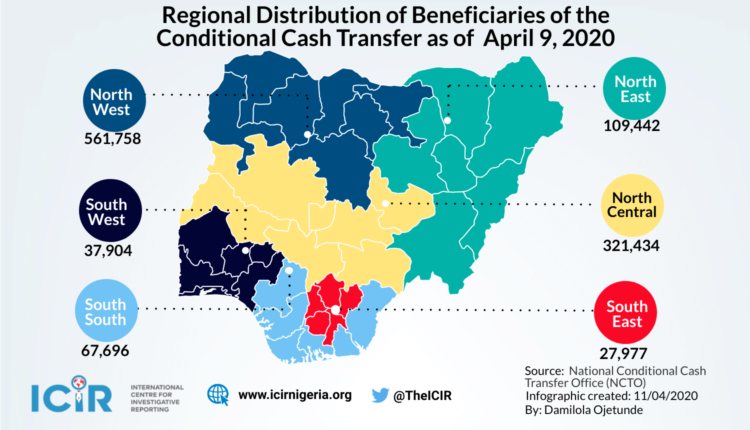
Regional distribution of beneficiaries of the Conditional Cash Transfer as of  April 9, 2020

Then there is our story about what doctors and other health workers earn as hazard allowance. In some places, doctors earned as low as N5,000 ($13.64) per month. We compared this with what doctors in other West African countries earned — $361 in Ghana, $460 in Sierra Leone and $825 in Liberia — and within weeks the state and federal governments reversed the situation.

For me, the report with perhaps the biggest impact is that which called out the minister of health, who overstated the extent of Nigeria’s preparedness to deal with a coronavirus outbreak. He visited one hospital in Lagos and declared that Nigeria was ready. The World Health Organisation (WHO), too, sang the same song. But our investigation revealed that Nigeria did not even have adequate isolation centers and was not prepared for the health crisis that the pandemic would bring. I believe that our calling out the minister informed the new government strategy… There has been more transparency in providing credible information to Nigerians and now the presidential task force on COVID-19 briefs the nation daily.

The COVID-19 story started as a health story before roping in all other reporters as it swept across the world. As an investigative unit with wide-ranging reports, how did your team cover issues around COVID-19 that would have an impact?

The ICIR runs a small newsroom. We do not have reporters in the states, only in the capital Abuja. And there was a lockdown. Every journalist reported from their different location so we were able to get a broad view at least of what was happening in the whole of the Federal Capital Territory.

But we were not covering stories around the country and there was a lot going on. So we reached out to journalists in other newsrooms that we had worked with on our funded investigative projects to report for us on specific projects… and jointly published. We did this particularly in the early days to report on state responses to the pandemic and unearthed a lot of initial mismanagement of responses, denial, and cover up of COVID-19 cases.

Could you share with us some of the investigations you’ve done during the lockdown and explain how you were able to pull them off?

The story on prison congestion and the risk of an outbreak of the pandemic in prisons, called correctional centers in Nigeria, was done through undercover reporting in at least one prison. I cannot speak about the details, but our reporter got into Maiduguri Maximum Security Prison and was able to paint a picture of what could happen in the facility if [overcrowding wasn’t alleviated] and if protective equipment was not provided to the prisoners.

Another investigation we did was about the response of the Akwa Ibom State government to the pandemic. We learnt what was going on and got a trusted journalist in the state to report for us. The investigation was important because the state government was living in denial, suppressing testing, and frustrating medical personnel. The investigation exposed all this.

The interesting thing is that an official of the state government who had followed some of our reporting on the pandemic reached out to us all the way from Akwa Ibom State to provide information about what was going on. As we had no reporter there, we got a trusted journalist to do the report, giving him access to our source.

One of the biggest challenges for journalists covering COVID-19 has been the reliability of figures. Have you had instances where you and your team faced this challenge? How were you able to overcome it?

The example that readily comes to mind is the story we ran on the social register of the poor. The government had refused to give exact figures about the number of households and many people — including journalists — were quoting all kinds of figures that could not be verified. We were fortunate. We kept looking and eventually found a source in the right place who provided the data in a government document. Once we verified that the document was authentic, we ran with the figures and the government could not deny it.

What have been the greatest challenges that you’ve faced while doing investigations during the pandemic? 

I believe it is the frustration we have faced reporting from the front line, particularly in hospitals and isolation centers. We wanted to tell the story of our health workers and how they cope treating COVID-19 patients, what welfare packages they enjoy, if they had adequate personal protective equipment (PPE) and medical equipment to work with. However, the government refused to give us access. We can understand that the government would not want the truth about some of the inadequacies in our treatment of COVID-19 patients to come out but these are stories that need to be told.

Another challenge has to do with covering stories of human right abuses during the lockdown. Because most of our journalists do not have cars we are sometimes limited in the scope of stories we want to cover. But we quickly learnt a few lessons and adapted.

Are there particular tools and resources that have aided you and your team in your effort to carry out investigations during the pandemic?

Sometimes, the tools could be as simple as apps such as Twitter or [smartphone app] Truecaller… and Wayback Machine. For some of our verification stories — and there have been loads — we have used TinEye and Google’s reverse image search. In the early days of the pandemic and after the lockdown and airport shutdowns, we used Flightradar24 for tracking flights. For example, while investigating the whereabouts of Abba Kyari, the former chief of staff to the president of Nigeria, who died from COVID-19, we used it to try to get the dates he flew out of Abuja and where he had gone. [Editor’s note: He died later that month.]

What have been the missed opportunities for investigative journalists that you would want them to keep in mind going forward?

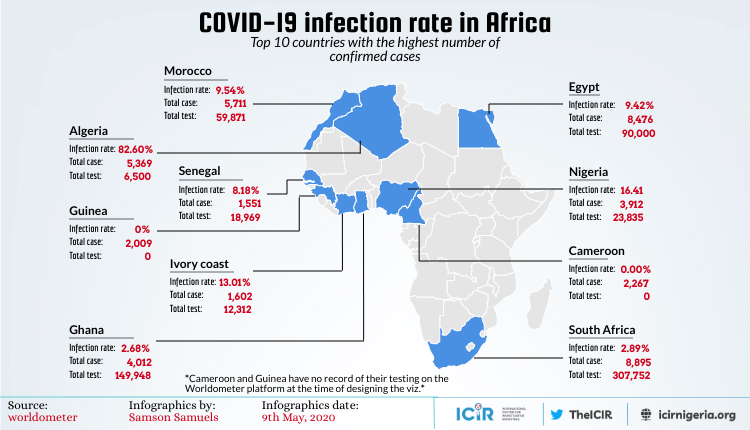
Using data not only to make government accountable, but also to set the agenda, and influence government policy. For example, the government eased the lockdown in Nigeria at a time when infections were rising. Journalists should put such government action in context through what data says. At the ICIR, we are now tracking the data of infections and doing stories showing whether the ease in lockdown regulations makes sense or not.
Also, I do not think journalists in Nigeria are using data enough to set [the] agenda in the areas of health, education, infrastructure, etc. One of the stories we want to do at the ICIR is to look at the education data, particularly dealing with the number of schools and children in schools. We want to force the government to start thinking of the future when schools should resume. We want to use this data to project how many more schools the government needs to build, because our kids need to observe social distancing when they return to school. Journalists can use data…. like this to set the agenda, to influence policy in virtually every facet of the economy.

On World Press Freedom Day you said journalists and media organizations must innovate in order to adapt and survive after the pandemic is brought under control. What kind of innovations do you have in mind?

Journalists must learn new, cost-effective ways of telling stories, particularly using technology. Today’s investigative reporting work — in fact, any kind of journalism — is driven by technology and journalists must embrace tech tools and not rely on old, traditional methods. So, instead of pounding the streets looking for sources, data or documents, we should learn that a whole lot of this we can get online.

This interview is published with permission from Global Investigative Journalism Network

Priority projects will be funded by Abacha loot, says presidency

THE presidency has said that of the five federal government’s priority projects, three will be funded by the Abacha loot recently recovered.

The recently repatriated Sanni Abacha loot will go towards three of Nigeria Government’s five priority projects, excluding the Mambilla power and East-West road projects.

The president’s spokesperson Garba Shehu earlier had said the Mambilla Project was one of five priority projects to benefit from the $311 million Abacha loot under the Presidential Infrastructure Development Fund (PIDF) managed by the Nigeria sovereign investment autority.

But he had corrected that error.

Although the Mambilla and East-West expressway are regarded under the PIDF as priority projects,  Garba said he has  ascertained that they are exempt from the agreement signed between the Nigerian, United States and British territory of Jersey governments.

According to the document, only the second Niger bridge, Abuja-Kaduna-Kano expressway, and Lagos-Ibadan expressway will benefit from the repatriated funds.

Mr. Shehu urged all print and online media to  take note of this correction and make the necessary adjustments to their previous publications on the issue.

The funds are domiciled in the NSIA, he disclosed.


Chinese company offers bribe of N100 million to EFCC

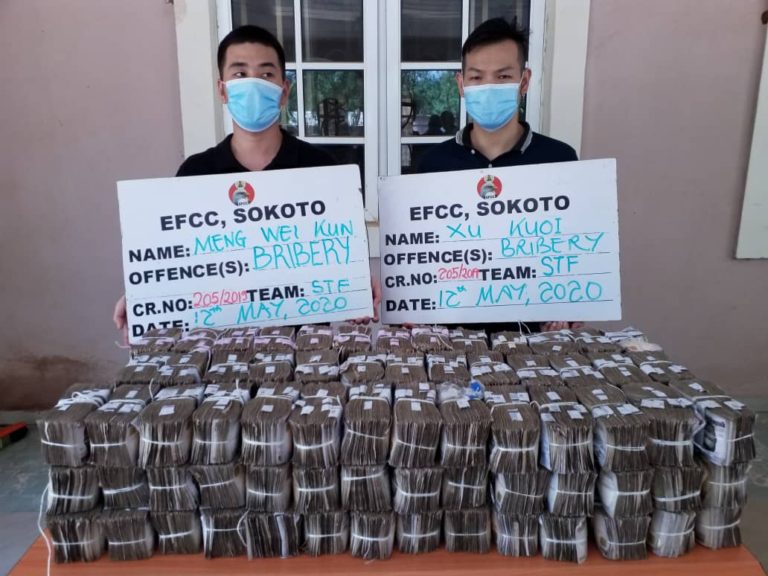
SOKOTO office of the Economic and Financial Crimes Commission (EFCC) arrested two Chinese for offering N100 million bribe to the state commission’s zonal head, Abdullahi Lawal revealed on the EFCC’s official Twitter handle. 

The officials of the company named Xu Koi and Meng Wei Kun offered the bribe in a desperate bid to compromise ongoing investigations of the construction company called China Zhonghao Nigeria Limited.

According to EFCC, the Chinese company was handling contracts awarded by the Zamfara State Government in the sum of N50 billion between 2012 to 2019.

The Sokoto zonal office of the commission is investigating the construction company in connection with the execution of contracts for the construction of township roads in Gummi, Bukkuyan, Anka and Nassarawa towns of Zamfara State.

And also the construction of one hundred and sixty-eight (168) solar-powered boreholes in the 14 local government area of the state.

The commission revealed that the Chinese company reached out to the Sokoto Zonal head with N100 million as a bribe to bury the matter of inconsistency and unprofessionalism in the way and manner the project was carried out.

In a grand design to trap the corrupt officials, Lawal played along and lured them to believe he would accept the bribe.

Two representatives of the Chinese company offered him cash totalling N50 million in their office along airport road, Sokoto, the cash was said to be offered as the first installment.

According to EFCC, the suspects were promptly arrested with the cash as evidence.

The Chinese were charged on alleged conspiracy, misappropriation of public funds embezzlement, official corruption, abuse of office stealing and money laundering against the Zamfara State through inflated and uncompleted contracts awarded to the company.

Investigations have so far revealed that China Zounghao Limited has received payment of over N41 billion from the Zamfara State government.

Out of the N41 billion, N16 billion which was equivalent to over $53 million was allegedly diverted and traced to some bureau de change operators.

The suspects would soon be charged to court, the EFCC revealed.

Recall that The ICIR had earlier reported that the African Development Bank Group (AFDB) has debarred China Zhonghao Nigeria Limited, a civil engineering company registered in Nigeria, for fraudulent practices.

AFDB announced on its official website that the Chinese company which has been registered in Nigeria for 18 months has been charged for fraudulent practices which may affect the company fortunes with other multilateral development banks.

Pharmacist petitions IGP over extortion by Rivers police

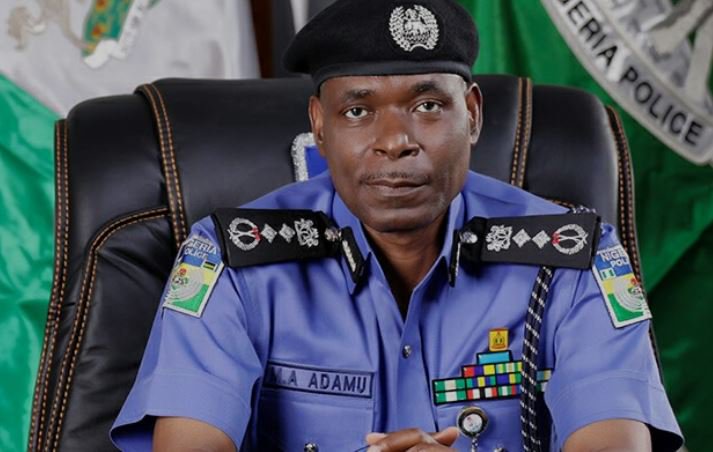
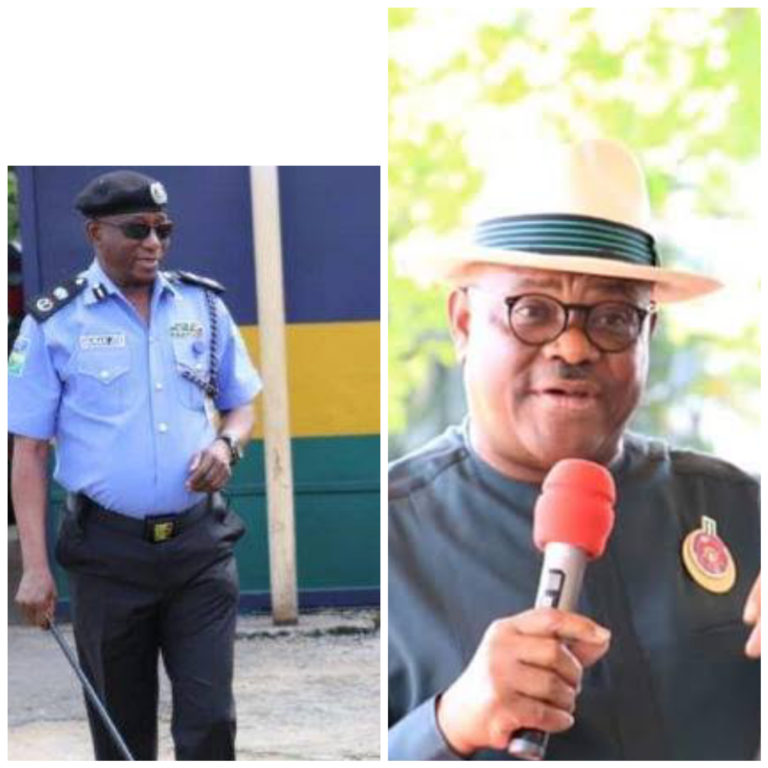
LUCKY Nwidu, a Port Harcourt-based pharmacist has filed petition to the Inspector General of Police, Adamu Muhammed over extortion by officers of Rivers State Police Command who claimed to be enforcing lockdown order.

The ICIR had reported how officers of the Ozuoba police station in Port Harcourt arrested, extorted and put Nwodu’s life at risk.

According to the solicitor of Nwidu, the officers locked up Nwidu after he had explained to them that as an essential worker, his office, Luckpharm Pharmacy has been exempted from the lockdown.

Despite his explanations, he was kept in the police and a bail of N100,000 was demanded by the investigating police officer identified as Inspector Bukola with the knowledge of the Divisional Police Officer, CSP Christian Ogowoke.

After spending hours in police custody, Nwidu was eventually granted bail after paying N20,000 despite his attorney’s explanation that he had not committed any crime.

Nwidu through his lawyer is demanding that the officers involved in his arrest should be sanctioned and that the commissioner of police in the state should tender an unreserved apology for the misconducts of his officers.

In the petition, the pharmacist also asked for a refund of  N20,000 extorted from him by the Police Division without which other steps may be taken including demanding compensation.

In a separate petition addressed to the governor of Rivers State, Nyesom Wike, the pharmacist demanded a compensation of N100,000,000.

As stated in the petition, the compensation is for the damages and unfair treatment of Nwidu by officers of the police.

“The payment of N100, 000,000.00. ie One hundred Million Naira, as compensation and damages to our client who has been treated inhumanly and in a degrading manner contrary to chapter 5 of the 1999 constitution,” the petition read.

Ibrahim Gambari, ex-UN envoy, scholar is Buhari’s new CoS

PRESIDENT Muhammadu Buhari has announced the name of his new Chief of Staff, and he is Professor Ibrahim Agboola Gambari, CFR, OCORT, a former external affairs minister between 1984 and 1985.

A tweet post by the presidency at 122:25pm stated that:

“Ibrahim Gambari is the new Chief of Staff to President @MBuhari. He succeeds Abba Kyari, who passed away on April 17, 2020.”

Gambari, 75, is one of Nigeria’s longest-serving diplomats.

Born on 24th  November, 1944 in Ilorin, Kwara State, he attended King’s College in Lagos and proceeded to London School of Economics where he bagged a degree in Economics (B.Sc) in 1968.

He later obtained masters and doctorate degrees in Political Science and International Relations at the Columbia University, New York in the United States between 1968 and 1974.

Gambari commenced his teaching career in 1969 at the Queen’s College, City University of New York, and became an Assistant Professor at the State University of New York where he lectured for three years – 1974 to 1977.

On his return to Nigeria, he taught at the Ahmadu Bello University, Zaria from 1977 to 1980 as a Senior Lecturer where he rose to become an Associate Professor and later, a full Professor.

Between 1986 and 1989, Gambari was a visiting lecturer at prestigious universities within the Washington District – Johns Hopkins School of Advanced International Studies (SAIS), Howard University and Georgetown University.
He was also a Research Fellow at the Brookings Institution, Washington, US and a Resident Scholar with the Rockefeller Foundation Centre in Bellagio, Italy.


Life as a Diplomat

Before his appointment at the United Nations by the late Kofi Anan,  Gambari served the Nigerian government in different capacities. He was a Director-General of the Nigerian Institute of International Affairs and thereafter became Minister of External Affairs from 1984 to 1985.

The UN Office of Africa says he, “worked closely with regional leaders, institutions and governments, particularly within the Economic Community of West African States (ECOWAS) on the economic and political development of the sub-region.”

For nine years, Amb. Gambari represented Nigeria as an envoy and Permanent Representative to the United Nations from 1990 to 1999.

He was the Chairman of the United Nations Special Committee Against Apartheid (1990-1994) during which he worked closely with African governments to coordinate UN policy to eradicate apartheid.

After joining the UN, he became the first Under-Secretary-General and Special Adviser to the Secretary-General on Africa, a position he occupied from 1999 to 2005.

In that capacity, he worked closely with heads of government, key policymakers as well as institutions in the continent to develop the New Partnership for Africa’s Development (NEPAD).

Amb. Gambari was also Head of the UN Department of Political Affairs from 2005-2007.

According to his profile hosted on the UN website, he served as UN Secretary-General’s Special Envoy on Cyprus, Zimbabwe and Myanmar.

He was actively involved in the UN and AU Hybrid Mission in Darfur (UNAMID) from January 2010 to July 2012.

He served as the Joint Special Representative of the Secretary-General and Chairperson of the African Union Commission, as well as head of the UN and AU mission in Darfur before he retired.

The UN described Gambari’s tenure as such that engaged the world’s largest international peacekeeping mission in the history of UNAMID.

On retirement, he became the Founder and Chairman of Savannah Center for Diplomacy, Democracy and Development (SCDDD).

The Non-Governmental Organisation engages in government policy dialogue to foster peace, democracy and national development.

Amb. Gambari has bagged several awards as a result of his outstanding contributions to developments and humanitarian issues.

Some of the awards include a national honour of Commander of the Federal Republic of Nigeria (CFR), he was awarded a Doctor of Humane Letters (honoris causa) from the University of Bridgeport, Connecticut (2002) and Farleigh Dickinson University, New Jersey (2006).

Others include Honorary Doctorate of Public Service, Chatham University (May 2008) and Honorary Doctor of Letters (D.Litt), University of Ibadan, Nigeria (November 2011).

He has also received the Special Recognition for International Development and Diplomacy Award conferred by the Africa-America Institute (September 2007), the Distinguished (Foreign) Service Award by the Federal Government of Nigeria (April 2008), the International House Harry Edmonds Award for Lifetime Achievement, New York (May 2009) and the Campaign Against Genocide Medal by the Republic of Rwanda (July 2010) among others.

Amb. Gambari also received South Africa’s highest national honour conferred on non-citizens, the Order of the Companions of O. R. Tambo, which was reportedly conferred to him personally by former President Jacob Zuma on 26th October, 2012.

He was appointed as the first Chancellor, Kwara State University, Ilorin (KWASU) in March 2013.

He is also the current Pro-Chancellor and Chairman of the Governing Council of Bayero University, Kano (BUK).

Despite Gambari multiple achievements, , certain blemish has  reportedly tainted his record.

For example, he was accused to have played a vital role seeking legitimacy in the international community for the despotic regime of the late General Sanni Abacha.

As Nigerian Permanent Representative at the United Nations, Gambari vigorously defended the execution of Ken Saro-Wiwa by Abacha’s government, describing the late activist and  his group as “common criminals.”

In an article first published in 2005 and titled “Prof. Ibrahim Gambari and June 12: The Unegraced Collaborator,” Omoyele Sowore, Publisher of Sahara Reporter detailed the allegation.

Sowore quoted Gambari, saying “Nigerians do not need democracy as democracy is no food…”

UDUS produces ventilator to ease scarcity of supply


By Abiodun JAMIU


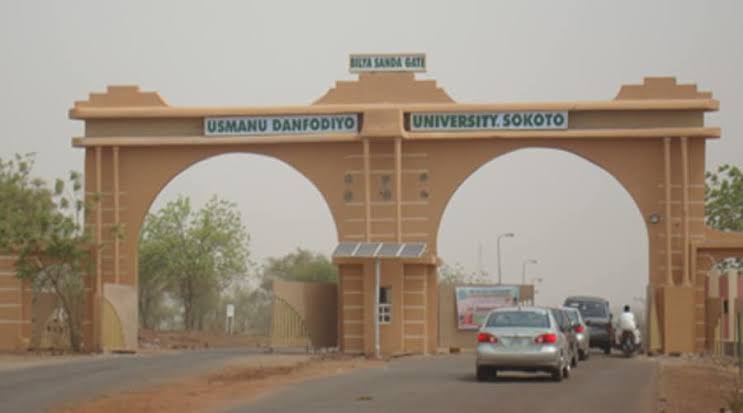
THE management of Usmanu Danfodiyo University, Sokoto has announced that it has designed and produced ventilator required for the treatment  of people infected with Coronavirus.

In a statement signed by the vice-chancellor of the university, Prof Lawal Bilbis, the development, which also includes a handwashing station will contribute significantly to the management of Coronavirus disease in the country.

The production is a joint effort of the Faculty of Engineering and Environmental Design (FEED), which built the ventilator, and Sokoto Energy Research Centre (SERC) which designed the handwashing station.

For patients with the worst effects of COVID-19, a ventilator can offer the best chance of survival, especially a patient who is unable to breathe,  by moving breathable air in and out of the lungs when the infection has caused the lungs to fail.

Meanwhile, Prof Bilbis noted that the products are still being subjected to clinical evaluations after which it would be presented to the public

“Upon inventory, the University sent the products to experts for assessment and review. As at Monday, 11th May 2020, observations and comments from the experts were received and the University is addressing them with a view to perfecting the products. Once finalised, the products would be presented to the public,” he said.

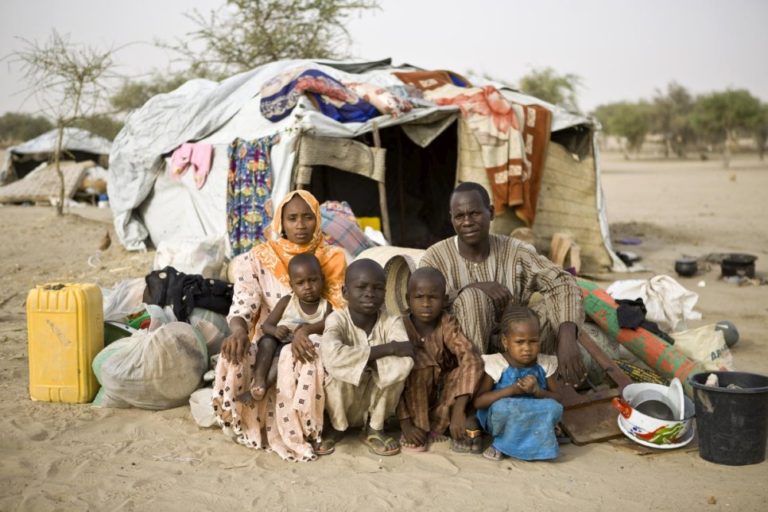
UNHRC: Over 60,000 Nigerians fled to Niger Republic in a year over insecurities

THE United Nations Human Rights Council (UNHRC) has reported that over 60,000 Nigerians have fled the country seeking safety in Niger Republic between April 2019 to 2020.

Speaking at a press briefing on Thursday in Geneva, Switzerland, UNHRC Spokesperson, Babar Baloch said this is due to the constant attacks by armed groups on the region.

According to him, the attacks on Sokoto, Zamfara and Katsina states have pushed so many Nigerians to Maradi region in Niger Republic.

He said the fleeing refugees speak of extreme violence unleashed against civilians, murders, kidnappings for ransom and pillaging and looting of villages.

“New arrivals are in urgent need of water, food and access to health services, as well as shelter and clothing as many were barely able to carry anything in the rush to save lives,” he said.

Baloch said the UNHCR is concerned about deteriorating security inside Nigeria and the risk of armed incursions spilling over into Niger.

Baloch said the new set of refugees are mainly desperate women and children who fled as a result of attacks in Nigeria’s Katsina, Sokoto and Zamfara states during the month of April adding that several villages in several Local Government Areas in the region were attacked by gunmen.

“The deadliest attack claimed 47 lives in Kankara, Danmusa and Dusi-ma Local Government Areas in Katsina State and prompted airstrikes by the Nigerian Armed Forces,” Baloch noted.

Again, House suspends hearing on contract allegations against NBET boss

LAWMAKERS in the House of Representatives have again suspended the hearing of the motion seeking to probe Marilyn Amobi, Managing Director of the Nigerian Bulk Electricity Trading Plc (NBET), accused of several corruption allegations.

The case which ought to be discussed on the floor of the House last Tuesday, 5th May, was shifted to today by the lawmakers for further hearing.

But when Femi Gbajabiamila, Speaker of the House called the motion number 12, titled “Gross Misconduct and Insubordination of Mrs Marilyn Amobi, MD of NBET,” the hearing was suspended on an excuse that its sponsor was not present at plenary.

The House had earlier assigned the Committee on Power to probe the corruption allegation against Amobi. The committee members include Hon. Mohammed Ali Wudil, Hon. Muhammed Ibrahim Bukar, Hon. Usman Abdullahi, Hon. Francis E. Waive, Hon. Olarenwaju K. Ibrahim and Hon. Abubakar Makki Yalleman.

These lawmakers also play a statutory oversight function on the Ministry, Departments and Agencies in the power sector.

Investigation on NBET and Amobi has, however, been on-going since 2019 when the House commenced probe against the agency and its head over alleged N90 billion fraud and flouting of the Public Procurement Act.

The ICIR and other members of LeakNG, last year February reported on the allegations against the NBET boss. Some of the suspected fraudulent actions include overpayment to selected power generating companies – Olorunsogo and Omotosho, undue payments to law firms and private consultants.   

On 12th January, the NBET boss was also indicted in another N517 million graft.

A report by Office of the Auditor General of the Federation accused Amobi of contract splitting to Julius Berger, in different amounts, separate award letters within a short timeframe.

Sale Mamman, the new Minister of Power, however, removed Amobi in January following the controversies but she was later reinstated by President Muhammadu Buhari.


Lawmakers kick against return of confirmed COVID-19 cases to states of origin

Meanwhile, on the global pandemic, the lawmakers advised the federal government to stop state governors from returning confirmed cases of the Coronavirus Disease (COVID) to their respective states of origin.

The House argued that the move contravenes peoples’ freedom to reside in any part of the country.

For instance, the Kano State government recently returned 524 Almajiri children from the state to Jigawa. Others were sent to Kaduna and Katsina respectively.

COVID-19: Salary payment, new measures in 17 media houses

BEFORE the beginning of the COVID-19 crisis, some media organisations regularly default in payment of salaries and allowances of their staff. Now the situation has become worse as nearly all the major media houses are unable to meet their obligations.

While some are still unable to pay, others pay a percentage of basic salaries, and there are indications of forced leave and possible lay off of staff.

Media Career spoke with staff of many media organisations in the country on the payment of their salaries and other measures already announced or being considered to cope with the impact of COVID-19. We reproduce the responses below:

The Cable

Salaries are paid when due. March salary was paid

On March 23 and April salary on the 21st. Data allowance doubled during the lockdown. No salary cuts. Salaries were increased across the board in February before COVID-19.

THISDAY

THISDAY has only paid December salary in March. We are yet to receive any salary for this year.

Three weeks ago, the Chairman sent a memo to all staff saying that some people have been receiving salary without input.

He asked that we send the links to all the stories we have been writing since January till date to him after which payment will be processed in 24 hours (Three weeks ago). As I speak, even after sending all the links, no payment has been made.

We are yet to get any 2020 salary. Meanwhile, Arise staff have been duly paid.

Premium Times

Premium Times is not owing us. They pay our salaries on the exact date. They also pay us transport allowance during the COVID crisis too.

Daily Independent

We have not been paid for April. We have even not fully received out February salary. We have not heard about whether they want to cut salary, but there are rumours that they want to downsize. I don’t know when and how they want to do it.

Daar (AIT/RAYPOWER)

Staffers were paid N30,000 across the board for the current salaries. This excludes past salaries.

TV/RADIO

There have been issues before now as regards salary payment as they claim money isn’t coming in as much but we were still getting paid. But since April, there has been a price slash of 25 per cent for those earning 100, 000 and above. 20 per cent for those earning between 70, 000 and 100, 000,  15 per cent for those earning between 30, 000 and 70 000. For those below 30, 000, there’s no cut.

Leadership

LEADERSHIP has not been paying even before the pandemic. Staff survive from events and adverts they are able to source.

BusinessDay

We have not been paid for the month of April. No word yet from our HR on the decision to slash or take compulsory leave. There hasn’t been a delay in the past.

Sun

We have a delay in payment, so we can’t confirm the percentage cut yet.

New Telegraph

Only 80 per cent of the salary was paid. The initial rumour at the office was that there wouldn’t be salary for April because there were no sales, let alone adverts.

But the MD surprised everyone and paid 80 per cent. Even though management argued for half salary.

But we don’t know what is going to happen in May. The situation caused by coronavirus, is actually a trying one for journalists and media houses.

For the safety of our lives, the management asked us to work from home, which most of us had been doing. The move is also to reduce the number of people in the office.

There are people, who have to be in the office but don’t have means of transportation like me.

Management made provisions to pick them from their nearest bus stops, while those that have cars, sometimes pick those living close to them.

Another measure was the cutting down on pages. These days, we choose days to go to the office or you work from home. But people go to the office on their busiest days. Some don’t even come at all, but send their stories. Journalism can never be the same ever again

Daily Trust

50 per cent reduction for those on level 13 upward; 30 per cent reduction for others, and annual leave has been  cancelled.

The reduction also affect allowances. This is for the first three months: April, May and June. It will be reviewed later this month

The Guardian

Half salary is paid at The Guardian  as a result of dwindling revenue during the lockdown.

No indication of forced leave or sack yet. Those who weren’t in the core units such as newsroom and stayed at home during the 5 weeks lockdown also got 50 per cent.

Tribune

April has not been paid yet, and we have not yet got wind of what the management will do with staff members.

Vanguard

Actually, there has not been any improvement. The company has only paid weekly transport claims a few times, but salaries remain unpaid. The backlog is now six months.

Yes, there are forced leaves. There are no palliatives or hazard allowances.

All freelancers and several editorial staff have been told to stay home till further notice, while only a handful are reporting for duty as usual.

We hear there are plans to lay off but that really isn’t the worry. Many people are ready to leave if only they will get paid. The NUJ and NUPPRO have been engaging to no avail.

The Nation

Those earning N65,000 below got full payment, while those earning above N65,000 got half payment.

If you earn more than 100k, 50 per cent was paid.

The Punch

April was paid promptly but what we are not sure of is what will happen next based on the memo by the MD. There is apprehension as all staff await letters from the Admin offfice.

CoolWazobiaInfo

30 per cent salary slash.

This report was originally published in Media Career Development Network.

Rivers police arrest pharmacist rendering essential service, demand N100,000 bribe for release

By Kanayo WIGWE


OFFICERS of the Rivers State Police Command last Friday arrested a pharmacist for opening his pharmacy during lockdown and collected N20,000 before he was released, a lawyer has alleged.

The pharmacist, Lucky Nwidu, owner of Luckpharm Pharmacy and a senior lecturer at the University of Port Harcourt, and his lawyer, Obinna Chukwuka, said  a police officers threatened him that if he did not pay N100,000 he would be taken to the isolation centre in the state, where COVID 19 patients were being treated.

Eventually, the lawyer said N20,000 was extorted from his client before he was released.

Chukwuka, who demanded an apology from the Rivers State Police Commissioner, Joseph Mukan, for the inhuman treatment meted out to his client, said Nwidu was detained in a room measuring 12 ft by 12 ft along with 39 others without any of them wearing a mask.

Narrating how his ordeal started, Nwidu said that two police officers, one male and the other female (in civilian clothing), “stormed” his pharmacy in Port Harcourt on May 8 and tried to arrest two attendants for opening the store during lockdown, insisting that no business was allowed to run.

He said his explanation that pharmacists were essential services workers who were exempted from lockdown regulations were dismissed by the officers. Even when the pharmacist showed the officers an approval from the Rivers State Ministry of Health, signed by the Permanent Secretary, permitting him to open and run his pharmacist during the lockdown, they refused to budge and insisted on arresting his staff.

Nwidu pleaded with the police officers that he be arrested instead of the two nurses, since he owned the pharmacy and authorised them to open it. The two officers easily agreed to that and whisked the pharmacist off to Ozuoba police station.

“I introduce my self and let them know that pharmacist and other health care staffs are permitted to run essential duties. They said no, the Governor authorized a total lockdown. I pleaded that you cannot take away my staff instead arrest me because I permitted them to open the Pharmacy to provide essential services in line with the permit from Ministry of Health. (But) I was arrested and taken away in the Oxuoba police van”, Nwidu narrated in an audio recording he released after the incident.

The pharmacist said when he asked to put on his mask before being taken into the dark room where he was detained, the female police officer, whom he identified as Inspector Bukola, refused and so he was forced to stay in the tiny room which soon got filled with 39 other inmates, many of them equally arrested for violating lockdown regulations.

Eventually, Nwidu was allowed to make a phone call ostensibly to tell his family where he was but he instructed them to quickly contact his lawyer to come to the police station to secure his bail.

Chukwuka said he was shocked at the condition he met his client as he was nearly naked and herded with others behind the police counter.

“My client was stark naked but for the boxers that he was putting on. And he was herded with a crowd of people, no social distancing maintained, they were all crowded in that particular corner. And there was no face mask whatsoever,” the lawyer stated.

Chukwuka said the police officers were very angry to learn that Nwidu had called his lawyer when they allowed him speak with members of his family. He said further that they got even angrier when he showed them the permit to Luckpharm Pharmacy to operate as an essential services provider during the lockdown and would not listen.

“I presented the document authorising Dr Nwidu to operate and asked them to kindly release him to me. And they were very very angry that I had the effrontery to bring an approval letter and said a pharmacist is not authorised to open or operate during the lockdown,” Chukwuka explained.

The lawyer alleged that the police officers demanded for a bribe of N100,000 and insisted that that is the only condition that would make them release Nwidu.

“They said N100,000 or nothing and that if he did not bring the N100,000, they would take him to the quarantine centre and there he would see hell.”

The lawyer said he demanded to see the Divisional Police Officer, DPO, in charge of the station, whose name was given as CSP Christian Ogowoke, but when he met him, the officer is said to have gotten angry and sent the lawyer out of the station.

Chukwuka said he after being driven away, he stayed in his car outside from 2.00pm until 4.30 pm when his client sent for him. When he got back in the station, the police had apparently negotiated the demand they made on Nwidu and agreed that he would pay N20,000 instead of the initial N100,000.

They allegedly asked the lawyer to pay the money otherwise they would not release him.

“The police said they had changed their mind and that my client should now bring N20,000 and that without N20,000 … that in fact they would not go below N20,000. I said bail is free but they would not listen,” the lawyer alleged.

Chukwuka said that he was forced to pay the money to save his client’s health and life because he had been badly treated and his health could be compromised.

As soon as the money was paid, he said it took less than three minutes for the pharmacist’s bail papers to be perfected and he was released.

Chukwuka described what happened as “an affront against the law” and a “violation of Dr Nwidu’s rights” and demanded an explanation from both the Rivers State governor, Nyesom Wike and the police commissioner.

He called on the governor to clarify if doctors and pharmacists in the state are categorised as essential services workers and if the permit given to Nwidu by the ministry of health was genuine or not.

Chukwuka also demanded that the N20,000 bribe collected from his client be returned to him. He also demanded an apology from the police commissioner to Nwidu for his unlawful arrest and the inhuman treatment he suffered at the police station.

The lawyer equally demanded that the commissioner render same apology to the Pharmaceutical Association of Nigeria and the Nigerian Bar Association for the inhuman treated their members were forced to go through.

When contacted, the Police Public Relations Officer in Rivers State, Nnamdi Omoni, said that a complaint had been filed about the matter and it was already being investigated.