Home Blog Page 2111

After ICIR’s reports, Osun govt. arrests Chinese nationals, 27 illegal gold miners

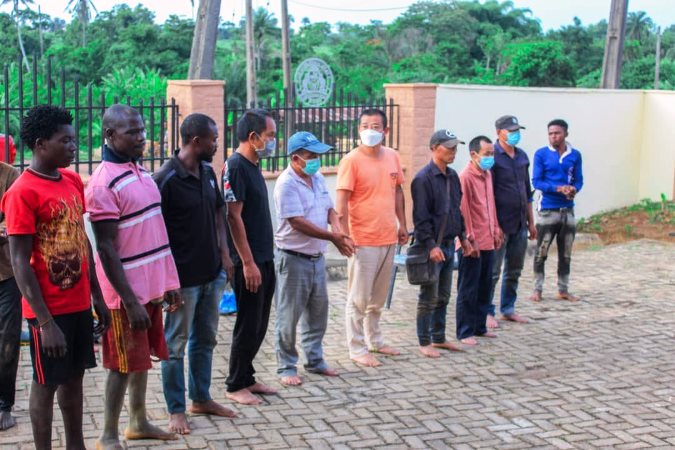
The Osun State Government has finally commenced the arrest and prosecution of 27 illegal gold miners in the state, months after a two-part investigative report on unlicensed gold exploration was published by The ICIR.

The state said culprits would be prosecuted and  made to pay compensations.

The ICIR report had exposed how traditional rulers engaged in arbitrary land grab, conniving with illegal gold miners to destroy the ecosystem and natural vegetation in several communities in the South-western state.

Aside from the issues of environmental degradation and health implication, the state government’s inability to check illegal mining was also reported.

Yesterday,  the state has finally announced the arrests of suspected culprits including Chinese nationals.

Abdullahi Binuyo, the deputy chief of staff to the state governor, had earlier told The ICIR about the illegal mining activity and its effect on the state.

He also spoke about repeated efforts to summon the traditional rulers, engaging them on the security challenges involved in illegal mining within their communities.

On  the 14th December 2019, The ICIR published a similar report on illegal gold mining in neighbouring Ondo state.

Speaking on the arrest, Binuyo said 17 Chinese nationals were among those arrested by the state Joint Task Force (JTF), inaugurated by the state governor, Adegboyega Oyetola.

The other 10 accused persons were locals which included a traditional ruler.

“The Osun State Joint Task Force (JTF), recently inaugurated by Governor Adegboyega Oyetola, has apprehended 27 illegal miners,  comprising 17 Chinese nationals and 10 locals, including a local traditional chief (Baale),” he said.

They were arrested after a joint operation around Ilesa and Ife axis of the State.

He noted that aside from the economic leakages, the illegal miners also polluted the Osun River with poisonous metals, making it unsafe for human consumption and irrigation.

“As part of the government’s economic reforms, solid mineral is a major sector we are looking to explore. For these reforms to work, it has become imperative on the reforms to stop illegal mining and step up enforcement activities. The result is what we are witnessing today,” Binuyo said.

“The people you see here neither have genuine mining licences nor are they registered with the government. What they claim to have is Exploration Licences, which does not allow them to mine, the way they are doing. So we will be prosecuting them and make them pay damages.

“Apart from flouting government’s Covid-19 Order, by refusing to stay at home, they have created an environmental disaster for us, by poisoning our River which is a major public health concern for us, “Binuyo added.

Meanwhile, one of the accused persons, identified as May Zam claimed he was ignorant of the crime for which he was arrested.

Four out of ten individuals have real expenditures below N137,430 per year -NBS

THE National Bureau of Statistics (NBS) has reported that four in every ten Nigerians have real per capita expenditures below 137,430 Naira per year.

And that 40.1 per cent of the total population in Nigeria is classified as poor, excluding the people of Borno state.

This translates to over 82.9 million Nigerians considered poor by national standards.

Though the survey included Borno state, samples were not representative of the entire state since only households from accessible (safe to visit areas only) were interviewed.

Thus, the Borno sample is considered non-random and non-representative.

Three indicators used by the NBS include poverty headcount ratio, poverty gap and Gini index.

The headcount ratio defines the proportion of the population that is living in the households where the value of per capita total consumption expenditure is below or equal to the poverty line.

In economics, per capita expenditure means the market value or price at which goods are sold in the market of all the goods purchased by the consumers.

Between September of 2018 and October of 2019, the NBS conducted the latest round of the Nigerian Living Standards Survey (NLSS) after a decade.

It is represented at the state level with a sample size of 22,110 households, focusing on increasing the understanding of living conditions of the Nigerian population.

The survey gathered data on household and individual demographics (age, gender, marital status, among others), access to education, health and basic services, employment, assets, and income, the NBS disclosed. 

The bureau showed that poverty is measured using consumption expenditures rather than income in Nigeria, the poor are defined as those who subsist below the poverty line, while the non-poor have consumption expenditures higher than the poverty threshold.

The world poverty clock has shown that from the history of Nigeria till date, Nigeria currently has 102 million citizens living in poverty which accounts for 50 per cent of citizens.

Also, recall that due to the COVID-19 pandemic, the federal government said it can only cater to 2.6 million poor Nigerians in the cash transfer intervention programme, which represents  29 per cent of the poorest of the poor with the cash transfer intervention programme.

Coalition says Control of Infectious Disease Bill will promote abuse of people’s rights

A coalition of 41 Non-Governmental Organisations (NGOs) on Monday issued a warning that the Control of Infectious Disease Bill currently before the National Assembly (NASS) will promote wilful abuse of citizens’ rights.

The coalition said the bill, which already is being referred to as an ‘Act’, would accord excessive powers to the Director-General of the Nigerian Centre for Disease Control (NCDC), if eventually passed.

Members of the coalition include Global Rights, African Centre for Media and Information Literacy (AFRICMIL), Lawyers Alert, Women Advocates Research and Documentation Centre (WARDC), Enough is Enough, Community Life Project and Centre for Information Technology and Development (CITAD). 

Others are Centre for Impact Advocacy, Concerned Nigerians, Lex Community NG, Centre For Liberty, Centre for Democracy and Development (CDD), Civil Society Legislative Advocacy Centre (CISLAC) and Say No Campaign.

In a document signed by the 41 organisations, they recognised the importance of legislation to contain the global Coronavirus Disease (COVID-19) but noted that there are irregularities in the bill such as overlapping functions of the security operatives, abuse of institutional powers guaranteed by the constitution, ambiguity as well as inadequate regard to accountability.

They observed that the speed at which the lawmakers are hurrying to pass the bill into law despite the concerns is worrisome.

“The Control of Infectious Diseases Bill vests overbearing discretionary powers on the DG of the NCDC, while making no provision for reviewing and controlling the exercise of such powers,” the groups stated.

“The Bill empowers the NCDC to restrict fundamental rights and freedoms at will, and abuse constitutionally established institutions and processes, without any form of accountability.”

For instance, the coalition cited as unacceptable Section 10 (3) of the bill, which gives the NCDC DG express powers to employ force to enter any premises without a warrant.

Aside this, the NGOs also expressed concerns about Section 19 of the bill. This confers the DG of NCDC powers to prohibit or restrict meetings, gatherings, and public entertainments. Another portion of the bill that worries the coalition is Section 15(3e), which allows the NCDC boss to authorise the destruction and disposal of any structure, goods, water supply, drainage etc.

“Section 47(1) confers discretionary powers on the Director-General to order any person to undergo vaccination or other prophylaxis. All these powers can be abused for political and economic reasons if not properly checked,” the coalition noted.

On Tuesday, April 28, 2020, the National Assembly resumed legislative activities after a month of recess, following the outbreak of the COVID-19 pandemic.

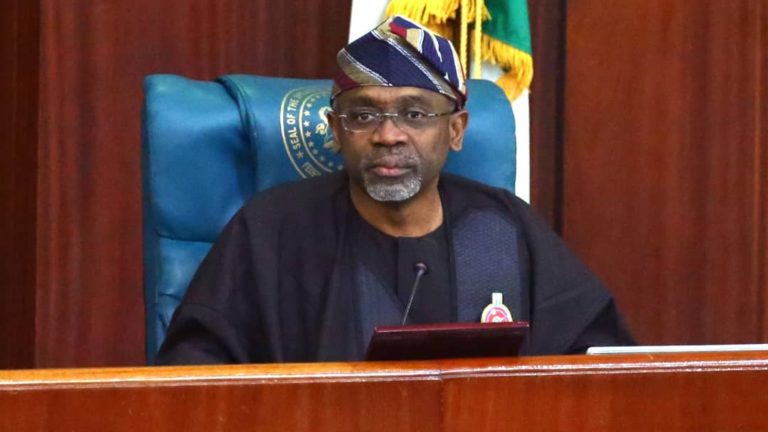
The House of Representatives after resumption, however, considered the controversial bill co-sponsored by the Speaker Femi Gbajabiamila, Pascal Obi and Tanko Sununu.

The ICIR earlier reported how the lawmakers plagiarised the bill originally prepared by the Singaporean lawmakers.

The development has provoked heated debate in the public space as to the rationale behind such an act, despite Nigeria being a democratic nation.

In order to avoid duplication of functions, the coalition charged the House to subject the bill to public scrutiny, by inviting relevant stakeholders to discuss the grey areas and proffer better solution or collective good.

They also advised the House to evaluate all provisions of the bill, they say fosters inter-agency conflicts and abuse of power and thus undermining constitutionally guaranteed rights and are contrary to the rule of law in the country and international human rights treaty which Nigeria is a signatory.

Read the full statement here.

COVID-19: Development Control Department gives guidelines to construction workers in FCT

THE Development Control Department of the Federal Capital Territory Administration (FCTA) has released guidelines with regards to the easing of the Coronavirus disease (COVID-19) pandemic (Corona Virus) lockdown in the FCT.

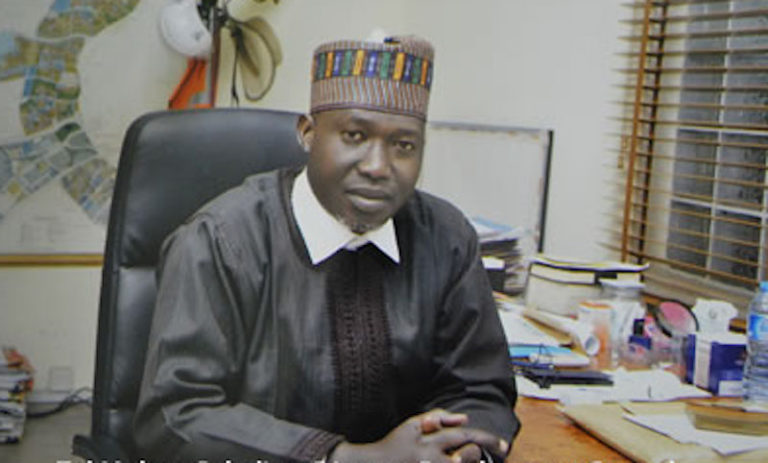
Mukhtar Galadima, the Director, Development Control, in a press statement on Monday directed all owners of all construction sites (including public institution sites) to ensure full compliance with the guidelines in order to curb the spread of COVID-19 in the FCT.

The statement said the concerned entities are urged to be guided and ensure full compliance to the guidelines in order to avoid the relevant sanctions which include sealing of sites and possible prosecution.

The guidelines are stated below:

All construction sites must provide facilities for hand washing tor all
workers and visitors, this includes additional provision of alcohol- based
sanitizers.

All workers on construction sites must observe social/physical
distancing of not less than 2 meters, including other relevant safety measures.

All workers and visitors to construction sites are required to compulsory
wash and sanitize their hands prior to entering and leaving the sites.

Construction sites of a single structure (Residential Building) shall not
have more than 8 Numbers  of workers.

Construction sites of a single structure (Commercial Building) shall not
have more than 15 Numbers of workers.

Construction sites of multiple structures (Major Commercial/ Residential
Estate) shall not have more than 35 Numbers of workers or as may be determined by the Council.

The Director however, urged the general public is to report any contravention of the provision(s) of this guidelines by any construction site(s) to the Department of Development Control for prompt action.

CSOs call for transparency in the use of IMF loan to Nigeria

A GROUP of Civil Society Organisations in Nigeria has welcomed the approval of a $3.4billion loan in emergency support by the International Monetary Fund’s (IMF) to Nigeria, urging the government to use the facilities to grow the economy.

In a statement sighted by The ICIR, the group including Oxfam, BudgIt, Connected Development (CODE) and Civil Society Legislative Advocacy Centre (CISLAC) noted that Nigeria is facing its worst health, social and economic crisis in decades due to the coronavirus disease (COVID-19) pandemic.

The group pointed out that the pandemic has knocked life out of Africa’s largest economy and threatens to collapse the country’s fragile health systems.

It submitted that the crisis has led to a decline in tax revenues, collapse in commodity prices especially that of oil, Nigeria’s major source of revenue.

The crisis has also led to diminishing official development assistance, and rising debt obligations, disrupted supply chains and high inequality.

The group noted that the harsh realities are set to plunge the economy into deeper crisis.

In fact,  IMF had forcast that the pandemic will trigger the worst economic recession since the Great Depression, and far worse than the 2008 financial crisis.

Given that the IMF has granted an emergency loan to Nigeria, the group urged the government to utilise the funds in the best way it will benefit the country and its citizens, stressing that the country was already struggling before the pandemic and the only way out of the worse situation is commitment to building the economy.

“Even before the ongoing pandemic, poverty and inequality levels were unacceptably high in Nigeria. Both the FGN and IMF therefore need to ensure that these funds are directed towards meeting the needs of the most vulnerable in society especially women, children, internally displaced persons and rural communities”, said Constant Tchona, Oxfam in Nigeria Country Director.

Recall that the IMF Executive Board on April 28, approved $ 3.4 billion in Emergency Support to Nigeria under the Rapid Financing Instrument to support the government’s efforts to cushion the severe economic impact of  COVID-19 shock and the sharp fall in oil prices.

The ICIR had earlier reported that the loan facility is considered to be the largest loan allocation by the monetary fund to an African nation to fight the pandemic, and it is scheduled to be repaid in not more than five years.

Reading God into COVID-19

By, Prof. Wale Olajide


This will only concern those who believe in the existence of God, be they Muslims or Christians or traditionalists. They need not be monotheists either since African traditional religion skin-deep is essentially polytheists.

Monotheistic ideas, if truth be told, are consequent upon its interaction with Christianity, a development which late Prof Bolaji Idowu tried so charitably to baptize and accommodate as “diffused monotheism”. Anything that is diffused is many and plural, and anything that is mono is one.

Nothing can therefore both be many and one. Africans do believe in many gods and they, in the practice of the religion, are quick to transfer their allegiance from gods where results are not forthcoming to another that answers prayers.

For believers in one God, they see God everywhere and in all things. He is the supreme absolute being, the creator of the universe, heaven, hell and earth. The creator of man and every other creature. He is omnipotent, omnipresent and omniscient.

He knows everything, ordains everything and absolutely nothing is hidden from him. He cares about what people eat and when they eat it, what they wear, how they grow their hair and how they appear when they come to worship him. Notice I have been using “He” which would suggest that the issue of God’s gender is finally settled, even though some tribes in Africa still see God as female.

God is kind and merciful, slow to anger and rich in mercy. He is loving but jealous still. He permits total annihilation sometimes of nations and their peoples. He still does not like sinners and can punish as he chooses with pestilence, diseases, earthquakes, tsunamis and even death irrespective of age or gender or race.

He rewards with pregnancies and accommodates barrenness, some get poverty and blindness; a favored group, riches and good health and others still nothing thus making their existence a badly lit corridor with no exit sign.

Some cultures have accommodated this disparity in God’s favors, blessings and/or curses in two ways. First that God being God can do as he pleases, and second, that as humans, we have indeed all come to the world with a destiny package that cannot be altered. The trouble is, we never know in exact detail what the contents of the package are until we begin to live our lives and whatever we then experience we must accept, embrace and love.

There is no room whatsoever for complaints. On the contrary, in all things, we must thank the benevolent God and continue to praise him. Believers are in fact told that all God needs is praise. It would then mean that what the church managers and chief executives, priests and pastors who demand of their flock of sheep using different ploys of extortion all in the name of God and for God and Jesus are greedy self-seeking, profiteering scoundrels.

The believers are men and women of faith. Children have no choice here. They have already been absorbed from impressionable age and must practice the faith of their fathers and mothers or risk damnation and hell fire.

Faith by the way is believing and saying yes to what you know has no shred of validating evidence. It is believing or pretending to believe or hoping to believe or needing to believe what it is not possible to be sure about. It is believing that which you do not have any evidence for, but rather strangely most willing to die for as with martyrs and suicide bombers for the love of twenty-seven virgins or as now contested by retranslation and redaction, sweet white raisins.

That which has been passed on as faith, beyond the obvious lack of evidence for its numerous claims and the clear irrationality of some of its arguments would to a large extent constitute ancient ignorance and clear derangement that is now passed down to be regurgitated as wisdom truths.

The acceptable position is that one does not argue with faith and when in a bid to separate faith from fiction you attempt to do just that, men of faith are at liberty to take offence. What audacity to query the word of God!

Belief by its nature as Sam Harris notes is a lever which once pulled moves almost everything else in a person’s life – values, choices, emotional dispositions, friendships, though direction and even logic. The inference then is that we are to a large extent what we believe and if this sum unfortunately is made up of irrational bogus claims, uttered by shady characters who either by threats, stoking the embers of fear, intimidation and oppression, peddle falsehood and oppress, the light of civilization actually dims and man’s rationality is in serious contention.

The whole world is numb with the fear of an unseen enemy, COVID-19, with millions already dead, dropping like flies. Chest beating nations have suddenly become so little, and unsure of how best to appraise their presumed powers.

The race to find a cure has become a collective resolve if that is all that it will take to keep the fire of hope burning. It is worse for nations whose early immunity optimism is based on low numbers of death have gradually evaporated exposing gravely their gross unpreparedness and impotence.

For men and women of faith who believe in God and attribute everything to him/her, there are at once issues of interpretation, understanding and meaning to contend with. Leaders of religion are suddenly in a quandary regarding what to tell their followers.

Those who profit from branding all humans as ignoble wretched sinners were quick to interpret COVID-19 as reward for sins and human filthy ways. The fire and brimstone preachers spoke of end times asking all to be ready for rapture, and judgement. At last the lucky ones will finally inherit heaven and see God face to face while the sinful folks will equally see Satan face to face and settle with him in hell, this time barbecued by its fires.

Wise leaders of religion have kept themselves to advocating that their followers adhere to the guidelines laid down by health masters, governments and global health bodies and institutions. The objective truth is staying alive and to be alive is to avoid contacting the deadly virus by every means outlined. The ball is squarely in the court of the mammal called man.

Those who truly believe in God must excuse him. There is nothing here that should be of concern except if we care to entertain the anthropomorphic albeit groundless submission that all God’s ever desire is worship and praise.

With churches and mosques presently under lock and key, with religious gatherings prohibited and social distance ordered and with some pigheaded leaders of religions being prosecuted for violations of orders of government, there is no crowd worship and praise, no crowd of singing and no dancing. Also, if details of the tenets of religions boldly proclaim that God is the creator of all things with emphasis on all, then nothing is left out including viruses and bacteria.

The question is why would a benevolent loving God create a virus that is killing species that he created in his own image in their millions.

Could he actually be enjoying what is happening to his creation, including the impotence and helplessness of his children? I read somewhere that no father would give his son a scorpion if he asked for a fish or a stone if he asked for bread. All the son wants presently is to live and he is being confronted with a virus that he cannot see and one that is naturally programmed to kill him.

We would not debate here the superfluity of whatever adorns faith in the religion that proffers a belief in God and so readily dresses up their subject of belief in anthropomorphic terms multiplying allied attributes of creator, law giver, punisher, love mercy, jealousy and kindness with reckless abandon.

Rather we would merely plead albeit forcefully that God as a victimizer be excused. Corona virus is part and parcel of our universe that has a right to life which unfortunately conflicts tragically with our wellbeing as humans.

If their faith accommodates a busybody, restless God who interferes in all and every affair of men and women apart from strangeness of the thought and attending conceptual distortion, what then shall be the fate of those other population in the world who have no idea at all of such a god therefore do not even entertain the thought.

More significantly with our limited knowledge as humans, we must at least grant nature its essential liberty, the same that makes the seasons come and go, birds keeping to the skies and fishes keeping company with the seas.

Same ordinance that makes rains fall, volcanoes erupt in due time, tsunamis rage, earthquakes rupture the earth’s floor and oceans roar. About these we are near certain that with the benefit of science, we can make firm predictions.

About all other else, where issues that confront us are neither real testable nor verifiable with reliable evidence attending to them, these must remain speculative lacking concrete dependable knowledge or at best a bunch of mumbo jumbo.

Prof. Wale Olajide, Department of Philosophy Ekiti State University,  Ado-Ekiti, Ekiti State.

COVID-19: Experts optimistic on oil price rise but warn that reforms must happen

Despite the current crisis in the petroleum sector occasioned by a slide in crude oil prices, industry experts and policy analysts foresee that there will be stabilisation of crude oil price.

They, however, warn stridently that Nigeria must seize the opportunity of the crisis to undertake long-awaited reforms of the sector and a diversification of the economy.

These points, among others, were the resolutions from the maiden webinar series on Post COVID-19 Petroleum Agenda for Nigeria (PoCoPAN) hosted by OrderPaper Nigeria on April 27.

The event tagged ‘COVID-19 Opportunity for Petroleum Reforms in Nigeria’ was conveyed to aggregate thoughts on the petroleum sector crisis and how Nigeria can benefit from the misfortune of COVID-19.

It featured two highly rated guest speakers – Mr. Joe Nwakwue (petroleum industry expert and former government energy advisor) and Mr. Tope Fasua (economist and public policy analyst) – and was organized in collaboration with Publish What You Pay Nigeria and DotCivics.

In an outcome document signed by Oke Epia, Executive Director, OrderPaper Nigeria, and Convener, PoCoPAN, experts noted that the crude oil price stabilisation will occur once the global economy picks up.

Participants of the event were from the petroleum industry, the legislature, the academia, civil society organizations, and the media, among others.

Resolutions from the event read: “Crude oil price would eventually stabilize as global economy gradually picks up (this is due to the fact that price volatility is an inherent characteristic of the Oil and Gas industry).

“There is, however, a pervasive concern that the nation may not learn from this present experience based on patterns deduced from previous oil price crash scenarios.

“The present pandemic-induced economic crisis occasioned by the fall in crude oil price is as a result of obsolete and inappropriate policies that regulate the petroleum industry; lack of will by government to use resources from Oil and Gas to facilitate development of industry value chain & other sectors of the economy; over-dependence on foreign technology; and exportation of raw materials rather than refined products.

“Funding of the 2020 national budget in the current crisis is a huge challenge attributed to the fact that Nigeria runs a petro-dollar economy (53% revenue of 2019 budget was provided by foreign exchange from Oil and Gas industry).

“The country’s Oil and Gas industry has not witnessed new exploration in the last decade as critical stakeholders such as investors, host communities and the government remain unsatisfied with the current path the industry threads.

“Diversification and re-invention of the economy from a sole petro-dollar source is highly imperative to insulate the country from the effects of future price volatilities.”

The document further reads: “Critical decisions have to be made to determine models that are most suited for efficient running of the nation’s Oil Gas industry: Joint Ventures (JVs) and Production Sharing Contracts (PSCs) need to be re-evaluated so as to determine if the current arrangements are providing maximum benefits for the country. (A potential capacity of Oil and Gas business to generate between 12 and 15 trillion naira per annum was highlighted).

“Revenue from Oil and Gas operations is needed to facilitate the country’s emergence from the Dutch disease hence, it was recommended that Reserve to Production (R/P) ratio should be increased, gas assets developed and the midstream sector enhanced in a string of industry diversification that will impact the economy in general.

“The petrol subsidy regime strongly impedes development of the industry and cobbles the participation of private investors and should therefore be abrogated to allow for deregulation of the downstream sector.

“The economic crisis presented by COVID-19 era is an opportunity to rethink and re-evaluate the modus operandi of the Oil and Gas sector and the nation’s economy at large. Opportunities presented in the development of local technology (artisanal refining for instance), deep focus on gas exploration, development of indigenous human capital in critical sectors of the economy, and enactment of the Petroleum Industry Bill (PIB) should not be lost.”

The thought leaders urged that the COVID-19 pandemic should present “a strong need for increased citizen engagements on transparency and accountability – holding government’s feet to fire – both on the management of the petroleum sector specifically and the nation’s public finance generally.”

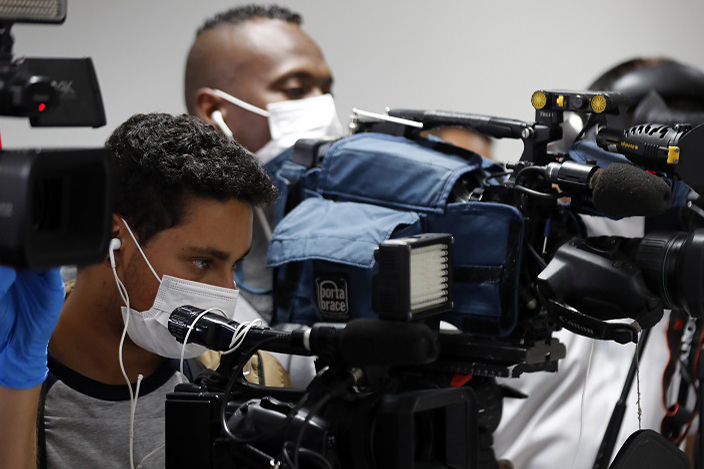
Covid-19: Journalists harassed by Nigeria’s security operatives while covering pandemic

ON the evening of April 26, Kufre Carter, a broadcast journalist had received a disturbing call from Nigeria’s secret police, State Security Service, SSS, asking him to show up for questioning at their head office in Uyo, Akwa Ibom State, for an interview.

Earlier in the week, he had released an audio interview, where he spoke to an unidentified medical doctor who exposed shady operations which involved manipulating test figures at the State-owned health facility treating patients of COVID-19, the disease caused by the coronavirus.

Uchechukwu Nnatube, the SSS head of operations who spoke to Kufre had told him it was just routine “questions” about the interview he had with the unnamed doctor and to help the SSS get in touch with his source.

However, Kufre didn’t anticipate the interview would lead to an arrest or subsequent detention. When he arrived at the Uyo’s SSS office in the company of his lawyer, Asuquo Augustine, he was taken into custody by operatives of the SSS while his lawyer was chased away from the premises.

His apartment was ransacked by officials of the SSS as they tried to obtain his phones without a warrant while they also harassed his lawyers.

Kufre was denied access to his lawyers and family members while he was detained by the SSS for two days before he was charged at the State’s magistrate court for criminal defamation.

The court agreed to grant him bail if he meets the bail conditions involving a bail bond of three million with a surety who is a permanent secretary in the state ministry or a civil servant above grade level 17 with a letter from his village head attesting to identity as at the time of writing this report the bail conditions were yet to be perfected.

Speaking to The ICIR, his lawyer Inibehe Effiong described the accusation against Kufre by the SSS as baseless because it lacks merit.

“They have no reason to keep Kufre in custody but since they have filed a charge against him then we will meet them in court. The Government simply wants to prove a point because he should not have been arrested in the first place.

“Since he was detained he has been denied access to lawyers and family members which demonstrates the culture of lawlessness in the country,” he said.

Kufre is likely to serve a two – year jail term if convicted, however, Kufre’s plight with security agents is one of the many cases faced by journalists on the frontlines reporting on the COVID-19 pandemic in the country.

Tales of woes

On April 1, Michael Ikeogwu, who is also the Delta State Chairman of Nigeria Union of Journalist, NUJ, alongside Matthew Omonigho, a correspondent with the Daily Post was headed to Uvwie local council, to monitor compliance with the lockdown policy in the rural community.

The journalists had attempted to capture on video, officials of the State’s environmental task force who were physically abusing local residents as they forced them to embark on compulsory clean-up of their surrounding during lockdown hours.

However, their ordeal started when they questioned the leader of the task force on why his team was disobeying the lockdown order, he ordered some members of his team to attack them which left Omonigho’s Nikon D3100 camera destroyed in the process.

Before they were detained for 45 minutes, it took the intervention of the chairman of the task force in the State who was contacted on the phone before they were released.

“I wondered what will become of the ordinary man in the society if government officials could assault journalists in this manner even after identifying ourselves,” Ikeogwu, stated.

David Umahi, Ebonyi State governor had ordered the detention of two journalists on charges of breaching the State’s Coronavirus and other dangerous (Infectious) diseases law.

Chijioke Agwu, a correspondent with The Sun newspaper, was detained by the police for more than nine hours on the orders of the Governor for writing a story on Lassa fever which he claimed violated the state’s diseases law.

For Peter Okutu, who reports for the Vanguard newspaper was also locked up by the police after the governor threatened to ban him from stepping into the government house for life after accusing him of publishing “false and damaging” information.

Police officers in Adamawa State enforcing COVID-19 lockdown in the State stormed the office of the NUJ in Yola, Adamawa State before arresting 12 journalists who were working at the facility at the time accessing them of breaking the lockdown order.

When the law is blind

Under the Administration of Criminal Justice Act, ACJA, 2015, which was signed into law in 2015, it covers the administration of criminal justice across the country.

Section 8 of the ACJA makes it illegal for security agencies to arbitrarily detain anyone without a warrant of arrest and in the case where an arrest is made the person is entitled to notification of cause of arrest and accorded humane treatment, having regard to the dignity of his person.

Richard Akinola, a social commentator said the infractions on press freedom in the country have been perpetuated majorly by State governors who are averse to criticism in connivance with the judiciary who allow the harassment of journalists to thrive.

“It’s unfortunate how magistrates and judges in various states do not recognise the place of the law by becoming tools in the hands of state governors. If you look at the case in Akwa Ibom on the detained journalist, the magistrate said a permanent secretary of the ministry should act as surety to fulfil his bail condition.

“If a State governor is a complainant then why should a permanent secretary stand as surety on a case of criminal defamation and also why should the SSS be involved in the case instead of the police. The issues of his illegal detention which breaches the ACJA act was also not broached by the magistrate,” he queried.

Nigeria is ranked 12th out of 13 countries examined by the Committee to Protect Journalists, CPJ, Impunity Index, with the worst records of unsolved murders of journalists.

Some serious soul searching on World Press Freedom Day

By, Yinka Adeosun


ESTABLISHED by the General Assembly of the United Nations in December 1993, May 3 is dedicated and celebrated as World Press Freedom Day. According to the United Nations Educational, Scientific and Cultural Organisation (UNESCO), the day is set aside to celebrate the fundamental values of press freedom; to evaluate press freedom around the world; to defend the media from attacks on their independence and to pay tributes to journalists who have lost their lives in the exercise of their profession.

The theme for this year’s press freedom day is: Journalism without fear or favour. This theme is apt at this time of our national life. It calls for reflection among media professionals about issues of press freedom and professional ethics.

Freedom of expression is a universal human right. Like the right to life, freedom from slavery and freedom of movement, among other fundamental human rights, it is not the exclusive preserve of a few. It is an inalienable right of every human. Like all rights, it comes with responsibilities. Freedom of expression is not the prerogative of the politician or lawyer, neither is it the privilege of the journalist. Every journalist of whatever branch of the media is exercising the citizen’s right to freedom of expression in addition to his time tested duty of holding the government accountable to the people as members of the fourth estate of the realm.

In demonstration of this onerous duty, the Nigerian media fought the colonial overlords and colonialism to a standstill. The story of Nigerian independence as well as transition to democracy is incomplete without a mention of the active roles played by members of the press in demanding for a fair, just and egalitarian society. The Nigerian media has always obeyed the call to serve with love of country, strength in its conviction and position as a force for good, and faith in Nigeria’s potentials as an exemplar for other nations.  In spite of the several gains made especially during the long despotic years of military rule, the media seems to have lolled into a false sense of mission accomplished, as the power of the pen seems to have been exchanged for access to power, privilege and primitive acquisition.

But truth be told, the society has also not been fair to journalists. The Nigerian journalist is an endangered species. He is often the subject of attack in the course of carrying out his constitutional roles. Jones Abiri is one of such attacks against journalists. He was harassed, intimidated, abused and jailed for investigating on sensitive issues that expose the military and powerful figures in the society.

As the fourth estate of the realm, it has not enjoyed total cooperation from the three arms of government. By their attitude, the arms of government have been both secretive and reprehensive towards the media. Just recently, 92 journalists’ access to the Presidential villa was suspended. In the memo which suspended the journalists, the government had cited public health restrictions. By this restriction, the government had hampered the ability of the press to effectively cover the activities of government, especially during the pandemic.

State governments are not exempted. On April 18 Chijioke Agwu of The Sun newspapers and on April 21 Peter Okutu of Vanguard newspapers were both detained by authorities in Ebonyi state. Although they were later released without any charges, this act is clearly to stifle the press and to make the press kowtow to the whims of government.

Journalists are by their orientation and training obliged to hold government accountable to the people. They are expected to bring to fore issues that are of public interest without fear or favour. In every society, journalists are responsible to the people. They provide information and news to the populace, which enables them to make decisions that will enhance their life and living.

We are living witnesses to many journalists who have repudiated the values they once stood for as journalists after political appointment as mouthpieces of power holders. They become a poor shadow of their principles as soon as they begin to cavort with politicians in power, serving their paymasters and their belly. Their loyalty is often determined by their position per time.

It is usually heartbreaking when journalists hoard information or take on the role of doctors of spin on matters which are of public interest. By virtue of their privilege and position, they mingle with the mighty and dine with the lowly, thus, citizens depend on them to report the truth and to maintain an unbiased opinion. Sadly, many journalists have failed to deliver on this expectation.

Perhaps as a reminder, especially on this auspicious day, journalists should be reminded to separate friendships with public office holders from their fundamental responsibility to the populace. There is no denying the fact that he needs them. The rapport must however be distinct from his responsibility, especially in the course of duty. We must remind those who practice what Professor of journalism and mass communication, Ralph Akinfeleye, calls “Journalism of kith and kin” or “Cocktail journalism” that they must cease and desist in the interest of national development.

A free press must ensure that the government at every level is held accountable to the people, policies of government, especially in times like these, are well scrutinised, and ensure that politicians and political parties fulfil their promises to the people by constantly putting them on their toes and pushing for openness.

We must also sadly acknowledge that it is increasingly harder to become a journalist of conscience in our society. The desire for better living standard has forced many to capitulate in favour of silver and gold at the expense of ethics, balance and fairness in their profession. If Nigerians must enjoy the dividends of this democracy, the Nigerian media must not only be seen as being fair and objective, it must also be ready to publish and damn the consequences, without fear or favour.

Adeosun writes from Akure, Ondo state.


Presidential Task Force Committee reveals cause of mass deaths in Kano, says it is coronavirus

NASIRU Sani Gwarzo, leader of the Presidential Task Force Committee on coronavirus has revealed that COVID-19 is responsible for the mass deaths in Kano, warning that residents of the state should wake up from their slumber.

The revelation puts a lie to the claim of the state government that the deaths in Kano are unconnected with the spread of Coronavirus infection.

Gwarzo disclosed this while speaking with newsmen in the state on Sunday after the ceremony of donation of mobile testing laboratory facilities by Alhaji Aliko Dangote to the Kano State Government.

“Let me inform us that most of the deaths recorded of recent and test carried out showed that Coronavirus was the cause.

“So, before the final report which would be ready in the next one week or few days, it is necessary for people of Kano to wake up from their slumber that this is a serious issue.

“It is not a new thing, countries like America, China, Italy, Spain, England, France and others experienced similar mysterious deaths,” Gwarzo who is a medical doctor announced.

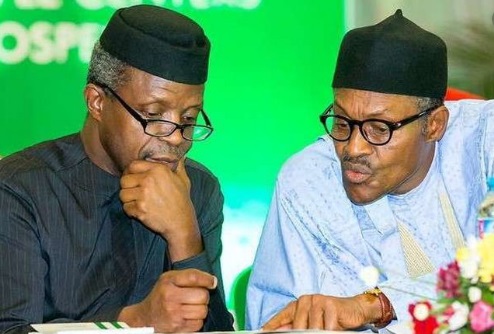
President Muhammadu Buhari had earlier in the week gave an order to the Gwarzo-led Presidential Task Force on COVID-19 to unravel the cause of the mass deaths in Kano as well as contain the spread of the virus in the state.

Recall that concerns over mysterious mass deaths in Kano filled the airwaves during the final weeks of the lockdown order effected by President Muhammadu Buhari.

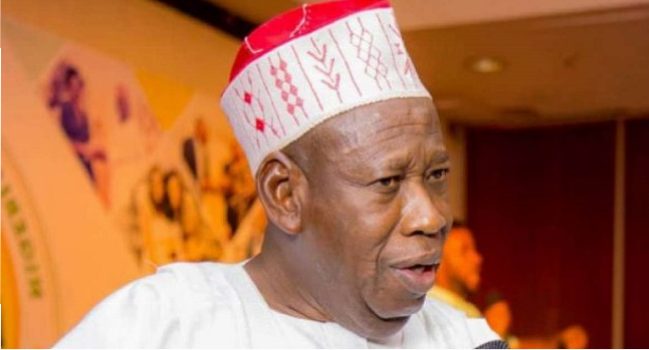
At first, while residents and doctors raised alarm about the unexplainable mysterious deaths in Kano, the state Governor, Abdullahi Ganduje had denied the occurrence of unusual deaths, claiming that reports were completely false.

However, his claim was debunked when Sabitu Shuaibu, Kano State Deputy Coordinator of COVID-19 Response Team confirmed that the state had recorded over 640 deaths in one week.

There is no official record for the real number of persons that have died in Kano in the past three weeks.

However, there are several reports proving that the mass deaths began shortly after the state recorded its first COVID-19 case on April 17.

Currently, Kano has a record of 342 cases, representing over a 3,000 percent increase in less than a month of recording its first case.