Home Blog Page 2113

COVID-19: Banks in competition to donate N1 billion into relief fund

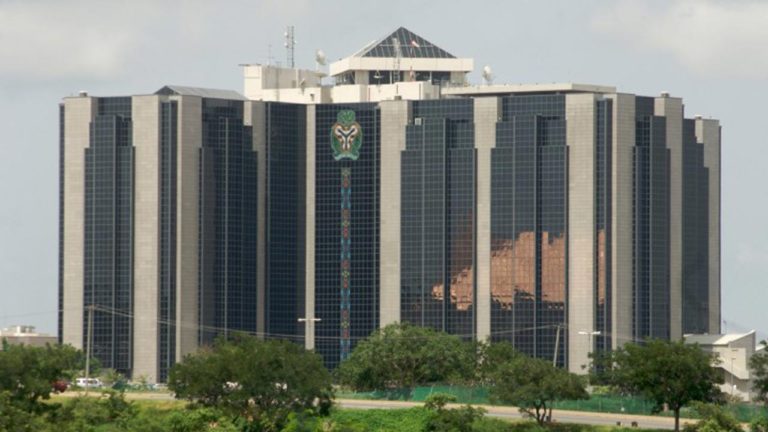
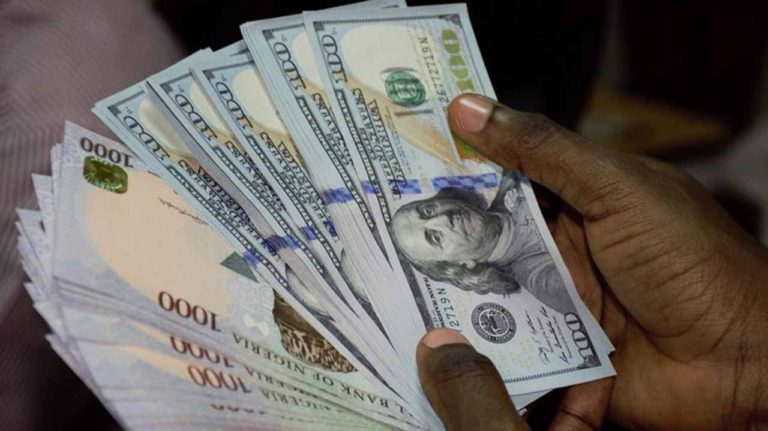
COVID-19 charity donations to the Central Bank of Nigeria (CBN) may have turned into a stiff competition as banks struggle to donate billions of Naira to look stronger than the others, insider sources have told The ICIR.

Recall that CBN has earlier informed the private companies and individuals wishing to make voluntary donations towards the fight against Coronavirus to do so via COVID-19 Relief Fund Account.

According to a source at the First City Monument Bank (FCMB) that asked for anonymity, “The CBN intervened when banks turned COVID-19 into a competition and started out doing each other in donating billions.”

“The apex bank met with the committee of banks and suggested that donations towards fighting COVID-19 be coordinated and done through CBN,” he added.

CBN determined how much each bank would pay depending on how big they are, there are three tiers of banks which are categorised according to their financial weight, tier one, tier two and tier three.

FCMB  was to pay N250 million according to the CBN categorisation, whereas, the bank’s management previously had decided to donate more than that, the source said.

The source added that there is a need for CBN to streamline the process because banks had turned it into a competition, putting unnecessary pressure on smaller banks.

Though sources from other banks told The ICIR they were not aware of the pressure on them to make donations for COVID-19,  they did not deny there was competition.

Abdul Imoyo of Access Bank said, “I am not aware of the competition in the banking sector as regards donation to COVID-19, I am only aware of the donation of N1 billion my bank made.”

Charles Amadi of Fidelity Bank did not respond to calls and text messages sent to him.

According to Adewale Kunle of Sterling Bank, “He said donations were made according to the financial strength of various banks and Sterling bank was able to donate the sum of N250 million.”

Also, another source at Union bank that asked to be anonymous said: ” I believe we can’t give what we can’t afford in times like this. We were only able to donate N250 million to help fight the pandemic .”

Efforts to reach CBN spokesman, Isaac Okorafor for comment unsuccessful.

As of April 17, 2020, nine banks had donated to CBN to fight the pandemic. They are Guaranty Trust Bank (N1 billion), United Bank for Africa (N1 billion), Zenith Bank (N1 billion), Access Bank (N1 billion), First Bank (N1 billion), Union Bank (N250 million), Sterling Bank (N250 million), Standard Chartered (N250 million) and Stanbic IBTC Bank (N250 million).

Recently the management of Access Bank has resolved to lay off 75 per cent of its workers due to the impact of COVID-19 on the banks and to avert any coming challenges.

Governors order pay cut as Coronavirus takes toll on economy

AS the effect of Coronavirus disease (COVID-19) pandemic bites harder on the Nigerian economy, some state governors are taking measures to reduce the impact, including slashing workers’ salaries.

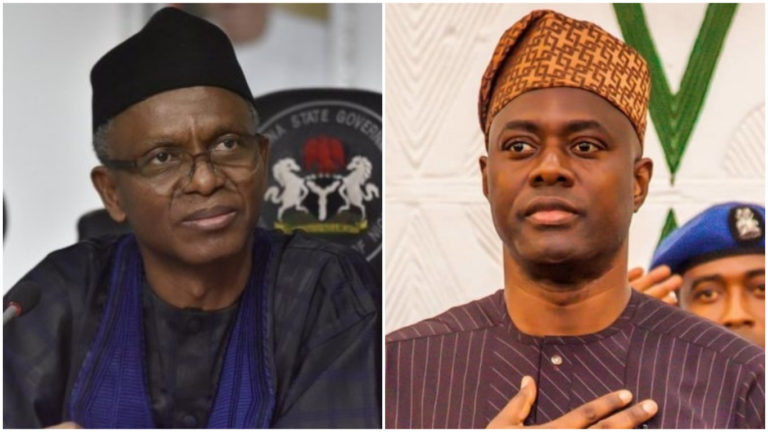
In Oyo State, Governor Seyi Makinde disclosed plans to slash salaries of senior political appointees by 50 per cent.

He made this disclosure while addressing top labour leaders in the state at Labour House, American Quarters, Ibadan on Friday.

The governor also said he had gotten the cooperation of the state lawmakers to cut their salaries by 30 per cent in order to reduce the effects of COVID-19 on the state’s economy.

“The next couple of months are going to be difficult ones, but we are working hard to mitigate the shocks to our economy.

“Already, we have secured the cooperation of the legislature to take a 30 percent cut to their monthly allocations, while senior government appointees take 50 percent pay cuts. This is because we feel that the economic safety of the workforce must be prioritised,” Makinde said.

Similarly, Kaduna State Governor, Nasir El-Rufai has asked the workers to donate part of their salaries into the state’s purse.

El-Rufai on Sunday April 26, announced that state public servants earning, at least, N67, 000 will have 25 per cent of their salaries donated to the state and state senior appointees; including commissioners, permanent secretaries, special advisers and heads of agencies will each donate N500,000 in April.

In subsequent months, El-Rufai said senior appointees will each donate 50 percent of their salaries.

“Career public servants earning a net pay of N67,000 and above aftertax will also donate 25 percent of their pay monthly whilst the quarantine conditions are in place,” El-Rufai’s media adviser Muyiwa Adekeye said in a statement.

According to the governor, the move is to ensure that the millions of people living in the state are adequately supported during this COVID-19 period.

However, El-Rufai’s plan to cut 25 per cent of career public servants salary does not go down well  with healthcare workers who have the high risk of contracting Coronavirus.

The Nigerian Medical Association (NMA) has criticised the governor, demanding he reverses his decision.

”NMA hereby calls on the State Government to as a matter of urgency  to avert crisis in the health sector of Kaduna State by immediately paying all health care workers the balance of 25% of their April 2020 salaries,” the group said in a statement signed by Stephen Akau Kache, the State Chairman and Ifeanyi Aghadi Kene, the State Secretary of NMA.

Also, Adams Oshiomhole, National Chairman of the ruling All Progressives Congress (APC), in an article published to mark Labour Day warned governors against cutting pay of workers in this period.

Oshiomhole said cutting salaries in this COVID-19 period can only bring about a vicious cycle of poverty, adding that state leaders “be sensitive to the poor condition of workers during this difficult time.”

“Cutting wages is most unhelpful in the circumstance. It’s like asking an anaemic patient to donate blood to save the lives of other patients in need of blood transfusion,” Oshiomhole said.

He thus urged governors to rather reduce cost of governance instead of cutting wages or retrenching workers.

In the same vein, the Nigeria Labour Congress (NLC) has waded in,  kicking against cutting or stopping workers’ salaries at this period.

“In reciprocation of the enormous sacrifice made by workers, we urge employers of labour to show solidarity with the sacrifice of our workers and people by ensuring wage protection, income support and social inclusion at these trying times,”  Ayuba Wabba, the NLC President said at a press conference marking the 2020 International Workers Memorial Workers’ Day in Abuja.


FRSC, Hajj Commission, five other agencies listed for scrap in Oronsaye’s report

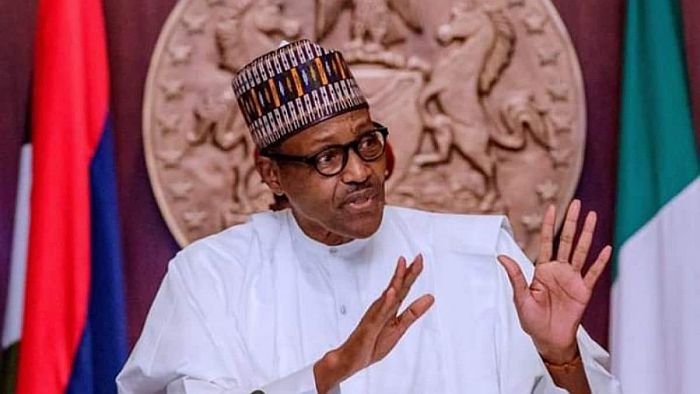
FOLLOWING President Muhammadu Buhari’s decision to consider the recommendations of  Stephen Oronsaye-led report on Restructuring and Rationalisation of the Federal Government’s Parastatals, Commissions and Agencies, there are seven major government agencies considered for scrap.

These agencies are the Fiscal Responsibility Commission, National Poverty Eradication Programme, Utilities Charges Commission (UCC), National Economic Intelligence Committee, Nigerian Christian Pilgrims Commission (NCPC), National Hajj Commission of Nigeria (NAHCON) and the Federal Road Safety Corps (FRSC).

In the 103 pages of the white paper, the report stated that the Act establishing the listed agencies should be repealed, while also suggesting the merger of other bodies with similar responsibilities.

The document which was prepared by a seven-member committee and inaugurated on 18th August 2011 by the former President Goodluck Jonathan was expected to fully take effect in 2014 but was not implemented.

Nine years after it was inaugurated, Buhari on Thursday, 30th April directed  Secretary to the Government of the Federation, Boss Mustapha, and Head of Service (HoS) dr. Folashade Yemi Esan to implement the report so as to prune down the cost of governance, as the COVID-19 pandemic bites hard on the country’s economy.

“It has reviewed the whole of the size of government and has made very significant recommendations in terms of reducing the number of agencies and that would mean merging some agencies,”   said Zainab Ahmed, the Minister of Finance, Budget and National Planning.

“This is a report that has been in place for a long time and there hasn’t been implementation but the president has approved that this should be implemented and we have conveyed Mr President’s approval to the arms of government that are responsible for this and that will be the office of the secretary of government and the head of the civil service of the federation.”

The Bureau of Public Service Reform (BPSR), an agency established to initiate government reform policies also acknowledged the changes in a tweet on Thursday.

The ICIR here highlights the functions of the seven agencies listed for scrap.

The Fiscal Responsibility Commission

The Fiscal Responsibility Commission (FRC) was established in 2007 by the Act of parliament to ensure prudent government expenditure. It also performs almost similar responsibilities with the Revenue Mobilisation and Fiscal Commission (RMAFC).

The Committee advised that the FRC be closed down, a recommendation which was accepted by the Jonathan-led administration. Mohammed Adoke, a Senior Advocate of Nigeria (SAN) and former Minister of Justice were further directed to commence needed actions to scrap the commission.

It was agreed that the RMAFC should also perform the responsibilities of FRC while the law establishing the National Salaries Income and Wages Commission (NSIWC) should be repealed.

In view of this, activities of the NSIWC are to be governed by the RMAFC Act.

“The Committee recommends that the fiscal responsibility commission be abolished and its enabling law repealed as RMAFC is already empowered by the Constitution to carry out the functions,” it stated.

National Poverty Eradication Programme  

The National Poverty Eradication Programme (NAPEP) is an initiative of the former President, Olusegun Obasanjo, designed in 2001 to help reduce poverty in the country.

But, it is part of the programmes pencilled for scrap. The committee recommended that NAPEP should be integrated into a new organisation known as the National Agency for Job Creation and Empowerment (NAJCE) alongside Small and Medium Enterprise Development Agency (SMEDAN) and the National Directorate of Employment (NDE).

While the federal government agreed to scrap NAPEP, it rejected NAJCE.


Utilities Charges Commission (UCC)

The Utilities Charges Commission is an agency of the FG established under Cap Law in 2004 and amended in 2016. It is meant to monitor charges and advise the government on tariffs charged by any of the public utilities.

The Oronsaye Committee, however, advised that the law which sets up the commission be abolished and other enabling laws repealed. Existing staff of the commission were directed to be redeployed to the Office of the Head of Civil Service of the Federation; since the workers are public servants.

“Government accepts this recommendation and directs that the process of repealing the enabling law should be initiated by the OSGF,” the document stated.


National Economic Intelligence Committee

The National Economic Intelligence Committee (NEIC) Act (1994) domiciled in the Presidency has the responsibility to analyse the annual budget and enforce fiscal measures that could help achieve revenue targets, grow the economy and other related matters such as tax evasion.

The 13-member committee is empowered to monitor monetary guidelines issued by the Central Bank on Nigeria (CBN), enforce existing tax regulations and give situation report of its activities on a quarterly basis to the president.

“The NEIC should be scrapped and its enabling law repealed, and further budgetary allocations to NEIC cease forthwith,” the Commission recommended.


Federal Road Safety Corps

Further, the Committee also recommended the disbandment of the Federal Road Safety Corps (FRSC).

Though the advice was rejected by the past administration, the committee argued that road safety management and highway patrol should be the primary responsibility of the Police as obtainable in other developed nations.

The FRSC officials, the committee added should be redeployed to the Police Service Commission (PSC), Federal Civil Service Commission (FCSC) and the Vehicle Inspection Office in the Federal Capital Territory Authority (FCTA).


Nigerian Christian Pilgrims Commission (NCPC) and National Hajj Commission of Nigeria (NAHCON)   

The Nigerian Christian Pilgrims Commission (NCPC) and National Hajj Commission of Nigeria (NAHCON) are among federal government agencies the committee advised should be scrapped.

Oronsaye’s report said rather than sponsoring pilgrims, the government should restrict itself to providing the needed vaccines and consular supports.

Functions of the commissions were asked to be taken over by the Federal Ministry of Foreign Affairs.

Though the Jonathan administration rejected recommendations for these two commissions, it is unclear if the current government would accept it, considering the current economic reality in the country and global oil market.

“The federal government should stop sponsoring pilgrims and pilgrimages with effect from the 2012 fiscal year, and government stop granting concessionary foreign exchange rate to pilgrims,” the Committee advised.

NOSDRA concludes probe of oil spill from Shell’s facility at Angiama in Bayelsa   

THE National Oil Spills Detection and Response Agency (NOSDRA) says it has concluded investigations on a spill from Well 13 at Angiama in Bayelsa.


The oil well located at Angiama a coastline settlement by the bank of River Nun, Southern Ijaw Local Government in Bayelsa is operated by Shell Petroleum Development Company (SPDC).

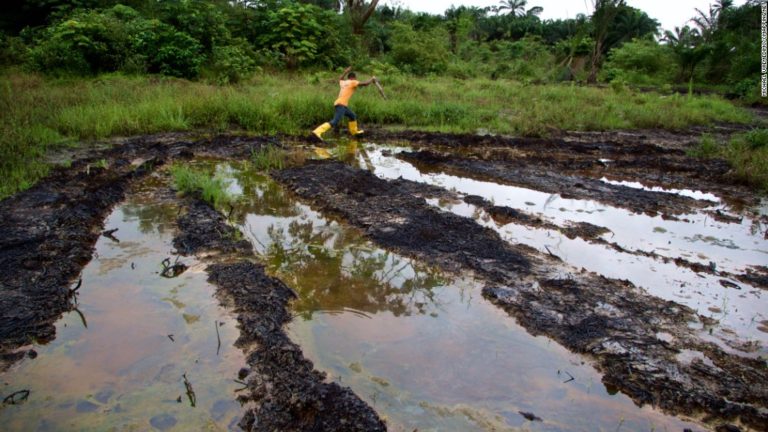
Idris Musa, Director-General of NOSDRA said in a telephone interview on Friday that 43 barrels of crude were discharged into the farmlands and nearby swamps.

It was learnt that the Joint Investigative Visit (JIV) witnessed disagreements between the host community who accused officials of the oil firm of under-reporting the volume of leaked crude.

JIV is a statutory team convened after any leak by operator, regulators, community and government representatives to ascertain the cause and quantity of oil leakage from oil spills.

The NOSDRA-DG said that contrary to claims by SPDC that the investigation was still ongoing, the agency had closed out the probe and filed the Joint Investigation Visit (JIV) report dated March 28, 2020.

“Joint           Investigation was done and concluded. Spill containment was done, oil recovery is done while post-spill impact and damage assessment will follow and the JIV report is available,” Musa said.

SPDC’s Spokesman Bamidele Odugbesan had claimed that the JIV report was yet to be published on the oil firm’s spills incident portal because it has not been signed.

“The JIV is published after it is signed off and this marks the completion of the process,” Odugbesan said.

Investigations at SPDC’s oil spills incident website revealed no record of the March 17 incident at Angiama while other leak incidents before and afterward were reported on the portal.

The NOSDRA boss explained that the agency found out that the leak was caused by equipment failure and recommended that SPDC should clean up and remediate the impacted site.

According to the JIV report with spill incident No. 2614095 made available to journalists, the oil leak impacted an area of 11,200 square meters and extended beyond SPDC’s Right of Way.

The report was signed by three community representatives namely Timi Yaro, Hon Target Isaih Segibo and Chief Noah Biobele , Owei Boma Blessing signed for Bayelsa Ministry of Environment and three officials endorsed for SPDC.

However, Desi Macline, a representative of Well 13 host community, says there is a disagreement over the volume of the oil spill from Shell fields in the community and they subsequently declined to sign the JIV report.  


FG gives directives on partial resumption of public servants

FOLLOWING the broadcast of President Buhari on a phased and gradual easing of lockdown measures occasioned by the Coronavirus pandemic, the federal government has directed that all senior staff in the public service should return to work.

Public officers from Grade Level 14 and others on essential services have been directed to resume work, effectively from May 4, between the working hours of 9 am to 2 pm on Mondays, Wednesdays and Fridays.

In a circular signed by the Head of Service of the Federation, Folasade  Yemi-Esan, further directed the concerned officers to ensure full compliance with the directives and advice on the COVID-19 pandemic preventive measures which include maintaining social distance, regular hand washing or sanitising.

Officers were further advised to limit the number of visitors they receive to the barest minimum and visitors should also comply with preventive and safety measures of the pandemic.

The circular also stated that federal Secretariat complexes have been decontaminated while efforts are being put in place to do the same in public offices.

The federal government through the Permanent Secretaries and Chief Executive Officers are to ensure the provision of handwashing and sanitary materials at entrances and strategic points in various MDAs, the circular stated.

It also directed that entrance to MDAs is limited to only one person at a time, and stressed the importance of using infrared thermometers to check for visitor’s temperature.


COVID-19: Access Bank to fire 75 percent of junior workers

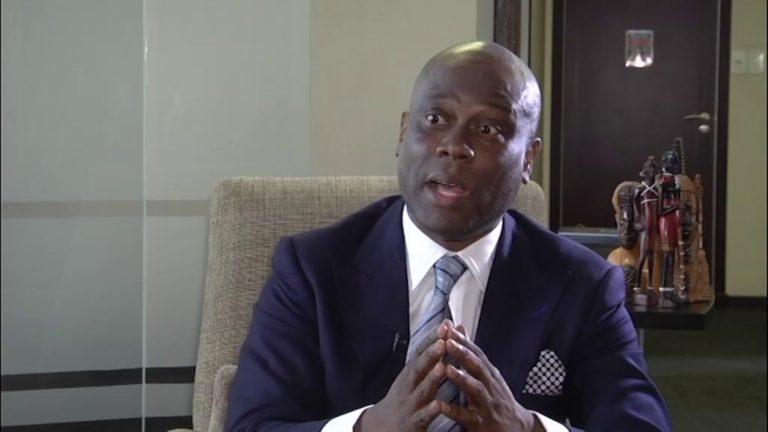
THE managing director of Access Bank Herbert Wigwe has disclosed plan to reduce the number of junior staff in the bank by 75 per cent.

He made this statement in a video interview where he listed  the affected workers to include tea girls, security guards, cleaners and teller officers.

He said even though all the branches of Access bank would be closed till December 2020, there would be a need to cut a large number of the junior staff.

According to Wigwe, this category of staffs represents a large number of workers in the bank and the management of the bank would speak to their employers on this reduction process.

He also said due to the impact of the COVID-19 pandemic and the uncertainty of the days ahead, this reduction of workers is important for the bank to still meet up with its responsibilities as a financial institution.

The managing director of the bank said he would also take the heat by taking a 40 per cent pay cut, saying everybody would have to make some adjustments of some sort.

Wigwe said, “This is not the best of times, we understand the difficulties people are going through, but we also understand the higher calling of creating an institution that can provide for us and the fact that tomorrow when things improve we shall revert to normal.”

“But what is important is, this adjustment is required at a time when we see great difficulties coming in, to make sure that if there is one institution left standing in this country as a bank it must be Access,” he added.

The bank boss said he should not be misquoted that they understand it would affect people but the adjustment is necessary to protect their franchise as a bank and make them stronger as they move into the future.

Wigwe, you will recall  held a total of 1.24 billion indirect shares as of April 2019. The indirect shares were made up of 537.73 million shares owned by United Alliance Company of Nigeria Limited and 702.56 million shares owned by Trust and Capital Limited.

But he had sold off 28.86 million units of shares worth N297.82 million, representing 2.33 per cent of his total shares in the bank, according to the Nigerian Stock Exchange.

Access Bank in 2019 completed the merger and business combination of the erstwhile Diamond
Bank making the bank the biggest bank in Nigeria by total assets and number of customers as well
as a significant retail footprint and infrastructure.

The group recorded gross earnings of ₦666.7bn (26 per cent year on year), and a 12 per cent increase in Profit Before Tax (PBT) to ₦115.4bn, despite the significant merger cost.

A major driver of this growth is the interest income of ₦536.8bn, which grew by 41 per cent year on year, reflecting a sustainable approach to generating revenue through traditional banking

Daniel Martins of Fair White financial group who spoke to The ICIR said, “With the recent merger which added to huge profitable numbers for this bank and the financial strength of Access Bank, it’s too early to send people home.”

Adeleye Kolade a financial consultant also said, “It is unfortunate the junior staffs have to suffer this blow, after all, they don’t earn much, the bank should have started the cost-cutting from the board of directors to management level instead of  directly hitting these junior ones.”

We are fighting COVID-19 without support from FG – Gov. Wike laments

NYESOM Wike, the governor of Rivers state said the state is solely battling the spread of Coronavirus (COVID-19) pandemic without tangible material support from the federal government.

Wike said this during a state address on Friday afternoon during his briefing on COVID-19 in the state.

According to him, the federal government has refused to provide ‘any tangible material support for the state.

He added that hitherto the Nigeria Centre for Disease Control (NCDC) has refused to set up a testing centre in Rivers state.

“Up till now the NCDC has not established any testing Centre in the state despite our socio-economic position in the state,” Wike said.

He alleged that NCDC’s action is deliberate because the Centre has been unable to justify not setting up a testing centre in the state.

Wike further noted that the Rivers state government is not at the peak of the fight against COVID-19 due to non-compliance of some individuals.

He said some cases were aided into the state by security officials who are supposed to enforce the task force guidelines.

The Rivers state governor gave a ‘last warning’ to Umu-okoro community leaders over non-compliance to the social distancing.

He noted that the community has continued to organise ‘night market’ against the state task force guidelines.

CBN identifies first 3,256 individuals and businesses to benefit from N50 billion credit facility

THE Central Bank of Nigeria (CBN) through NIRSAL Microfinance Bank has identified 3,256 individuals and businesses to benefit from the N50 billion Targeted Credit Facility (TCF).

TCF is a stimulus package to support households and Micro, Small and Medium Enterprises (MSMEs) affected by the COVID-19 pandemic which they can access at a maximum amount of N25 million each as earlier announced by the CBN.

Abubakar Kure, the Managing Director of NIRSAL MFB, who launched the disbursement on Thursday in Abuja, said 3,256 individuals and businesses would benefit from the first phase of the disbursement.

NIRSAL MFB, which is the sole coordinator of the process said it has received over 80,000 requests since on 14th April.

The NIRSAL MFB boss did not disclose the value of the credit allocated under the first tranche but said the bank was passionate about disbursing the fund only to individuals and businesses terribly affected by the pandemic.

NIRSAL MFB has said that the fund would afford beneficiaries the chance to continue productive activities when the economy gradually reopens after the lockdown.

Sectors covered in the guideline include agricultural value chain, health (pharmaceuticals and medical supplies), airline services, hospitality (accommodation and food services), trading, manufacturing/value addition and other income-generating endeavours as prescribed by the CBN.

The apex bank said the aim of the fund is to cushion the effect of the pandemic to provide cash flow owing to the lockdown and the restrictions in movement of people.

The Coronavirus Disease (COVID-19) pandemic has led to unprecedented disruptions to global supply chains, sharp drop in global crude oil prices, turmoil in global stock and financial markets, massive cancellation of sporting and entertainment event.

The lockdown of large swaths movements of persons in many countries, and intercontinental travel bans/restrictions across critical air routes across the world.

NIRSAL MFB said these outcomes have had severe consequences on households’ livelihoods and business activities, resulting in a drop in global demand, declined consumer confidence and slowdown in production.

Presidency silent over person who leaked Buhari’s speech

­ASO Rock has not been able to answer the question about who leaked the  speech of President Muhammadu Buhari, a few minutes to his official national broadcast on Monday evening, 26th April.

Though Femi Adesina, Special Adviser on Media and Pulicity to President Buhari, confirmed that the speech earlier circulated to the press was not the final draft, he did not identify the official who shared the copy riddled with errors.

Notable among the errors was the date agreed to commence gradual ease of the lockdown.

While President Buhari’s original speech announced 4th May as the effective day to relax the lockdown in Lagos, Ogun, and the Federal Capital Territory (FCT), the leaked speech stated 2nd May.

Many Nigerians have expressed  concern over the leak of the President important message to Nigerians, which was glitched by several inaccuracies.

Lekan Otufodunrin, former Editor at The Nation Newspaper (Online) his piece published on 27th April, titled, Who leaked Buhari’s broadcast speech? noted that the two speeches created some confusion for the president’s audience.

“The date for the commencement of the relaxed restriction of movement is 4th May, not 2nd as in the first copy. So, there was initial confusion about which date was right since some people didn’t bother to listen to the broadcast having read the first copy.

“The first copy had no fixed time for the lockdown in Kano, but in his address, the President announced two weeks.”

The ICIR contacted media aides to the president to know where the leaked copy emanated from.

Adesina, Special Adviser on Media and Publicity to the president did not  respond to text message sent to him.

Garba Shehu, Senior Special Assitant on Media and Publicity  who was also contacted by this reporter did not respond to questions sent to him via SMS

The ICIR also reached out to Tolu Ogunlesi, Special Assistant to the President on Digital and New Media, but as of the time of writing this report, there was no response from him.

Direct Message sent to Bashir Ahmad, Personal Assistant on New Media to the President via his verified social media handle was not also replied.

Nigeria’s foreign reserves dips further to $33.44 billion in four months

The Nigerian foreign reserves has dropped from $38.53 billion to $33.44 billion in nearly four months, Central Bank of Nigeria (CBN) latest report has shown.

This represents  $5.09 billion drop in foreign reserves for the period, the report revealed.

Recall the CBN showed that the reserves has been on a consistent fall since the middle of  2019, causing it to drop from $45.14 billion on 8th July to $44.65 billion on 8th August.

Further dropped of $1.26 billion between 2nd October 2019 and 31st October 2019 was recorded,   falling from $41.76 billion to $40.50 billion in between the periods.

According to CBN figures, the reserves dropped from $39.8 billion on 11th November 2019 to $39.24 billion on 13th December 2019.

Godswill Emefiele, CBN Governor, said at the last Monetary Policy Committee meeting that the “Weakened revenue status of the Nigerian government emerged from the deep slump in oil prices at the global market.”

“The major downside risks to this outlook, however, include the continued spread of COVID-19; further decline in crude oil prices and the reduction in accretion to external reserves.”

The Apex bank governor said, “the headwinds would, however, be partly mitigated by the timely and effective response of the monetary and fiscal authorities in containing the spread of the COVID-19 pandemic, the recalibration and adjustment of the 2020 federal budget to the revised thresholds.”

The Organisation of the Petroleum Exporting Countries (OPEC)  this month pledged to cut output by an unprecedented 9.7 million barrels per day in May and June.

Bussiness standard report has shown that oil futures marked their third straight week of losses last week, with Brent ending 24 per cent down. Prices have now fallen for eight of the past nine weeks.