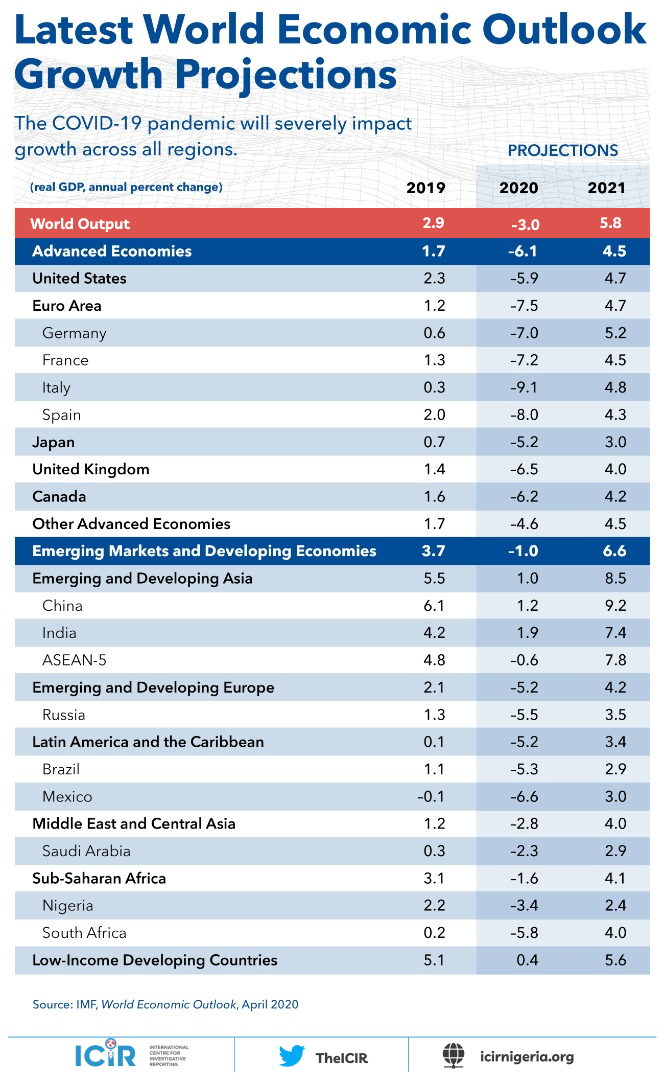
AFRICA’s two biggest economies, Nigeria and South Africa have both had stagnant real Gross Domestic Product (GDP) per capita terms since 2014, the International Monetary Fund (IMF) has reported.
By this measure, their populations have gotten a lot poorer since then, the IMF report revealed.
In economics, GDP measures the total quality of goods and services produced and sold in an economy.
Current figures show that Nigeria and South Africa expected at –3.4 per cent and –5.8 per cent respectively, following the dramatic decline in oil prices since the beginning of the year, near-term prospects for oil-exporting countries have deteriorated significantly.
According to the World Bank, the oil price collapse in 2014-2016, combined with negative production shocks, Nigeria’s GDP growth rate dropped to 2.7 per cent in 2015.
In 2016 during its first recession in 25 years, the economy contracted by 1.6 per cent.
Since 2015, Nigeria’s economic growth remains muted, growth averaged 1.9 per cent in 2018 and remained stable at 2 per cent in the first half of 2019.
Domestic demand remains constrained by stagnating private consumption in the context of high inflation 11 per cent in the first half of 2019.
On the production side, growth in 2019 was primarily driven by services, particularly telecoms.
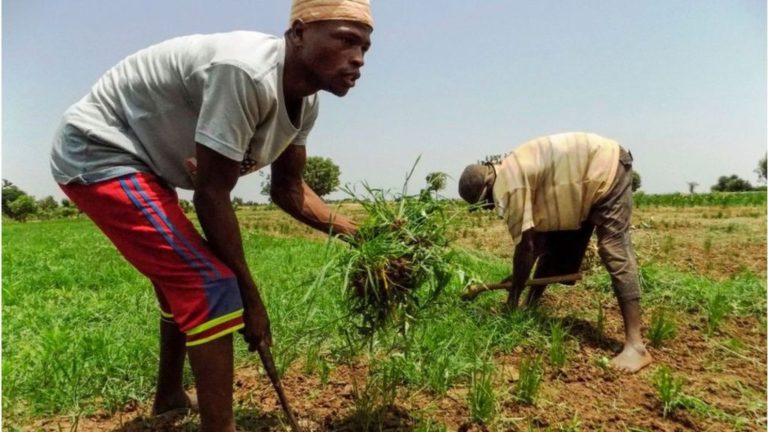
Agricultural growth remains below potential due to continued insurgency in the Northeast and ongoing farmer-herdsmen conflicts.
Albert Adeniji an economist at Wellworth Investments who spoke to The ICIR said: “Since GDP focuses on total production rather than actual distribution of output, it does not capture the effects of inequality and this inequality is where both big economies are affected, not significant to the world but its a menace, an example is bad leadership.”
Emmanuel Azubuike a financial analyst at Cornerstone Investments said, “Even smaller economies are growing annually, but Nigeria and South Africa need to really sit back and work on how their economy would grow and improve citizen’s lives, xenophobia and insurgency is a barrier for productivity for this big nations.”
GDP of South Africa fell by 0.4 per cent in the fourth quarter of 2019 compared to the previous quarter. This rate is two-tenths of one per cent less than in the previous quarter when changed -0.2 per cent.
The year-on-year change in GDP was -0.6 per cent, seven-tenths of one per cent less than the 0.1 per cent recorded in the third quarter of 2019.
The GDP figure in the fourth quarter of 2019 was $71,005 million, South Africa is number 29 in the ranking of quarterly GDP of the 50 countries published.
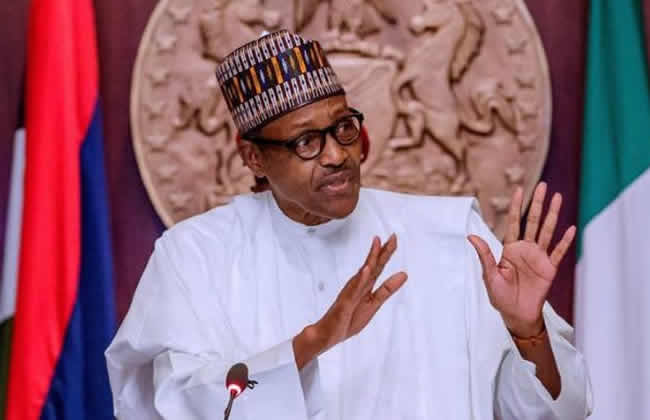
ON Thursday, President Muhammadu Buhari approved the Oronsaye report by the presidential committee on restructuring of federal government parastatals, commissions and agencies initially submitted during the Goodluck Jonathan administration.
The 800-paged report submitted by the committee recommended the abolition of 38 federal agencies, the merger of 52, and the reversion of 14 agencies to departments in relevant ministries.
Bashir Ahmaad, Personal Assistant on New Media to President Buhari in a Twitter post revealed this stating the Presidency had adopted the committee’s report.
Amongst the recommendations approved by President Buhari was the discontinuation of funding to professional bodies/councils and also the downsizing of boards.
Currently, the number of federal agencies in the country is estimated to be close to 1,000.
President @MBuhari has approved the implementation of a 800-paged report submitted by the presidential committee on restructuring and rationalization of the FG’s parastatals, commissions and agencies, committee was inaugurated by GEJ in 2011 and submitted their report in 2012.
The Committee which was inaugurated on August 18, 2011, had submitted its report on April 16, 2012.
A tweet sent by the reporter to Bashir to ascertain if the entire recommendations of the committee were adopted by the President as at the time of filing this report was yet to be replied.
Stephen Oronsaye, former head of civil service, had headed a committee set up by former President Goodluck Jonathan to identify the lapses in the civil service.
The seven-man committee had stated the “rationalization of agencies, parastatals and commissions would have human dimensions and cost implications” before suggesting that the government should focus on empowering the Ministries Departments and Agencies, MDA, “to do more for less”.
At the time when the report was submitted, there were 541 government parastatals, commissions and agencies including statutory and non-statutory in the country and the report prescribed a reduction in the number of statutory agencies from 263 to 161.
NIGERIAN Investment Promotion Commission (NIPC) reports a drop of $7.89billion investment for Q1 2020, which stands currently at $4.81billion compared to $12.7billion recorded in the corresponding period of 2019.
The figure represents about 62 per cent less in investment value compared to Q1 2019.
The Commission tracked a total of 19 projects across 14 states plus the Federal Capital Territory.
Kaduna State received the largest share of the investment of $2.61billion in transportation, mining and quarrying, and manufacturing.
According to the report, $56million worth of investment in agriculture was announced for Nasarawa State, while Lagos State got five investments announcement with a total worth of $29million. The investments are in manufacturing, information and communication, and electricity.
The report showed that the destination of eight investments was unknown, and this represents about 44 per cent of the investments tracked during this period.
On sector basis, the top four were transportation 42 per cent, information and communication 33 per cent, mining and quarrying 21 per cent and agriculture 4 per cent.
The United States of America was the most active source of investments during the period with 42 per cent of the announcements.
South Africa accounted for 33 per cent, domestic investors accounted for 16 per cent and the United Kingdom announced 8 per cent of the investments tracked.
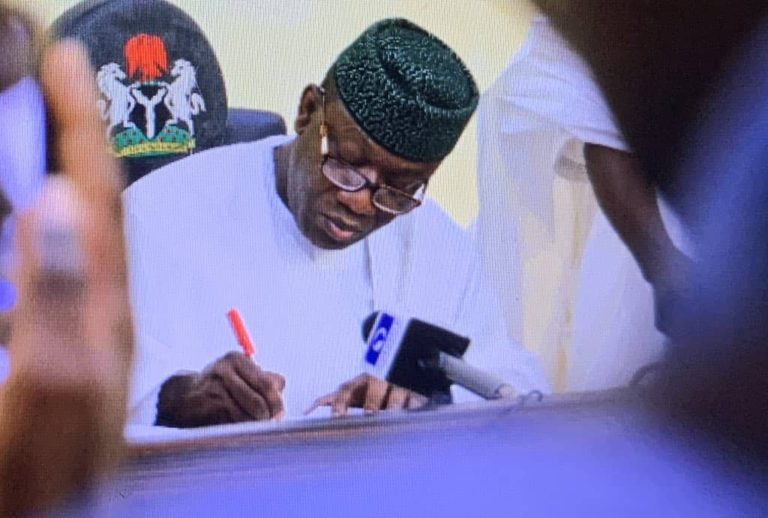
THE Governor of Ekiti state, Kayode Fayemi has appointed Femi Adeoye, a father who rejected and forced his son into isolation after traveling to Lagos, as an ambassador of Coronavirus (COVID-19) in the state.
Adeoye was seen in a viral video refusing his son entrance into his house for traveling across states despite lockdown order.
Fayemi, who received Adeoye in the statehouse, commended him for his exemplary act of courage and principle.
Following his visit, Fayemi through a letter of commendation said the state is proud of Adeoye’s conduct.
“I am pleased to let you know that the state is very proud of your conduct which elevated the collective wellbeing of the state above your undeniable love for your son,” the letter read.
Fayemi noted that his selflessness and self-discipline is an act that the state and nation need to progress.
“You represent the kind of self-discipline, selflessness, and sense of collective responsibility that our state and nation need desperately to progress,” he further stated.
Appointing Adeoye as COVID-19 ambassador in Ekiti state, Fayemi said the state government would be delighted to have him propagating the message of the State COVID-19 taskforce.
He noted that the state would in future recognise his valour as an example of the rebirth of Ekiti’s values orientation.
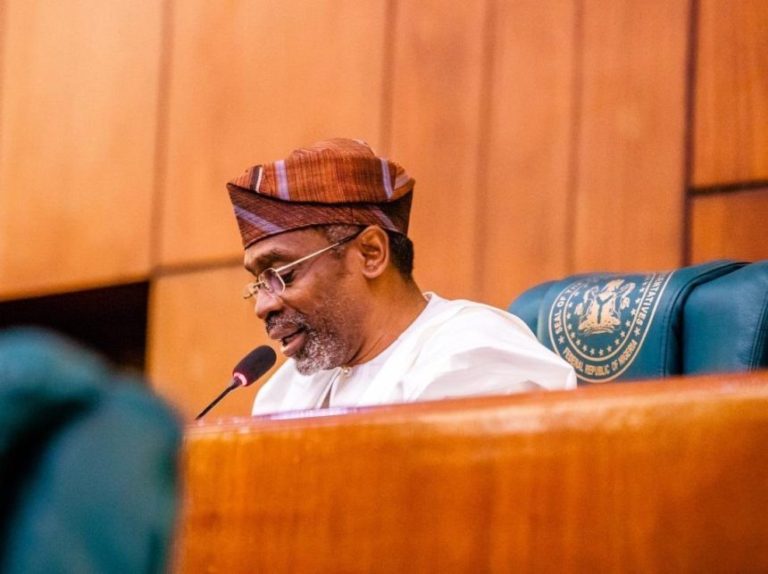
A DRAFT legislation titled Infectious Disease Act, sponsored by Speaker of the House, Femi Gbajabiamila and submitted on the floor of the House of Representatives on April 28 for consideration has been found to be over 90 percent plagiarised from Singapore’s Infectious Disease Act of 1977.
The proposed legislation which aims at helping the Nigerian government coordinate responses to infectious disease outbreaks such as Lassa Fever and Coronavirus infection is a 43-page draft document copied in its entirety from Singapore – a country with a legacy of authoritarian rule.
At the time the Infectious Disease Act was enacted, Singapore was a one-party state. Though Nigeria operates a democratic system of government, copying a law of an authoritarian state such as Singapore is a contradiction of its republican status.
Abdul Mahmud, barrister and managing counsel of Ephesis Lex Law Firm deplores the idea of copying the law of another sovereignty verbatim.
It is offensive to steal laws properly passed by other parliaments of the world and lawmakers who subscribe to such act can be accused of plagiarism, he told The ICIR in an interview.
“There’s a fundamental problem of poverty of thinking and creativity which allows our legislators to go borrowing and stealing laws from other countries,” he said.
Plagiarism
Asides from the title of the draft legislation: Infectious Disease Act which was copied verbatim, parts one to five of the Nigerian Act containing 63 sections were all lifted from the Singaporean law word-for-word. The exception was the use of ‘Director’ which is replaced with ‘Director-General’ and mentioned over 100 times throughout the document.
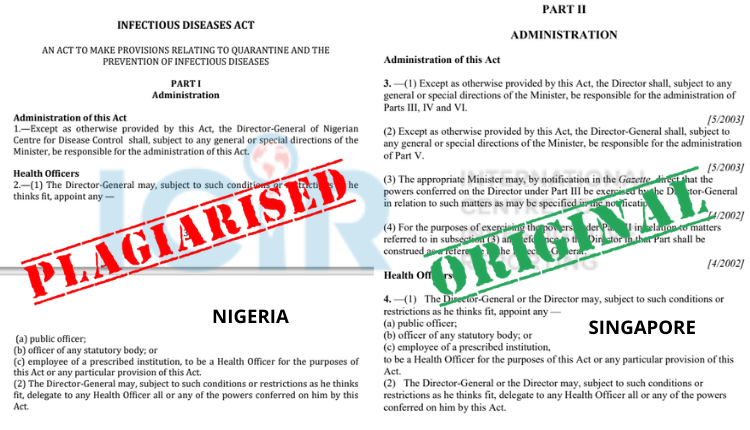
For instance, in part one, under the subtitle: Administration, the proposed Nigerian draft bill reads: “Except as otherwise provided by this Act, the Director-General of Nigerian Centre for Disease Control shall, subject to any general or special directions of the Minister, be responsible for the administration of this Act.”
In the Singaporean version, it reads: “Except as otherwise provided by this Act, the Director shall, subject to any general or special directions of the Minister, be responsible for the administration of Parts III, IV and VI.”
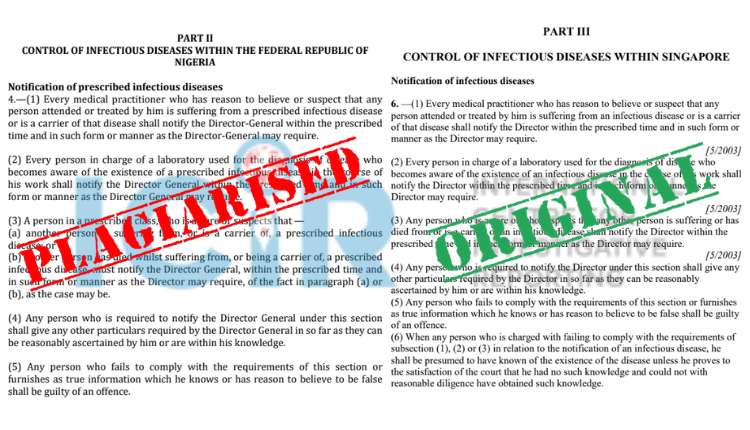
In part two of the Nigerian bill which stands as part three in the Singaporean legislation, Section four (1) reads: “Every medical practitioner who has reason to believe or suspect that any person attended or treated by him is suffering from a prescribed infectious disease or is a carrier of that disease shall notify the Director-General within the prescribed time and in such form or manner as the Director-General may require.”
In the original document section, section six reads: “Every medical practitioner who has reason to believe or suspect that any person attended or treated by him is suffering from an infectious disease or is a carrier of that disease shall notify the Director within the prescribed time and in such form or manner as the Director may require.”
This reproduction is noticed in the entire document.
Nigeria vs Singapore Infectious Diseases Bill CREDIT: ICIR
Closer look at Nigeria’s versus Singapore’s Infectious Disease Act
At first glance, the similar wordings of both documents raises the questions of how infectious diseases and outbreaks affect Nigeria, its citizens and economy compared to the current realities in Singapore.
Nigeria, with an estimated population of 200 million, a Gross Domestic Product (GDP) per capita of $2,028 as of 2018 and plagued with political instability and corruption has halved its population living in extreme poverty, according to World Bank.
In an Infectious disease pandemic period, Nigeria’s most common challenges are ill-equipped and underfunded health care system, a weak economy, and struggling citizens.
On the other hand, Singapore, a sovereign city-state with a population of over 5.6 million and a GDP per capita of $64,581 as of 2018, is ranked 9th in the United Nations Human Development Index out of 187 countries – Nigeria ranks 158 out of 189 countries.
Singapore ranked ‘world’s healthiest country’ by Bloomberg and 6th in the World Health Organization(WHO)’s ranking of the world’s health systems in the year 2000, the Southeast Asian country’s major challenge in a disease pandemic is the ability to manage spread and flatten curve – the same challenge faced by other western nations with top-notch health care systems.
Nigeria is still struggling to increase the testing capacity of COVID-19 and provide adequate health care for patients.
Infectious Disease Act Versus the Nigerian Constitution
Infectious Disease Act Bill draft CREDIT: The ICIR
A close read of the document shows how the new bill conflicts with rights and privileges granted in the 1999 Nigerian Constitution as amended.
For instance, part of Section 15 of the Act states that: “A person who leaves or attempts to leave or is suspected of having left an isolation area in contravention of an order under subsection (3) may be arrested without warrant by any police officer, or by any Health Officer authorised in writing in that behalf by the Director-General.”
The law invariably empowers the Nigerian law enforcement agents who are notorious for disregarding human rights, to arrest people based on suspected intent (as covered in ‘attempts to leave’) or suspicion (suspected of having left an isolation area) and to do so without a warrant from any higher-level authority.
Recall that as at when Nigeria recorded 407 cases of COVID-19, while the virus had killed 12 people, security officers had killed 18 people as they enforce the lockdown order by President Muhammadu Buhari.
The National Human Rights Commission (NHRC) has also reported that it has received more than 100 complaints of human rights violations perpetrated by security officials across 24 of Nigeria’s 36 states – including Lagos, Ogun and Abuja.
Enforcement and consequences
In granting powers of arrest, Section 58 of the bill proposes that: “Any police officer or any health officer authorised in writing in that behalf by the Director-General, may arrest without warrant any person committing or who he has reason to believe has committed any offence under section 11(1), 20(2), 22(4), or 55(8).”
By implication, the law aims to empower security officials and health officers to rely on their judgment to detain citizens on the basis of their belief of someone having committed an offense.
David Hundeyin, a Nigerian journalist, said this provision rests the burden of proof on Nigerians, and is a direct contravention of the 1999 Constitution.
In what appears to be a recipe for abuse of power, the bill in Section 71, proposes that: “No liability shall lie personally against the Director-General, any Health Officer, any Port Health Officer, any police officer or any authorised person who, acting in good faith and with reasonable care, does or omits to do anything in the execution or purported execution of this Act,” thereby granting power without checks or accountability.
A worrying precedent
Though the Infectious Disease bill leaves cause for worry if passed into law, the document in its present form is a mere duplication of the original taken from another jurisdiction, an act which has become characteristic of the 9th Assembly.
On November 5, 2019, a bill titled ‘Protection from Internet Falsehood and Manipulations Bill 2019′ aka social media bill, aimed at criminalising the use of social media in peddling false or malicious information was introduced on the floor of the senate.
Just like the Infectious Disease bill, the social media bill, sponsored by Mohammed Sani Musa, a senator representing Niger East, was plagiarised from a Singaporean law.
THE Lagos state government on Wednesday has released guidelines for easing the lockdown in the metropolis without compromising the public health and the economy.
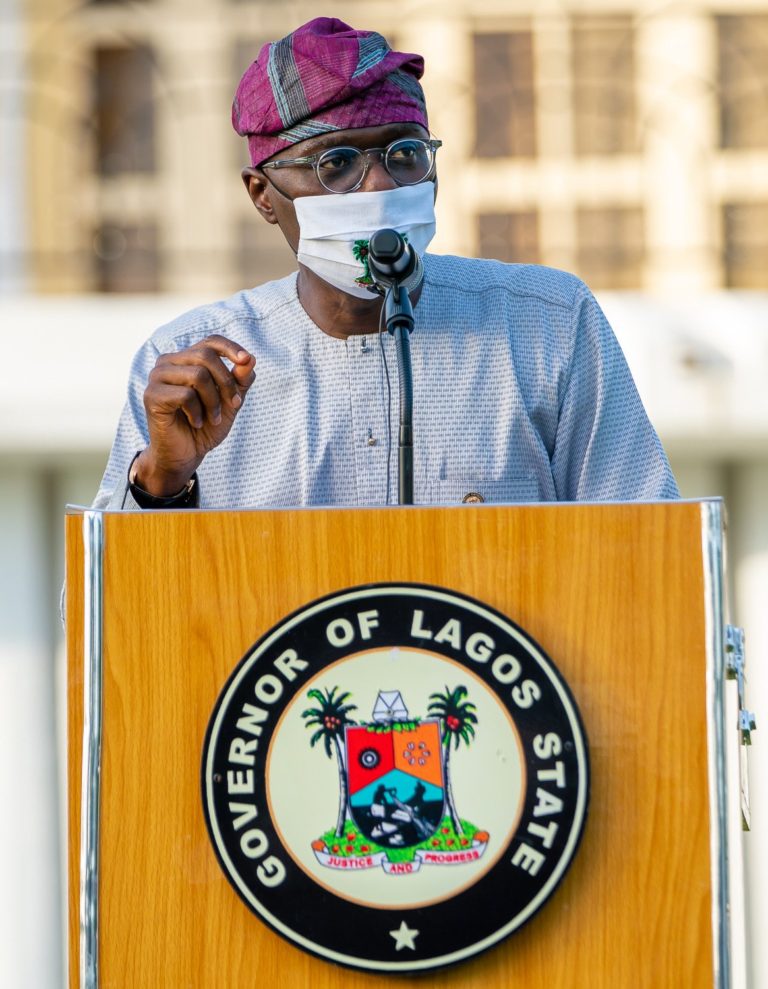
The state Governor Babajide Sanwo-Olu has tweeted that corporate firms, banks, malls and local markets are allowed to reopen within the hours of 9am to 3pm under an enforced framework called “Controlled Easing Phase” and to operate at a capacity of 60 percent of their staff on the premises and 40 percent working from home.
” We understand the roles banks and financial institutions play in the economy, so we encourage them to reopen their branches observing the work hours of 9am to 3pm while also strictly observing social distancing, regular cleaning and sterilisation of the ATMs,” Sanwo-Olu said.
He also added that eateries and restaurants will be open between 9am and 3pm but only for take-out and delivery services. In-dining services are not allowed. All food handlers and staff must go through exhaustive health checks, temperature checks and a high level of hygiene must be maintained.
The statement further revealed that public service workers from grades 1-12 will continue to work from home while grades 13 and above will be on a flexible roster managed by the Head of Service
Primary, secondary and tertiary institutions will remain closed. Students are expected to continue learning on alternative media and online channels.
The governor also added that 49 patients were discharged from the state’s isolation facilities after they tested negative twice to COVID-19 bringing the total number of discharged patients in Lagos to 143.
Recall that on Monday President Muhammadu Buhari in a televised address to the nation had said the lockdown which has lasted for almost five weeks was to be lifted in phases in Lagos, Ogun and the FCT starting on May 4.
Some measures listed by the President includes allowing selected businesses to operate from 9am to 6pm with an 8pm to 6am curfew following after close of work.
Buhari also stated that guidelines for the ease of the lockdown will be communicated to citizens after due consultations with the presidential taskforce.
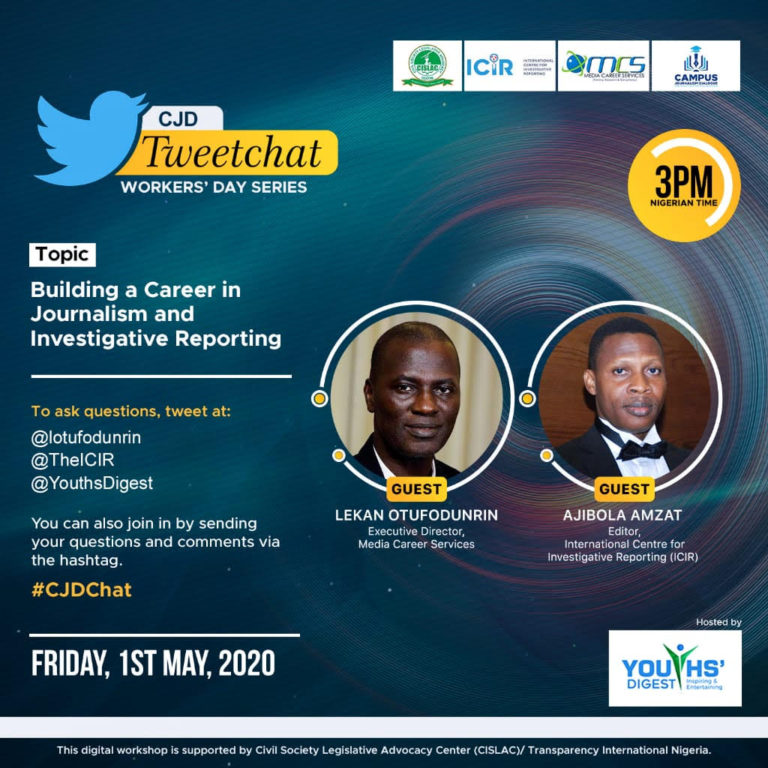
The Campus Journalism Dialogue (CJD) is set to host two celebrated Nigerian journalists, Lekan Otufodunrin and Ajibola Amzat, for a Tweet Chat on Friday, in commemoration of 2020 Worker’s Day.
The CJD Twitter Chat which is focused on building a career in journalism and investigative reporting amongst young journalists is a flagship webinar series hosted by the Youths Digest, with support from the Civil Society Legislative Advocacy Centre (CISLAC).
In a statement on Wednesday by Gidado Shuaib, Youth Digest editor, the event which is scheduled to start by 3pm on Friday is aimed at engaging campus journalists on the occasion of this year’s May Day celebrations.
Shuaib disclosed that Otufodunrin, a former online editor of The Nation newspaper and now the Executive Director of Media Career Services, will speak on ‘Tips for Building a Successful Career in Journalism’.
He added that Amzat Ajibola, editor of the International Centre for Investigative Reporting (ICIR), will engage journalists on ‘Investigating the COVID-19 Pandemic: A Guide for Inspiring Young Journalists’.
“Campus journalists, who intend to participate are advised to send in their questions and also tweet @lotufodunrin @TheICIR and @YouthsDigest.
“Questions and comments can also be forwarded via #CJDChat hashtag,” a statement from the Youths Digest read in part.
Recall that a few weeks ago, the platform had organised series of online media training and seminars for campus journalists across the country.
The seminars, which were adjudged insightful, were facilitated by prominent journalists, Digital security experts and media professionals.
OUR eyes are one of nature’s complex wonders, no wonder they are regarded as the lamp of the body and window to the soul.
While we are all sheltering in our homes amid the COVID-19 outbreak, we are being bombarded with different arguments, opinions, the media and statistics that make it difficult to choose between what is true and what is not. From already circulating statistics, we are privileged to know that Dr Li Wenliang an Ophthalmologist at the Wuhan Central Hospital (the epicentre of COVID-19) was in fact a whistleblower of this now unfortunate pandemic in December 2019. He amongst many are now part of these statistics after he died from contracting the virus from an asymptomatic glaucoma patient in January 2020. This report points to the fact that asymptomatic (when a patient is a carrier for a disease or infection but experiences no symptoms) transmission is a significant source of spread.
While several concerns have been raised regarding the role of the eyes in the transmission of this novel virus, recent reports suggest that COVID-19 may cause conjunctivitis with a prevalence of 0.8-4.8% as secondary complications even though it is currently not listed in the national case definition for COVID-19. It is therefore important to note that conjunctivitis (an inflammation or infection of the transparent membrane otherwise known as the conjunctiva that lines your eyelid and covers the white part of your eyeball. This is what causes the whites of your eyes to appear reddish) is a common eye condition and is in fact possible though not proven that a patient with COVID-19 associated conjunctivitis could have the infectious virus in their ocular secretions like tears.
In view of the above, it’s not out of the norm that most of us rub our eyes several times a day whether we are tired, our eyes feel itchy or there seems to be something inside our eyes and often times it appears as though the easiest way to feel relieved is to rub them a little while forgetting that it is a great way to spread the virus from our hands to our eyes. This is why we are all saddled with the responsibility now more than ever to practice actions to prevent the spread of the virus and protect our eyes in addition to our nose and mouth. This entails frequent washing of our hands with soap and running water, avoid sharing cosmetics and any other object involving the eye.
In addition, this is the time to think less of vanity. Contact lens wearers are encouraged to consider wearing their eyeglasses for now so as to reduce the number of times that they touch their eyes towards preventing infection from the virus to themselves and to others.
Nevertheless, though fever, dry cough, tiredness and breathing difficulties still seem to be the most common symptoms of COVID-19, they do not rule in or rule out its existence and this is why no conclusion should be made that any eye problem one might experience during this time is a sign or symptom of COVID-19 because they could be triggered by other eye problems, allergies, infections and adverse effects of some medications.
Owing to the fact that most eye clinics and healthcare centers are temporarily closed down due to evident reasons, this is the period where digital health technology should be embraced especially for remote consultations, appointment bookings and generally to stay connected to those that need non-emergency eye health services.
In conclusion, the continuous support of the government in these times and beyond cannot be overemphasized especially in providing basic amenities such as food, constant light and water, security, telecommunications network but to mention a few so as to enable lockdown situations thrive effectively while not forgetting timely remuneration for the government employed workforce and a better enabling environment for those in the private health sector and all healthcare workers at large.
I implore Optometrists, Ophthalmologists and other healthcare workers to continue to err on the side of caution and continue to prevent the possible transmission of COVID-19 through the ocular tissue.
Princess Ifeoma Ike, Public Health Optometrist writes from Abuja
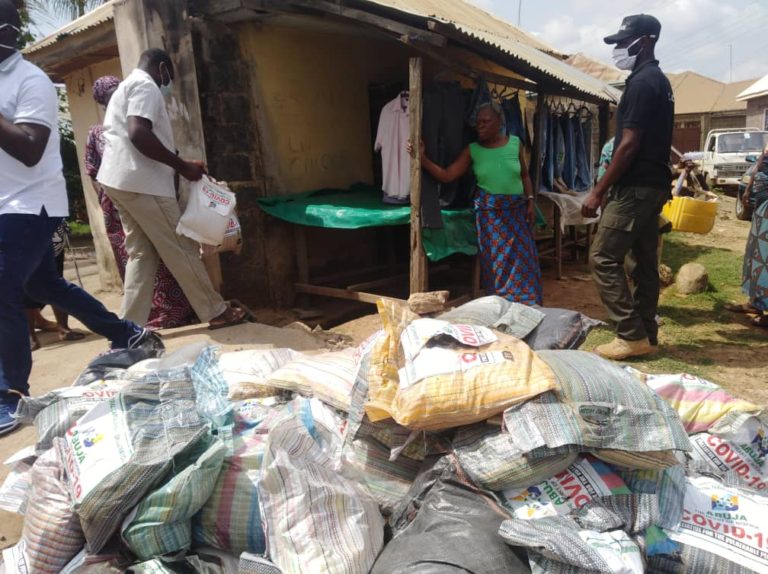
RESIDENTS of the Federal Capital Territory (FCT) have expressed dissatisfaction over the quality of palliatives distributed by the FCT administration during the lockdown period.
This is coming on the heels of the presidential lockdown directive issued by Muhammadu Buhari in April due to the Coronavirus Disease (COVID-19) Pandemic.
Residents of the six area councils expressed their anger on social media about the quality and quantity of the palliatives distributed.
They also alleged that physically challenged persons and the less privileged were left out, and the officials did not observe social distancing protocol.
According to SayNoCampaign, an FCT COVID-19 Palliatives Situation Room that monitors distribution process across the council areas, and reporting to the appropriate bodies, the mode of distribution in Bwari Council Area Council was also poor.
It had earlier criticised delivery of the grains and condiments in Gwagwalada, where it accused officials of giving preferential treatment to selected individuals, and sometimes distribute at night.
“We observed keenly the distribution exercise carried out by the Bwari Area council and are concerned that little or no progress has been made to achieve transparency and accountability throughout the distribution processes.”
oThe poor distribution arrangement aggravated the tension experienced in some parts of the area council, especially in Kubwa and Byazhin, Ezenwa Nwagwu, Co-convener, SayNoCampaign said.
“Reports of unrest marred the distribution exercise in Kubwa ward, whereby official ran off and community members made away with items. Also, in Byazhin, distribution was suspended and items were returned to the area council secretariat till further notice. Security men, distribution officials, as well as, community members were attacked and sustained injuries in the cause of the altercation.”
Describing the situation as embarrassing, Nwagwu said the situation could have been made better with a clear modality for distribution, transparency in delivery process and effective communication by the area council leadership.
According to him, community members were largely unaware of the modalities for distribution and had believed that only the vulnerable and indigent members of the community would receive the items.
Meanwhile, other community members argued that the council chairman had announced a house-to-house distribution.
“No beneficiary list was compiled; hence, most households were expecting to receive their share,” he added.
Nwagwu blamed the distribution officials who reportedly gathered community members in an open field to randomly distribute the items.
“The expectations of community members were further dashed when they realised that the number of materials earmarked for distribution in one community were small and could not go round.
“Hence, instead of getting a 5KG bag of rice, a module of Garri, five (5) sachets of tomato paste, few cubes of seasonings spice, 1 litter of oil, beans and 2 KG of Semovita bag, which the Minister of State FCTA had summarised as a bag of rice and a bag of condiments for an individual beneficiary, community members were rather receiving a 2KG bag of garri and two sachets of sugar per individual, or 3 mudu of rice and 2 sachets of tomatoes paste. The original package was stripped down to few items per beneficiary. As expected, this further heightened suspicions by community members who believed there was a foul play.”
The group also criticised security officials for harassing community members who took photographs and video footage of squabble between the community residents and council officials due to the flawed distribution process.
NIGERIAN lawmakers on Tuesday commenced the process for the repatriation of Chinese citizens residing illegally in the country.
This is against the backdrop of reported cases of human rights abuses meted out at Nigerians in China, particularly in the Guangdong Province.
In a motion titled: “Maltreatment and Institutional Acts of Racial Discrimination against Nigerians Living in China by the Government of China,” sponsored by Benjamin Okezie and nine other lawmakers, they expressed concerns over the current status of about 10,000 Nigerian population living in the Guangdong territory.
Some of these Nigerian nationals, they identified include students, workers, investors, traders among others.
The ICIR had earlier reported on why Nigerians in China were being attacked and how the Chinese authorities in Guangdong, believed it had curtailed the spread of the Coronavirus Disease (COVID-19), with claims that Nigerians, among other foreigners, allegedly brought new cases to the Chinese territory.
Moussa Faki Mahamat, Chairperson of the African Union Commission (AUC) also summoned Mr. Liu Yuxi, the Chinese Ambassador to the AU on the crisis, shortly after Femi Gbajabiamila, Speaker of the House of Representatives, met with Zhou Pingian, the Chinese Envoy in Nigeria.
Envoys under the aegis of African Group of Ambassadors also petitioned the AUC, United Nations, and the Chinese government for the inhumane accusations.
In view of these, the House members directed its Committee on Interior, Nigeria Content Development and Monitoring, and Commerce to probe the Nigerian Immigration, Corporate Affairs Commission, Nigerian Content and Development Monitoring Board, including other relevant Ministries, Department and Agency (MDAs) to verify Chinese citizens legally permitted to reside in the country while the undocumented ones re expatriated to their country.
In addition, the House Committees are expected to extend the verification exercise to check the right expatriate quota of Chinese businesses in the country, while those found guilty are deported to legalise their immigration status in Nigeria.
“Recall that sometimes on 8th April, 2020, photos and videos appeared on various social media outlets depicting institutionalized acts of racial discrimination, maltreatment, xenophobic assaults, embarrassments, illegal detentions, and forceful evictions of Nigerians and other Africans living in Guangzhou,” Okezie stated.
“Concerned that under the pretext of curbing the spread of COVID-l9, which ironically originated in Wuhan, China, several kinds of maltreatment of Nigerian citizens in Guangzhou have been perpetrated by Chinese people and authorities including wrongful confiscation of Nigerian International Passports, prolonged and illegal detention of Nigerians in the name of mandatory quarantine despite their having certificates of clean health and no recent travel history, outright refusal to release the test results, and the eviction of Nigerians from their homes and hotel accommodations, etc.”
The lawmaker particularly emphasised on flouting of Article 5 of the Vienna Convention on Consular Relations, (1963).
According to him, the Chinese government ought to have contacted the Nigerian Consular on its policies as it might affect the Nigerian citizens but failed to do so, thus maltreating the Nigerian citizens in its territory.
“Worried that in the exercise of his function of protecting the interests of nationals of a Sending State as provided for under Article 5 of the Vienna Convention on Consular Relations, 1963, the Nigerian Consul General was treated in clear violation of Article 40 of the said treaty which requires the Receiving State to treat consular officers with due respect and to take all appropriate steps to prevent attacks on their persons, freedom or dignity.”
He concluded that the actions and inactions are breach of several other international conventions to which both nations are signatories.