Home Blog Page 2115

COVID-19: SSS detains Akwa Ibom journalist, Kufre Carter over contoversial interview with anonymous doctor

0

AKWA IBOM-based sports journalist, Kufre Carter is currently being held incommunicado by operatives of the State Security Service over a controversial audio clip on COVID-19  that he allegedly circulated on social media.

Kufre in a Twitter post said he received a call from the Director of Operations, DSS Uyo Command, Uchechukwu Nnatube, inviting to their office for questioning over his alleged involvement in the audio interview with a medical doctor.

The seven-part interview with an anonymous medical doctor centred around the foul play allegedly perpetuated by the State Governor, Udom Emmanuel, to manipulate the figures of COVID-19 tests in the state to downplay its magnitude.

Kufre was taken into custody by operatives of the SSS on April 27, after his visit to the state office in company of his lawyer, Augustine Asuquo.

Asuquo said he was not granted access to witness the interrogation of his client and was walked out of the premises by the security agents.

He said Nnatube later contacted him, demanding Kufre’s phone so that they could extract the purported audio recordings of the interview.

The operatives also requested for the phone number of the anonymous doctor, he said.

The 1999 constitution as amended protects the fundamental rights of its citizens specifically section 37 guarantees the right to telephone conversations, correspondence, and telegraphic communications.

Inibehe Effiong, Head of Inibehe Effiong Chambers who also offers legal representation to Kufre in a statement alleged his client was being tortured by the SSS operatives to forcefully obtain a confession from him.

“From all indications, we reasonably believe that SSS officers are torturing Kufre Carter in their custody in their effort to extract a ‘confessional statement’ from our client. The SSS is torturing our client for him to hand over his private mobile phone to them,” he said.

The human right lawyer said he had called Nnatube on phone to express his displeasure with his office’s handling of the case, but his calls were ignored.

“We are aware that the Akwa Ibom State Government instigated the DSS to hunt, arrest, torture and detain our client over the alleged audio record after facing increasing public criticisms over their handling of the COVID-19 pandemic in the state.

“Since Nigeria is a country governed by laws and not the Banana Republic, we ask the DSS in Akwa Ibom State to immediately retrace from their illegal actions and release Kufre Carter forthwith, or to charge him to court first thing on Tuesday,” he said.

He said his client’s house had been searched by the DSS illegally to find his personal phone, stating their actions dated back to the times of an uncivilised era.

“We wish to also place on record that there is no social distancing at the SSS Command in Uyo. We hope that this is not a deliberate attempt to expose our client to the dreaded COVID-19.

“Nigerians and the international community should prevail on the SSS in Akwa Ibom State to act as a responsible law enforcement agency and release our client immediately, and stop behaving like a colonial police for politicians and public office holders in Akwa Ibom State,” he said.

COVID-19: NCDC proposes new strategy to scale up testing, predicts more disease epicentres

THE NIGERIA Centre for Disease Control (NCDC) says it would adopt a new strategy to scale up Coronavirus disease (COVID-19) testing in Nigeria, as the day proposed by President Muhammadu Buhari to ease the lockdown imposed on Abuja, Lagos and Ogun states comes closer.

President Buhari had on Monday in a nationwide broadcast announced a phased easing of lockdown in the nation’s capital and the two states starting on Monday, May 4.

But the NCDC in a 32-page document released and sighted by The ICIR predicted that there would be increase in cases of COVID-19 across the country and a possibility of new disease epicentres in different states of the nation.

As part of strategies to manage the impending increase, the Centre according to the document, recommended the need to activate state-level response noting that different phases of the novel virus may start ravaging many states in the country.

“As the COVID-19 situation evolves and the characteristics of the outbreak changes, new disease epicentres will emerge thus elevating the important of a state level response,” NCDC said.

“Various states are at different levels of the outbreak, therefore a tailored approach suited to the context is required recognising the need to prepare for potential subsequent phases.”

Nigeria currently ranks 31st out of 55 on the African continent in carrying out COVID-19 tests.

The country has capacity to carry out only about 1,500 tests daily and only a total of 11, 426 persons tested as at the time of filing this report.

The NCDC through the Federal Ministry of Health, has prioritized  testing as one of the key strategies to the COVID-19 response in Nigeria.

As Nigeria continues to wage war against the novel virus that has killed over 217,000 people globally, the Centre said it plans to increasing its testing capacity by activating more laboratories.

At the moment, there exists only 12 laboratories in eight states of the federation.

In the document, the NCDC disclosed plans to increase the laboratories to 15 in 12 states and the Federal Capital Territory (FCT).

This, it said  would increase national testing output to at least 3,500 tests per day across the country.

In increasing testing capacity, the Centre noted that infected citizens would be easily found, isolated and treated , thereby improving the country’s fight against the deadly virus.

Currently, Nigeria has recorded 1,523 cases of COVID-19, and 44 deaths.

To manage the increasing numbers of infected persons, NCDC has proposd ramping up diagnostic testing in May, by beginning testing in existing Human Immunodeficiency Virus (HIV) and Tuberculosis laboratories across the country.

According to the organisation, the country has 37 molecular laboratory equipment platforms currently deployed and in use within the President’s Emergency Plan For AIDS Relief (PEPFAR)-supported National Polymerase chain reaction (PCR) Network for HIV viral load and Early Infant Diagnosis (EID) testing.

“These Mega-PCR laboratories have a combined minimum testing capacity of 7,000 tests per day, about half of which will be dedicated to COVID-19 testing,” NCDC submitted in its strategy document.

In a bid to contribute to research and development – a move that would launch Nigeria’s path to finding a possible cure or vaccine, the Centre said it plans to  roll out mass testing to survey the population and to learn more about the virus between May and September.

“The NCDC will explore the role of antigen and antibody tests in the future. This is essential to understand the rate of infection, and how the virus is spreading across the country. This will enable an assessment of the impact of measures taken so far to contain the virus, to inform current and future actions,” it said.

However, the Centre pointed out that there are several challenges that greet each stage of its proposed expansion.

For one, it noted that global shortage of materials needed to run the end-to-end testing process at full capacity, particularly the reagents can mar the country’s battle against the virus

According to the document, there is also the never-ending need for specialists across the country, which at the moment stands as a deterrent in increasing testing capacity.

 The ICIR earlier reported how the situation in Kano State had worsened due to an understaffed NCDC branch office.

It was reported that operations were shut down, despite recurring reports that mass deaths possibly linked to COVID-19  were being recorded in the state which houses over three million Nigerians.

Cases like that of Kano has led NCDC to plan on initiating decentralised testing.

According to the public health institute, and as contained in its strategy documents, Nigeria currently has 407 GeneXpert instruments (manufactured by Cepheid) deployed in 399 health facilities across the country for use as first line testing for TB diagnosis.

It proposed that as part of its strategy and given that every state of the federation including the FCT has at least 5 GeneXpert sites, at least one GeneXpert site in each state will be repurposed for COVID-19 testing, to activate decentralised testing in all states.

Presidency cautions against checkpoint delay of trucks transporting essential items

0

THE presidency has drawn the attention of law enforcement agents to the delay of large number of food trucks at various checkpoints around the country, due to curfews and lockdowns in various states.

Garba Shehu, the Senior Special Assistant, Media and Publicity to President Muhammadu Buhari, tweeted that the restrictions of movement due to the COVID-19 pandemic does not apply to vehicles transporting essential commodities, such as food.

“The country cannot afford a situation where agricultural products are being left to rot in trucks held at various checkpoints, when millions of Nigerians across the country need food. COVID-19 or no COVID-19, Nigerians need to eat.”


READ ALSO:

He added that other essential items that can be transported despite the ban on movement as prescribed by the Presidential Task Force (PTF) .

This include pharmaceutical and sanitary supplies, personal care items, agro chemicals and agricultural machinery, electrical products and electronics, oil and gas, courier services, health supplies and protective garments.

Shehu said vehicles transporting essential items must not convey any commercial passengers, and the occupants must not exceed three, the driver, spare driver, and conductor.

He added that the drivers must keep basic protective and sanitary items with them, including face masks, hand sanitisers, and tissue paper to and from their destinations.

Once these conditions are satisfied, they must be allowed to travel freely to and from any part of Nigeria, he said.

US to send Nigeria ventilators as Trump speaks with Buhari on telephone

THE United States President Donald Trump has declared  support for the Nigerian government’s effort in the fight against Coronavirus disease (COVID-19) pandemic.

This was disclosed at the briefing of the Presidential Task Force on COVID-19 in Abuja by The Minister of Information and Culture,  Lai Mohammed on Tuesday.

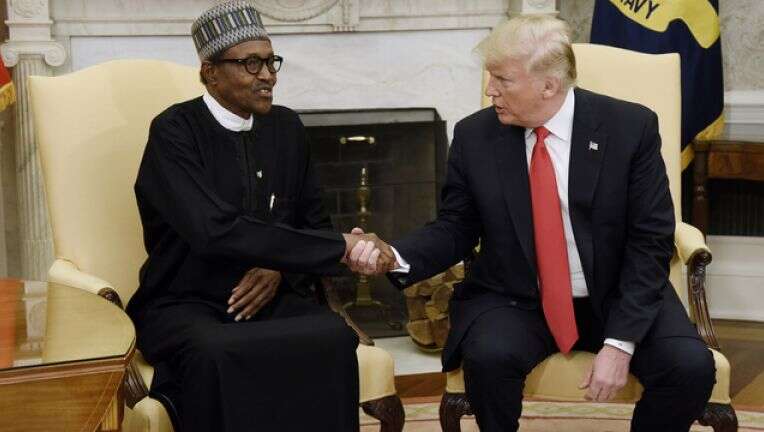
He said President Muhammadu Buhari today had a phone conversation centred on Nigeria’s response to COVID-19 pandemic with President Donald Trump at the request of the American President.

According to the information minister, President Buhari used the opportunity of the phone conversation to brief the American leader on the steps Nigeria was taking to contain the spread of the disease.


READ ALSO:

He noted that Trump, on his part, declared his country’s support for Nigeria and promised to support the government’s effort with ventilators.

Mohammed said President Trump has assured Nigeria of his government’s solidarity with Nigeria in this difficult time and promised to send ventilators to support the country in its fight against Coronavirus.

Bashir Ahmad, the personal assistant to the president, also disclosed the call on his Twitter handle.

“President Muhammadu Buhari had a phone conversation with the US President Donald Trump today, the two leaders discussed Nigeria’s efforts to defeat the COVID–19 Pandemic, and President Trump pledged US support and solidarity. #COVID19Nigeria,” he tweeted.

It will be recalled that Nigeria as of April 27th  recorded a total of 1,337 confirmed cases of COVID-19 with its death toll at 40.

The US, on the other hand, has recorded hundreds of thousands of infections while no fewer than 56,000 people have died.

Germany pledges additional €5.5 million to vulnerable Nigerians in the Northeast

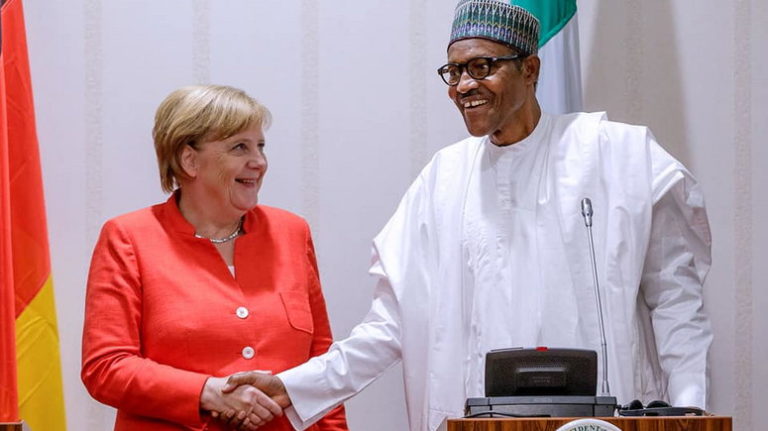
GERMANY has announced a plan to provide additional €5.5 million to support vulnerable people in the northeastern states of Borno, Adamawa and Yobe.

Earlier, Germany had announced that the federal government will receive €5.5 million as Germany’s contribution to aid vulnerable Nigerians access to water, food and shelter.

The statement reads:  “Germany provides an additional €5.5 million (2.2bn Naira) to the Nigeria Humanitarian Fund (NHF) managed by the United Nations (UN) Office for the coordination of humanitarian affairs in Nigeria to continue life-saving aid in Borno, Adamawa and Yobe states in the context of the COVID-19 crisis.

“Ongoing activities include drilling of wells, construction of sanitation facilities, rehabilitation of buildings or construction of shelters for internally displaced persons and other victims of insecurity in the North East.”

“This brings Germany’s contribution to the NHF to a tota of €29 million since it became operational in May 2017, making Germany a major donor to the NHF over the past three years.”

The country also pledged to provide the Nigeria Police Force (NPF) with €20,000 worth of personal protective equipment including hand disinfectant, protective clothing, surface disinfectant, face masks, clinical thermometers and gloves, adding that the materials would be handed over in Abuja shortly.

REPORT: Mixed reactions trail distribution of palliatives in Kwara

0

By Abiodun Jamiu


CITIZENS of Kwara State have complained about the recent distribution of palliatives by the government to cushion the effect of the lockdown declared in the state, as a way of preventing the spread of COVID-19. Many believe the palliative is too small to last them throughout the lockdown period.

The State Government had declared a total lockdown in the state as part of measures to contain the spread of the novel Coronavirus (COVID-19) disease.

Residents interviewed by our reporter expressed displeasure at the “insufficient food items” distributed by the government.

Palliatives about to be distributed among a household of over 20 vulnerable people

A fish seller is popularly known as Iya Eleja at Okelele area of Ilorin, the state capital, who also sells cooked rice at a makeshift space, explained how the lockdown severely affected her sales. She complained about the quantity given to her household.

“When Governor Abdulrahman announced on the radio that rice would be shared among the aged, we were happy. In fact, I discussed it with that woman,” she said, pointing at another woman selling her wares few meters away.

According to her, sales have dropped since the lockdown became effective, stating that the six cups of rice she prepares daily would not even be patronised because residents were staying at home.

“People are not coming out and the little sales I make is what I used to feed the children who are staying with me.”

Another resident of Ilorin, who preferred to be called Baba Lekan who told our reporter that he alongside other residents received the palliatives, but noted that the items did not reach many residents.

“We are really grateful to the government for these food items. “We got the foodstuff as distributed across each zone. From Sherikikaun, Alagbado, Sobi, to Harmony, this is what is given to us. We are asked to stay at home, but these palliatives cannot cushion the effect of the hardship. It would not be enough,” he emphasised.

Food items being measured for distribution among women of an household

Dr. Haliru Yahaya Ndanusa, Kwara  State Chairman of the Palliatives Committee,  announced that commodities for the first phase include 19,400 pieces of 10kg bags of rice; 19,400 of 5kg of semovita; 1,940 packs of spaghetti; 9700 packs of salt; 4,850 packs of sugar; and 38,800 (1 litre) of vegetable oil.

He said that garri (cassava flakes) and tomato purée donated to the government would also be distributed, stressing that nobody who is qualified had less than a bag of the items given. “Everyone concerned, as picked by the committee, deserves one bag of the item,” he said.

But Jamiu Rukayat, another resident of the city who sells cooking ingredients, also complained about the ‘meager items’ she received.

Rukayat’s portion of the palliatives

“Most of us are low-income earners. If we did not move out a day, we would starve. Our thought when we were asked to stay at home was that the government would provide for us. But it seems the government is only concerned about themselves. It is not that the food distributed was enough, in fact, what 20 people are sharing is not enough for two kids,” Rukayat said.

“Imagine people like us who will only get to feed when we go out are unable to, it would even be fatal than the virus.”

However, other residents argued that despite making efforts to benefit from the palliatives distributed, they did not get any.

Rukayat Ogundipe, a resident of Offa expressed displeasure at the palliatives distributed, claiming that despite putting her name down, she did not get any package.

“After writing our names for Abdulrahman’s foodstuffs, the women leader came back to us that the food is meant solely for the aged women in the ward. But we heard on Radio that the poor, widows and women are entitled to the palliatives,” Ogundipe said.

She also added that despite the emphasis on the aged women, the food was not enough as hoodlums cornered the food at the ward level.

“A bag of rice (10 Kg) was given for 21 people. How did they want people to share it? Is that what they want us to feed on with our kids throughout the lockdown?” she asked rhetorically.

This was corroborated by Abubakar Ahmed who disclosed that the lockdown has rendered everyone vulnerable.

Ahmed, a motor vehicle spare parts dealer at Ipata Oloje Market, Ilorin, said: “I have not been able to go shopping and the little that remains with me has been expended on food. Now that the government is sharing food items, we are all vulnerable and cannot afford to start picking those who would benefit or not.”

“We realized that the food items won’t be enough, so we brainstormed on what to do. We agreed that it should be distributed among the members of the household since the rice would not even feed a person. So, we distributed it among the women in the house.”

While the state government argued that it was not being partisan on the distribution of palliatives across wards level, Mudashir Afolabi, a resident of Offa, alleged that the distribution process was based on political affiliation. According to him, a resident who is not known at ward meetings would not receive the items.

“Although they said it is not partisan. But if someone who is not affiliated to the ruling party went to where it is being distributed, they would hardly get the items. Those who are collecting at ward level distribute the item along party affiliation,” he alleged.

Corroborating Afolabi’s argument, Abiodun Ajala, another resident of Offa, alleged that the palliatives were distributed along political leaning by those entrusted with the distribution. Ajala who commended the initiative stressed that the government needs to brace the pool to cover more vulnerable

“It is all politics. If you witnessed how the items are being shared, you would agree the women leaders are selective. We have been asked to stay at home, they should at least provide what we would be eating,” he said.

“I believe the governor is trying, but those distributing the items are sabotaging his effort. People are lamenting. There is hunger in the land, the governor should tell the committee to cover more vulnerable.”

However, Abdulrahman Abdulrasaq, Governor of Kwara State,  while reacting to the insufficiency of the items, particularly the viral video allegedly showing poor quantity of palliatives meant to cushion the effect of the stay at home directive, said the state government cannot feed everyone.

“Like the Chairman of the Palliatives Committee, His Royal Highness said, it (the palliatives) is not meant for everybody in the society,” Abdulrasaq.

“The government cannot feed everybody. That’s why we’ve left the market open, civil servants are getting their salary. Markets are open, so is the pharmacy. You can get there and buy things. To get a bag of 50-kilogram rice for every Kwaran would cost us about N60 billion. There are certain categories of people entitled to these palliatives. Not everyone in all the wards should share it, including civil servants. There’s a distinction.”

Dr. Haliru Yahaya Ndanusa, Chairman of the Committee on Palliatives, had announced that palliatives would be distributed at the various wards, targeting residents that are worst hit by the lockdown.

Traditional rulers, religious leaders and community-based organisations in various wards were assigned to oversee the distribution.

The categories of people identified are the aged, the physically challenged, women, widows, and widowers who are sole breadwinners of their families and artisans who are dependent on daily earnings.

Iya Eleja attending to a little girl. She complains of low patronage

In Nigeria, unregistered household enterprises comprise a significant portion of the economy, accounting for about 65 per cent of the GDP, according to the Bank of Industry. Like Iya Eleja, the total lockdown declared by the state government has grossly affected many daily income earners who live from hand-to-mouth.


NLC backs FG’s lockdown extension, gradual ease of movement restriction  

The Nigerian Labour Congress (NLC) on Tuesday backed the Federal Government’s (FG) decision to extend the Coronavirus Disease (COVID-19) lockdown by an additional one week and gradual ease of movement restrictions.

President Muhammadu Buhari in his national broadcast on Monday night had ordered gradual ease of the lockdown in Lagos and Ogun States including the Federal Capital Territory (FCT), while also imposing a 6 am to 8 pm curfew and mandatory use of face masks in public.

“…I have approved a phased and gradual easing of lockdown measures in FCT, Lagos and Ogun States effective from Monday, 4th May, 2020,” Buhari stated in the broadcast.

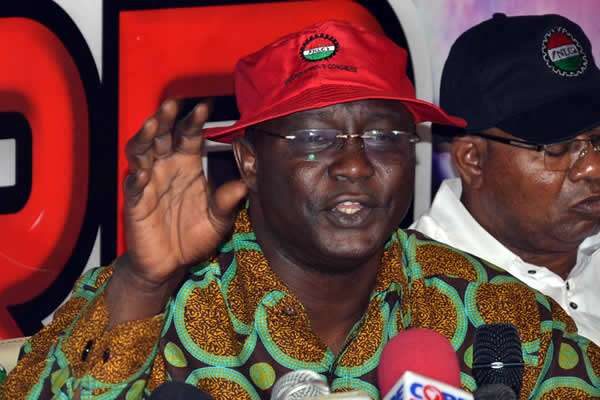
Ayuba Wabba, the NLC President during an interview in Abuja, however, disclosed that the new position of the FG is in line with the union’s initial recommendations, having realised the effects of the initial 14 days lockdown on the masses and business operations.

“This is what labour has canvassed for. Everything we have asked for is gradually opening up, that lockdown cannot be perpetual,” Wabba said.

The new directive, he added, would reduce the socio-economic impact of the COVID-19 pandemic on the populace, adding that the lockdown cannot also be abruptly lifted as it is in tandem with current global realities.

“…And also, lockdown cannot be abruptly opened up. Clearly speaking, it has met the observation of labour and some of the issues we have raised that we must find a balance between continuous lockdown and meeting the needs and livelihoods of many Nigerians,” Wabba argued further.

Nigeria recorded her first COVID-19 case on 25th February. The number has continued to increase with 1,337 confirmed cases, 40 deaths and 255 discharged persons as of 27th April.

In the latest discovery, the Nigeria Centre for Disease Control (NCDC) put the current figure of confirmed COVID-19 cases in Lagos at 34, 15 in the FCT, 11 in Borno, two (2) in Taraba and two (2) in Gombe states.

On possible reduction in workers’ salaries, the NLC said it would strongly stand against such act.

“The issue of workers pay and salaries is an issue under the exclusive domain of the tripartite of social dialogue and therefore, the unilateral approach to deduct workers salary is even and we will continue to resist that because those salaries are the product of law, production of engaging and collective bargaining process.

“So it is not expected that unilaterally somebody will just wake up and say I have deducted your salary because of this challenge. So clearly speaking, this is not the way to go. It will put more people into poverty,” Wabba said.

“We will have a pool of working poor, people are working yet they are poor and therefore it will compound our socio-economic situation and also compound the security and social challenges. The unions will be there to respond to such challenges in ways and manners that are allowed by our law and also using our time-tested mode of engagement.”

Debt burden: Buhari requests fresh N850 billion loan, seven weeks after slashing 2020 budget

SEVEN weeks after the federal government announced slashing the 2020 budget due to the sharp decline in oil prices, President Muhammadu Buhari has asked the Senate on Tuesday to approve his request to secure another fresh loan of N850 billion.

The loan request is expected to be from the domestic capital market to fund projects in the 2020 budget.

Recall that on March 9, 2020, the federal government announced that it would cut the size of its record 10.6 trillion Naira ($34.6 billion) budget for 2020 due decline in the price of crude.

Capital market is a market where buyers and sellers engage in trade of financial securities like bonds and stock.

The request was made in a letter read by the Senate President, Ahmad Lawan, on Tuesday on the floor of the upper chamber of the National Assembly in Abuja, the Senate gave swift approval to the president’s request to raise the loan.

Minister of Finance, Budget, and National Planning, Zainab Ahmed, is expected to give more details on the loan request which was granted following the senators’ resumption from a recess.

Lawan explained that the decision to go on recess was to help sustain solutions to the health crisis and ensure the crisis does not create more problems for the government and its people.

Senator Lawan said that “The pandemic has affected the 2020 budget and the National Assembly has a responsibility to work with the Executive to address the problem.”

Also, recall that Nigeria is currently expecting a $3.4 billion in emergency funding loan from the International Monetary Fund (IMF) to cushion the impact of COVID-19 on the nation’s economy.

The facility has been considered to be the largest loan allocation by the monetary fund to an African nation to fight the pandemic, and it is scheduled to be repaid in not more than five years.

REPORT: Nigerian Journalists who knew about Kyari’s role in MTN scandal yet kept quiet  

SINCE the death of late Abba Kyari, former Chief of Staff to President Muhammadu Buhari, notable Nigerians, including senior journalists have continued to announce their intimacy with the late CoS as well as his resolve to maintain secrecy on different corruption allegations against him, despite public outcry.

Kyari died on April 19, weeks after testing positive for the Coronavirus disease (COVID-19).

Prior to his death, Kyari had been at the receiving end of several attacks over corruption-related cases. Notable among these, was the MTN scandal.

In 2016, he was accused of receiving N500 million bribe from MTN to help reduce a $5.2 billion fine imposed on the telecom operator by the Federal Government. This was in turn, received with public backlash.

But some high-profile journalists in their tributes to the late Kyari said they were privy to classified information on the MTN scandal in which the Cos was indicted.

They claimed to have obtained confidential information from the late CoS about the allegation but respected his wish not to divulge the information.

MTN scandal

The Federal Government in 2015 penalised the telecom giant with a $5.2 billion fine for non-compliance with the January 2012 SIM card registration deadline.

The telecom firm ought to have disconnected its service subscribers with unregistered SIM cards but was liable for flouting the order issued by the National Communications Commission (NCC).

The MTN’s inaction was believed to have fuelled insecurity in the country, particularly the Boko Haram insurgency.

In a 2015 report, MTN Nigeria was also accused to have unduly diverted N11.398 billion from its Nigeria office to MTN Dubai, thus denying the country of tax revenue.

A similar illegal transfer of N11.789 billion was purportedly made from MTN Ghana to the same Dubai office to make a total of N37.6 billion illicit transfer.

“In a rare disclosure in 2013, MTN admitted it made unauthorised payments of N37.6 billion to MTN Dubai between 2010 and 2013,” the findings revealed, adding that the telecom company could have transferred over N90.2 billion out of the country since 2002 when it commenced operation in Nigeria.

In 2018, MTN Nigeria was again accused of tax evasion and was directed to pay $2billion tax arrears.

This was after the Central Bank of Nigeria blamed the firm for its involvement in capital flight to the tune of $8.13 billion.

Meanwhile, tax evasion is a criminal offence in Nigeria, as well as it is in other developed nations.

But with the $5.2 billion fines, which led to court actions, and diplomatic discussions to reduce the huge fine, Kyari allegedly collected $500 million bribes.

The MTN management reportedly denied the allegation before a presidential committee set-up to investigate the claim. Amidst the controversies, Sifiso Dabengwa, the former Chief Executive Officer of MTN resigned.

MTN Nigeria office also reportedly sacked Amina Oyagbola, a former Director of Strategic Communications for her alleged involvement in the bribery scandal.

Oyagbola worked at the UBA at the time Kyari was heading the bank management and therefore was allegedly delegated to seek Kyari’s intervention in MTN’s case.

She had purportedly arranged with the late CoS to reduce the fine to $1.6 billion.

MTN though has denied the claim, saying she voluntarily resigned after serving for 12 years as the longest director.

Despite the fact that the scandal was widely reported in the media, the late Kyari never offered an explanation to the Nigerian public.

Similarly, journalists with whom the deceased CoS shared the information did not inform Nigerians, instead, they claimed that they respected Kyari’s wishes to keep the information away from the public knowledge

For instance, Simon Kolawole, in his opinion Now That Abba Kyari is Dead,’ published on 19th April, reflected how he developed a close friendship with the deceased, and knew about Kyari’s resolve to pay no attention to various allegations against him.

In the article, Kolawole narrated how he exchanged communications with the late Kyari while in self-isolation.

“…we had regular phone calls. I normally would call him on WhatsApp voice but he would switch to video and I knew why: he wanted to prove to me that his life was not in danger,” he said in the article.

According to him, even when Nigerians were curious about the location of Kyari, in the midst of the rumours that he was flown out of the country, Kyari cared less but would forward the false claims to him.

On the MTN saga, Kolawole explained how Kyari disagreed with the idea of reducing the MTN fine and how he was sidelined until the $1.6 million final settlement was made.

“My biggest disappointment with Kyari is that he refused to tell his story. When he was accused of taking a bribe from MTN, he explained to me how he opposed the reduction of the $5.2 billion fine, how he was excluded from the resolution committee because of his stand, and how some people met in Dubai and drafted a position paper that formed 80 per cent of the final settlement agreement.”

Further, Kolwaole wrote that “He (Kyari) said he didn’t know if anybody took a bribe, but he was not part of it and his conscience was clear to God.

“So, why not grant an interview to clear your name? His reply: “My boss knows I will never betray his trust. I don’t need to defend myself.” And according to Kolawole, there is no counter-narrative till today.

The journalist stressed that each time an allegation came against the late CoS, Kyari would do so much to explain in detail the true situation, including those behind the allegation but would never want it out in public.

According to him, we  would ask: “Okay, Mallam, can we publish?” In the most frustrating manner, he would reply: “No. I’m only explaining this for you to know the correct facts. I’m not asking you to defend me. But even if you want to defend me during arguments or discussions, I want you to do it on the basis of facts, not emotions.

“I once told him in despair: It is not about you alone, Mallam! I worry about the stigma your children will carry for life.”

He could not be bothered, Kolawole added.

Kolawole was not the only journalists who had information that Kyari refused to divulge. There are others. One of them is Waziri Adio, a former member of ThisDay Newspaper Editorial Board

In his tribute to Kyari: A Good Man Is Gone’,  Adio described Kyari as a good man that was widely misunderstood and deliberately misrepresented, yet fiercely loyal to President Muhammadu Buhari.

The article published on 19th April revealed Adio had known Kyari for almost a decade. He said Kyari was behind his appointment as Executive Secretary of the Nigeria Extractive Industries Transparency (NEITI).

Adio said despite the constant demonisation of Kyari’ person, he has not come across many public officials that can  boast of the intensity, the passion, the meticulousness, and the selflessness of Mallam Abba.

But on corruption allegation, Adio reitrated Kolawole’s observation that Kyari would prefer to be silent on allegations against him.

He said Kyari would share his defence of corruption accusations with him among other friends but would still prefer that it is not reported  in the media.

According to him, as a former journalist who rose to become an Editor, the late CoS would have duly responded but he chose not to.

“…He would rather explain the details and backgrounds of the latest accusations to us as his friends but would insist that government business should not be done through leaks and that he would not waste precious time in engaging in media wars with his attackers.

“Even when we begged him to set the records straight even if just for posterity, he would tell us not to bother.

“He urged us to be more concerned about the verdict of one’s conscience and of God. My sense was that he felt the appropriate place to address the tons of issues constantly thrown at him would be his memoir. Sadly, we won’t have the benefit of reading that, except there is a posthumous one.”

Another senior journalist who had access to Kyari and failed to share information disclosed by the late CoS was Segun Adeniyi.

The former media aide to late President Musa Yar’dua in an opinion article titled ‘Kyari’s Passage and Matters Arising’ said at every point, corruption allegation was made against Kyari, he would ‘confront’ the now deceased CoS.

Adeniyi said though, he knew Kyari had lived a modest life, he could not have amassed so much wealth he was being accused of, stressing that prior to the deceased’s appointment, the late Kyari couldn’t be said to be poor.

According to him, Kyari would explain the true situation of various allegations raised against his office but Adeniyi had always insisted that those explanations should be put to the public, not friends, as Nigerians deserve to know, being a public office holder.

He added that “at every point, he took the trouble to explain his own side. I also never failed to tell him that as a public office holder, his accountability should not be to friends but to Nigerians; and that he needed to defend his name. His counter-argument was that he was not the real target of the allegations and that so long as he remained loyal to his principal and maintained a clear conscience; people could say whatever they liked.”

According to him, Kyari would explain the true situation of various allegations raised against his office but Adeniyi had always insisted that those explanations should be put to the public, not friends, as Nigerians deserve to know, being a public office holder.

“When news began to filter about power-mongering and the allegations of corruption against him started to swirl, I always confronted him with whatever information I heard. I knew him to be a modest man and he was by no means poor before joining the government, so I failed to understand what he would do with the kind of wealth he was said to be amassing,” Adeniyi said.

Despite his access to public information disclosed by the late Kyari, Adeniyi, like Kolawole and Adio, kept the information to himself.

Their disclosures after Kyari’s death have left many Nigerian wondering if their conduct meets the ethical standard of journalism.

Farooq Kperogi – journalists should not be friendly with people they cover, comment on    

Farooq Kperogi, an Associate Professor of Journalism and Emerging  Media expressed dissatisfaction at the opinion articles published by the senior journalists.

He wrote that Abba Kyari’s positions, especially in public policies and decision making has consequences one way or the other on millions of Nigerians.

For that reason, the journalists who are close to the late CoS failed in their duty to inform the public about such decision and consequence.

He argued that personal relationship with people would often change certain beliefs and mindset about them.

He emphasized this point in his article titled, Psychology Behind the Unexpected Beautification of Abba Kyari, that anyone who had met Abubakar Shekau, leader of the Boko Haram group could definitely have a shift of perception, away from popular belief.

He underscored this point by saying that people who have personal  access to Shekau may find themselves celebrating him at death, despite his widely reported atrocities.

The point Kperogi was making is that familiarity with news sources at some degree of proximity can influence journalists perception of the sources.

“Anyone with even the most rudimentary familiarity with the ethics of journalism would know that journalists should not be chummy with the people they cover or comment on.

The Society of Professional Journalists Code of Ethics enjoins journalists to “Refuse gifts, favours, fees, free travel, and special treatment, and avoid political and other outside activities that may compromise integrity or impartiality, or may damage credibility,” he noted.

Further, the code enjoins journalists to seek “subject of news coverage to allow them to respond to criticism or allegation of wrongdoing… It also urges journalists to be vigilant and courageous about holding those with power accountable.”
Those who criticized journalists who wrote opinion articles about the late kyari believe they may have violated part of this ethics.

Nigeria, ‘African giant’ plods slowly in the race to test for coronavirus 

NIGERIA ranks 31st on the African continent for the coronavirus disease (COVID-19) tests per one million population out of 55 countries affected by the disease.

As of April 27, data from the National Centre for Disease Control (NCDC) shows that 11,426 persons have been tested of COVID-19 in Nigeria; this is representing 0.006 percent of the about 200 million population in the country, coming behind 30 countries on the continent.

While testing remains critical, public health officials across the world, including the World Health Organisation (WHO) have linked the importance of testing of the pandemic to quick identification of cases, quick treatment for those people, immediate isolation to prevent spread, and identification of persons who came into contact with infected people so they too can be quickly treated, two months after the first case was confirmed, Nigeria is not still testing enough.

Tedros Ghebreyesus, WHO Director-General, announced this recommendation in March.

“We have a simple message for all countries: test, test, test. Test every suspected case. If they test positive, isolate them and find out who they have been in close contact with up to 2 days before they developed symptoms, and test those people too,” he said.

The NCDC has 15 molecular laboratories activated with the capacity to test for COVID-19, nine of which were created in the last one month.

Analysis of COVID-19 testing data from Worldometer across Africa reveals that Nigeria is not among the first 20 countries in Africa that have tested the highest percentage of their population.

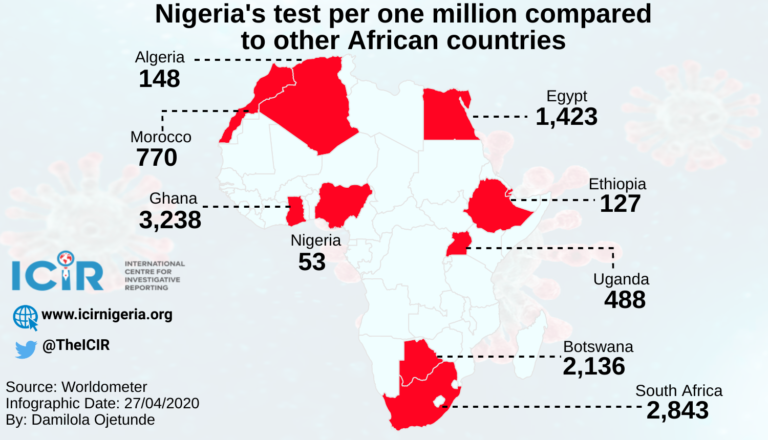
Interestingly, Djibouti tops the chart in Africa. Djibouti with 1,023 confirmed cases of COVID-19 has tested 11,884 per million population while that of Nigeria is only 53 tests per million population.

Other countries on the continent with higher tests per million are Mauritius-11,358, Mayotte-9,164, Ghana-3238, South Africa-2,843, Botswana-2,136, Tunisia-1,761, Cabo Verde-1,423, and Egypt-879.

There are also countries such as Morocco-770, Guinea-Bissau-762, Togo-719, Eswatini-615, Equatorial Guinea-609, Rwanda-537, Uganda-488, Zimbabwe-430, Kenya-335, Namibia-277, Gabon-257, etc.

It is interesting to know that of the 30 countries ahead of Nigeria, only Egypt and Algeria recorded its index case before Nigeria. Index cases were confirmed and reported in Egypt and Algeria on February 14 and 25 respectively. Nigeria’s index case was confirmed on February 27. Every other country recorded its index cases in March.