Home Blog Page 2115

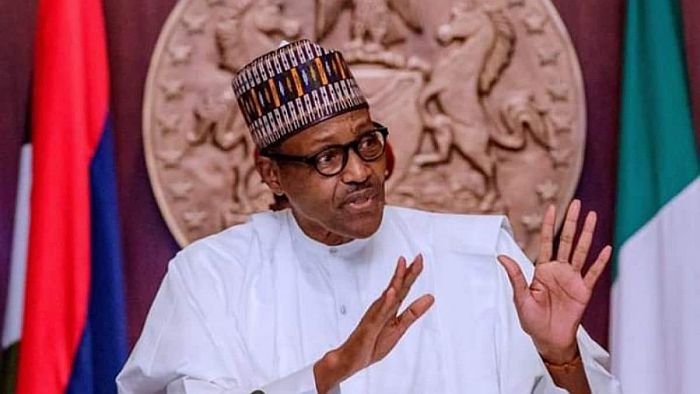
Debt burden: Buhari requests fresh N850 billion loan, seven weeks after slashing 2020 budget

SEVEN weeks after the federal government announced slashing the 2020 budget due to the sharp decline in oil prices, President Muhammadu Buhari has asked the Senate on Tuesday to approve his request to secure another fresh loan of N850 billion.

The loan request is expected to be from the domestic capital market to fund projects in the 2020 budget.

Recall that on March 9, 2020, the federal government announced that it would cut the size of its record 10.6 trillion Naira ($34.6 billion) budget for 2020 due decline in the price of crude.

Capital market is a market where buyers and sellers engage in trade of financial securities like bonds and stock.

The request was made in a letter read by the Senate President, Ahmad Lawan, on Tuesday on the floor of the upper chamber of the National Assembly in Abuja, the Senate gave swift approval to the president’s request to raise the loan.

Minister of Finance, Budget, and National Planning, Zainab Ahmed, is expected to give more details on the loan request which was granted following the senators’ resumption from a recess.

Lawan explained that the decision to go on recess was to help sustain solutions to the health crisis and ensure the crisis does not create more problems for the government and its people.

Senator Lawan said that “The pandemic has affected the 2020 budget and the National Assembly has a responsibility to work with the Executive to address the problem.”

Also, recall that Nigeria is currently expecting a $3.4 billion in emergency funding loan from the International Monetary Fund (IMF) to cushion the impact of COVID-19 on the nation’s economy.

The facility has been considered to be the largest loan allocation by the monetary fund to an African nation to fight the pandemic, and it is scheduled to be repaid in not more than five years.

REPORT: Nigerian Journalists who knew about Kyari’s role in MTN scandal yet kept quiet  

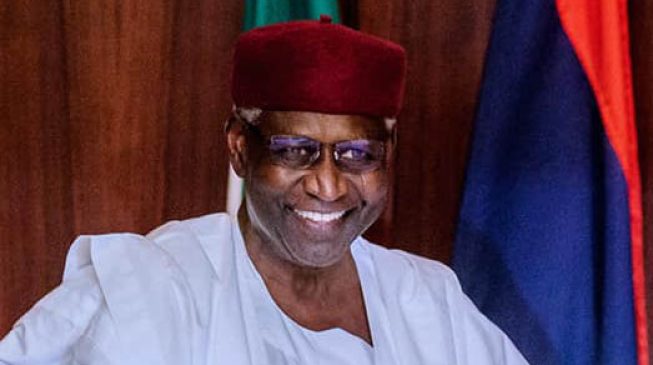
SINCE the death of late Abba Kyari, former Chief of Staff to President Muhammadu Buhari, notable Nigerians, including senior journalists have continued to announce their intimacy with the late CoS as well as his resolve to maintain secrecy on different corruption allegations against him, despite public outcry.

Kyari died on April 19, weeks after testing positive for the Coronavirus disease (COVID-19).

Prior to his death, Kyari had been at the receiving end of several attacks over corruption-related cases. Notable among these, was the MTN scandal.

In 2016, he was accused of receiving N500 million bribe from MTN to help reduce a $5.2 billion fine imposed on the telecom operator by the Federal Government. This was in turn, received with public backlash.

But some high-profile journalists in their tributes to the late Kyari said they were privy to classified information on the MTN scandal in which the Cos was indicted.

They claimed to have obtained confidential information from the late CoS about the allegation but respected his wish not to divulge the information.

MTN scandal

The Federal Government in 2015 penalised the telecom giant with a $5.2 billion fine for non-compliance with the January 2012 SIM card registration deadline.

The telecom firm ought to have disconnected its service subscribers with unregistered SIM cards but was liable for flouting the order issued by the National Communications Commission (NCC).

The MTN’s inaction was believed to have fuelled insecurity in the country, particularly the Boko Haram insurgency.

In a 2015 report, MTN Nigeria was also accused to have unduly diverted N11.398 billion from its Nigeria office to MTN Dubai, thus denying the country of tax revenue.

A similar illegal transfer of N11.789 billion was purportedly made from MTN Ghana to the same Dubai office to make a total of N37.6 billion illicit transfer.

“In a rare disclosure in 2013, MTN admitted it made unauthorised payments of N37.6 billion to MTN Dubai between 2010 and 2013,” the findings revealed, adding that the telecom company could have transferred over N90.2 billion out of the country since 2002 when it commenced operation in Nigeria.

In 2018, MTN Nigeria was again accused of tax evasion and was directed to pay $2billion tax arrears.

This was after the Central Bank of Nigeria blamed the firm for its involvement in capital flight to the tune of $8.13 billion.

Meanwhile, tax evasion is a criminal offence in Nigeria, as well as it is in other developed nations.

But with the $5.2 billion fines, which led to court actions, and diplomatic discussions to reduce the huge fine, Kyari allegedly collected $500 million bribes.

The MTN management reportedly denied the allegation before a presidential committee set-up to investigate the claim. Amidst the controversies, Sifiso Dabengwa, the former Chief Executive Officer of MTN resigned.

MTN Nigeria office also reportedly sacked Amina Oyagbola, a former Director of Strategic Communications for her alleged involvement in the bribery scandal.

Oyagbola worked at the UBA at the time Kyari was heading the bank management and therefore was allegedly delegated to seek Kyari’s intervention in MTN’s case.

She had purportedly arranged with the late CoS to reduce the fine to $1.6 billion.

MTN though has denied the claim, saying she voluntarily resigned after serving for 12 years as the longest director.

Despite the fact that the scandal was widely reported in the media, the late Kyari never offered an explanation to the Nigerian public.

Similarly, journalists with whom the deceased CoS shared the information did not inform Nigerians, instead, they claimed that they respected Kyari’s wishes to keep the information away from the public knowledge

For instance, Simon Kolawole, in his opinion Now That Abba Kyari is Dead,’ published on 19th April, reflected how he developed a close friendship with the deceased, and knew about Kyari’s resolve to pay no attention to various allegations against him.

In the article, Kolawole narrated how he exchanged communications with the late Kyari while in self-isolation.

“…we had regular phone calls. I normally would call him on WhatsApp voice but he would switch to video and I knew why: he wanted to prove to me that his life was not in danger,” he said in the article.

According to him, even when Nigerians were curious about the location of Kyari, in the midst of the rumours that he was flown out of the country, Kyari cared less but would forward the false claims to him.

On the MTN saga, Kolawole explained how Kyari disagreed with the idea of reducing the MTN fine and how he was sidelined until the $1.6 million final settlement was made.

“My biggest disappointment with Kyari is that he refused to tell his story. When he was accused of taking a bribe from MTN, he explained to me how he opposed the reduction of the $5.2 billion fine, how he was excluded from the resolution committee because of his stand, and how some people met in Dubai and drafted a position paper that formed 80 per cent of the final settlement agreement.”

Further, Kolwaole wrote that “He (Kyari) said he didn’t know if anybody took a bribe, but he was not part of it and his conscience was clear to God.

“So, why not grant an interview to clear your name? His reply: “My boss knows I will never betray his trust. I don’t need to defend myself.” And according to Kolawole, there is no counter-narrative till today.

The journalist stressed that each time an allegation came against the late CoS, Kyari would do so much to explain in detail the true situation, including those behind the allegation but would never want it out in public.

According to him, we  would ask: “Okay, Mallam, can we publish?” In the most frustrating manner, he would reply: “No. I’m only explaining this for you to know the correct facts. I’m not asking you to defend me. But even if you want to defend me during arguments or discussions, I want you to do it on the basis of facts, not emotions.

“I once told him in despair: It is not about you alone, Mallam! I worry about the stigma your children will carry for life.”

He could not be bothered, Kolawole added.

Kolawole was not the only journalists who had information that Kyari refused to divulge. There are others. One of them is Waziri Adio, a former member of ThisDay Newspaper Editorial Board

In his tribute to Kyari: A Good Man Is Gone’,  Adio described Kyari as a good man that was widely misunderstood and deliberately misrepresented, yet fiercely loyal to President Muhammadu Buhari.

The article published on 19th April revealed Adio had known Kyari for almost a decade. He said Kyari was behind his appointment as Executive Secretary of the Nigeria Extractive Industries Transparency (NEITI).

Adio said despite the constant demonisation of Kyari’ person, he has not come across many public officials that can  boast of the intensity, the passion, the meticulousness, and the selflessness of Mallam Abba.

But on corruption allegation, Adio reitrated Kolawole’s observation that Kyari would prefer to be silent on allegations against him.

He said Kyari would share his defence of corruption accusations with him among other friends but would still prefer that it is not reported  in the media.

According to him, as a former journalist who rose to become an Editor, the late CoS would have duly responded but he chose not to.

“…He would rather explain the details and backgrounds of the latest accusations to us as his friends but would insist that government business should not be done through leaks and that he would not waste precious time in engaging in media wars with his attackers.

“Even when we begged him to set the records straight even if just for posterity, he would tell us not to bother.

“He urged us to be more concerned about the verdict of one’s conscience and of God. My sense was that he felt the appropriate place to address the tons of issues constantly thrown at him would be his memoir. Sadly, we won’t have the benefit of reading that, except there is a posthumous one.”

Another senior journalist who had access to Kyari and failed to share information disclosed by the late CoS was Segun Adeniyi.

The former media aide to late President Musa Yar’dua in an opinion article titled ‘Kyari’s Passage and Matters Arising’ said at every point, corruption allegation was made against Kyari, he would ‘confront’ the now deceased CoS.

Adeniyi said though, he knew Kyari had lived a modest life, he could not have amassed so much wealth he was being accused of, stressing that prior to the deceased’s appointment, the late Kyari couldn’t be said to be poor.

According to him, Kyari would explain the true situation of various allegations raised against his office but Adeniyi had always insisted that those explanations should be put to the public, not friends, as Nigerians deserve to know, being a public office holder.

He added that “at every point, he took the trouble to explain his own side. I also never failed to tell him that as a public office holder, his accountability should not be to friends but to Nigerians; and that he needed to defend his name. His counter-argument was that he was not the real target of the allegations and that so long as he remained loyal to his principal and maintained a clear conscience; people could say whatever they liked.”

According to him, Kyari would explain the true situation of various allegations raised against his office but Adeniyi had always insisted that those explanations should be put to the public, not friends, as Nigerians deserve to know, being a public office holder.

“When news began to filter about power-mongering and the allegations of corruption against him started to swirl, I always confronted him with whatever information I heard. I knew him to be a modest man and he was by no means poor before joining the government, so I failed to understand what he would do with the kind of wealth he was said to be amassing,” Adeniyi said.

Despite his access to public information disclosed by the late Kyari, Adeniyi, like Kolawole and Adio, kept the information to himself.

Their disclosures after Kyari’s death have left many Nigerian wondering if their conduct meets the ethical standard of journalism.

Farooq Kperogi – journalists should not be friendly with people they cover, comment on    

Farooq Kperogi, an Associate Professor of Journalism and Emerging  Media expressed dissatisfaction at the opinion articles published by the senior journalists.

He wrote that Abba Kyari’s positions, especially in public policies and decision making has consequences one way or the other on millions of Nigerians.

For that reason, the journalists who are close to the late CoS failed in their duty to inform the public about such decision and consequence.

He argued that personal relationship with people would often change certain beliefs and mindset about them.

He emphasized this point in his article titled, Psychology Behind the Unexpected Beautification of Abba Kyari, that anyone who had met Abubakar Shekau, leader of the Boko Haram group could definitely have a shift of perception, away from popular belief.

He underscored this point by saying that people who have personal  access to Shekau may find themselves celebrating him at death, despite his widely reported atrocities.

The point Kperogi was making is that familiarity with news sources at some degree of proximity can influence journalists perception of the sources.

“Anyone with even the most rudimentary familiarity with the ethics of journalism would know that journalists should not be chummy with the people they cover or comment on.

The Society of Professional Journalists Code of Ethics enjoins journalists to “Refuse gifts, favours, fees, free travel, and special treatment, and avoid political and other outside activities that may compromise integrity or impartiality, or may damage credibility,” he noted.

Further, the code enjoins journalists to seek “subject of news coverage to allow them to respond to criticism or allegation of wrongdoing… It also urges journalists to be vigilant and courageous about holding those with power accountable.”
Those who criticized journalists who wrote opinion articles about the late kyari believe they may have violated part of this ethics.

Nigeria, ‘African giant’ plods slowly in the race to test for coronavirus 

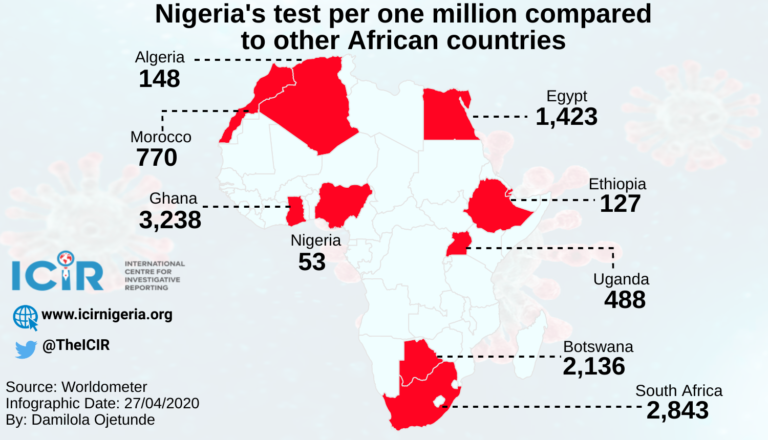
NIGERIA ranks 31st on the African continent for the coronavirus disease (COVID-19) tests per one million population out of 55 countries affected by the disease.

As of April 27, data from the National Centre for Disease Control (NCDC) shows that 11,426 persons have been tested of COVID-19 in Nigeria; this is representing 0.006 percent of the about 200 million population in the country, coming behind 30 countries on the continent.

While testing remains critical, public health officials across the world, including the World Health Organisation (WHO) have linked the importance of testing of the pandemic to quick identification of cases, quick treatment for those people, immediate isolation to prevent spread, and identification of persons who came into contact with infected people so they too can be quickly treated, two months after the first case was confirmed, Nigeria is not still testing enough.

Tedros Ghebreyesus, WHO Director-General, announced this recommendation in March.

“We have a simple message for all countries: test, test, test. Test every suspected case. If they test positive, isolate them and find out who they have been in close contact with up to 2 days before they developed symptoms, and test those people too,” he said.

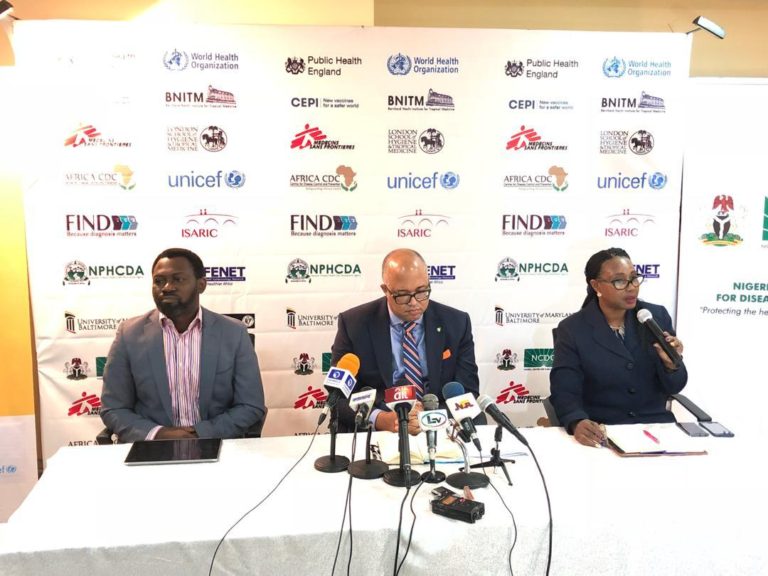
The NCDC has 15 molecular laboratories activated with the capacity to test for COVID-19, nine of which were created in the last one month.

Analysis of COVID-19 testing data from Worldometer across Africa reveals that Nigeria is not among the first 20 countries in Africa that have tested the highest percentage of their population.

Interestingly, Djibouti tops the chart in Africa. Djibouti with 1,023 confirmed cases of COVID-19 has tested 11,884 per million population while that of Nigeria is only 53 tests per million population.

Other countries on the continent with higher tests per million are Mauritius-11,358, Mayotte-9,164, Ghana-3238, South Africa-2,843, Botswana-2,136, Tunisia-1,761, Cabo Verde-1,423, and Egypt-879.

There are also countries such as Morocco-770, Guinea-Bissau-762, Togo-719, Eswatini-615, Equatorial Guinea-609, Rwanda-537, Uganda-488, Zimbabwe-430, Kenya-335, Namibia-277, Gabon-257, etc.

It is interesting to know that of the 30 countries ahead of Nigeria, only Egypt and Algeria recorded its index case before Nigeria. Index cases were confirmed and reported in Egypt and Algeria on February 14 and 25 respectively. Nigeria’s index case was confirmed on February 27. Every other country recorded its index cases in March.

How Ile-ife residents are coping with the lockdown against all odds

0

By, Peter OYEBANJI


ORLANDO, “the modern tailor” as he calls himself, violated the Osun state government directive when he opened his shop to sew a cloth for a customer he described as ‘promising’.  

Orlando, who has his shop located in front of his home in Sabo, one of the noisy areas in Ile-Ife – was very observant while making the cloth, just in case a law enforcement agent shows up.

He spotted this reporter from afar and became quite uneasy when this reporter got close to his shop. But after a few minutes of friendly banter, he revealed how he has been coping and how he is hoping he survives the 14-day lockdown imposed by the Osun state government.

“Everything is hard. They told us to stock up but is it not someone that has money that will stock up. The foodstuffs I have at home are almost finished and customers are not coming to pick up completed cloths,” Mr. Orlando lamented.

Mr. Orlando planned to deliver the cloth he was making to the ‘promising’ owner the next day even if he hasn’t been told to.

Osun state government announced a total lockdown that will span for 14 days on the 29th of March in order to fight the novel Coronavirus, an action that is currently being observed in three other southwestern states. However, since the lockdown began on Tuesday, April 1st – there hasn’t been any known result-oriented activity by the state government to mitigate the effect of the lockdown.

Residents in Ile-Ife, where this reporter focused on, have been battling with both avoidable and unavoidable results of the lockdown.

Citizens are gradually flouting the rules in order to survive. People are already running out of foodstuffs and the ones that still have are disposing of them as a result of improper storage caused by irregular electricity.

Crowd in Sabo market on Day-3 of the first round of lockdown. Photo credit: Peter Oyebanji

Aunty Abi, a fashion designer, showed me the Ewedu soup she just thrashed minutes before my arrival.

“There is no light. The boiled pepper I put in the fridge has spoilt already. I have refried my fried fish just so they’ll not go spoilt. We can’t cope with this. We need help, even if it’s a token and regular electricity supply.”

Residents in Ile-Ife usually pray against rainfall on a normal day due to the lack of power supply it causes. When the weather got cloudy, one resident jokingly said, “this rain please don’t fall because we don’t know when the wire will dry this time.” Effect of heavy rainfall in Ile-Ife could be very damaging this time if the wire doesn’t dry off quickly.

From a resident, this reporter gathered that apart from current coping strategies, people have taken steps before the lockdown commenced. The resident told the story of how her neighbour sent one of her children to her friend’s place in Ondo state in order to lessen the effect of the lockdown. This reporter learnt that there are people who had taken similar steps before the commencement of the lockdown.

Like Mr. Orlando, there are quite a number of residents whose businesses are home-based. These residents consider themselves lucky as they get to violate the rules subtly. Mr. Fidelis told this reporter he stays indoor from morning till evening and comes out to open his shop. “The reason I’m outside is that my shop is in front of my house. Some people don’t have the luck of having their workplace in their home,” Mr. Fidelis said while pointing at his shop where he deals in motor spare parts.

Unlike Mr. Fidelis, another resident whom this reporter spotted, live far away from his shop. A customer walked in when the resident was narrating what it was like to cope in this lockdown. Although the resident followed other instructions given by the National Centre For Diseases Control – he violated the lockdown order, which is widely considered as the most effective of all. “This is the second customer I’ll be answering today. That’s something,” the resident said.

Disbelief mixed With hunger

“Starting from next week, we are all coming out. Let the Police stations get filled,” those were the words of Aunty Abi who is not even close to being among the poorest in the city based on her own admittance and this reporter’s observation. Aunty Abi believes the novel Coronavirus is a disease that only affects the rich and therefore doesn’t call for a lockdown… especially if there are no resources to aid the poor.

Sabo junction, Ile-Ife. Photo credit: Peter Oyebanji

The crowd in Sabo junction and sabo market in the evening of day 3 didn’t give an inkling of a lockdown. The market, although far from normal, was packed. A resident who sells plumbing equipment told this reporter that it will be almost impossible to enforce a total lockdown.
“This country is already a tough place to live in on a normal day. How does the government expect a lockdown to be effective without the provision of necessary amenities?” The resident asked.

“A hungry man is an angry man. What is the difference between Coronavirus and hunger? If the government wants people to stay at home, they should provide resources.” Mr. Fidelis told this reporter.

What is the government doing? 

The Osun state government announced a welfare committee consisting of some of the elite members of the state hours before the lockdown commenced. In the statement released by the government, it was stated that the main aim of the committee is to mitigate the impact of the lockdown on residents.

The government provided contacts of the committee and pleaded for help from citizens of the state and other well-meaning Nigerians. “As the efforts to contain the spread of COVID-19 continues with intense devotion, it has become inevitable to put in place Relief and Humanitarian Banks across the state. The state appreciates its supportive friends, donors and partners, who have contributed to the project, including those who have pleaded to remain anonymous.”

“Osun has limited means yet unlimited needs to fulfill at this critical time and is, therefore, calling on its sons and daughters and also well-meaning Nigerians to assist it in the provision of social relief to our people, and those who have been and will be impacted by the precautionary measures to curb the spread of the rampaging virus.”

However, the effects of steps taken by the government are yet to be witnessed in Ile-Ife. This reporter didn’t meet or hear of anyone who has received palliatives from the government. Electricity is erratic as before the lockdown began.

Meanwhile, the governor of the state, Gboyega Oyetola, recently signed the emergency prevention regulations into law – a law that is aimed at enforcing the lockdown. But many residents disregard this order with reckless abandon.

Should the state consider an alternative?  

Political analysts, scholars and civil groups have argued that Africa can’t withstand a total lockdown like the one in Osun and therefore a structured lockdown should be tried.

Nelson Oppong, a professor of African Studies at the University of Edinburgh, said via a tweet that “Africa’s Coronavirus response needs a much better fix. The informalised structure of the economy, interdependent networks of everyday life, communal living spaces, and the appetite for military brutality do not offer a good architecture for the lockdown measures in place now.”

Coalition in Defence of Nigerian Democracy and Constitution (CDNDC),  in a press statement published on Premium Times, said Africa and other third world countries should only implement measures that fit their realities.

“The Haves cannot ask the Have-nots to stay at home without food; therefore, Nigeria, Africa and other third world nations must quickly review their total lockdown measures, in line with their socioeconomic realities to avert the rage and war of the poor. You cannot tell a hungry father to watch his hungry family dying in their room just like that and do nothing, and for no fault of theirs, and because of a virus that has not locked down their hands and legs.”

“We are appealing to the leadership in Nigeria and other African countries to immediately fashion out the best possible strategies to implement a structured lockdown, which can include structured working/marketing hours and days, with massive sanitisation/fumigation of these markets, clustered businesses, the streets, while insisting the people comply reasonably with the social distancing and handwashing measures.”

The federal government has reviewed the lockdown measure that was enforced in Lagos, Ogun and FCT on the 31st of March. The relaxed lockdown allows Market to open between 10am to 2pm every 48 hours. Oyo state has also enforced something that looks like a structured lockdown.

Osun state currently has 20 cases of the novel Coronavirus, third highest in the country. As the state battles the virus with every means possible, it appears the citizens will do everything possible to survive – including violating a lockdown.

Don’t consume any mixture promoted as COVID-19 vaccine – NCDC warns again

THE Nigerian Centre for Disease Control (NCDC) has again warned Nigerians not to consume any mixture promoted as Coronavirus (COVID-19) vaccine.

The Centre in a text message made this warning to the general public on Tuesday morning.

NCDC said that hitherto, there has not been an approved drug or vaccine that could proffer cure to COVID-19.

The text message further read that substances claiming to be COVID-19 vaccine are capable of causing harm to anyone who makes use of them.

The full-text message read: “Please don’t consume any mixtures claiming to be COVID-19 vaccine. There is no approved drug or vaccine for COVID-19, these substances can cause harm”.

As at the time of filing this report, there have been 3,076,185 reported cases of COVID-19 worldwide with 211,941 deaths and 925,503 recovered cases.

Visualized representation of COVID-19 cases worldwide as at Tuesday 28, April 2020.
Credit: The ICIR data team

Visit The ICIR dashboard for COVID-19 daily data visualization.

Bank customers to resume use of cheques as CBN lifts suspension

THE Central Bank of Nigeria, CBN has lifted the temporary suspension of cheque clearing in Nigeria.

Cheque instruments will be allowed to pass-through the clearing system with effect from Tuesday, 28 April 2020, the apex bank has said.

In collaboration with relevant stakeholders, the CBN  has reviewed the need for cheque clearing to accommodate users of cheques as one of the payment instruments in Nigeria.

The measure has been put in place despite the lockdown in some states and Federal Capital Territory, FCT.

The CBN has directed Deposit Money Banks in Nigeria to inform their customers of this directives,

Recall that the apex bank had earlier suspended the clearing of cheque instruments in the Nigerian clearing system with effect from March 31, due to the lockdown mandated by the Federal Government in Lagos, Ogun and the FCT.

Abductors of Ekiti Commisoner allegedly demands N30m ransom

THE abductors of Ekiti State commissioner for Agriculture, Folorunso Olabode have allegedly demanded for a N30 million ransom.

According to report by The PUNCH, a relative of the abducted commissioner told journalists in Ado – Ekiti that a ransom of N30 million naira has been demanded by the kidnappers.

The relative who spoke under anonymity urged the state government to secure the release of Olabode which has had his community in worries.

“We are begging the state Governor, Dr Kayode Fayemi, and all the security apparatuses of government to do all within their powers to rescue him alive,”   he said.

Olabode and another occupant in his car were kidnapped by unidentified gunmen along Isan-Iludun Road in Ekiti State on Sunday evening.

During the kidnap, a councilor of Ilejemeje Local Government Legislative Council,  who was driving the car, was shot to death by the gunmen.

However, the commissioner of police in Ekiti State, Amba Asuquo told The ICIR that the police command is not aware of such demand.

“I am not aware of any demand as I speak to you but we are doing our best to ensure that he is safely returned to his family,” he told The ICIR reporter.

When asked about the report, the Ekiti state commissioner for information and values orientation, Muyiwa Olumilua, said there has not been an official communication about it but that is the ‘rumour’ going around.

“ Well, that is the rumour we heard too but there  as not been an official communication about it but the governor of the state has given a marching order to the commissioner of police to secure his release, unharmed,” Olumilua said.

Lagos State to provide 100,000 homes in three years

0

THE Lagos State Commissioner for Housing, Moruf Akinderu-Fatai has disclosed the state government’s plans to provide 100,000 livable and affordable homes in the next three years, through increased partnership with private investors and utilisation of innovative building technology. 

The news which was published on the state’s official website was disclosed by Akinderu-Fatai during the maiden edition of a Webinar organised to showcase Lagos First Green and Eco-friendly Estate in Idale, Badagry.

A joint venture between the state government and Echostone Nigeria, described the project “as the first of its kind” in Nigeria and promised that Lagos would not rest on its oars in ensuring that the challenge of housing deficit is reduced.

His words: “In our journey towards the Greater Lagos of our dreams, one of the envisaged milestones of success in the T.H.E.M.E.S agenda, is the provision of affordable and decent homes for the ever-increasing population of the State.”

“We are responding to this challenge through the completion of on-going housing schemes, increased collaboration with private investors as well as strategising on innovative technology to increase the speed of completion,” Fatai added.

“As a proof of our commitment, 492 allottees were recently given keys to their homes at Alhaji Lateef Kayode Jakande Gardens in Igando, Alimosho Local Government.”

Already, 360 home units are also nearly completed for habitation at Igbogbo (11b) in Ikorodu local government area. Before the end of the year, our housing schemes at Sangotedo (744 homes), Odo Onosa /Ayandelu (660 units), and Egan Igando to mention a few will soon be made available. This is in addition to the already completed and ready for delivery Peridot Parkland Estate, Idale in Badagry, consisting of 252 housing units”.

Expressing his satisfaction with the quality of houses built at Idale by Echostone Nigeria, the permanent secretary, Ministry of Housing,  Wasiu Akewusola, said that more housing schemes will soon be developed by the state with the technology introduced by the firm.

Akewusola said that the partnering firm employed an innovative technology that is fast, safe and energy-saving, adding that “ Lagos State intends to continue to set the benchmark in quality and affordability in housing projects”.

Sammy Adigun, the Director of Echostone Nigeria. who also moderated the virtual conference disclosed that, apart from the benefits accruing to the environment through optimisation of energy consumption, the project also showcases an innovative technology which speeds up housing delivery, utilises lesser energy and generates minimal waste from site activities.

Adigun said, “other eco-friendly attributes include reflective roofing, roofing overhang, positioning of windows to optimise natural light and ventilation so as to reduce the use of electric fans, air-conditioners and light”.

COVID-19: President Buhari extends lockdown by one week, orders 2-week ban in Kano

PRESIDENT Muhammadu Buhari has announced a one week extension of the lockdown directive in Lagos, Ogun and the Federal Capital Territory (FCT), effective from today April 27 until Monday, April 4.

The decision, he said, would kick-start a gradual relaxation of the lockdown order at the epicentres of the Coronavirus disease (COVID-19).

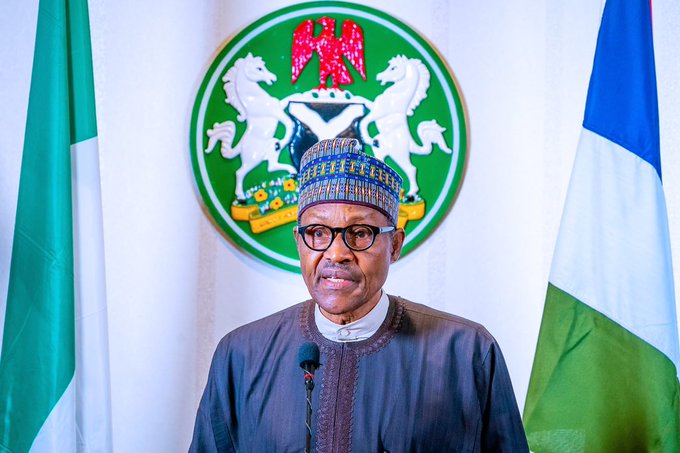
Buhari, who spoke during a national broadcast on Monday evening, disclosed that the new instructions were based on the recommendations of the Presidential Task Force on COVID-19, stressing that efforts were being made to ensure that business activities are restored back to normal.

“Based on the above and in line with the recommendations of the Presidential Task Force on COVID-19, the various Federal Government committees that have reviewed socio-economic matters and the Nigeria Governors Forum, I have approved for a phased and gradual easing of lockdown measures in FCT, Lagos and Ogun states effective from Saturday, 4th May, 2020 at 9.00 am,” he said.

“However, this will be followed strictly with aggressive reinforcement of testing and contact tracing measures while allowing the restoration of some economic and business activities in certain sectors.”

The three most affected states have, however, been under lockdown for a month shortly after the nation recorded his first case of COVID-19 in February.

Since the first case was reported, a total of 1,273 confirmed cases have been recorded in the country, with 40 deaths while 239 persons have been discharged.

The President, who disclosed that the Nigeria Centre for Disease Control (NCDC), in partnership with other relevant officials and development partners, is working to intervene in the health crisis in Kano State, also announced a two-week lockdown in the state.

According to him, the use of face masks would be enforced while the social distancing guideline remains.

He said the NCDC has also accredited 15 laboratories across the country with an aggregate capacity to undertake 2,500 tests per day nationwide.

“For the avoidance of doubt, the lockdown in the FCT, Lagos and Ogun states shall remain in place until these new ones come into effect on Saturday, 4th May 2020.”

However, Buhari said other additional information regarding sector-specific details, timing guidelines for business operations and government activities would be made public by the presidential task force.

He added that state governors are at liberty to amend the spelled out guidelines to suit their peculiar need.

Highlights of the new nationwide measures are as below:

  1. Selected businesses and offices can open from 9 am to 6 pm;
  2. There will be an overnight curfew from 8 pm to 6 am. This means all movements will be prohibited during this period except essential services;
  3. There will be a ban on non-essential inter-state passenger travels until further notice;
  4. There will be partial and controlled interstate movement of goods and services will be allowed to allow for the movement of goods and services from producers to consumers; and
  5. We will strictly ensure the mandatory use of face masks or coverings in public in addition to maintaining physical distancing and personal hygiene. Furthermore, the restrictions on social and religious gathers shall remain in place. State Governments, corporate organisations and philanthropists are encouraged to support the production of cloth masks for citizens.

COVID-19: Women farmers seek special palliative, want FG to off-take farm produce to reduce gluts

WOMEN farmers in Nigeria are calling on the federal government to include them among beneficiaries of the Coronavirus Disease (COVID-19) palliatives through the provision of grants, improved seeds and credit supports.

The farmers under the umbrella body of the Small Scale Women Farmers Organisation in Nigeria (SWOFON) said the support becomes vital to prevent looming food crises, particularly post-COVID-19 pandemic.

Mary Afan, National President of SWOFON, made the call during a virtual media briefing on Monday.

She said food items in the nation’s grain reserves are being depleted due to the decision of the federal government to open-up the silos to provide food supports to Nigerians during the compulsory lockdown, particularly in Lagos, Ogun and the Federal Capital Territory (FCT).

Afan observed that local farmers are also experiencing gluts in their farm produce due to the movement restriction, thus the need to commence a buy-off scheme to off-take the produce from them.

“As a result of the COVID-19 lockdown and lack of access to markets, farmers are experiencing massive post-harvest losses on fruits, vegetables, fresh products, and other perishables,” Afan said.

“Smallholder women farmers are unable to move their products from their farms to the market or from their rural communities to semi-urban and urban markets. They are also losing income from staple food like maize, rice, wheat, potatoes, cassava, soybeans, yams, sorghum, and plantain, etc. Those engaged in livestock farming, especially poultry, are faced with a lack of access to poultry feeds they usually buy. Fisheries and aquaculture farmers are also affected by the closure or low patronage of hotels and skeletal operations of restaurants.”

According to her, prior to COVID-19, smallholder women farmers were struggling with difficult access to credits, essential inputs, improved seeds, and seedlings, including organic and non-organic fertilisers.

However, the spread of COVID-19, she noted, has exacerbated the situation as the farmers no longer have access to farm inputs at all.

“Being a planting season for farmers, it is pertinent to say that the food crisis is already looming in Nigeria,” she added.

The federal government’s intervention, she noted, would therefore prevent post-harvest losses and restore farmers’ confidence.

“We call on the federal government to announce clear policy interventions during this pandemic to ensure that there is sustained local food production and supply. This also presents an opportunity for us as a nation to become self-reliant in food production and completely wean ourselves from excessive food imports,” Afan added.

Here are the farmers’ demands: “Special community local produce buying and transportation should be arranged to buy produce from smallholder women farmers to ensure the food supply is maintained.

“Smallholder farmers especially women should be exempted from the movement restrictions while observing precautionary measures so that they can go to their farms for work and transport their produce to the market.

“Agricultural extension agents should be exempted from the movement restrictions, so they can provide extension services support to the farmers while maintaining physical distancing and other precautionary measures.

“Special palliatives targeted at smallholder farmers especially women should be designed to provide for the needs of farmers as they are amongst the poor and vulnerable.”

On April 13, President Muhammadu Buhari directed the Federal Ministry of Agriculture and Rural Development (FMARD) to work with the Presidential Task Force on COVID-19 among other relevant stakeholders to ensure the pandemic does not affect 2020 farming season.

On April 26, the Minister of Agriculture and Rural Development, Muhammad Nanono inaugurated a joint technical task team on emergency response to the COVID-19 pandemic.

At the meeting, he met with the committee chairman, Assistant Inspector General of Police, (Operations), Austin Agbonlahor, who promised to ensure free movement of food, livestock, and agricultural inputs nationwide, in order to avoid food shortages.

In her remarks at the briefing, Ene Obi, Actionaid Country Director, identified a need for an insurance cover for the women farmers.

Describing ActionAid as an organisation working to eradicate poverty, promote social justice and gender equality, she promised to ensure issues affecting women farmers are always placed before the policymakers.

“We have deemed it fit to draw the attention of Government to the continual loss of income and livelihoods in the agricultural sector especially for smallholder women farmers, arising from the continued lockdown and restriction of movement.”