Home Blog Page 2118

REPORT: How COVID-19 lockdown is pushing low, middle class Nigerians to the wall without palliatives

KEHINDE Williams was once a Uber taxi driver in Abuja, Nigeria’s capital, despite being a  university graduate. After the outbreak of  Coronavirus disease (COVID-19) pandemic in the country, he is now jobless and hopeless.
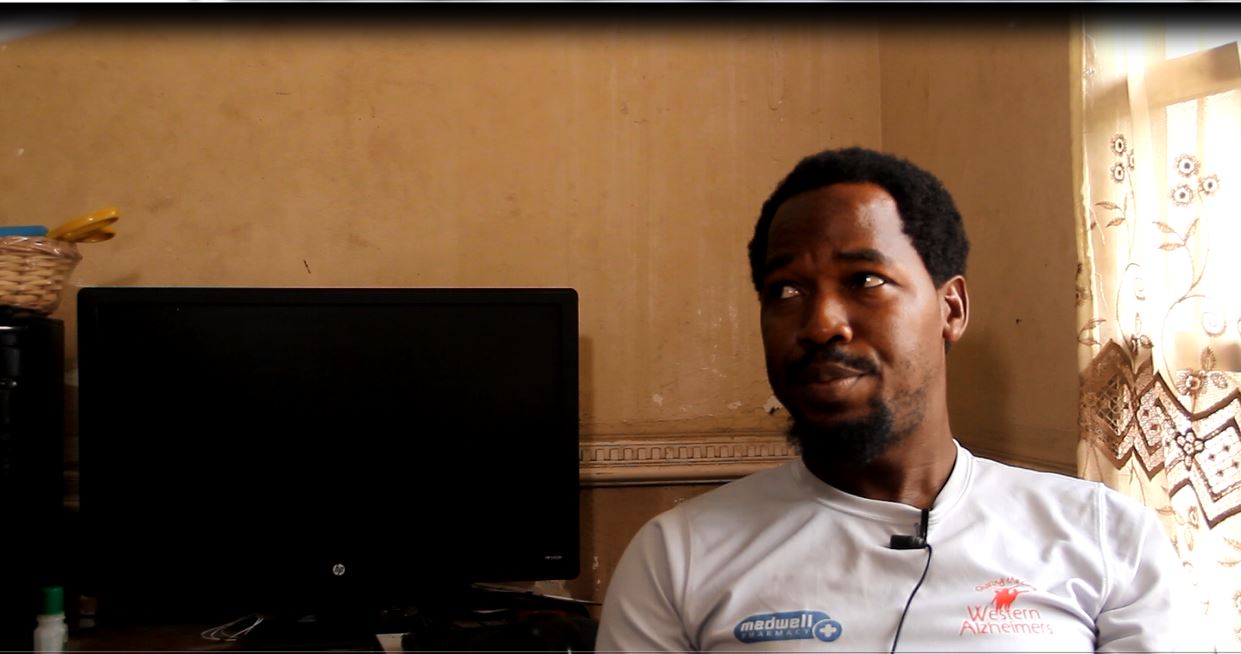
Kehinde William, an uber driver in Abuja
Photo credit: Paul Owolabi/TheICIR

For Williams, life became difficult shortly after President Muhammadu Buhari announced a 14-day lockdown on March 29 in Lagos, Ogun states and Abuja to contain the spread of Coronavirus disease (COVID-19) pandemic.

When he graduated from Adekunle Ajasin University, Akungba-Akoko, Ondo State some years ago after studying of Psychology, the young Williams, now in his early 40s was full of hope of a brighter future, particularly securing a well-paid job. But he was pushed to becoming a taxi driver in Abuja when his efforts at landing a white-collar job became futile.

“I came to Abuja to search for a job but ended up being a taxi driver,” he told The ICIR.

He was about to be admitted in the hospital when approached by The ICIR. Williams was diagnosed of Typhoid fever since the day lockdown imposed by the president was extended by another 14 days.

Sadly, his situation became worse like several others in that line of business. The COVID-19 global pandemic has crippled his only source of survival, his savings depleted and, still literally struggling to survive. Yet, the owner of the taxi he was operating expected some returns.

“Yesterday made it two weeks that I dropped the car to the owner due to low patronage and the pandemic,” he lamented.

“That was my only source of income,” he said, adding that despite not having a nuclear family, there are his siblings, including his aged mother that he caters for from his earnings as a Uber taxi driver. With the lockdown order, he said their hopes are all hanging in the balance.

“All my savings have been depleted because I have no other source of survival. I have spent so much money even the remaining cannot last me for a week.”

But Williams is not alone in this predicament. Isa Daniel, a father of three who is also an Uber driver is facing the herculean task to feed his family.

Isa Daniel, an uber driver in Abuja
Photo credit: Paul Owolabi/TheICIR

Daniel said since the stay at home order, he had parked his taxi with no alternative to meet the immediate needs of his family. Sadly, he has run out of food items bought in the wake of the lockdown.

”Something is happening to me and my family that I can’t even explain,” he told The ICIR.

“ I have exhausted all the money in my savings, the food I bought has finished, I am thinking if there is a way out, and I don’t know yet.”

According to him, the extension of the lockdown is a terrible experience for him and his family.

”If the government really wants to help us they should give money through the Bank Verification Number (BVN) and not saying they gave money to people we cannot see”.

Survival has been tough, I only visit my shop so as not to commit suicide Tailor

Abigal Imobi, a tailor in Abuja
Photo credit: Paul Owolabi/TheICIR

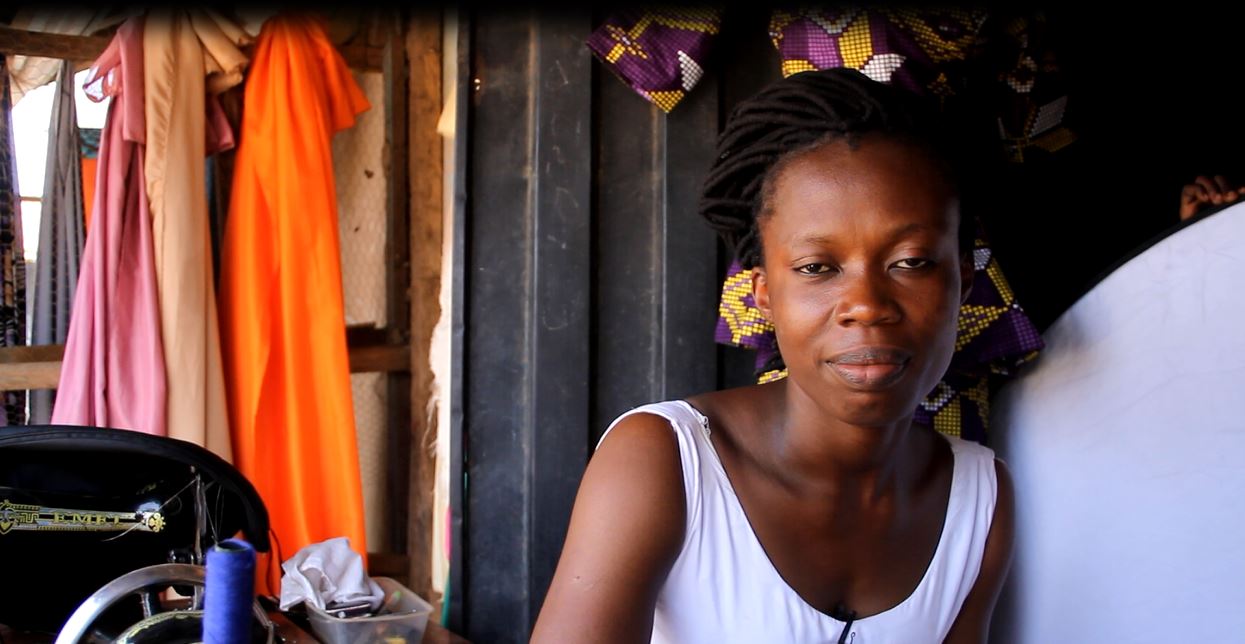
Abigal Imobi, a fashion designer whose shop is situated in Gbagy village, Karu area of Abuja is battling depression and only goes to her shop in order not to commit suicide as according to her, coping with life and taking care of her aged mother has been difficult due to the lockdown.

Imobi said prior to the lockdown, clients who brought their clothes for stitching had refused to pay due to economic hardship induced by the COVID-19 lockdown.

But for her resilient, she said she would have committed suicide.

“…I tried calling my customers to send me money for the clothes, their response was that the money they have they also need it to eat and take care of their family,” she said when asked how the lockdown has affected her business.

“You can’t expect someone that has three or four thousand at home to use and come and collect clothes, while the family members are hungry.

“I am still coming to my shop so I don’t commit suicide at home or do something bad, the more you stay indoors the more you get frustrated.”

According to her, a man collapsed and died few days back allegedly due to hunger and frustration from the lockdown.

“We are doing our best to obey the government, the government too should help us; we can’t afford one square meal at times, talk more of three square meals,” she said.

“Giving people a measure of rice would not help Nigerians in times like this, with time there would be robbery everywhere in the neighbourhood”.

The ICIR probed further how Imobi intends to manage through the period, with her aged mother, she said the government would need to assist otherwise there might be more casualties.

She added that some people within her residential area asked residents to write names a week earlier, for possible intervention but no feedback has yet come through.

“It is really painful that the government had to extend it without giving people anything, you can’t send someone to the farm without giving the person a cutlass.”

I’m tired of borrowing – motor mechanic laments
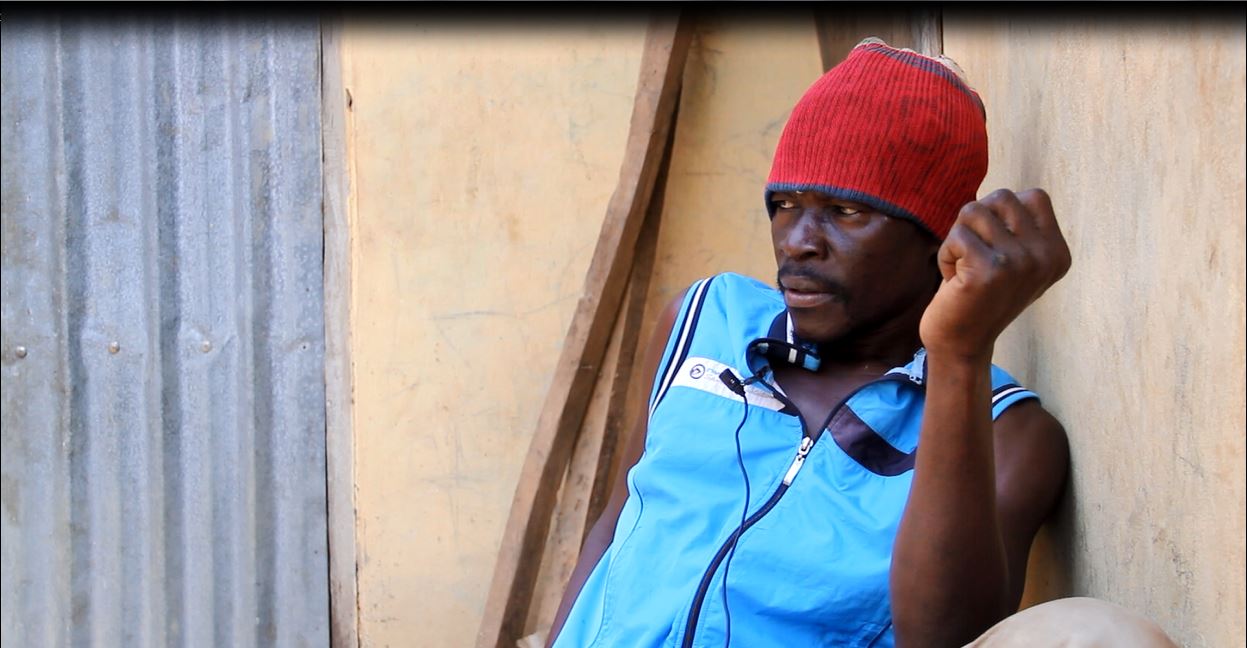
Kehinde Olumogunje, a car mechanic in Abuja
Photo credit: Paul Owolabi/TheICIR

Unlike others, Kehinde Olumogunje, a car mechanic has been living on credits to support his family. He resides in a one-room apartment with his wife and two children around Tudunwada, a slum in Lugbe axis of Abuja.

“That I am still surviving up till now is the grace of God,” Olumogunje told The ICIR. “It is very hard now that I can’t even buy anything on credit, things have gone worse for me.”

“I can’t get parts to fix people’s cars, so how do I get money for myself, some customers call me to come to fix their cars but no way to reach them.”

He explained that he had to manage with his savings which he said is already exhausted.

When The ICIR asked Olumogunje, if he has gotten any palliative from the government, his response was No! “I have not gotten or seen anybody, I only heard a rumour that if I have a BVN I would get.”

Where do I run to in search of food – metal fabricator
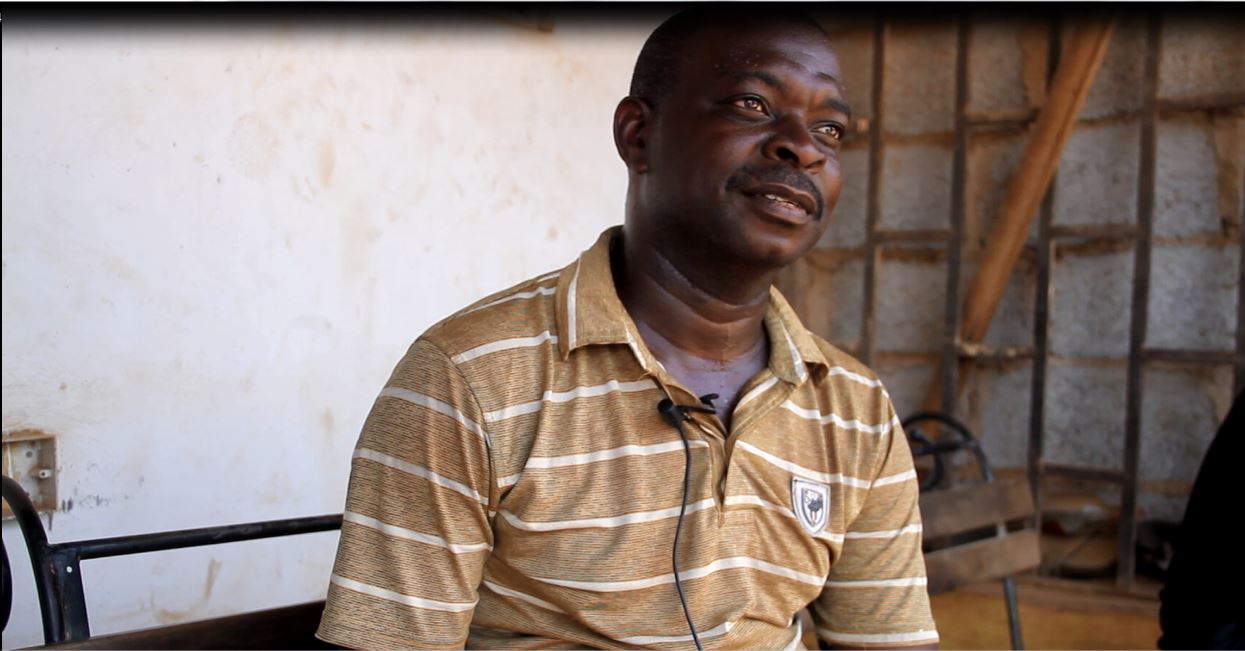
Timothy Abass, a fabricator in Abuja
Photo credit: Paul Owolabi/TheICIR

Timothy Abass, a father of four who is into fabrication spoke on how he has been struggling to feed his family, due to the lockdown.  He resides in the Kuje axis of the Federal Capital Territory.

“My shop is currently under lock and key, I live from hand to mouth because all the food at home has finished, surviving another two weeks is a big problem that I don’t know how,” Abass lamented

“I don’t know where to go and get food, I have not done anything since the lockdown.”

“People that even have money are not giving jobs out anymore, they are scared that if they give us money we might run away,” he added.

When asked if he has received his own palliatives from the government he said; “I haven’t seen anything from the government no foodstuff nothing, this government are just deceiving us.”

If the lockdown continues I would be affected seriously–Barber
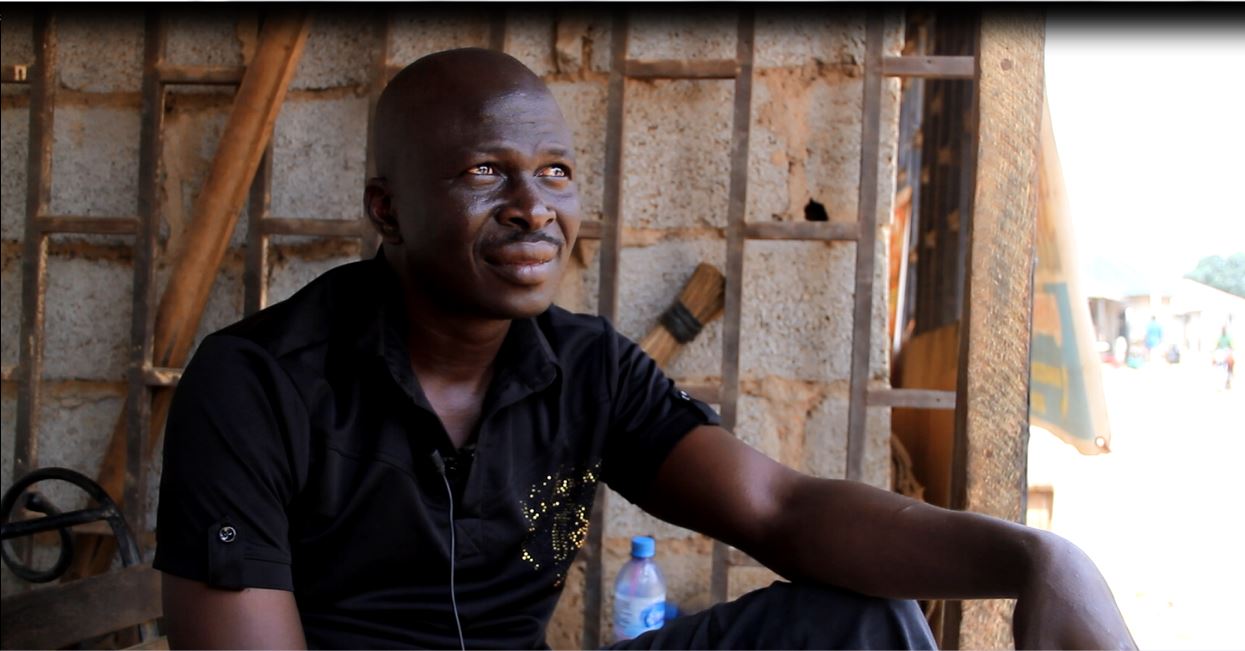
Joshua Oyedoke, a barber in Abuja
Photo credit: Paul Owolabi/TheICIR

Joshua Oyedoke who is also known as Akala, a father of four and a barber, living in a one-bedroom apartment in Kwali area an outskirt of the FCT lamented heavily that things have been so rough for him, he can’t work to feed his family and the extension of the lockdown would seriously affect him and his family.

“They did not allow me to open my shop, there is no market and everything is on shutdown. If things continue like this it would affect me,” Oyedoke said.

To feed his kids, he said, has been a tough one and needs the intervention of the government.

“My children are crying of hunger, it is not easy at all, at all,” he said in an emotion-laden voice.

When asked by The ICIR if he has received his own share of palliatives Oyedoke responded, “I have not seen anything from the government.”

I have to make refunds to customers – photographer
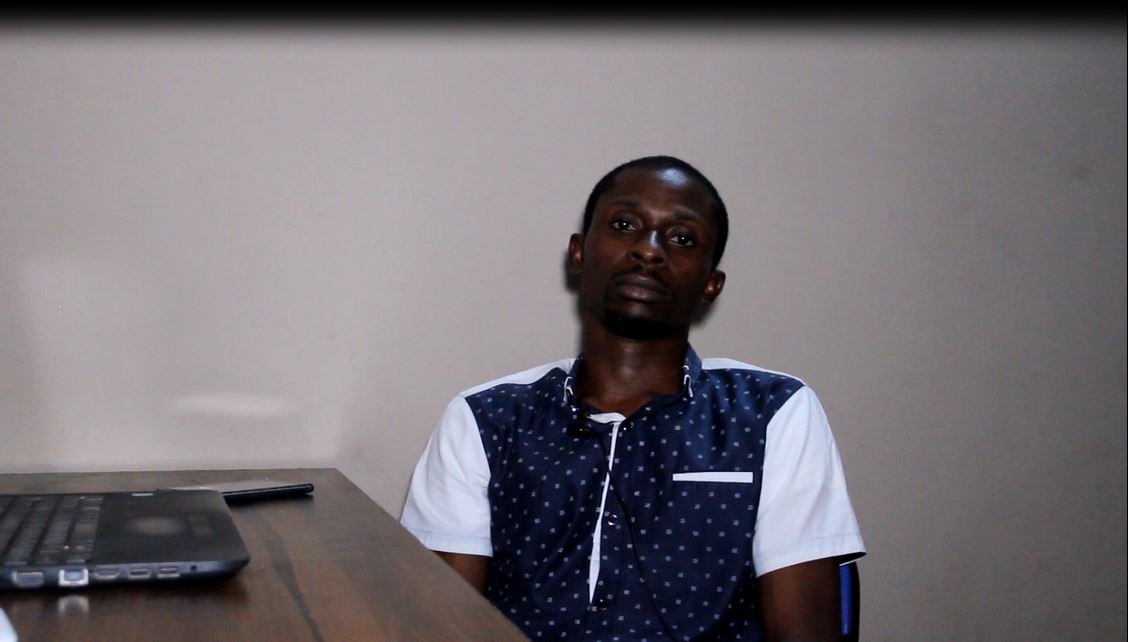
Temitayo Samson, a photographer in Abuja
Photo credit: Paul Owolabi/TheICIR

Temitayo Samson, an unmarried photographer and videographer who resides in the Apo area of the FCT where he also has his small studio inside his apartment said the money he had received for jobs was returned due to cancellation of planned events.

“I am faced with the challenge of refunds to my customers which has left me with nothing to survive till the lockdown is over, even what I had has been taken back by clients,” Samson said.

”My business has been on a total standstill, I don’t get jobs everybody are celebrating indoors,” he added.

According to him, he urgently needs to work or if the government can help him with a token it has promised Nigerians.

When also asked by The ICIR if he has received his own share of palliatives he said;“I haven’t seen anything, I keep checking my phone for it.”

“Surviving the weeks has been tough I must say and an extension is more hardship for me,” he added.

If I don’t go out daily, I can’t get something to feed my family – Phone seller
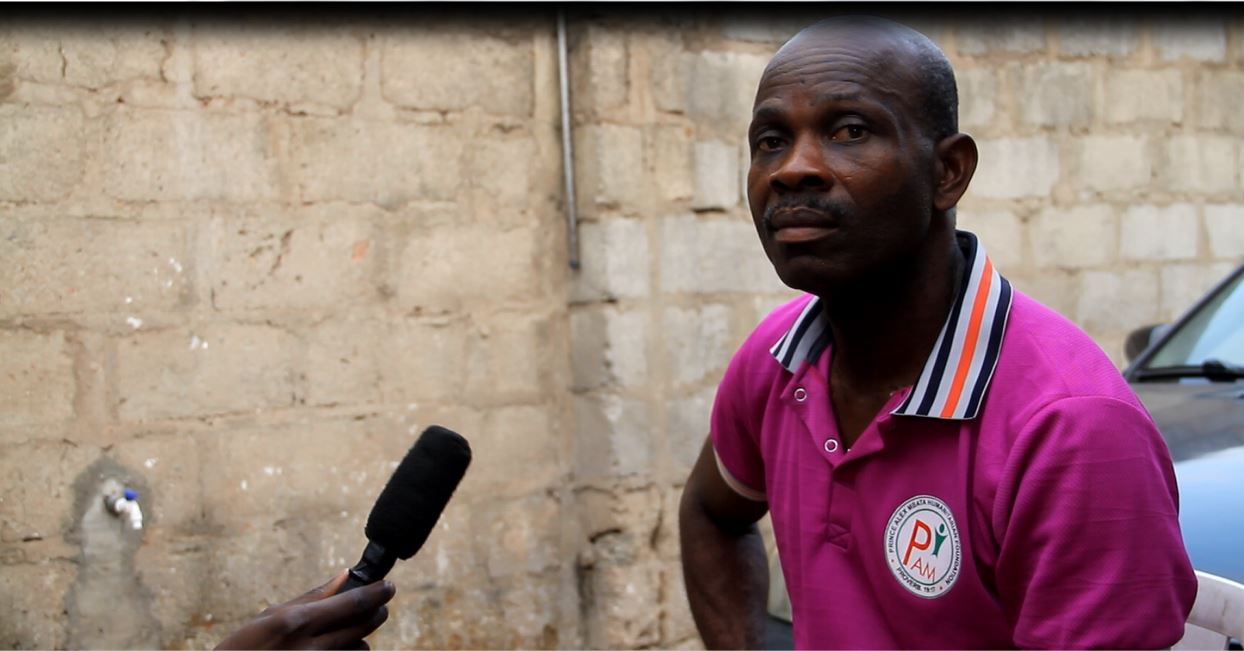
Jude Ibe, a phone seller in Abuja
Photo credit: Paul Owolabi/TheICIR

Ibe Jude is a small scale businessman and a father of four children that deals on phones at GSM village Abuja. He narrated how his inability to go to his shop has made things difficult financially for him and his family.

“The nature of my business is without going to the shop, I can’t see anything to feed my children.”

“I need to go back to work, I don’t have money to feed my family except for the small petty trading my wife is doing in the house,” Jude said.

“An extension of the lockdown would affect me if they want to lock us down let the palliatives get to all of us, we are facing difficulties.”

Jude also confirmed to The ICIR, that he has not received anything in form of palliatives from the government.

The work is not there and nobody to pay – IT expert
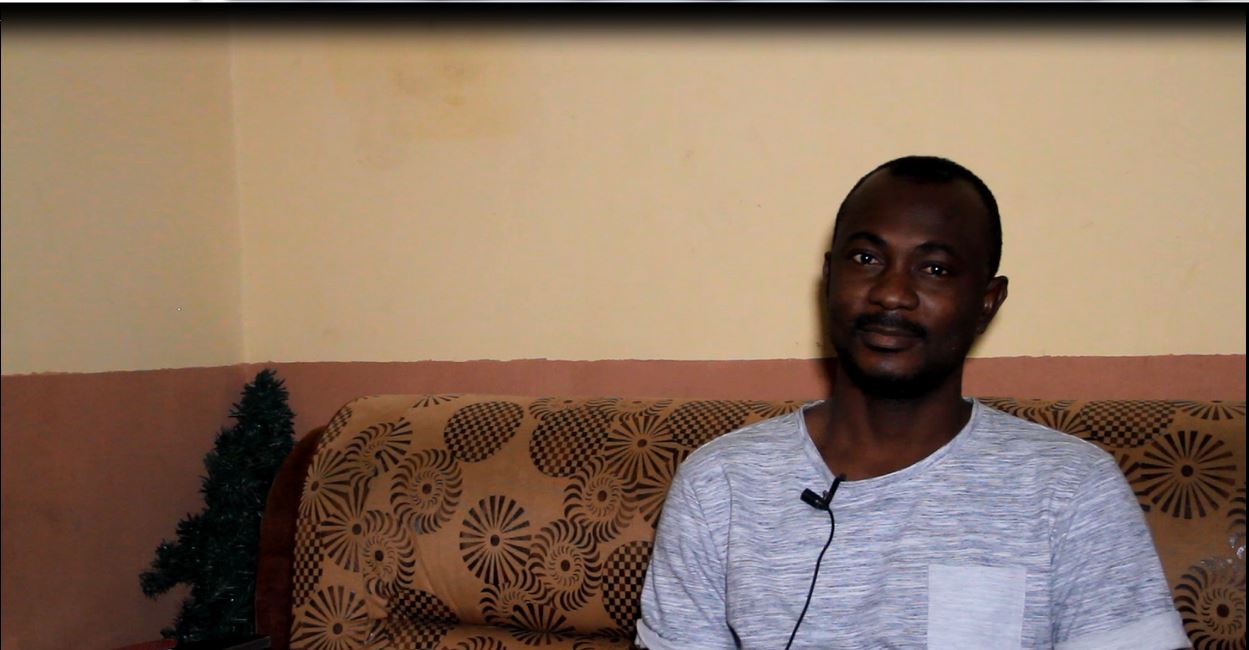
Abel Abukar, an IT expert in Abuja
Photo credit: Paul Owolabi/TheICIR

Also, Abel Abukar an Information Technology expert explained the challenges of his kind of job where he has to work and get paid and not a salary kind of job.

“I run a private organisation that depends on how we work, the money is not coming because you work and you get paid, now the work is not there nobody to even pay, so you end up eating up what you have in store,” Abukar said.

“Its been funny and very challenging, but then what do we do.”

“I am just managing to see if I would be able to cope with the two weeks, the government talks about palliatives we have not seen any yet, we just see a lot of things flying in the media”. he added.

If it continues I would have to cut my staffs’ salary –Financial Investor

Moses Anayo, a financial investor in Abuja
Photo credit: Paul Owolabi/TheICIR

Moses Anayo who is the Managing Partner at Ceder Worth Investments narrated how his business has been without income for three straight weeks and would have no choice than to cut his staffs’ salary if the lockdown continues for a while.

“We are still going to pay our staffs but if this lockdown continues we would have to do some cut down in salaries because our income has gone down drastically at this point,” he said.

“It hasn’t been really easy  as all my business are shut down and all my staffs are at home doing nothing.”

“We can’t give out loans, we can’t do training,” he added.

What I spent in the market would last me for three months – Civil servant

Timileyin Adeleye, a civil servant in Abuja
Photo credit: Paul Owolabi/TheICIR

Timileyin Adeleye, a civil servant who lives at the Wuse axis of the FCT lamented bitterly on the amount he had to spend during the panic foodstuffs pilling prior to the lockdown.

“Before the lockdown, we had to make some panic foodstuffs pilling, the amount of money I spent in the market would last me for three months, because the prices tripled.”

Adeleye said, “before the government locked people down they should have made adequate arrangement for people, announcing a lockdown 24hours to the time of the lockdown without giving us time to prepare was not the right thing to do.”

“The government has the BVN of everyone, all the money they have been spending, to me its audio money,” he said.

“Spending N11 billion in 24 hours on palliatives, I  have not received an alert, have you received an alert? he asked The ICIR reporter.

“A relative in Kwara State said his household was given a peak milk tin of rice to eat as palliative, if you want people to obey your lockdown, make life bearable for them,” Adeleye said.

However, Sadiya Farouq Minister of Humanitarian Affairs and Disaster Management,  disclosed on Tuesday, April 21 in Abuja that the Federal Government was set to expand the social register for palliative distribution by employing digital models including the use BVN.

One-sided social intervention

The Federal Government as part of palliative measures to cushion the impacts of the lockdown on Nigerians initiated distribution of palliatives and conditional cash transfer through the National Social Safety Nets Coordinating Office (NASSCO). It is executing the scheme through the National Social Register for poor and vulnerable households at the states.

As of Friday, 10 April 2020, it has captured 2.64 million households and 11.04 million individuals.

Going by the social register and NASSCO assertion, more than 11 million Nigerians might benefit from the Federal Government’s COVID-19 response measures targeted at the poor and vulnerable.

However, residents who spoke to our reporter in separate interviews revealed that they had not received anything in form of palliatives from the government.

According to the World Health Organisation (WHO) each year an estimated 40 million people are in need of palliative care, 78 per cent of whom live in low- and middle-income countries.

Palliative care needs to be provided in accordance with the principles of universal health coverage, the WHO reported.

“All people, irrespective of income, disease type or age, should have access to a nationally determined set of basic health services, including palliative care.”

The WHO report indicated the need for financial and social protection systems as a form of human right to palliative care for poor and marginalized population groups.

For instance, in the United States, it was reported that Congress pushed through a $2 trillion stimulus bill on  March 20 and some Americans could expect financial support from the government to cope with the economic devastation stemming from COVID-19 crisis.

Those payments are expected to be $1,200 for individuals, or $2,400 for those who are married and file income taxes jointly. It also includes $500 per child.

Also in Canada, the government is to spend C$107 billion ($75 billion, £64 billion) in emergency aid and economic stimulus to assist Canadians struggling financially.

The bill would give C$2,000 a month for the next four months for people who lost their job because of COVID-19.

It would apply to people who are quarantined. Those helping a sick family member, and those that have been laid off or have not received payment from their employer.

All these from the developed nations appeared transparent but Nigeria’s case seems different.
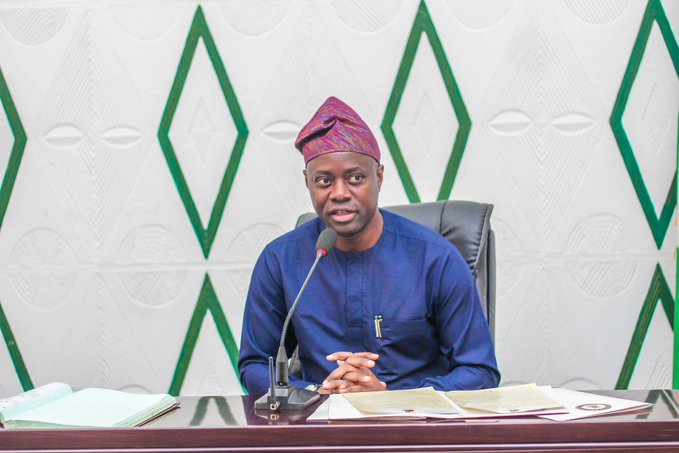
 

COVID-19: Oyo rejects FG’s 1,800 bags of rice, says unfit for consumption

THE Oyo State Government has rejected and returned a total of 1,800 bags of pest-infested rice back to the Federal Government, The ICIR can confirm.

Dr. Debo Akande, Executive Adviser to Governor Seyi Makinde on Agribusiness, disclosed this in Ibadan, the state capital after the state committee on distribution of relief materials and palliatives inspected the warehouse were the grains were kept.

Akande said the committee found out that the rice was unhealthy for human consumption.

“The state government discovered that the grains of rice were infested by weevil and other pests, and took the decision in the interest of residents of the state,” he said.

“We initially assumed that it was just some part of it that was infested but some commissioners from five or six ministries came with me to inspect and we realised that it is not just some but quite a lot of them were infested.”

Akande however said the return of the 1,800 bags would not affect the state’s distribution of palliatives, noting that the state has purchased enough rice for distribution to the citizens.

“And it was in the process of further inspection, that we discovered that almost all the grains of rice has been infested by weevil and other pests,” he said.

“On that basis, we formed a committee to inspect it again so that we are really sure of what we have received and we think this rice is not consumable for human being.

“As such, such material cannot be distributed as part of palliatives in the state. We don’t want to start providing solution to a problem and then create another problem. We have done random selection we see that similar thing applies across board and the committee has agreed to return to its source. And if there is any replacement of good quality that will be sent to us, we will be glad to receive it.”

On Monday, the Federal Government had donated the 1,800 bags of rice to Oyo, Osun and Ekiti states.

Helen Ngozi, Area Controller of Oyo and Osun Command,  of the Nigeria Customs Service, handed over the 1,800 bags of rice each to the governments of  the three states, while she handed over 600 bags to  Ondo State Government.

She said the command received the items from “the Federal Government via the Federal Ministry of Humanitarian Affairs and we brought them here to the warehouse.

Earlier, Bashir Ahmad, an aide to President Muhammadu Buhari on Digital Media, tweeted that the president has directed the Nigeria Customs Service to release 150 truckloads of rice seized from smugglers for immediate distribution across the country as part of the Federal Government’s palliative measures to cushion the effect of the COVID-19 pandemic.


Fed Poly Ilaro unveils locally-made ventilator

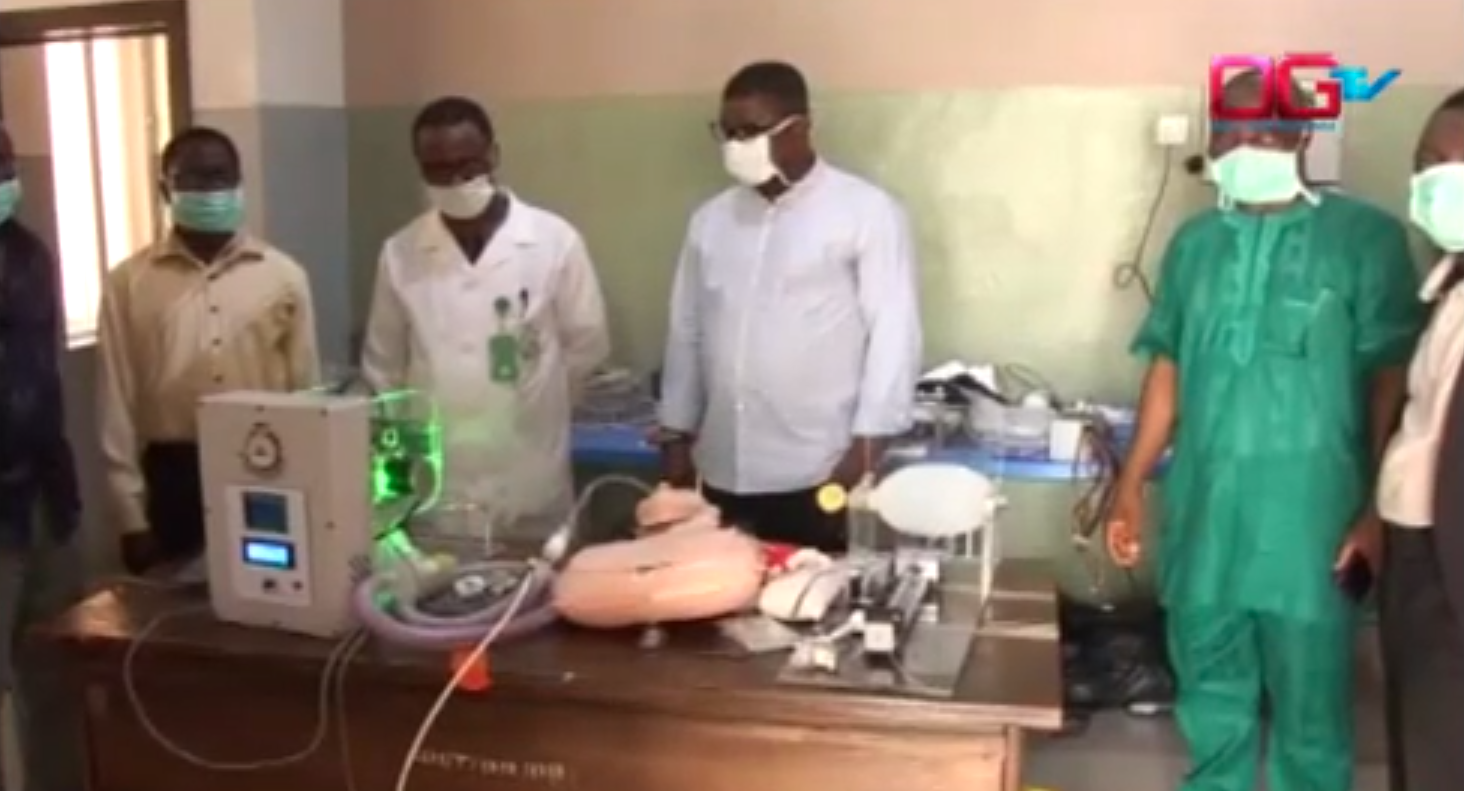
THE management of Federal polytechnic Ilaro, Ogun State has unveiled a locally made ventilator amidst the ongoing COVID-19 pandemic.

According to the management of the polytechnic, the challenge of getting a ventilator that costs thousands of dollars made the school to set up a 14-man technical team to build a ventilator within a week at a very low cost.

The management of Ilaro Polytechnic during the interview with OGTV

In an interview with OGTV, Olusegun Aluko, Rector of the Polytechnic,  said staff of the polytechnics made frantic efforts towards building the ventilator

“Our scientists, engineers and medical experts that are here, sleep and wake up here and exactly a week after thorough work, they came up with this,” Aluko said.

“We have studied a lot of literature and worked with medical people. Then, what are the parameters we needed in terms of pressure, air volume, heart rate, heart beat, all those ones were taken into consideration and they were coded accordingly into the system.”

Samson Odunlami, Dean of Faculty of Engineering of the institution, who is also the research team lead, noted that “the mechanical team worked on the principle of the term and follower as well as the gearing system without using human hand to do it.

“So we have to automate it so that it will be working on its own, that’s why we came up with a roller,” Odunlami explained.

Dr. Tunde Jesuseun, Medical Director of the polytechnic  while speaking on the invention said “What we did was to pass a tube called endotracheal tube into the trachea of the airway of the patient so that air can get to the lung,”

Olumide Afolayan, Head of Scientists at the polytechnic,  said if there was power failure, the machine would record where the program stopped and when the light was restored, noting that there is  no need to set anything as the device automatically goes back to where it stopped and the patient won’t feel anything.

Commenting on the development, Lateefat Ajayi, a member of Ogun State House of Assembly representing of  Yewa South Constituency,  who paid an unscheduled visit to the polytechnic promised to support the initiative

“I have seen this laudable ventilator and it is very impressive that something of this nature, came out of here,” she said .

Speaking further, she promised to inform the speaker of the state House of Assembly to ensure that the Ogun State Government supports the project.

COVID-19: FCTA extends market opening hours, orders use of face mask

THE Federal Capital Territory Administration on Friday approved the extension of business hours for markets in Abuja to operate from 8a.m. to 3p.m. on Wednesdays and Saturdays.

Muhammad Bello , Minister of FCT said in a press statement that the directive would take effect from Saturday, April 25.

Before this new directive, Abuja markets were allowed to operate from 10a.m. to 2p.m.

Bello also directed the decongestion of the existing markets through the establishment of Neighbourhood Selling Points in the various districts within the Federal Capital City by Abuja Markets Management Agency.

He urged Abuja Markets Management  to liaise with the FCT Area Councils to ensure full implementation of all Coronavirus disease (COVID-19) pandemic protocols with regards to the markets across all the nooks and crannies of Abuja.

While urging FCT residents to support the intent of the lockdown by patronising markets in their neighbourhoods, the minister ordered law enforcement agencies to clamp down on residents who use the pretext of going to the market to disobey government directives.

“The concept of Neighbourhood Selling Points is aimed at taking pressure off the existing markets in the FCT through the provision of an initial 40 units–adopting either public schools or green areas where they exist- across the various districts in the FCC .

“This will further enhance the attainment of social distancing among residents which is a key requirement for eventual winning of the battle against the dreaded virus,” he added.

The minister further directed relevant FCTA secretariats, departments and agencies to support Abuja Markets Management agency to actualise the mandate with a view to ensure quick set up of the selling points.

COVID 19: How hunger, deaths and threat of community infections haunt IDP camps

By, Titilope Fadare


“I left the camp since morning. We (children) went to pluck cashew nuts from the bush. We roast and eat because there is no other food. I go everyday.”

Those were the words of Mary Nuhu,14, living in an Internal Displaced Person (IDPs) camp at Durumi, Area 1, Abuja.

This camp is located within the city centre of the nation’s capital with 2,830 persons in it.

Nuhu and other residents were displaced in 2014 from Bama and Gwoza local governments in the northeastern state of Borno. They have now found solace in Abuja and gotten approval from the Nigerian government to settle in the community.

On this sunny Saturday morning, when OrderPaperNG visited the camp, Nuhu and other children had gone to the bush.

The premises house a clinic, store and over 30 makeshift apartments positioned strategically at the corners of the camp. Some men, women, and children sat at one side in clusters having a conversation and peeling off ‘dawadawa’, an African locust fruit from the pod.

“Some of us go to the bush to get locust beans. The yellow part we eat and sell the dawadawa part. When our children are really hungry and have cried for a while, they settle to eat this and drink water”, the chairman of the camp, Ibrahim Ahmed, told OrderPaperNG.

In order to feed this period, the minors are left with no option than to perform odd chores to survive the hunger fuelled by the lockdown directive from the federal government to contain the spread of coronavirus.

At 1:16 pm, Mary and the other kids in their hundreds, returned to the camp, giggling and laughing.

She was able to pluck a 150 cl bottle full of cashew nuts after spending over five hours in the bush. Clutching unto the bottle as though she had just been awarded a trophy, she said she could not wait to show her family of 7, the proceeds of her fruitful venture.

The Public Relations Officer (PRO) of the camp, who gave his name as Umar Ali, said women and children are the primary focus in the camp when members of the executive share resources from their private allowances or donations from well-meaning donors.

“Both women and children enter the bush to get cashew. If there are items in the store, the chairman will share for the children because they are the ones who suffer the most. It is not easy. This coronavirus is ‘hunger-virus’.

“Sometimes we (Excos) remove money from our pockets to buy food for the children. Now, we don’t have much money again to take care of them because of the lockdown. It is supposed to be the federal government that should take up this responsibility.” Ali said, adding: “The first project of the federal government should be IDPs because they do not have any source of income, only through donations from people.”

Vulnerable and Forgotten…

The announcement of the lockdown caused intense apprehensions in Durumi camp due to their daily fight for survival. The restriction of movement has brought untold hardship in the camp as most of the residents largely rely on income from their daily hustle.

There was respite when the National Commission for Refugees, Migrants and Internally Displaced Persons (NCFRMI) reached out to the secretary of the camp requesting for their bank details. But three weeks have gone and the IDPs are yet to receive palliatives from the federal government.

“The Government did not check on our people or bring anything. The Refugees Commission promised to bring something but they have not done that for close to three weeks. Even the bank details we collected, the commission has not come to collect it.

“If you go to different IDP camps, it is the same situation. Others living around us who are not displaced- Igbos, Gbagyi, Calabar, they came here after hearing that the government will bring food for us but we told them we have not received anything”, Ahmed lamented bitterly.

The ‘hunger-virus’ that killed two…

Residents of the camps were sensitized about the effects and safety guidelines of coronavirus by media stations who had earlier visited the camp.

As a means to prevent the virus from getting to the camp, the Chairman advised that they remain around or within the premises.

While they had so far complied, the rules were temporarily suspended on the 15th of April, when they were alerted that a food truck on the expressway of Apo, an area close to the camp, was distributing food items.

Two brothers, Umar and Ibrahim, who were bike riders, dashed off to the scene and were fortunate to get a bag of rice despite the stampede.

On their way back to the camp, the duo sighted the Police and tried to make a U-turn to avoid being caught: they got hit by an on-coming jeep. One of the brothers was preparing for his marriage before the sad incident occurred.

“It was people who were equally looking for food that saw their bodies, identified them and traced them to our camp. Then, the Road Safety officials brought their corpse to us. No government official has condoled with us over their death”, Ali recounted in dismay.

‘Hunger-virus’ is not the only threat to their livelihood but how to practice social distancing in a tightly contained environment which serves as an avenue for the virus to thrive. They are worried.

“It is God saving us here. If coronavirus gets here, it will kill our poor families. Allah! If it enters our camp, many people will die. I swear. We warn our people not to go to town to look for food so they won’t bring the virus to the camp”, the Chairman said.

Arrival of the ‘Saviours’…

Since the palliatives from the federal government stopped in July 2019, aids from religious institutions and Non-Governmental Organisations (NGOs) have helped to mitigate the effect of poverty in the camp. But the lockdown has impeded these efforts.

Then, ‘saviours’ from a private company appeared and made it their responsibility to bring lunch to the camp daily to all the children and some women.

This day of visiting the camp was no exception as two vehicles from the organisation entered the premises of the camp at 2:05 pm to dish out food.

The donor taught the minors social distancing, made them wash their hands before collecting a plate of beans.

The Chief Executive Officer of the organization, Kingsley Obokhare, said he was prompted to support when it occurred to him that displaced persons will be one of the worst-hit due to the restriction of movement.

“When the lockdown started, it was so clear that we had to stock our homes with food following the directives from the government. Then I thought, (IDPs) do not have the money or the means to stock up. We then decided to put somethings together and started coming to the camp. We had collaborations with a club- corporate kickers and some well-meaning Nigerians. This is the 19th day of coming here”, he said.

COVID

Obokhare stays in Mararaba, a town in Nasarawa State and drives through several checkpoints to put a smile on the children’s faces.

“I don’t stay in town. I stay in Mararaba. Do you know the checkpoints to pass before I get here? It is killing! But I know a child is going to be happy when I come to town. It is painful to know that no money has been issued out. There was a time when we came late and it was scorching.

“They saw us and screamed with excitement. In other countries, they are giving these things free. We give a meal of N500 per child. If this medium can help us, we can do more for the women”, he added.


The ICIR obtained permission from OrderPaperNG to publish this report.

Despite 72 percent fall in global average crude oil price, FG slashes petrol price for Nigerians by just 13 percent

ORGANIZATION of the Petroleum Exporting Countries (OPEC) basket has shown that the average price of crude oil has fallen over the last twelve months by 72.63 per cent yet the federal government has reduced petrol price to N125 from N145 representing a 13.79 per cent decrease.

In April of 2020, the average price of the OPEC basket so far this month is 19.36$ per barrel, while the price was 33.91$ per barrel in March of 2020.

The OPEC basket is a weighted average of prices for petroleum blends produced by OPEC countries in which Nigeria is an active member.

The federal government has remained the sole importer of petrol through the Nigerian National Petroleum Corporation (NNPC), which equally swaps crude oil for the product.

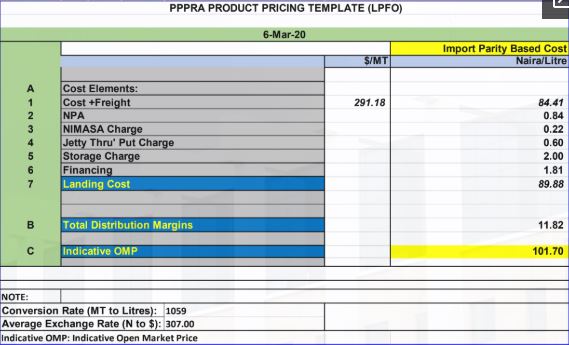
According to the report published March 6, 2020, by the Petroleum Products Pricing Regulatory Agency (PPPRA).

The landing cost of petrol with all cost elements, including the actual cost of product and freight, lightering expenses and other charges, showed that it stood at N89.88 which is a huge slash in price from what it has been previously, yet the federal government still choose to give Nigerians a 13.79 per cent cut selling petrol at N125.

The PPPRA has also released via a press release that in line with government approval of a new pricing regime, effective 19th March 2020, in which there was a provision for the establishment of a price band within which Oil Marketing Companies (OMCs) are expected to sell at the retail stations.

Effective 1st April 2020, there, would be an introduction of the band system where N123.50 per litre – Lower Band (LB) and N125.00 per litre – Upper Band (UB).

“The federal government has now introduced a modulation mechanism – if crude oil prices go down we will see a reduction in petrol prices. If prices go up we will see an increase,” Bashir Ahmed the personal assistant to the president on new nedia said in a tweet.

Fred Tunde of Watchright financials limited said: “The government is shortchanging Nigerians giving us petrol at N125 with a landing cost of less than N90, there is a huge spread they are making with the global oil price splash, lets Nigerians benefit to the fullest.”

Financial Analyst Seyi Kolawole of NASD Plc who also spoke to The ICIR said: “There is a lot more the government can do for citizens this period where the global oil price has crashed.

“Personally I feel petrol should sell for less than N90 at filling stations with an over 70 per cent price drop in average global oil price.”

Phone calls and text messages  to Environmental Rights Action (ERA) for comment was unsuccessful.

According to a report by Barrons an investment and financial body, more than $9 billion would be saved by airline companies with the global drop in oil prices, but it won’t do them much good given the drop in passengers.

Group condemns Gov Umahi for banning journalists from govt house

The Coalition for Whistleblowers Protection and Press Freedom (CWPPF) has criticised David Umahi, Governor of Ebonyi State for placing a life ban on two journalists from the Government House.

Umahi has  recently come under criticisms for banning correspondents of The Sun newspaper, Chijioke Agwu, and the Vanguard Newspaper, Peter Okutu, from the State House or any government facility in the state.

In a statement signed by the CWPPF, the group condemned the governor’s continuous war against the media houses and journalists, describing it as  “blatant intimidation and harassment.”

“CWPPF condemns the illegal banning of the correspondents of The Sun newspaper, Chijioke Agwu, and the Vanguard Newspaper, Peter Okutu, from entering Government House and Government facilities in the State for life. This decision by the governor is absurd considering that the government house is not private property,” the statement read in part.

The group further urged the governor to respect the Constitution that guarantees the rights of journalists to gather and disseminate information in public interest and to hold the government accountable.

It added that the life threats placed on the banned journalists has been noted, and if anything happens to either Agwu or Okutu, the governor would be held responsible.

Umahi had in a state-wide broadcast on Wednesday, expressed displeasure over the activities of the journalists for doing their job.

The governor, while addressing residents of the state in the broadcast also threatened to seize the allowance of the Nigeria Union of Journalists (NUJ) leadership, saying they failed to discipline their members.

“If you think you have the pen, we have the koboko,” the governor said.

He added, “I want to say that I am very displeased with the president and leadership of the Nigeria Union of Journalists and I am going to seize their allowances for two months because they have failed to discipline their members.”

Okutu was declared persona non grata over a report he did on the alleged military invasion of Umuogodoakpu-Ngbo community in the council area, while Agwu was declared  unwelcome in the state over a report he did on the Lassa Fever outbreak in the state.

COVID-19 could expose hundreds of thousands of vulnerable Nigerian children serious child rights crisis —Save the Children

THE Save the Children International says it is extremely concerned that the Coronavirus disease (COVID-19) pandemic could turn into a serious child rights crisis in Nigeria.

The humanitarian organisation expressed worry that hundreds of thousands of the most vulnerable children could be exposed to a dangerous mix of extreme poverty, malnutrition and hunger as a result of the virus.

The socioeconomic impact of the pandemic will push many poor households to turn to desperate measures just to survive, said Mercy Gichuhi, the acting Country Director, Save the Children International Nigeria.

This was contained in a press statement issued in Abuja on Thursday by Amanuel Mamo, Director of Advocacy and Campaigns, Save the Children International, Nigeria.


READ ALSO:

Gichuhi stated that children could face increased risk of child labour or sexual exploitation or of child marriage, as families struggle to feed their families.

The organisation, according to her, urged the Nigerian government to scale up social protection measures such as provision of cash and food assistance for the most vulnerable children and families, to urgently mitigate the impact of the COVID-19 pandemic in the country.

 “As the numbers of COVID-19 cases rise in Nigeria to 782, and the virus is spreading to different States, we are working hard to mitigate the negative impact this will have on the most vulnerable children, especially in fragile communities,”Gichuhi said.

“Children are seriously affected when parents and caregivers are infected by the virus and taken away for care. We are working closely with the government to support efforts to contain the virus and keep children safe and protected amid the pandemic.”

Also in the statement, Ibrahim Maharazu, Speaker, Katsina State Children’s Parliament, said: “The Corona virus is threatening our right to participation, protection, education and healthy life. I can see a possible increase in child abuse as children from poor households might go to rich people in the community for food. They may be emotionally, physically or sexually exploited in exchange for food and financial support. There are people who take advantage of the poor families and the pandemic. This is very bad for children and it can have a long lasting impact on them. The government should hold such perpetrators accountable.”

The acting Country Director added that Save the Children would work with all stakeholders towards better accessible social protection services to reach the most vulnerable people – including through the scaling up and reform of existing social protection and livelihood programmes.

She said that the organisation urged the government to provide appropriate care and protection for children, including children who are orphaned or left without proper care because their caregivers are in hospital because of the virus.

Through existing social safety net programs, Gichuhi noted that the government should also provide immediate income and livelihood support to vulnerable families, to reduce the risk of people taking desperate measures that would put children, particularly girls, at risk.

“We must act now and rapidly scale up support for children whose families’ income is insecure and live in fragile communities. There is a need for increased protection for children, especially girls, displaced children, and other vulnerable groups. Our collective efforts and sustainable actions in responding to the pandemic should ensure that no child is left behind, vulnerable or unprotected”, explained Gichuhi.

Maryam Ahmed, Youth Ambassador, Save the Children International Nigeria, said: “It is important that children and other marginalized groups are not excluded in Covid-19 response activities They should be safe, and also consulted on proper education and protection measures to be in place.”

Purity Oriaifo, 14, Girl Champion, Save the Children International Nigeria, said: “COVID-19 is a disaster. It has affected our ways of living and disrupted our routines – including school attendance and raising an income. I know children whose parents are petty traders who find it difficult to get proper food these days.

“They may not be able to afford even one meal per day. These families live from day to day, they don’t have food stocks or savings to depend on. Therefore, the government needs to provide financial assistance or sufficient foodstuffs – ensuring that assistance reaches the people now. This will reduce the risk of exploitation, domestic violence and abuse of children, especially the girls.”

Save the Children welcomes the government’s efforts to carry out several awareness programmes to educate the public about the coronavirus and preventive measures.

The organisation said called upon all government stakeholders at national and subnational level to ensure that children’s voices are heard, and they are at the centre of the COVID-19 preparedness, response, prevention and control plans.

Recalcitrant COVID-19 patients to be forcefully evacuated to treatment centres —FCTA

THE Federal Capital Territory Administration (FCTA) says it will invoke the relevant laws that enables it to mandatorily evacuate recalcitrant COVID-19 patients to treatment centers.

This was part of the decisions taken after a meeting of the FCT COVID-19 Emergency Response Team and the FCTA Management which took place on Tuesday in Abuja.

A statement by Anthony Ogunleye, Chief Press Secretary to the FCT Minister disclosed that Muhammad Bello, the Minister expressed dissatisfaction that some COVID-19 positive individuals were refusing to go to treatment centers and instead preferred to treat themselves in their homes.


READ ALSO:

According to the statement, Bello said existing laws would be used to force such persons to go to treatment centers explaining that their staying at home posed great risks not just to their families but also immediate communities.

“Since we have begun to witness community transmission of the virus, it is imperative that we must do everything within our power to stop the spread even if we have to compel such persons to go to treatment centers,” the Minister said

In order to prevent further spread of the virus within the communities, Bello said it was resolved that massive testing would be carried out in areas where community transmission has been established, including Mabushi, Gishiri and Utako.

The statement said the Response Team also encouraged all residents to wear face masks when outside in the public and also encouraged them to make their own face masks from cloth and wear them always.

It added that the meeting also reviewed the current situation of the COVID-19 pandemic in the FCT and the measures taken to contain it.

“So far, a total of 263 staff made up of 66 doctors, 103 nurses, nine pharmacists, 15 laboratory scientists and 70 other staff have been trained while 337 others are slated for training which is on-going in batches,” it said.

The FCT has recorded 119 cumulative confirmed cases of COVID-19, second behind Lagos state that has recorded 504 confirmed cases.

The meeting was chaired by  Malam Muhammad Bello, FCT Minister, and had in attendance Ramatu  Aliyu,the Minister of State, Chinyeaka Ohaa, Permanent Secretary,  Dr Mohammed Kawu, Ag Secretary of the Health and Human Services Secretariat, Dr. Josephine Okechukwu , the Director of Public Health, heads of the various sub committees of the Response Team and other senior staff of the administration.