Home Blog Page 2148

Women earnings gap causes global wealth shortfall by $160 trillion – World bank

THE world bank has showed in a report how global wealth could rise by $160 trillion if women could have the same lifetime earnings as men.

According to the report, many laws and regulations continue to prevent women from entering the workforce or starting a business.

The UNDP Nigeria, showed facts and figures that women earn only 77 cents for every dollar that men get for the same work and women represent just 13 percent of agricultural landholders.

Numbers from the UNDP also showed that almost 750 million women and girls alive today were married before their 18th birthday.

Only 24 percent of national parliamentarians were women as of November 2018, a small increase from 11.3 percent in 1995.

Discrimination can have lasting effects on women’s economic inclusion and labor force participation, the world bank report highlighted.

The world bank report also showed that in poorer countries, women globally are 7.5 percent less likely to have an account with a financial institution or mobile banking than men.

The International Finance Corporation (IFC) estimates a $1.5 trillion annual credit deficit for women-owned small and medium enterprises.

Gender-based violence the most extreme constraint on women’s voice and agency remains a global epidemic affecting more than one in three women over the course of a lifetime, the report showed.

Analysis by the bank showed that globally, women’s labor force participation fell from 51 percent in 2000 to 49 percent in 2018.

Women devote one to five hours more a day to unpaid domestic work and childcare and other family care work, and one to six hours a day less to market activities than men.

The World Bank also gave different strategies on how companies and countries can focus investments to ensure equal economic participation by both genders.

The bank suggested that gender gaps should be closed in education and health in countries where they persist, including girls’ completion of secondary schooling, boys’ drop-out in secondary, and improving the quality of learning for both girls and boys.

Also showed how removal of constraints to more and better jobs for women, focusing on safe transport to and from work, child and other family care, training in the digital and technological skills required to compete for jobs would be helpful.

Access economic opportunities, and reducing occupational sex segregation is key according to the world bank.

The world bank also highlighted the removal of barriers to women’s ownership and control of land, housing and bank accounts, and improve access to finance, technology and insurance services needed to make such assets productive.

“How do you tell people not to be stupid when you are displaying exactly that? Nigerians react to Garba Shehu’s public lecture

NIGERIANS on Saturday took to the social media to express their displeasures over public lecture attended by Garba Shehu, Senior Special Assistant to the President on Media and Publicity, despite Federal Government’s recommendation to suspend public gatherings.

Some Nigerians expressed disappointment that Mr. Shehu attended the event the same day three new confirmed cases were reported in Abuja, the Federal Capital Territory (FCT) and seven others in Lagos, as disclosed by the Health Minister, Osagie Ehanire.

The public lecture titled, 2020 Annual Leadership Lecture was organised by Barewa Old Boys Association (BOBA), Abuja Branch, had Shehu as the keynote speaker. He spoke on the topic: Media and Democracy: Challenge of Journalism.

Other invited dignitaries include: Mallam Nasir El Rufai, the Kaduna State Governor, as the occasion chairman; Mallam Muhammad Bello, the FCT Minister as the event host; Bashir Magashi, the Minister of Defence as a special guest and Salihu Ingawa, the association’s Abuja chairman.

The event held at Royal Hall, Kapital Klub and Apartments, near the World Bank office, Asokoro, Abuja, was described as testimony to “foolishness”.

“That Garba Shehu’s conference is foolishness. How do you tell people not be stupid when you are displaying exactly that?” Ediong, a verified twitter handler @Ediong tweeted

Aye Mojubar @ayemojubar also questioned rationale for such public gathering despite previous warnings by the appropriate government authorities, especially as the pandemic bites harder.

“Public Invitation to a public gathering by Garba Shehu in the heat of #CoronaVirusNigeria, the same day Punch reported 4 cases in Abuja? Why won’t people call Buhari government all sorts of names?

“They specialise in violating every law they put in place yet want us to comply. Tueh! Angry face.”

Another user, Lekan Adigun @MrLekanAdigun called for Shehu’s sack for flagrant disobedience of public order.

He also suggested sack of other cabinet member and presidential aides who attended the event.

“I think Buhari should sack Garba Shehu and everyone in his government who attended this programme to serve as a warning to others. I don’t see any sense in telling others to comply with a directive which your spokesman is flaunting clearly. It makes no sense to me.”

A check on the health minister’s verified twitter handle showed that avoiding crowded gathering is among precautionary measures Ehanire strictly advised against.

He also mentioned the need to maintain a social distance of two metres.

The NCDC and other authorities gave similar recommendations as part of measures to prevent likely spread of the pandemic.

“Observe social distance for now. In Lagos no gathering of more than 50 people, FG shuts down schools in response to COVID-19, Garba Shehu (SSA, Media and Publicity):  invites the entire public for a special lecture. This government is so unwell,” Uwaya Isimemen @Uwayaisi tweeted.

Part of efforts to prevent social garthering was the closure of schools, National Youth Service Corps orientation camps, suspension of religious garthering, train services among others.

COVID-19: Nigeria lacks sufficient hospital beds in face of viral pandemic – Data

NIGERIA’S fragile healthcare system paints a grim picture as the country braces itself to contain the spread of coronavirus.

Data suggests that Nigeria’s healthcare systems might be overwhelmed if  Coronavirus spreads wider beyond expectation.

Osagie Ehanire, Minister of Health at a media briefing in Abuja on Friday said the country would adapt a renewed approach to combat coronavirus if the need arises.

“We have our own strategy to improvise and increase the number of isolation centres if the need arises. There is a standard isolation centre in Gwagalada, Abuja. There is another one in Lagos which was inherited from the Ebola isolation centre.”

When asked if Nigeria was ready to control a possible outbreak of the coronavirus, he was careful in his response.

“I will tell you that no country is ready for the outbreak of coronavirus or any infectious diseases it depends on how fast they move or respond to it,” he said.

Coronavirus infections in the Nigeria is currently confirmed  at 22 cases nvolving people who have in recent times being to Europe or other high risk countries.

According to the Global Health Security, GHS, Index 2019 released in October last year, the index was based on each country’s vulnerability to epidemic emergencies and their capacity to respond.

The study was carried out in 195 countries to assess their preparedness in the face of a globally catastrophic biological event or serious disease outbreaks.

Nigeria ranks 11th in Africa, and described as being “moderately prepared” for an epidemic trails behind low income countries like Zimbabwe, Senegal and Sierra Leone.

South Africa tops  the chart of African countries with a robust capacity to respond to diseases outbreak, followed closely by Kenya, Uganda, Morocco and Ethiopia.

Indices based on the GHS index showed that Nigeria lack foundational health systems capacities vital for epidemic and pandemic response, without compliance with international health and security norms.

Chikwe Ihekweazu, Director General of Nigeria’s Centre for Disease Control, NCDC, said  Nigeria’s strategy was focused on early detection and prevention of coronavirus due to lack of infrastructural capacity.

“Our health system is not as strong as we’d like it to be, it is because we are a bit worried about our capacity to deal with a large outbreak that we are focused so intensively on prevention and early detection,” he said.

In a study published on The Lancet Journal to evaluate the vulnerability of African countries against the importations of COVID-19 from other continents revealed that the management and control of COVID-19 importations heavily relies on a country’s health capacity.

Nigeria was acknowledged in the study to have a pandemic preparedness plan which is outdated and considered inadequate to deal with a global pandemic leading to rapid saturation of its hospital’s capacity if an outbreak ensues.

In the face of scrambling to increase Nigeria’s isolation beds and provide more specialised medical training and equipment to contain a possible COVID – 19 outbreak, statistics is not favourable to Nigeria’s plight.

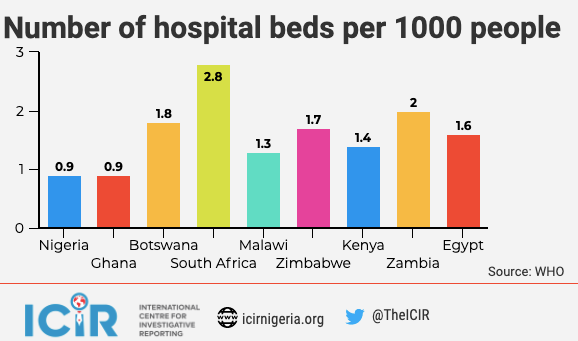
Nigeria boasts of 0.9 hospital beds per 1,000 people less than the global average of 2.3 while its Intensive Care Unit, ICU, beds for emergencies is estimated at 0.07 per 100,000 people.

The hospital beds include inpatient beds available in public, private, specialised hospitals and rehabilitation centres.

Compared to Kenya whose ICU, beds for emergencies per 1,000 people is 0.3 and its hospital beds per 1000 people is 1.4. South Africa’s hospital beds per 1,000 people is 2.8 above the recommended World Health Organisation, WHO, standard of 2.3 hospital beds.

Botswana’s hospital bed ratio to 1000 people is 1.8, Egypt with 1.6, Ghana is pegged at 0.9, Zambia has 2.0, Malawi has 1.3 beds and Zimbabwe with 1.7 according to figures obtained from WHO.

Several African countries including Nigeria have suspended flights and other transport links with badly hit zones in Europe and Asia, restricting entry of their citizens.

Restrictions have also been placed on public gatherings, schools, religious services, and mass events have been cancelled across different African countries to prevent the scourge from spreading.

Currently, there are five laboratories in NCDC’s molecular laboratory network with the capacity to test for COVID-19 across Nigeria according to information gleaned from its website.

The WHO, International Health Regulations, IHR monitoring and evaluation framework is a set of four components developed by WHO to support the evaluation of a country’s functional ability to detect infectious diseases and susceptibility to emerging epidemics.

FCT records three new cases of COVID-19

BARELY 72 hours after the Federal Government announced a rise in the number of COVID-19 cases to 12, Osagie Ehanire, Minister of Health on Saturday says 10 new cases have been confirmed to make total number of confirmed cases 22, since the index case arrived Nigeria.

Among the 10 newly established cases, three were reported in the Federal Capital Territory (FCT), a case in Ekiti State, 16 in Lagos and two cases in Ogun.

However, two cases were already discharged according to official information from the federal government.

“Nigeria has recorded 10 new cases of COVID19 in Lagos and FCT,” Ehanire stated via his official twitter handle. “That is a total of 22 cases in Nigeria: Lagos 16, FCT 3, Ekiti 1 & Ogun 2. And 2 have been discharged.

“All cases are clinically stable and receiving adequate care.”

The Minister further explained that all the 10 new confirmed cases were Nigerians.

Nine returned from Canada, France, Netherlands, Spain, and the United Kingdom respectively including one close contact of a confirmed case.

However, the three casualties in FCT, according to Ehanire are being treated at the University of Abuja Teaching Hospital (UATH), Gwagwalada.

But the other seven cases are being treated at Infectious Disease Hospital, Lagos.

Aside, the federal ministry of health, the Nigeria Centre for Disease Control (NCDC) also confirmed the 10 new cases.

“As of the 21st of March, 2020, 22 cases have been confirmed. Two cases have been discharged and there has been no death from COVID-19 in Nigeria,” a statement from Ehanire stated.

He, however, assured the populace of government commitment to work in partnership with the state government to provide appropriate optimal care for all confirmed cases in the country.

Ehanire emphasised on the on-going contact tracing to identify all persons who had been in contact with the new confirmed cases, adding that the Port Health Services of the health ministry has ‘heightened’ screening of all air, land and sea points of entry into the country.

As part of preventive measures, the public was advised to maintain social distance describing it as ‘crucial’ to reduce the virus spread.

Although the federal government has considered the use of chloroquine for clinical test trial for the virus, no approved cure has been made available yet.

The federal government has announced the closure of schools and warned worshipped centres to limit the number of gathering to 50 persons.

UN urges world govts, financial institutions to support private sector over global recession

THE United Nations Human Rights Organisation, in Geneva, on Friday, advised governments to consider the introduction of an emergency universal basic income to support individuals in the private sector as world economy slips into a global recession brought on by the Coronavirus outbreak.

Juan Pablo Bohoslavsky, UN Independent Expert on the effects of foreign debt and human rights said despite efforts made by many countries to counter the economic impacts of the outbreak through large-scale economic stimulus measures, it is of utmost importance to ensure that the plans go beyond bailing out large companies and banks.

“Those working in the informal sector, who are self-employed, and who cannot work from home need economic and fiscal incentives to stay at home.

“They will otherwise need to go to work and thereby put at risk their personal and family health and those of the broader community.

“It is essential that public services are provided free of charge for those who cannot afford them. Debt-servicing should be suspended for individuals who would otherwise be unable to cope with the public health crisis. Mass evictions must absolutely be prevented,” said the Independent Expert.

Bohoslavsky urged international financial institutions to urgently mobilise financial resources to help countries combatting the pandemic by placing human rights first on its list of priorities.

Since the outbreak of the novel coronavirus that originated in Wuhan China late January, the global market has been battered by the downward market performance in tradings and investments around the world.

Within the week, the United States released emergency funds in the tune of $1billion dollars, for businesses as the virus sweeps through the country.

Treading the same pattern, the United Kingdom also released £330billion pounds Business loan package. Germany has made available $600 billion stimulus funds available for its populace.

Subsequently, the Canadian government also announced state payment of individuals’ rents and availability of $82 billion economic stimulus fund a bulwark for its citizens.

The Central Bank of Nigeria also has announced that it would be infusing $2.7 billion dollars to bolster support for manufacturing and other key sectors of the economy.


Covid-19: FIRS discards rumour, says no staff tested positive  

By Uthman Samad


THE Federal Inland Revenue Service (FIRS) has debunked the news making round that an official of the service has been tested positive of Coronavirus in Abuja.

Media reports since the early hours of Saturday have disclosed that an official of FIRS has been confirmed positive together with two other Nigerians. The news claimed that the official was one of the passengers on the British Airways’ flight that landed on March 13, 2020.

In a statement obtained earlier this afternoon by TheICIR, signed by the Communications and Liaison Department director, Abdullahi Ismaila Ahmad, the board explained that a member of the staff of the service has only been observing self-isolation alongside his spouse for the past 5 days after he went to pick his wife from the airport.

The Service can confirm that a member of staff who went to pick his wife from the airport following her return from a trip abroad is currently and voluntarily observing the Federal Government advisory of self-isolation alongside his spouse at the couple’s home since Monday.

Both husband and wife have not visited any FIRS offices or events since the wife returned to Nigeria last Sunday.

A part of the statement reads that the agency has taken and directed all FIRS offices across the nation to take necessary precautions to protect both staff and taxpayers from Covid-19 through safety measures such as social distancing, temperature testing, disabling of the biometric sign in, and provision of hand sanitizers for staff and visitors at offices nationwide.

ICPC finally apprehends ex-presidential aide, Obono-Obla

THE Independent Corrupt Practices and Other Related Offences said it has apprehended the suspended Chairman of the Special Presidential Investigation Panel for the Recovery of Public Property (SPIP) Ekoi Obona Obla on Friday.

ICPC said before his apprehension, it had placed surveillance on Obona Obla having declared him wanted in October 2019.

He was eventually arrested along Aso Drive opposite Millenium Park in Abuja on Friday.

According to the commission, Obona Obla has refused to appear before the commission to answer questions bordering on certificate forgery, abuse of office among others.

ICPC added that medical profiling and other protocols have been put in place as Obona Obla has been taken into custody at the headquarters of the commission in Abuja.

In October 2019, ICPC said it received petitions from Nigerians against the ex-presidential aide alleging that he is living above his income and collection of gratification from suspects under the investigation of SPIP.

The presidential panel was eventually dissolved in September by President Muhammadu Buhari who said his action would give room for proper investigation on allegations against Obono-Obla.

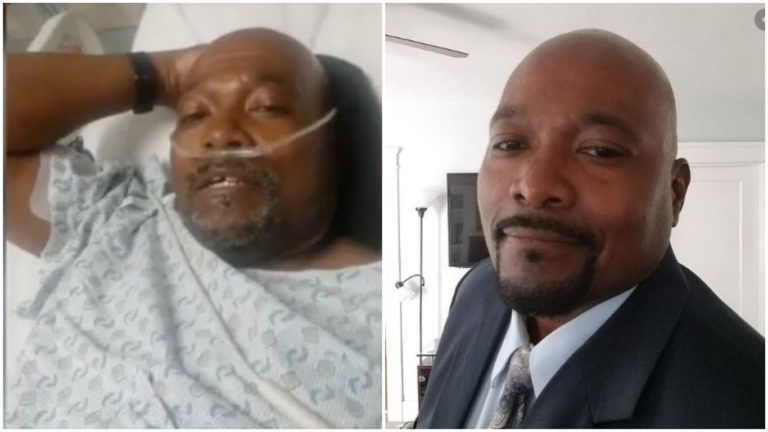
It started as a tickle in my throat — Coronavirus patient talks about deadly virus

CORONAVIRUS has infected over 200,000 people globally according to World Health Organisation (WHO) and as patients battle with the deadly virus across the globe, one of them simply identified as Kevin Harris, has shared details about the virus which he iterated almost killed him.

Hospitalised in Ohio, a midwestern state in the United States (U.S), Harris is one of the people who has come down with COVID-19 but is gradually recovering.

However, before he ‘got out of the woods’ as his doctors described it, Harris explained in a recent interview that he thought he was going to die.

According to him, it all started on the evening of Monday, March 2, when he felt a strange tickle in his throat. Harris explains that it felt like something was stuck in his throat and didn’t want to get out.

After a long night of restless sleep, Harris recalls that by morning, it had graduated to what he thought was a flu and a fever

I started coughing,” he said.

“That was the first sign and it went downhill in 24 hours, like gangbusters. I woke up several times thinking I was gonna die,” 55-year-old Harris recounted on his hospital bed.

Harris had booked an appointment with a doctor and he said he visited the hospital and he was told he had a flu and the doctor prescribed something for the flu.

However, he said he felt ten times worse few days after constantly using the medication.

It was at that point the father of four said he called his friend, whose wife came to visit him and told him he had pneumonia and decided they should get to the hospital. As he hopped in the shower to take a bath, he passed out.

Harris was admitted at the Mercy Health St. Joseph Warren Hospital in Warren, U.S on March 8, where his sickness was declared unknown by the doctors until March 11, when he tested positive to coronavirus.

According to him, they had for three days told him he didn’t have coronavirus as he didn’t display the regular symptoms and he had attested to not being in contact with anybody for two weeks before he caught the virus.

“I hadn’t seen anyone in 10 days before I caught the virus,” he said.

The coronavirus patient recalls that his doctor had tears in her eyes when she broke the news to him despite initially informing him that he didn’t have coronavirus.

He said he was told that nothing could be done as there was no cure and all he could do was pray.

” They basically told me to pray,” Harris pointed out.

Having spent weeks in the hospital and now feeling slightly better, Harris is now preaching social distancing and advocating that people take the virus more seriously.

“Do not go in the crowds. Do not shake hands. Stop hugging each other,” he said. “Wash your hands continually. Do not kiss on your kids. There are thousands of people carrying this virus around. They may never get it.

“People need to stay away from other people. They call it social distancing — I say just be anti-social. Just stay away from other people,” Harris said.

Unlike Harris who appears lucky to have survived the fatality of the virus, over 8,000 people have been recorded dead after contracting COVID-19, according to WHO.

In Nigeria, twelve persons have tested positive to the deadly virus but no death as a result of coronavirus has been recorded in the country.

However, a lack of a known cure or vaccine leaves many people worried and in panic mode as the death toll rises daily.

Recently, president of the United States, Donald Trump endorsed chloroquine as possible treatment for coronavirus, submitting that the U.S Food and Drug Agency (FDA) had approved it.

However, his statement was disclaimed when the FDA said there are no “FDA-approved therapeutics or drugs to treat, cure or prevent COVID-19.”

Meanwhile, the National Agency for Food and Drug Administration and Control (NAFDAC) on Friday announced that it had approved the production of chloroquine for clinical trials in preventing the spread of  COVID-19.

FACT-CHECK: Claims that FG will conduct aerial disinfection due to COVID-19 is False

SINCE the World Health Organisation (WHO) declared the deadly COVID-19 disease pandemic, and prior to the declaration, several unproven claims have been made across the social platforms in Nigeria.

Some of these claims are exaggerated , others misleading.

Most recent among these assertions, however, include claims that the use of chloroquine is capable of curing COVID-19 disease.

The second claim says the Federal Government would conduct an aerial containment of the virus.

These two claims have been shared on whatsapp platform and other social media groups.

“Breaking News: Warning, Warning, Warning. Please nobody should be outside by midnight today, lock up your door and window.

“Don’t leave your clothes or shoes outside. Federal Government have announce the plan to spray chemicals on air tonight with private jet to protect the country because of coronavirus.”

Findings

First, since outbreak of the coronavirus, up till date, the WHO is yet to recommend any particular anti-virus as cure for the pandemic.

Most of the recommendations suggested as precautionary measures includes maintaining proper hygiene, covering of mouth especially when coughing, the use of face mask and maintaining social distance particularly when in public space.

Though, Scientists in the United States and China have shown interests in the use of chloroquine tablet, but it remains questionable, as the US Food and Drug Administration agency was reluctant to accept the drug shortly after President Donald Trump made a declaration adopting the drug.

On Friday, the Minister of Health, Dr. Osagie Ehanire was also indifferent recognising chloroquine as a reliable cure.

Ehanire aligned the position of the Nigerian government with that of the WHO, including the anticipated outcome from the UN agency.

Prof. Akin Abayomi, Lagos State Commissioner for Health also dispelled the use of chloroquine as an effective preventive cure.

He questioned efficiency of the drug with much expectation on more proven scientific results.

The commissioner also warned against the drug usage without medical supervision considering its severe side-effects,stressing that the state government would conduct its clinical trial on the drug’s effectiveness for either prevention or management.

“Use of chloroquine in COVID-19 infection by Lagos State. We do not have any hard evidence that chloroquine is effective in preventing or managing the coronavirus.

“We are watching the global research space to clearly define its efficiency in COVID-19,” Abayomi stated.

In its pinned tweet, the Nigeria Centre for Disease Control (NCDC) also advised Nigerians against the use of chloroquine, as wrong usage could lead to death.

“WHO has not approved the use of chloroquine for COVID-19 virus,” NCDC tweeted on Friday.

“Scientists are working hard to confirm the safety of several drugs for this disease. Please do not engage in self medication. This will cause arm and can lead to death.”

Meanwhile, regarding the aerial containment through the use of helicopters in Nigeria to spray disinfectants, there is also no available record as part of Nigeria’s COVID-19 preparedness plan.

The Health Minister, during his briefing also did not mention the adoption of helicopter in containing the virus.

Moreover, the assertion is marred with typographical errors and grammatical mistakes.

Although, few nations have developed public measures to sanitise the public space by openly disinfecting streets and other public spaces, no such action has been carried out by the federal government.

The only similar activity is to subject airport passengers to test through handheld temperature measuring devices, mostly during arrivals. They are also encouraged to make use of hand sanitisers.

Verdict

Based on the available piece of evidences, the claim that chloroquine usage could cure the deadly COVID-19 virus is questionable, and by extension could be described as false.

No global authority such as the United Nations WHO has approved use of chloroquine. The FDA and National Agency for Food and Drug Administration and Control (NAFDAC) has only accepted the drug as clinical trial.

On the second claim, there is no available public evidence to proof the use of helicopter in sanitising public space over night in Nigeria.

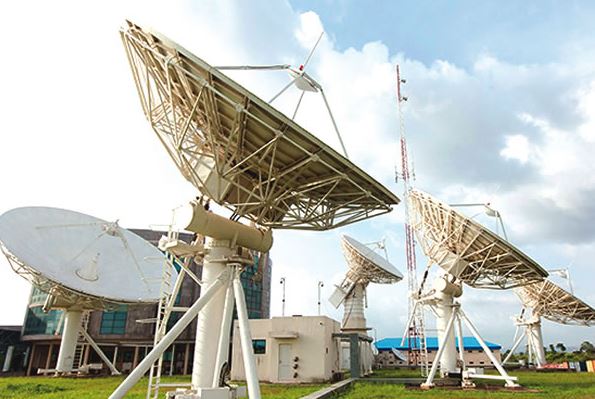
NigComSat: Nigeria’s satellite company still not profitable 14 years after launch

Kunle ADEBAJO


WHEN the Nigerian Communication Satellite company, NigComSat, was incorporated in 2006, the government had ambitious plans to make it world-class. The country’s excitement overflowed the following year with the launch of Sub-Saharan Africa’s first geostationary communication satellite. By April it will be 14 years since the journey started, but NigComSat’s scorecard remains unsatisfactory.

Domiciled under the Federal Ministry of Communications, its activities are expected to revolutionise information and communication technology in Nigeria, as well as improve national security, broadcast, internet access, and e-governance. Its services are also crucial in the health, education, and extractive sectors. 

NigComSat’s vision is to be “the leading satellite operator and service provider in Africa” by exploiting the commercial viability of the country’s communication satellite(s) for its socio-economic benefits. But that has not happened as the company continues to take from what little revenue is generated by the government rather than add to it.

This is more worrisome considering that the satellite under its control, NigComSat-1R, which was launched in 2011 has a lifespan of 15 years, out of which only six is left. And it is estimated that every year, digital mobile operators and telecommunications companies in Nigeria, spend over $2 billion in getting satellite services from foreign providers.

Isa Ali Pantami, who was appointed Minister of Communications and Digital Economy in August, appears to be especially concerned about the state of affairs at NigComSat.

A month after he assumed office, he directed the agency to get an International Standard Organisation (ISO) certification. 

That same week, at its strategic retreat, the minister said the only reason there have been arguments on whether to privatise or further commercialise the agency is because it is admittedly not “very viable”.

In December, new governing board members and executive directors were appointed for the company.

It is not only Pantami who is worried. The chairman, House Committee on ICT, Abubakar Lado Suleija, lamented during a visit to NigComSat’s Abuja headquarters last November that its potentials to generate revenue and create jobs have not been realised as we have in other countries.

Zero profits despite huge allocations

It did not take long for the NigComSat project to be described by telecoms experts as a debacle and “white elephant in space”.

It was so described in 2008 when NigComSat-1, the originally launched Chinese-built satellite which cost $340 million (then N40 billion), and was later shut down due to erratic power supply.

Indeed, relevant statistics shows that NigComSat continues to fail living up to expectations.

A study of Nigeria’s budgets from 2009 to 2020 reveals that up to N43.5 billion has been allocated to the centre.

Figures from the office of the accountant-general further show between 2011 and 2017, not lesser than N13.3 billion was released to it for capital expenditures, out of which it spent N12.6 billion.

Its wage bill, which started as N747 million in 2009, has jumped to N2.6 billion. With 397 employees as of 2016 and a personnel cost of N2.3 billion that year, the Federal Government must have paid the workers an average of N5.8 million per annum (or N480,000 a month).

Nigeria has also had to service debt owed to the Chinese government for many years.

Funding for the satellite launch had included $51 million from the Nigerian government and a $200 million loan from China’s Exim Bank.

Data from the Debt Management Office show that between 2011 and 2014, debt service payments for NigComSat amounted to $127 million, and between 2015 and 2017, the amount left to be paid for the project dropped from $50 million to $10 million.

But there is little to show for the huge investment, allocations, and salaries. 

According to a 2016 report by Punch Newspaper, the company generated only N584 million in revenue between 2011 and 2014. Put differently, its revenue in those four years constitutes only 3 per cent of its expenses on salaries and capital projects during the same period (N19 billion).

Responding to a Freedom of Information request asking for its updated client base, employee strength, and revenue figures, NigComSat’s secretary, Udevbure Unuigbe, said in an email on February 19 that the information would be provided “as soon as possible”. This promise has, however, not been kept.

Unuigbe also disclosed that, though it is fully owned by the Federal Government, the company does not yet have an establishment Act, though “efforts are being made in that direction”. 

Unaffordable, unreliable

As far back as 2008, there have been plans to launch additional communication satellites into space, but this has yet to materialise.

According to the former NigComSat Managing Director Timasaniyu Ahmed-Rufai,  having new satellites would demonstrate the company’s capacity to “develop into a huge commercial enterprise as well as compete in the international satellite market”.

But 12 years down the line, the agency is still managing only one communication satellite: the NigComSat-1R.

In January 2018, former communications minister Adebayo Shittu announced that China’s EXIM Bank and state-owned China Great Walls have agreed to fund the production of two new satellites for NigComSat expected to cost $550 million.

He said the satellites would be ready two years after the deal is sealed.

It is however uncertain if production is still ongoing,  or if the deal indeed was completed

At its 5th regular meeting held in 2017, one of the resolutions of the National Council on Communication Technology was that government MDAs and other organisations shall be made to buy satellite bandwidth from NigComSat “unless the required bandwidth is not available” on the company’s satellite(s). But this is not enough to reverse the trend of events.

President of the Association of Telecommunications Companies of Nigeria (ATCON), Olusola Teniola, explained in 2018 that most of the association’s members source satellite services from foreign companies simply because it is the cheaper option.

“The issue with NigComSat is the pricing. Service providers are taking capacities from foreign satellites because of that and this has been going on for quite some time,” he said. 

NigComSat’s inadequacies have continued to encourage foreign players to fill in the local supply gap.

In February alone, US-based operator Viasat announced plans to expand into the Nigerian market and Isreal-based Spacecom sealed a deal with PanAccess to provide Ku-band capacity for its broadcast operations in the country.

What Nigeria is missing 

Unlike with Nigeria’s NigComSat, the Fixed Satellite Services (FSS) business has proven lucrative in many other countries.

According to research conducted by Bryce Space and Technology, a 2016 estimate of the worth of the global space economy is as high as $344.5 billion (N126 trillion), and 75 per cent out of this comes from commercial revenue. 

“Telecommunications satellite operators traditionally have been the most profitable space companies, often recording double-digit margins year after year,” the study said.

In 2018, revenue from the global satellite industry was $277 billion, double the figure from a decade earlier.

But Nigeria, despite her pioneer status on the continent, is yet to get a slice of the pie.

Analysis by Space in Africa observes that one of the approaches that have worked for NigComSat’s major competitors is they are not entirely owned and managed by the government.

While 16.7 per cent are state-owned, 33.3 per cent are private companies, and 50 per cent are publicly traded.

Angola’s AngoSat and Algeria’s AlcomSat which are similarly operated by the government are also not economically viable.

Egypt’s NileSat, currently Africa’s largest satellite operator valued at over $586 million, used to be government-owned as well. But its fortunes improved after it was publicly traded.

In 2018, Space in Africa noted, it made a revenue of up to $145 million. 

TeleSat, which was previously owned by the Canadian government, has a similar history. Following its privatisation in 2007, its worth has more than doubled from $2.8 billion to $7 billion and the company is currently the world’s fourth-largest FSS provider.

The business model needs to change

Managing Director of Space in Africa and former African Regional Coordinator at the Space Generation Advisory Council, Temidayo Oniosun, believes NigComSat needs to admit its fundamental flaws. 

These, he said, include poor planning and management, unreliable and insufficient satellite assets, and unaffordable services. If the issues are not addressed, he added, then companies and even other government agencies will not trust the establishment enough to patronise it.

The House of Representatives has also accused the company’s leadership of being incompetent after discovering irregularities in its accounts. “We have to rescue this agency from you. In fact, if I had my way, I would recommend your sack,” Chairman of the House Committee on Finance, James Falake, told NigComSat’s Managing Director, Abimbola Alale, in February. 

Oniosun observed that NigComSat’s present model is not sustainable and needs to be treated as an actual business.

He identified it’s fielding of a Direct-to-Home (DTH) platform, NextTv, in 2019 as a reflection of its misguided leadership.

“NigComSat is supposed to be a service provider to other resellers, not the primary service provider. That means on their platform they can host satellite TVs like DSTv, StarTimes, and GoTV, but instead of selling to those people, they went ahead to launch their own DTH, Direct to Home, to compete with others,” he said.

“They should know that something like that is terrible for business. You can’t have your own DTH platform and expect other DTH platforms to buy services from you.”