Home Blog Page 2148

UBA magt yet to respond to legal suit filed by 116 retrenched staff

NEARLY two weeks after former staff of the United Bank of Africa dragged the financial institution to court, the bank is yet to file any response.

On January 3, UBA, in a move described as corporate right-sizing, retrenched over 3,000 of its workers.

The ICIR had told the story of staffers who said the bank got rid of them like “spoilt goods” by asking them to tender their resignation letter, or risk being sacked.

On February 13, the ex-workers in a suit marked NICN/La/112/2020 brought against the UBA at the Lagos Division of National Industrial Court, sued for wrongful termination of work, unconscionable and oppressive loan award, discriminatory and unfair labour practice, and defamation of character.

The retrenched workers prayed the court to award them N2 billion each for breach of contract and wrongful termination of employment.

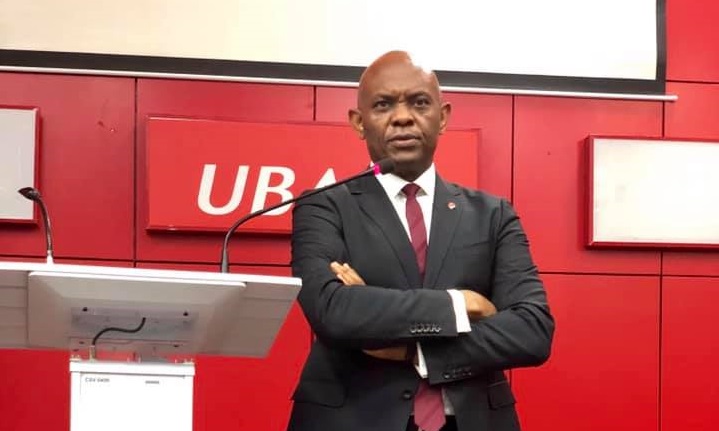
The former workers  also sued that N10 million be awarded to each of them on basis of defamatory comments made by Tony Elumele, UBA Groups chairman on January 6, at the Amphitheatre of the UBA House in Lagos.

“The Chairman of UBA, Mr Tony Elumelu announced to all staff and the whole world that the claimants are toxic inputters and disconnected Individuals.”

“The claimants were never at any time given any query for non-performance or for being toxic imputers or disconnected individuals.

“The defendant made the claim to lower the estimation of the claimants in the eyes of right-thinking members of society,” the claimants stated.

The suit obtained exclusively by The ICIR claimed the bank had made available personal loans which were “unconscionable and oppressive loans with interest at the rate of 18 per cent and 1.5 per cent for insurance.”

However, with the staff being asked to resign instead of getting a sack letter, the insurance benefits were not awarded to them.

Meanwhile, a source close to the bank revealed that the insurance company-HEIRS Insurance Brokers- which is also part of the Elumelu’s business empire knowing as HEIRS Holdings was to handle the insurance scheme.

Furthermore, the petitioners claimed that the bank tactfully foisted the loans on them for two reasons because it wanted to meet up with the Central Bank of Nigeria CBN’s Loan to Deposit Ratio. Secondly, the petitioners said  in accordance with already laid down plan, the bank used the loan as a ploy to swindle them out of their benefits.

Hence, the 116 ex-bankers are seeking an order cancelling the loans or, alternatively, asking the bank to apply insurance proceeds to the payment of the outstanding loans and update their terminal benefits.

Meanwhile, the claimants said during the course of employment, UBA made 2.5 per cent deductions from their salaries for National Housing Fund (NHF) contribution but failed to remit the funds in line with the applicable law and thus denied access to housing loans under the NHF scheme.

Another source close to the case told The ICIR, that after the legal action filed by the ex-staff was made public and published on various media, Ramon Nasir, Group Head, Media Relations and UBA’s spokesperson paid-off publishers and editors to have the published reports pulled down from the platforms in a fierce attempt to maintain the company’s image.

“In place of pulling down the story, the bank offered the newspaper money to run a full-page advert for it,” the source told The ICIR.

This trend, The ICIR learnt, was reproduced across reputable national newspapers and blogs.

Although the bank still has a few days left to respond to the suit, Elvis Asia, counsel to the petitioners told The ICIR  that his clients will proceed to court regardless of the silence by the defendant.

Why Nigeria’s political elite led by Bagudu, Ekwerenmadu others, stash N164 billion worth of properties in Dubai – Study

THE United Arab Emirates’s resolve to tackle high-end money laundering in its property market is under scrutiny after recent revelations that several Nigerian political office holders and their associates have found Dubai in UAE, a safe haven to acquire landed property with unexplained wealth.

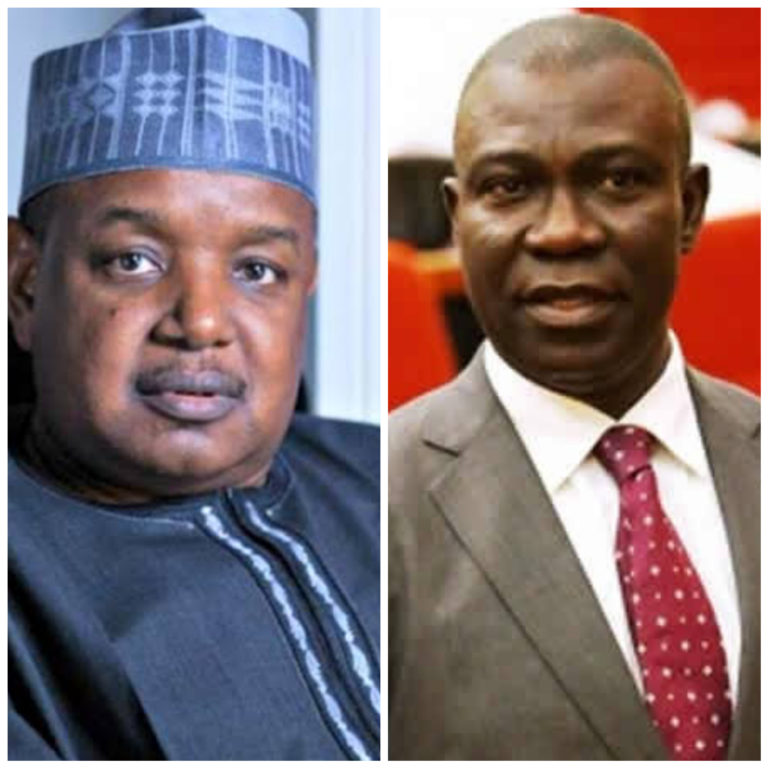
High profile Nigerians involved in this money laundering scheme include Ike Ekweremadu, currently, a serving senator representing Enugu west senatorial district, Atiku Bagudu, governor of Kebbi State alongside 332 Nigerians who are linked to 800 properties in Dubai.

The joint investigative research published by American based non-profit organisation, Carnegie Endowment for International Peace which was carried out by one of its non – resident scholars Matthew Page, revealed that the properties were worth N164 billion.

Titled “Dubai Properties” An Oasis for Nigeria’s Corrupt Political Elites”, the teport  was based on data obtained from UAE real estate and property professionals.

According to the report, many. politically exposed persons, PEP, who owned properties in Dubai cuts across different Nigeria’s major ethnic, religious and political divides.

This list includes twenty former and serving governors, seven former and serving senators, current and former heads of ministries, departments and agencies of government, commissioners and bureau de change operators, were owners of a significant number of these properties.

In 2018, the Tax Justice Network’s Financial Secrecy Index ranked Dubai as the ninth most secretive jurisdiction in the world serving as a destination for global illicit financial flows without strict financial regulation on foreign financial crimes.

Some of the individuals identified with properties in Dubai had a litany of corruption cases in Nigeria namely Dan Etete, former petroleum minister, Ibrahim Mantu, former deputy senate president, Cecilia Ibru, former managing director of the acquired Oceanic Bank, and Tafa Balogun, former inspector general of police.

Others include Ladan Shehu, former group managing director of the Nigeria National Petroleum Corporation, NNPC, Bala Mshelia, former chairman of the military pension board, Samuel Okeke, former head of the petroleum product marketing company and Ahmadu Ali, former PDP chairman.

Why Dubai appeals to corrupt Nigerian elite investment

According to the report, Dubai which boasts of a booming real estate market specialises in selling high-end properties to the world’s richest elites.

However, Nigeria’s PEPs are enticed by the tourist attraction to invest in real estate mainly because its property market is vulnerable to money laundering as UAE enjoys a strong banking system but weak financial regulations that promote aggressive business growth, exercises minimal oversight of corporate and property registration practices.

Other indicators identified in the study include its proximity to Nigeria.

For instance, it is easier for a Nigerian to get a UAE visa than it is for them to get a visa to the United States or the United Kingdom.

A thirty-day tourist visa to the UAE only costs N30,000 and takes about a week to process without a need for legal residency or a permit to buy property in Dubai.

In the first quarter of 2019, Nigerian travellers topped the list of international arrivals to Dubai which was a 28 per cent increase compared. to the first quarter of 2018.

The report stated that Dubai guarantees safe investment for real estate properties for not only individuals or legitimate businesses but unlawful ones as well, making it easy to buy property in and transfer money to Dubai.

The US Department of State in 2018 appraised the UAE to be a “major money laundering jurisdiction,” defined by its Foreign Assistance Act of 1961.

In its report Sandcastles, the Center for Advanced Defense Studies (now known as C4ADS) examined how seven individuals sanctioned by the United States or European countries were linked to a property in Dubai.

The study observed that if Nigeria’s PEPs continued to make Dubai an attractive conduit for illicit financial flows from Nigeria and the trend is not discontinued, it would drain government coffers, drive up borrowing, and put pressure on the economy.

Size of Nigeria’s PEPs investment in Dubai

At least 800 properties were found to have links to Nigerian PEPs, their family members, associates, and suspected proxies.

Until 2016 when C4ADS acquired the data of a private database of Dubai real estate information which proved to be a trove of information that revealed that Nigerian elites were getting a slice of Dubai’s real estate market with suspiciously pilfered public funds.

The 800 Dubai properties linked to Nigerian PEPs are estimated to be worth over N146 billion. This accounts for two-thirds of the Nigerian Army’s annual budget and over three times the annual budget of the country’s Independent National Electoral Commission, INEC.

It was highlighted in the study the Dubai property ownership by Nigeria’s PEPs is an indicator and not definitive proof that a particular politically exposed Nigerian possesses an unexplained wealth.

Global Financial Integrity, had estimated that illicit financial flows out of Nigeria between 2004 and 2013 were pegged at $178 billion which the study tentatively linked to the $400 million invested by Nigerians in the real estate market in Dubai.

Key players involved 

Ike Ekweremadu

Nigeria’s longest-serving senator and three-time deputy president of the senate, Ekweremadu is linked to eight Dubai properties, worth over $7 million.

“These include a luxury flat in Park Towers bought for $2.2 million and one in Burj Dubai purchased for $1.4 million,” the report stated.

He is also linked to at least two properties in the United Kingdom, which according to the records were purchased between 2008 and 2011 for a total of 4.2 million pound sterling in 2011.

“One of these properties, an upscale flat in central London, is registered in the name of Ekweremadu’s charitable foundation while the second, a detached house in a leafy north London suburb, is owned by a shell company registered in the British Virgin Islands,” the report said.

Ibrahim Mantu: A former deputy senate president from 2003 to 2007 under former President Olusegun Obasanjo is linked to 12 of the 800 properties which he was said to have purchased for more than $10 million through a front company, TSE Stevedoring Nigeria.

His wife and sons allegedly own 70 per cent of the company.

“Through another company, A-Z Properties, Mantu also is linked to a $600,000 flat in the Jumeirah Beach Residences while his son, Musa, is also tied to a comparable flat in the same development,” the report said.

Cecilia Ibru: The former bank managing director of Oceanic bank, her family and associates are linked to dozens of properties in Dubai in 2016. They include eight apartments in the Park Towers development acquired for a total of $4.3 million, a flat in Dubai Marina now worth about $500,000, and four commercial properties.

She also laundered $1.2 billion in stolen cash and assets forfeited to the Federal Government of Nigeria following her plea bargain with the Economic and Financial Crimes Commission (EFCC), Nigeria’s anti-graft agency, after she pleaded guilty to three of 25-count of fraud brought against her.

The forfeited assets had included 12 homes in the United States; four homes in South Africa, 28 shop fronts and seven residences in Dubai; 41 properties in Lagos, and eight houses in Abuja, Nigeria’s capital city.

Atiku Bagudu

Bagudu is said to be linked to eight properties on the twelfth floor of Dubai’s capital bay towers development. The properties are said to worth more than $4.8 million.

He is associated with some of the recoveries of monies stashed abroad by Abacha. Currently, incumbent Kebbi State governor he had helped Abacha to embezzle billions of dollars from government coffers in the mid to late 1990s, according to U.S. court filings.

He has, however, continued to deny all corruption allegations against him.

However, a 1998 Nigerian government investigative panel described how Bagudu and his accomplices siphoned these funds.

Nigeria was reported to be committed to a deal that would give Bagudu about $100 million from funds recovered from his erstwhile boss, Abacha, a report by Bloomberg, which cited court documents, has revealed.

Recommendations of the study

In 2018, Nigeria and the UAE endorsed bilateral agreements increasing judicial and law enforcement cooperation on criminal and asset recovery cases. However, Nigeria’s anticorruption agencies have been disappointed with the level of information sharing and investigative support they’ve received from the UAE, according to the study.

It was recommended that law enforcement agencies could redirect their attention toward deterring PEPs’ illicit acquisition of Dubai property.

“The Central Bank and Nigerian Financial Intelligence Unit could inaugurate an interagency investigative “tiger team” tasked with scrutinizing the last ten years’ worth of financial transfers between Nigeria and Dubai, flagging suspicious transactions that may have been ignored or previously overlooked,” the report said.

It was also advised that the country’s apex bank increase its scrutiny, fines for banks and currency exchanges failing to report transactions involving PEPs, as required by law.

“The Economic and Financial Crimes Commission, EFCC, should focus their investigative time and resources on individuals and companies operating in Nigeria that facilitate PEPs’ Dubai property purchases or play a middleman role in executing transactions,” the report has stated.

Breaking: Confirmed COVID-19 cases now 30 in Nigeria

THE Federal Government on Sunday at about 5:28 pm announced that COVID-19 cases in Nigeria have risen to 30.

Three additional cases have just been confirmed.

The Nigeria Centre for Disease Control (NCDC) via its verified Twitter handle put the number of active cases at 28 while two have been discharged.

The body noted that though no death has so far been recorded in the country, two of the new cases just returned from a trip abroad while one is a contact from one of the confirmed cases.

“Three new cases of #COVID19 have been confirmed in Lagos, Nigeria. Three cases are returning travellers and one is a contact of a confirmed case,” the NCDC stated. “As at 05:28 pm on the 22nd of March, there are 30 confirmed cases of #COVID19 in Nigeria. 2 have been discharged with no deaths.”

The NCDC, however, put out a toll-free-line: 080097000010 for members of the public to report any suspected cases.

It is also working in partnership with the Federal Ministry of Health, alongside other bodies to prevent further spread of the virus.

Some of these include the suspension of train stations, schools, National Youth Service Corps, Churches, Mosques, and every form of public gathering.

The public is advised to also imbibe good hygiene and sanitation, proper washing of hands as well as maintaining social distance.

However, despite these recommendations, a number of religious houses, particularly in the Federal Capital Territory (FCT) and prominent government workers still maintain normal gathering.

The Lagos State and FCT, for instance, restricted number of public meetings to 30.

On Saturday evening, the Lagos state government reduced the figure to 20. The order was implemented with supports from the Police.

COVID-19 currently has no cure.

The World Health Organisation (WHO) is yet to announce any antidote but nations such as China, US are considering the use of chloroquine as a clinical trial.

Over a dozen churches in FCT disregard warning against large religious gathering, hold Sunday service

By The ICIR reporters


DESPITE directive by the Federal Capital Territory Administration (FCTA) against religious gatherings of not more than 50 persons, not fewer than 20 churches in the FCT, Abuja held church service, opening gates to hundreds of worshippers, The ICIR can report.

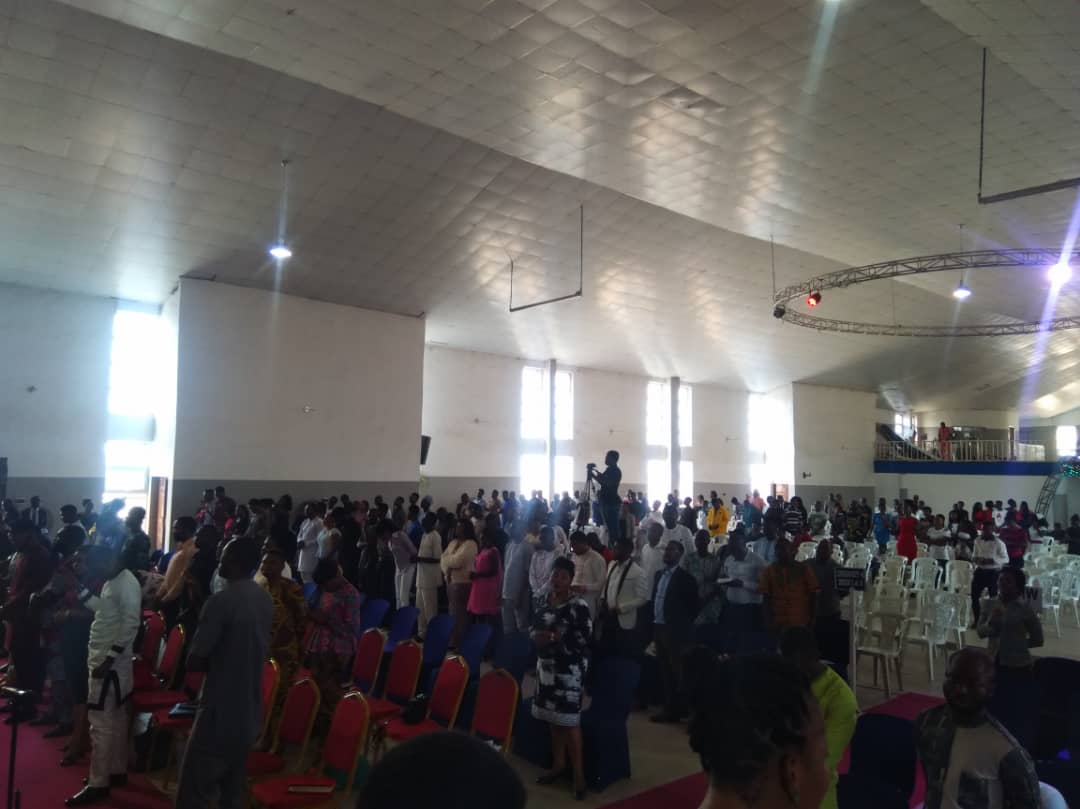
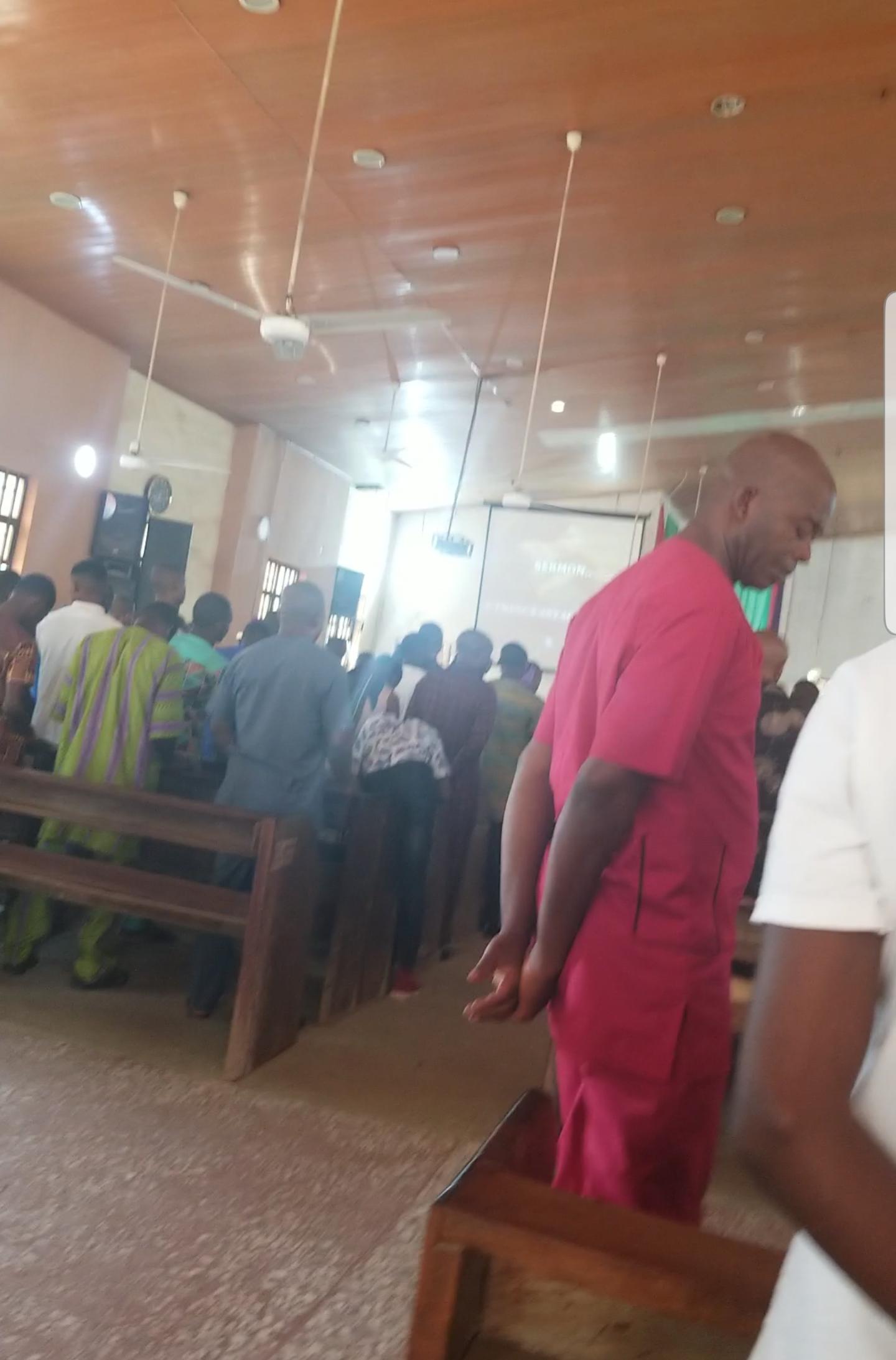
The ICIR visited over 20 churches in different areas of the FCT and found that 90 percent of them held physical services and some even held multiple services to accommodate large numbers.

In a press statement shared on its official Twitter page, the FCT  Administration on Saturday, warned against religious and public gatherings, limiting such meetings to a maximum of 50 persons.

The announcement was made in line with public health guidance – to curb the spread of coronavirus in the country and to make contact tracing by health authorities easier.

However, the directive was disregarded by many churches as church leadership across the FCT encouraged members to attend worship services with no adequate measures in place to identify suspected case of the virus.

Rather, in attempt to keep members ‘protected’ against the virus, some of the churches provided hand sanitizers at the entrance of the church, pouring it on the palms of members as they enter into the church.

Then members proceeded to sit close to one another in the church where service continued for an average of two hours.

As at the time of filing this report, Nigeria has recorded 27 cases of the coronavirus.

Lagos has recorded 19 infected persons, Abuja has four cases, Ogun has recorded two cases and Ekiti and Oyo have registered one case each.

FCT churches visited by The ICIR

The ICIR reporters who went round Abuja found contrary to the government’s directive that many churches indeed held Sunday services with members in full attendance.

Winners Chapel also known as Living Faith is one church with thousands of branches across Nigeria.

In the FCT, all branches visited by The ICIR were in full service.

The branches include Living Faith Gwarimpa, Nyanya, and Dawaki. All the three branches started church service as early as 9 am as indicated in their  programme of service.

Also in Gwarimpa, The Transforming Church (TTC),  resumed at 8:30 am, while the church authorities advised members on the threat of coronavirus. The church service commenced officially by 9 am and members were instructed to sit one seat apart from one another .

Most Redeemed Church branches  in Abuja visited by The ICIR  followed the directive of the Church General Overseer, Enoch Adeboye that members should stop holding physical service in view of the pandemic coronavirus.

Members were advised to gather in house fellowships for worship. Some held their service online, The ICIR gathered.

Redeemed Christian Church of God, Yimi road, Ikwa, appeared to be an exception as it held its church program with scores of members in attendance despite warnings from the FCTA.

In Zuba/Madalla axis of FCT, at least 11 churches were seen holding their services with hundreds of members  in attendance.

They included  Ikwa All christian Fellowship, Zuba, Rock of Ages Zonal Headquarters, FCT Province 2, Living Faith Church Zuba, a.k.a Winners Chapel, Winners High Way, behind Pantaker, Zuba, St. Augustine’s Anglican Church, church road, Zuba.

Others that held their church program, with members in attendance exceeding 50 persons  were Christ Apostolic Church, Zuba, Catholic Diocese Abuja St.Jude Parish, Zuba, Assemblies of God Church, Ikwa-Zuba 1, The Lord of Chosen Charismatic Revival Ministry, Zuba Regional Headquarters, Mountain of Fire and Miracle Ministries, Zuba Regional Headquarters, National Evangelical Mission inc. (the people that love) Ikwa -Zuba, Jehovah Witness Church, Zuba.

Also, Christ Embassy Church was not left out as the Nyanya branch of the church held its church program as usual except with the addition of automatic dispensing hand sanitizers made available at the entrance of the church.

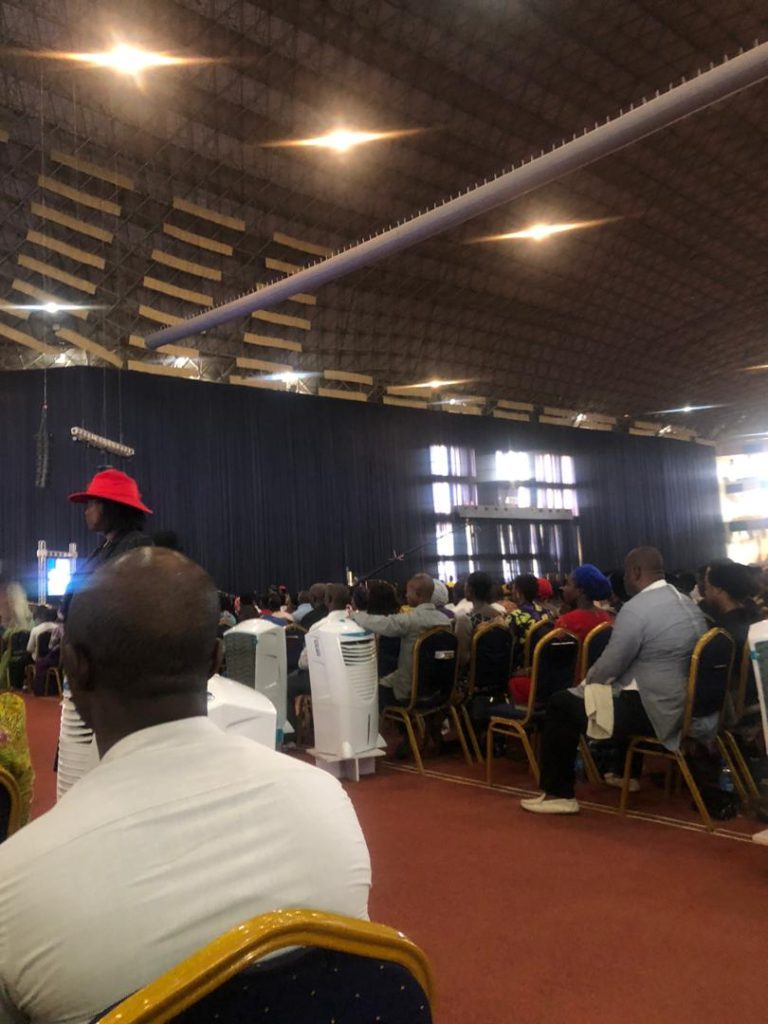
The Dunamis International Gospel Centre, a 100,000 seater capacity church located along Airport Road held three different services, with each service held between 7am- 12am packed with at least a thousand worshippers in attendance.

Holy Rosary Catholic Church at Mambolo Street, Wuse Zone 2 also carried on with church service as well, opening its doors to hundreds of members in clear disregard of the FCTA directive.

Churches that defied FCTA orders can explain their choice, CAN reacts

The Christian Association of Nigeria (CAN), the umbrella body of all Christians in Nigeria said churches that held services against the directive of the FCTA administration were in the best position to explain their choice.

Bayo Oladeji, spokesman to CAN President told The ICIR, that the leadership of CAN supports the position of the government in placing restrictions on social and religious gatherings amidst the fight against the spread of coronavirus.

Oladeji however pointed out that the churches that chose to flout the directive are in the best position to defend their decision.

According to him, the FCTA released the restriction order during the late hours of Friday, March 20, and while the motive was clear and useful, some pastors ‘complained’ of their inability to reach their members within such short period of notice and settled to use the church service to sensitize their members about coronavirus.

“Some pastors were complaining that some of their members could not be reached on the new directive and they asked for the grace to allow those who couldn’t hear of the directive to worship in their usual way. But they would use the service to sensitise them on the coronavirus,” Oladeji told The ICIR.

The CAN also argued that the government wasn’t proactive in announcing restrictions in the FCT.

Oladeji pointed out that President Muhammadu Buhari’s spokesperson, Garba Shehu, recently attended a gathering of old students of his alma mater.

The meeting which Shehu announced on his Twitter was a call to everyone interested to attend the 2020 Annual Leadership Lecture, by Barewa Old Boys Association on Saturday, March 21, in which the presidential aide was to deliver the keynote address.

“Please find time to join us at the Barewa Old Boys Association (BOBA), 2020 Annual Leadership Lecture, where I will be speaking on “Media and Democracy: Challenge of Journalism,” Shehu posted on his Twitter page which boasts of over 800,000 followers.

Pandemic and outbreak lurking 

The World Health Organisation (WHO) declared coronavirus officially called COVID-19 a pandemic, given that it has infected over 260,000 people globally, killed over 11,000 persons and has spread to every continent on the planet except Antarctica.

Countries have banned international travels, shut down borders and instructed citizens to restrict movement and avoid large gatherings, all in attempt to arrest the spread of the deadly virus.

In the past month, the virus has spread to five states in Nigeria, raising concern over possible outbreak.

With no known cure or vaccine, a fragile health care system and a population estimated to be 200 million, Nigeria remains at the mercy of citizens abiding by rules guarding prevention.

Covid-19: Oyo govt confirms index case In Ibadan

0

Samad UTHMAN


THE oyo state government has confirmed an index case of Coronavirus in Ibadan, the capital city.

The state governor, Seyi Makinde confirmed this in a tweet through his official handle.

The index case was confirmed in Bodija, a suburb in Ibadan.

According to the the governor, “The covid-19 confirmation test for the suspected case at Bodija has come back positive. The result was released at 17:35pm of march 21, 2020”

Another suspected case in the state who just returned from Texas, United States has been kept in self-isolation, the governor has tweeted.

Makinde urged other returnees to indentify self to the state’s health ministry official, and self isolate for 14days.

The Nigeria Centre for Disease Control has earlier today confirmed three new cases in Lagos, including (NCDC) Oyo’s index case, summing up the number to four newly confirmed cases in Nigeria.

This is coming barely 24 hours after the confirmation of 10 new cases of Covid-19 in Nigeria, comprising 3 in Abuja, and 7 in Lagos, the epicentre of the virus.

According to the NCDC, Nigeria is currently battling with 25 confirmed cases of the novel virus and  2 persons already have been released.

The places where cases of Coronavirus have been established include: Lagos, Ogun, Ekiti,  Oyo and Federal Capital Territory, Abuja.

The ICIR reported days ago about the non-availability of test centres for the virus in the whole of Nigeria’s northern and south-eastern parts.

This situation has been condemned by the  Senate president Ahmed  Lawan and concerned Nigerians in the past week, saying the virus will be uncontrollable if confirmed in these regions

Women earnings gap causes global wealth shortfall by $160 trillion – World bank

THE world bank has showed in a report how global wealth could rise by $160 trillion if women could have the same lifetime earnings as men.

According to the report, many laws and regulations continue to prevent women from entering the workforce or starting a business.

The UNDP Nigeria, showed facts and figures that women earn only 77 cents for every dollar that men get for the same work and women represent just 13 percent of agricultural landholders.

Numbers from the UNDP also showed that almost 750 million women and girls alive today were married before their 18th birthday.

Only 24 percent of national parliamentarians were women as of November 2018, a small increase from 11.3 percent in 1995.

Discrimination can have lasting effects on women’s economic inclusion and labor force participation, the world bank report highlighted.

The world bank report also showed that in poorer countries, women globally are 7.5 percent less likely to have an account with a financial institution or mobile banking than men.

The International Finance Corporation (IFC) estimates a $1.5 trillion annual credit deficit for women-owned small and medium enterprises.

Gender-based violence the most extreme constraint on women’s voice and agency remains a global epidemic affecting more than one in three women over the course of a lifetime, the report showed.

Analysis by the bank showed that globally, women’s labor force participation fell from 51 percent in 2000 to 49 percent in 2018.

Women devote one to five hours more a day to unpaid domestic work and childcare and other family care work, and one to six hours a day less to market activities than men.

The World Bank also gave different strategies on how companies and countries can focus investments to ensure equal economic participation by both genders.

The bank suggested that gender gaps should be closed in education and health in countries where they persist, including girls’ completion of secondary schooling, boys’ drop-out in secondary, and improving the quality of learning for both girls and boys.

Also showed how removal of constraints to more and better jobs for women, focusing on safe transport to and from work, child and other family care, training in the digital and technological skills required to compete for jobs would be helpful.

Access economic opportunities, and reducing occupational sex segregation is key according to the world bank.

The world bank also highlighted the removal of barriers to women’s ownership and control of land, housing and bank accounts, and improve access to finance, technology and insurance services needed to make such assets productive.

“How do you tell people not to be stupid when you are displaying exactly that? Nigerians react to Garba Shehu’s public lecture

NIGERIANS on Saturday took to the social media to express their displeasures over public lecture attended by Garba Shehu, Senior Special Assistant to the President on Media and Publicity, despite Federal Government’s recommendation to suspend public gatherings.

Some Nigerians expressed disappointment that Mr. Shehu attended the event the same day three new confirmed cases were reported in Abuja, the Federal Capital Territory (FCT) and seven others in Lagos, as disclosed by the Health Minister, Osagie Ehanire.

The public lecture titled, 2020 Annual Leadership Lecture was organised by Barewa Old Boys Association (BOBA), Abuja Branch, had Shehu as the keynote speaker. He spoke on the topic: Media and Democracy: Challenge of Journalism.

Other invited dignitaries include: Mallam Nasir El Rufai, the Kaduna State Governor, as the occasion chairman; Mallam Muhammad Bello, the FCT Minister as the event host; Bashir Magashi, the Minister of Defence as a special guest and Salihu Ingawa, the association’s Abuja chairman.

The event held at Royal Hall, Kapital Klub and Apartments, near the World Bank office, Asokoro, Abuja, was described as testimony to “foolishness”.

“That Garba Shehu’s conference is foolishness. How do you tell people not be stupid when you are displaying exactly that?” Ediong, a verified twitter handler @Ediong tweeted

Aye Mojubar @ayemojubar also questioned rationale for such public gathering despite previous warnings by the appropriate government authorities, especially as the pandemic bites harder.

“Public Invitation to a public gathering by Garba Shehu in the heat of #CoronaVirusNigeria, the same day Punch reported 4 cases in Abuja? Why won’t people call Buhari government all sorts of names?

“They specialise in violating every law they put in place yet want us to comply. Tueh! Angry face.”

Another user, Lekan Adigun @MrLekanAdigun called for Shehu’s sack for flagrant disobedience of public order.

He also suggested sack of other cabinet member and presidential aides who attended the event.

“I think Buhari should sack Garba Shehu and everyone in his government who attended this programme to serve as a warning to others. I don’t see any sense in telling others to comply with a directive which your spokesman is flaunting clearly. It makes no sense to me.”

A check on the health minister’s verified twitter handle showed that avoiding crowded gathering is among precautionary measures Ehanire strictly advised against.

He also mentioned the need to maintain a social distance of two metres.

The NCDC and other authorities gave similar recommendations as part of measures to prevent likely spread of the pandemic.

“Observe social distance for now. In Lagos no gathering of more than 50 people, FG shuts down schools in response to COVID-19, Garba Shehu (SSA, Media and Publicity):  invites the entire public for a special lecture. This government is so unwell,” Uwaya Isimemen @Uwayaisi tweeted.

Part of efforts to prevent social garthering was the closure of schools, National Youth Service Corps orientation camps, suspension of religious garthering, train services among others.

COVID-19: Nigeria lacks sufficient hospital beds in face of viral pandemic – Data

NIGERIA’S fragile healthcare system paints a grim picture as the country braces itself to contain the spread of coronavirus.

Data suggests that Nigeria’s healthcare systems might be overwhelmed if  Coronavirus spreads wider beyond expectation.

Osagie Ehanire, Minister of Health at a media briefing in Abuja on Friday said the country would adapt a renewed approach to combat coronavirus if the need arises.

“We have our own strategy to improvise and increase the number of isolation centres if the need arises. There is a standard isolation centre in Gwagalada, Abuja. There is another one in Lagos which was inherited from the Ebola isolation centre.”

When asked if Nigeria was ready to control a possible outbreak of the coronavirus, he was careful in his response.

“I will tell you that no country is ready for the outbreak of coronavirus or any infectious diseases it depends on how fast they move or respond to it,” he said.

Coronavirus infections in the Nigeria is currently confirmed  at 22 cases nvolving people who have in recent times being to Europe or other high risk countries.

According to the Global Health Security, GHS, Index 2019 released in October last year, the index was based on each country’s vulnerability to epidemic emergencies and their capacity to respond.

The study was carried out in 195 countries to assess their preparedness in the face of a globally catastrophic biological event or serious disease outbreaks.

Nigeria ranks 11th in Africa, and described as being “moderately prepared” for an epidemic trails behind low income countries like Zimbabwe, Senegal and Sierra Leone.

South Africa tops  the chart of African countries with a robust capacity to respond to diseases outbreak, followed closely by Kenya, Uganda, Morocco and Ethiopia.

Indices based on the GHS index showed that Nigeria lack foundational health systems capacities vital for epidemic and pandemic response, without compliance with international health and security norms.

Chikwe Ihekweazu, Director General of Nigeria’s Centre for Disease Control, NCDC, said  Nigeria’s strategy was focused on early detection and prevention of coronavirus due to lack of infrastructural capacity.

“Our health system is not as strong as we’d like it to be, it is because we are a bit worried about our capacity to deal with a large outbreak that we are focused so intensively on prevention and early detection,” he said.

In a study published on The Lancet Journal to evaluate the vulnerability of African countries against the importations of COVID-19 from other continents revealed that the management and control of COVID-19 importations heavily relies on a country’s health capacity.

Nigeria was acknowledged in the study to have a pandemic preparedness plan which is outdated and considered inadequate to deal with a global pandemic leading to rapid saturation of its hospital’s capacity if an outbreak ensues.

In the face of scrambling to increase Nigeria’s isolation beds and provide more specialised medical training and equipment to contain a possible COVID – 19 outbreak, statistics is not favourable to Nigeria’s plight.

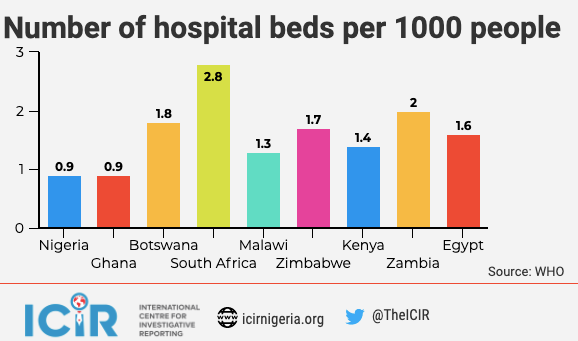
Nigeria boasts of 0.9 hospital beds per 1,000 people less than the global average of 2.3 while its Intensive Care Unit, ICU, beds for emergencies is estimated at 0.07 per 100,000 people.

The hospital beds include inpatient beds available in public, private, specialised hospitals and rehabilitation centres.

Compared to Kenya whose ICU, beds for emergencies per 1,000 people is 0.3 and its hospital beds per 1000 people is 1.4. South Africa’s hospital beds per 1,000 people is 2.8 above the recommended World Health Organisation, WHO, standard of 2.3 hospital beds.

Botswana’s hospital bed ratio to 1000 people is 1.8, Egypt with 1.6, Ghana is pegged at 0.9, Zambia has 2.0, Malawi has 1.3 beds and Zimbabwe with 1.7 according to figures obtained from WHO.

Several African countries including Nigeria have suspended flights and other transport links with badly hit zones in Europe and Asia, restricting entry of their citizens.

Restrictions have also been placed on public gatherings, schools, religious services, and mass events have been cancelled across different African countries to prevent the scourge from spreading.

Currently, there are five laboratories in NCDC’s molecular laboratory network with the capacity to test for COVID-19 across Nigeria according to information gleaned from its website.

The WHO, International Health Regulations, IHR monitoring and evaluation framework is a set of four components developed by WHO to support the evaluation of a country’s functional ability to detect infectious diseases and susceptibility to emerging epidemics.

FCT records three new cases of COVID-19

BARELY 72 hours after the Federal Government announced a rise in the number of COVID-19 cases to 12, Osagie Ehanire, Minister of Health on Saturday says 10 new cases have been confirmed to make total number of confirmed cases 22, since the index case arrived Nigeria.

Among the 10 newly established cases, three were reported in the Federal Capital Territory (FCT), a case in Ekiti State, 16 in Lagos and two cases in Ogun.

However, two cases were already discharged according to official information from the federal government.

“Nigeria has recorded 10 new cases of COVID19 in Lagos and FCT,” Ehanire stated via his official twitter handle. “That is a total of 22 cases in Nigeria: Lagos 16, FCT 3, Ekiti 1 & Ogun 2. And 2 have been discharged.

“All cases are clinically stable and receiving adequate care.”

The Minister further explained that all the 10 new confirmed cases were Nigerians.

Nine returned from Canada, France, Netherlands, Spain, and the United Kingdom respectively including one close contact of a confirmed case.

However, the three casualties in FCT, according to Ehanire are being treated at the University of Abuja Teaching Hospital (UATH), Gwagwalada.

But the other seven cases are being treated at Infectious Disease Hospital, Lagos.

Aside, the federal ministry of health, the Nigeria Centre for Disease Control (NCDC) also confirmed the 10 new cases.

“As of the 21st of March, 2020, 22 cases have been confirmed. Two cases have been discharged and there has been no death from COVID-19 in Nigeria,” a statement from Ehanire stated.

He, however, assured the populace of government commitment to work in partnership with the state government to provide appropriate optimal care for all confirmed cases in the country.

Ehanire emphasised on the on-going contact tracing to identify all persons who had been in contact with the new confirmed cases, adding that the Port Health Services of the health ministry has ‘heightened’ screening of all air, land and sea points of entry into the country.

As part of preventive measures, the public was advised to maintain social distance describing it as ‘crucial’ to reduce the virus spread.

Although the federal government has considered the use of chloroquine for clinical test trial for the virus, no approved cure has been made available yet.

The federal government has announced the closure of schools and warned worshipped centres to limit the number of gathering to 50 persons.

UN urges world govts, financial institutions to support private sector over global recession

THE United Nations Human Rights Organisation, in Geneva, on Friday, advised governments to consider the introduction of an emergency universal basic income to support individuals in the private sector as world economy slips into a global recession brought on by the Coronavirus outbreak.

Juan Pablo Bohoslavsky, UN Independent Expert on the effects of foreign debt and human rights said despite efforts made by many countries to counter the economic impacts of the outbreak through large-scale economic stimulus measures, it is of utmost importance to ensure that the plans go beyond bailing out large companies and banks.

“Those working in the informal sector, who are self-employed, and who cannot work from home need economic and fiscal incentives to stay at home.

“They will otherwise need to go to work and thereby put at risk their personal and family health and those of the broader community.

“It is essential that public services are provided free of charge for those who cannot afford them. Debt-servicing should be suspended for individuals who would otherwise be unable to cope with the public health crisis. Mass evictions must absolutely be prevented,” said the Independent Expert.

Bohoslavsky urged international financial institutions to urgently mobilise financial resources to help countries combatting the pandemic by placing human rights first on its list of priorities.

Since the outbreak of the novel coronavirus that originated in Wuhan China late January, the global market has been battered by the downward market performance in tradings and investments around the world.

Within the week, the United States released emergency funds in the tune of $1billion dollars, for businesses as the virus sweeps through the country.

Treading the same pattern, the United Kingdom also released £330billion pounds Business loan package. Germany has made available $600 billion stimulus funds available for its populace.

Subsequently, the Canadian government also announced state payment of individuals’ rents and availability of $82 billion economic stimulus fund a bulwark for its citizens.

The Central Bank of Nigeria also has announced that it would be infusing $2.7 billion dollars to bolster support for manufacturing and other key sectors of the economy.