A new case of Coronavirus has been registered in Ekiti state, Nigeria, raising the number of confirmed cases in the country to eight.
On Wednesday, the minister of health, Osagie Ehanire, announced that the country had registered five new cases of the virus, with four patients in Lagos and one in Ekiti.
Details about the case in Ekiti were later shared in a statement released by the Ekiti state government on Twitter, disclosing that the patient, a 38-year-old Nigerian man tested positive to the virus and upon further probe, was identified to have been in contact with an index case.
In the statement signed by the state’s commissioner of health, Mojisola Yaya-Kayode, the patient was reported to have driven the index case, an American man who came into the country from Virginia, United States, on March 3 through Muritala Mohammed International airport.
According to the statement, the 27-year-old caucasian American man travelled with his caregiver, a 31-year-old Nigerian woman, from Lagos to Ibadan where they both spent two weeks before heading to Ekiti on March 13.
Upon arriving in Ekiti, the index case fell ill and was taken to a private hospital before he was transferred to a tertiary hospital where he was declared dead, the statement disclosed.
It was gathered that the hospital alerted the government who then commenced contact tracing and identified the driver who has now tested positive to the virus.
The caregiver who is said to be in an isolation centre in Ekiti has been reported to have tested negative to the virus but the government has stated that a second test would be carried out before she is either discharged or admitted.
So far, Nigeria has confirmed eight cases but only one of the cases was said to have tested negative after initially testing positive and being asymptomatic.
In arresting the spread of the virus, the Federal Government has placed travel ban on 13 countries, all of which have at least 1,000 cases of COVID-19
Globally, coronavirus has infected up to 200,000 persons and killed over 8,000 people around the world.
There is still no known cure or vaccine to eliminate the virus, which has now been recorded in every continent except Antarctica.
A LADY identified as Chinyere Oranugo @Splendidmarshal on Wednesday took to the social media to call out the Governments of Osun and Ekiti states for wrong handling of her cousin suspected to have been infected by the COVID-19 virus and placed under quarantine in Osun state.
Oranugo said his cousin came in from the United Kingdom after schooling abroad to partake in the compulsory National Youth Service Corps (NYSC), only to develop a cough at the Ekiti State NYSC camp.
Cough is known as one of the symptoms of the COVID-19 pandemic.
However, the victim was reportedly quarantined and subsequently transported to Osun state through ill-equipped ambulance followed by alleged poor treatments.
“Please Nigerians, my family and I need your help at this time. My cousin who schooled in the Uk and returned home 26/01/2020 to serve in the NYSC was posted to Ekiti state for his orientation and he’s down with cough so has been quarantined and sent to Osun state, but he’s not been fed since yesterday that he’s been quarantined and he’s complaining of dizziness,” she tweeted appealing for the appropriate authorities to intervene in the matter.
“Not only that, he was carried like a waybill in a poorly kept ambulance, it’s almost as if they want him dead so a case will be established.”
“Please help us speak to the authorities to give this boy food to eat, so that he can even withstand whatever treatment awaits him. My family is going to visit and see how he’s being treated. This is a boy who is ordinarily fragile but with one of the largest hearts on earth,” she stated.
However, based on Oranugo’s claim on the arrival date of her cousin – 26 January, the NYSC member, there were concerns that his case would have possibly deteriorated beyond normal cough.
From the said date to today is about 51 days.
It is also uncertain if the victim was conveyed by the Ekiti state Government or the NYSC officials in the state.
But in its reaction, the state government via its official social media handle claimed ignorant of the development. Rather, it advised Oranugo to contact the state task force emergency numbers.
“We have no knowledge of this incidence. Please call the emergency numbers: 09062970434, 09062970435, 09062970436 and provide necessary details for a coordinated response by the Ekiti State Task force #EKSG_COVID19.” It stated.
The ICIR reached out to Ismail Omipidan, the Chief Press Secretary to the Osun State Governor on the matter but he dismissed the news describing it as fake.
“It is fake. We don’t have any such case in Osun. I just spoke with the health commissioner. In fact, he said our consultant from LAUTECH just left a meeting and we do not have such a case. We don’t, it’s fake.”
“Before they can even send the person to Osun, because we have a world-class laboratory in Osun State, they must have quarantined him in Ekiti. How can they have a case in Ekiti and bring him to Osun?” He queried.
Oranugo was also contacted in a direct message to provide details to the incident, particularly where her cousin was kept.
Hours after, she responded that the corp member has been released and confirmed negative.
“Thanks, sir. As I write, he’s been confirmed negative and released. I appreciate your concern. Grateful heart,” she stated.
But in her reaction that her claim was a rumour, she said, “My cousin was in the NYSC camp. As it stands I will not disclose his name. He went to sought medicare because he had cough. He was quarantined yesterday and taken this morning to Redeemer University in Osun for a test.”
“This evening they’ve confirmed him negative and released and he’s left the camp. Why the denial? Worse, they can claim it hasn’t gotten to their notice,” she noted.
However, a similar case was reported in Enugu State, the victim was declared dead on 15 March.
Meanwhile, the Federal Government had earlier announced five additional cases including an American who entered the country via the Benin Republic. This amounts to seven cases in totality while one case has been tested negative.
The number of cases in the Lagos State Mainland Hospital which serves as the quarantine centre, according to Prof. Akin Abayomi, the Commissioner for Health has also reduced to six.
PRESIDENT Muhammadu Buhari approved the reduction of the pump price of Premium Motor Spirit, PMS, popularly known as petrol from N145 to N125 to reflect the declining price of crude oil globally.
This was announced after the Federal Executive Council, FEC, meeting held at the Presidential Villa in Abuja, by the Minister of State on Petroleum Resources, Timipre Sylva in a statement.
He cited the drop in the price of crude oil at the global market leading to the reduced open market price of imported petrol below the official pump price of N145 per litre.
“President Buhari has approved that Nigerians should benefit from the reduction in the price of PMS which is a direct effect of the crash in global crude oil prices.
“In view of this situation, based on the price modulation template approved in 2015, the Federal Government is directing the Nigerian National Petroleum Corporation, NNPC, to reduce the ex-coastal and ex-depot prices of PMS to reflect current market realities,” he said.
Data obtained from the Petroleum Products Pricing Regulatory Agency, PPPRA, showed that the landing cost of petrol was N64.32 per litre indicating a steep decline in the landing cost of a litre of petrol since the outbreak of the “dreaded” Coronavirus.
Based on PPPRA initial projection on March 11, the Expected Open Market Price, EOMP, for a litre of petrol was N112.26 while the ex-depot price was N125.63.
Sylva stated that the measure taken by the Federal Government to reduce the price would benefit citizens of the country and balance the market economics.
“The PPPRA is further directed to modulate pricing in accordance with prevailing market dynamics and respond appropriately to any further oil market development.
“It is believed that this measure will have a salutary effect on the economy, provide relief to Nigerians and will provide a framework for sustainable supply of PMS to our country,” he said.
Brent Crude Nigeria’s oil equivalent currently sells for $30.85 per barrel which is below the $57 per barrel benchmark for the 2020 fiscal budget.
The Nigerian National Petroleum Corporation, NNPC, which is currently the sole importer of petrol into the country subsidises the consumption of petrol initially pegged at N145 per litre.
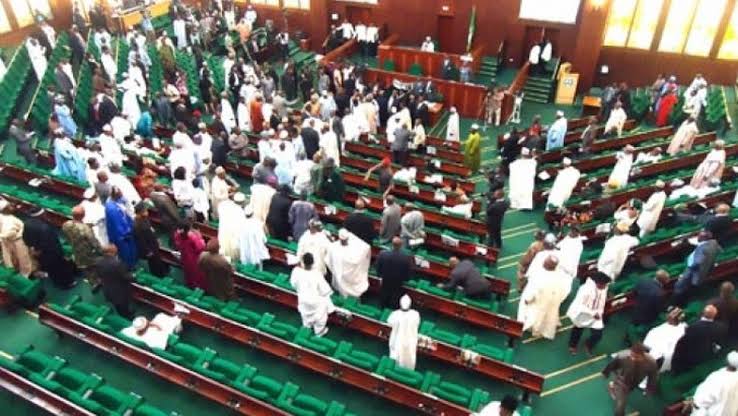
THE MEMBERS of the House of Representatives on Wednesday urged the federal government to ban all forms of open worships and gatherings in other to contain the spread of the novel coronavirus in Nigeria.
Following the announcement of five new confirmed cases of coronavirus by the Federal Ministry of Health, Lawmakers called on the federal government to ban public worships and gatherings and all flights coming from all countries into Nigeria.
Ndudi Elumelu (PDP) member representing Aniocha North/Aniocha South/ Oshimili North and South Federal Constituency proposed an amendment to urge Federal Government to ban all airlines entering the country unless they meet safety standards and are certified by the Port Health Authorities.
He also called on the aviation ministry to enforce passport regulation that stops airport touts from loitering.
The Speaker of the House Femi Gbajabiamila, in a reply to calls for a ban on all airlines reminded members that banning all airlines from entering the nation would mean Nigerians wishing to come home from schools from abroad might be stranded in their bid to return home.
The lawmakers further stated it had banned visitors to the National Assembly describing the Coronavirus outbreak as a matter of public importance which should be treated with urgency.
Ossai N. Ossai (PDP) member representing Ndokwa/Ukwani Federal Constituency, Delta State proposed an amendment that management should ensure everyone visiting the National Assembly complex to be properly tested at every point of entry.
Speaking on the call by the lawmakers to ban open worship and gatherings, The Christian Association of Nigeria (CAN) Lagos state chapter stated that the level of Coronavirus infection in the nation does not yet warrant ban on religious gathering and activities.
Citing the Nation’s report, CAN however, said religious organisation, especially churches and mosques, must take proactive measures to safeguard members from infection.
Apostle Alexander Bamgbola, Chairman Lagos state CAN told reporters on Wednesday that Nigeria must do everything to win the war against the virus.
“The Federal Government must further secure our borders. Many nations are doing this very seriously now. We must also act now as a nation, our nation cannot afford to welcome or accommodate Coronavirus in our land. God forbid it in Jesus name, “Alexander said.
Meanwhile the state Commissioner for Information Lagos State, Mr Gbenga Omotosho, has stated the state government will ask religious leaders to stop Friday (Juma’at) and Sunday service in the interest of the public.
Further reacting to the coronavirus increase in Nigeria and the first suspected case in Katsina State, Aminu Masari Katsina, the state Governor, in a communique read after a closed-door meeting on Wednesday announced that Governors of North-West zone had agreed on the closure of all schools in the zone.
The meeting held in Kaduna, revealed the closure was for 30 days, and was to take effect from March 23, 2020, noting that it had become necessary in order to prevent the spread of the COVID-19 pandemic in the zone.
THE National Examinations Council, NECO, on Wednesday has vowed to sanction schools charging above the government-approved fee of N9,850 as registration fee for the 2020 Senior School Certificate Examination, SSCE.
In a statement by the board, the Acting Registrar of NECO, Abubakar Gana, said the exam body had written to Commissioners of Education of the 36 states and Federal Capital Territory (FCT), notifying them of the extortions going on in their schools against the directive of the federal government.
Gana spoke in Abuja when the House of Representatives Committee on Basic Education and Services paid an oversight visit to the Council, and raised an observation that some schools were charging between N19,000 and N20,000 as registration fee for SSCE.
While frowning at the development, the NECO boss said the Council was on top of the situation, adding that the exam body will continue to play active role in ensuring that candidates are not defrauded while pursuing their education.
He added that the Council would engage members of the committee to monitor its examination and report any infraction to guide the Council on appropriate actions to be taken.
“Not quite a month, we wrote to all the commissioners of education, highlighting that some schools, both public and private, are overcharging candidates. While the NECO fee itself is N9,850, some are even charging N20,000 in the name of administrative charges.
“Most of these schools are miracle centres and what they do there is that they perpetrate malpractice. Candidates who are lazy and don’t have confidence can go to the extent of paying N50,000 to register so they can have their way.
“We are on it. You too have a very critical role to play. We will make sure that in all our activities, we would make you part of the monitoring team so you can see what is happening and at your own convenience, write a report to us,” the paper said.
Gana had also appealed to the National Assembly for the review of NECO’s budget, lamenting that the exam body has not embarked on any capital project for the past three years.
The statement stated that NECO, apart from conducting the examination, was finding it difficult to execute one project due to low allocation to the agency.
Gana said in 2018, it was budgeted that the Council will purchase 18 Hilux pickups but only N7 million was released to it which couldn’t even buy one.
Responding, the Chairman, House Committee on Basic Education and Services, Julius Ihovbere, said the committee had a lot of confidence in NECO and those managing the agency.
Ihovbere said from the feedback from his constituency, NECO was doing exceptionally well.
“We believe that the role you have played, the only way to better appreciate it is to imagine a Nigeria without NECO,” he said.
According to him, the limitations faced by NECO were not from the inability of the Council to deliver but because of the challenges confronting the exam body.
He expressed confidence that both the Senate and the House of Representatives will approve a review of NECO’s budget to enable it execute its mandate.
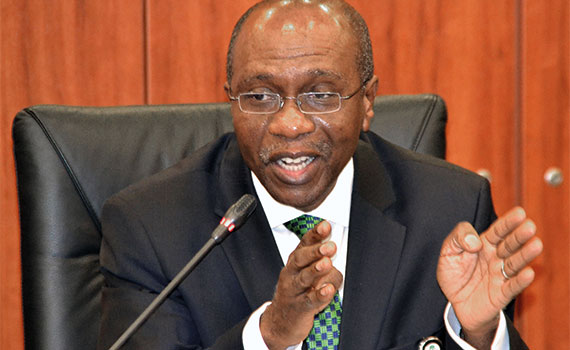
THE Central Bank of Nigeria (CBN) has said the foreign exchange reserves will remain robust and comfortable despite fears and panic resulting from the outbreak of coronavirus disease.
Nigeria’s foreign exchange reserves decreased to $36 billion in February 2020 from $38 billion in January.
As oil prices shrink further by almost 50 per cent and global economy destabilises, the CBN said it is working with the fiscal authorities to properly and accurately dimension the immediate and expected impacts of the coronavirus.
According to a press release by the CBN, the size of Nigeria’s foreign exchange reserves remains robust and comfortable, given the current realities of Nigeria’s genuine and legitimate foreign exchange demand.
The apex bank on Monday released six policies that would cushion the negative impact of Coronavirus on the Nigerian economy.
Global oil consumption is in free-fall, heading for the biggest annual contraction in history, Goldman Sachs predicted.
Travel bans, work-from-home policies, cancelled vacations and disrupted supply chains all mean reduced demand for fuel.
The CBN also said it remains able and willing to meet all genuine demand for foreign exchange for a legitimate transaction.
A joint Senate committee was set up and headed by Senator Solomon Adeola, believes this six policies rolled out by the CBN might not be enough to manage the impact of the virus on the economy thereby suggesting devaluing the Naira and removing the subsidy.
Financial Analyst with PIPCC Investments Limited Daniel Ortega spoke with The ICIR and said: “Before the effect of the drop in oil prices begins to ravage us in Nigeria, I think its best we devalue the Naira to serve us as a shock absorber”.
Business Development Officer at Magnartis Portfolios Limited Taju Sesan who also spoke with The ICIR said: “We cannot just begin to shiver and do the wrong thing that would lead us to a catastrophe, devaluing and subsidy removal should not be hurriedly done; there might be implications”.
“This global pandemic is something the world hasn’t witnessed since 1918,” said Pierre Andurand, who runs oil hedge fund Andurand Capital Management LLP. “I do not see how the demand drop wouldn’t be multiples of the drop witnessed during the global financial crisis.”
Andurand estimates that demand could easily drop by 10 million barrels a day in this quarter and even beyond.
During a meeting with President Muhammadu Buhari at the presidential villa on Tuesday, the economic council which was led by Doyin Salami said many countries across the world may go into economic recession.
Goldman Sachs, which runs one of the largest commodity trading businesses on Wall Street, is now forecasting that oil demand will contract globally by more than 4 million barrels a day every month from February to April. Other investors see much larger demand drops in the short term.
The accelerating plunge in oil demand offers a window into the worsening state of the world economy as governments in Europe and the United States impose restraints on social behaviour that stop people spending money and moving around.
Deutsche Lufthansa, the German carrier, said it could reduce its number of flights by as much as 70 per cent in the next few days.
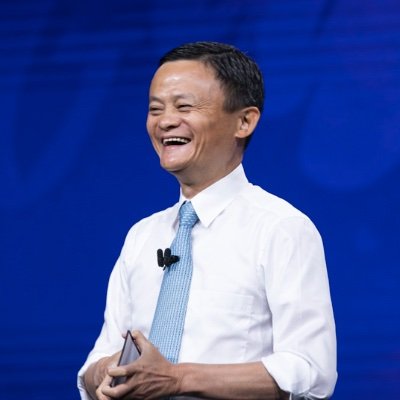
CHINESE billionaire and co-founder of Alibaba, Jack Ma, says he will donate masks, test kits and protective suits to all countries in Africa to help the continent in its fight against the novel coronavirus.
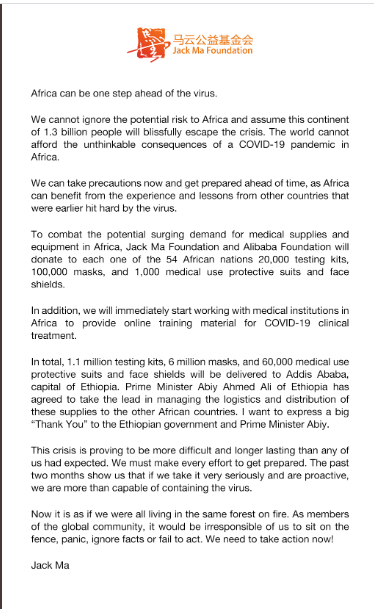
Ma’s foundation will donate at total of 1.1 million testing kits, six million masks, and 60,000 protective suits and face shields.
The foundation will also work with local medical institutions on the continent to provide online training material for Coronavirus clinical treatments.
“The world cannot afford the unthinkable consequences of a COVID-19 pandemic in Africa,” he said in a statement tweeted on his twitter page.
The Ma foundation’s letter/Photo Credit: twitter
Similarly, on Friday, Ma’s foundation also donated 500,000 Coronavirus testing kits and one million face masks to the United States. He has also shared his plans to give to Europe as well as Iran.
“Now it is as if we were all living in the same forest on fire. As members of the global community, it will be irresponsible of us to sit on the fence, panic, ignore facts, or fail to act. We need to take action now,” Ma said.
In addition he stated that the Ma’s and Alibaba foundations would commence working with the medical institutions in Africa to provide online training material for COVID-19 clinical treatment.
Ma further stated that the materials would arrive in Addis Ababa where the Ethiopian Prime Minister Abiy Ahmed would lead in distribution of the over 20,000 testing kits, 100,000 masks and 1,000 medical use protective suits each to all African countries.
Clinical practitioners on the front lines of China’s fight against COVID-19 have also developed a handbook of treatment and care protocols for healthcare providers around the world.
Meanwhile, there have been more than 300 confirmed cases in Africa, 205,642 confirmed cases and 8272 deaths globally.
IT was the second time the Abuja Electricity Distribution Company (AEDC) was interrupting power supply that hot afternoon –an action that produced murmurs and sighs from the customers at a photocopy shop in Sky Memorial, Wuse zone 5, Abuja.
Charles Anamichakwe hurriedly went to start the Thermocool diesel generator set, a few feet away from the shop entrance.
This incident shows that if the Generating Set Prohibition/Ban Bill is passed and gets an executive assent, Nigerians would suffer more from the epileptic power supply.
Therefore, the introduction of a new bill proposing the outright ban of generators sponsored by Bima Muhammad Enagi, a senator representing Niger South Senatorial District of Niger State last week might not be what Nigerians want-just yet.
Change that frightens
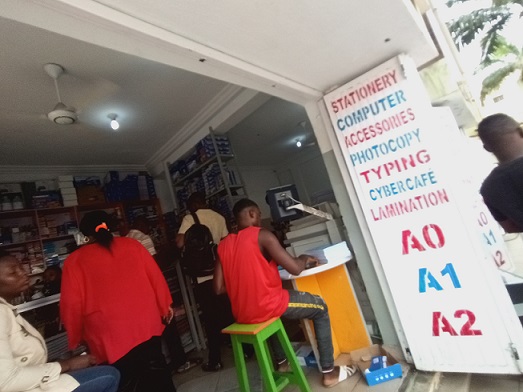
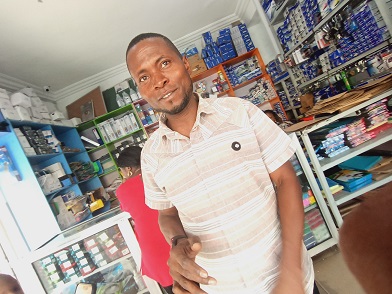
Charlesmanages a mega stationery shop at the popular Sky Memorial Plaza. During the peak period, he attends to 50 to 80 customers daily in his small business centre, offering services such as photocopying, laminating, direct imaging and others.
Charles. Credit/ICIR
Speaking to The ICIR, the manager vehemently opposed any plan to ban the importation or the use of fuel-powered generator sets.
“Since you stepped into this shop, this is the second time the power has been interrupted and we do not have any inkling as to when they might restore it,” Charles said. “But business must go on.”
Despite having to spend over N20,000 on prepaid electricity billings monthly, Charles said he purchases N5,000 worth of diesel every day to keep the business running.
On a good day, the shop rakes in about N10,000 from photocopies, etc. However, in a month, about N150,000 is spent on the purchase of diesel.
Despite the obligation to pay over ten workers every day, Charles told The ICIR the availability of an alternative electricity generating source still remains the best option for him.
The use of a cleaner source of energy in Nigeria is not without challenges as most firms in the country make use of fossil fuel to generate electricity. However, Total Gas Station in Zone 5, Abuja, combines both fossil fuel and solar energy as an alternative way to generate power.
Kudu Mohammed, Assistant Manager, Total Station said though the branch is one of the pioneers of renewable energy for commercial purposes, it had to abandon the process since 2019 due to technical challenges.
“Unfortunately, even with the installation of the solar panels, we still need to power the batteries with the diesel generator to a certain percentage before it can run effectively on its own,” he said. “And this defeats the initial intention on our part to reduce carbon emissions.”
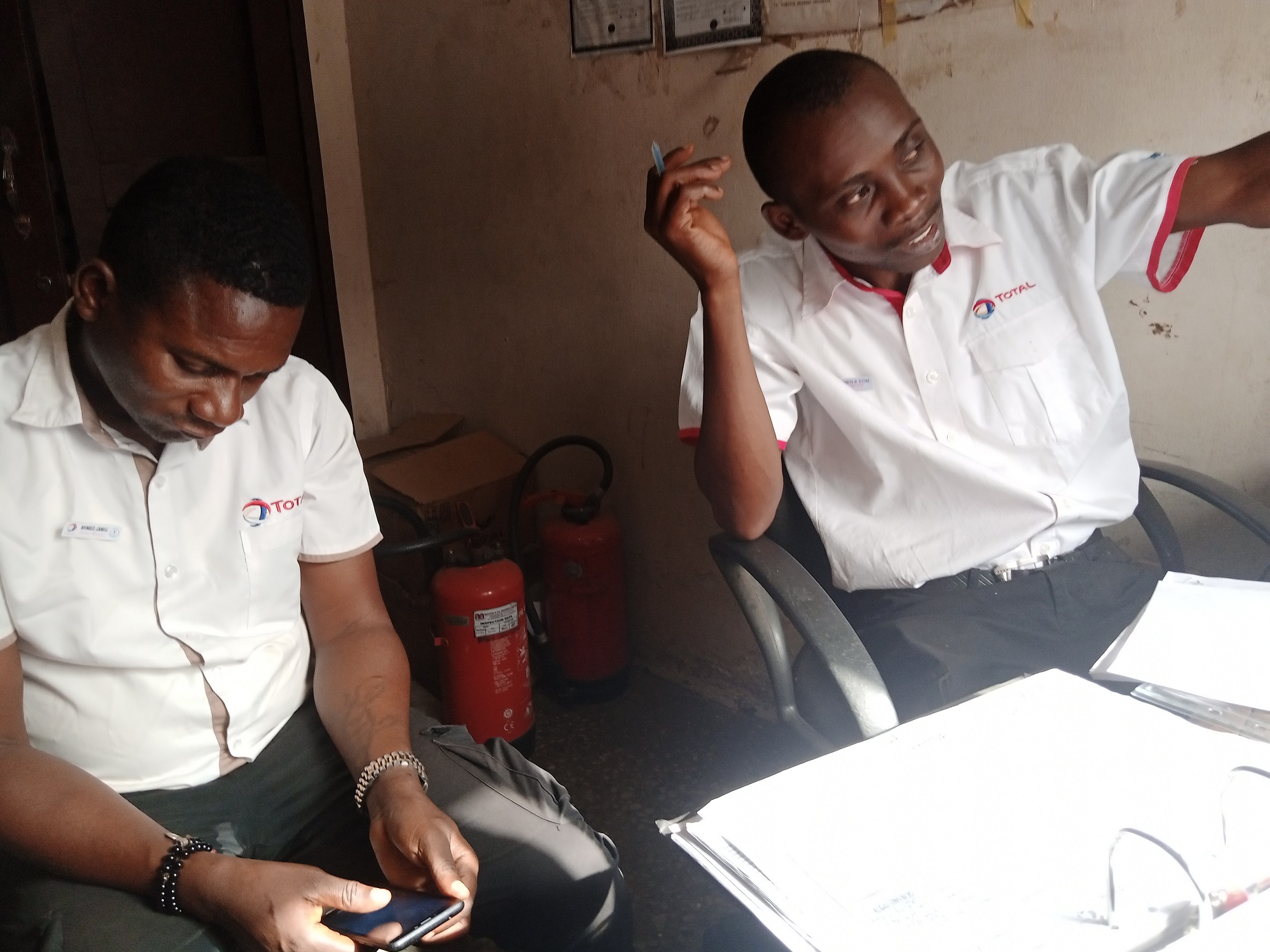
Ambrose Ossai and Ameh Jamil
Kudu explained that due to the unreliable supply of electricity supplied by the Abuja Electricity Distribution Company, the gas station uses over a hundred litres of diesel within two hours to run its business every day whenever the Disco interrupts power.
Meanwhile, Ambrose Ossai and Ameh Jamil, both managers at a Petroleum station also told The ICIR that the establishment uses about 50 litres of fuel in three to four hours if there is a prolonged electricity interruption.
The establishment is among the few that use prepaid metres within the vicinity and spends an average of N43,000 for the purchase of electricity units monthly.
According to a 2007 World Bank report, nearly nine million litres of diesel is consumed weekly by the Nigerian Manufacturing sector.
The managers said they would rather prefer steady electricity to the use of generators. But without cheaper and readily available options, an outright ban of generators would definitely hurt business, they said.
“The noise from the generator is even a nuisance,” Ambrose said. “And once it is powered on, you don’t want to be anywhere close to the generator house.”
West Africa greenhouse gas emission is barely 1.8 per cent despite being home to five per cent of the world population. Yet, Africa, according to a United Nations fact sheet on climate change, is most vulnerable to the impacts of climate change.
Meanwhile, not everyone subscribes to the ideology of contributing to climate change or even impacting it through whatever means.
Martha Godwin, a hairstylist, learning for the first time that Generators could be banned listed reasons why the ban would cripple the growth of small businesses like hers.
“They cannot say I am polluting the environment and force me to stop using my generator when the main pollution is emanating from open defection due to lack of sanitary facilities. “Let them fix that one first,” the agitated stylist said.
Martha Godwin, during a pedicure session with a client. Credit/ ICIR
Although the option of a clean energy generating source was appealing to Martha, she, however, was sceptical about the effectiveness of solar panels, especially during the raining seasons.
Importation of Genset so far
Between 2015 and 2018, the total revenue spent by the Federal Government in subsidising electricity for Nigerian consumers stood at ₦1.12 trillion, but despite the millions invested in the power sector it currently generates less than 4,000 MegaWatts to over 200 million people which is about one-third of what Singapore supplies 5.6 million people.
According to Babatunde Fashola, Minister of Power, Works and Housing, about 90 million Nigerians have no access to the electricity supply.
Regrettably, despite boasting as Africa’s largest economy, Nigeria’s Small and Medium Enterprises have to improvise by deploying alternative means of generating their own electricity in order to ensure that business goes on as usual.
Nigeria closely follows Egypt as the second-largest market for manufacturers of generators in Africa with an importation valued at over $51 million dollars in 2014 and 2015 alone. The value is projected to hit $450 million dollars in 2020.
A study by Ciston Research, however, anticipates a rise in the stipulated amount as the sector keeps recording substantial transmission loss and deficiency of high base power required for commercial, residential, and industrial applications.
A mini Tiger generator used by a shop keeper in the absence electric power. Credit/ICIR
Diesel Generator at Total Gas Station.Credit/ICIR
The Bill
The Genset ban bill is not an entirely novel proposal. In 2019, a member of the House had moved for a five-year temporary ban of the importation of generators which was voted against by majority.
Although it was pitched as a means of fixing some of the issues that riddle the Nigerian power sector, a part of the bill which calls for the conviction and imprisonment of offenders to a jail term not less than 10 years have rubbed off negatively on Nigerians who say the conditions of the bill was insensitive to the needs of the citizens.
“The ban/prohibition of generator sets shall not include generating sets used for essential services which include: Medical purposes( hospitals and nursing homes and healthcare facilities), airports, railway stations/services, elevators,(lifts), and escalators, research institutes and such institutes that require 24 hours electric power supply,” the act read in part.
The ICIR can report based on interviews with SME’s operators that the new act did not consider small scale enterprises that depend solely on the electric power supply from the Discos.
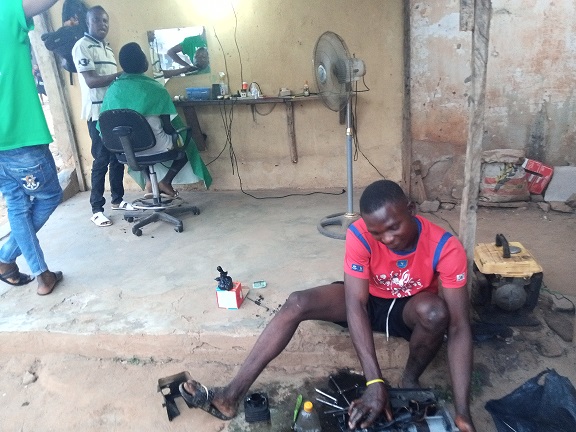
Martha Godwin’s neighbour a barber fixing his mini generator. He also opposed the bill to ban Gensets. Credit/ICIR
Despite a clause in the bill giving room for the application of an exclusion permit from the minister in charge of power, the stipulated price of permit-if any was not revealed in the act.
Adetayo Adegbemle, Director of Powerup a civic organisation and energy consumer rights advocate who spoke to The ICIR noted the failure of the national grid to supply the country with stable power led to high dependency on alternative electricity power source in the first instance.
“The question to ask is: what is the bill proposing? Is the bill Punishing people that are providing alternative sources which in the first instance was made available because the national grid is not working? And how does it affect the efficiency of the grid?
He noted that stopping individuals from generating electricity through the use of a generator while the Senate itself utilises the provisions of the alternative was hypocritical.
Adetayo said although a shift to the use of renewable energy would be a safer and better alternative for Nigeria, the country is not ready for a complete switch yet.
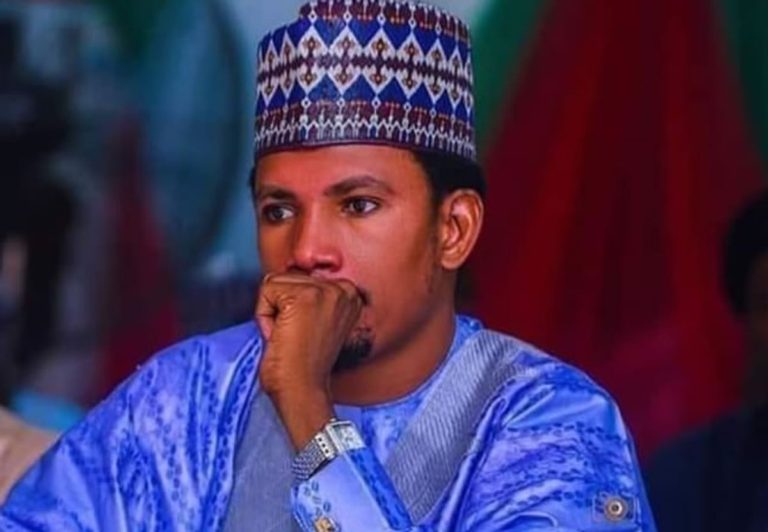
IT’S been over eight months since a leaked tape showing Elisha Abbo, a lawmaker representing Adamawa North district assaulting a nursing woman surfaced, and within this period he has received three notable awards of recognition.
Abbo had assaulted a nursing mother in an adult sex toy shop in Abuja over reasons claiming that she called him a drunk. He had reacted by repeatedly slapping the woman as revealed in a leaked tape on July 2, 2019.
Although the incident happened on May 11, 2019, the lawmaker had neither apologised to the victim nor paid her hospital bills before footage from the shop’s CCTV recordings leaked.
It was reported that the assaulted woman was taken to a hospital, where she was treated for eye inflammation and other injuries she sustained during the attack.
Notwithstanding, the young senator, aged 41 has continued to showcase various awards he had received despite public questioning of his eligibility for the awards.
The first of the three awards he received came barely three weeks after the leaked tape went viral. The young senator was awarded an “Icon of Democracy” by the Intercommunity Awareness for Change and Development Initiative, (IACDI), a non-government organization that provides a platform for capacity building. The event took place in Abuja on July 28, 2019.
The organizers said the senator’s efforts in nation-building, contributions on relevant matters concerning the masses, being a young astute democrat who despite trial and persecution focused on dividends of democracy had incited his recognition. But The ICIR has not been able to find evidence justifying such recognition.
Also, The ICIR was unable to trace footprints of the IACDI official website and, that of its Director identified as Dr Lami Uguogho, whose name could not be found in any of the social media platforms.
Also, on December 28, 2019, Abbo was honoured with the “Beacon of Hope” at the 4th edition of the Adamawa Celebrities and Achievers Awards (ACAA) in Yola. Again, the Centre was unable to establish concrete evidence for honouring the senator.
Recently, on March 12, the senator was honoured as the National Patron of the Actors Guild of Nigeria (AGN), a recognition which had gotten Nigerians talking, especially actors in the industry who described the development as “unpardonable” calling for his immediate removal.
Veteran actress Hilda Dokubo in an almost 2 minutes video had called for the immediate removal of Abbo as patron of the AGN.
She said in part, “How did he get on the line of an organisation that has people like me? That is not possible! We cannot have an abuser as patron of the Actors Guild of Nigeria.
“Do you know having Abbo on that list of patron makes a mess of every other honourable person on that list? Let’s cut the crap, however he got on that line, get him out on that list, he doesn’t qualify to be a patron of an organisation whose responsibility is to educate, entertain into positive action. Hell no! Get him out!
She called on all members of the AGN to stand up and reject Abbo as patron of the guild.
Similarly, an A-List actress Kate Henshaw said, “@AbboElisha is NOT worthy to be a patron of the Actors Guild of Nigeria. We have women in this guild and we do not want to be slapped!!”.
While some had opined that having him on the list of awarded patrons was not totally wrong having apologised for his offence and charged by the law already, others maintained his actions in the past disqualify him for honourary recognitions.
Recall that Abbo had publicly apologized on screen amidst tears, stating that his actions at the sex toy, do not describe his personality.
He thereafter turned himself in, to the police where he was held for a night before granted bail “after meeting a set of administrative conditions for his bound”.
Subsequently, Abbo was arraigned before the Chief Magistrate court, Zuba, Abuja, with two counts of criminal charges preferred against him.
He pleaded not guilty despite his public apology. The court granted him bail of N5 million with two competent sureties.
Section 252 of the Criminal Code Act defines assault as a situation where “A person who strikes, touches, or moves, or otherwise applies force of any kind to the person of another, either directly or indirectly, without his consent… as an assault”.
Also, Section 351 of the Criminal Code Act states the punishment for assault as: “Any person who unlawfully assaults another is guilty of a misdemeanour, and is liable to, if no greater punishment is provided, to imprisonment for one year”.
AFRICAN Centre for Media and Information Literacy (AFRICMIL) has tasked Nigerian youths across the country to take up the mantle of leadership, and conceptualize ideas for an improved society ahead of the nation’s Independence Day.
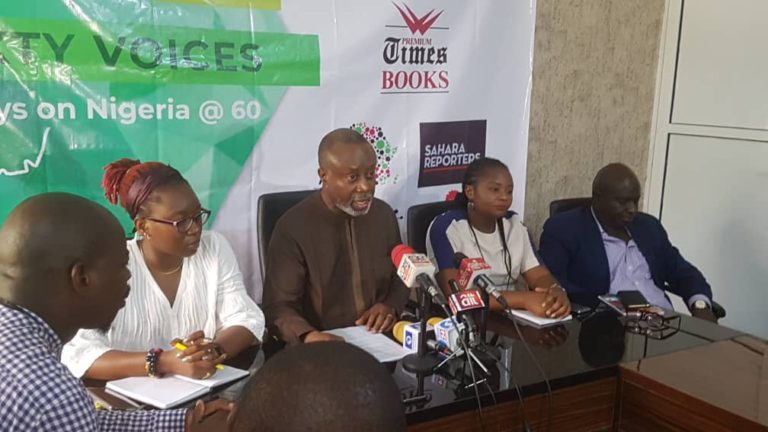
The call was made during a press conference on Wednesday in Abuja while flagging off the project tagged: “60 Years, 60 Voices: Essays on Nigeria at Sixty” in partnership with Premium Times Books, YIAGA Africa, Sahara Reporters, TechHer and Oak TV.
The essay would focus on garnering the thoughts and ‘frustrations’ of young Nigerians across the 36 states and the Federal Capital Territory (FCT) into a compendium, which when published, will help foster a united and egalitarian society.
“The youths need to take over this country; you cannot wait for the elders. Now is the time for young people to take active rights in the political process of the country,” AFRICMIL said.
While addressing the press, the Executive Director of AFRICMIL, Chido Onumah said: “The collection of the essay is beyond commemorating Nigeria’s diamond jubilee but a social mobilization tool to address critical issues surrounding the nation’s socio-cultural, political, and economic revolution from independence to the present day”.
“On October 1, 2020, Nigeria will celebrate her 60th year of political independence. Our diamond jubilee is a remarkable milestone worthy of significant documentation even as the country is deeply immersed in the crisis of nationhood,” AFRICMIL said.
According to him, there was a need to document the failures, successes and the way out of the “cul-de-sac Nigeria has found itself”, adding that the essay would generate enough “public conversation to bring about the desired change in the country”.
He highlighted major challenges ravaging the country to include bad leadership, insecurity, power, poverty and national disunity while stating that the fundamentals of nationhood are flawed and that “Nigeria as presently constituted, is not a workable union and, therefore, cannot deliver national security, peace justice and development.
“Many Nigerians argue that the major problem facing the country is leadership and that if nothing is done to ensure purposeful leadership, the country will disintegrate. Our political leaders have failed to serve as the rallying point for national unity, nation-building and cohesion.
“According to the Nigerian Security Tracker, 25,794 people were killed between 2015 and 2019. More than 100,000 persons have been killed by Boko Haram while 1.9 million people have been displaced since its murderous campaign began in 2009.
“Nigeria’s abysmal failure in security has forced some states and regions to consider self-help, as well as moved the two houses of the National Assembly to pass a resolution calling on President Muhammadu Buhari to sack the security chiefs.
“Other indices of growth and development are also progressively on the decline. The population is growing at 3 per cent while economic growth is just about 2 per cent,” he said.
Chido, however, noted that the future of Nigeria is in the hands of the youth as the “youth are the social forces that would bring changes to the country”, hence the need for the project.
“This project challenges them to chart a roadmap that outlines a future that works for the good of the greatest number of compatriots; on that will put the country on the path of growth and development,” he said.
Speaking on the essence of the project, the Head of Research, YIAGA Africa, Safiya Bichi said the compendium was beyond a book but one that creates awareness among young people and helps for future planning, reference and national change.