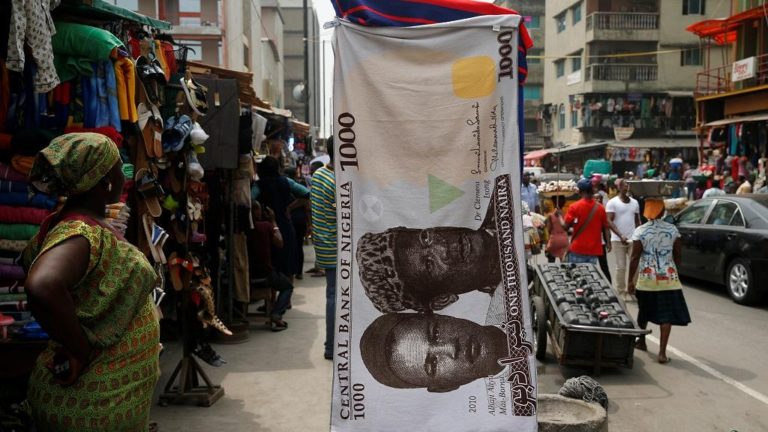
THE Presidential Economic Advisory Council, PEAC on Tuesday raised warnings about grim economic consequences that Nigeria might experience if the Coronavirus outbreak is not contained soon.
President Muhammadu Buhari met with the council in a closed-door meeting chaired by Prof Doyin Salami at the statehouse.
Salami told Buhari that one of the immediate consequences, as determined in the crash of crude oil prices, was slower economic growth, that might affect confidence in the economy.
Hence, the council advised immediate cuts in the budget.
It also noted that Nigeria risked receding into another recession if concrete measures were not effected to stabilise its economy.
The council added that global oil glut, rise in unemployment, depletion of foreign reserves and trade imbalance were other consequences.
In a statement released by Mr Femi Adesina, Buhari’s media aide, the council said, “Many countries around the world may go into economic recession, the PEAC advocated hard work for Nigeria to keep its head above the waters.
“Recommending, among others, a possible revision of the 2020 budget, with priority spending on healthcare, re-prioritisation of expenditure on infrastructure to focus on projects nearing completion with pro-poor effects, curtailing recurrent expenditure, mobilising the private sector to strengthen health sector infrastructure, and boosting of government revenue, the PEAC stressed that the projections may seem dire, but the worst may be avoided with hard work and scrupulous implementation of policies.”
Buhari who spoke at the end of the session said he was aware that oil price has fallen between $29 and $30 per barrel, well below the $57 used as the benchmark for the 2020 budget.
“We will see how to survive fallen prices, as we already envisaged the problem,” he said.
After the country exited an economic recession in 2017, the government said other business and development avenues would be explored in order to diversify its economy and make it less dependent on crude oil.
However, Nigeria is still heavily dependent on oil to fully fund its national budgets.
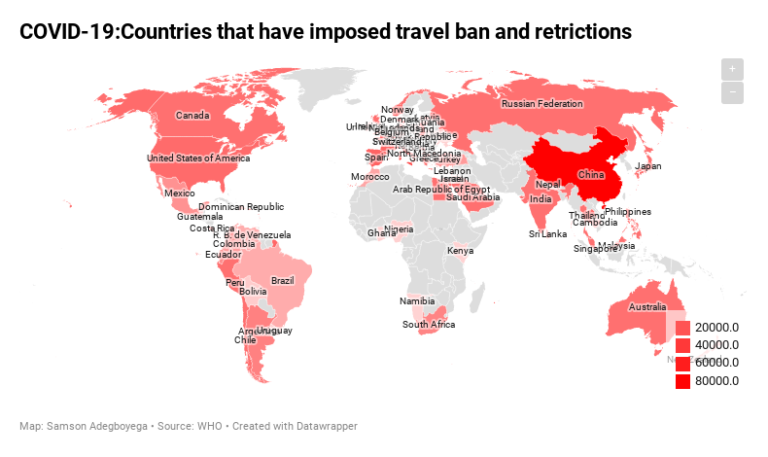
WITH nearly 180,000 confirmed cases of Coronavirus around the world, at least two countries in each continent have imposed travel bans and restrictions in attempt to curb the spread of the virus which has now killed over 7,000 people, according to World Health Organisation (WHO)
In Africa, eight countries comprising of Nigeria, Ghana, South Africa, Uganda, Kenya, Morocco, Namibia, and Chad have restricted travel and banned all foreigners especially from high-risk nations.
On Wednesday, the Secretary to the Government of the Federation (SGF) Boss Mustapha, announced during a press briefing, that the country would be imposing travel ban on 13 countries who have at least 1,000 cases of Coronavirus.
The affected countries are the United State of America, the United Kingdom, China, Japan, Iran, Switzerland, Norway, Netherland, France, South Korea, Germany, Italy and Spain, and the ban is to take effect from March 21.
So far, Nigeria has recorded eight cases of Coronavirus with five new cases announced on Wednesday.
However, other African countries with less confirmed cases have made similar moves of imposing travel bans.
Ghana
On Tuesday, March 17, Ghana effected travel restrictions, banning all travellers from countries with at least 200 cases of the virus from entering the country, except Ghanaian citizens and permanent residents who have been mandated to observe a 14-day self-quarantine.
Currently, Ghana has recorded six cases of the virus according to WHO.
South Africa
President of South Africa (SA), Cyril Ramaphosa declared a national state of disaster on Sunday, March 15 and announced that the country was closing 35 out of 53 of the country’s land ports of entry.
He also disclosed that travellers from high-risk countries would be denied visas, and those in the country who had travelled to a high-risk country would be subject to testing and quarantine.
SA has the highest number of confirmed cases in Africa. According to WHO, the country has recorded 62 cases of the deadly virus.
Kenya
Located in the east of Africa, Kenya is another country that has shut it doors in attempt to prevent further spread of Coronavirus.
On March 15, the Kenyan government announced that it was banning all travellers from countries with confirmed cases of Covid-19.
According to WHO, the country has recorded three cases but recent reports state that the case in the country has risen to seven.
Namibia
Namibia is another country that has been proactive in preventing importation of Coronavirus. With two recorded cases according to WHO, the country on March 14, banned outward and inbound flights from Qatar, Ethiopia and Germany for 30 days.
Morocco
Located in north Africa and classified under the eastern Mediterranean region on WHO’s situation report of Coronavirus, Morocco has a record of 38 cases and two deaths.
The country on March 15 also suspended travel from over 8 countries and also shut down the land borders.
Uganda
With no recorded case of Coronavirus, Uganda has shut its doors to travellers to prevent importing the virus.
The country announced that it is restricting visitors from countries with high cases of Coronavirus, including China, France, Germany, Iran, Italy, South Korea, and Spain, UK and US.
Chad
Chad is another country with no known case of COVID-19 that has banned travellers from entering its country. The country has shut down its airports and borders to avoid importing the deadly virus.
Around the world, all continents asides the Antarctica have recorded cases of Coronavirus and many have consequently banned travellers from gaining access into their country – a move against the advice of WHO, which has urged countries to not apply blind travel restrictions in a way that would impact trade and travel.
Some of the countries that have imposed travel ban and restrictions include South and North America region – Argentina, Bolivia, Brazil, Canada, Chile, Columbia, Costa Rica, Dominican Republic, Ecuador, El Salvador, Guatemala, Mexico, Peru, Uruguay, Venezuela
In Asia, the list includes Cambodia, China, Hong Kong, India, Japan Malaysia, Myanmar, Nepal, Philippines, Singapore, South Korea, Sri Lanka, Taiwan, Thailand, Vietnam.
In the Middle East, Israel, Jordan, Lebanon, Saudi Arabia have all banned travellers and shut down borders.
In Europe, at least 26 countries have closed down borders to restrict travel.
AS staff of the United Bank of Africa started the new year with lots of cheers, unknowingly to over 3000 staff, they were to be “asked to resign or be sacked” the following day just as the year began on 3rd January.
Although the controversy has died down, criticism and anger continues to trail the dismissal of the former employees of the UBA who claimed the bank terminated their employment without prior notification.
Most of the affected workers contacted by THE ICIR, refused to speak for the fear that the bank could take legal actions against them.
Nonetheless, Kingsley Omah (not real name) one of the retrenched workers was willing to narrate his experience.
“The manner and way in which we were sacked, was orchestrated in such a way that if workers publicly condemn the bank, they might hold it against them as a breach of contract,” he said.
“I do not have any issues with UBA, my only annoyance was with the way it was done.”
The banker who worked for the organisation for 10 years as a retail manager said the dismissal came as a shock to some who had resumed work that year.
The bank replaced the old workers with new staff few days later.
The age of the newly employed staff range between 23 and 26 years old.
Kingsley is of the opinion that the bank was discriminatory and could get away with it as a private firm with very limited government interference.
“It is inconsiderate of a bank to sack workers like they are getting rid of spoilt goods. These new persons were recruited in November and the same hands that they (UBA) claimed are not okay for the job trained the new ones.
He bemoaned the “inhuman act “of the UBA group and top management who had on the 3 January sent an email through its in- house communication channel to the staff affected by the new corporate right sizing to wait after work hours for a briefing.
“Until 9 pm that day, some of us were yet to be briefed on why we had to wait. At the end of the wait, we were told by the top management that we have been “advised to resign in place of getting sacked!”
Kingsley told THE ICIR that the bank had played on the fragility and vulnerable state of the workers who had no other option but to write a resignation letter to save face.
“We had no other option, especially if one still has the intention of working in the banking sector or even the corporate world. No one wants to tell any prospective employer that they were sacked from their previous positions or asked to leave by the company, no matter the circumstances,” he said.
Good compensation was paid to the affected employees and employees weren't held hostage till late in the night and compelled to write resignation letter and account were not liened and outrageous 10% tax weren't deducted so why's UBA different
Another affected staff of the UBA identified simply as Dammy corroborated the narrative of Kingsley, saying UBA offered its staff loans and made them pay an additional two per cent insurance fee.
According to him, the insurance fee was to be a financial buffer for workers in case of an unforeseen eventuality that might lead to an involuntary loss of job or inability to pay off the loans borrowed.
However, upon the “forced resignation”, all entitlements of the sacked staff including the insurance benefits and outstanding loan balances were posted to the staff accounts held by the bank.
In light of this new development, the former workers said the insurance benefits were also taxed with previous funds in their accounts with UBA.
“I am one of the affected staff and. I can say we were asked to resign by past 9 pm, and were under threat of not being paid any entitlements if we fail to. It was a shock we were not given notice. We are fathers and mothers for God’s sake. What about the loan issued to us for which insurance charge has been deducted and credited to an insurance company own by Tony Elumelu which states that it will cover in the effect of involuntary loss of a job. Now they have debited our account for the loan, saying we resigned. Was the resignation voluntary? No. Is this a fair treatment. Why must the rich oppress the masses all the time? This is just three points out of all they did that is wrong,” the former staffer said.
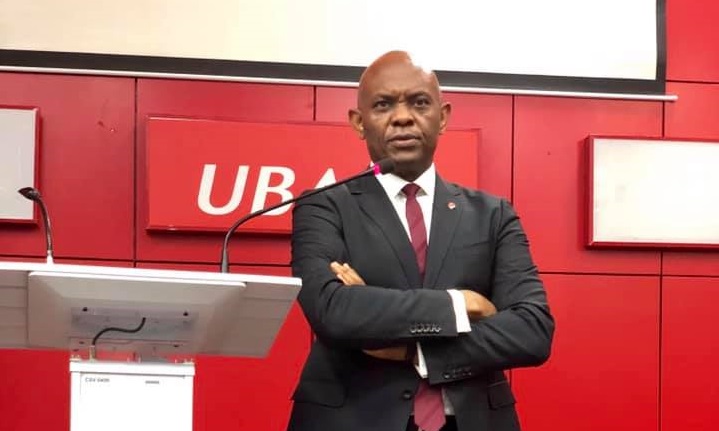
The ICIR learnt that the insurance fees were deducted from the staff and credited to an insurance company owned by Tony Elumelu, UBAGroup Chairman.
Other ex-staff of the institution that had “resigned” within the period told The ICIR that they could not speak freely without incurring legal actions from the company since they had tendered the resignation letters “as advised” by the bank to avoid getting a termination letter.
“It is all in the past now, life goes on. I don’t want to talk about it,” a former staffer said.
The UBA Group on 4 January in what some people said an attempt to launder its image, announced the employment of 4000 new staff and the promotion of over 5,000 with salary increment. But the bank has since remained mute on the public outrage over the mass sack on social media.
Severance payment and termination notice
As stated by the UBA Group, “termination benefits are within twelve months and are accounted for as short term benefits.”
Against unfounded claims in some quarters that the bank did not pay the terminated workers, The ICIR learned that the bank provided severance pay for all affected workers through the credit alerts received by them.
Kingsley whose initial salary payment was N73,900 excluding extra packages worth N13,000 received the sum of N635,000 after 10 years of service to the bank as a retailer, fund transfer and customer service agent.
However, the payment was slashed by 9.8 per cent after N62,000 tax due was deducted by the bank.
Although, based on the provisions of paragraph 26 of the Third Schedule to PITA, “any compensation for loss of employment” is exempted from personal income tax, unfortunately, section 6 of CGTA imposes capital gains tax (CGT) at 10 per cent on “any capital sum derived by way of compensation for any loss of office or employment”.
In terms of termination of a contract, the Nigerian Labour Act stipulated a contract shall be terminated in accordance with the provisions under section 11 which posits that “Either party to a contract of employment may terminate the contract on the expiration of a notice given by him to the other party of his intention to do so with the notice of one month, where the contract had continued for five years or more.”
According to findings from the reporter, as part of its conditions of service, the bank requires staff to give the institution a two- months notification before terminating her or his employment with the bank. However, provisions concerning the guidelines that would guide it [UBA Group] should they want to sack workers is unclear.
Laying-off workers without notice as stipulated by the law have long become a trend identified with Nigeria financial institutions as termination letters are often served in lieu of notice for “security reasons”.
The UBA Group presently runs its operation in 20 African countries, the United Kingdom, and the United States with a presence in France with a total of 12,909 staff out of which 9,572 are employed in Nigeria and are Nigerians.
National Labour Congress
Emmanuel Ugboaja, General Secretary of the National Labour Congress who spoke to The ICIR, said that the union was yet to get a formal report from the National Union of Banks and Insurance and Allied financial Institutions hence cannot intervene since no complaint of wrongdoing has been brought to their notice.
Ugboja, however, condemned the actions of private firms and cooperations that prey on gullible Nigerian by getting them to sign terms and conditions that are “highly unfavourable” to them and “due to the simple fact that people just want to keep busy.”
“We can not progress in this country if people keep quiet when things are going downhill. If the staff think their rights in any form have been violated, let them as a group under a union or as individuals covered by the laws of the Nigerian labour act make a formal report and stop telling stories.
” They should have refused to resign and instead insist that the bank sack them. Don’t sign what you don’t know,” Ugboaja said.
Nonetheless, he told the reporter that a thorough inquiry is the only way they can verify if there was any breach of contract.
“But it is quite disappointing, really. It is unfortunate that some of these ‘veterans’ that have worked for private firms often are not in possession of their letter of employment, They take these things for granted.”
UBA goes mute
The ICIR approached the senior staff of various UBA branches for comments, but none was willing to speak.
Subsequently, the Centre contacted the bank headquarters through the official number listed on its website, but could not get through. Instead, the repeated automated response was” all services are busy”.
An “inquiry ” email also sent to the bank was never responded to until the time of the publication of this article.
An automated response received from UBA. Credit/ICIR
Meanwhile, one of the bank’s top officials who spoke to The ICIR anonymously confirmed that the bank paid all the affected workers, but sacking them came as a surprise to many.
He said that it is unlikely the affected staff would take any legal actions, as they “have decided to leave the rest in God’s hands”.
Postscript: This copy was updated on Friday, March 20.
NIGERIAN has recorded five new cases of Coronavirus, making eight cases of infected persons in the most populous black nation in the world.
The Nigeria Disease Centre for Disease Control (NCDC) made the announcement via its official Twitter handle on Wednesday, disclosing that the new cases have travel history from the United Kingdom and the United States.
In a statement, the NCDC urged the citizens to remain calm, announcing that it was working with the ministry of health to intensify public health response activities across the country.
This is coming shortly after Nigeria announced its third case on Tuesday. Less than 24 hours prior, the country shared that it had identified its third case, a 30-year-old Nigerian woman who arrived from the UK on March 13.
While the government officials promoted their response to the case, a friend of the patient identified as Ayobami on Twitter gave a contrasting account of how the NCDC handled the suspected case.
According to him, the NCDC was slow to respond after his friend contacted them despite her submission on showing symptoms of the virus. The patient was only attended to four days after.
With four confirmed cases in Nigeria, the possibility of an outbreak appears impending.
Recently, the Senate President, Ahmad Lawan lamented the lack of testing centres in the whole of southeasternand the northern regions, pointing to the unpreparedness of the country towards battling coronavirus.
Recall that The ICIR earlier did a report showcasing the level of Nigeria’s unpreparedness towards combating coronavirus.
In the report, it was shown that the is no isolation centre in the Federal Capital Territory and two major hospitals in the capital of the country were ill-equipped to manage even a single case of the virus.
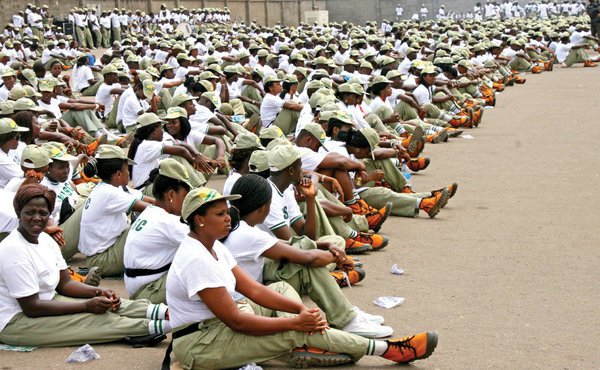
Meanwhile, the management of National Youth Service Scheme (NYSC) has ordered the immediate close down of all orientation camps across the country over the fear of an imminent spread of novel coronavirus.
A source in Gombe State toldThe ICIR Wednesday morning that the camp commandant for Gombe State orientation camp Commandant whose name was not given told corps members who are barely one week in the camp for the 2020 Batch A Stream 1 that the camp would close down on Wednesday.
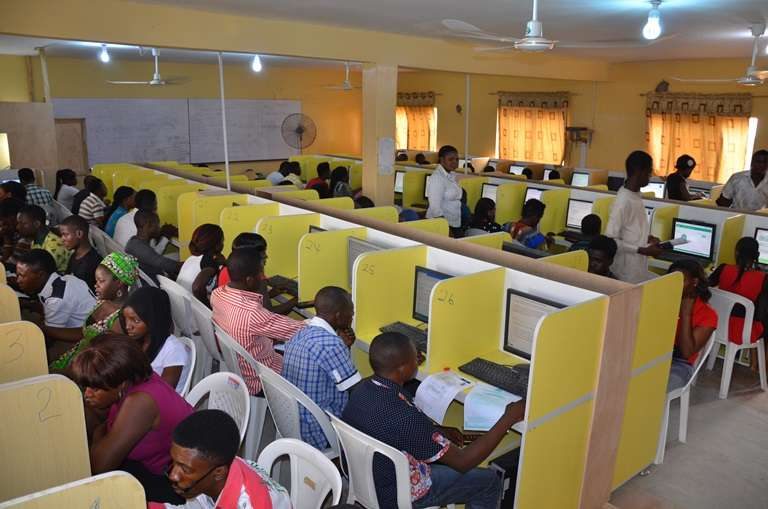
THE Joint Admission and Matriculation Board (JAMB) says it would today (Wednesday) release 450,000 results of candidates who sat for its Unified Tertiary Matriculation Examination (UTME) on Tuesday, March 17.
A statement signed by JAMB’s Head of Public Affairs, Fabian Benjamin obtained by The ICIR also debunked reports that the board had cancelled some results from the examination held on Saturday, Monday and Tuesday 14, 16 and 17 of March respectively.
He urged members of the public to disregard such fake news and always crosscheck information provided in the media.
Benjamin explained that the Board was aware of some malicious moves by some fraudulent individuals trying to cop and manipulate the results of the first day placed on the JAMB’s website with the aim to “deceive unsuspecting candidates.”
He said the attempted manipulation of the results informed the Board’s decision to move it to the mobile platform for candidates to use their unique phone numbers used in registering for the examination to access their results.
Candidates are urged to check their results by sending “RESULT” to 55019 and not on the Board’s website.
The 2020 UTME examination exercise commenced on March 14 and is expected to end on April 4.
Over 1.9 million candidates registered for this year computer based test across the nation.
According to fact sheet, this year’s UTME has the highest number of registered candidates in the history of the Board since its establishment in 1978.
THE management of National Youth Service Scheme (NYSC) has ordered the immediate close down of all orientation camps across the country over the fear of an imminent spread of novel coronavirus.
A source in Gombe State told The ICIR Wednesday morning that the camp commandant for Gombe State orientation camp Commandant whose name was not given told corps members who are barely one week in the camp for the 2020 Batch A Stream 1 that the camp would close down on Wednesday.
Feelers from states like Sokoto, Abia, Ebonyi, Delta and Osun revealed that scheduled activities at the respective orientation camps have also been disrupted for fear of the spread of coronavirus.
When The ICIR contacted NYSC Spokesperson, Adenike Adeyemi, confirmed the development and issued a statement announcing the closure of the camps pending the situation normalises.
READ THE STATEMENT BELOW
IMPORTANT ANNOUNCEMENT: SUSPENSION OF THE ONGOING ORIENTATION COURSE
Sequel to the outbreak of the Coronavirus pandemic which led to the cancellation of the National Sports Festival, Management of the National Youth Service Corps Scheme wishes to announce the suspension of the ongoing Orientation course for the 2020 Batch ” A” Stream 1 Corps Members.
Therefore, the Corps Members shall be posted to commence their primary assignments forthwith, while they shall be invited back to the Orientation camps when the situation improves, just like it happened a few years ago when the Nation was confronted by the Ebola virus threat.
Management wishes to state that no Corps Member or Camp Official has contracted the virus,
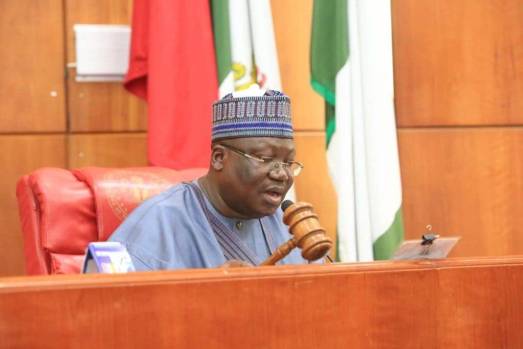
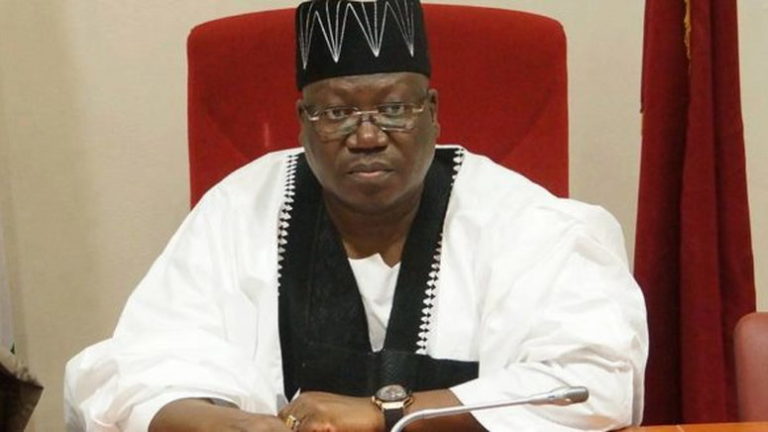
THE SENATE President, Ahmad Lawal has raised concerns over the absence of of test centres for coronavirus in some geo-political zones of the country particularly the South East and the Northern part of the country.
‘’There is at the moment no testing Centre in the entire South East and the entire north. Abuja is federal capital territory,’’ Lawan said on Tuesday.
While commending efforts made by the Federal Government in containing the virus, the Senate president noted President Muhammadu Buhari’s led administration needs to do a little more in the area of test centres.
‘’The entire North has no test centre, and when you have this situation, you need to take immediate action to test and confirm, whatever it is,’’ Lawan said.
He added that the Federal Government should work towards providing test centres, promising that the National Assembly was prepared to support the government if it requests for resources.
‘’We are going to support it for those test centres to be provided in the South East and in the Northern part,’’ he added.
He further suggested that existing test centres should be upgraded continuously to international standard.
‘’I think the Federal Ministry of Health should come up with a minimum standard. That standard should be replicated in all the states,’’ Lawan advised.
The Senate president also called on Nigerians to observe the public health advice particularly after the NCDC confirmed a third case of the virus in the country.
Meanwhile, Nigerians have taken to social media to call on the Federal Government to impose travel ban and close its boarders especially towards countries with high risk to minimise the impact of the Covid-19 within the country just as other countries have done.
OVER 20 Civil Society Organisations (CSOs) in Nigeria have called on the Federal Government to put in more effort in arresting the spread of coronavirus in the country following the record of a third case on Tuesday.
Nigeria recorded its third case of COVID-19 after a 30-year old woman flew into the country from the United Kingdom on Friday, March 13.
The CSOs in a statement released on Tuesday and obtained by The ICIR expressed concerns over the exposure of the country to travellers from different countries and demanded that steps should be taken to restrict travellers from high-risk countries.
While advocating that stringent measures be taken to protect the citizens in the country, the group advised that people coming into the country should be quarantined and land borders should be better manned to avoid a possible outbreak which the countries health care system isn’t prepared for.
Countries like Uganda, Chad and South Africa have already shut their borders to foreigners and banned travellers from gaining easy entrance into their countries in an attempt to prevent importation of the deadly virus.
Outlining steps that the government must take to curtail to prevent further spread of the virus, the CSOs advised that funds be released to Nigerian Centre for Disease Control (NCDC) to enable a scale up in testing as well as handling the virus.
The CSOs comprise Policy and Legislative Advocacy Centre, Centre for Liberty, Stakeholders Democracy Network (SDN), Silverchip Fox, TechHer, Butterfly Effect Empowerment Initiative, YIAGA Africa, Concerned Nigerians.
Others include Free Nigeria Movement, Adopt A Goal Initiative, Dinidari Foundation, Rule of Law Development Foundation, Education as a Vaccine, Stand to End Rape Initiative (STER), Centre for Democracy Development, Girl Child Africa, Tap Nitiative, Centre for Impact Advocacy (CiA), Raising New Voices Initiative, Global Rights, Connected Development (CODE), also advised that “Governments at all levels (Federal, state and local) should consider immediate measures to limit public gatherings and promote safe social contacts amongst citizens.”
Meanwhile, less than 24 hours after the Federal Government announced the third confirmed case of novel coronavirus in the country, a friend of the patient called out the Nigerian Centre for Disease Control (NCDC) over what he described as its poor handling of the case.
Ayobami with the Twitter handle @dondekojo tweeted that the confirmed case would have been avoided if the NCDC had been proactive in testing the 30-year-old patient.
THE Senate on Tuesday beckoned on the Federal Government to consider closing the nation’s borders to non-Nigerian travellers from countries with high incidences of coronavirus, and suspend foreign trips by public officials to forestall the spread of the disease.
At the plenary session, Oloriegbe Yahaya, Chairman Senate Committee on Health who represents Kwara Central Senatorial District made the call after Nigeria recorded its third case of the coronavirus infection.
“If it is possible, people should not travel to countries with a high risk of the cases especially in Europe where many countries are affected, unless such trips are very important,” Yahaya said.
“Government should also consider disallowing non-Nigerians from countries of high risk from entering the country. The Government should also increase capacity about checking airports.”
Senator Oloriegbe Yahaya cites Order 43 and informs the Senate on the current situation of Covid-19 outbreak in the world and the urgent need to be prepared for this epidemic.
Several African countries have shut their airports and land borders to keep out people from countries with a high number of coronavirus cases, but the Federal Government had said it was not considering a travel ban.
Egypt which currently has the highest number of coronavirus cases in Africa announced it was suspending flights from all its airports starting Thursday to stop the spread of the virus.
Ethiopia, Senegal and Kenya have also announced school closures and bans on public assemblies while South Africa joined Uganda to impose travel restrictions on 16 countries with high cases of coronavirus, including the US and the UK.
Ghana, which has six confirmed cases also issued similar travel restrictions warning airlines not to board foreigners from countries that have recorded more than 200 cases of coronavirus in the last two weeks.
“All travel to Ghana is strongly discouraged at this point in time,” Ghana’s Information Minister Kojo Oppong Nkrumah said in a video posted on Facebook.
Senate President, Ahmad Lawan agreed with Yahaya’s submission and lamented on the lack of infrastructural capacity in providing isolation and testing centres in the North and South East.
“There is at the moment no testing centre in the South East and the entire North has no testing Centre. We as an Assembly are prepared to support the federal government if they request for money to set up testing in the South East and in the North.”- SP, @DrAhmadLawan
He said Nigeria currently has only five centres where testing can be done, and that “the government has to step up the testing capacity, and provide support for state governments.”
“Also, for the isolation centres the state governments are building, the ministry of health should come out with a standard which will be replicated in all the states.
“So we need to through our committees, ensure we work with the ministry of health to work with the states to ensure the isolation centres are standardised,” he said.
THE Publisher of Cross RiverWatch, Agba Jalingo has said that he would be resuming his journalism career from where he stopped before being arrested by the Nigeria’s secret police on the order of Cross Rivers State Governor, Ben Ayade.
“So eventually, I am back home, and you know what? I am back home to start from where I stopped,” Jalingo said in a video posted on Twitter by Socio-Economic Rights and Accountability Project (SERAP) on Tuesday.
“As I am talking to you, I reported again five minutes ago about what Ayade is doing with the local government funds. I am not going to stop what I am doing, there is nothing that will stop me from doing what I am doing. It is not possible.”
This is the first time he would be making any public statement after his release since February. Jalingo was speaking in Lagos during an interactive Session on Promoting Media Freedom of Expression in Nigeria organized by SERAP), a non-governmental organisation advocating for good governance in the country.
This is coming after Justice Sule Shuaibu of the Federal High Court, Calabar Division on February 17, granted bail to Agba Jalingo, in the sum of N10million with one surety in like sum after spending 174 days in detention.
It could be recalled that Agba Jalingo was first arrested in August 2019 and charged with disturbance of public peace and treason.
This followed a report written by Jalingo and published in July 2019 with the headline “How Ayade Approved And Diverted N500million For Cross River Micro-Finance Bank” on his news website: CrossRiverWatch.
The report questioned the governor on how he spent the approved N500million released for the Cross River State Micro-Finance Bank.
Before jalingo was freed, several groups both locally and internationally called for his release even as Amnesty International declared him a prisoner of conscience.