MORE than 400 people have been arrested across France after celebrations over Paris Saint-Germain’s UEFA Champions League triumph over Arsenal descended into violence, leaving several police officers injured and causing widespread property damage.
According to the BBC, French authorities said on Sunday that 416 people were apprehended nationwide, including 280 in Paris. Seven police officers were injured during the disturbances, while several vehicles, businesses and public facilities were damaged.
French Interior Minister Laurent Nuñez condemned the violence, describing the scenes as absolutely unacceptable.
It was reported that thousands of PSG supporters flooded the streets after the club retained the Champions League title, with large crowds gathering along the Champs-Élysées and around the Parc des Princes stadium in Paris.
While many fans celebrated peacefully, pockets of unrest erupted as some supporters clashed with police, set off fireworks and flares, and vandalised public and private property.
Police deployed tear gas in parts of central Paris to disperse crowds after some revelers confronted security forces and damaged property.
Videos circulating on social media showed burning vehicles, damaged shopfronts and fireworks lighting up the night sky during the celebrations.
The incidents revived memories of previous PSG celebrations that were overshadowed by violence, including last year’s festivities, during which two people reportedly lost their lives, among them a 17-year-old boy.
The ICIRreported that Arsenal dream of winning a first-ever UEFA Champions League title suffered a setback after PSG fought back to level the 2025/26 final at 1-1 in a pulsating contest at the Puskás Aréna on Saturday.
Defending champions PSG retained the UEFA Champions League title after defeating Arsenal on penalties following a dramatic 1-1 draw after extra time.
The highly anticipated showdown between two of Europe’s most formidable sides delivered tension, quality, and late drama as both teams battled for continental supremacy in front of a packed crowd.
Despite the disturbances, PSG’s victory celebrations were scheduled to continue on Sunday, with players expected to parade through Paris near the Eiffel Tower before attending a reception hosted by French President Emmanuel Macron.
1993 was the year that changed Nigeria’s judiciary. Over a period of a mere five months on that year, the military contrived to overthrow government twice. First, in June, Ibrahim Babangida, the army general who was Nigeria’s military ruler at the time, nullified an election organized to determine who would succeed him. Five months later, in November of the same year, another General and then Defence Minister, Sani Abacha, overthrew the Interim National Government (ING) installed in the aftermath of Babangida’s shameful abdication from power. On both occasions, the judiciary authored the overthrow.
At the end of an interminable transition, the ballot to elect a civilian successor to Babangida was scheduled to occur on 12 June 1993. But two days before the vote, on 10 June, the regime procured a group known as Association for Better Nigeria (ABN) to secure a court order prohibiting the National Electoral Commission (NEC) from undertaking the election.
The defendants included the NEC and its chairman, Humphrey Nwosu, a professor of Political Science; as well as Babangida and his federal Attorney-General, Clement Akpamgbo, a Senior Advocate of Nigeria (SAN). Rather unusually, both Babangida and Akpamgbo failed to enter appearance or contest the case. Lawyers from the Federal Ministry of Justice who usually represent them in such cases were missing in action. Omo Omoruyi, a close adviser to Ibrahim Babangida at the time, recalled that “this ambivalent position of the President and the Attorney-General has never been explained.”
According to Professor Omoruyi, the judge, Bassey Ikpeme, “was mobilized to commit (mischief) in the name of the judiciary.” He does not disclose by whom, but it was known that Bassey Ikpeme had worked in the law office of Clement Akpamgbo. Bassey Ikpeme decided to issue what was described as a “candle-light judgment” because she delivered her ruling “between 9 p.m. and 10 p.m. on the day of judgment.” Those are not court hours.
In her decision, Bassey Ikpeme observed that “the planned election can no longer be free and fair.” With no need to say why or how so, she casually restrained the NEC “from conducting the presidential election pending the determination of the substantive suit before the court.” The military decrees under which the election was to be organised expressly prohibited such orders.
A coincidence of public pressure and disagreement among members of the ruling Armed Forces Ruling Council (AFRC) stayed the hand of the regime, allowing voting to proceed as originally scheduled. But, four days after the vote, while the NEC was busy collating the returns, the ABN returned to court in Abuja, the Federal Capital Territory and secured another court order prohibiting the Commission from continuing with the collation and declaration of the results.
Ten days after the ballot, on 22 June 1993, the regime announced the annulment. The following day, Ibrahim Babangida issued two military decrees effectively terminating the transition to civil rule. In their official explanation, the regime claimed it took these steps to save the country from “judicial anarchy” and “rescue the judiciary from…. an unfortunate and unwarranted situation which is fast eroding the esteem, honour and confidence with which the public holds the nation’s judiciary.”
The nullification of that election terminated the raison d’être of the Babangida regime. Civic unrest thereafter forced him to “step aside” on the eighth anniversary of his regime on 27 August 1993. The day preceding his departure from power, however, Babangida issued four decrees. Among these, Decree No. 59 terminated his rule while Decree No. 61 instituted an Interim National Government (ING). On 10 November 1993, the High Court of Lagos ruled that having abrogated his power to rule by Decree No. 59 of 26 August, Ibrahim Babangida lacked the power thereafter to institute the ING by Decree No. 61. The result, the Court held, was that the ING was illegal and void. Seven days after this judgment, Sani Abacha toppled the ING and installed himself the military ruler.
Three things were significant about the judicial interventions that created these outcomes. First, all the decisions and orders came from high courts. They may not have required the actions that followed but it was sufficient that their orders created chaotic disorder that abhorred political vacuum. Second, these developments crystallised the political relevance of judges whether acting alone or in cahoots with those in power. Third, if judges could be used to terminate power in this manner, it was only a matter of time before they could become themselves the explicit authors or determinants of who took or seized it.
The return of Nigeria to civil rule turned over to politicians the levers of control over these logics. Kano State provides a recent theatre of the politics of judicial anarchy. When the government of the state decided to engineer succession to the stool of the Kano Emirate in 2024, the matter quickly evolved into a legal dispute. A chieftaincy matter such as this was ordinarily one for the High Court of Kano State but one judge of the Federal High Court chose to invent federal jurisdiction over it.
By himself, this judge confectioned a succession of bizarre orders that could only exist in the realm of judicial sorcery. His profusion of court orders saddled Kano with two Emirs presiding over one Emirate; one under the authority of the state government and another under the authority of the Federal High Court. For his efforts, the judge involved would get elevated to the Court of Appeal and may even have come within a hair’s breadth of becoming Chairman of the Independent National Electoral Commission (INEC).
The latest site of judicial disorder appears to be the political timetable for Nigeria’s 2027 elections. On 20 May, Mohammed Garba Umar, a judge of the Federal High Court, nullified substantial parts of the guidelines and timetable released by the INEC for the election. The judge held that the powers of the Commission “do not extend to fixing or prescribing the timetable within which political parties may conduct their primary elections for the purpose of nominating candidates for the 2027 general elections.” He also ruled that the Commission cannot “lawfully abridge or limit that statutory period” of 120 days to the election by which time the Electoral Act 2026 requires the parties to submit the personal details of their candidates.
Six days later, James Omotosho, another judge of the same court, hit back, ruling that “the timetable and schedule of activities for the conduct of the 2027 General Election issued by the [INEC] is valid and legally issued.” He held that the parties must comply with INEC’s abridged timetable for the conduct of primaries but ordered the Commission to adjust its timelines for submission of candidates’ information to comply with the statutory 120 days under the Electoral Act. Like the federal judge who gave Kano two Emirs for one stool, this judge has given the parties two timetables for one election. He has also been recently named for elevation to the Court of Appeal.
The real question for the judges was whether INEC could lawfully compress the time within which the parties must organise their primaries. The Commission’s time-table insists this must be completed by the end of May. That begs the question why they must wait until September or October to submit the names of their candidates to the INEC candidates’ portal. From one court, two different cases have produced two mutually contradictory answers to this question. Instead of clarity, the Federal High Court offers confusion to the candidates and their parties.
The convenient answer from lawyers is that this confusion will be remedied on appeal. By the time that happens, however, the parties, candidates and citizens would have made massive commitments in resources and emotions. If the issues get resolved after the elections, they could even alter the destination of electoral outcomes. Such a result could be more than an injustice. It could also produce political instability.
In 1993, the country escaped ruination by the skin of its teeth. That would have been a prohibitive price to pay for what the soldiers indelicately called “judicial anarchy”. Whether it will be as lucky in 2027 could be a matter for the sorcerers.
AS the world marks World No Tobacco Day 2026, public health experts have warned that rising nicotine addiction, particularly among young people, could undermine global gains in tobacco control.
The experts raised concerns that the tobacco epidemic is increasingly driven by a surge in newer nicotine products such as e-cigarettes, nicotine pouches and heated tobacco devices, which are aggressively marketed to young people.
Their warning comes as the World Health Organisation reports that tobacco kills more than seven million people yearly, including about 1.6 million non-smokers who are exposed to second-hand smoke.
Michael Olarewaju, a public health expert at Gwarinpa General Hospital in Abuja, said the growing trend poses a major threat to public health and requires urgent regulatory action.
Olarewaju also noted the tobacco epidemic is no longer driven only by conventional cigarettes but increasingly by newer nicotine products such as e-cigarettes, nicotine pouches and heated tobacco products, many of which are being marketed to younger users.
“Rising nicotine use among adolescents is a major public health threat that requires urgent priority attention to close regulatory gaps, enforce restrictions and ensure that young people are protected from lifelong dependence,” he said.
Recent data by the WHO reveal that tobacco use kills up to half of its users who do not quit. With about 1.3 billion people globally using tobacco, the majority, around 80 per cent, live in low- and middle-income countries.
Youth are increasingly vulnerable to nicotine addiction
WHO, in a statement marking this year’s theme, estimated that at least 40 million adolescents aged 13–15 globally use tobacco products, while about 15 million are already using e-cigarettes.
It also noted that children in some countries are up to nine times more likely than adults to vape.
The global health body noted that this year’s theme, “Unmasking the appeal – countering nicotine and tobacco addiction,” highlights growing concern over how the tobacco industry is repackaging nicotine products to attract a new generation of users.
The organisation warned that flavoured and heavily marketed nicotine products, including e-cigarettes, nicotine pouches and heated tobacco devices, are often promoted as safer alternatives, despite evidence that they still contain addictive nicotine and harmful toxic substances.
WHO said tobacco companies continue to rely on aggressive marketing strategies, including flavours, sleek packaging and digital advertising, to sustain addiction and recruit young users.
Although the WHO Framework Convention on Tobacco Control (FCTC) has 183 Parties covering most of the world’s population, implementation remains uneven, particularly in enforcement of advertising bans, taxation and cessation support.
Dr Adewale Adeleye, a senior resident in the Department of Community Medicine and Public Health at the University of Abuja Teaching Hospital and President of the Association of Resident Doctors, UATH, said the trend has reached an alarming level among adolescents.
He warned that nicotine exposure in adolescence affects brain development, making young people more vulnerable to addiction.
“It is neurotoxic to the neurons that support brain development,” he said, adding that it can also affect discipline, reasoning and academic performance.
The health practitioner also warned that nicotine use can affect cholesterol levels, reduce immunity and increase the risk of serious cardiovascular and organ complications.
“When nicotine enters the body, it increases bad cholesterol and reduces good cholesterol. The immune system becomes depressed, making the body prone to infections,” he said.
He added that prolonged use can lead to blood vessel constriction, which may cause stroke, kidney failure, and cardiac arrest in severe cases.
Dr Adeleye further warned that long-term nicotine use could result in dependence, with users struggling to function without it and experiencing withdrawal symptoms such as dizziness and depression.
That is not all. He insists that wider consequences extend beyond health, noting that widespread addiction among young people could reduce productivity and create long-term economic strain on families and the country.
“Even though some of these industries try to make it modern, or sew a new cloth to cover the harmful parts, or make it look harmless by giving it fancy names and making it appear fashionable, the most important thing we must understand is that even if they sew a new cloth for the epidemic of nicotine use or abuse, the purpose and harmful effects of nicotine or tobacco in the body system cannot be changed.
“Even if you look at the literature and recent statistics from the World Health Organisation, it is worrisome to see that globally about 50 million adolescents are engaging in vaping,” he said.
Speaking further, Michael Olarewaju of Gwarinpa General Hospital stressed that nicotine exposure during adolescence can heighten brain sensitivity and lead to rapid addiction. On long-term consequences, Olarewaju warned that adolescent nicotine use significantly increases the likelihood of chronic dependence and raises the risk of cardiovascular disease, chronic lung diseases and cancers later in life.
He added that nicotine can cause lasting changes in brain development, including memory impairment, and may affect reproductive health.
“Nicotine affects female fertility by impairing fallopian tube function, which increases the risk of ectopic pregnancy. In males, it can damage seminal fluid integrity, lower sperm count and reduce fertility potential. Quitting nicotine use, including e-cigarettes and nicotine pouches, remains one of the most effective ways of protecting reproductive health in both men and women,” he said.
Closing regulatory gaps
The experts further identified regulatory gaps that continue to fuel nicotine use among young people.
According to Olarewaju, many countries are yet to effectively regulate emerging products such as e-cigarettes and nicotine pouches, while aggressive social media promotion and weak age-verification systems make it easier for adolescents to access such products.
He also pointed to poor implementation of FCTC measures, including advertising bans and comprehensive product regulation.
To address the challenge, Olarewaju called for tobacco control laws to be expanded to cover all nicotine products. He also advocated banning youth-targeted marketing practices, including flavours, online advertising, online sales and influencer promotions.
Other measures, he said, include strict age-verification requirements, stronger penalties for violations, sustained public education campaigns, improved monitoring of emerging products and youth usage trends, and higher taxes on tobacco and novel nicotine products.
On his part, Adeleye warned that limiting regulation to conventional tobacco products is no longer sufficient, as new nicotine products continue to evolve in ways that appeal to young users.
“All existing legal structures should be harmonised so that we do not only focus on tobacco. We should also look at other nicotine-based products in whatever form they are packaged, whether now or in any potential products that may emerge or evolve in the future,” he said.
He also called for a ban on flavouring in nicotine products, arguing that flavours are used to mask the harmful effects of nicotine and make products more attractive to adolescents.
“The fact that there is flavour does not remove the harmful effect of the active ingredient on the body,” he said.
The expert further advocated a ban on advertising and promotional content for nicotine products across all platforms, including social media, saying such messages often mislead the public and normalise use among young people.
The medical practitioner said governments should regulate retailers through licensing and strictly prohibit the sale of nicotine products to minors, stressing the need for clear enforcement mechanisms and penalties.
This, he said, can be done through widespread public awareness campaigns in schools, religious institutions and communities to educate people on the dangers of nicotine use.
On taxation, he recommended higher excise taxes on nicotine and tobacco products as a deterrent, noting that increased prices have been proven to reduce consumption.
ARSENAL’S dream of winning a first-ever UEFA Champions League title suffered a setback after Paris Saint-Germain fought back to level the 2025/26 final at 1-1 in a pulsating contest at the Puskás Aréna on Saturday.
Defending champions Paris Saint-Germain retained the UEFA Champions League title after defeating Arsenal on penalties following a dramatic 1-1 draw after extra time.
The highly anticipated showdown between two of Europe’s most formidable sides delivered tension, quality, and late drama as both teams battled for continental supremacy in front of a packed crowd.
The final, which kicked off at 5:00 p.m. West African Time (WAT) and 6:00 p.m. Central European Time (CET), brought together Premier League champions Arsenal and defending European champions Paris Saint-Germain in one of the most anticipated clashes in recent Champions League history.
Arsenal made the perfect start when Kai Havertz produced a moment of brilliance in the sixth minute to silence the Parisian supporters.
The move began with a ricochet involving Leandro Trossard near the halfway line, allowing Havertz to race clear toward goal. With a defender chasing and PSG goalkeeper Matvei Safonov rushing out to narrow the angle, the German forward unleashed a powerful strike from a tight position that flew into the roof of the net.
The goal gave Mikel Arteta’s side a dream start and handed Arsenal an early 1-0 advantage in their quest for a maiden Champions League crown.
Havertz’s strike was historic in its own right, making him only the third player to score in Champions League finals for two different clubs, having previously netted the winner for Chelsea in the 2021 final against Manchester City.
PSG, however, gradually asserted their dominance in possession, with Ballon d’Or winner Ousmane Dembele, Khvicha Kvaratskhelia and Desire Doue probing for an opening against Arsenal’s resolute defence marshalled by Gabriel and William Saliba.
The French champions eventually found their breakthrough in the second half after Kvaratskhelia was brought down in the penalty area by Arsenal defender Cristhian Mosquera.
Dembele stepped up and calmly converted the resulting spot-kick, sending goalkeeper David Raya the wrong way and restoring parity at 1-1. The goal was Dembele’s eighth of the Champions League campaign and reignited PSG’s hopes of retaining the European crown.
Before kick-off, Arsenal received a boost with Jurrien Timber’s return to the matchday squad after recovering from a groin injury, although Arteta opted to start Mosquera at right-back. PSG, meanwhile, fielded their strongest available line-up, including Dembele, Kvaratskhelia and captain Marquinhos.
The final had been billed as a contest between Arsenal’s formidable defence and PSG’s devastating attack. Arsenal entered the showpiece unbeaten in the competition and having conceded only six goals throughout the campaign, while PSG arrived as the tournament’s highest-scoring side with 44 goals.
Both teams pushed for a winner in normal time and extra time, but neither side was able to find a decisive goal as the match remained balanced throughout.
The final was eventually decided by penalties, where PSG converted four and Arsenal missed two.
The victory marks PSG’s continued dominance in European football, adding another Champions League trophy to their recent success as they extend their hold on the competition.
THE faction of the Peoples Democratic Party (PDP) led by Kabiru Turaki has announced former President Goodluck Jonathan as its presidential candidate for the 2027 general election.
Jonathan’s nomination was ratified on Saturday during a special national convention held at the faction’s secretariat in Area 10, Garki, Abuja.
Although the former president was absent from the event, his certificate of return was received on his behalf by Fred Agbedi, a member of the House of Representatives representing Bayelsa State.
The Turaki-led faction had scheduled the convention to take place at the A-Class Park and Event Centre in Abuja. However, the venue was changed following a directive by the Federal Capital Territory Administration (FCTA), which warned hotel and event centre operators against hosting activities of political groups not recognised by the Independent National Electoral Commission (INEC).
Earlier on Saturday, security operatives blocked access roads leading to the A-Class Park and Event Centre, prompting organisers to relocate the convention to the party’s office in Area 10.
According to the Cable, party officials later confirmed that the event was successfully concluded at the new venue, noting that a date for the formal presentation of the party’s presidential flag to Jonathan would be announced in the coming weeks.
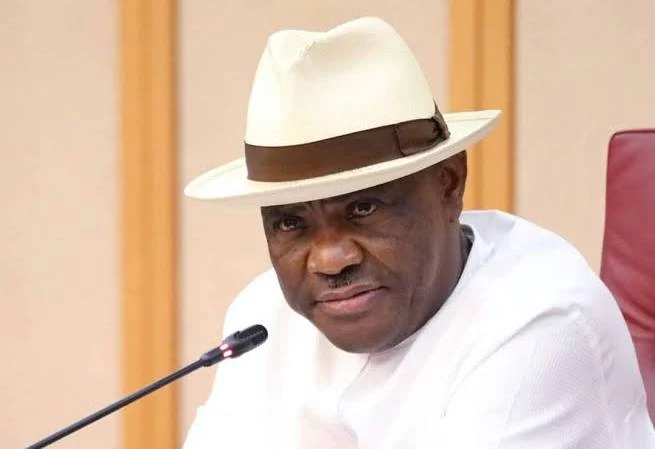
INEC currently recognises the PDP leadership backed by the Minister of the Federal Capital Territory, Nyesom Wike.
The ICIRreported that the former president has yet to publicly respond to the nomination or indicate whether he will accept the candidature.
Jonathan, who served as Nigeria’s president from 2010 to 2015, has repeatedly been linked with various presidential comeback efforts since leaving office but has largely avoided making definitive public declarations about future electoral ambitions.
Should he contest, he would face several contenders, including President Bola Tinubu of the All Progressives Congress (APC), Omoyele Sowore of the African Action Congress (AAC), and former Vice President Atiku Abubakar of the African Democratic Congress (ADC).
US President Donald Trump remains in excellent health despite experiencing slight lower leg swelling and minor hand bruising, according to a medical report released by the White House on Friday.
The memo, written by White House physician Sean Barbabell, following Trump’s examination on Tuesday, stated that the 79-year-old president remained fully capable of carrying out his duties. The memo addresses recent public speculation regarding Trump’s physical status and cognitive coordination.
“President Trump remains in excellent health, demonstrating strong cardiac, pulmonary, neurological, and overall physical function,” Barbabella wrote.
The physician added that Trump “is fully fit to carry out all duties of the Commander-in-Chief and Head of State.”
Trump underwent the examination at Walter Reed National Military Medical Center, his third diagnostic visit to the facility over the last 13 months. The visit drew attention after recent photographs showed swollen ankles, bruised hands and a blotchy neck, prompting questions about the president’s health.
The report stated that Trump continued to experience “slight lower leg swelling… with improvement from last year” and ongoing hand bruising, which he described as “…common, benign and consistent with minor soft tissue irritation related to frequent handshaking in the setting of aspirin use for cardiovascular prevention.”
While the memo did not explain treatment Trump received for a skin condition on his neck in March and did not indicate whether he underwent another magnetic resonance imaging scan, as he did in October, the medical evaluation declared that the president remained fit to fully discharge his official duties.
Regarding the visible discolored patches frequently observed on the back of the president’s hands, which have occasionally appeared covered with cosmetic concealer during public White House events, the medical team categorised the condition as entirely cosmetic and superficial. The official memorandum attributed the localised discoloration to minor trauma resulting from intense interpersonal contact, magnified by the blood-thinning medication included in the president’s daily preventative healthcare regimen. The evaluation of the dorsal hands revealed ecchymosis.
Trump was issued standard preventive medical counseling to incorporate increased physical activity, a regulated low-dose aspirin schedule, and structured weight loss into his routine. Following the publication of the medical review, the president took to social media to signal his satisfaction with the health clearance, stating that “everything checked out perfectly.”
The administration continues to defend the president’s intensive public schedule, maintaining that the minor cosmetic and physical adjustments are expected for a leader of his age navigating a highly demanding public profile. The report also stated that Trump was six feet threeinches tall and weighs 238 pounds.
FORMER President Goodluck Jonathan has kept mum amid controversy surrounding his alleged adoption as the 2027 presidential candidate of a faction of the Peoples’ Democratic Party (PDP) for the 2027 election.
The ICIR reports that his silence had deepened uncertainty about his intentions ahead of the next general poll.
It has also exposed widening cracks within the party, with rival factions trading words over the legitimacy of a planned convention expected to affirm him as standard-bearer for one of the competing groups.
A faction of the PDP led by Kabiru Tanimu Turaki, a senior advocate, had announced plans to hold a special national convention in Abuja on Saturday May 30, where Jonathan is expected to be formally ratified as its presidential candidate for the 2027 election.
The group claimed that the former president was the only aspirant who obtained the party’s presidential nomination form and would be unveiled at the convention scheduled to hold at an event centre in Abuja.
However, despite the growing public debate and political maneuverings around his name, Jonathan has neither confirmed nor denied any involvement in the process.
His silence has fueled speculation over whether he is genuinely interested in returning to Aso Rock or is merely being drafted by supporters seeking to reposition him as a consensus figure within the opposition.
Political observers said Jonathan’s continued silence might be a strategic move as he weighs the implications of entering an increasingly fragmented opposition landscape, while others argued that his refusal to publicly reject the endorsement encouraged supporters pushing for his return to active partisan politics.
The uncertainty comes as another faction of the PDP, aligned with Federal Capital Territory Minister Nyesom Wike, openly rejected the planned endorsement and urged Jonathan to distance himself from what it described as an illegitimate exercise.
Recall that Wike, a PDP member, has been one of the leading cabinet members of President Bola Tinubu, who won his mandate and is seeking re-election on the All Progressives Congress (APC) platform. Wike has repeatedly maintained his support for Tinubu’s re-election.
In a statement on Friday, signed by its National Publicity Secretary, Jungudo Mohammed, the Wike-backed faction said no recognised organ of the PDP had approved any convention or process aimed at endorsing Jonathan for the 2027 election.
The faction, which has unveiled a former Cross River senator, Sandy Onor, a professor, as its presidential candidate for the upcoming poll, described the planned event as misleading and intended to create confusion within the polity. It insisted that it did not reflect the position of the party’s recognised leadership.
The development comes amid a directive issued by the Federal Capital Territory Administration (FCTA) on Friday, warning owners of hotels, event centres and other public facilities in the nation’s capital to deal only with political parties’ leaderships recognised by the Independent National Electoral Commission (INEC).
The ICIRreported the FCTA warning that event centres, hotels and other public buildings in the FCT would be closely monitored to prevent their use by illegal organisations “capable of disrupting peace and security in the nation’s capital.”
The administration warned that property owners must verify the legality of organisations seeking to use their facilities before approving bookings, adding that proper records of all transactions involving such bookings must also be maintained.
The dispute has added another layer to the prolonged leadership crisis within the PDP, which has witnessed competing factions, parallel structures and disagreements over the party’s direction ahead of the 2027 elections.
Meanwhile, the Turaki-led faction has insisted that the convention would proceed as planned despite opposition from rival camps and warnings by the FCTA against the use of public facilities by groups it described as unrecognised political organisations.
The faction maintained that its processes were valid and that Jonathan remained its preferred candidate for the presidency.
Jonathan, who served as Nigeria’s president from 2010 to 2015, has repeatedly been linked with various presidential comeback efforts since leaving office but has largely avoided making definitive public declarations about future electoral ambitions.
IN this investigation, Arinze Chijioke tells the story of how civic organisations have come under repeated digital attacks, raising concerns about a shrinking civic space and the growing threat these actions pose to transparency, accountability, and democratic engagement in Nigeria. The findings point to a broader reality: Nigeria is becoming an increasingly unsafe environment for civil society organisations seeking to hold the government accountable.
On Tuesday, April 4, 2023, two months after Nigeria’s presidential election, the website of the International Society for Civil Liberties and Rule of Law (Intersociety) was attacked and rendered inaccessible. Founded in 2008, Intersociety is a prominent Nigerian-based non-governmental organisation based in Onitsha, Anambra State. It focuses on promoting human rights, democracy, and the rule of law through research, advocacy, and investigations into security issues, particularly targeting religious violence and state-backed persecution.
Attack-was-traced-to-Source. -FIJ
Before the election, Intersociety was critical of the Independent National Electoral Commission, INEC, questioning its legitimacy and capacity to conduct a free and fair poll. For instance, the NGO released a damning report about how the commission allegedly planned to rig the election, using the voter registration and revalidation exercises. After the election on March 26, 2023, it released another report, detailing the names of 50 top Nigerian university professors who were alleged to have played various “conspiratorial roles in the rigging of the election.
“We received life-threatening and distracting calls from agents of professors, and others alleged to have been involved in the electoral fraud that characterised the 2023 elections,” Executive Director of the NGO, Emeka Umeagbalasi told The ICIR.
What followed was an attack on Intersociety’s website.
After the attack, Umeagbalasi was informed by the domain host that the website’s hosting was suspended following numerous complaints and petitions that had originated from Nigeria and were strongly linked to alleged “subversive agents” within the government of former President Muhammadu Buhari. These actors, according to him, operated across the security and intelligence establishments.
The April attack was not the first. However, it shows a troubling pattern, the sustained targeting of civic organisations through coordinated cyber disruptions that threaten not just their operations, but the broader space for dissent and accountability in Nigeria.
Big on purchase of surveillance tech
In its report on the state of deployment of surveillance technologies in Africa, Paradigm Initiative said that funding for surveillance technologies has increased in Nigeria over the last two decades. According to a report by the Committee to Protect Journalists (CPJ), the government spent at least 127 billion naira on surveillance and security systems between 2014 and 2017, with about N46 billion spent on surveillance capabilities in 2017 alone. In 2020, the government budgeted $9 billion for surveillance-related activities.
Another report by the Institute for Development Studies, “Mapping the supply of surveillance technologies to Africa”, found that Nigeria is Africa’s largest customer for surveillance technologies, spending at least $2.7bn on surveillance technologies in the last decade.
Millions of requests on FIJ’s website. Source FIJ
“The technology has been used to spy on peaceful activists, opposition politicians, and journalists,” the report stated. “Nigeria spends hundreds of millions of dollars annually; the total of known contracts 2013–22 exceeded $2.7 billion.”
The most common categories of digital surveillance technologies imported by Nigeria, as noted by the report, include internet interception technologies, mobile phone interception technologies, social media surveillance technologies, safe city technologies for surveillance of public space, and biometric ID surveillance technologies.
These surveillance technologies are supplied by companies predominantly from the USA, China, Europe, and Israel. This commercial trade, the report stated, facilitates the violation of citizens’ rights to privacy and anonymity, and freedom of expression and association.
A pattern of attacks
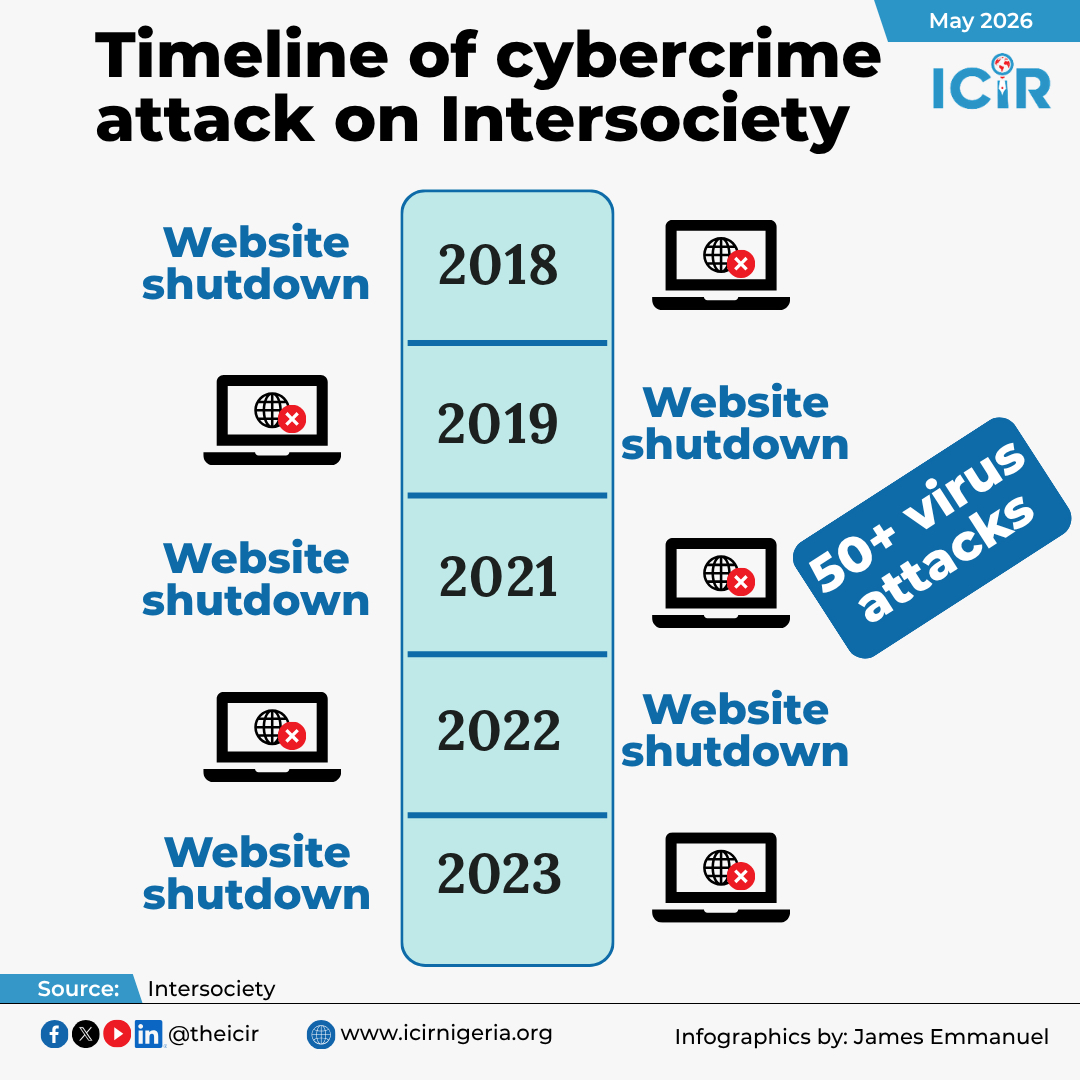
Between 2018 and 2023, with the exception of 2020, Umeagbalasi revealed that the website was taken down at least five times and has also suffered more than 50 Trojan (malicious software disguised as legitimate, non-replicating code that tricks users into installing it to steal data or create backdoors) and other virus attacks, an average of about ten incidents annually.
“We often face attacks each time we release detailed and high-profile reports on insecurity, political participation, religious attacks, violation of the rule of law and good governance, “he said. “The government is never comfortable with our reports, so they go after our website and try to disrupt our work.
These attacks, according to him, have included malware infections, coordinated shutdown attempts, and sustained disruptions that rendered the website inaccessible. “We no longer publish reports on the website whenever they attack. It is all intended to intimidate and silence intersociety and the work that we do.”
Cyber attacks on Intersociety
The attacks are not peculiar to the organisation. Websites belonging to media organisations have also been attacked, further strengthening the argument that surveillance infrastructure is increasingly being used as a pressure point against rights-based advocacy/organisations that expose failures in governance.
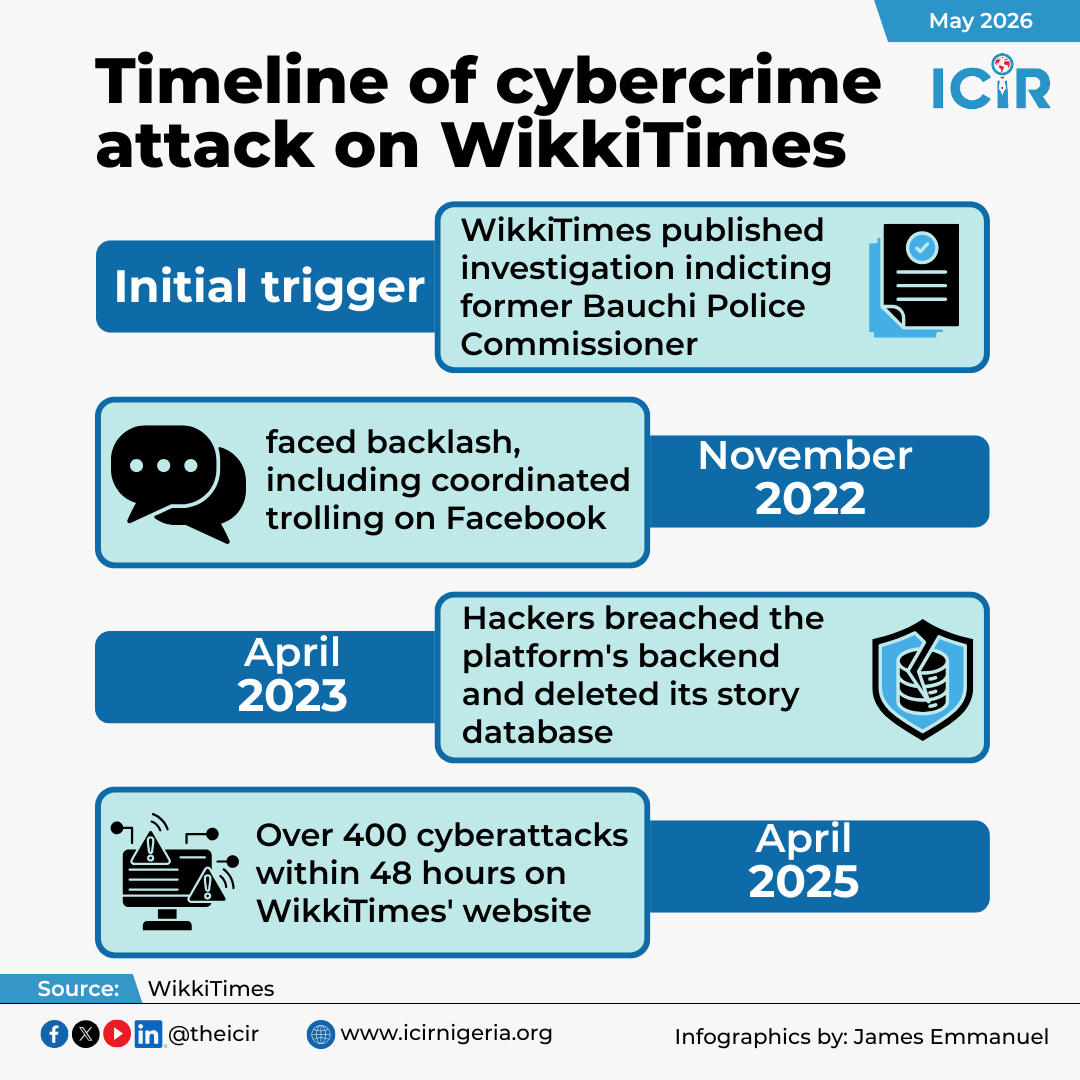
After it published an investigation in November 2022, indicting a former Bauchi Police Commissioner, Umar Sanda, who attempted to help a former Information Commissioner evade justice after allegedly killing his friend, WikkiTimes became exposed to numerous cyber attacks, including trolling on social media platforms such as Facebook. Founded in 2018 to cover Northern Nigeria’s underreported regions, WikkiTimes has established itself as a leading digital investigative news outlet, focusing on social justice, human rights, and governance, and consistently exposing corruption and abuse of power.
“Sanda was not happy about our story, which was all over social media,” Haruna Mohammed, WikkiTimes’ publisher, told The ICIR. “He mobilised loyalists who reported our Facebook page for “violation of community standards, it was not hidden. “Facebook also informed us that we were being reported for that story, and the page was taken down.”
24 hours later, Wikkitimes’ website went down for several hours. Haruna said that tech experts outside Nigeria intervened and restored the website. But that did not end the attacks. After the platform exposed how the chairman of Ningi local government area in Bauchi State, Mamuda Tabla, allegedly aided and abetted loggers who engaged in deforestation inside the Lame Burra Game Reserve in the state, its website was attacked again.
“We are constantly being targeted because of our focus on accountability journalism and those we try to expose,” Mohammed said. “Oftentimes, we experience bot attacks that slow our website down.”
In April 2023, hackers reportedly breached the platform’s backend and deleted its story database, including several published articles. Also, in April 2025, its website experienced over 400 coordinated cyberattacks within a 48-hour period. The outlet’s technical support lead, Ibrahim Salisu said at the time, “Pages wouldn’t load, our admin panel was locked out, and we saw traffic from bots we couldn’t trace. It felt like someone was intentionally trying to silence us or wear us down digitally.” “It wasn’t just a random spike; it was calculated, coming at us from different directions,” he said.
Haruna explained that the incessant attacks affected operations. “We could not publish our reports or engage our audience, but it also taught us lessons, “he said.
Provisions under the law
Nigeria has several legal frameworks meant to protect rights-based advocacy/organisations from cyber attacks. For instance, Section 37 of the Nigerian Constitution guarantees privacy, protecting communications, including in the digital space, while Section 39 also guarantees freedom of expression, which encompasses freedom to disseminate information and educate the public about the activities of the government.
Chukwudi Unah, a constitutional lawyer with expertise on data privacy, said that the Nigeria Data Protection Act (NDPA) 2023 further strengthens digital privacy by regulating the collection and protection of personal data. He said that the Act further established the Nigeria Data Protection Commission to enforce compliance, adding that the law requires institutions, including public bodies, to safeguard personal data and system integrity.
While the NDPA focuses on the remedies available against the organisation that failed to protect data, the Cybercrimes (Prohibition, Prevention, etc.) 2024 punishes the attacker and criminalises unauthorised access to computer systems, unlawful interception, data interference, hacking, and system disruption.
Unah, however, noted that the Cybercrimes Act also grants security agencies powers to intercept communications and access stored data for criminal or national security purposes, usually with judicial authorisation.
“Under the pretext of ‘national security, ‘ the government often clamps down on mirrors and dissenting voices, which of course, should not be the case. Broad national security exemptions and weak oversight raise concerns that such powers may be misused.”
He maintained that where the attacker is traced to a government agency, then the best remedy will be to sue for breach of data privacy, adding that instituting class actions against public agencies or institutions is the surest way to go against data breaches.
Attacks never end
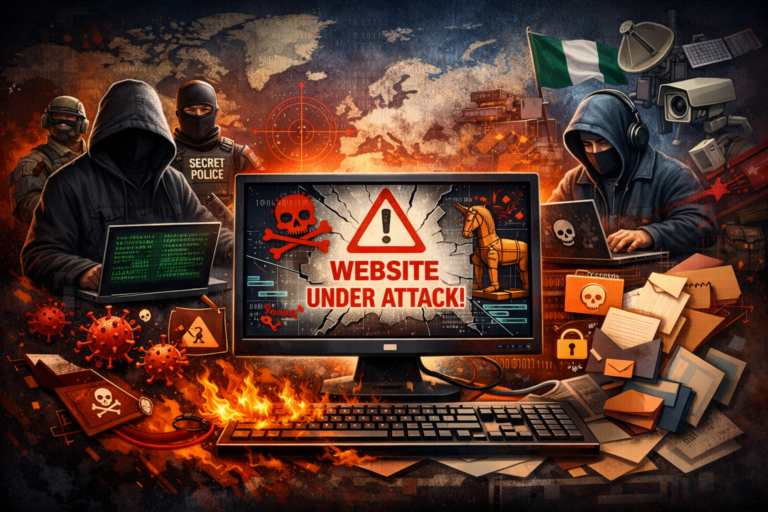
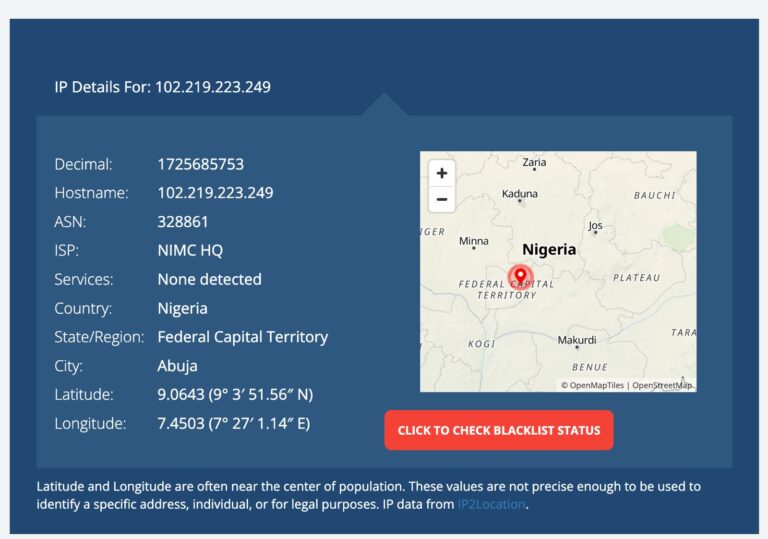
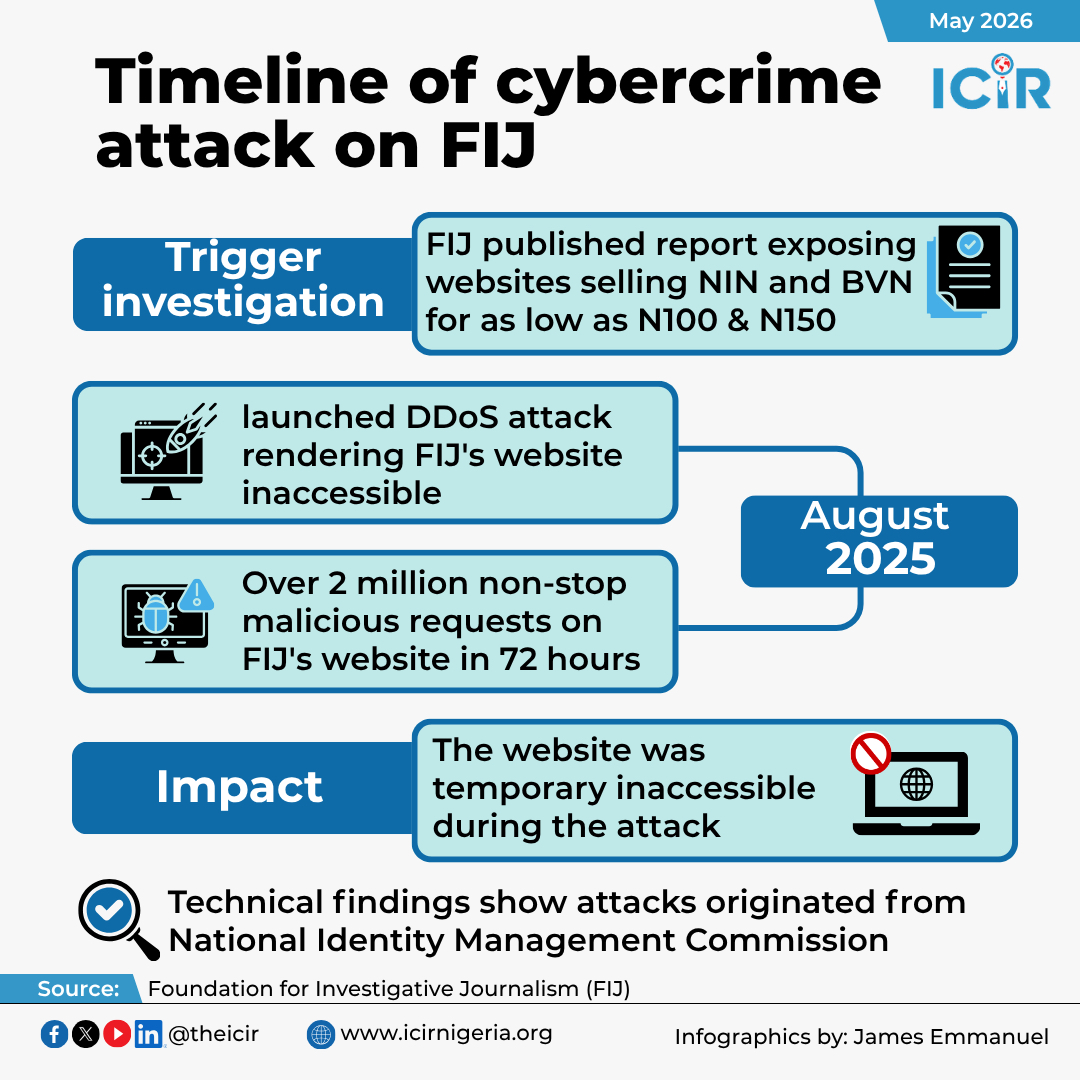
On Thursday, August 21, 2025, the website of the Foundation for Investigative Journalism (FIJ) suffered multiple Distributed Denial of Service (DDoS) attacks. The attack, traced to the National Identity Management Commission (NIMC) headquarters in Abuja, temporarily rendered FIJ’s website inaccessible to real visitors. A DDoS attack is a malicious attempt to make a server, service, or network resource unavailable by flooding it with excessive traffic from multiple, often compromised, sources (a botnet).
Attack-on-FIJ
FIJ’s editor-in-chief, Fisayo Soyombo, told The ICIR in an interview that the website was attacked shortly after it published investigations exposing websites that were illegally selling Nigerians’ personal data, including National Identification Numbers (NINs) and Bank Verification Numbers (BVNs). The platform had been documenting stories of these websites illegally selling the data of Nigerians at cheap prices since 2024.
The investigations revealed that some platforms were offering access to NIN records for as little as N100 to N150. Some of these black market sites include Xpressverify, NINPrint, NINCard, nimcverify.ng, with the most recent story in the series detailing how IloTech, a virtual top-up platform, was secretly selling Nigerians’ NIN records for as low as N180.
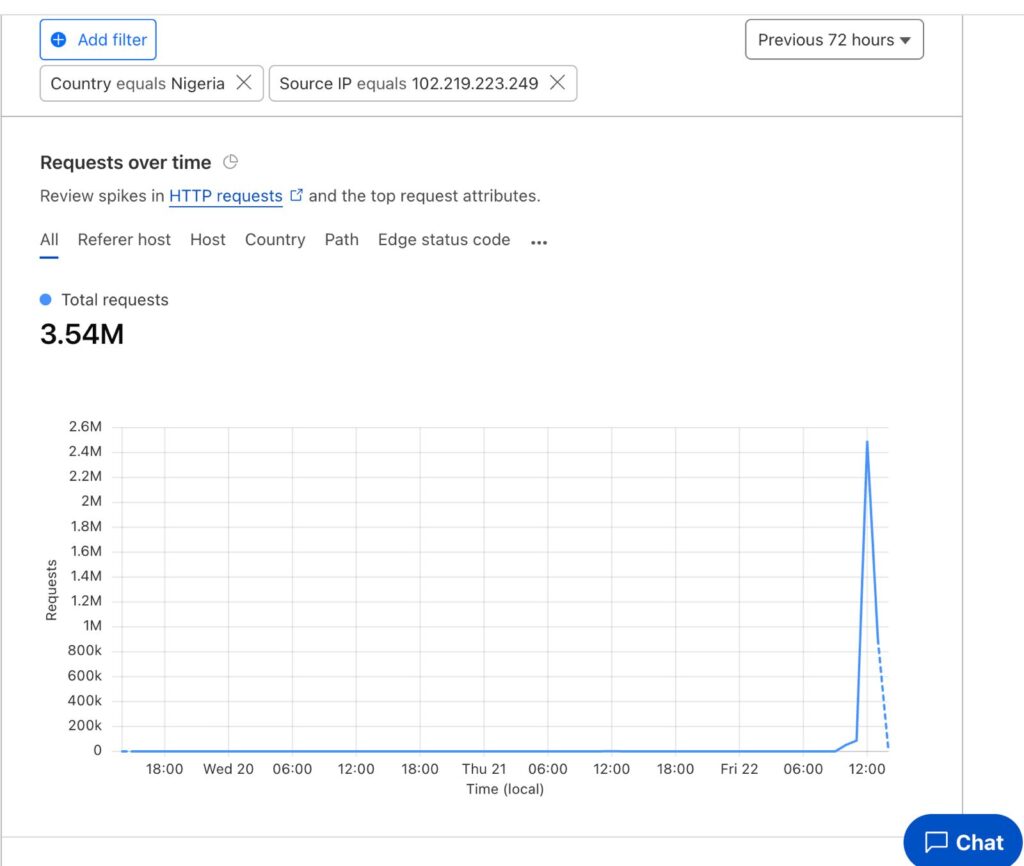
These illegal websites were taken down after FIJ’s stories, but that came at a cost for the platform. Technical analysis cited by FIJ traced a significant volume of the traffic to an IP address linked to the headquarters of the NIMC.
“Someone at NIMC, who was profiting from these private websites, was not happy and thought we were taking business from them and decided to strike,” said Soyombo. “We were grounded, we could not publish, we had staff coming to the office, and they could not write stories because there were no places to publish them.”
He explained that the website got over 50,000 requests within an hour, andwithin a 72-hour period, the site received more than 2 million malicious requests designed to overwhelm its servers and force it offline.
Soyombo explained that an insider at the NIMC confirmed the attack but claimed that it was a mistake and that the commission was going to release a statement and apologise. However, no apology has been issued to date.
Okike Benjamin, a professor of computer security at the University of Abuja and cybersecurity specialist, said that DDoS attacks work by utilising a botnet—a network of internet-connected machines, otherwise called bots or zombies, which may include computers, IoT devices, smartphones and are usually infected with malware, which is software specifically designed to disrupt, damage, or gain unauthorised access to a computer system.
“The attacker sends data requests to a target IP address, thereby exhausting its bandwidth or resources, hence preventing legal users’ access to such resources,” he explained. The infrastructure required to carry out a Distributed Denial-of-Service (DDoS) attack varies from one attack to another, and these bots are usually controlled remotely by an attacker.”
He said that threat actors, ranging from individual hackers to sophisticated nation-state group hackers, typically have the capacity to launch these attacks, often with the sole aim of disrupting services, extorting money, or causing chaos.
“These attacks have become highly accessible due to the proliferation of botnets, which are networks of compromised internet-connected devices. DDoS is available for hire, thereby making it possible for even inexperienced actors to launch substantial attacks
To attribute an attack to an actor, Benjamin said you look out for Metadata: Timestamps, keyboard layouts, file system paths, and user language settings which may be used to reveal the attacker’s time zone, System Logs & Forensic Memory: Evidence in RAM, such as running processes, unencrypted data, and executed console commands may be used to link an actor to a particular attack and Data Staging: Evidence of how attackers collected and compressed data before illegal access of sensitive data of a victim.
“Investigators trace the origin of malicious traffic through a systematic process known as network forensics. This involves capturing, recording, and analysing network traffic and logs to reconstruct the attack and identify the source of attacks. Sometimes, these attackers deploy Virtual Private Network (VPN) to conceal their identities. With some tools, the real IP addresses of attackers may be revealed,” he explained.
He further explained that while IP-address tracing is generally not highly reliable if considered in isolation, it may be a pointer to the location of an attacker. “In any case, this can assist in identifying ISP and a geographic location, but it hardly gives the attacker’s physical location, “he said.
Crackdown escalates four months after
Four months after the attack on the website of FIJ, on December 22, 2025, a senior investigative reporter with the platform, Sodeeq Atanda, was arrested by men of the Nigeria Police Force (NPF) in Owutu, Ikorodu area in Lagos State.
Two weeks earlier, on December 6, the police had tried to track him, but they could not get his exact location. So, they resorted to tracking his neighbours, abducting his wife and nine-month-old baby, whom they used as bait to arrest him. Atanda was subsequently taken to the Force Headquarters, Obalende, Lagos.
“I had noticed during a routine digital check that the ‘conditional call forwarding’ had been activated on the two lines inside my phone, the feature that had previously been inactive, “he recalled. “Similarly, when manually checked, the first line had “forward calls to +234616” when busy and “forward calls to +234616” when unreachable. Meanwhile, the second line had “forward calls to +234611” when unanswered, and “forward calls to +234611” when unreachable,”’.
He explained that the forwarding interferences could not be disabled.
“The system response read “Failed to read data, Unable to deactivate call diverting when phone is unreachable, unsupported by operator when we attempted to cancel it,” he said. “Soon, my phone also became hot without any user activity, a sign of interference.”
The suspected tracking happened three months after Atanda returned from the Ekiti State Police Command, where he was detained for eleven hours following a petition by Abayomi Fasina, the vice chancellor of the Federal University Oye-Ekiti (FUOYE).
Atanda had published a series of investigations documenting sexual misconduct involving Fasina and Raphael Segun Larayetan, a lecturer in the same university, who allegedly sexually harassed and rapedstudents in the Department of English and Literary Studies.
While in detention, Atanda said that he kept his phone safely far away from the station to avoid privacy invasion, but the police collected his phone number and other personal details, which they will later use to track him down.
Protection only on paper
There is a general consensus among sources interviewed that legal provisions against cyberattacks only exist on paper. They also believe that government agencies responsible for handling such cases never take it seriously.
After the attacks on WikkiTimes, Haruna said that he asked the platform’s lawyer to petition both the police and the Department of State Security Service, DSS, hoping that an appropriate investigation would be carried out. But they ignored it.
“Nobody reached out to offer help, and we were not surprised because you cannot be a judge in your own case,” he said, “They are the same people we are trying to investigate for failing in their responsibility.”
Attacks-against-Wikki Times
Soyombo said that he could not report to the government to take action because it was a government agency that took the website down in the first place. “You don’t expect them to act when they are responsible.”
Umeagbalasi says Intersociety does not bother to complain to security agencies when there is an attack because its investigation has pointed accusing fingers at them.
“We don’t have a responsible government; what we have is one that is committed to destroying the civic space, and so, we cannot even be talking about how attacks can be addressed. Also, the principles of criminal investigation are dead in Nigeria. We just had to find new ways of better protecting our websites from further attacks.”
For Umeagbalasi, attacks on civic organisations and those that strive to promote transparencyare worrying because the civic space is increasingly being stifled. Now, he said that organisations that used to be vibrant in protecting human rights and holding powers to account have become weak, without independence.
“What we now have is a transformation into tyranny and dictatorship, with no dissenting voices, despite the salient provisions in the constitution about civil liberties, rule of law and freedom of expression.”
For Haruna, the government and security agencies must not see media organisations as enemies but collaborators in the business of deepening democracy and entrenching accountability. He, however, said that while Wikki times cannot completely be immune to cyberattacks, the platform has now subscribed to services that allow it to be informed early enough about impending attacks and also help to prevent them from occurring. “We also try to use End-to-end encrypted platforms for communication.”
Nigeria actually has laws that allow surveillance of citizens
While Nigeria has several legal provisions that protect rights-based advocacy/ organisations from cyber attacks, there are also specific provisions of the law that permitthe state and security agencies to access, track or monitor citizens’ communications. For instance, section 45 of the 1999 Constitution (as amended) allows the government to restrict rights, including privacy, when it is reasonably justifiable in a democratic society for purposes like defence, public safety, public order, or protecting the rights of others.
The Nigerian Communications Act (2003) also empowers the Nigerian Communications Commission (NCC) to order telecom operators to intercept private communications and disclose data to authorised officers in the interest of public safety or national security. There is also the Lawful Interception of Communications Regulations (LICR) 2019 issued under the Nigerian Communications Act, which provides that licensed “Authorised Agencies” (e.g., State Security Service, Office of the National Security Adviser, Nigeria Police Force) can intercept communications with a court-issued warrant for National security, preventing or investigating a crime, Public safety or emergencies.
However, the regulations create a narrow exception for urgent circumstances. In cases involving imminent danger to life or credible threats to national security, interception may be carried out without prior judicial approval. Even then, the law imposes a safeguard: the agency must apply for a warrant within 48 hours after the interception. If a warrant is not granted, the interception must stop.
While the Cybercrimes Act of 2015 makes unauthorised interception illegal and punishable with fines and imprisonment if done without proper legal authority, Section 39 enables courts to issue interception orders when there are reasonable grounds that the communications are required for criminal investigation or prosecution.
Furthermore, the Terrorism (Prevention and Prohibition) Act, 2022, in Nigeria empowers a court to issue an Interception of Communication Order to combat terrorism, specifically under Section 68 of the Act.
While these laws establish safeguards such as judicial warrants and post-interception approvals, credible evidence across Africa suggests that legal authorisation does not always translate into effective accountability. For instance, a 2021 analysis by the Brookings Institution shows that the growing use of digital espionage tools, including sophisticated spyware, is “risking worsening authoritarian tendencies” and raises fundamental questions about whether security agencies are being adequately held to account.
In practice, the analysis shows that governments have deployed these tools not only for legitimate security purposes but also to monitor journalists, opposition figures, and civil society actors, often under broadly defined national security justifications, and this creates a critical accountability gap.
Although Nigeria’s legal framework, from the Constitution to the Cybercrimes Act and LICR 2019, formally requires judicial oversight, for instance, the same laws contain ambiguous grounds such as public safety and national security, which can be invoked to legitimise intrusive surveillance.
Across Africa, such ambiguities have enabled a rise in “digital repression,” where surveillance tools are used to track dissent and restrict civic space, frequently with limited transparency or independent oversight. In this context, the issue is less about the absence of laws and more about the weakness of enforcement and oversight mechanisms.
No response from government
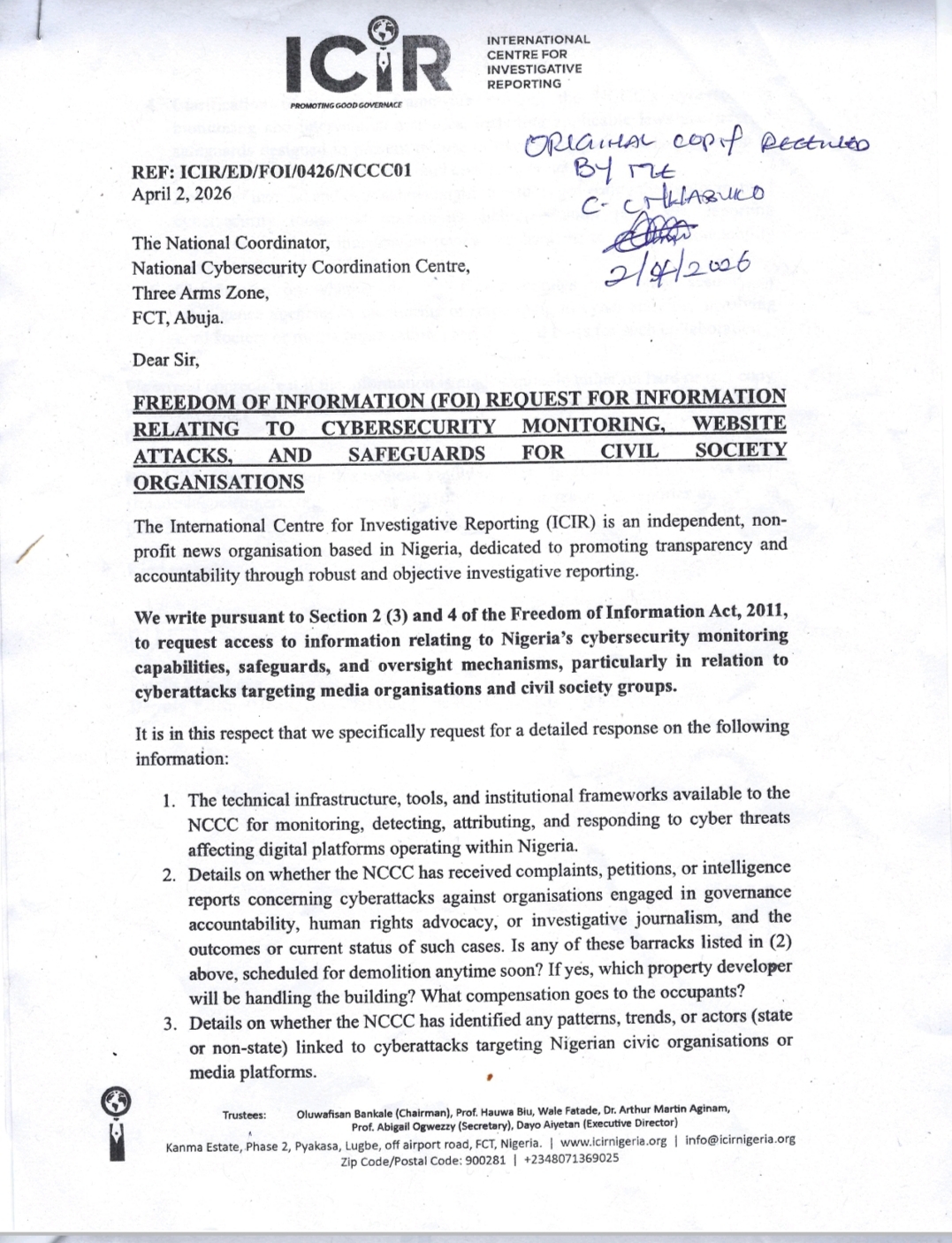
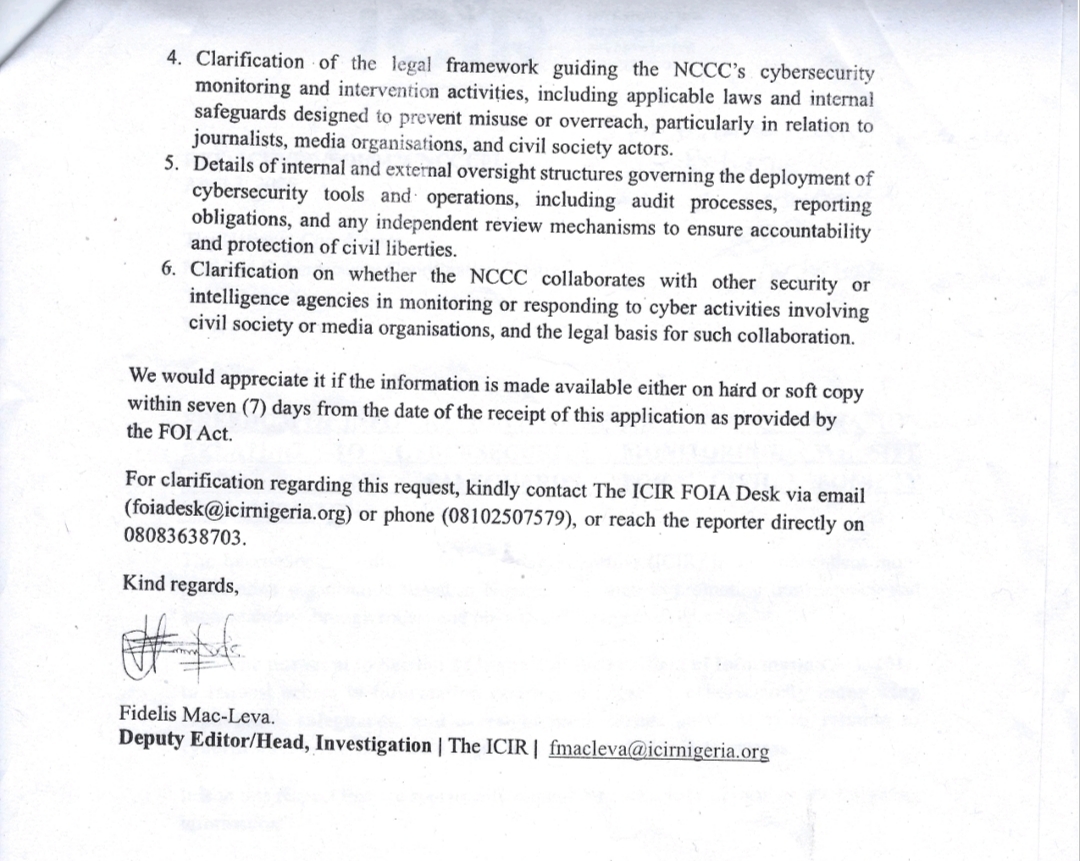
On Thursday, April 2, 2026, this reporter sent a freedom of information request, FOI to theNational Cybersecurity Coordination Centre (NCCC), specifically requesting the technical infrastructure, tools, and institutional frameworks available to the NCCC for monitoring, detecting, attributing, and responding to cyber threats affecting digital platforms operating within Nigeria and detail on whether the NCCC has received complaints, petitions, or intelligence reports concerning cyberattacks against organisations engaged in governance accountability, human rights advocacy, or investigative journalism, and the outcomes or current status of such cases.
FOI-Request
Also, this reporter requested details on whether the NCCC has identified any patterns, trends, or actors (state or non-state) linked to cyberattacks targeting Nigerian civic organisations or media platforms and clarification of the legal framework guiding the NCCC’s cybersecurity monitoring and intervention activities, including applicable laws and internal safeguards designed to prevent misuse or overreach, particularly in relation to journalists, media organisations, and civil society actors.
Furthermore, this reporter requested details of internal and external oversight structures governing the deployment of cybersecurity tools and operations, including audit processes, reporting obligations, and any independent review mechanisms to ensure accountability and protection of civil liberties and clarification on whether the NCCC collaborates with other security or intelligence agencies in monitoring or responding to cyber activities involving civil society or media organisations, and the legal basis for such collaboration.
Despite the expiration of the seven-day response window on Tuesday, April 14, as required by the FOI Act, the centre had yet to respond as of the time of publication.
AS President Bola Tinubu marks his third year in office on Friday, the Committee to Protect Journalists (CPJ) has released data showing that at least 91 journalists were arrested, physically attacked or harassed across Nigeria since he assumed office on May 29, 2023.
The data, published in an interactive map by the international press freedom organisation on Friday, May 29, tracked incidents across 12 states and the Federal Capital Territory (FCT), Abuja, over the past three years.
The report comes despite repeated claims by top government officials that journalists in the country are not facing harassment under the administration.
A breakdown of the data shows that Abuja recorded the highest number of incidents, with 30 journalists targeted. Of these, six were arrested, 22 physically attacked and three harassed.
Among those arrested in the FCT were Fejiro Oliver, Azuka Ogujiuba, Sodeeq Atanda, Jide Oyekunle, Kayode Jaiyeola and Madu Onuorah, while those physically attacked include three ICIR journalists-Mustapha Usman, Nurudeen Akewushola and Johnson Fatunmbi.
The ICIRreported how the journalists, including several others from ldifferent media platforms, escaped death during the EndBadGovernance protest in Abuja after security operatives opened fire on journalists covering the protest.
Meanwhile, Lagos State followed with 11 journalists targeted, including five arrests, four physical attacks and four cases of harassment. CPJ also identified journalist Bernard Akede and News Central TV camera operator Karina Adobaba-Harry among those repeatedly targeted in Lagos.
In Borno, nine journalists were arrested, making it the state with the highest number of arrests outside Abuja. Those listed include Abubakar Gajibo, Ali Musa, Amina Falmata Mohammed and six others.
Kano State recorded 13 journalists physically attacked, the highest number of physical assaults documented in any state outside the FCT.
In Kwara State, seven journalists were targeted, including five arrests and two harassment cases. Bauchi recorded three incidents involving one arrest, one physical attack and one harassment case.
Other states captured in the CPJ data include Bayelsa, Delta, Kaduna, Katsina, Ogun and Rivers states.
According to the organisation, some journalists were targeted more than once during the period under review. Karina Adobaba-Harry, Nurudeen Akewushola, Adefemola Akintade and Precious Chukwunonso were each attacked, arrested or harassed at least twice, while Bernard Akede faced three separate incidents.
CPJ said the findings contradicted recent remarks by Vice President Kashim Shettima, who in February suggested that no journalists had been harassed since Tinubu assumed office.
“For the past three years, have you heard of any harassment of journalists?” Shettima asked members of the Nigerian Press Council, while describing Tinubu as “a friend of the media.”
Reacting to the claims, CPJ Africa Director, Angela Quintal, accused the government of attempting to erase documented abuses against journalists.
“The Nigerian government’s suggestion that there has been no harassment of journalists since President Tinubu took office indicates an ambition to erase these abuses from the public consciousness and evade its responsibility for ensuring accountability,” Quintal said.
CPJ also disclosed that it joined five Nigerian press freedom groups in April 2026 to write a public letter to Tinubu, presenting evidence of attacks on journalists and expressing concern over Shettima’s comments.
The organisation said the Presidency did not respond to the letter.
The report adds to growing concerns over press freedom in Nigeria as Tinubu’s administration marks its third anniversary, with local and international organisations increasingly warning about the shrinking civic and media space in the country.
In April 2026, the 2026 World Press Freedom Index released by Reporters Without Borders (RSF) ranked Nigeria 149th out of 180 countries on the security indicator, describing the country as one of the most dangerous and difficult places for journalists in West Africa.
Overall, Nigeria ranked 112th globally and 12th in Africa, with an overall score of 48.11, placing it in RSF’s ‘difficult’ category for press freedom conditions.
The report highlighted repeated arrests, intimidation, attacks and detentions of journalists, particularly investigative reporters covering corruption, insecurity and governance issues.
According to RSF, Nigeria’s weakest area was journalist safety, where the country scored 37.84. The organisation said crimes against journalists often went unpunished even when perpetrators were identified, while state protection mechanisms remained weak or almost non-existent.
The report also noted that as of April 2026, six journalists were in detention in Nigeria.
RSF specifically highlighted the use of the Cybercrimes Act as a tool for intimidating and prosecuting journalists, warning that criminal charges and legal proceedings were increasingly being weaponised against the media.
THE Federal Capital Territory Administration (FCTA) has directed owners of hotels, event centres and other public facilities in Abuja to ensure that only political parties recognised by the Independent National Electoral Commission (INEC) are allowed to use their premises for political activities.
The warning was contained in a statement issued on Friday by Lere Olayinka, Senior Special Assistant on Public Communications and Social Media to the Minister of the FCT, Nyesom Wike.
“The Federal Capital Territory Administration (FCTA) has sounded a note of warning to owners of event centres, hotels and other public buildings in the Federal Capital Territory (FCT) to stop offering their facilities for use by illegal organisations.
“In this political season, owners of event centres and hotels in particular must ensure that they only deal with Independent National Electoral Commission (INEC) recognised leadership of political parties in respect of the use of their facilities, and proper records of transactions must be kept,” a part of the statement read.
According to the FCTA, event centres, hotels and other public buildings in the FCT will now be closely monitored to prevent their use by illegal organisations “capable of disrupting peace and security in the nation’s capital.”
“The FCTA noted that allocations of lands in the FCT are strictly to carry out lawful activities, adding that going forward, title documents of any event center, hotel or public building that is used for the gathering of illegal organizations will be revoked,” the statement added.
The administration warned that property owners must verify the legality of organisations seeking to use their facilities before approving bookings, adding that proper records of all transactions involving such bookings must also be maintained.
“This is aimed at ensuring that they are not used by illegal organizations for gatherings capable of disrupting the peace of the nation’s capital. Owners of these facilities are therefore urged to take cognizance of the legality of organisations seeking to use their facilities and the purpose before letting them out,” it said.
It further warned that any event centre, hotel or public building found to be hosting gatherings of “illegal organisations” risks losing its land title, stressing that land allocations in the FCT are strictly for lawful activities and said the directive forms part of ongoing efforts to strengthen security and maintain public order in Abuja
“Failure to comply with this directive will result to revocation of the title documents such properties,” the administration warned.
The ICIRreported that the FCTA revoked and took possession of over 4,794 land titles in high-brow areas of Abuja due to their owners’ failure to pay ground rent, which has been outstanding for periods ranging from 10 to 43 years.




 Attack-on-FIJ